Business Resilience for Small and Medium Enterprises and Startups by Digital Transformation and the Role of Marketing Capabilities—A Systematic Review




Abstract
1. Introduction
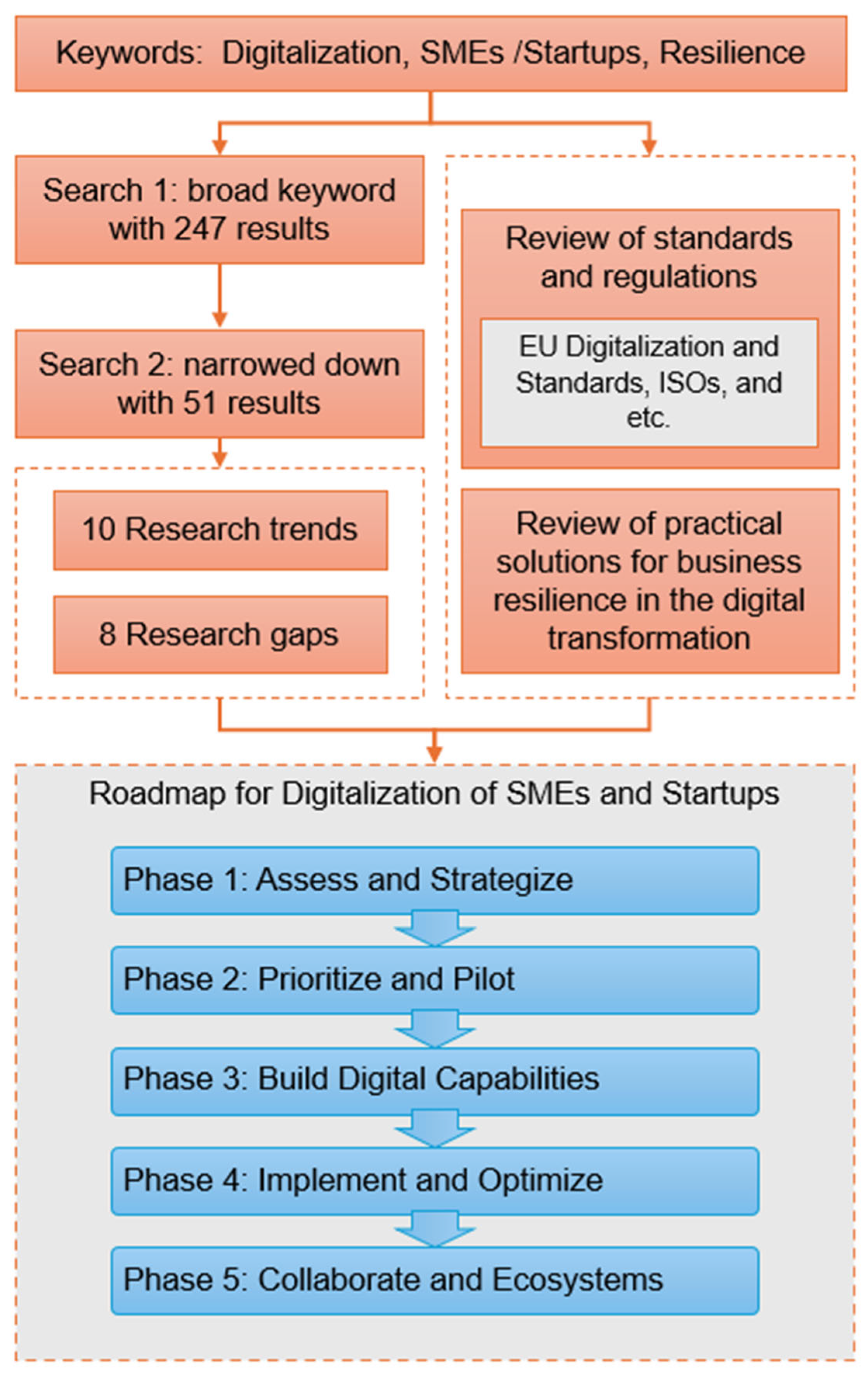
Aims
- Identify and synthesize the key research trends and themes in the existing literature, highlighting the multifaceted impact of digital transformation on business operations, strategy, and performance.
- Identify the key research gaps and future directions in the literature, providing insights that can inform both academic research and practical solutions for small businesses and startups in the digital transformation era.
- Explore the critical role of organizational capabilities, such as ambidexterity, resilience, and agility, in enabling small businesses and startups to navigate the challenges and leverage the opportunities presented by digital transformation.
- Examine the strategic deployment of digital technologies, including digital marketing, e-commerce, and emerging technologies, as enablers of enhanced business resilience for small businesses and startups.
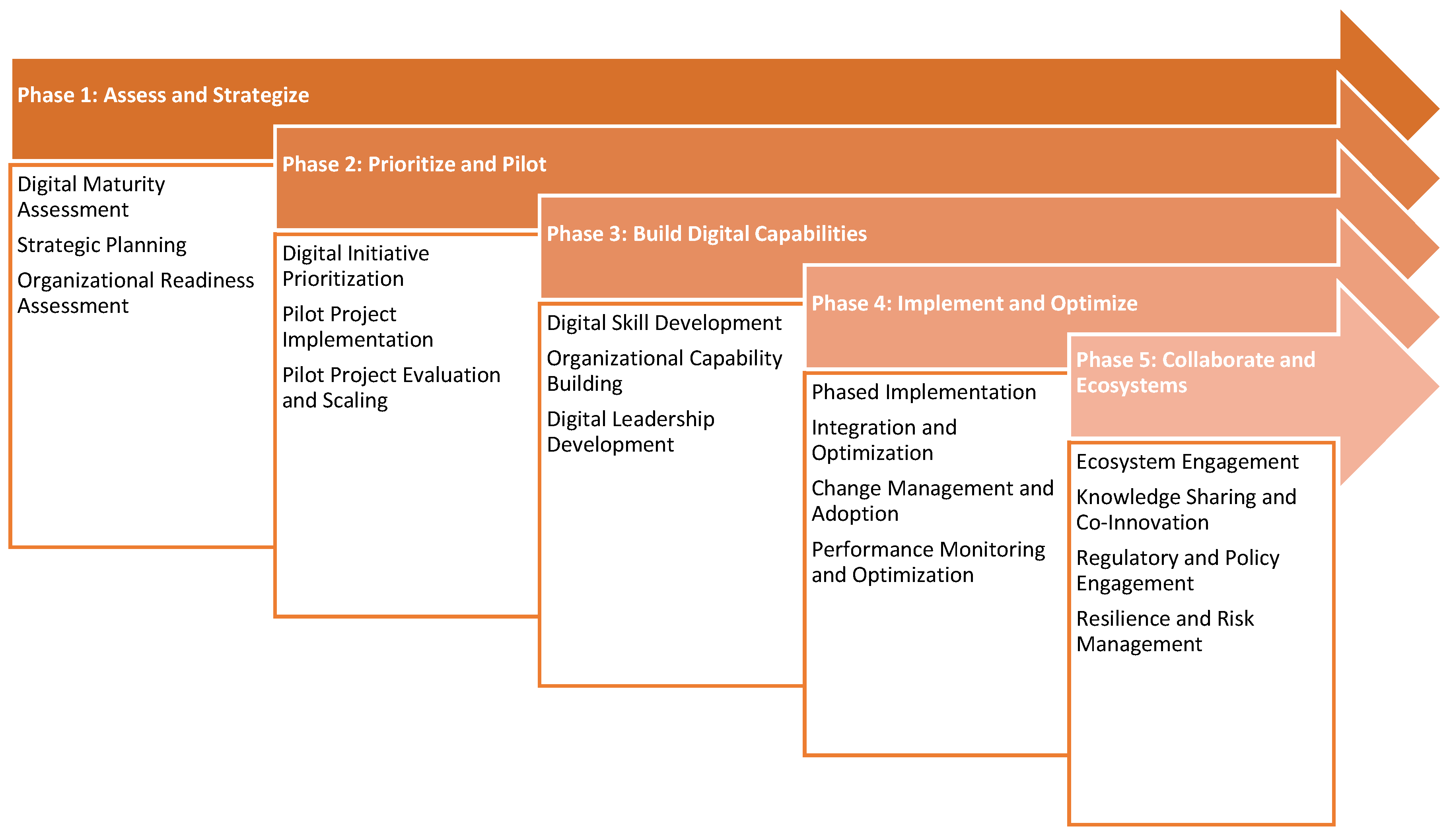
- Extract a roadmap of digitalization of SMEs and startups for being more resilient
2. Methods
2.1. Search Strategy and Inclusion/Exclusion Criteria
- Published in peer-reviewed journals, conference proceedings, or book chapters to ensure the quality and credibility of the included research.
- Focused on the topics of digital transformation, business resilience, and/or digital marketing in the context of small businesses and startups. This criterion ensured the relevance of the studies to the review’s objectives.
- Published in the English language to facilitate the review and synthesis process.
- Available in full-text format to enable a comprehensive analysis of the study content.
- The exclusion criteria were as follows:
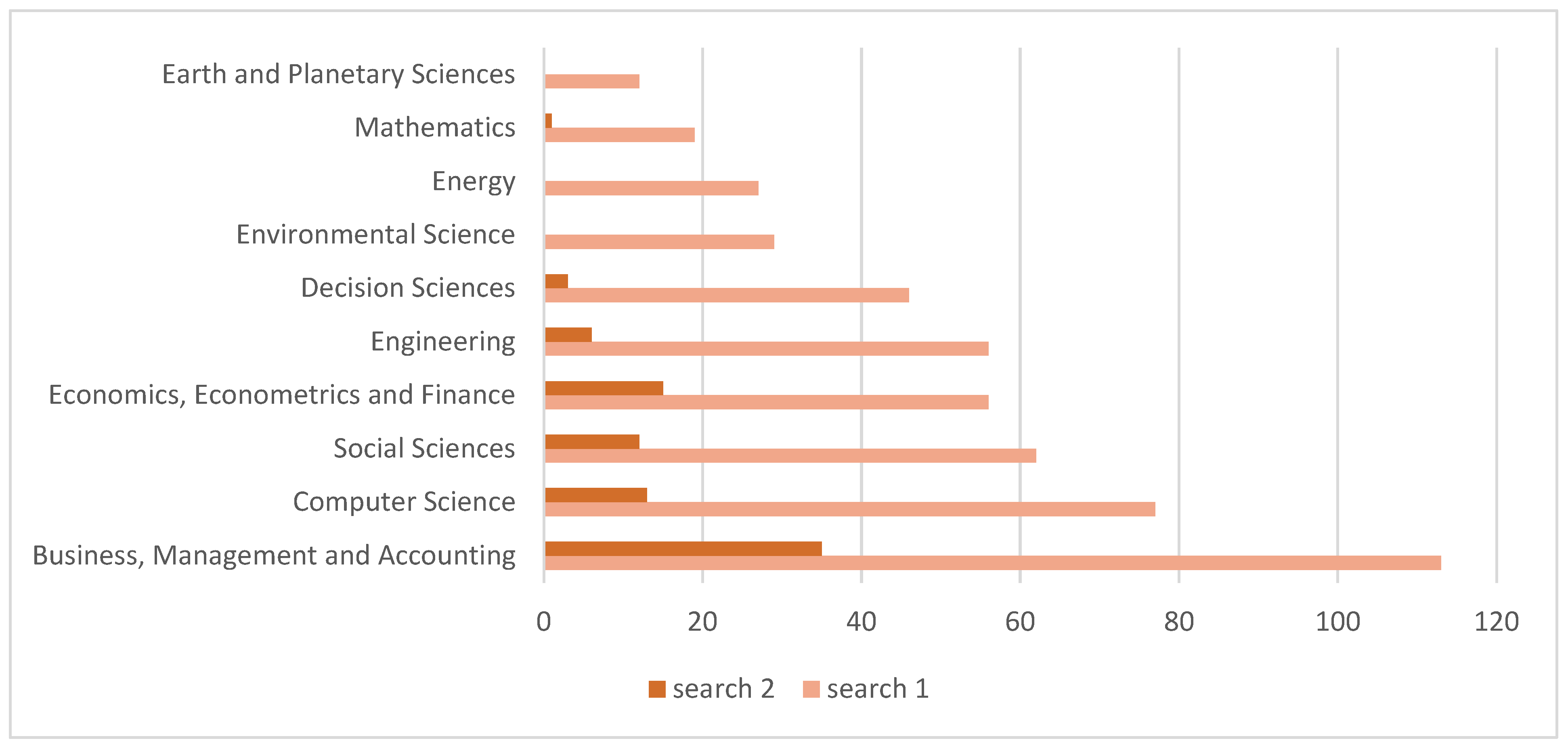
- Studies from subject areas not directly relevant to the scope of the review, such as energy, environmental sciences, medicine, and arts. This step helped to maintain the focus on the core research domains.
- Studies that did not provide empirical findings or in-depth discussions on the research topic, as they would not contribute significantly to the review’s objectives.
- Duplicate or redundant publications to avoid biasing the synthesis of the literature.
2.2. Data Extraction and Synthesis
- Bibliographic details (author, year of publication, journal/conference, etc.) to contextualize the research.
- Research objectives and methodologies employed to understand the study design and approach.
- Key findings and insights related to digital transformation, business resilience, and digital marketing to identify the core themes and trends.
- Limitations and future research directions to inform the research gaps and potential avenues for further investigation.
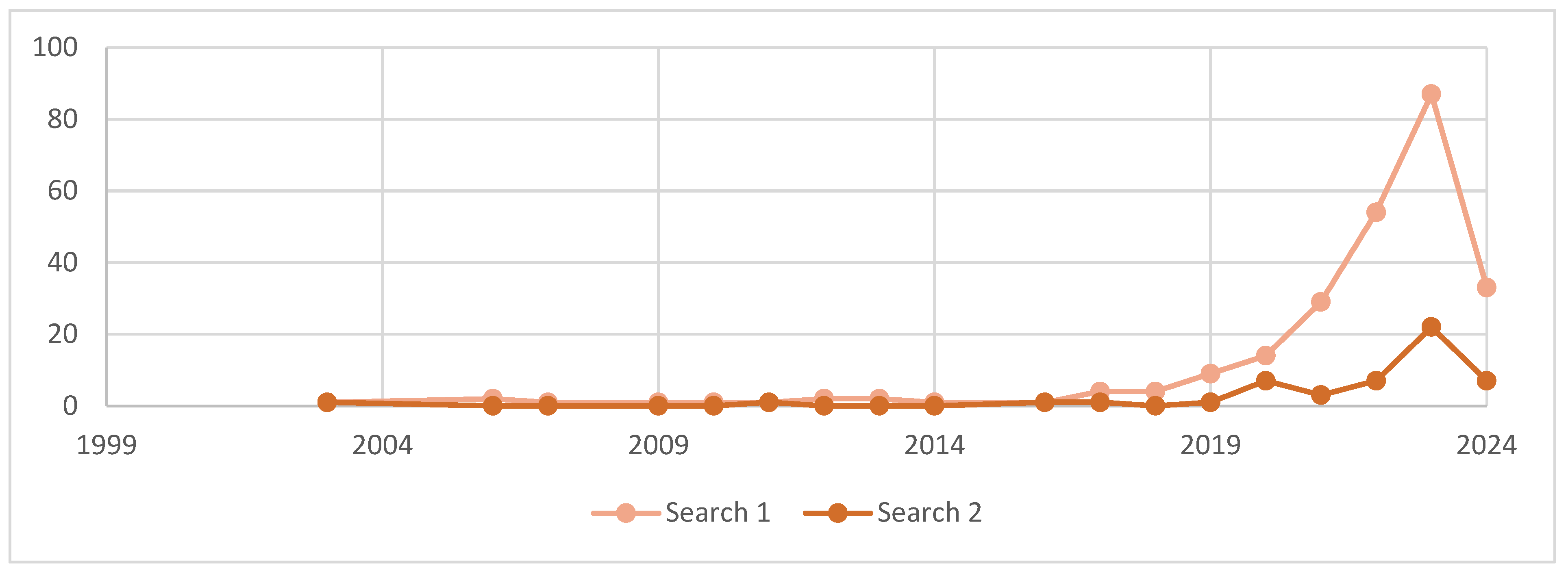
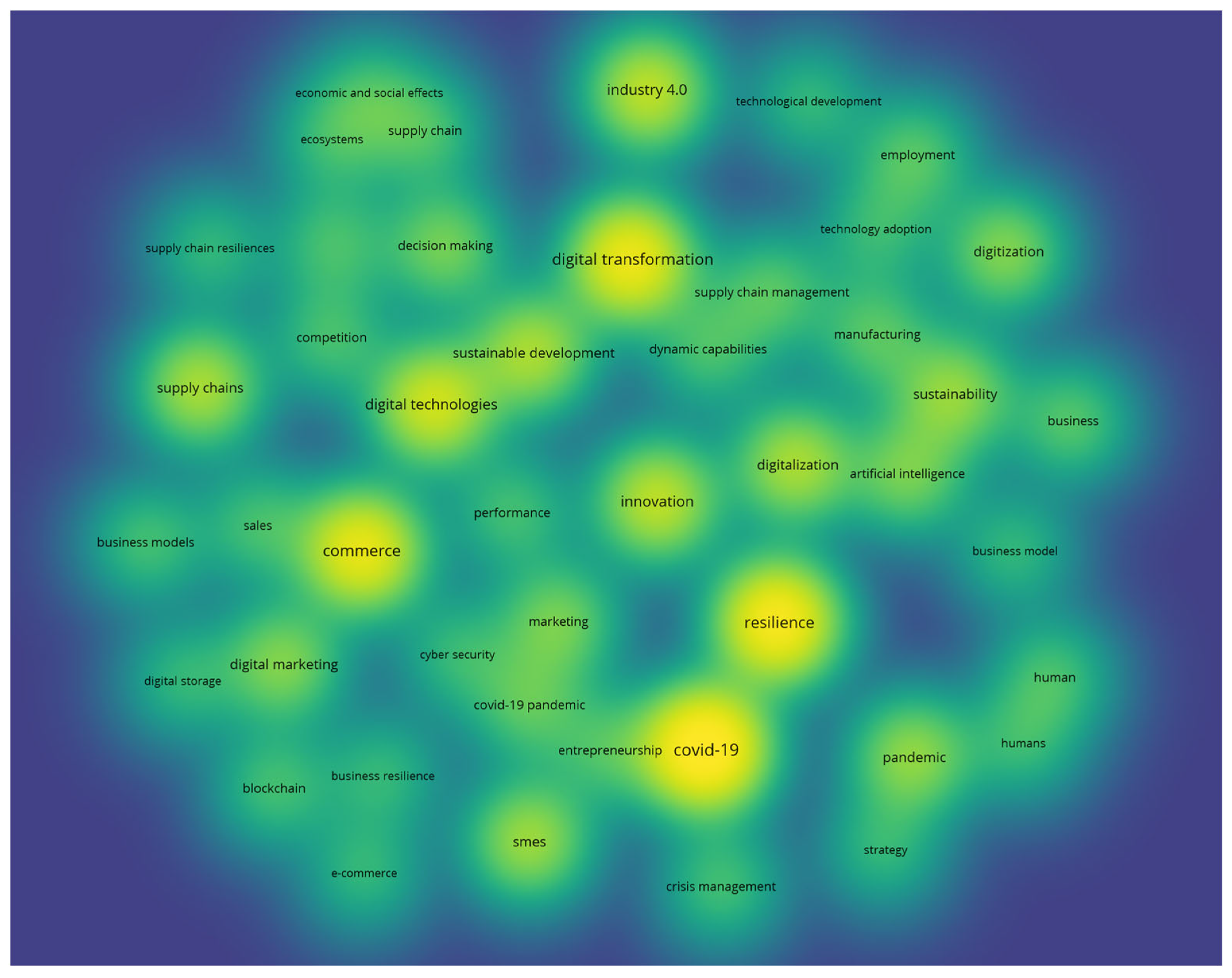
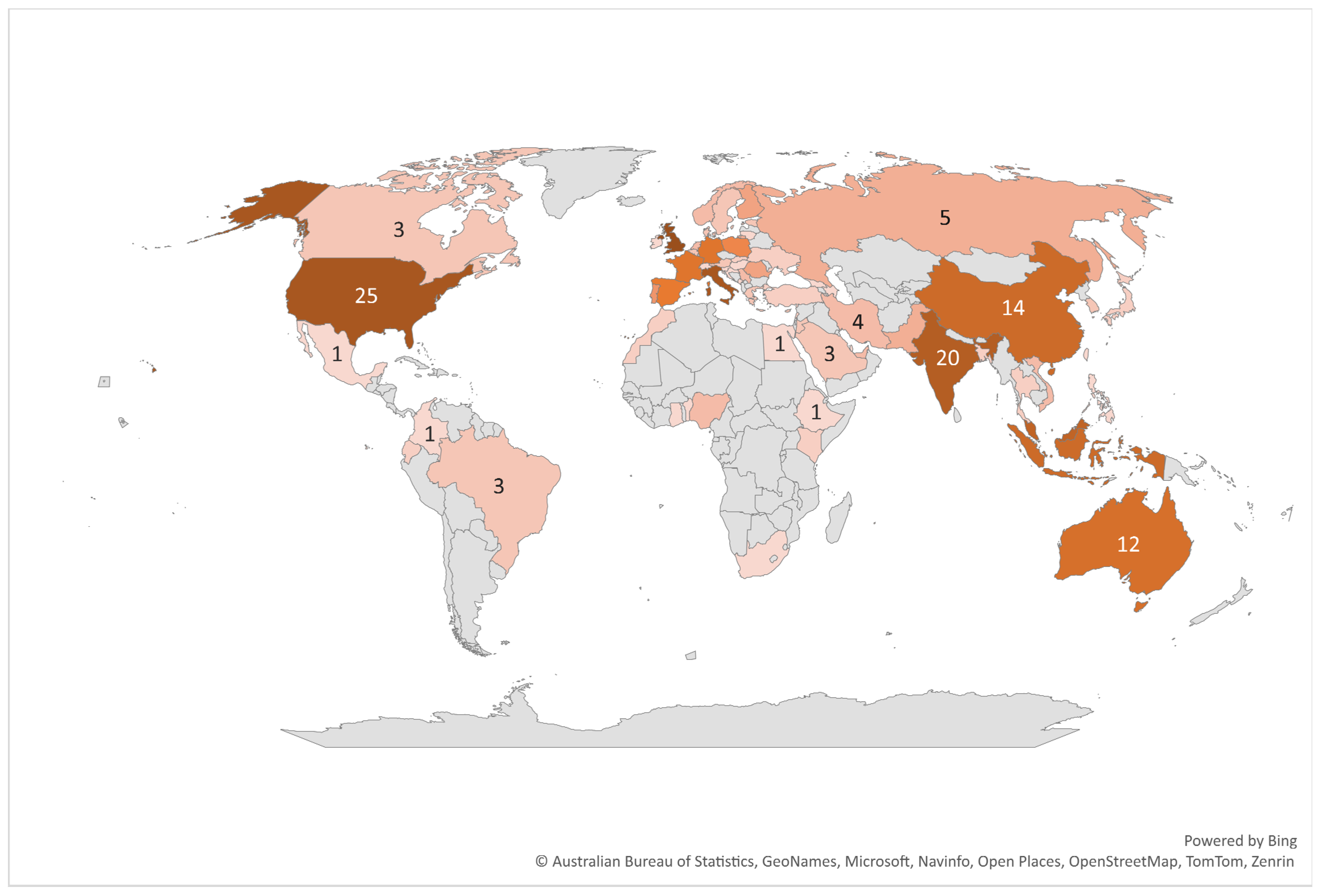
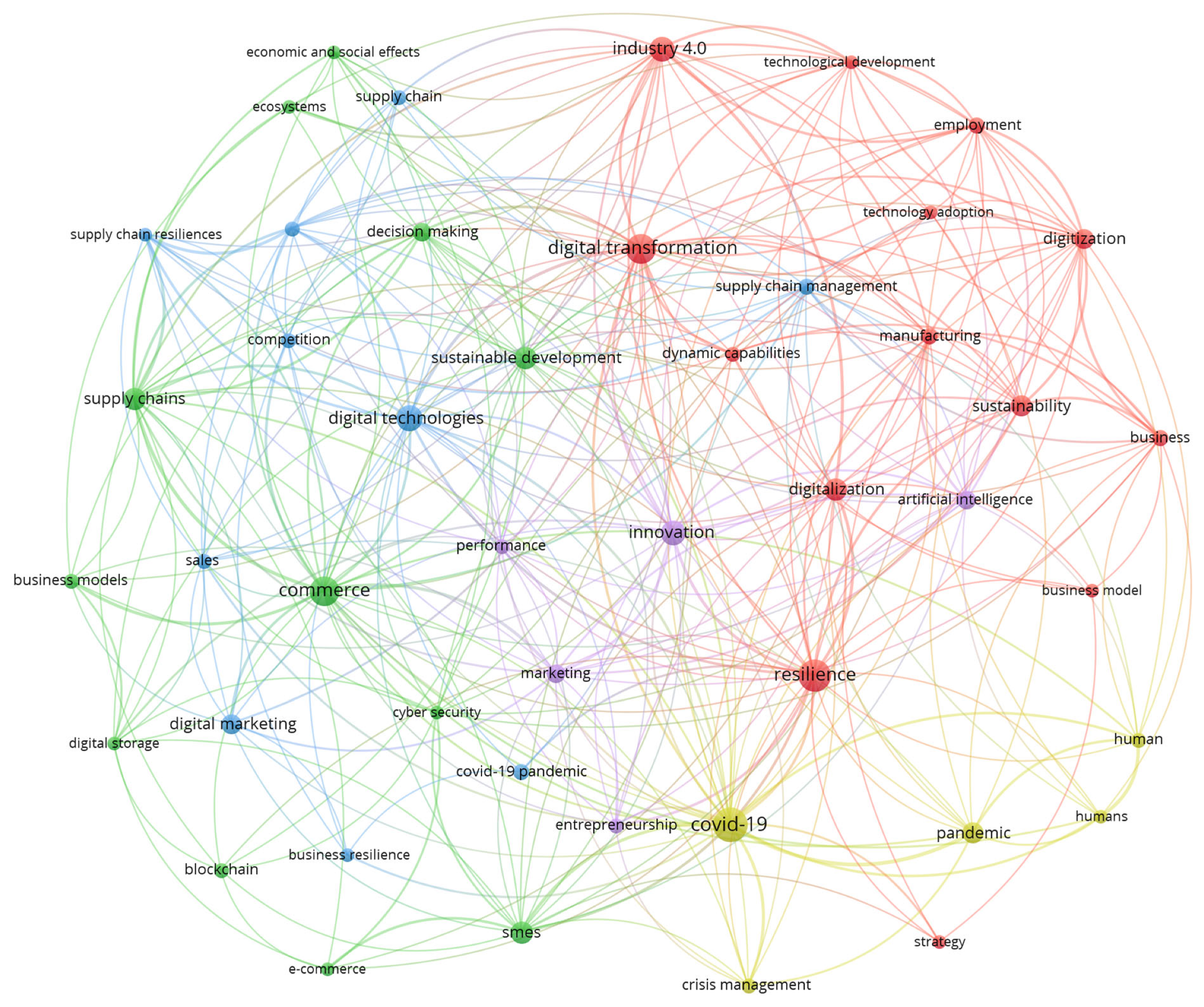
3. Results of Bibliometric Analysis
4. Academic Research on Digital Transformation and Business Resilience
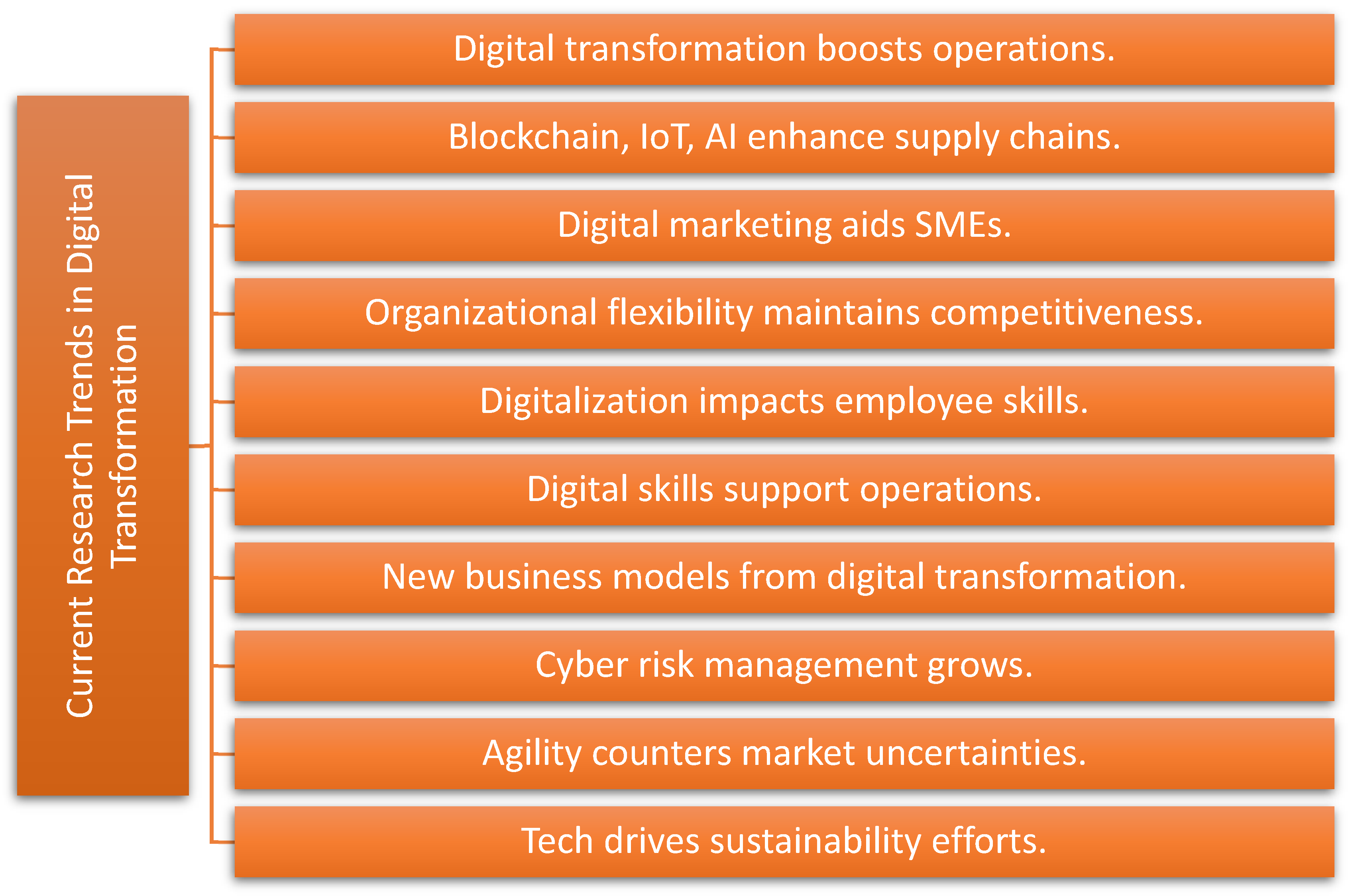
4.1. Research Trends
4.1.1. Digital Transformation and Its Impact on Business Operations, Resilience, and Performance
4.1.2. Leveraging Digital Technologies for Supply Chain Management and Circular Economy
4.1.3. Adoption and Implications of Digital Marketing and e-Commerce for SMEs
4.1.4. Role of Organizational Capabilities (e.g., Ambidexterity, Resilience) in Navigating Disruptions
4.1.5. Digitalization and Its Influence on Employee Attitudes, Psychology, and Job-Related Factors
4.1.6. Importance of Digital Skills and Knowledge Management in Supporting Business Operations
4.1.7. Emergence of New Business Models and Revenue Streams Driven by Digital Transformation
4.1.8. Cyber Risk Management and the Development of the Cyber Insurance Market
4.1.9. Agility and Adaptability as Key Strategic Responses to Market Uncertainties
4.1.10. Interplay between Digital Technologies, Innovation, and Sustainability in Business Practices
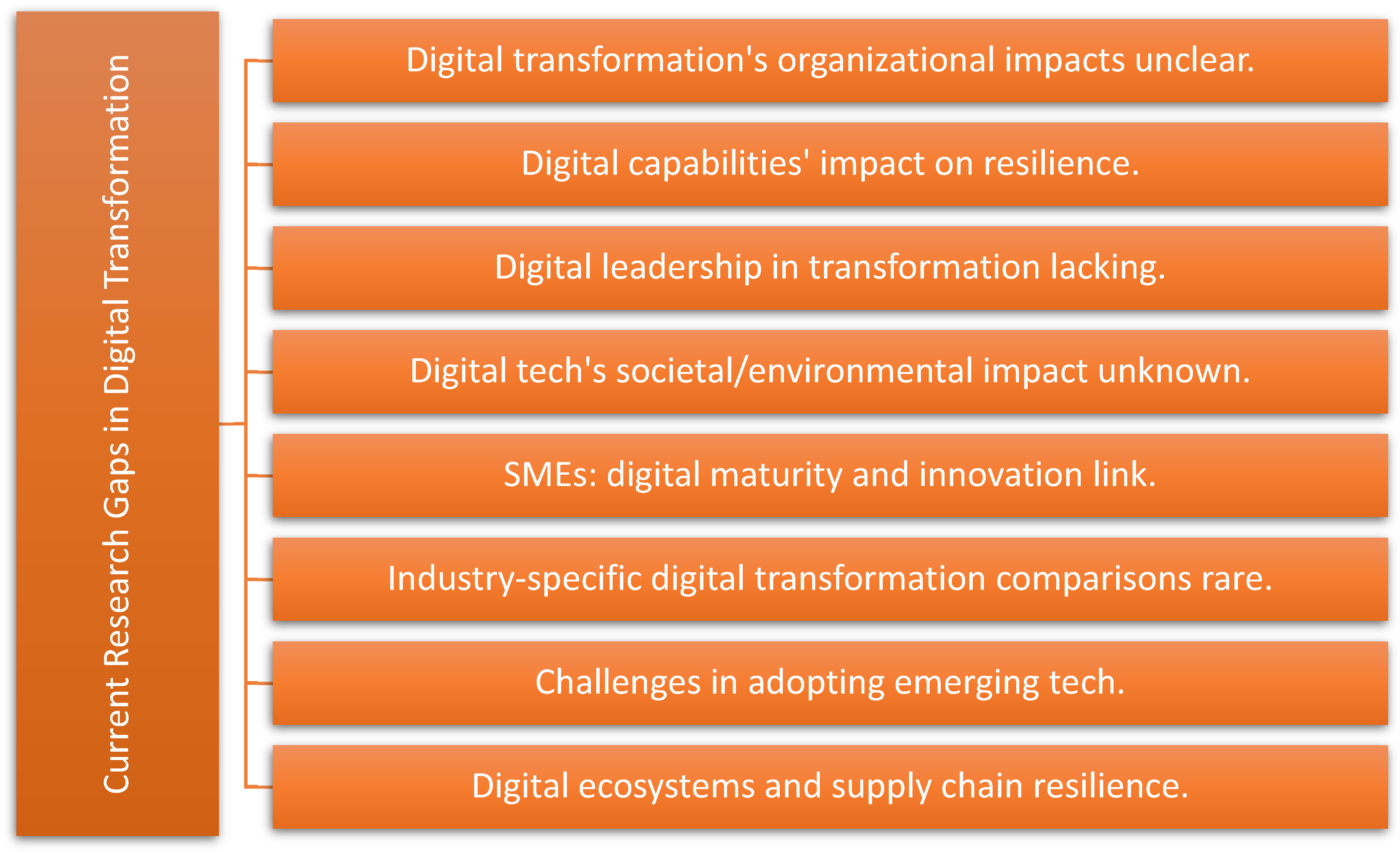
4.2. Research Gaps
4.2.1. Long-Term Implications of Digital Transformation on Organizational Structures and Business Models
4.2.2. Dynamic Interactions between Digital Capabilities, Organizational Resilience, and Financial Performance
4.2.3. Role of Digital Leadership in Driving Successful Digital Transformation
4.2.4. Societal and Environmental Impact of Digital Technologies
4.2.5. Linkages between Digital Maturity, Knowledge Management, and Innovation in SMEs
4.2.6. Comparative Studies Analyzing Digital Transformation Experiences across Industries and Geographical Contexts
4.2.7. Challenges and Barriers in Adopting Emerging Digital Technologies
4.2.8. Role of Digital Ecosystems and Stakeholder Collaboration in Enhancing Supply Chain Resilience
5. Standards and Regulations
5.1. Overview of Digital Transformation Standards and Guidelines
- ISO 50001—Energy Management: This standard provides a framework for SMEs to establish energy management systems, improve energy efficiency, and reduce energy-related costs [90].
- ISO 14046—Water Footprint: This standard specifies the principles, requirements, and guidelines for quantifying the water footprint of products, processes, and organizations, supporting sustainability efforts [91].
- ISO 20121—Event Sustainability Management: This standard offers guidance on implementing sustainable practices in event management, which can be applied by SMEs for various events and activities [92].
5.2. ISO 55000 Series and SME Digitalization for Building Resilience
5.3. Maturity Levels for SME Digitalization and Resilience
- Reactive Maturity (Firefighter Approach):
- 2.
- Top–Down Approach (Expert Team):
- 3.
- Bottom–Up Method (Continuous Feedback Loop):
5.4. Regulatory Frameworks Governing Digital Technologies and Cybersecurity
- Data Protection and Privacy Regulations:
- a.
- The General Data Protection Regulation (GDPR) in the European Union establishes a comprehensive framework for the protection of personal data and the rights of individuals [98].
- b.
- Similar data protection regulations, such as the California Consumer Privacy Act (CCPA) in the United States, have also been implemented to ensure the privacy and security of consumer data [99].
- Cybersecurity Regulations:
- a.
- The EU Directive on Security of Network and Information Systems (NIS Directive) requires Member States to establish national cybersecurity strategies and designate operators of essential services to implement appropriate security measures [100].
- b.
- The Network and Information Security (NIS) Regulations in the UK, based on the NIS Directive, mandate the implementation of cybersecurity measures for operators of essential services and digital service providers [101].
- Emerging Regulations for Specific Technologies:
- a.
- The EU’s proposed Artificial Intelligence Act aims to establish a comprehensive regulatory framework for the development, deployment, and use of AI systems, including requirements for risk assessment and human oversight [102].
- b.
- The EU’s Digital Services Act and Digital Markets Act seek to address the challenges posed by large digital platforms, such as content moderation, transparency, and fair competition [103].
- c.
- These regulatory frameworks have significant implications for small businesses and startups as they undergo digital transformation. Compliance with these regulations can help organizations mitigate cybersecurity risks, protect customer data, and build trust with stakeholders.
5.5. Compliance Requirements for Small Businesses and Startups
- Data Protection and Privacy:
- a.
- Ensuring compliance with data protection regulations, such as GDPR or CCPA, by implementing appropriate data management practices, securing customer data, and obtaining necessary consent.
- b.
- Developing and implementing data protection policies and procedures, as well as designating a data protection officer or responsible individual.
- Cybersecurity Measures:
- a.
- Implementing robust cybersecurity controls, such as access controls, encryption, and incident response plans, to protect against cyber threats.
- b.
- Complying with sector-specific cybersecurity regulations, such as the NIS Directive or NIS Regulations, if the business is deemed an operator of essential services or a digital service provider.
- Emerging Technology Regulations:
- a.
- Adhering to regulations governing the development and use of emerging technologies, such as the proposed EU AI Act, which may require risk assessments, human oversight, and transparency measures.
- b.
- Staying informed about the evolving regulatory landscape and adapting business practices accordingly.
- Conformity with Standards and Certifications:
- Providing guidance, training, and resources on regulatory compliance and standards adoption.
- Facilitating access to affordable compliance solutions and cybersecurity services.
- Establishing regulatory sandboxes or testing environments to help small businesses experiment with new technologies while ensuring compliance.
- Advocating for regulatory frameworks that are proportionate and tailored to the needs of small businesses and startups.
5.6. EU Digitalization and Standards
- Focusing standardization efforts on priority digital technology areas such as 5G communications, cloud computing, IoT, big data, and cybersecurity. This is intended to align standards development with the EU’s strategic interests in realizing the digital single market and accelerating progress in key digitalization domains.
- Enhancing the efficiency and responsiveness of the EU standardization system itself. This involves better planning of standards, improved collaboration between standards bodies in Europe and internationally, and stronger linkages between research and standards development [93].
6. Practical Solutions for Business Resilience in the Digital Transformation Era
6.1. Enhancing Business Resilience through Marketing Capabilities
6.2. Leveraging Digital Transformation for Small Businesses and Startups
6.3. Strategies for Developing Organizational Capabilities and Dynamic Skills
6.4. Collaborative Approaches and Digital Ecosystems
- Access to complementary capabilities and resources: by collaborating with larger organizations, technology providers, research institutions, and other ecosystem partners, small businesses and startups can gain access to specialized expertise, infrastructure, and resources that can help them accelerate their digital transformation efforts.
- Shared risk and reward: digital ecosystems often facilitate the co-creation and sharing of innovative solutions, allowing small businesses and startups to distribute the risks and investments associated with digital initiatives across multiple stakeholders.
- Enhanced resilience and adaptability: the collaborative and interconnected nature of digital ecosystems can enhance the overall resilience of the network, as members can leverage each other’s strengths and work together to address disruptions or market changes.
- Improved access to markets and customers: participation in digital ecosystems can provide small businesses and startups with increased visibility, credibility, and access to new customer segments, both domestically and globally.
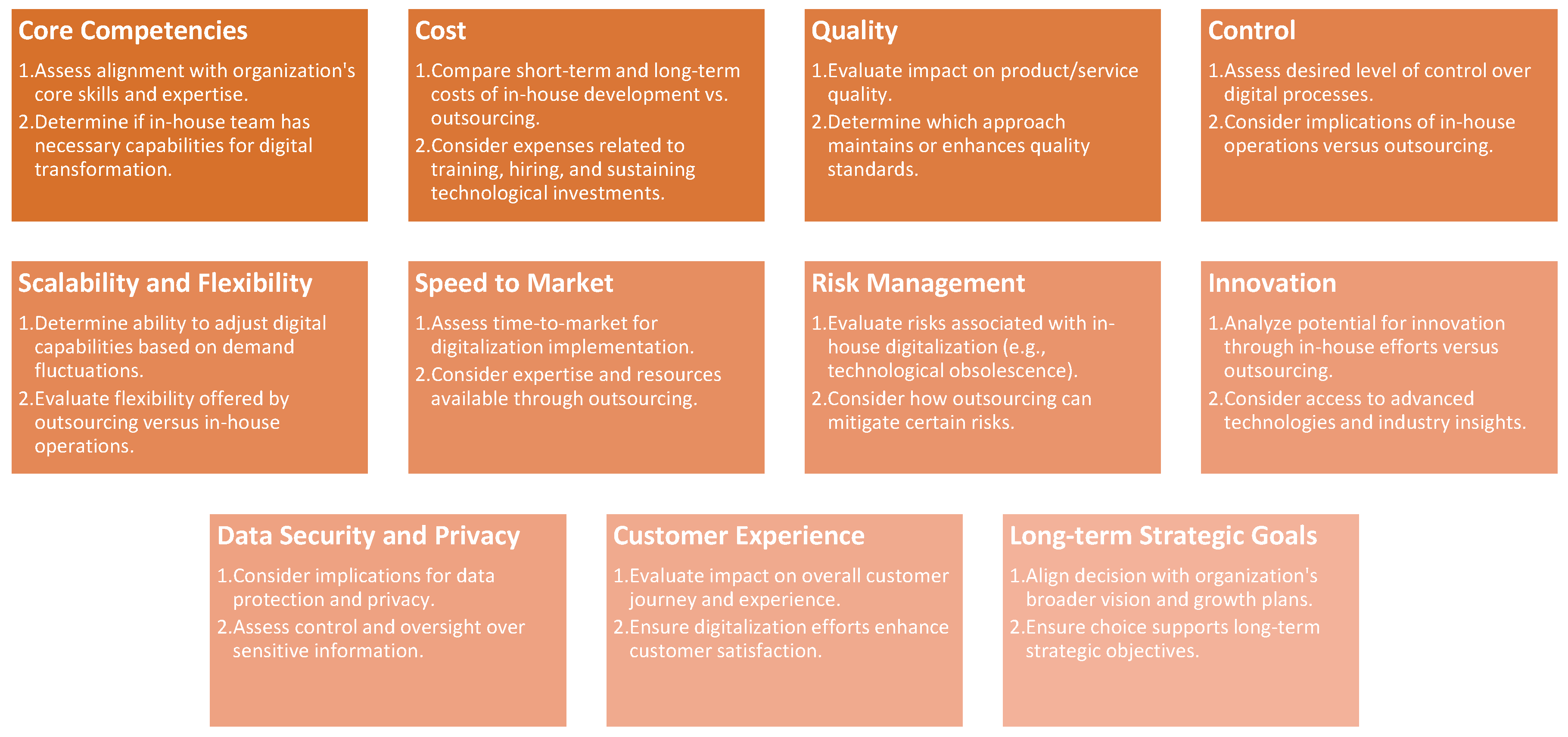
6.5. Evaluating In-House Digitalization versus Outsourcing
7. Roadmap for Digitalization of SMEs and Startups
7.1. Phase 1: Assess and Strategize
7.2. Phase 2: Prioritize and Pilot
7.3. Phase 3: Build Digital Capabilities
7.4. Phase 4: Implement and Optimize
7.5. Phase 5: Collaborate and Ecosystems
7.6. Final Thoughts
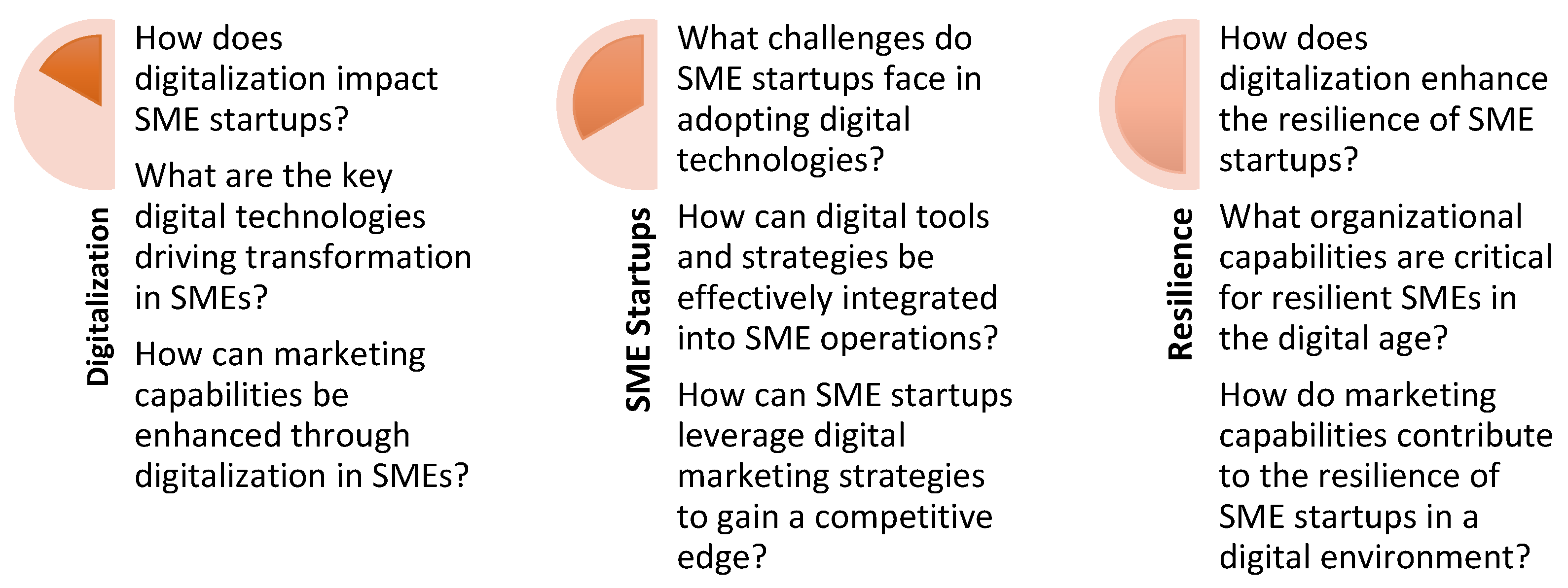
8. Research Proposal Initiative
9. Conclusions
9.1. Summary of Key Research Trends and Gaps
- The critical role of digital transformation in enhancing business operations, resilience, and overall performance.
- The leveraging of emerging digital technologies, such as blockchain, IoT, and AI, to improve supply chain management and enable circular economy practices.
- The significant potential of digital marketing and e-commerce strategies for SMEs to overcome traditional constraints and compete more effectively in the digital marketplace.
- The importance of organizational capabilities, such as ambidexterity and resilience, in navigating disruptions and maintaining competitiveness.
- The influence of digitalization on employee attitudes, skills, and job-related factors, underscoring the need for effective change management and talent development.
- The strategic importance of digital skills and knowledge management in supporting business operations and enhancing organizational resilience.
- The emergence of new business models and revenue streams driven by digital transformation.
- The growing focus on cyber risk management and the development of the cyber insurance market.
- The recognition of agility and adaptability as key strategic responses to market uncertainties.
- The interplay between digital technologies, innovation, and sustainability in driving business resilience and long-term success.
- Lack of understanding of the long-term implications of digital transformation on organizational structures and business models.
- Limited research on the dynamic interactions between digital capabilities, organizational resilience, and financial performance.
- Scarcity of studies exploring the role of digital leadership in driving successful digital transformation.
- Insufficient research on the societal and environmental impact of digital technologies.
- Underexplored linkages between digital maturity, knowledge management, and innovation in SMEs.
- Dearth of comparative studies analyzing digital transformation experiences across different industries and geographical contexts.
- Limited insights into the challenges and barriers faced by firms in adopting emerging digital technologies.
- Lack of research on the role of digital ecosystems and stakeholder collaboration in enhancing supply chain resilience.
9.2. Contributions of the Literature Review
9.3. Limitations and Future Research Directions
9.4. Final Remarks on the Importance of Enhancing Business Resilience in the Digital Age
Author Contributions
Funding
Acknowledgments
Conflicts of Interest
References
- Westerlund, M. Digitalization, Internationalization and Scaling of Online SMEs. Technol. Innov. Manag. Rev. 2020, 10, 48–57. [Google Scholar] [CrossRef] [Scilit]
- Prabowo, H.; Furinto, A.; Hamsal, M. The Influence of Digital Technology, Customer Experience, and Customer Engagement on E-Commerce Customer Loyalty. J. Theor. Appl. Inf. Technol. 2021, 99, 1149–1161. [Google Scholar]
- Cvijić Čović, M.; Borocki, J.; Djaković, V.; Vekić, A.; Okanović, A. Entrepreneurial Strategic Orientation: Prerequisite for SMEs Success in IoT and Digital Transformation Sphere? Systems 2023, 11, 272. [Google Scholar] [CrossRef] [Scilit]
- Manser Payne, E.H.; Dahl, A.J.; Peltier, J. Digital Servitization Value Co-Creation Framework for AI Services: A Research Agenda for Digital Transformation in Financial Service Ecosystems. J. Res. Interact. Mark. 2021, 15, 200–222. [Google Scholar] [CrossRef] [Scilit]
- Ramadan, M.; Bou Zakhem, N.; Baydoun, H.; Daouk, A.; Youssef, S.; El Fawal, A.; Elia, J.; Ashaal, A. Toward Digital Transformation and Business Model Innovation: The Nexus between Leadership, Organizational Agility, and Knowledge Transfer. Adm. Sci. 2023, 13, 185. [Google Scholar] [CrossRef] [Scilit]
- Kaya, H.D.; Dikmen, I. Using System Dynamics to Support Strategic Digitalization Decisions. J. Constr. Eng. Manag. 2024, 150, 04024009. [Google Scholar] [CrossRef] [Scilit]
- Mishra, A.; Shukla, A. Gyan Fresh: Digital Transformation of Dairy Business with Resilience and Technology Innovation. FIIB Bus. Rev. 2023, 12, 20–30. [Google Scholar] [CrossRef] [Scilit]
- Munteanu, I.; Aivaz, K.-A.; Micu, A.; Căpățână, A.; Jakubowicz, F.V. Digital transformations imprint financial challenges: Accounting assessment of crypto assets and building resilience in emerging innovative businesses. Econ. Comput. Econ. Cybern. Stud. Res. 2023, 57, 203–220. [Google Scholar] [CrossRef] [Scilit]
- Al Omoush, K.; Lassala, C.; Ribeiro-Navarrete, S. The Role of Digital Business Transformation in Frugal Innovation and SMEs’ Resilience in Emerging Markets. Int. J. Emerg. Mark. 2023. [Google Scholar] [CrossRef] [Scilit]
- Elo, M.; Ermolaeva, L.; Ivanova-Gongne, M.; Klishevich, D. Resilience and Business Model Adaptation in Turbulent Times: Experiences of Russophone Migrant Entrepreneurs in Germany during COVID-Pandemic. Small Enterp. Res. 2022, 29, 250–272. [Google Scholar] [CrossRef] [Scilit]
- Garcia, J.; Rezvani, S.; Silva, M.J.F.; Almeida, N.; Pinto, C.; Gomes, R.; Ferreira, M.A.; Ribeiro, F.; Salvado, F.; Oliveira, C.S. Resilience Assessment of Public Treasury Elementary School Buildings in Lisbon Municipality; Lecture Notes in Mechanical Engineering; Springer: Cham, Switzerland, 2023; pp. 636–644. [Google Scholar]
- Khatib, O.; Alshawabkeh, K. Digital Transformation and Its Impact on Strategic Supremacy Mediating Role of Digital HRM: An Evidence from Palestine. WSEAS Trans. Bus. Econ. 2022, 19, 197–221. [Google Scholar] [CrossRef] [Scilit]
- Lee, H.; Kim, J.; Kim, J. Determinants of Success for Application Service Provider: An Empirical Test in Small Businesses. Int. J. Hum. Comput. Stud. 2007, 65, 796–815. [Google Scholar] [CrossRef] [Scilit]
- Alamsyah, A.; Laksmiani, N.; Rahimi, L.A. A Core of E-Commerce Customer Experience Based on Conversational Data Using Network Text Methodology. Int. J. Bus. 2018, 23, 284–292. [Google Scholar]
- Ranjan, P. IT-Related Resources, Digital Marketing Capabilities and Business Performance: Moderating Effects of Digital Orientation and Technological Turbulence. Ind. Manag. Data Syst. 2023, 123, 2836–2856. [Google Scholar] [CrossRef] [Scilit]
- Corvello, V.; Verteramo, S.; Nocella, I.; Ammirato, S. Thrive during a Crisis: The Role of Digital Technologies in Fostering Antifragility in Small and Medium-Sized Enterprises. J. Ambient. Intell. Humaniz. Comput. 2023, 14, 14681–14693. [Google Scholar] [CrossRef] [Scilit] [PubMed]
- Toufaily, E.; Zalan, T. Ecosystem Well-Being and Resilience: Lessons from Crisis Management in Service Organizations. J. Bus.-Bus. Mark. 2023, 30, 349–370. [Google Scholar] [CrossRef] [Scilit]
- Rezvani, S.M.H.S.; Falcão Silva, M.J.; de Almeida, N.M. The Risk-Informed Asset-Centric (RIACT) Urban Resilience Enhancement Process: An Outline and Pilot-Case Demonstrator for Earthquake Risk Mitigation in Portuguese Municipalities. Appl. Sci. 2024, 14, 634. [Google Scholar] [CrossRef] [Scilit]
- Rezvani, S.M.; Falcão Silva, M.J.; de Almeida, N.M. Urban Resilience Index for Critical Infrastructure: A Scenario-Based Approach to Disaster Risk Reduction in Road Networks. Sustainability 2024, 16, 4143. [Google Scholar] [CrossRef] [Scilit]
- van Eck, N.J.; Waltman, L. Software Survey: VOSviewer, a Computer Program for Bibliometric Mapping. Scientometrics 2010, 84, 523–538. [Google Scholar] [CrossRef] [Scilit] [PubMed]
- Szalavetz, A. Digital Transformation—Enabling Factory Economy Actors’ Entrepreneurial Integration in Global Value Chains? Postcommunist Econ. 2020, 32, 771–792. [Google Scholar] [CrossRef] [Scilit]
- Demeter, K.; Losonci, D.; Szalavetz, A.; Baksa, M. Strategic Drivers behind the Digital Transformation of Subsidiaries: A Longitudinal Approach. Postcommunist Econ. 2023, 35, 744–769. [Google Scholar] [CrossRef] [Scilit]
- Szalavetz, A. Digital transformation and local manufacturing subsidiaries in central and eastern Europe: Changing prospects for upgrading? In The Challenge of Digital Transformation in the Automotive Industry: Jobs, Upgrading, and the Prospects for Development; Drahokoupil, J., Ed.; European Trade Union Institute: Brussels, Belgium, 2020; pp. 47–64. [Google Scholar]
- Zapata-Cantu, L.; Sanguino, R.; Barroso, A.; Nicola-Gavrilă, L. Family Business Adapting a New Digital-Based Economy: Opportunities and Challenges for Future Research. J. Knowl. Econ. 2023, 14, 408–425. [Google Scholar] [CrossRef] [Scilit]
- Teece, D.J.; Linden, G. Business Models, Value Capture, and the Digital Enterprise. J. Organ. Des. 2017, 6, 8. [Google Scholar] [CrossRef] [Scilit]
- Eggers, J.P.; Francis Park, K. Incumbent Adaptation to Technological Change: The Past, Present, and Future of Research on Heterogeneous Incumbent Response. Acad. Manag. Ann. 2018, 12, 257–389. [Google Scholar] [CrossRef] [Scilit]
- Sedky, A. Digital Supply Chain: A Proposed Solution to the Global Supply Chain Disruption Impact on Business Sustainability. In Digital Supply Chain, Disruptive Environments, and the Impact on Retailers; Scopus: Amsterdam, The Netherlands, 2023; ISBN 9781668473009. [Google Scholar]
- Ghabak, V.; Chaugule, R. Digital Twin Framework in Supply Chain Governance. In Proceedings of the Proceedings—International Conference on Computing, Power, and Communication Technologies, IC2PCT, Greater Noida, India, 9–10 February 2024; pp. 82–89. [Google Scholar]
- Lang, L.D.; Behl, A.; Phuong, N.N.D.; Gaur, J.; Dzung, N.T. Toward SME Digital Transformation in the Supply Chain Context: The Role of Structural Social and Human Capital. Int. J. Phys. Distrib. Logist. Manag. 2023, 53, 448–466. [Google Scholar] [CrossRef] [Scilit]
- van der Burg, M.; Van den Bulck, H. Why Are Traditional Newspaper Publishers Still Surviving in the Digital Era? The Impact of Long-Term Trends on the Flemish Newspaper Industry’s Financing, 1990–2014. J. Media Bus. Stud. 2017, 14, 82–115. [Google Scholar] [CrossRef] [Scilit]
- Yadav, M.S.; de Valck, K.; Hennig-Thurau, T.; Hoffman, D.L.; Spann, M. Social Commerce: A Contingency Framework for Assessing Marketing Potential. J. Interact. Mark. 2013, 27, 311–323. [Google Scholar] [CrossRef] [Scilit]
- Haque, M.; Wong, A. Antecedents of M-Commerce Satisfaction and Purchase Behaviour in the Footwear Industry. Int. J. Electron. Mark. Retail. 2022, 13, 259–279. [Google Scholar] [CrossRef] [Scilit]
- Sakas, D.P.; Reklitis, D.P.; Terzi, M.C.; Vassilakis, C. Multichannel Digital Marketing Optimizations through Big Data Analytics in the Tourism and Hospitality Industry. J. Theor. Appl. Electron. Commer. Res. 2022, 17, 1383–1408. [Google Scholar] [CrossRef] [Scilit]
- Zawaideh, F.H.; Abu-Ulbeh, W.; Mjlae, S.A.; El-Ebiary, Y.A.B.; Al Moaiad, Y.; Das, S. Blockchain Solution for SMEs Cybersecurity Threats in E-Commerce. In Proceedings of the 2023 International Conference on Computer Science and Emerging Technologies, CSET, Bangalore, India, 10–12 October 2023. [Google Scholar]
- Ghoshal, N.D. Digital Marketing: The Opportunity and the Imperative. Int. J. Public Sect. Perform. Manag. 2020, 6, 246–259. [Google Scholar] [CrossRef] [Scilit]
- Dinis, A.; Lemos, K.; Serra, S. Tax Incentives for SMEs’ Digital Transformation. In Proceedings of the Iberian Conference on Information Systems and Technologies, CISTI, Aveiro, Portugal, 20–23 June 2023. [Google Scholar]
- Aghazadeh, H.; Zandi, F.; Amoozad Mahdiraji, H.; Sadraei, R. Digital Transformation and SME Internationalisation: Unravelling the Moderated-Mediation Role of Digital Capabilities, Digital Resilience and Digital Maturity. J. Enterp. Inf. Manag. 2023. [Google Scholar] [CrossRef] [Scilit]
- Trieu, H.D.X.; Nguyen, P.V.; Tran, K.T.; Vrontis, D.; Ahmed, Z. Organisational Resilience, Ambidexterity and Performance: The Roles of Information Technology Competencies, Digital Transformation Policies and Paradoxical Leadership. Int. J. Organ. Anal. 2023. [Google Scholar] [CrossRef] [Scilit]
- Warner, K.S.R.; Wäger, M. Building Dynamic Capabilities for Digital Transformation: An Ongoing Process of Strategic Renewal. Long Range Plan. 2019, 52, 326–349. [Google Scholar] [CrossRef] [Scilit]
- Fan, H.; Han, B.; Gao, W.; Li, W. How AI Chatbots Have Reshaped the Frontline Interface in China: Examining the Role of Sales–Service Ambidexterity and the Personalization–Privacy Paradox. Int. J. Emerg. Mark. 2022, 17, 967–986. [Google Scholar] [CrossRef] [Scilit]
- Federico, F. A Journey of Digital Marketing Transformation: From Distributed Solo Players to Embedded Digital Excellence. J. Digit. Soc. Media Mark. 2020, 8, 46–57. [Google Scholar]
- Korhonen, J.J.; Halen, M. Enterprise Architecture for Digital Transformation. In Proceedings of the Proceedings—2017 IEEE 19th Conference on Business Informatics, CBI, Thessaloniki, Greece, 24–27 July 2017; Volume 1, pp. 349–358. [Google Scholar]
- Chan, S.; Jalaluddin, J.; Asni, K. Digital Technology as a Resilience-Enhancing Tool for SMEs in Earthquake-Prone Developing Countries. E3S Web Conf. 2023, 447, 03002. [Google Scholar] [CrossRef] [Scilit]
- Nadeem, K.; Wong, S.I.; Za, S.; Venditti, M. Digital Transformation and Industry 4.0 Employees: Empirical Evidence from Top Digital Nations. Technol. Soc. 2024, 76, 102434. [Google Scholar] [CrossRef] [Scilit]
- Nica, E. Cyber-Physical Production Networks and Advanced Digitalization in Industry 4.0 Manufacturing Systems: Sustainable Supply Chain Management, Organizational Resilience, and Data-Driven Innovation. J. Self-Gov. Manag. Econ. 2019, 7, 27–33. [Google Scholar] [CrossRef] [Scilit]
- Behie, S.W.; Pasman, H.J.; Khan, F.I.; Shell, K.; Alarfaj, A.; El-Kady, A.H.; Hernandez, M. Leadership 4.0: The Changing Landscape of Industry Management in the Smart Digital Era. Process Saf. Environ. Prot. 2023, 172, 317–328. [Google Scholar] [CrossRef] [Scilit]
- Damtew, A.W.; Goshu, Y.Y. The Impacts of AWS from Digital Visions to Action for Supply Chain Resilience, Performances, and Inclusiveness. Int. J. Adv. Manuf. Technol. 2024, 130, 4821–4834. [Google Scholar] [CrossRef] [Scilit]
- Jeronimo, C.; Pereira, L.; Sousa, H. Management Consulting Business Models: Operations through and for Digital Transformation. In Proceedings of the Proceedings—2019 IEEE International Conference on Engineering, Technology and Innovation, ICE/ITMC, Valbonne Sophia-Antipolis, France, 17–19 June 2019. [Google Scholar]
- Bastone, A.; Leone, D.; Schiavone, F. Industrial Convergence and Digital Skills in Service Industries: An Explorative Analysis. IEEE Trans. Eng. Manag. 2024, 71, 3354–3362. [Google Scholar] [CrossRef] [Scilit]
- Maingi, S.W.; Wachira, H.M. Digital Skills and Tourism Workforce Recovery in the Post-COVID-19 Pandemic Era: Case of Small and Medium-Sized Tourism Enterprises (Smtes) in Nairobi, Kenya. In Tourism through Troubled Times (Tourism Security-Safety and Post Conflict Destinations); Emerald Publishing Limited: Leeds, UK, 2022; ISBN 9781803823119. [Google Scholar]
- Annarelli, A.; Palombi, G. Digitalization Capabilities for Sustainable Cyber Resilience: A Conceptual Framework. Sustainability 2021, 13, 13065. [Google Scholar] [CrossRef] [Scilit]
- Costa, N.O.; Oliveira, S.; Rodrigues, E. Business Analytics Capabilities in Digitally-Enabled and Non-Digitally-Enabled Companies in an Emerging Economy. Procedia Comput. Sci. 2024, 232, 1538–1547. [Google Scholar] [CrossRef] [Scilit]
- Martin, M.; Bustamante, M.J. Growing-Service Systems: New Business Models for Modular Urban-Vertical Farming. Front. Sustain. Food Syst. 2021, 5, 787281. [Google Scholar] [CrossRef] [Scilit]
- Farrukh, F.; Pellerin, B. Business Ecosystem of Local Flexibility Platforms with Corresponding Business Models in a Digital Energy System. In Proceedings of the ENERGYCON 2022—2022 IEEE 7th International Energy Conference, Riga, Latvia, 9–12 May 2022. [Google Scholar]
- Chen, A.; Li, L.; Shahid, W. Digital Transformation as the Driving Force for Sustainable Business Performance: A Moderated Mediation Model of Market-Driven Business Model Innovation and Digital Leadership Capabilities. Heliyon 2024, 10, e29509. [Google Scholar] [CrossRef] [Scilit] [PubMed]
- Jocevski, M. Blurring the Lines between Physical and Digital Spaces: Business Model Innovation in Retailing. Calif. Manag. Rev. 2020, 63, 99–117. [Google Scholar] [CrossRef] [Scilit]
- De Clercq, S.; Schwabeneder, D.; Corinaldesi, C.; Fleischhacker, A. Emerging Aggregator Business Models in European Electricity Markets. In Behind and Beyond the Meter; Academic Press: Cambridge, MA, USA, 2020; ISBN 9780128199510. [Google Scholar]
- Zawaideh, F.H.; Abu-Ulbeh, W.; Majdalawi, Y.I.; Zakaria, M.D.; Jusoh, J.A.; Das, S. E-Commerce Supply Chains with Considerations of Cyber-Security. In Proceedings of the 2023 International Conference on Computer Science and Emerging Technologies, CSET, Bangalore, India, 10–12 October 2023. [Google Scholar]
- Markopoulou, D. Cyber-Insurance in EU Policy-Making: Regulatory Options, the Market’s Challenges and the US Example. Comput. Law Secur. Rev. 2021, 43, 105627. [Google Scholar] [CrossRef] [Scilit]
- Hyers, D. Sensor Networks and Intelligent Automation Systems for Big Data-Driven Smart Manufacturing in Cyber-Physical Connected Environments. J. Self-Gov. Manag. Econ. 2019, 7, 14–20. [Google Scholar] [CrossRef] [Scilit]
- Amin, S.M. Electricity Infrastructure Security: Toward Reliable, Resilient and Secure Cyber-Physical Power and Energy Systems. In Proceedings of the IEEE PES General Meeting, PES, Minneapolis, MN, USA, 25–29 July 2010. [Google Scholar]
- Vedral, B. The Vulnerability of the Financial System to a Systemic Cyberattack. In Proceedings of the International Conference on Cyber Conflict, CYCON, Tallinn, Estonia, 25–28 May 2021; pp. 95–110. [Google Scholar]
- Setia, P.; Deng, K.; Pandey, S.; Sambamurthy, V. Digital Strategies for Engendering Resilient, Adaptive, and Entrepreneurial Agility: A Configurational Perspective. Inf. Syst. Front. 2024. [Google Scholar] [CrossRef] [Scilit]
- Rakic, S.; Medic, N.; Leoste, J.; Vuckovic, T.; Marjanovic, U. Development and Future Trends of Digital Product-Service Systems: A Bibliometric Analysis Approach. Appl. Syst. Innov. 2023, 6, 89. [Google Scholar] [CrossRef] [Scilit]
- Audretsch, D.B.; Belitski, M.; Caiazza, R.; Drapeau, M.D.; Menter, M.; Wales, W.J. Resilience and Digitally-Advanced Entrepreneurship. Entrep. Reg. Dev. 2024, 36, 1–9. [Google Scholar] [CrossRef] [Scilit]
- Rezvani, S.M.; Silva, M.J.F.; de Almeida, N.M. NETOBRA: Boosting Urban Resilience through a Digital Platform for the Construction Ecosystem. Procedia Struct. Integr. 2024, 55, 72–79. [Google Scholar] [CrossRef] [Scilit]
- Rezvani, S.M.H.S.; Almeida, N.; Silva, M.J.F.; Maletič, D. Resilience Exposure Assessment Using Multi-Layer Mapping of Portuguese 308 Cities and Communities. In 16th WCEAM Proceedings; Springer: Cham, Switzerland, 2023; ISBN 9783031254475. [Google Scholar]
- Urdea, A.-M.; Constantin, C.P.; Purcaru, I.-M. Implementing Experiential Marketing in the Digital Age for a More Sustainable Customer Relationship. Sustainability 2021, 13, 1865. [Google Scholar] [CrossRef] [Scilit]
- Yashkin, V.V.; Kesel, S.A.; Makovey, S.O.; Domnikov, A.S. SGRC System as a Basis for Building Business Processes and Measuring the Digital Sustainability of a Business. In Proceedings of the Computational Methods in Systems and Software; Springer International Publishing: Cham, Switzerland, 2023; Volume 597, ISBN 9783031214370. [Google Scholar]
- Yilmaz, M.K.; Kose, A. Sustainability in Full Service Carriers Versus Low Cost Carriers: A Comparison of Turkish Airlines and Pegasus Airlines. In Financial Ecosystem and Strategy in the Digital Era: Global Approaches and New Opportunities; Springer International Publishing: Cham, Switzerland, 2021. [Google Scholar] [CrossRef] [Scilit]
- Silva, D.G.; Cachinho, H. Places of Phygital Shopping Experiences? The New Supply Frontier of Business Improvement Districts in the Digital Age. Sustainability 2021, 13, 13150. [Google Scholar] [CrossRef] [Scilit]
- Umukoro, I.O. Enhancing Africa’s Agri-Value Chains through Digital Platforms. In Africa’s Platforms and the Evolving Sharing Economy; IGI Global: Hershey, PA, USA, 2022; ISBN 9781668453537. [Google Scholar]
- Rezvani, S.M.H.S.; Almeida, N.; Silva, M.J.F. Multi-Disciplinary and Dynamic Urban Resilience Assessment through Stochastic Analysis of a Virtual City. In World Congress on Engineering Asset Management; Springer International Publishing: Cham, Switzerland, 2023; ISBN 9783031254475. [Google Scholar]
- Rezvani, S.M.H.S.; Falcão, M.J.; Komljenovic, D.; de Almeida, N.M. A Systematic Literature Review on Urban Resilience Enabled with Asset and Disaster Risk Management Approaches and GIS-Based Decision Support Tools. Appl. Sci. 2023, 13, 2223. [Google Scholar] [CrossRef] [Scilit]
- Merritt, H. Entering the Age of Technological Disruption: Digital Convergence in the U.S. Broadcast, Printing, Publishing, Paper and Postal Industries. In Proceedings of the PICMET 2022—Portland International Conference on Management of Engineering and Technology: Technology Management and Leadership in Digital Transformation—Looking Ahead to Post-COVID Era, Portland, OR, USA, 7–11 August 2022. [Google Scholar]
- Fryer, E. Digital Infrastruture: And the Impacts of Climate Change. J. Inst. Telecommun. Prof. 2017, 11, 8–13. [Google Scholar]
- Yamin, A.B. Impact of Digital Marketing as a Tool of Marketing Communication: A Behavioral Perspective on Consumers of Bangladesh. Am. J. Trade Policy 2017, 4, 117–122. [Google Scholar] [CrossRef] [Scilit]
- Chatterjee, S.; Ghosh, S.K.; Chaudhuri, R. Knowledge Management in Improving Business Process: An Interpretative Framework for Successful Implementation of AI–CRM–KM System in Organizations. Bus. Process Manag. J. 2020, 26, 1261–1281. [Google Scholar] [CrossRef] [Scilit]
- Lestari, D.; Ma, S.; Jun, A. Enhancing Bank Stability from Diversification and Digitalization Perspective in ASEAN. Stud. Econ. Financ. 2023, 40, 606–624. [Google Scholar] [CrossRef] [Scilit]
- Balogun, A.-L.L.A.-L.; Marks, D.; Sharma, R.; Shekhar, H.; Balmes, C.; Maheng, D.; Arshad, A.; Salehi, P. Assessing the Potentials of Digitalization as a Tool for Climate Change Adaptation and Sustainable Development in Urban Centres. Sustain. Cities Soc. 2020, 53, 101888. [Google Scholar] [CrossRef] [Scilit]
- Dykha, M.; Ustik, T.; Krasovska, O.; Pilevych, D.; Shatska, Z.; Iankovets, T. Marketing Tools for the Development and Enhance the Efficiency of E-Commerce in the Context of Digitalization. Stud. Appl. Econ. 2021, 39, 1–10. [Google Scholar] [CrossRef] [Scilit]
- Farace, B.; Tarabella, A. Exploring the Role of Digitalization as a Driver for the Adoption of Circular Economy Principles in Agrifood SMEs—An Interpretive Case Study. Br. Food J. 2024, 126, 409–427. [Google Scholar] [CrossRef] [Scilit]
- Dana, L.-P.; Salamzadeh, A.; Mortazavi, S.; Hadizadeh, M.; Zolfaghari, M. Strategic Futures Studies and Entrepreneurial Resiliency: A Focus on Digital Technology Trends and Emerging Markets|Estudios Estratégicos Futuros y Resiliencia Empresarial: Análisis de Tendencias En Tecnología Digital y Mercados Emergentes. Tec Empres. 2022, 16, 87–100. [Google Scholar] [CrossRef]
- Hotho, S. ‘Some Companies Are Fine One Day and Gone the next’: Sustaining Business in the Digital Games Industry. In Changing the Rules of the Game: Economic, Management and Emerging Issues in the Computer Games Industry; Palgrave Macmillan UK: London, UK, 2013; ISBN 9781137318411. [Google Scholar]
- Ochinanwata, C.; Igwe, P.A.; Radicic, D. The Institutional Impact on the Digital Platform Ecosystem and Innovation. Int. J. Entrep. Behav. Res. 2024, 30, 687–708. [Google Scholar] [CrossRef] [Scilit]
- Schöppenthau, F.; Patzer, F.; Schnebel, B.; Watson, K.; Baryschnikov, N.; Obst, B.; Chauhan, Y.; Kaever, D.; Usländer, T.; Kulkarni, P. Building a Digital Manufacturing as a Service Ecosystem for Catena-X. Sensors 2023, 23, 7396. [Google Scholar] [CrossRef] [Scilit] [PubMed]
- ISO 9001: 2015; Quality Management Systems—Requirements. International Organization for Standardization: Geneva, Switzerland, 2015.
- Rojo-Gallego-Burin, A.; Llorens-Montes, F.J.; Perez-Arostegui, M.N.; Stevenson, M. Ambidextrous Supply Chain Strategy and Supply Chain Flexibility: The Contingent Effect of ISO 9001. Ind. Manag. Data Syst. 2020, 120, 1691–1714. [Google Scholar] [CrossRef] [Scilit]
- Muhammad, G. Building School Organizational Work Culture through the Implementation of Quality Management System ISO 9001: 2008. Int. J. GEOMATE 2017, 12, 132–139. [Google Scholar]
- ISO 50001:2018; Energy Management. ISO: Geneva, Switzerland, 2018. Available online: https://www.iso.org/iso-50001-energy-management.html (accessed on 12 May 2024).
- ISO 14046:2014; Environmental Management—Water Footprint—Principles, Requirements and Guidelines. ISO: Geneva, Switzerland, 2014. Available online: https://www.iso.org/standard/43263.html (accessed on 12 May 2024).
- ISO 20121:2024; Event Sustainability Management Systems—Requirements with Guidance for Use. ISO: Geneva, Switzerland, 2024. Available online: https://www.iso.org/standard/86389.html (accessed on 12 May 2024).
- Ioannis, Z. Standards and the Digitalisation of EU Industry; European Parliamentary Research Service: Brussels, Belgium, 2019. [Google Scholar]
- ISO 55000 ISO/CD: 2012; Asset Management—Oveview Principles and Terminology. International Organization for Standardization: Geneva, Switzerland, 2014.
- IAM. IAM—SSG 32 Contingency Planning & Resilience PDF; IAM: London, UK, 2019. [Google Scholar]
- IAM. IAM UK Chapter Webinar—Value-Based Decision Making. Available online: https://theiam.org/knowledge-library/iam-uk-chapter-webinar-value-based-decision-making/ (accessed on 8 January 2023).
- IAM. The Big Picture. Available online: https://theiam.org/knowledge-library/the-big-picture/ (accessed on 8 January 2023).
- Nils Lolfing Generative AI and GDPR Part 1: Privacy Considerations for Implementing GenAI Use Cases into Organizations—Bird & Bird. Available online: https://www.twobirds.com/en/insights/2023/global/generative-ai-and-gdpr-part-1-privacy-considerations (accessed on 2 December 2023).
- California Consumer Privacy Act (CCPA)|State of California–Department of Justice–Office of the Attorney General. Available online: https://www.oag.ca.gov/privacy/ccpa (accessed on 13 May 2024).
- Mar Negreiro. The NIS2 Directive: A High Common Level of Cybersecurity in the EU; EPRS|European Parliamentary Research Service: Brussels, Belgium, 2023. [Google Scholar]
- The NIS Regulations UK. Available online: https://www.gov.uk/government/collections/nis-directive-and-nis-regulations-2018 (accessed on 13 May 2024).
- Tambiama Madiega Artificial Intelligence Act; EPRS|European Parliamentary Research Service: Brussels, Belgium, 2024.
- Tambiama Madiega Digital Markets Act; EPRS|European Parliamentary Research Service: Brussels, Belgium, 2022.
- Vaijhala, S.; Rhodes, J. Resilience Bonds: A Business-Model for Resilient Infrastructure. Field Actions Sci. Rep. 2018, 2018, 58–63. [Google Scholar]
- Suder, G.; Meng, B.; Yuning, G. Critical Perspectives on GVC Theory: Uncovering GVC Resilience through Non-Lead Power. Crit. Perspect. Int. Bus. 2024. [Google Scholar] [CrossRef] [Scilit]
- Colehower, J. Using Technology to Improve Supply-Chain Resilience. Available online: https://hbr.org/2023/09/using-technology-to-improve-supply-chain-resilience (accessed on 5 December 2023).
- Garrido-Moreno, A.; Martín-Rojas, R.; García-Morales, V.J. The Key Role of Innovation and Organizational Resilience in Improving Business Performance: A Mixed-Methods Approach. Int. J. Inf. Manag. 2024, 77, 102777. [Google Scholar] [CrossRef] [Scilit]
- Rosunee, S.; Unmar, R. The Manufacturing Sector in Mauritius: Building Supply Chain Resilience and Business Value with Artificial Intelligence. In Artificial Intelligence, Engineering Systems and Sustainable Development; Emerald Publishing Limited: Bingley, UK, 2024; ISBN 9781837535408. [Google Scholar]
- Ndiege, J.R.A.; Mwaura, L.M.; Christopher, F. Technology for Resilience amid COVID-19 Pandemic: Narratives from Small Business Owners in Kenya. Electron. J. Inf. Syst. Dev. Ctries. 2023, 89, e12272. [Google Scholar] [CrossRef] [Scilit]
- Ruffo, G. Peer-to-Peer Market Places: Technical Issues and Revenue Models. In Lecture Notes in Computer Science (Including Subseries Lecture Notes in Artificial Intelligence and Lecture Notes in Bioinformatics); Springer: Berlin/Heidelberg, Germany, 2007; Volume 4543, p. 236. [Google Scholar]
- Mokhtar, A.Z.; Alhomeidy, A.A.A.; Rahman, N.A.A. Gap Analysis on the Competencies of Airline Revenue Management: A Preliminary Study. Int. J. Adv. Sci. Technol. 2020, 29, 1848–1860. [Google Scholar]
- Budiana, K.; Sucherly, S.; Krisna, N.L.; Sari, D. A Proposed Framework for the Roles of Digital Marketing Distribution and Co-Creation in Increasing Non-Tax State Revenue in Indonesia. J. Distrib. Sci. 2022, 20, 99–108. [Google Scholar] [CrossRef]
- Purcărea, T. Developing marketing capabilities by mapping customer journey and employer journey, considering the blurring of boundaries between marketing, technology and management. Holist. Mark. Manag. J. 2018, 8, 22–44. [Google Scholar]
- Dwivedi, Y.K.; Wang, Y. Guest Editorial: Artificial Intelligence for B2B Marketing: Challenges and Opportunities. Ind. Mark. Manag. 2022, 105, 109–113. [Google Scholar] [CrossRef] [Scilit]
- McColl-Kennedy, J.R.; Zaki, M.; Lemon, K.N.; Urmetzer, F.; Neely, A. Gaining Customer Experience Insights that Matter. J. Serv. Res. 2019, 22, 8–26. [Google Scholar] [CrossRef] [Scilit]
- Peng, X.; Ji, S.; Thompson, R.G.; Zhang, L. Resilience Planning for Physical Internet Enabled Hyperconnected Production-Inventory-Distribution Systems. Comput. Ind. Eng. 2021, 158, 107413. [Google Scholar] [CrossRef] [Scilit]
- de Paula Pereira, G.; de Medeiros, J.F.; Koling, C.; Ribeiro, J.L.D.; Morea, D.; Iazzolino, G. Using Dynamic Capabilities to Cope with Digital Transformation and Boost Innovation in Traditional Banks. Bus. Horiz. 2024, 1, 1–14. [Google Scholar] [CrossRef] [Scilit]
- Voorneveld, M. Digital Business Transformation beyond Disruption, COVID-19 Lessons Implemented. In Proceedings of the Proceedings of the 29th International Conference on Engineering, Technology, and Innovation: Shaping the Future, ICE, Edinburgh, UK, 19–22 June 2023. [Google Scholar]
- Nichifor, E.; Lixăndroiu, R.C.; Maican, C.I.; Sumedrea, S.; Chițu, I.B.; Tecău, A.S.; Brătucu, G. Unlocking the Entrepreneurial State of Mind for Digital Decade: SMEs and Digital Marketing. Electronics 2022, 11, 2358. [Google Scholar] [CrossRef] [Scilit]
- Hernández Sánchez, N.; Oskam, J. A “New Tourism Cycle” on the Canary Islands: Scenarios for Digital Transformation and Resilience of Small and Medium Tourism Enterprises. J. Tour. Futures 2022, 1, 1–17. [Google Scholar] [CrossRef] [Scilit]
- Callan, G. Digital Business Strategy: How to Design, Build, and Future-Proof a Business in the Digital Age; De Gruyter: Berlin, Germany, 2023; ISBN 9783111034713. [Google Scholar]
- Özsungur, F. Conflict Management in Digital Business: New Strategy and Approach; Emerald Publishing Limited: Leeds, UK, 2022; ISBN 9781802627732. [Google Scholar]
- Sakas, D.P.; Giannakopoulos, N.T.; Kanellos, N.; Migkos, S.P. Innovative Cryptocurrency Trade Websites- Marketing Strategy Refinement, via Digital Behavior. IEEE Access 2022, 10, 63163–63176. [Google Scholar] [CrossRef] [Scilit]
- Cobelli, N.; Chiarini, A. Improving Customer Satisfaction and Loyalty through MHealth Service Digitalization: New Challenges for Italian Pharmacists. TQM J. 2020, 32, 1541–1560. [Google Scholar] [CrossRef] [Scilit]
- Sadikin, A.; Salim, U.; Soerachman; Moeljadi. Ethno-Methodology Study: Entrepreneurial Resilience of Urang Banjar in South Kalimantan as the Efforts to Improve Local Economic Sustainability in Digitalization Industry 4.0 Era. Int. J. Sci. Technol. Res. 2020, 9, 1827–1831. [Google Scholar]
- Wimmer, J.; Braml, T.; Martinez, R. Digitale Zwillinge Für Brücken Mittlerer Stützweite—Pilotprojekt Brücke Schwindegg—Teil 1: Sensorik. Beton-Und Stahlbetonbau 2023, 118, 889–896. [Google Scholar] [CrossRef] [Scilit]
- Feldner, D. Sovereign Decisions as a Means for Strengthening Our Resilience in a Digitalized World. In Sustainability in a Digital World: New Opportunities through New Technologies; Springer: Cham, Switzerland, 2017. [Google Scholar]
- Verdejo Espinosa, A.; Lendinez, A.M.; Melguizo, F.J.; Estevez, M.E. Engineering and Technology Education in University Studies: Driving Digital, Sustainable, and Resilient Development—A Case Study in Andalusia, Spain. IEEE Access 2023, 11, 108967–108981. [Google Scholar] [CrossRef] [Scilit]
- Zhang, H.; Zang, Z.; Zhu, H.; Uddin, M.I.; Amin, M.A. Big Data-Assisted Social Media Analytics for Business Model for Business Decision Making System Competitive Analysis. Inf. Process Manag. 2022, 59, 102762. [Google Scholar] [CrossRef] [Scilit]
- Oldenburger, K.; Lehto, X.; Feinberg, R.; Lehto, M.; Salvendy, G. Critical Purchasing Incidents in E-Business. Behav. Inf. Technol. 2008, 27, 63–77. [Google Scholar] [CrossRef] [Scilit]
- Robles, F.; Wiese, N.M. Business in Latin America: Strategic Opportunities and Risks, 2nd ed.; Routledge: New York, NY, USA, 2023; ISBN 9781000846041. [Google Scholar]
- Dukiya, R.; Perumal, K. Cloud Based Extensible Business Management Suite and Data Predictions. Recent Adv. Comput. Sci. Commun. 2021, 14, 208–215. [Google Scholar] [CrossRef] [Scilit]
- Wang, C.; Lee, J.; Kim, S.-H. How Foreign Cultural Identity Affects Franchise Business in Overseas Markets. Int. J. Gastron. Food Sci. 2022, 30, 100601. [Google Scholar] [CrossRef] [Scilit]
- Santos, A.R. Business transformation at the vegetable trading post: Foundational development strategy for the future. Corp. Bus. Strategy Rev. 2023, 4, 46–55. [Google Scholar] [CrossRef] [Scilit]
- Benzaghta, M.A.; Elwalda, A.; Mousa, M.M.; Erkan, I.; Rahman, M. SWOT Analysis Applications: An Integrative Literature Review. J. Glob. Bus. Insights 2021, 6, 54–72. [Google Scholar] [CrossRef] [Scilit]
- Ahmed, A.M.; Zairi, M.; Almarri, K.S. SWOT Analysis for Air China Performance and Its Experience with Quality. Benchmarking 2006, 13, 160–173. [Google Scholar] [CrossRef] [Scilit]






Disclaimer/Publisher’s Note: The statements, opinions and data contained in all publications are solely those of the individual author(s) and contributor(s) and not of MDPI and/or the editor(s). MDPI and/or the editor(s) disclaim responsibility for any injury to people or property resulting from any ideas, methods, instructions or products referred to in the content. |
© 2024 by the authors. Licensee MDPI, Basel, Switzerland. This article is an open access article distributed under the terms and conditions of the Creative Commons Attribution (CC BY) license (https://creativecommons.org/licenses/by/4.0/).
Share and Cite
Hokmabadi, H.; Rezvani, S.M.H.S.; de Matos, C.A. Business Resilience for Small and Medium Enterprises and Startups by Digital Transformation and the Role of Marketing Capabilities—A Systematic Review. Systems 2024, 12, 220. https://doi.org/10.3390/systems12060220
Hokmabadi H, Rezvani SMHS, de Matos CA. Business Resilience for Small and Medium Enterprises and Startups by Digital Transformation and the Role of Marketing Capabilities—A Systematic Review. Systems. 2024; 12(6):220. https://doi.org/10.3390/systems12060220
Chicago/Turabian StyleHokmabadi, Hamed, Seyed M. H. S. Rezvani, and Celso Augusto de Matos. 2024. "Business Resilience for Small and Medium Enterprises and Startups by Digital Transformation and the Role of Marketing Capabilities—A Systematic Review" Systems 12, no. 6: 220. https://doi.org/10.3390/systems12060220
APA StyleHokmabadi, H., Rezvani, S. M. H. S., & de Matos, C. A. (2024). Business Resilience for Small and Medium Enterprises and Startups by Digital Transformation and the Role of Marketing Capabilities—A Systematic Review. Systems, 12(6), 220. https://doi.org/10.3390/systems12060220