Article

Systems Thinking Principles for Making Change

by
Martin Reynolds
Applied Systems Thinking in Practice Group, School of Engineering and Innovation, The Open University, Milton Keynes MK7 6AA, UK
Systems 2024, 12(10), 437; https://doi.org/10.3390/systems12100437
Submission received: 29 August 2024 / Revised: 3 October 2024 / Accepted: 5 October 2024 / Published: 16 October 2024
(This article belongs to the Special Issue The Systems Thinking Approach to Strategic Management)

Abstract

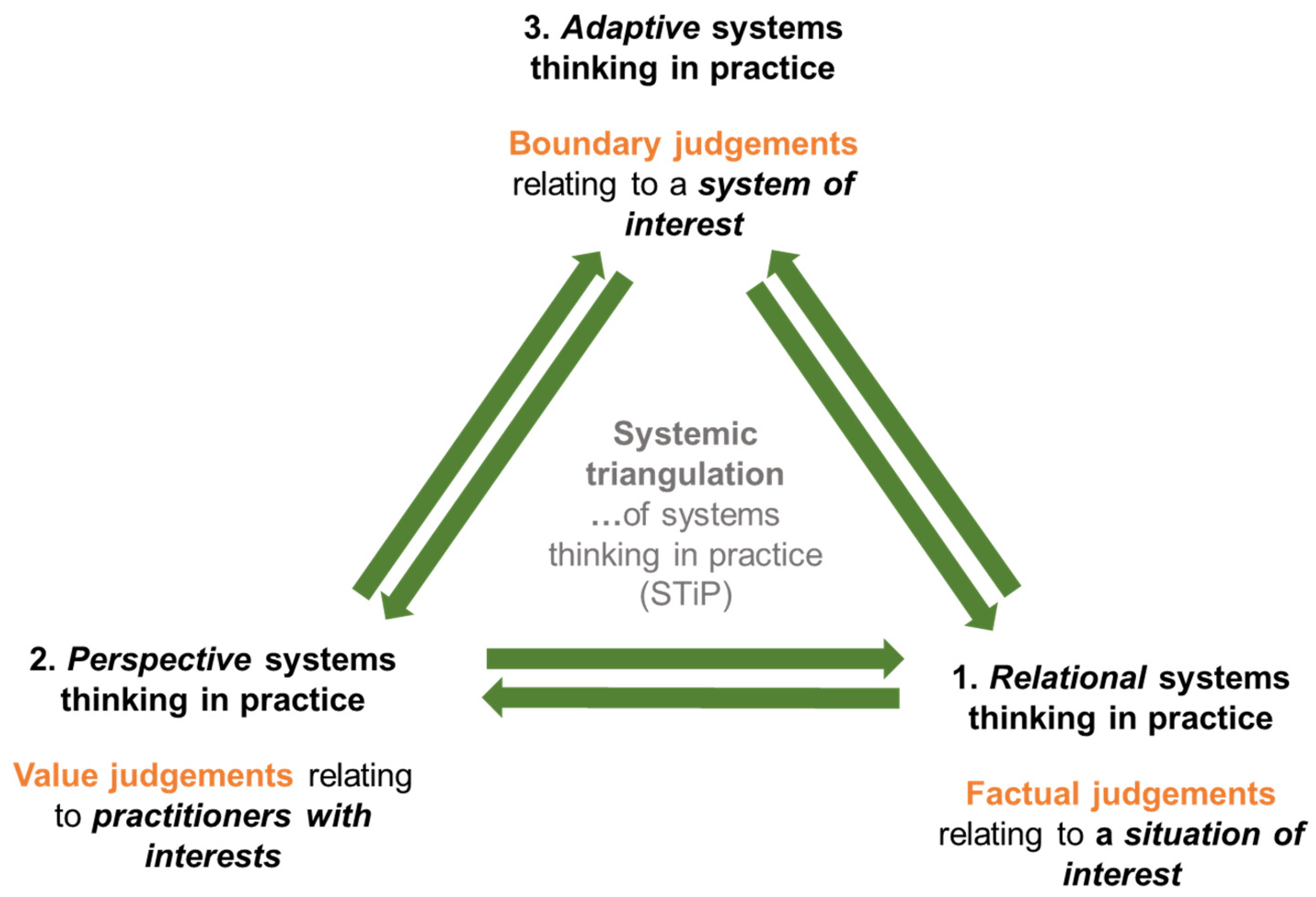
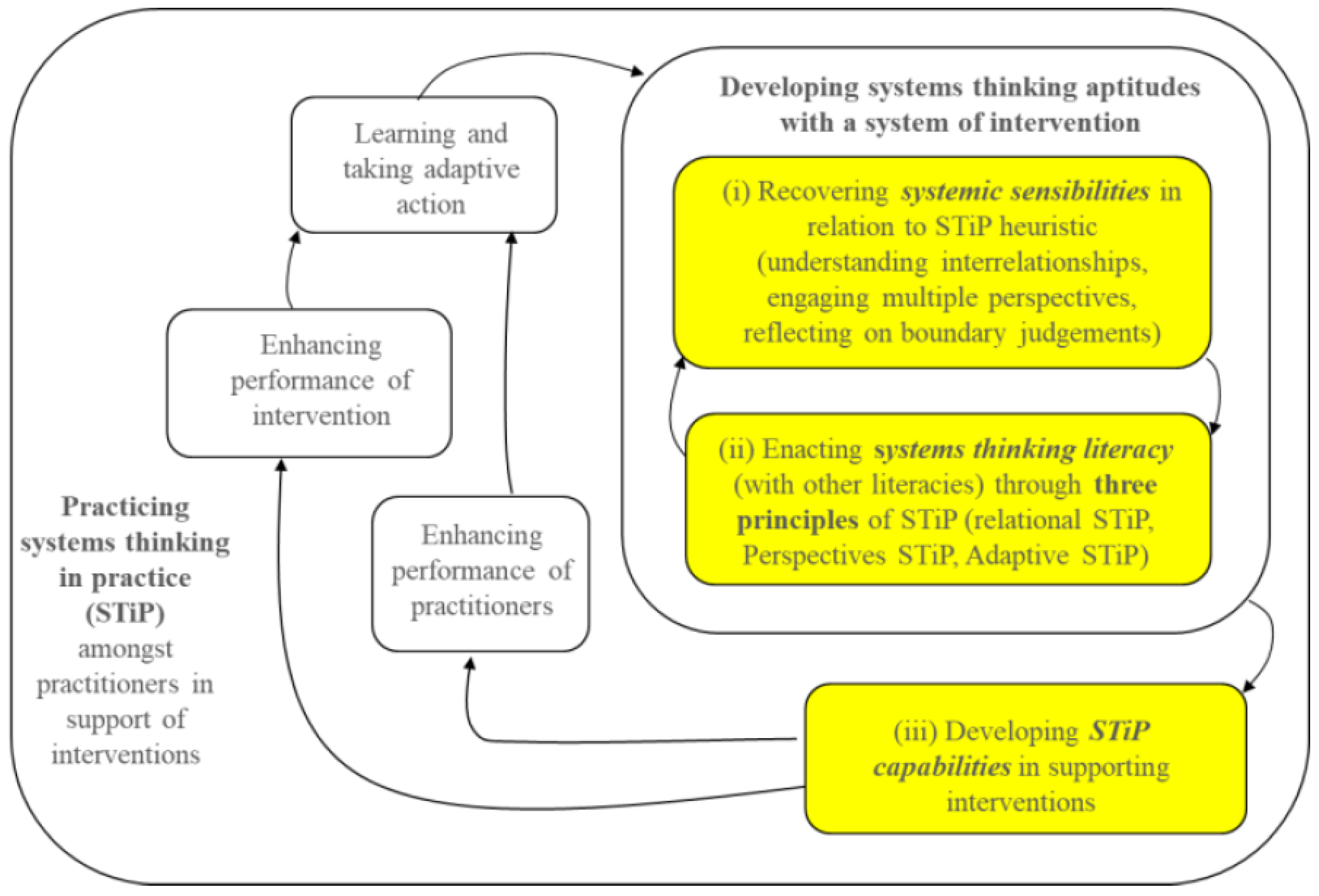
Traditionally, systems thinking support has relied on an ever-increasing plethora of systems tools, methods, and approaches. Arguably though, such support requires something different from, and more accessible than, detailed instruction on somewhat abstract laws and detailed principles and/or constitutive rules associated with conventional systems approaches or systems ‘tools of the trade’. For busy managers and decision makers working in often-stressful conditions, what is perhaps more valued are simple principles for enabling systems thinking in practice. Such principles should acknowledge and build on existing (multi)disciplinary skill sets and expertise, allowing for more meaningful interdisciplinary support amongst professions, as part of a nested transdisciplinary support for addressing wider social challenges. This monograph offers three principles of systems thinking in practice (STiP): relational STiP, perspective STiP, and adaptive STiP. They each have two sets of operational principles applicable to first-order and second-order practice, respectively. The three general principles are nested in an overriding principle of STiP as praxis (theory-informed action or thinking in practice) manifest in the need for being both systemic and systematic. The three principles represent a distilled expression of a systematic literacy of systems thinking, a literacy that speaks to the systemic sensibilities of Inter-relationships, Perspectives, and Boundaries (sometimes referred collectively as IPB), associated with any area of intervention. Drawing on metaphors of bricolage, conversation, and performance, and building on philosophical foundations of boundary critique, the three principles provide for a requisite systems literacy (as an emergent property of systemic sensibilities and systems thinking literacy) for enabling appropriate STiP capabilities to flourish when making a meaningful change.
Keywords: boundary critique; bricolage; bricoleur; capabilities; critical systems thinking; metaphors; praxis; requisite systems literacy; second-order practice; systems thinking in practice; systems thinking practitioner; systems thinking principles boundary critique; bricolage; bricoleur; capabilities; critical systems thinking; metaphors; praxis; requisite systems literacy; second-order practice; systems thinking in practice; systems thinking practitioner; systems thinking principles