1. Introduction
Amphibian survival is strongly dependent on high levels of environmental humidity [
1,
2,
3]. This physiological dependence is reflected in the disproportionately high number of amphibian species threatened with extinction worldwide, which currently reaches approximately 41% according to the IUCN [
4]. Among the primary drivers of this decline is the increasing scarcity of freshwater bodies, a process that has been exacerbated by global climate warming [
5,
6]. In addition to climate-related pressures, amphibian populations are affected by a suite of anthropogenic and natural stressors, including pollution [
7,
8,
9], infectious diseases [
10,
11,
12], habitat degradation and fragmentation [
13,
14,
15], invasive species [
16,
17], and road mortality [
18,
19,
20]. Collectively, these pressures have rendered amphibians one of the most vulnerable vertebrate groups globally.
Climate warming represents one of the most severe environmental challenges of the 21st century [
21]. Rising global temperatures are disrupting ecosystems worldwide, with profound consequences for biodiversity and ecosystem functioning [
22,
23]. Beyond direct physiological effects on individual species, climate change alters ecological interactions and destabilizes community dynamics, leading to cascading impacts across trophic levels [
24]. Furthermore, climate warming increases the frequency and intensity of extreme weather events, such as droughts and heatwaves, which impose additional stress on already vulnerable species and habitats [
25].
Amphibians are particularly sensitive to climate change due to their biphasic life cycle and dependence on both aquatic and terrestrial environments [
1,
26,
27]. Rising temperatures can disrupt breeding phenology, as many amphibian species require narrow thermal windows for successful reproduction [
28,
29]. Altered precipitation regimes, including prolonged droughts, can lead to the desiccation of breeding sites such as ponds, springs, and temporary water bodies [
30]. Climate change may also facilitate the spread of pathogens, such as chytrid fungi, while simultaneously reducing immune competence in amphibians [
31,
32]. In addition, changes in temperature and water availability influence dispersal capacity, prey availability, and predator–prey interactions, ultimately reshaping amphibian communities [
1]. The combined effects of these processes can drive local population declines and, in extreme cases, extinction. Consequently, habitat conservation and targeted mitigation measures aimed at buffering the impacts of climate change are urgently required [
33].
In response to the global amphibian crisis, species-specific action plans and conservation programs have been developed to safeguard threatened taxa and their habitats [
34,
35,
36,
37,
38]. Such initiatives typically combine population monitoring, habitat restoration and management, environmental assessment, and public awareness and engagement [
39].
The Karpathos water frog (
Pelophylax cerigensis Beerli, Hotz, Tunner, Heppich & Uzzell, 1994) is widely regarded as Europe’s most endangered anuran amphibian, with its total population estimated at approximately 500–600 individuals [
40]. The species was considered endemic to Karpathos Island, where freshwater habitats are extremely scarce, but it has recently been confirmed on Rhodes, another island in the southern Aegean Sea (Greece). One of the main pressures affecting the species is the pronounced reduction in rainfall over the past three decades [
41,
42], which has drastically limited the availability of suitable aquatic habitats. As a result, only a small number of ponds and rivulets persist during the prolonged dry period on Karpathos, which typically extends from late March to early November [
40,
43].
To address the rapid decline of P. cerigensis, the National and Kapodistrian University of Athens, in collaboration with WWF Greece, developed a National Action Plan for the species. The plan was implemented by the Hellenic Herpetological Society between 2020 and 2026. In the present study, we outline the key components of this Action Plan, describe the challenges encountered during its implementation, present the results achieved to date, and discuss the progress made towards securing the long-term conservation of the Karpathos water frog.
2. Materials and Methods
2.1. Study System
Karpathos Island is the second largest island of the Dodecanese complex, with a total area of 324.7 km
2 and a maximum elevation of 1215 m at Kali Limni Mountain [
44]. Karpathos began to form geologically about 12 million years ago with the opening of the Mid-Aegean Trench [
45]. It was initially isolated around 8 million years ago, while its final separation from Rhodes occurred approximately 3.5 million years ago [
46,
47]. This long-term isolation has resulted in high levels of biodiversity, including numerous endemic taxa and largely intact natural landscapes [
48].
The climate of Karpathos is typically Mediterranean, characterized by hot, dry summers and mild, relatively humid winters. However, the northern part of the island experiences distinct microclimatic conditions, with increased exposure to strong winds and generally drier and cooler conditions compared to the rest of the island [
49]. Due to its ecological importance, a substantial proportion of Karpathos is included in the Natura 2000 network, with two designated protected areas (GR4210002 and GR4210003).
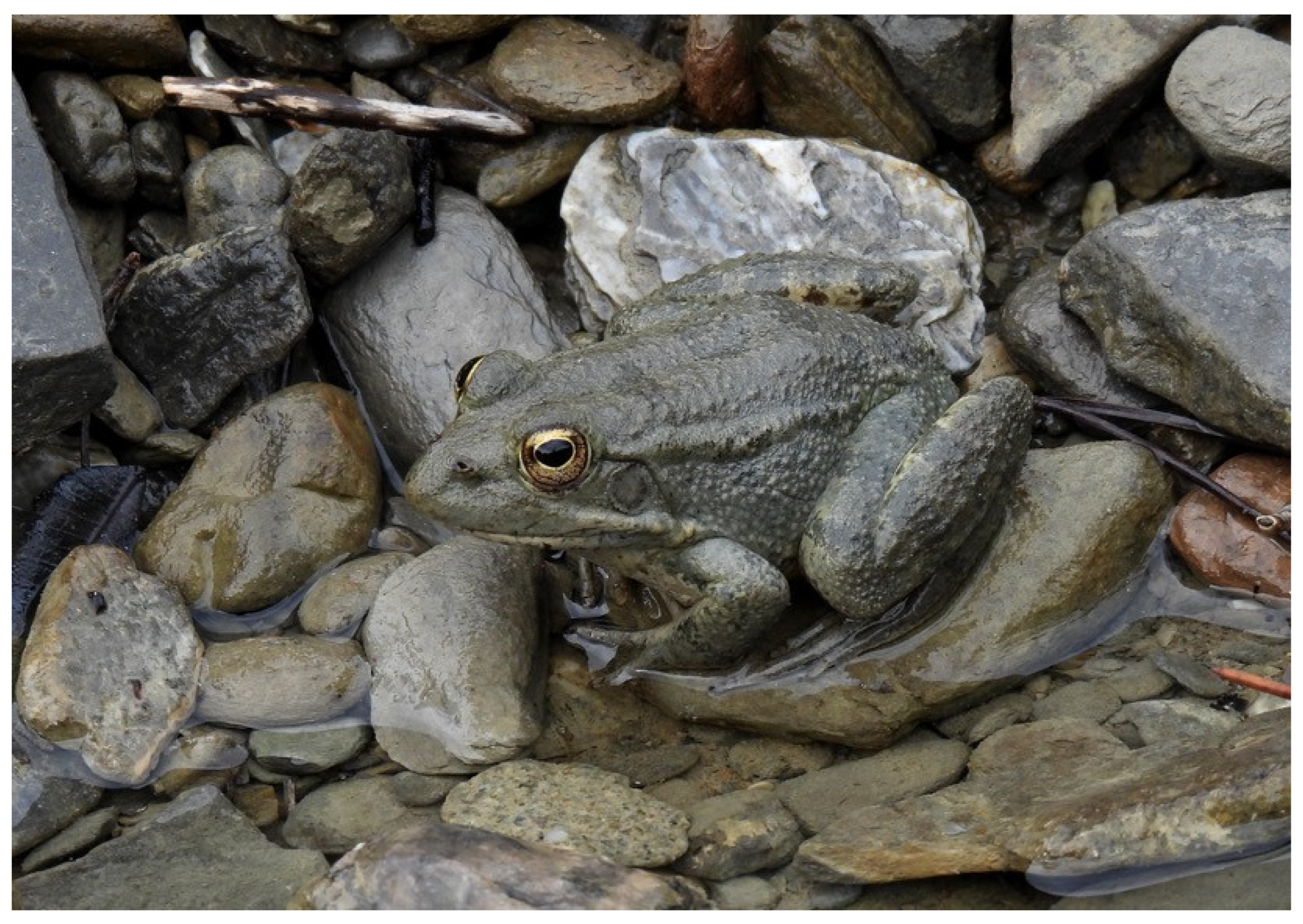
The Karpathos water frog (
Pelophylax cerigensis) is a medium-sized anuran, with a snout–vent length (SVL) ranging from approximately 5 to 7 cm. Dorsal coloration varies from brown and brown-grey to olive-brown, typically with numerous small dark spots and blotches (
Figure 1). In some individuals, a light yellow-green or cream-colored vertebral stripe is present [
41,
50]. The species is primarily diurnal and remains active throughout the year, although during the summer months, activity shifts towards dusk. Breeding takes place in spring [
41]. Feeding is opportunistic and largely dependent on prey availability, with Coleoptera, Hymenoptera, and spiders constituting the main prey groups [
43].
Until recently,
P. cerigensis was considered endemic exclusively to Karpathos Island. However, recent phylogenetic and molecular evidence has demonstrated that the water frog population on the neighboring island of Rhodes also belongs to this species [
51,
52]. The Karpathos water frog, which until recently was classified as Critically Endangered (CR), is now listed as Endangered (EN) on both the IUCN Red List [
53] and the Greek Red List [
54].
2.2. Study Area
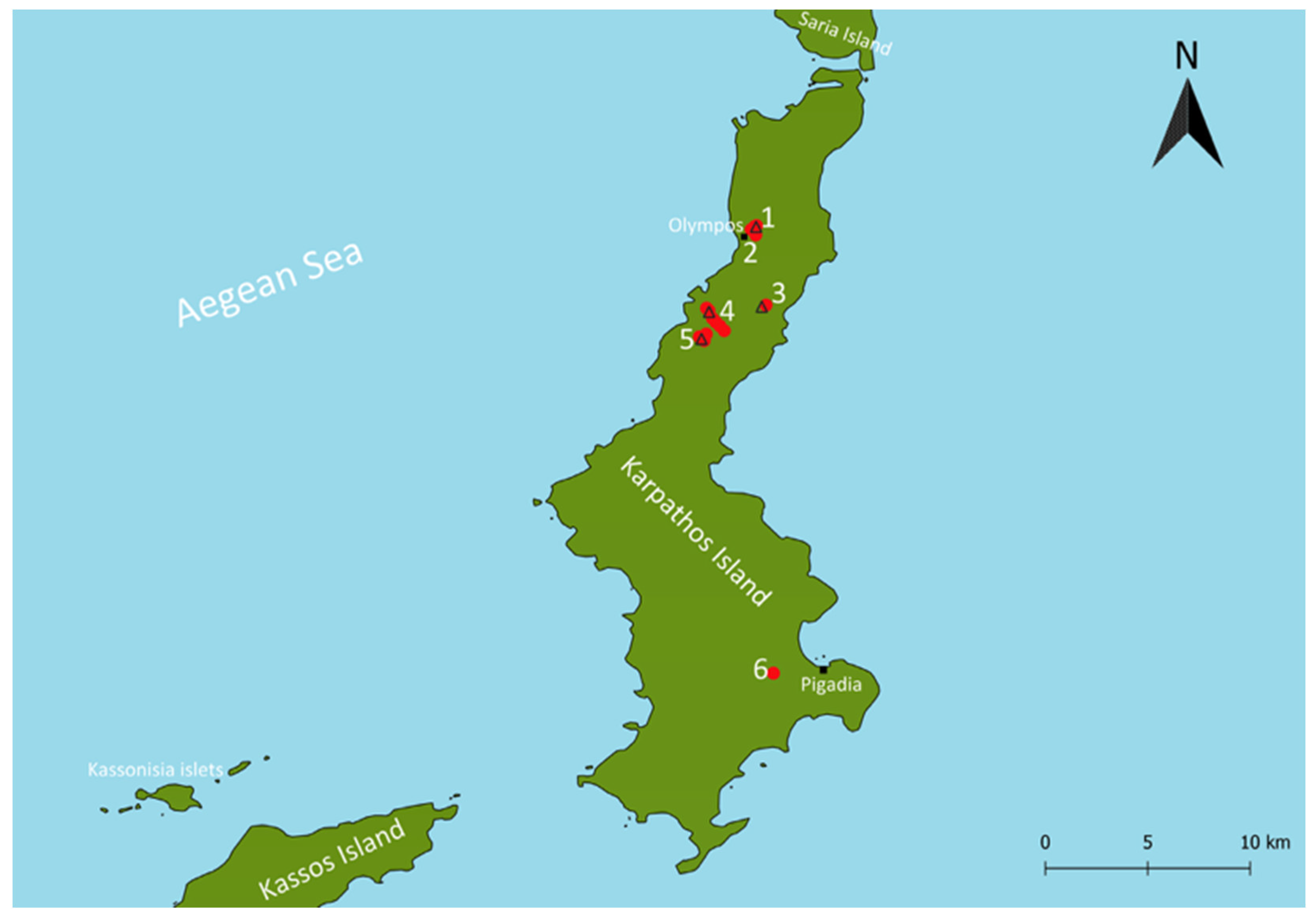
The Action Plan primarily focused on the northern part of Karpathos Island, where the main extant populations of the species occur. The principal distribution areas include the rivulets of Olympos and Achamantia, as well as the Argoni and Nati areas (
Figure 2). These freshwater systems constitute the core habitats supporting the remaining populations of
P. cerigensis on the island.
Vegetation surrounding the rivulets is dominated by phrygana and sparse shrub formations. Characteristic plant species include thyme (
Thymbra capitata), thorny burnet (
Sarcopoterium spinosum), lentisk (
Pistacia lentiscus), and, in some areas, open stands of eastern Mediterranean pine (
Pinus brutia). In several locations along the rivulets, thermo-Mediterranean riparian galleries are present, with dominant vegetation consisting of oleander (
Nerium oleander) and spiny rush (
Juncus articulatus) [
43].
In addition to natural water bodies, small frog populations were also recorded in traditional artificial structures, such as concrete water tanks and livestock watering troughs, which locally function as alternative refugia during dry periods.
2.3. Actions and Methods
The overarching aim of the Action Plan was to secure the long-term survival of the Karpathos water frog and to promote integrated conservation efforts across its limited range. To achieve this goal, a set of priority actions and mitigation measures was identified and implemented, structured around four main objectives.
2.3.1. Halting and Reversing Population Decline
To mitigate the effects of prolonged drought and habitat loss, new artificial ponds were constructed to retain water during dry periods and function as refugia for the species. In parallel, a hydrogeological study was conducted at the Panagia Eleimonitria Spring, followed by targeted technical interventions aimed at restoring water availability. The reactivation of this spring had a positive effect on the frog population inhabiting the Olympos rivulets.
2.3.2. Improvement of Habitat Quality
Efforts were made to enhance the capacity of existing habitats to support viable frog populations. This included the regular maintenance of natural and artificial water bodies, as well as the removal of waste, debris, and sediment from all known sites occupied by the species.
2.3.3. Enhancement of Biological and Ecological Knowledge
A key priority was the investigation of the taxonomic status and genetic structure of the Rhodes Island populations, following earlier suggestions that they might belong to the same species as the Karpathos population. Molecular analyses were conducted, and genetic diversity was assessed at the population level [
51,
55,
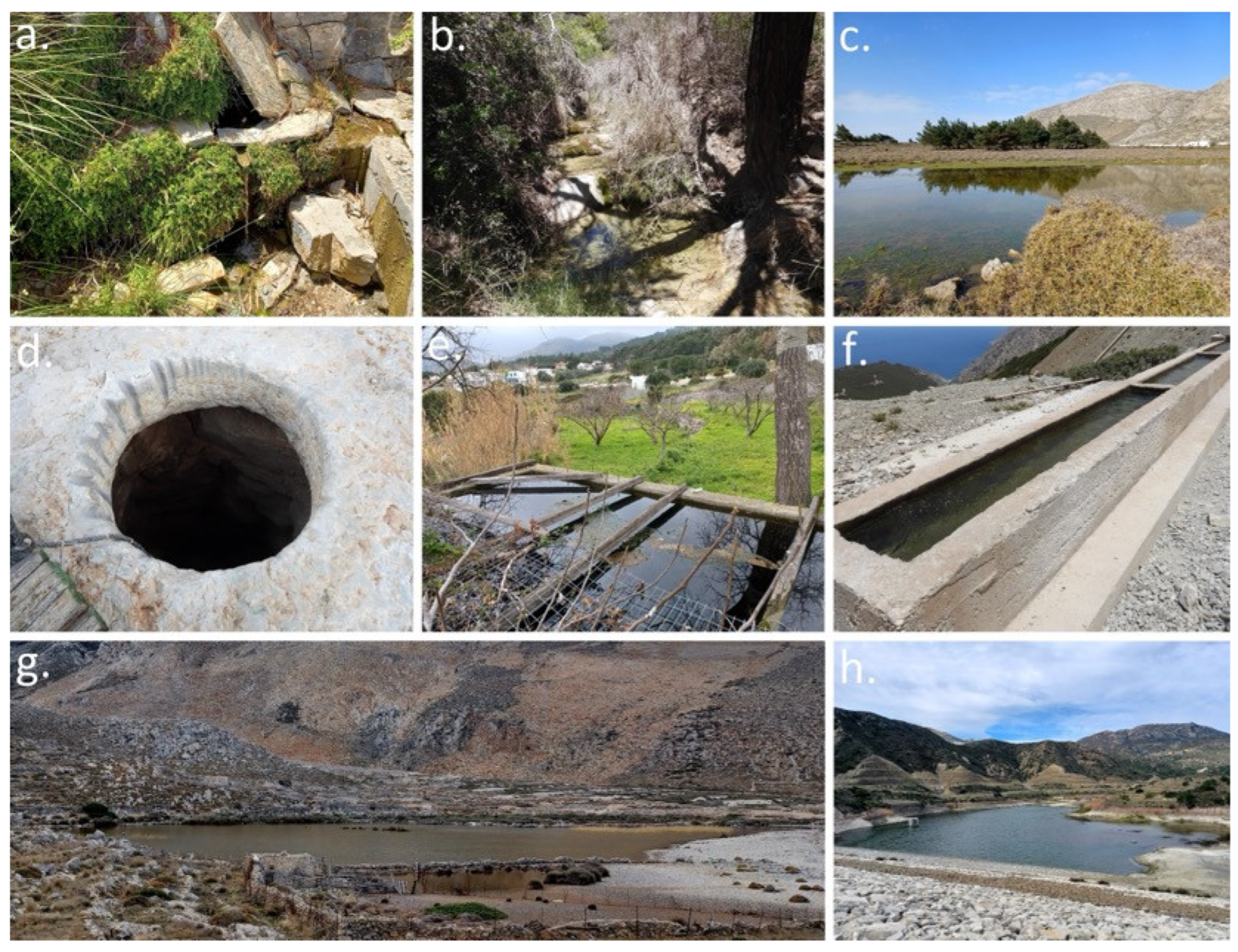
56]. To assess the full extent of the species’ distribution on Karpathos Island, extensive field surveys were carried out across a large number of water bodies. A total of 219 sites were surveyed, including concrete water tanks (
n = 152), springs (
n = 27), streams and rivulets (
n = 15), livestock watering troughs (
n = 8), cisterns (
n = 7), temporary ponds (
n = 5), wells (
n = 3), a marsh (
n = 1), and a dam (
n = 1) (
Figure 3a–h). In addition, frog populations were systematically monitored throughout the duration of the project, with surveys conducted twice annually using line transects and point counts. Further emphasis was placed on documenting the species’ ecology through systematic field observations.
2.3.4. Public Awareness and Stakeholder Engagement
To foster local support for conservation actions, a targeted educational program was developed for primary school students on Karpathos. In addition, an informational brochure, available in both Greek and English, was produced to communicate the ecological importance of the species and the conservation measures implemented. The brochure was distributed to local residents and visitors to the island.
3. Results
3.1. Pond Construction
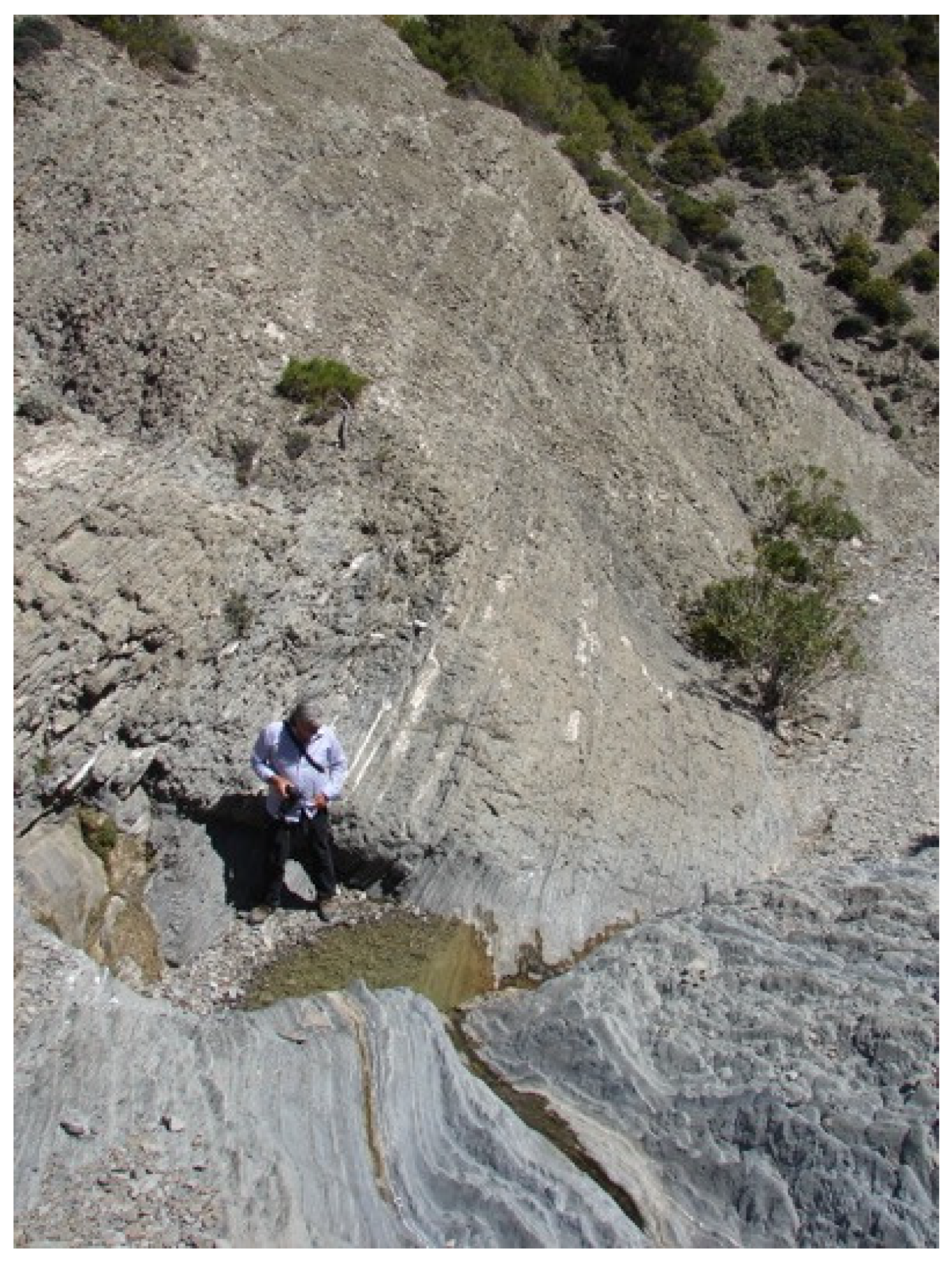
Small artificial ponds were constructed as part of the Action Plan to mitigate the effects of summer drought and the drying of natural water bodies. Their construction was approved by the local Management Unit of Protected Areas of the Natural Environment and Climate Change Agency (N.E.C.C.A.) and licensed by the Dodecanese Department of Forest Administration (Approval No. A.Π. 58826). Summers on Karpathos are characterized by prolonged aridity, during which many rivulets inhabited by the species dry out completely (
Figure 4). The newly constructed ponds were therefore designed to provide permanent or semi-permanent refugia for frogs during dry periods.
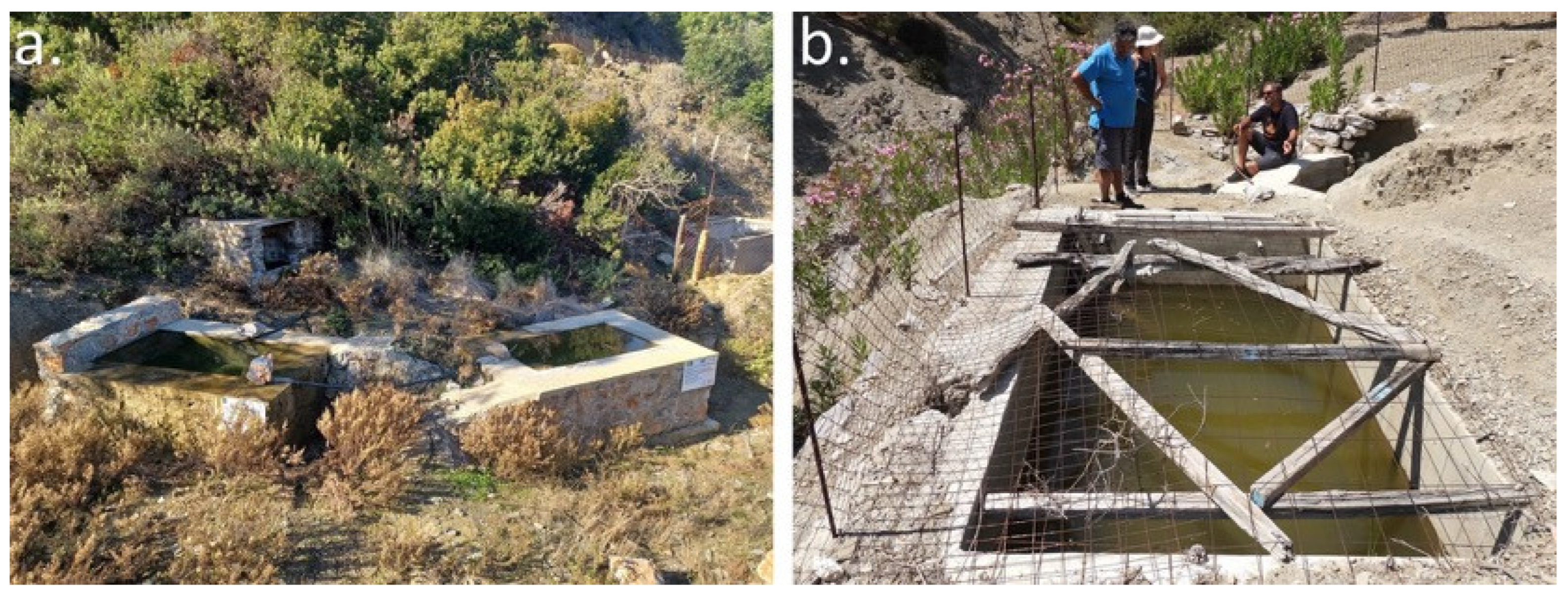
In total, five water tanks were constructed following similar design specifications: approximately 2 m in length, 1.5 m in width, and 1 m in depth, with walls approximately 40 cm thick. Site selection was based on three main criteria: accessibility for construction machinery, availability of adequate space, and proximity to a spring capable of supplying water to the tanks. The ponds were built using local stone to ensure visual and ecological compatibility with the surrounding landscape, while the interior surfaces were coated with cement mortar to ensure waterproofing. Small ramps were incorporated both inside and outside the tanks to facilitate frog movement in and out of the water. In locations adjacent to slopes, low retaining walls (30–50 cm high) were constructed to prevent sediment and eroded material from entering the tanks. Water was supplied to the tanks via polyvinyl chloride (PVC) hoses connected to nearby springs (
Figure 5a,b).
3.2. Panagia Eleimonitria Spring Study
The Panagia Eleimonitria Spring, located in the Olympos area, historically supported a section of a rivulet inhabited by a small frog population. In recent years, however, water discharge from the spring has declined substantially and, during certain visits both before and during the implementation of the Action Plan, it ceased entirely, primarily in the summer and autumn months. During the early years of the project, both adult frogs and tadpoles were recorded at the spring, whereas following periods of water depletion, only few adult individuals, or none at all, were observed (see
Table 1), indicating a marked reduction in local frog presence. To address this issue, a hydrological study was commissioned to investigate the spring’s hydrogeological characteristics and identify potential measures to secure a more stable water supply. The study found that the reduced yield of the Eleimonitria Spring is mainly due to natural hydrogeological factors, including a 33% decrease in rainfall over the past 20–25 years, particularly summer droughts, and the local geology, while human activities mainly affect the movement of water after it leaves the spring toward the rivulet [
42].
Based on the findings of this study, mild technical interventions were implemented. These included the construction of an artificial pond fed by an existing upstream tank supplied by the spring. Overflow from both the new and the pre-existing tanks was directed into the rivulet, thereby ensuring a more continuous flow of water. As the summer refugia previously used by frogs in this rivulet were drying out completely, the intervention is expected to maintain water availability throughout the year, provided that the spring continues to discharge. The construction was approved by the Directorate for the Management of Protected Areas (Sector B) of N.E.C.C.A. and licensed by the Dodecanese Department of Forest Administration (Approval No. A.Π. 212954).
3.3. Maintenance of Existing Water Bodies
At the onset of the Action Plan, surveys were conducted at all known frog habitats in northern Karpathos, including both natural and artificial water bodies, in order to assess their condition. Overall, most rivulets and water tanks were found to be in good condition, with minimal evidence of human disturbance, littering, or infilling by debris. In a limited number of cases, however, water tanks contained accumulated debris or small amounts of discarded waste were observed within rivulets, specifically in a few rivulet puddles of the Olympus stream system located near a residential area, while the more remote streams showed no signs of littering or infilling.
All foreign materials were removed from affected sites to prevent further degradation and reduce the risk of complete infilling by soil and stones. These maintenance actions contributed to preserving the functionality of existing water bodies as suitable frog habitats.
3.4. Molecular Analyses
Molecular analyses were conducted on samples collected from Karpathos and Rhodes during the first year of the project. The results confirmed that frog populations from both islands belong to the same species, forming a well-supported monophyletic clade with low genetic divergence between populations [
52].
3.5. Surveys of Water Bodies on Karpathos
Most of the surveyed areas across the island did not reveal new frog populations. However, a small population was newly discovered during this project at Schina Dam, near the island’s capital, Pigadia, in southern Karpathos. The dam, completed in 2020–2021, covers an area of approximately 5.42 ha. The presence of frogs at this site is presumed to be the result of accidental human-mediated translocation.
3.6. General Ecological Observations
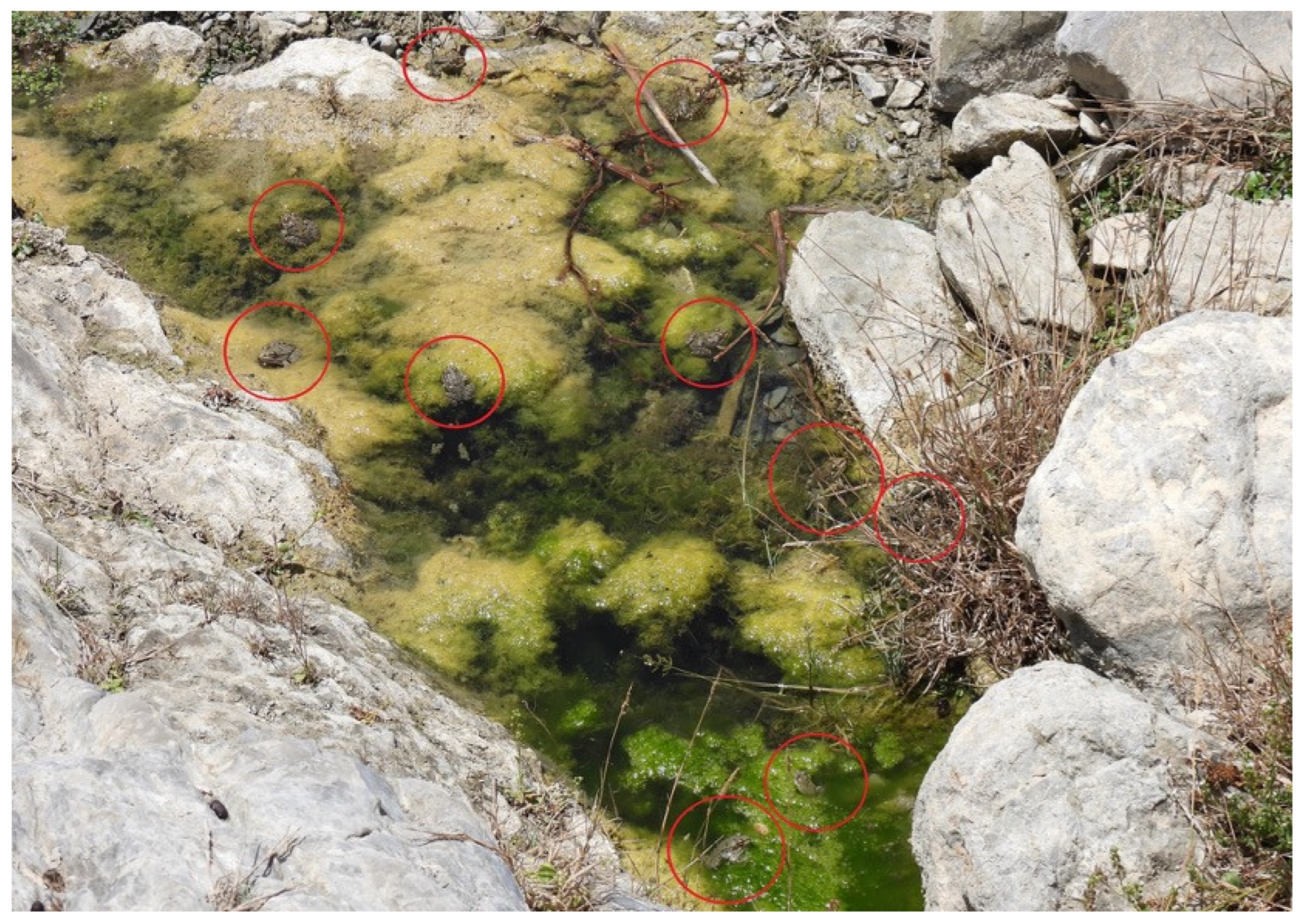
Field surveys revealed that frogs actively migrate over short distances within rivulets and streams, typically several tens of meters, among nearby puddles in response to declining water availability. These movements were occasional and involved individual frogs rather than large groups. As shallow pools dry out, individuals move upstream to sections where small puddles retain water, even during the driest periods of the year. Consequently, large aggregations of frogs (up to 37 individuals) were observed within single puddles during summer and autumn, irrespective of puddle size (
Figure 6). In contrast, during winter and spring, when water availability increases, frogs were more evenly distributed across multiple pools, typically with 1–5 individuals per puddle depending on size.
While adult frogs are capable of relocating between water bodies, tadpoles are highly vulnerable to desiccation. On multiple occasions, large numbers of tadpoles that had not yet completed metamorphosis were found dead in puddles that had dried out completely during July and September.
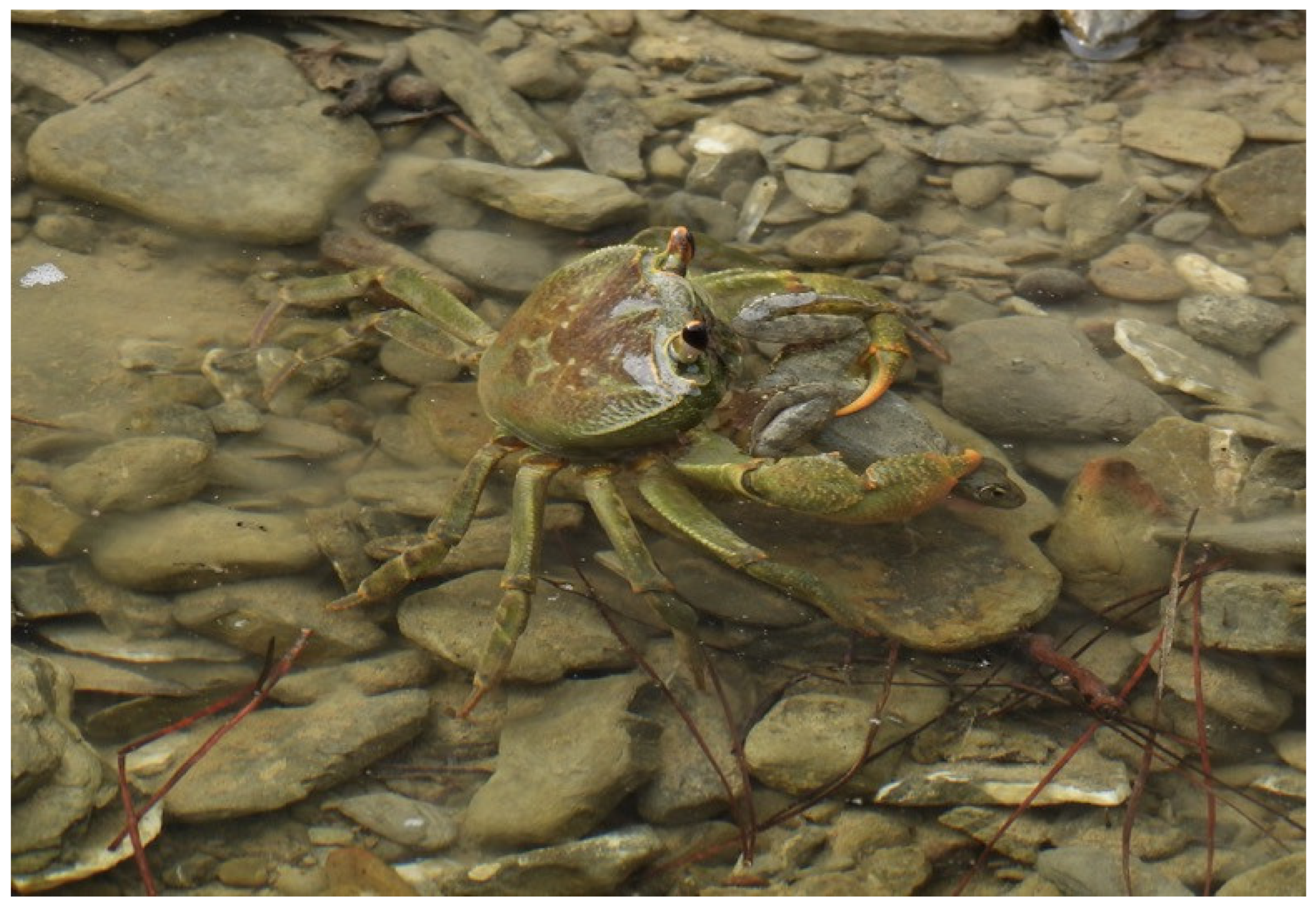
Predation pressure increased markedly in the few remaining water bodies during drought conditions. The most frequently observed predator was the Karpathos freshwater crab (
Potamon karpathos) (
Figure 7). Although the two species have coexisted historically, the scarcity of suitable habitats forces both to occupy the same limited water bodies for extended periods, leading to repeated predation events [
57]. In addition, six species of migratory batrachophagous birds (
Ardea cinerea,
Ardea purpurea,
Egretta garzetta,
Ardeola ralloides,
Nycticorax nycticorax, and
Circus aeruginosus) were observed feeding in habitats occupied by the frog. Direct predation on tadpoles or juveniles was confirmed for
E. garzetta,
A. ralloides, and
N. nycticorax. A single record of frog remains in beech marten (
Martes foina) droppings suggests occasional predation by mammals, although further study is required to assess its significance.
3.7. Population Monitoring and Colonization of Newly Constructed Ponds
Continuous population monitoring was conducted across all study sites to evaluate demographic structure, temporal trends, and site-specific population dynamics. The number of frogs recorded was systematically documented each year, with individuals categorized as adults, juveniles, and tadpoles, providing insights into overall population fluctuations and long-term trends. These data allowed for an assessment of population health and the identification of sites with higher or lower densities, contributing to a broader understanding of species status on the island. The results of population monitoring are presented in
Table 1.
One of the central objectives of the Action Plan was the creation of artificial ponds to expand available habitat. The newly constructed ponds were systematically monitored to assess their use by the species. Results were encouraging; despite their very recent construction, field observations indicated early colonization by the target species, with adult frogs present and breeding observed in Argoni ponds during the first year of their construction, and a small number of tadpoles recorded in Achamantia ponds during the second year, indicating successful use of these artificial habitats for both refuge and reproduction. These observations should be regarded as indicative rather than conclusive, and a systematic, long-term monitoring scheme is required to reliably assess the effectiveness of the constructed ponds in supporting amphibian populations under prolonged drought conditions. In
Table 2, yearly counts of individuals have been included to provide a more detailed picture of colonization success.
3.8. Education and Awareness
A six-lesson educational package was developed specifically for primary school students. Each lesson targeted defined learning outcomes and combined classroom-based activities with field exercises, allowing students to directly observe the frog and its habitat. Through these activities, students explored local environmental conditions, temporal and spatial changes, and the ecological role of the species, fostering awareness of the relationship between biodiversity and human well-being.
In addition, two outreach actions targeted the wider public. Presentations on the biology and conservation of the Karpathos water frog were delivered in all primary schools on the island. Furthermore, an informational brochure, produced in both Greek and English, was published and will be distributed to residents and visitors, highlighting the species’ conservation status and the measures implemented under the Action Plan.
4. Discussion
The conservation actions implemented for the Karpathos water frog (P. cerigensis) represent a targeted response to the severe and ongoing pressures faced by one of Europe’s most threatened amphibian species. The results of the Action Plan demonstrate that carefully designed habitat-based interventions, combined with systematic monitoring and public engagement, can mitigate some of the immediate effects of drought and habitat loss in insular environments characterized by extreme water scarcity.
The construction of artificial ponds proved to be one of the most effective measures implemented under the Action Plan. Prolonged summer droughts on Karpathos frequently result in the complete desiccation of natural rivulets and puddles, leading to high mortality rates, particularly among tadpoles that are unable to relocate. The rapid colonization of newly constructed ponds, including the presence of both adult frogs and tadpoles during the year of construction and the subsequent year, indicates that these artificial water bodies function successfully as refugia and breeding sites. Similar findings have been reported in other amphibian conservation and monitoring programs, where artificial or restored aquatic habitats have partially compensated for the loss of natural water bodies under changing climatic conditions [
30,
58,
59,
60]. In the context of Karpathos, where freshwater availability is extremely limited, such interventions are likely to play a critical role in sustaining local populations, particularly in areas such as Achamantia, where population size is currently very low.
The hydrological interventions at the Panagia Eleimonitria Spring further highlight the importance of maintaining year-round water availability in key breeding and refuge sites. The decline in water discharge from the spring had previously resulted in the near-collapse of the local frog population. The redirection and stabilization of water flow through mild technical measures are expected to improve habitat stability and reduce seasonal bottlenecks. Although the long-term effectiveness of this intervention will depend on future precipitation patterns and the persistence of spring discharge, the approach demonstrates how site-specific hydrological management can contribute meaningfully to amphibian conservation in water-limited landscapes.
Field observations revealed pronounced seasonal shifts in frog distribution, driven primarily by water availability. During dry periods, frogs congregated in a small number of remaining puddles, often at high densities, whereas in wetter seasons, individuals were more evenly distributed across available habitats. This behavioral response increases vulnerability to predation and density-dependent mortality during droughts. The repeated observation of predation by the Karpathos freshwater crab (
P. karpathos), as well as by migratory birds, underscores the indirect effects of habitat contraction. While predation is a natural ecological process, the forced co-occurrence of predators and prey in a limited number of shrinking water bodies likely amplifies its impact beyond natural levels. Similar interactions have been documented in other drought-affected amphibian systems, where reduced habitat availability intensifies predator–prey encounters and accelerates population decline [
1,
61,
62].
Tadpole mortality emerged as a critical bottleneck for population persistence. The repeated loss of entire cohorts due to puddle desiccation highlights the vulnerability of early life stages to climatic extremes. This pattern is consistent with global evidence indicating that larval mortality driven by drought is a major contributor to amphibian population declines, particularly in species with restricted distributions and limited dispersal capacity [
30,
58]. The presence of tadpoles in newly constructed ponds suggests that artificial water bodies may partially alleviate this bottleneck by extending hydroperiods during the breeding season.
The molecular confirmation that frog populations on Karpathos and Rhodes belong to the same species has important conservation implications. The species’ persistence is supported by the presence of geographically isolated populations, which reduces the risk of total extinction if one population is lost, and emphasizes the importance of island-specific management strategies. Each population is exposed to distinct environmental pressures, and conservation actions should aim to preserve local genetic and ecological characteristics rather than treating the species as a single homogeneous unit.
The unexpected discovery of a small population at the Schina Dam highlights both the species’ capacity to exploit newly available aquatic habitats and the potential role of human-mediated translocation. Although the long-term viability of this population remains uncertain, large artificial reservoirs may offer relatively stable aquatic environments in otherwise arid landscapes. Nevertheless, reliance on such habitats should be approached cautiously, as they may introduce new threats, including altered predator communities and water management practices beyond conservation control.
Beyond direct habitat interventions, education and public awareness emerged as essential components of the Action Plan. Engaging local communities, particularly younger generations, fosters long-term stewardship and reduces the likelihood of habitat degradation. The generally high environmental awareness reported among residents of northern Karpathos suggests that conservation initiatives can build upon existing positive attitudes, reinforcing local involvement in species protection.
Overall, the results of this study indicate that while the Karpathos water frog remains highly vulnerable to climate change, drought, and habitat limitation, targeted and adaptive management actions can slow or partially reverse local declines. Continued long-term monitoring will be essential to evaluate population trends, assess the durability of implemented measures, and refine conservation strategies in response to ongoing environmental change. The Action Plan for Pelophylax cerigensis provides a valuable framework that may be applicable to other insular amphibian species facing similar challenges under increasingly arid climatic conditions.
5. Conclusions
Amphibians are the most threatened vertebrate group globally, and the Karpathos water frog (Pelophylax cerigensis) exemplifies the vulnerability of insular species exposed to increasing climatic stress and habitat limitation. The implementation of the National Action Plan has produced encouraging outcomes, demonstrating that targeted, science-based interventions can mitigate key threats acting on critically endangered amphibians.
Habitat restoration through artificial pond construction, hydrological management of critical springs, systematic population monitoring, and genetic assessment have collectively improved habitat availability and supported population persistence. The rapid use of newly created water bodies by adults and tadpoles highlights their effectiveness in buffering drought impacts and reducing larval mortality. Confirmation that the Rhodes and Karpathos populations belong to the same species further refines the conservation framework for P. cerigensis.
Nevertheless, significant challenges remain. Climate change-driven reductions in rainfall, rising temperatures, and increased predation pressure in shrinking habitats continue to threaten long-term viability. Sustained maintenance and expansion of artificial and semi-natural refugia, combined with adaptive management, will be essential in this water-limited island system.
Community engagement and education are equally crucial. Raising awareness among residents and visitors fosters local stewardship and strengthens long-term conservation success. In conclusion, although full recovery remains uncertain, the actions implemented to date provide a strong foundation for the long-term conservation of the Karpathos water frog. This Action Plan offers a valuable model for the conservation of insular amphibians facing similar challenges under ongoing environmental change.
Author Contributions
Conceptualization, A.C. and P.P.; methodology, A.C. and P.P.; validation, A.C. and P.P.; formal analysis, P.P.; investigation, A.C., V.S., D.P. and P.P.; resources, A.C., D.P. and P.P.; data curation, A.C. and P.P.; writing—original draft preparation, A.C.; writing—review and editing, A.C., V.S., D.P. and P.P.; visualization, A.C.; supervision, P.P.; project administration, A.C., V.S. and P.P.; funding acquisition, P.P. All authors have read and agreed to the published version of the manuscript.
Funding
The project was fully funded by the GREEN FUND within the framework of the program LIFE-IP 4 NATURA (LIFE16 IPE/GR/000002) Integrated actions for the conservation and management of Natura 2000 network areas, species, habitats, and ecosystems in Greece, titled “Implementation of the National Conservation Plan for the Karpathos frog (Pelophylax cerigensis, Beerli et al. 1994)”, Priority Axis: AP 1: “Biodiversity conservation actions”.
Institutional Review Board Statement
Fieldwork was conducted under permits 6ΔΘΘ4653Π8-1Β3 (14 June 2021) and ΨΟΥΩ4653Π8-ΘΨΠ (3 November 2023) issued by the Ministry of the Environment and Energy.
Informed Consent Statement
Not applicable.
Data Availability Statement
The raw data supporting the conclusions of this article will be made available by the authors on request.
Acknowledgments
We are thankful to Giorgos Prearis, Christos Kotselis, Tasos Dimalexis, and Ioannis Argyropoulos for their assistance in the field. Furthermore, we are grateful to the Guest Editors Panayiotis G. Dimitrakopoulos and Yiannis G. Zevgolis for the opportunity to contribute to the Special Issue of the journal. Finally, we are also thankful to the two anonymous reviewers for their constructive comments and suggestions for improvement.
Conflicts of Interest
The authors declare no conflicts of interest.
References
- Blaustein, A.R.; Walls, S.C.; Bancroft, B.A.; Lawler, J.J.; Searle, C.L.; Gervasi, S.S. Direct and indirect effects of climate change on amphibian populations. Diversity 2010, 2, 281–313. [Google Scholar] [CrossRef]
- Murrieta-Galindo, R.; González-Romero, A.; López-Barrera, F.; Parra-Olea, G. Coffee agrosystems: An important refuge for amphibians in central Veracruz, Mexico. Agrofor. Syst. 2013, 87, 767–779. [Google Scholar] [CrossRef]
- Pankaj, N.; Nath, B. Role of Amphibians to Ecosystem Services: A Review. Electron. J. Biol. 2023, 19, 3. [Google Scholar]
- International Union for Conservation of Nature (IUCN). The IUCN Red List of Threatened Species, Summary Statistics. 2024. Available online: https://www.iucnredlist.org/resources/summary-statistics (accessed on 27 October 2024).
- Duarte, H.; Tejedo, M.; Katzenberger, M.; Marangoni, M.; Baldo, D.; Beltrán, J.F.; Martí, D.; Richter-Boix, A.; González-Boyer, A. Can amphibians take the heat? Vulnerability to climate warming in subtropical and temperate larval amphibian communities. Glob. Chang. Biol. 2012, 18, 411–421. [Google Scholar] [CrossRef]
- Rodríguez-Rodríguez, E.J.; Beltrán, J.F.; El Mouden, E.H.; Slimani, T.; Márquez, R.; Donaire-Barroso, D. Climate change challenges IUCN conservation priorities: A test with western Mediterranean amphibians. SN Appl. Sci. 2020, 2, 216. [Google Scholar] [CrossRef]
- Pinelli, C.; Santillo, A.; Chieffi Baccari, G.; Falvo, S.; Di Fiore, M.M. Effects of chemical pollutants on reproductive and developmental processes in Italian amphibians. Mol. Reprod. Dev. 2019, 86, 1324–1332. [Google Scholar] [CrossRef]
- Burgos-Aceves, M.A.; Faggio, C.; Betancourt-Lozano, M.; González-Mille, D.J.; Ilizaliturri-Hernández, C.A. Ecotoxicological perspectives of microplastic pollution in amphibians. J. Toxicol. Environ. Health Part B 2022, 25, 405–421. [Google Scholar] [CrossRef] [PubMed]
- Peluso, J.; Chehda, A.M.; Olivelli, M.S.; Ivanic, F.M.; Coll, C.S.P.; Gonzalez, F.; Valenzuela, L.; Rojas, D.; Cristos, D.; Butler, M.; et al. Metals, pesticides, and emerging contaminants on water bodies from agricultural areas and the effects on a native amphibian. Environ. Res. 2023, 226, 115692. [Google Scholar] [CrossRef]
- Urgiles, V.L.; Ramírez, E.R.; Villalta, C.I.; Siddons, D.C.; Savage, A.E. Three pathogens impact terrestrial frogs from a high-elevation tropical hotspot. EcoHealth 2021, 18, 451–464. [Google Scholar] [CrossRef]
- Azat, C.; Alvarado-Rybak, M. Emerging Infectious Diseases and Their Impacts on South American Amphibians. In Ecology of Wildlife Diseases in the Neotropics; Springer International Publishing: Cham, Switzerland, 2024; pp. 29–51. [Google Scholar]
- Thumsová, B.; Alarcos, G.; Ayres, C.; Rosa, G.M.; Bosch, J. Relationship between two pathogens in an amphibian community that experienced mass mortalities. Conserv. Biol. 2024, 38, e14196. [Google Scholar] [CrossRef]
- Cushman, S.A. Effects of habitat loss and fragmentation on amphibians: A review and prospectus. Biol. Conserv. 2006, 128, 231–240. [Google Scholar] [CrossRef]
- Ficetola, G.F.; Rondinini, C.; Bonardi, A.; Baisero, D.; Padoa-Schioppa, E. Habitat availability for amphibians and extinction threat: A global analysis. Divers. Distrib. 2015, 21, 302–311. [Google Scholar] [CrossRef]
- Piñon-Flores, M.A.; Suazo-Ortuño, I.; Ramírez-Herrejón, J.P.; Moncayo-Estrada, R.; del-Val, E. Habitat, water quality or geomorphological degradation in the streams: Which is most important for conserving an endemic amphibian of Central Mexico? J. Nat. Conserv. 2021, 64, 126063. [Google Scholar] [CrossRef]
- Courant, J.; Secondi, J.; Vollette, J.; Herrel, A.; Thirion, J.M. Assessing the impacts of the invasive frog, Xenopus laevis, on amphibians in western France. Amphib. Reptil. 2018, 39, 219–227. [Google Scholar] [CrossRef]
- Silveira, S.D.S.; Guimarães, M. The enemy within: Consequences of the invasive bullfrog on native anuran populations. Biol. Invasions 2021, 23, 373–378. [Google Scholar] [CrossRef]
- Elzanowski, A.; Ciesiołkiewicz, J.; Kaczor, M.; Radwańska, J.; Urban, R. Amphibian road mortality in Europe: A meta-analysis with new data from Poland. Eur. J. Wildl. Res. 2009, 55, 33–43. [Google Scholar] [CrossRef]
- Zevgolis, Y.G.; Kouris, A.; Christopoulos, A. Spatiotemporal patterns and road mortality hotspots of herpetofauna on a Mediterranean island. Diversity 2023, 15, 478. [Google Scholar] [CrossRef]
- Kouris, A.D.; Christopoulos, A.; Vlachopoulos, K.; Christopoulou, A.; Dimitrakopoulos, P.G.; Zevgolis, Y.G. Spatiotemporal Patterns of Reptile and Amphibian Road Fatalities in a Natura 2000 Area: A 12-Year Monitoring of the Lake Karla Mediterranean Wetland. Animals 2024, 14, 708. [Google Scholar] [CrossRef]
- Akpuokwe, C.U.; Adeniyi, A.O.; Bakare, S.S.; Eneh, N.E. Legislative responses to climate change: A global review of policies and their effectiveness. Int. J. Appl. Res. Soc. Sci. 2024, 6, 225–239. [Google Scholar] [CrossRef]
- Malhi, Y.; Franklin, J.; Seddon, N.; Solan, M.; Turner, M.G.; Field, C.B.; Knowlton, N. Climate change and ecosystems: Threats, opportunities and solutions. Philos. Trans. R. Soc. B 2020, 375, 20190104. [Google Scholar] [CrossRef]
- Muluneh, M.G. Impact of climate change on biodiversity and food security: A global perspective—A review article. Agric. Food Secur. 2021, 10, 36. [Google Scholar] [CrossRef]
- Thomas, C.D.; Cameron, A.; Green, R.E.; Bakkenes, M.; Beaumont, L.J.; Collingham, Y.C.; Erasmus, B.F.N.; de Siqueira, M.F.; Grainger, A.; Hannah, L.; et al. Extinction risk from climate change. Nature 2004, 427, 145–148. [Google Scholar] [CrossRef] [PubMed]
- Parmesan, C. Ecological and evolutionary responses to recent climate change. Annu. Rev. Ecol. Evol. Syst. 2006, 37, 637–669. [Google Scholar] [CrossRef]
- Corn, P.S. Amphibian breeding and climate change: Importance of snow in the mountains. Conserv. Biol. 2003, 17, 622–625. [Google Scholar] [CrossRef]
- Çiçek, K.; Bayrakci, Y.; Dinçer, A. Climate chaos: Examining the pressures of climate change on Eurasian amphibians and reptiles. Actual Probl. Prospect. Study Fauna 2024, 1. [Google Scholar]
- Blaustein, A.R.; Belden, L.K.; Olson, D.H.; Green, D.M.; Root, T.L.; Kiesecker, J.M. Amphibian breeding and climate change. Conserv. Biol. 2001, 15, 1804–1809. [Google Scholar] [CrossRef]
- Li, Y.; Cohen, J.M.; Rohr, J.R. Review and synthesis of the effects of climate change on amphibians. Integr. Zool. 2013, 8, 145–161. [Google Scholar] [CrossRef]
- Kissel, A.M.; Palen, W.J.; Ryan, M.E.; Adams, M.J. Compounding effects of climate change reduce population viability of a montane amphibian. Ecol. Appl. 2019, 29, e01832. [Google Scholar] [CrossRef]
- Pounds, J.A.; Bustamante, M.R.; Coloma, L.A.; Consuegra, J.A.; Fogden, M.P.; Foster, P.N.; La Marca, E.; Masters, K.L.; Merino-Viteri, A.; Puschendorf, R.; et al. Widespread amphibian extinctions from epidemic disease driven by global warming. Nature 2006, 439, 161–167. [Google Scholar] [CrossRef] [PubMed]
- Rollins-Smith, L.A. Amphibian immunity–stress, disease, and climate change. Dev. Comp. Immunol. 2017, 66, 111–119. [Google Scholar] [CrossRef] [PubMed]
- Shoo, L.P.; Olson, D.H.; McMenamin, S.K.; Murray, K.A.; Van Sluys, M.; Donnelly, M.A.; Stratford, D.; Terhivuo, J.; Merino-Viteri, A.; Herbert, S.M.; et al. Engineering a future for amphibians under climate change. J. Appl. Ecol. 2011, 48, 487–492. [Google Scholar] [CrossRef]
- Mushet, D.M.; Euliss, N.H., Jr.; Stockwell, C.A. Mapping anuran habitat suitability to estimate effects of grassland and wetland conservation programs. Copeia 2012, 2012, 321–330. [Google Scholar] [CrossRef]
- Verdade, V.K.; Valdujo, P.H.; Carnaval, A.C.; Schiesari, L.; Toledo, L.F.; Mott, T.; Andrade, G.V.; Eterovick, P.C.; Menin, M.; Pimenta, B.V.S.; et al. A leap further: The Brazilian amphibian conservation action plan. Alytes 2012, 29, 28–43. [Google Scholar]
- Tapley, B.; Rowley, J.J.; Chung, N.T.; Hao, L.V. An Action Plan for the Amphibians of the Hoang Lien Range 2017–2021; Amphibian Survival Alliance: London, UK, 2017. [Google Scholar]
- Burrow, A.K.; Lance, S. Restoration of geographically isolated wetlands: An amphibian-centric review of methods and effectiveness. Diversity 2022, 14, 879. [Google Scholar] [CrossRef]
- Laking, A.E.; Solís, J.M.; Brown, T.; Maddock, S.T.; Burdekin, O.; Taylor, P.; Lonsdale, G.; Green, S.E.W.; Martin, T.E.; Galdamez, J.R.; et al. The amphibians and reptiles of Cusuco National Park, Northwest Honduras: Updates from a long-term conservation programme. Neotrop. Biol. Conserv. 2024, 19, 37–62. [Google Scholar] [CrossRef]
- Shelly Singh, R. Global Amphibian Decline: Diversity, Threats and Management Strategies. J. Sci. Res. Rep. 2024, 30, 543–562. [Google Scholar] [CrossRef]
- Pafilis, P.; Deimezis-Tsikoutas, A.; Kapsalas, G.; Maragou, P. Action Plan for Pelophylax cerigensis. In LIFE-IP 4 NATURA Project: Integrated Actions for the Conservation and Management of Natura 2000 Sites, Species, Habitats and Ecosystems in Greece (LIFE16 IPE/GR/000002); 43 pages & Annexes; Ministry of Environment and Energy: Athens, Greece, 2020; 40p. [Google Scholar]
- Pafilis, P.; Maragou, P. (Eds.) Atlas of Amphibians and Reptiles of Greece; Broken Hill Publishers: Nicosia, Cyprus, 2020; 232p. (In Greek) [Google Scholar]
- I.A.CO Environmental and Water Consultants Ltd. Study of the Water Supply System of the Spring of Panagia Eleimonitria and Its Wider Area, in the Community of Olympus, Municipality of Karpathos; I.A.CO Environmental and Water Consultants Ltd.: Strovolos, Cyprus, 2023. [Google Scholar]
- Pafilis, P.; Kapsalas, G.; Lymberakis, P.; Protopappas, D.; Sotiropoulos, K. Diet composition of the Karpathos marsh frog (Pelophylax cerigensis): What does the most endangered frog in Europe eat? Anim. Biodivers. Conserv. 2019, 42, 1–8. [Google Scholar] [CrossRef]
- Stamatelatos, M.; Vamva, F. Hellenic Geographical Encyclopedia. Volume II; Tegopoulou—Maniatea: Athens, Greece, 1996; 414p. (In Greek) [Google Scholar]
- Kougioumoutzis, K.; Valli, A.T.; Georgopoulou, E.; Simaiakis, S.M.; Triantis, K.A.; Trigas, P. Network biogeography of a complex island system: The Aegean Archipelago revisited. J. Biogeogr. 2016, 44, 651–660. [Google Scholar] [CrossRef]
- Barrier, E. Précisions sur l’édifice des nappes helléniques dans l’arc égéen oriental: Le jalon de Kassos (Dodécanèse, Grèce). Compt. Rend. Acad. Sci. Paris 1979, D289, 453–456. [Google Scholar]
- Daams, R.; van der Weerd, A. Early Pliocene small mammals from the Aegean Island of Karpathos (Greece) and their paleogeographic significance. Geol. Mijnbouw. 1980, 59, 327–331. [Google Scholar]
- Dafis, S.; Papastergiadou, E.; Georghiou, K.; Babalonas, D.; Georgiadis, T.; Papageorgiou, M.; Lazaridou, E.; Tsiaoussi, V. Directive (92/43/EEC). The Greek Habitat Project: Natura 2000 Network, Athens, Contract B4-3200/84/756, Commission of the European Communities DG XI; Goulandris Museum of Natural History, Greek Biotope-Wetland Centre: Thessaloniki, Greece, 1996. [Google Scholar]
- Mamara, A.; Argiriou, A.A.; Anadranistakis, M. Homogenization of mean monthly temperature time series of Greece. Int. J. Clim. 2013, 33, 2649–2666. [Google Scholar] [CrossRef]
- Valakos, E.D.; Pafilis, P.; Lymberakis, P.; Maragou, P.; Sotiropoulos, K.; Foufopoulos, J. The Amphibians and Reptiles of Greece; Edition Chimaira: Frankfurt, Germany, 2008; 463p. [Google Scholar]
- Toli, E.; Siarabi, S.; Bounas, A.; Pafilis, P.; Sotiropoulos, K. New insights on the phylogenetic position and population genetic structure of the Critically Endangered Karpathos marsh frog Pelophylax cerigensis (Amphibia: Anura: Ranidae). Acta Herpetol. 2018, 13, 117–123. [Google Scholar]
- Toli, E.A.; Bounas, A.; Christopoulos, A.; Pafilis, P.; Sotiropoulos, K. Phylogenetic analysis of the critically endangered Karpathos water frog (Anura, Amphibia): Conservation insights from complete mitochondrial genome sequencing. Amphib. Reptil. 2023, 44, 277–287. [Google Scholar] [CrossRef]
- Spaneli, V.; Sotiropoulos, K. Pelophylax cerigensis. The IUCN Red List of Threatened Species 2024: E.T58567A229002159. 2024. Available online: https://www.iucnredlist.org/species/58567/229002159 (accessed on 7 December 2024).
- Natural Environment & Climate Change Agency (N.E.C.C.A.). Greek Red List. 2024. Available online: https://redlist.necca.gov.gr/en/home-copy/ (accessed on 23 December 2024).
- Lymberakis, P.; Poulakakis, N.; Manthalou, G.; Tsigenopoulos, C.S.; Magoulas, A.; Mylonas, M. Mitochondrial phylogeography of Rana (Pelophylax) populations in the Eastern Mediterranean region. Mol. Phylogenetics Evol. 2007, 44, 115–125. [Google Scholar] [CrossRef]
- Akın, Ç.; Can Bilgin, C.; Beerli, P.; Westaway, R.; Ohst, T.; Litvinchuk, S.N.; Uzzell, T.; Bilgin, M.; Hotz, H.; Guex, G.D.; et al. Phylogeographic patterns of genetic diversity in eastern Mediterranean water frogs were determined by geological processes and climate change in the Late Cenozoic. J. Biogeogr. 2010, 37, 2111–2124. [Google Scholar] [CrossRef]
- Christopoulos, A.; Kotselis, C.; Protopappas, D.; Spaneli, V.; Pafilis, P. Lethal grip for an endangered endemic frog: The freshwater crab Potamon karpathos (Decapoda, Potamidae) preys on Karpathos water frog Pelophylax cerigensis (Anura, Ranidae). Herpetozoa 2024, 37, 295–298. [Google Scholar] [CrossRef]
- Banks, B.; Beebee, T.J.; Cooke, A.S. Conservation of the natterjack toad Bufo calamita in Britain over the period 1970–1990 in relation to site protection and other factors. Biol. Conserv. 1994, 67, 111–118. [Google Scholar] [CrossRef]
- Pearl, C.A.; Bowerman, J. Observations of rapid colonization of constructed ponds by western toads (Bufo boreas) in Oregon, USA. West. N. Am. Nat. 2006, 66, 397–401. [Google Scholar] [CrossRef]
- Romano, A.; Bernabò, I.; Rosa, G.; Salvidio, S.; Costa, A. Artificial paradises: Man-made sites for the conservation of amphibians in a changing climate. Biol. Conserv. 2023, 286, 110309. [Google Scholar] [CrossRef]
- Puig-Gironès, R.; Bel, G.; Cid, N.; Cañedo-Argüelles, M.; Fernández-Calero, J.M.; Quevedo-Ortiz, G.; Fortuño, P.; Vinyoles, D.; Real, J.; Pujol-Buxó, E.; et al. Water availability and biological interactions shape amphibian abundance and diversity in Mediterranean temporary rivers. Sci. Total Environ. 2024, 953, 175917. [Google Scholar] [CrossRef] [PubMed]
- Pujol-Buxó, E.; Montori, A. Assessing the Risks of Extreme Droughts to Amphibian Populations in the Northwestern Mediterranean. Land 2025, 14, 1668. [Google Scholar] [CrossRef]
Figure 1.
An adult Karpathos water frog in the Argoni area (Photo by A.C.).
Figure 1.
An adult Karpathos water frog in the Argoni area (Photo by A.C.).
Figure 2.
Map of Karpathos Island showing the distribution areas of the Karpathos water frog (red dots); (1) Panagia Eleimonitria Spring, (2) Olympos stream system, (3) Nati rivulet, (4) Argoni rivulet, (5) Achamantia area, and (6) Schina Dam. Triangles indicate the locations where new ponds were constructed to enhance the species’ habitat.
Figure 2.
Map of Karpathos Island showing the distribution areas of the Karpathos water frog (red dots); (1) Panagia Eleimonitria Spring, (2) Olympos stream system, (3) Nati rivulet, (4) Argoni rivulet, (5) Achamantia area, and (6) Schina Dam. Triangles indicate the locations where new ponds were constructed to enhance the species’ habitat.
Figure 3.
(a) The Ligo Nero Spring located on the east side of central Karpathos. (b) The rivulet Forokli at Panagia Prastiotissa area. (c) Temporal pond in Lastos Plateau. (d) Well in the Achordaea area. (e) Concrete water tank in the settlement of Stes. (f) Livestock watering trough in northern Karpathos. (g) The marsh of Tristomo area. (h) Schina Dam at the area of Pigadia (Photos by A.C.).
Figure 3.
(a) The Ligo Nero Spring located on the east side of central Karpathos. (b) The rivulet Forokli at Panagia Prastiotissa area. (c) Temporal pond in Lastos Plateau. (d) Well in the Achordaea area. (e) Concrete water tank in the settlement of Stes. (f) Livestock watering trough in northern Karpathos. (g) The marsh of Tristomo area. (h) Schina Dam at the area of Pigadia (Photos by A.C.).
Figure 4.
Water scarcity in the Nati rivulet during spring (Photo by P.P.).
Figure 4.
Water scarcity in the Nati rivulet during spring (Photo by P.P.).
Figure 5.
(a) Two of the newly built water tanks in the area of Achamantia. (b) An older water tank connected with the new water tanks in the area of Argoni (Photos by A.C.).
Figure 5.
(a) Two of the newly built water tanks in the area of Achamantia. (b) An older water tank connected with the new water tanks in the area of Argoni (Photos by A.C.).
Figure 6.
Seasonal frog aggregation in a remaining puddle of a rivulet in the Olympos area during summer drought, when most of the streambed dries out. Red circles indicate the position of individual frogs (Photo by A.C.).
Figure 6.
Seasonal frog aggregation in a remaining puddle of a rivulet in the Olympos area during summer drought, when most of the streambed dries out. Red circles indicate the position of individual frogs (Photo by A.C.).
Figure 7.
An incident of predation of a Karpathos water frog by the Karpathos freshwater crab in shallow waters in Argoni rivulet during drought conditions (Photo by A.C.).
Figure 7.
An incident of predation of a Karpathos water frog by the Karpathos freshwater crab in shallow waters in Argoni rivulet during drought conditions (Photo by A.C.).
Table 1.
Population monitoring of Karpathos water frog across the island (2021–2025). Annual counts of adults, juveniles, and tadpoles across all known distribution areas, providing demographic data and site-specific population dynamics. The Nati rivulet is not included, as the species has not been recorded there since 2020.
Table 1.
Population monitoring of Karpathos water frog across the island (2021–2025). Annual counts of adults, juveniles, and tadpoles across all known distribution areas, providing demographic data and site-specific population dynamics. The Nati rivulet is not included, as the species has not been recorded there since 2020.
| Location | Year | Adults | Youngs | Tadpoles |
|---|
| Argoni Rivulet | 2021 | 72 | 18 | 338 |
| 2022 | 75 | 60 | 345 |
| 2023 | 94 | 11 | 173 |
| 2024 | 75 | 7 | 220 |
| 2025 | 90 | 27 | 318 |
| Eleimonitria Spring | 2021 | 2 | 0 | 10 |
| 2022 | 1 | 0 | 0 |
| 2023 | 0 | 2 | 0 |
| 2024 | 0 | 0 | 0 |
| 2025 | 0 | 0 | 0 |
| Olympos Rivulet, N–NNE | 2021 | 54 | 10 | 34 |
| 2022 | 15 | 3 | 10 |
| 2023 | 16 | 9 | 32 |
| 2024 | 14 | 1 | 70 |
| 2025 | 21 | 6 | 75 |
| Olympos Rivulet, E | 2021 | 22 | 0 | 0 |
| 2022 | 30 | 7 | 15 |
| 2023 | 50 | 0 | 10 |
| 2024 | 17 | 4 | 45 |
| 2025 | 24 | 14 | 35 |
| Achamantia area | 2021 | 1 | 0 | 0 |
| 2022 | 7 | 0 | 0 |
| 2023 | 1 | 0 | 0 |
| 2024 | 3 | 0 | 10 |
| 2025 | 4 | 5 | 1 |
| Schina Dam (Pigadia) | 2021 | 0 | 0 | 0 |
| 2022 | 0 | 0 | 0 |
| 2023 | 0 | 0 | 0 |
| 2024 | 15 | 0 | 0 |
| 2025 | 2 | 0 | 0 |
Table 2.
Colonization of newly constructed ponds by Karpathos water frog (2023–2025). Yearly records of adults, juveniles, and tadpoles in artificial ponds in the Argoni and Achamantia areas, providing demographic data and indicating early colonization and reproductive activity. The newly constructed ponds in Nati and Eleimonitria are not included, as no frogs were recorded there during monitoring.
Table 2.
Colonization of newly constructed ponds by Karpathos water frog (2023–2025). Yearly records of adults, juveniles, and tadpoles in artificial ponds in the Argoni and Achamantia areas, providing demographic data and indicating early colonization and reproductive activity. The newly constructed ponds in Nati and Eleimonitria are not included, as no frogs were recorded there during monitoring.
| Location | Year | Adults | Youngs | Tadpoles |
|---|
| Argoni pond 1 | 2023 | 1 | 0 | 0 |
| 2024 | 2 | 0 | 2 |
| 2025 | 2 | 0 | 0 |
| Argoni pond 2 | 2023 | 2 | 0 | 4 |
| 2024 | 6 | 1 | 7 |
| 2025 | 1 | 2 | 2 |
| Achamantia pond 1 | 2023 | 0 | 0 | 0 |
| 2024 | 0 | 0 | 1 |
| 2025 | 0 | 0 | 0 |
| Achamantia pond 2 | 2023 | 0 | 0 | 0 |
| 2024 | 0 | 0 | 10 |
| 2025 | 0 | 1 | 1 |
| Disclaimer/Publisher’s Note: The statements, opinions and data contained in all publications are solely those of the individual author(s) and contributor(s) and not of MDPI and/or the editor(s). MDPI and/or the editor(s) disclaim responsibility for any injury to people or property resulting from any ideas, methods, instructions or products referred to in the content. |




 ,
,