The Disrupted Mitochondrial Quality Control Network: A Unifying Mechanism and Therapeutic Target for Chemotherapy-Induced Multi-Organ Toxicity

 , , and
Simple Summary
Abstract
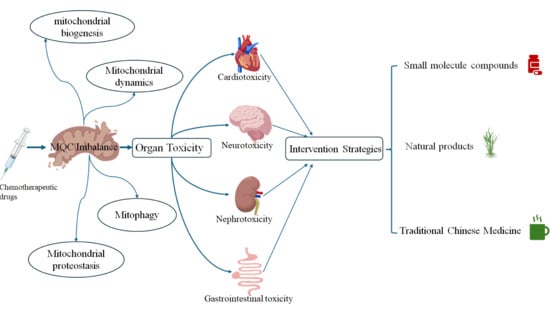
1. Introduction
2. Core Mechanisms of the MQC System
2.1. Mitochondrial Biogenesis
2.2. Mitochondrial Dynamics
2.3. Mitophagy
2.4. Mitochondrial Proteostasis
2.5. Migrasome-Mediated Mitocytosis: An Autophagy-Independent MQC Pathway

3. Role of MQC Dysregulation in Chemotherapy Toxicities
3.1. DOX-Induced Cardiac Injury
3.1.1. Oxidative Stress
3.1.2. MB
3.1.3. Mitochondrial Dynamics
3.1.4. Mitophagy
3.1.5. Mitochondrial Proteostasis
3.2. Oxaliplatin-Induced Neurotoxicity
3.2.1. Oxidative Stress
3.2.2. Mitochondrial Dynamics
3.2.3. Mitophagy
3.2.4. Research Gaps and Hypotheses in Chemotherapy-Induced Neurotoxicity
3.3. Cisplatin-Induced Renal Injury
3.3.1. Oxidative Stress
3.3.2. Mitochondrial Dynamics
3.3.3. Mitophagy
3.3.4. Research Gaps and Hypotheses in Chemotherapy-Induced Nephrotoxicity

3.4. Brief Comparison of Organ-Specific MQC Dysregulation
4. Intervention Strategies Targeting MQC to Mitigate Chemotherapy-Induced Side Effects
4.1. Small-Molecule Compounds
4.1.1. Tirzepatide
4.1.2. Mdivi–1
4.1.3. Pioglitazone
4.1.4. Metformin
4.2. Natural Products
4.2.1. Resveratrol
4.2.2. Troxerutin
4.3. Nano-Based Drug Delivery System
4.3.1. PMDDH
4.3.2. Ti–MitoEVs

5. Conclusions
Author Contributions
Funding
Institutional Review Board Statement
Informed Consent Statement
Data Availability Statement
Acknowledgments
Conflicts of Interest
References
- Hossain, M.B.; Haldar Neer, A.H. Chemotherapy. Cancer. Treat. Res. 2023, 185, 49–58. [Google Scholar] [CrossRef] [Scilit]
- Avagimyan, A.; Kakturskiy, L.; Heshmat-Ghahdarijani, K.; Pogosova, N.; Sarrafzadegan, N. Anthracycline Associated Disturbances of Cardiovascular Homeostasis. Curr. Probl. Cardiol. 2022, 47, 100909. [Google Scholar] [CrossRef] [Scilit] [PubMed]
- Bhandari, R.; Chen, Y.; Chow, E.J.; Howell, R.M.; Kenney, L.B.; Krull, K.R.; Leisenring, W.; Nathan, P.C.; Neglia, J.P.; Ness, K.K.; et al. Health Outcomes Beyond Age 50 Years in Survivors of Childhood Cancer: A Report from the Childhood Cancer Survivor Study. J. Clin. Oncol. 2025, 43, 2998–3010. [Google Scholar] [CrossRef] [Scilit] [PubMed]
- Shaker, N.A.; Sharaf, E.A.E.; Ghazal, N.A.A.; Assem, N.M. Comparative study on the protective effect of dexrazoxane and blueberry extract against doxorubicin-induced cardiotoxicity in rats. Sci. Rep. 2025, 15, 32664. [Google Scholar] [CrossRef] [Scilit] [PubMed]
- Triarico, S.; Romano, A.; Attinà, G.; Capozza, M.A.; Maurizi, P.; Mastrangelo, S.; Ruggiero, A. Vincristine-Induced Peripheral Neuropathy (VIPN) in Pediatric Tumors: Mechanisms, Risk Factors, Strategies of Prevention and Treatment. Int. J. Mol. Sci. 2021, 22, 4112. [Google Scholar] [CrossRef] [Scilit] [PubMed]
- Tang, C.; Cai, J.; Yin, X.M.; Weinberg, J.M.; Venkatachalam, M.A.; Dong, Z. Mitochondrial quality control in kidney injury and repair. Nat. Rev. Nephrol. 2021, 17, 299–318. [Google Scholar] [CrossRef] [Scilit] [PubMed]
- Saeed, H.A.; Mohammed Ali, N.A.; Othman, R.T. Anthracycline- and HER2-induced cardiotoxicity: Mechanisms, current strategies, and the emerging role of dapagliflozin as a targeted cardioprotective agent. Cardiooncology 2025, 11, 100. [Google Scholar] [CrossRef] [Scilit] [PubMed]
- Jiao, H.; Jiang, D.; Hu, X.; Du, W.; Ji, L.; Yang, Y.; Li, X.; Sho, T.; Wang, X.; Li, Y.; et al. Mitocytosis, a migrasome-mediated mitochondrial quality-control process. Cell 2021, 184, 2896–2910.e2813. [Google Scholar] [CrossRef] [Scilit]
- Lou, P.; Zhou, X.; Zhang, Y.; Xie, Y.; Wang, Y.; Wang, C.; Liu, S.; Wan, M.; Lu, Y.; Liu, J. Harnessing tissue-derived mitochondria-rich extracellular vesicles (Ti-mitoEVs) to boost mitochondrial biogenesis for regenerative medicine. Sci. Adv. 2025, 11, eadt1318. [Google Scholar] [CrossRef] [Scilit]
- Liu, L.; Li, Y.; Chen, G.; Chen, Q. Crosstalk between mitochondrial biogenesis and mitophagy to maintain mitochondrial homeostasis. J. Biomed. Sci. 2023, 30, 86. [Google Scholar] [CrossRef] [Scilit]
- Protasoni, M.; Zeviani, M. Mitochondrial Structure and Bioenergetics in Normal and Disease Conditions. Int. J. Mol. Sci. 2021, 22, 586. [Google Scholar] [CrossRef] [Scilit]
- Wang, Q.; Yuan, Y.; Liu, J.; Li, C.; Jiang, X. The role of mitochondria in aging, cell death, and tumor immunity. Front. Immunol. 2024, 15, 1520072. [Google Scholar] [CrossRef] [Scilit]
- Guo, Y.; Guan, T.; Shafiq, K.; Yu, Q.; Jiao, X.; Na, D.; Li, M.; Zhang, G.; Kong, J. Mitochondrial dysfunction in aging. Ageing Res. Rev. 2023, 88, 101955. [Google Scholar] [CrossRef] [Scilit]
- Chang, X.; Li, Y.; Cai, C.; Wu, F.; He, J.; Zhang, Y.; Zhong, J.; Tan, Y.; Liu, R.; Zhu, H.; et al. Mitochondrial quality control mechanisms as molecular targets in diabetic heart. Metabolism 2022, 137, 155313. [Google Scholar] [CrossRef] [Scilit] [PubMed]
- Popov, L.D. Mitochondrial biogenesis: An update. J. Cell. Mol. Med. 2020, 24, 4892–4899. [Google Scholar] [CrossRef] [Scilit] [PubMed]
- Chen, J.; Liu, B.; Yao, X.; Yang, X.; Sun, J.; Yi, J.; Xue, F.; Zhang, J.; Shen, Y.; Chen, B.; et al. AMPK/SIRT1/PGC-1α Signaling Pathway: Molecular Mechanisms and Targeted Strategies from Energy Homeostasis Regulation to Disease Therapy. CNS Neurosci. Ther. 2025, 31, e70657. [Google Scholar] [CrossRef] [Scilit] [PubMed]
- Fontecha-Barriuso, M.; Martin-Sanchez, D.; Martinez-Moreno, J.M.; Monsalve, M.; Ramos, A.M.; Sanchez-Niño, M.D.; Ruiz-Ortega, M.; Ortiz, A.; Sanz, A.B. The Role of PGC-1α and Mitochondrial Biogenesis in Kidney Diseases. Biomolecules 2020, 10, 347. [Google Scholar] [CrossRef] [Scilit] [PubMed]
- Zhang, H.; Wu, D.; Wu, Q.; Wu, Y.; Guo, Z.; Wang, L.; Wang, Y.; Zeng, Q.; Shi, L.; Shi, B.; et al. The Role of Hepatic SIRT1: From Metabolic Regulation to Immune Modulation and Multi-target Therapeutic Strategies. J. Clin. Transl. Hepatol. 2025, 13, 878–898. [Google Scholar] [CrossRef] [Scilit] [PubMed]
- Mishra, P.; Chan, D.C. Mitochondrial dynamics and inheritance during cell division, development and disease. Nat. Rev. Mol. Cell Biol. 2014, 15, 634–646. [Google Scholar] [CrossRef] [Scilit] [PubMed]
- Zhang, T.; Li, Z.; Xu, Y.; Xu, C.; Wang, H.; Rui, T. Regulation of mitochondrial dynamics in cardiomyocytes: Implications for cardiac health and disease. Front. Cell Dev. Biol. 2025, 13, 1652683. [Google Scholar] [CrossRef] [Scilit]
- Fry, M.Y.; Navarro, P.P.; Hakim, P.; Ananda, V.Y.; Qin, X.; Landoni, J.C.; Rath, S.; Inde, Z.; Lugo, C.M.; Luce, B.E.; et al. In situ architecture of Opa1-dependent mitochondrial cristae remodeling. EMBO J. 2024, 43, 391–413. [Google Scholar] [CrossRef] [Scilit]
- Zerihun, M.; Sukumaran, S.; Qvit, N. The Drp1-Mediated Mitochondrial Fission Protein Interactome as an Emerging Core Player in Mitochondrial Dynamics and Cardiovascular Disease Therapy. Int. J. Mol. Sci. 2023, 24, 5785. [Google Scholar] [CrossRef] [Scilit]
- Lin, Z.; Lu, X.; Xu, G.; Song, J.; Wang, H.; Xia, X.; Lu, F.; Jiang, J.; Zhu, W.; Yu, Z.; et al. The mitochondrial E3 ligase MAPL SUMOylates Drp1 to facilitate mitochondrial fission in intervertebral disc degeneration. Bone Res. 2025, 13, 72. [Google Scholar] [CrossRef] [Scilit] [PubMed]
- Mweene, B.C.; Hatwiko, H.; Povia, J.P.; Masenga, S.K. The Role of Mitochondrial Dysfunction and Dynamics in Hypertensive Heart Disease: Mechanisms and Recent Advances. Biology 2025, 14, 1212. [Google Scholar] [CrossRef] [Scilit] [PubMed]
- Pekkurnaz, G.; Wang, X. Mitochondrial heterogeneity and homeostasis through the lens of a neuron. Nat. Metab. 2022, 4, 802–812. [Google Scholar] [CrossRef] [Scilit] [PubMed]
- Raiff, A.; Zhao, S.; Bekturova, A.; Zenge, C.; Mazor, S.; Chen, X.; Ru, W.; Makaros, Y.; Ast, T.; Ordureau, A.; et al. TOM20-driven E3 ligase recruitment regulates mitochondrial dynamics through PLD6. Nat. Chem. Biol. 2026, 22, 37–47. [Google Scholar] [CrossRef] [Scilit]
- Zhang, Z.; Zhang, M.; Jin, H.; Lv, S.; Li, Y.; Li, Y. Mitochondrial Quality Control and Cell Death. Int. J. Mol. Sci. 2025, 26, 11084. [Google Scholar] [CrossRef] [Scilit]
- Guo, Q.Q.; Wang, S.S.; Jiang, X.Y.; Xie, X.C.; Zou, Y.; Liu, J.W.; Guo, Y.; Li, Y.H.; Liu, X.Y.; Hao, S.; et al. Mitochondrial ROS triggers mitophagy through activating the DNA damage response signaling pathway. Proc. Natl. Acad. Sci. USA 2025, 122, e2502841122. [Google Scholar] [CrossRef] [Scilit]
- Okarmus, J.; Agergaard, J.B.; Stummann, T.C.; Haukedal, H.; Ambjørn, M.; Freude, K.K.; Fog, K.; Meyer, M. USP30 inhibition induces mitophagy and reduces oxidative stress in parkin-deficient human neurons. Cell Death Dis. 2024, 15, 52. [Google Scholar] [CrossRef] [Scilit]
- Zhang, Y.; Shen, X.; Shen, Y.; Wang, C.; Yu, C.; Han, J.; Cao, S.; Qian, L.; Ma, M.; Huang, S.; et al. Cytosolic acetyl-coenzyme A is a signalling metabolite to control mitophagy. Nature 2025, 649, 1022–1031. [Google Scholar] [CrossRef] [Scilit] [PubMed]
- Yang, J.; Yang, F.; Chen, G.; Liu, M.; Yuan, S.; Zhang, T.E. Receptor-mediated mitophagy: A new target of neurodegenerative diseases. Front. Neurol. 2025, 16, 1665315. [Google Scholar] [CrossRef] [Scilit] [PubMed]
- Chen, G.; Kroemer, G.; Kepp, O. Mitophagy: An Emerging Role in Aging and Age-Associated Diseases. Front. Cell Dev. Biol. 2020, 8, 200. [Google Scholar] [CrossRef] [Scilit] [PubMed]
- Qian, L.; Zhu, Y.; Deng, C.; Liang, Z.; Chen, J.; Chen, Y.; Wang, X.; Liu, Y.; Tian, Y.; Yang, Y. Peroxisome proliferator-activated receptor gamma coactivator-1 (PGC-1) family in physiological and pathophysiological process and diseases. Signal Transduct. Target. Ther. 2024, 9, 50. [Google Scholar] [CrossRef] [Scilit]
- Picca, A.; Faitg, J.; Auwerx, J.; Ferrucci, L.; D’Amico, D. Mitophagy in human health, ageing and disease. Nat. Metab. 2023, 5, 2047–2061. [Google Scholar] [CrossRef] [Scilit] [PubMed]
- Liu, X.; Liu, D.; Zhao, H.; Wu, K.; Yin, S.; Yang, X.; Chen, C.; Ma, X.; Mao, Y.; Zhang, H.; et al. Biogenesis, functional roles, and pathological implications of migrasomes. Cell Death Dis. 2025, 16, 629. [Google Scholar] [CrossRef] [Scilit] [PubMed]
- Armenise, D.; Baldelli, O.M.; Liturri, A.; Cavallaro, G.; Fortuna, C.G.; Ferorelli, S.; Miciaccia, M.; Perrone, M.G.; Scilimati, A. Mitochondrial Protease ClpP: Cancer Marker and Drug Target. Pharmaceuticals 2025, 18, 1443. [Google Scholar] [CrossRef] [Scilit] [PubMed]
- Zhang, Y.R.; Xu, D.J. Mitochondrial Quality Control in Bovine Oocyte Maturation: Mechanisms, Challenges, and Prospects for Enhancing Reproductive Efficiency. Animals 2025, 15, 2000. [Google Scholar] [CrossRef] [Scilit]
- Bie, A.S.; Cömert, C.; Körner, R.; Corydon, T.J.; Palmfeldt, J.; Hipp, M.S.; Hartl, F.U.; Bross, P. An inventory of interactors of the human HSP60/HSP10 chaperonin in the mitochondrial matrix space. Cell Stress Chaperones 2020, 25, 407–416. [Google Scholar] [CrossRef] [Scilit]
- Havalová, H.; Ondrovičová, G.; Keresztesová, B.; Bauer, J.A.; Pevala, V.; Kutejová, E.; Kunová, N. Mitochondrial HSP70 Chaperone System-The Influence of Post-Translational Modifications and Involvement in Human Diseases. Int. J. Mol. Sci. 2021, 22, 8077. [Google Scholar] [CrossRef] [Scilit]
- Key, J.; Gispert, S.; Auburger, G. Knockout Mouse Studies Show That Mitochondrial CLPP Peptidase and CLPX Unfoldase Act in Matrix Condensates near IMM, as Fast Stress Response in Protein Assemblies for Transcript Processing, Translation, and Heme Production. Genes 2024, 15, 694. [Google Scholar] [CrossRef] [Scilit]
- Roca-Portoles, A.; Tait, S.W.G. Mitochondrial quality control: From molecule to organelle. Cell Mol. Life Sci. 2021, 78, 3853–3866. [Google Scholar] [CrossRef] [Scilit]
- Song, J.; Herrmann, J.M.; Becker, T. Quality control of the mitochondrial proteome. Nat. Rev. Mol. Cell Biol. 2021, 22, 54–70. [Google Scholar] [CrossRef] [Scilit] [PubMed]
- Li, Q.; Weiss, K.; Niwa, F.; Riemer, J.; Hoppe, T. Leucine inhibits degradation of outer mitochondrial membrane proteins to adapt mitochondrial respiration. Nat. Cell Biol. 2025, 27, 1889–1901. [Google Scholar] [CrossRef] [Scilit] [PubMed]
- Jiao, H.; Li, X.; Li, Y.; Guo, Z.; Yang, Y.; Luo, Y.; Hu, X.; Yu, L. Packaged release and targeted delivery of cytokines by migrasomes in circulation. Cell Discov. 2024, 10, 121. [Google Scholar] [CrossRef] [Scilit] [PubMed]
- Zhang, F.; Liu, W.; Mao, Y.; Yang, Y.; Ling, C.; Liu, Y.; Yao, F.; Zhen, Y.; Wang, X.; Zou, M. Migrasome, a migration-dependent organelle. Front. Cell Dev. Biol. 2024, 12, 1417242. [Google Scholar] [CrossRef] [Scilit]
- Jiao, H.; Li, X.; Li, Y.; Guo, Y.; Hu, X.; Sho, T.; Luo, Y.; Wang, J.; Cao, H.; Du, W.; et al. Localized, highly efficient secretion of signaling proteins by migrasomes. Cell Res. 2024, 34, 572–585. [Google Scholar] [CrossRef] [Scilit] [PubMed]
- Zhen, Y.; Stenmark, H. Sustained release of cytokines from migrasomes. Extracell. Vesicles Circ. Nucl. Acids 2025, 6, 171–175. [Google Scholar] [CrossRef] [Scilit] [PubMed]
- He, Y.; Wu, D.; Wu, Q.; Huang, S.; Zhan, Y.; Deng, J.; Chen, J.Y.; Xie, L.; Zheng, J. Astaxanthin mitigates cardiac toxicity induced via doxorubicin by alleviating mitochondrial fission and autophagy in rats. Sci. Rep. 2025, 15, 32114. [Google Scholar] [CrossRef] [Scilit] [PubMed]
- Domínguez Romero, Y.; Montoya Ortiz, G.; Novoa Herrán, S.; Osorio Mendez, J.; Gomez Grosso, L.A. miRNA Expression Profiles in Isolated Ventricular Cardiomyocytes: Insights into Doxorubicin-Induced Cardiotoxicity. Int. J. Mol. Sci. 2024, 25, 5272. [Google Scholar] [CrossRef] [Scilit]
- Foo, J.; Bellot, G.; Pervaiz, S.; Alonso, S. Mitochondria-mediated oxidative stress during viral infection. Trends Microbiol. 2022, 30, 679–692. [Google Scholar] [CrossRef] [Scilit]
- Niu, K.; Chen, Z.; Li, M.; Ma, G.; Deng, Y.; Zhang, J.; Wei, D.; Wang, J.; Zhao, Y. NSUN2 lactylation drives cancer cell resistance to ferroptosis through enhancing GCLC-dependent glutathione synthesis. Redox Biol. 2025, 79, 103479. [Google Scholar] [CrossRef] [Scilit] [PubMed]
- Shi, S.; Chen, Y.; Luo, Z.; Nie, G.; Dai, Y. Role of oxidative stress and inflammation-related signaling pathways in doxorubicin-induced cardiomyopathy. Cell Commun. Signal 2023, 21, 61. [Google Scholar] [CrossRef] [Scilit] [PubMed]
- Ma, Z.G.; Kong, C.Y.; Wu, H.M.; Song, P.; Zhang, X.; Yuan, Y.P.; Deng, W.; Tang, Q.Z. Toll-like receptor 5 deficiency diminishes doxorubicin-induced acute cardiotoxicity in mice. Theranostics 2020, 10, 11013–11025. [Google Scholar] [CrossRef] [Scilit] [PubMed]
- Kosić, M.; Pajović, V.; Jovanović, M.; Japundžić-Žigon, N. Drug Repositioning in Doxorubicin-Induced Cardiotoxicity Protection. Int. J. Mol. Sci. 2025, 26, 10130. [Google Scholar] [CrossRef] [Scilit]
- Soudi, T.; Bagheri, F.; Shojaosadati, S.A.; Rezaei, M.; Motamedian, E. Modified exosomes for targeted delivery of doxorubicin and carvedilol to mitochondria in breast cancer cells. Sci. Rep. 2025, 15, 38386. [Google Scholar] [CrossRef] [Scilit]
- Li, Y.; Lin, R.; Peng, X.; Wang, X.; Liu, X.; Li, L.; Bai, R.; Wen, S.; Ruan, Y.; Chang, X.; et al. The Role of Mitochondrial Quality Control in Anthracycline-Induced Cardiotoxicity: From Bench to Bedside. Oxid. Med. Cell. Longev. 2022, 2022, 3659278. [Google Scholar] [CrossRef] [Scilit]
- Szponar, J.; Ciechanski, E.; Ciechanska, M.; Dudka, J.; Mandziuk, S. Evolution of Theories on Doxorubicin-Induced Late Cardiotoxicity-Role of Topoisomerase. Int. J. Mol. Sci. 2024, 25, 13567. [Google Scholar] [CrossRef] [Scilit]
- Fedotcheva, T.A.; Fedotcheva, N.I. Protectors of the Mitochondrial Permeability Transition Pore Activated by Iron and Doxorubicin. Curr. Cancer Drug Targets 2021, 21, 514–525. [Google Scholar] [CrossRef] [Scilit]
- Chen, Y.; Yang, H.; Hu, X.; Yang, T.; Zhao, Y.; Liu, H.; Fan, H. Coenzyme Q10 ameliorates lipopolysaccharide-induced acute lung injury by attenuating oxidative stress and NLRP3 inflammation through regulating mitochondrial dynamics. Int. Immunopharmacol. 2024, 141, 112941. [Google Scholar] [CrossRef] [Scilit] [PubMed]
- Zheng, H.; Ou, J.; Han, H.; Lu, Q.; Shen, Y. SS-31@Fer-1 Alleviates ferroptosis in hypoxia/reoxygenation cardiomyocytes via mitochondrial targeting. Biomed. Pharmacother. 2025, 183, 117832. [Google Scholar] [CrossRef] [Scilit] [PubMed]
- Nordgren, K.K.S.; Wallace, K.B. Disruption of the Keap1/Nrf2-Antioxidant Response System After Chronic Doxorubicin Exposure In Vivo. Cardiovasc. Toxicol. 2020, 20, 557–570. [Google Scholar] [CrossRef] [Scilit] [PubMed]
- Kensler, T.W.; Egner, P.A.; Agyeman, A.S.; Visvanathan, K.; Groopman, J.D.; Chen, J.G.; Chen, T.Y.; Fahey, J.W.; Talalay, P. Keap1-nrf2 signaling: A target for cancer prevention by sulforaphane. Top. Curr. Chem. 2013, 329, 163–177. [Google Scholar] [CrossRef] [Scilit] [PubMed]
- Mancilla, T.R.; Iskra, B.; Aune, G.J. Doxorubicin-Induced Cardiomyopathy in Children. Compr. Physiol. 2019, 9, 905–931. [Google Scholar] [CrossRef] [Scilit] [PubMed]
- Wu, L.; Wang, L.; Du, Y.; Zhang, Y.; Ren, J. Mitochondrial quality control mechanisms as therapeutic targets in doxorubicin-induced cardiotoxicity. Trends Pharmacol. Sci. 2023, 44, 34–49. [Google Scholar] [CrossRef] [Scilit] [PubMed]
- Murabito, A.; Hirsch, E.; Ghigo, A. Mechanisms of Anthracycline-Induced Cardiotoxicity: Is Mitochondrial Dysfunction the Answer? Front. Cardiovasc. Med. 2020, 7, 35. [Google Scholar] [CrossRef] [Scilit]
- Gerhart-Hines, Z.; Rodgers, J.T.; Bare, O.; Lerin, C.; Kim, S.H.; Mostoslavsky, R.; Alt, F.W.; Wu, Z.; Puigserver, P. Metabolic control of muscle mitochondrial function and fatty acid oxidation through SIRT1/PGC-1alpha. EMBO J. 2007, 26, 1913–1923. [Google Scholar] [CrossRef] [Scilit]
- Koentges, C.; Pfeil, K.; Schnick, T.; Wiese, S.; Dahlbock, R.; Cimolai, M.C.; Meyer-Steenbuck, M.; Cenkerova, K.; Hoffmann, M.M.; Jaeger, C.; et al. SIRT3 deficiency impairs mitochondrial and contractile function in the heart. Basic Res. Cardiol. 2015, 110, 36. [Google Scholar] [CrossRef] [Scilit]
- Debsharma, S.; Pramanik, S.; Bindu, S.; Mazumder, S.; Das, T.; Pal, U.; Saha, D.; De, R.; Nag, S.; Banerjee, C.; et al. NSAID targets SIRT3 to trigger mitochondrial dysfunction and gastric cancer cell death. iScience 2024, 27, 109384. [Google Scholar] [CrossRef] [Scilit]
- Wu, Q.J.; Zhang, T.N.; Chen, H.H.; Yu, X.F.; Lv, J.L.; Liu, Y.Y.; Liu, Y.S.; Zheng, G.; Zhao, J.Q.; Wei, Y.F.; et al. The sirtuin family in health and disease. Signal Transduct. Target. Ther. 2022, 7, 402. [Google Scholar] [CrossRef] [Scilit]
- Zhang, J.; Ren, D.; Fedorova, J.; He, Z.; Li, J. SIRT1/SIRT3 Modulates Redox Homeostasis during Ischemia/Reperfusion in the Aging Heart. Antioxidants 2020, 9, 858. [Google Scholar] [CrossRef] [Scilit]
- Li, W.; Cao, J.; Wang, X.; Zhang, Y.; Sun, Q.; Jiang, Y.; Yao, J.; Li, C.; Wang, Y.; Wang, W. Ferruginol Restores SIRT1-PGC-1α-Mediated Mitochondrial Biogenesis and Fatty Acid Oxidation for the Treatment of DOX-Induced Cardiotoxicity. Front. Pharmacol. 2021, 12, 773834. [Google Scholar] [CrossRef] [Scilit]
- Qing, G.; Huang, C.; Pei, J.; Peng, B. Alteration of cardiac energetics and mitochondrial function in doxorubicin-induced cardiotoxicity: Molecular mechanism and prospective implications (Review). Int. J. Mol. Med. 2025, 56, 183. [Google Scholar] [CrossRef] [Scilit] [PubMed]
- Huang, J.; Wu, R.; Chen, L.; Yang, Z.; Yan, D.; Li, M. Understanding Anthracycline Cardiotoxicity from Mitochondrial Aspect. Front. Pharmacol. 2022, 13, 811406. [Google Scholar] [CrossRef] [Scilit] [PubMed]
- Ge, W.; Zhang, X.; Lin, J.; Wang, Y.; Zhang, X.; Duan, Y.; Dai, X.; Zhang, J.; Zhang, Y.; Jiang, M.; et al. Rnd3 protects against doxorubicin-induced cardiotoxicity through inhibition of PANoptosis in a Rock1/Drp1/mitochondrial fission-dependent manner. Cell Death Dis. 2025, 16, 2. [Google Scholar] [CrossRef] [Scilit] [PubMed]
- Yang, Y.C.; Tsai, C.Y.; Chen, C.L.; Kuo, C.H.; Hou, C.W.; Cheng, S.Y.; Aneja, R.; Huang, C.Y.; Kuo, W.W. Pkcδ Activation is Involved in ROS-Mediated Mitochondrial Dysfunction and Apoptosis in Cardiomyocytes Exposed to Advanced Glycation End Products (Ages). Aging Dis. 2018, 9, 647–663. [Google Scholar] [CrossRef] [Scilit] [PubMed]
- Zaja, I.; Bai, X.; Liu, Y.; Kikuchi, C.; Dosenovic, S.; Yan, Y.; Canfield, S.G.; Bosnjak, Z.J. Cdk1, PKCδ and calcineurin-mediated Drp1 pathway contributes to mitochondrial fission-induced cardiomyocyte death. Biochem. Biophys. Res. Commun. 2014, 453, 710–721. [Google Scholar] [CrossRef] [Scilit]
- Li, K.; Xia, X.; Tong, Y. Multiple roles of mitochondrial autophagy receptor FUNDC1 in mitochondrial events and kidney disease. Front. Cell Dev. Biol. 2024, 12, 1453365. [Google Scholar] [CrossRef] [Scilit]
- Rocca, C.; De Francesco, E.M.; Pasqua, T.; Granieri, M.C.; De Bartolo, A.; Gallo Cantafio, M.E.; Muoio, M.G.; Gentile, M.; Neri, A.; Angelone, T.; et al. Mitochondrial Determinants of Anti-Cancer Drug-Induced Cardiotoxicity. Biomedicines 2022, 10, 520. [Google Scholar] [CrossRef] [Scilit]
- Chen, R.; Niu, M.; Hu, X.; He, Y. Targeting mitochondrial dynamics proteins for the treatment of doxorubicin-induced cardiotoxicity. Front. Mol. Biosci. 2023, 10, 1241225. [Google Scholar] [CrossRef] [Scilit]
- Ding, X.; Cui, L.; Mi, Y.; Hu, J.; Cai, Z.; Tang, Q.; Yang, L.; Yang, Z.; Wang, Q.; Li, H.; et al. Ferroptosis in cancer: Revealing the multifaceted functions of mitochondria. Cell Mol. Life Sci. 2025, 82, 277. [Google Scholar] [CrossRef] [Scilit]
- Xing, J.; Ma, X.; Yu, Y.; Xiao, Y.; Chen, L.; Yuan, W.; Wang, Y.; Liu, K.; Guo, Z.; Tang, H.; et al. A Cardiac-Targeting and Anchoring Bimetallic Cluster Nanozyme Alleviates Chemotherapy-Induced Cardiac Ferroptosis and PANoptosis. Adv. Sci. 2025, 12, e2405597. [Google Scholar] [CrossRef] [Scilit]
- Hu, L.; Ding, M.; Tang, D.; Gao, E.; Li, C.; Wang, K.; Qi, B.; Qiu, J.; Zhao, H.; Chang, P.; et al. Targeting mitochondrial dynamics by regulating Mfn2 for therapeutic intervention in diabetic cardiomyopathy. Theranostics 2019, 9, 3687–3706. [Google Scholar] [CrossRef] [Scilit] [PubMed]
- Catanzaro, M.P.; Weiner, A.; Kaminaris, A.; Li, C.; Cai, F.; Zhao, F.; Kobayashi, S.; Kobayashi, T.; Huang, Y.; Sesaki, H.; et al. Doxorubicin-induced cardiomyocyte death is mediated by unchecked mitochondrial fission and mitophagy. FASEB J. 2019, 33, 11096–11108. [Google Scholar] [CrossRef] [Scilit] [PubMed]
- Yao, J.; Wang, J.; Xu, Y.; Guo, Q.; Sun, Y.; Liu, J.; Li, S.; Guo, Y.; Wei, L. CDK9 inhibition blocks the initiation of PINK1-PRKN-mediated mitophagy by regulating the SIRT1-FOXO3-BNIP3 axis and enhances the therapeutic effects involving mitochondrial dysfunction in hepatocellular carcinoma. Autophagy 2022, 18, 1879–1897. [Google Scholar] [CrossRef] [Scilit]
- Zhang, H.; Xie, S.; Deng, W. Mitophagy in Doxorubicin-Induced Cardiotoxicity: Insights into Molecular Biology and Novel Therapeutic Strategies. Biomolecules 2024, 14, 1614. [Google Scholar] [CrossRef] [Scilit] [PubMed]
- Dominiak, A.; Gawinek, E.; Banaszek, A.A.; Wilkaniec, A. Mitochondrial Quality Control in Neurodegeneration and Cancer: A Common Denominator, Distinct Therapeutic Challenges. Int. J. Mol. Sci. 2025, 26, 8693. [Google Scholar] [CrossRef] [Scilit] [PubMed]
- Luo, Y.; Xu, H.; Xiong, S.; Ke, J. Understanding Myalgic Encephalomyelitis/Chronic Fatigue Syndrome Physical Fatigue Through the Perspective of Immunosenescence. Compr. Physiol. 2025, 15, e70056. [Google Scholar] [CrossRef] [Scilit] [PubMed]
- Mancilla, T.R.; Davis, L.R.; Aune, G.J. Doxorubicin-induced p53 interferes with mitophagy in cardiac fibroblasts. PLoS ONE 2020, 15, e0238856. [Google Scholar] [CrossRef] [Scilit]
- Xu, Q.; Wang, X.; Hu, J.; Wang, Y.; Lu, S.; Xiong, J.; Li, H.; Xiong, N.; Huang, Y.; Wang, Y.; et al. Overexpression of hnRNPK and inhibition of cytoplasmic translocation ameliorate lipid disorder in doxorubicin-induced cardiomyopathy via PINK1/Parkin-mediated mitophagy. Free Radic. Biol. Med. 2025, 231, 94–108. [Google Scholar] [CrossRef] [Scilit]
- Clague, M.J.; Urbé, S. Diverse routes to mitophagy governed by ubiquitylation and mitochondrial import. Trends Cell Biol. 2025, 35, 527–538. [Google Scholar] [CrossRef] [Scilit]
- Trinh, D.; Al Halabi, L.; Brar, H.; Kametani, M.; Nash, J.E. The role of SIRT3 in homeostasis and cellular health. Front. Cell Neurosci. 2024, 18, 1434459. [Google Scholar] [CrossRef] [Scilit]
- Nijholt, K.T.; Westenbrink, B.D.; de Boer, R.A. Mitochondrial therapy for doxorubicin cardiomyopathy: Nuclear factor-κB to the rescue? Cardiovasc. Res. 2020, 116, 1092–1094. [Google Scholar] [CrossRef] [Scilit] [PubMed]
- Martens, M.D.; Seshadri, N.; Nguyen, L.; Chapman, D.; Henson, E.S.; Xiang, B.; Falk, L.; Mendoza, A.; Rattan, S.; Field, J.T.; et al. Misoprostol treatment prevents hypoxia-induced cardiac dysfunction through a 14-3-3 and PKA regulatory motif on Bnip3. Cell Death Dis. 2021, 12, 1105. [Google Scholar] [CrossRef] [Scilit] [PubMed]
- Du, Q.; Zhu, B.; Zhai, Q.; Yu, B. Sirt3 attenuates doxorubicin-induced cardiac hypertrophy and mitochondrial dysfunction via suppression of Bnip3. Am. J. Transl. Res. 2017, 9, 3360–3373. [Google Scholar]
- Kubli, D.A.; Quinsay, M.N.; Huang, C.; Lee, Y.; Gustafsson, A.B. Bnip3 functions as a mitochondrial sensor of oxidative stress during myocardial ischemia and reperfusion. Am. J. Physiol. Heart Circ. Physiol. 2008, 295, H2025–H2031. [Google Scholar] [CrossRef] [Scilit]
- Roca-Alonso, L.; Castellano, L.; Mills, A.; Dabrowska, A.F.; Sikkel, M.B.; Pellegrino, L.; Jacob, J.; Frampton, A.E.; Krell, J.; Coombes, R.C.; et al. Myocardial MiR-30 downregulation triggered by doxorubicin drives alterations in β-adrenergic signaling and enhances apoptosis. Cell Death Dis. 2015, 6, e1754. [Google Scholar] [CrossRef] [Scilit]
- Men, H.; Cai, H.; Cheng, Q.; Zhou, W.; Wang, X.; Huang, S.; Zheng, Y.; Cai, L. The regulatory roles of p53 in cardiovascular health and disease. Cell Mol. Life Sci. 2021, 78, 2001–2018. [Google Scholar] [CrossRef] [Scilit]
- Chang, X.; Liu, R.; Li, R.; Peng, Y.; Zhu, P.; Zhou, H. Molecular Mechanisms of Mitochondrial Quality Control in Ischemic Cardiomyopathy. Int. J. Biol. Sci. 2023, 19, 426–448. [Google Scholar] [CrossRef] [Scilit] [PubMed]
- Rose, J.M.; Novoselov, S.S.; Robinson, P.A.; Cheetham, M.E. Molecular chaperone-mediated rescue of mitophagy by a Parkin RING1 domain mutant. Hum. Mol. Genet. 2011, 20, 16–27. [Google Scholar] [CrossRef] [Scilit] [PubMed]
- Jadiya, P.; Tomar, D. Mitochondrial Protein Quality Control Mechanisms. Genes 2020, 11, 563. [Google Scholar] [CrossRef] [Scilit] [PubMed]
- Inigo, J.R.; Chandra, D. The mitochondrial unfolded protein response (UPR(mt)): Shielding against toxicity to mitochondria in cancer. J. Hematol. Oncol. 2022, 15, 98. [Google Scholar] [CrossRef] [Scilit]
- Calvo, S.E.; Mootha, V.K. The mitochondrial proteome and human disease. Annu. Rev. Genomics Hum. Genet. 2010, 11, 25–44. [Google Scholar] [CrossRef] [Scilit] [PubMed]
- Boob, A.G.; Tan, S.I.; Zaidi, A.; Singh, N.; Xue, X.; Zhou, S.; Martin, T.A.; Chen, L.Q.; Zhao, H. Design of diverse, functional mitochondrial targeting sequences across eukaryotic organisms using variational autoencoder. Nat. Commun. 2025, 16, 4151. [Google Scholar] [CrossRef] [Scilit]
- Torres, A.K.; Fleischhart, V.; Inestrosa, N.C. Mitochondrial unfolded protein response (UPR(mt)): What we know thus far. Front. Cell Dev. Biol. 2024, 12, 1405393. [Google Scholar] [CrossRef] [Scilit] [PubMed]
- Chen, Z.; Huang, L.; Tso, A.; Wang, S.; Fang, X.; Ouyang, K.; Han, Z. Mitochondrial Chaperones and Proteases in Cardiomyocytes and Heart Failure. Front. Mol. Biosci. 2021, 8, 630332. [Google Scholar] [CrossRef] [Scilit] [PubMed]
- Higashikuni, Y.; Tanaka, K.; Kato, M.; Nureki, O.; Hirata, Y.; Nagai, R.; Komuro, I.; Sata, M. Toll-like receptor-2 mediates adaptive cardiac hypertrophy in response to pressure overload through interleukin-1β upregulation via nuclear factor κB activation. J. Am. Heart Assoc. 2013, 2, e000267. [Google Scholar] [CrossRef] [Scilit]
- Muthu, S.; Tran, Z.; Saminathan, R.; Shrestha, P.; Venkatesh, S. Systemic Lonp1 Haploinsufficiency Mitigates Cardiac Mitochondrial Dysfunction Induced by Cardiomyocyte-Specific Lonp1 Haploinsufficiency via Potential Inter-Organ Crosstalk. Biomolecules 2025, 15, 1159. [Google Scholar] [CrossRef] [Scilit]
- Ma, C.W.; Gao, B.H. Unfolded protein response signaling in mitochondria. Sheng Li Xue Bao 2021, 73, 835–844. [Google Scholar]
- Yang, Y.; Zhao, B.; Huo, J.; Wei, G.; Liu, X.; Lan, H.; Wang, Y.; Hu, Y.; Cao, P. Microglial macrophage-derived ds-HMGB1 in DRG orchestrates neuropathic pain through immune-neural signaling. Cell Rep. 2025, 44, 116671. [Google Scholar] [CrossRef] [Scilit]
- Massicot, F.; Hache, G.; David, L.; Chen, D.; Leuxe, C.; Garnier-Legrand, L.; Rat, P.; Laprévote, O.; Coudoré, F. P2X7 Cell Death Receptor Activation and Mitochondrial Impairment in Oxaliplatin-Induced Apoptosis and Neuronal Injury: Cellular Mechanisms and In Vivo Approach. PLoS ONE 2013, 8, e66830. [Google Scholar] [CrossRef] [Scilit]
- Ginsberg, L. Acute and chronic neuropathies. Medicine 2020, 48, 612–618. [Google Scholar] [CrossRef] [Scilit] [PubMed]
- Cheng, F.; Zhang, R.; Sun, C.; Ran, Q.; Zhang, C.; Shen, C.; Yao, Z.; Wang, M.; Song, L.; Peng, C. Oxaliplatin-induced peripheral neurotoxicity in colorectal cancer patients: Mechanisms, pharmacokinetics and strategies. Front. Pharmacol. 2023, 14, 1231401. [Google Scholar] [CrossRef] [Scilit] [PubMed]
- Argyriou, A.A.; Bruna, J.; Marmiroli, P.; Cavaletti, G. Chemotherapy-induced peripheral neurotoxicity (CIPN): An update. Crit. Rev. Oncol. Hematol. 2012, 82, 51–77. [Google Scholar] [CrossRef] [Scilit] [PubMed]
- Wei, G.; Gu, Z.; Gu, J.; Yu, J.; Huang, X.; Qin, F.; Li, L.; Ding, R.; Huo, J. Platinum accumulation in oxaliplatin-induced peripheral neuropathy. J. Peripher. Nerv. Syst. 2021, 26, 35–42. [Google Scholar] [CrossRef] [Scilit] [PubMed]
- Huang, K.M.; Leblanc, A.F.; Uddin, M.E.; Kim, J.Y.; Chen, M.; Eisenmann, E.D.; Gibson, A.A.; Li, Y.; Hong, K.W.; DiGiacomo, D.; et al. Neuronal uptake transporters contribute to oxaliplatin neurotoxicity in mice. J. Clin. Investig. 2020, 130, 4601–4606. [Google Scholar] [CrossRef] [Scilit] [PubMed]
- Leo, M.; Schmitt, L.I.; Küsterarent, P.; Kutritz, A.; Rassaf, T.; Kleinschnitz, C.; Hendgen-Cotta, U.B.; Hagenacker, T. Platinum-Based Drugs Cause Mitochondrial Dysfunction in Cultured Dorsal Root Ganglion Neurons. Int. J. Mol. Sci. 2020, 21, 8636. [Google Scholar] [CrossRef] [Scilit] [PubMed]
- Egashira, N. Pathological Mechanisms and Preventive Strategies of Oxaliplatin-Induced Peripheral Neuropathy. Front. Pain Res. 2021, 2, 804260. [Google Scholar] [CrossRef] [Scilit]
- Imai, S.; Koyanagi, M.; Azimi, Z.; Nakazato, Y.; Matsumoto, M.; Ogihara, T.; Yonezawa, A.; Omura, T.; Nakagawa, S.; Wakatsuki, S.; et al. Taxanes and platinum derivatives impair Schwann cells via distinct mechanisms. Sci. Rep. 2017, 7, 5947. [Google Scholar] [CrossRef] [Scilit]
- Doyle, T.M.; Salvemini, D. Mini-Review: Mitochondrial dysfunction and chemotherapy-induced neuropathic pain. Neurosci. Lett. 2021, 760, 136087. [Google Scholar] [CrossRef] [Scilit]
- Deuis, J.R.; Zimmermann, K.; Romanovsky, A.A.; Possani, L.D.; Cabot, P.J.; Lewis, R.J.; Vetter, I. An animal model of oxaliplatin-induced cold allodynia reveals a crucial role for Nav1.6 in peripheral pain pathways. Pain 2013, 154, 1749–1757. [Google Scholar] [CrossRef] [Scilit]
- Aromolaran, K.A.; Goldstein, P.A. Ion channels and neuronal hyperexcitability in chemotherapy-induced peripheral neuropathy; cause and effect? Mol. Pain. 2017, 13, 1744806917714693. [Google Scholar] [CrossRef] [Scilit]
- Kim, S.; Gang, J.; Lee, J.H.; Yang, H.; Cheon, C.; Ko, S.G.; Bae, H.; Kim, W. [6]-Shogaol Attenuates Oxaliplatin-Induced Allodynia through Serotonergic Receptors and GABA in the Spinal Cord in Mice. Pharmaceuticals 2022, 15, 726. [Google Scholar] [CrossRef] [Scilit] [PubMed]
- Wu, B.; Su, X.; Zhang, W.; Zhang, Y.H.; Feng, X.; Ji, Y.H.; Tan, Z.Y. Oxaliplatin Depolarizes the IB4(-) Dorsal Root Ganglion Neurons to Drive the Development of Neuropathic Pain Through TRPM8 in Mice. Front. Mol. Neurosci. 2021, 14, 690858. [Google Scholar] [CrossRef] [Scilit] [PubMed]
- Dong, Z.B.; Wang, Y.J.; Cheng, M.L.; Wang, B.J.; Lu, H.; Zhu, H.L.; Liu, L.; Xie, M. 2-Bromopalmitate decreases spinal inflammation and attenuates oxaliplatin-induced neuropathic pain via reducing Drp1-mediated mitochondrial dysfunction. PLoS ONE 2022, 17, e0275428. [Google Scholar] [CrossRef] [Scilit] [PubMed]
- Wang, J.; Qin, J.; Wang, P.; Sun, Y.; Zhang, Q. Molecular Mechanisms of Glial Cells Related Signaling Pathways Involved in the Neuroinflammatory Response of Depression. Mediat. Inflamm. 2020, 2020, 3497920. [Google Scholar] [CrossRef] [Scilit]
- Gianò, M.; Franco, C.; Castrezzati, S.; Rezzani, R. Involvement of Oxidative Stress and Nutrition in the Anatomy of Orofacial Pain. Int. J. Mol. Sci. 2023, 24, 13128. [Google Scholar] [CrossRef] [Scilit] [PubMed]
- Cheng, D.; Wang, Z.; Guo, X.; Guo, Y.; Zhang, Y.; Zhao, Y.; Liu, R.; Chang, M. Acer truncatum Bunge seed oil ameliorated oxaliplatin-induced demyelination by improving mitochondrial dysfunction via the Pink1/Parkin mitophagy pathway. Food Funct. 2024, 15, 1355–1368. [Google Scholar] [CrossRef] [Scilit] [PubMed]
- Burgess, J.; Ferdousi, M.; Gosal, D.; Boon, C.; Matsumoto, K.; Marshall, A.; Mak, T.; Marshall, A.; Frank, B.; Malik, R.A.; et al. Chemotherapy-Induced Peripheral Neuropathy: Epidemiology, Pathomechanisms and Treatment. Oncol. Ther. 2021, 9, 385–450. [Google Scholar] [CrossRef] [Scilit] [PubMed]
- Zhao, G.; Zhang, T.; Li, J.; Li, L.; Chen, P.; Zhang, C.; Li, K.; Cui, C. Parkin-mediated mitophagy is a potential treatment for oxaliplatin-induced peripheral neuropathy. Am. J. Physiol. Cell Physiol. 2024, 326, C214–C228. [Google Scholar] [CrossRef] [Scilit]
- Li, J.; Yang, D.; Li, Z.; Zhao, M.; Wang, D.; Sun, Z.; Wen, P.; Dai, Y.; Gou, F.; Ji, Y.; et al. PINK1/Parkin-mediated mitophagy in neurodegenerative diseases. Ageing Res. Rev. 2023, 84, 101817. [Google Scholar] [CrossRef] [Scilit]
- Wang, X.; An, F.; Wang, B.; Zhang, T.; Fang, Y.; Yan, L.; Jiang, C.; Cui, W.; Han, W. From “lysosomal addiction” to targeted therapies: Exploiting novel windows in colorectal cancer. Eur. J. Med. Res. 2025, 30, 957. [Google Scholar] [CrossRef] [Scilit]
- Jagtap, Y.A.; Kumar, P.; Kinger, S.; Dubey, A.R.; Choudhary, A.; Gutti, R.K.; Singh, S.; Jha, H.C.; Poluri, K.M.; Mishra, A. Disturb mitochondrial associated proteostasis: Neurodegeneration and imperfect ageing. Front. Cell Dev. Biol. 2023, 11, 1146564. [Google Scholar] [CrossRef] [Scilit] [PubMed]
- Chen, X.; Gan, Y.; Au, N.P.B.; Ma, C.H.E. Current understanding of the molecular mechanisms of chemotherapy-induced peripheral neuropathy. Front. Mol. Neurosci. 2024, 17, 1345811. [Google Scholar] [CrossRef] [Scilit] [PubMed]
- Wang, B.; Huang, M.; Shang, D.; Yan, X.; Zhao, B.; Zhang, X. Mitochondrial Behavior in Axon Degeneration and Regeneration. Front. Aging Neurosci. 2021, 13, 650038. [Google Scholar] [CrossRef] [Scilit] [PubMed]
- Xin, N.; Durieux, J.; Yang, C.; Wolff, S.; Kim, H.E.; Dillin, A. The UPRmt preserves mitochondrial import to extend lifespan. J. Cell Biol. 2022, 221, e202201071. [Google Scholar] [CrossRef] [Scilit]
- Renaghan, A.D.; Ostermann, M.; Ronco, C.; Ballen, K.; Cosmai, L.; Fenoglio, R.; Floris, M.; Forni, L.G.; Gladstone, D.E.; Glezerman, I.G.; et al. The nephrotoxic effects of anti-cancer therapies: Consensus report of the 34th Acute Disease Quality Initiative workgroup. Nat. Rev. Nephrol. 2025; online ahead of print. [CrossRef] [Scilit]
- Fernandes, A.; de Brito, G.A.; Baptista, A.L.; Andrade, L.A.S.; Imanishe, M.H.; Pereira, B.J. The influence of acute kidney disease on the clinical outcomes of patients who received cisplatin, carboplatin, and oxaliplatin. Health Sci. Rep. 2022, 5, e479. [Google Scholar] [CrossRef] [Scilit]
- Trevisani, F.; Di Marco, F.; Quattrini, G.; Lepori, N.; Floris, M.; Valsecchi, D.; Giordano, L.; Dell’Oca, I.; Cardellini, S.; Cinque, A.; et al. Acute kidney injury and acute kidney disease in high-dose cisplatin-treated head and neck cancer. Front. Oncol. 2023, 13, 1173578. [Google Scholar] [CrossRef] [Scilit]
- Crona, D.J.; Faso, A.; Nishijima, T.F.; McGraw, K.A.; Galsky, M.D.; Milowsky, M.I. A Systematic Review of Strategies to Prevent Cisplatin-Induced Nephrotoxicity. Oncologist 2017, 22, 609–619. [Google Scholar] [CrossRef] [Scilit]
- Liu, J.; Wang, Y.; Qiao, P.; Ying, Y.; Lin, S.; Lu, F.; Gao, C.; Li, M.; Yang, B.; Zhou, H. Mechanisms of Cisplatin-Induced Acute Kidney Injury: The Role of NRF2 in Mitochondrial Dysfunction and Metabolic Reprogramming. Antioxidants 2025, 14, 775. [Google Scholar] [CrossRef] [Scilit] [PubMed]
- Lai, K.; Chen, Z.; Lin, S.; Ye, K.; Yuan, Y.; Li, G.; Song, Y.; Ma, H.; Mak, T.W.; Xu, Y. The IDH1-R132H mutation aggravates cisplatin-induced acute kidney injury by promoting ferroptosis through disrupting NDUFA1 and FSP1 interaction. Cell Death Differ. 2025, 32, 242–255. [Google Scholar] [CrossRef] [Scilit] [PubMed]
- Zhang, J.; Ye, Z.W.; Tew, K.D.; Townsend, D.M. Cisplatin chemotherapy and renal function. Adv. Cancer Res. 2021, 152, 305–327. [Google Scholar] [CrossRef] [Scilit] [PubMed]
- Oh, G.S.; Kim, H.J.; Shen, A.; Lee, S.B.; Yang, S.H.; Shim, H.; Cho, E.Y.; Kwon, K.B.; Kwak, T.H.; So, H.S. New Therapeutic Concept of NAD Redox Balance for Cisplatin Nephrotoxicity. Biomed. Res. Int. 2016, 2016, 4048390. [Google Scholar] [CrossRef] [Scilit] [PubMed]
- Cao, J.; Chen, X.; Chen, L.; Lu, Y.; Wu, Y.; Deng, A.; Pan, F.; Huang, H.; Liu, Y.; Li, Y.; et al. DHODH-mediated mitochondrial redox homeostasis: A novel ferroptosis regulator and promising therapeutic target. Redox Biol. 2025, 85, 103788. [Google Scholar] [CrossRef] [Scilit] [PubMed]
- Kong, M.J.; Han, S.J.; Kim, J.I.; Park, J.W.; Park, K.M. Mitochondrial NADP(+)-dependent isocitrate dehydrogenase deficiency increases cisplatin-induced oxidative damage in the kidney tubule cells. Cell Death Dis. 2018, 9, 488. [Google Scholar] [CrossRef] [Scilit]
- Liang, N.N.; Guo, Y.Y.; Zhang, X.Y.; Ren, Y.H.; He, Y.Z.; Liu, Z.B.; Xu, D.X.; Xu, S. Mitochondrial Dysfunction-Evoked DHODH Acetylation is Involved in Renal Cell Ferroptosis during Cisplatin-Induced Acute Kidney Injury. Adv. Sci. 2024, 11, e2404753. [Google Scholar] [CrossRef] [Scilit]
- Wang, S.; Zheng, Y.; Jin, S.; Fu, Y.; Liu, Y. Dioscin Protects against Cisplatin-Induced Acute Kidney Injury by Reducing Ferroptosis and Apoptosis through Activating Nrf2/HO-1 Signaling. Antioxidants 2022, 11, 2443. [Google Scholar] [CrossRef] [Scilit]
- McSweeney, K.R.; Gadanec, L.K.; Qaradakhi, T.; Ali, B.A.; Zulli, A.; Apostolopoulos, V. Mechanisms of Cisplatin-Induced Acute Kidney Injury: Pathological Mechanisms, Pharmacological Interventions, and Genetic Mitigations. Cancers 2021, 13, 1572. [Google Scholar] [CrossRef] [Scilit]
- Liu, M.; Kong, X.Y.; Yao, Y.; Wang, X.A.; Yang, W.; Wu, H.; Li, S.; Ding, J.W.; Yang, J. The critical role and molecular mechanisms of ferroptosis in antioxidant systems: A narrative review. Ann. Transl. Med. 2022, 10, 368. [Google Scholar] [CrossRef] [Scilit]
- Jia, Y.; Li, Z.; Huang, P.; Wang, Y.; Yang, B. Mechanisms and therapeutic perspectives of mitochondrial dysfunction of macrophages in periodontitis. Front. Cell Infect. Microbiol. 2025, 15, 1634909. [Google Scholar] [CrossRef] [Scilit]
- Sahara, Y.; Fukui, C.; Kuniyoshi, Y.; Takasato, M. Proximal tubule cell maturation rate and function are controlled by PPARα signaling in kidney organoids. Commun. Biol. 2024, 7, 1532. [Google Scholar] [CrossRef] [Scilit] [PubMed]
- Pan, Z.; Zhang, H.; Dokudovskaya, S. The Role of mTORC1 Pathway and Autophagy in Resistance to Platinum-Based Chemotherapeutics. Int. J. Mol. Sci. 2023, 24, 10651. [Google Scholar] [CrossRef] [Scilit] [PubMed]
- Zhao, Y.; Lang, Y.; Zhang, M.; Liang, S.; Zhu, X.; Liu, Z. miR-125b Disrupts Mitochondrial Dynamics via Targeting Mitofusin 1 in Cisplatin-Induced Acute Kidney Injury. Kidney Dis. 2022, 8, 137–147. [Google Scholar] [CrossRef] [Scilit]
- Lin, Q.; Li, S.; Jin, H.; Cai, H.; Zhu, X.; Yang, Y.; Wu, J.; Qi, C.; Shao, X.; Li, J.; et al. Mitophagy alleviates cisplatin-induced renal tubular epithelial cell ferroptosis through ROS/HO-1/GPX4 axis. Int. J. Biol. Sci. 2023, 19, 1192–1210. [Google Scholar] [CrossRef] [Scilit]
- Mirzaei, S.; Hushmandi, K.; Zabolian, A.; Saleki, H.; Torabi, S.M.R.; Ranjbar, A.; SeyedSaleh, S.; Sharifzadeh, S.O.; Khan, H.; Ashrafizadeh, M.; et al. Elucidating Role of Reactive Oxygen Species (ROS) in Cisplatin Chemotherapy: A Focus on Molecular Pathways and Possible Therapeutic Strategies. Molecules 2021, 26, 2382. [Google Scholar] [CrossRef] [Scilit]
- Luo, S.; Yang, M.; Jiang, N.; Li, C.; Liu, Y.; Sun, L. Bavachin ameliorates cisplatin-induced nephrotoxicity by enhancing mitochondrial β-oxidation and lipid metabolism through MFN2. Mol. Med. 2025, 31, 234. [Google Scholar] [CrossRef] [Scilit] [PubMed]
- Zou, G.P.; Yu, C.X.; Shi, S.L.; Li, Q.G.; Wang, X.H.; Qu, X.H.; Yang, Z.J.; Yao, W.R.; Yan, D.D.; Jiang, L.P.; et al. Mitochondrial Dynamics Mediated by DRP1 and MFN2 Contributes to Cisplatin Chemoresistance in Human Ovarian Cancer SKOV3 cells. J. Cancer 2021, 12, 7358–7373. [Google Scholar] [CrossRef] [Scilit] [PubMed]
- Zeng, L.; Yan, J. Mechanisms of alveolar type II epithelial cells’ mitochondrial quality control during acute lung injury/acute respiratory distress syndrome: Bridging the gap between oxidative stress, inflammation, and fibrosis. Front. Physiol. 2025, 16, 1684729. [Google Scholar] [CrossRef] [Scilit] [PubMed]
- Wang, S.; Long, H.; Hou, L.; Feng, B.; Ma, Z.; Wu, Y.; Zeng, Y.; Cai, J.; Zhang, D.W.; Zhao, G. The mitophagy pathway and its implications in human diseases. Signal Transduct. Target. Ther. 2023, 8, 304. [Google Scholar] [CrossRef] [Scilit]
- Zhou, L.; Zhang, L.; Zhang, Y.; Yu, X.; Sun, X.; Zhu, T.; Li, X.; Liang, W.; Han, Y.; Qin, C. PINK1 Deficiency Ameliorates Cisplatin-Induced Acute Kidney Injury in Rats. Front. Physiol. 2019, 10, 1225. [Google Scholar] [CrossRef] [Scilit]
- Hu, J.; Hou, W.; Ma, N.; Zhang, Y.; Liu, X.; Wang, Y.; Ci, X. Aging-related NOX4-Nrf2 redox imbalance increases susceptibility to cisplatin-induced acute kidney injury by regulating mitophagy. Life Sci. 2024, 336, 122352. [Google Scholar] [CrossRef] [Scilit]
- Zraik, I.M.; Heß-Busch, Y. Management of chemotherapy side effects and their long-term sequelae. Der Urol. 2021, 60, 862–871. [Google Scholar] [CrossRef] [Scilit]
- Zhao, Z.; Ren, Y.; Yuan, M.; Liu, G.; Sun, J. The molecular mechanisms of mitochondrial dynamics and mitophagy and their complex association with cancer drug resistance. J. Transl. Med. 2025, 23, 1047. [Google Scholar] [CrossRef] [Scilit] [PubMed]
- Zhang, X.; Yao, L.; Meng, Y.; Li, B.; Yang, Y.; Gao, F. Migrasome: A new functional extracellular vesicle. Cell Death Discov. 2023, 9, 381. [Google Scholar] [CrossRef] [Scilit] [PubMed]
- Wang, L.; Xie, Y.; Xiao, B.; He, X.; Ying, G.; Zha, H.; Yang, C.; Jin, X.; Li, G.; Ping, L.; et al. Isorhamnetin alleviates cisplatin-induced acute kidney injury via enhancing fatty acid oxidation. Free Radic. Biol. Med. 2024, 212, 22–33. [Google Scholar] [CrossRef] [Scilit]
- Yu, J.; Yu, L. A decade of migrasome research: Biogenesis, physiological functions, and disease implications. Cell Res. 2025, 35, 629–641. [Google Scholar] [CrossRef] [Scilit]
- Barnes, D.A.; Janssen, M.J.; Yang, H.; Redegeld, F.A.; Masereeuw, R. An adverse outcome pathway for DNA adduct formation leading to kidney failure. Toxicology 2025, 515, 154162. [Google Scholar] [CrossRef] [Scilit] [PubMed]
- Rawat, P.S.; Jaiswal, A.; Khurana, A.; Bhatti, J.S.; Navik, U. Doxorubicin-induced cardiotoxicity: An update on the molecular mechanism and novel therapeutic strategies for effective management. Biomed. Pharmacother. 2021, 139, 111708. [Google Scholar] [CrossRef] [Scilit] [PubMed]
- Li, Y.; Huang, D.; Jia, L.; Shangguan, F.; Gong, S.; Lan, L.; Song, Z.; Xu, J.; Yan, C.; Chen, T.; et al. LonP1 Links Mitochondria-ER Interaction to Regulate Heart Function. Research 2023, 6, 0175. [Google Scholar] [CrossRef] [Scilit] [PubMed]
- Du, J.; Sudlow, L.C.; Luzhansky, I.D.; Berezin, M.Y. DRG Explant Model: Elucidating Mechanisms of Oxaliplatin-Induced Peripheral Neuropathy and Identifying Potential Therapeutic Targets. bioRxiv 2023. [Google Scholar] [CrossRef] [Scilit]
- Caudle, R.M.; Neubert, J.K. Effects of Oxaliplatin on Facial Sensitivity to Cool Temperatures and TRPM8 Expressing Trigeminal Ganglion Neurons in Mice. Front. Pain Res. 2022, 3, 868547. [Google Scholar] [CrossRef] [Scilit]
- Wang, N.; Wang, X.; Lan, B.; Gao, Y.; Cai, Y. DRP1, fission and apoptosis. Cell Death Discov. 2025, 11, 150. [Google Scholar] [CrossRef] [Scilit] [PubMed]
- Quiles, J.M.; Gustafsson, Å.B. The role of mitochondrial fission in cardiovascular health and disease. Nat. Rev. Cardiol. 2022, 19, 723–736. [Google Scholar] [CrossRef] [Scilit] [PubMed]
- Yi, L.; Shang, X.J.; Lv, L.; Wang, Y.; Zhang, J.; Quan, C.; Shi, Y.; Liu, Y.; Zhang, L. Cadmium-induced apoptosis of Leydig cells is mediated by excessive mitochondrial fission and inhibition of mitophagy. Cell Death Dis. 2022, 13, 928. [Google Scholar] [CrossRef] [Scilit] [PubMed]
- Maghraby, N.; El-Baz, M.A.H.; Hassan, A.M.A.; Abd-Elghaffar, S.K.; Ahmed, A.S.; Sabra, M.S. Metformin Alleviates Doxorubicin-Induced Cardiotoxicity via Preserving Mitochondrial Dynamics Balance and Calcium Homeostasis. Appl. Biochem. Biotechnol. 2025, 197, 2713–2733. [Google Scholar] [CrossRef] [Scilit]
- Huang, J.; Yang, J.; Yang, Y.; Lu, X.; Xu, J.; Lu, S.; Pan, H.; Zhou, W.; Li, W.; Chen, S. Mitigating Doxorubicin-Induced Cardiotoxicity and Enhancing Anti-Tumor Efficacy with a Metformin-Integrated Self-Assembled Nanomedicine. Adv. Sci. 2025, 12, e2415227. [Google Scholar] [CrossRef] [Scilit]
- Wu, J.; Li, K.; Yan, Y.; Xu, X.; Xu, T.; Xu, H.; Zhou, H.; Du, T.; Li, Y.; Liu, C.; et al. Mitochondrial sORF-Encoded Peptide MODICA Protects the Heart from Doxorubicin-Induced Cardiac Injury by Suppressing VDAC Oligomerization. Circ. Heart Fail. 2025, 18, e013381. [Google Scholar] [CrossRef] [Scilit]
- de Baat, E.C.; Mulder, R.L.; Armenian, S.; Feijen, E.A.; Grotenhuis, H.; Hudson, M.M.; Mavinkurve-Groothuis, A.M.; Kremer, L.C.; van Dalen, E.C. Dexrazoxane for preventing or reducing cardiotoxicity in adults and children with cancer receiving anthracyclines. Cochrane Database Syst. Rev. 2022, 9, Cd014638. [Google Scholar] [CrossRef] [Scilit] [PubMed]
- Rong, R.; Xia, X.; Peng, H.; Li, H.; You, M.; Liang, Z.; Yao, F.; Yao, X.; Xiong, K.; Huang, J.; et al. Cdk5-mediated Drp1 phosphorylation drives mitochondrial defects and neuronal apoptosis in radiation-induced optic neuropathy. Cell Death Dis. 2020, 11, 720. [Google Scholar] [CrossRef] [Scilit] [PubMed]
- Asna, N.; Lewy, H.; Ashkenazi, I.E.; Deutsch, V.; Peretz, H.; Inbar, M.; Ron, I.G. Time dependent protection of amifostine from renal and hematopoietic cisplatin induced toxicity. Life Sci. 2005, 76, 1825–1834. [Google Scholar] [CrossRef] [Scilit] [PubMed]
- Chen, S.; Chen, J.; Du, W.; Mickelsen, D.M.; Shi, H.; Yu, H.; Kumar, S.; Yan, C. PDE10A Inactivation Prevents Doxorubicin-Induced Cardiotoxicity and Tumor Growth. Circ. Res. 2023, 133, 138–157. [Google Scholar] [CrossRef] [Scilit] [PubMed]
- Zhang, J.; Zou, Y.; Cheng-Jing, Y.; Xiang-Heng, L.; Wang, X.P.; Yu, X.J.; Li, G.S.; Wang, J. Pioglitazone alleviates cisplatin nephrotoxicity by suppressing mitochondria-mediated apoptosis via SIRT1/p53 signalling. J. Cell. Mol. Med. 2020, 24, 11718–11728. [Google Scholar] [CrossRef] [Scilit] [PubMed]
- Wang, Y.; Jiang, B.; Luo, W. Memantine ameliorates oxaliplatin-induced neurotoxicity via mitochondrial protection. Bioengineered 2022, 13, 6688–6697. [Google Scholar] [CrossRef] [Scilit] [PubMed]
- Campolo, M.; Lanza, M.; Paterniti, I.; Filippone, A.; Ardizzone, A.; Casili, G.; Scuderi, S.A.; Puglisi, C.; Mare, M.; Memeo, L.; et al. PEA-OXA Mitigates Oxaliplatin-Induced Painful Neuropathy through NF-κB/Nrf-2 Axis. Int. J. Mol. Sci. 2021, 22, 3927. [Google Scholar] [CrossRef] [Scilit]
- Hurtado, K.A.; Janda, J.; Schnellmann, R.G. Lasmiditan restores mitochondrial quality control mechanisms and accelerates renal recovery after ischemia-reperfusion injury. Biochem. Pharmacol. 2023, 218, 115855. [Google Scholar] [CrossRef] [Scilit]
- Li, Q.; Zuo, Z.; Pan, Y.; Zhang, Q.; Xu, L.; Jiang, B. Salvianolic Acid B Alleviates Myocardial Ischemia Injury by Suppressing NLRP3 Inflammasome Activation via SIRT1-AMPK-PGC-1α Signaling Pathway. Cardiovasc. Toxicol. 2022, 22, 842–857. [Google Scholar] [CrossRef] [Scilit]
- Yang, D.; Chen, Y.H.; Chen, Y.K.; Zeng, Y.L.; Ling, Z.Y. Tirzepatide alleviates doxorubicin-induced cardiotoxicity via inhibiting HRD1-mediated Nrf2 ubiquitination. Cardiovasc. Res. 2025, 121, 1865–1882. [Google Scholar] [CrossRef] [Scilit]
- Sun, T.; Wang, D.; Wang, B.; Liu, X.; Li, N.; Shi, K. Melatonin attenuates cisplatin-induced acute kidney injury in mice: Involvement of PPARα and fatty acid oxidation. Food Chem. Toxicol. 2022, 163, 112970. [Google Scholar] [CrossRef] [Scilit]
- Dong, Q.; Zhu, Y.; Zhang, X.; Li, L.; Yang, Y.; Liu, C.; Wen, J. Phytochemicals Targeting Mitophagy to Treat Heart Diseases: Retrospective Insights and Prospective Directions. Phytother. Res. 2025, 39, 1592–1614. [Google Scholar] [CrossRef] [Scilit]
- Mirzaei, S.; Gholami, M.H.; Zabolian, A.; Saleki, H.; Bagherian, M.; Torabi, S.M.; Sharifzadeh, S.O.; Hushmandi, K.; Fives, K.R.; Khan, H.; et al. Resveratrol Augments Doxorubicin and Cisplatin Chemotherapy: A Novel Therapeutic Strategy. Curr. Mol. Pharmacol. 2023, 16, 280–306. [Google Scholar] [CrossRef] [Scilit]
- Pillai, V.B.; Kanwal, A.; Fang, Y.H.; Sharp, W.W.; Samant, S.; Arbiser, J.; Gupta, M.P. Honokiol, an activator of Sirtuin-3 (SIRT3) preserves mitochondria and protects the heart from doxorubicin-induced cardiomyopathy in mice. Oncotarget 2017, 8, 34082–34098. [Google Scholar] [CrossRef] [Scilit] [PubMed]
- Gendy, A.M.; El-Gazar, A.A.; Ragab, G.M.; Al-Mokaddem, A.K.; El-Haddad, A.E.; Selim, H.; Yousef, E.M.; Hamed, N.O.; Ibrahim, S.S.A. Possible Implication of Nrf2, PPAR-γ and MAPKs Signaling in the Protective Role of Mangiferin against Renal Ischemia/Reperfusion in Rats. Pharmaceuticals 2022, 16, 6. [Google Scholar] [CrossRef] [Scilit] [PubMed]
- Zhang, Y.; Ma, J.; Liu, S.; Chen, C.; Li, Q.; Qin, M.; Ren, L. Ginsenoside F1 attenuates pirarubicin-induced cardiotoxicity by modulating Nrf2 and AKT/Bcl-2 signaling pathways. J. Ginseng Res. 2023, 47, 106–116. [Google Scholar] [CrossRef] [Scilit] [PubMed]
- Jiang, Q.; Chen, X.; Tian, X.; Zhang, J.; Xue, S.; Jiang, Y.; Liu, T.; Wang, X.; Sun, Q.; Hong, Y.; et al. Tanshinone I inhibits doxorubicin-induced cardiotoxicity by regulating Nrf2 signaling pathway. Phytomedicine 2022, 106, 154439. [Google Scholar] [CrossRef] [Scilit] [PubMed]
- Cheng, Y.; Wu, X.; Nie, X.; Wu, Y.; Zhang, C.; Lee, S.M.; Lv, K.; Leung, G.P.; Fu, C.; Zhang, J.; et al. Natural compound glycyrrhetinic acid protects against doxorubicin-induced cardiotoxicity by activating the Nrf2/HO-1 signaling pathway. Phytomedicine 2022, 106, 154407. [Google Scholar] [CrossRef] [Scilit] [PubMed]
- Zhang, Q.Y.; Wang, F.X.; Jia, K.K.; Kong, L.D. Natural Product Interventions for Chemotherapy and Radiotherapy-Induced Side Effects. Front. Pharmacol. 2018, 9, 1253. [Google Scholar] [CrossRef] [Scilit]
- Cheng, W.; Xiang, W.; Wang, S.; Xu, K. Tanshinone IIA ameliorates oxaliplatin-induced neurotoxicity via mitochondrial protection and autophagy promotion. Am. J. Transl. Res. 2019, 11, 3140–3149. [Google Scholar]
- Areti, A.; Komirishetty, P.; Kalvala, A.K.; Nellaiappan, K.; Kumar, A. Rosmarinic Acid Mitigates Mitochondrial Dysfunction and Spinal Glial Activation in Oxaliplatin-induced Peripheral Neuropathy. Mol. Neurobiol. 2018, 55, 7463–7475. [Google Scholar] [CrossRef] [Scilit]
- Tai, P.; Chen, X.; Jia, G.; Chen, G.; Gong, L.; Cheng, Y.; Li, Z.; Wang, H.; Chen, A.; Zhang, G.; et al. WGX50 mitigates doxorubicin-induced cardiotoxicity through inhibition of mitochondrial ROS and ferroptosis. J. Transl. Med. 2023, 21, 823. [Google Scholar] [CrossRef] [Scilit]
- Qiu, C.W.; Chen, B.; Zhu, H.F.; Liang, Y.L.; Mao, L.S. Gastrodin alleviates cisplatin nephrotoxicity by inhibiting ferroptosis via the SIRT1/FOXO3A/GPX4 signaling pathway. J. Ethnopharmacol. 2024, 319, 117282. [Google Scholar] [CrossRef] [Scilit]
- Liu, D.; Ma, Z.; Xu, L.; Zhang, X.; Qiao, S.; Yuan, J. PGC1α activation by pterostilbene ameliorates acute doxorubicin cardiotoxicity by reducing oxidative stress via enhancing AMPK and SIRT1 cascades. Aging 2019, 11, 10061–10073. [Google Scholar] [CrossRef] [Scilit] [PubMed]
- Charbe, N.B.; Zacconi, F.C.; Kowthavarapu, V.K.; Gupta, C.; Palakurthi, S.S.; Satheeshkumar, R.; Lokwani, D.K.; Tambuwala, M.M.; Palakurthi, S. Targeting Allosteric Site of PCSK9 Enzyme for the Identification of Small Molecule Inhibitors: An In Silico Drug Repurposing Study. Biomedicines 2024, 12, 286. [Google Scholar] [CrossRef] [Scilit] [PubMed]
- Willard, F.S.; Douros, J.D.; Gabe, M.B.; Showalter, A.D.; Wainscott, D.B.; Suter, T.M.; Capozzi, M.E.; van der Velden, W.J.; Stutsman, C.; Cardona, G.R.; et al. Tirzepatide is an imbalanced and biased dual GIP and GLP-1 receptor agonist. JCI Insight 2020, 5, e140532. [Google Scholar] [CrossRef] [Scilit] [PubMed]
- Gharanei, M.; Hussain, A.; Janneh, O.; Maddock, H. Attenuation of doxorubicin-induced cardiotoxicity by mdivi-1: A mitochondrial division/mitophagy inhibitor. PLoS ONE 2013, 8, e77713. [Google Scholar] [CrossRef] [Scilit]
- Chang, X.; Niu, S.; Shang, M.; Li, J.; Guo, M.; Zhang, W.; Sun, Z.; Li, Y.; Zhang, R.; Shen, X.; et al. ROS-Drp1-mediated mitochondria fission contributes to hippocampal HT22 cell apoptosis induced by silver nanoparticles. Redox Biol. 2023, 63, 102739. [Google Scholar] [CrossRef] [Scilit]
- Liu, X.; Song, L.; Yu, J.; Huang, F.; Li, Y.; Ma, C. Mdivi-1: A promising drug and its underlying mechanisms in the treatment of neurodegenerative diseases. Histol. Histopathol. 2022, 37, 505–512. [Google Scholar] [CrossRef] [Scilit] [PubMed]
- Lian, J.; Fu, J. Pioglitazone for NAFLD Patients with Prediabetes or Type 2 Diabetes Mellitus: A Meta-Analysis. Front. Endocrinol. 2021, 12, 615409. [Google Scholar] [CrossRef] [Scilit] [PubMed]
- Inapurapu, S.P.; Kudle, K.R.; Bodiga, S.; Bodiga, V.L. Cisplatin cytotoxicity is dependent on mitochondrial respiration in Saccharomyces cerevisiae. Iran. J. Basic Med. Sci. 2017, 20, 83–89. [Google Scholar] [CrossRef] [Scilit] [PubMed]
- Kobashigawa, L.C.; Xu, Y.C.; Padbury, J.F.; Tseng, Y.T.; Yano, N. Metformin protects cardiomyocyte from doxorubicin induced cytotoxicity through an AMP-activated protein kinase dependent signaling pathway: An in vitro study. PLoS ONE 2014, 9, e104888. [Google Scholar] [CrossRef] [Scilit]
- Liu, X.; Dou, B.; Zhu, Q.; Liu, C. Targeting the programmed cell death signaling mechanism with natural products for the treatment of acute pancreatitis: A review. Front. Pharmacol. 2025, 16, 1567552. [Google Scholar] [CrossRef] [Scilit]
- Wu, S.K.; Wang, L.; Wang, F.; Zhang, J. Resveratrol improved mitochondrial biogenesis by activating SIRT1/PGC-1α signal pathway in SAP. Sci. Rep. 2024, 14, 26216. [Google Scholar] [CrossRef] [Scilit]
- Zheng, M.; Bai, Y.; Sun, X.; Fu, R.; Liu, L.; Liu, M.; Li, Z.; Huang, X. Resveratrol Reestablishes Mitochondrial Quality Control in Myocardial Ischemia/Reperfusion Injury through Sirt1/Sirt3-Mfn2-Parkin-PGC-1α Pathway. Molecules 2022, 27, 5545. [Google Scholar] [CrossRef] [Scilit]
- Mokhtari, B.; Abdi, A.; Athari, S.Z.; Nozad-Charoudeh, H.; Alihemmati, A.; Badalzadeh, R. Effect of troxerutin on the expression of genes regulating mitochondrial biogenesis and microRNA-140 in doxorubicin-induced testicular toxicity. J. Res. Med. Sci. 2023, 28, 35. [Google Scholar] [CrossRef] [Scilit]
- Wang, R.; Hu, B.; Pan, Z.; Mo, C.; Zhao, X.; Liu, G.; Hou, P.; Cui, Q.; Xu, Z.; Wang, W.; et al. Antibody-Drug Conjugates (ADCs): Current and future biopharmaceuticals. J. Hematol. Oncol. 2025, 18, 51. [Google Scholar] [CrossRef] [Scilit]
- Mu, W.; Chu, Q.; Liu, Y.; Zhang, N. A Review on Nano-Based Drug Delivery System for Cancer Chemoimmunotherapy. Nanomicro Lett. 2020, 12, 142. [Google Scholar] [CrossRef] [Scilit]
- Zhang, H.; Muhetarijiang, M.; Chen, R.J.; Hu, X.; Han, J.; Zheng, L.; Chen, T. Mitochondrial Dysfunction: A Roadmap for Understanding and Tackling Cardiovascular Aging. Aging Dis. 2024, 16, 2575–2614. [Google Scholar] [CrossRef] [Scilit]
- Ma, Y.; Song, R.; Duan, C. Mitochondrial quality control and transfer communication in neurological disorders and neuroinflammation. Front. Immunol. 2025, 16, 1542369. [Google Scholar] [CrossRef] [Scilit]

| Organ | Chemotherapeutic Agent | Core MQC Impairment | Organ-Specific Molecules | Typical Pathological Feature |
|---|---|---|---|---|
| Heart | Doxorubicin | 1. DOX upregulates TLR5 → Syk/PLCγ1/PKCαactivation → p47phox translocation → NOX2 complex assembly → superoxide excess; cardiomyocytes have low antioxidant capacity (reduced GCLC) [53]; 2. DOX binds TOP2β to form complex → blocks PGC-1α/β promoters; p53 activation represses PGC-1α/β → inhibits NRF1/TFAM-mediated MB [168]; 3. Reduced Mfn1/2/OPA1 (impaired fusion); ROS/PKCδ-mediated Drp1-Ser616 phosphorylation [74]; 4. p53 sequesters Parkin → blocks PINK1/Parkin pathway; hnRNPK downregulation represses PINK1 transcription [56]; 5. HSP60/HSP10 dysfunction → protein misfolding; LonP1 downregulation → abnormal protein accumulation; YME1L1/OMA1 imbalance → OPA1 cleavage disorder [169]. | PGC-1α, Drp1, Mfn2, TLR5-NOX2, HSP60/LONP1. | Left ventricular dysfunction; dilated cardiomyopathy; heart failure; cardiomyocyte apoptosis/necrosis; delayed cardiac injury (more prevalent in pediatric patients) |
| Neurotoxicity | Oxaliplatin | 1. Oxidative stress: Oxaliplatin (OCT2-mediated DRG accumulation) inhibits mitochondrial ETC (I/III) → superoxide excess; oxalate enhances TRPM8 currents [170,171]; 2. Mitochondrial dynamics: Reduced MFN2 (impaired fusion); CaMKII-mediated Drp1-Ser616 phosphorylation (excessive fission) [172,173]; 3. Blocked mitophagic flux: Transient PINK1/Parkin activation → Parkin suppression; autophagosome-lysosome fusion stall [129]; | TRPM8, MFN2, CaMKII, Parkin, PGC-1α. | Length-dependent “glove-and-stocking” pattern of sensory abnormalities; cold hypersensitivity; acute reversible/chronic dose-dependent neurotoxicity; axonal transport failure |
| Kidney | Cisplatin | 1. Cisplatin (OCT2-mediated PTC accumulation) induces ROS → Drp1 translocation/activation; reduces MFN1/2 → fusion impairment; fragmented mitochondria release cytochrome C [157]; 2. Transient PINK1/Parkin activation → subsequent autophagosome-lysosome fusion stall; damaged mitochondria accumulate (TOM20 ↑), triggering inflammation/apoptosis [174]; 3. Cisplatin represses PGC-1α-NRF1/TFAM → mitochondrial regenerative capacity loss; compromises PTC energy repair [17]; 4. ROS induces DHODH acetylation (SIRT3 ↓) → CoQH2 depletion, upregulates PUFA-PLs (ACSL4/LPCAT3), and inhibits GPX4/FSP1 → lipid peroxidation accumulation [146]. | Drp1, MFN2, DHODH, GPX4, PINK1/Parkin, PGC-1α, NAD+ precursors. | Acute tubular necrosis; decreased glomerular filtration rate; edema/necrosis of renal tubular epithelial cells; electrolyte imbalance; dose-dependent nephrotoxicity |
| Intervention Type | Representative Drugs/ Compounds | Target | Core Mechanisms | General Toxicity Type | Clinical Stage | References |
|---|---|---|---|---|---|---|
| Small-molecule compounds | Metformin | Drp1, OPA–1 | It downregulates Drp1 and upregulates OPA–1, while also conferring antioxidant and anti-apoptotic effects. | Doxorubicin-induced cardiotoxicity | Phase II (failed); preclinical (investigational) | [175] |
| PMDDH | AMPK/mTOR | Co-delivery of DOX and metformin. | Doxorubicin-induced cardiotoxicity | Preclinical (novel nanomedicine) | [176] | |
| MODICA | VDAC | Inhibition of VDAC polymerization | Doxorubicin-induced cardiotoxicity | Preclinical | [177] | |
| Dexrazoxane | Top2β/Iron Chelation | Blocks DOX–Top2β binding and chelates free iron to mitigate Fenton reactions, preserving mtDNA integrity. | Anthracycline cardiotoxicity | Approved | [178] | |
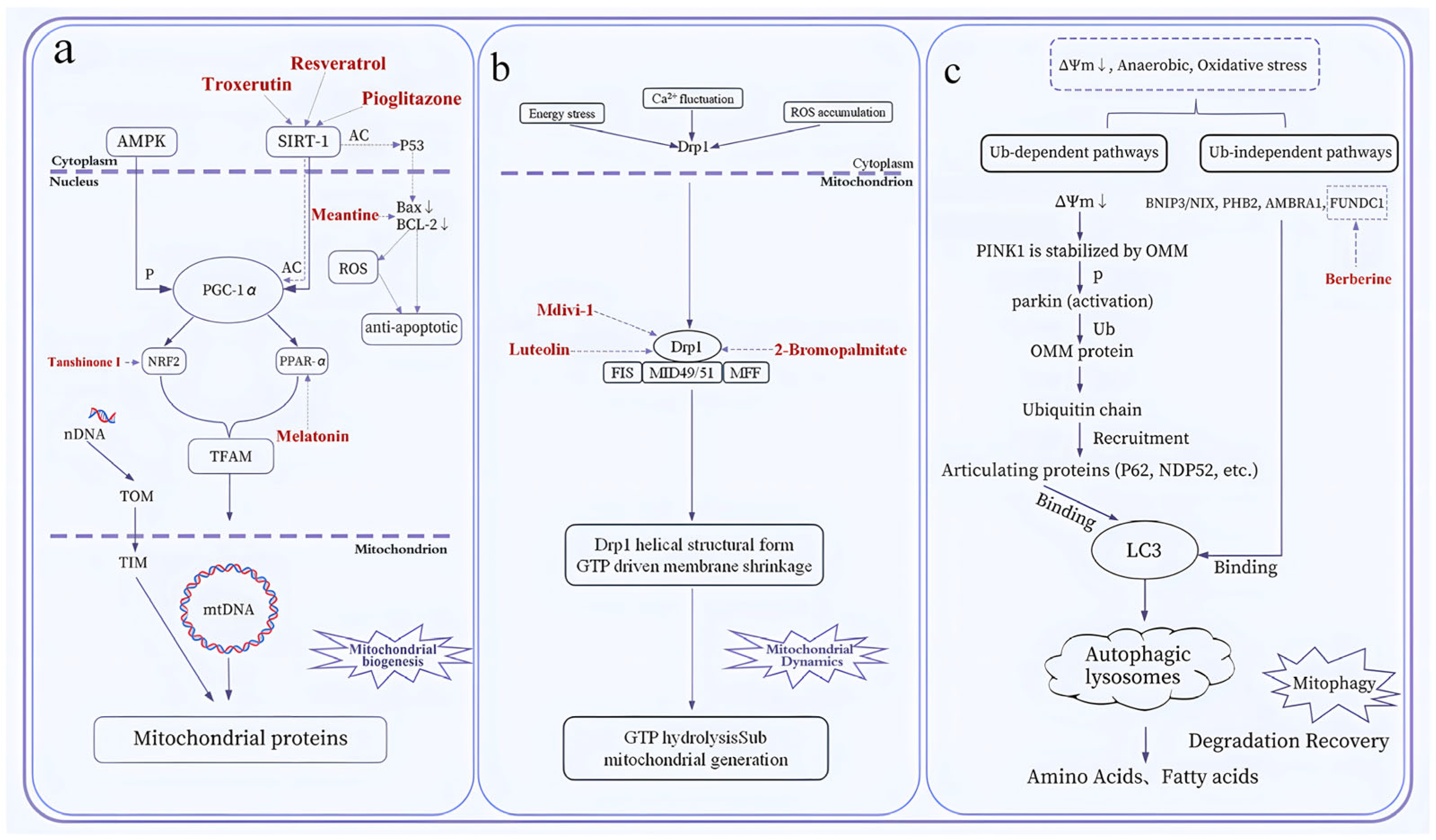
| Mdivi–1 | Drp1 | Inhibits phosphorylation of Drp1 to suppress excessive mitochondrial fragmentation and restore dynamics (Figure 3b). | Neurotoxicity | Preclinical | [179] | |
| Amifostine | ROS clearance/Platinum chelation | Eliminates ROS selectively in normal tissues, reducing mitochondrial accumulation of cisplatin. | Cisplatin nephrotoxicity | Approved for clinical use | [180] | |
| PDE10A inhibitors | PDE10A/cAMP–cGMP | Elevates cAMP–cGMP levels, activating PKA to enhance antioxidant enzyme activities (SOD/GPx) and mitigate mitochondrial ROS bursts. | Anthracycline cardiotoxicity | Preclinical | [181] | |
| Pioglitazone | SIRT1/p53 | Alleviates cisplatin nephrotoxicity by regulating SIRT1/p53-mediated mitochondrial apoptosis (Figure 3a). | Cisplatin nephrotoxicity | Preclinical | [182] | |
| Memantine | Bax/Bcl–2, Caspase–3 | Reduces mitochondrial-dependent neurotoxicity induced by oxaliplatin (Figure 3a). | Oxaliplatin neurotoxicity | Preclinical | [183] | |
| 2–Bromopalmitate | Drp1 | Reduces Drp1-mediated mitochondrial dysfunction, attenuating oxaliplatin-induced neuropathic pain (Figure 3b). | Oxaliplatin neurotoxicity | Preclinical | [124] | |
| PEA | NF–κB/Nrf–2 | Alleviates oxaliplatin-induced painful neuropathy via modulation of NF–κB/Nrf–2 signaling. | Oxaliplatin neurotoxicity | Preclinical | [184] | |
| Lasmiditan | 5–HT1F receptor | Indirectly modulates mitochondrial stability through regulation of PGC–1α, AMPK, and fusion/fission proteins, protecting against renal ischemic injury. | Kidney injury | Preclinical | [185] | |
| Salvianolic Acid B | AMPK/SIRT1/PGC–1a | Reduces kidney injury by activating the AMPK/SIRT1/PGC–1α signaling axis. | Kidney injury | Preclinical | [186] | |
| Tirzepatide | HRD1, Nrf2 | Mitigates DOX cardiotoxicity by inhibiting ER stress/HRD1, stabilizing Nrf2, and enhancing HO–1 expression. | Doxorubicin-induced cardiotoxicity | Preclinical | [187] | |
| Natural Products | Melatonin | PPARα | Prevents acute kidney injury induced by cisplatin via upregulation of PPARα expression (Figure 3a). | Cisplatin nephrotoxicity | Phase II clinical trial | [188] |
| Berberine | FUNDC1 | Protects mitochondrial networks in glomerular podocytes by downregulating FUNDC1 expression (Figure 3c). | Cisplatin nephrotoxicity | Preclinical | [189] | |
| Resveratrol | SIRT1/PGC–1α | Activates SIRT1–PGC–1α pathway, promoting MB and enhancing antioxidant defenses (Figure 3a). | Multi-organ protection (cardiac/renal/neuro) | Preclinical | [190] | |
| Honokiol | SIRT3 activator | Prevents ROS production, mitochondrial damage, and cell death induced by DOX in neonatal rat cardiomyocytes through activation of SIRT3. | Anthracycline cardiotoxicity | Preclinical | [191] | |
| Mangiferin | Nrf2/HO–1 | Enhances antioxidant Nrf2/HO–1 signaling to maintain redox balance. | Reduces kidney ischemia/reperfusion injury | Preclinical | [192] | |
| Ginsenoside F1 | Nrf2/HO–1 | Inhibits ferroptosis via increased HO–1 expression, promoting free iron clearance. | Anthracycline cardiotoxicity | Preclinical research stage | [193] | |
| Tanshinone I | Nrf2 | Attenuates oxidative stress by regulating Nrf2 signaling (Figure 3a). | DOX cardiotoxicity | Preclinical | [194] | |
| Glycyrrhetinic Acid | Nrf2/HO–1 | Suppresses oxidative stress, mitochondrial dysfunction, and apoptosis via the Nrf2/HO–1 pathway. | DOX cardiotoxicity | Preclinical | [195] | |
| Silibinin | SIRT3 | Enhances mitochondrial function by modulating SIRT3 expression. | Cisplatin nephrotoxicity | Preclinical research (animal/cellular studies) | [196] | |
| Tanshinone IIA | PI3K/Akt/mTOR | Promotes autophagy via activation of the PI3K/Akt/mTOR pathway. | Oxaliplatin peripheral neurotoxicity | Preclinical | [197] | |
| Luteolin | Drp1 | Suppresses mitochondrial fragmentation and oxidative stress by inhibiting Drp1 phosphorylation. | Anthracycline cardiotoxicity | Preclinical | [56] | |
| Rosmarinic Acid | AMPK | Reduces oxidative stress and enhances cellular energy metabolism via AMPK activation in peripheral nerves and dorsal root ganglia (Figure 3a). | Platinum-induced peripheral neuropathy | Preclinical | [198] | |
| WGX50 | ROS, Ferroptosis | Attenuates DOX-induced cardiac damage through inhibition of mitochondrial ROS and ferroptosis. | DOX cardiotoxicity | Preclinical candidate | [199] | |
| Troxerutin | SIRT1/PGC–1a | Enhances MB by activating the SIRT1/PGC–1α pathway (Figure 3a). | Alleviation of DOX-induced myocardial injury and oxidative stress. | Preclinical | [64] | |
| Gastrodin | ROS, SIRT1 | Mitigates cisplatin nephrotoxicity by reducing ROS generation and increasing SIRT1 expression. | Cisplatin nephrotoxicity | Preclinical | [200] | |
| Pterostilbene | PGC–1α | Reduces oxidative stress by activating PGC–1α, enhancing AMPK and SIRT1 signaling cascades. | Cardiac injury | Preclinical candidate | [201] |
Disclaimer/Publisher’s Note: The statements, opinions and data contained in all publications are solely those of the individual author(s) and contributor(s) and not of MDPI and/or the editor(s). MDPI and/or the editor(s) disclaim responsibility for any injury to people or property resulting from any ideas, methods, instructions or products referred to in the content. |
© 2026 by the authors. Licensee MDPI, Basel, Switzerland. This article is an open access article distributed under the terms and conditions of the Creative Commons Attribution (CC BY) license.
Share and Cite
Li, Y.; Ding, N.; Liu, X.; Si, Q.; Wang, Y.; Li, C.; Liu, Y. The Disrupted Mitochondrial Quality Control Network: A Unifying Mechanism and Therapeutic Target for Chemotherapy-Induced Multi-Organ Toxicity. Biology 2026, 15, 230. https://doi.org/10.3390/biology15030230
Li Y, Ding N, Liu X, Si Q, Wang Y, Li C, Liu Y. The Disrupted Mitochondrial Quality Control Network: A Unifying Mechanism and Therapeutic Target for Chemotherapy-Induced Multi-Organ Toxicity. Biology. 2026; 15(3):230. https://doi.org/10.3390/biology15030230
Chicago/Turabian StyleLi, Yaling, Ningning Ding, Xiufan Liu, Qi Si, Yong Wang, Changtian Li, and Yongqi Liu. 2026. "The Disrupted Mitochondrial Quality Control Network: A Unifying Mechanism and Therapeutic Target for Chemotherapy-Induced Multi-Organ Toxicity" Biology 15, no. 3: 230. https://doi.org/10.3390/biology15030230
APA StyleLi, Y., Ding, N., Liu, X., Si, Q., Wang, Y., Li, C., & Liu, Y. (2026). The Disrupted Mitochondrial Quality Control Network: A Unifying Mechanism and Therapeutic Target for Chemotherapy-Induced Multi-Organ Toxicity. Biology, 15(3), 230. https://doi.org/10.3390/biology15030230