Article

Integrative Application of Transcriptomics and Metabolomics Reveals Molecular Insight into Metabolomic Variations in Chinese Mitten Crab Eriocheir sinensis Harvested from Lake Datong and Adjacent Pond


1
National Demonstration Center for Experimental Fisheries Science Education, College of Fisheries and Life Science, Shanghai Ocean University, Shanghai 201306, China
2
Key Laboratory of Exploration and Utilization of Aquatic Genetic Resources, Ministry of Education, Shanghai Ocean University, Shanghai 201306, China
3
School of Ocean, Yantai University, Yantai 264005, China
*
Authors to whom correspondence should be addressed.
These authors contributed equally to this work.
Biology 2026, 15(2), 110; https://doi.org/10.3390/biology15020110
Submission received: 4 December 2025 / Revised: 31 December 2025 / Accepted: 3 January 2026 / Published: 6 January 2026
(This article belongs to the Section Biochemistry and Molecular Biology)

Simple Summary

Distinct rearing environments and farming models exert a significant impact on the physiological metabolism and overall quality of cultured aquatic organisms. In this study, we aimed to investigate the physiological and metabolic differences in the Chinese mitten crab, Eriocheir sinensis, farmed in lake and pond environments using integrated transcriptomic and metabolomic analyses. The combined analysis revealed that key pathways, including AMPK signaling, cytochrome P450-mediated xenobiotic metabolism, glycerophospholipid metabolism, and apoptosis, collectively influence crab growth performance. Specifically, crabs from the lake group exhibited enhanced antioxidant and detoxification capacities. However, this was accompanied by reduced protein synthesis, lower energy metabolism, and increased apoptosis. These findings offer valuable insights for optimizing crab farming practices in different aquaculture systems.

Abstract

As an important economic aquatic product in China, the farming method of Eriocheir sinensis significantly impacts its quality and physiological metabolism. In this study, the effects of lake (LK) farm and pond (PD) farm on the gene expression profiles and metabolic pathways in E. sinensis were evaluated by integrating transcriptomic and metabolomic analyses. A total of 812 differentially expressed genes (DEGs) were identified in the hepatopancreas of crabs. The DEGs were mainly enriched in nutrient reservoir activity, regulation of response to oxidative stress, and lipid transporter activity. In addition, LC-MS analysis identified 410 significantly differential metabolites, and KEGG pathway enrichment showed that these metabolites were mainly enriched in the MAPK signaling pathway, HIF-1 signaling pathway, and glycerolipid metabolism. Integrated transcriptomic and metabolomic analyses revealed that the AMPK signaling pathway, cytochrome P450-mediated xenobiotic metabolism, glycerophospholipid metabolism, and the apoptosis signaling pathway collectively exert a significant influence on the growth performance of crabs. Collectively, our findings demonstrated that the crabs in the LK group exhibit enhanced antioxidant and detoxification capacities, concomitant with reduced protein synthesis and energy metabolism, and underwent increased apoptotic events. The finding of this study will provide valuable and novel insight into crab farming practices in different aquaculture environments, providing theoretical foundations for optimizing ecological aquaculture models in Datong Lakes’ crab farms. Specifically, combined supplementation with natural feed organisms and mechanical aeration may effectively mitigate benthic hypoxia and nutritional deficits, thereby promoting sustainable production in the lake-based culture of crabs.

1. Introduction

The Chinese mitten crab, Eriocheir sinensis, is a commercially important freshwater crab with a high market value in East Asian countries. As an important economic aquatic species, the E. sinensis industry has become the pillar of the aquaculture industry [1]. The farming of E. sinensis has undergone rapid development in China. It is primarily conducted through two main methods: pond-based artificial farming and lake-based natural farming. Pond-based artificial farming generally offers higher yields per unit area and relatively stable economic returns. Lake-based natural farming, due to its reliance on natural conditions, has lower yields per unit area [2]. In addition to their extensive area with comparatively good water quality, crabs in the lakes are superior to those from other waters such as fish ponds.
Aquatic organisms are highly susceptible to external environmental factors such as food sources and water chemistry [3]. The aquatic environment significantly influences key traits of farmed aquatic organisms, including their physical appearance and nutritional composition. Wild and farmed aquatic species differ notably in nutrient composition, mainly due to variations in their environmental and dietary conditions. Wild crabs in lakes typically forage for food within their natural habitat, consuming aquatic vegetation, algae, and benthic organisms [4]. Conversely, pond-raised crabs are given formulated feed to guarantee the steady growth and consistent quality of aquaculture products. This distinction in feeding practices contributes to the divergent nutritional profiles of wild and farmed crabs, which in turn affects their metabolism, flavor, and nutritional value [5].
The hepatopancreas is the largest digestive and nutrient storage organ in crustaceans, and it plays an important role in carbohydrate, lipid metabolism, and energy storage [6,7]. Metabolomics, as a well-accepted approach of high-throughput analysis, can identify the comprehensive characterization of small-molecule metabolites and provide an overview of the metabolic status and global biochemical events in a biological system. As an analytical approach, metabolomic profiling quantifies low-molecular-weight metabolites in cells or tissues, thereby offering valuable insights into the mechanisms by which organisms interact with their environment [8].
In this study, we conducted untargeted liquid chromatography–mass spectrometry (LC–MS) and RNA sequencing to investigate differences in the metabolomic and transcriptomic profiles between the crabs in the PD and LK group. The finding of this study will provide valuable and novel insight into crab farming practices in different aquaculture environments, providing theoretical foundations for optimizing ecological aquaculture models in Datong Lakes’ crab farms.

2. Materials and Methods

2.1. Animals

Healthy female crabs (average weight 171.25 ± 11.09 g) were collected from Lake Datong and adjacent ponds. Datong Lake is located at 29°05′~29°16′ N and 112°26′~112°35′ E in the nearly middle part of Hunan Province, China. It is the largest inland lake in Hunan Province. Juvenile crabs from the same family line (Jianghai 21) were reared separately in lakes and ponds. The crabs in the pond (PD) were fed a high-protein diet (91% of dry matter, 56% of crude protein, 9% of crude lipid, and 13% of ash twice per day. However, the crabs from Datong Lake (LK) were mostly dependent on natural food. After approximately nine months of rearing, eight crabs were randomly selected from each of the LK and PD groups. The hepatopancreas of each sample was immediately dissected and then stored in liquid nitrogen. Each group was divided into two parts, with one part selected for transcriptomic analyses and the other analyzed via the metabolomics platform.

2.2. RNA Isolation and cDNA Library Preparation

Total RNA was extracted by using TRIzol® Reagent (Invitrogen, Carlsbad, CA, USA) according to the manufacturer’s instructions and the genomic DNA was removed by using DNase I (Takara, Shiga, Japan). The RNA integrity was checked by an Agilent 2100 Bioanalyzer (Agilent, Santa Clara, CA USA), while the RNA concentration was determined by an ND-2000 ultraviolet spectrophotometer (NanoDrop Technologies, Wilmington, DE, USA). The RNA-seq transcriptome library was prepared following Illumina® Stranded mRNA Prep, Ligation (San Diego, CA, USA), using 1 μg of total RNA. Briefly, mRNA was enriched using Oligo d(T) magnetic beads, followed by RNA fragmentation, reverse transcription, end repair, adenylation, adapter ligation, and PCR amplification. The library was sequenced using an Illumina HiSeq 6000 (Illumina Inc., San Diego, CA, USA) with paired-end 150 bp reads. All the raw sequence data of RNA-seq have been deposited in the National Center for Biotechnology Information Sequence Read Archive (SRA) under Bio-Project accession number PRJNA1050822.

2.3. RNA Sequencing and Data Analysis

The raw paired-end reads were trimmed and quality controlled by fastp with default parameters [9]. was performed based on the sequence of the E. sinensis genome (Genbank assembly accession GCF_024679095.1) as a reference. An index of the reference genome was built and the clean reads were aligned to the reference genome using Hisat2 v2.0.5 [10]. The number of reads mapped to each gene was counted via the feature counts. Read counts were further analyzed and the edgeR was used to identify the differentially expressed genes [11]. The resulting p-values were adjusted using Benjamini and Hochberg’s approach for controlling the false discovery rate. The Cluster Profiler 4.6.2 R package was used to test the statistical enrichment of differentially expressed genes in the KEGG pathways [12].

2.4. Quantitative Real-Time PCR Validation

The accuracy of the high-throughput data was validated using qPCR methods. Ten DEGs were randomly selected from the transcriptome data, and the qPCR experiment was performed on an ABI 7500 real-time PCR system (ABI, Waltham, MA, USA). Beta-actin was used as the internal reference, and the amplifications were performed according to the following program: 95 °C for 30 s and 40 cycles of 95 °C for 5 s, 60 °C for 35 s, and 72 °C for 52 s. All primer sequences used in this study were listed in Supplementary Table S1. Gene expression levels were calculated using the 2−ΔΔCt method. Statistical significance (p < 0.05) was calculated using one-way ANOVA and Duncan’s multiple range tests (SPSS 21.0). The minimum significant level was set to 0.05.

2.5. The Metabolomics Analysis of Hepatopancreas Tissues

Chromatographic separation was performed on an Acquity UPLC HSS T3 column (2.1 mm × 100 mm, 1.8 μm, Waters Corp., Milford, CT, USA). A 2 μL aliquot of the sample was separated by an HSS T3 column and then entered into mass spectrometry detection. The mobile phases consisted of 0.1% formic acid in water:acetonitrile (95:5, v/v) and 0.1% formic acid in acetonitrile:isopropanol:water (47.5:47.5:5, v/v). The mass spectrometric data were collected using a Thermo UHPLC-Q Exactive Mass Spectrometer (Thermo Scientific, Milford, CT, USA) equipped with an electrospray ionization source operating in either positive or negative ion mode. One quality control (QC) sample was run to ensure the detection stability and replicability of the samples.

2.6. Integrative Analysis of Metabolomics and Transcriptomics

An integrative metabolomics and transcriptomics approach was adopted to better characterize the regulation of gene expression and metabolomics. All of the differentially expressed genes and metabolites were mapped to the KEGG pathway database, their common pathway information was obtained, and a KEGG enrichment result was generated for the pathways that were significantly enriched with DEGs and DEMs.

2.7. Statistical Analysis

Statistical analyses were performed using the SPSS 21.0 software package. All data are expressed as means ± standard error of the means (SEM), and homogeneity of data variance was analyzed using Levene’s test. In terms of MS data analysis, unsupervised PCA was performed by statistics function prcomp within R. The data were unit variance scaled before unsupervised PCA. Differential metabolites were selected on the basis of VIP > 1, absolute Log2FC.

3. Results

3.1. Transcriptomic Analysis of E. sinensis in the LK and PD Group

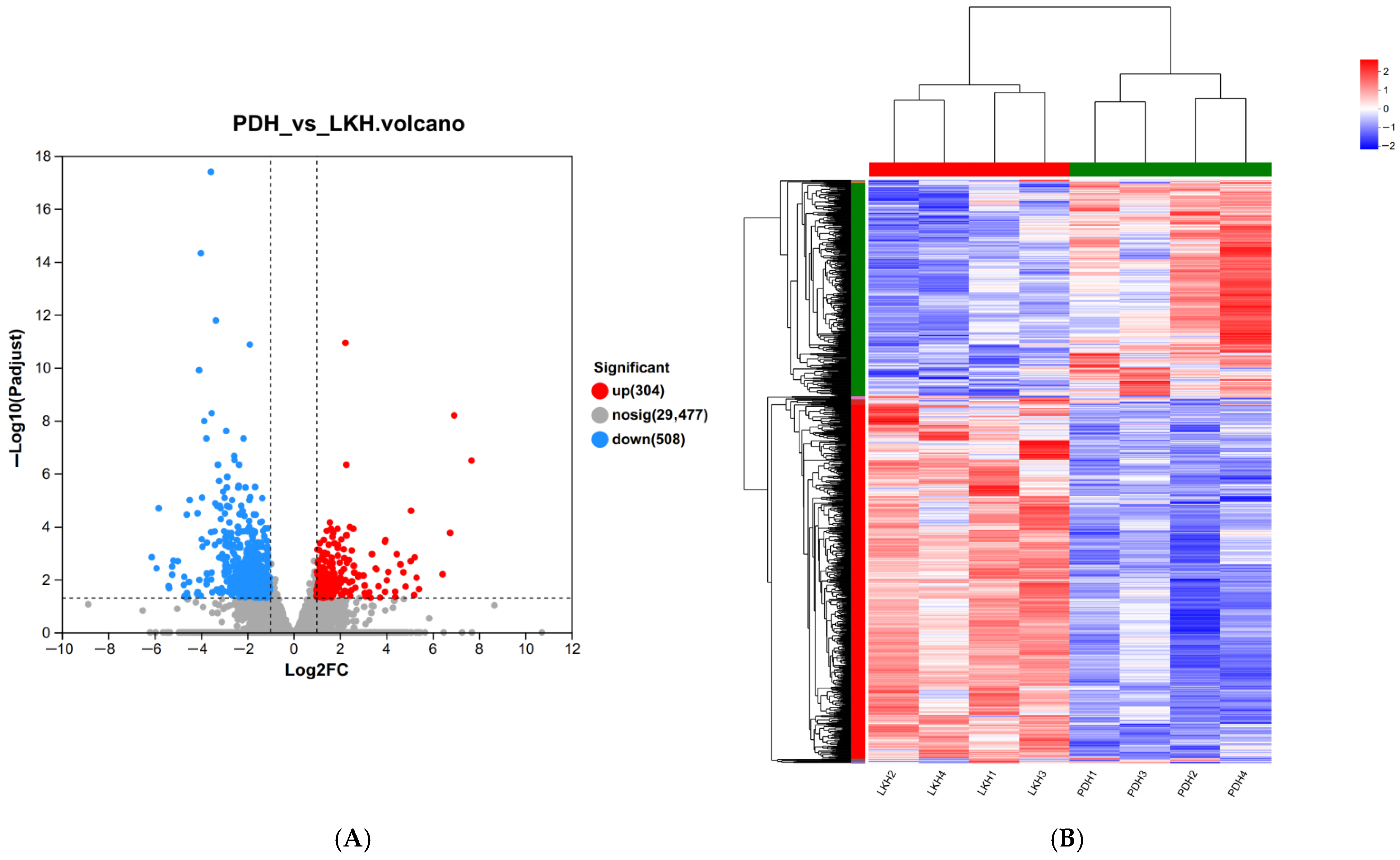
The criterion of p-value < 0.05 and |log2 FC| > 1 was used to identify differentially expressed genes (DEGs) in the LK group and the PD group. A total of 812 DEGs were identified in the LK vs. PD group, of which 304 DEGs were significantly up-regulated and 508 DEGs were significantly down-regulated in the LK group (Figure 1A, Supplementary Table S2). A hierarchical clustering analysis was conducted on differentially expressed genes, revealing distinct patterns of gene expression differentiation between the PD group and the LK groups (Figure 1B).
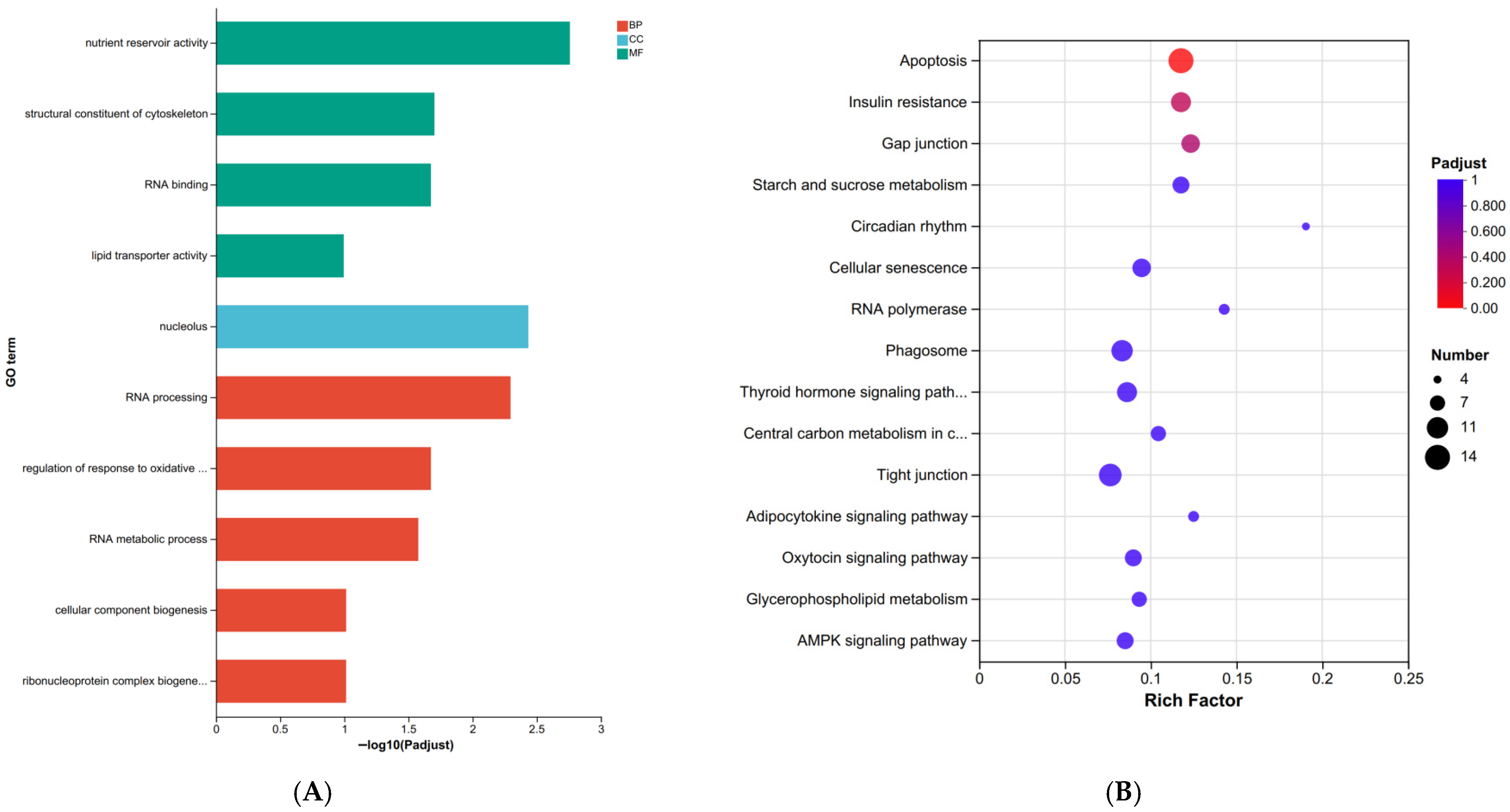
These DEGs were subjected to GO enrichment and KEGG functional analysis to better understand the biological significance of these DEGs and the biochemical processes involved. The top 20 GO enrichment terms indicated that the DEGs were mainly involved in some important biological processes and molecular functions, such as nutrient reservoir activity, regulation of response to oxidative stress, and lipid transporter activity (Figure 2A). In addition, the results of the KEGG enrichment analysis showed that some pathways, such as the glycerophospholipid metabolism, linoleic acid metabolism, and starch and sucrose metabolism, were enriched (Figure 2B).

3.2. Quantitative Real-Time PCR Validation of the DEGs

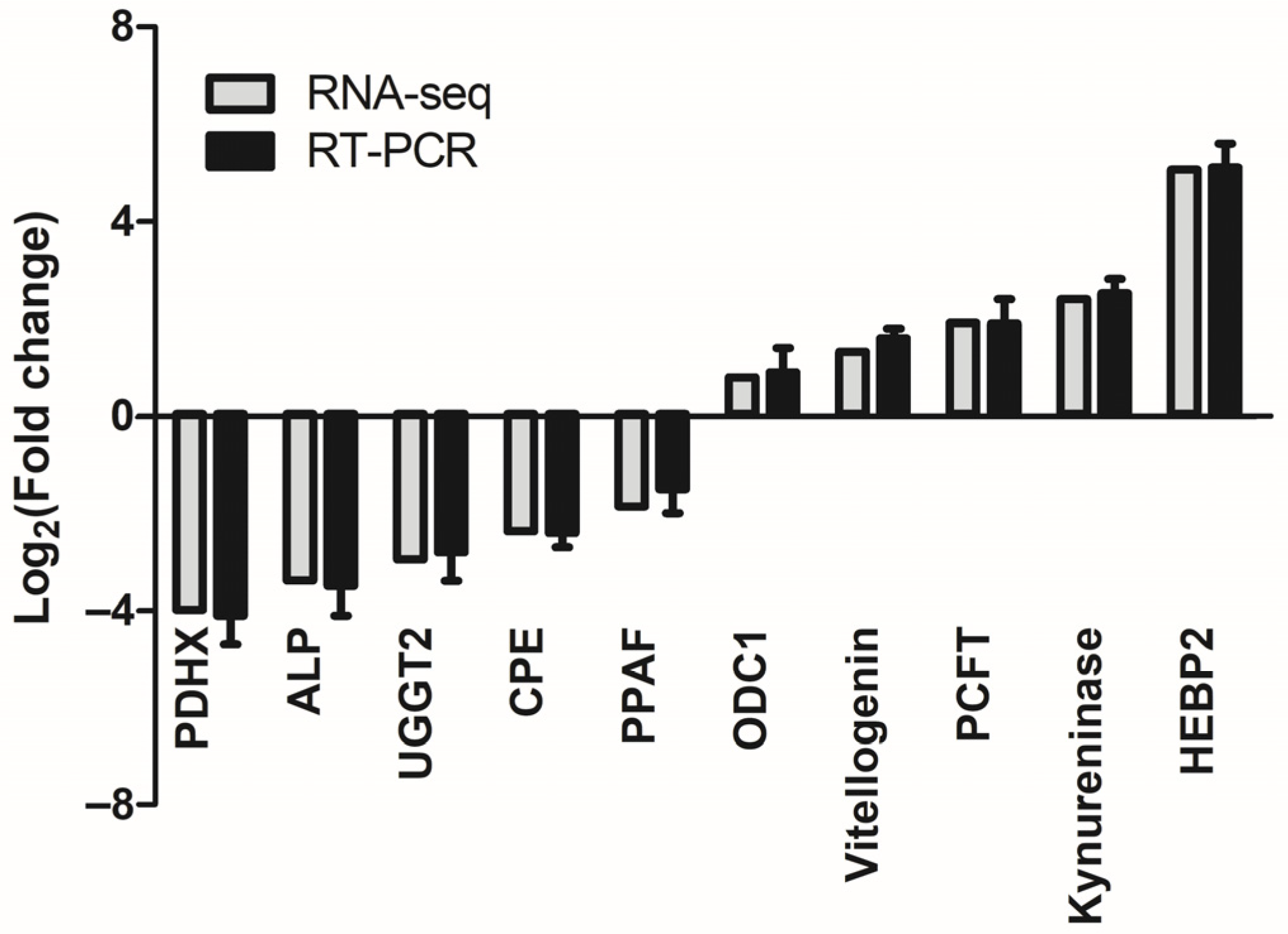
To confirm the reliability of the transcriptome sequencing results, we selected 10 DEGs for quantitative real-time PCR (qRT-PCR) validation. They included five up-regulated genes and five down-regulated genes. The results showed that the qRT-PCR gene expression patterns were consistent with the RNA-seq results (Figure 3), which demonstrated the reliability and accuracy of RNA-seq.

3.3. Overview of Metabolomic Profiles from Crabs in the LK and PD Group

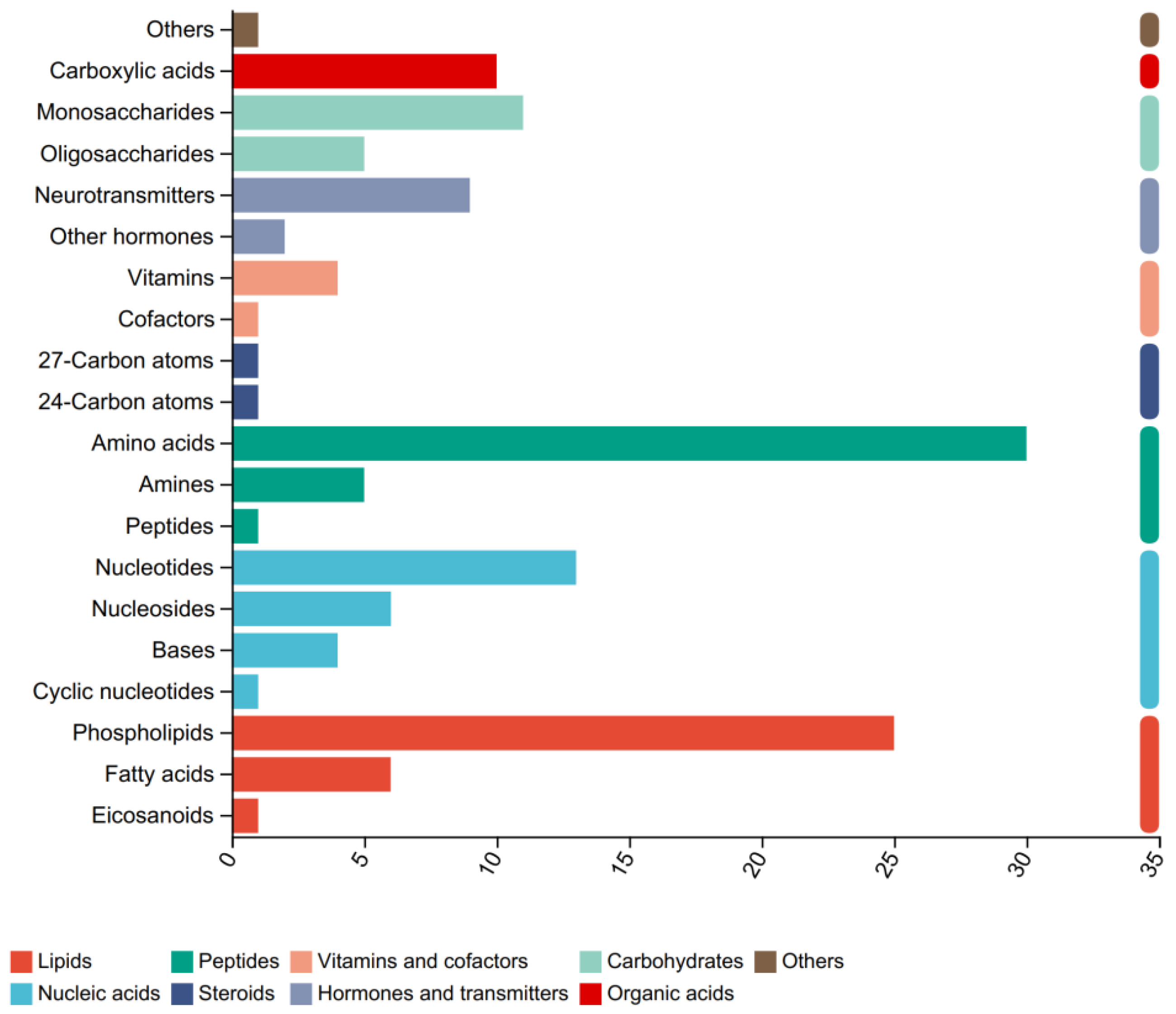
Using molecular weight and mass spectrometry information, a search was conducted of the HMDB to identify metabolites. A total of 410 metabolites, including amino acids, carboxylic acid, monosaccharides, nucleotides phospholipids, and fatty acids, were identified in the hepatopancreas metabolomic profiles (Figure 4). The analysis revealed that the top three super classes among the identified metabolites were amino acids (29.18%), phospholipids (24.36%), and nucleotides (14.41%).
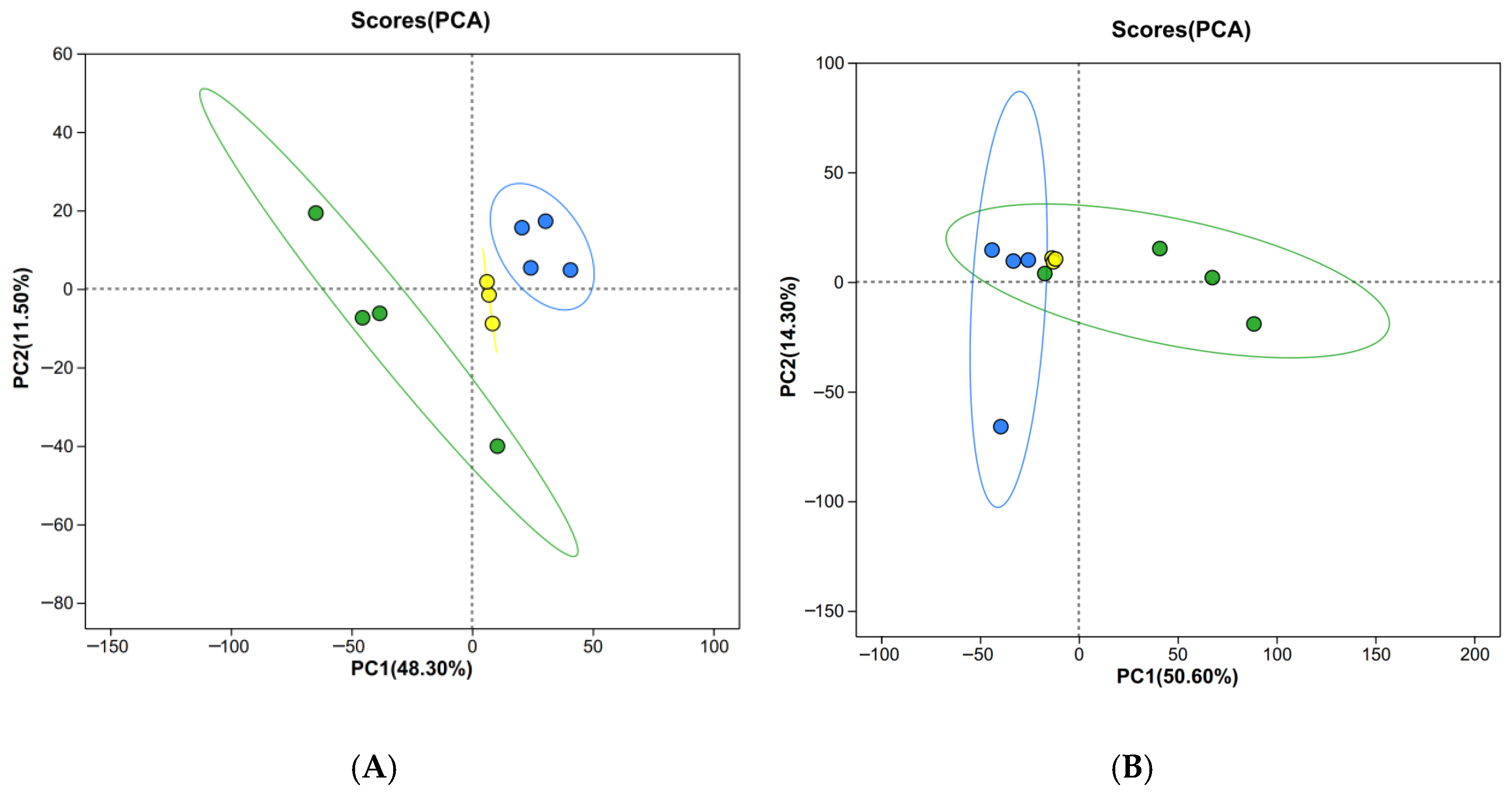
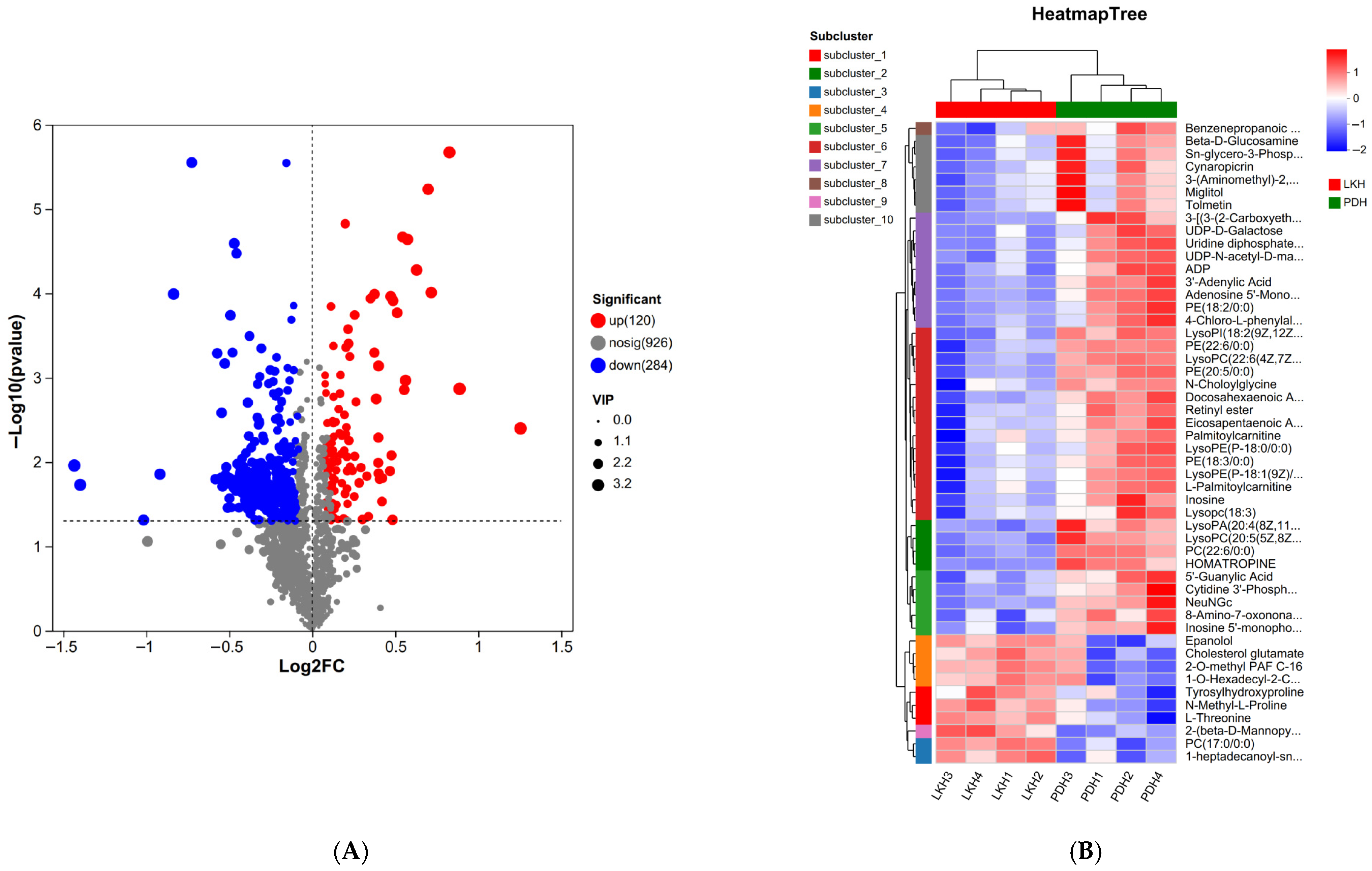
To better understand the metabolic differences in the two groups, PCA was applied for pairwise comparisons. In positive (Figure 5A) and negative (Figure 5B) ion modes, there was an apparent separation observed in the crabs between the LK and PD groups. The percentage of explained value in the metabolomics analysis of PC1 and PC2 was 48.30% and 11.50% (positive ion mode), and 50.60% and 14.30% (negative ion mode), respectively. On the basis of the PCA results, a total of 410 significantly differential metabolites (SDMs) were identified between the PD and LK groups. Among the 410 SDMs, 292 and 118 metabolites were significantly up-regulated and down-regulated compared with those in the PD group (Figure 6A). Hierarchical clustering analysis also indicated that each type of the two groups exhibited a distinct metabolic pattern (Figure 6B), and the detailed metabolite identification and quantification results can be found in Supplementary Table S3.
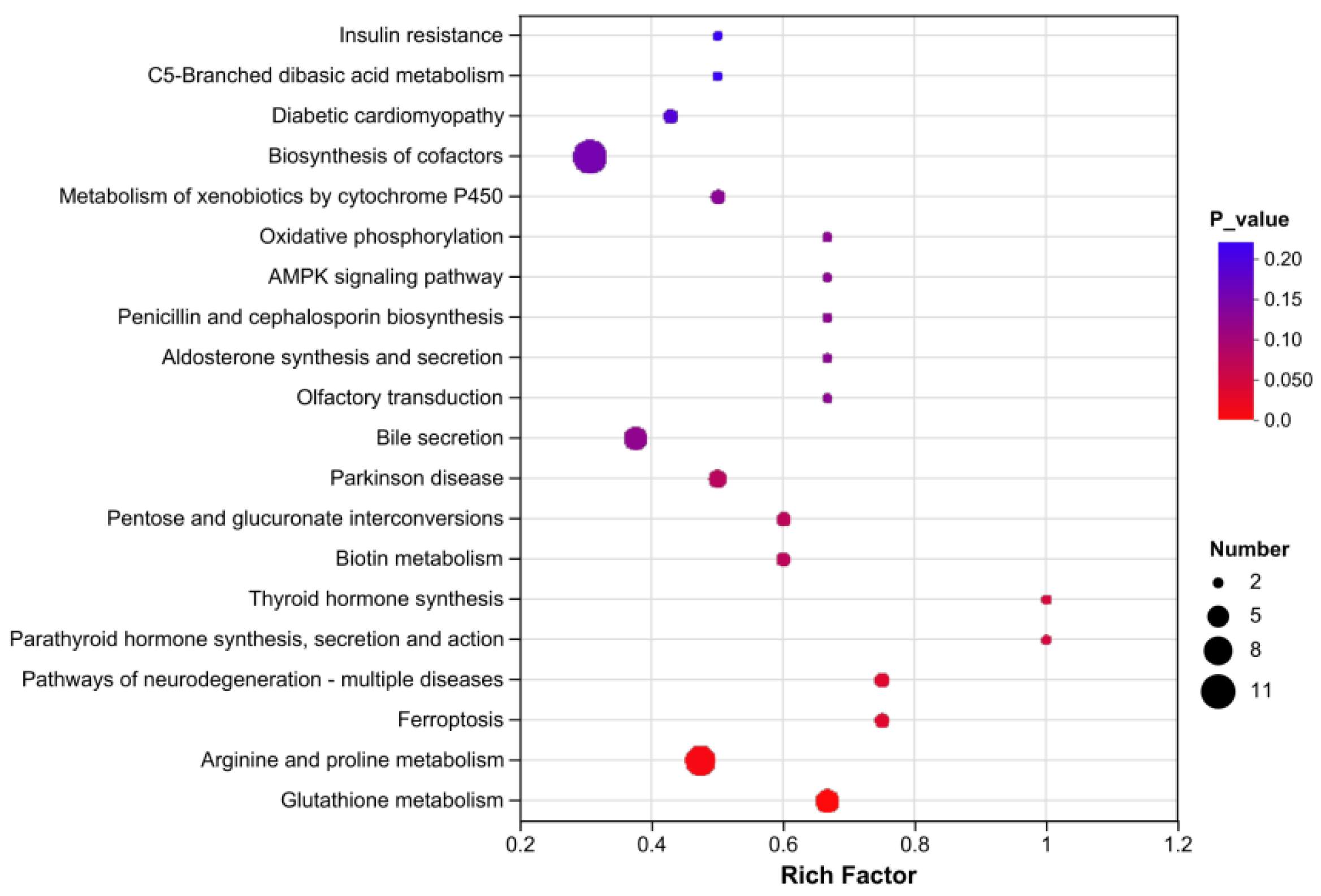
KEGG enrichment analysis was performed on these SDMs to explore the most relevant pathways. The results showed that the top enriched pathways were mainly enriched metabolite categories, including the Arginine and proline metabolism, AMPK signaling pathway, HIF-1 signaling pathway, and glycerolipid metabolism (Figure 7).

3.4. KEGG Pathway Enrichment Analysis Based on Metabolomics and Transcriptomic Data

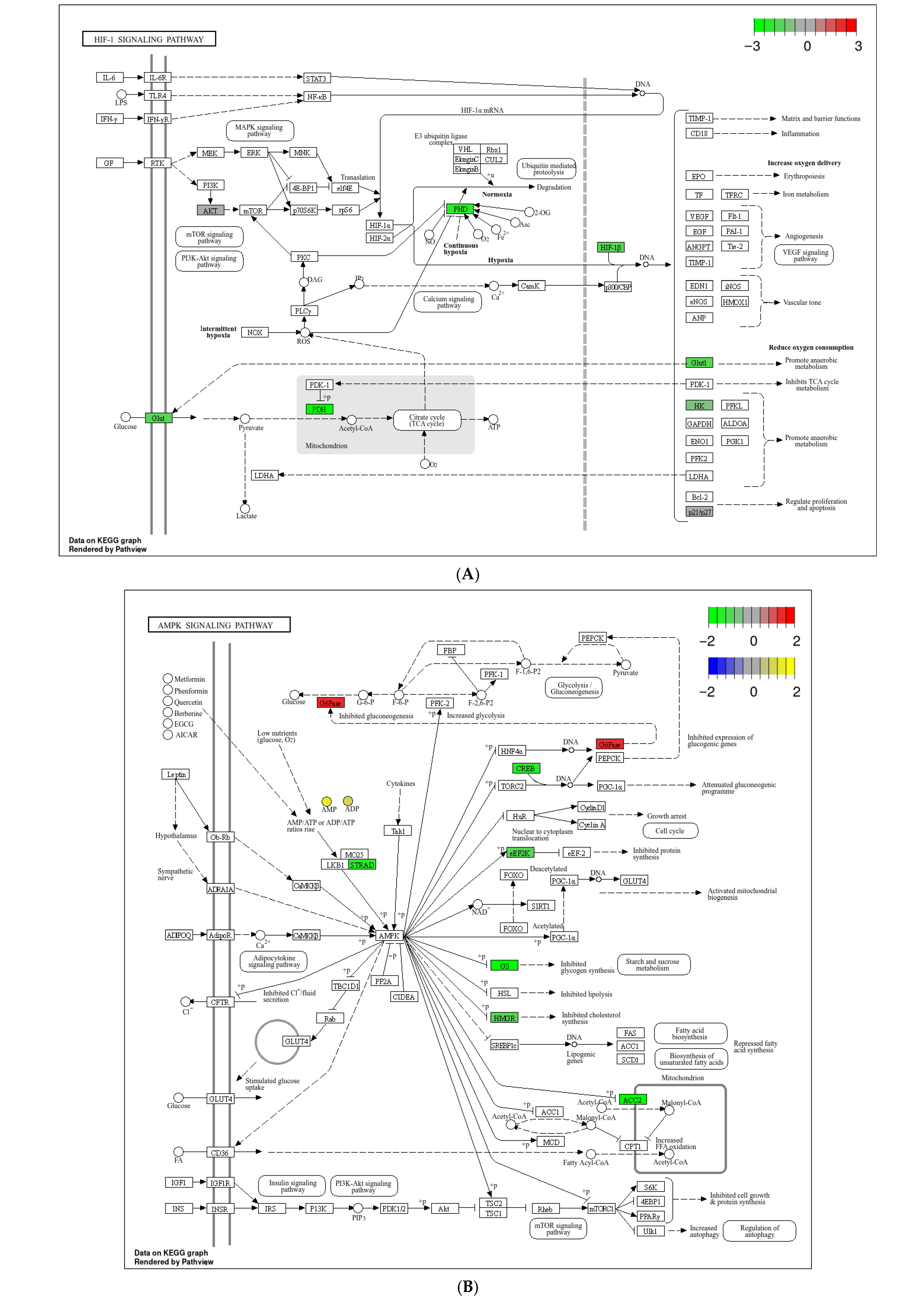
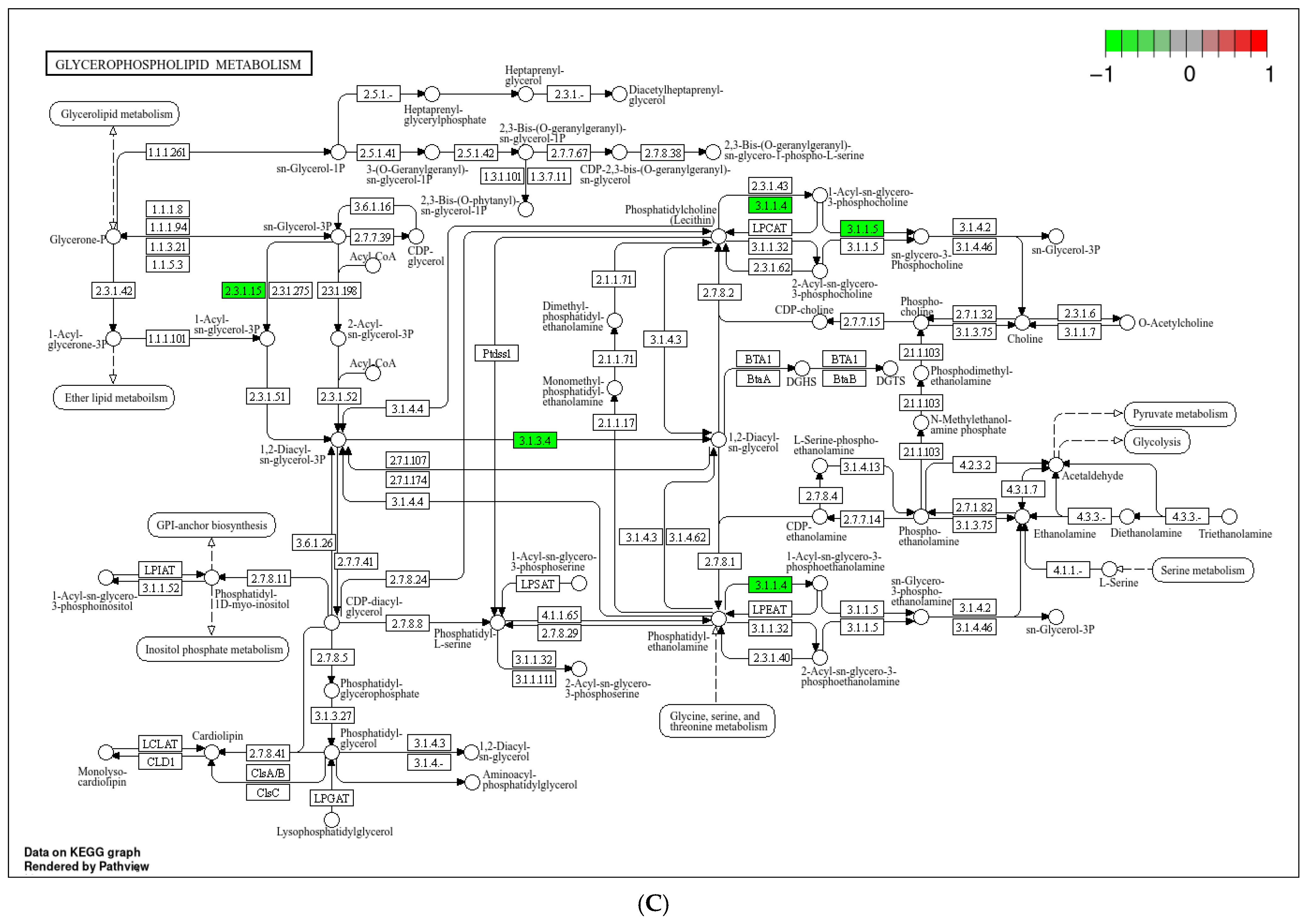
To further screen related genes and metabolites, as well as key metabolic pathways, we conducted a comprehensive analysis of the transcriptome and metabolome. Analysis of DEGs and DMs in the two groups showed that the HIF-1 signaling pathway (Figure 8A), AMPK signaling pathway (Figure 8B), and glycerophospholipid metabolism pathway were enriched in the KEGG analyses (Figure 8C).

4. Discussion

Prior to 2017, extensive aquaculture practices characterized by high-density stocking and intensive feeding significantly damaged the original aquatic vegetation in Datong Lake, resulting in the near-complete loss of its self-purification capacity. In recent years, under governmental support and technical guidance from expert teams, 80% of the area of Datong Lake was successfully recovered by submerged vegetation, and the water quality was improved [13]. Datong Lake has pioneered an innovative “macrophyte + Chinese mitten crab” ecological development model. Although the natural lake aquaculture of crabs eliminates feeding costs and simplifies management protocols, it presents several significant operational and environmental challenges.

4.1. The Activation of Detoxification and Antioxidant Genes in the LK Group

Uridine diphosphate (UDP)–glycosyltransferases, which are major detoxification enzymes, play an important role in the glycosylation of lipophilic endobiotics, xenobiotics, and phytoalexins [14]. Glucosylation by UDP–glucosyltransferase is crucial for reducing the autotoxicity of plant allelochemicals [15]. Submerged plants and their associated periphyton serve as food sources for zoobenthos. In turn, zoobenthos are consumed by crabs, indirectly providing an essential food supply for crabs [16]. Previous studies have found the presence of both macrophytes and algae in gastric mills, indicating that crabs consume host plants and algae [17]. Saxitoxin, which is derived from the mollusc Saxidomus giganteus, is mainly produced by toxic dinoflagellates [18]. Cytochromes P450 (CYPs) are a major class of enzymes responsible for xenobiotic metabolism. In this study, the expression level of cytochrome P450 was significantly up-regulated in the LK group. The metabolome data also revealed the presence of toxic phenylpropanoids and polyketides, such as saxitoxin, further supporting this hypothesis. These findings are consistent with previous research on Praeruptorin, a bioactive compound isolated from the traditional Chinese medicinal herb Qianhu (Peucedanum praeruptorum Dunn). Specifically, Huang et al. (2013) demonstrated that Praeruptorin treatment significantly enhanced both the mRNA expression and enzymatic activity of cytochrome P450 enzymes in LS174T cells [19].
In addition, GO enrichment analysis found pathways related to the term of response to oxidative stress. The term included two genes, LOC127009260 (sestrin-2like) and LOC126988476 (nucleoside diphosphate kinase 5-like). The gene sestrin 2, a stress-inducible protein associated with various stress conditions, is a potential antioxidant [20], both of which are significantly up-regulated in the LK group, suggesting that the cellular capacity for detoxification and antioxidation is significantly enhanced in the LK group [21,22].

4.2. Enzyme Involved in Digestion in the Hepatopancreas of Crabs

For carbohydrate metabolism, the amylase activity in the hepatopancreas of crabs in the LK group was significantly lower than that in the PD group. In a natural lake environment, crabs are omnivorous and feed on a variety of food sources. However, in pond aquaculture, many sources of carbohydrates have been added to the aquafeed, such as maltose, sucrose, and wheat starch [23]; hence, the amylase in the hepatopancreas was activated to accommodate higher dietary carbohydrate [24,25]. In addition, metabolome analysis also revealed that the levels of oxoglutaric acid in the hepatopancreas were significantly up-regulated in the PD group, indicating that the energy metabolism level of crabs in the PD group was significantly higher than that in the LK groups.
Similarly, with regard to protein digestion, carboxypeptidase B was up-regulated in PD crabs, suggesting an increased capacity for protein digestion, which is also consistent with the higher protein content in the consumed diet in the PD crabs. The hepatopancreas functions as the central metabolic organ in organisms, and its enzyme activity exhibits dynamic regulation in response to dietary composition [26,27]. Considering that crab in the pond farm consumed artificial feed, which is rich in carbohydrate and protein [28], it was reasonable that the digestion levels of protein and carbohydrate levels were higher in the PD groups. Other researchers have also reported similar results. For instance, digestive enzymes have shown a positive correlation between protease, amylase activities, and dietary protein levels [29,30].
Vitellogenin (Vtg) is a key supplier of nutrients and energy during the development procession in crabs [31]. In this study, the expression of vitellogenin mRNA was significantly lower in the LK group than that in the PD group [32]. Similarly, there were lower levels of VgA and VgB mRNAs in wild fish compared to captive individuals [33].

4.3. Regulation of Energy Metabolism and Apoptosis Procession

The TCA cycle is the final metabolic pathway of the three major nutrients and is also the hub of the carbohydrate, lipid, and amino acid metabolisms [34]. In this study, we found that two metabolites (ADP, AMP) and key genes (cyclic AMP-dependent transcription factor ATF-6 alpha, GTP-binding protein 4) involved in the AMPK pathway were dysregulated in the LK group. This indicates that the crabs in the LK group receive a lower energy supplement compared to those in the PD group, which is also consistent with the fact that crabs in the LK group mainly fed on mussel and phytoplankton in natural environments [35].
Apoptosis is a process of programmed cell death and is responsible for tissue remodeling and normal organization. In this study, several genes related to apoptosis procession were found, including caspase1, caspsase droc, DDIT4, and NFIL3 genes. The genes caspase1 and caspsase dronc were activated by inflammasomes [36] and stress-induced apoptosis [37,38]. DDIT4 is expressed under stress situations triggered by the mTOR [39], hypoxia [40], and energy depletion [41]. Similarly, NFIL3 has been identified as a crucial regulator involved in various cellular processes, including the immune response and apoptosis [42]. In this study, the expression of genes associated with apoptosis, such as caspase-1, caspase-8 (dronc), and DDIT4, was significantly up-regulated, indicating that apoptotic events may have occurred in the LK group.

4.4. The Role of Glycerophospholipid Metabolic Pathway in the Response of Crabs in LK Group Against Hypoxic Stress

Multiomics analyses in multiple species including yeast, zebrafish, and mice revealed the conserved involvement of the glycerophospholipid metabolism in hypoxic adaptation [43]. For example, up-regulation of lysophospholipid acyltransferase 1 (LPCAT1), a key enzyme in dipalmitoyl phosphatidylcholine (DPPC) biosynthesis, was observed in yeast under hypoxic conditions [44]. This metabolic adaptation increased membrane DPPC levels, which demonstrated protective efficacy, as evidenced by comparable hypoxia-resistance phenotypes in mammalian cell models. Rats were subjected to chronic hypoxia for 40 days, and metabolic pathway analysis revealed that the glycerolipid and glycerophospholipid metabolism were the most significantly impacted pathways [45]. In this study, the HIF-1 signaling pathway was found in the crabs of the LK group. In static aquaculture lakes, the dissolved oxygen in the hypolimnion cannot be adequately replenished due to thermal stratification [46]. When the aquaculture density in the lake is too high, hypoxia events may occur. In agreement with these findings, the glycerophospholipid metabolism was observed in the KEGG enrichment analysis in this study, which suggested a protecting role of the glycerophospholipid metabolism in the LK crabs under hypoxic conditions.

5. Conclusions

Integrating transcriptomics and metabolomics provides novel insights into the molecular mechanisms underlying the significant differences in transcripts and metabolites of crabs in the LK and PD groups. The crabs in the LK group exhibit a higher capacity for antioxidant and detoxification functions, while demonstrating a lower capacity for protein synthesis and energy metabolism, and undergoing apoptotic events. Our results indicate that the different types of culture environments (LK and PD) affect the metabolism of the hepatopancreas of E. sinensis. This study contributes to the general understanding of the physiology of crabs in natural lakes and provides a theoretical basis for the better development of crab aquaculture in lake farming. Specifically, combined supplementation with natural feed organisms and mechanical aeration may effectively mitigate benthic hypoxia and nutritional deficits, thereby promoting sustainable crab production in lake systems.

Supplementary Materials

The following supporting information can be downloaded at: https://www.mdpi.com/article/10.3390/biology15020110/s1, Table S1. Primer sequences for the genes selected for qRT-PCR. Table S2. The differentially expressed genes (DEGs) in the PD and LK group. Table S3. The differentially expressed metabolites (DEMs) in the PD and LK group.

Author Contributions

L.L.: Validation, formal analysis; Y.P.: methodology, conceptualization; W.X.: methodology; C.W.: funding acquisition, project administration, formal analysis, supervision; H.Z.: writing, original draft preparation, supervision. All authors have read and agreed to the published version of the manuscript.

Funding

This work was supported by the Agriculture Research System of Shanghai, China (Grant No. 202404).

Institutional Review Board Statement

The experimental protocols were approved by the Institutional Animal Care and Use Committee (IACUC) of Shanghai Ocean University (Series number: SHOU-DW-2023-018) and abide by the Guidelines on the Ethical Treatment of Experimental Animals established by the Ministry of Science and Technology, China.

Informed Consent Statement

Not applicable.

Data Availability Statement

The transcriptomic data generated in this study have been deposited in the NCBI Sequence Read Archive (SRA) under BioProject accession number PRJNA1050822.

Acknowledgments

The authors are grateful to the editor and two anonymous reviewers for their helpful comments and suggestions.

Conflicts of Interest

The authors declare that they have no known competing financial interests or personal relationships that could have appeared to influence the work reported in this paper.

References

  1. Wang, Q.; Wu, X.; Long, X.; Zhu, W.; Ma, T.; Cheng, Y. Nutritional quality of different grades of adult male chinese mitten crab, Eriocheir sinensis. J. Food Sci. Technol. 2018, 55, 944–955. [Google Scholar] [CrossRef]
  2. Ye, Y.; Wang, Y.; Liu, P.; Chen, J.; Zhang, C. Uncovering the Nutritive Profiles of Adult Male Chinese Mitten Crab (E. sinensis) Harvested from the Pond and Natural Water Area of Qin Lake Based on Metabolomics. Foods 2023, 12, 2178. [Google Scholar] [CrossRef]
  3. Chen, X.; Chen, H.; Liu, Q.; Ni, K.; Ding, R.; Wang, J.; Wang, C. High Plasticity of the Gut Microbiome and Muscle Metabolome of Chinese Mitten Crab (Eriocheir sinensis) in Diverse Environments. J. Microbiol. Biotechnol. 2021, 31, 240–249. [Google Scholar] [CrossRef] [PubMed]
  4. Schoelynck, J.; Wolters, J.-W.; Teuchies, J.; Brion, N.; Puijalon, S.; Horemans, D.M.L.; Keirsebelik, H.; Bervoets, L.; Blust, R.; Meire, P. Experimental evidence for the decline of submerged vegetation in freshwater ecosystems by the invasive Chinese mitten crab (Eriocheir sinensis). Biol. Invasions 2020, 22, 627–641. [Google Scholar]
  5. Wu, H.; Ge, M.; Chen, H.; Jiang, S.; Lin, L.; Lu, J. Comparison between the nutritional qualities of wild-caught and rice-field male Chinese mitten crabs (Eriocheir sinensis). LWT 2020, 117, 108663. [Google Scholar] [CrossRef]
  6. Alves-Bezerra, M.; Cohen, D.E. Triglyceride Metabolism in the Liver. Compr. Physiol. 2017, 8, 1–8. [Google Scholar] [CrossRef]
  7. Wang, W.; Wu, X.; Liu, Z.; Zheng, H.; Cheng, Y. Insights into hepatopancreatic functions for nutrition metabolism and ovarian development in the crab Portunus trituberculatus: Gene discovery in the comparative transcriptome of different hepatopancreas stages. PLoS ONE 2014, 9, e84921. [Google Scholar] [CrossRef]
  8. Goode, K.L.; Dunphy, B.J.; Parsons, D.M. Environmental metabolomics as an ecological indicator: Metabolite profiles in juvenile fish discriminate sites with different nursery habitat qualities. Ecol. Indic. 2020, 115, 106361. [Google Scholar] [CrossRef]
  9. Chen, S.; Zhou, Y.; Chen, Y.; Gu, J. Fastp: An ultra-fast all-in-one FASTQ preprocessor. Bioinformatics 2018, 34, i884–i890. [Google Scholar] [CrossRef] [PubMed]
  10. Pertea, M.; Kim, D.; Pertea, G.M.; Leek, J.T.; Salzberg, S.L. Transcript-level expression analysis of RNA-seq experiments with HISAT, StringTie and Ballgown. Nat. Protoc. 2016, 11, 1650–1667. [Google Scholar] [CrossRef]
  11. Robinson, M.D.; McCarthy, D.J.; Smyth, G.K. edgeR: A Bioconductor package for differential expression analysis of digital gene expression data. Bioinformatics 2010, 26, 139–140. [Google Scholar] [CrossRef]
  12. Wu, T.; Hu, E.; Xu, S.; Chen, M.; Guo, P.; Dai, Z.; Feng, T.; Zhou, L.; Tang, W.; Zhan, L.; et al. clusterProfiler 4.0: A universal enrichment tool for interpreting omics data. Innovation 2021, 2, 100141. [Google Scholar] [CrossRef]
  13. Pan, Y.; Xu, P.; Zeng, X.; Liu, X.; Shang, Q. Characterization of UDP-Glucuronosyltransferases and the Potential Contribution to Nicotine Tolerance in Myzus persicae. Int. J. Mol. Sci. 2019, 20, 3637. [Google Scholar] [CrossRef]
  14. Huang, F.F.; Chai, C.L.; Zhang, Z.; Liu, Z.H.; Dai, F.Y.; Lu, C.; Xiang, Z.H. The UDP-glucosyltransferase multigene family in Bombyx mori. BMC Genom. 2008, 9, 563. [Google Scholar] [CrossRef] [PubMed]
  15. Frey, M.; Schullehner, K.; Dick, R.; Fiesselmann, A.; Gierl, A. Benzoxazinoid biosynthesis, a model for evolution of secondary metabolic pathways in plants. Phytochemistry 2009, 70, 1645–1651. [Google Scholar] [CrossRef]
  16. Wang, H.-Z.; Wang, H.-J.; Liang, X.-M.; Cui, Y.-D. Stocking models of Chinese mitten crab (Eriocheir japonica sinensis) in Yangtze lakes. Aquaculture 2006, 255, 456–465. [Google Scholar] [CrossRef]
  17. Jin, G.; Xie, P.; Li, Z. Food Habits of Two-Year-Old Chinese Mitten Crab (Eriocheir sinensis) Stocked in Lake Bao’an, China. J. Freshw. Ecol. 2003, 18, 369–375. [Google Scholar] [CrossRef]
  18. Wiegand, C.; Pflugmacher, S. Ecotoxicological effects of selected cyanobacterial secondary metabolites: A short review. Toxicol. Appl. Pharmacol. 2005, 203, 201–218. [Google Scholar] [CrossRef]
  19. Huang, L.; Bi, H.C.; Li, Y.H.; Zhang, J.Q.; Kuang, S.Y.; Zhang, L.; Wang, Y.T.; Huang, M. Regulation of human pregnane X receptor and its target gene cytochrome P450 3A by praeruptorin A isolated from the herbal medicine Peucedanum praeruptorum. Planta Med. 2013, 79, 1509–1515. [Google Scholar] [CrossRef]
  20. Liu, Y.; Li, M.; Du, X.; Huang, Z.; Quan, N. Sestrin 2, a potential star of antioxidant stress in cardiovascular diseases. Free Radic. Biol. Med. 2021, 163, 56–68. [Google Scholar] [CrossRef] [PubMed]
  21. Gradinaru, D.; Minn, A.L.; Artur, Y.; Minn, A.; Heydel, J.M. Effect of oxidative stress on UDP-glucuronosyltransferases in rat astrocytes. Toxicol. Lett. 2012, 213, 316–324. [Google Scholar] [CrossRef]
  22. Yang, N.; Sun, R.; Liao, X.; Aa, J.; Wang, G. UDP-glucuronosyltransferases (UGTs) and their related metabolic cross-talk with internal homeostasis: A systematic review of UGT isoforms for precision medicine. Pharmacol. Res. 2017, 121, 169–183. [Google Scholar] [CrossRef] [PubMed]
  23. Zhang, X.; Huang, C.; Guo, C.; Xie, S.; Luo, J.; Zhu, T.; Ye, Y.; Jin, M.; Zhou, Q. Effect of dietary carbohydrate sources on the growth, glucose metabolism and insulin pathway for swimming crab, Portunus trituberculatus. Aquacult. Rep. 2021, 21, 100967. [Google Scholar] [CrossRef]
  24. Rodriguez-Viera, L.; Perera, E.; Martos-Sitcha, J.A.; Perdomo-Morales, R.; Casuso, A.; Montero-Alejo, V.; Garcia-Galano, T.; Martinez-Rodriguez, G.; Mancera, J.M. Molecular, Biochemical, and Dietary Regulation Features of alpha-Amylase in a Carnivorous Crustacean, the Spiny Lobster Panulirus argus. PLoS ONE 2016, 11, e0158919. [Google Scholar] [CrossRef]
  25. Gora, A.; Jayasankar, V.; Rehman, S.; Kizhakudan, J.K.; Laxmilatha, P.; Vijayagopal, P. Biochemical responses of juvenile rock spiny lobster Panulirus homarus under different feeding regimes. J. Appl. Anim. Res. 2018, 46, 1462–1468. [Google Scholar] [CrossRef]
  26. Yamamoto, T.; Unuma, T.; Akiyama, T. The influence of dietary protein and fat levels on tissue free amino acid levels of fingerling rainbow trout (Oncorhynchus mykiss). Aquaculture 2000, 182, 353–372. [Google Scholar] [CrossRef]
  27. Cui, Y.; Ma, Q.; Limbu, S.M.; Du, Z.; Zhang, N.; Li, E.; Chen, L. Effects of dietary protein to energy ratios on growth, body composition and digestive enzyme activities in Chinese mitten-handed crab, Eriocheir sinensis. Aquacult. Res. 2017, 48, 2243–2252. [Google Scholar] [CrossRef]
  28. Wang, L.; Zuo, D.; Lv, W.; Li, J.; Wang, Q.; Zhao, Y. Effects of dietary soybean lecithin on gonadal development and vitellogenin mRNA expression in the female redclaw crayfish Cherax quadricarinatus (von Martens) at first maturation. Aquacult. Res. 2013, 44, 1167–1176. [Google Scholar] [CrossRef]
  29. Pavasovic, A.; Anderson, A.J.; Mather, P.B.; Richardson, N.A. Influence of dietary protein on digestive enzyme activity, growth and tail muscle composition in redclaw crayfish, Cherax quadricarinatus (von Martens). Aquacult. Res. 2007, 38, 644–652. [Google Scholar] [CrossRef]
  30. Kong, L.; Cai, C.; Ye, Y.; Chen, D.; Wu, P.; Li, E.; Chen, L.; Song, L. Comparison of non-volatile compounds and sensory characteristics of Chinese mitten crabs (Eriocheir sinensis) reared in lakes and ponds: Potential environmental factors. Aquaculture 2012, 364–365, 96–102. [Google Scholar] [CrossRef]
  31. Li, L.; Li, X.J.; Wu, Y.M.; Yang, L.; Li, W.; Wang, Q. Vitellogenin regulates antimicrobial responses in Chinese mitten crab, Eriocheir sinensis. Fish Shellfish Immunol. 2017, 69, 6–14. [Google Scholar] [CrossRef]
  32. Maneii, K.; Oujifard, A.; Ghasemi, A.; Mozanzadeh, M.T. Reproductive performance and vitellogenin mRNA transcript abundance in the hepatopancreas of female Litopenaeus vannamei fed diets with different soy lecithin content. Anim. Reprod. Sci. 2019, 211, 106228. [Google Scholar] [CrossRef] [PubMed]
  33. Pousis, C.; De Giorgi, C.; Mylonas, C.C.; Bridges, C.R.; Zupa, R.; Vassallo-Agius, R.; de la Gandara, F.; Dileo, C.; De Metrio, G.; Corriero, A. Comparative study of liver vitellogenin gene expression and oocyte yolk accumulation in wild and captive Atlantic bluefin tuna (Thunnus thynnus L.). Anim. Reprod. Sci. 2011, 123, 98–105. [Google Scholar] [CrossRef]
  34. Tejero Rioseras, A.; Singh, K.D.; Nowak, N.; Gaugg, M.T.; Bruderer, T.; Zenobi, R.; Sinues, P.M. Real-Time Monitoring of Tricarboxylic Acid Metabolites in Exhaled Breath. Anal. Chem. 2018, 90, 6453–6460. [Google Scholar] [CrossRef]
  35. Jin, L.; Ding, A.; Lin, J.; Wu, X.; Ji, G. Dynamics of Phytoplankton Communities and Environmental Drivers in Chinese Mitten Crab Aquaculture Ponds: Highlighting the Need for Cyanobacteria Control. Water 2024, 16, 1688. [Google Scholar] [CrossRef]
  36. Kolachala, V.L.; Lopez, C.; Shen, M.; Shayakhmetov, D.; Gupta, N.A. Ischemia reperfusion injury induces pyroptosis and mediates injury in steatotic liver thorough Caspase 1 activation. Apoptosis 2021, 26, 361–370. [Google Scholar] [CrossRef] [PubMed]
  37. Chew, S.K.; Akdemir, F.; Chen, P.; Lu, W.J.; Mills, K.; Daish, T.; Kumar, S.; Rodriguez, A.; Abrams, J.M. The apical caspase dronc governs programmed and unprogrammed cell death in Drosophila. Dev. Cell 2004, 7, 897–907. [Google Scholar] [CrossRef]
  38. Waldhuber, M.; Emoto, K.; Petritsch, C. The Drosophila caspase DRONC is required for metamorphosis and cell death in response to irradiation and developmental signals. Mech. Dev. 2005, 122, 914–927. [Google Scholar] [CrossRef]
  39. Tirado-Hurtado, I.; Fajardo, W.; Pinto, J.A. DNA Damage Inducible Transcript 4 Gene: The Switch of the Metabolism as Potential Target in Cancer. Front. Oncol. 2018, 8, 106. [Google Scholar] [CrossRef]
  40. Brugarolas, J.; Lei, K.; Hurley, R.L.; Manning, B.D.; Reiling, J.H.; Hafen, E.; Witters, L.A.; Ellisen, L.W.; Kaelin, W.G., Jr. Regulation of mTOR function in response to hypoxia by REDD1 and the TSC1/TSC2 tumor suppressor complex. Genes Dev. 2004, 18, 2893–2904. [Google Scholar] [CrossRef]
  41. Britto, F.A.; Dumas, K.; Giorgetti-Peraldi, S.; Ollendorff, V.; Favier, F.B. Is REDD1 a metabolic double agent? Lessons from physiology and pathology. Am. J. Physiol. Cell Physiol. 2020, 319, C807–C824. [Google Scholar] [CrossRef] [PubMed]
  42. Gu, W.B.; Liu, Z.P.; Zhou, Y.L.; Li, B.; Wang, L.Z.; Dong, W.R.; Chen, Y.Y.; Shu, M.A. The nuclear factor interleukin 3-regulated (NFIL3) transcription factor involved in innate immunity by activating NF-kappaB pathway in mud crab Scylla paramamosain. Dev. Comp. Immunol. 2019, 101, 103452. [Google Scholar] [PubMed]
  43. Li, Q.; Xia, Z.; Wu, Y.; Ma, Y.; Zhang, D.; Wang, S.; Fan, J.; Xu, P.; Li, X.; Bai, L.; et al. M. Lysophospholipid acyltransferase-mediated formation of saturated glycerophospholipids maintained cell membrane integrity for hypoxic adaptation. FEBS J. 2024, 291, 3191–3210. [Google Scholar] [CrossRef]
  44. Xia, Z.; Zhou, X.; Li, J.; Li, L.; Ma, Y.; Wu, Y.; Huang, Z.; Li, X.; Xu, P.; Xue, M. Multiple-Omics Techniques Reveal the Role of Glycerophospholipid Metabolic Pathway in the Response of Saccharomyces cerevisiae Against Hypoxic Stress. Front. Microbiol. 2019, 10, 1398. [Google Scholar] [CrossRef]
  45. Xu, J.; Chen, W.J.; Hu, H.B.; Xie, Z.W.; Zhang, D.G.; Zhao, J.; Xiang, J.; Wei, Q.Y.; Tidwell, T.; Girard, O.; et al. A global view on quantitative proteomic and metabolic analysis of rat livers under different hypoxia protocols. Heliyon 2024, 10, e37791. [Google Scholar] [CrossRef]
  46. Oberle, M.; Salomon, S.; Ehrmaier, B.; Richter, P.; Lebert, M.; Strauch, S.M. Diurnal stratification of oxygen in shallow aquaculture ponds in central Europe and recommendations for optimal aeration. Aquaculture 2019, 501, 482–487. [Google Scholar] [CrossRef]
Figure 1. The volcano plot (A) and heatmap (B) of differential expressional genes (DEGs) in the LK and PD crabs. Red color indicates up-regulated genes and blue color means down-regulated genes between groups.
Biology 15 00110 g001
Figure 2. (A), Gene ontology (GO) enrichment of DEGs in the LK and PD crabs. Red represents biological process (BP), blue represents cellular component (CC), and green represents molecular function (MF). (B), KEGG pathway analysis for DEGs in the LK and PD crabs. The X-axis represents the enrichment factor for each of the differentially expressed genes in each pathway. The Y-axis shows the name of the enriched pathway. The size of each node represents the number of enriched genes, and p.adjust values are indicated by changing colors moving from red to blue.
Biology 15 00110 g002
Figure 3. The expression of 10 DEGs in the transcriptome was verified by qRT-PCR. The X-axis indicates the gene names; the Y-axis of the columns in the chart represents the value of log2 (fold change).
Biology 15 00110 g003
Figure 4. Overviews of metabolic profiles based on chemical taxonomy.
Biology 15 00110 g004
Figure 5. The PCA scores plot of samples acquired in the positive (A) and negative (B) ion mode. Green spots mean the PD group, blue spots mean the LK group, yellow spots mean QC.
Biology 15 00110 g005
Figure 6. (A), the volcano map of DEMs in the LK and PD crabs. (B), hierarchical clustering analysis for DEMs and the metabolomics between the LK group and the PD group. Red and blue indicate metabolites up-regulated and down-regulated in LK group.
Biology 15 00110 g006
Figure 7. KEGG pathway analysis of DEMs in the two groups. The vertical coordinates indicate the top 20 terms, and the horizontal coordinates indicate the enrichment factor.
Biology 15 00110 g007
Figure 8. Classification of DEGs and DEMs in pathways through integrated analysis. (A), HIF-1 signaling pathway. (B), AMPK signaling pathway. (C), glycerophospholipid metabolism pathway.
Biology 15 00110 g008aBiology 15 00110 g008b
Disclaimer/Publisher’s Note: The statements, opinions and data contained in all publications are solely those of the individual author(s) and contributor(s) and not of MDPI and/or the editor(s). MDPI and/or the editor(s) disclaim responsibility for any injury to people or property resulting from any ideas, methods, instructions or products referred to in the content.