Identification of the DOG1 Gene Family in Cultivated Peanut and Negative Regulation of Ralstonia solanacearum Infection by AhDOG1-L4

 ,
,  and
and
Simple Summary
Abstract
1. Introduction
2. Materials and Methods
2.1. Identification of the DOG1 Gene Family in the Peanut Genomes
2.2. Phylogenetic and Gene Structure Analysis
2.3. Prediction of the Cis-Acting Elements in the Promoter Region of DOG1s
2.4. Transcriptome-Based Patterns of Expression of the AhDOG1 Genes in Different Peanut Tissues
2.5. Construction of the Overexpression Vector and Transformation of Arabidopsis thaliana
2.6. Subcellular Localization Analysis
2.7. Inoculation with Ralstonia solanacearum and Disease Resistance Assay
2.8. RNA Extraction and qRT-PCR Analysis
2.9. Statistical Analysis
3. Results
3.1. The DOG1 Gene Family in Cultivated Peanut
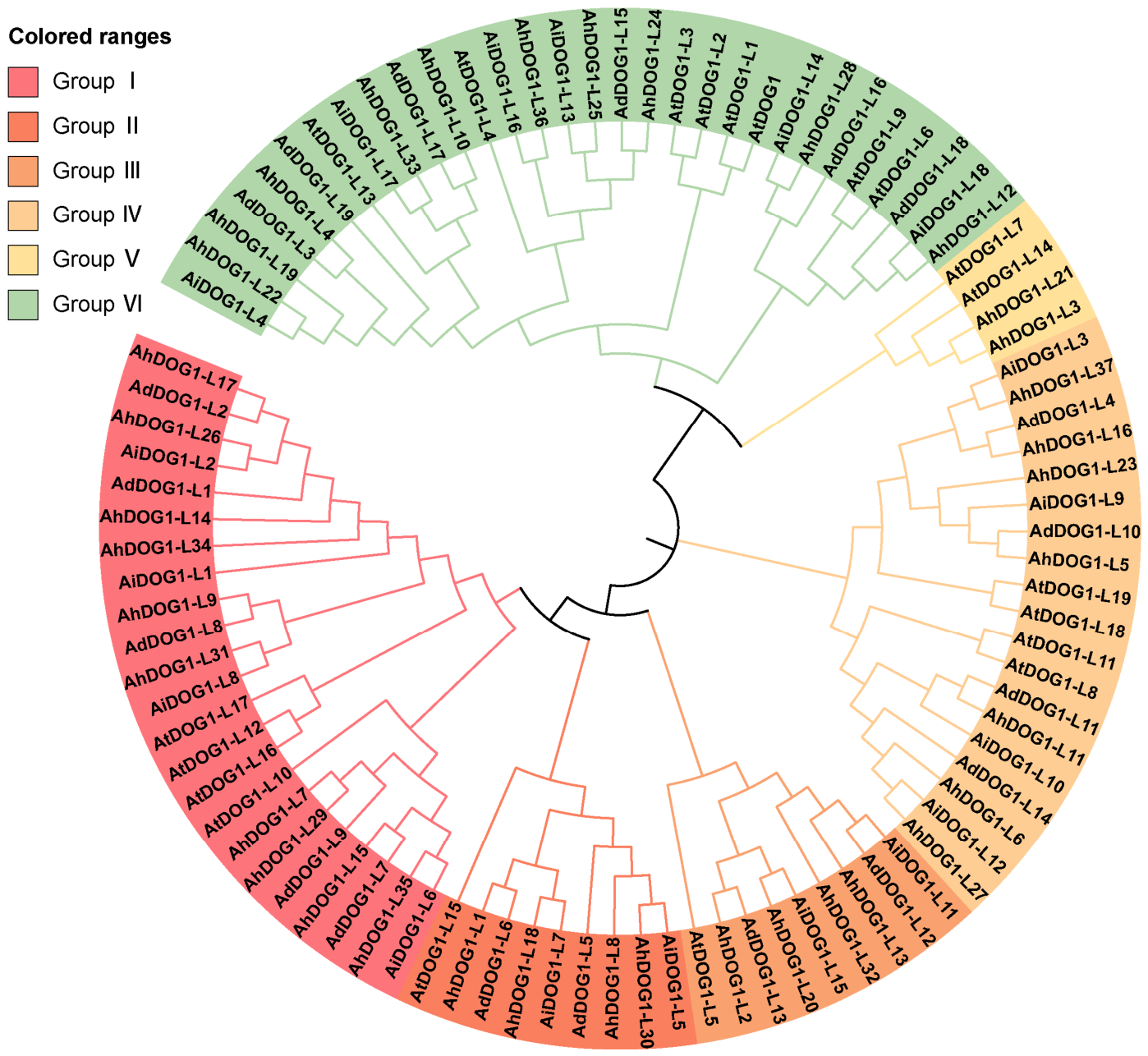
3.2. Phylogenetic Analysis of the DOG1 Proteins
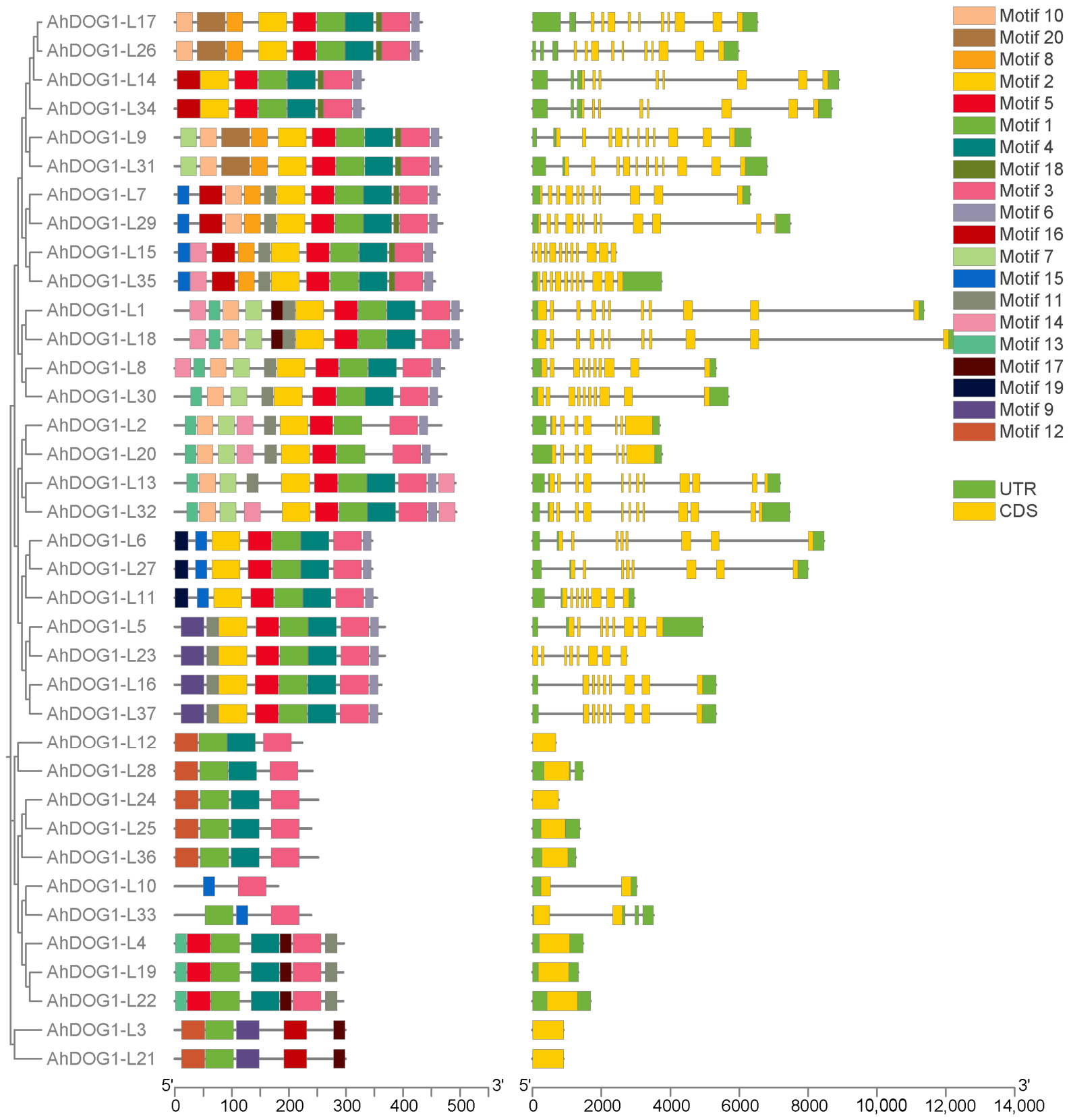
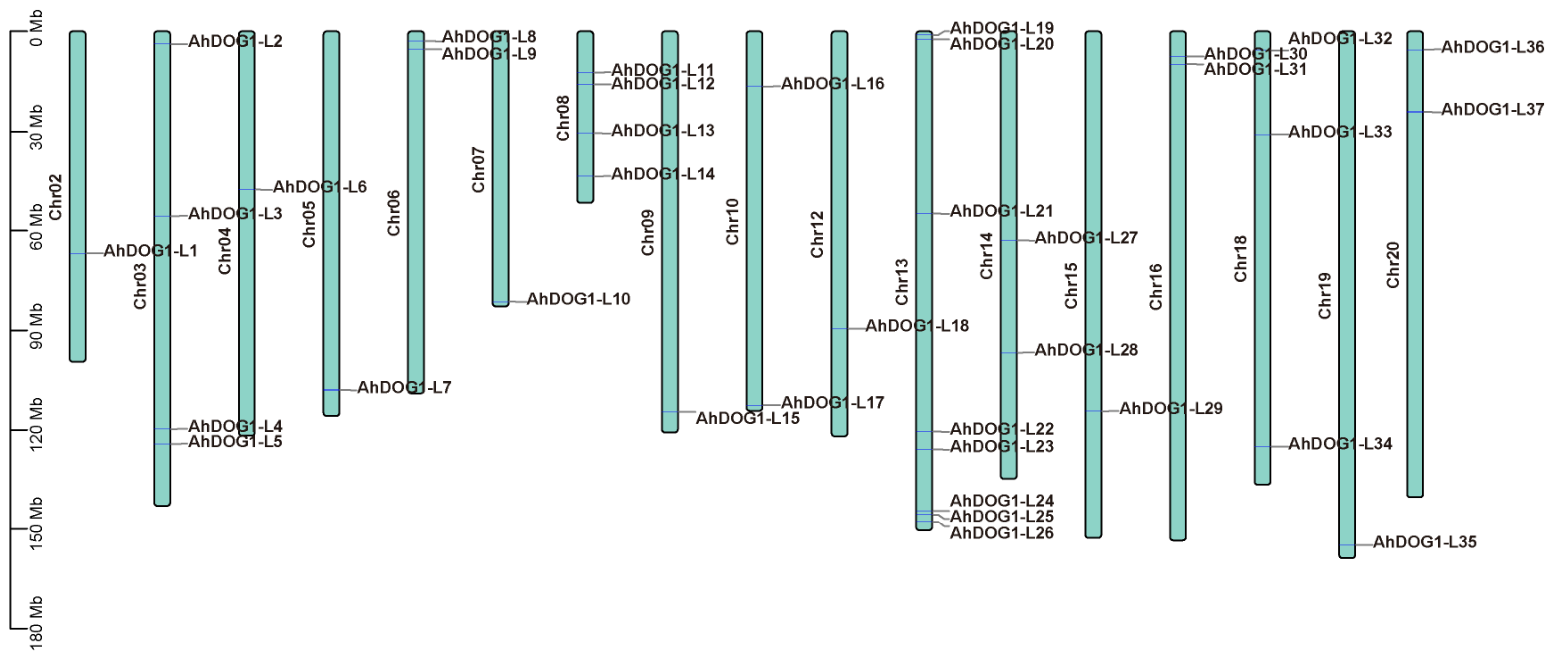
3.3. Chromosomal Distribution, Conserved Motif, and Gene Structure of the AhDOG1 Genes
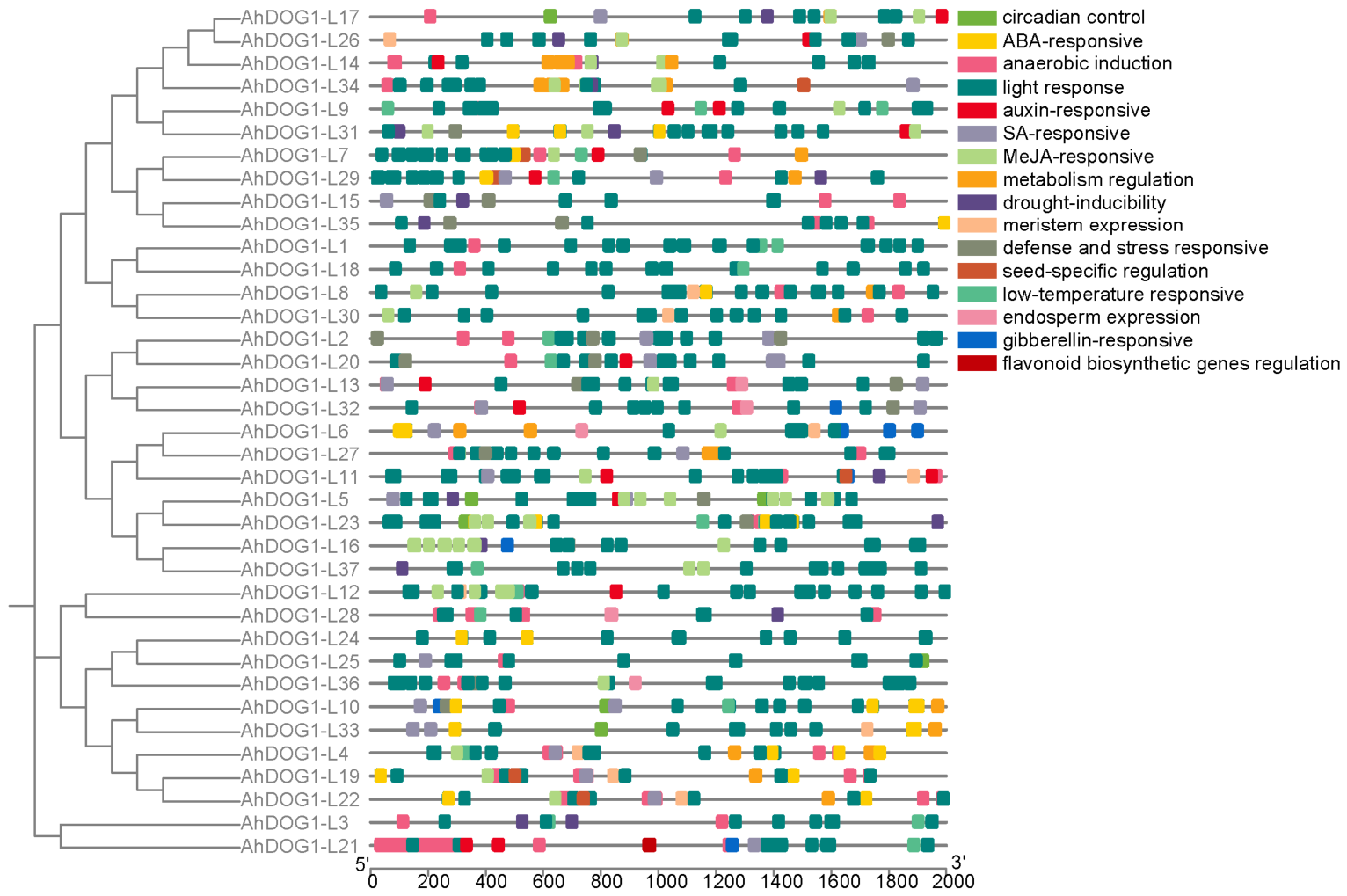
3.4. Cis-Acting Elements in the AhDOG1 Promoters
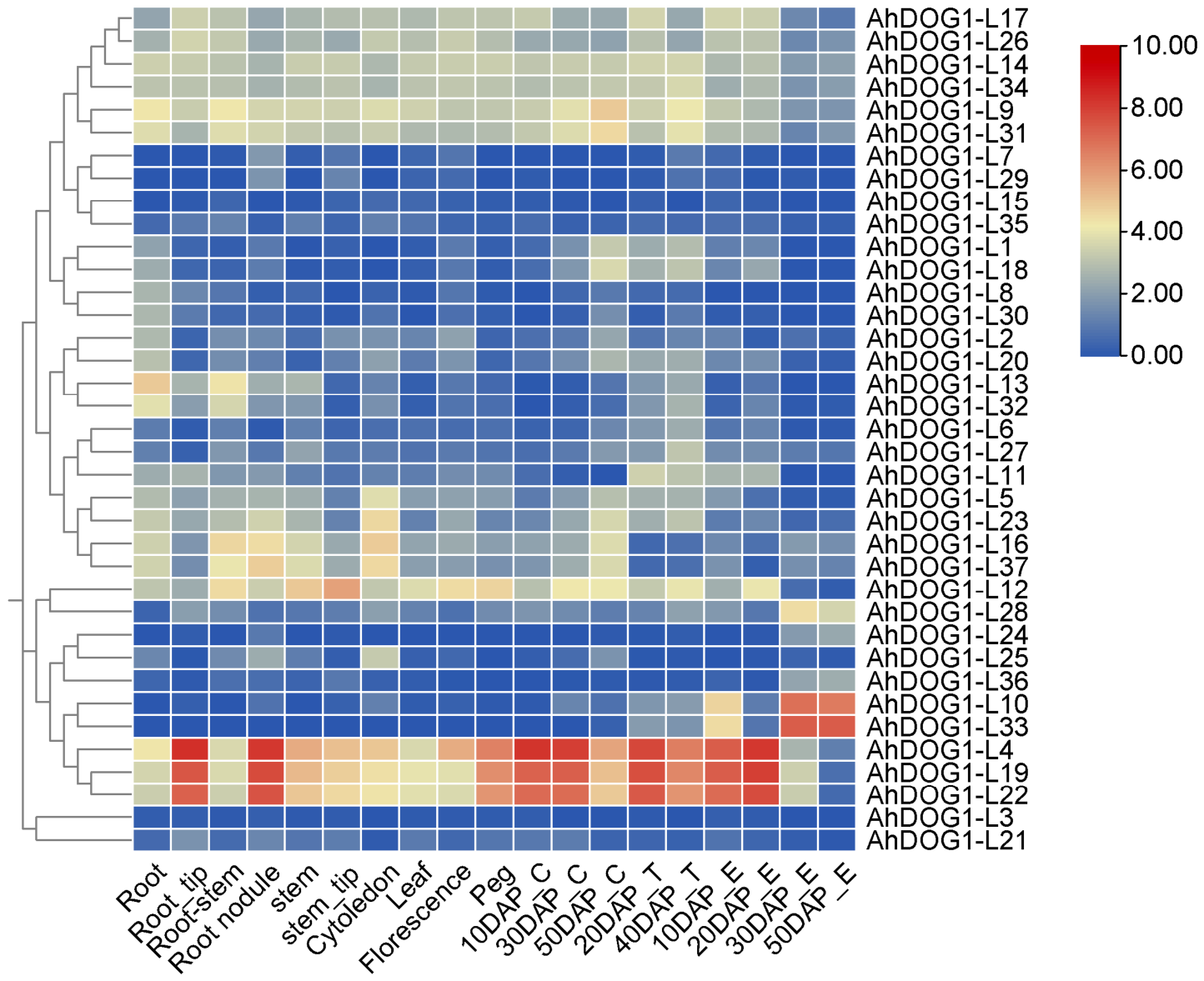
3.5. Patterns of Expression of the AhDOG1 Genes in Different Peanut Tissues
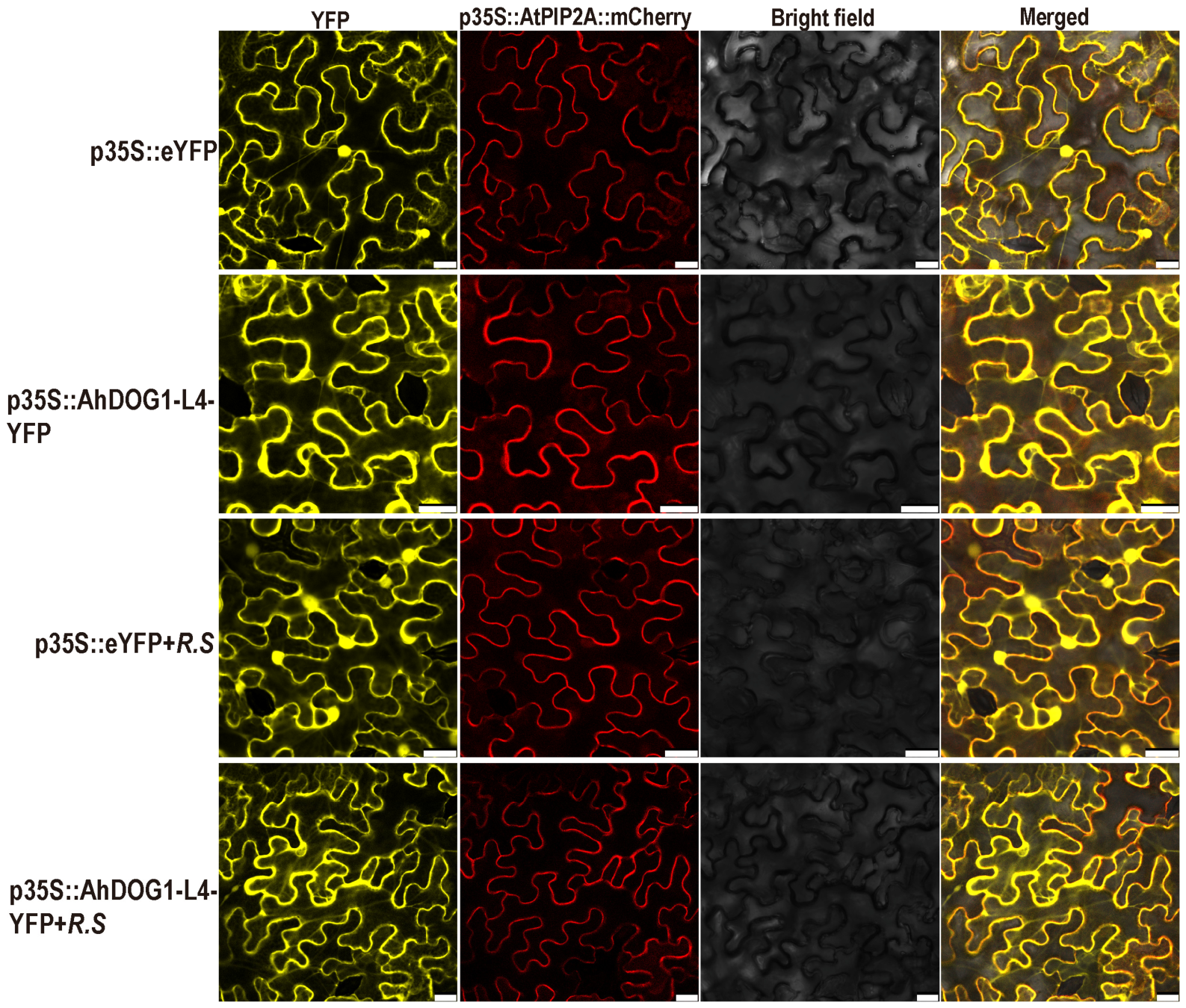
3.6. Subcellular Localization of AhDOG1-L4
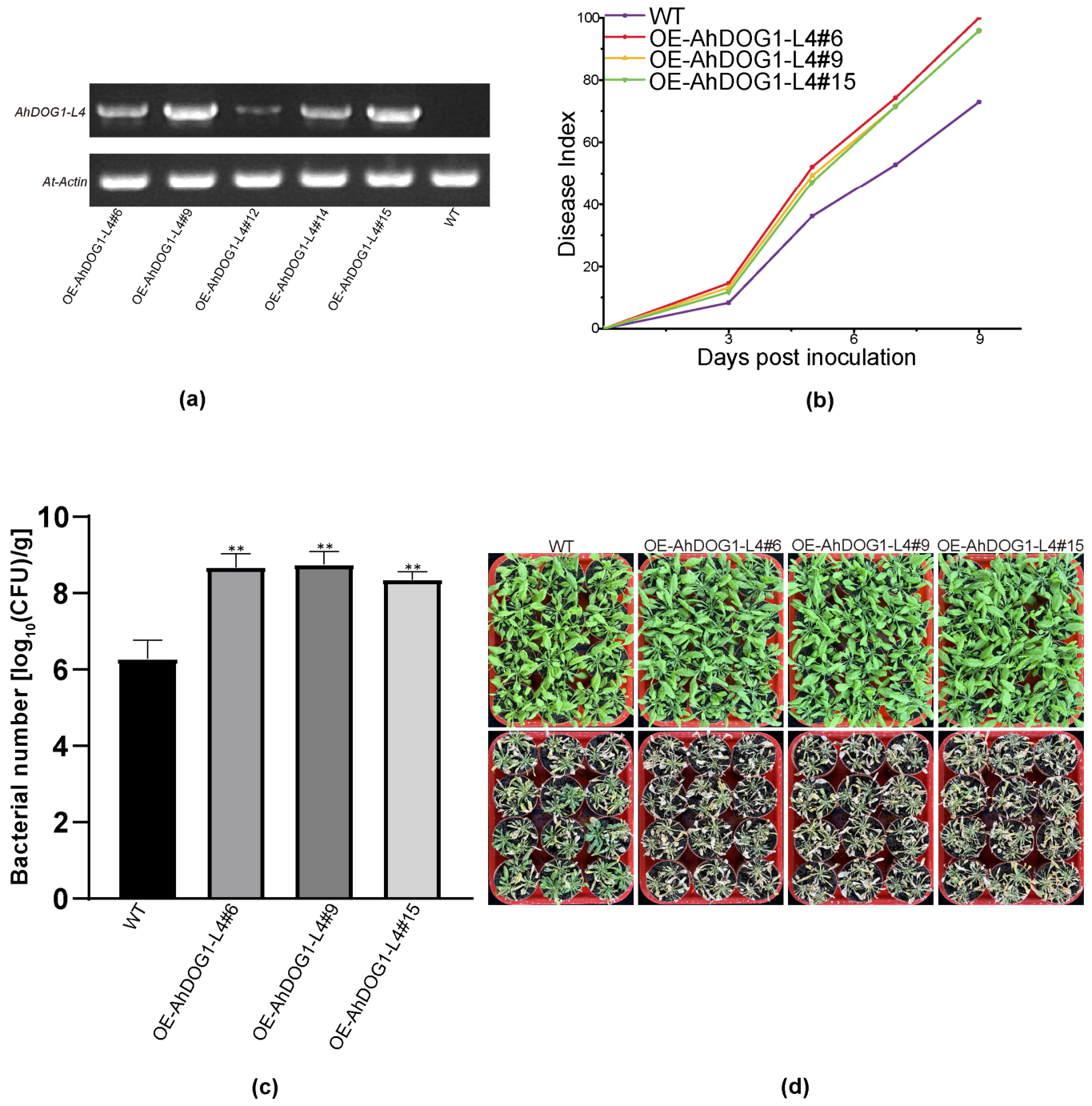
3.7. Heterologous Overexpression of AhDOG1-L4 in Arabidopsis thaliana Reduced Its Tolerance to R. solanacearum
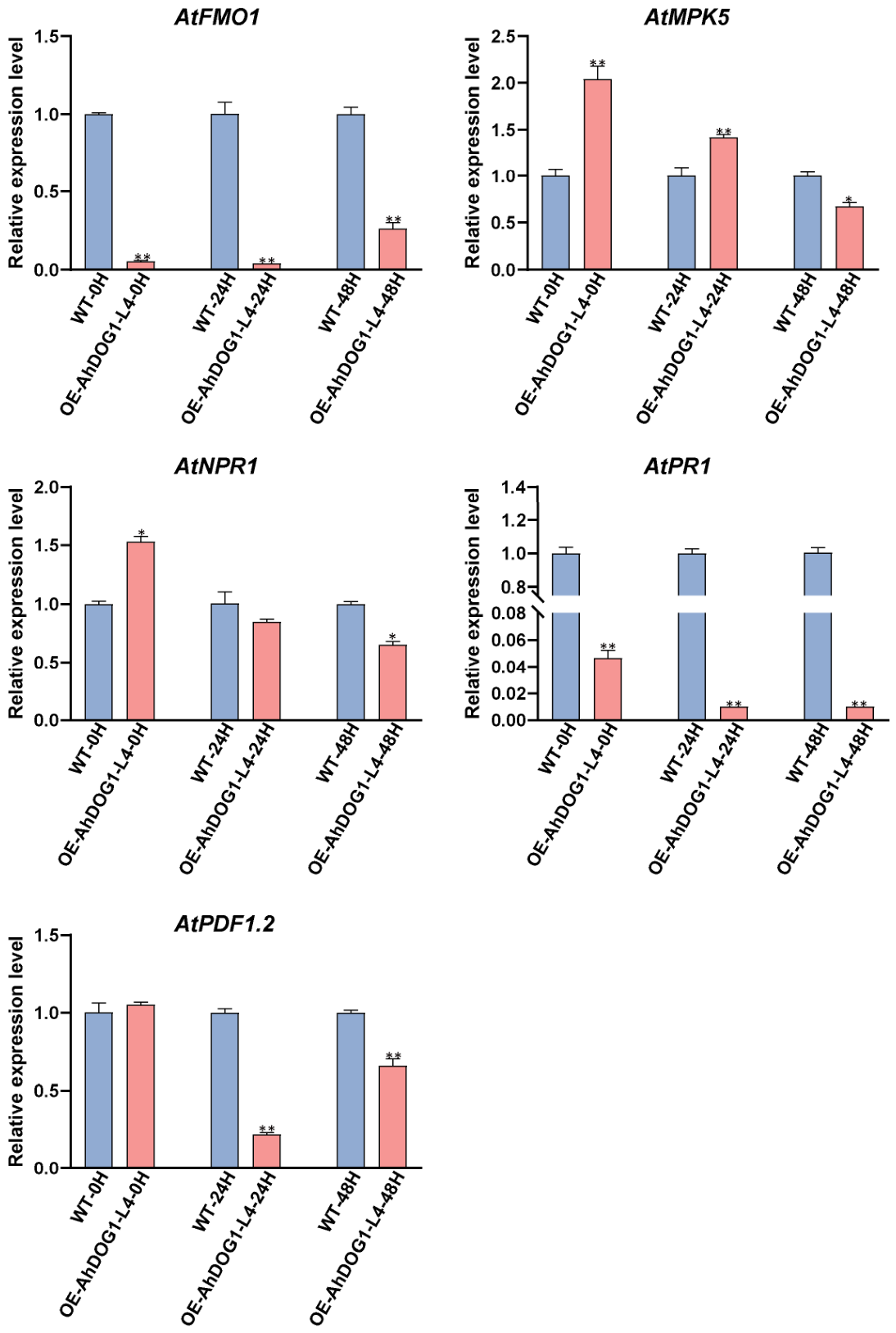
3.8. Overexpression of AhDOG1-L4 Reduced the Levels of Expression of Defense-Related Genes in Arabidopsis thaliana Under Bacterial Infection
4. Discussion
5. Conclusions
Supplementary Materials
Author Contributions
Funding
Institutional Review Board Statement
Informed Consent Statement
Data Availability Statement
Conflicts of Interest
Abbreviations
| DOG1 | Delay of Germination 1 |
| DOGL1–4 | DOG1-Like 1–4 |
| SA | Salicylic acid |
| JA | Jasmonic acid |
| ABA | Abscisic acid |
| HMM | Hidden Markov model |
| MW | Molecular weight |
| FPKM | Fragments per kilobase of transcripts per million mapped reads |
| TTC | 2,3,5-triphenyltetrazolium chloride |
| Ad | Arachis duranensis |
| Ai | Arachis ipaensis |
| At | Arabidopsis thaliana |
| MeJA | Methyl jasmonate |
| WT | Wild type |
| dpi | Days post-inoculation |
| MAPK | Mitogen-activated protein kinase |
| SAR | Systemic acquired resistance |
| NHP | N-hydroxypipecolic acid |
References
- Halward, T.M.; Stalker, H.T.; Larue, E.A.; Kochert, G. Genetic variation detectable with molecular markers among unadapted germ-plasm resources of cultivated peanut and related wild species. Genome 1991, 34, 1013–1020. [Google Scholar] [CrossRef] [Scilit]
- Zhuang, W.; Chen, H.; Yang, M.; Wang, J.; Pandey, M.K.; Zhang, C.; Chang, W.C.; Zhang, L.; Zhang, X.; Tang, R.; et al. The genome of cultivated peanut provides insight into legume karyotypes, polyploid evolution and crop domestication. Nat. Genet. 2019, 51, 865–876. [Google Scholar] [CrossRef] [Scilit] [PubMed]
- Bertioli, D.J.; Cannon, S.B.; Froenicke, L.; Huang, G.; Farmer, A.D.; Cannon, E.K.S.; Liu, X.; Gao, D.; Clevenger, J.; Dash, S.; et al. The genome sequences of Arachis duranensis and Arachis ipaensis, the diploid ancestors of cultivated peanut. Nat. Genet. 2016, 48, 438–446. [Google Scholar] [CrossRef] [Scilit] [PubMed]
- de Blas, F.J.; Leal-Bertioli, S.C.M.; Seijo, J.G.; Abernathy, B.L.; Vaughn, J.; Ramachandran, D.; Cannon, S.B.; Clevenger, J.; Scheffler, B.; Bertioli, D.J. A single hybrid origin of cultivated peanut. Plant J. 2025, 124, e70619. [Google Scholar] [CrossRef] [Scilit] [PubMed]
- Toomer, O.T. Nutritional chemistry of the peanut (Arachis hypogaea). Crit. Rev. Food Sci. Nutr. 2018, 58, 3042–3053. [Google Scholar] [CrossRef] [Scilit] [PubMed]
- Liu, C.; Tian, J.; Chen, L.; He, Q.; Liu, X.; Bian, R.; Zheng, J.; Cheng, K.; Xia, S.; Zhang, X.; et al. Biochar boosted high oleic peanut production with enhanced root development and biological N fixation by diazotrophs in a sand-loamy Primisol. Sci. Total Environ. 2024, 932, 173061. [Google Scholar] [CrossRef] [Scilit] [PubMed]
- Salanoubat, M.; Genin, S.; Artiguenave, F.; Gouzy, J.; Mangenot, S.; Arlat, M.; Billault, A.; Brottier, P.; Camus, J.C.; Cattolico, L.; et al. Genome sequence of the plant pathogen Ralstonia solanacearum. Nature 2002, 415, 497–502. [Google Scholar] [CrossRef] [Scilit] [PubMed]
- Zhang, C.; Chen, H.; Cai, T.; Deng, Y.; Zhuang, R.; Zhang, N.; Zeng, Y.; Zheng, Y.; Tang, R.; Pan, R.; et al. Overexpression of a novel peanut NBS-LRR gene AhRRS5 enhances disease resistance to Ralstonia solanacearum in tobacco. Plant Biotechnol. J. 2017, 15, 39–55. [Google Scholar] [CrossRef] [Scilit] [PubMed]
- Sun, Y.; Zhu, Y.X.; Balint-kurti, P.J.; Wang, G.F. Fine-Tuning Immunity: Players and Regulators for Plant NLRs. Trends Plant Sci. 2020, 25, 695–713. [Google Scholar] [CrossRef] [Scilit] [PubMed]
- Wang, X.; Qi, F.; Sun, Z.; Liu, H.; Wu, Y.; Wu, X.; Xu, J.; Liu, H.; Qin, L.; Wang, Z.; et al. Transcriptome sequencing and expression analysis in peanut reveal the potential mechanism response to Ralstonia solanacearum infection. BMC Plant Biol. 2024, 24, 207. [Google Scholar] [CrossRef] [Scilit] [PubMed]
- Kashyap, A.; Planas-Marquès, M.; Capellades, M.; Valls, M.; Coll, N.S. Blocking intruders: Inducible physico-chemical barriers against plant vascular wilt pathogens. J. Exp. Bot. 2021, 72, 184–198. [Google Scholar] [CrossRef] [Scilit] [PubMed]
- Bentsink, L.; Jowett, J.; Hanhart, C.J.; Koornneef, M. Cloning of DOG1, a quantitative trait locuscontrolling seed dormancy in Arabidopsis. Proc. Natl. Acad. Sci. USA 2006, 103, 17042–17047. [Google Scholar] [CrossRef] [Scilit] [PubMed]
- Yin, Y.; Baloch, A.M.; Chen, X.; Chen, Y.; Lei, J.; Zhang, Y.; Liu, S.; Baloch, A.W.; Zhang, R. Cloning and expression profile of PdPapDOL3 gene in Shanxin poplar (Populus davidana × P. alba var. Pyramidlis) in response to stress. Pak. J. Bot. 2023, 55, 519–528. [Google Scholar] [CrossRef] [Scilit] [PubMed]
- Hu, Y.; Ling, H.; Song, X.; Hu, W. Genome-wide identification and analysis of the Delay Of Germination 1 (DOG1) gene family in Brassica napus and its potential role in Manganese (Mn) stress response. BMC Plant Biol. 2026, 26, 499. [Google Scholar] [CrossRef] [Scilit] [PubMed]
- Dordas, C. Role of nutrients in controlling plant diseases in sustainable agriculture. A review. Agron. Sustain. Dev. 2008, 28, 33–46. [Google Scholar] [CrossRef] [Scilit]
- Eskandari, S.; Sharifnabi, B. The modifications of cell wall composition and water status of cucumber leaves induced by powdery mildew and manganese nutrition. Plant Physiol. Biochem. 2019, 145, 132–141. [Google Scholar] [CrossRef] [Scilit] [PubMed]
- Hubert, B.; Leprince, O.; Buitink, J. Sleeping but not defenceless: Seed dormancy and protection. J. Exp. Bot. 2024, 75, 6110–6124. [Google Scholar] [CrossRef] [Scilit] [PubMed]
- Eddy, S.R. Accelerated Profile HMM Searches. PLoS Comput. Biol. 2011, 7, e1002195. [Google Scholar] [CrossRef] [Scilit] [PubMed]
- Chou, K.C.; Shen, H.B. Cell-PLoc: A package of web-servers for predicting subcellular localization of proteins in various organisms. Nat. Protoc. 2008, 3, 153–162. [Google Scholar] [CrossRef] [Scilit] [PubMed]
- Katoh, K.; Standley, D.M. MAFFT multiple sequence alignment software version 7: Improvements in performance and usability. Mol. Biol. Evol. 2013, 30, 772–780. [Google Scholar] [CrossRef] [Scilit] [PubMed]
- Kumar, S.; Stecher, G.; Tamura, K. MEGA7: Molecular evolutionary genetics analysis version 7.0 for bigger datasets. Mol. Biol. Evol. 2016, 33, 1870–1874. [Google Scholar] [CrossRef] [Scilit] [PubMed]
- Chen, C.; Chen, H.; Zhang, Y.; Thaomas, H.R.; Frank, M.H.; He, Y.; Xia, R. TBtools: An integrative toolkit developed for interactive analyses of big biological data. Mol. Plant 2020, 13, 1194–1202. [Google Scholar] [CrossRef] [Scilit] [PubMed]
- Bailey, T.L.; Boden, M.; Buske, F.A.; Frith, M.; Grant, C.E.; Clementi, L.; Ren, J.; Li, W.W.; Noble, W.S. MEME SUITE: Tools for motif discovery and searching. Nucleic Acids Res. 2009, 37, W202–W208. [Google Scholar] [CrossRef] [Scilit] [PubMed]
- Lescot, M.; Déhais, P.; Thijs, G.; Marchal, K.; Moreau, Y.; de Peer, Y.V.; Rouzé, P.; Rombauts, S. PlantCARE, a database of plant cis-acting regulatory elements and a portal to tools for in silico analysis of promoter sequences. Nucleic Acids Res. 2002, 30, 325–327. [Google Scholar] [CrossRef] [Scilit] [PubMed]
- Zhang, X.; Henriques, R.; Lin, S.S.; Niu, Q.W.; Chua, N.H. Agrobacterium-mediated transformation of Arabidopsis thaliana using the floral dip method. Nat. Protoc. 2006, 1, 641–646. [Google Scholar] [CrossRef] [Scilit] [PubMed]
- Nelson, B.K.; Cai, X.; Nebenführ, A. A multicolored set of in vivo organelle markers for co-localization studies in Arabidopsis and other plants. Plant J. 2007, 51, 1126–1136. [Google Scholar] [CrossRef] [Scilit] [PubMed]
- Schmittgen, T.D.; Livak, K.J. Analyzing real-time PCR data by the comparative CT method. Nat. Protoc. 2008, 3, 1101–1108. [Google Scholar] [CrossRef] [Scilit] [PubMed]
- Abid, G.; Sassi, K.; Debode, F.; Dubois, B.; Ouertani, R.N.; Abdelkrim, S.; Ghouili, E.; Gao, Y.; Li, Z.; Jebara, S.H.; et al. Comprehensive physiological and transcriptomic insights into drought stress responses in faba bean (Vicia faba L.). BMC Plant Biol. 2025, 25, 1604. [Google Scholar] [CrossRef] [Scilit] [PubMed]
- Zhao, Z.; Sun, J.; Zhang, F.; Dong, C. Genome-Wide identification of the DOG1 gene family in pepper (Capsicum annuum) and its expression profiles during seed germination. Plants 2025, 14, 1913. [Google Scholar] [CrossRef] [Scilit] [PubMed]
- Ni, Y.; Guo, C.; Zhang, X.; Ma, M.; Liu, X.; Li, Y.; Lian, S.; Li, J.; Jiang, Y.; Niu, J.; et al. Evolutionary and functional diversification of the DOG gene family in wheat (Triticum aestivum L.) and their roles in seed dormancy. BMC Genom. 2025, 26, 861. [Google Scholar] [CrossRef] [Scilit] [PubMed]
- Yang, Y.; Zheng, C.; Chandrasekaran, U.; Yu, L.; Liu, C.; Pu, T.; Wang, X.; Du, J.; Liu, J.; Yang, F.; et al. Identification and bioinformatic analysis of the GmDOG1-Like family in soybean and investigation of their expression in response to gibberellic acid and abscisic acid. Plants 2020, 9, 937. [Google Scholar] [CrossRef] [Scilit] [PubMed]
- Zhang, Z.; Yu, P.; Bing, H.; Ma, R.; Vinod, K.K.; Ramakrishnan, M. Genome-wide identification and expression characterization of the DoG gene family of moso bamboo (Phyllostachys edulis). BMC Genom. 2022, 23, 357, Correction in BMC Genom. 2022, 24, 128. [Google Scholar] [CrossRef] [Scilit] [PubMed]
- Nishiyama, E.; Nonogaki, M.; Yamazaki, S.; Nonogaki, H.; Ohshima, K. Ancient and recent gene duplications as evolutionary drivers of the seed maturation regulators DELAY OF GERMINATION1 family genes. New Phytol. 2021, 230, 889–901. [Google Scholar] [CrossRef] [Scilit] [PubMed]
- Huo, H.; Wei, S.; Bradford, K.J. DELAY OF GERMINATION1 (DOG1) regulates both seed dormancy and flowering time through microRNA pathways. Proc. Natl. Acad. Sci. USA 2016, 113, E2199–E2206. [Google Scholar] [CrossRef] [Scilit] [PubMed]
- Zhang, X.; Wei, X.; Wang, M.; Zhu, X.; Zhao, Y.; Wei, F.; Xia, Z. Overexpression of NtabDOG1L promotes plant growth and enhances drought tolerance in Nicotiana tabacum. Plant Sci. 2019, 287, 110186. [Google Scholar] [CrossRef] [Scilit] [PubMed]
- Dai, X.; Wang, Y.; Chen, Y.; Li, H.; Xu, S.; Yang, T.; Zhang, X.; Su, X.; Xia, Z. Overexpression of NtDOG1L-T improves heat stress tolerance by modulation of antioxidant capability and defense-, heat-, and ABA-related gene expression in tobacco. Front. Plant Sci. 2020, 11, 568489. [Google Scholar] [CrossRef] [Scilit] [PubMed]
- Ko, C.S.; Kim, J.-B.; Kim, D.Y.; Seo, Y.W.; Hong, M.J. Unveiling differential expression profiles of the wheat DOG1 gene family and functional analysis of the association between TaDOG1-1 and heat stress tolerance in transgenic Arabidopsis. Plant Physiol. Biochem. 2024, 207, 108325. [Google Scholar] [CrossRef] [Scilit] [PubMed]
- Yatusevich, R.; Fedak, H.; Ciesielski, A.; Krzyczmonik, K.; Kulik, A.; Dobrowolska, G.; Swiezewski, S. Antisense transcription represses Arabidopsis seed dormancy QTL DOG1 to regulate drought tolerance. EMBO Rep. 2017, 18, 2186–2196. [Google Scholar] [CrossRef] [Scilit] [PubMed]
- Montez, M.; Majchrowska, M.; Krzyszton, M.; Bokota, G.; Sacharowski, S.; Wrona, M.; Yatusevich, R.; Massana, F.; Plewczynski, D.; Swiezewski, S. Promoter-pervasive transcription causes RNA polymerase II pausing to boost DOG1 expression in response to salt. EMBO J. 2023, 42, e112443. [Google Scholar] [CrossRef] [Scilit] [PubMed]
- Kesarwani, M.; Yoo, J.; Dong, X. Genetic interactions of TGA transcription factors in the regulation of pathogenesis-related genes and disease resistance in Arabidopsis. Plant Physiol. 2007, 144, 336–346. [Google Scholar] [CrossRef] [Scilit] [PubMed]
- Han, Q.; Tan, W.; Zhao, Y.; Yang, F.; Yao, X.; Lin, H.; Zhang, D. Salicylic acid-activated BIN2 phosphorylation of TGA3 promotes Arabidopsis PR gene expression and disease resistance. EMBO J. 2022, 41, e110682. [Google Scholar] [CrossRef] [Scilit] [PubMed]
- Kumar, P.; Zavaliev, R.; Wu, Q.; Zhou, Y.; Cheng, J.; Dillard, L.; Powers, J.; Withers, J.; Zhao, J.; Guan, Z.; et al. Structural basis of NPR1 in activating plant immunity. Nature 2022, 605, 561–566. [Google Scholar] [CrossRef] [Scilit] [PubMed]
- Lu, C.; Liu, X.; Tang, Y.; Fu, Y.; Zhang, J.; Yang, L.; Li, P.; Zhu, Z.; Dong, P. A comprehensive review of TGA transcription factors in plant growth, stress responses, and beyond. Int. J. Biol. Macromol. 2024, 258, 128880. [Google Scholar] [CrossRef] [Scilit] [PubMed]
- Kumar, P.; Pandey, S.; Pati, P.K. Interaction between pathogenesis-related (PR) proteins and phytohormone signaling pathways in conferring disease tolerance in plants. Physiol. Plant 2025, 177, e70174. [Google Scholar] [CrossRef] [Scilit] [PubMed]
- Vos, I.A.; Moritz, L.; Pieterse, C.M.J.; Van Wees, S.C.M. Impact of hormonal crosstalk on plant resistance and fitness under multi-attacker conditions. Front. Plant Sci. 2015, 6, 639. [Google Scholar] [CrossRef] [Scilit] [PubMed]
- Mishina, T.E.; Zeier, J. The Arabidopsis flavin-dependent monooxygenase FMO1 is an essential component of biologically induced systemic acquired resistance. Plant Physiol. 2006, 141, 1666–1675. [Google Scholar] [CrossRef] [Scilit] [PubMed]
- Hartmann, M.; Zeier, T.; Bernsdorff, F.; Reichel-Deland, V.; Kim, D.; Hohmann, M.; Scholten, N.; Schuck, S.; Bräutigam, A.; Hölzel, T.; et al. Flavin monooxygenase-generated N-hydroxypipecolic acid is a critical element of plant systemic immunity. Cell 2018, 173, 456–469.e416. [Google Scholar] [CrossRef] [Scilit] [PubMed]


Disclaimer/Publisher’s Note: The statements, opinions and data contained in all publications are solely those of the individual author(s) and contributor(s) and not of MDPI and/or the editor(s). MDPI and/or the editor(s) disclaim responsibility for any injury to people or property resulting from any ideas, methods, instructions or products referred to in the content. |
© 2026 by the authors. Licensee MDPI, Basel, Switzerland. This article is an open access article distributed under the terms and conditions of the Creative Commons Attribution (CC BY) license.
Share and Cite
Zhang, Y.; Song, M.; Chen, Y.; Tian, D.; Zhang, C.; Zhuang, W. Identification of the DOG1 Gene Family in Cultivated Peanut and Negative Regulation of Ralstonia solanacearum Infection by AhDOG1-L4. Biology 2026, 15, 1662. https://doi.org/10.3390/biology15181662
Zhang Y, Song M, Chen Y, Tian D, Zhang C, Zhuang W. Identification of the DOG1 Gene Family in Cultivated Peanut and Negative Regulation of Ralstonia solanacearum Infection by AhDOG1-L4. Biology. 2026; 15(18):1662. https://doi.org/10.3390/biology15181662
Chicago/Turabian StyleZhang, Yongli, Meiling Song, Yunxin Chen, Dongyuan Tian, Chong Zhang, and Weijian Zhuang. 2026. "Identification of the DOG1 Gene Family in Cultivated Peanut and Negative Regulation of Ralstonia solanacearum Infection by AhDOG1-L4" Biology 15, no. 18: 1662. https://doi.org/10.3390/biology15181662
APA StyleZhang, Y., Song, M., Chen, Y., Tian, D., Zhang, C., & Zhuang, W. (2026). Identification of the DOG1 Gene Family in Cultivated Peanut and Negative Regulation of Ralstonia solanacearum Infection by AhDOG1-L4. Biology, 15(18), 1662. https://doi.org/10.3390/biology15181662