Neuropharmacology of Nicotine Addiction and Therapeutic Strategies for Smoking Cessation

 ,
,  ,
,  and
and
Simple Summary
Abstract
1. Introduction
2. Epidemiology and Public Health Burden of Tobacco Use
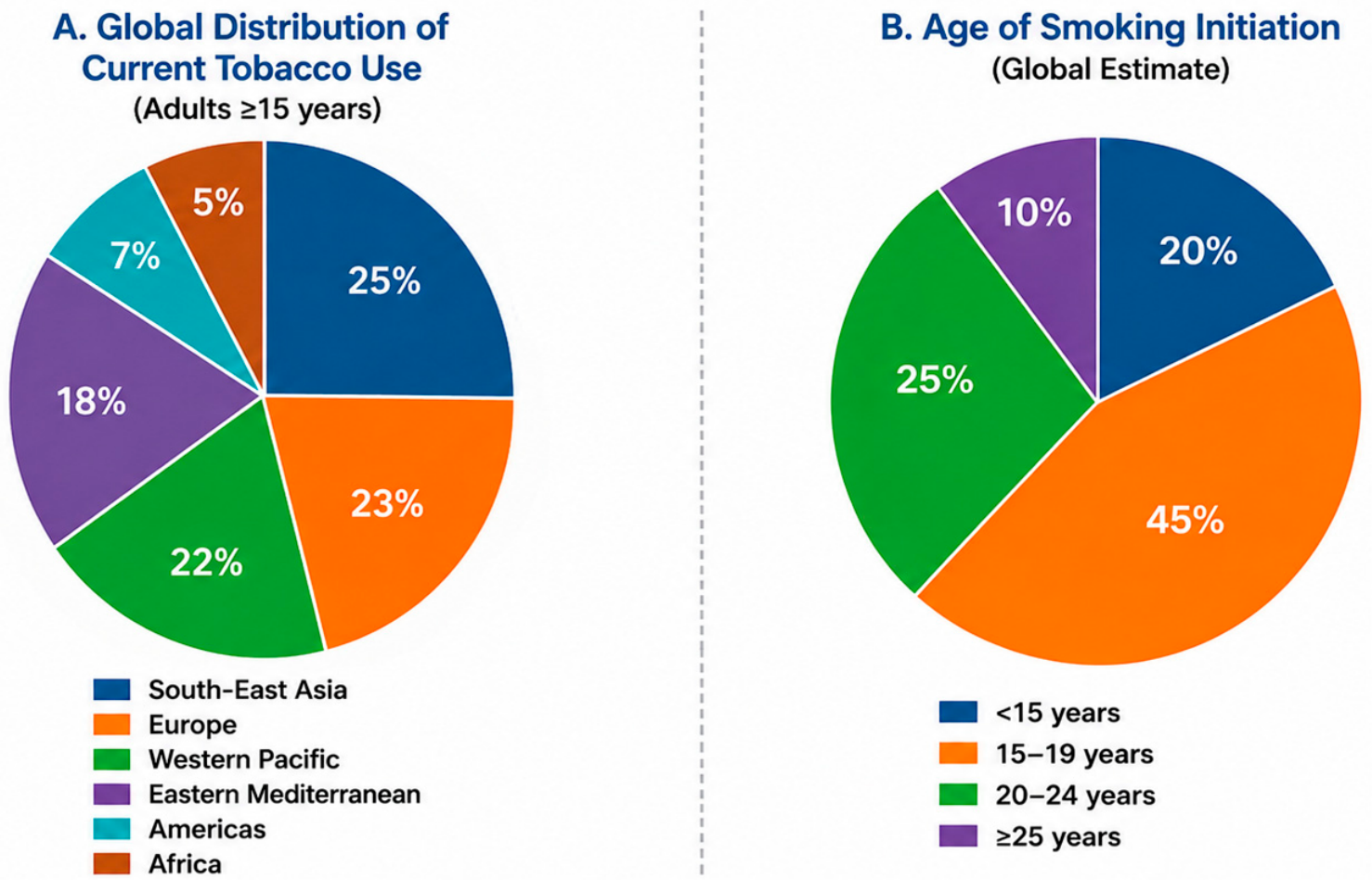
2.1. Global Prevalence, Disease Burden, and Health Disparities
2.2. Youth Initiation and Vulnerability to Nicotine Dependence
2.3. Health Consequences of Tobacco Use and Benefits of Smoking Cessation
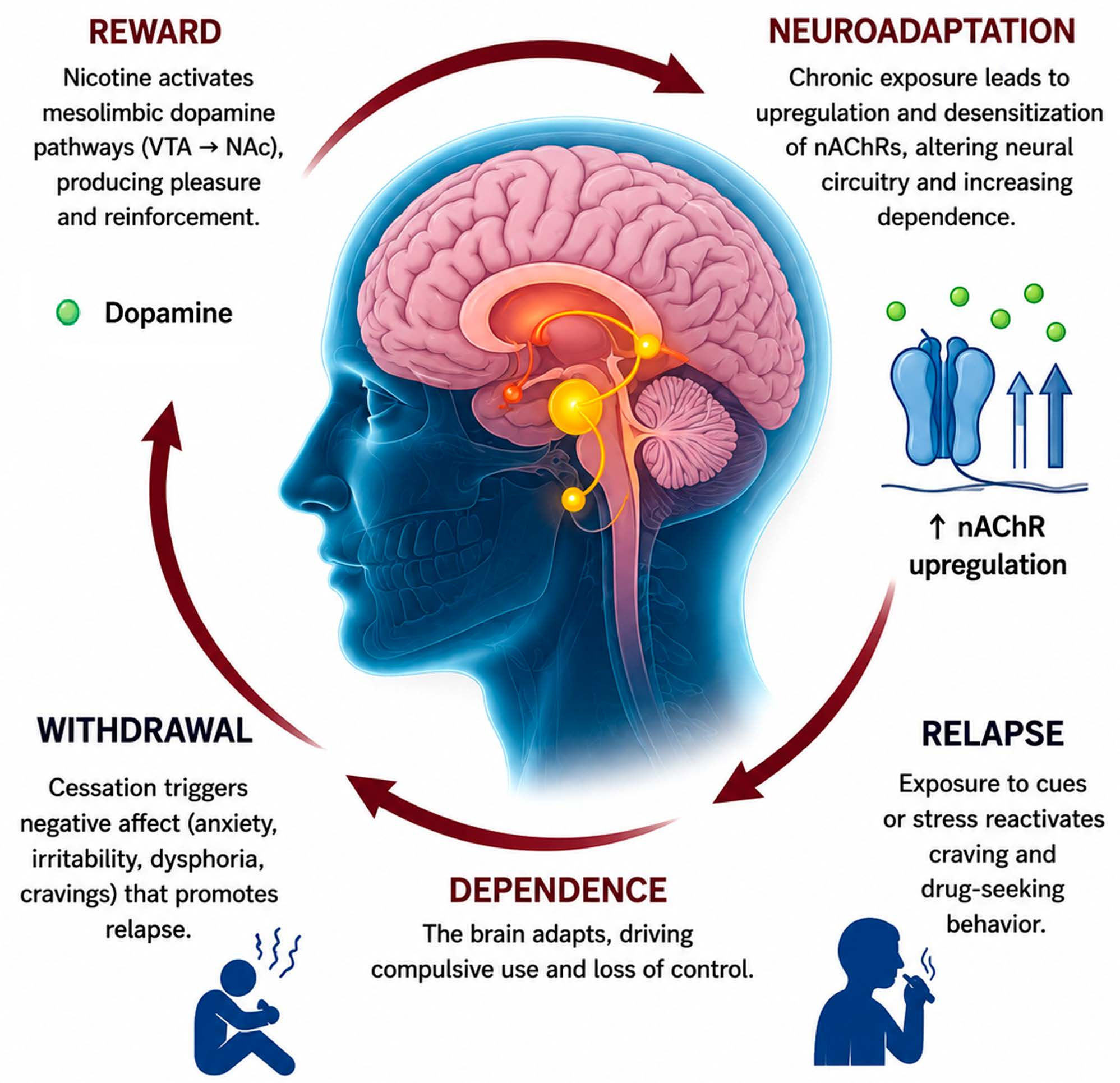
3. Neurobiology of Nicotine Addiction
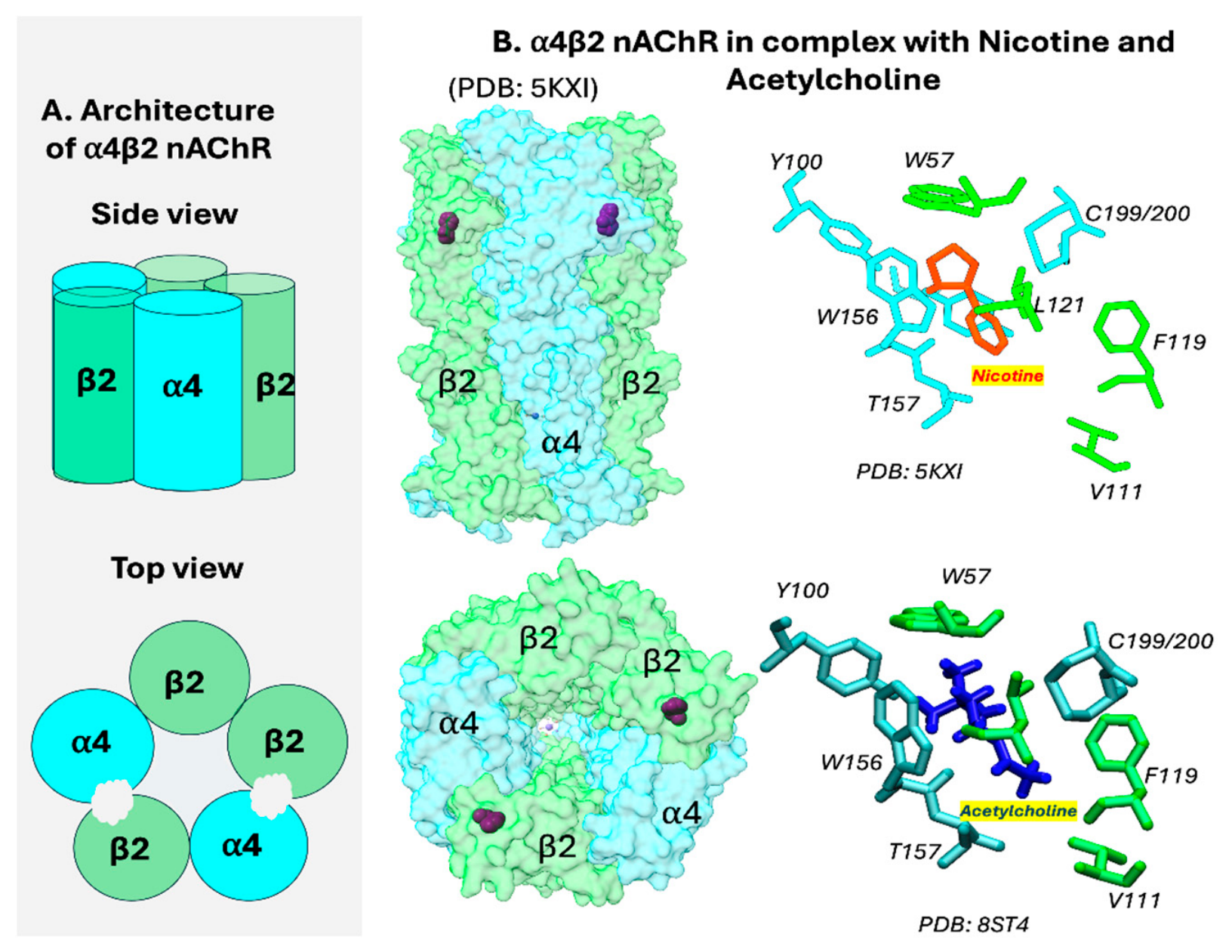
3.1. Molecular Pharmacology of Nicotinic Acetylcholine Receptors
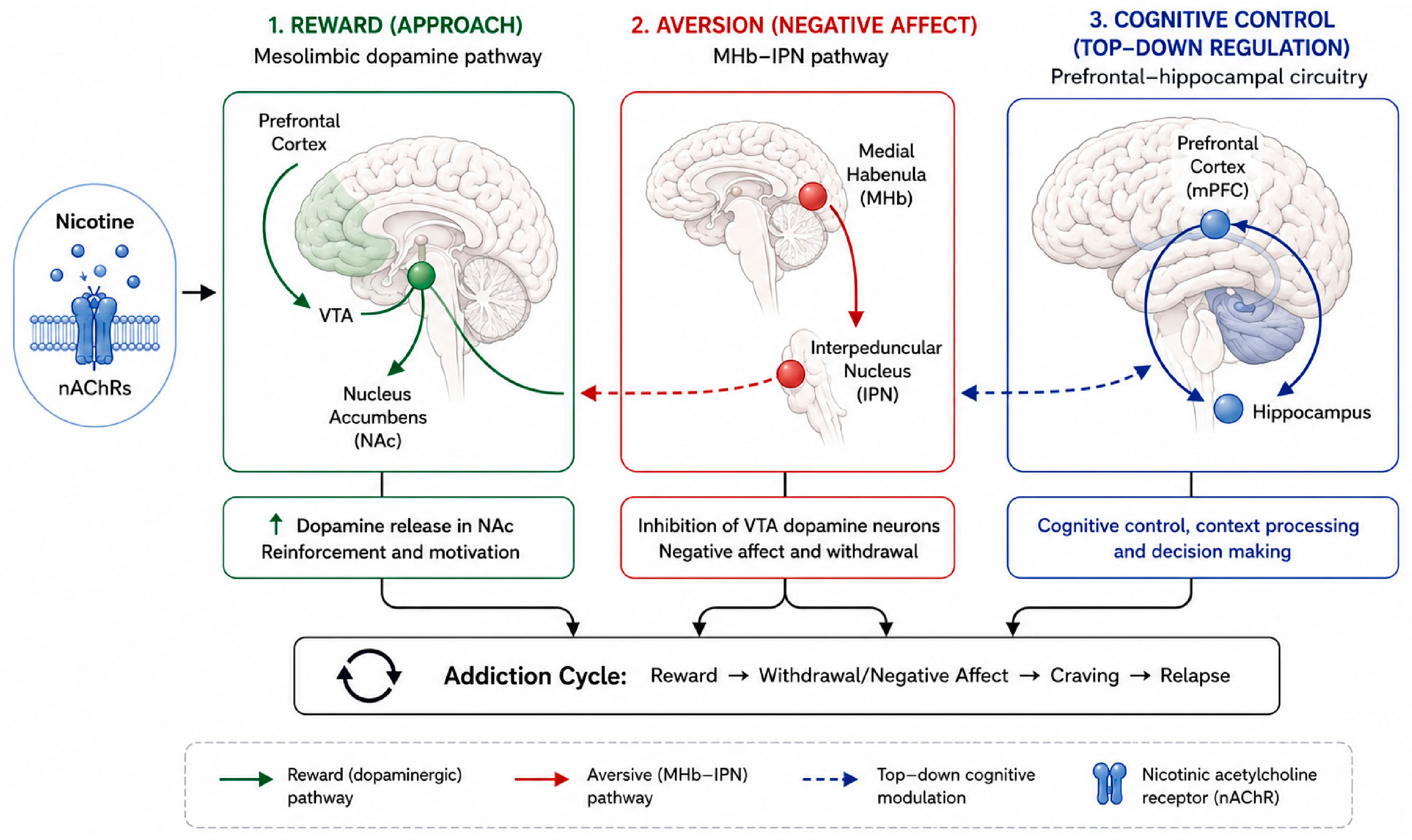
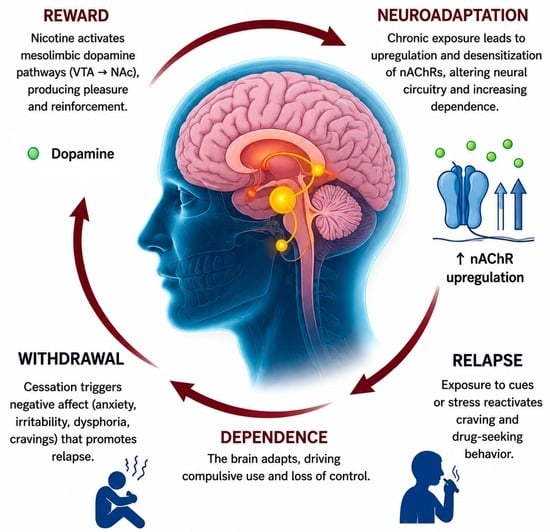
3.2. Neural Circuitry, Neuroadaptation, and Withdrawal
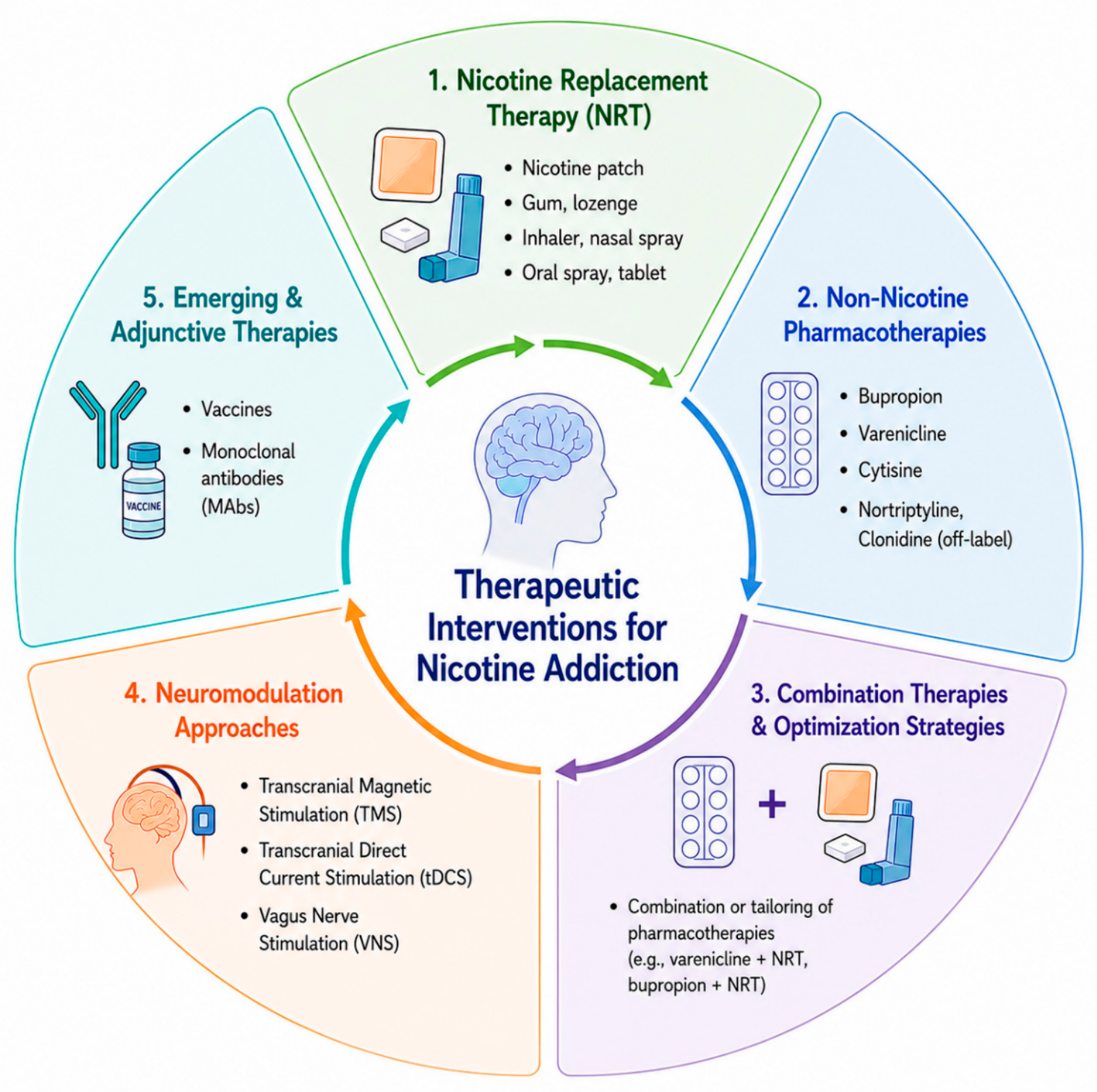
4. Pharmacological Management of Nicotine Addiction
4.1. Nicotine Replacement Therapy
4.1.1. Transdermal Patch
4.1.2. Short-Acting Nicotine Products
4.1.3. Gum
4.1.4. Lozenge
4.1.5. Sublingual Tablet
4.1.6. Oral Inhaler
4.1.7. Nasal Spray

| Delivery Method | Type/Strength | Mechanism | Standard Dosage & Taper | Common Side Effects |
|---|---|---|---|---|
| Patch | Long-acting 7, 14, 21 mg/d | Provides continuous nicotine absorption through the skin, producing steadier nicotine levels and reducing withdrawal symptoms and cravings. | Start with 21 mg/day for heavier smokers (>10 cigarettes/day), then step down to lower strengths over 8–12 weeks until discontinued. | Skin irritation, insomnia |
| Gum | Short-acting 2 mg or 4 mg | Intermittently chewed and held in the mouth for about 30 min to release nicotine for absorption through the oral mucosa. | 4 mg is recommended if the first cigarette is within ≤30 min of waking; then gradually taper use over 8–12 weeks until discontinued. | Mouth irritation, hiccups, and dyspepsia |
| Lozenge | Short-acting 2 mg or 4 mg | Dissolves in the mouth and delivers nicotine via buccal mucosal absorption into systemic circulation. | 4 mg for the first cigarette ≤30 min after waking, then taper over 8–12 weeks until cessation. | Nausea or Heartburn |
| Sublingual tablet | Short-acting 2 mg | Held under the tongue, where nicotine is absorbed sublingually into systemic circulation without chewing. | Use for a minimum of 12 weeks, followed by gradual tapering. | Mouth soreness |
| Inhaler | Short-acting 10 mg nicotine per cartridge | Delivers nicotine via puffing from a cartridge, with absorption mainly through the oral mucosa. | Used as needed; usually ≥6 cartridges/day initially (up to 16/day max), then gradually reduced over time until cessation. | Local irritation of the mouth and throat |
| Spray | Short-acting 0.5 mg/spray | Rapid delivery of nicotine via nasal spray with absorption through the nasal mucosa into systemic circulation. | 1–2 doses/hour as needed, minimum 8 doses/day for first 6 weeks (max 40/day), then gradual taper to cessation. | Nasal irritation |
4.2. Partial Nicotinic Receptor Agonists
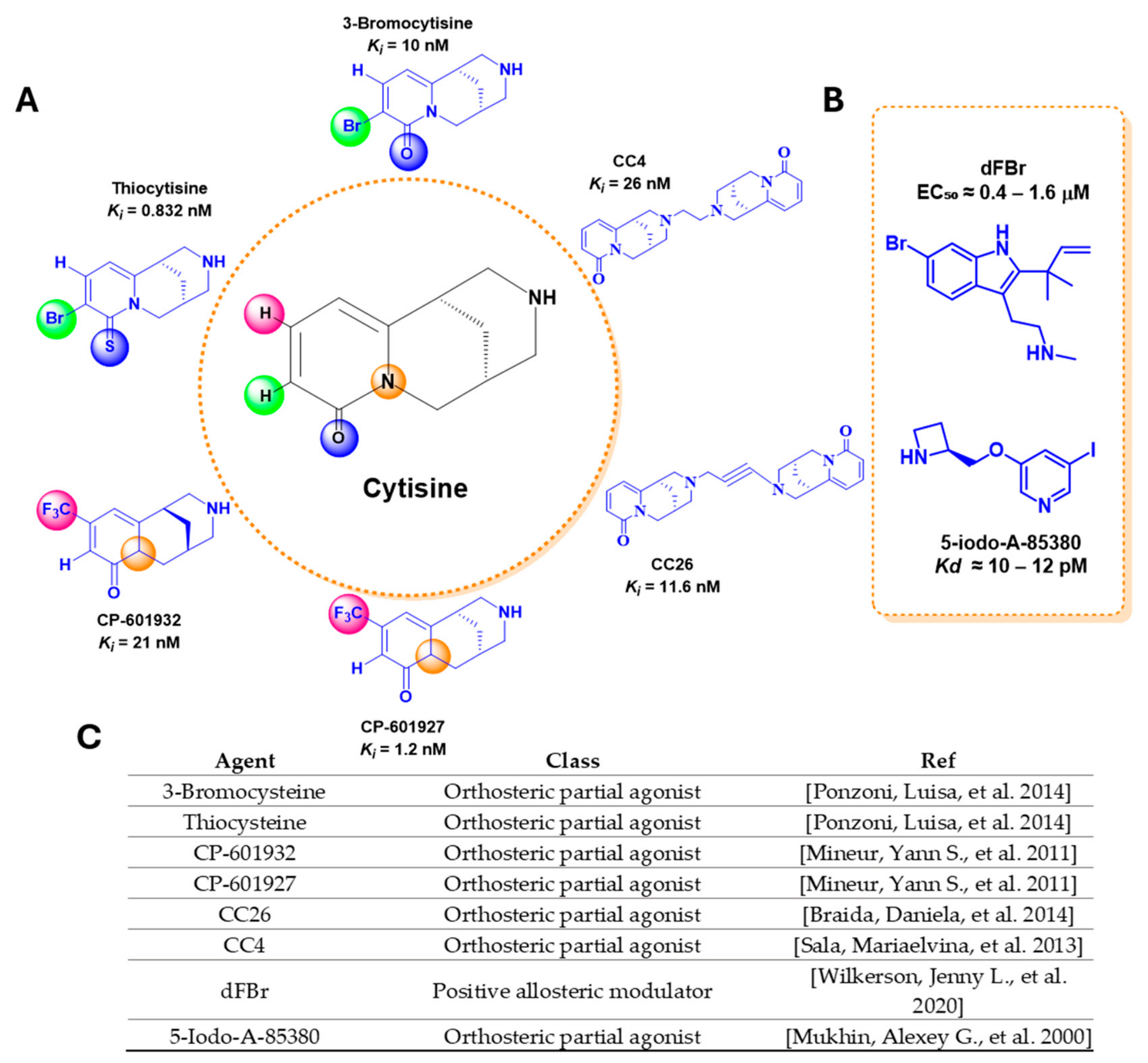
4.2.1. Cytisine
4.2.2. Varenicline
4.2.3. Dianicline
4.2.4. ABT-089
4.2.5. TC-2559
4.3. Antidepressant-Based Therapies
4.3.1. Bupropion
4.3.2. Nortriptyline
4.4. Combination Therapies and Optimization Strategies
4.5. Next-Generation nAChR Ligands

4.6. Emerging and Technology-Assisted Therapeutic Strategies
4.6.1. Nicotine-Targeted Immunotherapies
4.6.2. Neuromodulation-Based Interventions
4.6.3. Digital Health and Technology-Assisted Smoking Cessation
| Technology Category | Platform/Intervention | Primary Function | Current Evidence Level | Ref. |
|---|---|---|---|---|
| Smartphone Applications | Quit Genius | Digital cognitive behavioral therapy | RCTs | [192] |
| Smoke Free | Behavioral support, craving management, quit tracking | RCTs and meta-analyses | [193] | |
| QuitSTART (National Cancer Institute) | Youth-oriented cessation support | Real-world implementation studies | [200] | |
| EX Program (Truth Initiative) | Personalized digital cessation coaching | Clinical and population studies | [201] | |
| Smartphone Applications + Biomarker Monitoring | CureApp Smoking Cessation (CASC) | CO monitoring, physician support, behavioral intervention | RCTs | [194] |
| Pivot Program | Breath sensor and app-based coaching | Prospective clinical studies | [202] | |
| Bupa Quit Coach | Digital coaching with progress tracking | Observational studies | [202] | |
| AI Conversational Agents | QuitBot | AI-driven counseling and motivational support | Early clinical trials | [195] |
| Bella (WHO Digital Health Initiative) | Conversational smoking cessation support | Pilot implementation studies | [203] | |
| ChatGPT-based cessation assistants | Personalized educational and behavioral support | Emerging feasibility studies | [204] | |
| Machine Learning Systems | Relapse Prediction Models | Predict relapse risk and personalize treatment | Early-stage clinical validation | [205] |
| Just-In-Time Adaptive Interventions | Deliver support during high-risk moments | Pilot and feasibility studies | [206] | |
| Predictive Behavioral Analytics Platform (1D-CNN model) | Treatment optimization and adherence monitoring | Emerging clinical research | [207] | |
| Virtual Reality (VR) | VR Cue-Exposure Therapy | Craving reduction and trigger | Pilot studies and RCTs | [198] |
| VR Behavioral Skills Training | Coping skills practice in simulated environments | Pilot studies | [198] | |
| VR-Based Relapse Prevention Programs | Exposure to high-risk smoking situations | Feasibility and clinical studies | [208] | |
| Virtual Therapeutic Community Platforms | Behavioral modification and addiction recovery | Early-stage evaluation | [209] | |
| Augmented Reality (AR) | AR Health Visualization Platforms | Visualization of smoking-related health consequences | Emerging behavioral studies | [210] |
| AR Smoking Trigger Recognition Systems | Real-time identification of smoking cues | Pilot studies | [211] | |
| AR Educational Smoking Prevention Tools | Youth-focused nicotine education | Feasibility studies | [212] |
4.7. Current Guideline Recommendations
5. Limitations and Translational Challenges of Current and Emerging Therapeutic Strategies
6. Conclusions
Author Contributions
Funding
Institutional Review Board Statement
Informed Consent Statement
Data Availability Statement
Acknowledgments
Conflicts of Interest
References
- World Health Organization. WHO Global Report on Trends in Prevalence of Tobacco Use 2000–2025; World Health Organization: Geneva, Switzerland, 2021. [Google Scholar]
- Peacock, A.; Leung, J.; Larney, S.; Colledge, S.; Hickman, M.; Rehm, J.; Giovino, G.A.; West, R.; Hall, W.; Griffiths, P. Global statistics on alcohol, tobacco and illicit drug use: 2017 status report. Addiction 2018, 113, 1905–1926. [Google Scholar] [CrossRef] [Scilit]
- Sakthisankaran, S.M.; Sakthipriya, D.; Swamivelmanickam, M. Health Risks Associated with Tobacco Consumption in Humans: An Overview. J. Drug Deliv. Ther. 2024, 14, 163–173. [Google Scholar] [CrossRef] [Scilit]
- Kim, D.-H.; Sambou, M.O. Changes in smoking and drinking behaviors after the incidence of chronic diseases. Addict. Res. Theory 2019, 27, 405–411. [Google Scholar] [CrossRef] [Scilit]
- West, R. Tobacco smoking: Health impact, prevalence, correlates and interventions. Psychol. Health 2017, 32, 1018–1036. [Google Scholar] [CrossRef] [Scilit] [PubMed]
- World Health Organization. WHO Global Report on Trends in Prevalence of Tobacco Use 2000–2024 and Projections 2025–2030; World Health Organization: Geneva, Switzerland, 2025. [Google Scholar]
- Jetty, R. Tobacco use and misuse among Indigenous children and youth in Canada. Paediatr. Child Health 2017, 22, 395–399. [Google Scholar] [CrossRef] [Scilit] [PubMed]
- Stevenson, S.E. Traditional and Non-Traditional Tobacco Use Among First Nations Persons living on Reserve in Canada: Distinctions, Emotions, and Visions of Best-Case Future Realities. Doctoral Dissertation, Lakehead University, Thunder Bay, ON, USA, 2013. [Google Scholar]
- Hilton, M. Smoking in British Popular Culture 1800–2000: Perfect Pleasures; Manchester University Press: Manchester, UK, 2000. [Google Scholar]
- Markovic, I. An Atmospheric History of Smoking in Modern Britain; Bloomsbury Publishing: London, UK, 2025. [Google Scholar]
- Ling, P.M.; Kim, M.; Egbe, C.O.; Patanavanich, R.; Pinho, M.; Hendlin, Y. Moving targets: How the rapidly changing tobacco and nicotine landscape creates advertising and promotion policy challenges. Tob. Control. 2022, 31, 222–228. [Google Scholar] [CrossRef] [Scilit] [PubMed]
- DiGiacomo, S.I.; Jazayeri, M.-A.; Barua, R.S.; Ambrose, J.A. Environmental tobacco smoke and cardiovascular disease. Int. J. Environ. Res. Public Health 2019, 16, 96. [Google Scholar] [CrossRef] [Scilit] [PubMed]
- Hikisz, P.; Jacenik, D. The tobacco smoke component, acrolein, as a major culprit in lung diseases and respiratory cancers: Molecular mechanisms of acrolein cytotoxic activity. Cells 2023, 12, 879. [Google Scholar] [CrossRef] [Scilit] [PubMed]
- Kumar, U.; Jahnavi, G.; Biswas, B.; Alam, B.; Varshney, S. Molecular Effect of Tobacco on Genetic, Epigenetic, and Metabolic Pathways During Cancer Progression. Cureus 2026, 18, e102757. [Google Scholar] [CrossRef] [Scilit] [PubMed]
- Fu, M.; Mei, A.; Min, X.; Yang, H.; Wu, W.; Zhong, J.; Li, C.; Chen, J. Advancements in cardiovascular disease research affected by smoking. Rev. Cardiovasc. Med. 2024, 25, 298. [Google Scholar] [CrossRef] [Scilit] [PubMed]
- Jukic, I.; Matulic, I.; Becic, T.; Radic, M.; Radic, J.; Fabijanic, D.; Vukovic, J. Impact of Traditional Cigarette Smoking on Liver Structure and Function. Livers 2026, 6, 34. [Google Scholar] [CrossRef] [Scilit]
- Le Foll, B.; Piper, M.E.; Fowler, C.D.; Tonstad, S.; Bierut, L.; Lu, L.; Jha, P.; Hall, W.D. Tobacco and nicotine use. Nat. Rev. Dis. 2022, 8, 19. [Google Scholar] [CrossRef] [Scilit]
- Salín-Pascual, R.J.; Alcocer-Castillejos, N.V.; Alejo-Galarza, G. Nicotine dependence and psychiatric disorders. Rev. Invest. Clin. 2003, 55, 677–693. [Google Scholar] [PubMed]
- Tiwari, R.K.; Sharma, V.; Pandey, R.K.; Shukla, S.S. Nicotine addiction: Neurobiology and mechanism. J. Pharmacopunct. 2020, 23, 1–7. [Google Scholar] [CrossRef] [Scilit] [PubMed]
- D’Souza, M.S.; Markou, A. Neuronal mechanisms underlying development of nicotine dependence: Implications for novel smoking-cessation treatments. Addict. Sci. Clin. Pract. 2011, 6, 4–16. [Google Scholar] [PubMed]
- De Biasi, M.; Dani, J.A. Reward, addiction, withdrawal to nicotine. Annu. Rev. Neurosci. 2011, 34, 105–130. [Google Scholar] [CrossRef] [Scilit] [PubMed]
- García-Rodríguez, O.; Secades-Villa, R.; Flórez-Salamanca, L.; Okuda, M.; Liu, S.-M.; Blanco, C. Probability and predictors of relapse to smoking: Results of the National Epidemiologic Survey on Alcohol and Related Conditions (NESARC). Drug Alcohol Depend. 2013, 132, 479–485. [Google Scholar] [CrossRef] [Scilit] [PubMed]
- Piasecki, T.M. Relapse to smoking. Clin. Psychol. Rev. 2006, 26, 196–215. [Google Scholar] [CrossRef] [Scilit] [PubMed]
- Pisinger, C.; Aadahl, M.; Toft, U.; Jørgensen, T. Motives to quit smoking and reasons to relapse differ by socioeconomic status. Prev. Med. 2011, 52, 48–52. [Google Scholar] [CrossRef] [Scilit] [PubMed]
- Britton, J.; Edwards, R. Tobacco smoking, harm reduction, and nicotine product regulation. Lancet 2008, 371, 441–445. [Google Scholar] [CrossRef] [Scilit] [PubMed]
- Shiffman, S.; Gitchell, J.G.; Warner, K.E.; Slade, J.; Henningfield, J.E.; Pinney, J.M. Tobacco harm reduction: Conceptual structure and nomenclature for analysis and research. Nicotine Tob. Res. 2002, 4, S113–S129. [Google Scholar] [CrossRef] [Scilit] [PubMed]
- Chandankhede, P.; Chipada, B.; Khode, A. Pharmacological Insights into the Rational Use of Nicotine and Nicotine Replacement Therapy. Int. J. Sci. Res. Technol. 2025, 2, 425–436. [Google Scholar]
- Gupta, P. Nicotine replacement therapy (NRT): Safe usage, prescription necessity, and the role of comprehensive tobacco cessation programs. J. Adv. Oral Health 2024, 1, 40–42. [Google Scholar] [CrossRef] [Scilit]
- Quigley, J.M.; Walsh, C.; Lee, C.; Long, J.; Kennelly, H.; McCarthy, A.; Kavanagh, P. Efficacy and safety of electronic cigarettes as a smoking cessation intervention: A systematic review and network meta-analysis. Tob. Prev. Cessat. 2021, 7, 69. [Google Scholar] [CrossRef] [Scilit] [PubMed]
- Starnini, J.-G.; Natalello, G.; Nigroli, F.; Diana, C.; Bargagli, E.; Melani, A.S. Electronic Nicotine Delivery Systems (ENDS): Implications for the Clinician. Pulm. Ther. 2025, 11, 387–404. [Google Scholar] [CrossRef] [Scilit] [PubMed]
- Lindson, N.; Butler, A.R.; McRobbie, H.; Bullen, C.; Hajek, P.; Wu, A.D.; Begh, R.; Theodoulou, A.; Notley, C.; Rigotti, N.A.; et al. Electronic cigarettes for smoking cessation. Cochrane Database Syst. Rev. 2025, 1, CD010216. [Google Scholar] [CrossRef] [Scilit] [PubMed]
- Drope, J.; Cahn, Z.; Kennedy, R.; Liber, A.C.; Stoklosa, M.; Henson, R.; Douglas, C.E.; Drope, J. Key issues surrounding the health impacts of electronic nicotine delivery systems (ENDS) and other sources of nicotine. CA Cancer J. Clin. 2017, 67, 449–471. [Google Scholar] [CrossRef] [Scilit] [PubMed]
- Hatsukami, D.K.; Carroll, D.M. Tobacco harm reduction: Past history, current controversies and a proposed approach for the future. Prev. Med. 2020, 140, 106099. [Google Scholar] [CrossRef] [Scilit] [PubMed]
- Glantz, S.A.; Bareham, D.W. E-cigarettes: Use, effects on smoking, risks, and policy implications. Annu. Rev. Public Health 2018, 39, 215–235. [Google Scholar] [CrossRef] [Scilit] [PubMed]
- World Health Organization. WHO Global Report on Trends in Prevalence of Tobacco Smoking 2000–2025; World Health Organization: Geneva, Switzerland, 2018. [Google Scholar]
- Siddiqi, K.; Husain, S.; Vidyasagaran, A.; Readshaw, A.; Mishu, M.P.; Sheikh, A. Global burden of disease due to smokeless tobacco consumption in adults: An updated analysis of data from 127 countries. BMC Med. 2020, 18, 222. [Google Scholar] [CrossRef] [Scilit] [PubMed]
- Sinha, D.N.; Suliankatchi, R.A.; Gupta, P.C.; Thamarangsi, T.; Agarwal, N.; Parascandola, M.; Mehrotra, R. Global burden of all-cause and cause-specific mortality due to smokeless tobacco use: Systematic review and meta-analysis. Tob. Control 2018, 27, 35–42. [Google Scholar] [CrossRef] [Scilit] [PubMed]
- Wang, X.; Liu, Y.; Bai, L.; Chen, H.; Zhu, A.; Dang, H. Global burden of lung cancer attributable to secondhand smoke (1990–2021) and predictive trends to 2035. Medicine 2026, 105, e48548. [Google Scholar] [CrossRef] [Scilit] [PubMed]
- Liu, Y.; Gao, Y.; Yan, G.; Liu, Y.; Tian, W.; Zhang, Y.; Wang, S.; Yu, B. Global disease burden analysis of Cardiometabolic disease attributable to second-hand smoke exposure from 1990 to 2040. Am. J. Prev. Cardiol. 2025, 21, 100902. [Google Scholar] [CrossRef] [Scilit] [PubMed]
- Oberg, M.; Jaakkola, M.; Prüss-Üstün, A.; Peruga, A.; Woodward, A.; World Health Organization. Global Estimate of the Burden of Disease from Second-Hand Smoke; World Health Organization: Geneva, Switzerland, 2010. [Google Scholar]
- Yousuf, H.; Hofstra, M.; Tijssen, J.; Leenen, B.; Lindemans, J.W.; van Rossum, A.; Narula, J.; Hofstra, L. Estimated worldwide mortality attributed to secondhand tobacco smoke exposure, 1990–2016. JAMA Netw. Open 2020, 3, e201177. [Google Scholar] [CrossRef] [Scilit] [PubMed]
- Lien, G.; DeLand, K. Translating the WHO Framework Convention on Tobacco Control (FCTC): Can we use tobacco control as a model for other non-communicable disease control? Public Health 2011, 125, 847–853. [Google Scholar] [CrossRef] [Scilit] [PubMed]
- Tauras, J.A. Tobacco control in low-income and middle-income countries: Findings from WHO FCTC investment cases. Tob. Control 2024, 33, s1–s2. [Google Scholar] [CrossRef] [Scilit] [PubMed]
- Reid, J.; Hammond, D.; Rynard, V. Tobacco Use in Canada: Patterns and Trends (2014 Edition); Propel Centre for Population Health: Waterloo, ON, Canada, 2000. [Google Scholar]
- Sathish, T.; Teo, K.K.; Britz-McKibbin, P.; Gill, B.; Islam, S.; Pare, G.; Rangarajan, S.; Duong, M.; Lanas, F.; Lopez-Jaramillo, P. Variations in risks from smoking between high-income, middle-income, and low-income countries: An analysis of data from 179 000 participants from 63 countries. Lancet Glob. Health 2022, 10, e216–e226. [Google Scholar] [CrossRef] [Scilit] [PubMed]
- Prochaska, J.J. Tobacco use is associated with mental illness and substance use problems—Now what? Am. J. Psychiatry 2025, 182, 137–138. [Google Scholar] [CrossRef] [Scilit] [PubMed]
- Prochaska, J.J.; Das, S.; Young-Wolff, K.C. Smoking, mental illness, and public health. Annu. Rev. Public Health 2017, 38, 165–185. [Google Scholar] [CrossRef] [Scilit] [PubMed]
- Ziedonis, D.; Hitsman, B.; Beckham, J.C.; Zvolensky, M.; Adler, L.E.; Audrain-McGovern, J.; Breslau, N.; Brown, R.A.; George, T.P.; Williams, J. Tobacco use and cessation in psychiatric disorders: National Institute of Mental Health report. Nicotine Tob. Res. 2008, 12, 1691–1715. [Google Scholar] [CrossRef] [Scilit] [PubMed]
- Gamberino, W.C.; Gold, M.S. Neurobiology of tobacco smoking and other addictive disorders. Psychiatr. Clin. North Am. 1999, 22, 301–312. [Google Scholar] [CrossRef] [Scilit] [PubMed]
- Potvin, S.; Tikàsz, A.; Dinh-Williams, L.L.-A.; Bourque, J.; Mendrek, A. Cigarette cravings, impulsivity, and the brain. Front. Psychiatry 2015, 6, 125. [Google Scholar] [CrossRef] [Scilit] [PubMed]
- Das, S.; Prochaska, J.J. Innovative approaches to support smoking cessation for individuals with mental illness and co-occurring substance use disorders. Expert Rev. Respir. Med. 2017, 11, 841–850. [Google Scholar] [CrossRef] [Scilit] [PubMed]
- Pal, A.; Balhara, Y.P.S. A review of impact of tobacco use on patients with co-occurring psychiatric disorders. Tob. Use Insights 2016, 9, TUI-S32201. [Google Scholar] [CrossRef] [Scilit] [PubMed]
- Bottorff, J.L.; Haines-Saah, R.; Kelly, M.T.; Oliffe, J.L.; Torchalla, I.; Poole, N.; Greaves, L.; Robinson, C.A.; Ensom, M.H.; Okoli, C.T. Gender, smoking and tobacco reduction and cessation: A scoping review. Int. J. Equity Health 2014, 13, 114. [Google Scholar] [CrossRef] [Scilit] [PubMed]
- Kirkland, S.; Greaves, L.; Devichand, P. Gender differences in smoking and self reported indicators of health. BMC Womens Health 2004, 4, S7. [Google Scholar] [CrossRef] [Scilit] [PubMed]
- Solomon, A. Gender, women, and the future of tobacco control. Drugs Alcohol Today 2020, 20, 249–262. [Google Scholar] [CrossRef] [Scilit]
- Minichiello, A.; Lefkowitz, A.R.; Firestone, M.; Smylie, J.K.; Schwartz, R. Effective strategies to reduce commercial tobacco use in Indigenous communities globally: A systematic review. BMC Public Health 2015, 16, 21. [Google Scholar] [CrossRef] [Scilit] [PubMed]
- Corsi, D.J.; Boyle, M.H.; Lear, S.A.; Chow, C.K.; Teo, K.K.; Subramanian, S. Trends in smoking in Canada from 1950 to 2011: Progression of the tobacco epidemic according to socioeconomic status and geography. Cancer Causes Control 2014, 25, 45–57. [Google Scholar] [CrossRef] [Scilit] [PubMed]
- DiGiacomo, M.; Davidson, P.M.; Abbott, P.A.; Davison, J.; Moore, L.; Thompson, S.C. Smoking cessation in indigenous populations of Australia, New Zealand, Canada, and the United States: Elements of effective interventions. Int. J. Environ. Res. Public Health 2011, 8, 388–410. [Google Scholar] [CrossRef] [Scilit] [PubMed]
- Freedman, K.S.; Nelson, N.M.; Feldman, L.L. Smoking initiation among young adults in the United States and Canada, 1998–2010: A systematic review. Prev. Chronic Dis. 2011, 9, E05. [Google Scholar] [CrossRef] [Scilit]
- Castro, E.M.; Lotfipour, S.; Leslie, F.M. Nicotine on the developing brain. Pharmacol. Res. 2023, 190, 106716. [Google Scholar] [CrossRef] [Scilit] [PubMed]
- Slotkin, T.A. Nicotine and the adolescent brain: Insights from an animal model. Neurotoxicology Teratol. 2002, 24, 369–384. [Google Scholar] [CrossRef] [Scilit] [PubMed]
- Koshchuk, T.; Korotun, V.; Novytska, N.; Khliebnikova, I. Tax Regulation of the Tobacco Products Market in the Conditions of its Transformation; University of the State Fiscal Service of Ukraine: Irpin, Ukraine, 2020. [Google Scholar]
- O’Connor, R.; Schneller, L.M.; Felicione, N.J.; Talhout, R.; Goniewicz, M.L.; Ashley, D.L. Evolution of tobacco products: Recent history and future directions. Tob. Control 2022, 31, 175–182. [Google Scholar] [CrossRef] [Scilit] [PubMed]
- Farcher, R.; Syleouni, M.E.; Vinci, L.; Mattli, R. Burden of smoking on disease-specific mortality, DALYs, costs: The case of a high-income European country. BMC Public Health 2023, 23, 698. [Google Scholar] [CrossRef] [Scilit] [PubMed]
- Carter, B.D.; Abnet, C.C.; Feskanich, D.; Freedman, N.D.; Hartge, P.; Lewis, C.E.; Ockene, J.K.; Prentice, R.L.; Speizer, F.E.; Thun, M.J. Smoking and mortality—Beyond established causes. N. Engl. J. Med. 2015, 372, 631–640. [Google Scholar] [CrossRef] [Scilit]
- Jha, P. The hazards of smoking and the benefits of cessation: A critical summation of the epidemiological evidence in high-income countries. eLife 2020, 9, e49979. [Google Scholar] [CrossRef] [Scilit]
- Lariscy, J.T.; Hummer, R.A.; Rogers, R.G. Cigarette smoking and all-cause and cause-specific adult mortality in the United States. Demography 2018, 55, 1855–1885. [Google Scholar] [CrossRef] [Scilit] [PubMed]
- Lydon, D.M.; Wilson, S.J.; Child, A.; Geier, C.F. Adolescent brain maturation and smoking: What we know and where we’re headed. Neurosci. Biobehav. Rev. 2014, 45, 323–342. [Google Scholar] [CrossRef] [Scilit] [PubMed]
- Han, W.; Jiang, J.; Li, J.; Zeng, X.; Zou, X.; Wu, Y.; Chen, Y.; Zhao, P.; Hou, L.; Pang, H. Contributions of major smoking-related diseases to reduction in life expectancy associated with smoking in Chinese adults: A cross-sectional study. BMC Public Health 2013, 13, 1147. [Google Scholar] [CrossRef] [Scilit] [PubMed]
- Maritz, G.S.; Mutemwa, M. Tobacco smoking: Patterns, health consequences for adults, and the long-term health of the offspring. Glob. J. Health Sci. 2012, 4, 62–75. [Google Scholar] [CrossRef] [Scilit] [PubMed]
- Fagerström, K. The epidemiology of smoking: Health consequences and benefits of cessation. Drugs 2002, 62, 1–9. [Google Scholar] [PubMed]
- Taylor, D.H., Jr.; Hasselblad, V.; Henley, S.J.; Thun, M.J.; Sloan, F.A. Benefits of smoking cessation for longevity. Am. J. Public Health 2002, 92, 990–996. [Google Scholar] [CrossRef] [Scilit] [PubMed]
- Toll, B.A.; Rojewski, A.M.; Duncan, L.R.; Latimer-Cheung, A.E.; Fucito, L.M.; Boyer, J.L.; O’Malley, S.S.; Salovey, P.; Herbst, R.S. “Quitting smoking will benefit your health”: The evolution of clinician messaging to encourage tobacco cessation. Clin. Cancer Res. 2014, 20, 301–309. [Google Scholar] [CrossRef] [Scilit] [PubMed]
- Rahman, M.; Alatiqi, M.; Al Jarallah, M.; Hussain, M.Y.; Monayem, A.; Panduranga, P.; Rajan, R. Cardiovascular effects of smoking and smoking cessation: A 2024 update. Glob. Heart 2025, 20, 15. [Google Scholar] [CrossRef] [Scilit] [PubMed]
- Morris, C.D.; Burns, E.K.; Waxmonsky, J.A.; Levinson, A.H. Smoking cessation behaviors among persons with psychiatric diagnoses: Results from a population-level state survey. Drug Alcohol Depend. 2014, 136, 63–68. [Google Scholar] [CrossRef] [Scilit] [PubMed]
- Twyman, L.; Bonevski, B.; Paul, C.; Bryant, J. Perceived barriers to smoking cessation in selected vulnerable groups: A systematic review of the qualitative and quantitative literature. BMJ Open 2014, 4, e006414. [Google Scholar] [CrossRef] [Scilit] [PubMed]
- Williams, J.M.; Steinberg, M.L.; Griffiths, K.G.; Cooperman, N. Smokers with behavioral health comorbidity should be designated a tobacco use disparity group. Am. J. Public Health 2013, 103, 1549–1555. [Google Scholar] [CrossRef] [Scilit] [PubMed]
- Wills, L.; Ables, J.L.; Braunscheidel, K.M.; Caligiuri, S.P.; Elayouby, K.S.; Fillinger, C.; Ishikawa, M.; Moen, J.K.; Kenny, P.J. Neurobiological mechanisms of nicotine reward and aversion. Pharmacol. Rev. 2022, 74, 271–310. [Google Scholar] [CrossRef] [Scilit] [PubMed]
- Soni, S.; Verma, L. Nicotine and neurotransmitters an update. Res. J. Pharm. Technol. 2024, 17, 2605–2612. [Google Scholar] [CrossRef] [Scilit]
- Dani, J.A.; Bertrand, D. Nicotinic acetylcholine receptors and nicotinic cholinergic mechanisms of the central nervous system. Annu. Rev. Pharmacol. Toxicol. 2007, 47, 699–729. [Google Scholar] [CrossRef] [Scilit] [PubMed]
- Carlson, A.B.; Kraus, G.P. Physiology, cholinergic receptors. In StatPearls [Internet]; StatPearls Publishing: Treasure Island, FL, USA, 2023. [Google Scholar]
- Albuquerque, E.X.; Pereira, E.F.; Alkondon, M.; Rogers, S.W. Mammalian nicotinic acetylcholine receptors: From structure to function. Physiol. Rev. 2009, 89, 73–120. [Google Scholar] [CrossRef] [Scilit] [PubMed]
- Laikowski, M.M.; Reisdorfer, F.; Moura, S. NAChR α4β2 subtype and their relation with nicotine addiction, cognition, depression and hyperactivity disorder. Curr. Med. Chem. 2019, 26, 3792–3811. [Google Scholar] [CrossRef] [Scilit] [PubMed]
- Jiang, J.; Li, X.; Hu, A.-F.; Zhou, G.-J.; Gao, Y.-H.; Xu, C.; Wu, X.-M.; Wang, H.-J. Nicotine and neuronal nicotinic acetylcholine receptors: Unraveling the mechanisms of nicotine addiction. Front. Neurosci. 2025, 19, 1670883. [Google Scholar] [CrossRef] [Scilit] [PubMed]
- Borroni, V.; Barrantes, F.J. Homomeric and heteromeric α7 nicotinic acetylcholine receptors in health and some central nervous system diseases. Membranes 2021, 11, 664. [Google Scholar] [CrossRef] [Scilit] [PubMed]
- Haddadian, E.J.; Cheng, M.H.; Coalson, R.D.; Xu, Y.; Tang, P. In silico models for the human α4β2 nicotinic acetylcholine receptor. J. Phys. Chem. B 2008, 112, 13981–13990. [Google Scholar] [CrossRef] [Scilit] [PubMed]
- Schapira, M.; Abagyan, R.; Totrov, M. Structural model of nicotinic acetylcholine receptor isotypes bound to acetylcholine and nicotine. BMC Struct. Biol. 2002, 2, 1. [Google Scholar] [CrossRef] [Scilit] [PubMed]
- Zhilyakov, N.; Arkhipov, A.; Malomouzh, A.; Samigullin, D. Activation of neuronal nicotinic receptors inhibits acetylcholine release in the neuromuscular junction by increasing Ca2+ flux through Cav1 channels. Int. J. Mol. Sci. 2021, 22, 9031. [Google Scholar] [CrossRef] [Scilit] [PubMed]
- Nishizaki, T.; Sumikawa, K. Nicotinic receptors are regulated by protein kinase C activated via a nicotinic receptors-mediated signaling pathway. Mol. Brain Res. 1998, 61, 211–218. [Google Scholar] [CrossRef] [Scilit] [PubMed]
- McKay, B.E.; Placzek, A.N.; Dani, J.A. Regulation of synaptic transmission and plasticity by neuronal nicotinic acetylcholine receptors. Biochem. Pharmacol. 2007, 74, 1120–1133. [Google Scholar] [CrossRef] [Scilit] [PubMed]
- Giniatullin, R.; Nistri, A.; Yakel, J.L. Desensitization of nicotinic ACh receptors: Shaping cholinergic signaling. Trends Neurosci. 2005, 28, 371–378. [Google Scholar] [CrossRef] [Scilit] [PubMed]
- Saravia Santos, R. Novel Insights in Nicotine Addiction: Focus on Cognitive Function; Universitat Pompeu Fabra: Barcelona, Spain, 2019. [Google Scholar]
- Ciscato, M.; Chouvaeff, M.; Mourot, A. Nicotinic Receptors in the Medial Habenula to Interpeduncular Nucleus Pathway: Modulators of Reward, Aversion and Emotion. Eur. J. Neurosci. 2025, 62, e70352. [Google Scholar] [CrossRef] [Scilit] [PubMed]
- Antolin-Fontes, B.; Ables, J.L.; Görlich, A.; Ibañez-Tallon, I. The habenulo-interpeduncular pathway in nicotine aversion and withdrawal. Neuropharmacology 2015, 96, 213–222. [Google Scholar] [CrossRef] [Scilit] [PubMed]
- Benowitz, N.L. Clinical pharmacology of nicotine: Implications for understanding, preventing, and treating tobacco addiction. Clin. Pharmacol. Ther. 2008, 83, 531–541. [Google Scholar] [CrossRef] [Scilit] [PubMed]
- Caldwell, B.O. Nicotine with Speed: The Role of More Rapid-Delivery of Nicotine Combined with Slow Transdermal Delivery of Nicotine for Smoking Cessation. Doctoral Dissertation, University of Otago, Dunedin, New Zealand, 2020. [Google Scholar]
- Subramaniyan, M.; Dani, J.A. Dopaminergic and cholinergic learning mechanisms in nicotine addiction. Ann. N. Y. Acad. Sci. 2015, 1349, 46–63. [Google Scholar] [CrossRef] [Scilit] [PubMed]
- Yan, Y.; Peng, C.; Arvin, M.C.; Jin, X.-T.; Kim, V.J.; Ramsey, M.D.; Wang, Y.; Banala, S.; Wokosin, D.L.; McIntosh, J.M. Nicotinic cholinergic receptors in VTA glutamate neurons modulate excitatory transmission. Cell Rep. 2018, 23, 2236–2244. [Google Scholar] [CrossRef] [Scilit] [PubMed]
- Wills, L.; Kenny, P.J. Addiction-related neuroadaptations following chronic nicotine exposure. J. Neurochem. 2021, 157, 1652–1673. [Google Scholar] [CrossRef] [Scilit] [PubMed]
- Heath, C.J.; Picciotto, M.R. Nicotine-induced plasticity during development: Modulation of the cholinergic system and long-term consequences for circuits involved in attention and sensory processing. Neuropharmacology 2009, 56, 254–262. [Google Scholar] [CrossRef] [Scilit] [PubMed]
- Grunberg, N.E. A neurobiological basis for nicotine withdrawal. Proc. Natl. Acad. Sci. USA 2007, 104, 17901–17902. [Google Scholar] [CrossRef] [Scilit] [PubMed]
- Kamala, K.A.; Sankethguddad, S.; Sujith, S.G. An update on nicotine replacement therapy. J. Oral Res. Rev. 2019, 11, 41–47. [Google Scholar] [CrossRef] [Scilit] [PubMed]
- Wadgave, U.; Nagesh, L. Nicotine Replacement Therapy: An Overview. Int. J. Health Sci. 2016, 10, 425–435. [Google Scholar] [CrossRef] [Scilit]
- Carpenter, M.J.; Jardin, B.F.; Burris, J.L.; Mathew, A.R.; Schnoll, R.A.; Rigotti, N.A.; Cummings, K.M. Clinical strategies to enhance the efficacy of nicotine replacement therapy for smoking cessation: A review of the literature. Drugs 2013, 73, 407–426. [Google Scholar] [CrossRef] [Scilit] [PubMed]
- Etter, J.-F.; Stapleton, J.A. Nicotine replacement therapy for long-term smoking cessation: A meta-analysis. Tob. Control 2006, 15, 280–285. [Google Scholar] [CrossRef] [Scilit] [PubMed]
- Shiffman, S.; Fant, R.; Buchhalter, A.R.; Gitchell, J.G.; Henningfield, J.E. Nicotine Delivery Systems. Expert Opin. Drug Deliv. 2005, 2, 563–577. [Google Scholar] [CrossRef] [Scilit] [PubMed]
- Hartmann-Boyce, J.; Chepkin, S.C.; Ye, W.; Bullen, C.; Lancaster, T. Nicotine replacement therapy versus control for smoking cessation. Cochrane Database Syst. Rev. 2018, 5, CD000146. [Google Scholar] [CrossRef] [Scilit]
- Hajek, P.; Stead, L.F. Aversive smoking for smoking cessation. Cochrane Database Syst. Rev. 2004, 2001, CD000546. [Google Scholar] [PubMed]
- Khan, H.; Bangar, A.; Sharma, A.; Kaur, A.; Singh, T.G. Nicotine Dependence-Induced Withdrawal Syndrome: Mechanistic Insights and Therapeutic Implications. CNS Neurol. Disord.—Drug Targets 2026. [Google Scholar] [CrossRef] [Scilit] [PubMed]
- Henningfield, J.E.; Fant, R.V.; Buchhalter, A.R.; Stitzer, M.L. Pharmacotherapy for nicotine dependence. CA Cancer J. Clin. 2005, 55, 281–299. [Google Scholar] [CrossRef] [Scilit] [PubMed]
- The Tobacco Use and Dependence Clinical Practice Guideline Panel, Staff, and Consortium Representatives. A Clinical Practice Guideline for Treating Tobacco Use and Dependence: A US Public Health Service Report. JAMA 2000, 283, 3244–3254. [CrossRef] [Scilit]
- Molander, L.; Lunell, E. Pharmacokinetic investigation of a nicotine sublingual tablet. Eur. J. Clin. Pharmacol. 2001, 56, 813–819. [Google Scholar] [CrossRef] [Scilit] [PubMed]
- Choi, J.H.; Dresler, C.M.; Norton, M.R.; Strahs, K.R. Pharmacokinetics of a nicotine olacrilex lozenge. Nicotine Tob. Res. 2003, 5, 635–644. [Google Scholar] [CrossRef] [Scilit] [PubMed]
- Le Houezec, J. Role of nicotine pharmacokinetics in nicotine addiction and nicotine replacement therapy: A review. Int. J. Tuberc. Lung Dis. 2003, 7, 811–819. [Google Scholar] [PubMed]
- Smith, J.S. Addressing the Stagnation of Smoking Cessation in Older Adults: Behavioral Barriers, Harm Reduction, and Policy Reform. 2026. Available online: https://www.rstreet.org/research/addressing-the-stagnation-of-smoking-cessation-in-older-adults-behavioral-barriers-harm-reduction-and-policy-reform/ (accessed on 23 June 2026).
- Chen, Y.; Broad, L.M.; Phillips, K.G.; Zwart, R. Partial agonists for α4β2 nicotinic receptors stimulate dopaminergic neuron firing with relatively enhanced maximal effects. Br. J. Pharmacol. 2012, 165, 1006–1016. [Google Scholar] [CrossRef] [Scilit] [PubMed]
- Gotti, C.; Clementi, F. Cytisine and cytisine derivatives. More than smoking cessation aids. Pharmacol. Res. 2021, 170, 105700. [Google Scholar] [CrossRef] [Scilit] [PubMed]
- Pozzi, P.; Boffi, R.; Veronese, C.; Trussardo, S.; Valsecchi, C.; Sabia, F.; Pastorino, U.; Apolone, G.; Cardani, E.; Tarantini, F.; et al. Cytisine as a smoking cessation aid: Preliminary observations with a modified therapeutic scheme in real life. Tumori 2024, 110, 124–131. [Google Scholar] [CrossRef] [Scilit] [PubMed]
- Fraile-Martínez, Ó.; García-Montero, C.; Ortega, M.A.; Varaona, A.; Gutiérrez-Rojas, L.; Álvarez-Mon, M.; Álvarez-Mon, M.Á. Cytisinicline vs. Varenicline in Tobacco Addiction: A Literature Review Focused on Emotional Regulation, Psychological Symptoms, and Mental Health. Healthcare 2025, 13, 1783. [Google Scholar] [CrossRef] [Scilit] [PubMed]
- Rigotti, N.A.; Benowitz, N.L.; Prochaska, J.J.; Rubinstein, M.; Clarke, A.; Blumenstein, B.; Cain, D.F.; Jacobs, C. Cytisinicline for Smoking Cessation: The ORCA Phase 3 Replication Randomized Clinical Trial. JAMA Intern. Med. 2025, 185, 648–655. [Google Scholar] [PubMed]
- Courtney, R.J.; McRobbie, H.; Tutka, P.; Weaver, N.A.; Petrie, D.; Mendelsohn, C.P.; Shakeshaft, A.; Talukder, S.; Macdonald, C.; Thomas, D.; et al. Effect of Cytisine vs Varenicline on Smoking Cessation: A Randomized Clinical Trial. JAMA 2021, 326, 56–64. [Google Scholar] [PubMed]
- Rigotti, N.A.; Benowitz, N.L.; Prochaska, J.; Leischow, S.; Nides, M.; Rubinstein, M.; Blumenstein, B.; Clarke, A.; Cain, D.; Jacobs, C. Cytisinicline for Smoking Cessation: A Randomized Clinical Trial. JAMA 2023, 330, 152–160. [Google Scholar] [PubMed]
- Burke, M.V.; Hays, J.T.; Ebbert, J.O. Varenicline for smoking cessation: A narrative review of efficacy, adverse effects, use in at-risk populations, and adherence. Patient Prefer. Adherence 2016, 10, 435–441. [Google Scholar] [CrossRef] [Scilit] [PubMed]
- Garrison, G.D.; Dugan, S.E. Varenicline: A first-line treatment option for smoking cessation. Clin. Ther. 2009, 31, 463–491. [Google Scholar] [CrossRef] [Scilit] [PubMed]
- Jiménez-Ruiz, C.; Berlin, I.; Hering, T. Varenicline: A novel pharmacotherapy for smoking cessation. Drugs 2009, 69, 1319–1338. [Google Scholar] [PubMed]
- Rollema, H.; Chambers, L.K.; Coe, J.W.; Glowa, J.; Hurst, R.S.; Lebel, L.A.; Lu, Y.; Mansbach, R.S.; Mather, R.J.; Rovetti, C.C.; et al. Pharmacological profile of the alpha4beta2 nicotinic acetylcholine receptor partial agonist varenicline, an effective smoking cessation aid. Neuropharmacology 2007, 52, 985–994. [Google Scholar] [CrossRef] [Scilit] [PubMed]
- McColl, S.L.; Burstein, A.H.; Reeves, K.R.; Billing, C.B., Jr.; Stolar, M.; Sellers, E.M. Human abuse liability of the smoking cessation drug varenicline in smokers and nonsmokers. Clin. Pharmacol. Ther. 2008, 83, 607–614. [Google Scholar] [CrossRef] [Scilit] [PubMed]
- Guo, K.; Zhou, L.; Shang, X.; Yang, C.; Fenfen, E.; Wang, Y.; Xu, M.; Wu, Y.; Li, Y.; Li, M.; et al. Varenicline and related interventions on smoking cessation: A systematic review and network meta-analysis. Drug Alcohol Depend. 2022, 241, 109672. [Google Scholar] [CrossRef] [Scilit] [PubMed]
- Rollema, H.; Shrikhande, A.; Ward, K.M.; Tingley, F.D., 3rd; Coe, J.W.; O’Neill, B.T.; Tseng, E.; Wang, E.Q.; Mather, R.J.; Hurst, R.S.; et al. Pre-clinical properties of the alpha4beta2 nicotinic acetylcholine receptor partial agonists varenicline, cytisine and dianicline translate to clinical efficacy for nicotine dependence. Br. J. Pharmacol. 2010, 160, 334–345. [Google Scholar] [CrossRef] [Scilit] [PubMed]
- Tonstad, S.; Holme, I.; Tønnesen, P. Dianicline, a novel α4β2 nicotinic acetylcholine receptor partial agonist, for smoking cessation: A randomized placebo-controlled clinical trial. Nicotine Tob. Res. 2011, 13, 1–6. [Google Scholar] [CrossRef] [Scilit] [PubMed]
- Lee, A.M.; Arreola, A.C.; Kimmey, B.A.; Schmidt, H.D. Administration of the nicotinic acetylcholine receptor agonists ABT-089 and ABT-107 attenuates the reinstatement of nicotine-seeking behavior in rats. Behav. Brain Res. 2014, 274, 168–175. [Google Scholar] [CrossRef] [Scilit] [PubMed]
- Yu, L.F.; Tückmantel, W.; Eaton, J.B.; Caldarone, B.; Fedolak, A.; Hanania, T.; Brunner, D.; Lukas, R.J.; Kozikowski, A.P. Identification of novel α4β2-nicotinic acetylcholine receptor (nAChR) agonists based on an isoxazole ether scaffold that demonstrate antidepressant-like activity. J. Med. Chem. 2012, 55, 812–823. [Google Scholar] [CrossRef] [Scilit] [PubMed]
- Mohamed, T.S.; Jayakar, S.S.; Hamouda, A.K. Orthosteric and Allosteric Ligands of Nicotinic Acetylcholine Receptors for Smoking Cessation. Front. Mol. Neurosci. 2015, 8, 71. [Google Scholar] [CrossRef] [Scilit] [PubMed]
- Bencherif, M.; Bane, A.J.; Miller, C.H.; Dull, G.M.; Gatto, G.J. TC-2559: A novel orally active ligand selective at neuronal acetylcholine receptors. Eur. J. Pharmacol. 2000, 409, 45–55. [Google Scholar] [CrossRef] [Scilit] [PubMed]
- Wang, Y.; Sherwood, J.L.; Miles, C.P.; Whiffin, G.; Lodge, D. TC-2559 excites dopaminergic neurones in the ventral tegmental area by stimulating α4β2-like nicotinic acetylcholine receptors in anaesthetised rats. Br. J. Pharmacol. 2006, 147, 379–390. [Google Scholar] [CrossRef] [Scilit] [PubMed]
- Shoaib, M.; Buhidma, Y. Why are Antidepressant Drugs Effective Smoking Cessation Aids? Curr. Neuropharmacol. 2018, 16, 426–437. [Google Scholar] [CrossRef] [Scilit] [PubMed]
- Warner, C.; Shoaib, M. How does bupropion work as a smoking cessation aid? Addict. Biol. 2005, 10, 219–231. [Google Scholar] [CrossRef] [Scilit] [PubMed]
- Carroll, F.I.; Blough, B.E.; Mascarella, S.W.; Navarro, H.A.; Eaton, J.B.; Lukas, R.J.; Damaj, M.I. Synthesis and biological evaluation of bupropion analogues as potential pharmacotherapies for smoking cessation. J. Med. Chem. 2010, 53, 2204–2214. [Google Scholar] [CrossRef] [Scilit] [PubMed]
- Cooper, B.R.; Wang, C.M.; Cox, R.F.; Norton, R.; Shea, V.; Ferris, R.M. Evidence that the acute behavioral and electrophysiological effects of bupropion (Wellbutrin) are mediated by a noradrenergic mechanism. Neuropsychopharmacology 1994, 11, 133–141. [Google Scholar] [CrossRef] [Scilit] [PubMed]
- Jahanbani, M.; Nasri, S.; Pakde, F.G.; Cankurt, U.; Shahabi, P.; Amirabadi, S.; Naderi, S.; Osalou, M.A. The Effect of Acute Intra Locus Coeruleus (LC) Microinfusion of Bupropion on Formalin-Induced Pain Behavior in Rat. Basic Clin. Neurosci. 2014, 5, 31–41. [Google Scholar] [PubMed]
- Dwoskin, L.P.; Rauhut, A.S.; King-Pospisil, K.A.; Bardo, M.T. Review of the pharmacology and clinical profile of bupropion, an antidepressant and tobacco use cessation agent. CNS Drug Rev. 2006, 12, 178–207. [Google Scholar] [CrossRef] [Scilit] [PubMed]
- Mansvelder, H.D.; Fagen, Z.M.; Chang, B.; Mitchum, R.; McGehee, D.S. Bupropion inhibits the cellular effects of nicotine in the ventral tegmental area. Biochem. Pharmacol. 2007, 74, 1283–1291. [Google Scholar] [CrossRef] [Scilit] [PubMed]
- Jorenby, D. Clinical efficacy of bupropion in the management of smoking cessation. Drugs 2002, 62, 25–35. [Google Scholar] [CrossRef] [Scilit] [PubMed]
- Hughes, J.R.; Stead, L.F.; Lancaster, T. Notriptyline for smoking cessation: A review. Nicotine Tob. Res. 2005, 7, 491–499. [Google Scholar] [CrossRef] [Scilit] [PubMed]
- Wing, V.C.; Shoaib, M. Examining the clinical efficacy of bupropion and nortriptyline as smoking cessation agents in a rodent model of nicotine withdrawal. Psychopharmacology 2007, 195, 303–313. [Google Scholar] [CrossRef] [Scilit] [PubMed]
- Wagena, E.J.; Knipschild, P.; Zeegers, M.P.A. Should nortriptyline be used as a first-line aid to help smokers quit? Results from a systematic review and meta-analysis. Addiction 2005, 100, 317–326. [Google Scholar] [CrossRef] [Scilit] [PubMed]
- Jordan, C.J.; Xi, Z.X. Discovery and development of varenicline for smoking cessation. Expert Opin. Drug Discov. 2018, 13, 671–683. [Google Scholar] [CrossRef] [Scilit] [PubMed]
- Rollema, H.; Hurst, R.S. The contribution of agonist and antagonist activities of α4β2* nAChR ligands to smoking cessation efficacy: A quantitative analysis of literature data. Psychopharmacology 2018, 235, 2479–2505. [Google Scholar] [CrossRef] [Scilit] [PubMed]
- Bagdas, D.; AlSharari, S.; Roni, M.A.; Campbell, V.C.; Muldoon, P.P.; Carroll, F.I.; Damaj, M.I. Blockade of nicotinic acetylcholine receptor enhances the responsiveness to bupropion in the mouse forced swim test. Behav. Brain Res. 2019, 360, 262–269. [Google Scholar] [CrossRef] [Scilit] [PubMed]
- Weber, M.L.; Hofland, C.M.; Shaffer, C.L.; Flik, G.; Cremers, T.; Hurst, R.S.; Rollema, H. Therapeutic doses of antidepressants are projected not to inhibit human α4β2 nicotinic acetylcholine receptors. Neuropharmacology 2013, 72, 88–95. [Google Scholar] [CrossRef] [Scilit] [PubMed]
- Theodoulou, A.; Chepkin, S.C.; Ye, W.; Fanshawe, T.R.; Bullen, C.; Hartmann-Boyce, J.; Livingstone-Banks, J.; Hajizadeh, A.; Lindson, N. Different doses, durations and modes of delivery of nicotine replacement therapy for smoking cessation. Cochrane Database Syst. Rev. 2023, 6, CD013308. [Google Scholar] [CrossRef] [Scilit] [PubMed]
- Sweeney, C.T.; Fant, R.V.; Fagerstrom, K.O.; McGovern, J.F.; Henningfield, J.E. Combination nicotine replacement therapy for smoking cessation: Rationale, efficacy and tolerability. CNS Drugs 2001, 15, 453–467. [Google Scholar] [PubMed]
- Baker, T.B.; Piper, M.E.; Stein, J.H.; Smith, S.S.; Bolt, D.M.; Fraser, D.L.; Fiore, M.C. Effects of Nicotine Patch vs. Varenicline vs Combination Nicotine Replacement Therapy on Smoking Cessation at 26 Weeks: A Randomized Clinical Trial. JAMA 2016, 315, 371–379. [Google Scholar] [CrossRef] [Scilit] [PubMed]
- Wang, M.; Liu, Z.; Zhou, X.; Shi, Y.; Ji, T.; He, J.; Cheng, A.; Zhao, L.; Xiao, D.; Wang, C. Efficacy of combined nicotine replacement therapy (NRT) and bupropion compared to bupropion alone for smoking cessation: A systematic review and meta-analysis. Addict. Behav. 2026, 175, 108614. [Google Scholar] [CrossRef] [Scilit] [PubMed]
- Stapleton, J.; West, R.; Hajek, P.; Wheeler, J.; Vangeli, E.; Abdi, Z.; O’Gara, C.; Mcrobbie, H.; Humphrey, K.; Ali, R.; et al. Randomized trial of nicotine replacement therapy (NRT), bupropion and NRT plus bupropion for moking cessation: Effectiveness in clinical practice. Addiction 2013, 108, 2193–2201. [Google Scholar] [CrossRef] [Scilit] [PubMed]
- Koegelenberg, C.F.N.; Noor, F.; Bateman, E.D.; van Zyl-Smit, R.N.; Bruning, A.; O’Brien, J.A.; Smith, C.; Abdool-Gaffar, M.S.; Emanuel, S.; Esterhuizen, T.M.; et al. Efficacy of varenicline combined with nicotine replacement therapy vs varenicline alone for smoking cessation: A randomized clinical trial. JAMA 2014, 312, 155–161. [Google Scholar] [CrossRef] [Scilit] [PubMed]
- Baker, T.B.; Piper, M.E.; Smith, S.S.; Bolt, D.M.; Stein, J.H.; Fiore, M.C. Effects of Combined Varenicline with Nicotine Patch and of Extended Treatment Duration on Smoking Cessation: A Randomized Clinical Trial. JAMA 2021, 326, 1485–1493. [Google Scholar] [PubMed]
- Ebbert, J.O.; Hatsukami, D.K.; Croghan, I.T.; Schroeder, D.R.; Allen, S.S.; Hays, J.T.; Hurt, R.D. Combination varenicline and bupropion SR for tobacco-dependence treatment in cigarette smokers: A randomized trial. JAMA 2014, 311, 155–163. [Google Scholar] [CrossRef] [Scilit] [PubMed]
- Cinciripini, P.M.; Minnix, J.A.; Green, C.E.; Robinson, J.D.; Engelmann, J.M.; Versace, F.; Wetter, D.W.; Shete, S.; Karam-Hage, M. An RCT with the combination of varenicline and bupropion for smoking cessation: Clinical implications for front line use. Addiction 2018, 113, 1673–1682. [Google Scholar] [CrossRef] [Scilit] [PubMed]
- Imming, P.; Klaperski, P.; Stubbs, M.T.; Seitz, G.; Gündisch, D. Syntheses and evaluation of halogenated cytisine derivatives and of bioisosteric thiocytisine as potent and selective nAChR ligands. Eur. J. Med. Chem. 2001, 36, 375–388. [Google Scholar] [CrossRef] [Scilit] [PubMed]
- Ponzoni, L.; Braida, D.; Pucci, L.; Andrea, D.; Fasoli, F.; Manfredi, I.; Papke, R.L.; Stokes, C.; Cannazza, G.; Clementi, F.; et al. The cytisine derivatives, CC4 and CC26, reduce nicotine-induced conditioned place preference in zebrafish by acting on heteromeric neuronal nicotinic acetylcholine receptors. Psychopharmacology 2014, 231, 4681–4693. [Google Scholar] [CrossRef] [Scilit] [PubMed]
- Braida, D.; Ponzoni, L.; Martucci, R.; Sparatore, F.; Gotti, C.; Sala, M. Role of neuronal nicotinic acetylcholine receptors (nAChRs) on learning and memory in zebrafish. Psychopharmacology 2014, 231, 1975–1985. [Google Scholar] [CrossRef] [Scilit] [PubMed]
- Sala, M.; Braida, D.; Pucci, L.; Manfredi, I.; Marks, M.J.; Wageman, C.R.; Grady, S.R.; Loi, B.; Fucile, S.; Fasoli, F.; et al. CC4, a dimer of cytisine, is a selective partial agonist at α4β2/α6β2 nAChR with improved selectivity for tobacco smoking cessation. Br. J. Pharmacol. 2013, 168, 835–849. [Google Scholar] [CrossRef] [Scilit] [PubMed]
- Chatterjee, S.; Steensland, P.; Simms, J.A.; Holgate, J.; Coe, J.W.; Hurst, R.S.; Shaffer, C.L.; Lowe, J.; Rollema, H.; Bartlett, S.E. Partial Agonists of the α3β4* Neuronal Nicotinic Acetylcholine Receptor Reduce Ethanol Consumption and Seeking in Rats. Neuropsychopharmacology 2011, 36, 603–615. [Google Scholar] [CrossRef] [Scilit] [PubMed]
- Mineur, Y.S.; Einstein, E.B.; Seymour, P.A.; Coe, J.W.; O’Neill, B.T.; Rollema, H.; Picciotto, M.R. α4β2 nicotinic acetylcholine receptor partial agonists with low intrinsic efficacy have antidepressant-like properties. Behav. Pharmacol. 2011, 22, 291–299. [Google Scholar] [CrossRef] [Scilit] [PubMed]
- Liu, X. Positive allosteric modulation of α4β2 nicotinic acetylcholine receptors as a new pproach to smoking reduction: Evidence from a rat model of nicotine self-administration. Psychopharmacology 2013, 230, 203–213. [Google Scholar] [CrossRef] [Scilit] [PubMed]
- Dukat, M.; Jain, A.; German, N.; Ferrara-Pontoriero, R.; Huang, Y.; Ma, Y.; Schulte, M.K.; Glennon, R.A. des-Formylflustrabromine (DFBr): A Structure-Activity Study on Its Ability to Potentiate the Action of Acetylcholine at α4β2 Nicotinic Acetylcholine Receptors. ACS Chem. Neurosci. 2018, 9, 2984–2996. [Google Scholar] [CrossRef] [Scilit] [PubMed]
- Mukhin, A.G.; Gündisch, D.; Horti, A.G.; Koren, A.O.; Tamagnan, G.; Kimes, A.S.; Chambers, J.; Vaupel, D.B.; King, S.L.; Picciotto, M.R.; et al. 5-Iodo-A-85380, an alpha4beta2 subtype-selective ligand for nicotinic acetylcholine receptors. Mol. Pharmacol. 2000, 57, 642–649. [Google Scholar] [CrossRef] [Scilit]
- McKee, S.A.; Weinberger, A.H.; Harrison, E.L.R.; Coppola, S.; George, T.P. Effects of the nicotinic receptor antagonist mecamylamine on ad-lib smoking behavior, topography, and nicotine evels in smokers with and without schizophrenia: A preliminary study. Schizophr. Res. 2009, 115, 317–324. [Google Scholar] [CrossRef] [Scilit] [PubMed]
- Nemeth-Coslett, R.; Henningfield, J.E.; O’Keeffe, M.K.; Griffiths, R.R. Effects of mecamylamine on human cigarette smoking and subjective ratings. Psychopharmacology 1986, 88, 420–425. [Google Scholar] [CrossRef] [Scilit] [PubMed]
- Rose, J.E.; Behm, F.M.; Westman, E.C. Acute effects of nicotine and mecamylamine on tobacco withdrawal symptoms, cigarette reward and ad lib smoking. Pharmacol. Biochem. Behav. 2001, 68, 187–197. [Google Scholar] [CrossRef] [Scilit] [PubMed]
- Wilkerson, J.L.; Deba, F.; Crowley, M.L.; Hamouda, A.K.; McMahon, L.R. Advances in the In vitro and In vivo pharmacology of Alpha4beta2 nicotinic receptor positive allosteric modulators. Neuropharmacology 2020, 168, 108008. [Google Scholar] [CrossRef] [Scilit] [PubMed]
- Yan, K.; Xu, S.; Fang, H.; Yang, H.; Su, D. Next-generation immunotherapeutic strategy and clinical advances of vaccines against nicotine addiction. Vaccine 2025, 55, 127036. [Google Scholar] [CrossRef] [Scilit] [PubMed]
- Dodd, S.; Harper, J.; Berk, M. Current Pharmacotherapies for Smoking Cessation and Promising Emerging Drugs. Curr. Rev. Clin. Exp. Pharmacol. 2024, 19, 259–268. [Google Scholar] [CrossRef] [Scilit] [PubMed]
- Cornish, K.E.; Harris, A.C.; Lesage, M.G.; Keyler, D.E.; Burroughs, D.; Earley, C.; Pentel, P.R. Combined active and passive immunization against nicotine: Minimizing monoclonal antibody requirements using a target antibody concentration strategy. Int. Immunopharmacol. 2011, 11, 1809–1815. [Google Scholar] [CrossRef] [Scilit] [PubMed]
- Roiko, S.A.; Harris, A.C.; Keyler, D.E.; LeSage, M.G.; Zhang, Y.; Pentel, P.R. Combined Active and Passive Immunization Enhances the Efficacy of Immunotherapy against Nicotine in Rats. J. Pharmacol. Exp. Ther. 2008, 325, 985–993. [Google Scholar] [CrossRef] [Scilit] [PubMed]
- Scendoni, R.; Bury, E.; Ribeiro, I.L.A.; Cameriere, R.; Cingolani, M. Vaccines as a preventive tool for substance use disorder: A systematic review including a meta-analysis on nicotine vaccines’ immunogenicity. Hum. Vaccin. Immunother. 2022, 18, 2140552. [Google Scholar] [CrossRef] [Scilit] [PubMed]
- Raleigh, M.D.; Beltraminelli, N.; Fallot, S.; LeSage, M.G.; Saykao, A.; Pentel, P.R.; Fuller, S.; Thisted, T.; Biesova, Z.; Horrigan, S.; et al. Attenuating nicotine’s effects with high affinity human anti-nicotine monoclonal antibodies. PLoS ONE 2021, 16, e0254247. [Google Scholar] [CrossRef] [Scilit] [PubMed]
- Roiko, S.A.; Harris, A.C.; LeSage, M.G.; Keyler, D.E.; Pentel, P.R. Passive immunization with a nicotine-specific monoclonal antibody decreases brain nicotine levels but does not precipitate withdrawal in nicotine-dependent rats. Pharmacol. Biochem. Behav. 2009, 93, 105–111. [Google Scholar] [CrossRef] [Scilit] [PubMed]
- Vincenti, F.; Kirkman, R.; Light, S.; Bumgardner, G.; Pescovitz, M.; Halloran, P.; Neylan, J.; Wilkson, A.; Ekberg, H.; Gaston, R.; et al. Interleukin-2–receptor blockade with daclizumab to prevent acute rejection in renal transplantation. Daclizumab Triple Therapy Study Group. N. Eng. J. Med. 1998, 338, 161–165. [Google Scholar]
- Li, X.; George, M.S.; Zangen, A. Brain stimulation therapeutics. Addict. Neurosci. 2023, 6, 100080. [Google Scholar] [CrossRef] [Scilit] [PubMed]
- Li, X.; Hartwell, K.J.; Henderson, S.; Badran, B.W.; Brady, K.T.; George, M.S. Two Weeks of Image-guided Left Dorsolateral Prefrontal Cortex Repetitive Transcranial Magnetic Stimulation Improves Smoking Cessation: A Double-Blind, Sham-Controlled, Randomized Clinical Trial. Brain Stimul. 2020, 13, 1271–1279. [Google Scholar] [CrossRef] [Scilit] [PubMed]
- Dinur-Klein, L.; Dannon, P.; Hadar, A.; Rosenberg, O.; Roth, Y.; Kotler, M.; Zangen, A. Smoking cessation induced by deep repetitive transcranial magnetic stimulation of the prefrontal and insular cortices: A prospective, randomized controlled trial. Biol. Psychiatry 2014, 76, 742–749. [Google Scholar] [CrossRef] [Scilit] [PubMed]
- Amiaz, R.; Levy, D.; Vainiger, D.; Grunhaus, L.; Zangen, A. Repeated high-frequency transcranial magnetic stimulation over the dorsolateral prefrontal cortex reduces cigarette craving and consumption. Addiction 2009, 104, 653–660. [Google Scholar] [CrossRef] [Scilit]
- Zangen, A.; Moshe, H.; Martinez, D.; Barnea-Ygael, N.; Vapnik, T.; Bystritsky, A.; Duffy, W.; Toder, D.; Casuto, L.; Grosz, M.L.; et al. Repetitive transcranial magnetic stimulation for smoking cessation: A pivotal multicenter double-blind randomized controlled trial. World Psychiatry 2021, 20, 397–404. [Google Scholar] [CrossRef] [Scilit] [PubMed]
- Boggio, P.S.; Liguori, P.; Sultani, N.; Rezende, L.; Fecteau, S.; Fregni, F. Cumulative priming effects of cortical stimulation on smoking cue-induced craving. Neurosci. Lett. 2009, 463, 82–86. [Google Scholar] [CrossRef] [Scilit] [PubMed]
- Falcone, M.; Bernardo, L.; Ashare, R.L.; Hamilton, R.; Faseyitan, O.; McKee, S.A.; Loughead, J.; Lerman, C. Transcranial Direct Current Brain Stimulation Increases Ability to Resist Smoking. Brain Stimul. 2016, 9, 191–196. [Google Scholar] [CrossRef] [Scilit] [PubMed]
- Chang, D.; Zhang, J.; Peng, W.; Shen, Z.; Gao, X.; Du, Y.; Ge, Q.; Song, D.; Shang, Y.; Wang, Z. Smoking Cessation With 20 Hz Repetitive Transcranial Magnetic Stimulation (rTMS) Applied to Two Brain Regions: A Pilot Study. Front. Hum. Neurosci. 2018, 12, 344. [Google Scholar] [CrossRef] [Scilit] [PubMed]
- Rigotti, N.A.; Kruse, G.R.; Livingstone-Banks, J.; Hartmann-Boyce, J. Treatment of Tobacco Smoking: A Review. JAMA 2022, 327, 566–577. [Google Scholar] [CrossRef] [Scilit] [PubMed]
- Pajai, D.D.; Paul, P.; Reche, A. Pharmacotherapy in Tobacco Cessation: A Narrative Review. Cureus 2023, 15, e35086. [Google Scholar] [CrossRef] [Scilit] [PubMed]
- Webb, J.; Peerbux, S.; Smittenaar, P.; Siddiqui, S.; Sherwani, Y.; Ahmed, M.; MacRae, H.; Puri, H.; Bhalla, S.; Majeed, A. Preliminary Outcomes of a Digital Therapeutic Intervention for Smoking Cessation in Adult Smokers: Randomized Controlled Trial. JMIR Ment. Health 2020, 7, e22833. [Google Scholar] [CrossRef] [Scilit]
- Jackson, S.; Kale, D.; Beard, E.; Perski, O.; West, R.; Brown, J. Effectiveness of the Offer of the Smoke Free Smartphone App Compared With No Intervention for Smoking Cessation: Pragmatic Randomized Controlled Trial. J. Med. Internet Res. 2024, 26, e50963. [Google Scholar] [CrossRef] [Scilit]
- Masaki, K.; Tateno, H.; Nomura, A.; Muto, T.; Suzuki, S.; Stake, K.; Hida, E.; Fukunaga, K. A randomized controlled trial of a smoking cessation smartphone application with a carbon monoxide checker. NPJ Digit. Med. 2020, 3, 35. [Google Scholar] [CrossRef] [Scilit] [PubMed]
- Bricker, J.B.; Sullivan, B.M.; Mull, K.E.; Lavista-Ferres, J.; Santiago-Torres, M. Efficacy of a conversational chatbot for cigarette smoking cessation: Protocol of the QuitBot full-scale randomized controlled trial. Contemp. Clin. Trials. 2024, 147, 107727. [Google Scholar] [CrossRef] [Scilit] [PubMed]
- Girard, B.; Turcotte, V.; Bouchard, S.; Girard, B. Crushing virtual cigarettes reduces tobacco addiction and treatment discontinuation. Cyberpsychol. Behav. 2009, 12, 477–483. [Google Scholar] [CrossRef] [Scilit] [PubMed]
- Pericot-Valverde, I.; García-Rodríguez, O.; Gutierrez-Maldonado, J.; Ferrer-García, M.; Secades-Villa, R. Evolution of smoking urge during exposure through virtual reality. Stud. Health Technol. Inform. 2011, 167, 74–79. [Google Scholar] [CrossRef] [Scilit]
- Pericot-Valverde, I.; Secades-Villa, R.; Gutiérrez-Maldonado, J. A randomized clinical trial of cue exposure treatment through virtual reality for smoking cessation. J. Subst. Use Addict. Treat. 2019, 96, 26–32. [Google Scholar] [CrossRef] [Scilit] [PubMed]
- Wang, Y.; Yao, M.Z. Using Augmented Reality (Ar) to Increase Risk Perception of E-Cigarettes Among Young Adults: From the Perspective of Construal Level Theory. Comput. Hum. Behav. Rep. 2025, 20, 100802. [Google Scholar] [CrossRef] [Scilit]
- Chen, Z.; Siegel, L.N.; Prutzman, Y.M.; Wiseman, K.P. Characterizing perceived usability and its correlation with smoking cessation: An analysis of user assessments of the smoking cessation app quitSTART. Internet Interv. 2024, 35, 100714. [Google Scholar] [CrossRef] [Scilit] [PubMed]
- Vallone, D.M.; Duke, J.C.; Mowery, P.D.; McCausland, K.L.; Xiao, H.; Costantino, J.C.; Asche, E.T.; Cullen, J.; Allen, J.A. The impact of EX: Results from a pilot smoking-cessation media campaign. Am. J. Prev. Med. 2010, 38, S312–S318. [Google Scholar] [CrossRef] [Scilit] [PubMed]
- Marler, J.D.; Fujii, C.A.; Utley, D.S.; Tesfamariam, L.J.; Galanko, J.A.; Patrick, H. Initial Assessment of a Comprehensive Digital Smoking Cessation Program That Incorporates a Mobile App, Breath Sensor, and Coaching: Cohort Study. JMIR mHealth uHealth 2019, 7, e12609. [Google Scholar] [CrossRef] [Scilit] [PubMed]
- Herbec, A.; Shahab, L.; Brown, J.; Ubhi, H.K.; Beard, E.; Matei, A.; West, R. Does addition of craving management tools in a stop smoking app improve quit rates among adult smokers? Results from BupaQuit pragmatic pilot randomised controlled trial. Digit Health 2021, 7, 20552076211058935. [Google Scholar] [CrossRef] [Scilit] [PubMed]
- Xu, L.; Sanders, L.; Li, K.; Chow, J.C.L. Chatbot for Health Care and Oncology Applications Using Artificial Intelligence and Machine Learning: Systematic Review. JMIR Cancer 2021, 7, e27850. [Google Scholar] [CrossRef] [Scilit] [PubMed]
- Abroms, L.C.; Wysota, C.N.; Yousefi, A.; Wu, T.C.; Broniatowski, D.A. ChatGPT-Based Chatbot for Help Quitting Smoking via Text Messaging: An Interventional Study. JMIR Form. Res. 2025, 9, e79402. [Google Scholar] [CrossRef] [Scilit] [PubMed]
- Loughead, J.; Wileyto, E.P.; Ruparel, K.; Falcone, M.; Hopson, R.; Gur, R.; Lerman, C. Working memory-related neural activity predicts future smoking relapse. Neuropsychopharmacol. 2015, 40, 1311–1320. [Google Scholar] [CrossRef] [Scilit] [PubMed]
- Hébert, E.T.; Kendzor, D.E.; Vidrine, D.J.; Langford, J.S.; Kezbers, K.M.; Montgomery, A.; Chen, M.; Frank-Pearce, S.G.; Vesely, S.K.; Chen, S. Just-in-Time Adaptive Intervention for Smoking Cessation in Low-Income Adults: A Randomized Clinical Trial. JAMA Netw. Open 2025, 8, e2526691. [Google Scholar] [CrossRef] [Scilit] [PubMed]
- Abo-Tabik, M.; Costen, N.; Darby, J.; Benn, Y. Towards a Smart Smoking Cessation App: A 1D-CNN Model Predicting Smoking Events. Sensors 2020, 20, 1099. [Google Scholar] [CrossRef] [Scilit] [PubMed]
- Tsamitros, N.; Sebold, M.; Gutwinski, S.; Beck, A. Virtual Reality-Based Treatment Approaches in the Field of Substance Use Disorders. Curr. Addict. Rep. 2021, 8, 399–407. [Google Scholar] [CrossRef] [Scilit]
- Stoddard, J.; Augustson, E.; Moser, R. Effect of Adding a Virtual Community (Bulletin Board) to Smokefree.gov: Randomized Controlled Trial. J. Med. Internet Res. 2008, 10, e53. [Google Scholar] [CrossRef] [Scilit] [PubMed]
- Marler, J.D.; Fujii, C.A.; Utley, M.T.; Balbierz, D.J.; Galanko, J.A.; Utley, D.S. Long-Term Outcomes of a Comprehensive Mobile Smoking Cessation Program With Nicotine Replacement Therapy in Adult Smokers: Pilot Randomized Controlled Trial. JMIR mHealth uHealth 2023, 11, e48157. [Google Scholar] [CrossRef] [Scilit] [PubMed]
- Das, A.; Feng, J.; Brin, M.; Cioe, P.; Schnall, R.; Huang, M.C.; Xu, W. A Robust Cross-Platform Solution With the Sense2Quit System to Enhance Smoking Gesture Recognition: Model Development and Validation Study. J. Med. Internet Res. 2025, 27, e67186. [Google Scholar] [CrossRef] [Scilit] [PubMed]
- Borovanska, Z.; Poyade, M.; Rea, P.M.; Buksh, I.D. Engaging with Children Using Augmented Reality on Clothing to Prevent Them from Smoking. Adv. Exp. Med. Biol. 2020, 1262, 59–94. [Google Scholar] [CrossRef] [Scilit] [PubMed]
- World Health Organization. WHO Clinical Treatment Guideline for Tobacco Cessation in Adults; World Health Organization: Geneva, Switzerland, 2024. Available online: https://www.ncbi.nlm.nih.gov/books/NBK604665/ (accessed on 13 July 2026).
- Thombs, B.D.; Traversy, G.; Reynolds, D.L.; Lang, E.; Groulx, S.; Wilson, B.J. Recommendations on interventions for tobacco smoking cessation in adults in Canada. Can. Med. Assoc. J. 2025, 197, E846–E861. [Google Scholar] [CrossRef] [Scilit] [PubMed]
- NICE Guideline. Tobacco: Preventing Uptake, Promoting Quitting and Treating Dependence; Methods; National Institute for Health and Care Excellence: London, UK, 2021; Available online: https://www.nice.org.uk/guidance/ng209 (accessed on 23 June 2026).
- US Preventive Services Task Force; Krist, A.H.; Davidson, K.W.; Mangione, C.M.; Barry, M.J.; Cabana, M.; Caughey, A.B.; Donahue, K.; Doubeni, C.A.; Epling, J.W., Jr.; et al. Interventions for Tobacco Smoking Cessation in Adults, Including Pregnant Persons: US Preventive Services Task Force Recommendation Statement. JAMA 2021, 325, 265–279. [Google Scholar] [PubMed]
- Pacek, L.R.; McClernon, F.J.; Bosworth, H.B. Adherence to pharmacological smoking cessation interventions: A literature review and synthesis of correlates and barriers. Nicotine Tob. Res. 2018, 20, 1163–1172. [Google Scholar] [CrossRef] [Scilit] [PubMed]
- Di Spirito, F.; Di Palo, M.P.; Garofano, M.; Del Sorbo, R.; Allegretti, G.; Rizki, I.; Bartolomeo, M.; Giordano, M.; Amato, M.; Bramanti, A. Effectiveness and adherence of pharmacological vs. non-pharmacological technology-supported smoking cessation interventions: An Umbrella review. Healthcare 2025, 13, 953. [Google Scholar] [CrossRef] [Scilit] [PubMed]
- Hajek, P.; Przulj, D.; Myers Smith, K.; Li, J.; Sasieni, P.; Ross, L.; McRobbie, H.; Goniewicz, M.; Pesola, F. Continuing use of e-cigarettes after stopping smoking and relapse: Secondary analysis of a large randomised controlled trial. Addiction 2026, 121, 994–997. [Google Scholar] [CrossRef] [Scilit] [PubMed]
- Zhou, X.; Huang, Z.; Song, Q.; Xia, X.; Cheng, A.; Liu, Z.; Wang, M.; Ji, T.; Aihemaiti, A.; Xie, Y.; et al. Efficacy of combined varenicline and nicotine replacement therapy compared with varenicline or nicotine replacement therapy alone for smoking cessation: A systematic review and meta-analysis. Addiction 2026, 121, 499–509. [Google Scholar] [CrossRef] [Scilit] [PubMed]
- Carson, K.V.; Brinn, M.P.; Robertson, T.A.; To-A-Nan, R.; Esterman, A.J.; Peters, M.; Smith, B.J. Current and emerging pharmacotherapeutic options for smoking cessation. Subst. Abus. Res. Treat. 2013, 7, SART–S8108. [Google Scholar] [CrossRef] [Scilit] [PubMed]
- Fecteau, S.; Fregni, F.; Boggio, P.S.; Camprodon, J.A.; Pascual-Leone, A. Neuromodulation of decision-making in the addictive brain. Subst. Use Misuse 2010, 45, 1766–1786. [Google Scholar] [CrossRef] [Scilit] [PubMed]
- Li, S.; Li, Y.; Xu, C.; Tao, S.; Sun, H.; Yang, J.; Wang, Y.; Li, S.; Ma, X. Efficacy of digital interventions for smoking cessation by type and method: A systematic review and network meta-analysis. Nat. Hum. Behav. 2025, 9, 2054–2065. [Google Scholar] [CrossRef] [Scilit] [PubMed]
- Abozenah, M.; Nazir, N.T.; Sareen, N.; Brandt, E.; Pack, Q.R.; Ibebuogu, U.; Shetty, M.; Singh, K.; Stecker, E.C.; Yang, E. Tobacco use, electronic nicotine delivery systems, and vulnerable populations: Current landscape and opportunities for improvement. JACC Adv. 2024, 3, 101362. [Google Scholar] [PubMed]


| Agent | Structure | α4β2 Binding/Inhibition Value * | Ref |
|---|---|---|---|
| Cytisine |  | Ki = 0.23 nM | [147] |
| Varenicline |  | Ki = 0.15 nM | [147] |
| Dianicline |  | Ki = 10 nM | [127] |
| ABT-089 |  | Ki = 76 nM | [148] |
| TC-2559 |  | Ki = 5 nM | [133] |
| Bupropion |  | IC50 = 8 µM | [149] |
| Nortriptyline |  | IC50 = 100 nM | [150] |
Disclaimer/Publisher’s Note: The statements, opinions and data contained in all publications are solely those of the individual author(s) and contributor(s) and not of MDPI and/or the editor(s). MDPI and/or the editor(s) disclaim responsibility for any injury to people or property resulting from any ideas, methods, instructions or products referred to in the content. |
© 2026 by the authors. Licensee MDPI, Basel, Switzerland. This article is an open access article distributed under the terms and conditions of the Creative Commons Attribution (CC BY) license.
Share and Cite
Hefny, A.A.; Karuturi, R.C.; Kalyaanamoorthy, S.; Rao, P.P.N.; Ganesan, A. Neuropharmacology of Nicotine Addiction and Therapeutic Strategies for Smoking Cessation. Biology 2026, 15, 1412. https://doi.org/10.3390/biology15161412
Hefny AA, Karuturi RC, Kalyaanamoorthy S, Rao PPN, Ganesan A. Neuropharmacology of Nicotine Addiction and Therapeutic Strategies for Smoking Cessation. Biology. 2026; 15(16):1412. https://doi.org/10.3390/biology15161412
Chicago/Turabian StyleHefny, Ahmed A., Rahul C. Karuturi, Subha Kalyaanamoorthy, Praveen P. N. Rao, and Aravindhan Ganesan. 2026. "Neuropharmacology of Nicotine Addiction and Therapeutic Strategies for Smoking Cessation" Biology 15, no. 16: 1412. https://doi.org/10.3390/biology15161412
APA StyleHefny, A. A., Karuturi, R. C., Kalyaanamoorthy, S., Rao, P. P. N., & Ganesan, A. (2026). Neuropharmacology of Nicotine Addiction and Therapeutic Strategies for Smoking Cessation. Biology, 15(16), 1412. https://doi.org/10.3390/biology15161412