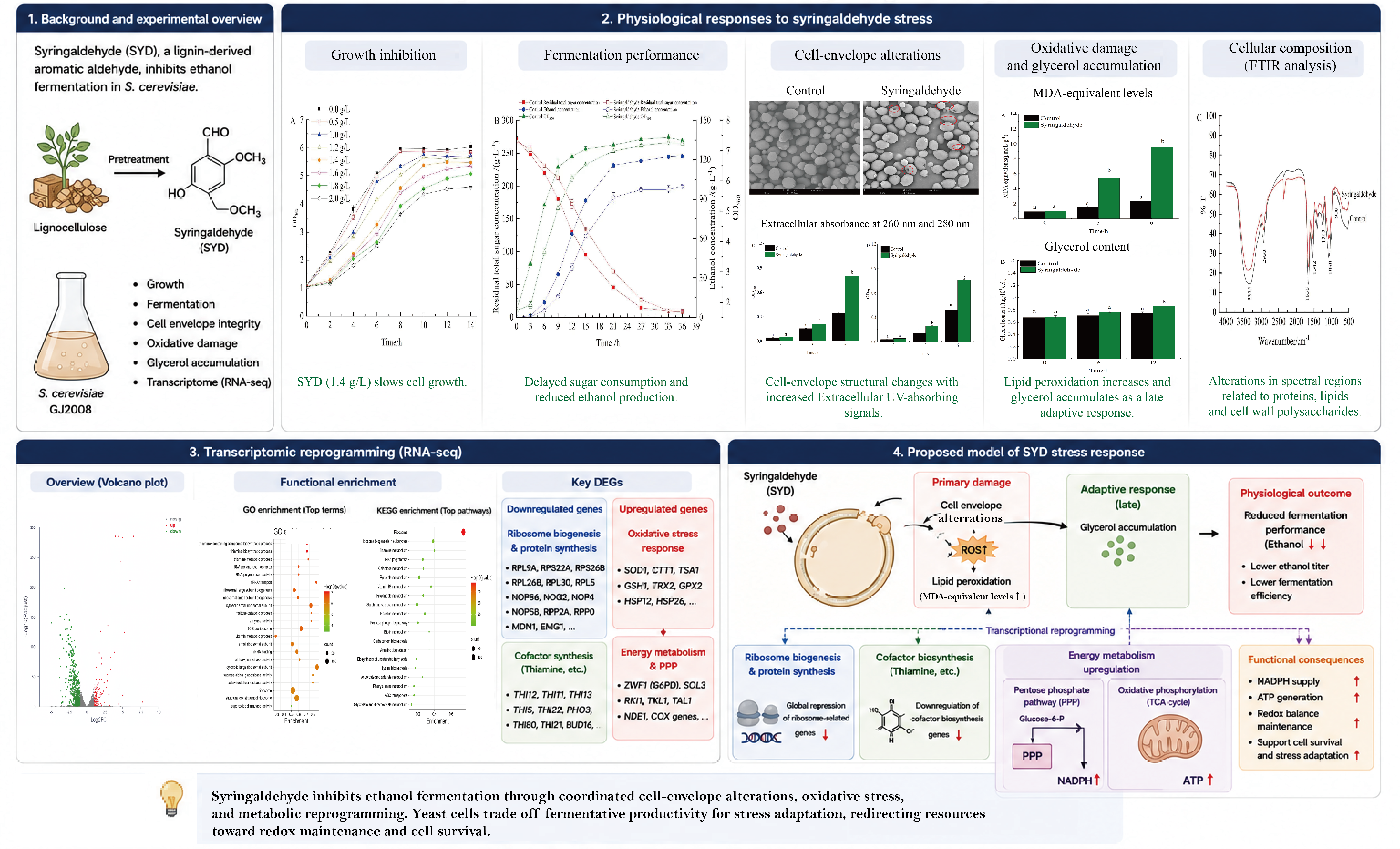
Integrated Physiological and Transcriptomic Analyses of Saccharomyces cerevisiae Under Syringaldehyde Stress


Simple Summary
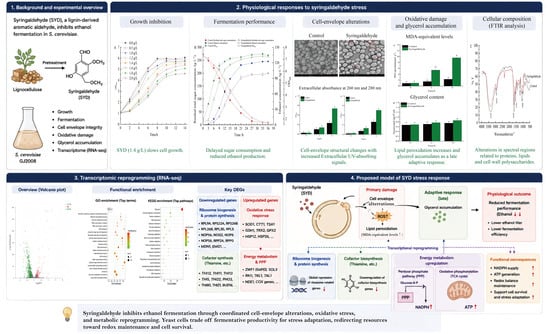
Abstract
1. Introduction
2. Materials and Methods
2.1. Strains and Culture Conditions
2.2. Effects of Syringaldehyde on Growth of S. cerevisiae
2.3. Ethanol Fermentation Assay
2.4. Scanning Electron Microscopy (SEM)
2.5. Assessment of Extracellular Ultraviolet (UV)-Absorbing Components
2.6. Determination of TBARS Levels
2.7. Determination of Intracellular Glycerol Content
2.8. Fourier Transform Infrared (FTIR) Spectroscopy
2.9. RNA Extraction, Library Construction, and Transcriptome Sequencing
2.10. Transcriptome Data Processing and Analysis
2.11. RT-qPCR Analysis
2.12. Data Statistics and Analysis
3. Results
3.1. Effects of Syringaldehyde on Fermentation Performance
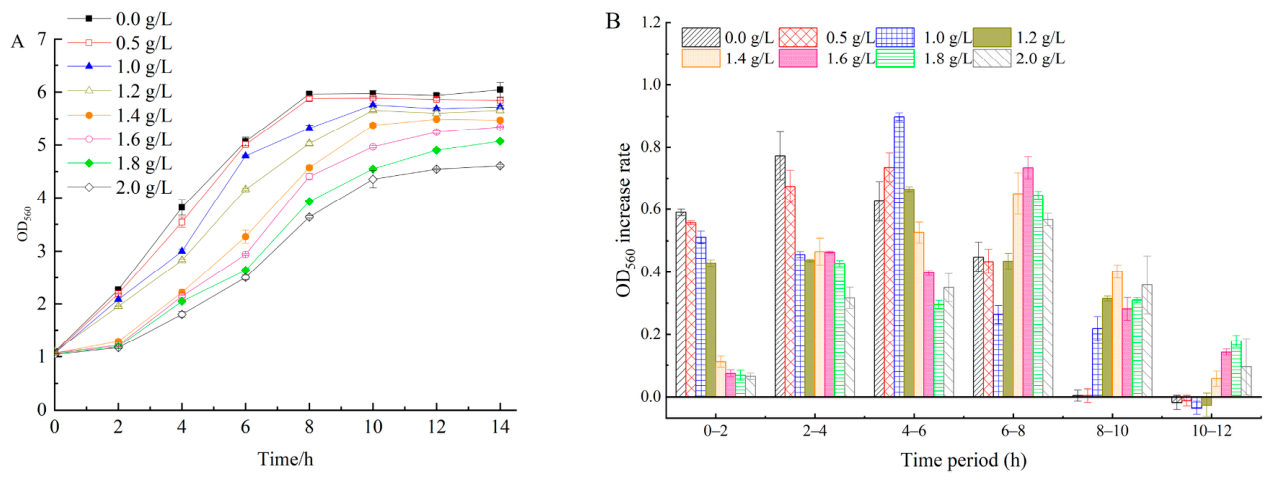
3.1.1. Effects of Syringaldehyde on Cell Growth
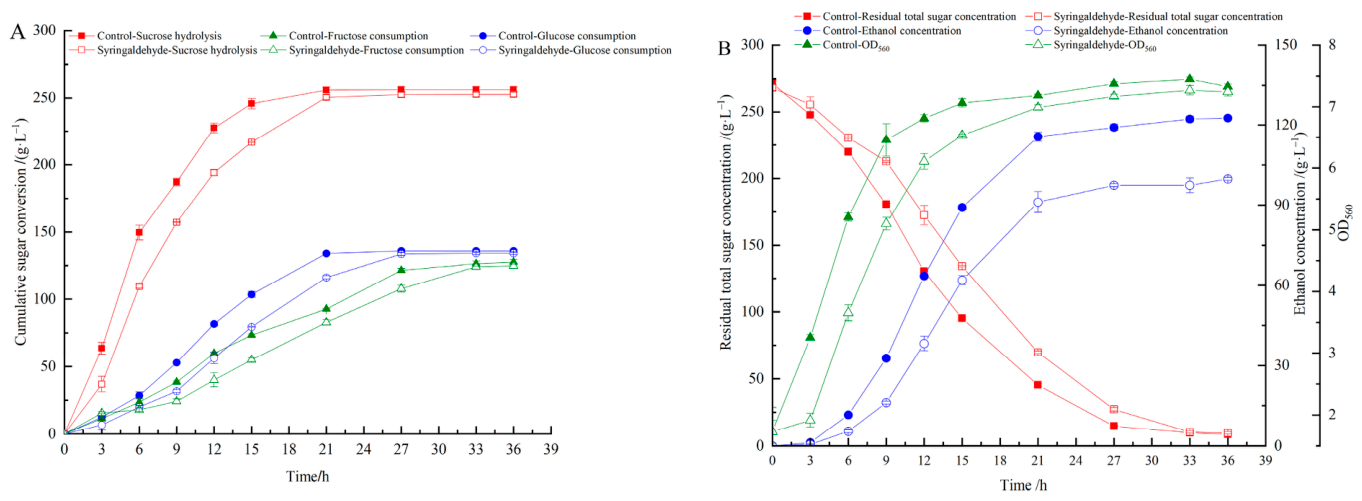
3.1.2. Effects of Syringaldehyde on Sugar Utilization
3.1.3. Effects of Syringaldehyde on Ethanol Fermentation
3.2. Effects of Syringaldehyde on Cell Envelope Integrity and Oxidative Stress
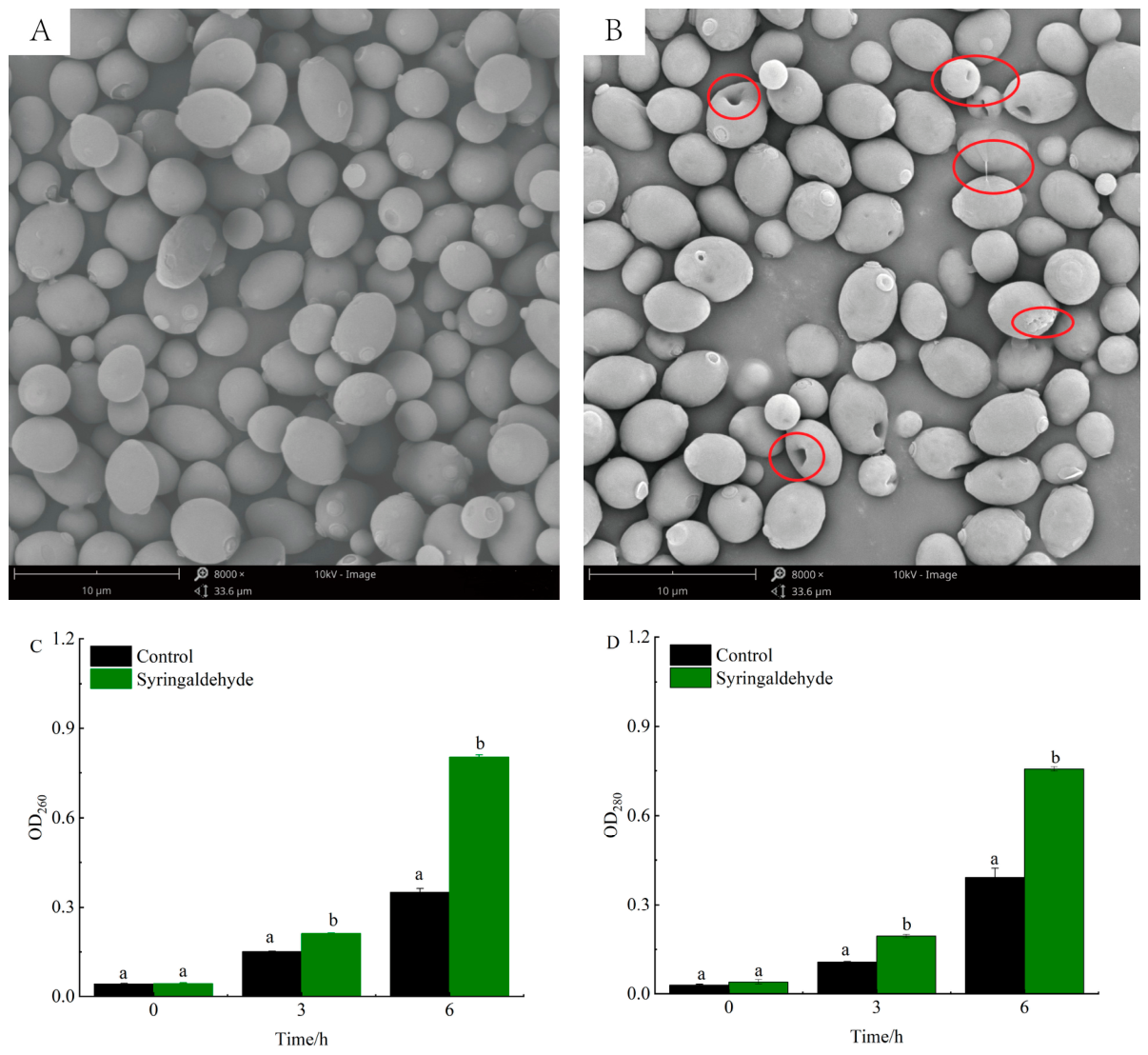
3.2.1. Cell Morphology and Cell-Envelope Alterations
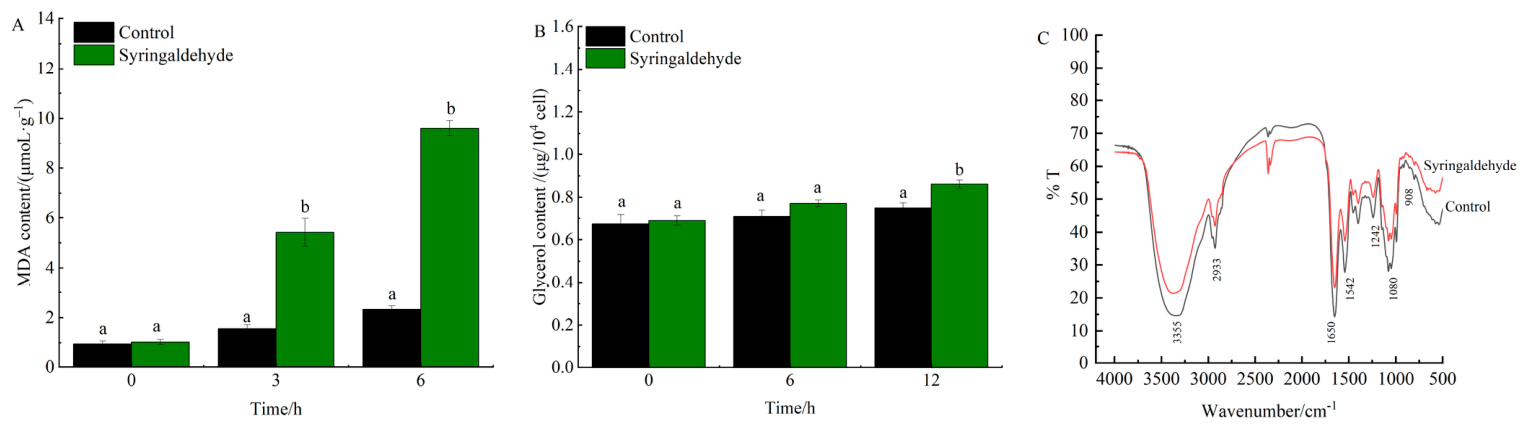
3.2.2. Lipid Peroxidation and Biochemical Alterations
3.2.3. Intracellular Glycerol Accumulation
3.3. Transcriptomic Analysis of the Response to Syringaldehyde Stress
3.3.1. Global Transcriptional Response to Syringaldehyde Stress
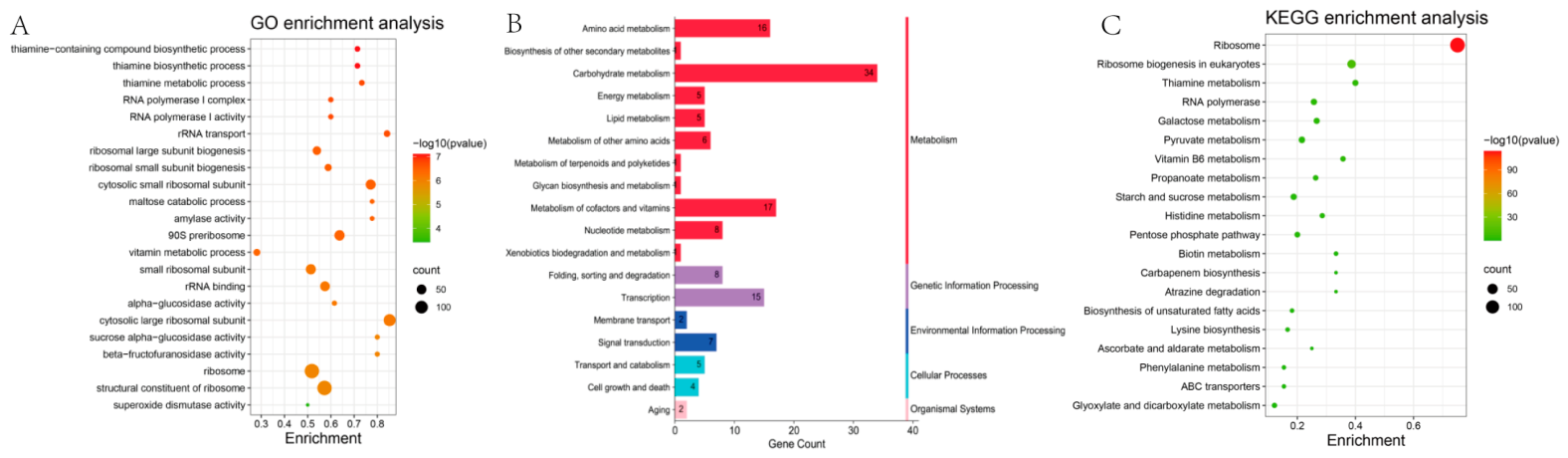
3.3.2. Functional Enrichment Analysis of Differentially Expressed Genes
3.3.3. Expression Profiles of Representative Differentially Expressed Genes
3.3.4. RT-qPCR Analysis of Selected DGEs
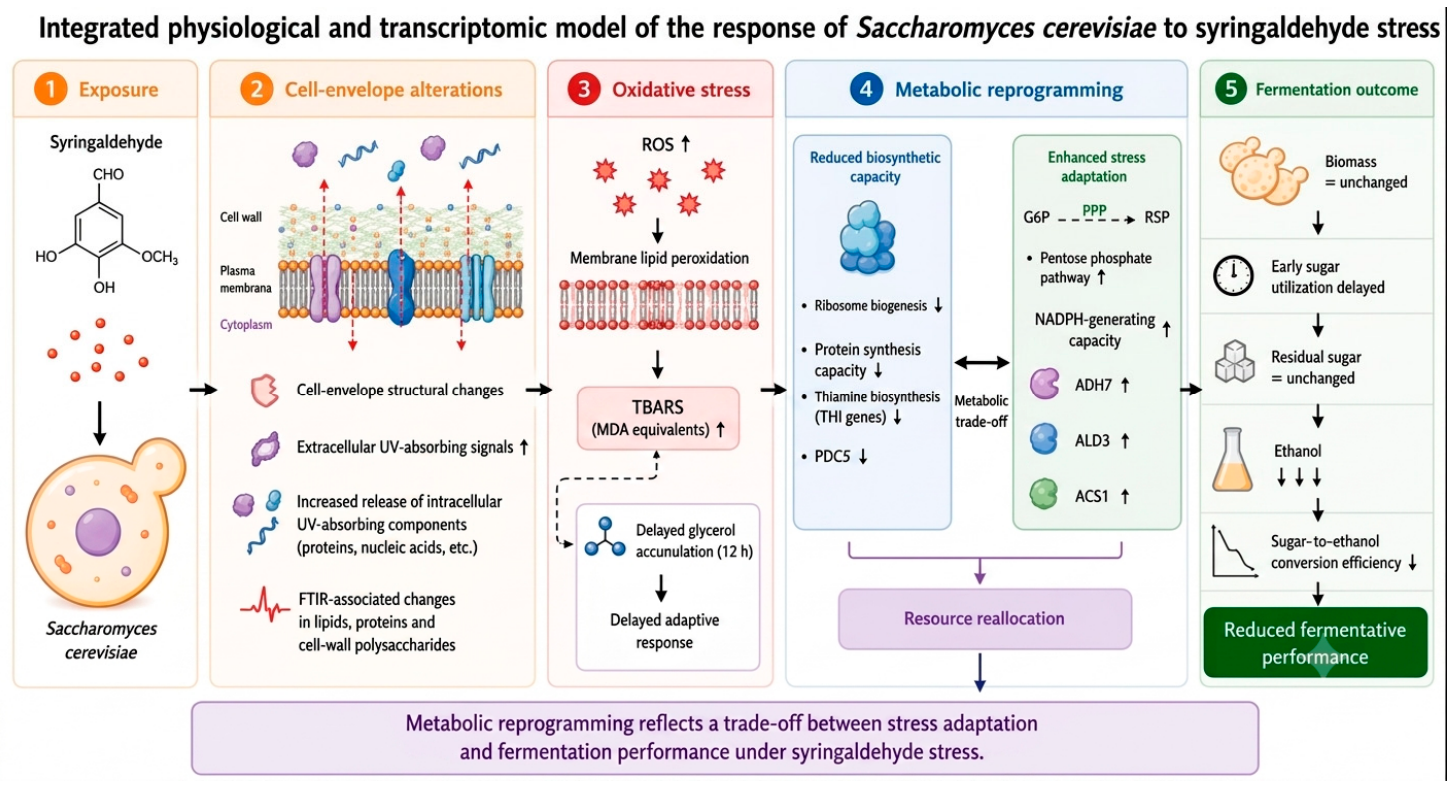
4. Discussion
5. Conclusions
Supplementary Materials
Author Contributions
Funding
Institutional Review Board Statement
Informed Consent Statement
Data Availability Statement
Acknowledgments
Conflicts of Interest
Abbreviations
| DMSO | Dimethyl sulfoxide |
| SEM | Scanning electron microscopy |
| MDA | Malondialdehyde |
| TBA | Thiobarbituric acid |
| TCA | Trichloroacetic acid |
| FTIR | Fourier transform infrared |
| DEGs | Differentially expressed genes |
| SGD | Saccharomyces Genome Database |
| GO | Gene Ontology |
| KEGG | Kyoto Encyclopedia of Genes and Genomes |
References
- Broda, M.; Yelle, D.J.; Serwańska, K. Bioethanol production from lignocellulosic biomass—Challenges and solutions. Molecules 2022, 27, 8717. [Google Scholar] [CrossRef] [Scilit] [PubMed]
- Shukla, A.; Kumar, D.; Girdhar, M.; Kumar, A.; Goyal, A.; Malik, T.; Mohan, A. Strategies of pretreatment of feedstocks for optimized bioethanol production: Distinct and integrated approaches. Biotechnol. Biofuels Bioprod. 2023, 16, 44. [Google Scholar] [CrossRef] [Scilit] [PubMed]
- Adnan, M.; Ahmed, A.; Rafiq, M.; Ullah, N.; Ahmad, A.; Sarfraz, M.; Ullah, R.; Ahmad, M.; Yu, B.; Cong, H. Green approaches for modifying lignocellulosic features: Recent advances in reducing recalcitrance for sustainable bioethanol production. Biomass Bioenergy 2025, 203, 108304. [Google Scholar] [CrossRef] [Scilit]
- Fernández-Sandoval, M.T.; García, A.; Teymennet-Ramírez, K.V.; Arenas-Olivares, D.Y.; Martínez-Morales, F.; Trejo-Hernández, M.R. Removal of phenolic inhibitors from lignocellulose hydrolysates using laccases for the production of fuels and chemicals. Biotechnol. Prog. 2024, 40, e3406. [Google Scholar] [CrossRef] [Scilit] [PubMed]
- Zou, L.; Ouyang, S.; Hu, Y.; Zheng, Z.; Ouyang, J. Efficient lactic acid production from dilute acid-pretreated lignocellulosic biomass by a synthetic consortium of engineered Pseudomonas putida and Bacillus coagulans. Biotechnol. Biofuels 2021, 14, 227. [Google Scholar] [CrossRef] [Scilit] [PubMed]
- Adeboye, P.T.; Bettiga, M.; Olsson, L. The chemical nature of phenolic compounds determines their toxicity and induces distinct physiological responses in Saccharomyces cerevisiae in lignocellulose hydrolysates. AMB Express 2014, 4, 46. [Google Scholar] [CrossRef] [Scilit] [PubMed]
- Boguta, A.M.; Bringel, F.; Martinussen, J.; Jensen, P.R. Screening of lactic acid bacteria for their potential as microbial cell factories for bioconversion of lignocellulosic feedstocks. Microb. Cell Fact. 2014, 13, 97. [Google Scholar] [CrossRef] [Scilit] [PubMed]
- Cortez, D.V.; Roberto, I.C. Individual and interaction effects of vanillin and syringaldehyde on the xylitol formation by Candida guilliermondii. Bioresour. Technol. 2010, 101, 1858–1865. [Google Scholar] [CrossRef] [Scilit] [PubMed]
- Kelly, C.; Jones, O.; Barnhart, C.; Lajoie, C. Effect of furfural, vanillin and syringaldehyde on Candida guilliermondii growth and xylitol biosynthesis. In Biotechnology for Fuels and Chemicals: Proceedings of the Twenty-Ninth Symposium on Biotechnology for Fuels and Chemicals, Denver, CO, USA, 29 April–2 May 2007; Humana Press: Totowa, NJ, USA, 2008; pp. 615–626. [Google Scholar]
- Jayakody, L.N.; Jin, Y.S. In-depth understanding of molecular mechanisms of aldehyde toxicity to engineer robust Saccharomyces cerevisiae. Appl. Microbiol. Biotechnol. 2021, 105, 2675–2692. [Google Scholar] [CrossRef] [Scilit] [PubMed]
- Cao, D.; Tu, M.; Xie, R.; Li, J.; Wu, Y.; Adhikari, S. Inhibitory activity of carbonyl compounds on alcoholic fermentation by Saccharomyces cerevisiae. J. Agric. Food Chem. 2014, 62, 918–926. [Google Scholar] [CrossRef] [Scilit] [PubMed]
- Yan, Z.; Zhao, H.; Chen, F.; Wu, S.; Shi, M.; Wang, Y.; Jing, X.; Meng, Z.; Zhu, C.; Wu, L. Toxic effects and adaptive response mechanisms of lignocellulose-derived phenolic aldehydes in Saccharomyces cerevisiae during cellulosic ethanol fermentation. J. Agric. Food Chem. 2025, 73, 27587–27598. [Google Scholar] [CrossRef] [Scilit] [PubMed]
- Fletcher, E.; Gao, K.; Mercurio, K.; Ali, M.; Baetz, K. Yeast chemogenomic screen identifies distinct metabolic pathways required to tolerate exposure to phenolic fermentation inhibitors ferulic acid, 4-hydroxybenzoic acid and coniferyl aldehyde. Metab. Eng. 2019, 52, 98–109. [Google Scholar] [CrossRef] [Scilit] [PubMed]
- Ouyang, Y.; Li, Q.; Kuang, X.; Wang, H.; Wu, J.; Ayepa, E.; Chen, H.; Abrha, G.T.; Zhang, Z.; Li, X.; et al. YMR152W from Saccharomyces cerevisiae encoding a novel aldehyde reductase for detoxification of aldehydes derived from lignocellulosic biomass. J. Biosci. Bioeng. 2021, 131, 39–46. [Google Scholar] [CrossRef] [Scilit] [PubMed]
- Jayakody, L.N.; Horie, K.; Hayashi, N.; Kitagaki, H. Engineering redox cofactor utilization for detoxification of glycolaldehyde, a key inhibitor of bioethanol production, in yeast Saccharomyces cerevisiae. Appl. Microbiol. Biotechnol. 2013, 97, 6589–6600. [Google Scholar] [CrossRef] [Scilit] [PubMed]
- Mendoza-Martínez, A.E.; Cano-Domínguez, N.; Aguirre, J. Yap1 homologs mediate more than the redox regulation of the antioxidant response in filamentous fungi. Fungal Biol. 2020, 124, 253–262. [Google Scholar] [CrossRef] [Scilit] [PubMed]
- Sundström, L.; Larsson, S.; Jönsson, L.J. Identification of Saccharomyces cerevisiae genes involved in the resistance to phenolic fermentation inhibitors. Appl. Biochem. Biotechnol. 2010, 161, 106–115. [Google Scholar] [CrossRef] [Scilit] [PubMed]
- Liu, Z.L. Molecular mechanisms of yeast tolerance and in situ detoxification of lignocellulose hydrolysates. Appl. Microbiol. Biotechnol. 2011, 90, 809–825. [Google Scholar] [CrossRef] [Scilit] [PubMed]
- Ma, M.; Liu, Z.L. Comparative transcriptome profiling analyses during the lag phase uncover YAP1, PDR1, PDR3, RPN4, and HSF1 as key regulatory genes in genomic adaptation to the lignocellulose derived inhibitor HMF for Saccharomyces cerevisiae. BMC Genom. 2010, 11, 660. [Google Scholar] [CrossRef] [Scilit] [PubMed]
- Chen, Y.; Sheng, J.; Jiang, T.; Stevens, J.; Feng, X.; Wei, N. Transcriptional profiling reveals molecular basis and novel genetic targets for improved resistance to multiple fermentation inhibitors in Saccharomyces cerevisiae. Biotechnol. Biofuels 2016, 9, 9. [Google Scholar] [CrossRef] [Scilit] [PubMed]
- Garoma, T.; Ben-Khaled, M.; Beyene, A. Comparative resource analyses for ethanol produced from corn and sugarcane in different climatic zones. Int. J. Energy Res. 2012, 36, 1065–1076. [Google Scholar] [CrossRef] [Scilit]
- Zhao, X.Q.; Zi, L.H.; Bai, F.W.; Lin, H.L.; Ho, N.W.Y. Bioethanol from lignocellulosic biomass. Adv. Biochem. Eng. Biotechnol. 2012, 128, 25–51. [Google Scholar] [CrossRef] [Scilit] [PubMed]
- Rozali, S.N.M.; Milani, E.A.; Deed, R.C.; Silva, F.V.M. Bacteria, mould and yeast spore inactivation studies by scanning electron microscope observations. Int. J. Food Microbiol. 2017, 263, 17–25. [Google Scholar] [CrossRef] [Scilit] [PubMed]
- Xiang, Q.S.; Liu, X.F.; Li, J.G.; Liu, S.N.; Zhang, H.; Bai, Y.H. Effects of dielectric barrier discharge plasma on the inactivation of Zygosaccharomyces rouxii and quality of apple juice. Food Chem. 2018, 254, 201–207. [Google Scholar] [CrossRef] [Scilit] [PubMed]
- Ribeiro, T.D.P.; Fonseca, F.L.; Carvalho, M.D.C.; Godinho, R.M.C.; Almeida, F.P.; Saint’Pierre, T.D.; Rey, N.A.; Fernandes, C.; Horn, A., Jr.; Pereira, M.D. Metal-based superoxide dismutase and catalase mimics reduce oxidative stress biomarkers and extend life span of Saccharomyces cerevisiae. Biochem. J. 2017, 474, 301–315. [Google Scholar] [CrossRef] [Scilit] [PubMed]
- Favaro, L.; Corte, L.; Roscini, L.; Cagnin, L.; Tiecco, M.; Colabella, C.; Berti, A.; Basaglia, M.; Cardinali, G.; Casella, S. A novel FTIR-based approach to evaluate the interactions between lignocellulosic inhibitory compounds and their effect on yeast metabolism. RSC Adv. 2016, 6, 47981–47989. [Google Scholar] [CrossRef] [Scilit]
- Piper, P.W. Yeast superoxide dismutase mutants reveal a pro-oxidant action of weak organic acid food preservatives. Free Radic. Biol. Med. 1999, 27, 1219–1227. [Google Scholar] [CrossRef] [Scilit] [PubMed]
- Lee, S.E.; Park, B.S.; Yoon, J.J. Proteomic evaluation of cellular responses of Saccharomyces cerevisiae to formic acid stress. Mycobiology 2010, 38, 302–309. [Google Scholar] [CrossRef] [Scilit] [PubMed]
- Long, X.F.; Xu, Y.L.; Zhao, X.M. Response mechanism of Saccharomyces cerevisiae under benzoic acid stress in ethanol fermentation. Sci. Rep. 2024, 14, 28757. [Google Scholar] [CrossRef] [Scilit] [PubMed]
- Freese, E.; Sheu, C.W.; Galliers, E. Function of lipophilic acids as antimicrobial food additives. Nature 1973, 241, 321–325. [Google Scholar] [CrossRef] [Scilit] [PubMed]
- Stratford, M.; Anslow, P.A. Evidence that sorbic acid does not inhibit yeast as a classic ‘weak acid preservative’. Lett. Appl. Microbiol. 1998, 27, 203–206. [Google Scholar] [CrossRef] [Scilit] [PubMed]
- Walker, G.M.; Stewart, G.G. Saccharomyces cerevisiae in the production of fermented beverages. Beverages 2016, 2, 30. [Google Scholar] [CrossRef] [Scilit]
- Lonsdale, D. A review of the biochemistry, metabolism and clinical benefits of thiamin(e) and its derivatives. Evid. Based Complement. Altern. Med. 2006, 3, 49–59. [Google Scholar] [CrossRef] [Scilit] [PubMed]



| Amount of Syringaldehyde Added (g/L) | Initial Total Sugar (g/L) | Residual Total Sugar (g/L) | Residual Sucrose (g/L) | Residual Fructose (g/L) | Residual Glucose (g/L) | Final Ethanol Concentration (g/L) | Glucose Utilization Rate (%) | Fructose Utilization Rate (%) | Total Sugar Utilization Rate (%) | Total Sugar Fermentation Efficiency (%) | Consumption Sugar Fermentation Efficiency (%) | Sugar-to-Ethanol Conversion Rate (%) |
|---|---|---|---|---|---|---|---|---|---|---|---|---|
| 0 | 271.62 ± 2.29 a | 8.54 ± 0.70 a | 0 ± 0.00 a | 8.54 ± 0.70 a | 0 ± 0.00 a | 122.69 ± 0.56 a | 100 ± 0.00 a | 93.67 ± 0.57 a | 96.86 ± 0.28 a | 88.40 ± 0.34 a | 90.54 ± 0.41 a | 46.64 ± 0.32 a |
| 1.4 | 268.26 ± 2.14 a | 9.57 ± 0.81 a | 0 ± 0.00 a | 9.57 ± 0.81 a | 0 ± 0.00 a | 99.81 ± 0.56 b | 100 ± 0.00 a | 92.80 ± 0.66 a | 96.43 ± 0.33 a | 72.81 ± 0.99 b | 75.51 ± 1.28 b | 38.59 ± 0.65 b |
| Gene ID | Gene Name | Log2 FC | Gene Description |
|---|---|---|---|
| Differentially expressed genes related to ribosomes and their biosynthesis | |||
| YGL147C | RPL9A | −3.85 | 60S ribosomal subunit protein |
| YJL190C | RPS22A | −3.77 | 40S ribosomal subunit protein |
| YER131W | RPS26B | −3.74 | 40S ribosomal subunit protein |
| YGR034W | RPL26B | −3.44 | 60S ribosomal subunit protein |
| YGL030W | RPL30 | −3.26 | 60S ribosomal subunit protein |
| YPL131W | RPL5 | −3.14 | 60S ribosomal subunit protein |
| YPR102C | RPL11A | −3.13 | 60S ribosomal subunit protein |
| YHL015W | RPS20 | −2.96 | 40S ribosomal subunit protein |
| YPL249C-A | RPL36B | −2.91 | 60S ribosomal subunit protein |
| YLR406C | RPL31B | −2.86 | 60S ribosomal subunit protein |
| YLL045C | RPL8B | −2.81 | 60S ribosomal subunit protein |
| YBR189W | RPS9B | −2.79 | 40S ribosomal subunit protein |
| YOR369C | RPS12 | −2.74 | 40S ribosomal subunit protein |
| YGL031C | RPL24A | −2.61 | 60S ribosomal subunit protein |
| YOR063W | RPL3 | −2.60 | 60S ribosomal subunit protein |
| YNL178W | RPS3 | −2.54 | 40S ribosomal subunit protein |
| YOL039W | RPP2A | −2.41 | Ribosomal protein P2α, involved in the interaction between translation elongation factors and ribosomes |
| YLR167W | RPS31 | −2.21 | The fusion protein cleavage produces ribosomal protein S31 and ubiquitin, which can promote the assembly of ribosomal proteins into ribosomes. |
| YDL130W | RPP1B | −2.09 | Ribosomal protein P1β |
| YLR340W | RPP0 | −2.02 | Ribosomal protein P0 |
| YDR382W | RPP2B | −1.93 | Ribosomal protein P2β |
| YLR197W | NOP56 | −2.36 | Nucleolar protein |
| YLR106C | MDN1 | −1.14 | Acts on ribosome biogenesis factors during 60S pre-assembly |
| YNR053C | NOG2 | −2.23 | Associated with the 60S ribosomal subunit in the nucleolus, essential for its nuclear export and maturation. |
| YPL043W | NOP4 | −1.37 | A nucleolar protein that is crucial for the processing, maturation of 27S pre-rRNA, and biogenesis of the large ribosomal subunit. |
| YLR186W | EMG1 | −1.28 | rRNA methyltransferase |
| YOR310C | NOP58 | −2.02 | Proteins involved in the production of mature rRNA and snoRNA, participating in pre-rRNA processing, 18S rRNA synthesis, and nucleolar small RNA synthesis |
| Differentially expressed genes related to cofactor metabolism | |||
| YNL332W | THI12 | −4.96 | Proteins involved in the synthesis of thiamine precursor HMP |
| YJR156C | THI11 | −3.84 | Proteins involved in the synthesis of thiamine precursor HMP |
| YDL244W | THI13 | −3.73 | Proteins involved in the synthesis of thiamine precursor HMP |
| YFL058W | THI5 | −3.64 | Proteins involved in the synthesis of thiamine precursor HMP |
| YPR121W | THI22 | −2.99 | Protein similar to hydroxymethylpyrimidine phosphate kinase |
| YBR092C | PHO3 | −1.82 | Acidic phosphatase similar to Pho5p, hydrolyzes thiamine phosphate in the surrounding interstitial space, increasing cellular uptake of thiamine |
| YOR143C | THI80 | −1.23 | Thiamine pyrophosphate kinase |
| YPL258C | THI21 | −1.17 | Hydroxymethylpyrimidine (HMP) and HMP kinase, involved in thiamine biosynthesis |
| YEL029C | BUD16 | −1.43 | Putative pyridoxal kinase, a key enzyme involved in the synthesis of pyridoxal 5′-phosphate, the active form of vitamin B6 |
| YFL060C | SNO3 | −1.92 | Induced in the absence of thiamine |
| YNL333W | SNZ2 | −2.59 | Pyridoxal phosphate biosynthesis protein |
| YNL334C | SNO2 | −1.71 | Induction in the absence of thiamine |
| YFL059W | SNZ3 | −2.59 | Pyridoxal phosphate biosynthesis protein |
| YGR286C | BIO2 | −1.04 | Biotin synthase, catalyzes the conversion of desulfurized biotin to biotin |
| YNR057C | BIO4 | −1.46 | Desulfurization biotin synthetase |
| Differentially expressed genes related to fermentation-associated metabolism and aldehyde detoxification | |||
| YCR105W | ADH7 | 5.25 | Alcohol dehydrogenase |
| YBR117C | TKL2 | 2.71 | Transketolase |
| YGR256W | GND2 | 2.39 | 6-phosphogluconate dehydrogenase |
| YGR248W | SOL4 | 1.15 | 6-phosphogluconolactonase |
| YGR043C | NQM1 | 1.58 | Transaldolase-like protein |
| YMR169C | ALD3 | 2.87 | Cytosolic Aldehyde dehydrogenase |
| YAL054C | ACS1 | 1.44 | Acetyl-CoA synthetase isoform |
| YLR134W | PDC5 | −1.76 | Pyruvate decarboxylase isoform |
| YLR044C | PDC1 | 1.33 | Major pyruvate decarboxylase isozyme |
| YER073W | ALD5 | −1.36 | Mitochondrial aldehyde dehydrogenase |
| YGR287C | IMA1 | 1.01 | Isomaltase |
| YOL157C | IMA2 | 1.98 | Isomaltase |
| YIL172C | IMA3 | 1.91 | Isomaltase |
| YJL221C | IMA4 | 1.91 | Isomaltase |
| YJL216C | IMA5 | 1.04 | Isomaltase |
| YIL162W | SUC2 | 1.86 | Sucrose hydrolase |
| Differentially expressed genes related to cell wall biosynthesis | |||
| YGR032W | GSC2 | 1.27 | Catalytic subunit of 1,3-β-glucan synthase |
Disclaimer/Publisher’s Note: The statements, opinions and data contained in all publications are solely those of the individual author(s) and contributor(s) and not of MDPI and/or the editor(s). MDPI and/or the editor(s) disclaim responsibility for any injury to people or property resulting from any ideas, methods, instructions or products referred to in the content. |
© 2026 by the authors. Licensee MDPI, Basel, Switzerland. This article is an open access article distributed under the terms and conditions of the Creative Commons Attribution (CC BY) license.
Share and Cite
Long, X.; Li, X.; Zhao, X.; Du, Y.; Niu, F.; Yi, Y. Integrated Physiological and Transcriptomic Analyses of Saccharomyces cerevisiae Under Syringaldehyde Stress. Biology 2026, 15, 1410. https://doi.org/10.3390/biology15161410
Long X, Li X, Zhao X, Du Y, Niu F, Yi Y. Integrated Physiological and Transcriptomic Analyses of Saccharomyces cerevisiae Under Syringaldehyde Stress. Biology. 2026; 15(16):1410. https://doi.org/10.3390/biology15161410
Chicago/Turabian StyleLong, Xiufeng, Xinru Li, Xuemei Zhao, Yupeng Du, Fuxing Niu, and Yi Yi. 2026. "Integrated Physiological and Transcriptomic Analyses of Saccharomyces cerevisiae Under Syringaldehyde Stress" Biology 15, no. 16: 1410. https://doi.org/10.3390/biology15161410
APA StyleLong, X., Li, X., Zhao, X., Du, Y., Niu, F., & Yi, Y. (2026). Integrated Physiological and Transcriptomic Analyses of Saccharomyces cerevisiae Under Syringaldehyde Stress. Biology, 15(16), 1410. https://doi.org/10.3390/biology15161410