Article

Greenhouse Gas Emission Fluxes in Urban Wetlands of Qinghai–Tibet Plateau

1
College of Forestry and Grassland, Qinghai University, Xining 810016, China
2
College of Eco-Environmental Engineering, Qinghai University, Xining 810016, China
*
Author to whom correspondence should be addressed.
These authors contributed equally to this work.
Biology 2026, 15(11), 871; https://doi.org/10.3390/biology15110871
Submission received: 30 April 2026 / Revised: 29 May 2026 / Accepted: 29 May 2026 / Published: 31 May 2026
(This article belongs to the Section Ecology)

Simple Summary

Urban wetlands on the Qinghai–Tibet Plateau play an important role in regulating greenhouse gas emissions and maintaining ecological functions in high-altitude cities. However, little is known about how different types of urban wetlands influence greenhouse gas release under plateau environmental conditions. In this study, greenhouse gas emission fluxes from the water–air and soil–air interfaces were investigated in three typical urban wetlands in Xining City, including riverine, constructed, and semi-constructed wetlands. The results showed clear spatial and seasonal differences in carbon dioxide, methane, and nitrous oxide emissions among the wetlands. Environmental factors such as nutrient levels, temperature, and moisture conditions strongly affected greenhouse gas emissions. Constructed wetlands influenced by urban activities generally showed higher greenhouse gas emissions than relatively natural wetlands. This study improves understanding of greenhouse gas dynamics in plateau urban wetlands and provides scientific support for wetland management, ecological restoration, and low-carbon urban development in high-altitude regions.

Abstract

Background: This study aims to measure Greenhouse Gas (GHG) emission fluxes at the soil–air and water–air interfaces in urban wetlands on the Qinghai–Tibet Plateau and identify the primary controlling factors. The objective is to elucidate the key drivers of carbon and nitrogen processes at different interface levels in wetlands within high-altitude urban settings, thereby providing a scientific basis for accurately estimating their contribution to greenhouse gas emissions. Results: In the wetlands of Xining City, with the exception of soil pH, bulk density, and moisture content (which showed no significant change over time), all other soil physicochemical properties differed significantly among the three wetlands and among the sampling periods (p < 0.05). Soil moisture content was less affected by variations across different wetlands and over time, and differences in soil physicochemical properties among different wetlands were small (p > 0.05). Significant differences were observed in the spatiotemporal variations in the physicochemical properties of water bodies in Xining’s wetlands (p < 0.05), although water pH and total organic carbon (TOC) were less affected by the interaction between different wetlands and time periods. There were no significant differences in the bulk density and moisture content of wetland sediments in Xining over time (p > 0.05), while all other physicochemical indicators of sediments showed significant differences (p < 0.05). The physicochemical properties of sediments were influenced by both different wetland types and different time periods. GHG fluxes at the water–air interface in Xining wetlands were greater than those at the soil–air interface; overall, GHG emissions from both interfaces acted as “sources.” Seasonal variations in wetland GHG emissions were pronounced, with emission peaks occurring from June to August. The study found that the primary soil factor influencing GHG emissions at the soil–air interface was total phosphorus (TP), while the primary sediment factors affecting emissions at the water–air interface were TP and nitrate nitrogen (NO3-N), and the primary water factor was TOC. The interannual cumulative emissions from both interfaces in the wetland totaled 705.88 g·m−2. GHG emissions from the soil–air and water–air interfaces contributed 47.88% and 52.12%, respectively, to the global warming potential (GWP) of the wetland, while methane (CH4), carbon dioxide (CO2), and nitrous oxide (N2O) contributed 32.55%, 62.33%, and 5.12%, respectively, to the GWP. Conclusions: Investigating the GHG emission patterns in Xining’s wetlands and identifying the primary factors influencing these emissions provides a scientific basis for the protection and restoration of these wetlands. This is of great significance for safeguarding the ecological security of Xining’s wetlands as well as the overall ecological security of high-altitude wetlands.

1. Background

In recent years, research attention on N2O emissions, a potent greenhouse gas with a GWP 298 times that of CO2 (the Fourth Assessment Report of the Intergovernmental Panel on Climate Change, IPCC), has increased. Nitrification and denitrification processes in wetland soils are the main sources of N2O emissions [1]. Additionally, decomposition of soil organic matter is considered the primary source of CO2 and CH4 emissions. The anaerobic conditions in wetlands promote CH4 production, with soil temperature and moisture content serving as critical regulatory factors [2].
Xining City is located in the eastern Qinghai–Tibet Plateau. Under the influence of its high-altitude geographical location, cold and dry climate conditions, and regional human activities, the wetlands here exhibit unique characteristics of sensitivity and vulnerability. Greenhouse gas emission fluxes in these plateau urban wetlands differ significantly from those in lowland ecosystems due to distinct environmental conditions [3]. Notably, “plateau cities” refer to urban areas situated at high altitudes-typically above 2000 m-including cities on the Qinghai–Tibet Plateau (e.g., Xining, Lhasa) and the Yunnan-Guizhou Plateau (e.g., Kunming, Lijiang). Currently, relatively few studies have examined greenhouse gas emission fluxes from wetlands in plateau cities. Scholars worldwide recognize that key factors such as dissolved oxygen (DO), ammonia nitrogen (NH3-N) concentration, soil organic carbon (SOC), dissolved organic carbon (DOC), water and air temperature, pH, wind speed, and water depth jointly regulate greenhouse gas emissions from wetlands and act as primary drivers of their spatial and temporal variability [4,5,6,7,8]. An in-depth study on greenhouse gas emission flux changes in Xining City’s wetlands provides an effective approach for rational utilization and protection of wetland resources in plateau cities and offers a scientific basis for the protection and restoration of alpine wetlands.
Therefore, the primary objectives of this study are: (1) to quantify CH4, CO2, and N2O emission fluxes at the soil–air and water–air interfaces in urban wetlands, using Xining, a city on the Qinghai–Tibet Plateau, as a representative case study; (2) to identify the key physicochemical factors (soil, water, and sediment properties) that control these emissions; and (3) to estimate the cumulative GHG emissions and their GWP. The hypotheses to be tested include: (H1) GHG emission fluxes exhibit significant seasonal and spatial variations, with summer fluxes higher than those in other seasons, and emissions from semi-natural wetlands higher than those from riverine or artificial wetlands; (H2) The water–air interface is a stronger source of CH4 and N2O emissions, while CO2 exhibits the opposite pattern (higher at the soil–air interface); (H3) TP in soil, TOC in water, and NO3-N in sediments are the primary drivers of GHG emissions across different interfaces.

2. Materials and Methods

2.1. Overview of the Study Area

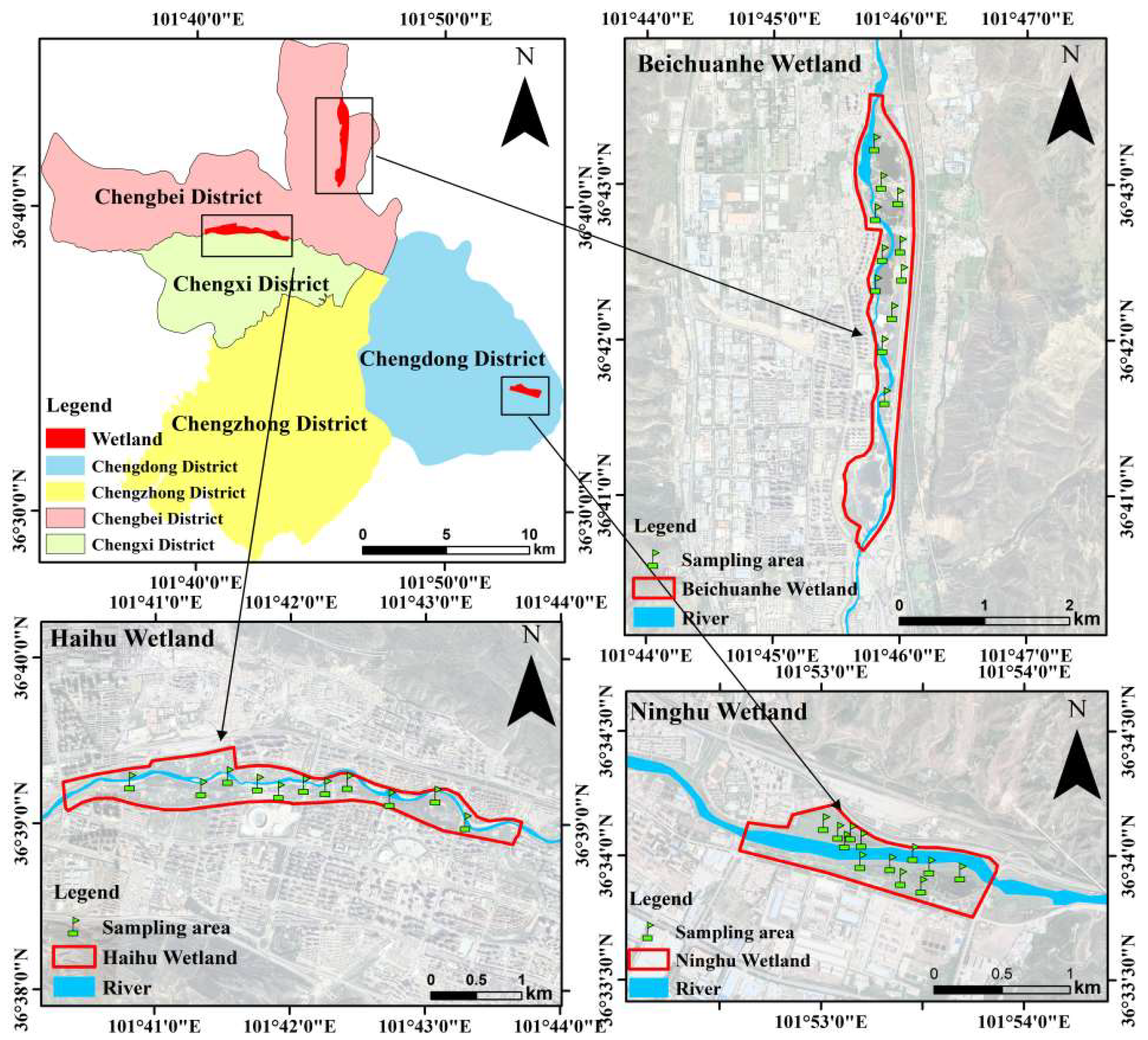
The Huangshui National Wetland Park comprises five major wetland parks: Huoshaogou Wetland, Haihu Wetland, Beichuan Wetland, Ninghu Wetland, and the Huangshui River Main Channel Park. This study focuses on riverine wetlands (Beichuanhe Wetland), constructed wetlands (Ninghu Wetland), and semi-constructed wetlands (Haihu Wetland) [9]. The Beichuanhe Wetland is located in the core section of the Beichuanhe in Chengbei District, Xining City, with a total area of approximately 173.5 ha. The dominant aquatic plant species are common reed (Phragmites australis (Cav.) Trin. ex Steud.) and Oriental cattail (Typha orientalis C.Presl). The Ninghu Wetland is situated in Chengdong District, Xining City, with a total land area of approximately 85.5 ha. It extends from the newly constructed bridge on Guinan Road in the west to Xiaxiaokou in the east. The dominant aquatic plant species are common reed (Phragmites australis (Cav.) Trin. ex Steud.) and Oriental cattail (Typha orientalis C.Presl), along with water sedge (Schoenoplectus tabernaemontani (C.C.Gmel.) Palla) and water lily (Nymphaea sp.), among others. The Haihu Wetland is located in Chengxi District, Xining City, with a total area of approximately 146 ha. It extends from the Huangshui Bridge in the west to Huoshaogou in the east [10]. Aquatic plants include common reed (Phragmites australis (Cav.) Trin. ex Steud.), cattail (Typha orientalis C.Presl), and water lily (Nymphaea sp.), among others [11]. The geographical locations of the wetlands and sampling sites are shown in Figure 1. Plant nomenclature follows the Flora of China (http://www.iplant.cn/foc), accessed on 20 July 2024.
Although all three wetlands are located within Xining City, they differ substantially in hydrological conditions, nutrient inputs, surrounding land use, and levels of anthropogenic disturbance [12]. The Beichuanhe Wetland is relatively close to a natural riverine wetland with stronger hydrological connectivity and lower nutrient loading. In contrast, Ninghu Wetland is a constructed wetland influenced by urban runoff and artificial hydrological regulation, while Haihu Wetland represents a semi-constructed wetland with intermediate environmental characteristics [13]. These differences provide an ideal framework for comparing greenhouse gas emission dynamics among wetlands under different management and disturbance conditions. Detailed characteristics of the three wetlands are summarized in Table 1.

2.2. Research Methods

Experimental design summary: The study compared greenhouse gas emissions among three wetland types with different disturbance levels: Beichuanhe (near-natural reference), Ninghu (constructed), and Haihu (semi-constructed). Spatial replicates: three fixed sampling points per wetland (n = 3 per month). Temporal replicates: monthly measurements over three consecutive days (averaged) for 24 months. Technical replicates: GHG fluxes calculated from linear regression of four gas samples (0, 10, 20, 30 min; R2 > 0.95). Control: Beichuanhe served as a reference to assess anthropogenic disturbance effects.

2.2.1. Research on Wetland Environmental Factors

(1)
Collection of Wetland Soil Samples
Based on field surveys of wetlands in Xining, the depth of the riparian zone soil varied between approximately 1 and 2.5 m depending on water conditions; therefore, the soil collection area was designated within 3 m of the riverbank. From April to November in 2024 and 2025, three soil plots were randomly selected in the east, west, and south directions, respectively. Soil samples were collected from 10 m × 10 m plots, resulting in a total of 109 soil samples collected during the study period. Within the designated soil plots, a ring cutter was used to collect soil samples at a depth of 0–10 cm. Additionally, 3–5 representative sampling points were randomly selected within each plot. The collected soil samples were placed in self-sealing bags, transported to the laboratory, and allowed to air-dry naturally prior to analysis.
(2)
Collection of Wetland Water Samples
From April to November 2024–2025, wetland water samples were collected in accordance with the Technical Specifications for Surface Water Environmental Quality Monitoring (HJ91.2-2022). Overlying water samples were collected randomly using 500 mL brown sterile glass bottles from vegetation-covered water areas near different sampling points in each wetland. Three bottles were collected at each sampling point, with a sampling depth of 10 cm below the water surface. A total of 102 water samples were collected during the study period. While collecting water samples, the depth of the sampling points was measured using a ruler. After adding a fixative, the samples were placed in an insulated box containing ice packs and transported back to the laboratory for analysis. The temperature at each sampling point was recorded using a thermometer.
(3)
Collection of Wetland Sediment Samples
From April to November 2024–2025, following the wetland sediment sampling method, and in reference to the “Technical Specifications for Soil Environmental Monitoring” (HJ 166-2004), three surface sediment samples were collected from a depth of 0–10 cm at each sampling point using a columnar sediment sampler. The three samples were mixed, and 500 g of the mixture was placed into a self-sealing plastic bag (140 mm × 200 mm), sealed, and transported back to the laboratory for the determination of Total nitrogen (TN), TP, NH3-N, NO3-N, bulk density, and other parameters. A total of 102 sediment samples were collected during the study.

2.2.2. Collection of Greenhouse Gas Samples from Wetlands

From January 2024 to December 2025, three GHG sampling points were established at each wetland in Xining City. Sampling points were located away from areas of intensive human activity and were generally distributed across the upper, middle, and lower sections of the wetland systems. Sampling was conducted 1–2 times per month on clear and low-wind days. Measurements were performed from 9:00 a.m. to 8:00 p.m. over three consecutive days each month to capture daytime variability in GHG emissions. The averaged values were used to estimate representative daytime GHG fluxes during the sampling period, following commonly adopted static chamber protocols in wetland GHG studies [14].
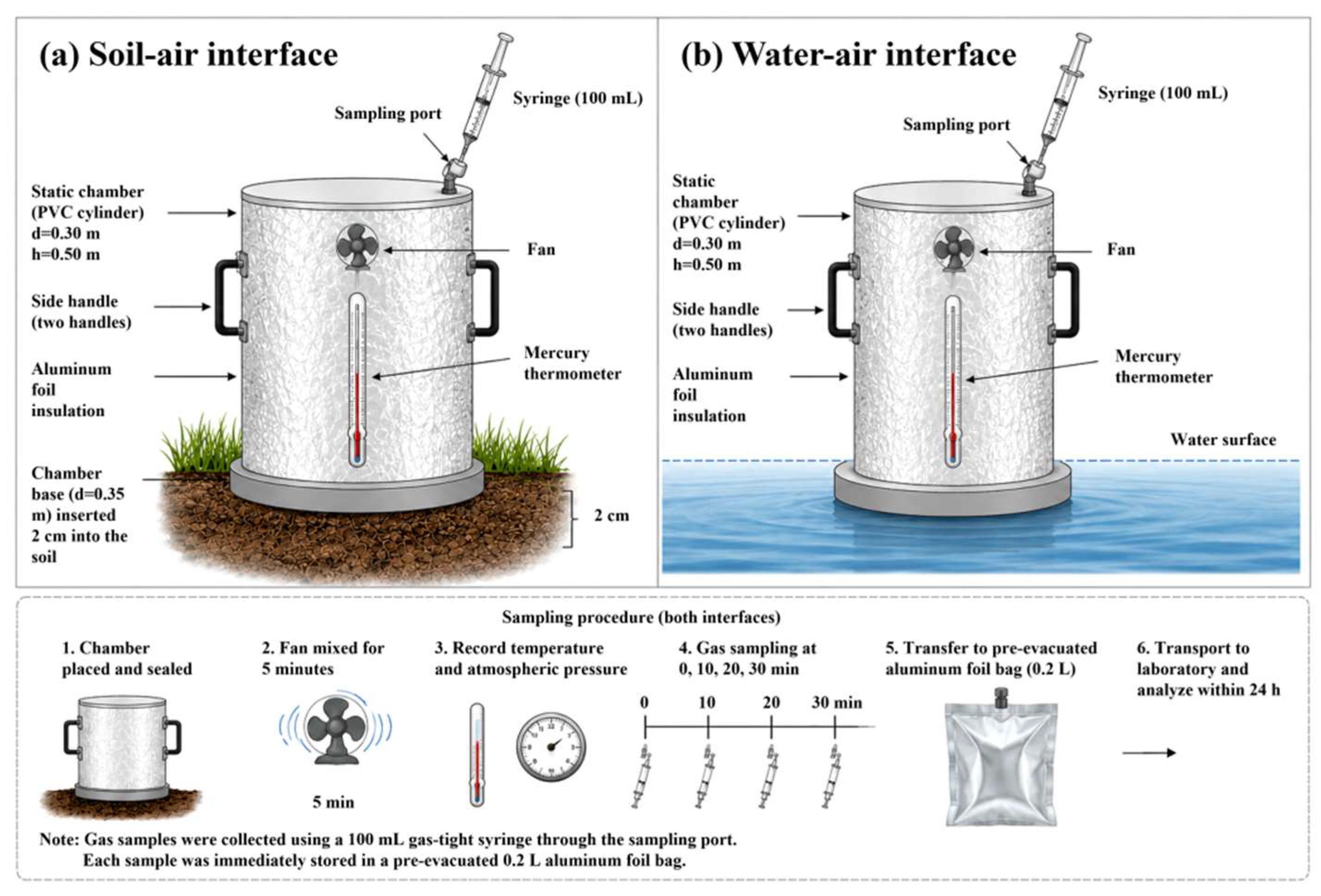
GHG samples at the soil–air interface were collected using a custom-made static chamber. The static chamber consisted of a base and a chamber body, equipped with a small fan and a thermometer. The chamber body was a PVC cylinder with a diameter of 0.3 m and a height of 0.5 m. The outer layer of the chamber was covered with an aluminum foil thermal insulation film to prevent rapid temperature changes during sampling from affecting the results. The base of the static chamber was pre-installed at each wetland site. The base (d = 0.35 m) was inserted 2 cm into the soil layer and leveled with the ground surface. During sampling, the chamber was connected to the base and sealed. Vegetation and debris were removed from the surface, and the fan inside the chamber was turned on for 5 min to mix the air. Simultaneously, readings from the thermometer and barometer were recorded; a barometer was used to record ambient atmospheric pressure for subsequent flux calculations (see Formula (1)). Thereafter, a 100 mL syringe was used to draw gas samples from the chamber at 0, 10, 20, and 30 min, injecting them into 0.2 L vacuum aluminum foil bags for transport to the laboratory, where analysis was conducted within 24 h. For GHG sampling at the water–air interface, the static dark chamber was floated on the water surface and secured in place, ensuring the base is level with the liquid surface. The sampling method was the same as for the soil–air interface, and thermometer and barometer readings were recorded simultaneously. Figure 2 shows a schematic diagram of GHG sampling.

2.3. Sample Analysis

Soil samples were air-dried, and after removing foreign matter such as stones and roots, they were ground and sieved through 60-mesh and 100-mesh screens, respectively, for storage. Soil bulk density and moisture content were determined using the ring-knife method. In situ soil samples were collected using a 100 cm3 ring-knife; after weighing the fresh weight on-site, the samples were dried at 105 °C to constant weight, and the dry weight was recorded. Bulk density (g·cm−3) was calculated as the mass of oven-dried soil (g) divided by the volume of the ring cutter (cm3); moisture content (%) was calculated as ((fresh soil weight − oven-dried soil weight)/(oven-dried soil weight)) × 100. The pH of soil samples was measured using a pH meter after extraction. A portion of the soil samples was crushed, ground, and sieved through a 100-mesh sieve; total carbon (TC) and total inorganic carbon (IC) were then determined using a total organic carbon analyzer (TOC-L; Shimadzu, Kyoto, Japan), and the TOC content was calculated as the difference between the two. The remaining samples were analyzed using a flow chemistry analyzer (AA500; SEAL Analytical, Norderstedt, Germany). Key physicochemical indicators of the soil included NH3-N, NO3-N, TP, and TN. Collected wetland water samples were transported to the laboratory, filtered using an automatic filtration system with 0.45 µm pore size filters, and the resulting filtrate was stored in polyethylene bottles at −20 °C. Sample pretreatment was completed within 8 h of collection. The main physicochemical parameters of the water samples included NH3-N, NO3-N, TP, and TN. A TOC-L analyzer (Shimadzu, Kyoto, Japan) was used to determine TOC content in the water samples. The bulk density and moisture content of sediments were primarily determined using the drying method. Pre-frozen sediment samples were dried using a freeze dryer (FDU-5500A; EYELA, Tokyo Rikakikai Co., Ltd., Tokyo, Japan). The determination of parameters for freeze-dried sediment samples followed the same procedures as for soil samples. The methods for determining parameters in soil, water, and sediment samples, as well as greenhouse gas measurements, were summarized in Table 2.

2.4. Data Calculation

(1)
Greenhouse gas emission flux
GHG emission fluxes at both the soil–air and water–air interfaces in wetlands are calculated using Formula (1); positive values indicate emissions, while negative values indicate absorption [15]:
F   =   d c d t M V 0 P P 0 T 0 T H
In the formula: F represents the gas flux (mg·m−2·h−1 or μg·m−2·h−1); V0, P0, and T0 represent the molar volume, standard atmospheric pressure, and absolute temperature of a gas under standard conditions, respectively; V0 is taken as 22.4 L/mol, P0 as 101.325 kPa, and T0 as 273.15 K; dc/dt is the slope of the line representing the change in gas concentration over time during sampling; M is the molar mass of the gas being measured; CO2 is 44, CH4 is 16, and N2O is 44; P and T are the actual atmospheric pressure and air temperature inside the chamber at the sampling point; H is the height of the static dark chamber, 0.5 m.
(2)
Cumulative GHG emissions
The average GHG emission flux for the wetland during a given period is calculated as the average of the GHG emission fluxes from two consecutive sampling days. The cumulative GHG emission flux is obtained by multiplying the average emission flux by the interval between the two sampling days and summing the results across all sampling days throughout the year. The daily GHG emission flux is calculated as the average of the GHG flux observed at a specific time on a given day. The formula for the cumulative GHG emissions is [16]:
C E   =   i = 1 n ( F i   +   F i + 1 )   ×   ( t i + 1     t i ) 2   ×   24   ×   1 1000
In the formula: CE represents the annual cumulative emissions of greenhouse gases (CH4, CO2, or N2O), in g·m−2; F is the emission flux of greenhouse gases, in mg·m−2·h−1; i denotes the i-th sampling day; ti+1ti represents the time interval between two sampling days, in days; and n is the number of monitoring sessions per year, which is 24 for 2024–2025.
(3)
Global Warming Potential
GWP is a metric used to measure the extent to which different greenhouse gases contribute to global warming. This study does not account for differences in land and water areas; instead, it simply sums the GWP values at the soil-atmosphere and water-atmosphere interfaces to assess the contribution of various wetland systems to the greenhouse effect over a 100-year timescale. On a 100-year timescale, the GWP of CH4 per unit mass is 28 times that of CO2, and the GWP of N2O per unit mass is 265 times that of CO2. The formula for calculating the GWP over a 100-year timescale is as follows [17]:
G W P s   =   C O 2   ×   1   +   C H 4   ×   28   +   N 2 O   ×   265
In the formula: GWPs represent global warming potentials, g·m−2; CO2 represents cumulative emissions during the observation period, g·m−2; CH4 represents cumulative emissions during the observation period, g·m−2; N2O represents cumulative emissions during the observation period, g·m−2; 28 and 265 are conversion factors, representing the GWP multiples of CH4 and N2O relative to CO2 over a 100-year time scale.

2.5. Data Processing and Analysis

Data processing was performed using WPS Office. All statistical analyses were conducted using SPSS 27. Prior to parametric tests, data were first assessed for normality (Shapiro–Wilk test) and homogeneity of variances (Levene’s test). Paired t-tests were used to compare greenhouse gas emission fluxes between the soil–air and water–air interfaces within the same wetland and at the same time. To compare fluxes among the three different wetlands (Haihu, Ninghu, and Beichuanhe) or across different months, one-way ANOVA was performed, followed by Tukey HSD post hoc multiple comparisons. All tests were two-tailed, with a significance level set at p < 0.05. Figures were plotted using Origin 2021 and ArcGIS 10.8. In the figures showing greenhouse gas fluxes (CH4, CO2, N2O), data were presented as the mean ± standard deviation (SD) of three replicate measurements per wetland per month. When conducting Redundancy Analysis (RDA), the physicochemical properties of soil, water, and sediments were first standardized using the minimum-maximum method (scaling them to the range of 0–1). Subsequently, RDA analysis was performed using Canoco 5.0 software to identify relationships between greenhouse gas emission fluxes and these physicochemical properties. Specifically, the average greenhouse gas emission flux across different wetland interfaces was used as the response variable, while the standardized physicochemical properties of soil, water, and sediment served as explanatory variables. In the resulting RDA biplot, the angles between different line segments (vectors) reflected the strength of positive or negative correlations among the variables.

3. Results and Analysis

3.1. Characteristics of GHG Emission Fluxes Across Different Interfaces in Wetlands of Xining City

3.1.1. Daily Variations in CH4 Emission Fluxes from Wetlands

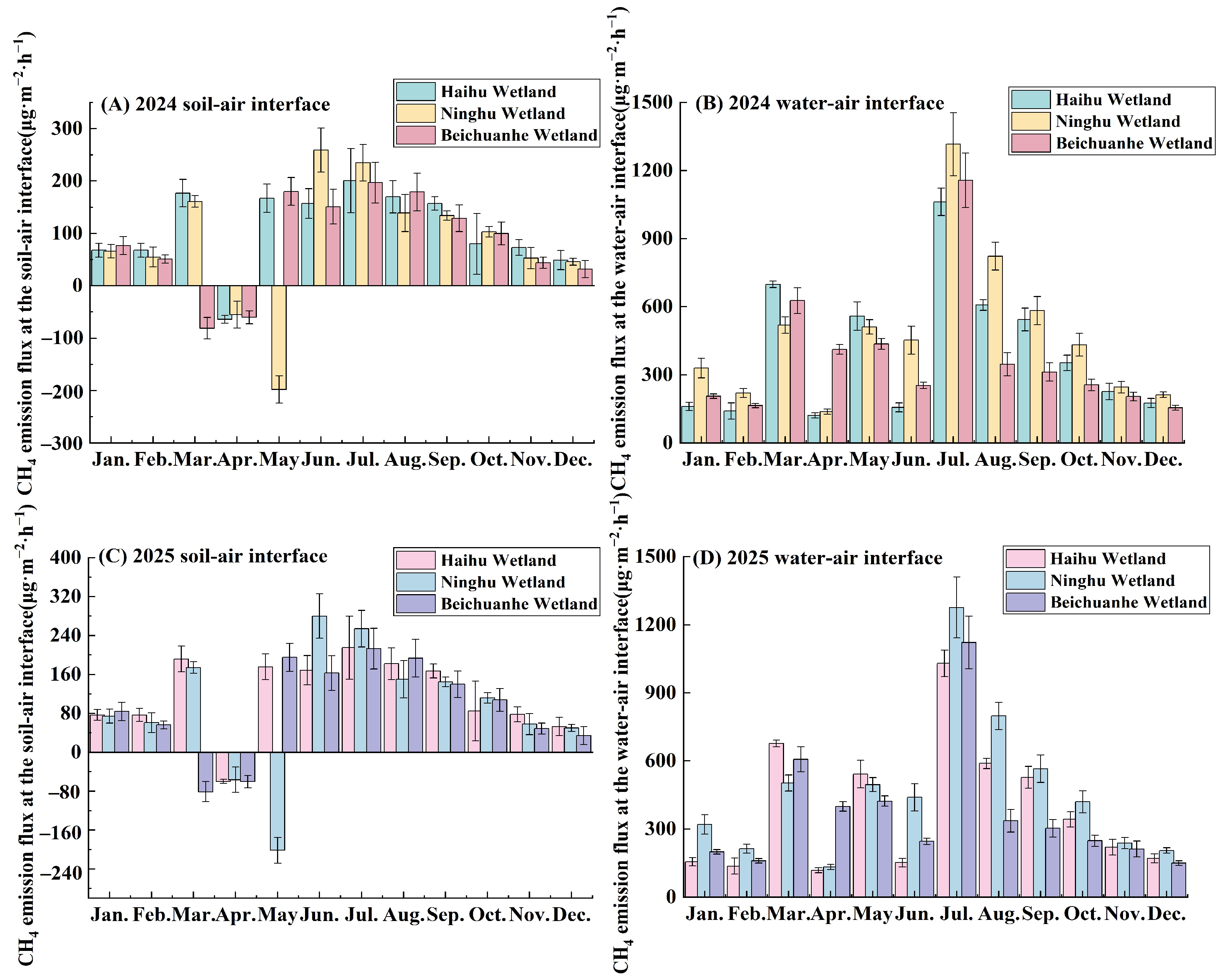
Figure 3 shows the characteristics of CH4 emission fluxes at the two interfaces in the three wetlands within the study area for 2024 and 2025. The CH4 emission fluxes at the water–air interface in all three wetlands were greater than those at the soil–air interface. Between 2024 and 2025, the ranges of CH4 emission fluxes at the water–air and soil–air interfaces were 99.5–1460.5 μg·m−2·h−1 and −231.5–330.2 μg·m−2·h−1, respectively. The soil–air interface of the Haihu Wetland exhibited the highest average CH4 emission flux (117.48 μg·m−2·h−1), while the water–air interface of the Ninghu Wetland exhibited the highest average CH4 emission flux (481.97 μg·m−2·h−1). The water–air interface in all wetlands acted as a “source” of CH4, while the soil–air interface served as a “sink” for CH4 between March and May. Specifically, all three wetlands exhibited weak CH4 uptake in April, with the Beichuanhe wetland showing weak CH4 uptake beginning in March and the Ninghu wetland in May. Seasonal variations in CH4 emission fluxes across different interfaces were relatively pronounced, and significant differences were observed between the two interfaces (p < 0.05). CH4 emission fluxes at both interfaces increased with rising temperatures, generally following the pattern: summer > autumn > spring > winter. Specifically, the average CH4 emission fluxes at the soil–air interface in spring, autumn, and winter were Haihu Wetland > Ninghu Wetland > Beichuanhe Wetland, whereas in summer, the order was Ninghu Wetland > Haihu Wetland > Beichuanhe Wetland. Regarding the average CH4 emission flux at the water–air interface in wetlands, the summer and fall seasons showed Ninghu Wetland > Haihu Wetland > Beichuanhe Wetland, while spring showed Beichuanhe Wetland > Haihu Wetland > Ninghu Wetland, and winter showed Ninghu Wetland > Beichuanhe Wetland > Haihu Wetland.

3.1.2. Daily Variations in CO2 Emission Fluxes from Wetlands

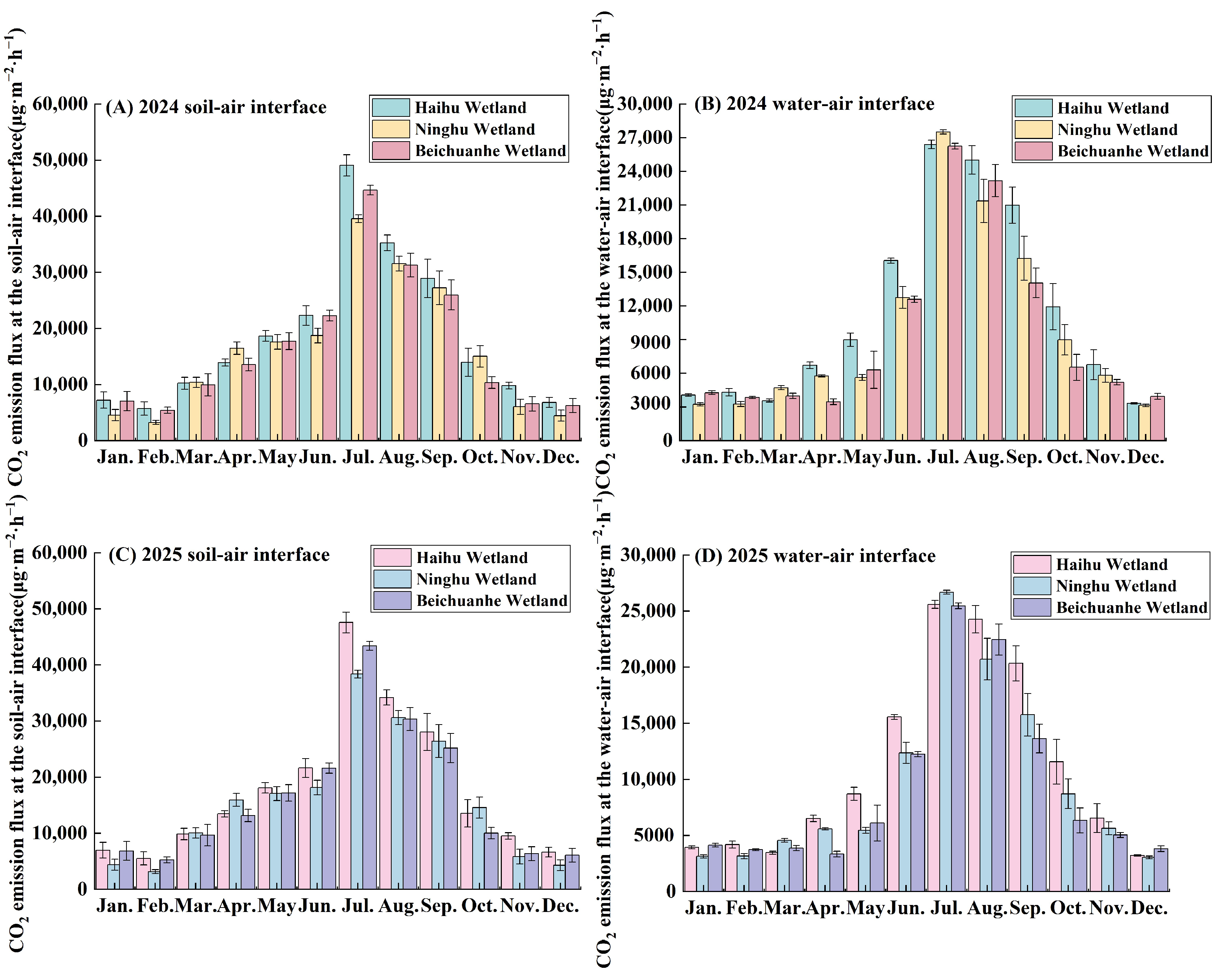
Figure 4 shows the characteristics of CO2 emission fluxes at the two interfaces in the three wetlands within the study area for 2024 and 2025. The CO2 emission fluxes at the soil–air interface in all three wetlands were greater than those at the water–air interface, and the differences in CO2 emission fluxes between the two interfaces were not significant (p > 0.05). Between 2024 and 2025, the ranges of CO2 emission fluxes at the water–air and soil–air interfaces were 2924.2–27,695.1 μg·m−2·h−1 and 2904.7–51,224.5 μg·m−2·h−1, respectively. The soil–air interface at the Ninghu Wetland exhibited the lowest average CO2 emission flux (15,751.06 μg·m−2·h−1), while the water–air interface at the Beichuanhe Wetland exhibited the lowest average CO2 emission flux (9188.05 μg·m−2·h−1). In contrast to CH4 emission fluxes, CO2 emission fluxes at all three wetlands acted as “sources,” exhibiting an overall trend of a gradual increase followed by a gradual decrease. CO2 emission fluxes at both interfaces peaked in July and maintained a sustained peak in August, indicating that CO2 emission fluxes were highest in summer and lowest in winter. Furthermore, no significant spatial differences were observed in CO2 emission fluxes among the three wetlands.

3.1.3. Daily Variations in N2O Emission Fluxes from Wetlands

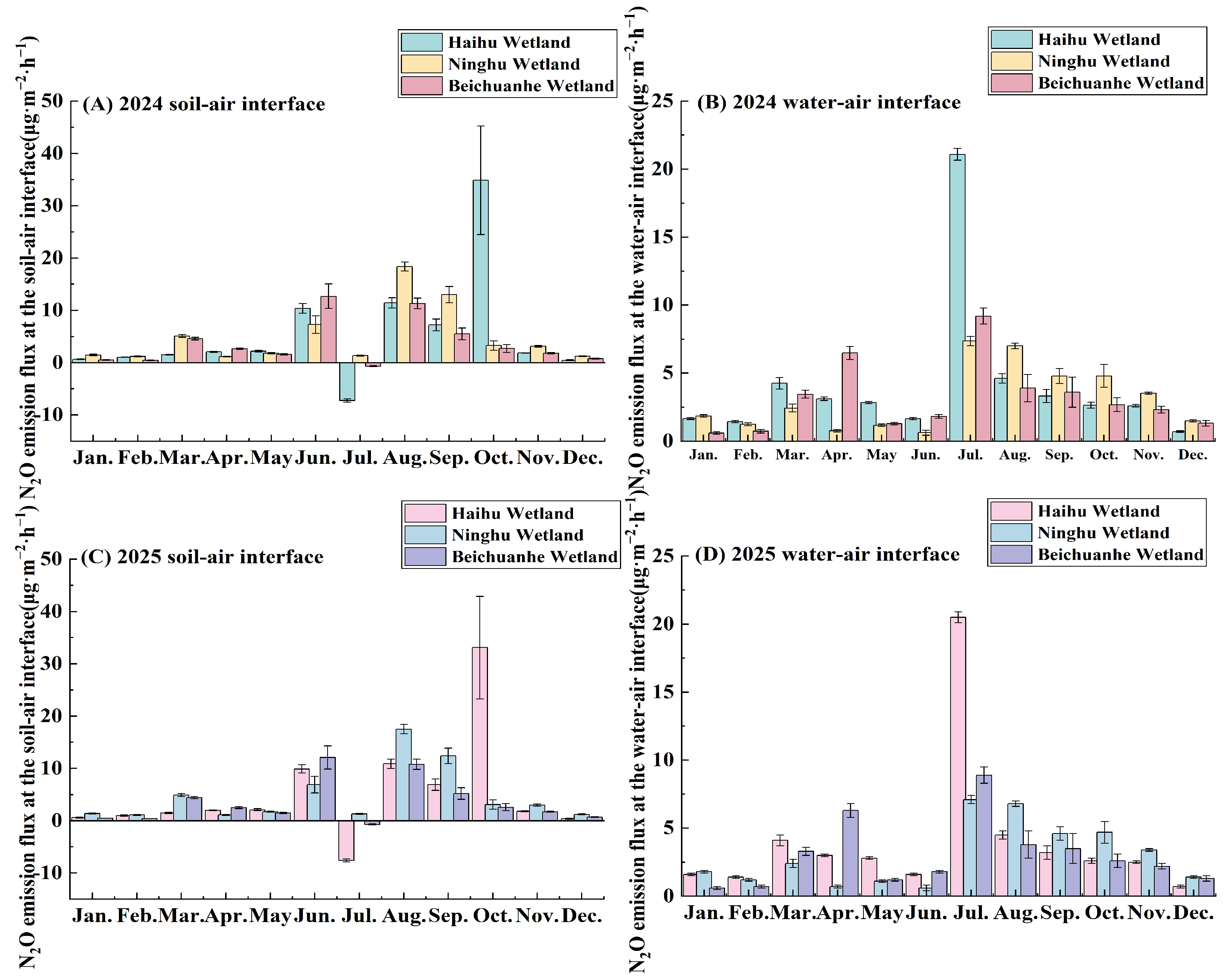
Figure 5 shows the characteristics of N2O emission fluxes at the two interfaces of the three wetlands in the study area for 2024 and 2025. N2O emission fluxes at the soil–air interface of the wetlands exhibited an irregular trend, generally acting as either a “source” or a “sink” of N2O, while the water–air interface of the wetlands remained a “source” of N2O. Specifically, the soil–air interface of the Haihu Wetland and Beichuanhe Wetland exhibited N2O uptake only in July. N2O emission fluxes at the soil–air interface were slightly lower than those at the water–air interface, and the difference in N2O emission fluxes between the two interfaces was significant (p < 0.05). N2O emission fluxes at the soil–air interface reached a peak of uptake in July and a peak of emission in June and August. In contrast, the water–air interface reached a peak of emission in July and maintained a small peak of emission in August. From a seasonal perspective, N2O emission fluxes at both interfaces in the wetlands followed the order: summer > autumn > spring > winter. Between 2024 and 2025, the ranges of N2O emission fluxes at the water–air and soil–air interfaces were 0.42–21.58 μg·m−2·h−1 and −7.58–46.21 μg·m−2·h−1, respectively. The Beichuanhe wetland exhibited the lowest average N2O emission flux at the soil–air interface (3.47 μg·m−2·h−1), while the Haihu wetland had the highest average N2O emission flux at the water–air interface (4.16 μg·m−2·h−1), indicating significant spatial heterogeneity in wetland N2O emission fluxes.

3.2. Analysis of Factors Affecting GHG Emission Fluxes Across Different Interfaces in Wetlands of Xining City

The above analysis revealed that greenhouse gas emission fluxes at the three wetlands in Xining exhibited significant variations over time, with relatively minor fluctuations in emission fluxes from month to month. Therefore, the physicochemical properties of soil, water, and sediments during the wetlands’ Normal flow period (March–June), High flow period (July–October), and Low flow period (November–February) were selected as the basis for analysis. GHG emission fluxes were averaged over these four-month intervals (i.e., March–June, July–October, and November–February, respectively) to identify influencing factors. The specific RDA procedures are described in Section 2.5.

3.2.1. RDA Analysis of Emission Fluxes at the Soil–Air Interface in Wetlands and Their Relationship to Soil Physicochemical Properties

(1)
Physicochemical Properties of Wetland Soils
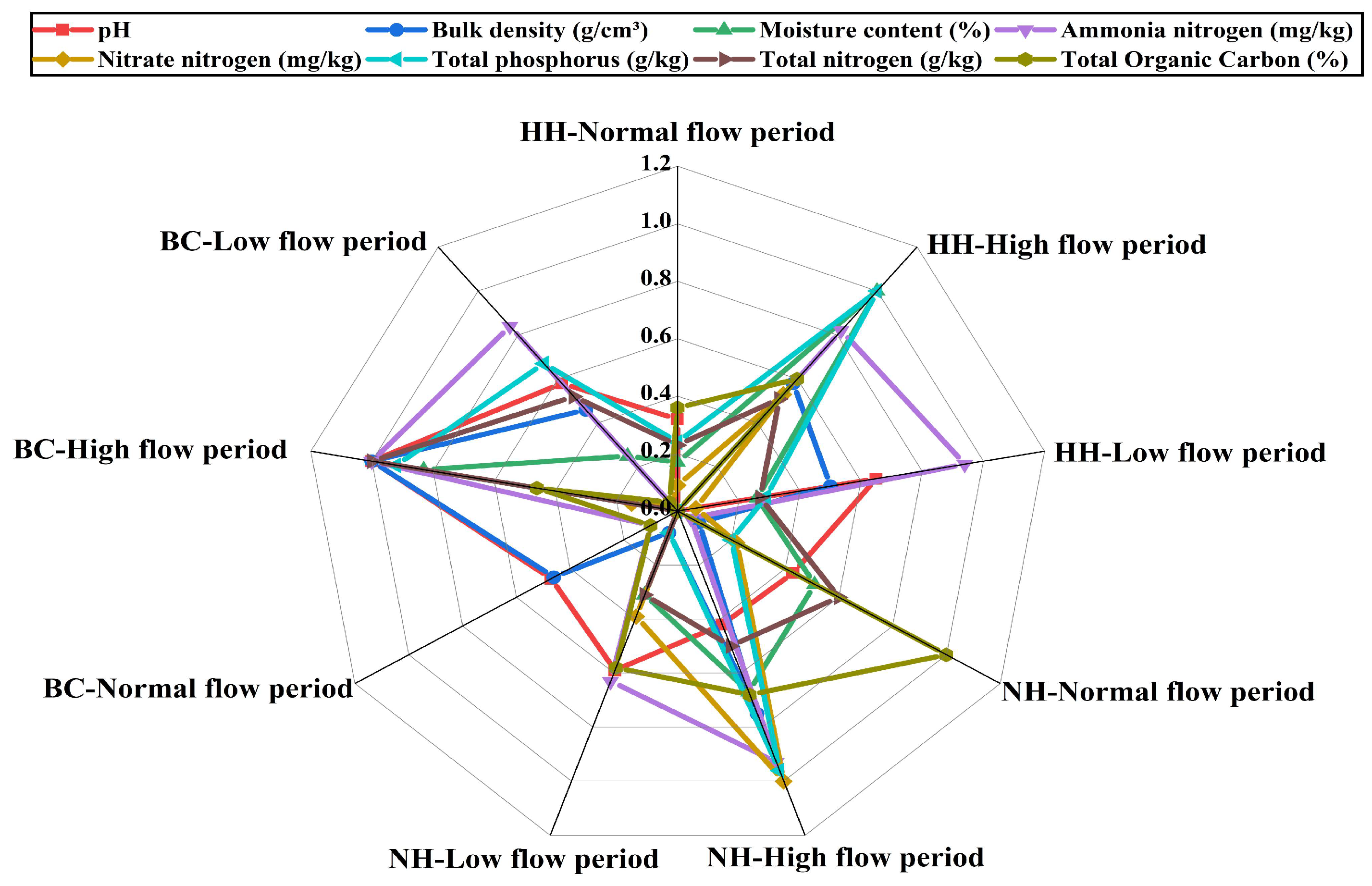
Figure 6 shows the characteristics of soil physicochemical properties during the study period. There were minor differences in moisture content among the different wetlands. The changes in soil physicochemical properties, including NH3-N, NO3-N, TP, TN, and TOC, over time were relatively pronounced. Specifically, soil NH3-N levels were higher during the High flow period and the Low flow period than during the Normal flow period, with the highest value observed in the Ninghu Wetland during the High flow period. Conversely, NO3-N, TP, TN, and TOC in wetland soils peaked during the High flow period, with overall concentrations following the order: NH > HH > BC.
(2)
RDA Analysis of Emission Fluxes at the Soil–Air Interface and Soil Physicochemical Properties
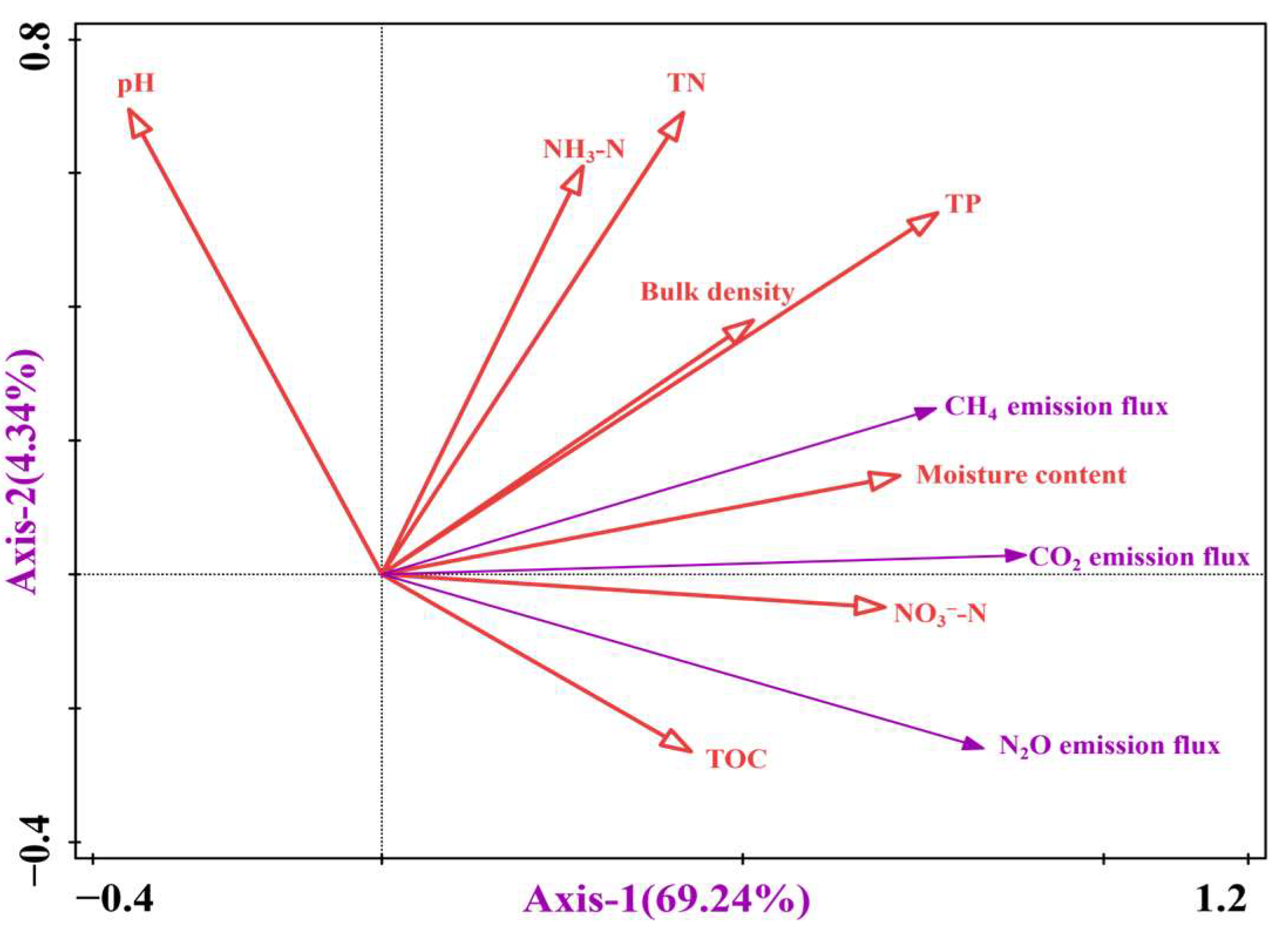
As shown in Figure 7, the explanatory power of environmental factors for Principal Axis 1 is 69.24%, the explanatory power of greenhouse gas emission fluxes for Principal Axis 2 was 4.34%, and the cumulative explanatory power of the two principal axes was 73.57%. The variable with the highest explanatory power was TP (p = 0.002, contribution rate 56%), followed by NO3-N (p = 0.028, contribution rate 13.1%) (Table 3). Greenhouse gas emission fluxes at the soil–air interface in wetlands showed a negative correlation with pH, indicating that pH had a relatively minor influence on greenhouse gas emissions from wetlands. In contrast, greenhouse gas emission fluxes show positive correlations with soil bulk density, moisture content, TOC, NH3-N, NO3-N, TN, and TP, indicating that these parameters have a significant impact on greenhouse gas emissions from wetlands. The correlation between each environmental factor and CH4 emission flux, from strongest to weakest, was moisture content > TP > bulk density > NO3-N; for CO2 emission flux, it was NO3-N > moisture content > TP > TOC; and for N2O emission flux, it was NO3-N > TOC > moisture content > TP.

3.2.2. RDA Analysis of Emission Fluxes at the Water–Air Interface in Wetlands and Their Relationship to Sediment and Water Physicochemical Properties

(3)
Physicochemical Properties of Wetland Water
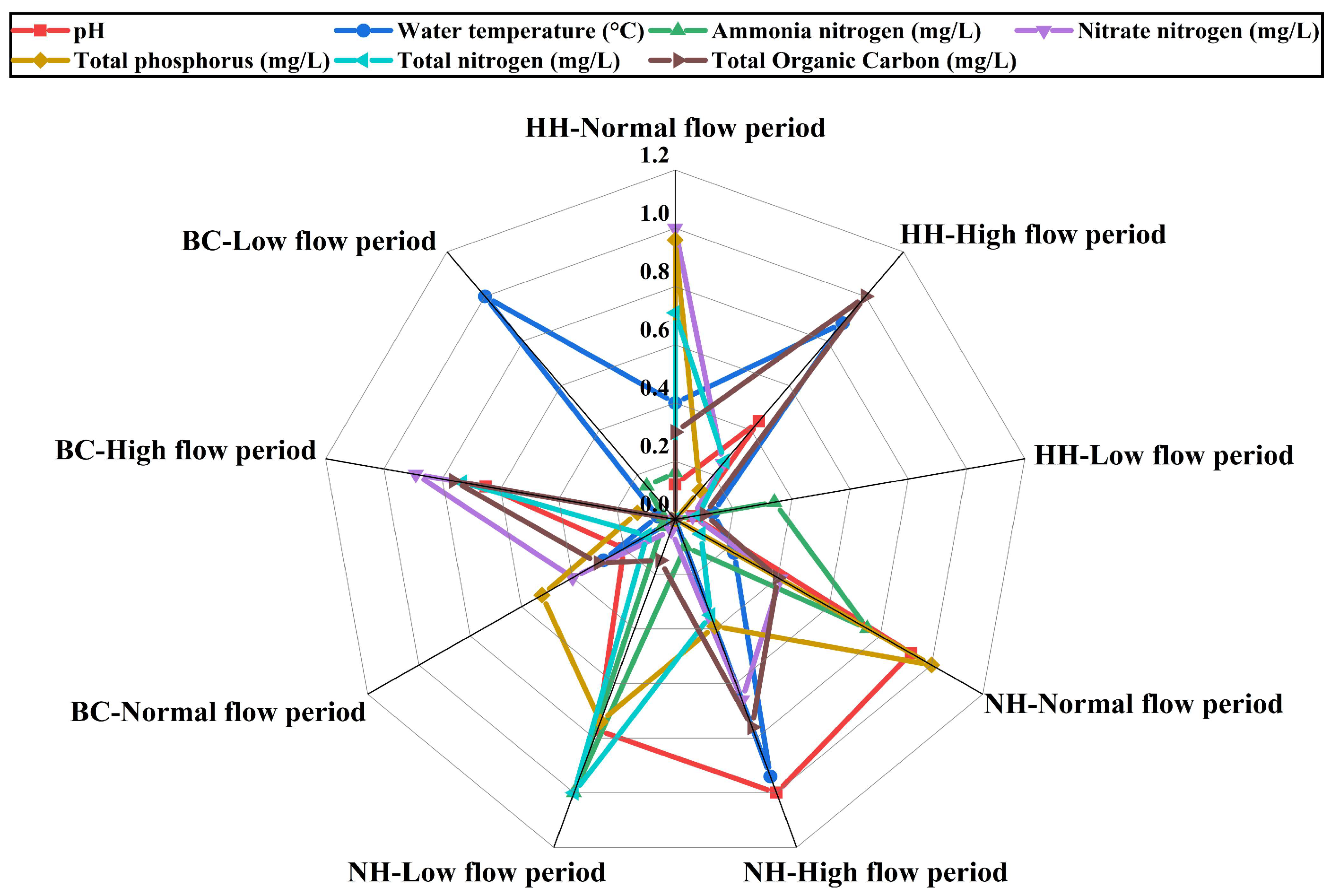
Figure 8 shows the physicochemical characteristics of water bodies in Xining during three different periods. Significant variations in water pH and temperature were observed in the wetlands of Xining across different periods. Among the NH3-N and NO3-N concentrations in wetland waters during different periods, the highest NH3-N concentration was recorded in the NH, while the highest NO3-N concentration was observed in the HH. Regarding the TP, TN, and TOC concentrations in wetland waters across different periods, the lowest TP and TN concentrations were both found in the BC, whereas the highest TOC concentration was recorded in the HH.
(4)
RDA Analysis of Emission Fluxes at the Water–Air Interface and Water Physicochemical Properties
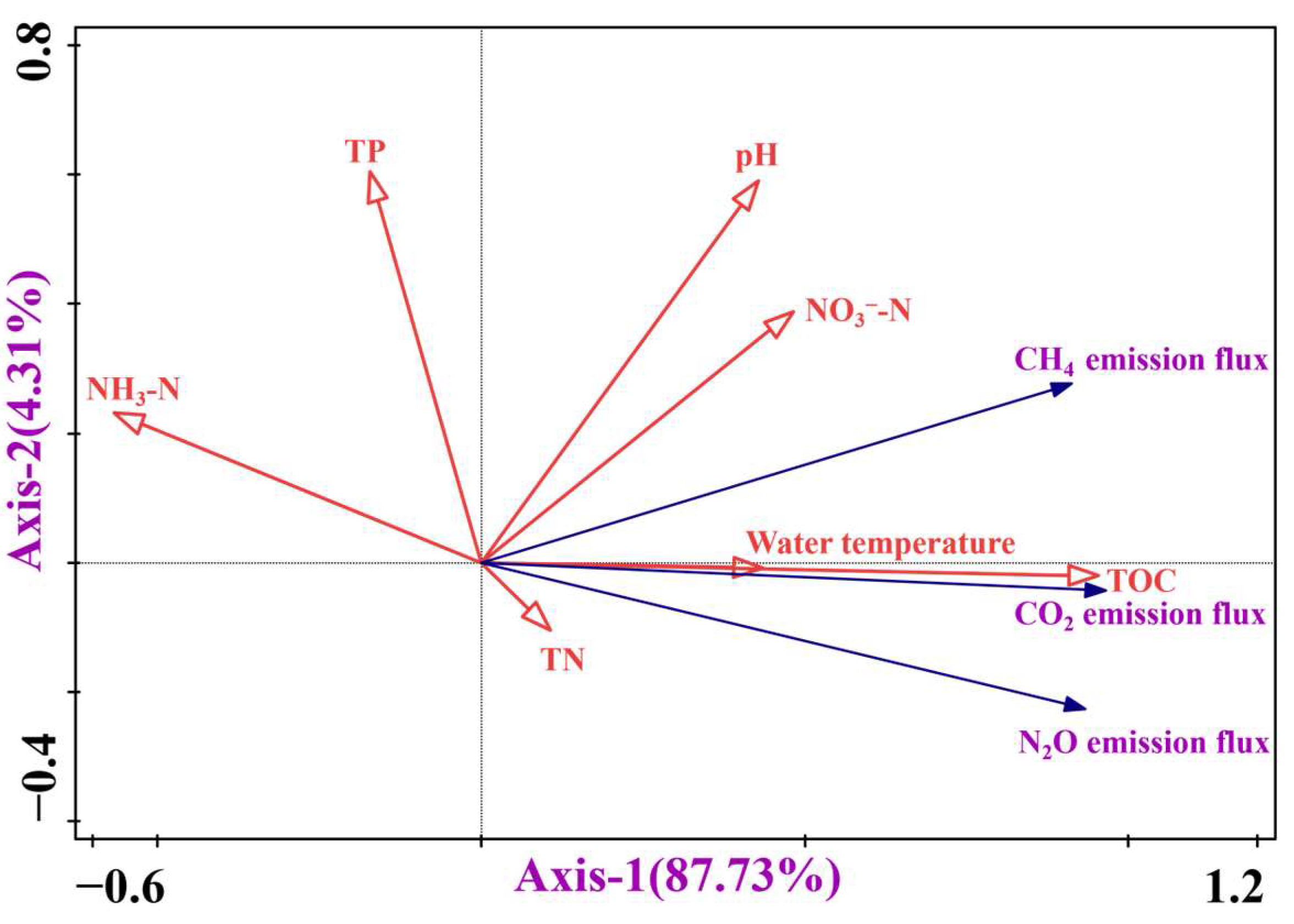
The RDA analysis of GHG emission fluxes at the water–air interface in wetlands and their relationship with aquatic environmental factors is shown in Figure 9. As shown in the figure, the explanatory power of environmental factors on Principal Axis 1 was 87.73%, and that of GHG emission fluxes on Principal Axis 2 was 4.31%; the cumulative explanatory power of both axes was 92.04%. The factor with the highest explanatory power was TOC (p = 0.002, contribution rate 85.8%), followed by water temperature (p = 0.02, contribution rate 3.3%) (Table 4). GHG emission fluxes at the wetland water–air interface were positively correlated with water temperature, TOC, pH, NO3-N, and TN among the physicochemical properties of the water body, indicating that these indicators had a significant impact on GHG emissions. Conversely, they were negatively correlated with NH3-N and TP, suggesting that these two indicators had a relatively minor influence on GHG emissions. The correlation between each environmental factor and CH4 emission flux, from strongest to weakest, was water temperature > TOC > NO3-N; for CO2 emission flux, it was TOC > water temperature > NO3-N; and for N2O flux, it was TOC > water temperature > TN.
(5)
Physicochemical Properties of Wetland Sediments
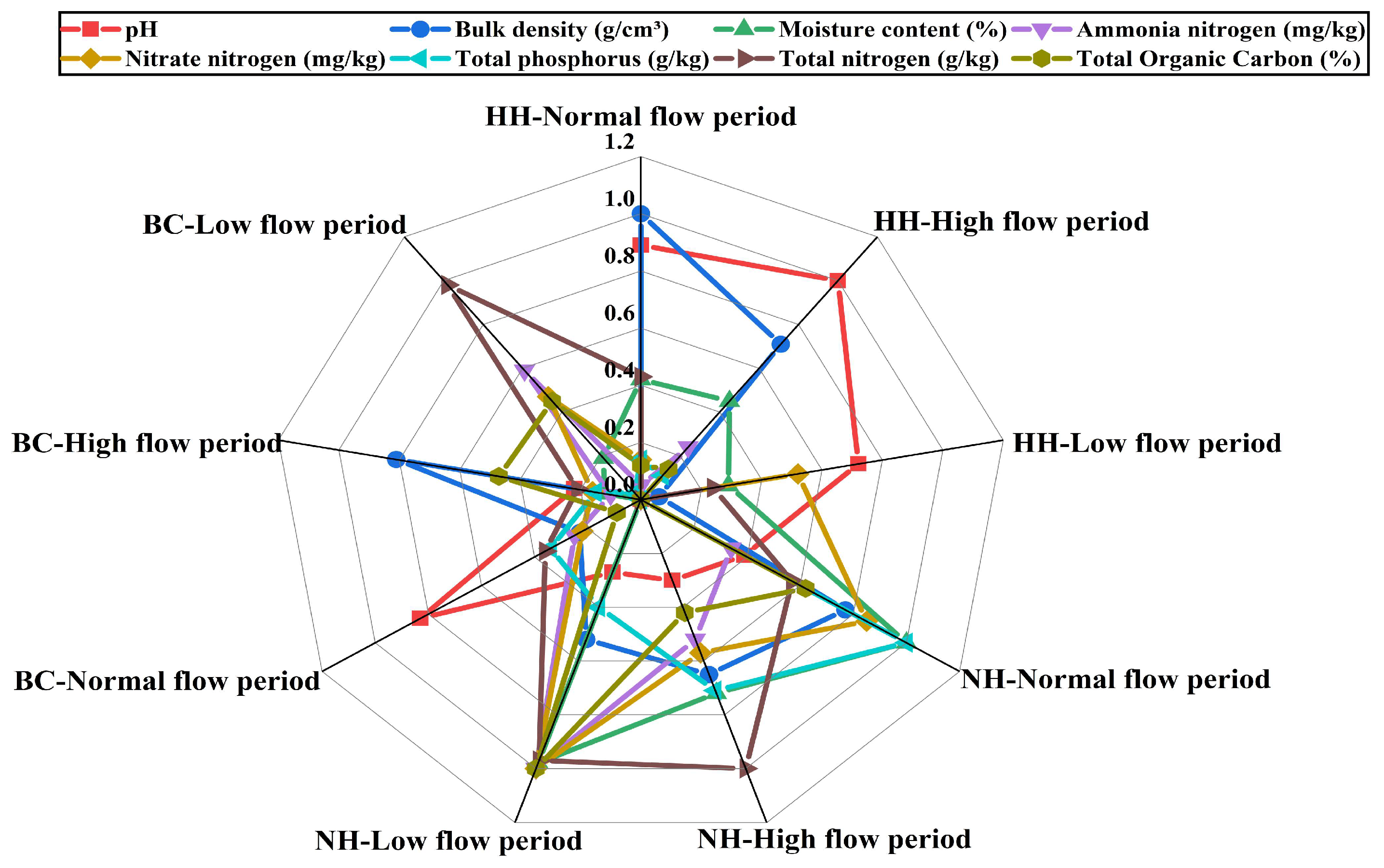
Figure 10 shows the physicochemical characteristics of sediments from three time periods in Xining City. For NH3-N and NO3-N in sediments from different periods, NH exhibited the highest values, while for TP, TN, and TOC in sediments from different periods, the order was NH > HH > BC.
(6)
RDA Analysis of Emission Fluxes at the Water–Air Interface and Sediment Physicochemical Properties
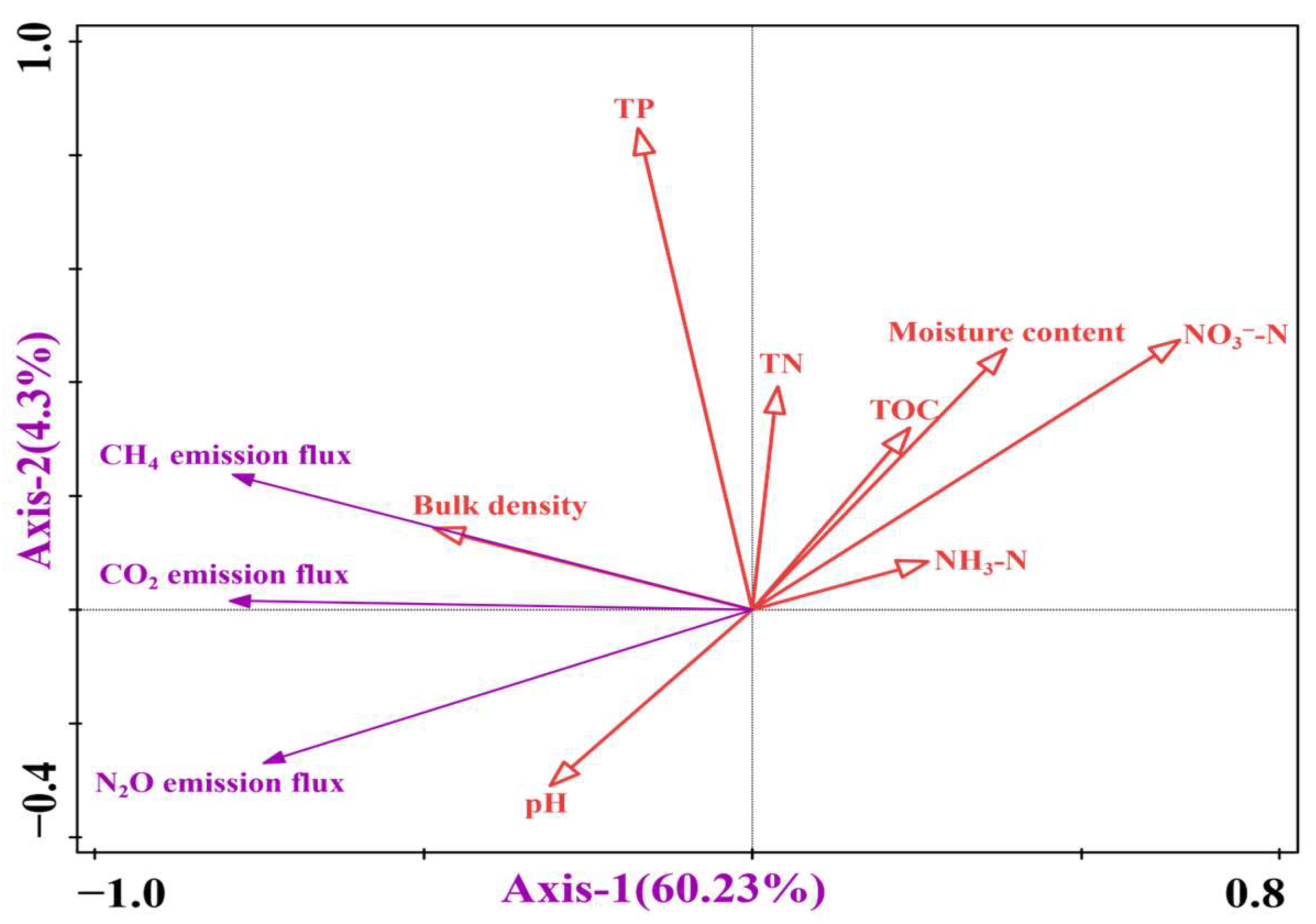
The RDA analysis of GHG emission fluxes at the water–air interface in wetlands and sediment factors is shown in Figure 11. As shown in the figure, the explanatory power of environmental factors on Principal Axis 1 was 60.23%, and that of GHG emission fluxes on Principal Axis 2 was 4.3%; the cumulative explanatory power of both axes was 64.53%. The factor with the highest explanatory power was NO3-N (p = 0.008, contribution rate 39.8%), followed by TP (p = 0.002, contribution rate 39.4%) (Table 5). GHG emission fluxes at the wetland water–air interface were positively correlated with pH and bulk density among the physicochemical properties of sediments, indicating that sediment pH and bulk density had a significant influence on the emissions of these three gases. The moisture content, NH3-N, NO3-N, TOC, TP, and TN of sediments had a relatively minor influence on wetland GHG emissions. The correlation of various environmental factors with CH4 and CO2 emission fluxes, from strongest to weakest, was bulk density > pH > TP; for N2O fluxes, the order was pH > bulk density > TP.

3.3. Cumulative GHG Emissions and GWP in Xining’s Wetlands

GWP was used to measure the relative contribution of different greenhouse gases to global warming. By comparing the warming effect of a given gas with that of CO2 over a specific time period (typically 100 years), we could understand the relative impact of different gases on climate change. The average greenhouse gas flux observed in the wetlands of Xining City at a specific time on a given day (9:00 a.m. to 8:00 p.m.) could be used as an approximation of the average daily GHG flux. The cumulative emissions and wetland GWP were calculated, and the statistical results are shown in Table 6.
The interannual cumulative emissions at the soil–air interface for the three wetlands were as follows: HH 156.13 g·m−2, NH 137.61 g·m−2, and BC 14.26 g·m−2. The interannual cumulative emissions at the soil–air interface were: 100.4 g·m−2 for the HH, 87.42 g·m−2 for the NH, and 83.00 g·m−2 for the BC; the interannual cumulative emissions for the Xining Wetlands were 705.88 g·m−2. The GWP at the soil–air interface for Xining wetlands were 195.07 g·m−2, 167.77 g·m−2, and 169.32 g·m−2, respectively, while those at the water–air interface were 199.92 g·m−2, 203.5 g·m−2, and 175.77 g·m−2, respectively. The GWP across different interfaces in Xining’s wetlands was 1111.49 g·m−2. Among these, GHG emissions from the soil–air interface contributed 47.88% to the wetlands’ GWP, while GHG emissions from the water–air interface accounted for 52.12%. In Xining’s wetlands, CH4 contributed 32.55% to the GWP, CO2 contributed 62.33%, and N2O contributed 5.12%.

4. Discussion

4.1. A Study on GHG Emission Fluxes in Wetlands of Xining City

Globally, high-altitude plateaus (e.g., the Qinghai–Tibet Plateau, the Andean Plateau, and the Ethiopian Highlands) host numerous cities located above 2000 m [18,19]. These “plateau cities” share common environmental characteristics: low air pressure and reduced oxygen partial pressure, low mean annual temperature, large diurnal temperature ranges, and intense solar radiation [20,21,22]. Wetlands in such cities may exhibit distinct GHG emission patterns compared to lowland or temperate wetlands, yet they remain critically understudied [23,24,25]. Xining City (elevation ~2260 m) on the eastern Qinghai–Tibet Plateau is a representative example of a plateau city. The following discussion interprets our findings from Xining not only as local observations but also as a case study that can inform understanding of GHG fluxes in other plateau urban wetlands worldwide.

4.1.1. CH4 Dynamics

Wetland sediments are typically characterized by anaerobic conditions that favor CH4 production and emission [26]. In the present study, the water–air interface generally acted as a CH4 source throughout most of the observation period, and CH4 fluxes exhibited clear seasonal variability, with peak emissions occurring during July. Similar seasonal patterns have been widely reported in wetland ecosystems and are commonly associated with enhanced plant growth, increased microbial activity, and stronger anaerobic conditions during the warm season [27,28,29]. In contrast, CH4 emissions decreased during the senescence period, likely due to declining temperatures, reduced microbial activity, and vegetation harvesting or withering [30]. Differences among wetlands further suggest that anthropogenic disturbance and nutrient inputs strongly influence CH4 dynamics in plateau urban wetlands. Wetlands located in highly urbanized areas or receiving wastewater inputs exhibited relatively higher CH4 emissions, likely because elevated nutrient availability and organic matter accumulation enhanced methanogenic activity. These findings indicate that, in addition to climatic constraints associated with high-altitude environments, human disturbance and wetland management may play important roles in regulating CH4 emissions in urban wetlands on the Qinghai–Tibet Plateau and potentially in other plateau cities worldwide.

4.1.2. CO2 Dynamics

CO2 emissions exhibited pronounced temporal variability across the studied wetlands, with higher fluxes generally occurring during the warm season. Similar seasonal patterns have been widely reported in freshwater and riparian wetlands, where increasing temperature enhances plant root respiration and microbial decomposition of organic matter [31,32]. However, compared with many lowland wetlands, the relatively low temperatures and strong climatic fluctuations characteristic of high-altitude environments may constrain microbial activity and partially suppress CO2 production in plateau wetlands. In the present study, CO2 fluxes at the soil–air interface were generally higher than those at the water–air interface, suggesting that soil respiration and root-associated microbial processes were important sources of CO2 emissions [33,34]. Spatial differences among wetlands further indicate that anthropogenic disturbance, vegetation structure, and nutrient conditions can substantially influence CO2 dynamics in urban wetland ecosystems. Wetlands exposed to stronger human disturbance or higher nutrient inputs tended to exhibit higher CO2 emissions, highlighting the combined influence of environmental conditions and wetland management on greenhouse gas exchange in plateau urban wetlands.

4.1.3. N2O Dynamics

N2O emissions exhibited substantial spatial and temporal variability among the studied wetlands, reflecting the strong sensitivity of N2O production to hydrological conditions and nitrogen cycling processes [35,36]. Wetlands influenced by wastewater inputs or elevated nutrient concentrations showed greater fluctuations in N2O fluxes, suggesting that anthropogenic nitrogen loading may substantially alter nitrification and denitrification dynamics in plateau urban wetlands. In addition, lower N2O fluxes were generally observed during the peak growing season, likely because active plant growth enhanced nitrogen uptake and stimulated the reduction in N2O to N2 through denitrification processes. Seasonal declines in temperature may further suppress microbial activity and organic matter decomposition, thereby limiting N2O production during colder periods [37]. Water depth also appeared to influence N2O dynamics, with deeper water conditions generally associated with lower emissions at the water–air interface. These findings indicate that hydrology, nutrient availability, and temperature jointly regulate N2O emissions in high-altitude urban wetlands.

4.2. A Study on Factors Affecting GHG Emissions in Wetlands of Xining City

4.2.1. Impact of Wetland Soils

Wetland soil reclamation and human disturbance can substantially alter soil carbon and nitrogen distributions, microbial community structure, and biogeochemical cycling processes, thereby influencing GHG emissions [38,39]. In the present study, soil bulk density, moisture content, and nutrient availability were significantly associated with CH4 emissions, likely because these factors regulate soil structure, oxygen diffusion, and organic matter decomposition [40,41]. Positive relationships between TN, TP, and CH4 fluxes further suggest that nutrient enrichment may stimulate methanogenic activity in plateau urban wetlands. The environmental controls on CO2 emissions observed in this study differ somewhat from those reported for some lowland and karst wetlands [42,43]. Such differences may reflect the unique climatic conditions of high-altitude regions, where lower temperatures and stronger temperature fluctuations constrain microbial decomposition and soil respiration processes. Similar temperature-related constraints may also occur in other cold, high-altitude urban wetlands worldwide, including plateau cities in the Andes such as La Paz and Quito [20,23,24]. N2O emissions were also closely associated with nitrogen availability and soil environmental conditions. Previous studies across estuarine, freshwater, and alpine wetlands have similarly demonstrated that nitrogen substrates, organic carbon availability, and hydrological conditions jointly regulate nitrification and denitrification processes [44,45,46]. Our results further suggest that these controls remain important in plateau urban wetlands, where low temperature and fluctuating hydrological conditions may additionally modify microbial nitrogen cycling and greenhouse gas production.

4.2.2. Impact of Wetland Water

The water bodies of the studied wetlands exhibited relatively high nitrogen and phosphorus concentrations, indicating potential eutrophication risks. Elevated nutrient concentrations may enhance algal growth, alter dissolved oxygen dynamics, and influence greenhouse gas production and exchange within wetland ecosystems [47,48,49]. Although water quality parameters remained generally stable and weakly alkaline, clear spatial and temporal variability was observed among wetlands, suggesting that hydrological fluctuations and external nutrient inputs strongly influence water physicochemical properties in plateau urban wetlands. Compared with more hydrologically stable wetlands, artificial and semi-artificial wetlands showed greater fluctuations in water level, temperature, and nutrient concentrations. Such variability may be associated with seasonal runoff, urban inflow, and differences in wetland management, which together influence nutrient cycling and biogeochemical processes. These findings suggest that anthropogenic disturbance and hydrological instability may substantially modify water environmental conditions and greenhouse gas dynamics in high-altitude urban wetlands.

4.2.3. Impact of Wetland Sediment

Sediment properties also showed important spatial variability among wetlands. Sediment pH was generally weakly alkaline, consistent with previous observations from plateau lake and wetland systems [50,51]. Variations in TN, TP, NH3-N, and NO3-N further indicate differences in nutrient cycling intensity and sediment biogeochemical processes among wetlands. In wetlands experiencing stronger hydrological fluctuations, alternating wetting and drying conditions may promote redox changes, sediment nutrient release, and pore water instability, thereby influencing greenhouse gas production and transport [52,53]. In contrast, wetlands with relatively stable hydrological conditions may support more continuous sedimentary environments and more stable microbial regulation of carbon and nitrogen cycling.
GHG emissions at the wetland water–air interface were strongly influenced by interactions among water chemistry, sediment properties, and hydrological conditions [54,55,56]. In the present study, CH4 fluxes were positively associated with nutrient concentrations in both sediments and overlying water, suggesting that nutrient enrichment and organic matter accumulation may stimulate methanogenic activity. Variations in pH and water nutrient status further indicate that multiple water environmental factors jointly regulate CH4 exchange at the water–air interface. CO2 fluxes were positively correlated with sediment bulk density and water pH, consistent with previous studies showing that organic carbon availability, dissolved oxygen conditions, and water physicochemical properties substantially influence CO2 dynamics in aquatic ecosystems [57,58]. These findings suggest that sediment-water interactions play an important role in regulating carbon cycling and greenhouse gas exchange in plateau urban wetlands. N2O emissions also showed close relationships with nutrient conditions and water physicochemical properties, although the direction and strength of these relationships differed among studies and wetland types [59,60]. Such variability likely reflects differences in hydrological regimes, nutrient loading, and redox conditions across wetland ecosystems. In the studied wetlands, strong spatiotemporal fluctuations in water environmental conditions may have altered microbial nitrogen transformation processes, thereby influencing N2O production and release. Overall, the concentrations of nutrients, pH, and organic matter in both water and sediments jointly regulated GHG fluxes at the wetland water–air interface [61,62].

4.3. A Study on Cumulative GHG Emissions and GWP in Wetlands of Xining City

4.3.1. Cumulative CH4 Emissions

During the study period, cumulative CH4 emissions at the soil-atmosphere interface were lower than those reported for natural wetlands with high organic carbon content and permafrost peatland systems. This indicates that CH4 emissions are primarily controlled by organic substrate availability and anaerobic production conditions, while being further modulated by climate-sensitive processes such as freeze–thaw dynamics in cold-region ecosystems [63,64,65]. Across wetland interfaces, the studied systems generally acted as a net CH4 source, differing from sink behavior reported in some river floodplain wetlands. This difference is likely associated with variations in hydrological stability, vegetation composition, and anthropogenic disturbance, which collectively influence redox conditions and carbon substrate inputs. CH4 emissions were consistently higher at the water–air interface than at the soil–air interface, in agreement with patterns observed in lacustrine and coastal wetlands, where methanogenesis and bubble-mediated transport in water columns enhance emission fluxes [15,56].

4.3.2. Cumulative CO2 Emissions

Cumulative CO2 emissions from both interfaces were comparable to those reported in inland lake wetland systems, but lower than those observed in highly dynamic riverine wetlands. This suggests that CO2 fluxes are strongly regulated by hydrological connectivity, temperature conditions, and dissolved oxygen availability. Overall, CO2 fluxes exceeded uptake, indicating that the wetlands functioned as net CO2 sources. This pattern is widely reported in managed and human-influenced wetland systems, where nutrient enrichment and hydrological alteration enhance microbial respiration and organic matter decomposition [66,67,68].

4.3.3. Cumulative N2O Emissions

Cumulative N2O emissions remained relatively low and were consistent with values reported for other managed wetland ecosystems. N2O production is mainly governed by coupled nitrification and denitrification processes, which are highly sensitive to oxygen availability, nitrogen loading, and sediment organic matter conditions. Under fluctuating redox environments, these microbial pathways regulate N2O production and consumption [69,70].

4.3.4. GWP of the Wetland

Regarding GWP, CO2 contributed the largest share, followed by CH4, while N2O contributed the least, consistent with global observations across freshwater, brackish, and coastal wetland ecosystems [71,72]. In addition, GWP at the water–air interface was higher than at the soil–air interface, indicating that aquatic pathways represent the dominant emission hotspot. Compared with other cold-region wetlands globally, the overall GWP observed in this study was relatively moderate, likely due to limited extreme thaw-driven carbon release and relatively stable hydrological conditions [16,73]. Differences among wetland types suggest that systems with higher nutrient inputs and stronger human influence tend to exhibit elevated GHG emissions, whereas wetlands with more stable waterlogging conditions tend to have lower emission intensities. Therefore, hydrological regime, nutrient availability, and anthropogenic disturbance emerge as the primary cross-scale drivers of GHG variability in urban wetland systems.
Taken together, the relative contribution of CO2, CH4, and N2O to GWP in Xining’s wetlands (CO2 > CH4 > N2O) may reflect a broader pattern in cold, high-altitude urban wetlands, although absolute fluxes remain strongly dependent on local climate, hydrological conditions, wetland management, and anthropogenic disturbance. Comparative studies across plateau cities on different continents are needed to further evaluate the generality of this pattern [74,75,76,77].

4.4. Limitations of the Study

This study focuses on data from the 2024–2025 period. Although it covers three key phenological phases-the regreening phase, the growing season, and the senescence phase-GHG emissions from wetlands exhibit interannual variability. Long-term, continuous, multi-site observations will help provide a more comprehensive understanding of emission patterns and their response to climate change.
Furthermore, although this study focuses on a single plateau city (Xining) and quantifies its wetland greenhouse gas emission fluxes and influencing factors, the discussion in this paper primarily centers on comparisons with wetlands in other Chinese cities and has not yet been extended to a global scale. Future research will conduct cross-regional comparative analyses with other plateau cities, including those in South America, East Africa, Central Asia, and other regions [78,79].
This study focused on the effects of conventional environmental factors on emission fluxes; however, direct monitoring of microscopic mechanisms such as microbial community structure and enzyme activity remains insufficient. Future research could incorporate techniques such as metagenomics to provide deeper insights into microbial-mediated carbon and nitrogen cycling processes.

5. Conclusions

This study analyzed the characteristics of GHG (CH4, CO2, and N2O) emission fluxes in Xining’s wetlands based on measurements taken between 2024 and 2025. It examined the influence of environmental factors (including air temperature used in flux calculations) on GHG emission fluxes in these wetlands and estimated the cumulative GHG emissions and GWP. The findings were summarized as follows:
(1)
During the 2024–2025 observation period, GHG emissions from different interfaces in Xining’s wetlands generally acted as a “source.” There were significant differences (p < 0.05) in GHG emission fluxes across different interfaces, exhibiting an emission pattern of summer > autumn > spring > winter. GHG emission fluxes at the wetland water–air interface were greater than those at the soil–air interface. Specifically, CH4 fluxes at the water–air interface were consistently higher than those at the soil–air interface, with negative fluxes (sink) occurring at the soil–air interface only in spring. CO2 flux was higher at the soil–air interface than at the water–air interface, and all wetlands were net CO2 sources. N2O flux exhibited high spatiotemporal variability, with the water–air interface acting as a net source throughout the study period.
(2)
RDA analysis of wetland environmental factors measured during the 2024–2025 observation period revealed that the primary influencing factors at the soil–air interface were TP, NO3-N, and moisture content. At the water–air interface, the combined effects of sediments and water were examined, with the primary influencing factors being sediment NO3-N, TP, and NH3-N, as well as water TOC and water temperature. Greenhouse gas emissions from Xining’s wetlands are jointly influenced by the wetland’s water-heat environment and increase or decrease with changes in ambient temperature.
(3)
By aggregating the average emission fluxes obtained for Xining, the interannual cumulative emissions and GWP of Xining’s wetlands were calculated. The results showed that the interannual cumulative emissions across different interfaces in Xining’s wetlands were 705.88 g·m−2, and the cumulative GWP across these interfaces was 1111.49 g·m−2. The GWP at the soil–air interface was slightly lower than that at the water–air interface, and the GWP of CO2 in wetland greenhouse gases was significantly higher than that of CH4 and N2O.

Author Contributions

Conceptualization, S.L. and J.S.; Methodology, J.S. and J.K.; Software, J.K.; Validation, S.Z. and J.T.; Formal analysis, Q.X. and Z.C.; Investigation, J.S., J.K., S.Z., J.T., Y.Q. and Q.A.; Data curation, Y.Q. and Q.A.; Visualization, Y.G.; Resources, B.Q. and S.L.; Writing—original draft preparation, J.S. and J.K.; Writing—review and editing, S.L., J.S. and J.K.; Supervision, S.L. and B.Q.; Project administration, S.L. and B.Q.; Funding acquisition, S.L. All authors have read and agreed to the published version of the manuscript.

Funding

This study was supported by the Qinghai Science and Technology Department (No. 2025-ZJ-946M).

Institutional Review Board Statement

Not applicable.

Informed Consent Statement

Not applicable.

Data Availability Statement

The datasets used and/or analyzed during the current study are available from the corresponding author on reasonable request.

Acknowledgments

The authors confirm that no generative artificial intelligence tools were used in the creation of any part of this manuscript.

Conflicts of Interest

The authors declare no conflicts of interest.

Abbreviations

The following abbreviations are used in this manuscript:
HHHaihu Wetland
NHNinghu Wetland
BCBeichuanhe Wetland

References

  1. Yin, X.; Jiang, C.; Xu, S.; Yu, X.; Yin, X.; Wang, J.; Maihaiti, M.; Wang, C.; Zheng, X.; Zhuang, X. Greenhouse Gases Emissions of Constructed Wetlands: Mechanisms and Affecting Factors. Water 2023, 15, 2871. [Google Scholar] [CrossRef]
  2. Hu, H.; Chen, J.; Zhou, F.; Nie, M.; Hou, D.; Liu, H.; Delgado-Baquerizo, M.; Ni, H.; Huang, W.; Zhou, J.; et al. Relative increases in CH4 and CO2 emissions from wetlands under global warming dependent on soil carbon substrates. Nat. Geosci. 2024, 17, 26–31. [Google Scholar] [CrossRef]
  3. Wu, Y.; Mao, X.; Zhang, Z.; Tang, W.; Cao, G.; Zhou, H.; Ma, J.; Yin, X. Temporal and Spatial Characteristics of CO2 Flux in Plateau Urban Wetlands and Their Influencing Factors Based on Eddy Covariance Technique. Water 2021, 13, 1176. [Google Scholar] [CrossRef]
  4. López Lloreda, C.; Maze, J.; Wardinski, K.; Corline, N.; McLaughlin, D.; Jones, C.N.; Scott, D.; Palmer, M.; Hotchkiss, E.R. CO2 and CH4 concentrations in headwater wetlands influenced by morphology and changing hydro-biogeochemical conditions. Ecosystems 2024, 27, 999–1019. [Google Scholar] [CrossRef]
  5. Wang, L.; Li, C.; Dong, J.; Quan, Q.; Liu, J. Magnitudes and environmental drivers of greenhouse gas emissions from natural wetlands in China based on unbiased data. Environ. Sci. Pollut. Res. 2021, 28, 44973–44986. [Google Scholar] [CrossRef] [PubMed]
  6. Olsson, L.; Ye, S.; Yu, X.; Wei, M.; Krauss, K.W.; Brix, H. Factors influencing CO2 and CH4 emissions from coastal wetlands in the Liaohe Delta, Northeast China. Biogeosciences 2015, 12, 4965–4977. [Google Scholar] [CrossRef]
  7. Borges, A.V.; Darchambeau, F.; Lambert, T.; Morana, C.; Allen, G.H.; Tambwe, E.; Toengaho Se-mbaito, A.; Mambo, T.; Nlandu Wabakhangazi, J.; Descy, J.P.; et al. Variations in dissolved greenhouse gases (CO2, CH4, N2O) in the Congo River network o-verwhelmingly driven by fluvial-wetland connectivity. Biogeosciences 2019, 16, 3801–3834. [Google Scholar] [CrossRef]
  8. Li, M.; Li, F.; Malhotra, A.; Knox, S.H.; Stern, R.; Jackson, R.B. Key environmental and ecological variables of wetland CH4 and CO2 fluxes change with warming. Earth’s Future 2025, 13, e2024EF005751. [Google Scholar] [CrossRef]
  9. Xiang, L.; Zhou, W.; Ren, J.; Huang, Y.; Guan, Y. Ecological security evaluation of p-lateau urban wetland based on DPSIRM model: With Xining section of Huangshui Basin as an example. Chin. J. Ecol. 2022, 41, 2064–2071. [Google Scholar] [CrossRef]
  10. Liu, X. Study on Wetland Restoration Evaluation of Xining Huangshui National Wetland Park in Qinghai. Master’s Thesis, Qinghai Normal University, Xining, China, 2018. (In Chinese) [Google Scholar]
  11. Zhao, J. A Study on Wetland Ecological Conservation and Restoration in the Xining Region. Mod. Agric. Sci. Technol. 2018, 3, 227–229. (In Chinese) [Google Scholar]
  12. Wang, L.; Mao, X.; Song, X.; Wei, X.; Yu, H.; Xie, S.; Zhang, L.; Tang, W. Non-Negligible Ecological Risks of Urban Wetlands Caused by Cd and Hg on the Qinghai–Tibet Plateau, China. Toxics 2023, 11, 654. [Google Scholar] [CrossRef] [PubMed]
  13. Tong, L.; Mao, X.; Song, X.; Wei, X.; Tang, W.; Deng, Y.; Yu, H.; Deng, Z.; Xiao, F.; Zhou, H.; et al. PSR-BP Neural Network-Based Health Assessment of the Huangshui Plateau Urban Wetlands in China. Front. Ecol. Evol. 2022, 10, 866597. [Google Scholar] [CrossRef]
  14. Bansal, S.; Creed, I.F.; Tangen, B.A.; Bridgham, S.D.; Desai, A.R.; Krauss, K.W.; Neubauer, S.C.; Noe, G.B.; Rosenberry, D.O.; Trettin, C.; et al. Practical guide to measuring wetland carbon pools and fluxes. Wetlands 2023, 43, 105. [Google Scholar] [CrossRef]
  15. Xia, Y. Study on Characteristics and Impact Factors of Greenhouse Gas Emissions from Different Interfaces of Long River Fluctuation Zone. Master’s Thesis, Chongqing University, Chongqing, China, 2021. [Google Scholar] [CrossRef]
  16. Lin, P. Study on Greenhouse Gases Fluxes at the Water-Air Interface of Rivers in Qinghai Lake Basin. Master’s Thesis, Northwest Normal University, Lanzhou, China, 2023. [Google Scholar] [CrossRef]
  17. Chen, X.; Cheng, J.; Xu, L.; Xu, X.; Ding, Z. Characterization and Influencing Factors of Dissolved Concentrations and Emission Fluxes of Greenhouse Gases in Winter in a Shallow Lake. Res. Environ. Sci. 2024, 37, 2478–2489. [Google Scholar] [CrossRef]
  18. Yang, Y.; Chen, J.; Song, B.; Zhang, Y.; Niu, Y.; Jiang, Z.; Sun, H. The Qinghai-Tibet Plateau: Climate change, human activity, and plant diversity. Plant Divers. 2025, 47, 852–865. [Google Scholar] [CrossRef] [PubMed]
  19. Mu, Z.; Yang, S.; Deng, K.; Nawaz, M.Z.; Zahoor, M.; Wang, J.; Zhao, L. Carbon neutrality in high-altitude agricultural systems: Examples and insights from the Qinghai–Tibet Plateau. Green Technol. Sustain. 2026, 4, 100350. [Google Scholar] [CrossRef]
  20. Chen, H.; Ju, P.; Zhu, Q.; Xu, X.; Wu, N.; Gao, Y.; Feng, X.; Tian, J.; Niu, S.; Zhang, Y.; et al. Carbon and nitrogen cycling on the Qinghai-Tibetan Plateau. Nat. Rev. Earth Environ. 2022, 3, 701–716. [Google Scholar] [CrossRef]
  21. Wang, Z.; Liu, T.; Wang, S.; Fang, S.; Meng, J.; Chen, X.; Kurths, J.; Havlin, S.; Chen, F.; Rockström, J.; et al. Planetary climate interactions of the Qinghai-Tibetan Plateau. arXiv 2026, arXiv:2604.16924. [Google Scholar] [CrossRef]
  22. Wang, S.W.; Gebru, B.M.; Lee, W.K.; Munkhnasan, L. Material cycling and greenhouse gas emission triggered by glacial melt in the Third Pole region: A comprehensive review. Environ. Rev. 2025, 33, 1–9. [Google Scholar] [CrossRef]
  23. Ratcliffe, J.L.; Ratcliffe, J. The High-Altitude Peatland Carbon Cycle: A Review of the Impacts of Climate Change, Human Disturbance and Management; Elsevier: Amsterdam, The Netherlands, 2025. [Google Scholar]
  24. Yasin, A.; Niu, B.; Chen, Z.; Hu, Y.; Yang, X.; Li, Y.; Zhang, G.; Li, F.; Hou, W. Effect of warming on the carbon flux of the alpine wetland on the Qinghai–Tibet Plateau. Front. Earth Sci. 2022, 10, 935641. [Google Scholar] [CrossRef]
  25. Zhang, X.; Wang, J.; Zhang, J.; Chen, H.; Peng, C.; Zhu, Q. Temporal and Spatial Variation of Wetland CH4 Emissions from the Qinghai–Tibet Plateau under Future Climate Change Scenarios. Atmosphere 2022, 13, 854. [Google Scholar] [CrossRef]
  26. Xiao, D.; Xue, H.; Liang, Y. Regulation of CH4 and N2O emissions by electrically stimulated microorganisms in constructed wetlands. Environ. Pollut. Control 2023, 45, 1527–1532. [Google Scholar] [CrossRef]
  27. Wang, Y. Characteristics of Soil Greenhouse Gas Fluxes and Their Influencing Factors in Typical Steppe Terraces. Master’s Thesis, Inner Mongolia Agricultural University, Hohhot, China, 2023. [Google Scholar] [CrossRef]
  28. Yang, K.; Liu, L.; Han, Y.; Deng, H.; Zheng, Y.; Zhang, E. Preliminary study on the changes and influencing factors of greenhouse gases during the purification of eutrophic water by plants. China Environ. Sci. 2023, 43, 5403–5411. [Google Scholar] [CrossRef]
  29. Andresen, C.G.; Lara, M.J.; Tweedie, C.E.; Lougheed, V.L. Rising plant-mediated methane emissions from arctic wetlands. Glob. Change Biol. 2017, 23, 1128–1139. [Google Scholar] [CrossRef] [PubMed]
  30. Zhou, Y.; Liu, N.; Liu, Z.; Jin, T. Effects of winter cover crop on methane and carbon dioxide emissions from paddy field. Ecol. Sci. 2018, 37, 94–101. [Google Scholar] [CrossRef]
  31. He, H.; Li, H.; Zhu, J.; Zhang, F.; Yang, Y.; Wang, C.; Luo, F.; Li, Y. Seasonal and interannual dynamics and influencing factors of ecosystem respiration in an alpine wetland at the southern foot of Qilian Mountain. Acta Ecol. Sin. 2022, 42, 5956–5965. (In Chinese) [Google Scholar] [CrossRef]
  32. Yu, X. Diffusion Fluxes of Greenhouse Gases from Surface Water and Their Impact Factors at Poyang Lake, China. Master’s Thesis, Nanchang University, Nanchang, China, 2024. [Google Scholar] [CrossRef]
  33. Yang, Z.; Chen, K.; Zhang, L.; Jiang, L.; Zuo, D. Response of CO2, CH4 and N2O emission fluxes to simulated precipitation in two different alpine wetland types in the Qinghai Lake Basin. Ecol. Sci. 2022, 41, 211–219. [Google Scholar] [CrossRef]
  34. Han, W.; Luo, G.; Luo, B.; Yu, C.; Wang, H.; Chang, J.; Ge, Y. Effects of plant diversity on greenhouse gas emissions in microcosms simulating vertical constructed wetlands with high ammonium loading. J. Environ. Sci. 2019, 77, 229–237. [Google Scholar] [CrossRef]
  35. Smith, K.A.; Ball, T.; Conen, F.; Dobbie, K.E.; Massheder, J.; Rey, A. Exchange of greenhouse gases between soil and atmosphere: Interactions of soil physical factors and biological processes. Eur. J. Soil Sci. 2018, 69, 10–20. [Google Scholar] [CrossRef]
  36. Chen, X.; Xue, J.; Wang, X.; Sun, X. Greenhouse gas emissions of river in the growing season of the Great Hing’an Mountains permafrost region. Acta Sci. Circumst. 2023, 43, 384–397. [Google Scholar] [CrossRef]
  37. Liu, X. Research on Greenhouse Gas Emissions Characteristics and Driving Mechanisms in Baiyangdian Wetland. Master’s Thesis, Hebei University, Baoding, China, 2024. [Google Scholar] [CrossRef]
  38. Lin, Q.; Wang, S.; Li, Y.; Ria, L.; Yu, F.; Yang, Q.; Han, S.; Ma, J. Effects and mechanisms of land-types conversion on greenhouse gas emissions in the Yellow River floodplain wetland. Sci. Total Environ. 2022, 813, 152406. [Google Scholar] [CrossRef]
  39. Christensen, T.R. Wetland emissions on the rise. Nat. Clim. Chang. 2024, 14, 210–211. [Google Scholar] [CrossRef]
  40. Hu, S. Studies on Influencing Factors of Greenhouse Gases Emissions and Carbon Budget Estimation in Horizontal Subsurface Flow Constructed Wetlands. Master’s Thesis, Northeast Institute of Geography and Agroecology, Chinese Academy of Sciences, Changchun, China, 2023. [Google Scholar] [CrossRef]
  41. Martikainen, P.J.; Nykänen, H.; Crill, P.; Silvola, J. Effect of a lowered water table on nitrous oxide fluxes from northern peatlands. Nature 1993, 366, 51–53. [Google Scholar] [CrossRef]
  42. Zhao, Y.; Wang, F. Characteristics and Influencing Factors of CH4 and CO2 Emissions in Baiyangdian Wetland. Chin. Agric. Sci. Bull. 2022, 38, 63–70. (In Chinese) [Google Scholar]
  43. Yin, C.; Zhou, Z.; Zhang, S.; Wang, Y.; Zhang, J.; Tian, Z. The Variation Characteristics of Soil CO2 Diffusion Flux and the Influencing Factors Analysis in Karst Area. Ecol. Environ. Sci. 2017, 26, 1122–1130. [Google Scholar] [CrossRef]
  44. Yang, R. Environmental Regulation of N2O Production and Consumption in Estuarine Tidal Wetlands. Master’s Thesis, East China Normal University, Shanghai, China, 2024. [Google Scholar] [CrossRef]
  45. Qin, H. Effects of Simulated Different Extreme Rainfall Frequencies on Soil Nitrogen Components and N2O Flux in Gahai Wetland. Master’s Thesis, Gansu Agricultural University, Lanzhou, China, 2023. [Google Scholar] [CrossRef]
  46. Chen, Y. Effects of Nitrogen Addition and Moisture Change on N2O Emissions at Different Soil Depths. Master’s Thesis, Research Center for Soil and Water Conservation and Ecological Environment, Chinese Academy of Sciences and Ministry of Education, Beijing, China, 2023. [Google Scholar] [CrossRef]
  47. Shang, Y.; Li, Z.; Sun, L.; Chen, Q. Microbial Nitrogen Transformation Key Processes and Its Influencing Factors in Water and Sediment of Xining Section of the Huangshui River. Acta Sci. Nat. Univ. Pekin. 2023, 59, 92–104. [Google Scholar] [CrossRef]
  48. Qiu, Y.; Lu, C.; Xu, Z.; Wang, Y. Spatio-Temporal Variation Characteristics and Water Pollution Sources in the Huangshui River Basin. Acta Sci. Circumst. 2017, 37, 2829–2837. [Google Scholar] [CrossRef]
  49. Barinova, S.; Gabyshev, V. The Influence of Arctic Conditions on the Formation of Algae and Cyanobacteria Diversity and on the Water Quality of Freshwater Habitats on Kotelny Island, Lena Delta Wildlife Reserve, Yakutia. Water 2024, 16, 1231. [Google Scholar] [CrossRef]
  50. Li, X.; Wang, B.; Xiong, X.; Ao, H.; Wu, C.; Yang, J.; Jiang, H. Response of Geochemistry and Bacterial Communities to Water-Level Rise in the Soil and Sediment of the Coastal Zone in Qinghai Lake. Acta Microbiol. Sin. 2023, 63, 2312–2329. [Google Scholar] [CrossRef]
  51. Huang, S.; Xu, W.; He, P.; Zhou, Q.; Li, W.; He, X. Distribution Characteristics and Pollution Evaluation of Nutrient Salts in Typical Wetland Sediment in Huai’an, Jiangsu Province. East China Geol. 2023, 44, 323–332. [Google Scholar] [CrossRef]
  52. Xu, S. Nitrogen Exchange Fluxes and Influencing Factors at Sediment-Water Interface in Longyang Gorge Reservoir. Master’s Thesis, Xi’an University of Technology, Xi’an, China, 2024. [Google Scholar] [CrossRef]
  53. Liu, Z.; Zhang, Q.; Guo, R.; Zhang, Y.; Yang, J.; Wu, Z.; Li, A. Composition of Microbial Community Structure in Water and Sediments of Xiashan Reservoir in Shandong Province. Acta Hydrobiol. Sin. 2024, 48, 2081–2091. (In Chinese) [Google Scholar]
  54. Ci, Z.; Xie, S.; Zhang, Y.; Ke, F.; Yin, Y.; Xie, X.; Lin, H.; Chen, X.; Feng, M. Characterization of CH4 Fluxes in Urban Landscape Lakes at Different Time Scales and Analysis of Influencing Factors: A Case of Lake Mochou in Nanjing City. J. Lake Sci. 2024, 36, 782–793. (In Chinese) [Google Scholar] [CrossRef]
  55. Wu, X.; Wang, X.; Wu, Y.; A, R.; Hong, X. Variation Characteristics of Methane Fluxes in the Inner Mongolia Section of the Yellow River and the Effect of Methane-Functional Bacterial Communities on Fluxes. Acta Ecol. Sin. 2024, 44, 7105–7118. [Google Scholar] [CrossRef]
  56. Wang, M. Study on Methane, Nitrous Oxide and Carbon Dioxide Fluxes and Their Influencing Factors in Hangzhou Bay Coastal Wetland. Master’s Thesis, Chinese Academy of Forestry, Beijing, China, 2014. (In Chinese) [Google Scholar]
  57. Huang, T.; Wang, X.; Liu, T.; Pang, J.; Chen, Y.; Wu, W.; Zhao, S.; Wu, S.; Wang, J. Spatiotemporal Variations and Influencing Factors of CO2 and CH4 Emissions from Urban Small Landscape Water. Acta Ecol. Sin. 2021, 41, 6024–6037. (In Chinese) [Google Scholar] [CrossRef]
  58. Huang, S.; Zhang, P.; Zheng, W.; Zhang, J.; Li, Y.; Wang, Y.; Jiang, E.; Liu, S.; Xia, X. Characteristics and Influencing Factors of Greenhouse Gas Emissions from Reservoirs in the Yellow River Basin: A Meta-Analysis. Sci. Sin. Terrae 2024, 54, 2243–2258. (In Chinese) [Google Scholar] [CrossRef]
  59. Xu, Y.; Wang, C.; Dai, M.; Shi, K.; Tang, Y.; Yang, H.; Huang, C.; Huang, T. Concentration and Emission Flux of Greenhouse Gases and Their Influencing Factors in Summer Dianchi Lake Flowed Rivers. Acta Sci. Circumst. 2024, 44, 439–451. [Google Scholar] [CrossRef]
  60. Yang, F.; Miao, Y.; Ye, A.; Cui, Q.; Sun, Y.; Luo, H.; Hong, W.; Sun, F. Characterization of N2O Emission at the Water-Gas Interface and Influences of Lake Chaohu. J. Lake Sci. 2023, 35, 2000–2009. (In Chinese) [Google Scholar]
  61. Song, L. Spatiotemporal Variations of Nitrous Oxide Fluxes and Influencing Factors in the Three Riparian Marshes in Sanjiang Plain, Northeast China. Doctoral Dissertation, Northeast Forestry University, Harbin, China, 2020. [Google Scholar] [CrossRef]
  62. Qi, M.; Luo, L.; Wang, W.; Qian, W.; Tong, C.; Li, X. Potential and Affecting Factors of N2O Production Through Abiotic Processes of Hydroxylamine and Nitrite in Wetland Soils of Min River Estuary. Chin. J. Ecol. 2023, 42, 591–598. [Google Scholar] [CrossRef]
  63. He, F. Study on Methane and Carbon Dioxide Fluxes Characteristics and Influencing Factors in Longbaotan Wetland of Qinghai. Master’s Thesis, Chinese Academy of Forestry, Beijing, China, 2019. [Google Scholar] [CrossRef]
  64. Zeng, Q. Analysis of Greenhouse Gas Flux and Global Warming Potential in Different Permafrost Zones of Daxing’an Mountains. Master’s Thesis, Harbin Institute of Technology, Harbin, China, 2020. [Google Scholar] [CrossRef]
  65. Wang, J. Study on the Variation Characteristics of CO2, CH4 and N2O Emission Flux in the Wetland Surrounding High-Salinity Ebinur Lake. Master’s Thesis, Xinjiang Normal University, Urumqi, China, 2018. [Google Scholar] [CrossRef]
  66. Zhou, W.; Xiang, S.; Ou, W.; Xu, X.; Shi, Y.; Zuo, Y. Greenhouse Gas Emissions and Their Controlling Factors in a Hong Lake Shore Zone in Middle Reaches of the Yangtze River. Acta Sci. Circumst. 2025, 45, 458–468. [Google Scholar] [CrossRef]
  67. Zhang, T. Research on Soil Greenhouse Gas Emissions and Its Influencing Factors of Returning Farmland to Wetland. Master’s Thesis, Northeast Institute of Geography and Agroecology, Chinese Academy of Sciences, Changchun, China, 2020. [Google Scholar] [CrossRef]
  68. Xiao, Y. Patterns and Mechanisms of Greenhouse Gas Emissions from Rivers on Hainan Island. Master’s Thesis, Guizhou University, Guiyang, China, 2024. [Google Scholar] [CrossRef]
  69. Wang, J.; Li, Y.; Li, F. Emission Fluxes of CO2, CH4, and N2O from Artificial and Natural Reed Wetlands in Bosten Lake, China. Acta Ecol. Sin. 2018, 38, 668–677. (In Chinese) [Google Scholar] [CrossRef]
  70. Bahram, M.; Espenberg, M.; Pärn, J.; Lehtovirta-Morley, L.; Anslan, S.; Kasak, K.; Kõljalg, U.; Liira, J.; Maddison, M.; Moora, M.; et al. Structure and Function of the Soil Microbiome Underlying N2O Emissions from Global Wetlands. Nat. Commun. 2022, 13, 1430. [Google Scholar] [CrossRef] [PubMed]
  71. Wang, S.; Li, Y.; Li, F.; Wang, J. Study on CO2, CH4, and N2O Emissions from Reed Wetlands in Typical Freshwater Lake and Saltwater Lake in Xinjiang. Arid Zone Res. 2020, 37, 1183–1193. [Google Scholar] [CrossRef]
  72. Xu, X. The Temporal and Spatial Dynamics of Greenhouse Gases Emissions and Controlling Factors from Coastal Saline Wetlands in Jiangsu Province, Southeast China. Master’s Thesis, Nanjing University, Nanjing, China, 2015. (In Chinese) [Google Scholar]
  73. Li, M. Variation of Carbon Source/Sink Along Water Gradient and Its Influencing Factors in Changbai Mountain High Altitude Wetland. Master’s Thesis, Northeast Forestry University, Harbin, China, 2023. [Google Scholar] [CrossRef]
  74. Cao, M.; Wang, F.; Ma, S.; Geng, H.; Sun, K. Recent advances on greenhouse gas emissions from wetlands: Mechanism, global warming potential, and environmental drivers. Environ. Pollut. 2024, 355, 124204. [Google Scholar] [CrossRef] [PubMed]
  75. Zhang, L.; Pan, W.; Xu, C.; Du, L.; Guo, X. Greenhouse gas emissions and control measures for constructed wetland: A systematic review. J. Environ. Manag. 2026, 397, 128222. [Google Scholar] [CrossRef]
  76. Zhang, K.; Ren, Y.; Shi, X.; Chen, X.; Wang, Z.; Mao, D. Effects of wetland status changes on greenhouse gas emissions: A global meta-analysis. Environ. Impact Assess. Rev. 2026, 120, 108441. [Google Scholar] [CrossRef]
  77. Han, Y.; Yu, L.; Zhao, Y.; Gao, X.; Xu, X.; Li, Z.; Sun, X.; Wu, B.; Xu, X. Impact of Anthropogenic Activities on Microbially Mediated Carbon Dioxide and Methane Emissions in Wetlands: A Review and Prospects. Agronomy 2026, 16, 466. [Google Scholar] [CrossRef]
  78. Hu, S.; Zhu, H.; Bañuelos, G.; Shutes, B.; Wang, X.; Hou, S.; Yan, B. Factors influencing gaseous emissions in constructed wetlands: A meta-analysis and systematic review. Int. J. Environ. Res. Public Health 2023, 20, 3876. [Google Scholar] [CrossRef] [PubMed]
  79. Guan, Y.; Jin, S.; Zhang, Z.; Chen, S.; Chen, Y.; Liu, S.; Fan, M.; Ding, Y.; Yuan, X. A comprehensive review of climate warming and carbon dynamics in wetland ecosystems. Discov. Sustain. 2025, 6, 672. [Google Scholar] [CrossRef]
Figure 1. Geographical map of the study region.
Biology 15 00871 g001
Figure 2. Illustration of greenhouse gas sampling. Panels: (a) Soil-air interface, (b) Water-air interface.
Biology 15 00871 g002
Figure 3. Trends in CH4 emission fluxes from different wetland interfaces in 2024 and 2025. Panels: (A) 2024 soil–air interface, (B) 2024 water–air interface, (C) 2025 soil–air interface, (D) 2025 water–air interface.
Biology 15 00871 g003
Figure 4. Trends in CO2 emission fluxes from different wetland interfaces in 2024 and 2025. Panels: (A) 2024 soil–air interface, (B) 2024 water–air interface, (C) 2025 soil–air interface, (D) 2025 water–air interface.
Biology 15 00871 g004
Figure 5. Trends in N2O emission fluxes from different wetland interfaces in 2024 and 2025. Panels: (A) 2024 soil–air interface, (B) 2024 water–air interface, (C) 2025 soil–air interface, (D) 2025 water–air interface.
Biology 15 00871 g005
Figure 6. Characteristics of changes in the physicochemical properties of wetland soils at different stages.
Biology 15 00871 g006
Figure 7. Correlation between GHG emission fluxes at the soil–atmosphere interface in wetlands and soil physicochemical properties. Note: The data in this figure represents the average of two consecutive years of monitoring in 2024 and 2025.
Biology 15 00871 g007
Figure 8. Characteristics of changes in the physicochemical properties of wetland water at different stages.
Biology 15 00871 g008
Figure 9. Correlation between GHG emission fluxes at the water–air interface in wetlands and the physicochemical properties of the water. Note: Same as Figure 7.
Biology 15 00871 g009
Figure 10. Characteristics of changes in the physicochemical properties of wetland sediments at different stages.
Biology 15 00871 g010
Figure 11. Correlation between GHG emission fluxes at the water–air interface in wetlands and the physicochemical properties of sediments. Note: Same as Figure 7.
Biology 15 00871 g011
Table 1. Main characteristics of the three wetlands.
CharacteristicsBeichuanhe WetlandNinghu WetlandHaihu Wetland
Average altitude (m)~2260
Hydrological conditionNatural river connectivityArtificial regulationSemi-regulated
Human disturbanceRelatively lowRelatively highModerate
Main surrounding land useRiparian green spaceUrban residential/commercialUrban park
Main ecological functionEcological conservationWater purificationRecreation and ecological restoration
Nutrient input characteristicsLower nutrient loadingUrban runoff influenceIntermediate nutrient status
Information summarized from field investigation and previous studies [9,10,11,12,13].
Table 2. Methods for determining physical and chemical parameters and greenhouse gases.
Physical and Chemical PropertiesMethods
Bulk Density of Soil and SedimentsRing-Cutter Method
Moisture content of soil and sedimentsGravimetric method
Soil, Water, and Sediment pHpH Meter
NH3-N, NO3-N, TP, and TN in soil, water, and sedimentsFlow-through chemical analyzer
TOC in Soil, Water, and SedimentsTOC/L Analyzer
Wetland Greenhouse Gases: CO2, CH4, N2OGC 2010pro Greenhouse Gas Analyzer (Shimadzu, Kyoto, Japan)
Table 3. Explanatory power, contribution rates, and significance tests for RDA analysis of GHG emission fluxes in relation to the physicochemical properties of soils in Xining wetlands.
NameExplains %Contribution %Pseudo-Fp
TP42.356.018.30.002
NO3-N9.913.14.90.028
Moisture content5.37.12.90.072
NH3-N6.18.13.70.05
Bulk density7.510.05.50.016
TN3.34.42.60.086
TOC0.60.80.50.65
pH0.40.50.30.792
Table 4. Explanatory power, contribution rates, and significance tests for RDA analysis of GHG emission fluxes in relation to the physicochemical properties of Water in Xining wetlands.
NameExplains %Contribution %Pseudo-Fp
TOC79.885.898.50.002
Water temperature3.13.34.30.02
pH2.32.53.50.028
NH3-N3.13.35.70.012
TN2.12.34.50.024
NO3-N1.71.84.20.024
TP0.91.02.50.1
Table 5. Explanatory power, contribution rates, and significance tests for RDA analysis of GHG emission fluxes in relation to the physicochemical properties of Sediments in Xining wetlands.
NameExplains %Contribution %Pseudo-Fp
NO3-N26.439.89.00.008
TP26.239.413.20.002
NH3-N6.810.23.80.06
Moisture content3.85.72.30.13
TOC1.52.30.90.346
TN1.42.00.80.404
Bulk density0.20.30.10.804
pH0.20.3<0.10.834
Table 6. Cumulative GHG emissions and GWP across different wetland interfaces.
GHG Emission InterfaceWetland NameCumulative Interannual Emissions (g·m−2)Total (g·m−2)Global Warming Potential GWPs (g·m−2)Total (g·m−2)
CH4CO2N2OCH4CO2N2O
Soil–air interfaceHH0.955155.120.05156.12526.695155.1213.25195.065
NH0.725136.840.04137.60520.325136.8410.6167.765
BC0.745140.4850.03141.2620.885140.4857.95169.32
Water–air interfaceHH3.3497.0950.035100.4793.5597.0959.275199.92
NH4.0183.380.0387.42112.3283.387.95203.65
BC3.14579.820.0382.99587.99579.827.95175.765
Total GHG emissions in the study area12.92692.740.215705.875361.77692.7456.9751111.485
Disclaimer/Publisher’s Note: The statements, opinions and data contained in all publications are solely those of the individual author(s) and contributor(s) and not of MDPI and/or the editor(s). MDPI and/or the editor(s) disclaim responsibility for any injury to people or property resulting from any ideas, methods, instructions or products referred to in the content.