Evolutionary Strategies for Heavy Metal Resistance: Genomic Plasticity in Pseudomonas Versus Stability in Aeromonas and Bacillus

Simple Summary
Abstract
1. Introduction
2. Materials and Methods
2.1. Gene and Protein Sequence Acquisition and Selection
2.2. Phylogenetic Tree Construction
2.3. Homologous Gene Extraction
2.4. Functional Annotation
2.5. Gene Evolution Analysis
2.6. Computational Environment, Visualization, and Statistical Analysis
3. Results and Discussion
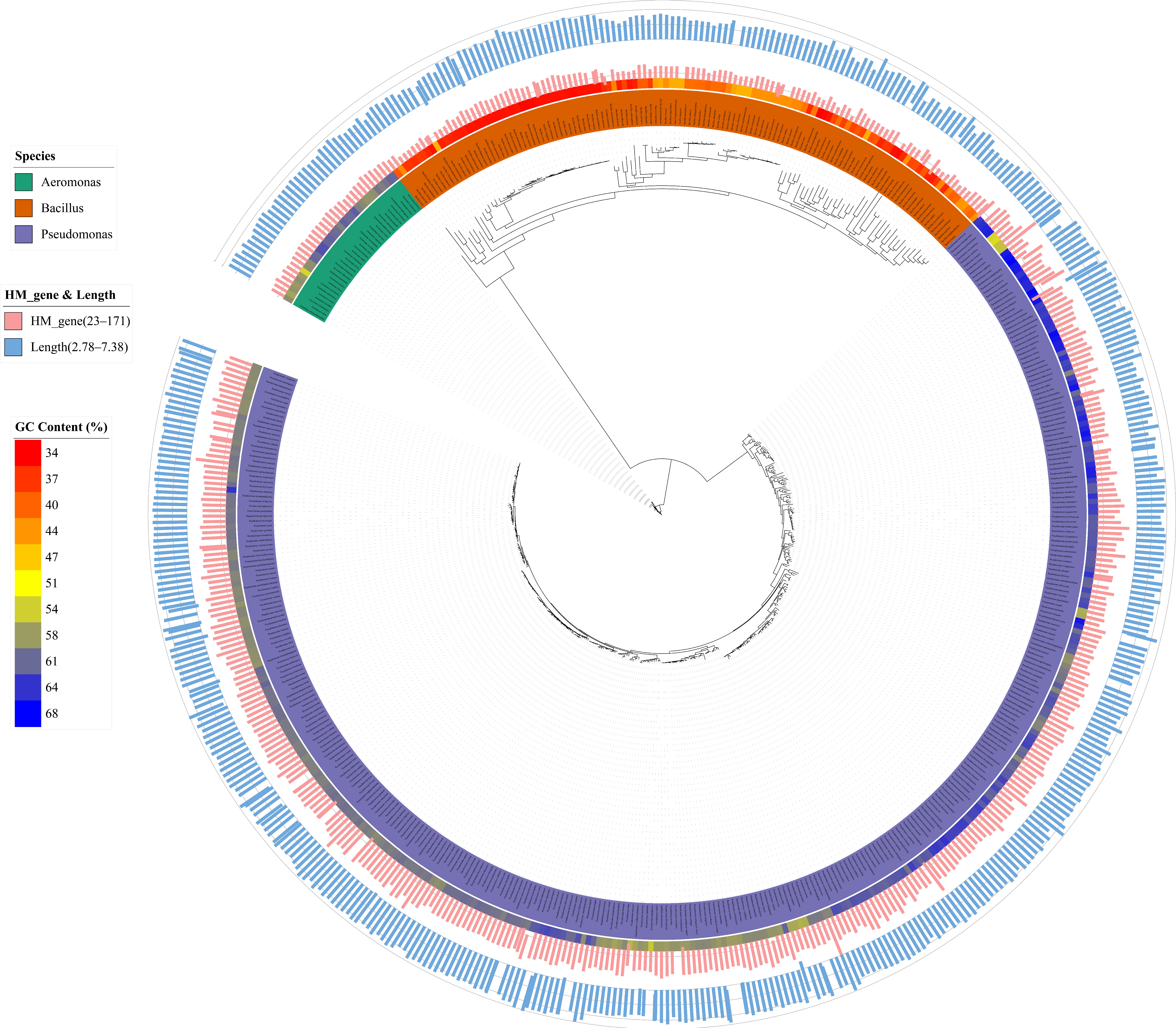
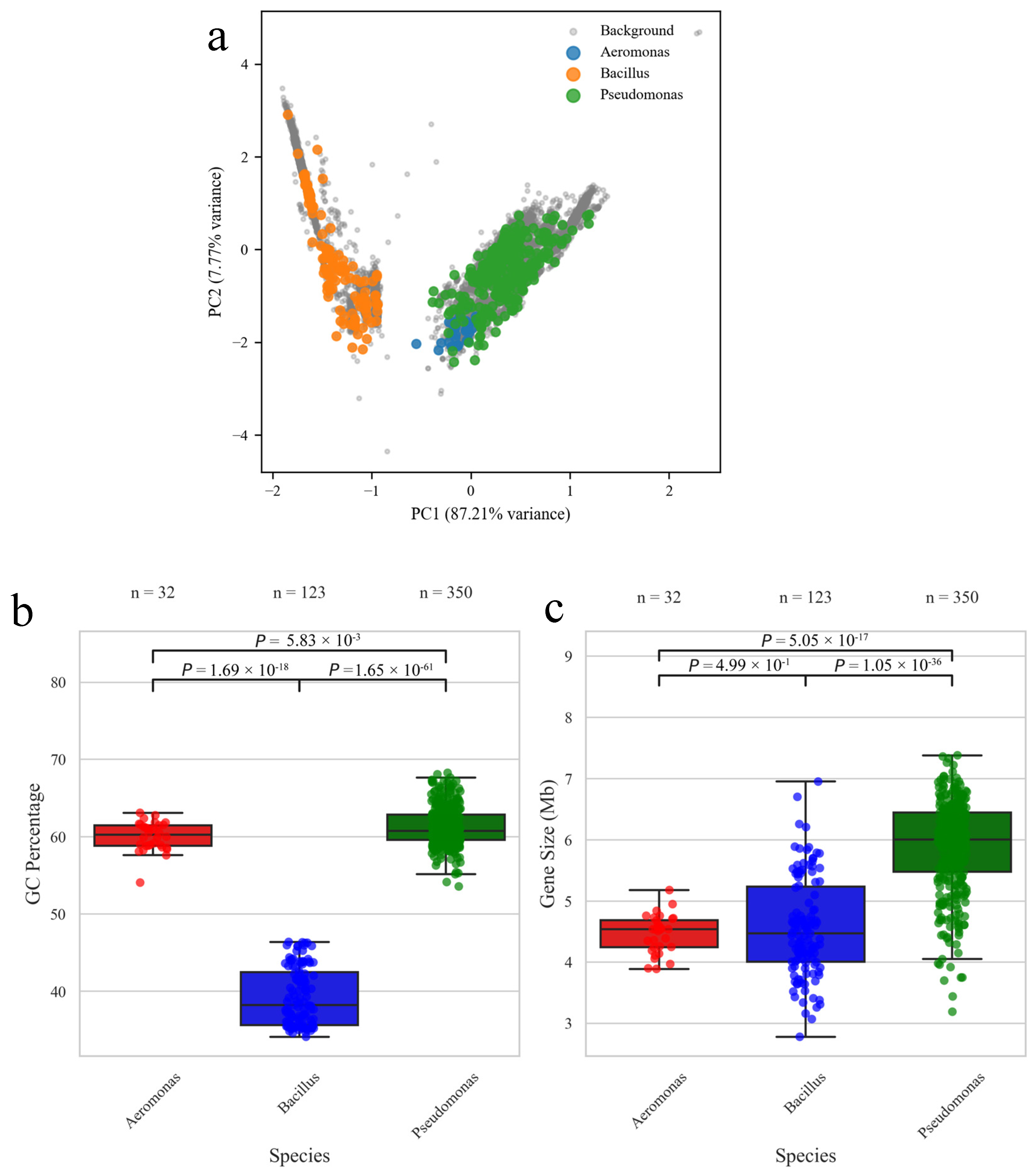
3.1. Genome Statistics and Phylogenetic Analysis
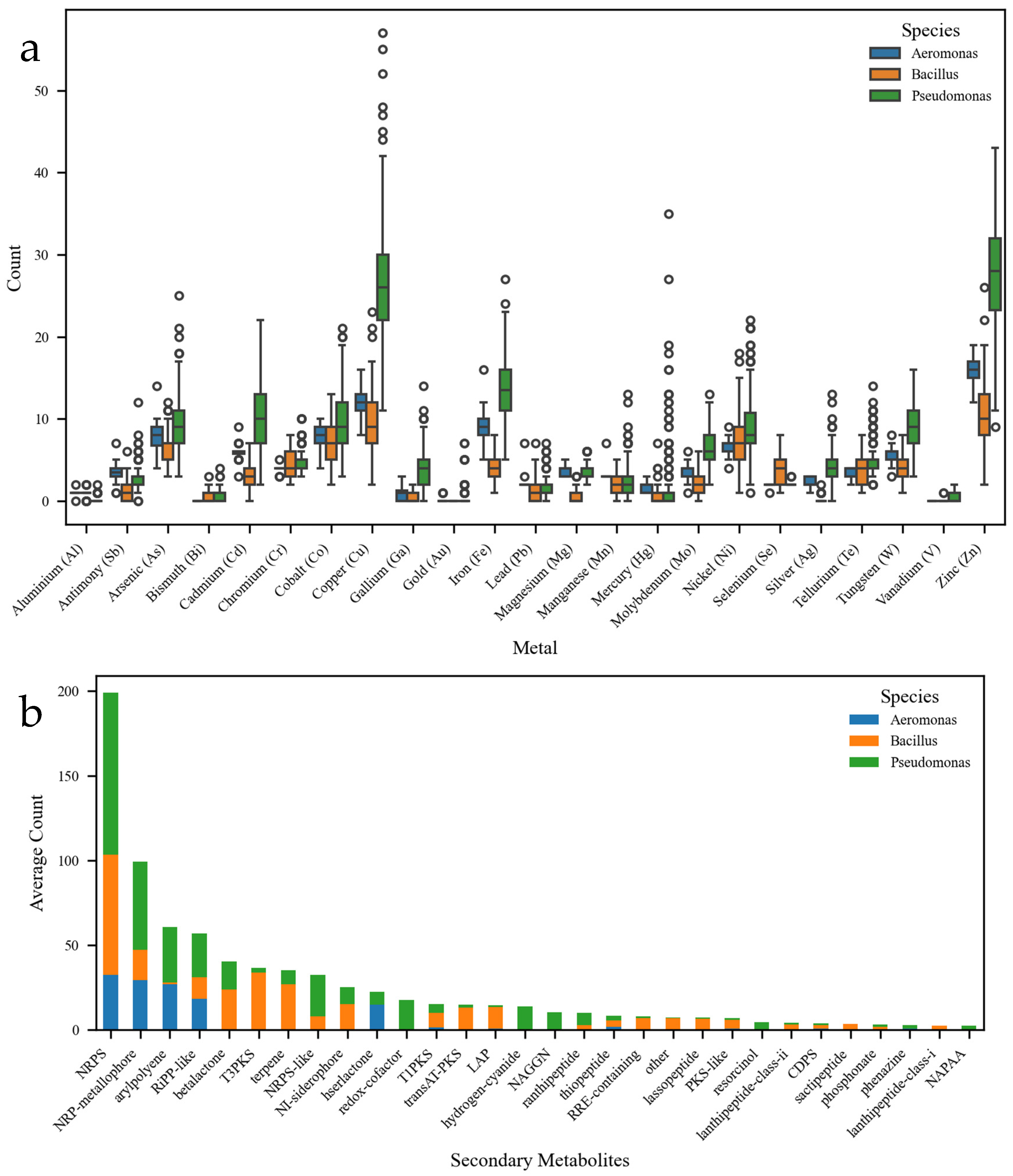
3.2. Metal Resistance and Secondary Metabolism Gene Clusters
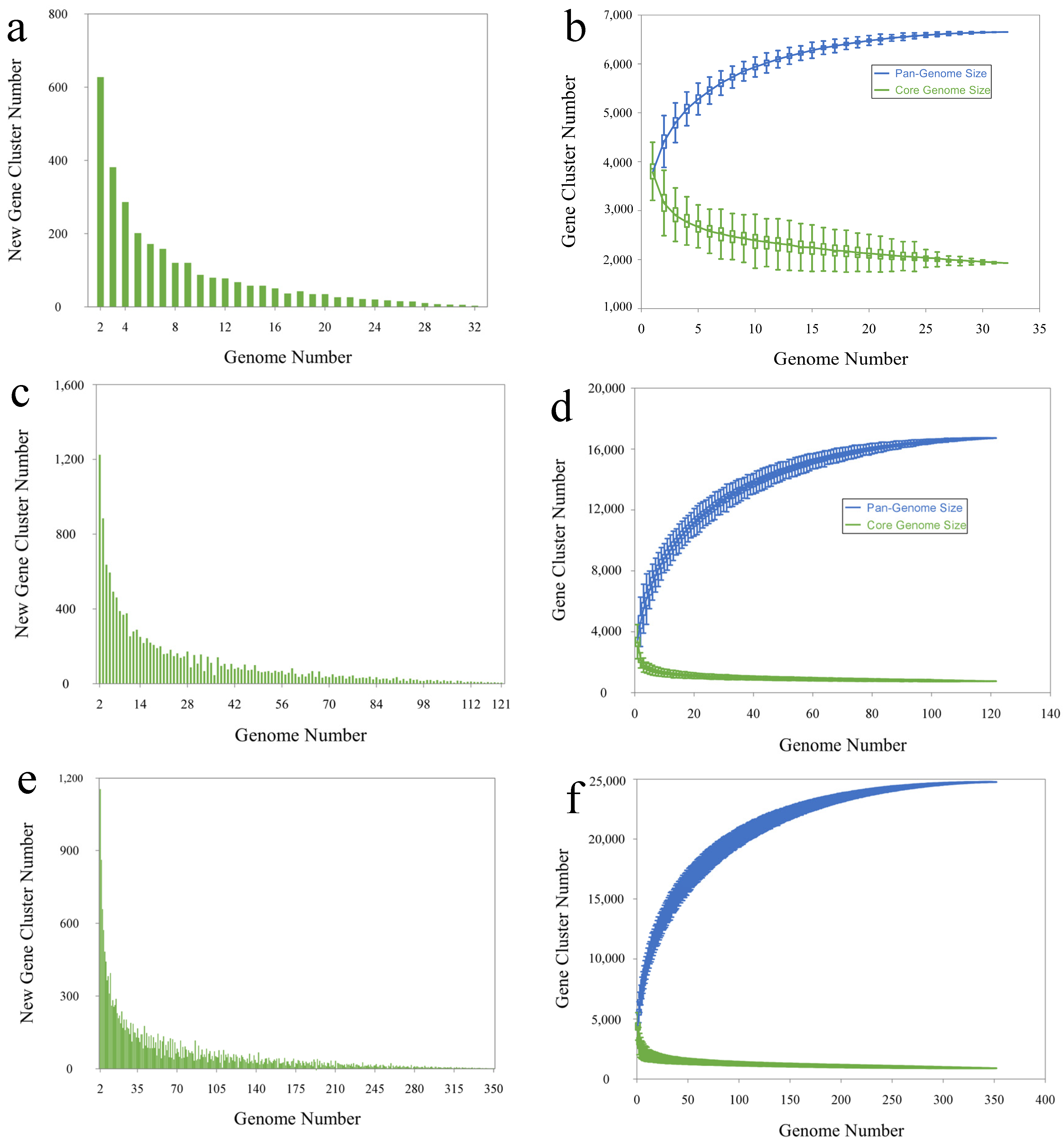
3.3. Pan-Genome Construction and Analysis
- The pan-genome of Aeromonas expanded at a relatively slow rate, with the fitted curve , and an R2 value of 0.987. The slowing increase in novel gene clusters indicated that although the pan-genome continued to grow, the rate of expansion was diminishing.
- In contrast, Bacillus exhibited a faster trajectory, with the fitted curve , and an R2 value of 0.992. Although the rate of increase also declined, the overall expansion remained more pronounced.
- Pseudomonas displayed the most rapid expansion, with the fitted curve , and an R2 value of 0.982. This indicated a highly open pan-genome, with new gene clusters continuously emerging as genome size increased. Pseudomonas displayed the highest growth rate among the three species.
- The core genome of Aeromonas followed an exponential decline, modeled by , and an R2 value of 0.951082. This suggested that as genome size increased, the number of core genes gradually decreased and ultimately stabilized.
- The core genome of Bacillus showed a more rapid decline, with the curve fitting the equation , and an R2 value of 0.853. The number of core genes decreased more sharply and stabilized at a lower gene count.
- The core genome of Pseudomonas exhibited a slower decline, with the curve fitting the equation , and an R2 value of 0.953. In contrast to Aeromonas and Bacillus, Pseudomonas maintained a more stable core genome, with a less pronounced reduction in core gene numbers.
3.4. Functional Characterization of the Pan-Genome
3.5. Evolution of Core and Metal Resistance Genomes
3.6. Gene Gain and Loss for the Metal Resistance Genomes and Pan-Genome
4. Conclusions
Supplementary Materials
Author Contributions
Funding
Institutional Review Board Statement
Informed Consent Statement
Data Availability Statement
Conflicts of Interest
Abbreviations
| MRG | Metal Resistance Genes |
| NRP | Non-ribosomal peptide |
| COG | Clusters of Orthologous Groups |
References
- Hama Aziz, K.H.; Mustafa, F.S.; Omer, K.M.; Hama, S.; Hamarawf, R.F.; Rahman, K.O. Heavy metal pollution in the aquatic environment: Efficient and low-cost removal approaches to eliminate their toxicity: A review. RSC Adv. 2023, 13, 17595–17610. [Google Scholar] [CrossRef] [PubMed]
- Balali-Mood, M.; Naseri, K.; Tahergorabi, Z.; Khazdair, M.R.; Sadeghi, M. Toxic Mechanisms of Five Heavy Metals: Mercury, Lead, Chromium, Cadmium, and Arsenic. Front. Pharmacol. 2021, 12, 643972. [Google Scholar] [CrossRef]
- Cheng, Y.; Cao, X.-B.; Liu, J.-M.; Yu, Q.-Q.; Zhong, Y.-J.; Geng, G.-N.; Zhang, Q.; He, K.-B. New open burning policy reshaped the aerosol characteristics of agricultural fire episodes in Northeast China. Sci. Total Environ. 2022, 810, 152272. [Google Scholar] [CrossRef] [PubMed]
- Tang, H.; Xiang, G.; Xiao, W.; Yang, Z.; Zhao, B. Microbial mediated remediation of heavy metals toxicity: Mechanisms and future prospects. Front. Plant Sci. 2024, 15, 1420408. [Google Scholar] [CrossRef] [PubMed]
- Jiang, Z.; Wang, T.; Sun, Y.; Nong, Y.; Tang, L.; Gu, T.; Wang, S.; Li, Z. Application of Pb(II) to probe the physiological responses of fungal intracellular vesicles. Ecotoxicol. Environ. Saf. 2020, 194, 110441. [Google Scholar] [CrossRef]
- Liu, N.; Zhao, J.; Du, J.; Hou, C.; Zhou, X.; Chen, J.; Zhang, Y. Non-phytoremediation and phytoremediation technologies of integrated remediation for water and soil heavy metal pollution: A comprehensive review. Sci. Total Environ. 2024, 948, 174237. [Google Scholar] [CrossRef]
- Fakhar, A.; Gul, B.; Gurmani, A.R.; Khan, S.M.; Ali, S.; Sultan, T.; Chaudhary, H.J.; Rafique, M.; Rizwan, M. Heavy metal remediation and resistance mechanism of Aeromonas, Bacillus, and Pseudomonas: A review. Crit. Rev. Environ. Sci. Technol. 2022, 52, 1868–1914. [Google Scholar] [CrossRef]
- Chatterjee, S.; Barman, P.; Barman, C.; Majumdar, S.; Chakraborty, R. Multimodal cadmium resistance and its regulatory networking in Pseudomonas aeruginosa strain CD3. Sci. Rep. 2024, 14, 31689. [Google Scholar] [CrossRef]
- Tataje-Lavanda, L.; Ormeño-Vásquez, P.; Choque-Guevara, R.; Altamirano-Díaz, R.; Fernández-Díaz, M.; Tantaleán, J.C. Comprehensive analysis of antibiotic and heavy metal resistance, and virulence factors in Aeromonas veronii CTe-01: Implications for global antimicrobial resistance. J. King Saud Univ.-Sci. 2024, 36, 103402. [Google Scholar] [CrossRef]
- Girard, L.; Lood, C.; Rokni-Zadeh, H.; van Noort, V.; Lavigne, R.; De Mot, R. Reliable Identification of Environmental Pseudomonas Isolates Using the rpoD Gene. Microorganisms 2020, 8, 1166. [Google Scholar] [CrossRef] [PubMed]
- EFSA Panel on Biological Hazards (BIOHAZ). Risks for public health related to the presence of Bacillus cereus and other Bacillus spp. including Bacillus thuringiensis in foodstuffs. EFSA J. 2016, 14, e04524. [Google Scholar] [CrossRef]
- Andriyanov, P.A.; Kashina, D.D.; Liskova, E.A.; Zhurilov, P.A.; Tutrina, A.I.; Ermolaeva, S.A.; Zakharova, O.I.; Blokhin, A.A. The first detection of two Aeromonas strains in mice of the genus Apodemus. Sci. Rep. 2023, 13, 4315. [Google Scholar] [CrossRef]
- Gillieatt, B.F.; Coleman, N.V. Unravelling the mechanisms of antibiotic and heavy metal resistance co-selection in environmental bacteria. FEMS Microbiol. Rev. 2024, 48, fuae017. [Google Scholar] [CrossRef]
- Pal, C.; Bengtsson-Palme, J.; Rensing, C.; Kristiansson, E.; Larsson, D.G.J. BacMet: Antibacterial biocide and metal resistance genes database. Nucleic Acids Res. 2014, 42, D737–D743. [Google Scholar] [CrossRef] [PubMed]
- Zhong, C.; Han, M.; Yang, P.; Chen, C.; Yu, H.; Wang, L.; Ning, K. Comprehensive Analysis Reveals the Evolution and Pathogenicity of Aeromonas, Viewed from Both Single Isolated Species and Microbial Communities. mSystems 2019, 4, 5. [Google Scholar] [CrossRef]
- Freschi, L.; Vincent, A.T.; Jeukens, J.; Emond-Rheault, J.-G.; Kukavica-Ibrulj, I.; Dupont, M.-J.; Charette, S.J.; Boyle, B.; Levesque, R.C. The Pseudomonas aeruginosa Pan-Genome Provides New Insights on Its Population Structure, Horizontal Gene Transfer, and Pathogenicity. Genome Biol. Evol. 2019, 11, 109–120. [Google Scholar] [CrossRef]
- Asif, M.; Li-Qun, Z.; Zeng, Q.; Atiq, M.; Ahmad, K.; Tariq, A.; Al-Ansari, N.; Blom, J.; Fenske, L.; Alodaini, H.A.; et al. Comprehensive genomic analysis of Bacillus paralicheniformis strain BP9, pan-genomic and genetic basis of biocontrol mechanism. Comput. Struct. Biotechnol. J. 2023, 21, 4647–4662. [Google Scholar] [CrossRef]
- Kim, M.; Cha, I.T.; Lee, K.E.; Li, M.; Park, S.J. Pangenome analysis provides insights into the genetic diversity, metabolic versatility, and evolution of the genus Flavobacterium. Microbiol. Spectr. 2023, 11, e0100323. [Google Scholar] [CrossRef]
- Yin, Z.; Liang, J.; Zhang, M.; Chen, B.; Yu, Z.; Tian, X.; Deng, X.; Peng, L. Pan-genome insights into adaptive evolution of bacterial symbionts in mixed host-microbe symbioses represented by human gut microbiota Bacteroides cellulosilyticus. Sci. Total Environ. 2024, 927, 172251. [Google Scholar] [CrossRef]
- Verma, D.; Satyanarayana, T.; Dias, P.J. Editorial: Microbial comparative genomics and pangenomics: New tools, approaches and insights into gene and genome evolution. Front. Genet. 2024, 15, 1490645. [Google Scholar] [CrossRef] [PubMed]
- Ramasamy, S.P.; Sundararajan, P.; Pallikondaperumal, M.; Karuppiah, P.; Kayarohanam, S.; Arumugam, N.; Wong, L.S.; Djearamane, S. Copper and chromium binding by Pseudomonas aeruginosa strain PA01 for implications of heavy metal detoxification and soil remediation: A computational approach. J. King Saud Univ.-Sci. 2024, 36, 103552. [Google Scholar] [CrossRef]
- Saha, J.; Dey, S.; Pal, A. Whole genome sequencing and comparative genomic analyses of Pseudomonas aeruginosa strain isolated from arable soil reveal novel insights into heavy metal resistance and codon biology. Curr. Genet. 2022, 68, 481–503. [Google Scholar] [CrossRef]
- Chklovski, A.; Parks, D.H.; Woodcroft, B.J.; Tyson, G.W. CheckM2: A rapid, scalable and accurate tool for assessing microbial genome quality using machine learning. Nat. Methods 2023, 20, 1203–1212. [Google Scholar] [CrossRef]
- Parks, D.H.; Chaumeil, P.-A.; Mussig, A.J.; Rinke, C.; Chuvochina, M.; Hugenholtz, P. GTDB release 10: A complete and systematic taxonomy for 715 230 bacterial and 17 245 archaeal genomes. Nucleic Acids Res. 2025, 54, gkaf1040. [Google Scholar] [CrossRef] [PubMed]
- Minh, B.Q.; Schmidt, H.A.; Chernomor, O.; Schrempf, D.; Woodhams, M.D.; von Haeseler, A.; Lanfear, R. IQ-TREE 2: New Models and Efficient Methods for Phylogenetic Inference in the Genomic Era. Mol. Biol. Evol. 2020, 37, 1530–1534. [Google Scholar] [CrossRef]
- Letunic, I.; Bork, P. Interactive Tree of Life (iTOL) v6: Recent updates to the phylogenetic tree display and annotation tool. Nucleic Acids Res. 2024, 52, W78–W82. [Google Scholar] [CrossRef]
- Zhou, T.; Xu, K.; Zhao, F.; Liu, W.; Li, L.; Hua, Z.; Zhou, X. itol.toolkit accelerates working with iTOL (Interactive Tree of Life) by an automated generation of annotation files. Bioinformatics 2023, 39, btad339. [Google Scholar] [CrossRef]
- Emms, D.M.; Kelly, S. OrthoFinder: Phylogenetic orthology inference for comparative genomics. Genome Biol. 2019, 20, 238. [Google Scholar] [CrossRef]
- Zhao, Y.; Jia, X.; Yang, J.; Ling, Y.; Zhang, Z.; Yu, J.; Wu, J.; Xiao, J. PanGP: A tool for quickly analyzing bacterial pan-genome profile. Bioinformatics 2014, 30, 1297–1299. [Google Scholar] [CrossRef] [PubMed]
- Hernández-Plaza, A.; Szklarczyk, D.; Botas, J.; Cantalapiedra, C.P.; Giner-Lamia, J.; Mende, D.R.; Kirsch, R.; Rattei, T.; Letunic, I.; Jensen, L.J.; et al. eggNOG 6.0: Enabling comparative genomics across 12 535 organisms. Nucleic Acids Res. 2023, 51, D389–D394. [Google Scholar] [CrossRef] [PubMed]
- Buchfink, B.; Reuter, K.; Drost, H.-G. Sensitive protein alignments at tree-of-life scale using DIAMOND. Nat. Methods 2021, 18, 366–368. [Google Scholar] [CrossRef] [PubMed]
- Chen, J.; Gao, X.; Zhang, C.; Ge, Y. Rapid identification of metal resistance genes using an enhanced ResNet deep learning model trained on a largely expanded BacMet-based database. J. Hazard. Mater. 2025, 497, 139625. [Google Scholar] [CrossRef]
- Yang, Z. PAML 4: Phylogenetic Analysis by Maximum Likelihood. Mol. Biol. Evol. 2007, 24, 1586–1591. [Google Scholar] [CrossRef]
- Mendes, F.K.; Vanderpool, D.; Fulton, B.; Hahn, M.W. CAFE 5 models variation in evolutionary rates among gene families. Bioinformatics 2021, 36, 5516–5518. [Google Scholar] [CrossRef] [PubMed]
- Earl Ashlee, M.; Losick, R.; Kolter, R. Bacillus subtilis Genome Diversity. J. Bacteriol. 2007, 189, 1163–1170. [Google Scholar] [CrossRef]
- Fernández-Bravo, A.; Figueras, M.J. An Update on the Genus Aeromonas: Taxonomy, Epidemiology, and Pathogenicity. Microorganisms 2020, 8, 129. [Google Scholar] [CrossRef]
- Klockgether, J.; Cramer, N.; Wiehlmann, L.; Davenport, C.F.; Tümmler, B. Pseudomonas aeruginosa Genomic Structure and Diversity. Front. Microbiol. 2011, 2, 150. [Google Scholar] [CrossRef]
- Chen, J.; Wang, L.; Li, W.; Zheng, X.; Li, X. Genomic Insights Into Cadmium Resistance of a Newly Isolated, Plasmid-Free Cellulomonas sp. Strain Y8. Front. Microbiol. 2022, 12, 784575. [Google Scholar] [CrossRef]
- Souza, S.S.R.; Turcotte, M.R.; Li, J.; Zhang, X.; Wolfe, K.L.; Gao, F.; Benton, C.S.; Andam, C.P. Population analysis of heavy metal and biocide resistance genes in Salmonella enterica from human clinical cases in New Hampshire, United States. Front. Microbiol. 2022, 13, 983083. [Google Scholar] [CrossRef]
- Oza, T.; Patel, P.; Thaker, V.S. A brief study on heavy metal resistance genes from 10 genomes of Georgenia sp. and In vitro confirmation on Georgenia sp. SUBG003. J. Hazard. Mater. Lett. 2024, 5, 100097. [Google Scholar] [CrossRef]
- Lightfield, J.; Fram, N.R.; Ely, B. Across bacterial phyla, distantly-related genomes with similar genomic GC content have similar patterns of amino acid usage. PLoS ONE 2011, 6, e17677. [Google Scholar] [CrossRef]
- Chen, X.; Yin, X.; Xu, X.; Zhang, T. Species-resolved profiling of antibiotic resistance genes in complex metagenomes through long-read overlapping with Argo. Nat. Commun. 2025, 16, 1744. [Google Scholar] [CrossRef] [PubMed]
- Wróbel, M.; Śliwakowski, W.; Kowalczyk, P.; Kramkowski, K.; Dobrzyński, J. Bioremediation of Heavy Metals by the Genus Bacillus. Int. J. Environ. Res. Public Health 2023, 20, 4964. [Google Scholar] [CrossRef]
- Qurbani, K.; Khdir, K.; Sidiq, A.; Hamzah, H.; Hussein, S.; Hamad, Z.; Abdulla, R.; Abdulla, B.; Azizi, Z. Aeromonas sobria as a potential candidate for bioremediation of heavy metal from contaminated environments. Sci. Rep. 2022, 12, 21235. [Google Scholar] [CrossRef]
- Saati-Santamaría, Z.; Selem-Mojica, N.; Peral-Aranega, E.; Rivas, R.; García-Fraile, P. Unveiling the genomic potential of Pseudomonas type strains for discovering new natural products. Microb. Genom. 2022, 8, 000758. [Google Scholar] [CrossRef]
- Reitz, Z.L.; Butler, A.; Medema, M.H. Automated genome mining predicts combinatorial diversity and taxonomic distribution of peptide metallophore structures. bioRxiv 2022, 14, 519525. [Google Scholar]
- Kim, Y.; Koh, I.; Young Lim, M.; Chung, W.-H.; Rho, M. Pan-genome analysis of Bacillus for microbiome profiling. Sci. Rep. 2017, 7, 10984. [Google Scholar] [CrossRef] [PubMed]
- Tettelin, H.; Riley, D.; Cattuto, C.; Medini, D. Comparative genomics: The bacterial pan-genome. Curr. Opin. Microbiol. 2008, 11, 472–477. [Google Scholar] [CrossRef]
- Böhm, M.-E.; Huptas, C.; Krey, V.M.; Scherer, S. Massive horizontal gene transfer, strictly vertical inheritance and ancient duplications differentially shape the evolution of Bacillus cereus enterotoxin operons hbl, cytK and nhe. BMC Evol. Biol. 2015, 15, 246. [Google Scholar] [CrossRef] [PubMed]
- Tataje-Lavanda, L.; Ormeño-Vásquez, P.; Altamirano-Díaz, R.; Espinoza-Salazar, L.; Zimic, M.; Fernández-Sánchez, M.; Fernández-Díaz, M.; Vásquez, C.C.; Tantaleán, J.C. Draft Genome Sequence of Heavy Metal-Resistant Aeromonas veronii CTe-01, Isolated from a Peruvian Wastewater Treatment Plant. Microbiol. Resour. Announc. 2019, 8, 1128. [Google Scholar] [CrossRef]
- Magome, T.G.; Surleac, M.; Hassim, A.; Bezuidenhout, C.C.; van Heerden, H.; Lekota, K.E. Decoding the anomalies: A genome-based analysis of Bacillus cereus group strains closely related to Bacillus anthracis. Front. Microbiol. 2025, 16, 1527049. [Google Scholar] [CrossRef]
- Ramnarine, S.D.B.; Ali, O.; Jayaraman, J.; Ramsubhag, A. Early transcriptional changes of heavy metal resistance and multiple efflux genes in Xanthomonas campestris pv. campestris under copper and heavy metal ion stress. BMC Microbiol. 2024, 24, 81. [Google Scholar] [CrossRef]
- Oleńska, E.; Małek, W.; Swiecicka, I.; Wójcik, M.; Thijs, S.; Vangronsveld, J. Bacteria Under Metal Stress—Molecular Mechanisms of Metal Tolerance. Int. J. Mol. Sci. 2025, 26, 5716. [Google Scholar] [CrossRef] [PubMed]
- Udaondo, Z.; Ramos, J.L.; Abram, K. Unraveling the genomic diversity of the Pseudomonas putida group: Exploring taxonomy, core pangenome, and antibiotic resistance mechanisms. FEMS Microbiol. Rev. 2024, 48, fuae025. [Google Scholar] [CrossRef] [PubMed]
- Klonowska, A.; Moulin, L.; Ardley, J.K.; Braun, F.; Gollagher, M.M.; Zandberg, J.D.; Marinova, D.V.; Huntemann, M.; Reddy, T.B.K.; Varghese, N.J.; et al. Novel heavy metal resistance gene clusters are present in the genome of Cupriavidus neocaledonicus STM 6070, a new species of Mimosa pudica microsymbiont isolated from heavy-metal-rich mining site soil. BMC Genom. 2020, 21, 214. [Google Scholar] [CrossRef]
- Jiang, Z.; Jiang, L.; Zhang, L.; Su, M.; Tian, D.; Wang, T.; Sun, Y.; Nong, Y.; Hu, S.; Wang, S.; et al. Contrasting the Pb (II) and Cd (II) tolerance of Enterobacter sp. via its cellular stress responses. Environ. Microbiol. 2020, 22, 1507–1516. [Google Scholar] [CrossRef]
- Mathivanan, K.; Chandirika, J.U.; Vinothkanna, A.; Yin, H.; Liu, X.; Meng, D. Bacterial adaptive strategies to cope with metal toxicity in the contaminated environment—A review. Ecotoxicol. Environ. Saf. 2021, 226, 112863. [Google Scholar] [CrossRef]
- Sharma, A.; Sangwan, N.; Negi, V.; Kohli, P.; Khurana, J.P.; Rao, D.L.N.; Lal, R. Pan-genome dynamics of Pseudomonas gene complements enriched across hexachlorocyclohexane dumpsite. BMC Genom. 2015, 16, 313. [Google Scholar] [CrossRef]
- Yang, X.; Lin, X.; Zhou, Z.; Lin, B.; Liu, X. Metabolic response of Bacillus spp. to heavy metal stress: Pathway alterations and metabolite profiles. Biotechnol. Lett. 2025, 47, 50. [Google Scholar] [CrossRef]
- Millard, K.B.; Unuofin, J.O.; Invernizzi, L.; Daramola, M.O.; Iwarere, S.A. Bioprospecting Heavy-Metal Rhizospheres for Novel Therapeutics Against High-Priority Multi-Drug-Resistant Pseudomonas aeruginosa and Acinetobacter baumannii: A Case of Toxic to Treatment. Environ. Microbiol. Rep. 2025, 17, e70182. [Google Scholar] [CrossRef] [PubMed]
- Hassen, B.; Abbassi, M.S. Molecular mechanisms of heavy metal resistance and cross-/co-resistance to antibiotics in Pseudomonas aeruginosa. Lett. Appl. Microbiol. 2025, 78, ovaf094. [Google Scholar] [CrossRef] [PubMed]
- Chen, J.; Li, J.; Zhang, H.; Shi, W.; Liu, Y. Bacterial Heavy-Metal and Antibiotic Resistance Genes in a Copper Tailing Dam Area in Northern China. Front. Microbiol. 2019, 10, 1916. [Google Scholar] [CrossRef]
- Ho, P.M.; Nazeer, R.R.; Welch, M. Genome-wide evolutionary selection pressures acting on Pseudomonas aeruginosa residing in different environments. NAR Mol. Med. 2025, 2, ugaf040. [Google Scholar] [CrossRef]
- Blázquez, B.; San León, D.; Rojas, A.; Tortajada, M.; Nogales, J. New Insights on Metabolic Features of Bacillus subtilis Based on Multistrain Genome-Scale Metabolic Modeling. Int. J. Mol. Sci. 2023, 24, 7091. [Google Scholar] [CrossRef]
- Jia, J.; Zhu, Z.; Xue, X.; Li, X.; Wang, Z. Selective pressure governs the composition, antibiotic, and heavy metal resistance profiles of Aeromonas spp. isolated from Ba River in Northwest China. Environ. Sci. Pollut. Res. Int. 2022, 29, 75841–75850. [Google Scholar] [CrossRef] [PubMed]
- Huang, Z.; Huang, W.; Liu, X.; Han, Z.; Liu, G.; Boamah, G.A.; Wang, Y.; Yu, F.; Gan, Y.; Xiao, Q.; et al. Genomic insights into the adaptation and evolution of the nautilus, an ancient but evolving “living fossil”. Mol. Ecol. Resour. 2022, 22, 15–27. [Google Scholar] [CrossRef] [PubMed]
- Hegazy, A.S.; Soliman, H.M.; Mowafy, A.M.; Mohamedin, A.H. Bioleaching of lanthanum from nickel metal hydride dry battery using siderophores produced by Pseudomonas sp. World J. Microbiol. Biotechnol. 2025, 41, 39. [Google Scholar] [CrossRef]
- Guo, Y.; Wu, C.; Wang, Z.; Shi, Y.; Sun, J. Co-occurrence of toxic metals, bacterial communities and metal resistance genes in coastal sediments from Bohai bay. Environ. Pollut. 2023, 338, 122666. [Google Scholar] [CrossRef]
- Sherif, A.H.; Okasha, L.A.; Kassab, A.S.; Abass, M.E.; Kasem, E.A. Long-term exposure to lead nitrate and zinc sulfate Nile tilapia impact the Aeromonas hydrophila treatment. Mol. Biol. Rep. 2024, 51, 71. [Google Scholar] [CrossRef]
- Chen, J.; Yu, Q.; Zhang, T.; Ma, Y.; Xiao, M.; Zhang, C.; Ge, Y. Quorum sensing luxI/R genes enhances cadmium detoxification in Aeromonas by up-regulating EPS production and cadmium resistance genes. J. Hazard. Mater. 2025, 491, 137959. [Google Scholar] [CrossRef]
- Paruthiyil, S.; Pinochet-Barros, A.; Huang, X.; Helmann John, D. Bacillus subtilis TerC Family Proteins Help Prevent Manganese Intoxication. J. Bacteriol. 2020, 202, 2. [Google Scholar] [CrossRef] [PubMed]


Disclaimer/Publisher’s Note: The statements, opinions and data contained in all publications are solely those of the individual author(s) and contributor(s) and not of MDPI and/or the editor(s). MDPI and/or the editor(s) disclaim responsibility for any injury to people or property resulting from any ideas, methods, instructions or products referred to in the content. |
© 2026 by the authors. Licensee MDPI, Basel, Switzerland. This article is an open access article distributed under the terms and conditions of the Creative Commons Attribution (CC BY) license.
Share and Cite
Peng, D.; Huang, T.; Kang, W. Evolutionary Strategies for Heavy Metal Resistance: Genomic Plasticity in Pseudomonas Versus Stability in Aeromonas and Bacillus. Biology 2026, 15, 751. https://doi.org/10.3390/biology15100751
Peng D, Huang T, Kang W. Evolutionary Strategies for Heavy Metal Resistance: Genomic Plasticity in Pseudomonas Versus Stability in Aeromonas and Bacillus. Biology. 2026; 15(10):751. https://doi.org/10.3390/biology15100751
Chicago/Turabian StylePeng, Di, Tao Huang, and Wei Kang. 2026. "Evolutionary Strategies for Heavy Metal Resistance: Genomic Plasticity in Pseudomonas Versus Stability in Aeromonas and Bacillus" Biology 15, no. 10: 751. https://doi.org/10.3390/biology15100751
APA StylePeng, D., Huang, T., & Kang, W. (2026). Evolutionary Strategies for Heavy Metal Resistance: Genomic Plasticity in Pseudomonas Versus Stability in Aeromonas and Bacillus. Biology, 15(10), 751. https://doi.org/10.3390/biology15100751