Dynamic Remodeling of Plant Cytoskeleton in Response to Environmental Stress
Simple Summary
Abstract
1. Introduction
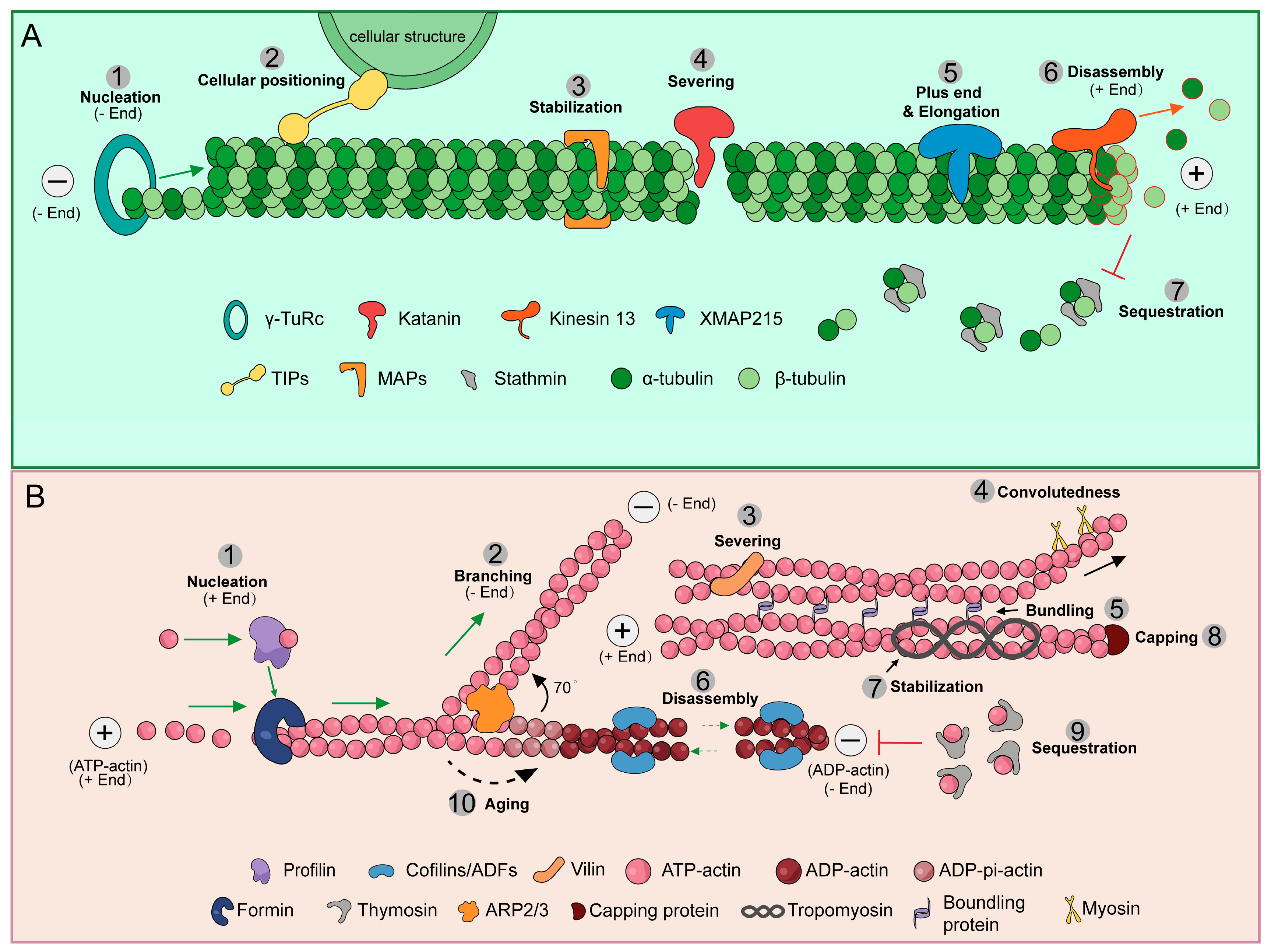
2. Cytoskeletal Dynamics
2.1. MAPs Involved in Microtubule Dynamics Regulation

2.2. ABPs Involved in Actin Filament Dynamic Regulation
3. Cytoskeletal Dynamics in Response to Environmental Stress
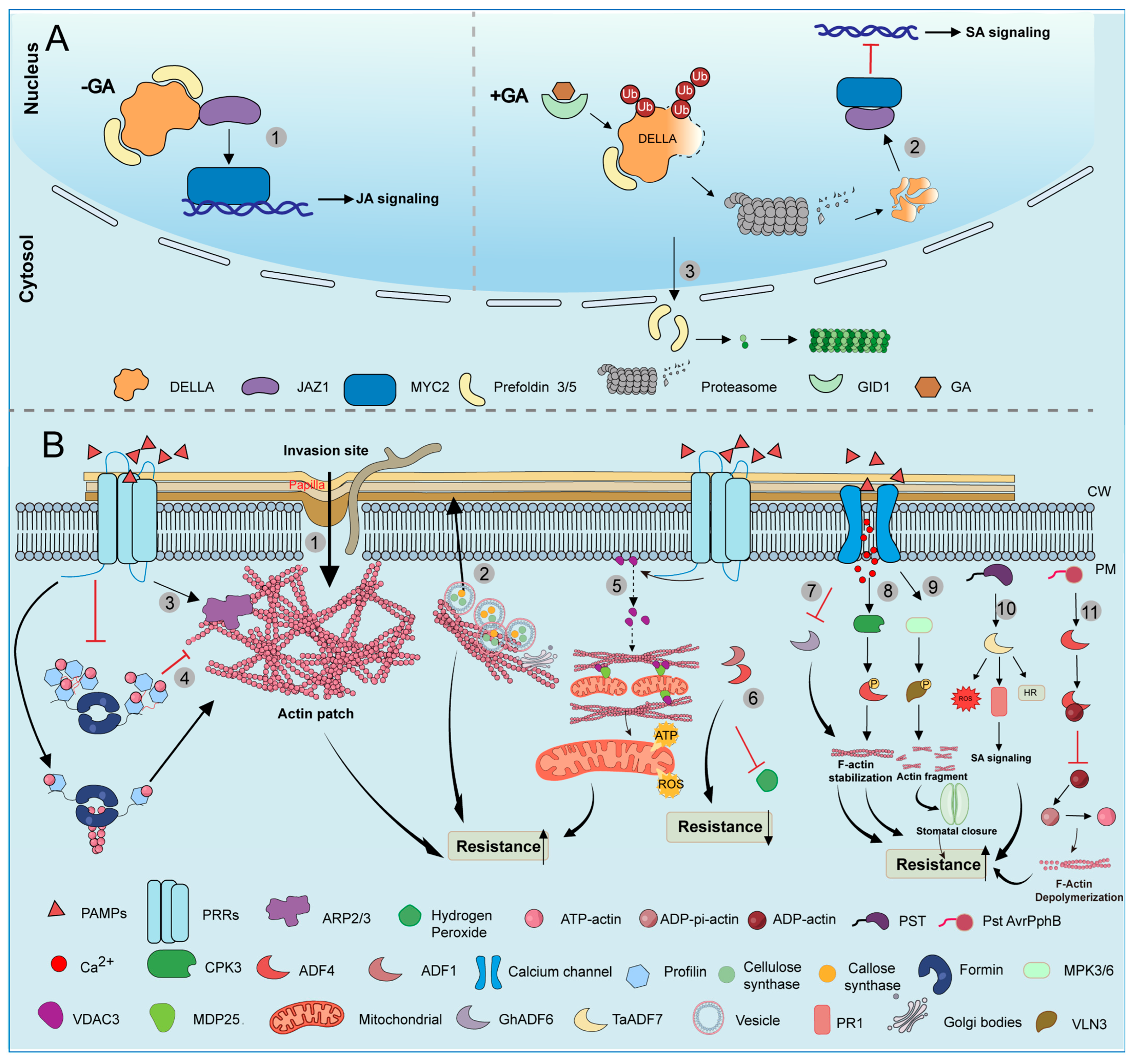
3.1. Biotic Stresses: Defensive Cytoskeletal Rearrangement Under Pathogen Invasion
3.1.1. Microtubule in Response to Plant Pathogen Invasion
3.1.2. Microfilament Response to Plant Pathogen Invasion
3.2. Cytoskeleton Remodeling Under Abiotic Stresses
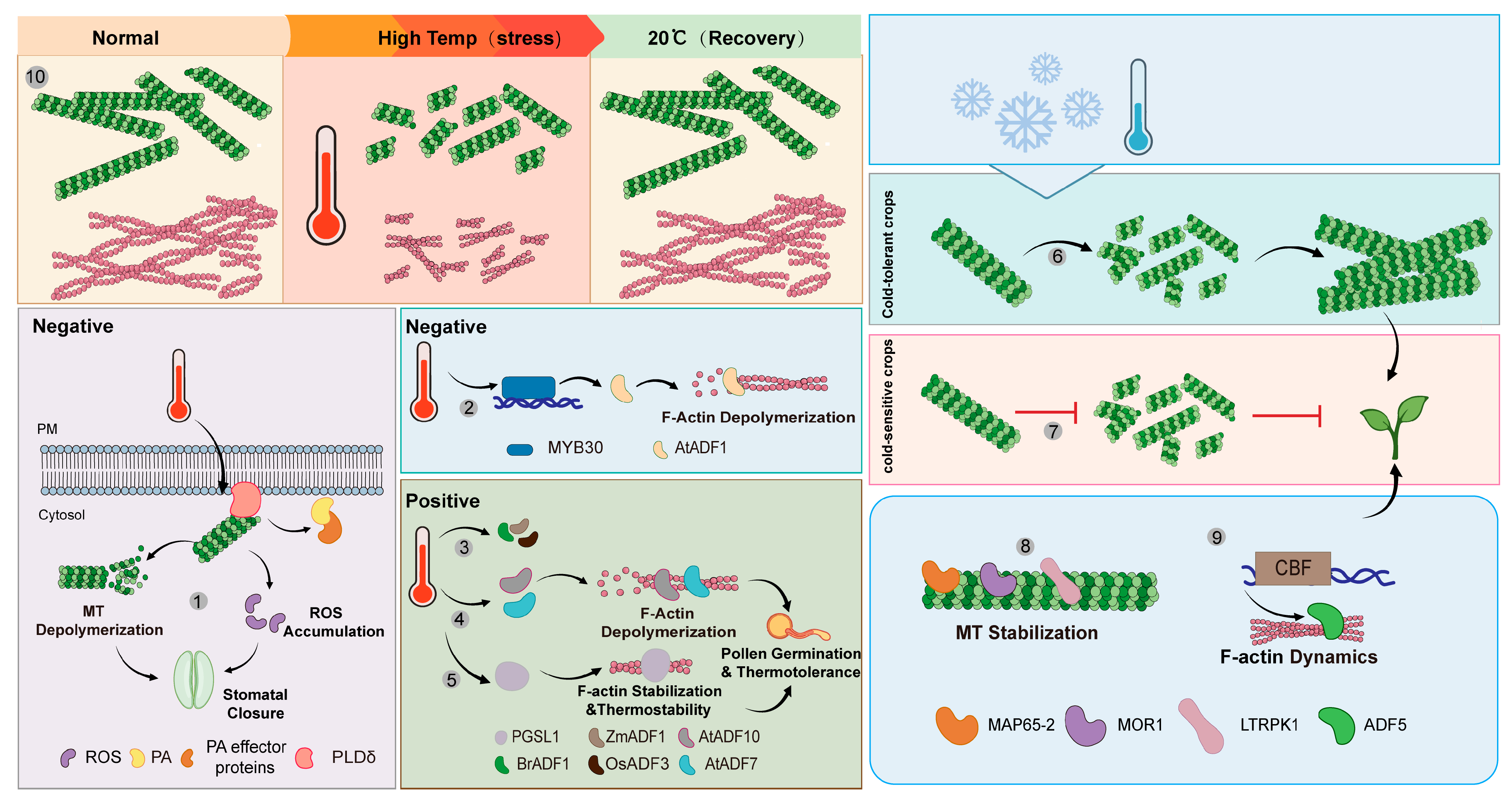
3.2.1. Cytoskeletal Responses to Temperature Stresses
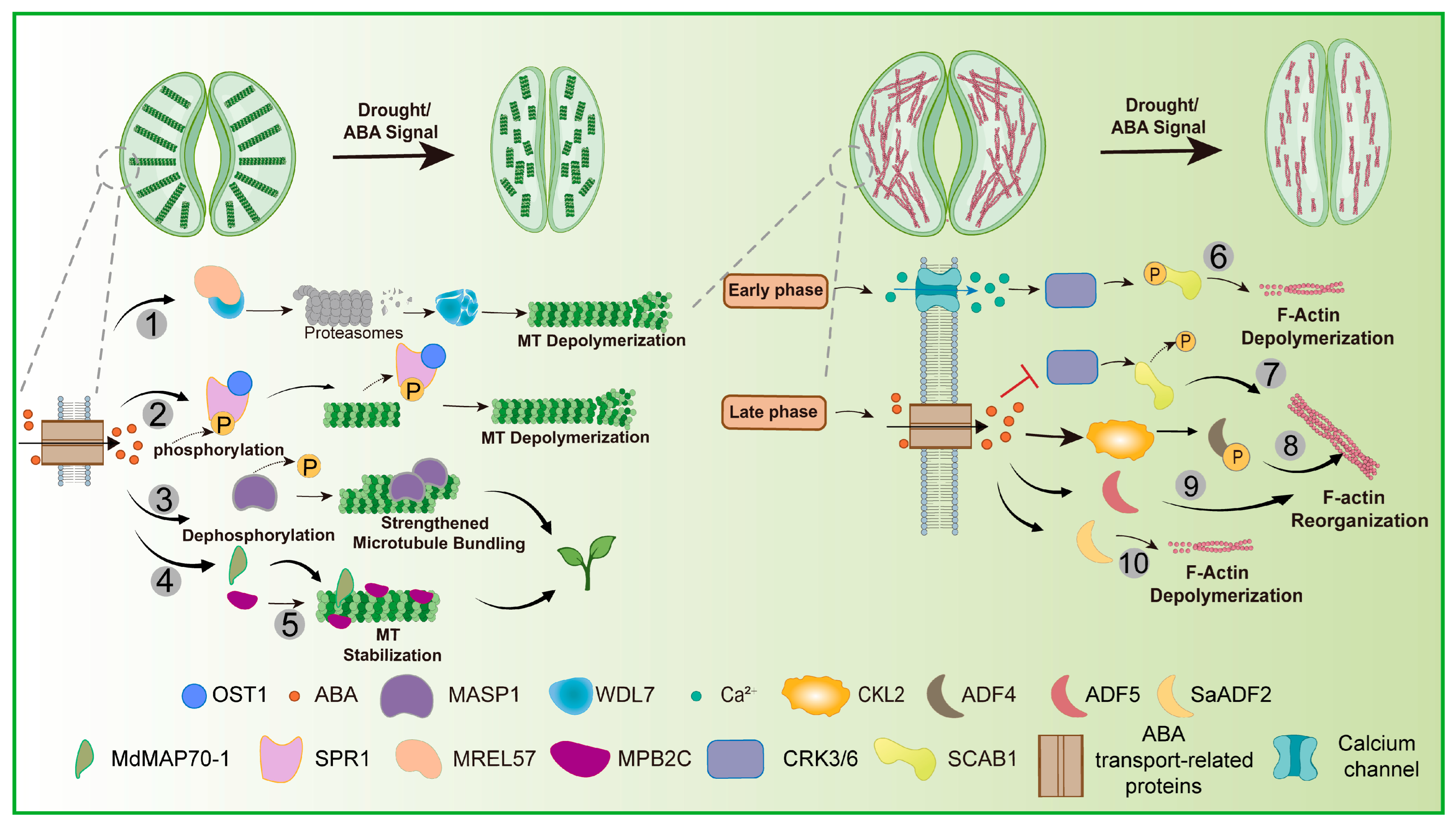
3.2.2. Cytoskeletal Dynamics Under Drought Stress
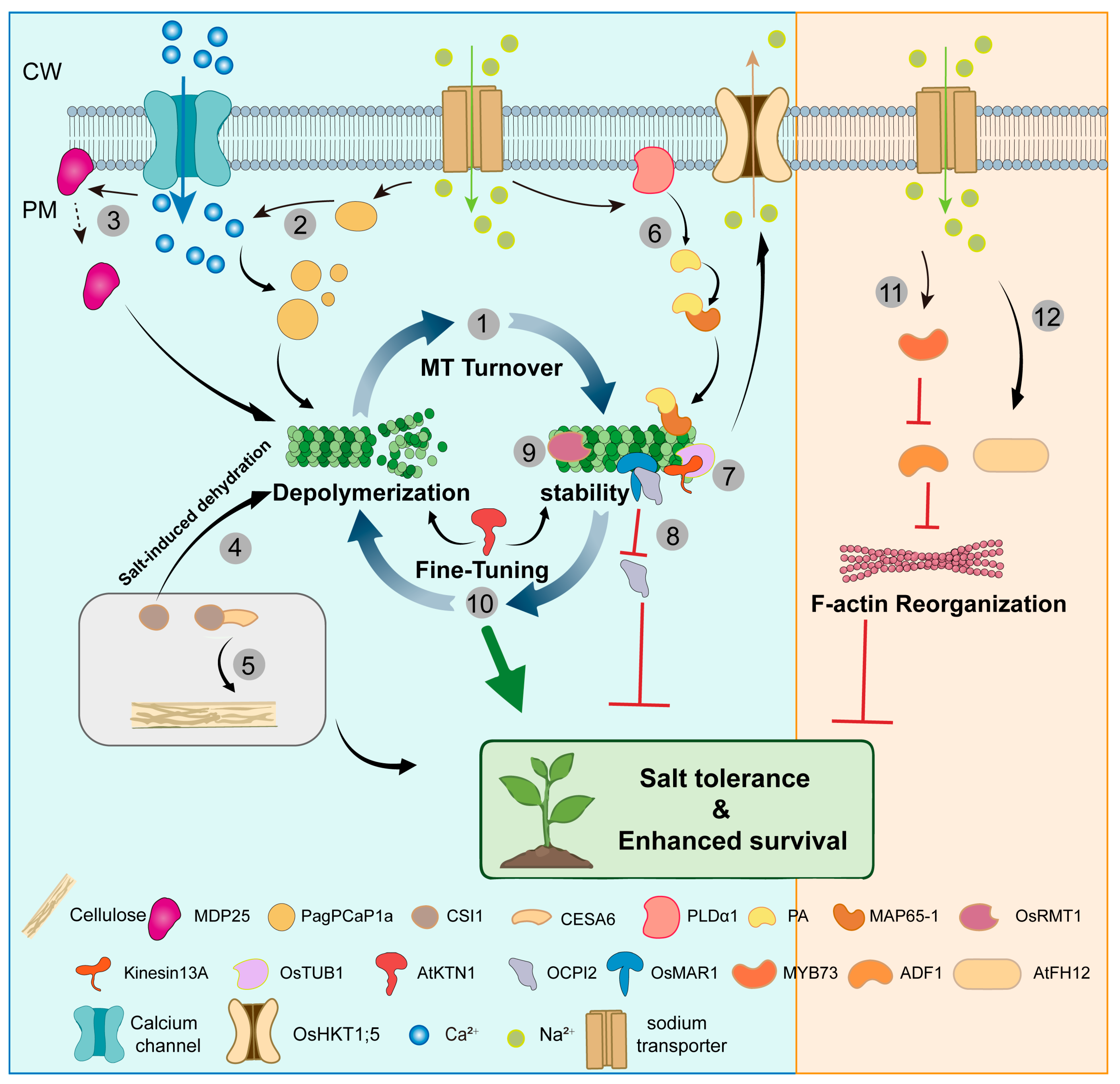
3.2.3. Cytoskeletal Dynamics Under Salt Stress
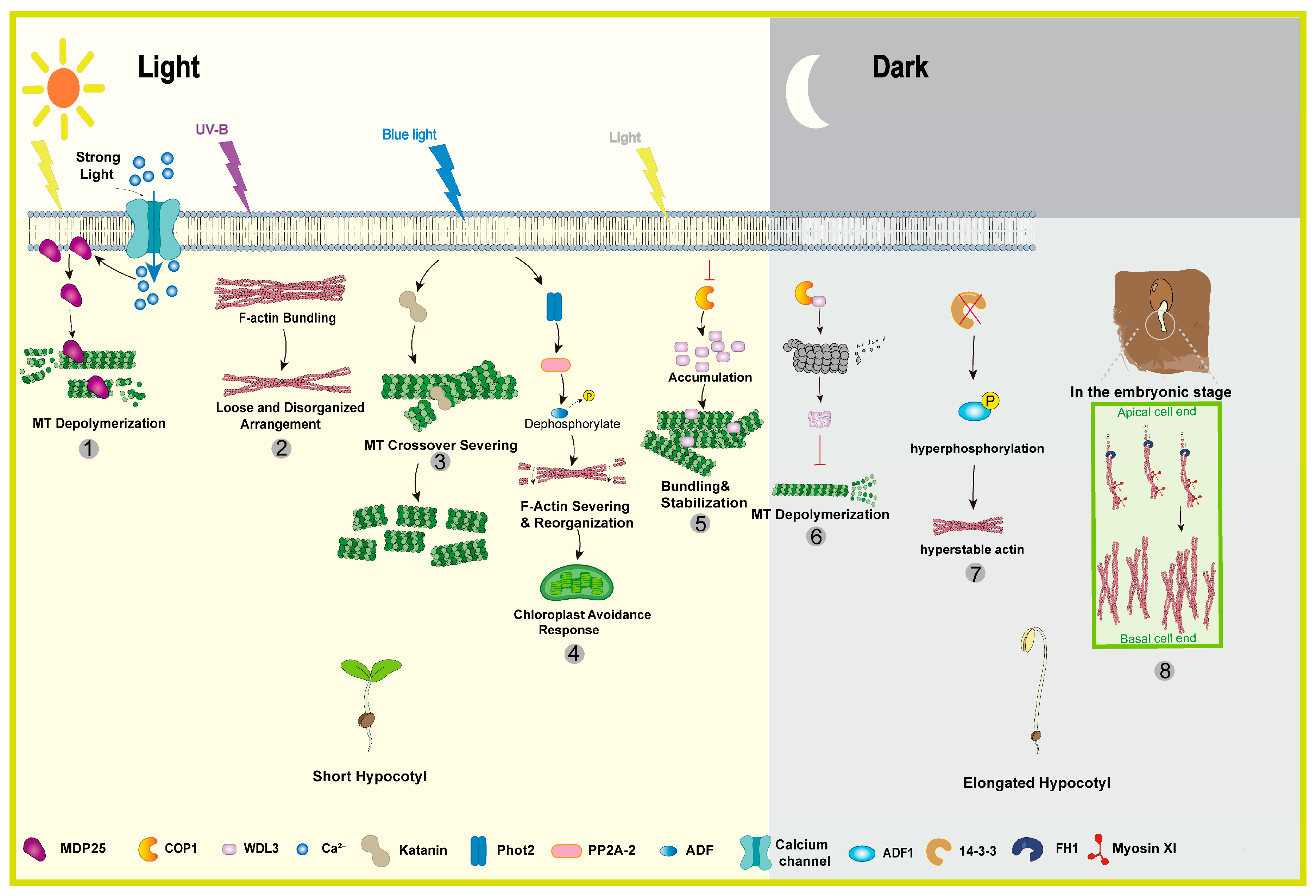
3.2.4. Light Regulation of Cytoskeletal Dynamics
4. Concluding Remarks and Future Perspectives
4.1. Cytoskeleton Dynamics in Stress Signaling
4.2. Actin–Microtubule Interactions
4.3. Toward Designing Stress-Resilient Crops
5. Conclusions
Author Contributions
Funding
Data Availability Statement
Acknowledgments
Conflicts of Interest
References
- Sinha, J.; Singh, Y.; Verma, P.K. Cytoskeleton remodeling: A central player in plant–fungus interactions. J. Exp. Bot. 2024, 75, 3269–3286. [Google Scholar] [CrossRef]
- Wang, Y.; Li, X.; Fan, B.; Zhu, C.; Chen, Z. Regulation and function of defense-related callose deposition in plants. Int. J. Mol. Sci. 2021, 22, 2393. [Google Scholar] [CrossRef]
- Zhang, T.; Bai, L.; Guo, Y. SCAB1 coordinates sequential Ca(2+) and ABA signals during osmotic stress induced stomatal closure in Arabidopsis. Sci. China Life Sci. 2024, 67, 1–18. [Google Scholar] [CrossRef]
- Örvar, B.L.; Sangwan, V.; Omann, F.; Dhindsa, R.S. Early steps in cold sensing by plant cells: The role of actin cytoskeleton and membrane fluidity. Plant J. 2000, 23, 785–794. [Google Scholar] [CrossRef]
- Parrotta, L.; Faleri, C.; Cresti, M.; Cai, G. Heat stress affects the cytoskeleton and the delivery of sucrose synthase in tobacco pollen tubes. Planta 2016, 243, 43–63. [Google Scholar] [CrossRef] [PubMed]
- Müller, J.; Menzel, D.; Šamaj, J. Cell-type-specific disruption and recovery of the cytoskeleton in Arabidopsis thaliana epidermal root cells upon heat shock stress. Protoplasma 2007, 230, 231–242. [Google Scholar] [CrossRef]
- Lian, N.; Liu, X.; Wang, X.; Zhou, Y.; Li, H.; Li, J.; Mao, T. COP1 mediates dark-specific degradation of microtubule-associated protein WDL3 in regulating Arabidopsis hypocotyl elongation. Proc. Natl. Acad. Sci. USA 2017, 114, 12321–12326. [Google Scholar] [CrossRef]
- Liu, X.; Qin, T.; Ma, Q.; Sun, J.; Liu, Z.; Yuan, M.; Mao, T. Light-Regulated Hypocotyl Elongation Involves Proteasome-Dependent Degradation of the Microtubule Regulatory Protein WDL3 in Arabidopsis. Plant Cell 2013, 25, 1740–1755. [Google Scholar] [CrossRef]
- Szymanski, D.; Staiger, C.J. The actin cytoskeleton: Functional arrays for cytoplasmic organization and cell shape control. Plant Physiol. 2018, 176, 106–118. [Google Scholar] [CrossRef] [PubMed]
- Kumar, S.; Jeevaraj, T.; Yunus, M.H.; Chakraborty, S.; Chakraborty, N. The plant cytoskeleton takes center stage in abiotic stress responses and resilience. Plant Cell Environ. 2023, 46, 5–22. [Google Scholar] [CrossRef] [PubMed]
- Lian, N.; Wang, X.; Jing, Y.; Lin, J. Regulation of cytoskeleton-associated protein activities: Linking cellular signals to plant cytoskeletal function. J. Integr. Plant Biol. 2021, 63, 241–250. [Google Scholar] [CrossRef]
- Li, J.; Staiger, C.J. Understanding cytoskeletal dynamics during the plant immune response. Annu. Rev. Phytopathol. 2018, 56, 513–533. [Google Scholar] [CrossRef]
- Day, B.; Henty, J.L.; Porter, K.J.; Staiger, C.J. The pathogen-actin connection: A platform for defense signaling in plants. Annu. Rev. Phytopathol. 2011, 49, 483–506. [Google Scholar] [CrossRef]
- Kim, H.; Park, M.; Kim, S.J.; Hwang, I. Actin filaments play a critical role in vacuolar trafficking at the Golgi complex in plant cells. Plant Cell 2005, 17, 888–902. [Google Scholar] [CrossRef]
- Li, P.; Day, B. Battlefield cytoskeleton: Turning the tide on plant immunity. Mol. Plant. Microbe Interact. 2019, 32, 25–34. [Google Scholar] [CrossRef] [PubMed]
- Sparkes, I.; Runions, J.; Hawes, C.; Griffing, L. Movement and remodeling of the endoplasmic reticulum in nondividing cells of tobacco leaves. Plant Cell 2009, 21, 3937–3949. [Google Scholar] [CrossRef]
- Yokota, K.; Fukai, E.; Madsen, L.H.; Jurkiewicz, A.; Rueda, P.; Radutoiu, S.; Held, M.; Hossain, M.S.; Szczyglowski, K.; Morieri, G. Rearrangement of actin cytoskeleton mediates invasion of Lotus japonicus roots by Mesorhizobium loti. Plant Cell 2009, 21, 267–284. [Google Scholar] [CrossRef]
- Mathur, J.; Hülskamp, M. Microtubules and microfilaments in cell morphogenesis in higher plants. Curr. Biol. 2002, 12, R669–R676. [Google Scholar] [CrossRef] [PubMed]
- Opalski, K.S.; Schultheiss, H.; Kogel, K.H.; Hückelhoven, R. The receptor-like MLO protein and the RAC/ROP family G-protein RACB modulate actin reorganization in barley attacked by the biotrophic powdery mildew fungus Blumeria graminis f. sp. hordei. Plant J. 2005, 41, 291–303. [Google Scholar] [CrossRef]
- Trozzi, N.; Kunkowska, A.B. The cytoskeleton controls membrane protein movement. Plant Physiol. 2024, 196, 2277–2278. [Google Scholar] [CrossRef] [PubMed]
- Luo, P.; Zuo, X.; Bu, Y.; Qian, H.; Xu, C.; Niu, S.; Lin, J.; Cui, Y. The cytoskeleton controls the dynamics of plasma membrane proteins and facilitates their endocytosis in plants. Plant Physiol. 2024, 196, 1813–1825. [Google Scholar] [CrossRef]
- Pimm, M.L.; Henty-Ridilla, J.L. New twists in actin–microtubule interactions. Mol. Biol. Cell 2021, 32, 211–217. [Google Scholar] [CrossRef] [PubMed]
- Joo, E.E.; Yamada, K.M. Post-polymerization crosstalk between the actin cytoskeleton and microtubule network. Bioarchitecture 2016, 6, 53–59. [Google Scholar] [CrossRef] [PubMed]
- Sedbrook, J.C. MAPs in plant cells: Delineating microtubule growth dynamics and organization. Curr. Opin. Plant Biol. 2004, 7, 632–640. [Google Scholar] [CrossRef]
- Sedbrook, J.C.; Kaloriti, D. Microtubules, MAPs and plant directional cell expansion. Trends Plant Sci. 2008, 13, 303–310. [Google Scholar] [CrossRef]
- Pollard, T.D. Actin and actin-binding proteins. Cold Spring Harb. Perspect. Biol. 2016, 8, a018226. [Google Scholar] [CrossRef] [PubMed]
- Li, J.; Blanchoin, L.; Staiger, C.J. Signaling to actin stochastic dynamics. Annu. Rev. Plant Biol. 2015, 66, 415–440. [Google Scholar] [CrossRef]
- Oakley, B.R.; Paolillo, V.; Zheng, Y. γ-Tubulin complexes in microtubule nucleation and beyond. Mol. Biol. Cell 2015, 26, 2957–2962. [Google Scholar] [CrossRef]
- Akhmanova, A.; Steinmetz, M.O. Control of microtubule organization and dynamics: Two ends in the limelight. Nat. Rev. Mol. Cell Biol. 2015, 16, 711–726. [Google Scholar] [CrossRef]
- Bodakuntla, S.; Jijumon, A.; Villablanca, C.; Gonzalez-Billault, C.; Janke, C. Microtubule-associated proteins: Structuring the cytoskeleton. Trends Cell Biol. 2019, 29, 804–819. [Google Scholar] [CrossRef]
- McNally, F.J.; Roll-Mecak, A. Microtubule-severing enzymes: From cellular functions to molecular mechanism. J. Cell Biol. 2018, 217, 4057–4069. [Google Scholar] [CrossRef]
- Brouhard, G.J.; Rice, L.M. Microtubule dynamics: An interplay of biochemistry and mechanics. Nat. Rev. Mol. Cell Biol. 2018, 19, 451–463. [Google Scholar] [CrossRef] [PubMed]
- Mulder, A.M.; Glavis-Bloom, A.; Moores, C.A.; Wagenbach, M.; Carragher, B.; Wordeman, L.; Milligan, R.A. A new model for binding of kinesin 13 to curved microtubule protofilaments. J. Cell Biol. 2009, 185, 51–57. [Google Scholar] [CrossRef]
- Cassimeris, L. The oncoprotein 18/stathmin family of microtubule destabilizers. Curr. Opin. Cell Biol. 2002, 14, 18–24. [Google Scholar] [CrossRef] [PubMed]
- Pernier, J.; Shekhar, S.; Jegou, A.; Guichard, B.; Carlier, M.-F. Profilin interaction with actin filament barbed end controls dynamic instability, capping, branching, and motility. Dev. Cell 2016, 36, 201–214. [Google Scholar] [CrossRef] [PubMed]
- Pollard, T.D. Regulation of actin filament assembly by Arp2/3 complex and formins. Annu. Rev. Biophys. 2007, 36, 451–477. [Google Scholar] [CrossRef]
- Silacci, P.; Mazzolai, L.; Gauci, C.; Stergiopulos, N.; Yin, H.; Hayoz, D. Gelsolin superfamily proteins: Key regulators of cellular functions. Cell. Mol. Life Sci. 2004, 61, 2614–2623. [Google Scholar] [CrossRef]
- Jena, B.P. Myosin: Cellular molecular motor. In Cellular Nanomachines: From Discovery to Structure-Function and Therapeutic Applications; Springer: Cham, Switzerland, 2020; pp. 79–89. [Google Scholar]
- Thomas, C.; Tholl, S.; Moes, D.; Dieterle, M.; Papuga, J.; Moreau, F.; Steinmetz, A. Actin bundling in plants. Cell Motil. Cytoskelet. 2009, 66, 940–957. [Google Scholar] [CrossRef]
- de Ruijter, N.C.; Emons, A.M.C. Actin-binding proteins in plant cells. Plant Biol. 1999, 1, 26–35. [Google Scholar] [CrossRef]
- Bernstein, B.W.; Bamburg, J.R. ADF/cofilin: A functional node in cell biology. Trends Cell Biol. 2010, 20, 187–195. [Google Scholar] [CrossRef]
- Gunning, P.W.; Hardeman, E.C.; Lappalainen, P.; Mulvihill, D.P. Tropomyosin–master regulator of actin filament function in the cytoskeleton. J. Cell Sci. 2015, 128, 2965–2974. [Google Scholar] [CrossRef]
- Edwards, M.; Zwolak, A.; Schafer, D.A.; Sept, D.; Dominguez, R.; Cooper, J.A. Capping protein regulators fine-tune actin assembly dynamics. Nat. Rev. Mol. Cell Biol. 2014, 15, 677–689. [Google Scholar]
- Huff, T.; Müller, C.S.; Otto, A.M.; Netzker, R.; Hannappel, E. β-Thymosins, small acidic peptides with multiple functions. Int. J. Biochem. Cell Biol. 2001, 33, 205–220. [Google Scholar] [CrossRef]
- Firat-Karalar, E.N.; Welch, M.D. New mechanisms and functions of actin nucleation. Curr. Opin. Cell Biol. 2011, 23, 4–13. [Google Scholar] [CrossRef]
- Tojkander, S.; Gateva, G.; Lappalainen, P. Actin stress fibers–assembly, dynamics and biological roles. J. Cell Sci. 2012, 125, 1855–1864. [Google Scholar]
- Pring, M.; Evangelista, M.; Boone, C.; Yang, C.; Zigmond, S.H. Mechanism of formin-induced nucleation of actin filaments. Biochemistry 2003, 42, 486–496. [Google Scholar] [CrossRef] [PubMed]
- Huang, S.; Blanchoin, L.; Kovar, D.R.; Staiger, C.J. Arabidopsis capping protein (AtCP) is a heterodimer that regulates assembly at the barbed ends of actin filaments. J. Biol. Chem. 2003, 278, 44832–44842. [Google Scholar] [CrossRef] [PubMed]
- Huang, S.; Robinson, R.C.; Gao, L.Y.; Matsumoto, T.; Brunet, A.; Blanchoin, L.; Staiger, C.J. Arabidopsis VILLIN1 generates actin filament cables that are resistant to depolymerization. Plant Cell 2005, 17, 486–501. [Google Scholar] [CrossRef] [PubMed]
- Blanchoin, L.; Pollard, T.D. Hydrolysis of ATP by polymerized actin depends on the bound divalent cation but not profilin. Biochemistry 2002, 41, 597–602. [Google Scholar] [CrossRef]
- Yang, P.; Jin, J.; Zhang, J.; Wang, D.; Bai, X.; Xie, W.; Hu, T.; Zhao, X.; Mao, T.; Qin, T. MDP25 mediates the fine-tuning of microtubule organization in response to salt stress. J. Integr. Plant Biol. 2022, 64, 1181–1195. [Google Scholar] [CrossRef]
- Chen, G.; Xuan, W.; Zhao, P.; Yao, X.; Peng, C.; Tian, Y.; Ye, J.; Wang, B.; He, J.; Chi, W. OsTUB1 confers salt insensitivity by interacting with Kinesin13A to stabilize microtubules and ion transporters in rice. New Phytol. 2022, 235, 1836–1852. [Google Scholar] [CrossRef]
- Zhang, Q.; Lin, F.; Mao, T.; Nie, J.; Yan, M.; Yuan, M.; Zhang, W. Phosphatidic Acid Regulates Microtubule Organization by Interacting with MAP65–1 in Response to Salt Stress in Arabidopsis. Plant Cell 2012, 24, 4555–4576. [Google Scholar] [CrossRef]
- Wang, L.; Qiu, T.; Yue, J.; Guo, N.; He, Y.; Han, X.; Wang, Q.; Jia, P.; Wang, H.; Li, M.; et al. Arabidopsis ADF1 is Regulated by MYB73 and is Involved in Response to Salt Stress Affecting Actin Filament Organization. Plant Cell Physiol. 2021, 62, 1387–1395. [Google Scholar] [CrossRef]
- Du, M.; Wang, Y.; Chen, H.; Han, R. Actin filaments mediated root growth inhibition by changing their distribution under UV-B and hydrogen peroxide exposure in Arabidopsis. Biol. Res. 2020, 53, 54. [Google Scholar] [CrossRef]
- Wen, F.; Wang, J.; Xing, D. A protein phosphatase 2A catalytic subunit modulates blue light-induced chloroplast avoidance movements through regulating actin cytoskeleton in Arabidopsis. Plant Cell Physiol. 2012, 53, 1366–1379. [Google Scholar] [CrossRef]
- Li, H.; Zeng, X.; Liu, Z.Q.; Meng, Q.T.; Yuan, M.; Mao, T.L. Arabidopsis microtubule-associated protein AtMAP65–2 acts as a microtubule stabilizer. Plant Mol. Biol. 2009, 69, 313–324. [Google Scholar] [CrossRef]
- Quentin, M.; Baurès, I.; Hoefle, C.; Caillaud, M.-C.; Allasia, V.; Panabières, F.; Abad, P.; Hückelhoven, R.; Keller, H.; Favery, B. The Arabidopsis microtubule-associated protein MAP65–3 supports infection by filamentous biotrophic pathogens by down-regulating salicylic acid-dependent defenses. J. Exp. Bot. 2016, 67, 1731–1743. [Google Scholar] [CrossRef]
- Liang, M.; Ji, T.; Wang, X.; Wang, X.; Li, S.; Gao, L.; Ma, S.; Tian, Y. Comprehensive analyses of microtubule-associated protein MAP65 family genes in Cucurbitaceae and CsaMAP65s expression profiles in cucumber. J. Appl. Genet. 2023, 64, 393–408. [Google Scholar] [CrossRef] [PubMed]
- Krtková, J.; Zimmermann, A.; Schwarzerová, K.i.; Nick, P. Hsp90 binds microtubules and is involved in the reorganization of the microtubular network in angiosperms. J. Plant Physiol. 2012, 169, 1329–1339. [Google Scholar] [CrossRef] [PubMed]
- Park, Y.C.; Chapagain, S.; Jang, C.S. The microtubule-associated RING finger protein 1 (OsMAR1) acts as a negative regulator for salt-stress response through the regulation of OCPI2 (O. sativa chymotrypsin protease inhibitor 2). Planta 2018, 247, 875–886. [Google Scholar] [CrossRef] [PubMed]
- Lim, S.D.; Jung, C.G.; Park, Y.C.; Lee, S.C.; Lee, C.; Lim, C.W.; Kim, D.S.; Jang, C.S. Molecular dissection of a rice microtubule-associated RING finger protein and its potential role in salt tolerance in Arabidopsis. Plant Mol. Biol. 2015, 89, 365–384. [Google Scholar] [CrossRef]
- Li, M.; Han, L.-N.; Liang, G.-P.; Chen, B.-H.; Mao, J. Cloning of MdMAP70–1 gene from apple rootstock M26 and analysis with drought resistance of heterologous overexpression of MdMAP70–1 gene in tomato. Acta Bot. Boreali-Occident. Sin. 2023, 43, 181–189. [Google Scholar]
- Wang, S.; Kurepa, J.; Hashimoto, T.; Smalle, J.A. Salt stress–induced disassembly of Arabidopsis cortical microtubule arrays involves 26S proteasome–dependent degradation of SPIRAL1. Plant Cell 2011, 23, 3412–3427. [Google Scholar] [CrossRef]
- Wang, P.; Qi, S.; Wang, X.; Dou, L.; Jia, M.-A.; Mao, T.; Guo, Y.; Wang, X. The OPEN STOMATA1–SPIRAL1 module regulates microtubule stability during abscisic acid-induced stomatal closure in Arabidopsis. Plant Cell 2023, 35, 260–278. [Google Scholar] [CrossRef]
- Dou, L.; He, K.; Peng, J.; Wang, X.; Mao, T. The E3 ligase MREL57 modulates microtubule stability and stomatal closure in response to ABA. Nat. Commun. 2021, 12, 2181. [Google Scholar] [CrossRef]
- Mei, Y.; Gao, H.B.; Xue, Y.H.W. The Arabidopsis ARCP Protein, CSI1, Which Is Required for Microtubule Stability, Is Necessary for Root and Anther Development. Plant Cell 2012, 24, 1066–1080. [Google Scholar] [CrossRef] [PubMed]
- Zhang, S.S.; Sun, L.; Dong, X.; Lu, S.J.; Tian, W.; Liu, J.X. Cellulose synthesis genes CESA6 and CSI1 are important for salt stress tolerance in Arabidopsis. J. Integr. Plant Biol. 2016, 58, 623–626. [Google Scholar] [CrossRef] [PubMed]
- Wang, X.; Wang, Y.; Wang, L.; Liu, H.; Zhang, B.; Cao, Q.; Liu, X.; Bi, S.; Lv, Y.; Wang, Q.; et al. Arabidopsis PCaP2 Functions as a Linker Between ABA and SA Signals in Plant Water Deficit Tolerance. Front. Plant Sci. 2018, 9, 578. [Google Scholar] [PubMed]
- Yang, J.; An, B.; Luo, H.; He, C.; Wang, Q. AtKATANIN1 modulates microtubule depolymerization and reorganization in response to salt stress in Arabidopsis. Int. J. Mol. Sci. 2019, 21, 138. [Google Scholar] [CrossRef]
- Lian, N.; Zhang, X.; Wang, X.; Zhang, Y.; Wu, X.; Qian, H.; He, Q.; Jing, Y.; Mao, T.; Lin, J. Phase separation of the poplar microtubule-associated protein PagPCaP1a aids microtubule depolymerization in response to high salt. Sci. Adv. 2025, 11, eads3653. [Google Scholar] [CrossRef]
- Badet, T.; Léger, O.; Barascud, M.; Voisin, D.; Sadon, P.; Vincent, R.; Le Ru, A.; Balagué, C.; Roby, D.; Raffaele, S. Expression polymorphism at the ARPC 4 locus links the actin cytoskeleton with quantitative disease resistance to Sclerotinia sclerotiorum in Arabidopsis thaliana. New Phytol. 2019, 222, 480–496. [Google Scholar] [CrossRef] [PubMed]
- Qin, L.; Liu, L.; Tu, J.; Yang, G.; Wang, S.; Quilichini, T.D.; Gao, P.; Wang, H.; Peng, G.; Blancaflor, E.B. The ARP2/3 complex, acting cooperatively with Class I formins, modulates penetration resistance in Arabidopsis against powdery mildew invasion. Plant Cell 2021, 33, 3151–3175. [Google Scholar] [CrossRef]
- Sun, H.; Qiao, Z.; Chua, K.P.; Tursic, A.; Liu, X.; Gao, Y.G.; Mu, Y.; Hou, X.; Miao, Y. Profilin Negatively Regulates Formin-Mediated Actin Assembly to Modulate PAMP-Triggered Plant Immunity. Curr. Biol. 2018, 28, 1882–1895 e1887. [Google Scholar]
- Park, S.C.; Lim, H.S.; Lee, J.R. Arabidopsis Profilin 1 Mediates ATP-independent Refolding of Misfolded Proteins Under Stress. J. Plant Biol. 2010, 68, 9. [Google Scholar] [CrossRef]
- Park, S.-C.; Kim, I.R.; Kim, J.-Y.; Lee, Y.; Kim, E.-J.; Jung, J.H.; Jung, Y.J.; Jang, M.-K.; Lee, J.R. Molecular mechanism of Arabidopsis thaliana profilins as antifungal proteins. Biochim. Biophys. Acta 2018, 1862, 2545–2554. [Google Scholar]
- Son, H.; Jung, Y.J.; Park, S.-C.; Kim, I.R.; Park, J.H.; Jang, M.-K.; Lee, J.R. Functional characterization of an Arabidopsis profilin protein as a molecular chaperone under heat shock stress. Molecules 2022, 27, 5771. [Google Scholar] [CrossRef]
- Cvrčková, F.; Grunt, M.; Žárský, V. Expression of GFP-mTalin reveals an actin-related role for the Arabidopsis Class II formin AtFH12. Biol. Plant 2012, 56, 431–440. [Google Scholar]
- Fu, Y.; Duan, X.; Tang, C.; Li, X.; Voegele, R.T.; Wang, X.; Wei, G.; Kang, Z. TaADF7, an actin-depolymerizing factor, contributes to wheat resistance against Puccinia striiformis f. sp. tritici. Plant J. 2014, 78, 16–30. [Google Scholar]
- Tian, M.; Chaudhry, F.; Ruzicka, D.R.; Meagher, R.; Staiger, C.; Day, B. Arabidopsis Actin-Depolymerizing Factor AtADF4 Mediates Defense Signal Transduction Triggered by the Pseudomonas syringae Effector AvrPphB1[W][OA]. Plant Physiol. 2009, 150, 815–824. [Google Scholar] [CrossRef] [PubMed]
- Henty, J.L.; Bledsoe, S.W.; Khurana, P.; Meagher, R.B.; Day, B.; Blanchoin, L.; Staiger, C.J. Arabidopsis actin depolymerizing factor4 modulates the stochastic dynamic behavior of actin filaments in the cortical array of epidermal cells. Plant Cell 2011, 23, 3711–3726. [Google Scholar] [CrossRef]
- Inada, N.; Higaki, T.; Hasezawa, S. Nuclear Function of Subclass I Actin Depolymerizing Factor Contributes to Susceptibility in Arabidopsis to an Adapted Powdery Mildew Fungus. Plant Physiol. 2016, 170, 1420–1434. [Google Scholar] [CrossRef] [PubMed]
- Lu, Y.-J.; Li, P.; Shimono, M.; Corrion, A.; Higaki, T.; He, S.Y.; Day, B. Arabidopsis calcium-dependent protein kinase 3 regulates actin cytoskeleton organization and immunity. Nat. Commun. 2020, 11, 6234. [Google Scholar] [CrossRef]
- Yao, H.; Li, X.; Peng, L.; Hua, X.; Zhang, Q.; Li, K.; Huang, Y.; Ji, H.; Wu, X.; Chen, Y. Binding of 14–3–3κ to ADF4 is involved in the regulation of hypocotyl growth and response to osmotic stress in Arabidopsis. Plant Sci. 2022, 320, 111261. [Google Scholar] [CrossRef]
- Zhao, S.; Jiang, Y.; Zhao, Y.; Huang, S.; Yuan, M.; Zhao, Y.; Guo, Y. CASEIN KINASE1-LIKE PROTEIN2 regulates actin filament stability and stomatal closure via phosphorylation of actin depolymerizing factor. Plant Cell 2016, 28, 1422–1439. [Google Scholar] [CrossRef]
- Wang, L.; Cheng, J.; Bi, S.; Wang, J.; Cheng, X.; Liu, S.; Gao, Y.; Lan, Q.; Shi, X.; Wang, Y. Actin depolymerization factor ADF1 regulated by MYB30 plays an important role in plant thermal adaptation. Int. J. Mol. Sci. 2023, 24, 5675. [Google Scholar] [CrossRef] [PubMed]
- Clement, M.; Ketelaar, T.; Rodiuc, N.; Banora, M.Y.; Smertenko, A.; Engler, G.; Abad, P.; Hussey, P.J.; de Almeida Engler, J. Actin-depolymerizing factor2-mediated actin dynamics are essential for root-knot nematode infection of Arabidopsis. Plant Cell 2009, 21, 2963–2979. [Google Scholar] [CrossRef] [PubMed]
- Bi, S.; Li, M.; Liu, C.; Liu, X.; Cheng, J.; Wang, L.; Wang, J.; Lv, Y.; He, M.; Cheng, X. Actin depolymerizing factor ADF7 inhibits actin bundling protein VILLIN1 to regulate root hair formation in response to osmotic stress in Arabidopsis. PLoS Genet. 2022, 18, e1010338. [Google Scholar] [CrossRef]
- Qian, D.; Zhang, Z.; He, J.; Zhang, P.; Ou, X.; Li, T.; Niu, L.; Nan, Q.; Niu, Y.; He, W. Arabidopsis ADF5 promotes stomatal closure by regulating actin cytoskeleton remodeling in response to ABA and drought stress. J. Exp. Bot. 2019, 70, 435–446. [Google Scholar] [CrossRef]
- Zhang, P.; Qian, D.; Luo, C.; Niu, Y.; Li, T.; Li, C.; Xiang, Y.; Wang, X.; Niu, Y. Arabidopsis ADF5 acts as a downstream target gene of CBFs in response to low-temperature stress. Front. Cell Dev. Biol. 2021, 9, 635533. [Google Scholar] [CrossRef]
- Xu, K.; Zhao, Y.; Zhao, S.; Liu, H.; Wang, W.; Zhang, S.; Yang, X. Genome-wide identification and low temperature responsive pattern of actin depolymerizing factor (ADF) gene family in wheat (Triticum aestivum L.). Front. Plant Sci. 2021, 12, 618984. [Google Scholar] [CrossRef]
- Sengupta, S.; Mangu, V.; Sanchez, L.; Bedre, R.; Joshi, R.; Rajasekaran, K.; Baisakh, N. An actin-depolymerizing factor from the halophyte smooth cordgrass, Spartina alterniflora (Sa ADF 2), is superior to its rice homolog (Os ADF 2) in conferring drought and salt tolerance when constitutively overexpressed in rice. Plant Biotechnol. J. 2019, 17, 188–205. [Google Scholar] [CrossRef] [PubMed]
- Sun, Y.; Zhong, M.; Li, Y.; Zhang, R.; Su, L.; Xia, G.; Wang, H. GhADF6-mediated actin reorganization is associated with defence against Verticillium dahliae infection in cotton. Mol. Plant Pathol. 2021, 22, 1656–1667. [Google Scholar]
- Hou, J.; Lu, P.; Cui, X.; Luo, L.; Pan, Q.; Li, J. MDP25-VDAC3 Complex Orchestrates Actin Remodeling and Mitochondrial Dynamics to Modulate Innate Immunity in Arabidopsis. Adv. Sci. 2026, 13, e13442. [Google Scholar] [CrossRef]
- Wang, X.; Bi, S.; Wang, L.; Li, H.; Gao, B.-A.; Huang, S.; Qu, X.; Cheng, J.; Wang, S.; Liu, C. GLABRA2 regulates actin bundling protein VILLIN1 in root hair growth in response to osmotic stress. Plant Physiol. 2020, 184, 176–193. [Google Scholar] [CrossRef]
- Zou, M.; Guo, M.; Zhou, Z.; Wang, B.; Pan, Q.; Li, J.; Zhou, J.-M.; Li, J. MPK3-and MPK6-mediated VLN3 phosphorylation regulates actin dynamics during stomatal immunity in Arabidopsis. Nat. Commun. 2021, 12, 6474. [Google Scholar] [CrossRef]
- Ge, D.; Pan, T.; Zhang, P.; Wang, L.; Zhang, J.; Zhang, Z.; Dong, H.; Sun, J.; Liu, K.; Lv, F. GhVLN4 is involved in multiple stress responses and required for resistance to Verticillium wilt. Plant Sci. 2021, 302, 110629. [Google Scholar] [CrossRef] [PubMed]
- Liu, H.; Tominaga, M. Myosin XI coordinates ABA-induced stomatal closure via microtubule stability and ROS synthesis in drought-stressed Arabidopsis. Plant Cell Rep. 2025, 44, 147. [Google Scholar]
- Li, Y.B.; Liu, C.; Shen, N.; Zhu, S.; Deng, X.; Liu, Z.; Han, L.B.; Tang, D. The actin motor protein OsMYA1 associates with OsExo70H1 and contributes to rice secretory defense by modulating OsSyp121 distribution. J. Integr. Plant Biol. 2024, 66, 2058–2075. [Google Scholar] [CrossRef]
- Manickam, P.; Abulfaraj, A.A.; Alhoraibi, H.M.; Veluchamy, A.; Almeida-Trapp, M.; Hirt, H.; Rayapuram, N. Arabidopsis Actin-Binding protein WLIM2A links PAMP-Triggered immunity and cytoskeleton organization. Int. J. Mol. Sci. 2024, 25, 11642. [Google Scholar] [CrossRef] [PubMed]
- Li, Y.; Liu, X.; Xiao, Y.; Wen, Y.; Li, K.; Ma, Z.; Yang, L.; Zhu, Y.; Yin, J. Genome-wide characterization and function analysis uncovered roles of wheat LIMs in responding to adverse stresses and TaLIM8-4D function as a susceptible gene. Plant Genome 2022, 15, e20246. [Google Scholar] [PubMed]
- Wang, J.; Qian, D.; Fan, T.; Jia, H.; An, L.; Xiang, Y. Arabidopsis actin capping protein (AtCP) subunits have different expression patterns, and downregulation of AtCPB confers increased thermotolerance of Arabidopsis after heat shock stress. Plant Sci. 2012, 193, 110–119. [Google Scholar]
- Li, J.; Henty-Ridilla, J.L.; Staiger, B.H.; Day, B.; Staiger, C.J. Capping protein integrates multiple MAMP signalling pathways to modulate actin dynamics during plant innate immunity. Nat. Commun. 2015, 6, 7206. [Google Scholar] [CrossRef]
- Qian, D.; Li, T.; Zheng, C.; Wang, M.; Chen, S.; Li, C.; An, J.; Yang, Y.; Niu, Y.; An, L.; et al. Heat-stable protein PGSL1 enhances pollen germination and tube growth at high temperature. Nat. Commun. 2025, 16, 3642. [Google Scholar] [CrossRef]
- Jones, J.D.; Dangl, J.L. The plant immune system. Nature 2006, 444, 323–329. [Google Scholar] [CrossRef]
- Chisholm, S.T.; Coaker, G.; Day, B.; Staskawicz, B.J. Host-microbe interactions: Shaping the evolution of the plant immune response. Cell 2006, 124, 803–814. [Google Scholar] [CrossRef]
- Yuan, M.; Jiang, Z.; Bi, G.; Nomura, K.; Liu, M.; Wang, Y.; Cai, B.; Zhou, J.-M.; He, S.Y.; Xin, X.-F. Pattern-recognition receptors are required for NLR-mediated plant immunity. Nature 2021, 592, 105–109. [Google Scholar] [CrossRef]
- Wang, M.; Du, P.; Xi, L.; Lin, H.; Zhang, S. Dynamic Coordination: How ERF Transcription Factors Coordinate Plant Development and Adaptive Stress Responses. Biomolecules 2026, 16, 466. [Google Scholar] [CrossRef]
- Broekaert, W.F.; Delauré, S.L.; De Bolle, M.F.; Cammue, B.P. The role of ethylene in host-pathogen interactions. Annu. Rev. Phytopathol. 2006, 44, 393–416. [Google Scholar] [CrossRef]
- Howe, G.A.; Jander, G. Plant immunity to insect herbivores. Annu. Rev. Plant Biol. 2008, 59, 41–66. [Google Scholar] [CrossRef]
- De Bruyne, L.; Höfte, M.; De Vleesschauwer, D. Connecting growth and defense: The emerging roles of brassinosteroids and gibberellins in plant innate immunity. Mol. Plant 2014, 7, 943–959. [Google Scholar] [CrossRef]
- Bari, R.; Jones, J.D. Role of plant hormones in plant defence responses. Plant Mol. Biol. 2009, 69, 473–488. [Google Scholar] [CrossRef]
- Navarro, L.; Bari, R.; Achard, P.; Lisón, P.; Nemri, A.; Harberd, N.P.; Jones, J.D. DELLAs control plant immune responses by modulating the balance of jasmonic acid and salicylic acid signaling. Curr. Biol. 2008, 18, 650–655. [Google Scholar] [CrossRef]
- Sun, T.-P.; Gubler, F. Molecular mechanism of gibberellin signaling in plants. Annu. Rev. Plant Biol. 2004, 55, 197–223. [Google Scholar] [CrossRef]
- Hou, X.; Lee, L.Y.C.; Xia, K.; Yan, Y.; Yu, H. DELLAs modulate jasmonate signaling via competitive binding to JAZs. Dev. Cell 2010, 19, 884–894. [Google Scholar] [CrossRef]
- Locascio, A.; Blázquez, M.A.; Alabadí, D. Dynamic regulation of cortical microtubule organization through prefoldin-DELLA interaction. Curr. Biol. 2013, 23, 804–809. [Google Scholar] [CrossRef]
- Aist, J. Papillae and related wound plugs of plant cells. Annu. Rev. Phytopathol. 1976, 14, 145–163. [Google Scholar] [CrossRef]
- Cai, G.; Faleri, C.; Del Casino, C.; Emons, A.M.C.; Cresti, M. Distribution of callose synthase, cellulose synthase, and sucrose synthase in tobacco pollen tube is controlled in dissimilar ways by actin filaments and microtubules. Plant Physiol. 2011, 155, 1169–1190. [Google Scholar] [CrossRef]
- Sun, G.; Feng, C.; Guo, J.; Zhang, A.; Xu, Y.; Wang, Y.; Day, B.; Ma, Q. The tomato Arp2/3 complex is required for resistance to the powdery mildew fungus Oidium neolycopersici. Plant Cell Environ. 2019, 42, 2664–2680. [Google Scholar] [CrossRef]
- Thordal-Christensen, H.; Zhang, Z.; Wei, Y.; Collinge, D.B. Subcellular localization of H2O2 in plants. H2O2 accumulation in papillae and hypersensitive response during the barley—Powdery mildew interaction. Plant J. 1997, 11, 1187–1194. [Google Scholar] [CrossRef]
- Meyer, D.; Pajonk, S.; Micali, C.; O’Connell, R.; Schulze-Lefert, P. Extracellular transport and integration of plant secretory proteins into pathogen-induced cell wall compartments. Plant J. 2009, 57, 986–999. [Google Scholar] [CrossRef]
- Wang, B.; Andargie, M.; Fang, R. The function and biosynthesis of callose in high plants. Heliyon 2022, 8, e09248. [Google Scholar] [CrossRef]
- Chebli, Y.; Bidhendi, A.J.; Kapoor, K.; Geitmann, A. Cytoskeletal regulation of primary plant cell wall assembly. Curr. Biol. 2021, 31, R681–R695. [Google Scholar] [CrossRef] [PubMed]
- Hardham, A.R.; Jones, D.A.; Takemoto, D. Cytoskeleton and cell wall function in penetration resistance. Curr. Opin. Plant Biol. 2007, 10, 342–348. [Google Scholar] [CrossRef]
- Porter, K.; Day, B. From filaments to function: The role of the plant actin cytoskeleton in pathogen perception, signaling and immunity. J. Integr. Plant Biol. 2016, 58, 299–311. [Google Scholar] [CrossRef] [PubMed]
- Somerville, U.S.C. Focal accumulation of defences at sites of fungal pathogen attack. J. Exp. Bot. 2008, 59, 3501–3508. [Google Scholar] [CrossRef] [PubMed]
- Takemoto, D.; Hardham, A.R. The cytoskeleton as a regulator and target of biotic interactions in plants. Plant Physiol. 2004, 136, 3864–3876. [Google Scholar] [CrossRef]
- Takemoto, D.; Jones, D.A.; Hardham, A.R. GFP-tagging of cell components reveals the dynamics of subcellular re-organization in response to infection of Arabidopsis by oomycete pathogens. Plant J. 2003, 33, 775–792. [Google Scholar] [CrossRef]
- Leontovyová, H.; Kalachova, T.; Janda, M. Disrupted actin: A novel player in pathogen attack sensing? New Phytol. 2020, 227, 1605–1609. [Google Scholar] [CrossRef]
- Henty-Ridilla, J.L.; Shimono, M.; Li, J.; Chang, J.H.; Day, B.; Staiger, C.J.; Zhou, J.M. The Plant Actin Cytoskeleton Responds to Signals from Microbe-Associated Molecular Patterns. PLoS Pathog. 2013, 9, e1003290. [Google Scholar] [CrossRef]
- Bita, C.E.; Gerats, T. Plant tolerance to high temperature in a changing environment: Scientific fundamentals and production of heat stress-tolerant crops. Front. Plant Sci. 2013, 4, 273. [Google Scholar] [CrossRef]
- Ruelland, E.; Zachowski, A. How plants sense temperature. Environ. Exp. Bot. 2010, 69, 225–232. [Google Scholar] [CrossRef]
- Malerba, M.; Crosti, P.; Cerana, R. Effect of heat stress on actin cytoskeleton and endoplasmic reticulum of tobacco BY-2 cultured cells and its inhibition by Co2+. Protoplasma 2010, 239, 23–30. [Google Scholar] [CrossRef]
- Wang, X. Regulatory functions of phospholipase D and phosphatidic acid in plant growth, development, and stress responses. Plant Physiol. 2005, 139, 566–573. [Google Scholar] [CrossRef]
- Munnik, T.; Testerink, C. Plant phospholipid signaling:“in a nutshell”. J. Lipid Res. 2009, 50, S260–S265. [Google Scholar] [CrossRef]
- Shin, J.J.; Loewen, C.J. Putting the pH into phosphatidic acid signaling. BMC Biol. 2011, 9, 85. [Google Scholar] [CrossRef]
- Zhang, Q.; Qu, Y.; Jing, W.; Li, L.; Zhang, W. Phospholipase Ds in plant response to hyperosmotic stresses. In Phospholipases in Plant Signaling; Springer: Berlin/Heidelberg, Germany, 2013; pp. 121–134. [Google Scholar]
- Song, P.; Jia, Q.; Chen, L.; Jin, X.; Xiao, X.; Li, L.; Chen, H.; Qu, Y.; Su, Y.; Zhang, W. Involvement of Arabidopsis phospholipase D δ in regulation of ROS-mediated microtubule organization and stomatal movement upon heat shock. J. Exp. Bot. 2020, 71, 6555–6570. [Google Scholar] [CrossRef]
- Mishkind, M.; Vermeer, J.E.; Darwish, E.; Munnik, T. Heat stress activates phospholipase D and triggers PIP2 accumulation at the plasma membrane and nucleus. Plant J. 2009, 60, 10–21. [Google Scholar] [CrossRef]
- Horváth, I.; Glatz, A.; Nakamoto, H.; Mishkind, M.L.; Munnik, T.; Saidi, Y.; Goloubinoff, P.; Harwood, J.L.; Vigh, L. Heat shock response in photosynthetic organisms: Membrane and lipid connections. Prog. Lipid Res. 2012, 51, 208–220. [Google Scholar] [CrossRef]
- Zhang, Q.; Song, P.; Qu, Y.; Wang, P.; Jia, Q.; Guo, L.; Zhang, C.; Mao, T.; Yuan, M.; Wang, X. Phospholipase Dδ negatively regulates plant thermotolerance by destabilizing cortical microtubules in Arabidopsis. Plant Cell Environ. 2017, 40, 2220–2235. [Google Scholar] [CrossRef] [PubMed]
- Huang, J.; Sun, W.; Ren, J.; Yang, R.; Fan, J.; Li, Y.; Wang, X.; Joseph, S.; Deng, W.; Zhai, L. Genome-wide identification and characterization of actin-depolymerizing factor (ADF) family genes and expression analysis of responses to various stresses in Zea mays L. Int. J. Mol. Sci. 2020, 21, 1751. [Google Scholar] [CrossRef] [PubMed]
- González-Schain, N.; Dreni, L.; Lawas, L.M.; Galbiati, M.; Colombo, L.; Heuer, S.; Jagadish, K.S.; Kater, M.M. Genome-wide transcriptome analysis during anthesis reveals new insights into the molecular basis of heat stress responses in tolerant and sensitive rice varieties. Plant Cell Physiol. 2016, 57, 57–68. [Google Scholar]
- Qian, D.; Li, T.; Chen, S.; Wan, D.; He, Y.; Zheng, C.; Li, J.; Sun, Z.; Li, J.; Sun, J. Evolution of the thermostability of actin-depolymerizing factors enhances the adaptation of pollen germination to high temperature. Plant Cell 2024, 36, 881–898. [Google Scholar]
- Abdrakhamanova, A.; Wang, Q.Y.; Khokhlova, L.; Nick, P. Is microtubule disassembly a trigger for cold acclimation? Plant Cell Physiol. 2003, 44, 676–686. [Google Scholar] [CrossRef]
- Wang, L.; Nick, P. Cold sensing in grapevine—Which signals are upstream of the microtubular “thermometer”. Plant Cell Environ. 2017, 40, 2844–2857. [Google Scholar]
- Liu, W.; Ji, S.; Fang, X.; Wang, Q.; Li, Z.; Yao, F.; Hou, L.; Dai, S. Protein Kinase LTRPK 1 Influences Cold Adaptation and Microtubule Stability in Rice. J. Plant Growth Regul. 2013, 32, 483–490. [Google Scholar]
- Whittington, A.T.; Vugrek, O.; Wei, K.J.; Hasenbein, N.G.; Sugimoto, K.; Rashbrooke, M.C.; Wasteneys, G.O. MOR1 is essential for organizing cortical microtubules in plants. Nature 2001, 411, 610–613. [Google Scholar] [CrossRef] [PubMed]
- Fan, T.; Wang, R.; Xiang, Y.; An, L.; Cao, S. Heat stress induces actin cytoskeletal reorganization and transcript profiles of vegetative profilins and actin depolymerizing factors (ADFs) in Arabidopsis. Acta Physiol. Plant. 2016, 38, 37. [Google Scholar] [CrossRef]
- Wang, Q.Y.; Nick, P. Cold acclimation can induce microtubular cold stability in a manner distinct from abscisic acid. Plant Cell Physiol. 2001, 42, 999–1005. [Google Scholar] [CrossRef]
- Dixit, R.; Cyr, R. The cortical microtubule array: From dynamics to organization. Plant Cell 2004, 16, 2546–2552. [Google Scholar] [CrossRef] [PubMed]
- Heald, R.; Nogales, E. Microtubule dynamics. J. Cell Sci. 2002, 115, 3–4. [Google Scholar]
- Smertenko, A.; Saleh, N.; Igarashi, H.; Mori, H.; Hauser-Hahn, I.; Jiang, C.-J.; Sonobe, S.; Lloyd, C.W.; Hussey, P.J. A new class of microtubule-associated proteins in plants. Nat. Cell Biol. 2000, 2, 750–753. [Google Scholar] [CrossRef]
- Wang, Y.-X.; Yu, T.-F.; Wang, C.-X.; Wei, J.-T.; Zhang, S.-X.; Liu, Y.-W.; Chen, J.; Zhou, Y.-B.; Chen, M.; Ma, Y.-Z. Heat shock protein TaHSP17. 4, a TaHOP interactor in wheat, improves plant stress tolerance. Int. J. Biol. Macromol. 2023, 246, 125694. [Google Scholar] [CrossRef] [PubMed]
- Takahashi, A.; Casais, C.; Ichimura, K.; Shirasu, K. HSP90 interacts with RAR1 and SGT1 and is essential for RPS2-mediated disease resistance in Arabidopsis. Proc. Natl. Acad. Sci. USA 2003, 100, 11777–11782. [Google Scholar] [CrossRef]
- Pokorna, J.; Schwarzerova, K.; Zelenkova, S.; Petrášek, J.; Janotova, I.; Čapková, V.; Opatrný, Z. Sites of actin filament initiation and reorganization in cold-treated tobacco cells. Plant Cell Environ. 2004, 27, 641–653. [Google Scholar] [CrossRef]
- Bray, E.A. Plant responses to water deficit. Trends Plant Sci. 1997, 2, 48–54. [Google Scholar] [CrossRef]
- Pei, Z.-M.; Ghassemian, M.; Kwak, C.M.; McCourt, P.; Schroeder, J.I. Role of farnesyltransferase in ABA regulation of guard cell anion channels and plant water loss. Science 1998, 282, 287–290. [Google Scholar] [CrossRef]
- Comas, L.H.; Becker, S.R.; Cruz, V.M.V.; Byrne, P.F.; Dierig, D.A. Root traits contributing to plant productivity under drought. Front. Plant Sci. 2013, 4, 442. [Google Scholar] [CrossRef]
- Zhang, J.; Chen, X.; Song, Y.; Gong, Z. Integrative regulatory mechanisms of stomatal movements under changing climate. J. Integr. Plant Biol. 2024, 66, 368–393. [Google Scholar] [CrossRef]
- Bhaskara, G.B.; Wen, T.-N.; Nguyen, T.T.; Verslues, P.E. Protein phosphatase 2Cs and microtubule-associated stress protein 1 control microtubule stability, plant growth, and drought response. Plant Cell 2017, 29, 169–191. [Google Scholar] [CrossRef]
- Ruggenthaler, P.; Fichtenbauer, D.; Krasensky, J.; Jonak, C.; Waigmann, E. Microtubule-associated protein AtMPB2C plays a role in organization of cortical microtubules, stomata patterning, and tobamovirus infectivity. Plant Physiol. 2009, 149, 1354–1365. [Google Scholar] [CrossRef][Green Version]
- Kragler, F.; Curin, M.; Trutnyeva, K.; Gansch, A.; Waigmann, E. MPB2C, a microtubule-associated plant protein binds to and interferes with cell-to-cell transport of tobacco mosaic virus movement protein. Plant Physiol. 2003, 132, 1870–1883. [Google Scholar] [CrossRef]
- Pirasteh-Anosheh, H.; Saed-Moucheshi, A.; Pakniyat, H.; Pessarakli, M. Stomatal responses to drought stress. In Water Stress and Crop Plants: A Sustainable Approach; Wiley: Hoboken, NJ, USA, 2016; pp. 24–40. [Google Scholar]
- Wang, C.; Li, J.; Yuan, M. Salt tolerance requires cortical microtubule reorganization in Arabidopsis. Plant Cell Physiol. 2007, 48, 1534–1547. [Google Scholar] [CrossRef]
- Lindeboom, J.J.; Nakamura, M.; Hibbel, A.; Shundyak, K.; Gutierrez, R.; Ketelaar, T.; Emons, A.M.C.; Mulder, B.M.; Kirik, V.; Ehrhardt, D.W. A mechanism for reorientation of cortical microtubule arrays driven by microtubule severing. Science 2013, 342, 1245533. [Google Scholar] [CrossRef]
- Sun, H.; Basu, S.; Brady, S.R.; Luciano, R.L.; Muday, G.K. Interactions between auxin transport and the actin cytoskeleton in developmental polarity of Fucus distichus embryos in response to light and gravity. Plant Physiol. 2004, 135, 266–278. [Google Scholar] [CrossRef]
- Sugimoto, K.; Williamson, R.E.; Wasteneys, G.O. New techniques enable comparative analysis of microtubule orientation, wall texture, and growth rate in intact roots of Arabidopsis. Plant Physiol. 2000, 124, 1493–1506. [Google Scholar] [CrossRef]
- Granger, C.; Cyr, R. Spatiotemporal relationships between growth and microtubule orientation as revealed in living root cells of Arabidopsis thaliana transformed with green-fluorescent-protein gene construct GFP-MBD. Protoplasma 2001, 216, 201–214. [Google Scholar] [CrossRef]
- Li, J.; Wang, X.; Qin, T.; Zhang, Y.; Liu, X.; Sun, J.; Zhou, Y.; Zhu, L.; Zhang, Z.; Yuan, M.; et al. MDP25, A Novel Calcium Regulatory Protein, Mediates Hypocotyl Cell Elongation by Destabilizing Cortical Microtubules in Arabidopsis. Plant Cell 2011, 23, 4411–4427. [Google Scholar] [CrossRef]
- Folta, K.M.; Lieg, E.J.; Durham, T.; Spalding, E.P. Primary inhibition of hypocotyl growth and phototropism depend differently on phototropin-mediated increases in cytoplasmic calcium induced by blue light. Plant Physiol. 2003, 133, 1464–1470. [Google Scholar] [CrossRef]
- Zhao, S.; Zhao, Y.; Guo, Y. 14–3–3 λ protein interacts with ADF1 to regulate actin cytoskeleton dynamics in Arabidopsis. Sci. China Life Sci. 2015, 58, 1142–1150. [Google Scholar] [CrossRef]
- Cui, X.; Zou, M.; Li, J. Basally distributed actin array drives embryonic hypocotyl elongation during the seed-to-seedling transition in Arabidopsis. New Phytol. 2023, 240, 191–206. [Google Scholar] [CrossRef]
- Asparuhova, M.B.; Gelman, L.; Chiquet, M. Role of the actin cytoskeleton in tuning cellular responses to external mechanical stress. Scand. J. Med. Sci. Sports 2009, 19, 490–499. [Google Scholar] [CrossRef]
- Hentyridilla, J.L.; Li, J.; Day, B.; Staiger, C.J. ACTIN DEPOLYMERIZING FACTOR4 Regulates Actin Dynamics during Innate Immune Signaling in Arabidopsis. Plant Cell 2014, 26, 340. [Google Scholar] [CrossRef]
- Wang, X.; Zhu, L.; Liu, B.; Wang, C.; Jin, L.; Zhao, Q.; Yuan, M. Arabidopsis MICROTUBULE-ASSOCIATED PROTEIN18 Functions in Directional Cell Growth by Destabilizing Cortical Microtubules. Plant Cell 2007, 19, 877–889. [Google Scholar] [CrossRef]
- Zhu, L.; Zhang, Y.; Kang, E.; Xu, Q.; Wang, M.; Rui, Y.; Liu, B.; Yuan, M.; Fu, Y. MAP18 regulates the direction of pollen tube growth in Arabidopsis by modulating F-actin organization. Plant Cell 2013, 25, 851–867. [Google Scholar] [CrossRef]
- Zhang, Y.; Kang, E.; Yuan, M.; Fu, Y.; Zhu, L. PCaP2 regulates nuclear positioning in growing Arabidopsis thaliana root hairs by modulating filamentous actin organization. Plant Cell Rep. 2015, 34, 1317–1330. [Google Scholar] [CrossRef]
- Wang, J.; Zhang, Y.; Wu, J.; Meng, L.; Ren, H. AtFH16, an Arabidopsis type II formin, binds and bundles both microfilaments and microtubules, and preferentially binds to microtubules. J. Integr. Plant Biol. 2013, 55, 1002–1015. [Google Scholar] [CrossRef]
- Deeks, M.J.; Fendrych, M.; Smertenko, A.; Bell, K.S.; Oparka, K.; Cvrčková, F.; Žárský, V.; Hussey, P.J. The plant formin AtFH4 interacts with both actin and microtubules, and contains a newly identified microtubule-binding domain. J. Cell Sci. 2010, 123, 1209–1215. [Google Scholar] [CrossRef]
- Klotz, J.; Nick, P. A novel actin–microtubule cross-linking kinesin, NtKCH, functions in cell expansion and division. New Phytol. 2012, 193, 576–589. [Google Scholar] [CrossRef]
- Nebenfuhr, A.; Gallagher, L.A.; Dunahay, T.G.; Frohlick, J.A.; Mazurkiewicz, A.M.; Meehl, J.B.; Staehelin, L.A. Stop-and-go movements of plant Golgi stacks are mediated by the acto-myosin system. Plant Physiol. 1999, 121, 1127–1141. [Google Scholar] [CrossRef]



| ABPs Types | Species | Proteins | Activities or Effects on Microfilament | (A)biotic Stress Responses |
|---|---|---|---|---|
| MAP65 | Arabidopsis thaliana | AtMAP65-1 | Microtubule organization | Promotes salt tolerance by stabilizing microtubules via PA–MAP65-1 interaction [53]. |
| AtMAP65-2 | Stabilizes microtubules | Promotes cold tolerance through strong stabilization of cortical MTs [57]. | ||
| AtMAP65-3 /PLEIADE | Microtubule organization | Negatively interferes with plant defense against filamentous biotrophs [58]. | ||
| Cucumis sativus L. | CsaMAP65-1 | Localized in microtubule and microfilament | CsaMAP65-1 in leaves is significantly upregulated by cold stress, and this promotion is higher in cold-tolerant cultivar than intolerant cultivar [59]. | |
| CsaMAP65-5 | Localized in microtubule and microfilament | CsaMAP65-5 promotes salt tolerance [59]. | ||
| Kinesin and kinesin-like protein | Oryza sativa | Kinesin 13-A | Promotes microtubule depolymerization | OsTUB1–Kinesin13A complex increases salt tolerance by stabilizing MT organization [52]. |
| Chaperons or enzymes | Nicotiana tabacum | NtHsp90 | Microtubule reorganization | The inhibition of Hsp90 by geldanamycin (GDA) severely impairs MT re-assembly after cold-induced depolymerization [60]. |
| RING finger protein | Oryza sativa | Microtubule-associated RING finger protein 1 (OsMAR1) | OsMAR1 has hypersensitivity phenotypes in Arabidopsis under high salt stress [61]. | |
| RING finger protein | RING finger protein with microtubule-targeting domain 1 (OsRMT1) | Overexpression of OsRMT1 in Arabidopsis results in increased tolerance to salt stress [62]. | ||
| Plant specific MAPs | Apple Rootstock | MdMAP70-1 | Overexpression of MdMAP70-1 gene in tomato can enhance the drought resistance of tomato [63]. | |
| Other proteins | Arabidopsis thaliana | SPIRAL1 (SPR1) | Plant-specific microtubule-localized protein | Accelerated SPR1 degradation is required for a fast MT disassembly response to salt stress and for salt stress tolerance [64]. And SPR1 positively regulates microtubule disassembly during ABA-induced stomatal closure [65]. |
| Microtubule-destabilizing protein | Arabidopsis thaliana | MDP25 | Microtubule organization | mdp25 seedlings exhibited a higher survival rate under salt stress [51]. |
| other | Arabidopsis thaliana | WAVE-DAMPENED2-LIKE7 (WDL7) | Stabilizes microtubules | The MREL57-WDL7 module regulates microtubule disassembly to mediate stomatal closure in response to drought stress and ABA treatment [66]. |
| Other proteins | Arabidopsis thaliana | WAVE-DAMPENED2-LIKE5 (WDL5) | Stabilizes microtubules | Promotes ethylene-associated microtubule reassembly and plant salt stress tolerance [66]. |
| Other proteins | Arabidopsis thaliana | Cellulose synthase-interactive protein1 (CSI1) | Stabilizes microtubules | csi1-2 and csi1-3 are all hyper-sensitive to salt stress [67,68]. |
| Microtubule-destabilizing protein | Arabidopsis thaliana | MAP18/PCaP2 | Destabilizes microtubules | PPCaP2 plays an important and positive role in Arabidopsis water deficit tolerance by being involved in the response to both ABA and SA signals [69]. |
| Other proteins | Arabidopsis thaliana | Microtubule-severing enzyme ATKATANIN1 (AtKTN1) | Severing microtubules | The OE-AtKTN1 decreases tolerance to salt stress, whereas the knockout of AtKTN1 increased salt tolerance in the early stage but decreased salt tolerance in the later stage [70]. |
| Other proteins | Arabidopsis thaliana | Microtubule-Associated Stress Protein 1 (MASP1) | Microtubule organization | OE-MASP1 enhances recovery of microtubule organization during drought acclimation [71]. |
| Microtubule-destabilizing protein | Populus | PagPCaP1a (MDP25) | Destabilizes microtubules | PagPCaP1a condensates enhance the efficiency of microtubule depolymerization under salinity stress [71]. |
| ABPs Types | Species | Proteins | Activities or Effects on Microfilament | (A)biotic Stress Responses |
|---|---|---|---|---|
| Actin nucleation factor | Arabidopsis thaliana | ARPC4 | Actin nucleation | Positive to plant disease resistance by organizing cell-wall deposition [72]. |
| Arabidopsis thaliana | APRC2/3 | Actin nucleation | The ARP2/3 complex and formins contribute to Arabidopsis penetration resistance to fungal invasion [73]. | |
| Actin nucleation factor | Tomato | ARPC3 | Actin nucleation | Positive in plant defense signaling and immunity by inducing hypersensitive cell death and the generation of reactive oxygen [73]. |
| Profilin | Arabidopsis thaliana | AtPRF3 | Actin assembly | Profilin negatively regulates formin-mediated actin assembly to modulate PAMP-triggered plant immunity [74]. |
| Profilin | Arabidopsis thaliana | AtPRF1 | Actin nucleation | Arabidopsis profilin 1 mediates ATP-independent refolding of misfolded proteins under stress, such as biotic stressors such as salicylic acid (SA), jasmonic acid (JA), and bacterial pathogen exposure [75]. |
| Profilin | Arabidopsis thaliana | AtPRF2 | Oligomeric forms of AtPFN2 exhibit holdase-like molecular chaperone activity, which helps prevent protein aggregation under oxidative and heat stress [76,77]. | |
| Formin | Arabidopsis thaliana | AtFH12 | Actin nucleation | AtFH12 is induced by NaCl, producing only negligible phenotypic effects under salt stress [78]. |
| Actin-Depolymerizing Factor (ADF) | wheat | TaADF7 | Actin sever | Positive to defense responses [79]. |
| Actin-Depolymerizing Factor (ADF) | Arabidopsis thaliana | ADF4 | Actin sever | Positive to defense responses [80,81]; Negative to plant immunity by affecting the accumulation of hydrogen peroxide and cell death specific to G. orontii-infected cells [82,83]; Negative regulator of osmotic tolerance [84]; positive regulator of drought tolerance [85]. |
| Actin-Depolymerizing Factor (ADF) | Arabidopsis thaliana | ADF1 | Actin sever | Negative to plant immunity by affecting the accumulation of hydrogen peroxide and cell death specific to G. orontii-infected cells [82]; Negative regulator of heat tolerance [86]; positive regulator of salt tolerance [54]. |
| Actin-Depolymerizing Factor (ADF) | Arabidopsis thaliana | ADF2 | Actin sever | Positively regulates plant resistance to root-knot nematodes and negative regulator of osmotic tolerance [87]. |
| Actin-Depolymerizing Factor (ADF) | Arabidopsis thaliana | ADF7 | Actin sever | Positive regulator of osmotic tolerance [88]. |
| Actin-Depolymerizing Factor (ADF) | Arabidopsis thaliana | ADF5 | Actin filament bundling and stabilization | Positive regulator of drought tolerance [89]. |
| Actin-Depolymerizing Factor (ADF) | Arabidopsis thaliana | ADF5 | Actin filament bundling and stabilization | Promotes basic and acquired freezing resistance in Arabidopsis thaliana [90]. |
| Actin-Depolymerizing Factor (ADF) | Wheat | TaADF16 | OE-TaADF16 increased the freezing tolerance of transgenic Arabidopsis [91]. | |
| Actin-Depolymerizing Factor (ADF) | Smooth cordgrass | SaADF2 | Depolymerized F-actin filaments | SaADF2 overexpression conferred drought tolerance in rice [92]. |
| Actin-Depolymerizing Factor (ADF) | Cotton | GhADF6 | Actin sever | Negative plant immunity: stabilizes actin filaments and improves fungal tolerance [93]. |
| Microtubule-destabilizing protein | Arabidopsis thaliana | MDP25 | Actin sever | Positive to plant immunity by actin reorganization to promote mitochondrial fusion [94]. |
| Actin-bundling proteins | Arabidopsis thaliana | VILLIN1 | Promotes actin bundle formation and stabilizes | The GL2-VLN1 pathway negatively responds to osmotic stress-induced root hair growth [95]. |
| Actin-bundling proteins | Arabidopsis thaliana | VILLIN3 | Dependent severing by Ca2+ | Loss-of-function vln3-1 and vln3-2 mutants with bacterial pathogen P. syringae pv. tomato DC3000 (DC3000) shows enhanced susceptibility to DC3000 compared with wild-type (WT) plants [96]. |
| Actin-bundling proteins | Gossypium hirsutum | GhVLN4 | Remodeling the actin cytoskeleton | Arabidopsis overexpressing GhVLN4 exhibited higher resistance to V. dahlia [97]. |
| Actin-bundling proteins | Arabidopsis thaliana | SCAB1 | Remodeling the actin cytoskeleton | SCAB1 coordinates sequential Ca2+ and ABA signals during osmotic stress induced stomatal closure [3]. |
| Myosin | Arabidopsis thaliana | AtXI-K, AtXI-2, AtXI-1 | Actin organization | Myosin mutants (atxi-k katxi-2 atxi-1) increase sensitivity to drought stress [98]. |
| Oryza sativa | OsMYA1 | Actin organization | The OsMYA1 knockout mutant exhibited decreased resistance to M. oryzae infection [99]. | |
| LIM domain-containing protein | Arabidopsis thaliana | WLIM2A | Cytoskeleton organization | The wlim2a lines were compromised in their response to Pseudomonas syringae Pst DC3000 but showed enhanced resistance to the necrotrophic fungus Botrytis cinereae [100]. |
| LIM domain-containing protein | Triticum aestivum L. | TaLIM | TaLIM8-4D | TaLIM8-4D is significantly induced by heat, drought, sodium chloride (NaCl), abscisic acid (ABA) and Fusarium graminearum stresses. And overexpression of TaLIM8-4D could upregulate plant pathogenesis-related (PR) genes, promoting the infection of hemibiotrophic pathogen [101]. |
| Capping protein | Arabidopsis thaliana | AtCPB | Regulates assembly at the barbed ends of actin filaments | AtCPB negatively regulates thermotolerance in Arabidopsis [102]. And defense responses are impaired in the cpb-1 mutant [103]. |
| Actin-binding protein, ABP | Arabidopsis thaliana | PGSL1 | Binds and stabilizes actin filaments | PGSL1 enhances pollen germination and tube growth at high temperature [104]. |
Disclaimer/Publisher’s Note: The statements, opinions and data contained in all publications are solely those of the individual author(s) and contributor(s) and not of MDPI and/or the editor(s). MDPI and/or the editor(s) disclaim responsibility for any injury to people or property resulting from any ideas, methods, instructions or products referred to in the content. |
© 2026 by the authors. Licensee MDPI, Basel, Switzerland. This article is an open access article distributed under the terms and conditions of the Creative Commons Attribution (CC BY) license.
Share and Cite
Chen, P.; Xia, Z.; Wu, H.; Zhang, J.; Liu, Y.; Wang, Q.; Zhong, M. Dynamic Remodeling of Plant Cytoskeleton in Response to Environmental Stress. Biology 2026, 15, 752. https://doi.org/10.3390/biology15100752
Chen P, Xia Z, Wu H, Zhang J, Liu Y, Wang Q, Zhong M. Dynamic Remodeling of Plant Cytoskeleton in Response to Environmental Stress. Biology. 2026; 15(10):752. https://doi.org/10.3390/biology15100752
Chicago/Turabian StyleChen, Piaojuan, Zichun Xia, Huicong Wu, Jiayang Zhang, Yadan Liu, Qin Wang, and Ming Zhong. 2026. "Dynamic Remodeling of Plant Cytoskeleton in Response to Environmental Stress" Biology 15, no. 10: 752. https://doi.org/10.3390/biology15100752
APA StyleChen, P., Xia, Z., Wu, H., Zhang, J., Liu, Y., Wang, Q., & Zhong, M. (2026). Dynamic Remodeling of Plant Cytoskeleton in Response to Environmental Stress. Biology, 15(10), 752. https://doi.org/10.3390/biology15100752