Engineering a Microphysiological Model for Regenerative Endodontic Studies
by
 , , and
Diana Sanz-Serrano
1,2 ,
,
Montse Mercade
1,2,
Francesc Ventura
2,3 and
Cristina Sánchez-de-Diego
4,5,6,*
1
Department of Dentistry, Universitat de Barcelona, 08907 L’Hospitalet de Llobregat, Spain
2
The Bellvitge Biomedical Research Institute (IDIBELL), 08908 L’Hospitalet de Llobregat, Spain
3
Departament de Ciències Fisiològiques, Universitat de Barcelona, The Bellvitge Biomedical Research Institute (IDIBELL), 08907 L’Hospitalet de Llobregat, Spain
4
Department of Biomedical Engineering, University of Wisconsin–Madison, 550 Engineering Dr, Madison, WI 53706, USA
5
Department of Pathology & Laboratory Medicine, University of Wisconsin–Madison, 1111 Highland Avenue, Madison, WI 53705, USA
6
Carbone Cancer Center, University of Wisconsin–Madison, 1111 Highland Avenue, Madison, WI 53705, USA
*
Author to whom correspondence should be addressed.
Biology 2024, 13(4), 221; https://doi.org/10.3390/biology13040221
Submission received: 20 February 2024
/
Revised: 25 March 2024
/
Accepted: 26 March 2024
/
Published: 28 March 2024
(This article belongs to the Section Cell Biology)
Simple Summary
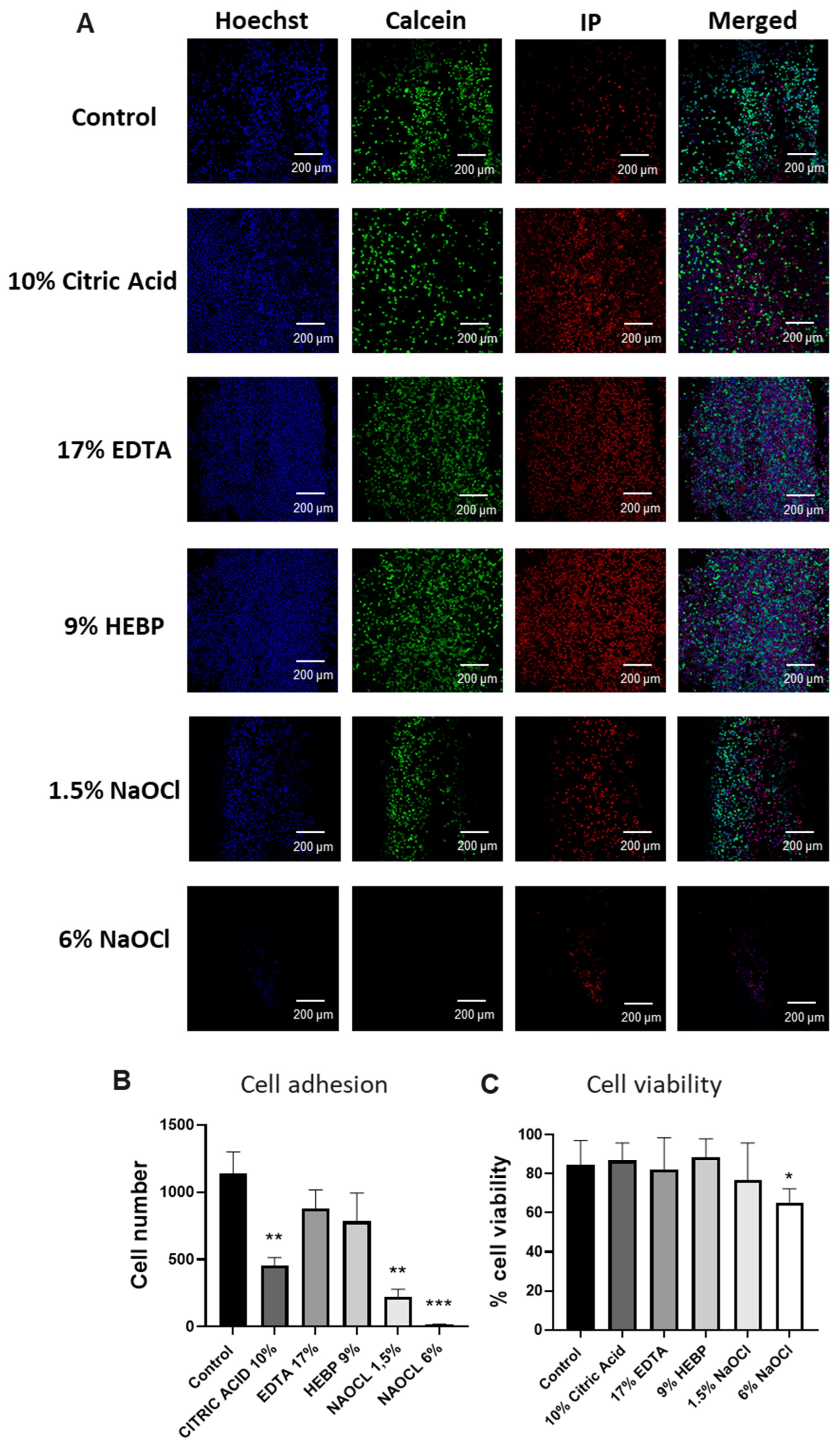
Dental pulp infections are common oral health problems that require thorough treatment to disinfect and prepare the root canal using irrigating solutions. However, research on regenerative procedures in endodontics, particularly those involving immature root canals, has been hindered by the lack of suitable laboratory models. In response, this study aimed to create a 3D microphysiological system (MPS) to mimic immature root canals and test the effects of different irrigating solutions. By using human stem cell-derived DSCS cells, researchers found that some irrigating solutions reduced cell viability and affected cell adhesion in the MPS. Notably, this study identified two irrigating solutions, 17% EDTA and 9% HEBP, that showed promising results in terms of cell viability and adherence in the 3D MPS model. These findings emphasize the importance of the MPS for studying root canal treatments and suggest potential alternatives to traditional irrigating solutions for clinical use. This research could lead to improved treatments for dental pulp infections, benefiting patients and dental practitioners alike.
Abstract
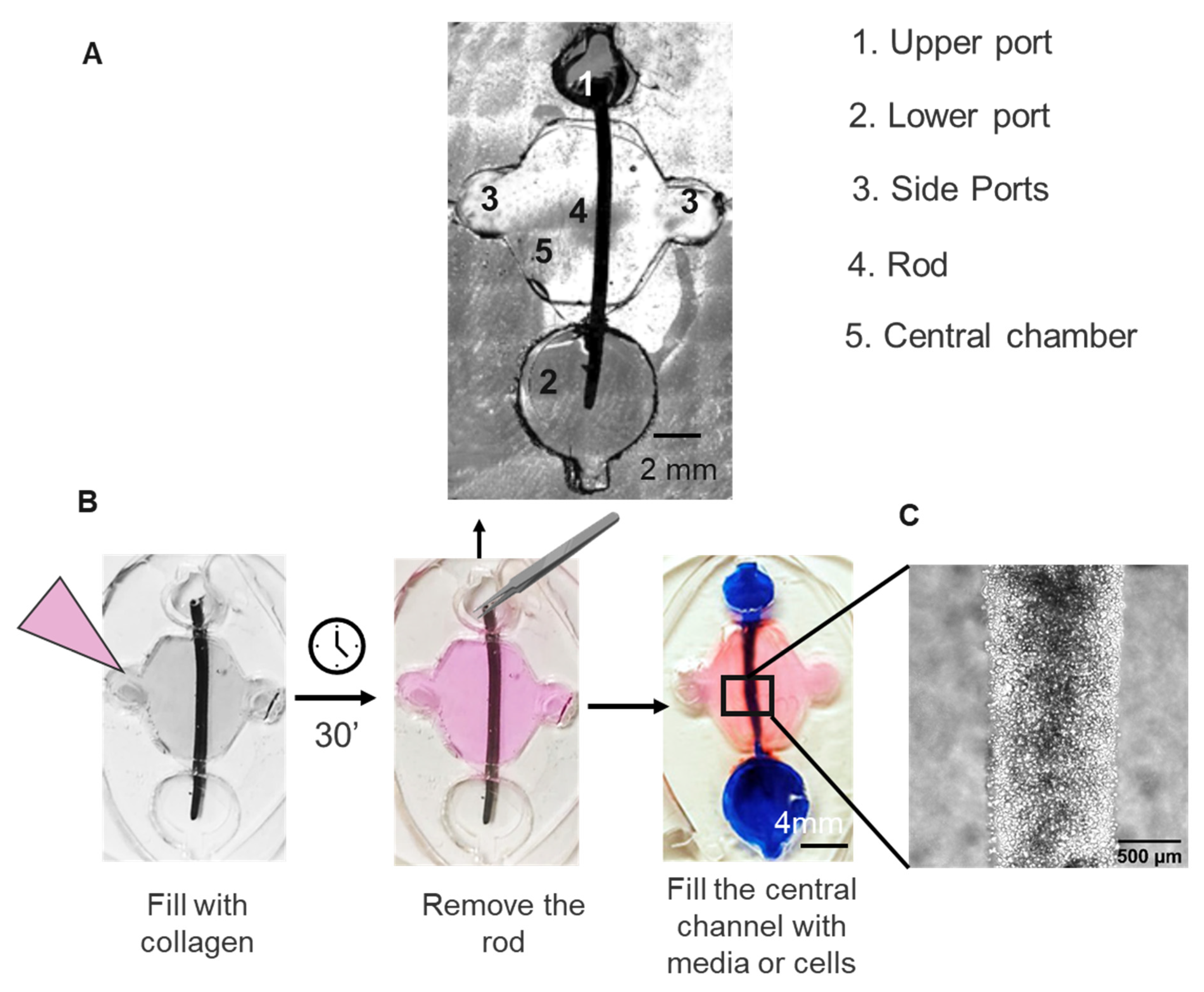
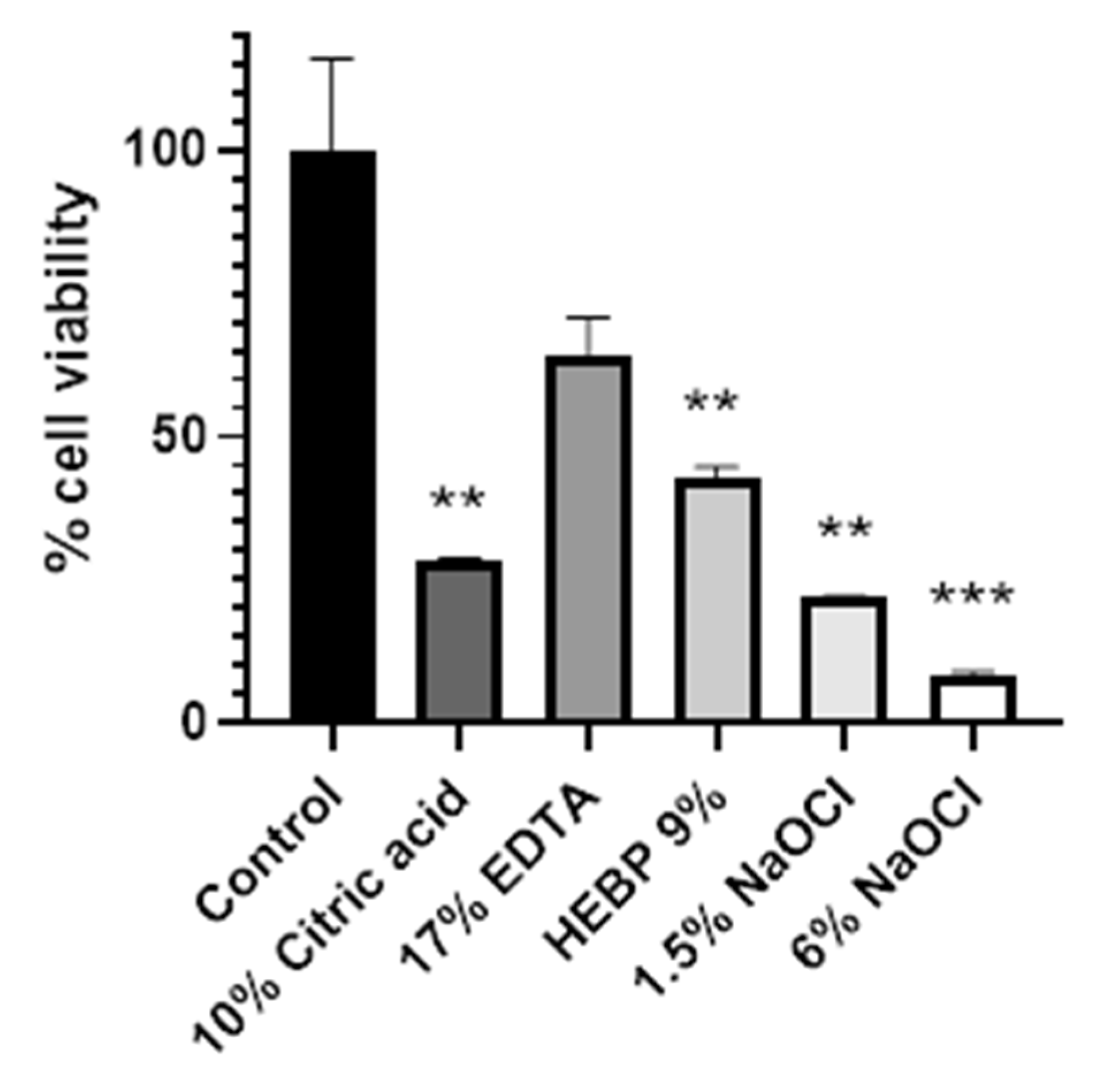
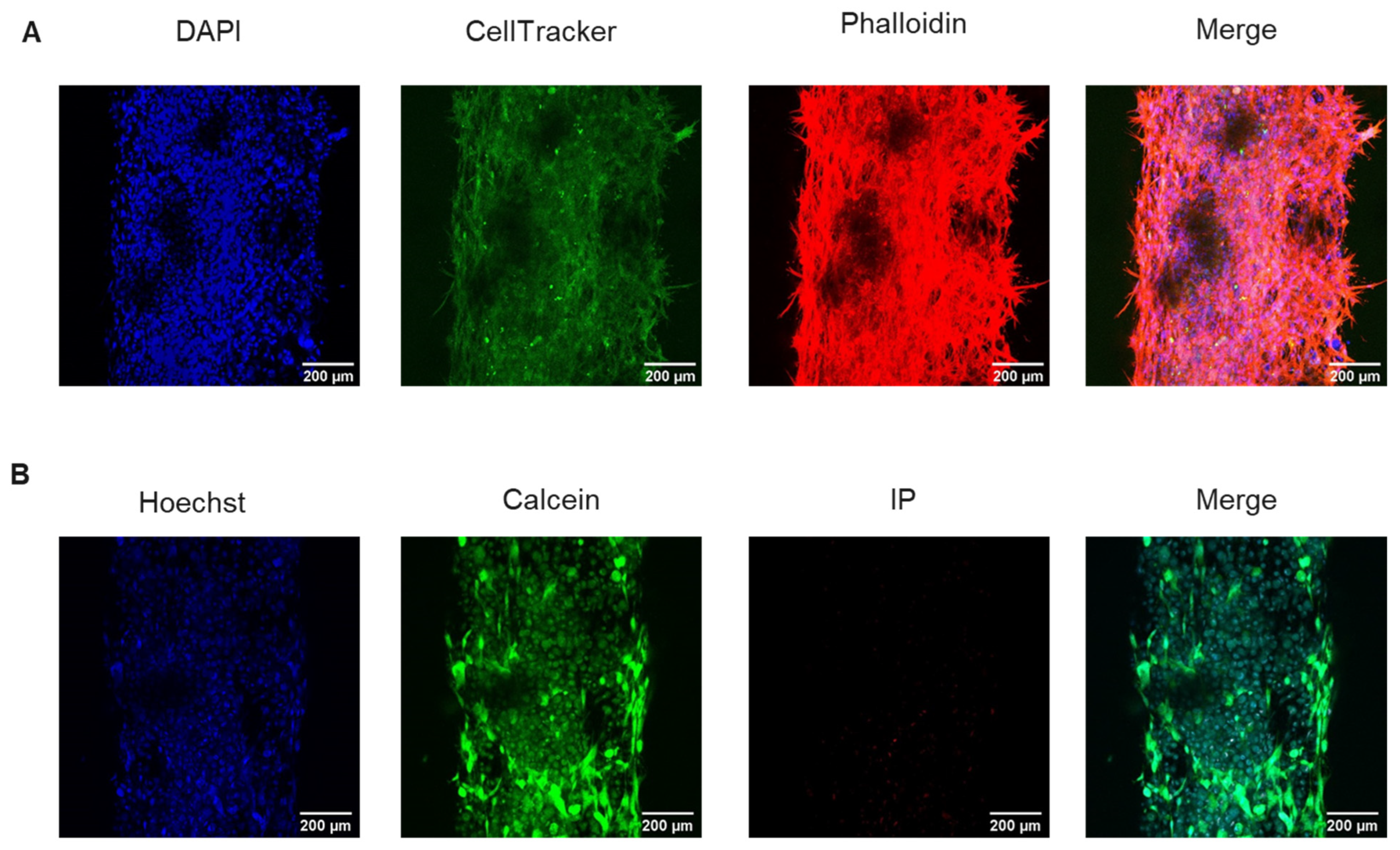
Dental pulp infections are common buccal diseases. When this happens, endodontic treatments are needed to disinfect and prepare the root canal for subsequent procedures. However, the lack of suitable in vitro models representing the anatomy of an immature root canal hinders research on regenerative events crucial in endodontics, such as regenerative procedures. This study aimed to develop a 3D microphysiological system (MPS) to mimic an immature root canal and assess the cytotoxicity of various irrigating solutions on stem cells. Utilizing the Dental Stem Cells SV40 (DSCS) cell line derived from human apical papilla stem cells, we analyzed the effects of different irrigants, including etidronic acid. The results indicated that irrigating solutions diminished cell viability in 2D cultures and influenced cell adhesion within the microphysiological device. Notably, in our 3D studies in the MPS, 17% EDTA and 9% 1-hydroxyethylidene-1, 1-bisphosphonate (HEBP) irrigating solutions demonstrated superior outcomes in terms of DSCS viability and adherence compared to the control. This study highlights the utility of the developed MPS for translational studies in root canal treatments and suggests comparable efficacy between 9% HEBP and 17% EDTA irrigating solutions, offering potential alternatives for clinical applications.