Shifts in the Distribution Range and Niche Dynamics of the Globally Threatened Western Tragopan (Tragopan melanocephalus) Due to Climate Change and Human Population Pressure
by
 , ,
, ,
Muhammad Azhar Jameel
1 ,
,
Muhammad Sajid Nadeem
1,
Shiekh Marifatul Haq
2,*,
Iqra Mubeen
3,
Arifa Shabbir
3,
Shahzad Aslam
1,
Riyaz Ahmad
4,
Abdel-Rhman Z. Gaafar
5,
Bander M. A. Al-Munqedhi
5,* and
Rainer W. Bussmann
2,6
1
Department of Zoology, Wildlife & Fisheries, PMAS-Arid Agriculture University, Rawalpindi 46300, Pakistan
2
Department of Ethnobotany, Institute of Botany, Ilia State University, 0162 Tbilisi, Georgia
3
Department of Zoology, Government College University, Lahore 54300, Pakistan
4
National Center for Wildlife, Riyadh 11575, Saudi Arabia
5
Department of Botany and Microbiology, College of Science, King Saud University, Riyadh 11451, Saudi Arabia
6
Department of Botany, Institute of Life Sciences, State Museum of Natural History, 76133 Karlsruhe, Germany
*
Authors to whom correspondence should be addressed.
Biology 2023, 12(7), 1015; https://doi.org/10.3390/biology12071015
Submission received: 3 June 2023
/
Revised: 24 June 2023
/
Accepted: 27 June 2023
/
Published: 17 July 2023
(This article belongs to the Special Issue Conservation and Evolution of Wildlife in the Context of Climate Change and Human Population Growth)
Simple Summary
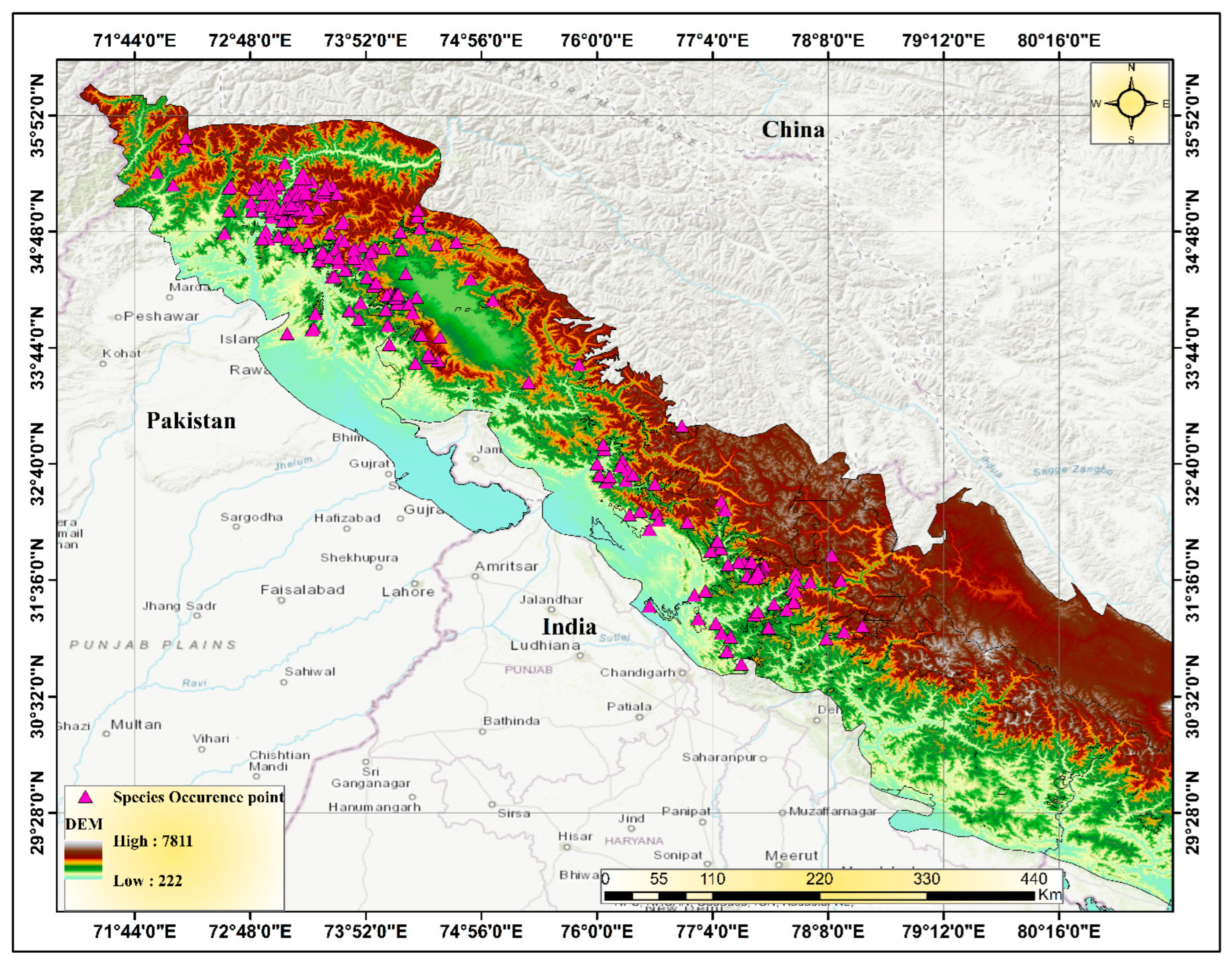
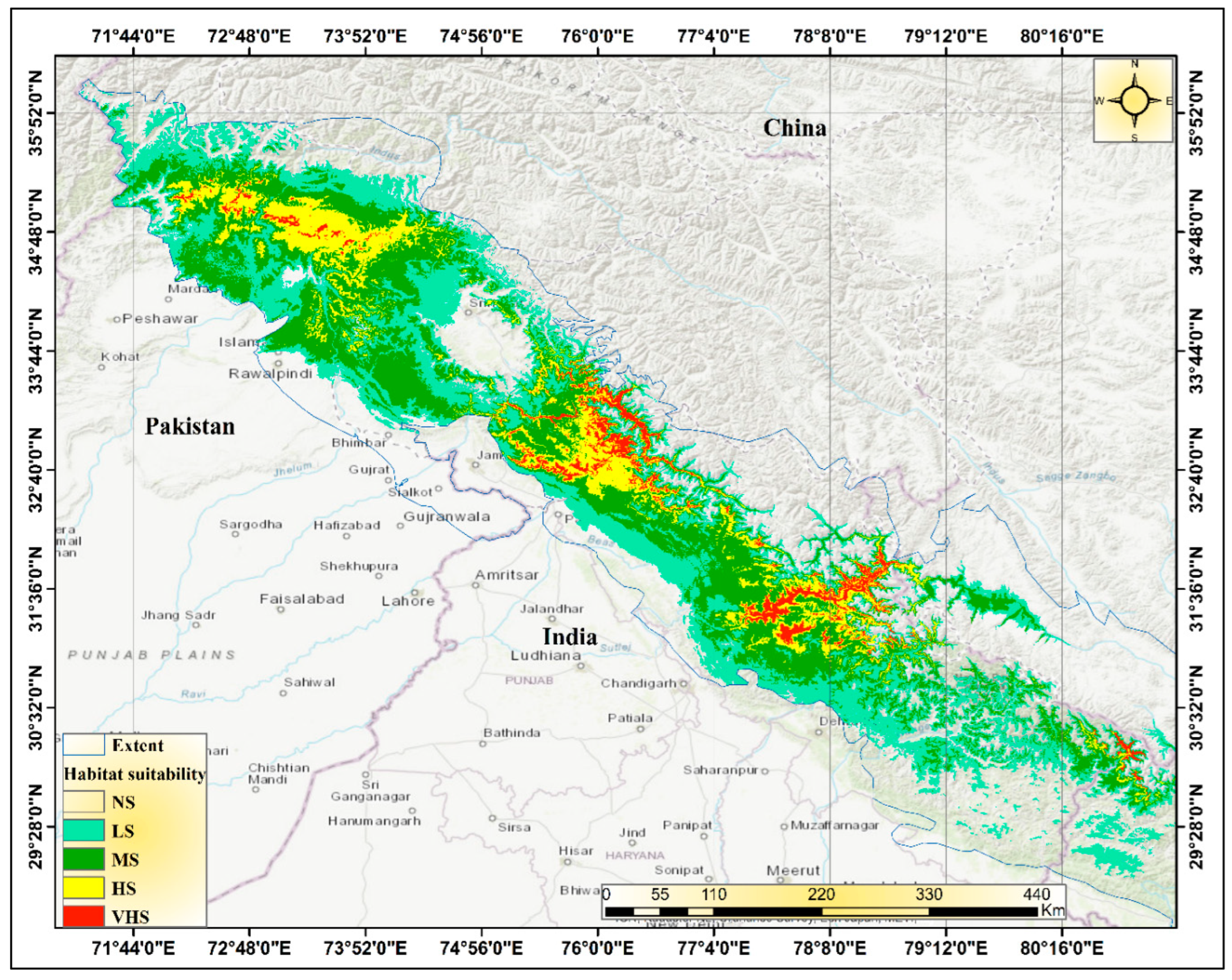
Given the potential impact of climate change on the distributions of endemic species, it is critical to implement species recovery and habitat management measures to protect threatened species. This study used MaxEnt modeling to assess the species’ habitat suitability in varying climate scenarios in the Western Himalayas and identified ten influential drivers. Our field-based observations of Tragopan melanocephalus show that the species typically lives at elevations between 1850 and 3800 m, which is consistent with the species’ reported affinity for extremely high elevations between 1500 and 4000 m above sea level. Our findings reveal that areas with high and moderate suitability for the species are patchily distributed throughout the Western Himalayas, ranging from northeastern Pakistan to central Himachal Pradesh and Uttarakhand. Moreover, there are continuous strips of highly suitable habitats along the Pakistan–Afghanistan border, in the Kashmir region, and in the Annapurna region of Uttarakhand. The study observed that the Western Tragopan’s habitat suitability may increase under future climate change scenarios, but additional research is needed to avert population collapses and identify other potential drivers of local extinction occurrences. To support increased biodiversity and lower risks under current and anticipated future climatic conditions, it is advised that the suitable areas identified be designated as nature reserves. According to the study’s findings, a more effective wildlife management strategy might significantly help with the reintroduction of the Tragopan melanocephalus population into its suitable habitats in western Himalaya, thereby advancing the global objectives set for the UN Decade of Ecosystem Restoration targets (2021–2030).
Abstract
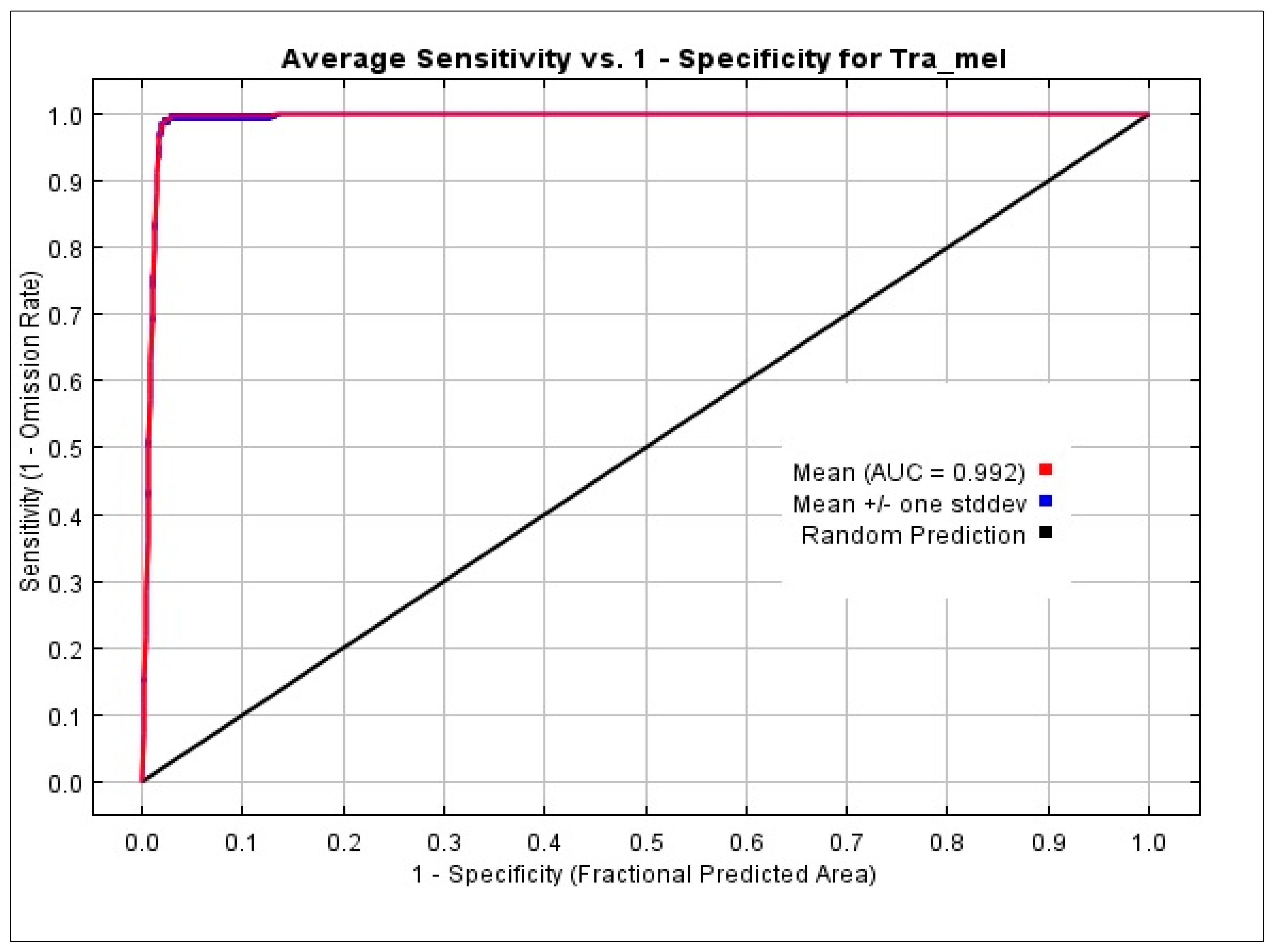
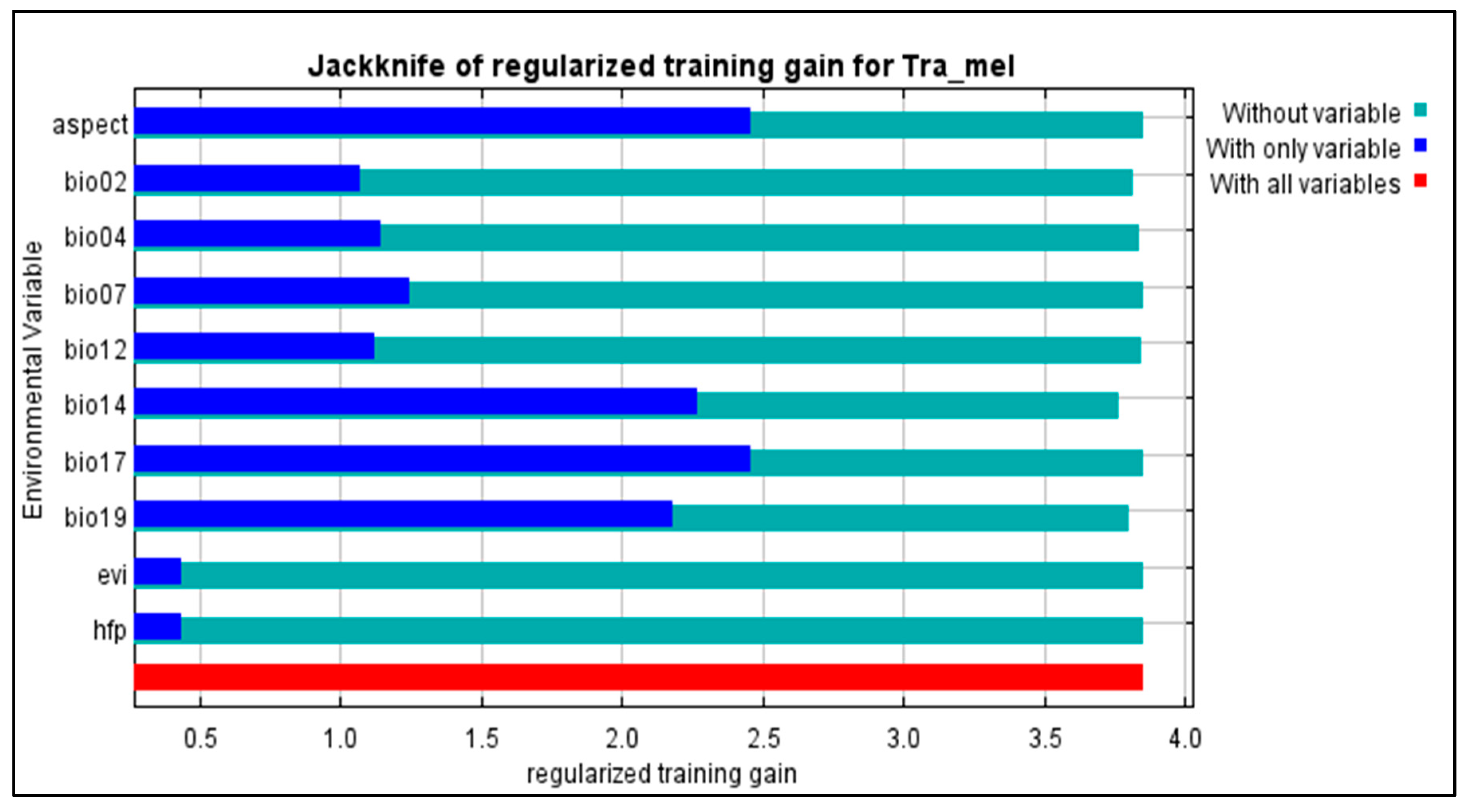
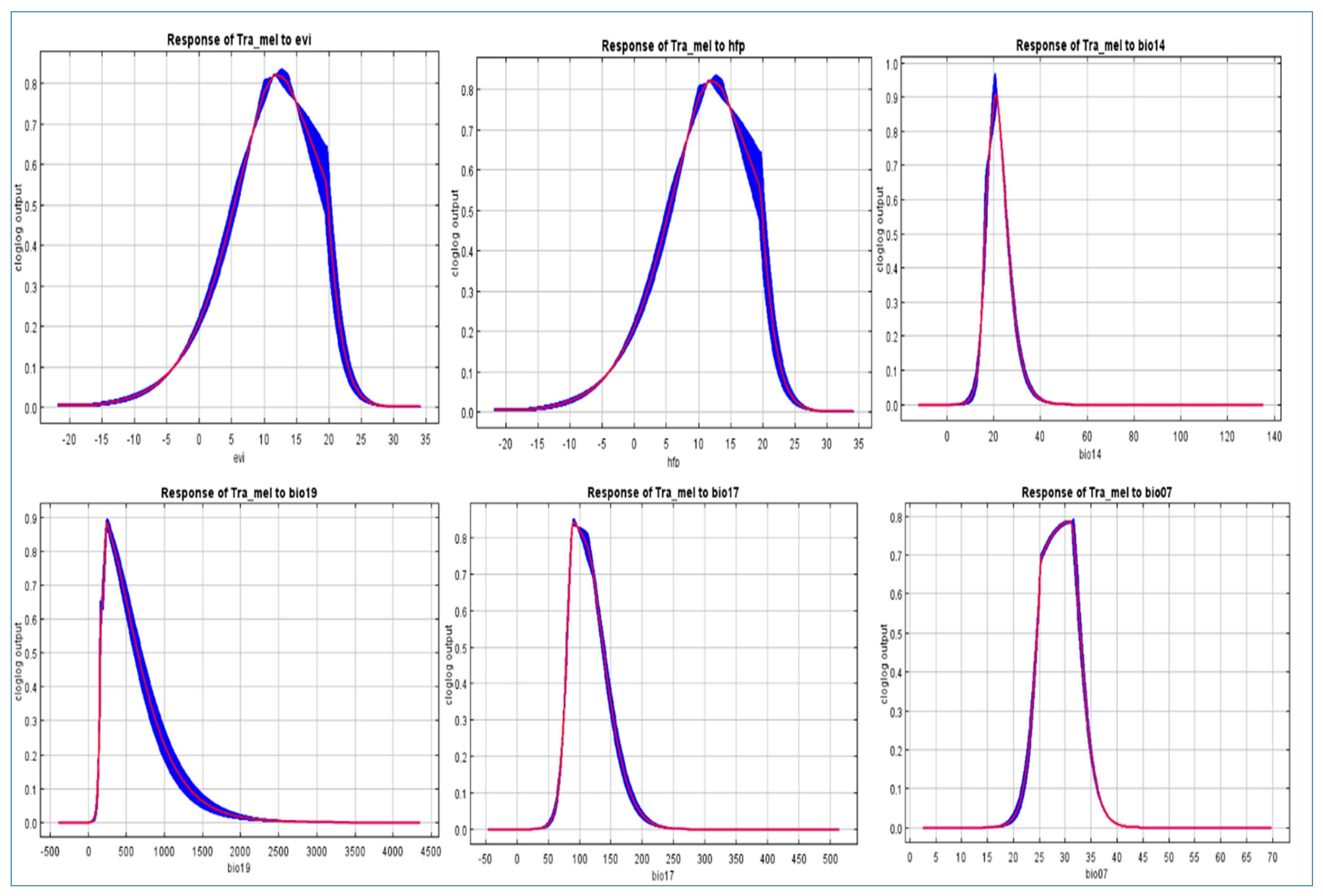
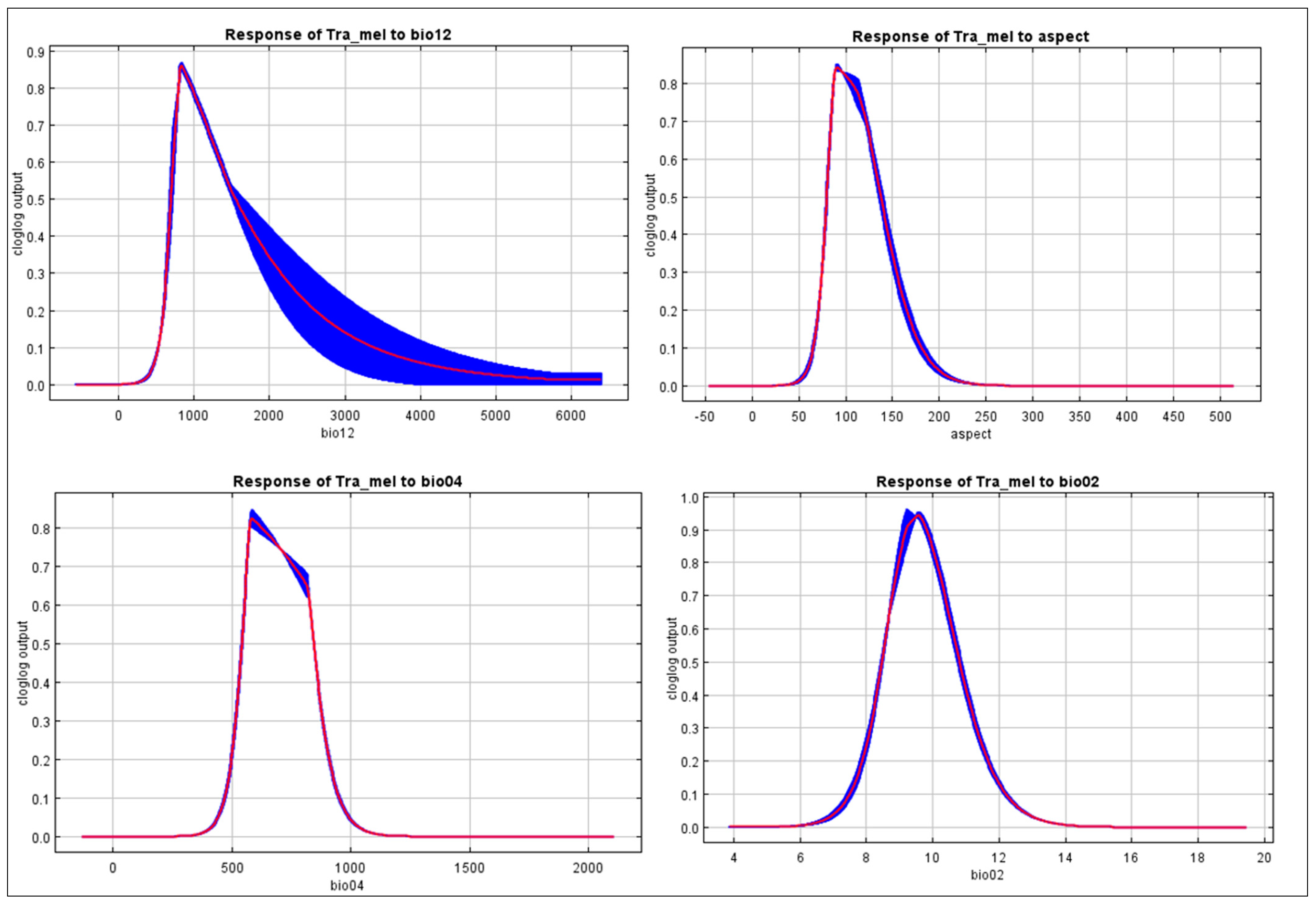
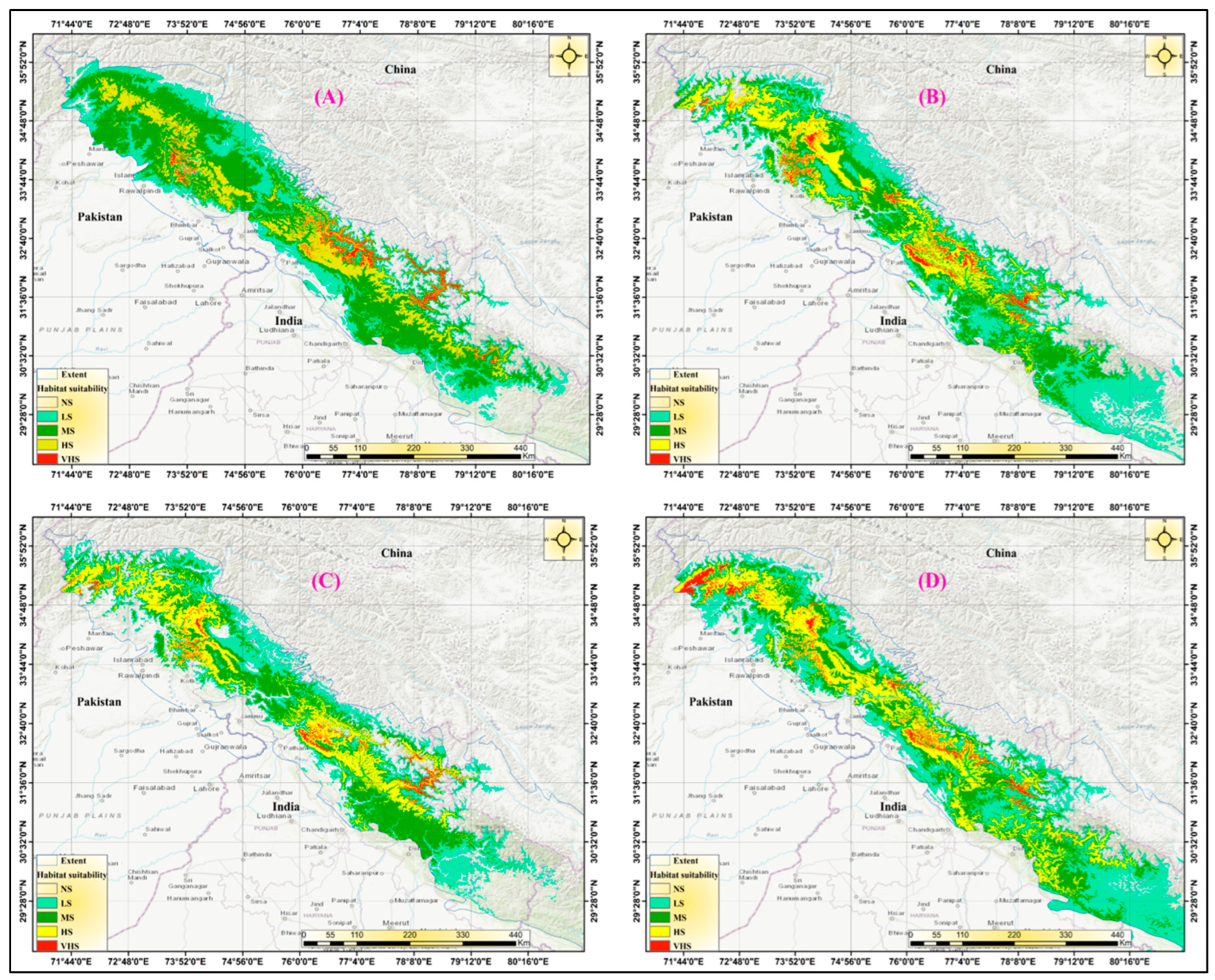
The impact of a changing climate, particularly global warming, often harms the distribution of pheasants, particularly those with limited endemic ranges. To effectively create plans of action aimed at conserving species facing threats such as the Western Tragopan, (Tragopan melanocephalus; Gray, 1829; Galliformes, found in the western Himalayas), it is crucial to understand how future distributions may be affected by anticipated climate change. This study utilized MaxEnt modeling to assess how suitable the habitat of the targeted species is likely to be under different climate scenarios. While similar studies have been conducted regionally, there has been no research on this particular endemic animal species found in the western Himalayas throughout the entire distribution range. The study utilized a total of 200 occurrence points; 19 bioclimatic, four anthropogenic, three topographic, and a vegetation variable were also used. To determine the most fitting model, species distribution modeling (SDM) was employed, and the MaxEnt calibration and optimization techniques were utilized. Data for projected climate scenarios of the 2050s and 2070s were obtained from SSPs 245 and SSPs 585. Among all the variables analyzed; aspect, precipitation of coldest quarter, mean diurnal range, enhanced vegetation index, precipitation of driest month, temperature seasonality, annual precipitation, human footprint, precipitation of driest quarter, and temperature annual range were recognized as the most influential drivers, in that order. The predicted scenarios had high accuracy values (AUC-ROC > 0.9). Based on the feedback provided by the inhabitants, it was observed that the livability of the selected species could potentially rise (between 3.7 to 13%) in all projected scenarios of climate change, because this species is relocating towards the northern regions of the elevation gradient, which is farther from the residential areas, and their habitats are shrinking. The suitable habitats of the Tragopan melanocephalus in the Himalayan region will move significantly by 725 m upwards, because of predicted climate change. However, the fact that the species is considered extinct in most areas and only found in small patches suggests that further research is required to avert a further population decline and delineate the reasons leading to the regional extinction of the species. The results of this study can serve as a foundation for devising conservation strategies for Tragopan melanocephalus under the changing climate and provide a framework for subsequent surveillance efforts aimed at protecting the species.