Key Factors Regulating the Interdomain Dynamics May Contribute to the Assembly of ASC



1
Department of Chemistry & Chemical Biology, The University of New Mexico, Albuquerque, NM 87131, USA
2
Department of Biochemistry, Virginia Tech, 340 West Campus Dr., Blacksburg, VA 24061, USA
*
Author to whom correspondence should be addressed.
Biology 2023, 12(6), 796; https://doi.org/10.3390/biology12060796
Submission received: 3 May 2023
/
Revised: 26 May 2023
/
Accepted: 29 May 2023
/
Published: 31 May 2023
(This article belongs to the Section Cell Biology)
Simple Summary
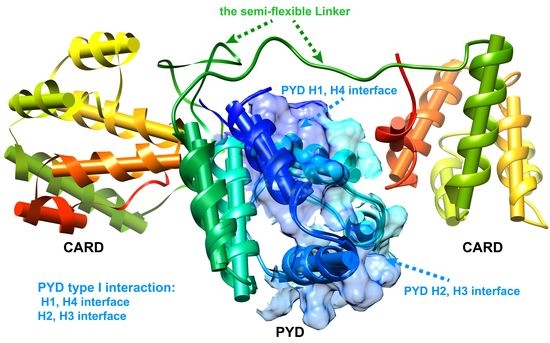
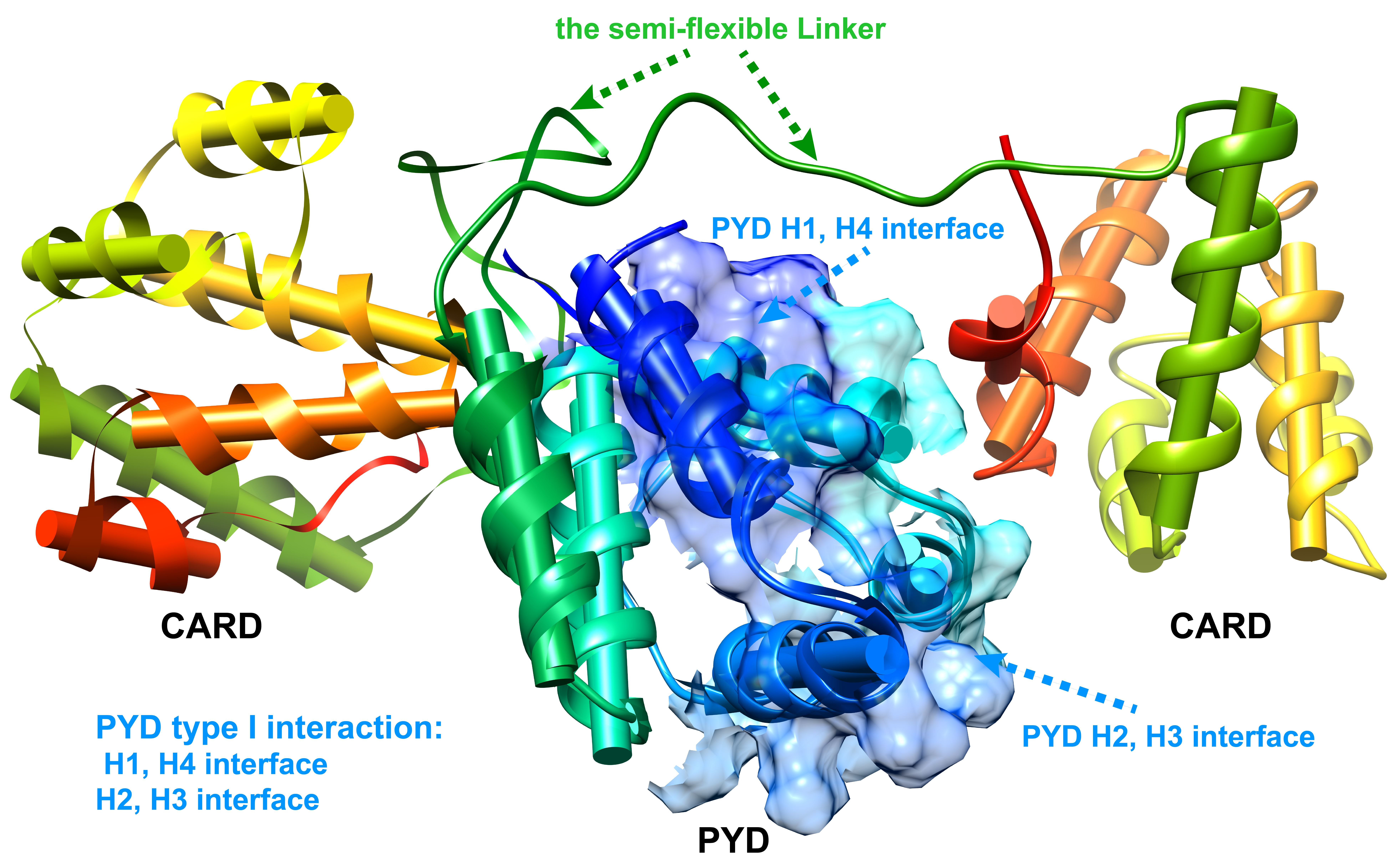
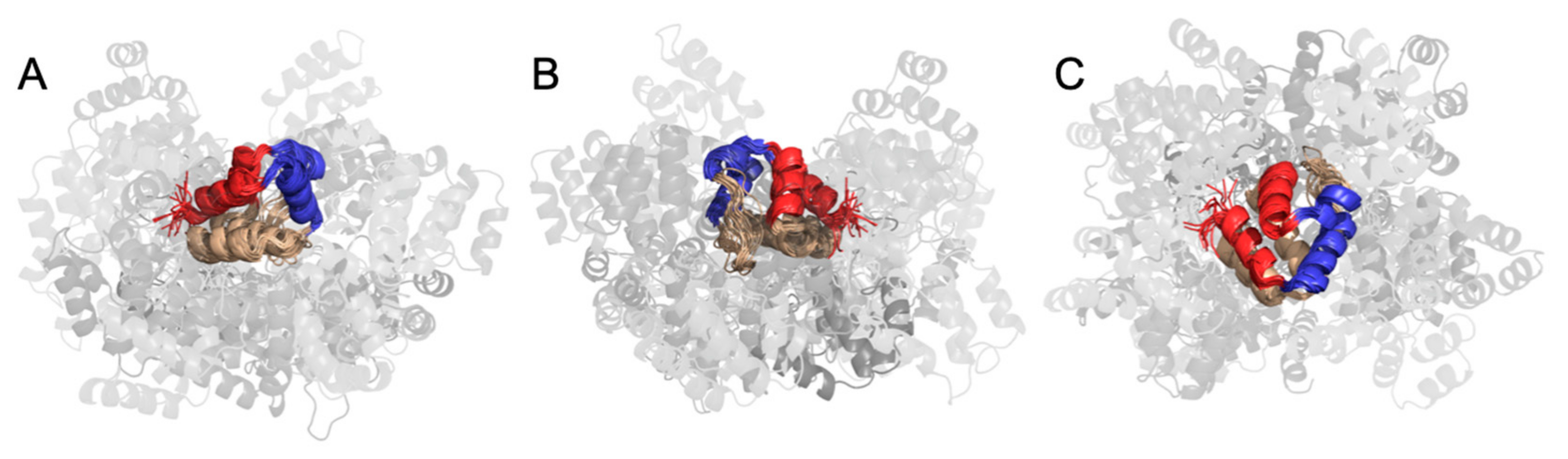
The innate immune system in our bodies responds to pathogenic infections and cellular damage by inducing pyroptosis through the assembly of inflammasome complexes. The apoptosis-associated speck-like protein containing a CARD (ASC) serves as an adapter, recognizing pattern recognition receptors (PRRs) and procaspase-1 based on the homotypic interactions of the pyrin domains (PYD) and the caspase recruitment domains (CARD) within the inflammasome complexes. The structural diversity of ASC and the role of the semi-flexible linker in structural transitions are critical in understanding the biological functions of ASC. This study employs molecular dynamics simulations to explore the structural dynamics of ASC and to analyze the potential relationship between interdomain dynamics and the biological roles of ASC as an adapter. The findings suggest that ASC dynamics partially originate from the movement of the linker and that the type I interaction surface on PYD is generally exposed and inaccessible to the CARD domain. These insights are consistent with experimental results and shed light on the function-related dynamic behaviors of ASC.
Abstract
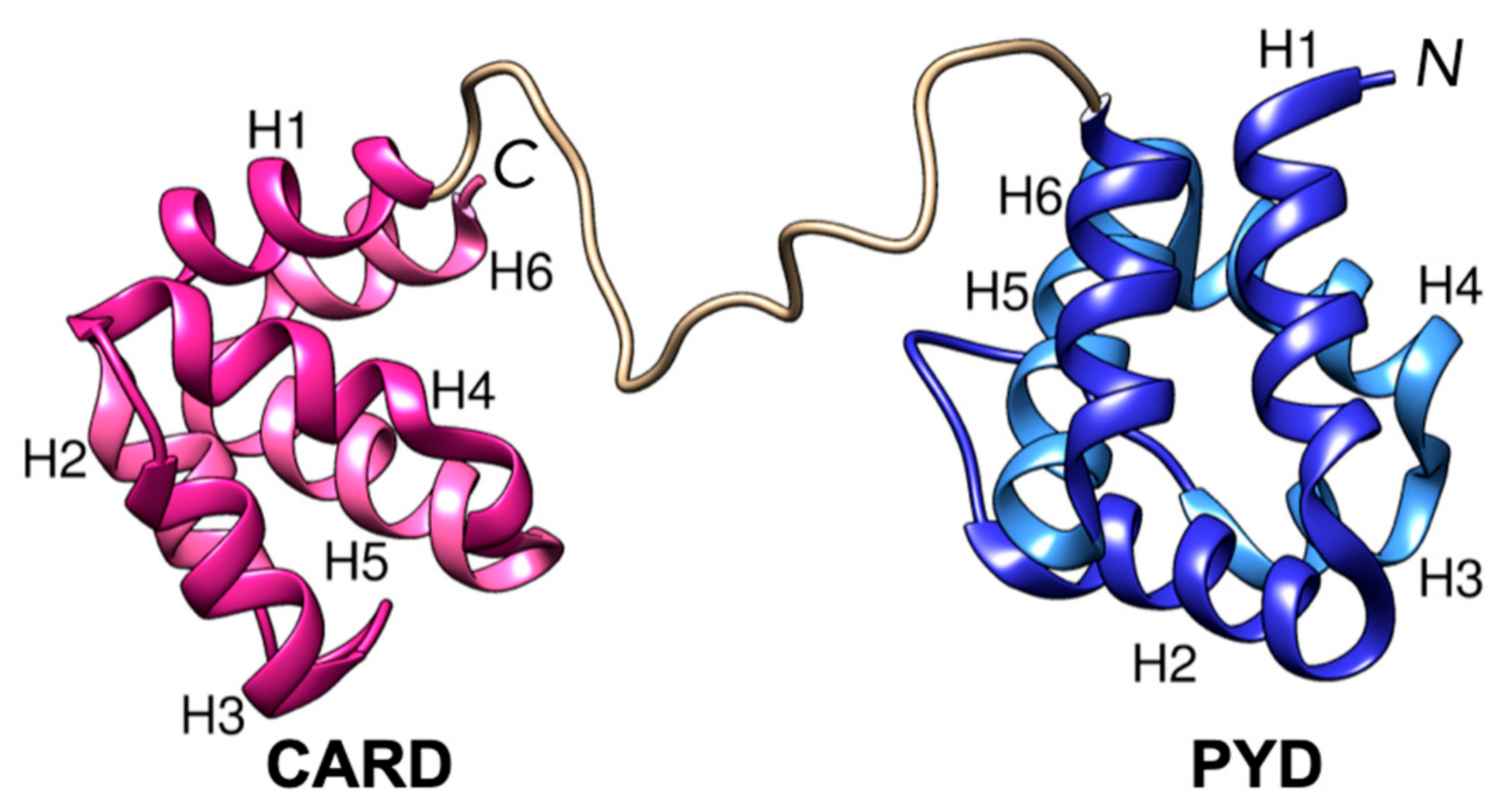
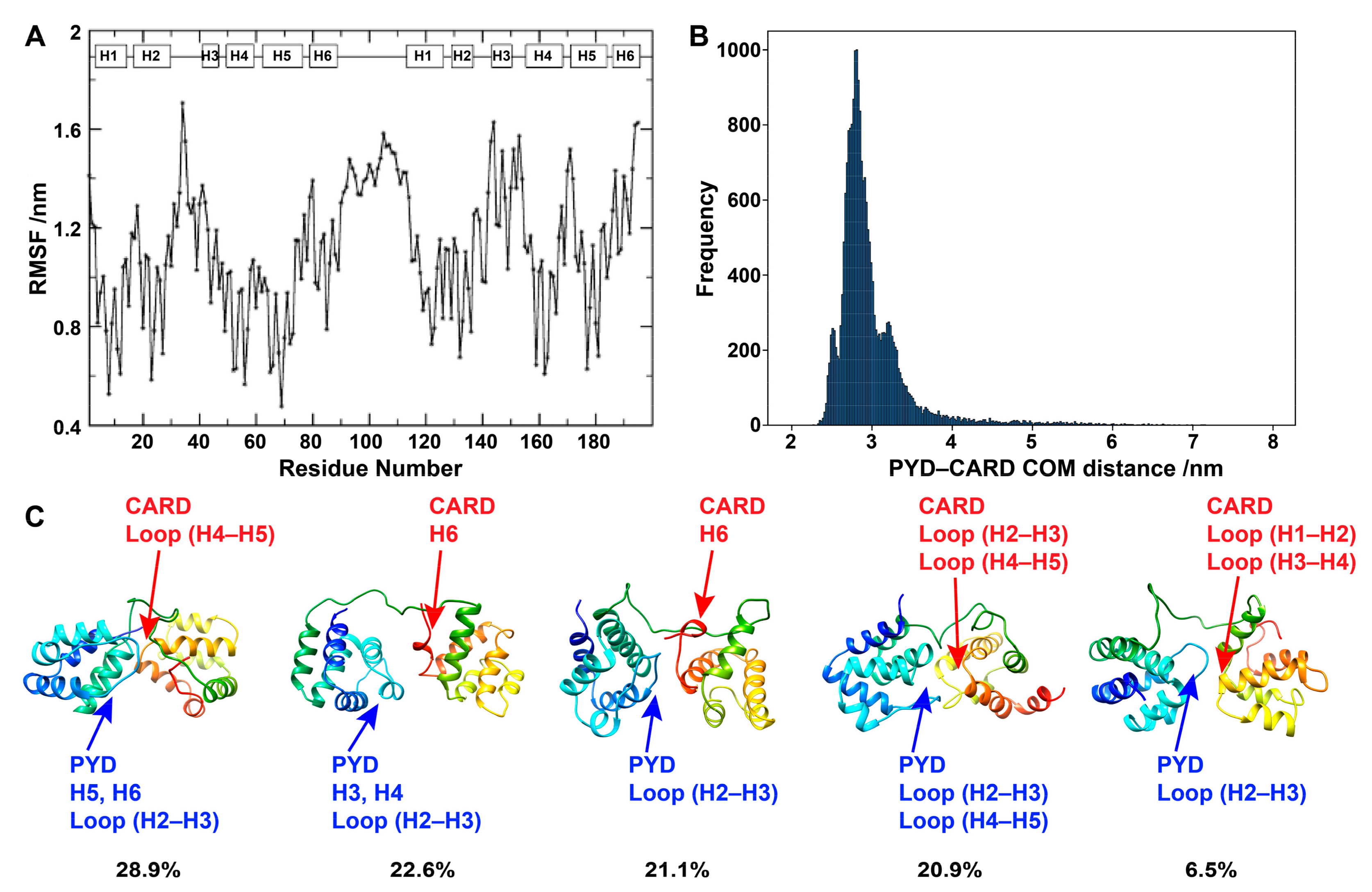
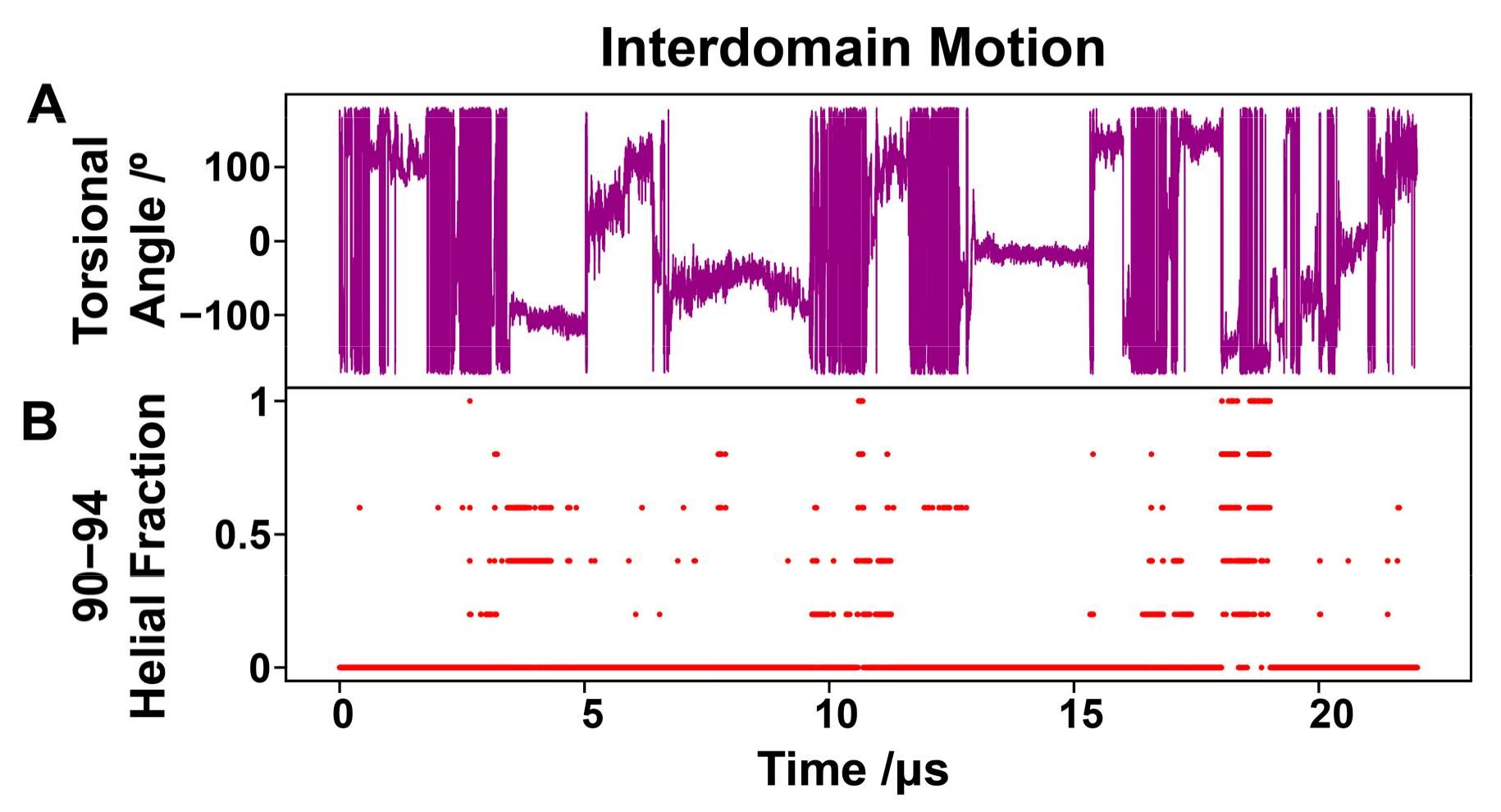
The canonical ASC domains, PYD and CARD, are interconnected by a lengthy, semi-flexible linker. The molecular basis and purpose of ASC’s highly dynamic feature remain elusive. In this study, all-atom molecular dynamics simulations were utilized to examine the role of the linker and the interdomain dynamics of the ASC monomer. As revealed in the principal component analysis (PCA), the flexible linker enables interdomain dynamics and rotation. The stumbling between domains is partially attributed to the helical portion of N-terminal residues in the linker. Additionally, the linker exhibits a certain structural preference due to the turn-type structural inclination of the N-terminal and the presence of several prolines on the linker. Such structural preferences lead to the unavailability of regions for PYD type I interactions to CARDs, as evidenced by the CARD spatial restraint analysis. In conclusion, the semi-flexible linker introduces functionally relevant interdomain dynamics, potentially enhancing PYD self-assembly and the subsequent assembly of the inflammasome complex.