Predator-Prey Relationship between Urban Bats and Insects Impacted by Both Artificial Light at Night and Spatial Clutter

1
Department of Biology, University of North Carolina Greensboro, Greensboro, NC 27412, USA
2
Department of Biology, Baylor University, Waco, TX 76798, USA
*
Author to whom correspondence should be addressed.
Biology 2022, 11(6), 829; https://doi.org/10.3390/biology11060829
Submission received: 7 April 2022
/
Revised: 16 May 2022
/
Accepted: 24 May 2022
/
Published: 27 May 2022
(This article belongs to the Section Ecology)
Simple Summary
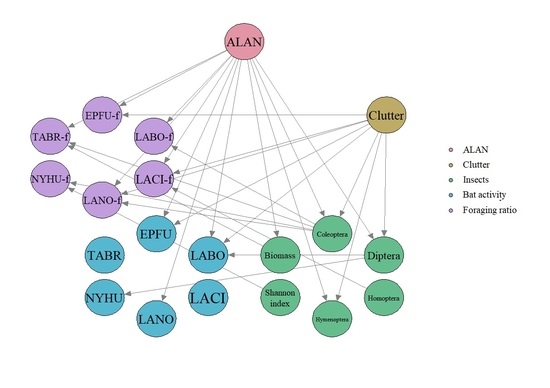
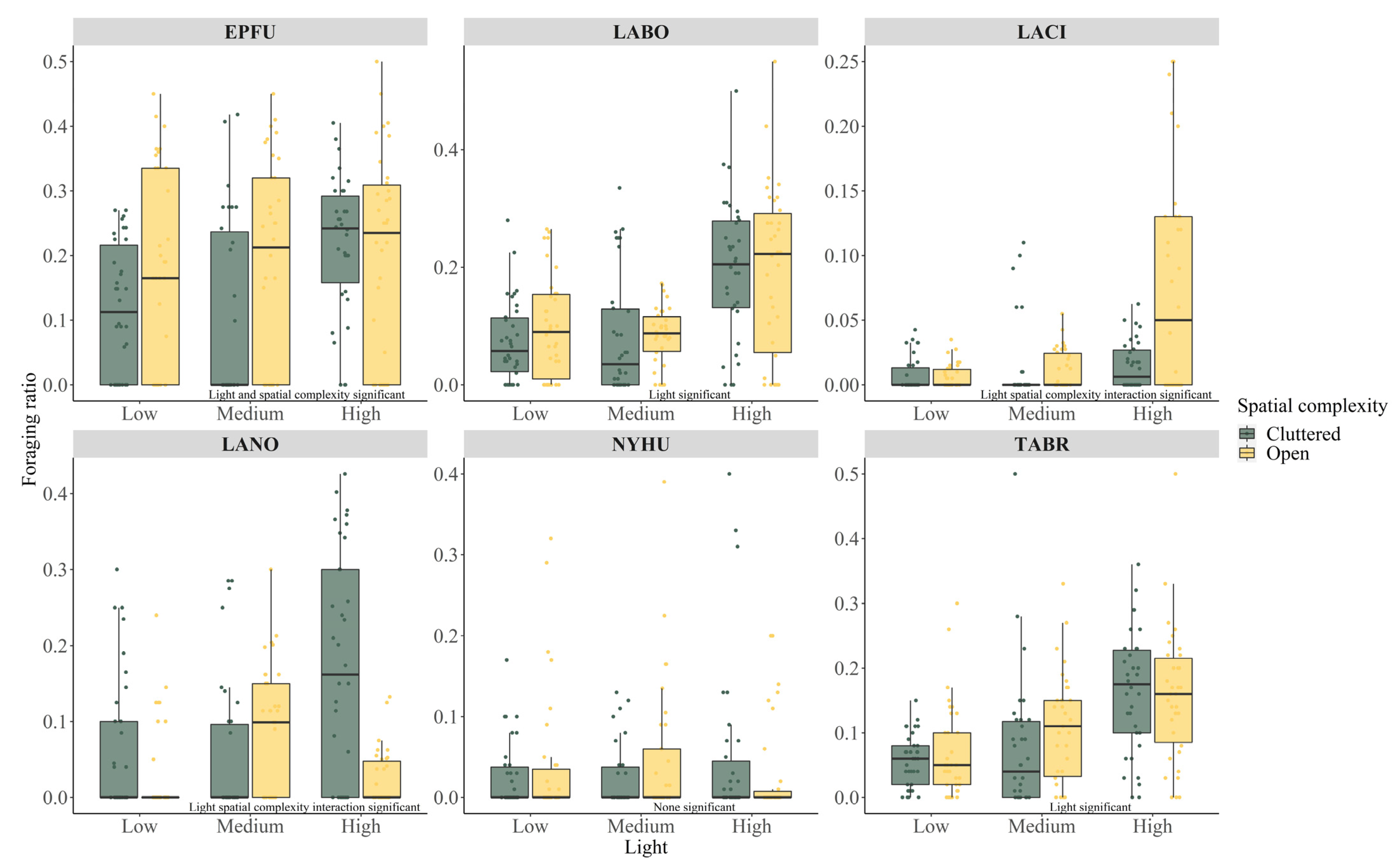
Artificial light at night provides convenience and a perception of safety for humans. However, it is an environmental pollutant to many wildlife species. We found that in the city artificial light at night attracted insects, which could be a source of food for bats. However, whether bats could use this food source depended on their ability to navigate through objects in space. We found that bats that preferred open habitats did not fully use insects attracted by artificial light at night when foraging sites were cluttered by fences, billboards, and other objects. In contrast, bats that were considered not to benefit from artificial light at night could take advantage of cluttered sites and be more active and forage more. Lastly, there were a few species absent in our study, which could be light-sensitive and not adaptive to urban environments. We suggest that limiting or reducing artificial light at night is needed to conserve bats.
Abstract
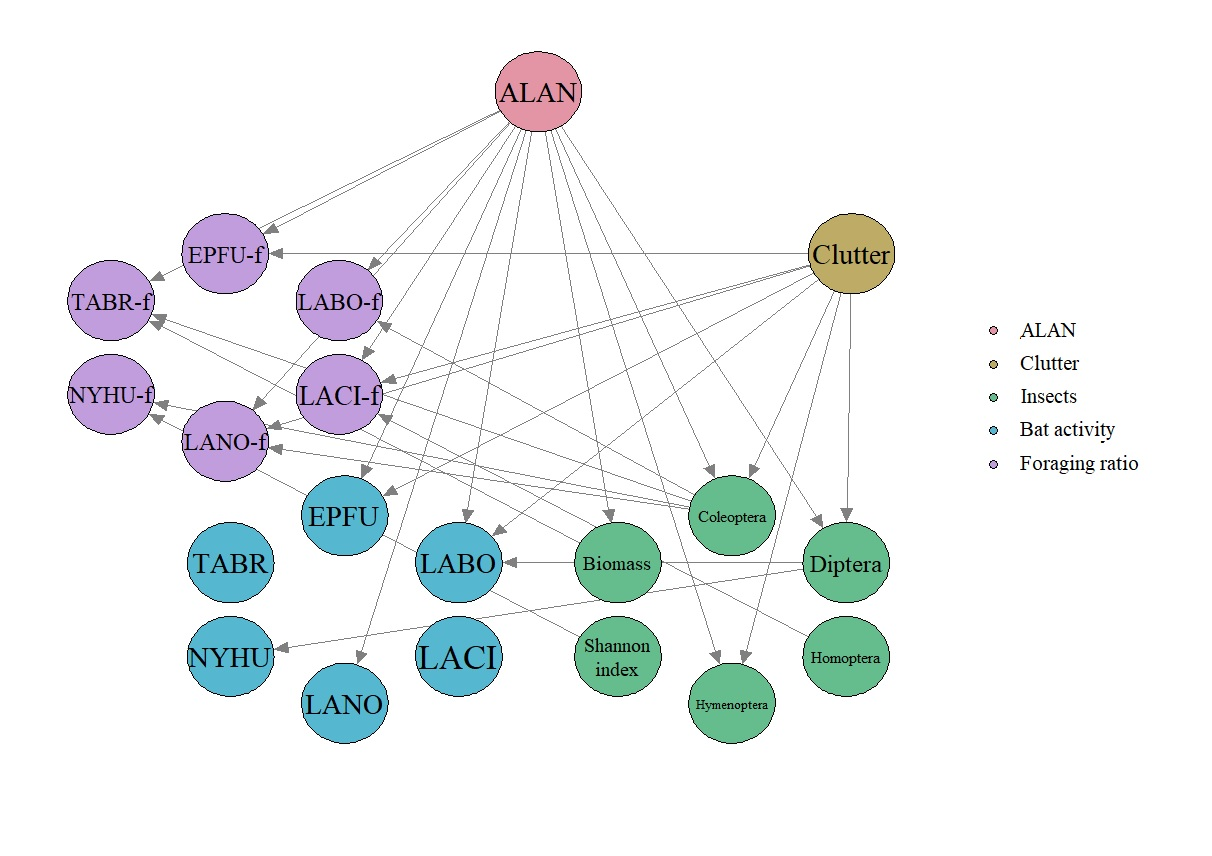
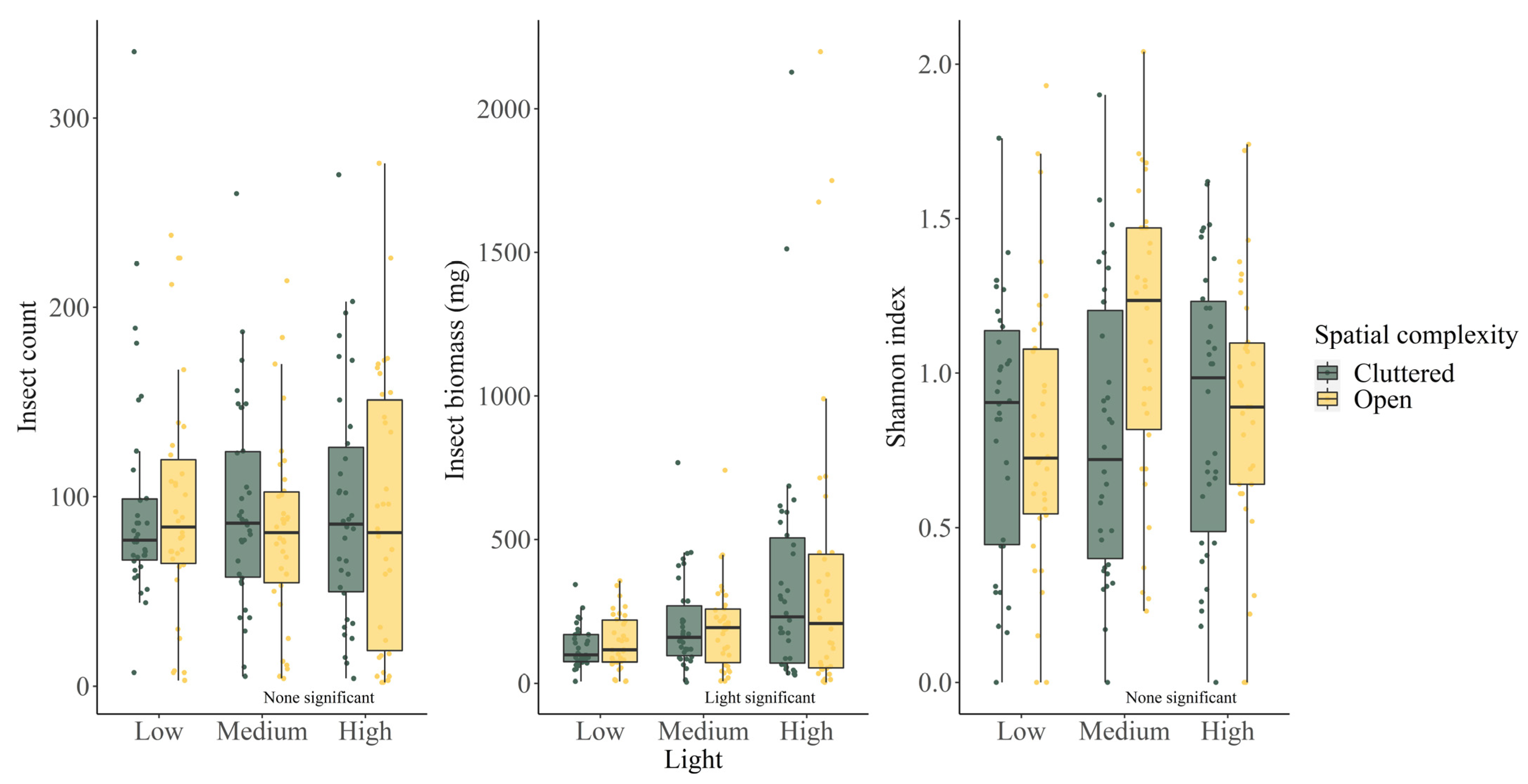
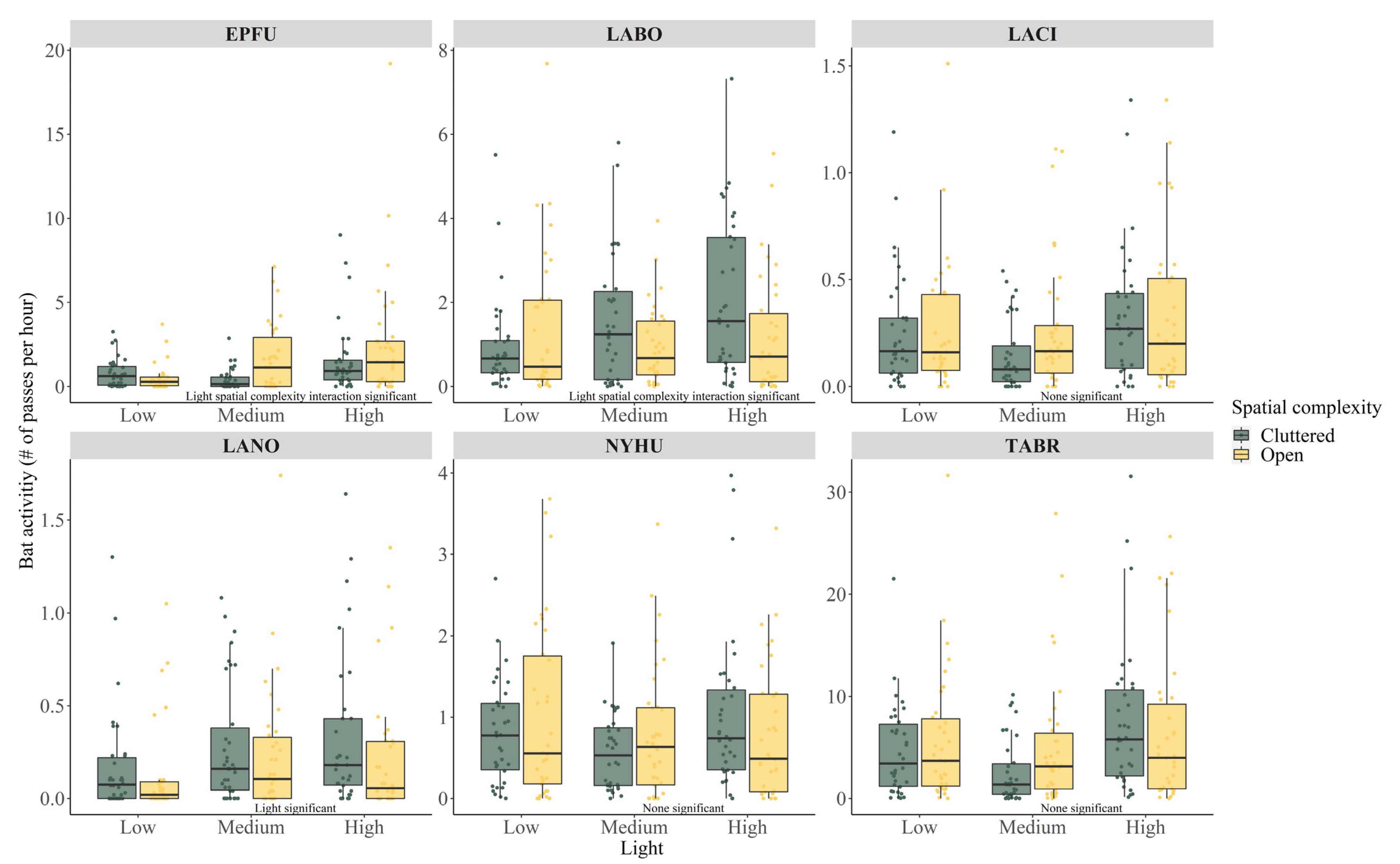
Predators respond to the increase of prey by aggregation in space or foraging more often. However, foraging habitat suitability limits predators’ responses. For nocturnal insectivorous bats, artificial light at night (ALAN) can trigger insect prey aggregation. It is not clear how ALAN might affect predator-prey relationships in the urban setting, where urban bats could have adapted to the city, and novel spatial complexity introduced by man-made objects might alter foraging habitat suitability. We strategically selected sites to represent different levels of ALAN and spatial complexity. We recorded bat commuting and foraging activities and collected aerial insects to examine how ALAN and spatial complexity affected bat-insect relationships. We found that insect biomass was positively correlated with ALAN, but was not affected by spatial complexity. Large-sized big brown bats and hoary bats positively responded to change of prey in open sites whereas small-sized eastern red bats and silver-haired bats positively responded in cluttered sites, suggesting that the impact of ALAN could vary when ALAN is coupled with urban spatial complexity. Our study demonstrates that foraging habitat suitability can alter which species might benefit from ALAN. Predator-prey relationships in cities are complex, but general ecological principles still apply in novel urban ecosystems.