Article

Durability Assessment of Elastolefin-Based Workwear Fabrics

by
Izabela Jasińska
1,*,
Alicja Nejman
1,
Beata Tkacz-Szczęsna
1 and
Sandra Flinčec Grgac
2
1
Łukasiewicz Research Network- Lodz Institute of Technology, 19/27 Str. M. Skłodowskiej-Curie, 90-570 Łódź, Poland
2
Faculty of Textile Technology, University of Zagreb, Prilaz Baruna Filipovića 28a, 10 000 Zagreb, Croatia
*
Author to whom correspondence should be addressed.
Fibers 2026, 14(3), 35; https://doi.org/10.3390/fib14030035
Submission received: 10 January 2026 / Revised: 27 February 2026 / Accepted: 3 March 2026 / Published: 9 March 2026

Highlights

What are the main findings?
  • The elastic woven fabrics containing elastolefin filaments in the werf direction were subjected to investigate their resistance toward extensive industrial washing.
  • The mechanical and utility properties of elastic woven fabrics after multiple industrial washes were assessed.
What is the implication of the main finding?
  • The elastic fabrics containing elastolefin maintain their high elasticity, even after 100 industrial washing cycles.
  • The abrasion and pilling resistance remained at good levels, especially for elastic fabrics mainly made of polyester fibre sheath.

Abstract

Textile fabrics intended for use in protective clothing, workwear, and uniforms are subjected to repeated high-temperature industrial washing and drying processes. It is evident that due to the rigorous nature of the prescribed preservation conditions, textiles that are currently utilised for this purpose do not contain elastomeric yarns: a consequence of their suboptimal thermal stability. However, elastomers enable garments to better fit the wearer’s figure and enhance safety and comfort during occupational activities. Currently, no investigations of EOL (elastolefin) yarn elastic durability under commercial maintenance conditions have been conducted. The publication evaluates the elastic properties and pilling resistance of fabrics with EOL-core weft yarns before and after repeated industrial washing under conditions that are typical of rental use. Additionally, an analysis using SEM, FTIR spectroscopy, thermal and thermogravimetric techniques of core-yarns and the core itself was performed. The tested fabrics retained a high elasticity index, even after 100 industrial washing cycles, as confirmed by instrumental analysis. In conclusion, fabrics with EOL-core yarns can be used for garments that are subjected to intensive maintenance in industrial washing conditions without losing their elastic properties.

1. Introduction

Fabrics intended for protective clothing, workwear, uniforms, and formal wear are subjected to repeated industrial washing and drying at high temperatures: washing at 75/85 °C and tunnel drying at 155 °C [1]. Many companies prefer to adopt a rental model for maintaining workwear distribution, cleaning and redistribution among employees [2,3]. The rental model is also investigated for common users’ garments in the form of a shared wardrobe [4,5,6]. A similar approach was explored in a research paper published in Sustainability [7], which examined consumers’ willingness to rent or buy second-hand clothes. The above-mentioned ideas of renting or buying used clothes by customers need to ensure the garments’ long-term durability, including after maintenance procedures. The rental model is convenient for companies, as outsourcing non-core company activities is reasonable. The industrial washing procedures consume 73% less water and 85% less detergent and reduce CO2 emissions by 33% [8]. On the other hand, industrial washing is carried out under more rigorous conditions than domestic washing. Currently used textile fabrics for workwear, which must meet the requirements of relevant standards [9,10], are mainly made from cotton fibres or cotton–polyester blends [11]. Elastomer yarns are not typically used in protective clothing or even workwear. They are more common in career wear garments, which do not require strict standard criteria and are washed in milder conditions. According to the survey presented in a research paper published in Resour. Conserv. Recycl. [12], 62% of respondents identified a lack of elasticity as one of the main problems during field trial tests. The reason for this was a discrepancy between actual body measurements and actual garment size, but this could be partially compensated for by the fabric’s high elasticity. Elastomer or elastomer-core yarns are characterised by a low resistance to temperature (washing process usually at 40 °C), alkaline agents (washing bath, dyeing process) and solar radiation (susceptibility to damage after prolonged exposure) [13]. They exhibit excellent elastic recovery and a low decay rate ratio, which is important, especially for high-performance garments [14]. The high level of garment elasticity ensures comfort of movement during the wearer’s occupation-related activities. This is especially pertinent to professional activities that necessitate frequent alterations in body position, such as standing, kneeling, and sitting. It is also applicable to roles that require the adoption of a forced body position, including prolonged kneeling and working in a stooped posture. Low thermal resistance, including that related to care processes, is the main obstacle to their use in the construction of fabrics intended for workwear, protective clothing, or uniforms. The currently used design solutions could limit undesired phenomena such as the exposure of body areas (ankles, wrists, lower back), but the use of elastic woven fabrics would significantly reduce this problem. Additionally, elastic woven fabrics offer greater freedom of movement, which is especially significant for protective clothing, uniforms, and workwear. The most effective solution is to use elastic yarns made of elastolefin filaments, which are characterised by excellent resistance to chemical factors such as acids, alkalis, oxidants, and enzymatic treatment. Moreover, they are resistant to UVA and UVB radiation and withstand temperatures up to 220 °C without significant loss of elastic properties.
Nowadays, in addition to elastomeric yarns, other yarns are also used to impart elastic properties to the textile structures, such as T400, the composition of polyester and PTT (Polytrimethylene terephthalate) made by the Lycra Company (Wilmington, DE, USA), Solotex (made of PTT by Teijin, Osaka, Japan) and PBT (Polybutylene Terephthalate) by Radici Group (Gandino, Italy)—the mentioned yarns, in contrast to elastomeric ones, show better mechanical strength and chemical resistance and can be dyed. However, their elasticity parameters did not match those of elastomers, leading to an increase in tensile force and permanent elongation [15,16]. Therefore, the optimum solution to achieve high strength, thermal and chemical durability, and a satisfactory level of elastic properties in the material is to incorporate EOL yarns [17]. These are described in the Terminology of Man-Made Fibres [18], a publication by the Bureau International for Standardisation of Man-Made Fibres [19], and were initially developed as DOW XLA® fibres [19]. Currently, the EOL (elastolefin) filament yarn (XLANCE®) is manufactured by XLANCE SRL (Varallo Pombia, Italy) [20], which has taken over the patent rights from the former elastolefin fibre producer, DOW Chemical Co. (Midland, MI, USA). They meet the mentioned criteria and, in combination with cotton/polyester fibres, provide an excellent solution for elastic, durable woven fabrics dedicated to workwear, uniforms and protective garments, particularly for rental purposes. The elastolefin filaments show excellent durability against chemical agents, including concentrated acids, alkalis, and oxidising agents, as well as enzymatic washing; UV radiation, including UVB; and temperatures up to 220 °C. Moreover, the fabrics made from EOL content release significantly fewer microplastic particles during washing than other elastomers, e.g., Spandex [20,21,22]. The properties of EOL containing knitted fabrics were presented in the article [23]. Researchers compared a tucked jersey weft-knitted fabric made of cotton/polyester yarns knitted together with EOL or Lycra filaments. The first advantage of the presented EOL yarn was a lower heat-setting treatment temperature required for complete finishing than for Lycra. It made elastolefin filaments energy-saving and more sustainable than the currently used polyurethane-based elastomers. On the other side, knitted fabrics containing EOL yarns showed better recovery elasticity, especially after 1 and 30 min of rest, than fabrics made of Lycra. Similarly, better results were achieved for washing stability, while their breathability and water absorption remained at the same level as for Lycra-containing fabrics. The woollen woven fabric manufactured with DOW XLA® content shows good mechanical strength and excellent colour fastness, reaching a 4.5 grade. Moreover, DOW XLA® filaments exhibited excellent durability against an anti-wrinkling finishing treatment based on DMDHEU (dimethyloldihydroxyethyleneurea), which requires a low pH and a high temperature [20,21,22,24].
One of the first applications of DOW XLA® filaments was the production of wool core yarns. Research was carried out to optimise core yarn winding and production to achieve better tension within the cone, thereby adapting it to the dyeing process [23]. The researchers from Jiangnan University [25] compared compact yarns made with Lycra and DOW XLA® core. DOW XLA® core yarns were found to have less hairiness and better uniformity and were smoother despite having a denser structure compared to Lycra core yarns. However, the yarns with Lycra core showed better elastic properties. The same research team in the next research article published in Journal of Silk [26] evaluated the mechanical properties, including elasticity and thermal resistance, of three core yarns made of Lycra, Spandex (Qianxi) and XLANCE (XLANCE Shanghai). It was found that elongation of the XLANCE yarn subjected to the relatively slight forces was quite high, as a low initial modulus was recorded, and the yarns showed good thermal insulation. The Lycra core yarn showed low thermal resistance but greater elasticity. The similar characteristic of XLA filaments, compared with the other newly designed elastic long-chain poly(amide-co-ether) yarn (LPAE), was reported in the publication [27]. When stretched up to 200% of its primary length, LPAE filaments showed a rather low initial tensile modulus, similar to the EOL filaments, but a higher elasticity index. The author proved that if filament elongation exceeds 150%, the residual part exceeds 10%.
Yarns made with EOL filament as the core and sheath or cover fibres of cotton or polyester/cotton could be used as weft threads in the woven process. They provide the appropriate level of woven fabric elasticity, ensuring its biophysical comfort properties, mechanical strength, and durability during long-term maintenance processes, such as industrial washing. The researchers from Xian Technical University (China) designed durable, conductive elastic yarns made from EOL filaments coated with poly-pyrrole [28]. The test results showed that during multi-time stretching of such prepared filaments, the polymer coating partially broke, leading to significant changes in conductivity during the elongation-force retention phases. The described procedure for designing an elastic conductive yarn was considered promising by the authors but required further research to achieve the desired efficiency.
The Dow Chemical Co. (USA) and the Institute of Textile Technologies AITEX (Spain) published research [29,30] in which the complex analysis of the mechanical and comfort properties of woven fabrics made with EOL filaments, compared with PBT filaments, was carried out. The following twill woven fabrics were investigated: PES/CO 65/35 (warp and weft), PES/CO 65/35 as warp and PES/CO/DOW XLA 62/31/7 as weft, together with CO as a warp weft made of PBT. The authors proved that a woven fabric made with DOW XLA filaments as weft provided a higher level of biophysical comfort than the other. There were no significant differences in tensile strength between fabrics, even after 50 cycles of domestic washing under mild conditions (washing at 40 °C, drying at 70 °C). The presence of a PES/CO fibre mixture as the DOW XLA core yarn sheath improved the sensorial comfort of woven fabrics by enhancing their smoothness. Currently, textiles containing EOL are available on the EU market. The example is the knitted fabrics offered by the Carvico company (Carvico, Italy), which were specially designed for swimsuits. Among the woven fabrics, the MIRADO XLA line, manufactured by Andropol S.A. (Andrychów, Poland), is also commercially available [31]. In this case, the EOL core yarn was used as a weft, and the fabrics were designed especially for workwear and uniforms.
Currently, on the market, we observe a rise in the popularity of textile fabrics made of EOL elastic filaments. They are typically used for sports garments and underwear. The EOL-based yarns’ advantages make them an excellent solution for workwear, protective clothing, and uniforms, as they are elastic and durable. Currently, there are no investigations into the durability of the elastomeric properties of woven fabric made from EOL filaments. In this study, the filaments were characterised and their elastic properties and resistance to pilling and abrasion after multiple industrial washing cycles were evaluated. An investigation was conducted into the chemical composition of filaments and the subsequent alterations that occurred during the washing process. This study aimed to ascertain the extent to which EOL filaments exhibit resistance to industrial washing.

2. Materials and Methods

To determine the physical, including mechanical properties before and after repeated industrial washing, the four woven fabrics were chosen. Each of them contained EOL-core threads produced by XLANCE® (Varallo Pombia, Italy) in the weft direction [20]. The parameters of fabrics coming from the manufacturer were presented in Table 1.
The primary objective of the research endeavour was to undertake a comparative analysis of the elastic properties exhibited by both original and washed woven fabrics. The selected tested fabrics were the typical woven structures used for workwear garments, military uniforms, and even protective clothing. The industrial washes were carried out by a commercial industrial laundry, which was fully equipped and had long-term experience in caring for workwear and protective garments, including rental services. The technical conditions employed during the processes of washing and drying are presented in Table 2, along with a comprehensive overview of the machinery and chemical agents utilised for the testing of the fabrics.
The maintenance procedures that were selected for the tested woven fabrics were typical of those employed for workwear and protective garments.
The woven fabrics were subjected to a certain number of washing and drying cycles, presented in Table 3, according to the following premises:
-
Fabrics A and C were subjected to a washing process 50 times to create a contrast. This was due to the fact that both fabrics share the same construction, but differ in terms of their area, mass and, most significantly, their material composition. Specifically, fabric A contains PES fibres in both directions, while fabric C does not.
-
Fabric B demonstrates the lowest value of area mass; however, it simultaneously exhibits a higher content of PES fibres in both directions. Consequently, it may potentially demonstrate durability, as well as elasticity parameters. In order to conduct a thorough investigation, a series of washing and drying cycles was selected, with the range extending from 5 to 50.
-
Fabric D demonstrates the highest value of area mass of all the fabrics examined, with the second one having the content of PES fibres in both directions. This fabric may potentially also exhibit good mechanical durability. Fabric D underwent cycles of washing and drying, commencing at 25 repetitions and increasing to 100. The maximal number of maintenance procedures could simulate the two-year period during which workwear is constantly in use. This is the typical time that elapsed after employees took the garments out and replaced them with others.
The fabric’s elasticity, resistance to pilling, and abrasion before and after repeated maintenance were tested. The following tests were conducted for woven fabrics:
-
Elasticity parameters, according to ISO 20932-1:2020+A1:2021 [32]. The following elasticity properties were calculated: elongation at load for the 5 cycles, % (S), permanent deformation after a 1 min recovery period, % (C1), and after a 30 min recovery period, % (C30).
-
Resistance to pilling, according to ISO 12945-2:20204 [33] and ISO 12945-4:2020 [34]. The pilling resistance tests were carried out in the presence of standard woollen abrasion cloth.
-
Abrasion resistance, according to ISO 12947-2:2016 [35]. The tests were performed only for Fabric D. They followed the conditions described in the standard mentioned, including the breakage criteria definition for woven fabrics. Evaluation of the sample’s surface and identification of broken threads were performed using a newly developed instrumental method [36,37]. This method is based on the analysis of sample image profiles. The selected endpoint criteria were established according to the mentioned standard and then used for breakage recognition. The instrumental method for abrasion resistance assessment was found to be a valuable tool for the optimisation of the testing procedure, with the potential to deliver high levels of precision. The study [36] demonstrated that the method exhibited good repeatability and reproducibility, thus paving the way for its potential utilisation as a technical support tool for the evaluation of textile abrasion resistance in a laboratory setting.
-
Fourier transform infrared spectroscopy (FTIR), thermal (DSC) and thermogravimetric analysis (TG/DTG) were used to characterise the molecular composition of the Fabric D weft yarn samples and to evaluate their thermal stability before and after repeated washing procedures. Fabric D was chosen among the other samples for its high area mass and the most intensive maintenance processes. FTIR spectroscopy analysis was performed on a Vertex 70 FTIR spectrometer (Bruker, Mannheim, Germany) equipped with a diamond Attenuated Total Reflection (ATR) attachment. The spectra were collected over 500–4400 cm−1 at a 4 cm−1 spectral resolution, with automatic compensation for water vapour and carbon dioxide. The FTIR spectra were processed, including baseline correction, using OPUS 6.5.
-
Thermal analysis (differential scanning calorimetry) was performed using a differential scanning calorimeter DSC 204 F1 Phoenix (Netzsch, Selb, Germany). Samples weighing about 5 mg were placed in an aluminium crucible containing 40 μL of volume and heated to 600 °C at 10 °C/min under nitrogen (gas flow of 20 mL/min). Three replications of each sample were studied. Thermogravimetric (TGA) experiments were performed with a PerkinElmer TGA Pyris1 thermogravimetric analyser (Waltham, MA, USA). The weight of the samples is in the range of 5–6 mg. All TGA samples were measured from 50 °C to 850 °C at a heating rate of 10 °C/min and a continuous nitrogen flow. Due to their elastic nature and volume, the samples were crushed to 1–2 mm and placed in a crucible to ensure contact with the bottom. Once the measurements were completed, the thermogravimetric (TG) curves obtained were analysed using the Pyris 1 software. The first derivative (dTG) was calculated for each TG curve.
-
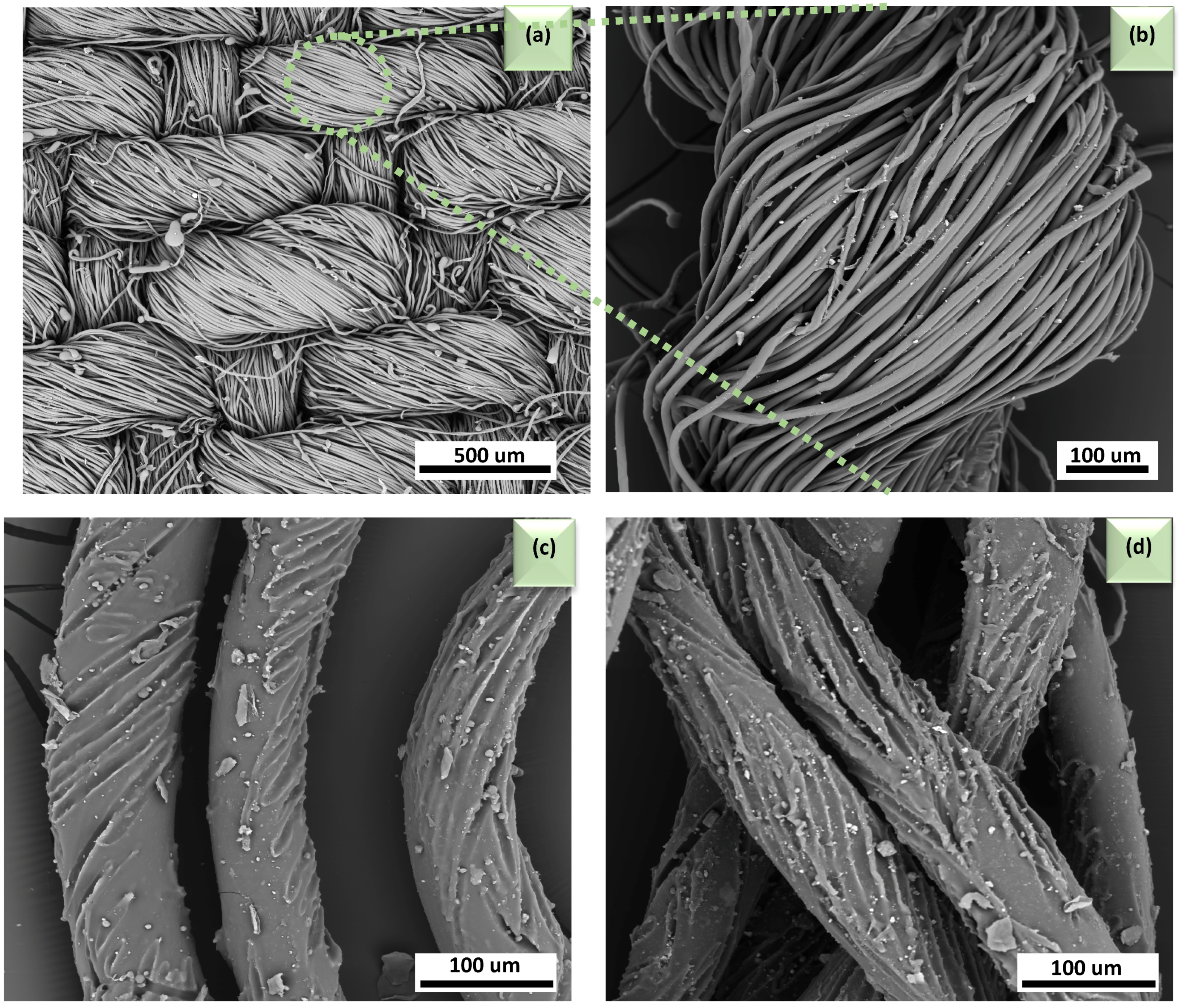
The structure and morphology of the fabric were investigated using scanning electron microscopy (SEM). The SEM analysis was performed using a VEGA 3 microscope (TESCAN, Brno, Czech Republic). Samples were mounted on a 12 mm platform with an adhesive carbon disc and coated with a conductive gold layer (Quorum Technologies Ltd., Laughton, UK) Microscopic images of the woven fabric D, the structure of EOL-core yarn and the EOL fibres core before and after 100 washing cycles were acquired in high vacuum mode, using a backscatter electron (BSE) detector and an accelerating voltage of 20 kV.

3. Results and Discussion

3.1. Elasticity of Woven Fabrics

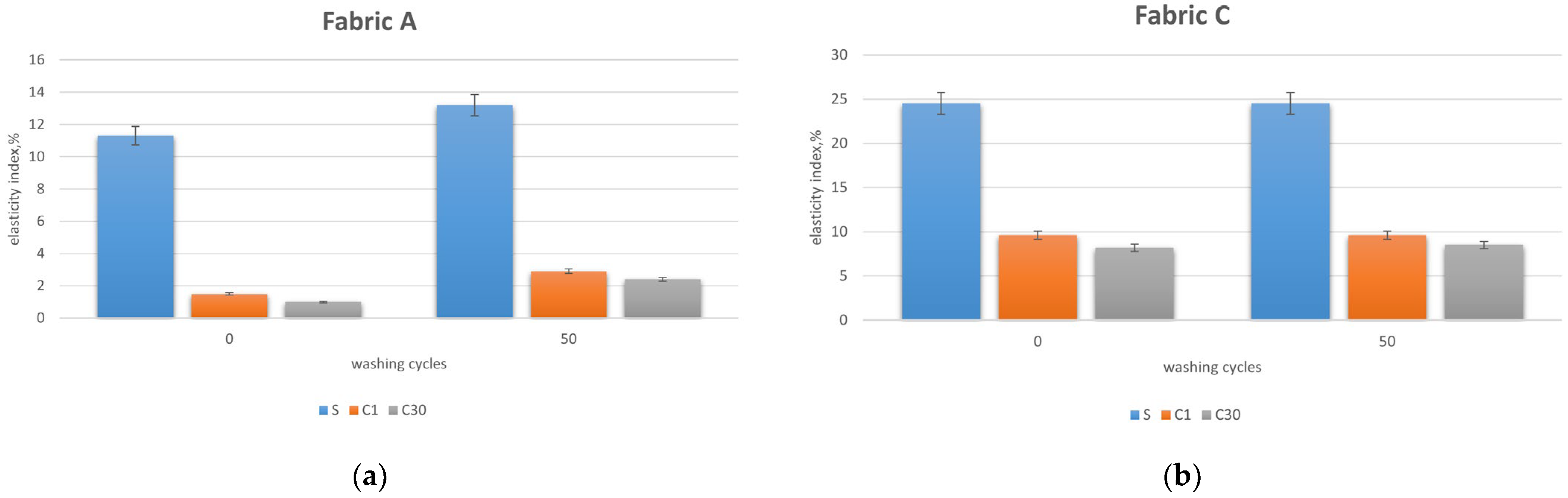
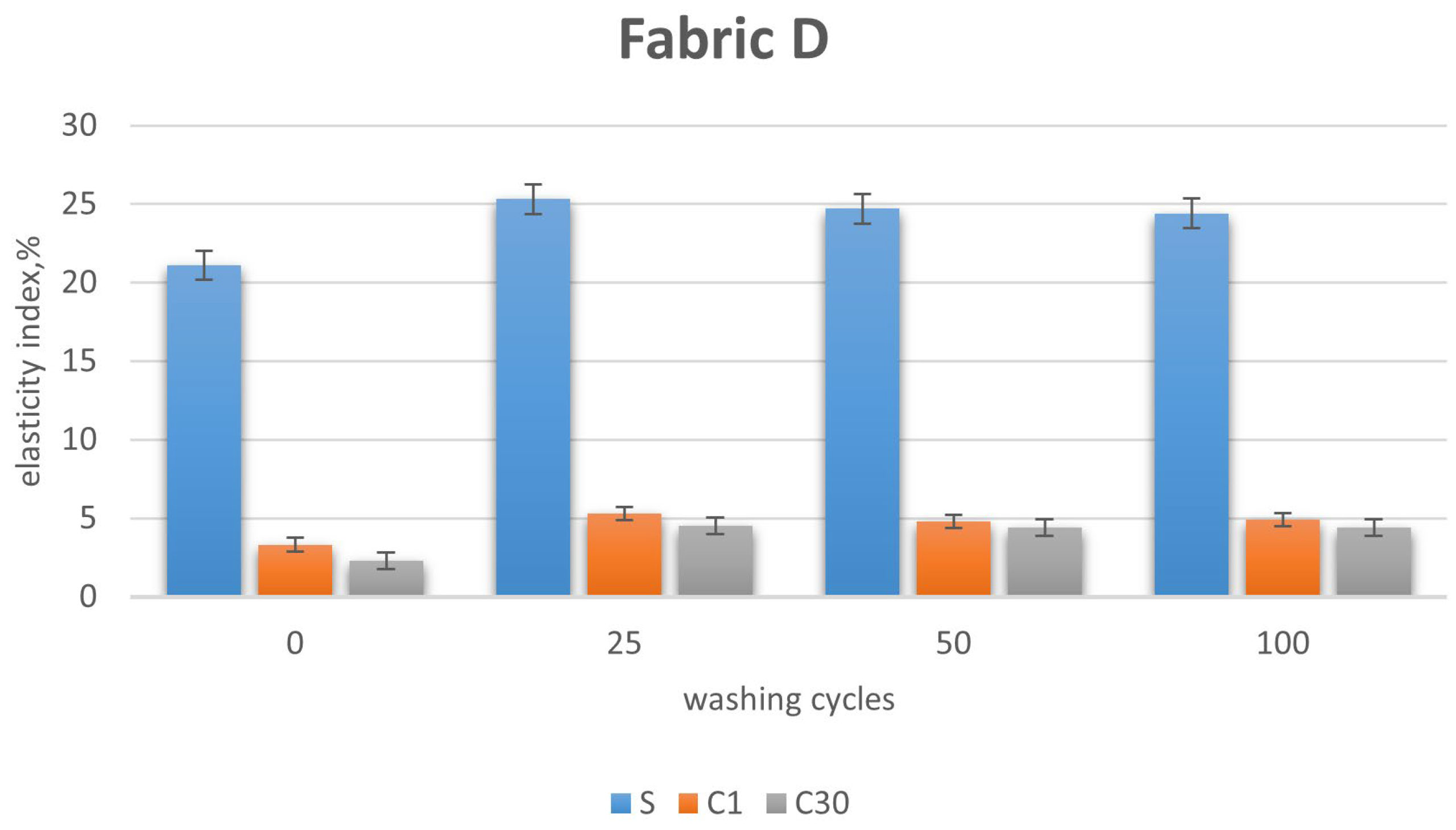
The selected elastomeric indicator values of woven fabrics before and after repeated maintenance procedures are presented in Figure 1, Figure 2, Figure 3, Figure 4 and Figure 5. The mean outcomes, along with their respective measurement uncertainties, were illustrated in Figure 1, as bars and segments in the figures for both 50-time washed and unwashed fabrics.
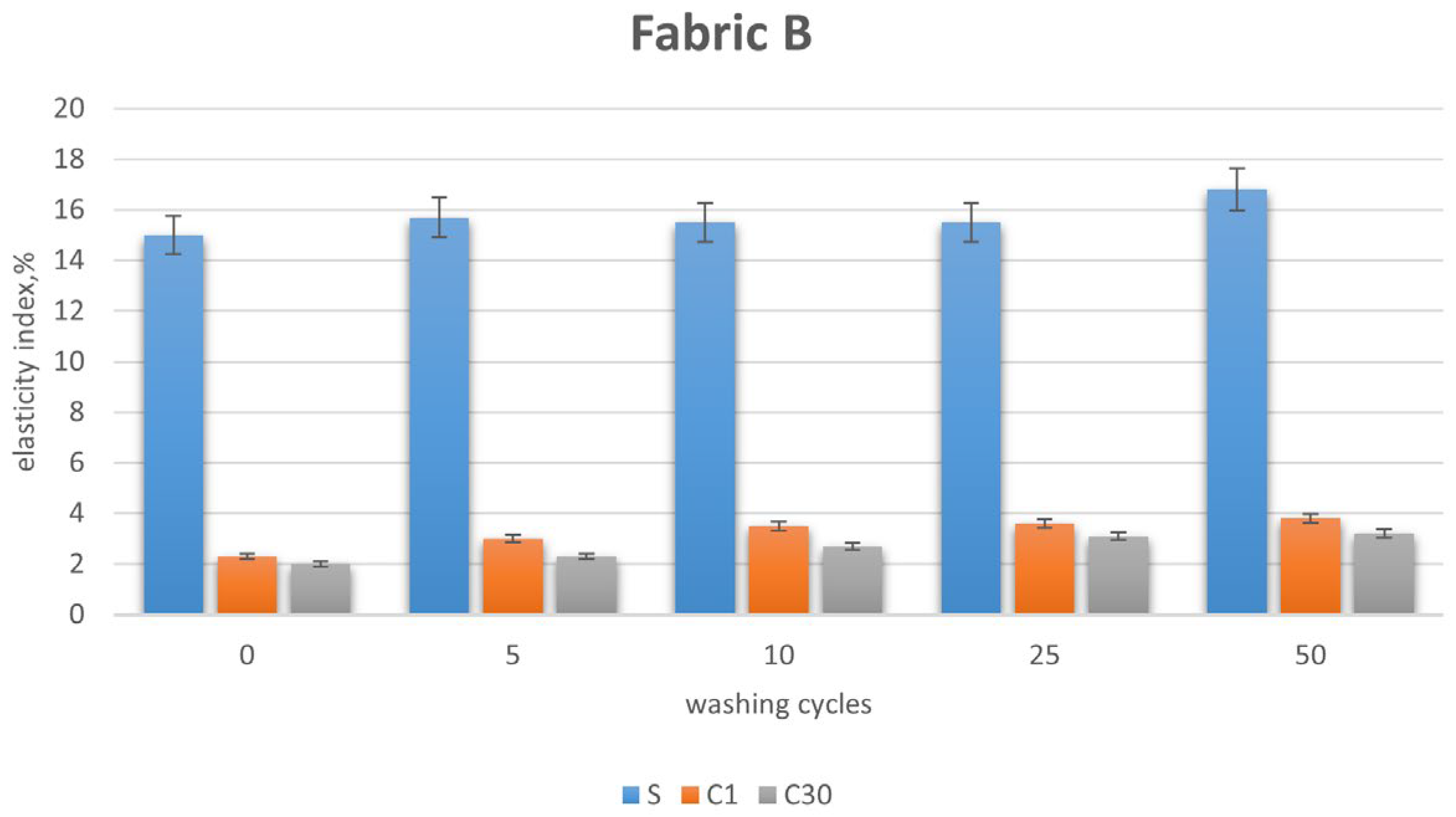
Fabric B was subjected to industrial washing up to 50 times. The elasticity parameters were evaluated after a certain number of washes (Figure 2). Considering the measured uncertainty for elongation S, the real increment is observed only at the highest number of washing cycles. The permanent elongation C1 after 1 min and 30 min of relaxation increased slightly with 5 and 10 washing cycles and remained at this level at the end of the tests. It means that even after a significant number of industrial maintenance processes, Fabric B’s elongation was measured after the fifth load cycle (S), as well as the permanent elongation after 1 min and 30 min of relaxation (C1 and C30), remained close to the finished fabric’s level. Even intensive industrial washing procedures did not affect the elasticity of the woven fabric structure of fabric B. The material exhibits enhanced resistance to repeated, intensive industrial washing and drying, while maintaining its elasticity and capacity for rapid recovery upon force removal.
Fabric D, the second heaviest of the tested woven fabrics, was exposed to up to 100 repeated industrial maintenance processes. This fabric showed a high elongation S, reaching above 20% (Figure 3). The elongation S rose to slightly more than 25% after 25 maintenance repetitions. Then, it remained almost stable below 25% at the end of the test series. Similarly, the permanent elongations C1 and C30 repeated this pattern. FTIR spectroscopy, DSC, and TGA analyses confirmed that the chemical composition and thermal stability of the tested samples remained largely unaffected by the repeated industrial washing cycles. There were no differences in the values of all tested elasticity parameters after 50- and 100-time washing and drying cycles. It was demonstrated that garments made from Fabric D can withstand long-term use and maintenance under industrial conditions without a significant loss of elasticity.

3.2. Durability Properties

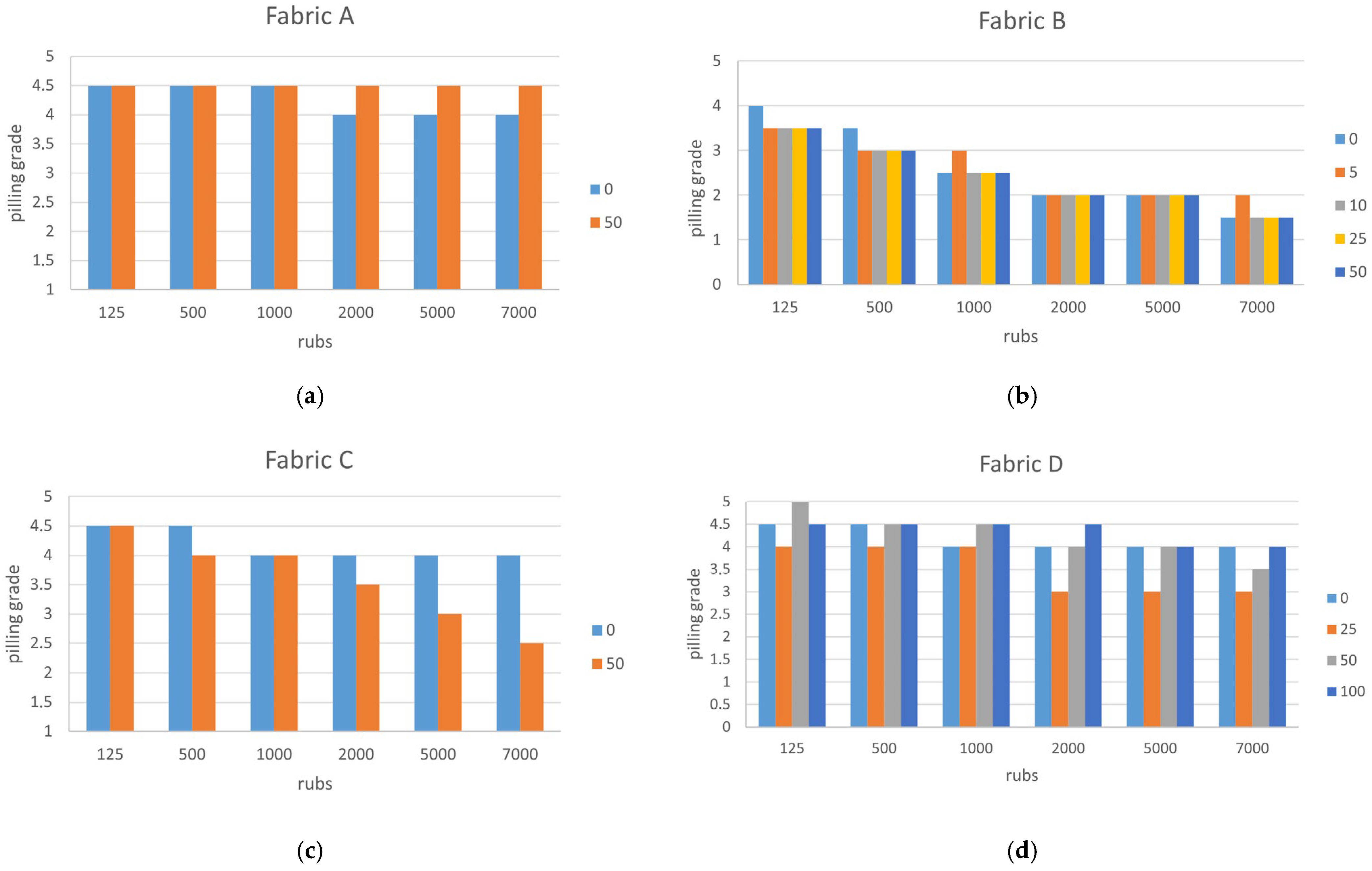
The test results for fabrics A to D, shown for each number of test cycles, are depicted in Figure 4. The presented pilling grades were obtained after a series of washes. The pilling resistance of Fabric A remains at a similarly good level for both the unwashed samples and 50-times washed ones. A slight increase of 0.5 grades in the final part of the test for unwashed samples was observed, in contrast to the washed ones. The second fabric showing the highest pilling resistance was Fabric D. After a certain number of washing cycles, the grade values fluctuated, plummeted after 25 washing cycles, then rose after 50 and finally 100 washing cycles. The pilling resistance achieved by this fabric remains at exactly the same level as at the beginning of the test by 2000 rubs. It demonstrated the excellent resistance of Fabric D to pilling. The Fabric C showed high pilling resistance when unwashed, but after repeated washing, pilling intensified. Fabric B’s pilling resistance was not more affected by washing, but rather by the fabric’s features themselves. Finally, Fabrics B and C exhibited the lowest resistance to the pilling formation among the four tested materials. The pilling grade at the end of the tests was recorded as being less than three. This indicates that the fabrics’ surfaces were covered with pills of varying sizes and densities in large proportions. Generally, half of all tested fabrics presented a very good level of pilling resistance after 7000 cycles, even after repeated industrial washes. The other two fabrics, B and C, with the lowest area mass, proved to be more vulnerable to the faster deterioration of the fibrous structure, either due to fabric features or maintenance procedures.
A table abrasion resistance test was carried out on Fabric D before and after 25, 50, and 100 washing cycles, respectively. The results were presented in Table 4.
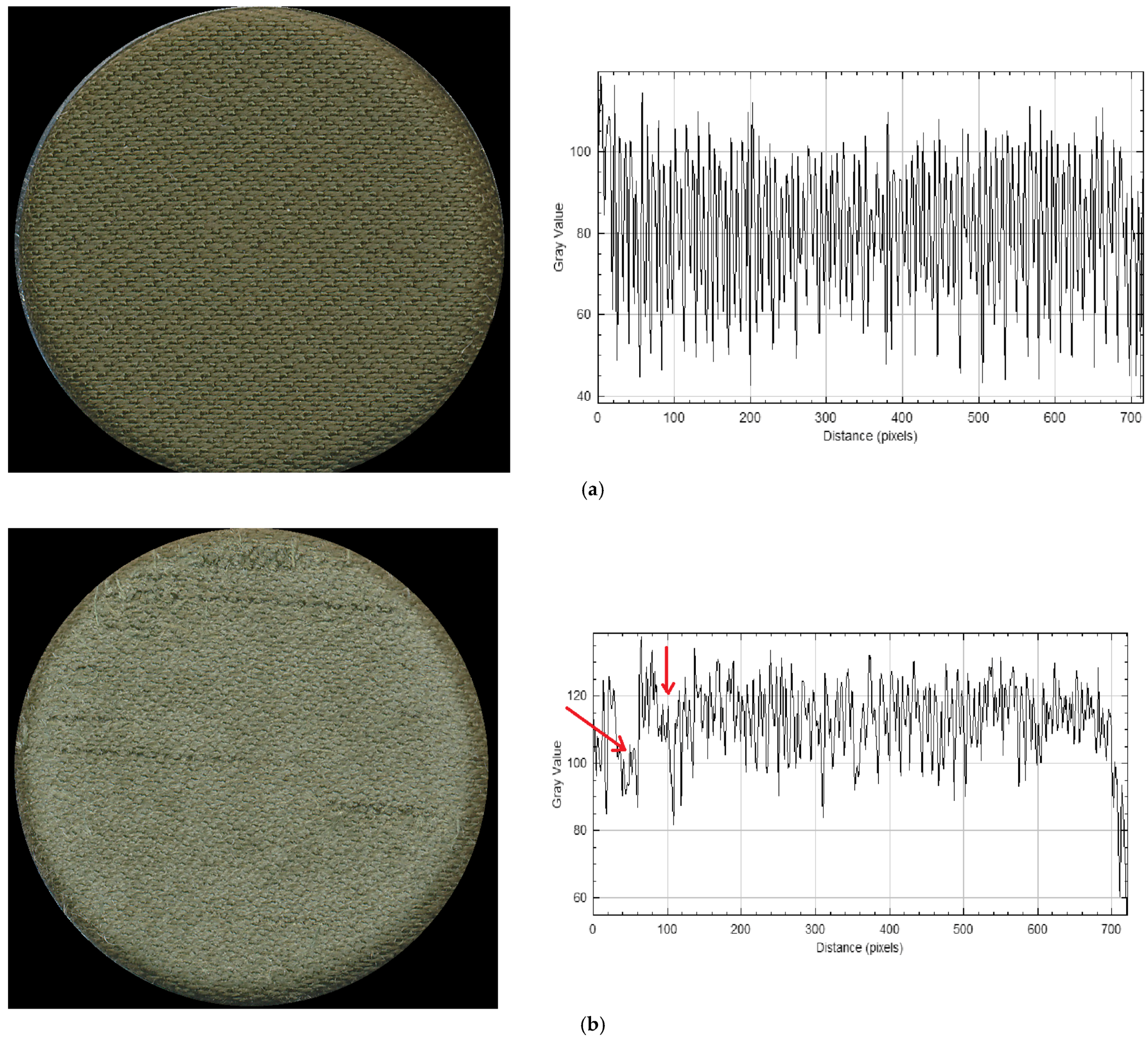
In Figure 5, the images of woven fabric D samples and brightness level plots are presented. The upper image Figure 5a represents the sample surface and the plot at the beginning of the abrasion test. The lower one represents the same sample area with a brightness level plot, as the breakage point was achieved. The presence of broken threads, at least two, in the fabric, is a fulfilment of the breakage criteria in the mentioned standard. It was signed by red arrows in right part of the graph. The profile parts (length of at least 35 pixels) showing the distinct drop in grey-level amplitude (from 125 to 95), compared to the initial profile shape (upper graph), represent the fabric’s area without threads. The repeated washing conditions did not cause significant deterioration of the abrasion resistance. Fabric D still met the abrasion resistance criteria for workwear mentioned in the standard [9]. The abrasion resistance reached the level above 25,000 abrasion rubs. These results still indicated a high level of fabric strength and resistance to abrasive forces. This performance remained firm, even after 100 industrial washes, which demonstrated good serviceability of the above-mentioned fabric.
In summary, all tested fabrics retained high elasticity after repeated industrial washes. This enables their use in workwear production. Fabrics with higher area mass containing half PES and CO sheath fibres maintained a high pilling grade and resisted repeated industrial washes. The heaviest fabric’s abrasion resistance remained good after 100 washes. Multiple industrial washing cycles did not affect the elastic properties. However, fabrics with a lower area mass experienced decreased pilling resistance.

3.3. Chemical Properties

The thermal and thermogravimetric properties of fabrics made flexibly by EOL-core yarns within their structure were analysed. The FTIR and DCS tests were carried out for weft yarns taken out from Fabric D before (D-dyed) and after 100 industrial washes (D-100). Moreover, the raw weft yarn before the weaving and dying processes was investigated (D-yarn) for comparison.

3.3.1. FTIR

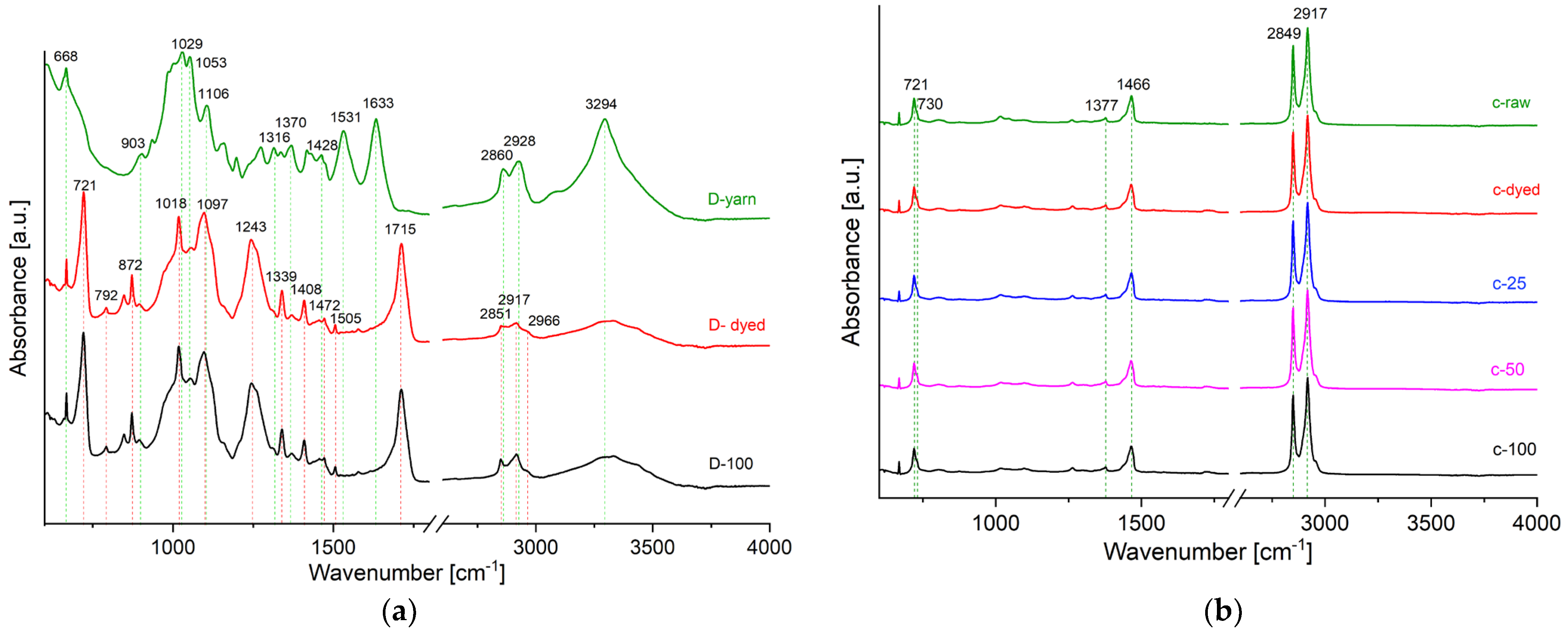
The properties of single EOL cores taken from raw yarn (c-raw), dyed yarn (c-dyed), and multi-time washed yarns (c-25, c-50, c-100) were evaluated. Figure 6a shows the FTIR spectra of the woven fabric of D-yarn, D-dyed, and D-100. The FTIR spectrum of D-yarn shows numerous, intense bands, which mainly originate from the cellulose molecules in cotton. The absorption band at 903 cm−1 originated from stretching vibrations of the β-glycosidic bond between monosaccharides. The most intense peak, at 1029 cm−1, corresponds to the C=O and O-H stretching vibrations in cellulose rings, and the band at 1106 cm−1 is assigned to the C-O stretching vibrations. The absorption bands at 1320 and 1370 cm−1 are related to the bending vibrations of the C-H and C-O bonds, and the peak at 1428 cm−1 corresponds to the -CH2 group symmetric bending vibrations in the cellulose rings of polysaccharides. The broad, intense band with a maximum at 1633 cm−1 is associated with the O-H bending vibration mode, indicating the presence of water adsorbed on the fibres. The bands at 2860 and 2928 cm−1 represent the stretching vibrations of the -CH group, while the wide band with a maximum at 3294 cm−1 corresponds to the -OH group stretching vibrations [38,39,40].
In the spectra of the D-dyed and D-100 samples, apart from the low-intensity bands of cotton, there are visible, characteristic, intense signals from polyester. The intense band with a maximum at 721 cm−1 originates from the stretching vibrations of the -CH group in the aromatic ring. The band at 872 cm−1 represents the stretching vibrations of the five substituted aromatic rings in benzene. The intense absorption bands at 1018 and 1097 cm−1 correspond to the C=O and C-O-C stretching vibrations of the ester group, respectively. The stretching vibrations of the C=O and C-O groups are observed in the spectra as signals at 1243 and 1339 cm−1, respectively. The small, intense band at 1408 cm−1 is associated with the distinctive stretching vibration of the aromatic ring in polyester. A sharp, intense band with a maximum at 1715 cm−1 originates from the stretching vibrations of the C=O group. The bands ranging from 2800 to 3000 cm−1 are associated with -CH group stretching vibrations [41,42]. The lack of changes in the position and relative intensity of the bands present in the spectra of D-dyed D100 indicates that the washing process does not affect the chemical structure of the fibres. Figure 6b shows the FTIR spectra of the c-raw, c-dyed, c-25, c-50, and c-100 samples, respectively. The bands at 721 and 730 cm−1 are due to rocking deformation vibrations of C-H bonds. The peaks at 1377 and 1466 cm−1 are related to the bending and wagging deformation of the C-H bonds of tertiary carbon in PE. The strong, sharp absorption bands at 2849 cm−1 and 2917 cm−1 are associated with the asymmetric and symmetric stretching vibrations of C-H bonds in methylene groups [43,44]. The position and relative intensity of the bands indicate that the main component of EOL is polyethene. The FTIR spectra of all tested materials are almost identical, indicating that fibre processing, including finishing, dyeing, and washing, did not alter the chemical composition of the elastomer fibre.

3.3.2. DSC

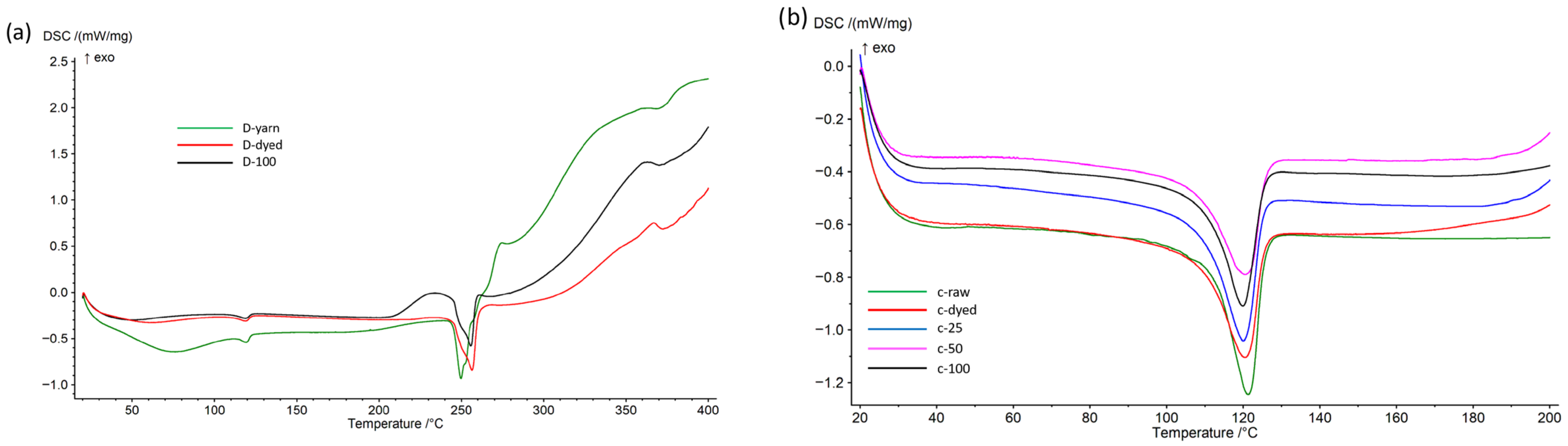
The DSC analysis showed that for the woven fabric D weft yarns (Figure 7a), an endo-thermic peak in the range of 20–100 °C indicates the moisture desorption.
The raw yarn exhibits an endothermic melting peak of EOL core fibres within the temperature range of 114.5–122.5 °C and its peak intensity at 119.6 °C (Table 5).
The melting enthalpy of the EOL core is 2.3 J/g. In the temperature range of 247.2–258.5 °C (peak at 252.4 °C), the polyester fibres, which are components of the fibrous sheath, melted, exhibit a melting enthalpy of 36.2 J/g. The cotton fibres, the other sheath component, begin to degrade between 362.7 and 383.2 °C, with a peak at 371.9 °C and a heat of 8.2 J/g. For dyed and finished yarn, the EOL core initial melting temperature decreases slightly to 111.9 °C, and the melting enthalpy is 13% lower, amounting to 2.0 J/g. This may be caused by conditions during the dyeing process, which resulted in a slight decrease in the EOL-core fibres’ crystallinity. The other temperatures recorded for the decomposition of polyester and cotton fibres were comparable to the parameters of the raw yarn sheath. After 100 washes, the EOL core becomes coloured, whereas it was not observed after only dyeing the yarn. The melting peak of the EOL core occurred between 112.4 and 122.5 °C, with the maximum peak at 118.4 °C. It was found to be comparable to unwashed dyed and finished yarns. The melting enthalpy is 25% lower (1.5 J/g) than for unwashed, dyed, and finished D-yarn. This decrease indicated changes in the EOL core crystallinity, which may result from the presence of the dye and are not directly related to the washing processes. The decrease of 18% in melting enthalpy is also observed for polyester fibres, and the melting temperatures are similar to those of unwashed yarn. The temperatures and the heat of the thermal decomposition of the cotton fibres did not change significantly.
The melting process of the EOL core itself, pulled out from yarn, occurred at 112.8–125.5 °C with the maximum at 121.4 °C (Figure 7b, Table 6). The melting enthalpy was 33.4 J/g. After the dyeing and washing cycles, the melting temperatures are comparable to those of the EOL core from raw yarn. The changes in melting enthalpies were observed. For the EOL core from dyed and finished yarn, the melting enthalpy decreased by 10% and amounted to 29.9 J/g. These changes may be a result of the temperature of the yarn-dyeing process, which altered EOL core crystallinity, as observed. After 25, 50, and 100 washes, the melting enthalpy plummeted to 27.6 J/g, 25.8 J/g, and 24.6 J/g, respectively. The presence of dye may affect the crystallinity of the EOL core and reduce the melting enthalpy.
The DSC analysis of fabric D shows that the EOL-core fibres, polyester sheath, and cotton components retain their characteristic thermal transitions after dyeing and up to 100 industrial washing cycles. Although the EOL-core melting enthalpy decreases from 2.3 J/g in the raw yarn to 2.0 J/g after dyeing and to 1.5 J/g after 100 washes, both the onset and peak melting temperatures remain nearly unchanged. This suggests that while the crystalline regions of the EOL core are partially reduced, their structural integrity remains intact.
A similar level of stability is observed in the polyester and cotton components, whose melting and degradation temperatures remain comparable to those of the raw yarn. This thermal stability explains the mechanical behaviour illustrated in Figure 1, Figure 2, Figure 3, Figure 4 and Figure 5, where Fabrics B and D retain their elasticity, even after numerous industrial washes. For Fabric D, the elongation (S) remains high (20–25%) throughout 100 cycles, while the permanent elongations (C1 and C30) increase only slightly and stabilise after 25 cycles.
The consistent melting temperatures confirm that the polymer network within the EOL core retains its structural integrity, allowing the remaining crystalline domains to continue functioning as physical crosslinks. These crosslinks anchor the elastic segments that are responsible for reversible deformation, enabling the woven structure to stretch and recover effectively despite repeated exposure to heat, chemicals, and mechanical agitation. Therefore, the DSC results directly support the observed mechanical performance: the structural stability of the EOL-core fibres during maintenance conditions helps to ensure the long-term retention of elasticity in Fabric D.

3.3.3. Thermogravimetric Analysis

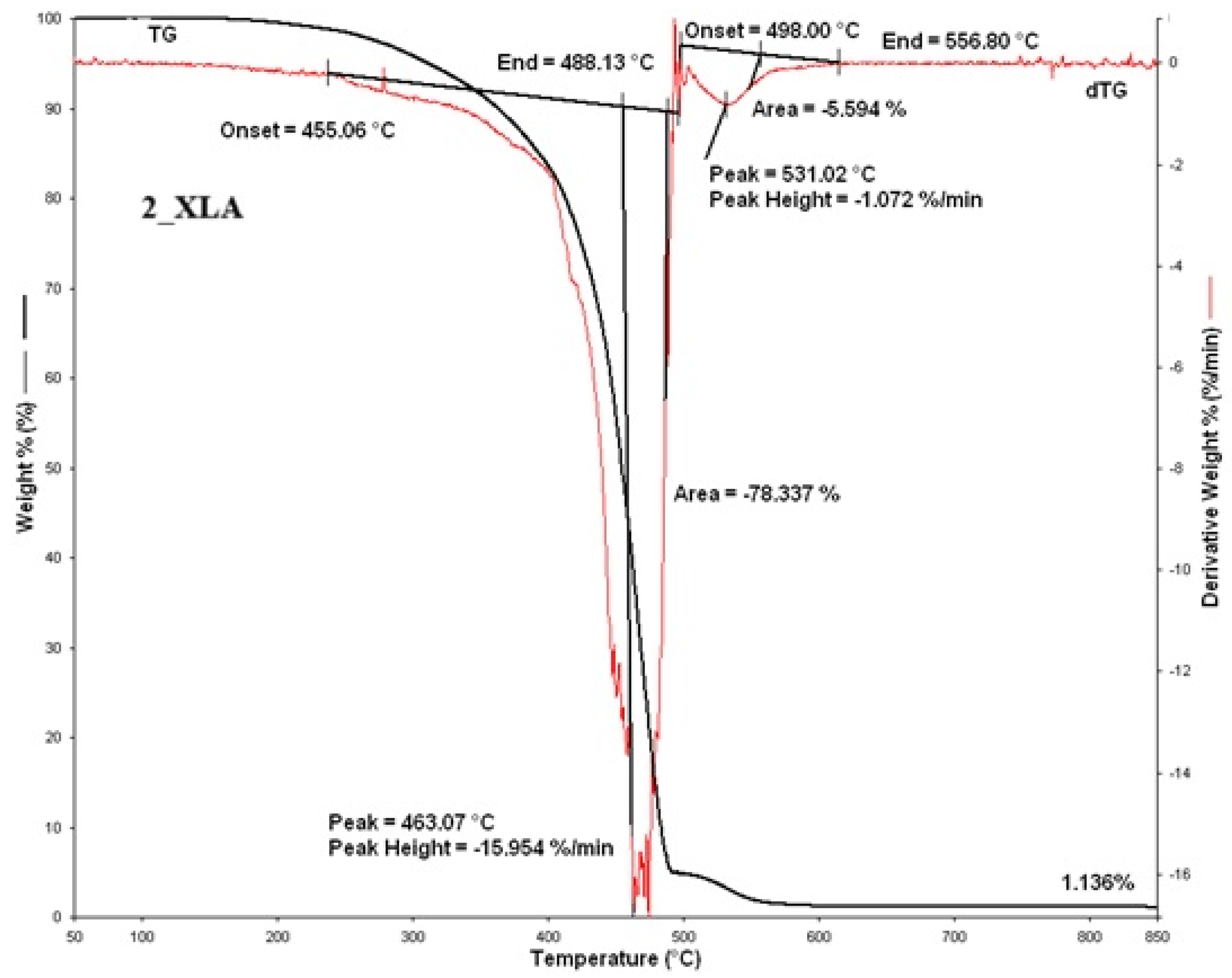
The results of the thermogravimetric analysis (TG) of the EOL core samples are shown in Table 7. Figure 8 presents an example of the TG/DTG thermogram recorded for the EOL-core from the finished Fabric D.
The TG/DTG analysis indicated that all EOL core samples decomposed in two stages. For the c-raw sample, the first stage saw the majority of the thermal degradation, indicating the loss of water and volatile components, followed by the thermal decomposition of the primary polymer, with a very fast decomposition rate of −13.913%/min at 479.08 °C (Table 7).
The decomposition rate of the second stage was significantly slower, amounting to 1.906%/min at 516.51 °C, indicating the effect of certain additives and stabilisers within the structure. The char residue at 850 °C is 1.292%. Despite the presence of dyes and stabilisers, the c-dyed sample showed no significant differences compared to the untreated sample, although it had a slightly lower residue of 1.163% at 850 °C compared to the c-raw sample (Figure 8). Changes in the thermogravimetric curves can be observed after 25, 50 and 100 industrial washing cycles. The C-25 sample showed increased thermal stability, with a residue of 3.643% at 850 °C. For the c-50 and c-100 samples, a slightly different decomposition dynamic was observed, indicating possible damage to the primary polymer and leading to a higher rate of thermal degradation in both stages within a narrow temperature range of 400 °C to 500 °C. The mentioned changes were slight and did not affect the final properties. Therefore, it could be concluded that the treatment and multiple washing cycles did not affect the fibres’ heat resistance.
In conclusion, the thermal results obtained for EOL-core yarns taken from Fabric D, as well as for the EOL core itself, prove that repeated industrial maintenance processes did not disturb the chemical structure of elastolefin and sheath fibres in a way that altered their properties. The temperatures of industrial washing and drying procedures did not exceed 80 °C, which were much lower than the temperatures of the thermal processes of the tested samples, so the deterioration in the chemical structure was rather implausible. The results of the tests on the elastic and surface properties also confirmed this.

3.4. Surface Morphology Evaluation

The images of woven Fabric D (Figure 9a), weft yarn with EOL-core (Figure 9b) and EOL fibres before (Figure 9c) and after a 100-wash cycle (Figure 9d) are shown in Figure 9.
The Fabric D surface image shows that the woven structure consists of weft (thicker, more bulky looking) and warp (thinner) yarns interlaced together. Each of the yarns is made of staple fibres, partially covered by a thin polyurethane film, used in the finishing process. The single weft yarn from Fabric D, shown in image (Figure 9b), reveals a bunch of sheath fibres twisted around the monofilament EOL core. The core is shown in the images (Figure 9c,d). The main feature of the monofilament is its surface structure, which exhibits groups of crossed grooves that mimic the alignment of sheath fibres. They were caused by elongation impairment between the rigid sheath and elastic EOL core when the yarn was stretched during the manufacturing processes of woven fabric. The grooves in image (Figure 9d) are characterised by slightly sharper edges than the cores’ ones. It is clear that repeated industrial washing did not significantly affect the EOL core, as no surface delamination or fibre cracks were observed. Finally, the SEM analysis of Fabric D and the EOL-core of the weft yarn, before and after 100 washes, showed that repeated maintenance processes do not disturb the chemical structure of the fibres or the core.

4. Conclusions

The elastic properties of fabrics containing EOL-core yarns, as well as the complex instrumental analysis of their chemical structures, were investigated. The primary objective was to demonstrate that fabrics incorporating elastolefin filaments can withstand the rigorous conditions of industrial care processes while maintaining their elasticity. First, the fabrics underwent a series of repeated industrial washing and drying, up to 100 cycles. The fabrics were not worn before or after the washing cycles, so the results only reflect the influence of the washing conditions. This approach eliminates other factors, such as wear and tear, mechanical damage, and climate-related conditions, including exposure to sunlight in both wet and dry conditions. The elasticity parameters, pilling, and abrasion resistance were investigated before and after each washing series, followed by thermal and thermogravimetric analyses and microscopy evaluation.
Based on the performed laboratory test results and their analysis, the following conclusions were established:
-
All of the tested fabrics exhibited a high level of elasticity parameters, including elongation and permanent elongation, even after multiple industrial washing cycles.
-
Half of the tested fabrics demonstrated an excellent level of pilling resistance, even after repeated industrial washing. These fabrics, characterised by a higher area mass and a composition of PES and CO sheath fibres, showed superior durability under industrial care conditions.
-
The abrasion resistance of fabric D remained stable, even after 100 washing cycles, with only a slight reduction compared to samples washed 25 times.
-
FTIR spectroscopy, DSC, and TGA analyses confirmed that the chemical composition and thermal stability of the tested samples were not significantly affected by the repeated industrial washing cycles.
-
SEM analyses revealed that the elastolefin core filaments maintained their morphological and structural integrity after 100 wash cycles, indicating that repeated maintenance procedures did not compromise their physical structure.
The analysis of selected characteristics and properties of EOL-core yarns and woven fabrics incorporating them—both before and after repeated industrial maintenance—demonstrates that all tested fabrics retained their chemical structure. Consequently, their elasticity and surface durability remained stable, even after extensive industrial washing and drying cycles. These results suggest that garments produced from these fabrics can withstand prolonged use and demanding industrial care conditions. It is essential to note that all tests and washing procedures were performed on new, unworn fabrics that did not come from garments and were not used between maintenance processes. The real-world conditions of daily use—particularly in the case of workwear garments—may introduce additional stress factors that could influence the fabric’s performance under load. The next step for in-depth analysis of fabrics containing EOL filaments could be an experiment utilising new garments and those that have been used in real-world conditions once, specifically those that are frequently exposed to industrial washing.

Author Contributions

Conceptualization, I.J.; Methodology, I.J., A.N., B.T.-S. and S.F.G.; Validation, I.J. and A.N.; Investigation, I.J., A.N., B.T.-S. and S.F.G.; Resources, I.J.; Writing—original draft, I.J., A.N., B.T.-S. and S.F.G.; Writing—review and editing, I.J., A.N., B.T.-S. and S.F.G.; Visualisation, I.J., A.N., B.T.-S. and S.F.G.; Supervision, I.J. All authors have read and agreed to the published version of the manuscript.

Funding

This research was executed using a subsidy given by the Ministry of Higher Education, Poland to Lukasiewicz Research Network—Lodz Institute of Technology.

Data Availability Statement

The raw data supporting the conclusions of this article will be made available by the authors upon request.

Conflicts of Interest

The authors declare no conflicts of interest.

References

  1. ISO 15797; Textiles. Industrial Washing and Finishing Procedures for Testing of Workwear. Internation Organization for Standardization: Geneva, Switzerland, 2017.
  2. Kumar, V.; Ekwall, D.; Zhang, D.S. Investigation of rental business model for collaborative consumption-workwear garment renting in business-to-business scenario. Resour. Conserv. Recycl. 2022, 106314, 182. [Google Scholar] [CrossRef]
  3. Pinar, A.; Czajkowski, T.; Syska-Stasik, M.; Zasępa, M. Innovative management strategies in the rental system for the example of a professional manufacturer of protective clothing and workwear. Fibres Text. East. Eur. 2022, 30, 17–21. [Google Scholar] [CrossRef]
  4. Monticelli, A.; Costamagna, M. Enviromental assessment of the rental business model: A case study for formal wear. Environ. Dev. Sustain. 2023, 25, 7625–7643. [Google Scholar] [CrossRef]
  5. Amasawa, E.; Brydges, T.; Henninger, C.E.; Kimita, K. Can rental platforms contribute to more sustainable fashion consumption? Evidence from a mixed-method study. Clean. Responsible Consum. 2023, 8, 100103. [Google Scholar] [CrossRef]
  6. Li, X.; Li, J.; Zheng, F.; Zhang, J. Research on new type shared wardrobe virtual construction and practice. J. Text. Res. 2024, 45, 183–193. [Google Scholar]
  7. Ritch, E.L.; Siddiqui, N. Fashioning the Circular Economy with Disruptive Marketing Tactics Mimicking Fast Fashion’s Exploitation of Social Capital: A Case Study Exploring the Innovative Fashion Rental Business Model “Wardrobe”. Sustainability 2023, 15, 14532. [Google Scholar] [CrossRef]
  8. Mora-Sojo, M.; Krych, K.; Pettersen, J.B. Evaluating the current Norwegian clothing system and a circular alternative. Resour. Conserv. Recycl. 2023, 107, 107109. [Google Scholar] [CrossRef]
  9. PN-P-84525; Workwear. Work Suits. Polish Normalization Committee: Warsaw, Poland, 1998.
  10. ISO 13688:2013/A1; Protective Clothing. General Requirements. International Organization for Standardization: Geneva, Switzerland, 2021.
  11. Zhang, Q.; Chen, J.; He, Z.; Liu, W.; Gao, J. Fabrication of anti-fatique double-wrapped yarns with excellent mechanical properties for generating compression fabrics. Polymers 2024, 16, 2476. [Google Scholar] [CrossRef]
  12. Malinverno, N.; Schmutz, M.; Nowack, B.; Som, C. Identifiying the needs for a circular workwear textile managenet—A material flow analysis of workwar textile waste within Swiss Companies. Resour. Conserv. Recycl. 2023, 189, 106728. [Google Scholar] [CrossRef]
  13. Belakova, D.; Dabolina, I.; Baltina, I.; Zommere, G. Improvement of workwear clothing for army. In IOP Conference Series. Materials Science and Engineering; IOP Publishing: Bristol, UK, 2017; p. 254. [Google Scholar]
  14. Otaigbes, J.U.; Madbouly, A. The processing, structure and properties of elastomeric fibers. In Handbook of Textile Fibre Structure; Woodhead Publishing Series in Textiles; Eichhorn, S.J., Hearle, J.W.S., Jaffe, M., Kikutani, T., Eds.; Woodhead Publishing: Cambridge, UK, 2009; Volume 1, pp. 325–351. [Google Scholar]
  15. Babaarslan, O.; Shahid, M.A.; Doğan, F.B. Comparative analysis of cotton covered elastomeric hybrid yarns and denim fabric properties. J. Eng. Fiber. Fabr. 2021, 16, 15589250211059188. [Google Scholar] [CrossRef]
  16. Tullo, A.H. Italians firms get DOW’s XLA business. Chem. Eng. News Dec. 2011, 89. Available online: https://cen.acs.org/articles/89/i51/Italian-Firms-Dows-XLA-Business.html (accessed on 2 March 2026).
  17. BISFA. Terminology of Man-Made Fibres; The International Bureu for Standardisation of Man-Made Fibre: Brussels, Belgium, 2017. [Google Scholar]
  18. Xlance Invisible Innovation-Commertial Matrials. (XLANCE SRL,Włochy), pdf. Available online: https://www.xlancefibre.com/ (accessed on 2 March 2026).
  19. Workwear. Available online: https://www.xlancefibre.com/workwear (accessed on 2 March 2026).
  20. Casey, P.; Chen, H.; Poon, B.; Bensason, S.; Menning, B.; Liu, L. Polyolefin Based Crosslinked Elastic Fiber: A Technical Review of DOW XLA™ Elastic Fiber Technology. Polym. Rev. 2007, 48, 302–316. [Google Scholar] [CrossRef]
  21. Wu, J.Z. Design and production of wool/XLA elastic fabric. Wool Text. J. 2015, 43, 17–19. [Google Scholar]
  22. Belforte, G.; Ivanov, A.; Maffiodo, D.; Testore, F. Winding core spun elastic yarns on cone bobbins to be dyed. J. Text. Inst. 2009, 5, 412–419. [Google Scholar] [CrossRef]
  23. Zhao, K.; Cao, S.; Xu, G. An experimental study of mechanical properties and comfortability of knitted imitation woven shirt fabrics. AUTEX Res. J. 2024, 24, 20230001. [Google Scholar] [CrossRef]
  24. Wei, Y.; Liu, X.; Hu, H.; He, R.; Li, X. Process Optimization and Quality Comparison of XLA and LYCRA Core-Spun Yarns. J. Silk 2019, 56, 35–42. [Google Scholar]
  25. Wei, Y.; Su, X.; Liu, X.; Xie, C.; Ji, Y. Study on Structure and Properties of Three Elastic Fibers. J. Silk 2019, 56, 44–50. [Google Scholar]
  26. Wang, L.X.; Dong, P.; Zhu, X.; Zhang, X.; Liu, X.; Wang, D. High Elasticity and corresponding Microstructure Origin of Novel Long Chain Poly(Amide-Block-Ether) Filament Fibers. Eur. Polym. J. 2017, 90, 171–182. [Google Scholar] [CrossRef]
  27. Xue, P.; Wang, J.; Tao, X. Flexible textile strain sensors from polypyrrole-coated XLA™ elastic fibers. High Perform. Polym. 2013, 26, 364–370. [Google Scholar] [CrossRef]
  28. Verdu, P.; Rego, J.M.; Nieto, J.; Blanes, M. Comfort Analysis of Woven Cotton/Polyester Fabrics Modified with a New Elastic Fiber, Part 1 Preliminary Analysis of Comfort and Mechanical Properties. Tex. Res. J. 2009, 79, 14–23. [Google Scholar] [CrossRef]
  29. Rego, J.M.; Verdu, P.; Nieto, J.; Blanes, M. Comfort Analysis of Woven Cotton/Polyester Fabrics Modified with a New Elastic Fiber, Part 2: Detailed Study of Mechanical, Thermo-Physiological and Skin Sensorial Properties. Tex. Res. J. 2009, 80, 206–215. [Google Scholar] [CrossRef]
  30. Ni, W.; Chen, X.; Liu, Z.; Yu, J. Structure and properties of polyolefine based elastic fiber XLA. Chem. Fibres Int. 2013, 63, 26–28. [Google Scholar]
  31. Cordura by Invista—Notice of Approval. Available online: https://andropol.pl/cordura-by-invista-notice-of-approval (accessed on 2 March 2026).
  32. ISO 20932-1; Textiles Determination of the Elasticity of Fabrics. Part 1 Strip Tests. International Organization for Standardization: Geneva, Switzerland, 2021.
  33. ISO 12945-2; Textiles Determination of Fabric Propensity to Surface Pilling, Fuzzing or Matting Part 2 Modified Martindale Method. International Organization for Standardization: Geneva, Switzerland, 2020.
  34. ISO 12945-4; Textiles Determination of Fabric Propensity to Surface Pilling, Fuzzing or Matting Part 4 Assessment of Pilling, Fuzzing and Matting by Visual Analysis. International Organization for Standardization: Geneva, Switzerland, 2020.
  35. ISO 12947-2; Textiles Determination of the Abrasion Resistance of Fabrics by the Martindale Method Part 2 Determination of Specimen Breakdown. International Organization for Standardization: Geneva, Switzerland, 2016.
  36. Jasińska, I. Assessment in Textile Materials Abrasion Process Based on Image Analysis Techniques; Łukasiewicz-Instytut Technologii Eksploatacji: Radom, Poland, 2024. [Google Scholar]
  37. Jasińska, I. The textile fabrics abrasion resistance—The instrumental method for end point assessment. Autex Res. J. 2025, 25, 20250038. [Google Scholar] [CrossRef]
  38. Chung, C.; Lee, M.; Choe, E.K. Characterization of cotton fabric scouring by FT-IR ATR spectroscopy. Carbohydr. Polym. 2004, 58, 417–420. [Google Scholar] [CrossRef]
  39. Choe, E.K.; Lee, M.; Park, K.S.; Chung, C. Characterization of cotton fabric scouring by Fourier transform-infrared attenuated total reflectance spectroscopy, gas chromatography-mass spectrometry and water absorption measurements. Text. Res. J. 2019, 89, 2305–2315. [Google Scholar] [CrossRef]
  40. He, Z.; Liu, Y. Fourier transform infrared spectroscopic analysis in applied cotton fiber and cottonseed research: A review. J. Cotton Sci. 2021, 25, 167–183. [Google Scholar] [CrossRef]
  41. Bhattacharya, S.; Chaudhari, S.B.; Structural, S.O. Mechanical and Functional Properties of Polyester Silica Nanocomposite Fabric. Int. J. Pure Appl. Sci. Technol. 2014, 21, 43–52. [Google Scholar]
  42. Dave, H.; Ledwani, L.; Chandwani, N.; Kikani, P.; Desai, B.; Nema, S.K. Surface modification of polyester fabric by nonthermal plasma treatment and its effect on coloration using natural dye. J. Polym. Mater. 2013, 30, 291–304. [Google Scholar]
  43. Hao, W.; Yao, X.; Ke, Y.; Ma, Y.; Li, F. Experimental characterization of contact angle and surface energy on aramid fibers. J. Adhes. Sci. Technol. 2013, 27, 1012–1022. [Google Scholar] [CrossRef]
  44. Peivun, N.; Chin-hua, C.; Zakaria, S.; Gan, S.; Kaco, H.; Padzil, F.N.M.; Chook, S.W. Preparation of cellulose hydrogel from oil palm empty fruit bunch fibers cellulose. Polym. Res. J. 2015, 9, 385–489. [Google Scholar]
Figure 1. Elasticity parameters calculated before and after 50-time industrial washes: (a) fabric A and (b) fabric C.
Fibers 14 00035 g001
Figure 2. Elasticity parameters calculated for fabric B—samples after multiple washes.
Fibers 14 00035 g002
Figure 3. Elasticity parameters calculated for fabric D—samples after multiple washes.
Fibers 14 00035 g003
Figure 4. Pilling resistance results: (a) fabric A; (b) fabric B; (c) fabric C; and (d) fabric D.
Fibers 14 00035 g004
Figure 5. Fabric D—sample image and profile of one of the image lines: (a) sample before abrasion and (b) sample at the end of the test. The red arrows point to two profile sections containing broken threads. The slight increase in three recorded elongation values was observed for Fabric A after 50 washes. This means that the woven fabric’s elasticity dropped, and the permanent part of the elongation increased. The utility properties of such fabrics deteriorated slightly, due to their tendency to wrinkle. Fabric C’s elasticity indicators have not changed after 50 washes, except for a slight rise in permanent elongation C30 after 30 min of relaxation.
Fibers 14 00035 g005
Figure 6. The FTIR spectra of fabric D: (a) weft yarns and (b) EOL cores from weft yarns.
Fibers 14 00035 g006
Figure 7. (a) The differential scanning calorimetry (DSC) curve for the weft yarns of woven Fabric D shows an endothermic peak between 20 °C and 100 °C, which is attributed to moisture desorption. This is followed by the melting transition of the EOL-core fibres, occurring between 114.5 °C and 122.5 °C, with a peak at 119.6 °C. Subsequent thermal events include the melting of polyester fibres in the fibrous sheath, occurring between 247.2 °C and 258.5 °C, peaking at 252.4 °C, and the thermal degradation of cotton fibres, which occurs between 362.7 °C and 383.2 °C, peaking at 371.9 °C. (b) Additionally, the DSC curve of the isolated EOL cores extracted from the weft yarns displays a melting transition, ranging from 112.8 °C to 125.5 °C, with a peak at 121.4 °C. Changes in melting enthalpy following dyeing and repeated washing cycles indicate alterations in the crystallinity of the EOL cores.
Fibers 14 00035 g007
Figure 8. The TG and dTG curves for EOL core from Fabric D weft yarn.
Fibers 14 00035 g008
Figure 9. SEM images of (a) Fabric D; (b) EOL-core weft yarn; and EOL filaments (c) before and (d) after 100 washes.
Fibers 14 00035 g009
Table 1. Woven fabric characteristics.
ParameterWoven Fabric
ABCD
Construction twill   2 1 S twill   2 1 S twill   2 1 Scross combined
Material composition, %48% PES, 48% CO, 4% EOL63% PES, 34% CO, 3% EOL98% CO, 2% EOL55% PES, 41% CO, 4% EOL
Yarn
warp
weft
37 tex (50% PES/50% CO)
37 tex
(46% PES/46% CO/8% EOL)
30 tex (65% PES/35% CO)
30 tex
(61% PES/32% CO/7% EOL)
30 tex (100% CO)
30 tex
(96.5 CO, 3.5% EOL)
20 tex x2 (50% CO/50% PES)
41.7 tex (61% PES, 30.2% CO, 8.4% EOL)
Area mass, g/m2243188186279
Warp/weft
density, 1/dm
378/230396/220338/234320/240
Table 2. The washing and drying conditions.
ProcessEquipmentMechanical AgitationTemperatureDetergents
WashingLapauw 1600 drum washing
machine (Lapauw International, Waregem, Belgium) and centrifuge
(load 160 kg, steam heating)
Tilting
forward
/backward
G-factor-305
Extract speed:610 rpm
60 °CLiquisan B (alkaline agent, pre-washing detergent), Burnus Hychem.
Olisso Power (alkaline washing agent, containing phosphates and fragrance additives, soap-free, disinfecting properties), Burnus Hychem.
DryingSteam dryer
(gas-heated)
-80 °C-
Table 3. Maintenance cycles.
Woven FabricNumber of Cycles
A×50
B×5; ×10; ×25; ×50
C×50
D×25; ×50; ×100
Table 4. Abrasion resistance results.
Woven Fabric DNumber of Rubs
unwashed70,000
25 washes50,000
50 washes50,000
100 washes50,000
Table 5. The DSC data for D-yarn and the EOL core before and after dyeing and washing cycles.
SampleTOnset1 [°C]TEnd1 [°C]TPeak1 [°C]ΔHm1 [J/g]TOnset2 [°C]TEnd2 [°C]TPeak2 [°C]ΔHm2 [J/g]TOnset3 [°C]TEnd3 [°C]TPeak3 [°C]ΔHDeg3
[J/g]
D-yarnx114.7122.5119.62.3247.2258.5252.436.2362.7383.2371.98.2
δ0.10.20.30.11.93.42.53.40.73.00.40.9
D-dyedx111.9122.3118.52.0245.1259.1255.836.4367.2384.3372.38.1
δ0.80.30.30.10.20.90.72.80.31.91.90.8
D-100x112.4122.5118.41.5245.1258.4255.430.0364.4384.7370.58.3
δ0.90.50.50.10.20.50.50.80.80.81.80.4
Table 6. The DSC data for the EOL core before and after dyeing and washes cycles.
SampleTOnset1 [°C]TEnd 1 [°C]TPeak 1 [°C]ΔHm1 [J/g]
c-rawx112.8125.6121.433.4
δ0.10.20.40.3
c-dyedx111.3125.5120.729.9
δ0.50.20.41.6
c-25x110.7125.5120.327.6
δ0.20.50.71.4
c-50x110.9126.0120.925.8
δ0.70.10.61.4
c-100x110.7125.2119.924.6
δ0.10.50.70.5
Table 7. Results of thermal decomposition of EOL-cores.
SampleStages of DecompositionTonset, °CTpeak,
°C
Tend,
°C
Dynamics of Decomposition at Tpeak, %/minResidue at 850 °C, %
c-rawfirst441.18479.08501.75−13.9131292
second514.03516.51618.03−1.906
c-dyedfirst454.40463.44495.33−16.8401.163
second492.94493.50495.330.6668
c-25first486.72499.94510.54−10.5483.643
second513.81522.53526.93−1.079
c-50first405.88410.02415.60−13.8511.809
second458.15464.95500.86−16.172
c-100first400.04402.83405.27−14.2821.421
second466.53488.21499.87−12.735
Disclaimer/Publisher’s Note: The statements, opinions and data contained in all publications are solely those of the individual author(s) and contributor(s) and not of MDPI and/or the editor(s). MDPI and/or the editor(s) disclaim responsibility for any injury to people or property resulting from any ideas, methods, instructions or products referred to in the content.