Article

Mechanical Characterization of Sustainable Fiber-Reinforced Plasters for Non-Structural Wall Application

1
Department of Architecture and Design, Mediterranean University of Reggio Calabria, Via dell’Università, 25, I-80124 Reggio Calabria, Italy
2
Department of Civil, Energetic, Environmental and Materials Engineering, Mediterranean University of Reggio Calabria, Via Rodolfo Zehender, I-89122 Reggio Calabria, Italy
*
Author to whom correspondence should be addressed.
Fibers 2026, 14(2), 25; https://doi.org/10.3390/fib14020025
Submission received: 31 December 2025 / Revised: 1 February 2026 / Accepted: 11 February 2026 / Published: 13 February 2026

Abstract

The seismic vulnerability of existing reinforced concrete buildings is often exacerbated by the inadequate mechanical performance of non-structural components, such as masonry infill walls, which may exhibit brittle behavior and limited deformation capacity under seismic actions. This issue highlights the need for innovative and compatible strengthening materials capable of improving ductility and damage tolerance while maintaining adequate mechanical strength. This study presents an experimental investigation aimed at developing a sustainable fiber-reinforced plaster manufactured exclusively from locally sourced natural materials from the Calabria region, including cork granules, broom fibers, and natural hydraulic lime. Following a preliminary experimental phase, the mixture containing 30% cork granules was selected as the reference matrix due to its favorable mechanical performance and deformability. In the present phase of the research, several composite formulations incorporating broom fibers were produced and experimentally characterized. Uniaxial tensile tests were conducted on broom fibers to assess their reinforcing potential, while compressive and flexural tests were performed on the plaster matrices. The experimental results show that the incorporation of broom fibers significantly enhances flexural behavior and post-cracking ductility, while maintaining compressive strength levels compatible with structural retrofit applications. The study demonstrates that the combined use of cork and broom fiber effectively enhances the mechanical performance of the plaster by promoting ductility, improving flexural behavior, and limiting crack initiation and propagation. The high tensile strength of the fibers promotes effective crack-bridging mechanisms and improved energy dissipation capacity. Overall, the combined use of cork aggregates and broom fibers results in a mechanically balanced plaster composite characterized by enhanced deformability and reduced brittleness. These features make the proposed material particularly suitable for the strengthening of masonry infill walls and for applications where improved ductility and damage tolerance are required, such as seismic retrofitting and restoration of existing buildings.

1. Introduction

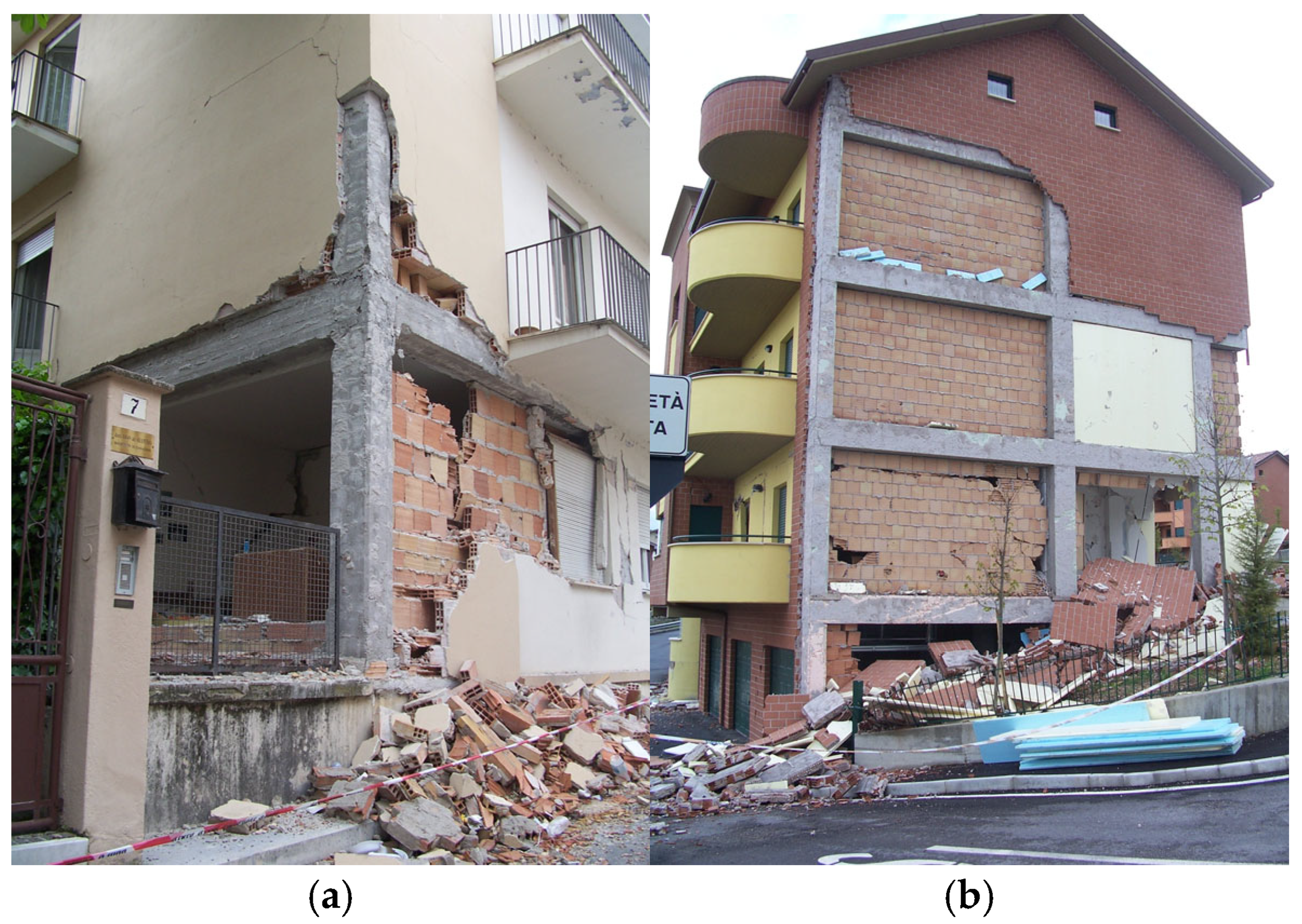
In recent decades, the construction sector has faced increasingly complex challenges related to seismic safety, environmental sustainability, and building energy efficiency. Infill walls, although traditionally classified as non-structural elements in reinforced concrete (RC) buildings, have repeatedly demonstrated significant vulnerability during seismic events. These components are not only subjected to mechanical demands during earthquakes (see Figure 1) but also contribute to energy inefficiencies due to phenomena such as thermal bridging, often linked to inadequate insulation systems [1,2].
The historical separation between structural and thermal design has revealed crucial limitations, particularly when considering environmental impact and disaster resilience. Growing emphasis on sustainability has encouraged researchers to investigate innovative materials capable of simultaneously enhancing seismic performance and building energy efficiency [4,5]. Among these solutions, natural fiber-reinforced composite plasters have emerged as a promising approach. Different studies have explored plaster matrices formulated with natural hydraulic lime and silica sand, incorporating cork granules and cellulose fibers extracted from the broom plant [6]. In [7] the authors have extensively investigated the use of natural fibers and lightweight bio-based aggregates in gypsum- and cement-based composites, highlighting their potential to improve thermal insulation while maintaining adequate mechanical performance; however, the combined effects of fiber treatment, fiber geometry, and hybrid reinforcement systems remain insufficiently explored; while in [8] research has focused on evaluating the influence of granular and fibrous ecological insulating materials on the thermal and mechanical properties of plaster-based composites, with particular attention to density reduction and the optimization of additive content to achieve a balance between thermal insulation and mechanical performance.
In [9] Formisano et al. investigated the use of hemp components in lime-based mortars and bricks, highlighting how shives and fibers can affect compressive and flexural properties, although applications in civil engineering remain limited.” Recent studies [10] have highlighted the potential of incorporating natural fibers—such as palm, straw, etc., into adobe bricks, emphasizing their role in enhancing physical and mechanical properties while addressing sustainability concerns. These natural materials together combine improved thermal insulation with enhanced mechanical performance, offering a viable strategy to reduce CO2 emissions associated with building heating and cooling while also increasing seismic resilience also at present, all these studies are in the experimental phase.
Cork, a renewable and locally available material, provides substantial thermal insulation benefits. However, laboratory tests have shown a reduction of approximately 42% in compressive strength compared to traditional mortars. This drawback can be partially compensated through the addition of natural fibers, which improve ductility and energy dissipation capacity, making the composite more suitable for dynamic loading and reducing the risk of brittle failure.
The key value of this approach lies in the integration of seismic safety and energy efficiency, two performance objectives that have historically been addressed separately. Such integration enables a holistic retrofit strategy capable of improving occupant comfort, reducing operational energy consumption, and enhancing safety in seismically active regions. International building codes increasingly support the use of environmentally friendly materials that reduce ecological impact while remaining compatible with traditional construction and restoration techniques. Sustainability is further promoted by the choice of raw materials: cork is a low-impact, rapidly renewable resource, while broom fibers can be derived from agricultural residues or dedicated cultivation, supporting the circular economy. Their local availability and effective technical performance offer promising opportunities for both retrofit interventions and new constructions aligned with bioclimatic design principles [11,12].
The primary challenge remains balancing mechanical and thermal performance. While cork significantly enhances thermal behavior, it partially compromises strength; conversely, natural fibers increase ductility and seismic performance. Optimizing the composite mixture is therefore essential to achieve materials that satisfy both structural and energy requirements. This integrated strategy addresses technical, environmental, and socio-cultural dimensions of construction. The adoption of natural fiber-reinforced composites represents a shift toward a broader concept of construction quality, combining safety, comfort, and environmental responsibility. Retrofit strategies based on these materials offer multiple benefits, including enhanced seismic performance, reduced energy demands, and support for local production chains with positive socioeconomic implications.
Multidisciplinary research spanning civil engineering, materials science, and sustainability studies is crucial to transfer laboratory results into real-world applications. Collaboration among researchers, practitioners, and regulatory bodies is necessary to ensure compatibility with traditional techniques and the conservation of architectural heritage. Moreover, training and dissemination of knowledge regarding natural fiber-reinforced materials are essential to overcome industry reluctance and encourage the transition toward more sustainable construction practices. Beyond retrofit interventions, these technologies also offer viable solutions for new buildings that must meet contemporary requirements for resilience and energy performance. Integrating seismic safety and energy efficiency within a single intervention represents a competitive advantage, reducing long-term maintenance and operational costs while contributing to greenhouse gas reduction.
In this context, the present study represents an advanced phase in the development of previously investigated lime plaster matrices, now enhanced through the incorporation of an innovative, locally sourced natural broom fiber. The primary objective is to investigate sustainable “green” materials based on locally sourced resources from the Calabria region, aiming to combine mechanical performance, thermal efficiency, and reduced environmental impact.
This paper presents the mechanical characterization of the newly developed mixtures and evaluates their suitability for retrofitting non-structural components, such as infill walls, in existing RC buildings. The results show that the addition of broom fibers increases ductility and energy dissipation capacity, confirming the potential of these composite plasters as a sustainable and innovative solution for construction and seismic retrofit applications.

2. Experimental Program

This section describes the second step of the experimental program carried out at the University of Reggio Calabria for the development of a natural fiber-reinforced plaster.
Table 1 shows the matrix of the experimental test with the compositions of the plaster matrices produced with the presence of broom fiber inside.
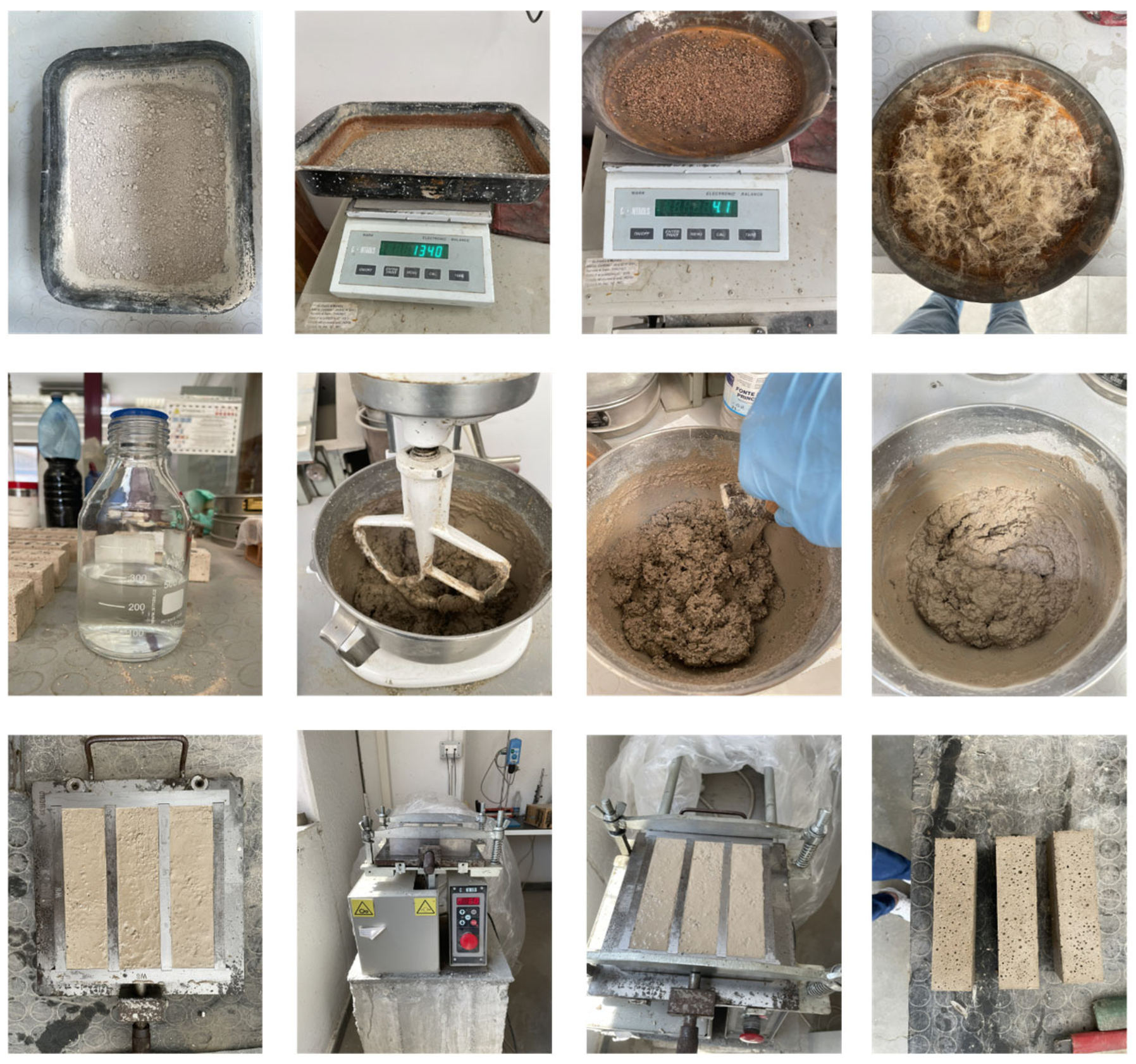
The design and preparation of the mixtures used for specimen casting were carried out in accordance with the European Standards UNI EN 1015-2 [13]. Building upon the findings of previous studies and considering the new sustainability and workability requirements introduced in this research, the final mix formulations for the thermal fiber-reinforced plaster were defined as reported in Table 1 and the process of matrix as shown in Figure 2.
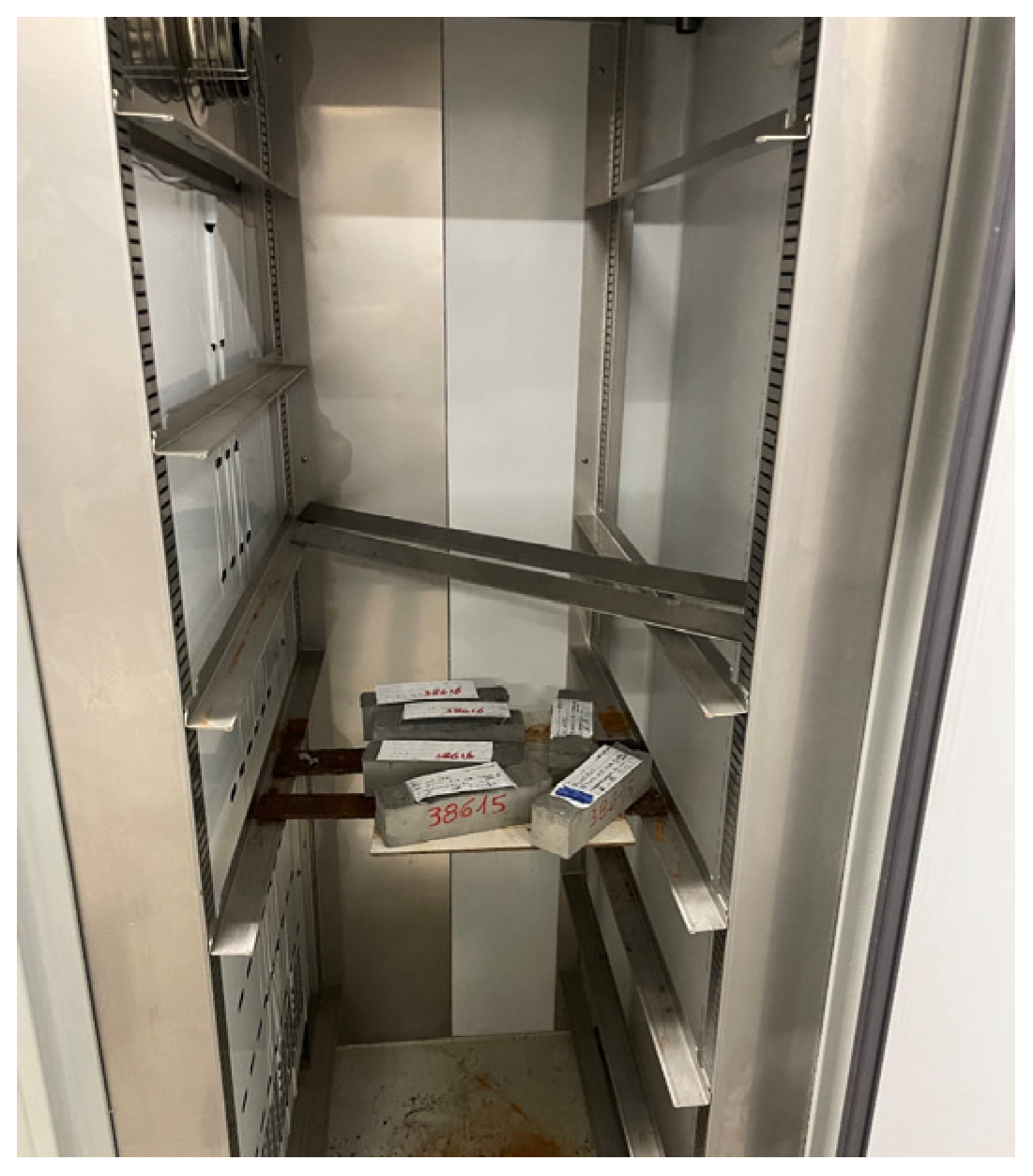
All specimens were cured for 28 days under controlled laboratory conditions before testing (see Figure 3) according to UNI EN 1015-11 [14].
The mechanical testing was carried out in certified laboratories at Tecno-Sud S.r.l. (Reggio Calabria). Although the complete experimental dataset is part of a broader research project and has been partially addressed in a related international publication, the present manuscript focuses specifically on the mechanical performance of the materials, with particular emphasis on flexural and compressive strength behavior.
In this phase of the research, in continuity with and as an advancement over previous studies, in addition to the use of a cement-based superplasticizer aimed at improving the workability of fresh mixtures without increasing the water-to-lime ratio, a natural fiber—broom (Spartium junceum L.)—was employed as a reinforcing material. The fibers, sourced from Calabrian cultivation, were incorporated into the mixtures to enhance ductility and energy absorption capacity. Their use was made possible through a collaborative agreement with the University of Calabria (UNICAL, Cosenza), aimed at valorizing locally available natural resources and improving the environmental sustainability of the formulations [15,16].

2.1. Mechanical Characterization

2.1.1. Direct Tensile Test on Broom Fiber

The determination of the tensile strength of broom fiber (Spartium junceum L.) was carried out with the objective of defining the fundamental mechanical parameters of the natural reinforcement intended to be incorporated into the fiber-reinforced thermo-plaster system for combined seismic and energy retrofit applications.
The experimental characterization was conducted in accordance with ASTM C1557-20—“Standard Test Method for Tensile Strength and Young’s Modulus of Fibers” [17], integrated with the procedural guidelines reported in ASTM D3379-75—“Standard Test Method for Tensile Strength and Young’s Modulus for High-Modulus Single-Filament Materials” [18], in order to ensure compliance with international standards typically adopted for the assessment of small-diameter fibrous materials.
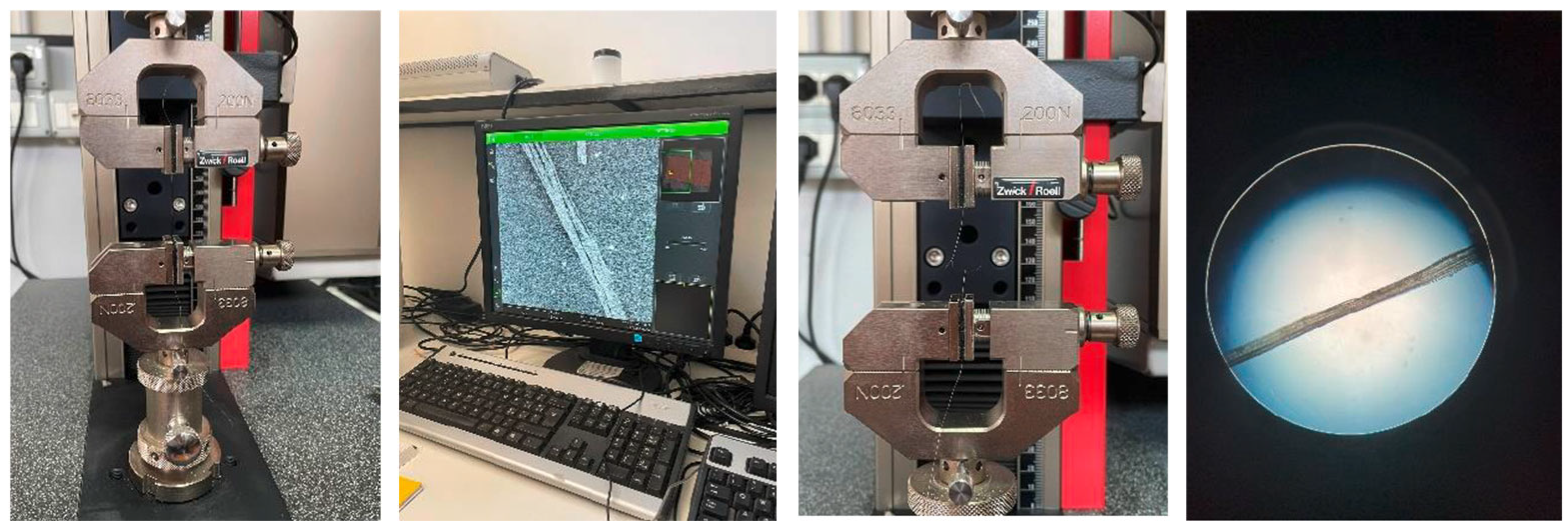
The tensile strength of broom fibers (Spartium junceum L.) was measured to determine the key mechanical parameters of the natural reinforcement intended for incorporation into the fiber-reinforced thermo-plaster system for combined seismic and energy retrofit applications (see Figure 4) [19,20].
From each bundle, five individual filaments were manually extracted using precision tweezers, avoiding surface defects or mechanical damage that could alter the tensile response. Prior to testing, all specimens were conditioned under controlled laboratory conditions (20 ± 2 °C; RH 50 ± 5%) for 24 h, following the environmental pre-conditioning protocols commonly adopted for bio-based fiber materials. Uniaxial tensile tests were performed using a Zwick/Roell Z020 universal testing machine.
The clamping system was configured with micro-grip fixtures to minimize slippage and avoid premature failure in the gripping zones, which is a recurrent issue in the mechanical testing of natural fibers with irregular cross-sections. The gauge length was fixed at 30 mm, while a constant crosshead displacement rate of 0.5 mm/min was adopted to ensure quasi-static loading conditions suitable for the extraction of elastic and tensile parameters while limiting viscoelastic effects inherent to lignocellulosic fibers. During testing, load–displacement curves were continuously recorded and subsequently converted into engineering stress–strain (σ–ε) diagrams through precise determination of the effective cross-sectional area. Immediately after fracture, the broken segment of each filament was analyzed using a Phenom ProX Scanning Electron Microscope (SEM), which enabled high-resolution imaging of the fracture zone and accurate measurement of the local filament diameter.
For each specimen, three independent diameter measurements were collected, and the mean diameter was computed and used to determine the cross-sectional area using the relation:
A = π D m e d 2 4
Based on the measured failure load, the tensile strength σ of each filament was calculated as:
σ t = F f A
This analytical approach enabled a refined evaluation of the actual stress state developed within the fibers, establishing a direct correlation between tensile performance and morphological variability intrinsic to natural bio-derived filaments.
Preliminary mechanical observations revealed that the tensile response of Spartium junceum L. fibers is characterized by an initial linear-elastic phase with a rapid increase in load, followed by a progressive softening phase which can be attributed to the gradual delamination of cellulose microfibrils and the breakdown of lignin-based bonding interfaces, phenomena similarly reported in other bio-derived fibers intended for cementitious composites. This post-peak behavior highlights a potential energy dissipation capacity, suggesting that the incorporation of these fibers into plaster matrices for seismic retrofit applications may lead to crack-bridging mechanisms and enhanced ductility, thus delaying crack propagation and improving the overall toughness of the composite system.
The results of the tensile test as shown in Table 2.

2.1.2. Flexural Strength Tests

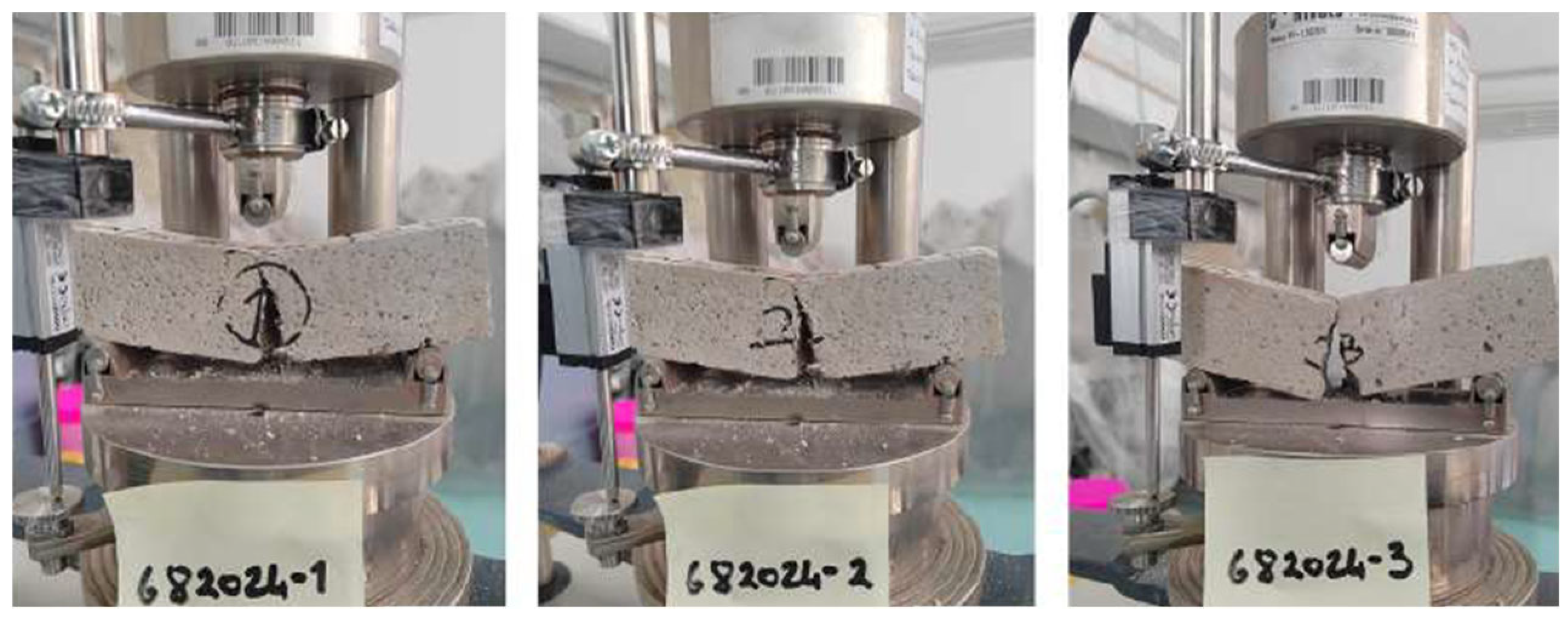
The flexural strength of the hardened mortar was evaluated in accordance with UNI EN 1015-11:2007 “Methods of test for mortar for masonry—Part 11: Determination of flexural and compressive strength of hardened mortar” [14]. The test was performed on prismatic specimens, cast in metallic molds 40 × 40 × 160 mm3, by applying a three-point bending load until failure. The experiments were carried out using a Matest 50 kN servo-hydraulic universal testing machine, compliant with the reference standard (Figure 5).
After curing, the specimens were subjected to three-point bending tests. Each prism was positioned on the supports of the testing machine with its lower face resting on two steel cylinders, 10 mm in diameter, placed symmetrically at 100 mm and 50 mm from the central loading line. On the upper face, a third steel cylinder of the same dimensions was aligned with the vertical actuator, ensuring effective load transfer to the specimen.
The flexural tests were performed under displacement control, continuing until the specimens failed. For each specimen, the recorded load and deflection values were tabulated.
The fractured halves from the bending tests were subsequently used for compressive strength testing, as described in the next section.
Once the maximum load values applied to each specimen were determined, the calculation of the flexural strength, indicated as Rt, was carried out using the equation:
R t = ( 1.5 · F t · l ) b · h 2
where
  • Ft is the applied load [N]
  • l is the span between the supports [mm]
  • b and h2 are the dimensions of the cross-section [mm]
The results of flexural strength of the matrices are shown in Table 3, Table 4, Table 5 and Table 6.
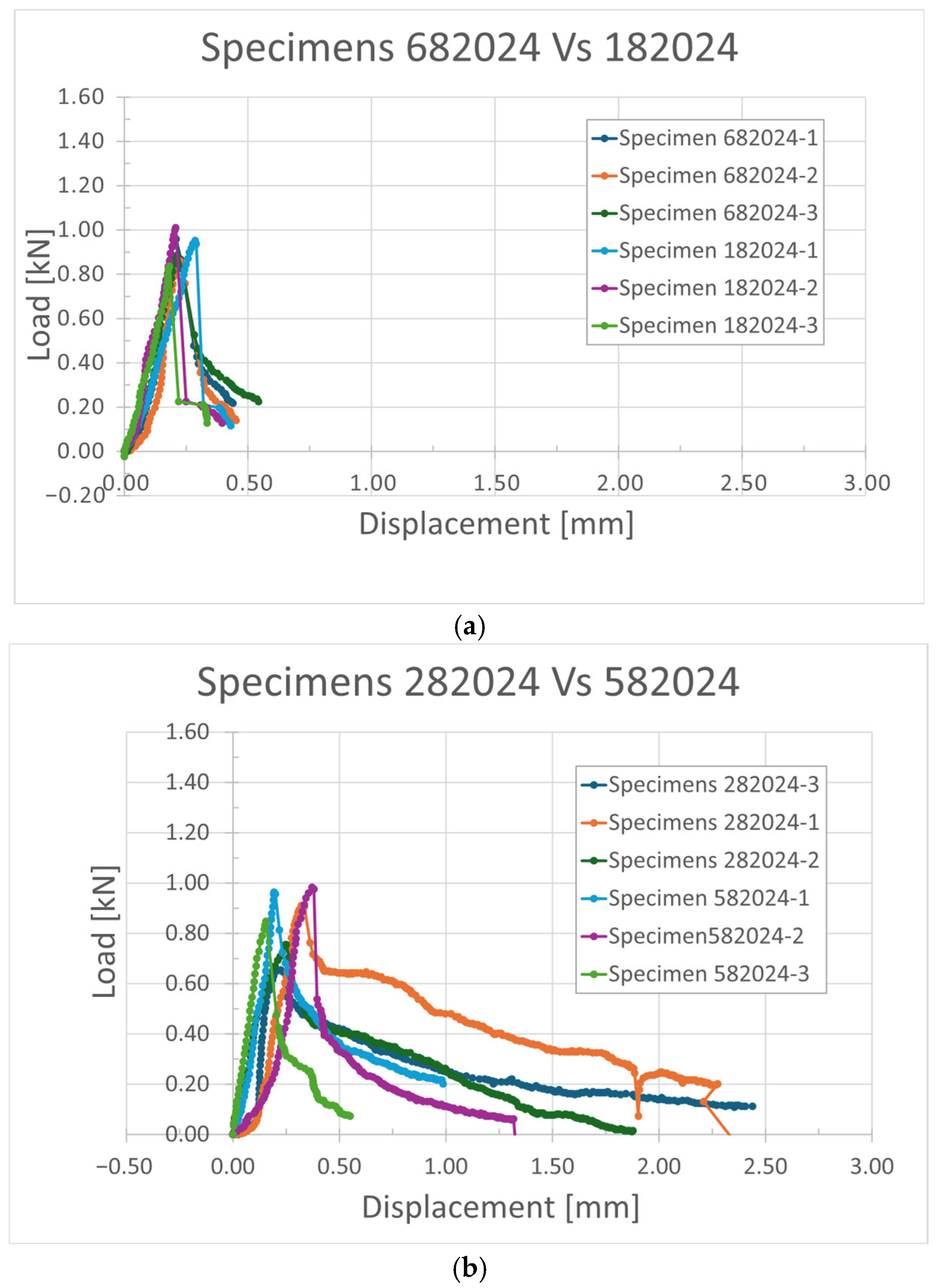
The tests were carried out under displacement control, and the results are shown in Figure 6a,b.
Figure 6a shows the deformation behavior of the matrices produced without fibers, whereas Figure 6b illustrates the behavior of the matrices containing fibers.
The flexural tests highlight a clear influence of cork and broom fibers on the behavior of the matrix. In particular, the addition of cork leads to an increase in deformability accompanied by a slight reduction in maximum strength, whereas broom fibers significantly enhance post-cracking ductility. Moreover, longer fibers (16 mm) provide higher energy dissipation capacity and greater residual load-bearing capacity compared to shorter fibers.

2.1.3. Uniaxial Compression Tests

The compressive strength of the hardened fibre-reinforced plaster matrix was evaluated in accordance with UNI EN 1015-11:2007 [14]. Following the standard procedure, the two halves resulting from the flexural failure of the prismatic specimens were reused for the compression test, thereby optimizing material utilization and maintaining consistency between the flexural and compressive characterization stages.
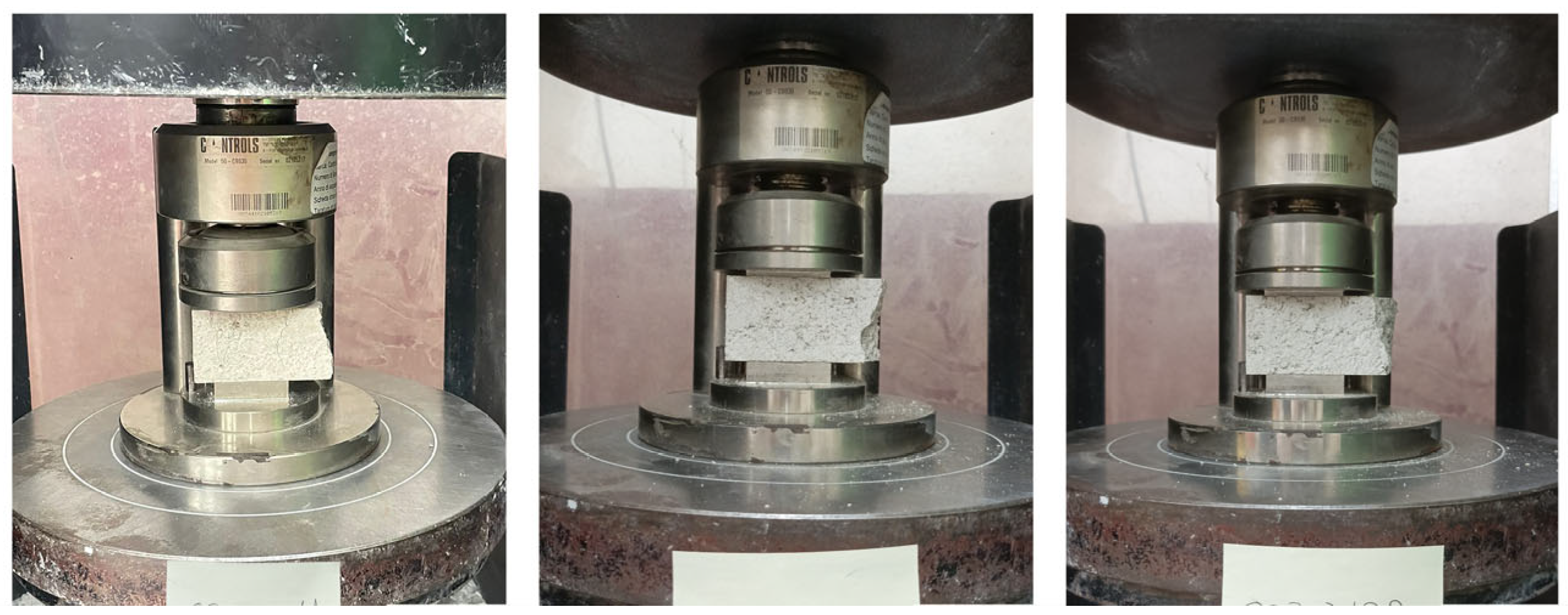
Specimens were carefully positioned on a Matest universal testing machine (see Figure 7), ensuring correct alignment between the loading platens and the sample to prevent eccentric loading or premature instability. A progressively increasing load was applied via a hydraulic actuator until specimen failure, and the maximum load at fracture was recorded for each sample.
Compressive strength was calculated according to the following expression:
R c = F C A
The results of the compression test are shown in Table 7a for the matrix 682024—182024 and Table 7b for matrix 282024 and 582024.

3. Analysis and Discussion of Results

The results of the mechanical characterization tests performed on the fiber-reinforced plaster samples provide both quantitative and qualitative insights into the mechanical response and load-bearing behavior of the investigated matrices. In the context of structural and rehabilitation engineering applications, flexural and compressive performance are of primary relevance, as plaster-based materials are commonly subjected to static and cyclic mechanical actions. Particular emphasis was placed on the assessment of ductile behavior, which is a key parameter governing the durability, serviceability, and in-service safety of plaster systems.
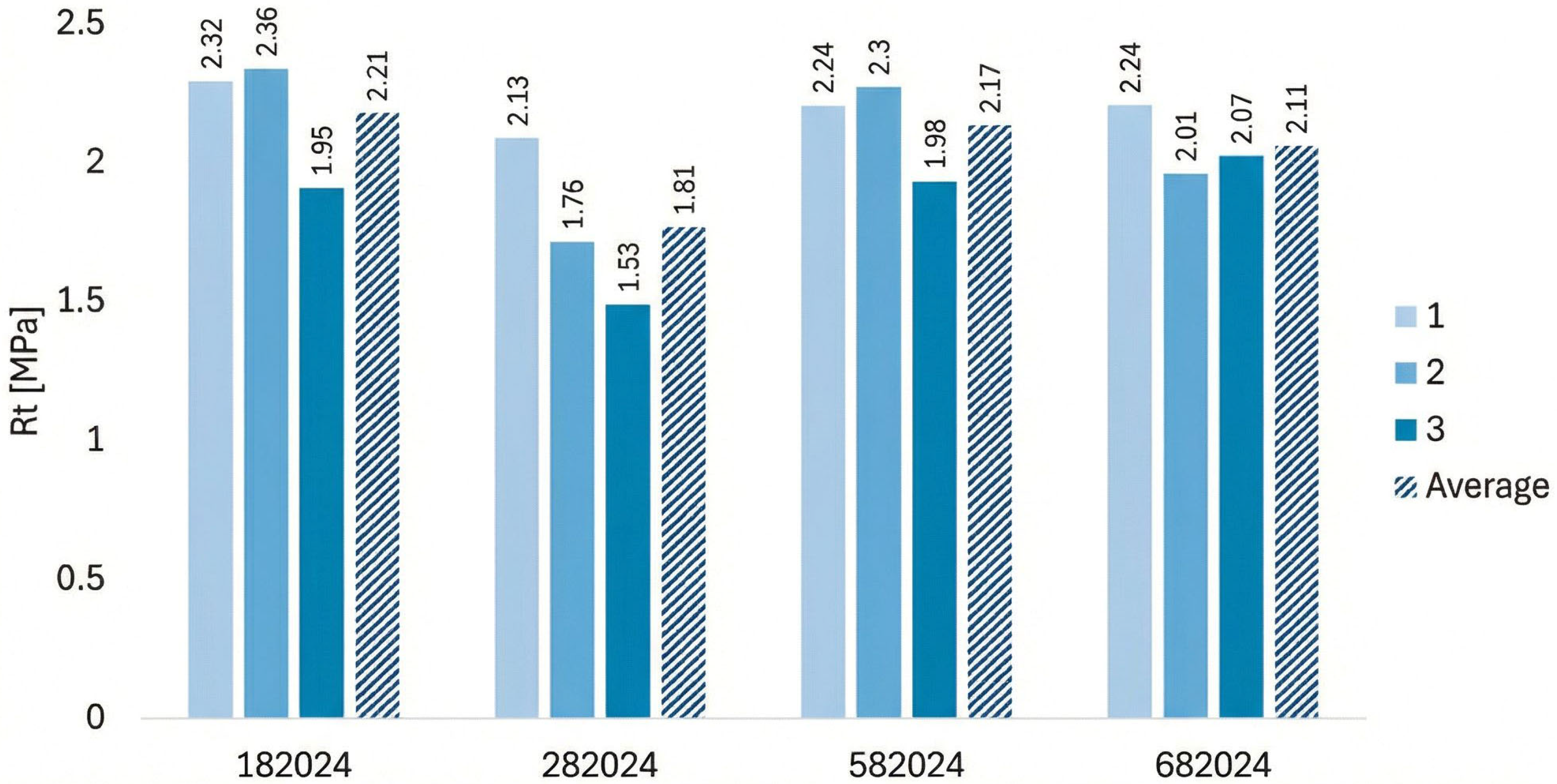
The relationship between the flexural strength results of matrices with and without fiber (Figure 8) reflects the ability of the material to resist bending-induced stresses and is therefore a suitable indicator for evaluating the effectiveness of matrix modification strategies.
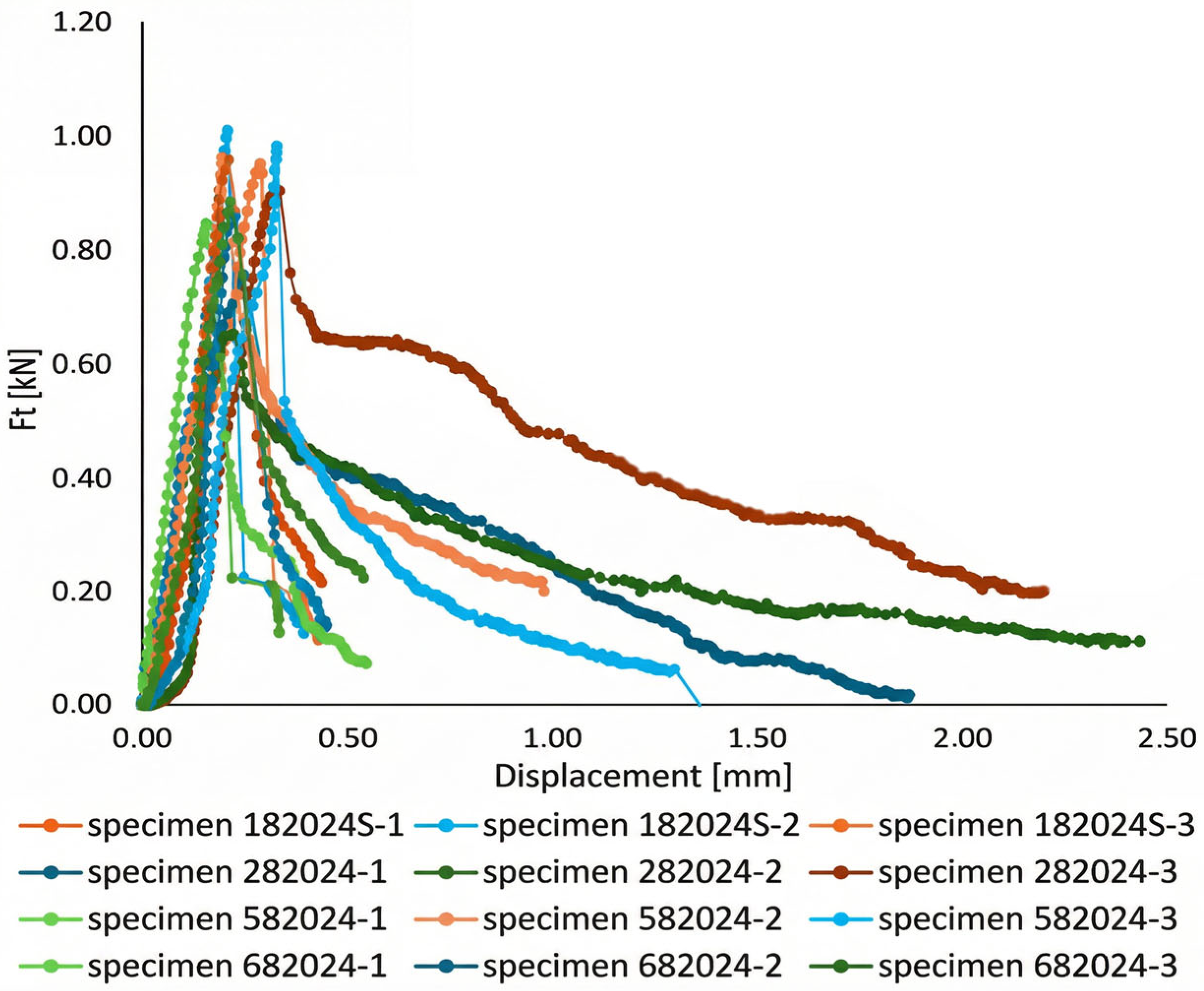
The reference matrix (682024), composed of NHL 5 lime, sand, and 1% superplasticizer, without cork or broom fibers, was tested to establish the baseline mechanical performance. Three specimens, with masses ranging from 478.5 g to 487.8 g, were tested. The maximum applied loads varied between 859 N and 1003 N, corresponding to flexural strength values between 2.01 MPa and 2.35 MPa. The load–displacement curves exhibited a predominantly linear-elastic response followed by an abrupt failure at peak load, indicative of the brittle behavior typically associated with unreinforced lime-based mortars. The limited scatter in the results suggests a relatively homogeneous material, with minor variability attributable to small differences in specimen preparation or internal microstructure. The matrix 182024, incorporating 30% cork aggregate and 1% superplasticizer, was investigated to evaluate the influence of lightweight aggregates on flexural performance. Specimen masses ranged from 493.2 g to 505.1 g, with peak loads between 836 N and 1087 N, corresponding to flexural strength values of 1.95–2.54 MPa. The flexural response was characterized by a linear-elastic phase up to peak load, followed by a sudden loss of load-bearing capacity, with limited post-peak deformation. Compared to the reference matrix, the inclusion of cork resulted in a slight reduction in peak strength, attributable to the lower stiffness and strength of the lightweight aggregate. However, a modest increase in deformability and energy dissipation prior to failure was observed, suggesting that cork contributes to a more compliant mechanical response without significantly enhancing post-cracking behavior.
While the 282024 matrix, containing 30% cork and 1% broom fibers with a length of 16 mm, exhibited a markedly different flexural behavior. Specimen masses ranged from 439.1 g to 452.0 g, and maximum loads varied between 654 N and 908 N, corresponding to flexural strength values of 1.53–2.12 MPa. Although the peak flexural strength was lower than that of the reference and cork-only matrices, the load–displacement curves revealed a pronounced post-peak response. After reaching the maximum load, the specimens were able to sustain a residual load rather than undergoing sudden collapse. This behavior is attributed to the crack-bridging action of the broom fibers, which limits crack opening, delays crack propagation, and promotes stress redistribution within the matrix, resulting in enhanced energy absorption and ductility. Also, the 582024 matrix, incorporating 30% cork and 1% broom fibers with a length of 8 mm, demonstrated an overall improved flexural response compared to the configuration with longer fibers. Specimen masses ranged from 478.5 g to 487.8 g, while peak loads varied between 859 N and 1022 N, yielding flexural strength values of 1.98–2.53 MPa. The force–displacement curves showed a stable post-peak regime, characterized by a sustained residual load-bearing capacity and increased energy dissipation. The shorter fiber length appears to promote a more uniform fiber distribution and a more effective interaction with the matrix, leading to improved crack control and a mechanically balanced composite combining moderate flexural strength with significant post-cracking deformability.
Overall, matrices containing cork aggregates exhibited a more compliant mechanical response under displacement-controlled loading, characterized by an extended inelastic phase prior to failure compared to matrices without lightweight aggregates. The combined incorporation of cork and broom fibers proved particularly effective in mitigating brittle failure mechanisms, as evidenced by the gradual stiffness degradation and enhanced post-cracking behavior observed in fiber-reinforced formulations. From an application-oriented perspective, this response is highly desirable, as delayed crack initiation and propagation contribute to improved durability and long-term performance of plaster systems, especially in structural strengthening and retrofit interventions where damage tolerance and serviceability are critical.
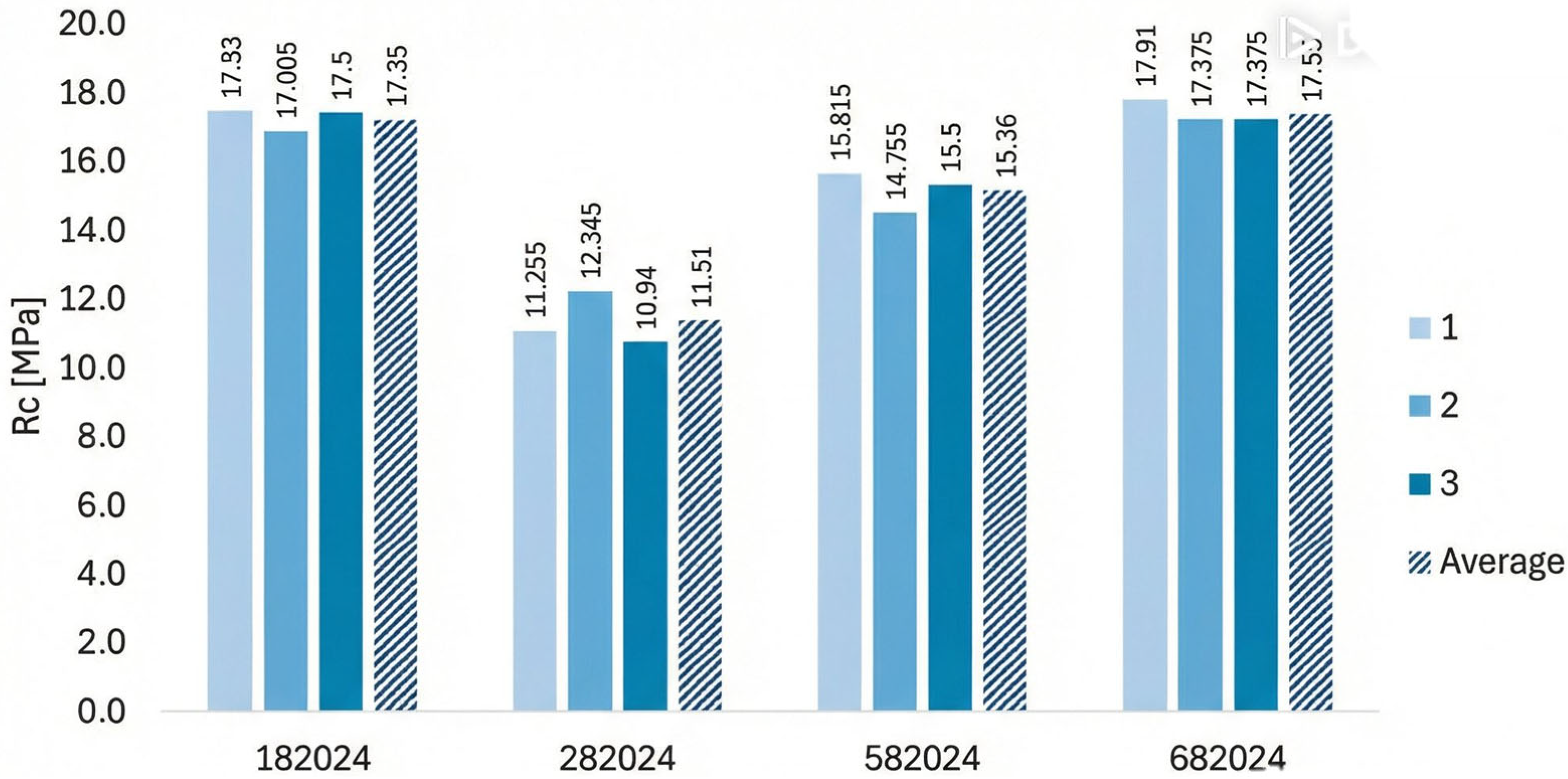
About compressive strength (Figure 9), the reference 682024 matrix exhibited compressive strengths ranging from 16.94 MPa to 18.13 MPa, with an average of 17.59 MPa. Despite the absence of fiber and cork, the superplasticizer improved workability and compaction, resulting in high density and load-bearing capacity.
The 182024 matrix, containing 30% cork, showed a slight reduction in compressive strength (16.38–17.94 MPa, mean 17.34 MPa) while maintaining uniform behavior among specimens. The cork reduced density without significantly compromising compressive performance, confirming its suitability for applications requiring a lightweight mortar with structural capability.
The inclusion of 1% broom fibers (16 mm) in matrix 282024 resulted in compressive strengths between 10.57 MPa and 13.69 MPa. While slightly lower than the reference, the matrix exhibited a more distributed stress response due to the fiber reinforcement, compensating for the decrease in maximum strength. Increasing the fiber length to 8 mm (matrix 582024) improved compressive strength to 14.38–15.88 MPa and enhanced stress distribution, highlighting the beneficial effect of longer fibers in improving internal cohesion and mechanical reliability.
Matrix 182024 exhibits the highest average value, equal to 17.53 MPa, followed by the reference matrix 682024 with a comparable value. Matrices 282024 and 582024, both containing cork and broom fiber, show slightly lower compressive strengths (15.81 MPa and 15.85 MPa, respectively). Although these values are marginally lower than those of fiber-free matrices, their behavior under load indicates an enhanced ability to accommodate variable and cyclic stresses.
The presence of broom fiber, while causing a slight reduction in peak compressive strength, contributes to improving internal stress distribution and material cohesion. This effect is particularly relevant for plasters subjected to vibrations or cyclic loads, such as those applied in seismic-prone areas, where the ability to deform without brittle collapse represents a fundamental requirement.
In conclusion, the overall comparison among the matrices investigated clearly shows that the inclusion of cork plays a decisive role in improving deformability and flexural performance, without significantly compromising compressive strength. Broom fiber, on the other hand, exerts a more pronounced effect on flexural behavior and post-cracking response, enhancing ductility and deformation absorption capacity. These results confirm that, from an engineering perspective, improving ductility is a key parameter in the design of high-performance plaster systems. While compressive strength is essential to ensure load-bearing capacity, ductility is crucial to prevent cracking, detachment, and progressive damage under cyclic loading conditions.
Experimental evidence demonstrates that the addition of cork and broom fiber increases flexural strength, enhances post-cracking ductility (Figure 10), and maintains compressive strength values compatible with structural applications. The most ductile matrices exhibit a significant reduction in cracking, which is a determining factor for long-term durability and structural safety. Based on the experimentally obtained compressive strength values, the investigated plaster matrices can be classified as CS IV according to UNI EN 998-1 [21], as they are characterized by Rc values exceeding 12 MPa. These results confirm the suitability of the proposed mortar for applications requiring high mechanical performance, combined with ductile behavior and good resistance to cracking. A further element contributing to the interpretation of the mechanical behavior of the fiber-reinforced matrices is the tensile characterization of the broom fibers used as reinforcement. Uniaxial tensile tests conducted on individual fibers yielded an average ultimate tensile strength σt of approximately 611 N/mm2. This value confirms the high tensile load-bearing capacity of broom fiber, making it suitable for use as reinforcement in mineral-matrix composites. From a mechanical standpoint, the high tensile strength of the fibers explains the observed improvement in flexural behavior and post-cracking response of the matrices containing broom fiber, due to crack-bridging mechanisms and internal stress redistribution. This contribution results in an overall increase in composite ductility and a reduced tendency toward brittle failure.
Overall, the obtained results are consistent with findings reported in the literature for mineral-matrix plasters and composites reinforced with natural fibers, which highlight improvements in ductility and energy dissipation capacity. In particular, previous studies on fiber-reinforced systems for seismic applications confirm the effectiveness of natural fibers in limiting cracking and enhancing post-cracking behavior [19,20]. Although the strength values are comparable to those of conventional plasters, matrices incorporating cork and broom fiber exhibit a more deformable and resilient mechanical response. The availability of the natural materials employed and their favorable mechanical performance make these plasters a promising solution for structural and restoration applications.

4. Conclusions

This study investigated the mechanical behavior of innovative fiber-reinforced plaster composites incorporating cork aggregates and broom fibers, to enhance ductility and post-cracking performance while preserving adequate strength levels for structural and protective applications. Based on the experimental results obtained, the following conclusions can be drawn.
The combined inclusion of cork and broom fibers markedly enhances the deformability and flexural performance of plaster matrices by promoting a more ductile response, delaying crack initiation and propagation, and extending the post-cracking phase with a reduced tendency toward brittle failure compared to cork-free matrices, while the broom fibers—despite a slight reduction in peak compressive strength—play a crucial role in improving post-cracking behavior and overall ductility through effective crack-bridging and internal stress redistribution mechanisms enabled by their high tensile strength (average σt ≈ 611 N/mm2), ultimately increasing energy dissipation capacity and damage tolerance under flexural and cyclic loading conditions.
All investigated plaster matrices achieved compressive strength values exceeding 12 MPa, allowing classification within class CS IV according to UNI EN 998-1. This confirms the suitability of the proposed mortar systems for applications requiring high mechanical performance combined with ductile behavior and good resistance to cracking.
Overall, the combined use of cork and broom fiber results in plaster composites characterized by a balanced mechanical response, in which adequate strength is coupled with enhanced ductility. These features make the proposed materials particularly promising for structural strengthening, seismic retrofitting, and restoration applications, where the ability to accommodate deformation without brittle failure represents a critical design requirement.
This study demonstrates that the combined use of cork and broom fiber effectively enhances the mechanical performance of plaster matrices by promoting ductility, improving flexural behavior, and limiting crack initiation and propagation, while maintaining compressive strength levels suitable for structural applications. The experimental results clearly show that cork primarily contributes to increased deformability and energy absorption, whereas broom fiber plays a key role in controlling post-cracking behavior through crack-bridging mechanisms and stress redistribution.
Future research will initially focus on the investigation of alternative mix designs, aimed at optimizing the dosage and interaction of cork aggregates and broom fibers in order to further improve mechanical performance. Subsequently, experimental validation will be extended to real-scale applications through full-scale testing, allowing assessment of constructability, mechanical behavior, and cracking response under realistic boundary conditions. Additional studies will address long-term durability and performance under cyclic and dynamic loading, with the aim of consolidating the reliability and applicability of these sustainable fiber-reinforced plaster systems in engineering practice.


Author Contributions

Authors B.R. and P.R. contributed to the drafting and review of the paper. All authors have read and agreed to the published version of the manuscript.

Funding

This research received no external funding.

Data Availability Statement

The original contributions presented in this study are included in the article.

Acknowledgments

The authors of this paper would like to gratefully acknowledge the TECNO-SUD Testing Materials Laboratory for its availability, technical support, and collaboration throughout the experimental campaign.

Conflicts of Interest

The authors declare no conflicts of interest.

References

  1. Perrone, D.; Calvi, P.M.; Nascimbene, R.; Fischer, E.C.; Magliulo, G. Seismic performance of non-structural elements during the 2016 Central Italy earthquake. Bull. Earthq. Eng. 2019, 17, 5655–5677. [Google Scholar] [CrossRef]
  2. Braga, F.; Manfredi, V.; Masi, A.; Salvatori, A.; Vona, M. Performance of non-structural elements in RC buildings during the L’Aquila, 2009 earthquake. Bull. Earthq. Eng. 2011, 9, 307–324. [Google Scholar] [CrossRef]
  3. Bursi, O.S.; Dusatti, T.; Pucinotti, R. A Reconnaissance Report. The April 6, 2009, L’Aquila Earthquake. Italy. 2009. Available online: http://www.reluis.it (accessed on 29 May 2009).
  4. Pugliese, D.; Alecci, V.; Tale Masoule, M.S.; Ghahremaninezhad, A.; De Stefano, M.; Nanni, A. Development of Biodegradable and Recyclable FRLM Composites Incorporating Cork Aggregates for Sustainable Construction Practices. Materials 2024, 17, 5232. [Google Scholar] [CrossRef] [PubMed]
  5. Buda, R.; Pucinotti, R. Natural Lime–Cork Mortar for the Seismic and Energetic Retrofit of Infill Walls: Design, Materials, and Method. Appl. Sci. 2024, 14, 7503. [Google Scholar] [CrossRef]
  6. Nasr, Y.; El Zakhem, H.; Hamami, A.E.A.; El Bachawati, M.; Belarbi, R. Comprehensive review of innovative materials for sustainable buildings’ energy performance. Energies 2023, 16, 7440. [Google Scholar] [CrossRef]
  7. Er-Rradi, H.; Idchabani, R.; Boukhattem, L.; Bouchefra, I.; Bojji, C. Thermal and mechanical properties enhancement of plaster composites incorporating natural fibers and aggregates for application in sustainable buildings. J. Build. Phys. 2026, 49, 556–576. [Google Scholar] [CrossRef]
  8. Maaloufa, Y.; Mounir, S.; Khabbazi, A.; Kettar, J. Thermal and mechanical behavior of the plaster reinforced by fiber alpha or granular cork. Int. J. Civ. Eng. Technol. 2017, 8, 1026–1040. [Google Scholar]
  9. Formisano, A.; Dessì, E., Jr.; Landolfo, R. Mechanical-physical experimental tests on lime mortars and bricks reinforced with hemp. In AIP Conference Proceedings; AIP Publishing LLC: Melville, NY, USA, 2017; Volume 1906, p. 090006. [Google Scholar]
  10. Meglio, E.; Formisano, A. Experimental Tests on Hemp-Reinforced Adobe Bricks. In International Conference on Protection of Historical Constructions; Springer Nature: Cham, Switzerland, 2025; pp. 197–204. [Google Scholar]
  11. Buda, R.; Pucinotti, R. A multidisciplinary approach in seismic and energy, retrofit of existing RC buildings: A “structural double skin”. In Structures; Elsevier: Amsterdam, The Netherlands, 2025; Volume 81, p. 110254. [Google Scholar]
  12. Calvi, G.M.; Sousa, L.; Ruggeri, C. Energy efficiency and seismic resilience: A common approach. In Multi-Hazard Approaches to Civil Infrastructure Engineering; Springer International Publishing: Cham, Switzerland, 2016; pp. 165–208. [Google Scholar]
  13. EN 1015-2:2007; Mortar Test Methods for Masonry Works—Part 2: Global Mortar Sampling and Test Mortar Preparation. CEN—European Committee for Standardization: Brussels, Belgium, 2007.
  14. EN 1015-11:2019; Methods of Test for Mortar for Masonry—Part 11: Determination of Flexural and Compressive Strength of Hardened Mortar. CEN—European Committee for Standardization: Brussels, Belgium, 2019.
  15. Chidichimo, G.; Aloise, A.; Beneduci, A.; De Rango, A.; Pingitore, G.; Furgiuele, F.; Valentino, P. Polyurethanes reinforced with Spartium junceum fibers. Polym. Compos. 2016, 37, 3042–3049. [Google Scholar] [CrossRef]
  16. Corrente, G.A.; Scarpelli, F.; Caputo, P.; Rossi, C.O.; Crispini, A.; Chidichimo, G.; Beneduci, A. Chemical–physical and dynamical–mechanical characterization on Spartium junceum L. cellulosic fiber treated with softener agents: A preliminary investigation. Sci. Rep. 2021, 11, 35. [Google Scholar] [CrossRef] [PubMed]
  17. ASTM C 1557-20; Standard Test Method for Tensile Strength and Young’s Modulus of Fibers. ASTM International: West Conshohocken, PA, USA, 2020.
  18. ASTM D3379-75(1989)e1; Standard Test Method for Tensile Strength and Young’s Modulus for High-Modulus Single-Filament Materials (Withdrawn 1998). ASTM International: West Conshohocken, PA, USA, 1975.
  19. Angelini, L.G.; Lazzeri, A.; Levita, G.; Fontanelli, D.; Bozzi, C. Ramie (Boehmeria nivea (L.) Gaud.) and Spanish Broom (Spartium junceum L.) fibres for composite materials: Agronomical aspects, morphology and mechanical properties. Ind. Crops Prod. 2000, 11, 145–161. [Google Scholar] [CrossRef]
  20. Cassano, R.; Trombino, S.; Bloise, E.; Muzzalupo, R.; Iemma, F.; Chidichimo, G.; Picci, N. New broom fiber (Spartium junceum L.) derivatives: Preparation and characterization. J. Agric. Food Chem. 2007, 55, 9489–9495. [Google Scholar] [CrossRef] [PubMed]
  21. EN 998-1:2010; Specification for Mortar for Masonry—Part 1: Rendering and Lastering Mortar. CEN—European Committee for Standardization: Brussels, Belgium, 2010.
Figure 1. Main damage mechanisms in non-structural elements such as infill walls in the Abruzzo earthquake (a) damage confined to the ground floor; (b) damage affecting multiple floors [3].
Fibers 14 00025 g001
Figure 2. Matrix production process.
Fibers 14 00025 g002
Figure 3. Specimens cured for 28 days.
Fibers 14 00025 g003
Figure 4. Tensile strength of broom fiber.
Fibers 14 00025 g004
Figure 5. Flexural strength tests of 682024 matrix.
Fibers 14 00025 g005
Figure 6. Experimental three-point bending test results. (a) fiber-free matrices; (b) fiber-reinforced matrices.
Fibers 14 00025 g006
Figure 7. Compressive strength tests of 682024 matrix.
Fibers 14 00025 g007
Figure 8. Histogram of the average flexural strength of the selected matrices.
Fibers 14 00025 g008
Figure 9. Histogram of the average compressive strength of the selected matrices.
Fibers 14 00025 g009
Figure 10. Superposition of force–displacement curves from flexural tests.
Fibers 14 00025 g010
Table 1. Matrix of the second experimental phase.
Code
Matrix
Lime NHL 5 [g]Water
[mL]
Ratio
W/L
Sand
[g]
Plasticizer
[g]
Cork
[g]
Broom
Fiber
[g]
Broom
Fiber Length [mm]
682024450.00225.000.501350.004.500.000.000.00
182024s450.00225.000.501330.604.5019.400.000.00
282024450.00225.000.501314.409.0019.4016.0016.00
582024450.00225.000.501322.604.5019.408.008.00
Table 2. Results of the tensile test broom fibers.
Fiber
Code
Lenght
cm
Diameter
mm
Diameter
μm
Area
mm2
Ff
N
σt
N/mm2
FR 130.000.069369.250.00381.892493502.46
FR 230.000.072972.930.00422.185965523.24
FR 330.000.059359.330.00282.218027802.19
FR 430.000.065965.870.00342.003382587.95
FR 530.000.067167.100.00352.262401639.79
Average611.13
Standard Deviation119.2
Table 3. Matrix 682024—Results: Flexural Strength Tests.
CodeMass [g]l [mm]b [mm]Ft [N]Rt [Mpa]
682024-1478.51004010032.35
682024-2484.5100408592.01
682024-3487.8100408872.07
Average2.14
Standard Deviation0.17
Table 4. Matrix 182024 Results: compression test.
CodeMass [g]l [mm]b [mm]Ft [N]Rt [Mpa]
182024-1505.1100409802.29
182024-2493.21004010872.54
182024-3494.2100408361.95
Average2.26
Standard Deviation0.30
Table 5. Matrix 282024—Results: Flexural Strength Tests.
CodeMass [g]l [mm]b [mm]Ft [N]Rt [Mpa]
282024-1442.9100409082.12
282024-2452.0100407551.76
282024-3439.1100406541.53
Average1.83
Standard Deviation0.29
Table 6. Matrix 582024—Results: Flexural Strength Tests.
CodeMass [g]l [mm]b [mm]Ft [N]Rt [Mpa]
582024-1478.51004010222.53
582024-2484.51004010062.37
582024-3487.8100408591.98
Average2.29
Standard Deviation0.28
Table 7. (a) Results of compression tests—Matrix 682024 and 182024. (b) Results of compression tests—Matrix 282024 and 582024.
(a)
Specimen
Code
Fc
[kN]
Rc
[MPa]
Specimen
Code
Fc
[kN]
Rc
[MPa]
682024-1A29.0018.13182024-1A27.8017.37
682024-1B28.3017.69182024-1B28.3017.69
682024-2A27.5017.19182024-2A28.2017.63
682024-2B28.1017.56182024-2B26.2016.38
682024-3A28.5017.81182024-3A28.7017.94
682024-3B27.1016.94182024-3B27.3017.06
Average17.55Average17.35
Standard Deviation0.39Standard Deviation0.57
(b)
Specimen
Code
Fc
[kN]
Rc
[MPa]
Specimen
Code
Fc
[kN]
Rc
[MPa]
282024-1A19.1011.94582024-1A25.4015.88
282024-1B16.9010.57582024-1B25.2015.75
282024-2A21.9013.69582024-2A23.0014.38
282024-2B17.6011.00582024-2B24.2015.13
282024-3A17.0010.63582024-3A25.1015.69
282024-3B18.0011.25582024-3B24.5015.31
Average11.68Average15.39
Standard Deviation1.19Standard Deviation0.22
Disclaimer/Publisher’s Note: The statements, opinions and data contained in all publications are solely those of the individual author(s) and contributor(s) and not of MDPI and/or the editor(s). MDPI and/or the editor(s) disclaim responsibility for any injury to people or property resulting from any ideas, methods, instructions or products referred to in the content.