Article

Shrinking Chitosan Fibers in Concrete: A Macroscale Durability and Strength Assessment

by
Mohammad A. Abdul Qader
1,*,
Shannon Hughes
1,
Dryver Huston
2 and
Mandar M. Dewoolkar
1
1
Department of Civil and Environmental Engineering, University of Vermont, Votey Hall, 33 Colchester Ave, Burlington, VT 05405, USA
2
Department of Mechanical Engineering, University of Vermont, Votey Hall, 33 Colchester Ave, Burlington, VT 05405, USA
*
Author to whom correspondence should be addressed.
Fibers 2026, 14(2), 18; https://doi.org/10.3390/fib14020018
Submission received: 20 November 2025 / Revised: 10 January 2026 / Accepted: 21 January 2026 / Published: 29 January 2026

Highlights

What were the main findings of this study?
Self-shrinking chitosan fibers exhibited a significant dimensional reduction of approximately 37% when exposed to alkaline environments. However, when incorporated into high-performance concrete, these fibers led to notable performance drawbacks. Food-grade chitosan fibers caused a substantial reduction in compressive strength (approximately 40–70%), while high-grade chitosan fibers exhibited significant failure during freeze–thaw cycling.
What are the implications of these findings?
The results indicate that self-shrinking chitosan fibers do not currently provide a consistent or reliable enhancement to the performance of structural concrete. Further refinement of fiber formulation, processing, and dosage is required before these fibers can be effectively used as a sustainable reinforcement alternative in high-performance concrete systems.

Abstract

This study evaluates the mechanical properties and durability of novel self-shrinking chitosan fibers incorporated into a High-Performance Concrete (HPC) matrix. The cementitious system comprised a 75–25% blend of Portland Limestone Cement (PLC) and Ground Glass Pozzolan (GGP). Two variants of chitosan—food-grade and high-grade—were processed into fibers and integrated at dosages of 0.36%, 0.73%, and 1.45% by weight of binder, alongside a 0% control group. The experimental program assessed eight distinct mixtures through extended freeze–thaw testing (up to 602 cycles), electrical resistance monitoring, and compressive strength evaluation at 56 and 90 days. Results indicated that food-grade chitosan fibers caused a substantial reduction in compressive strength, ranging from 40% to 70% depending on the dosage. Despite this mechanical loss, these mixtures showed localized improvements in freeze–thaw resistance and electrical resistivity. Conversely, the high-grade chitosan fibers exhibited severe performance degradation under freeze–thaw cycling; all reinforced groups fell below 80% relative dynamic modulus, with two mixtures dropping below the 60% failure threshold. In comparison, the control mixture retained 98% of its dynamic modulus after 602 cycles. Ultimately, the findings suggest that, in their current formulation, self-shrinking chitosan fibers do not provide consistent or reliable enhancements to the structural integrity or durability of high-performance concrete.

1. Introduction

Concrete is the most widely used construction material worldwide. In 2020 alone, approximately 14 billion m3 of concrete were cast globally [1]. Concrete is primarily composed of cement, water, and coarse and fine aggregates, often being modified with chemical admixtures to enhance performance. Concrete production accounts for about 8% of global CO2 emissions [2], driving the need for it to be more sustainable and durable. Enhancing durability reduces repair frequency and resource consumption, indirectly alleviating the environmental impact.
Concrete deterioration is influenced by internal factors, such as alkali–silica reactions, and external factors, including carbonation, sulfate attack, and chloride ingress [3]. Concrete’s porous nature significantly affects its mechanical strength and permeability [4], while cracking accelerates the ingress of aggressive agents. Preventing or minimizing cracks is therefore essential for long-term performance of concrete.
Among durability challenges, freeze–thaw (FT) cycles are especially damaging in cold climates and are widely recognized as a major cause of deterioration [5,6]. Classical theories—namely the hydraulic [7] and osmotic pressure models [8,9] attribute FT damage to fluid movement in the pore system. More recent research highlights combined effects of crystallization, ice expansion, and low-temperature suction [10,11]. In practice, FT action often interacts with chloride or sulfate attack, accelerating microstructural degradation [12,13,14].
Several techniques have been developed to improve FT resistance. Air-entraining admixtures (AE) form uniformly distributed microbubbles that relieve internal stress during freezing [15]. Supplementary cementitious materials (SCMs) such as silica fume, fly ash, and metakaolin refine pore structure and increase the formation of C–S–H gel, reducing permeability [16,17]. Hydrophobic coatings can further limit water ingress, though their long-term performance remains under study [18].
Chloride ion attack is another key durability threat. Chlorides penetrate through the pore network of concrete and break down the passive oxide film protecting steel reinforcement, leading to corrosion, expansion, and cracking [19]. This process is especially critical in marine and deicing environments [20].
Fiber-reinforced concrete (FRC) has been developed to improve tensile strength, crack control, and toughness [21]. Fibers—such as steel, polypropylene, or glass bridge cracks and enhanced energy absorption [22,23]. Despite reduced workability, FRC provides superior ductility and durability [24]. Prestressing techniques further enhance load capacity and reduce tensile stresses, enabling shallower members for long-span structures [25].
Recent innovations include self-shrinking or prestressing fibers that contract upon activation, applying internal compressive stress to mitigate cracking. Shape-memory alloys (SMAs) are among the most promising of these materials. SMA-reinforced concretes demonstrate enhanced ductility, tensile, and flexural strength [26], improved crack resistance [27,28]. and higher overall toughness [29]. However, their high cost and thermal activation requirements limit large-scale use [3,30]. Alternative shrinkable fibers, such as low-temperature-activated polyester [31], and heat-responsive PET systems [32], offer more practical options.
Chitosan—derived from the deacetylation of chitin, the second most abundant natural polymer [33]. Chitosan exhibits pH-dependent swelling and shrinkage due to protonation–deprotonation of its amine groups [34]. In high-pH environments such as cement and concrete environments, deprotonation induces contraction, making chitosan an effective candidate for self-shrinking fiber systems.
Baykara et al. [35] reported that incorporating low dosages of chitosan influenced both the mechanical and hydration behavior of cementitious systems. The inclusion of 0.25 wt% chitosan led to a modest increase of approximately 4% in 28-day compressive strength compared to the control. However, the presence of chitosan initially retarded hydration, as evidenced by lower strengths at 3, 7, and 14 days relative to the control mix. By 28 days, samples containing 0.25 wt% and 0.5 wt% chitosan surpassed the control in compressive strength, suggesting a delayed yet enhanced hydration process. Scanning electron microscopy (SEM) revealed that control samples exhibited smoother and denser surfaces—indicative of completed hydration—whereas chitosan-modified specimens displayed more active microstructural development, consistent with continued hydration reactions.
Qin et al. [36] examined the influence of chitosan-based powder on metakaolin-based geopolymer composites and observed clear improvements in mechanical performance and toughness at optimized dosages. Incorporating 1 wt% chitosan increased 28-day compressive and flexural strengths by approximately 16% and 33%, respectively, relative to the control mix. The flexural-to-compressive strength ratio and the flexural toughness coefficient also improved, with the latter rising by about 83%. However, further increasing the chitosan dosage to 2 wt% resulted in diminished benefits compared to 0 wt% control group and the 1 wt% group, likely due to increased porosity, coarser pore structure, and higher mixture viscosity that impeded matrix densification.
In a separate investigation, Yehia et al. [37] derived chitosan fibers directly from shrimp shells and incorporated them into concrete as a powder additive. Chitosan was introduced at 0.5 wt%, both individually and in combination with 1 wt% steel fibers, and compared against a control mix as well as mixes containing 0.5 wt% superplasticizer with or without steel fibers. After 28 days, the chitosan-only mix exhibited an approximately 21% increase in compressive strength, while the chitosan–steel fiber blend improved strength by about 13% relative to the control. Notably, chitosan-reinforced concrete outperformed superplasticized concrete by more than 3% in compressive strength but demonstrated reduced workability, as indicated by lower slump values. The indirect tensile strength increased by over 30% compared to the control and exceeded that of the superplasticized mixes. Flexural strength also showed a marked improvement across all chitosan-containing groups, confirming chitosan’s capability to enhance both strength and toughness in cementitious composites.
The authors previously conducted research on chitosan-reinforced concrete using both active and passive chitosan fibers [38]. In that work, active fibers were designed to shrink during curing, generating internal compressive stress to counteract shrinkage cracking, while passive fibers were pre-shrunk prior to mixing and served as controls. A key limitation of that study was the use of a basic, commercially available premixed concrete, which was not representative of the higher-quality materials typically used in structural applications. Nevertheless, the results were highly promising.
This previous study also evaluated durability performance through freeze–thaw cycling and chloride ion penetration tests at varying chitosan contents. Fiber ratios of 0.5 wt%, 1 wt%, and 2 wt% (plus a 0 wt% control) were tested under freeze–thaw conditions, while 0.24 wt%, 0.36 wt%, 0.5 wt%, 1 wt%, and 2 wt% ratios were examined for chloride permeability. The active fiber-reinforced concrete demonstrated remarkable durability improvements, showing more than 200% higher freeze–thaw resistance than passive fiber concrete and over 500% greater resistance than unreinforced control mixes. Similarly, chloride penetration test results indicated substantially reduced permeability in the active fiber group, with up to 59% higher resistance than passive fibers and 249% higher than the control. Building on the promising durability improvements observed in previous study, this research aimed to further investigate the effects of chitosan-based fibers in higher-quality, structural-grade concrete.
Building upon these earlier findings, the present study expands the experimental scope by conducting a comprehensive mechanical and durability evaluation using a high-performance concrete (HPC) mix incorporating Portland limestone cement (PLC) blended with ground glass pozzolan (GGP). In addition to the previously tested high-grade chitosan fibers, this research introduces a new type of fiber derived from food-grade chitosan powder—a cost-effective alternative to high-purity, laboratory-grade chitosan. The main objective was to assess the feasibility of chitosan fibers for reinforcing HPC and to determine whether the durability and mechanical performance enhancements observed in earlier studies could be replicated or improved when applied to a higher-quality concrete system.

2. Materials and Methods

2.1. Shrinking Chitosan Fiber Preparation

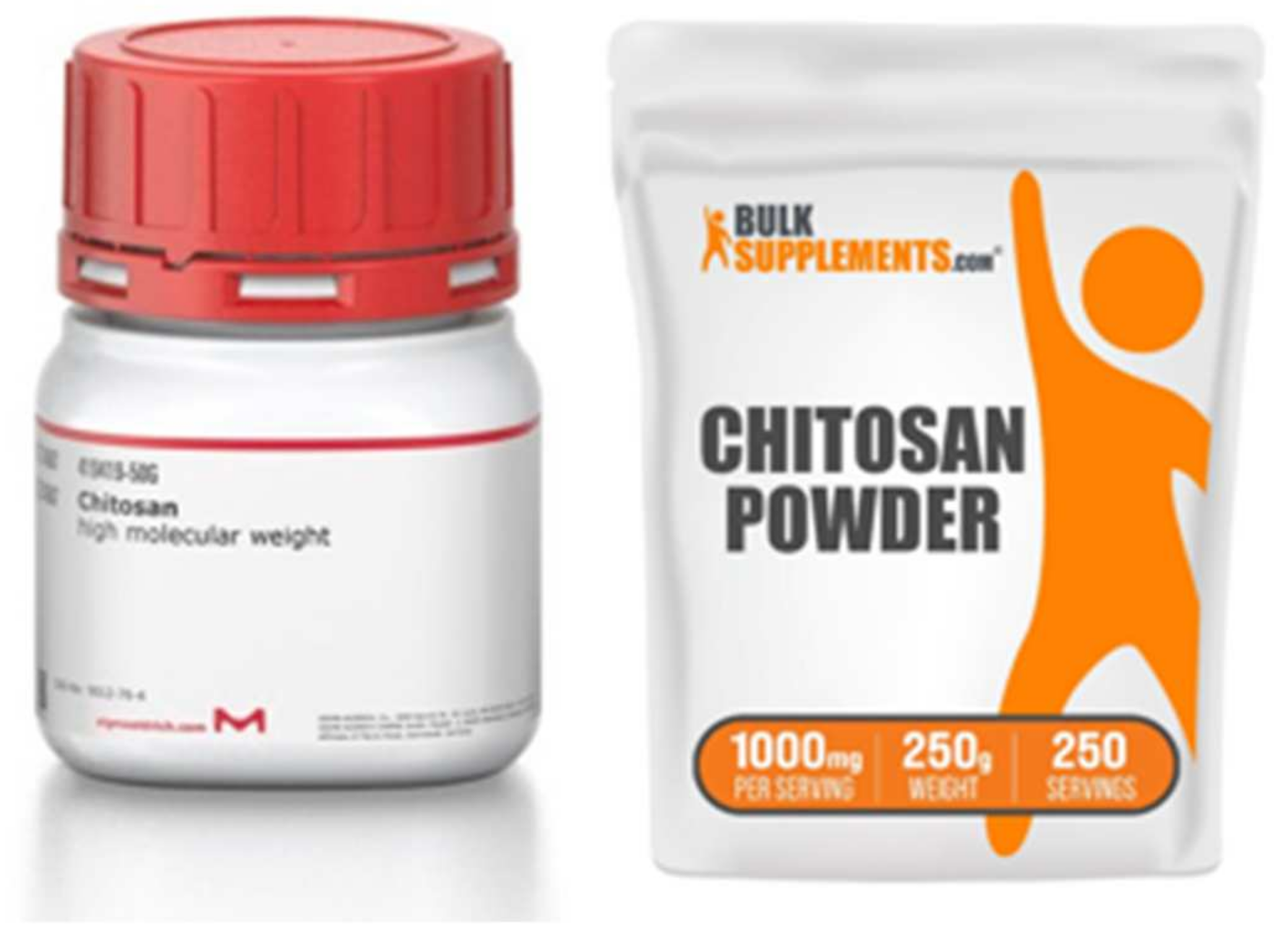
Two types of chitosan powders—high-grade and food-grade—were used to produce fibers for incorporation into concrete. The high-grade chitosan was obtained from Sigma-Aldrich (St. Louis, MO, USA) and is characterized by a high molecular weight (387 kg/mol) and a degree of deacetylation of ≥75%, making it suitable for research and development applications. The food-grade chitosan was sourced from BulkSupplements (Henderson, NV, USA) and marketed as 100% pure; however, no molecular weight information was provided by the manufacturer.
The cost of the high-grade chitosan was approximately 16.5 times greater than that of the food-grade alternative. Figure 1 presents the packaging of the two chitosan powders, while the physical and chemical properties of the high-grade and food-grade chitosan are summarized in Table 1 and Table 2, respectively.
Chitosan fibers of both types were prepared following a modified method described by [3]. First, a solution was prepared by mixing 48.5 g of deionized water with 48.5 g of 1 M acetic acid. Chitosan powder was gradually added while stirring for 5–10 min to minimize clumping. For high-grade chitosan, 3 g of powder was used. The food-grade chitosan initially used 3 g; however, this solution exhibited lower viscosity compared to the high-grade solution. To achieve a viscosity comparable to the high-grade solution, an additional 3 g of food-grade chitosan was incorporated, resulting in a total of 6 g.
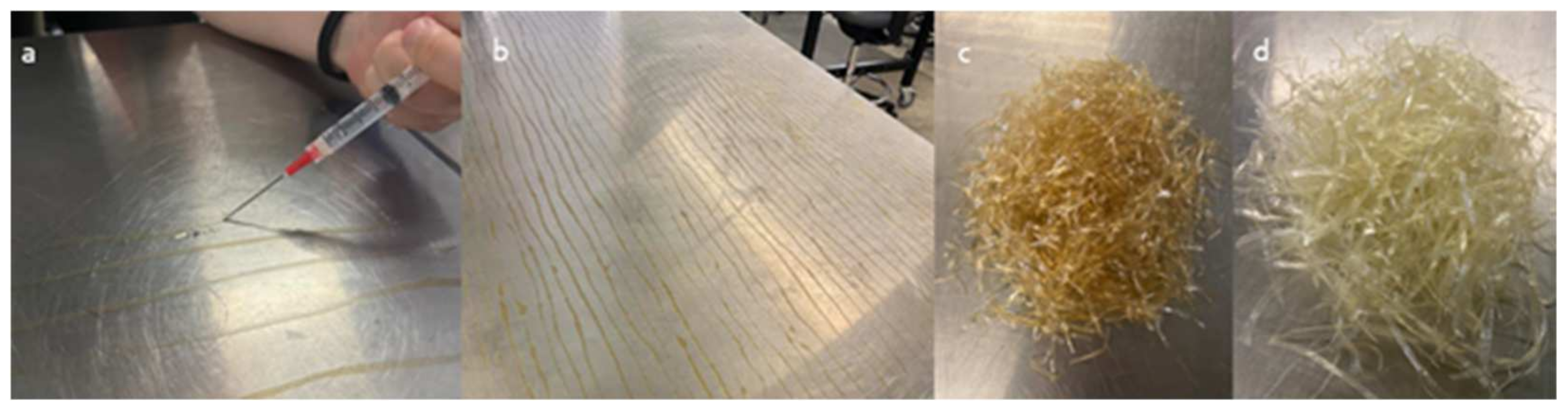
The prepared solution was then loaded into syringes and extruded onto a steel table, forming continuous threads approximately 1–2 m in length, 3–8 mm in width, and 0.3–0.5 mm in thickness. The threads were allowed to air dry under ambient laboratory conditions for 24–48 h, after which they were carefully removed using a spatula and cut into fibers of 40–50 mm length. The fibers were measured and handled in the dry state prior to incorporation into the concrete, ensuring consistency and reproducibility.
This procedure produced chitosan fibers with uniform dimensions and consistent morphology, closely resembling conventional fibers used for concrete reinforcement, suitable for direct addition to fresh concrete during mixing. The steps involved in the fiber production process are illustrated in Figure 2.

2.2. Concrete Mix

A high-performance concrete mix incorporating a Portland Limestone Cement (PLC) and Ground Glass Pozzolan (GGP) blend was used in both studies to investigate the effects of food-grade and high-grade chitosan fiber reinforcement. The binder consisted of 75% PLC and 25% GGP, following the mix design proposed by Yeboah [41]. The use of PLC reduces the carbon footprint compared to conventional Ordinary Portland Cement (OPC), providing a more sustainable and durable concrete alternative [41].
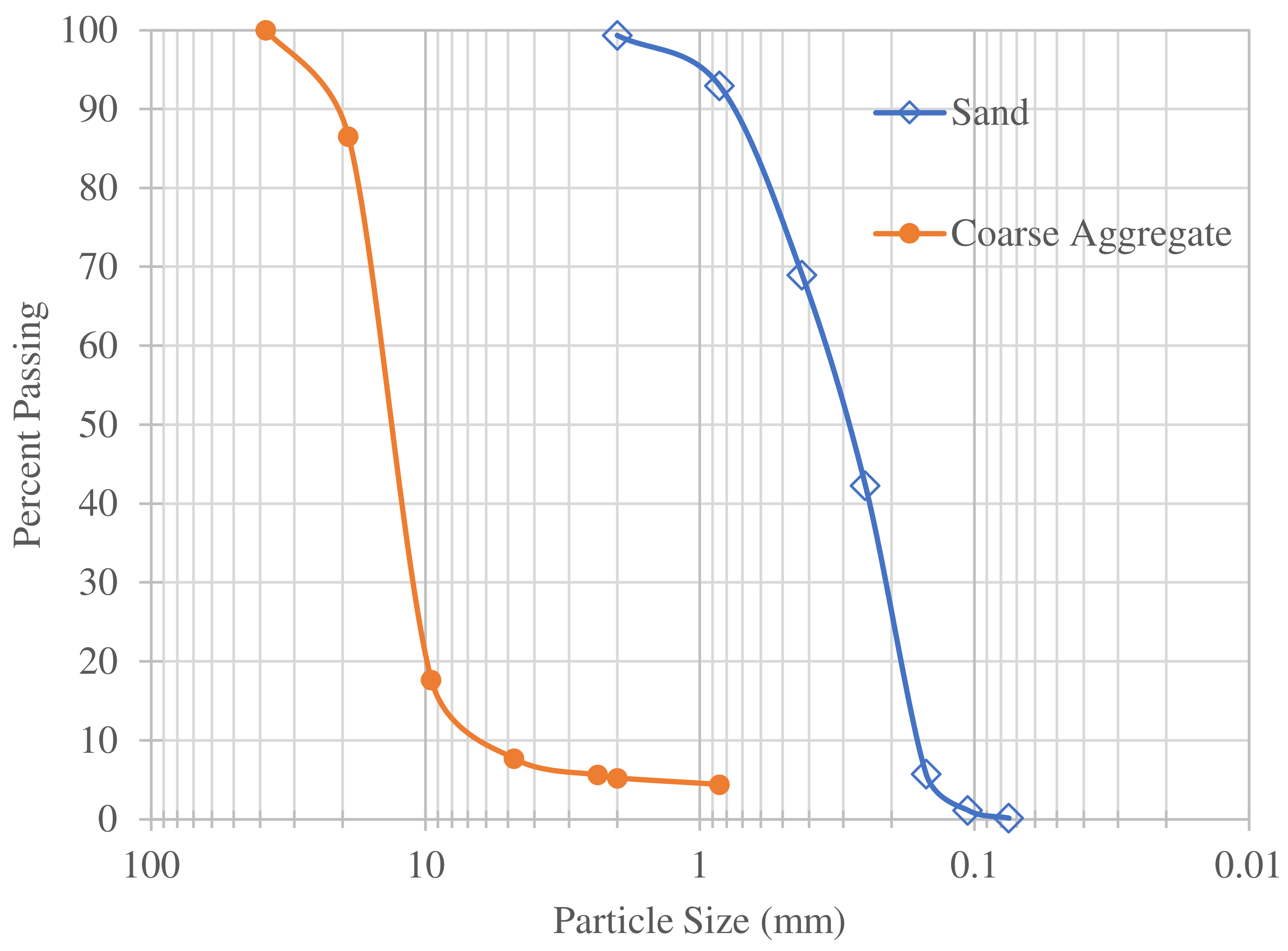
Figure 3 presents the particle size distribution of the sand and coarse aggregate used in the mixtures.
Due to the small volume of concrete cast, hand mixing was employed. The process began with thorough dry mixing of the aggregates and binder, followed by gradual addition of water. The mixture was then mixed for approximately 2 min until a uniform consistency was achieved, corresponding to an initial slump of 100–125 mm. Dry chitosan fibers were subsequently added at dosages of 0.36, 0.73, and 1.45 wt%, calculated based on the total binder content (PLC + GGP). After fiber incorporation, mixing continued for an additional 2–3 min, followed by a 1-min rest period prior to casting. The fresh concrete was placed into molds and consolidated using a vibrator for approximately 1 min to ensure complete filling and adequate compaction. Standard fresh concrete tests were not conducted due to the small batch size and the unavailability of appropriate testing equipment. Instead, workability and consistency were evaluated qualitatively through visual observation.
At the lowest fiber dosage (0.36 wt%), the concrete exhibited good consistency and workability, with slump and rheological behavior similar to the control mix (0 wt%). At the 0.73 wt% dosage, the mix became noticeably stiffer and less workable, with a significant reduction in slump compared to the control. The highest fiber dosage (1.45 wt%) resulted in an extremely dry and harsh mix that was very difficult to move; vibration was the primary mechanism enabling mold filling. The expected slump for this mix was approximately 0 mm.
The experimental design deliberately excluded the use of high-range water-reducing admixtures (HRWRA) and did not allow the addition of extra mixing water, maintaining a constant water-to-cementitious materials ratio across all mixes despite the water absorption capacity of the fibers. This approach was adopted to maintain consistency with the methodology reported by Gregory [3]. The present study aims primarily to reproduce the findings of the previous study, while replacing the low-quality ready-mix concrete used previously with a high-quality, laboratory-designed concrete mix. In addition, this study extends the original work by evaluating a newly developed food-grade chitosan fiber, allowing for direct comparison with the high-grade chitosan investigated in the earlier research.
Table 3 summarizes the constituent materials and mix proportions for both high-grade and food-grade chitosan-reinforced concrete.

2.3. Testing Program

2.3.1. Chitosan Shrinkage and Absorption Testing

An alkaline solution was prepared by reacting 0.5 g of calcium oxide (CaO) with 1000 mL of deionized water, producing a calcium hydroxide (Ca(OH)2) solution. The solution was stirred for 10 min to ensure complete hydration of CaO. The resulting solution exhibited a pH of approximately 12–13, closely simulating the high-alkalinity conditions of concrete pore solution.
The fibers were immersed in the Ca(OH)2 solution for 30 min and then removed and weighed to quantify initial solution absorption. Following this, the fibers were re-immersed in the solution for an extended period of 12 h to replicate prolonged exposure during the early stages of concrete curing. After immersion, the fibers were air-dried under ambient laboratory conditions for 24 h.
Final measurements of fiber length and width were recorded to assess dimensional changes and quantify shrinkage resulting from drying. This experimental procedure enabled a controlled and quantitative assessment of both absorption behavior and shrinkage potential of chitosan fibers under conditions analogous to those encountered within a cementitious environment.

2.3.2. Chloride Penetration Testing

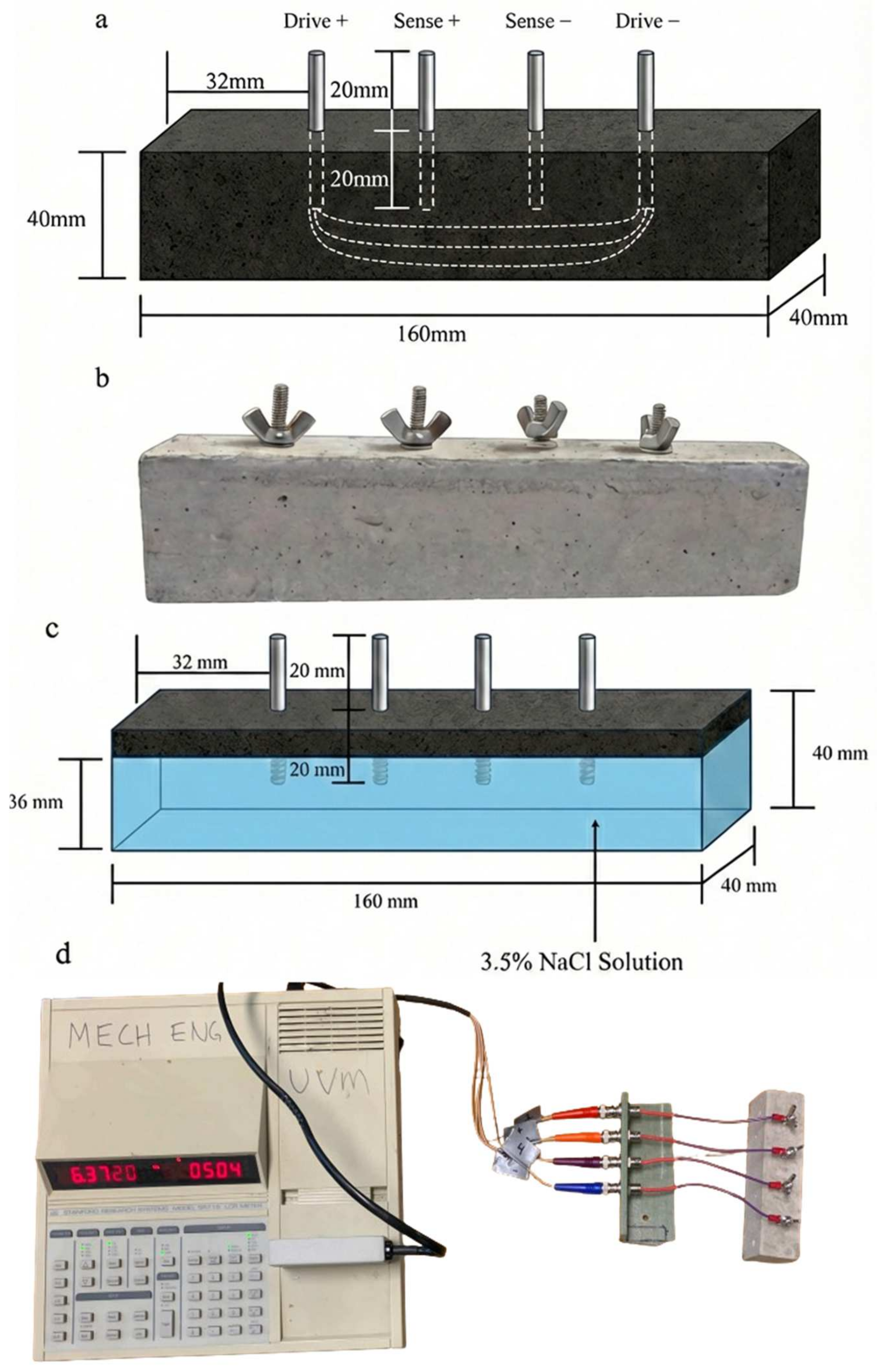
Chloride penetration in chitosan-reinforced concrete was evaluated using a custom electrical resistance method developed at the University of Vermont [3], previously applied in studies on shrinking chitosan fibers. This non-destructive test employed a four-point Kelvin probe configuration, with electrodes embedded directly in the concrete. The outer pair of electrodes supplied a known current, while the inner pair measured the resulting voltage drop, allowing calculation of electrical resistance as:
R = 2 π a   V I
where R is the resistance, a is the center-to-center spacing of consecutive electrodes, V is the measured voltage, and I is the applied current. Higher resistance values indicate reduced chloride ion mobility and improved concrete durability.
Testing began 14 days after curing to allow the chitosan fibers to shrink and induce internal prestressing, thereby compacting the concrete microstructure. Initial weight and resistance measurements were recorded using a Stanford Research Systems SR715 LCR meter (Stanford Research Systems, Sunnyvale, CA, USA) set to 10 kHz and 1 V. The electrodes were connected via a BNC adapter and fixture to ensure proper alignment.
Specimens were exposed to alternating wet and dry cycles to replicate environmental conditions. Each wet cycle involved immersing the specimens in a 3.5% NaCl solution for two days, followed by a five-day dry cycle at ambient laboratory conditions. Figure 4 illustrates the test setup, showing the specimen dimensions, the embedded electrodes, and the wet cycle bath arrangement. Weight and electrical resistance were recorded after each cycle, with measurements taken on days 0 (7 days after curing), 2, 7, 9, 14, 16, 21, 23, 28, and 30. This cyclic testing procedure enabled continuous, in situ evaluation of the concrete’s microstructural evolution and resistance to chloride ion ingress under simulated field exposure.

2.3.3. Freeze–Thaw Testing

A modified version of ASTM C666 [42] was employed to evaluate the freeze–thaw (FT) durability of concrete incorporating shrinking chitosan fibers. This non-destructive testing method measures the dynamic modulus of elasticity, which reflects the material’s ability to resist deformation under cyclic thermal stress. The dynamic modulus is determined by analyzing the fundamental transverse frequency of the specimen—essentially quantifying how stress and strain waves propagate through the material. The relative dynamic modulus after N cycles was calculated using the following equation:
      P c = n 1 2 / n 2 · 100
where
  • Pc = percent relative dynamic modulus of elasticity after N cycles
  • n = fundamental transverse frequency at 0 cycles
  • n1 = fundamental transverse frequency after N cycles
Testing was performed every 14 FT cycles. Each cycle lasted three hours and consisted of four phases: a 30-min ramp-down to −20 °C, a one-hour hold at −20 °C, a 30-min ramp-up to 20 °C, and a one-hour hold at 20 °C. This cyclic temperature profile simulated harsh environmental conditions and provided insight into the concrete’s long-term durability.
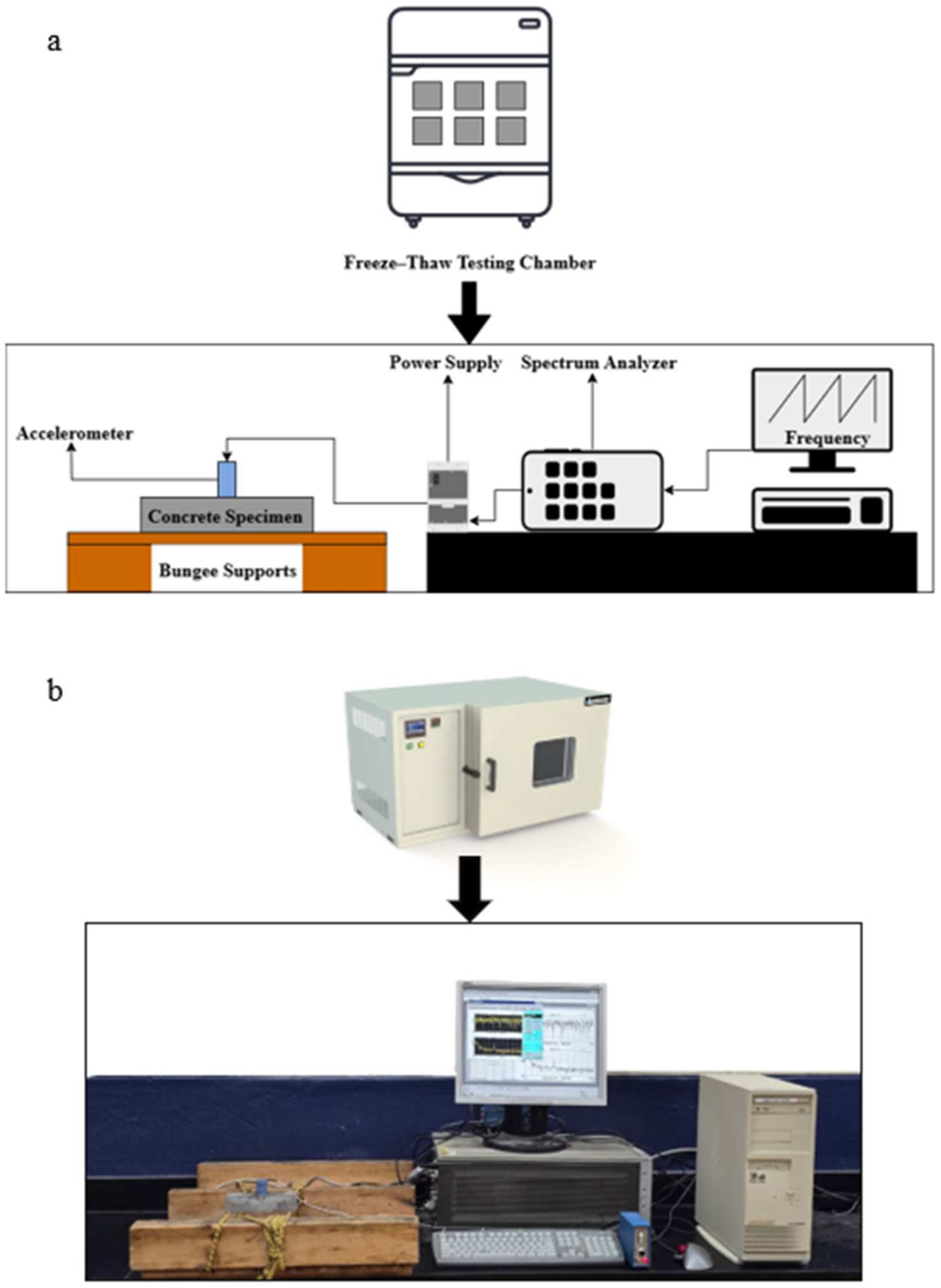
Before testing, each specimen’s weight and length were recorded. To maintain consistent moisture levels, specimens were wrapped in damp paper towels throughout the test. The dynamic modulus was measured using a PCB 352A24 accelerometer (PCB Piezotronics, Depew, NY, USA) connected through a PCB 482A04 signal conditioner/power supply (PCB Piezotronics, Depew, NY, USA) to an HP 3566A spectrum analyzer (Hewlett-Packard, Palo Alto, CA, USA), interfaced with a Micron Millenia CPU (Micron Electronics, Nampa, ID, USA) for data acquisition.
Each specimen was suspended on two elastic cords (“bungee supports”), and the accelerometer was attached to the center of the top surface using putty. The specimen was then lightly struck with a small steel rod, and four valid frequency responses were recorded and averaged to determine the fundamental frequency.
After each 14-cycle interval, specimens were briefly removed from the FT chamber for intermediate measurements. The paper towels were re-soaked and rewrapped before resuming testing. Although ASTM C666 specifies a maximum of 300 cycles, the chitosan fiber-reinforced concrete exhibited exceptional durability and no visible deterioration even beyond this limit. Therefore, testing was extended to 600 cycles to capture the full extent of performance.
Figure 5 illustrates the experimental setup and step-by-step procedure used in evaluating the freeze–thaw durability of the chitosan fiber-reinforced concrete.

2.3.4. Compressive Strength Testing

Compressive strength testing of the shrinking chitosan fiber-reinforced concrete was conducted in general accordance with ASTM C39/C39M [43]. After casting, the specimens were demolded and cured under dry ambient conditions rather than conventional wet curing. This deviation from standard curing practice was intentional. Chitosan fibers are highly hydrophilic and readily absorb water; under wet curing, the fibers would swell instead of shrink, preventing the development of the intended self-shrinkage and internal prestressing effect. Dry curing was therefore adopted to promote fiber shrinkage and activation within the concrete matrix, allowing direct assessment of the proposed strengthening mechanism. This curing approach is consistent with that used in the initial study [3,38].
This curing approach enabled a focused evaluation of whether chitosan fiber shrinkage influenced compressive strength development. Compressive strength tests were performed at 56 and 90 days to assess both intermediate- and long-term mechanical performance. These testing ages were selected because the concrete mixture incorporated PLC blended GGP, which are known to exhibit slower strength development compared to conventional OPC systems.
The measured strengths were compared with those of a 0 wt% control mix to determine whether the inclusion of shrinking chitosan fibers produced any measurable improvement or change in compressive strength.

3. Results and Discussion

3.1. Chitosan Shrinkage and Water Absorption Results

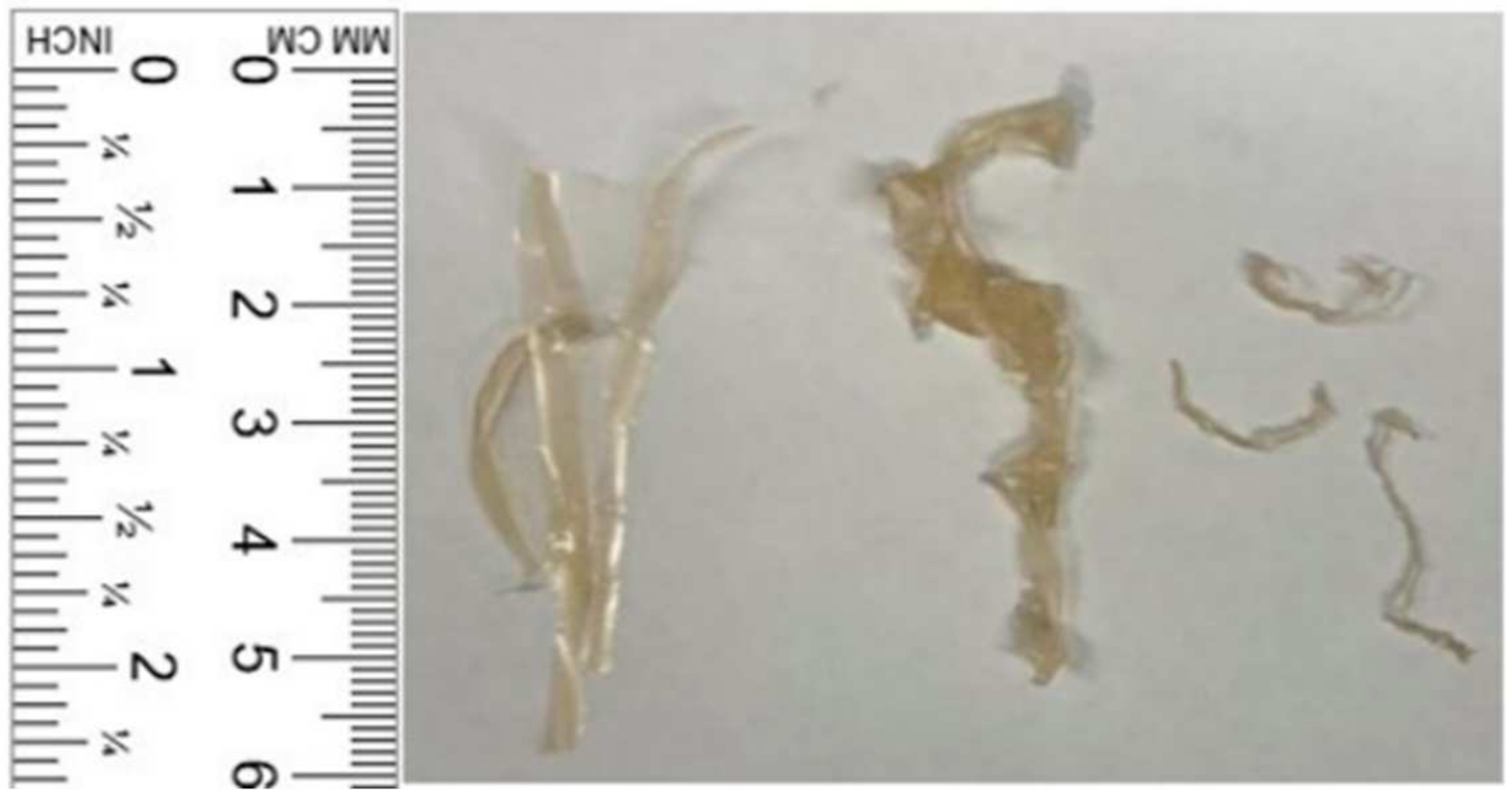
Figure 6 illustrates representative examples of three individual chitosan fibers at different stages of the shrinkage experiment. The fibers are shown after fabrication and cutting to the target length of 40–50 mm, following immersion in a high-pH calcium hydroxide (Ca(OH)2) solution that simulates the alkaline pore solution environment of concrete, and finally after air drying. Upon drying, the fibers exhibit noticeable shrinkage, demonstrating their dimensional reduction after exposure to alkaline conditions and subsequent moisture loss.
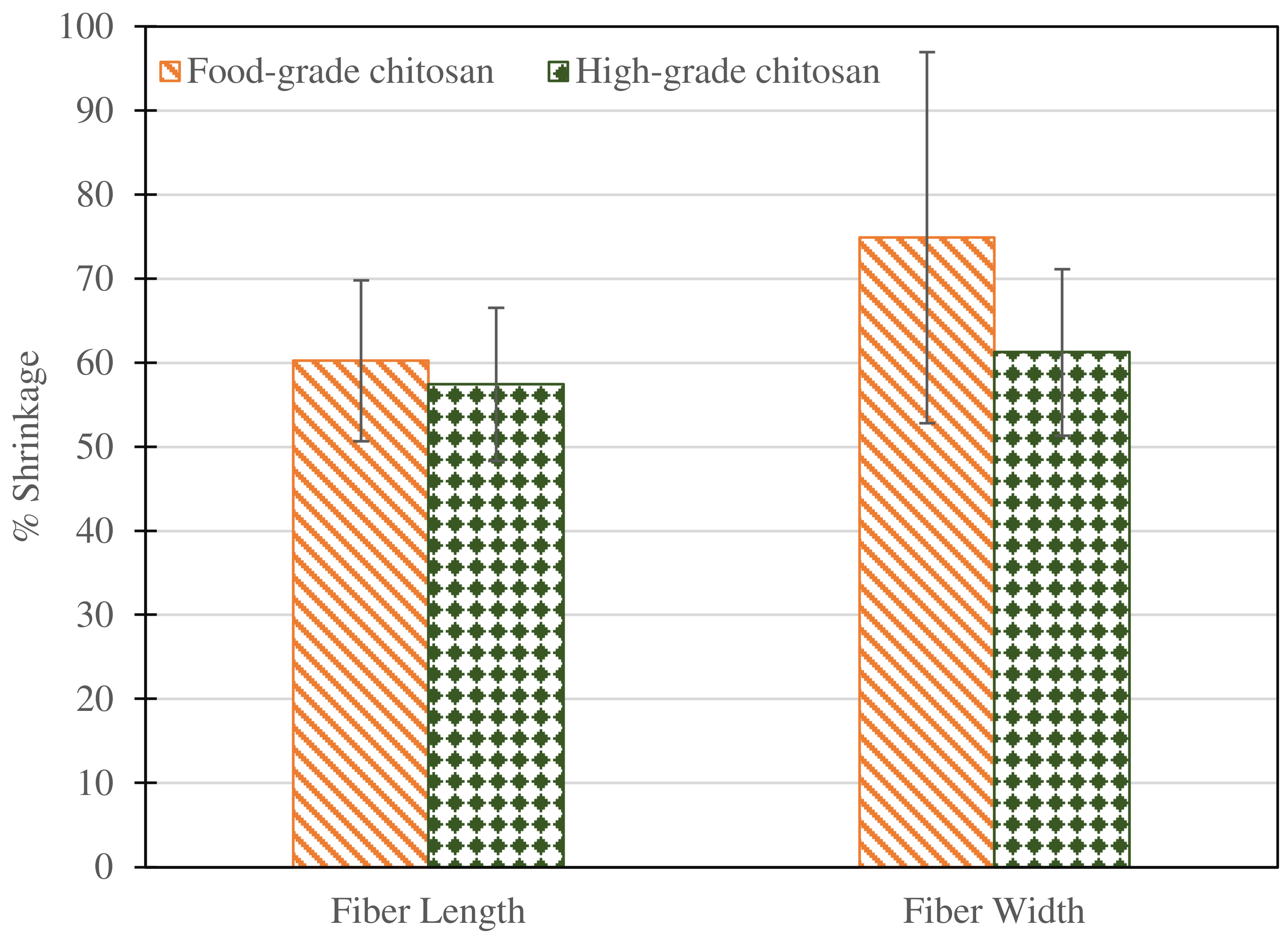
Figure 7 shows the shrinkage behavior of high-grade and food-grade chitosan fibers, calculated as the average of five samples (40–50 mm in length). Both fiber types exhibited similar overall shrinkage patterns, with the food-grade chitosan showing slightly greater contraction. The Y-axis represents the ratio of fiber length after 24 h of immersion in a CaO solution and 24 h of drying, relative to the original length before soaking. High-grade chitosan fibers showed approximately 37% shrinkage in both length and width, while food-grade chitosan exhibited about 37% shrinkage in length and 44% in width. These results indicate that both types of chitosan fibers undergo notable dimensional reduction when exposed to alkaline and drying conditions similar to those found in cementitious environments.
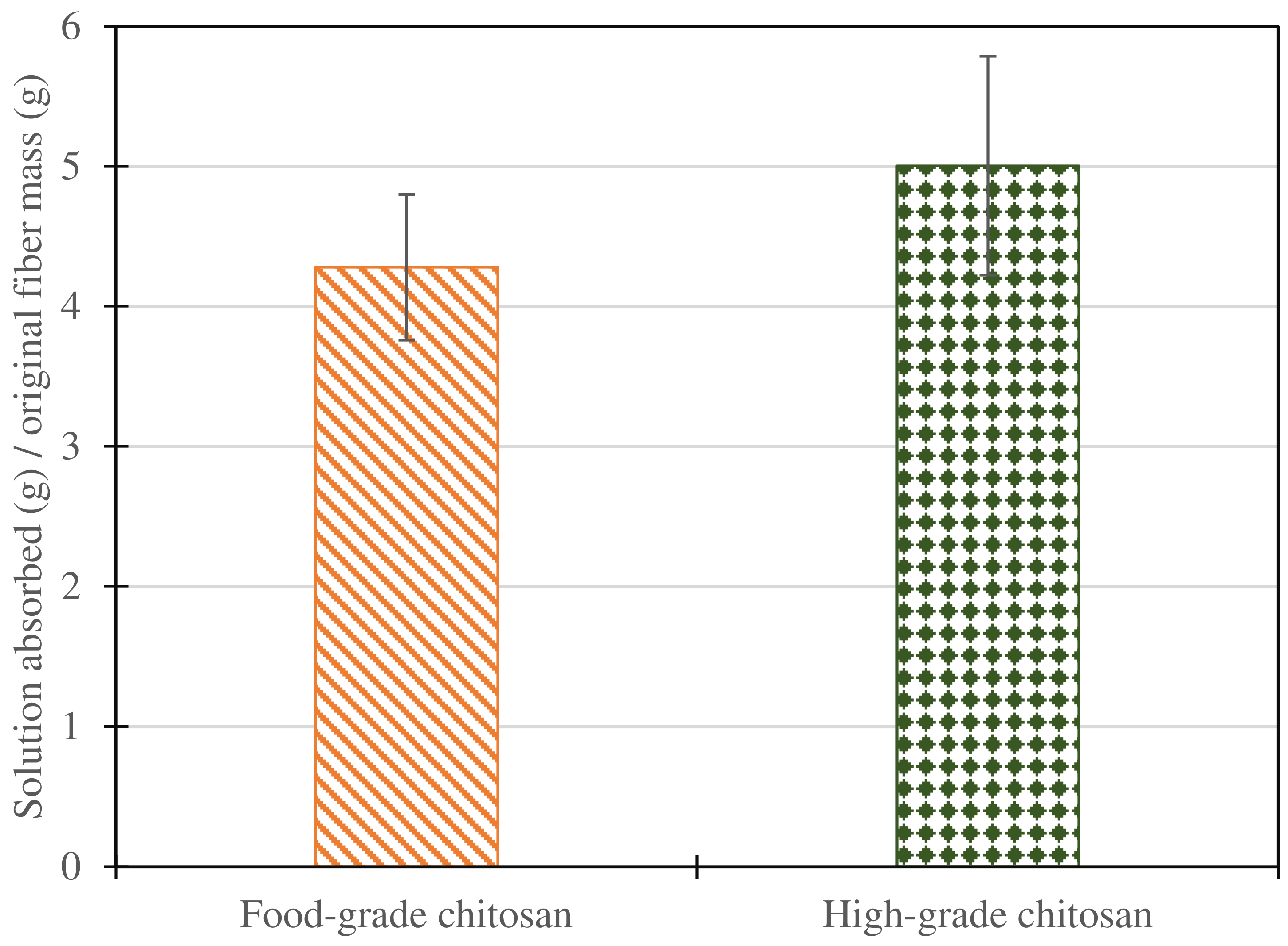
Figure 8 presents the average absorption of calcium hydroxide (Ca(OH)2) solution by five fibers from each chitosan type. This property is significant because fiber absorption directly affects the water balance of fresh concrete and can therefore influence mixture workability. In cementitious systems, water absorbed by the fibers may be gradually released over time, potentially contributing to continued cement hydration in a manner analogous to superabsorbent polymers (SAPs).
Both chitosan fiber types absorbed approximately four to five times their original dry weight. The high-grade chitosan fibers exhibited approximately 15% higher absorption capacity compared to the food-grade chitosan fibers.

3.2. Chloride Penetration Results

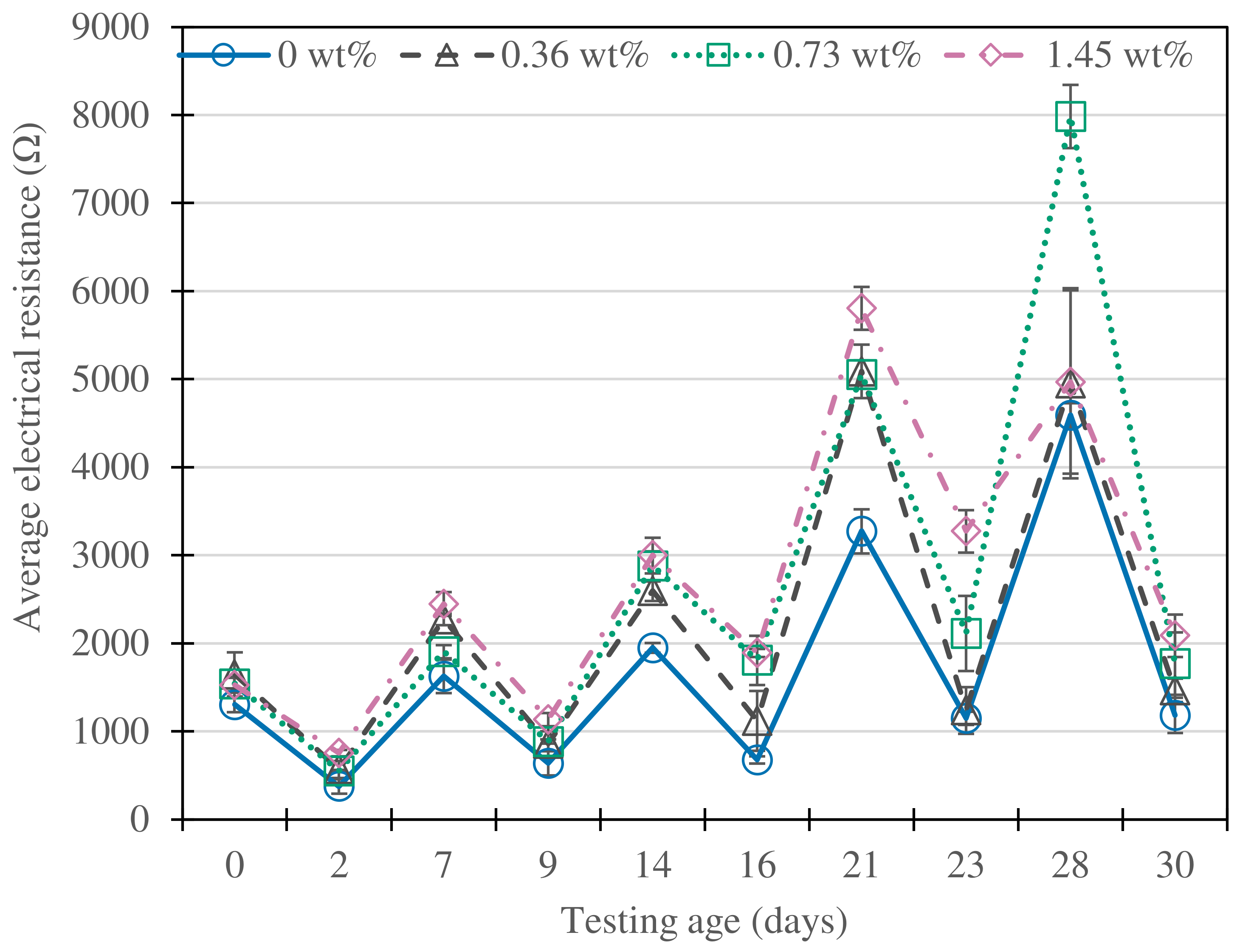
Figure 9 presents the average electrical resistance of concrete specimens containing high-grade chitosan fibers compared to the 0 wt% control group. Across all testing ages and under both wet and dry cycles, the chitosan-reinforced specimens consistently exhibited higher average resistance than the control. This increase may reflect a prestressing effect induced by fiber shrinkage within the concrete matrix, which could reduce internal porosity and lead to a denser microstructure. Additionally, the gradual release of water absorbed by the fibers may have facilitated further hydration of previously unreacted cement particles, contributing to microstructural refinement.
An alternative explanation is that the observed increase in resistance results from the inherently higher resistivity of the chitosan fibers themselves, which remain relatively non-conductive even when saturated. Distinguishing between these two potential mechanisms will require a comprehensive evaluation of all test results.
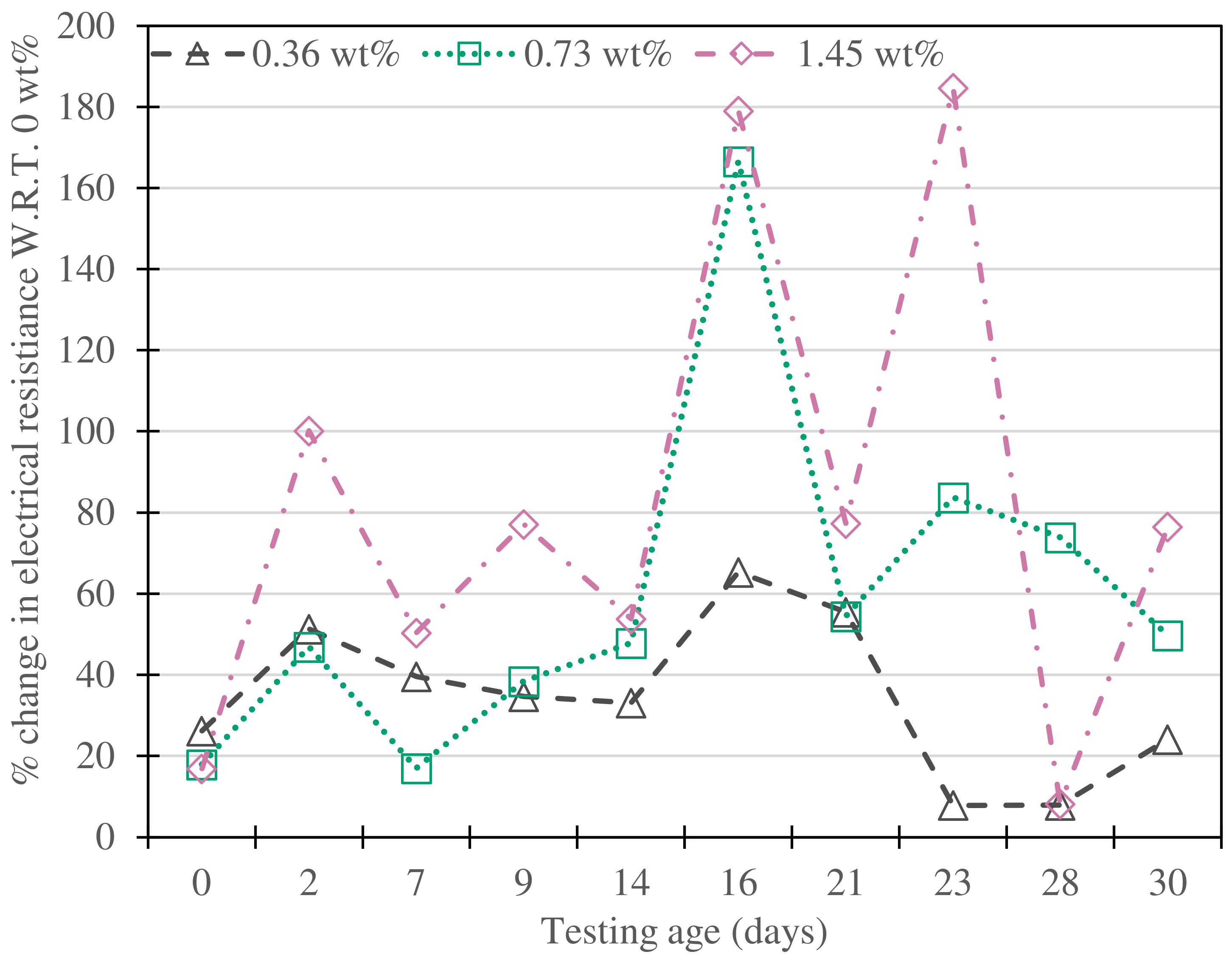
Figure 10 highlights the trends over time, showing that the chitosan fiber groups maintained higher average resistance values than the control at all measured ages. The 1.45 wt% group exhibited the largest improvement, with resistance particularly elevated following dry cycles (days 0, 7, 14, 21, and 28). This pattern likely reflects the combined effects of reduced pore water, potential prestressing from fiber shrinkage, and the fibers’ intrinsic resistivity.
On average, all chitosan fiber groups exhibited higher electrical resistance than the 0 wt% control. The lowest-dosage group (0.36 wt%) showed an approximate 30% increase in average resistance relative to the control, while the 0.73 wt% and 1.45 wt% groups demonstrated increases of roughly 58% and 60%, respectively. These results indicate a clear trend of enhanced resistivity with increasing fiber content. However, this observed improvement in electrical resistance should be interpreted cautiously, as it may reflect both the fibers’ intrinsic resistivity and potential effects on the concrete microstructure.
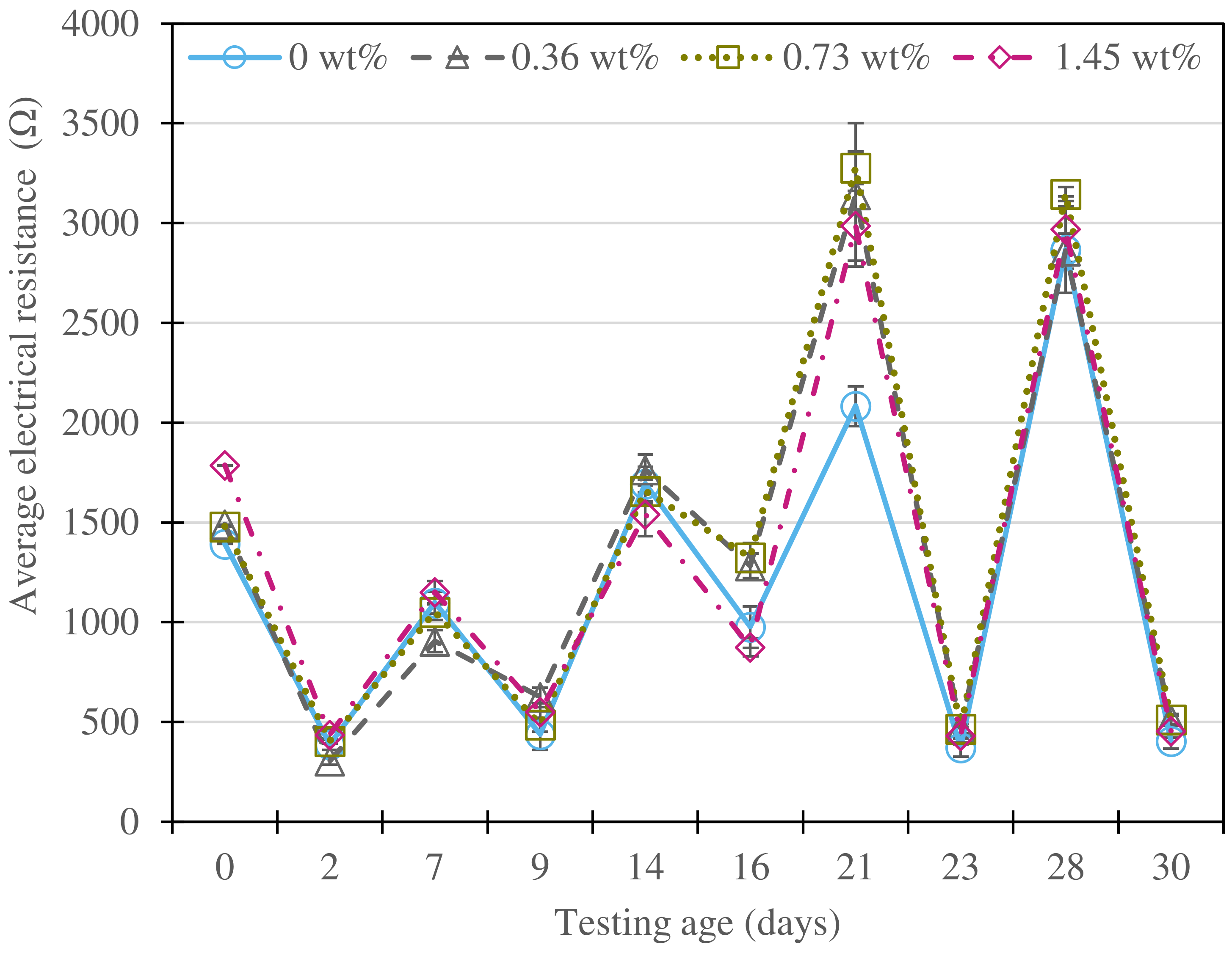
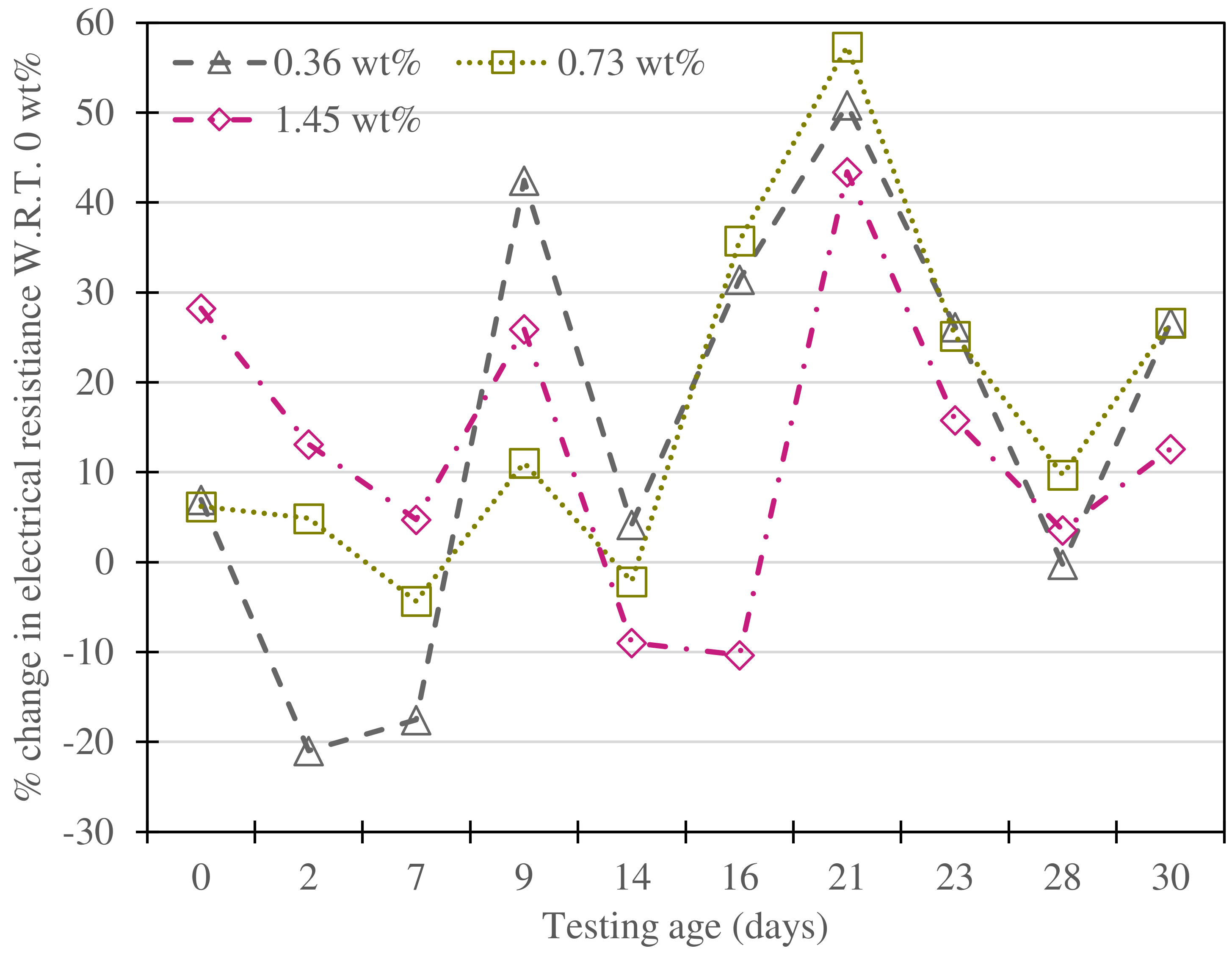
Figure 11 shows the average electrical resistance of concrete specimens reinforced with food-grade chitosan fibers compared to the 0 wt% control. Overall, resistance values were similar to the control, with minor reductions at early ages. Figure 12 presents the percentage change relative to the control: the 0.36 wt% group was lower at 2 and 7 days, the 0.73 wt% group at 7 and 14 days, and the 1.45 wt% group at 14 and 16 days. At later ages, all fiber-reinforced mixes exhibited modest increases in resistance, indicating a limited effect of food-grade fibers on electrical behavior.
The 0.73 wt% mixture showed the highest average increase (~19%), followed by 0.36 wt% (~14%) and 1.45 wt% (~12.5%). These changes may result from minor prestressing or gradual water release from the fibers, which could aid hydration and slightly reduce porosity. Alternatively, the increases likely reflect the intrinsic electrical resistance of the fibers rather than significant microstructural changes.

3.3. Freeze–Thaw Test Results

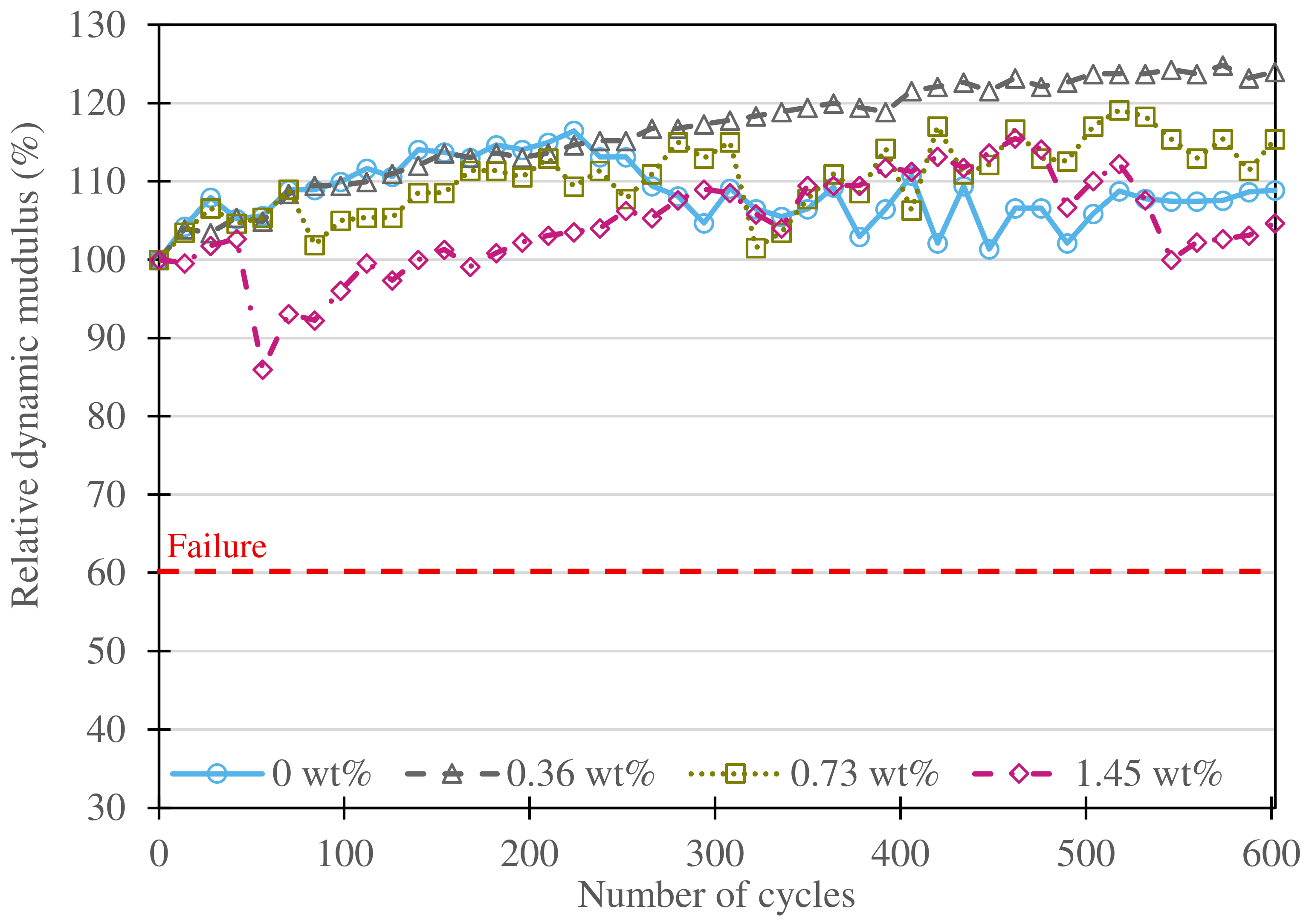
Figure 13 presents the relative dynamic modulus of food-grade chitosan concrete groups compared with the control, measured every 14 freeze–thaw (FT) cycles up to 602 cycles. All groups initially exhibited increases in dynamic modulus. The 0.36 wt% group showed a consistent upward trend throughout the test, plateauing only after approximately 500 FT cycles. The control group increased until peaking at 224 FT cycles, then gradually declined and stabilized around 518 FT cycles, finishing at a relative dynamic modulus of about 108% at 602 FT cycles.
The 0.73 wt% and 1.45 wt% groups initially increased but experienced early declines at 84 and 56 cycles, respectively, before resuming upward trends. The 0.73 wt% group continued improving until leveling off at roughly 115%, whereas the 1.45 wt% group declined again after 518 cycles, suggesting a reduction in performance at higher fiber content. Overall, the 0.36 wt% and 0.73 wt% groups maintained higher relative dynamic modulus values than the control, with the 0.36 wt% group showing the most consistent performance.
These results may reflect ongoing hydration, minor prestressing effects from the fibers, or the contribution of SCMs to long-term microstructural development. None of the specimens dropped below the 60% threshold typically associated with FT failure, indicating good durability of all mixtures. Three groups ended the test with relative dynamic modulus values above their initial measurements, suggesting a potential positive influence of food-grade chitosan fibers under FT exposure, though the precise mechanisms should be interpreted in the context of the full set of experimental results.
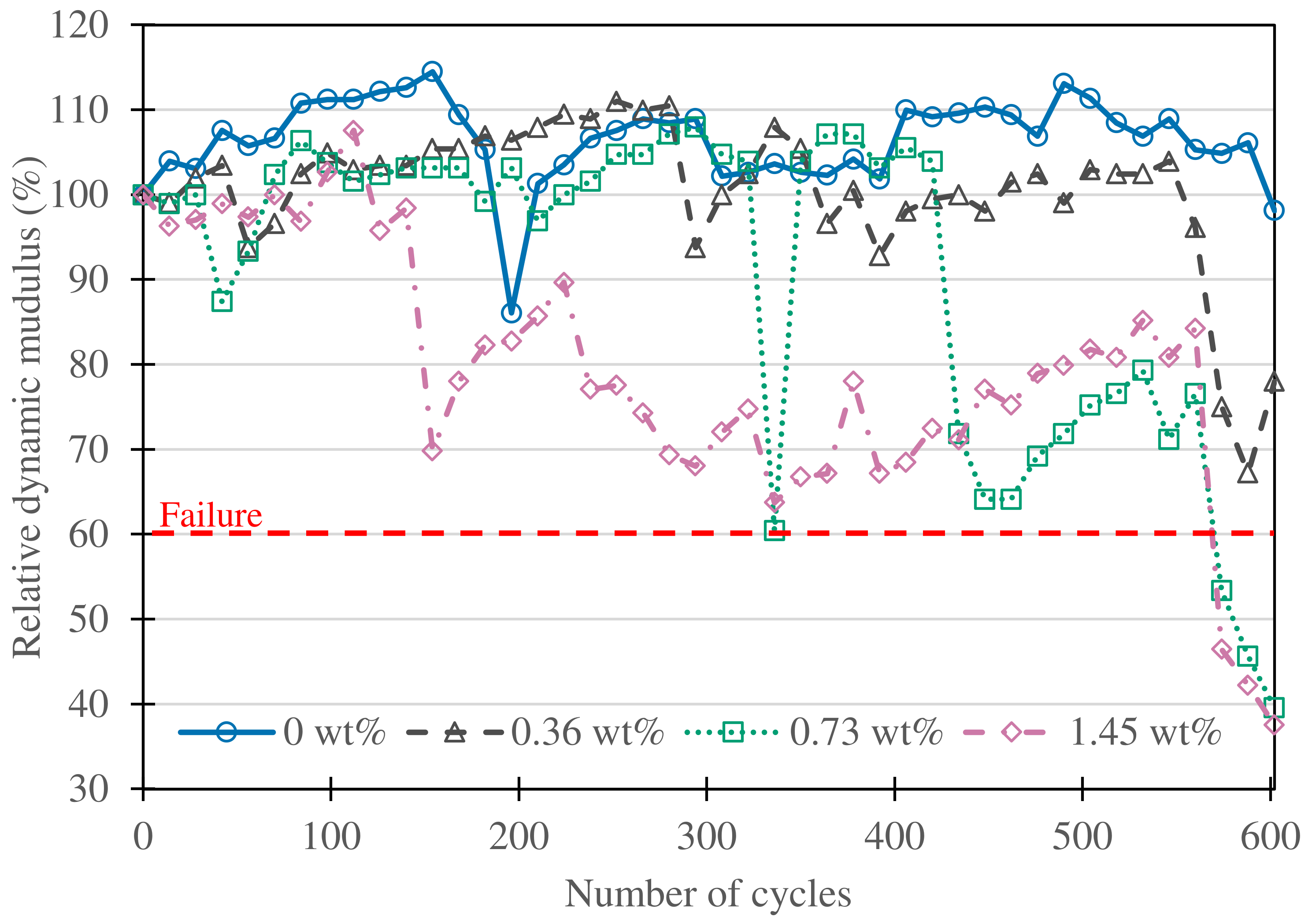
Figure 14 illustrates the relative dynamic modulus of concrete reinforced with high-grade chitosan fibers, measured every 14 freeze–thaw cycles up to a total of 602 cycles. The response of these specimens differed markedly from that observed in the food-grade chitosan series. Although all mixtures remained above the 60% failure threshold through approximately 300 cycles, the 0.73 wt% and 1.45 wt% fiber-reinforced mixtures exhibited rapid deterioration, thereafter, declining to 39% and 37%, respectively, by the end of testing.
The lowest fiber dosage (0.36 wt%) also experienced a reduction in performance, finishing at approximately 78% relative dynamic modulus, whereas the control mixture maintained a value of about 98% at the same age. Reductions in relative dynamic modulus became evident in all high-grade fiber mixtures beyond roughly 250 cycles, with the 1.45 wt% group showing the earliest onset of deterioration, beginning near 150 cycles. These trends suggest that higher dosages of high-grade chitosan fibers did not enhance freeze–thaw durability and may, in fact, be detrimental under prolonged cyclic exposure.
One possible explanation is that fiber shrinkage, together with limited interfacial bonding between the chitosan fibers and the cement matrix, may have introduced additional voids or weak zones. These defects could compromise the material’s ability to resist cyclic freeze–thaw stresses, leading to the observed reductions in relative dynamic modulus. Notably, these findings contrast with the results of the electrical resistance measurements, in which the same high-grade chitosan fibers appeared to increase resistance.
This discrepancy indicates that improvements in electrical resistance do not necessarily translate into enhanced freeze–thaw durability. Furthermore, the results strengthen the conclusion that the elevated electrical resistance observed in the high-grade chitosan mixtures was primarily due to the intrinsic electrical resistance of the fibers themselves, rather than to beneficial microstructural refinement of the concrete matrix. Consequently, the higher resistance values relative to the 0 wt% control are likely a reflection of the fiber phase contribution to the measurement, rather than a true indication of reduced pore connectivity or improved durability.
The control mixture in this series exhibited behavior similar to that observed in the food-grade chitosan tests, supporting the consistency and reliability of the comparisons. Overall, these results indicate that high-grade chitosan fibers do not consistently improve freeze–thaw durability, particularly at higher dosages, and that further investigation is required to better understand the mechanisms governing their performance under cyclic environmental loading.

3.4. Compressive Strength Test Results

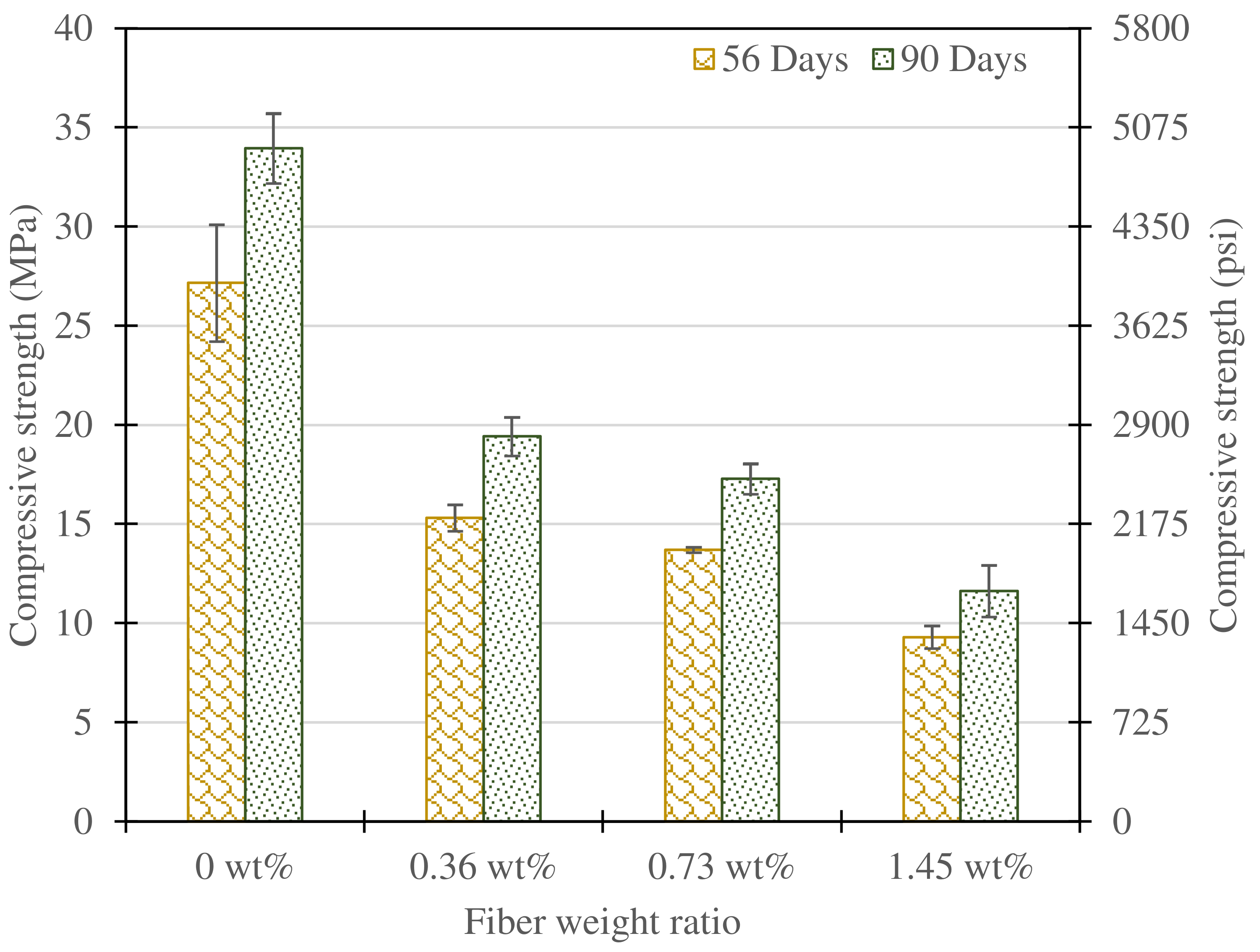
Figure 15 shows the compressive strength of food-grade chitosan concrete at 56 and 90 days. In both cases, the 0 wt% control mix exhibited the highest strength. At 56 days, the control mix exceeded the 0.36 wt%, 0.73 wt%, and 1.45 wt% chitosan groups by 44%, 50%, and 66%, respectively; similar trends were observed at 90 days, with differences of 43%, 49%, and 65%. Strength decreased with increasing chitosan content, with the 1.45 wt% mix performing worst, at least 12 MPa below the control. This reduction is likely due to weak fiber–matrix bonding, as the smooth chitosan surface limits adhesion and compromises structural cohesion.
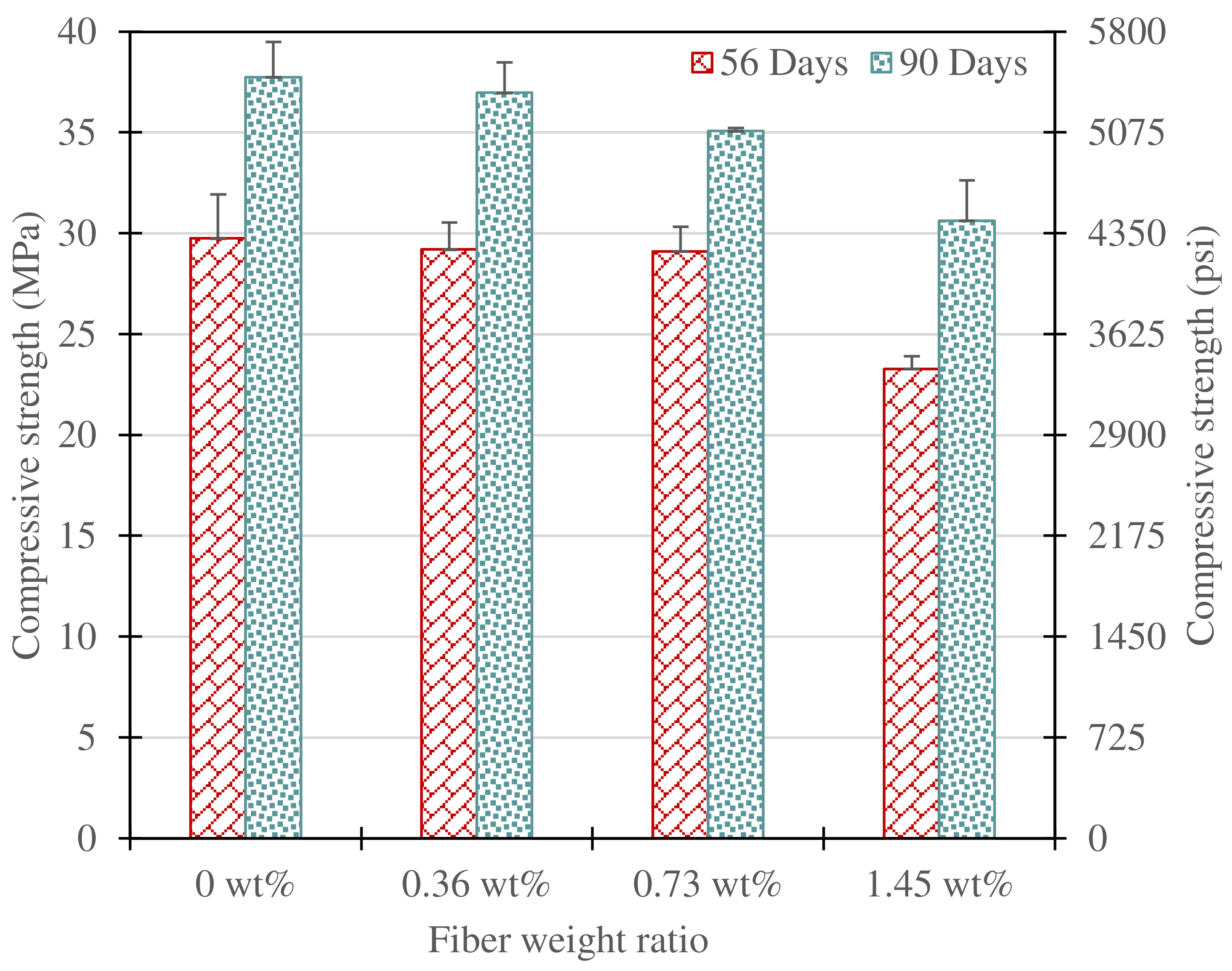
Figure 16 presents the compressive strength of high-grade chitosan concrete at 56 and 90 days, compared with the 0 wt% control. The control mix showed the highest strength, but differences with the high-grade chitosan groups were smaller than those observed for food-grade fibers. At 56 days, the 0.36 wt% and 0.73 wt% mixes reached strengths above 35 MPa, only about 2% below the control (37.7 MPa), while the 1.45 wt% mix exhibited a larger reduction of 22%. At 90 days, the control mix remained the best performing group, with the 0.36 wt%, 0.73 wt%, and 1.45 wt% groups had a lower strength by 2%, 7%, and 18%, respectively. Importantly, all high-grade chitosan mixes-maintained strengths above 30 MPa, indicating that moderate fiber incorporation had minimal impact on compressive performance.
Compared with the food-grade fibers, high-grade chitosan provided substantially higher compressive strengths, with increases of 48%, 52%, and 62% for the 0.36 wt%, 0.73 wt%, and 1.45 wt% groups, respectively, highlighting the superior structural contribution of high-grade fibers.
The contrasting behaviors of food-grade and high-grade chitosan fibers indicate underlying microstructural effects that warrant further investigation. The severe strength losses in food-grade mixes suggest that, beyond weak fiber–matrix bonding, their high absorption and possible release of organic leachates may be altering internal curing conditions and disrupting hydration kinetics, leading to a less cohesive microstructure. At the same time, these changes may improve freeze–thaw resistance by modifying pore tortuosity, constrictivity and internal moisture buffering. This combination of weakened strength yet enhanced freeze–thaw stability underscores the need for detailed microstructural analyses to clarify the mechanisms driving these trends.
In contrast, high-grade chitosan fibers—although capable of maintaining more stable compressive strength relative to the 0 wt% mix—may be contributing to the formation of weaker or more unstable hydration products that become vulnerable under freeze–thaw cycling. These durability losses may also stem from the fibers’ influence on local moisture availability and temperature-driven water movement, which can alter the development or stability of certain hydration phases during freezing and thawing.
Additionally, the fibers’ shrinkage behavior may introduce localized stiffness mismatches or microcrack initiation sites that remain insignificant under static loading but become increasingly critical when subjected to thermal fluctuations. The divergence between the improved electrical resistivity and the reduced freeze–thaw durability further indicates that while the matrix becomes denser, the connectivity and mobility of pore water may be altered in ways that bulk resistivity cannot fully capture.
To clarify these mechanisms, targeted microstructural characterization is essential. X-ray computed tomography (micro-CT) can be used to quantify fiber-induced void networks, identify changes in pore size distribution, and assess how fiber shrinkage influences internal cracking. SEM combined with EDS mapping would provide high-resolution insight into fiber–matrix interfacial bonding, the nature and distribution of hydration products, and any chemical interactions or leachate-related effects introduced by chitosan. Together, these advanced techniques would offer the mechanistic understanding needed to explain the contrasting behaviors observed in this study and support the development of modified chitosan materials that are better suited for high-performance structural applications.

4. Conclusions

Chitosan fibers influenced both mechanical and durability properties, but neither food-grade nor high-grade formulations proved suitable for high-performance structural concrete. Food-grade fibers provided some durability benefits—most clearly in the freeze–thaw test, where the 0.36 wt% and 0.73 wt% groups maintained relative dynamic modulus values above 110–115% through 602 cycles, outperforming the control (~108%). However, these benefits were offset by severe strength losses: at 56 days, the food-grade mixes were 44%, 50%, and 66% weaker than the control for the 0.36, 0.73, and 1.45 wt% groups, respectively, and similar reductions were observed at 90 days. High-grade fibers produced the opposite pattern—moderate strength retention but reduced freeze–thaw durability. Although the 0.36 wt% and 0.73 wt% high-grade mixes reached strengths only 2% below the 56-day control and remained above 30 MPa at all ages, their durability rapidly deteriorated: by the end of 602 FT cycles, the 0.73 wt% and 1.45 wt% groups had dropped to 39% and 37% relative dynamic modulus, far below the control (~98%). Electrical resistivity trends further highlighted this divergence: high-grade chitosan increased resistivity by 30–60% over 0 wt% control, while food-grade fibers produced smaller increases of 12–19% over 0 wt% control, suggesting different microstructural interactions. Overall, these trends show that current chitosan fiber formulations cannot achieve the strength–durability balance required for structural concrete.
Statistics and reproducibility: For all tests, at least three samples were measured or tested, and the reported values represent the average of all samples. Error bars, where shown, indicate the standard error of the mean (SEM), calculated as:
SEM = s n
where s is the standard deviation of the sample set and n is the number of samples.
In some cases, such as Figure 6 and Figure 7, five samples were tested. For these figures, both the averages and the error bars correspond to all five measurements rather than three.

Author Contributions

Conceptualization, M.A.A.Q., S.H., D.H. and M.M.D. funding acquisition, D.H.; investigation, M.A.A.Q. and S.H.; methodology, M.A.A.Q., S.H., D.H. and M.M.D.; project administration, M.A.A.Q.; supervision, D.H. and M.M.D.; writing—original draft, M.A.A.Q.; writing—review and editing, D.H. and M.M.D. All authors have read and agreed to the published version of the manuscript.

Funding

Funding for this research is provided by the Transportation Infrastructure Durability Center at the University of Maine under grant 69A3551847101 from the U.S. Department of Transportation’s University Transportation Centers Program.

Data Availability Statement

The datasets generated and analyzed during the current study are available from the corresponding author upon request.

Acknowledgments

The authors thank Bismark Yeboah and Emma Macdonald for their assistance in conducting laboratory testing.

Conflicts of Interest

The authors declare no conflicts of interest.

References

  1. World Economic Forum. Sustainable Concrete Is Possible—Here Are 4 Examples. Available online: https://www.weforum.org/stories/2024/09/cement-production-sustainable-concrete-co2-emissions/ (accessed on 13 September 2024).
  2. Global Cement and Concrete Association. Cement and Concrete Around the World. 2020. Available online: https://gccassociation.org/concretefuture/cement-concrete-around-the-world/ (accessed on 14 September 2025).
  3. Gregory, D. Chitosan-Based Shrinking Fibers for Post-Cure Stressing to Increase Durability of Concrete. Master’s Thesis, University of Vermont, Burlington, VT, USA, 2022. Available online: https://scholarworks.uvm.edu/items/d5e48812-e2fb-4478-9046-1430e4d8b236 (accessed on 9 January 2026).
  4. Xiao, J.; Lv, Z.; Duan, Z.; Zhang, C. Pore structure characteristics, modulation and its effect on concrete properties: A review. Constr. Build. Mater. 2023, 397, 132430. [Google Scholar] [CrossRef]
  5. Skripkiūnas, G.; Nagrockienė, D.; Girskas, G.; Vaičienė, M.; Baranauskaitė, E. The cement type effect on freeze–thaw and deicing salt resistance of concrete. Procedia Eng. 2013, 57, 1045–1051. [Google Scholar] [CrossRef]
  6. Zhao, J.; Cai, G.; Gao, D.; Zhao, S. Influences of freeze–thaw cycle and curing time on chloride ion penetration resistance of sulphoaluminate cement concrete. Constr. Build. Mater. 2014, 53, 305–311. [Google Scholar] [CrossRef]
  7. Powers, T.C. A working hypothesis for further studies of frost resistance of concrete. ACI J. Proc. 1945, 41, 245–272. [Google Scholar] [CrossRef] [PubMed]
  8. Powers, T.C.; Helmuth, R.A. Theory of volume changes in hardened Portland-cement paste during freezing. Highw. Res. Board Proc. 1953, 32, 285–296. [Google Scholar]
  9. Powers, T.C.; Willis, T.F. The air requirement of frost resistant concrete. In Proceedings of the Twenty-Ninth Annual Meeting of the Highway Research Board, Washington, DC, USA, 13–16 December 1949; National Research Council (U.S.) Highway Research Board: Washington, DC, USA, 1950; Volume 29, pp. 184–211. [Google Scholar]
  10. Liu, L.; Shen, D.; Chen, H.; Sun, W.; Qian, Z.; Zhao, H.; Jiang, J. Analysis of damage development in cement paste due to ice nucleation at different temperatures. Cem. Concr. Compos. 2014, 53, 1–9. [Google Scholar] [CrossRef]
  11. Gong, F.; Jacobsen, S. Modeling of water transport in highly saturated concrete with wet surface during freeze/thaw. Cem. Concr. Res. 2019, 115, 294–307. [Google Scholar] [CrossRef]
  12. Eriksson, D.; Wahlbom, D.; Malm, R.; Fridh, K. Hygro-thermo-mechanical modeling of partially saturated air-entrained concrete containing dissolved salt and exposed to freeze-thaw cycles. Cem. Concr. Res. 2021, 141, 106314. [Google Scholar] [CrossRef]
  13. Wang, Y.; Li, J.; Ueda, T.; Zhang, D.; Deng, J. Meso-scale mechanical deterioration of mortar subjected to freeze thaw cycles and sodium chloride attack. Cem. Concr. Compos. 2021, 117, 103906. [Google Scholar] [CrossRef]
  14. Wang, R.; Zhang, Q.; Li, Y. Deterioration of concrete under the coupling effects of freeze–thaw cycles and other actions: A review. Constr. Build. Mater. 2022, 319, 126045. [Google Scholar] [CrossRef]
  15. Guo, J.; Sun, W.; Xu, Y.; Lin, W.; Jing, W. Damage mechanism and modeling of concrete in freeze–thaw cycles: A review. Buildings 2022, 12, 1317. [Google Scholar] [CrossRef]
  16. Shang, H.-S.; Yi, T.-H. Freeze-thaw durability of air-entrained concrete. Sci. World J. 2013, 2013, 650791. [Google Scholar] [CrossRef] [PubMed]
  17. Ahmed, A. Assessing the effects of supplementary cementitious materials on concrete properties: A review. Discov. Civ. Eng. 2024, 1, 145. [Google Scholar] [CrossRef]
  18. Ebrahimi, K.; Daiezadeh, M.J.; Zakertabrizi, M.; Zahmatkesh, F.; Habibnejad Korayem, A. A review of the impact of micro- and nanoparticles on freeze-thaw durability of hardened concrete: Mechanism perspective. Constr. Build. Mater. 2018, 186, 1105–1113. [Google Scholar] [CrossRef]
  19. Verma, S.K.; Bhadauria, S.S.; Akhtar, S. Evaluating effect of chloride attack and concrete cover on the probability of corrosion. Front. Struct. Civ. Eng. 2013, 7, 379–390. [Google Scholar] [CrossRef]
  20. Metalssi, O.O.; Touhami, R.R.; Barberon, F.; de Lacaillerie, J.B.D.E.; Roussel, N.; Divet, L.; Torrenti, J.M. Understanding the degradation mechanisms of cement-based systems in combined chloride-sulfate attack. Cem. Concr. Res. 2023, 164, 107065. [Google Scholar] [CrossRef]
  21. Anas, M.; Khan, M.; Bilal, H.; Jadoon, S.; Khan, M.N. Fiber reinforced concrete: A review. Eng. Proc. 2022, 22, 3. [Google Scholar] [CrossRef]
  22. Abrishambaf, A.; Pimentel, M.; Nunes, S. Influence of fibre orientation on the tensile behaviour of ultra-high performance fibre reinforced cementitious composites. Cem. Concr. Res. 2017, 97, 28–40. [Google Scholar] [CrossRef]
  23. Le, L.A.; Nguyen, G.D.; Bui, H.H.; Sheikh, A.H.; Kotousov, A. Incorporation of micro-cracking and fibre bridging mechanisms in constitutive modelling of fibre reinforced concrete. J. Mech. Phys. Solids 2019, 133, 103732. [Google Scholar] [CrossRef]
  24. Kamal, A.; Kunieda, M.; Ueda, N.; Nakamura, H. Evaluation of crack opening performance of a repair material with strain hardening behavior. Cem. Concr. Compos. 2008, 30, 863–871. [Google Scholar] [CrossRef]
  25. Nawy, E.G. Prestressed Concrete: A Fundamental Approach, 3rd ed.; Prentice Hall: Hoboken, NJ, USA, 2000. [Google Scholar]
  26. Qian, H.; Umar, M.; Khan, M.N.A.; Shi, Y.; Manan, A.; Raza, A.; Li, F.; Li, Z.; Chen, G. A state-of-the-art review on shape memory alloys (SMA) in concrete: Mechanical properties, self-healing capabilities, and hybrid composite fabrication. Mater. Today Commun. 2024, 40, 109738. [Google Scholar] [CrossRef]
  27. Schranz, B.; Michels, J.; Czaderski, C.; Motavalli, M.; Vogel, T.; Shahverdi, M. Strengthening and prestressing of bridge decks with ribbed iron-based shape memory alloy bars. Eng. Struct. 2021, 241, 112467. [Google Scholar] [CrossRef]
  28. Zhao, Y.; Zhao, X.-L.; Dong, Z.; Cui, C.; Zhao, Z.; Shi, C. Performance of a novel ultra-durable hollow UHPC slab reinforced with prestressed Fe-SMA bars. Adv. Struct. Eng. 2025, 28, 2726–2750. [Google Scholar] [CrossRef]
  29. Schleiting, M.; Wetzel, A.; Bauer, A.; Frenck, J.-M.; Niendorf, T.; Middendorf, B. Potential of Fe-Mn-Al-Ni shape memory alloys for internal prestressing of ultra-high performance concrete. Materials 2023, 16, 3816. [Google Scholar] [CrossRef]
  30. Thomas, G.E.; Indira, P.V.; Sajith, A.S. Shape memory alloy fiber reinforced concrete/mortar—A review. Mater. Today Proc. 2023, in press. [Google Scholar] [CrossRef]
  31. Wang, W.; Wu, J.; Yang, W.; Wang, S.; Wu, H.; Zhu, Z.; Wang, L.; Ding, Q.; Wang, H.; Zhou, X. Towards low-temperature shrinkable synthetic fibers for internally self-prestressing concrete. J. Build. Eng. 2023, 73, 106769. [Google Scholar] [CrossRef]
  32. Li, J.; Yu, Z.; Wu, J.; Ding, Q.; Xu, W.; Huang, S. The application of heat-shrinkable fibers and internal curing aggregates in the field of crack resistance of high-strength marine structural mass concrete: A review and prospects. Polymers 2023, 15, 3884. [Google Scholar] [CrossRef]
  33. Zhao, L.; Wang, M.; Zhang, L.; Sadeghzadeh, S.M. Impact of chitosan extracted from shrimp shells on the shrinkage and mechanical properties of cement-based composites using dendritic fibrous nanosilica. Heliyon 2024, 10, e31576. [Google Scholar] [CrossRef]
  34. Pellis, A.; Guebitz, G.M.; Nyanhongo, G.S. Chitosan: Sources, processing and modification techniques. Gels 2022, 8, 393. [Google Scholar] [CrossRef]
  35. Baykara, H.; Riofrio, A.; Garcia-Troncoso, N.; Cornejo, M.; Tello-Ayala, K.; Rada, J.F.; Caceres, J. Chitosan-Cement Composite Mortars: Exploring Interactions, Structural Evolution, Environmental Footprint and Mechanical Performance. ACS Omega 2024, 9, 24978–24986. [Google Scholar] [CrossRef]
  36. Qin, Y.; Chen, X.; Li, B.; Guo, Y.; Niu, Z.; Xia, T.; Meng, W.; Zhou, M. Study on the mechanical properties and microstructure of chitosan reinforced metakaolin-based geopolymer. Constr. Build. Mater. 2021, 271, 121522. [Google Scholar] [CrossRef]
  37. Yehia, S.; Ibrahim, A.M.; Ahmed, D.F. The impact of using natural waste biopolymer cement on the properties of traditional/fibrous concrete. Innov. Infrastruct. Solut. 2023, 8, 287. [Google Scholar] [CrossRef]
  38. Huston, D.; Dewoolkar, M.M.; Gregory, D.; Qader, M.A.; Yeboah, B. Chitosan Shrinking Fibers for Curing-Initiated Stressing to Enhance Concrete Durability. Materials 2025, 18, 1574. [Google Scholar] [CrossRef]
  39. Chitosan—High Molecular Weight Product Specification. Specification Sheet PRD.4.ZQ5.10000004416, Sigma Aldrich. March 2025. Available online: https://www.sigmaaldrich.com/specification-sheets/392/945/419419-BULK_______ALDRICH__.pdf (accessed on 25 February 2025).
  40. IndiaMART. Food-Grade Chitosan Powder Product Listing. 2025. Available online: https://www.indiamart.com/proddetail/food-grade-chitosan-powder-25210669891.html (accessed on 6 January 2026).
  41. Yeboah, B. Performance Concrete: Enhancing Durability, Cost Effectiveness and Reducing Carbon Footprint. Master’s Thesis, Department of Civil and Environmental Engineering, University of Vermont, Burlington, VT, USA, 2024. Available online: https://scholarworks.uvm.edu/graddis/1961/ (accessed on 6 January 2026).
  42. ASTM C666/C666M-22; Standard Test Method for Resistance of Concrete to Rapid Freezing and Thawing. ASTM International: West Conshohocken, PA, USA, 2022.
  43. ASTM C39/C39M-21; Standard Test Method for Compressive Strength of Cylindrical Concrete Specimens. ASTM International: West Conshohocken, PA, USA, 2021.
Figure 1. High-grade chitosan powder (left), and the food-grade chitosan powder (right).
Fibers 14 00018 g001
Figure 2. Chitosan fiber preparation process: (a) Deposition of the chitosan solution onto a steel table using syringes. (b) Fibers after air drying for 24 h under ambient laboratory conditions. (c) High-grade chitosan fibers after removal from the surface and cutting to 40–50 mm lengths, measured in the dry state prior to any soaking or exposure to Ca(OH)2 solution. (d) Food-grade chitosan fibers after removal and cutting to 40–50 mm lengths, measured in the dry state prior to soaking, or exposure to Ca(OH)2 solution. (c,d) show fibers ready for incorporation into fresh concrete.
Fibers 14 00018 g002
Figure 3. Particle size distribution of the sand and coarse aggregates used in the concrete mixtures.
Fibers 14 00018 g003
Figure 4. Illustration of the chloride penetration test setup. (a) Dimensions of the test specimens with the four embedded electrodes inserted during casting. (b) Photograph of the prepared specimens. (c) Schematic of the wet cycle used in the test, showing immersion in 3.5% NaCl solution. (d) The LCR meter connected to a specimen for electrical resistance measurements.
Fibers 14 00018 g004
Figure 5. Schematic representation of the procedure followed during freeze–thaw (FT) testing (a). The arrow indicates the next step after removal of the specimens from the freeze–thaw chamber, at which point dynamic modulus testing is performed (b).
Fibers 14 00018 g005
Figure 6. The chitosan fiber is presented in three distinct stages: first, as an active fiber immediately after being cut by scissors (left); next, following 12 h of immersion in a high pH CaO solution (middle); and finally, after 24 h of drying, where it transitions into a passive fiber for use as a control (right). Adapted from Ref. [38].
Fibers 14 00018 g006
Figure 7. Shrinkage comparison of food-grade and high-grade chitosan fibers.
Fibers 14 00018 g007
Figure 8. Calcium hydroxide (Ca(OH)2) solution absorption behavior of chitosan fibers.
Fibers 14 00018 g008
Figure 9. Average electrical resistance of different high-grade chitosan fiber ratios at various testing ages after curing. note: day 0 corresponds to 14 days after curing, marking the start of testing.
Fibers 14 00018 g009
Figure 10. Increase in electrical resistance of various high-grade chitosan fiber groups compared to the 0 wt% control group at different testing ages.
Fibers 14 00018 g010
Figure 11. Average electrical resistance of different food-grade chitosan fiber ratios at various testing ages after curing. note: Day 0 corresponds to 14 days after curing, marking the start of testing.
Fibers 14 00018 g011
Figure 12. Change in electrical resistance of various food-grade chitosan fiber groups compared to the 0 wt% control group at different testing ages.
Fibers 14 00018 g012
Figure 13. Relative dynamic modulus plot of various food-grade chitosan fiber groups over the number of freeze–thaw cycles.
Fibers 14 00018 g013
Figure 14. Relative dynamic modulus plot of various high-grade chitosan fiber groups over the number of freeze–thaw cycles.
Fibers 14 00018 g014
Figure 15. The 56- and 90-day compressive strength of food-grade chitosan concrete with SEM error bars.
Fibers 14 00018 g015
Figure 16. The 56- and 90-day compressive strength of high-grade chitosan concrete with SEM error bars.
Fibers 14 00018 g016
Table 1. Properties of high-grade chitosan powder. Adapted from Ref. [39].
AppearanceOff-white/beige powder
Color after acidic treatmentFaint yellow bulk
Bulk density0.15–0.3 g/cm3
Deacetylate rate≥75%
Molecular weight387 kg/mol
Viscosity800–2000 cPs
Table 2. Properties of food-grade chitosan powder. Adapted from Ref. [40].
Physical statePale yellow to yellowish-white powder
Grade standardLMW food grade
ColorWhite
Molecular formulaC56H103N9O39
Degree of acetylation>85%
Viscosity<150 cPs
Protein content<2%
Table 3. Mix Proportions for Chitosan Fiber-Reinforced Concrete.
Constituents and AdditivesFood-Grade Chit. Reinforced ConcreteHigh-Grade Chit. Reinforced Concrete
Cement TypePortland Limestone Cement (PLC)
GGP Replacement (of Binder)25%
Cement Content271.9 kg/m3
Ground Glass Pozzolan (GGP)90.6 kg/m3
Sand986.4 kg/m3
Coarse Aggregate807.1 kg/m3
Water159.5 kg/m3
Fiber Dosages Tested0.36%, 0.73%, and 1.45% (by binder weight)
W/B Ratio0.44
Chitosan Fiber TypeFood-grade chitosanHigh-grade chitosan
Disclaimer/Publisher’s Note: The statements, opinions and data contained in all publications are solely those of the individual author(s) and contributor(s) and not of MDPI and/or the editor(s). MDPI and/or the editor(s) disclaim responsibility for any injury to people or property resulting from any ideas, methods, instructions or products referred to in the content.