
Article

Preparation of an ABS-ZnO Composite for 3D Printing and the Influence of Printing Process on Printing Quality
Department of Materials Science and Engineering, Jinzhong University, Jinzhong 030619, China
*
Author to whom correspondence should be addressed.
Fibers 2026, 14(2), 19; https://doi.org/10.3390/fib14020019
Submission received: 26 December 2025 / Revised: 26 January 2026 / Accepted: 29 January 2026 / Published: 2 February 2026

Highlights

What are the main findings?
  • ABS-ZnO composite filaments were fabricated for fused deposition modeling 3D printing, and the influences of printing process parameters on the mechanical properties and surface roughness of printed specimens were systematically explored.
What is the implication of the main finding?
  • The filling ratio is identified as the dominant factor governing the mechanical properties of printed parts, whereas surface roughness is significantly affected by printing temperature and layer thickness. This work provides valuable guidance for enhancing the printing quality and optimizing the processing parameters of ABS-ZnO composites.

Abstract

In this study, the process of preparing ABS-ZnO (Acrylonitrile Butadiene Styrene-Zinc Oxide) composite materials as FDM printing materials was elaborated, and the influence of printing process parameters on the tensile properties and surface roughness of the materials was analyzed. It was concluded through orthogonal experiments that among all the parameters studied, the infill rate had the most significant effect on the tensile strength, followed by layer thickness and layer width, while the printing speed had the least effect. When the printing parameters were set as follows: infill rate (90%), layer thickness (0.2 mm), layer width (0.4 mm), and printing speed (200 mm/s), the tensile strength of the sample reached the maximum value of 48.37 MPa. Scanning electron microscopy (SEM) analysis revealed that a high infill rate could make the internal structure of the material denser and the bonding between fibers more sufficient. In contrast, with the increase in layer thickness and layer width, the internal structure of the material exhibited a porous morphology, which led to a decrease in tensile properties. By investigating the effects of printing temperature and layer thickness on the surface roughness of the samples, the optimal surface roughness was achieved when the printing temperature was set at 230 °C, and the layer thickness was 0.3 mm.

1. Introduction

3D printing technology, also known as additive manufacturing (AM), is a rapid processing and manufacturing technology [1,2,3]. It boasts numerous advantages in the production of complex components, including ease of operation, low cost, environmental friendliness, and the ability to fabricate parts with complex geometries [4,5,6,7]. Common FDM printing materials include acrylonitrile-butadiene-styrene (ABS), polycarbonate (PC), polylactic acid (PLA), and mixtures of certain thermoplastic materials. Among these, ABS exhibits excellent mechanical properties, such as high strength, good toughness, and ease of processing, while also possessing outstanding electrical insulation, corrosion resistance, low-temperature resistance, and easy surface colorability [8,9,10,11].
In the field of manufacturing, ABS has demonstrated its superiority [12,13]. However, FDM printing technology is typically used to fabricate mature conceptual models in the development stage. This is because parts produced via FDM 3D printing suffer from drawbacks such as insufficient strength to withstand high loads and inadequate surface properties to enable precise assembly, which limit the widespread advancement of FDM technology. Therefore, there is an urgent need to enhance the mechanical properties and surface quality of FDM printing materials to alleviate this issue. Currently, the commonly adopted approach is inorganic filler reinforcement. Polymer composites prepared through this method generally exhibit the excellent properties of both constituent materials [14,15,16,17,18].
Zinc oxide (ZnO) is an important inorganic compound with unique physical and chemical properties, which is widely used in various fields. When ABS is compounded with ZnO, the properties of the specimens prepared by FDM 3D printing will undergo significant changes. The high specific surface area of nano-ZnO enables it to form strong interfacial bonding with polymer molecular chains, inhibits the slippage of molecular chains, induces an increase in the crystallinity of the polymer matrix, and thus improves the mechanical properties. At present, many scholars have conducted relevant research on such composite materials. Kong Yadong incorporated visible-light-responsive ZnO/graphitic carbon nitride (g-C3N4) catalysts into ABS and fabricated a photocatalytic reactor via FDM printing for the treatment of microbial aerosols in enclosed spaces [19]. Nectarios Vidakis investigated the mechanical and physical properties of 3D printing materials composed of ABS-ZnO nanocomposites and ABS-ZnO microcomposites [20]. Aw Yah Yun prepared ABS-ZnO composites by fused deposition modeling and studied the effects of filler pre-coating and printing parameters on the mechanical properties of the composites [21].
As an FDM printing material, ABS-ZnO has exhibited excellent performance in numerous fields. This paper mainly investigates the influence of different FDM printing parameters on the mechanical properties and surface roughness of ABS-ZnO 3D printed samples. The research results will contribute to the application of the printing material ABS-ZnO in FDM 3D printing.

2. Preparation of ABS-ZnO Materials for FDM 3D Printing

The ABS pellets (purchased from eSUN, Shanghai, China) were dried in an oven at 80 °C for 10 h. The ZnO pellets were dried in an oven for 30 min. A KH550 silane coupling agent solution (y-aminopropyltriethoxysilane) was uniformly sprayed on the surface of the dried ZnO pellets, followed by standing at room temperature for 25 min to complete the surface pretreatment of ZnO. This step was designed to ensure good interfacial adhesion between the ZnO pellets and the polymer matrix, as well as to achieve uniform dispersion of the filler particles in the matrix. The surface-modified ZnO pellets were dried in a vacuum blast drying oven at 120 °C for 3 h. Some properties of the ABS and ZnO used in the experiment are listed in Table 1.
The dried ZnO pellets were added to the dried ABS at a ratio of 6%, and the mixture was placed in a single-screw extruder (manufactured by Shanghai Jinwei Machinery Manufacturing Co., Ltd., Shanghai, China) before being heated to 220 °C and extruded. The extruded material was cooled with water in a small bath at 20 °C. The speed of the traction device was controlled to ensure that the diameter of the consumable was within the range of 1.75 ± 0.5 mm, and then the winding of the consumable was completed. The single-screw extruder and the prepared material are shown in Figure 1.

3. Experiments and Method

3.1. 3D Printing Process Experiments

Fused Deposition Modeling (FDM) was adopted for the 3D printing experiments, using a KD-3 FDM 3D printer (manufactured by Beijing Dehui Technology Co., Ltd., Beijing, China). Key printing parameters, including layer thickness, layer width, material infill rate, printing speed, and printing temperature, could be adjusted as required. A linear infill pattern was employed for material deposition during printing.
The 3D printing experiment design was based on the Taguchi method, which can determine the optimal combination of process parameters while reducing the number of tests. Specifically, an L9 (34) orthogonal array was adopted to evaluate four key FDM parameters, namely printing speed, infill rate, layer thickness, and layer width, with each parameter set at three levels to systematically investigate the parameter effects, as shown in Table 2.
To investigate the effects of key printing parameters on the mechanical properties of the prepared ABs-ZnO composite printing material during the printing process, an orthogonal experiment was designed with 4 factors and 3 levels. The specific process parameters are shown in Table 3. The remaining printing parameters were set as fixed constants, namely flow rate (100%), heated bed temperature (110 °C), and print temperature (230 °C).

3.2. Sample Characterization

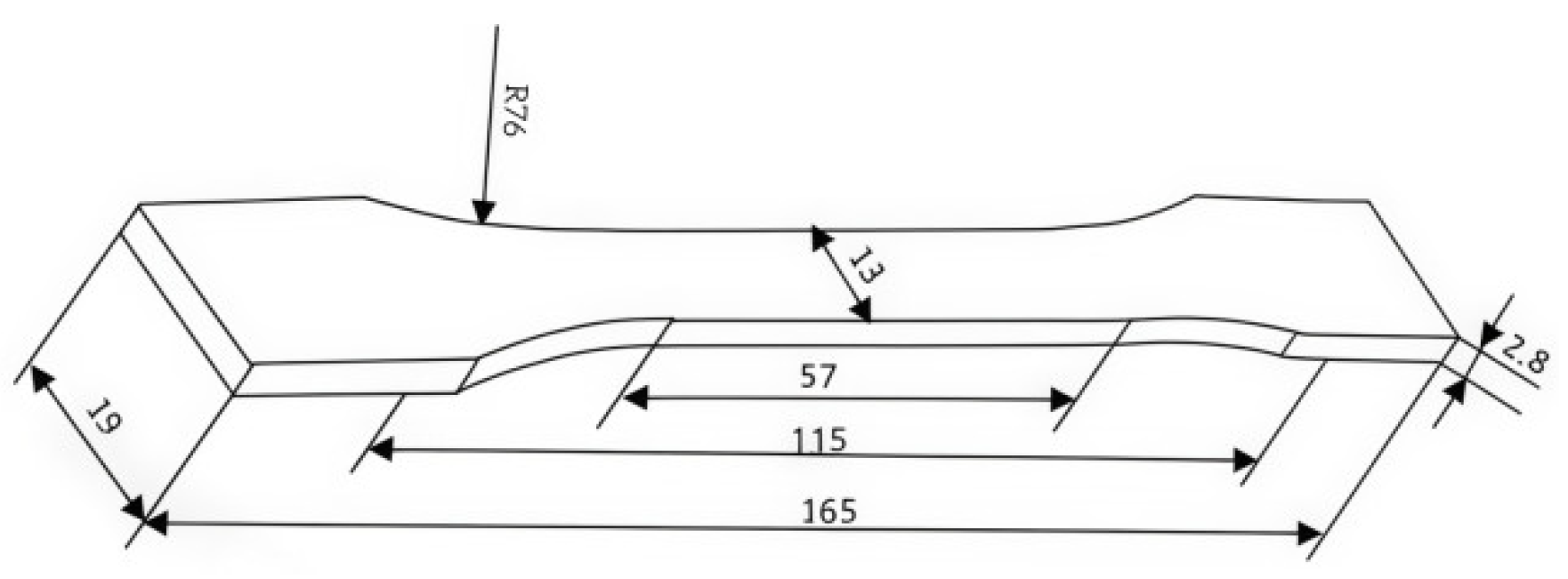
Tensile tests were performed using a Shimadzu universal testing machine. The tests were conducted in accordance with the ASTM D638 standard [22]. The grip length at both ends of the specimen was set to 25 mm, the effective fracture range of the specimen was the middle 57 mm section, and the loading speed was 2 mm/min. All tensile tests were carried out at room temperature. The dimensions of the specimens prepared for tensile testing are shown in Figure 2.
The microstructure of the tensile specimen fracture was analyzed by a HITACHl S-3400 scanning electron microscope (Hitachi, Tokyo, Japan) at an acceleration voltage of 15 kV.
After cleaning the surface of the printed samples, a VK-X200 Shape Measurement Laser Microscope System was used to inspect the sample surfaces. The testing system was manufactured by Keyence (China) Co., Ltd.(Shanghai, China)

4. Results and Discussion

4.1. Tensile Tests and Analysis

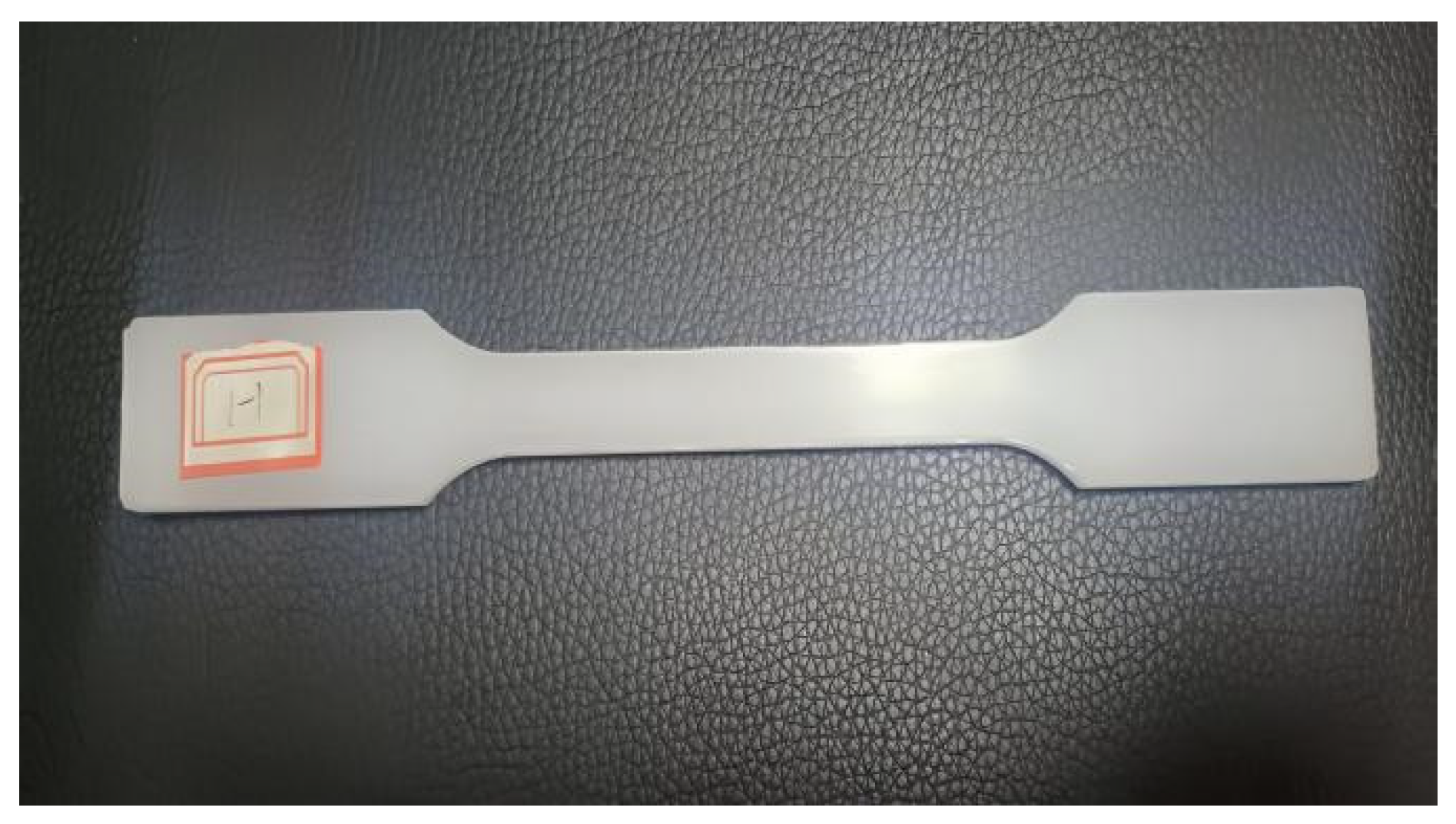
Tensile specimens were printed according to the parameter combinations provided in Table 3. For each parameter combination, three samples were printed and subjected to tensile testing. The final tensile strength value for that printing condition was taken as the average of the three measured tensile strength values. The printed ABS-ZnO tensile specimens are shown in Figure 3.
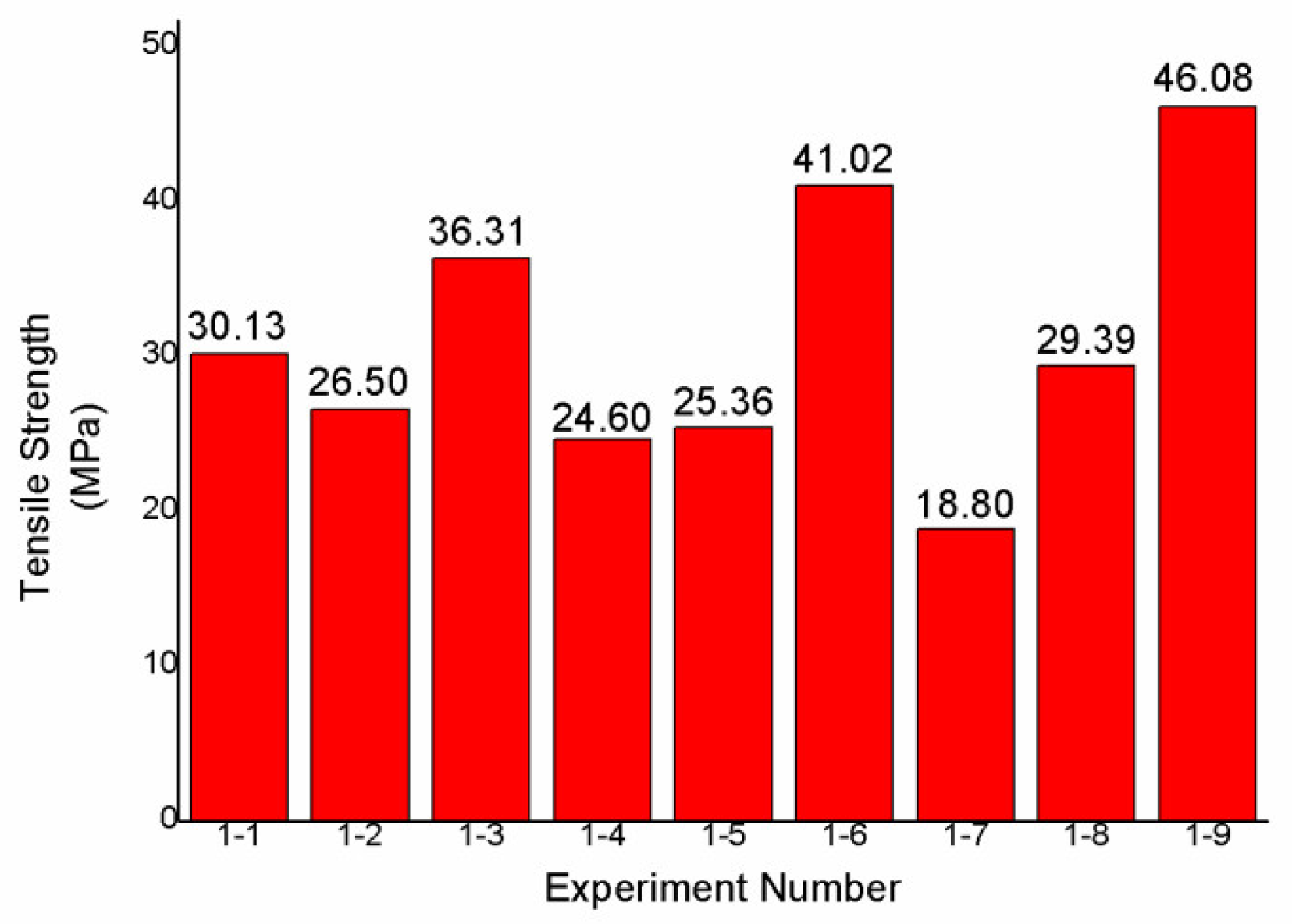
Figure 4 shows the tensile strength of each sample printed according to the orthogonal experimental table. It can be observed that Sample 1-9 exhibits the highest tensile strength, reaching 46.08 MPa, while Sample 1-7 has the lowest tensile strength of 18.80 MPa, indicating a significant difference between these two samples. Among the 9 groups of experiments conducted, it is found that the three samples with the highest tensile strength (Samples 1-3, 1-6, and 1-9) all have an infill rate of 90%.
Preliminary judgments on the effects of changes in different factors and their levels on the tensile properties of the samples can be drawn from the tensile results of the orthogonal experiment, but specific conclusions cannot be obtained. Therefore, it is necessary to introduce analysis of variance (ANOVA) and main effect analysis to conduct a more detailed study on the experimental results.
Table 4 presents the analysis of variance (ANOVA) table. It can be seen from the table that the infill rate has a significant effect on the tensile properties of ABS-ZnO specimens, while the printing speed has little effect on the tensile properties. When the print infill rate is high, there are fewer pores and gaps inside the material, making the material denser. The interaction between the interlayer and interfilament interfaces is enhanced, which improves the tensile strength of the specimens.
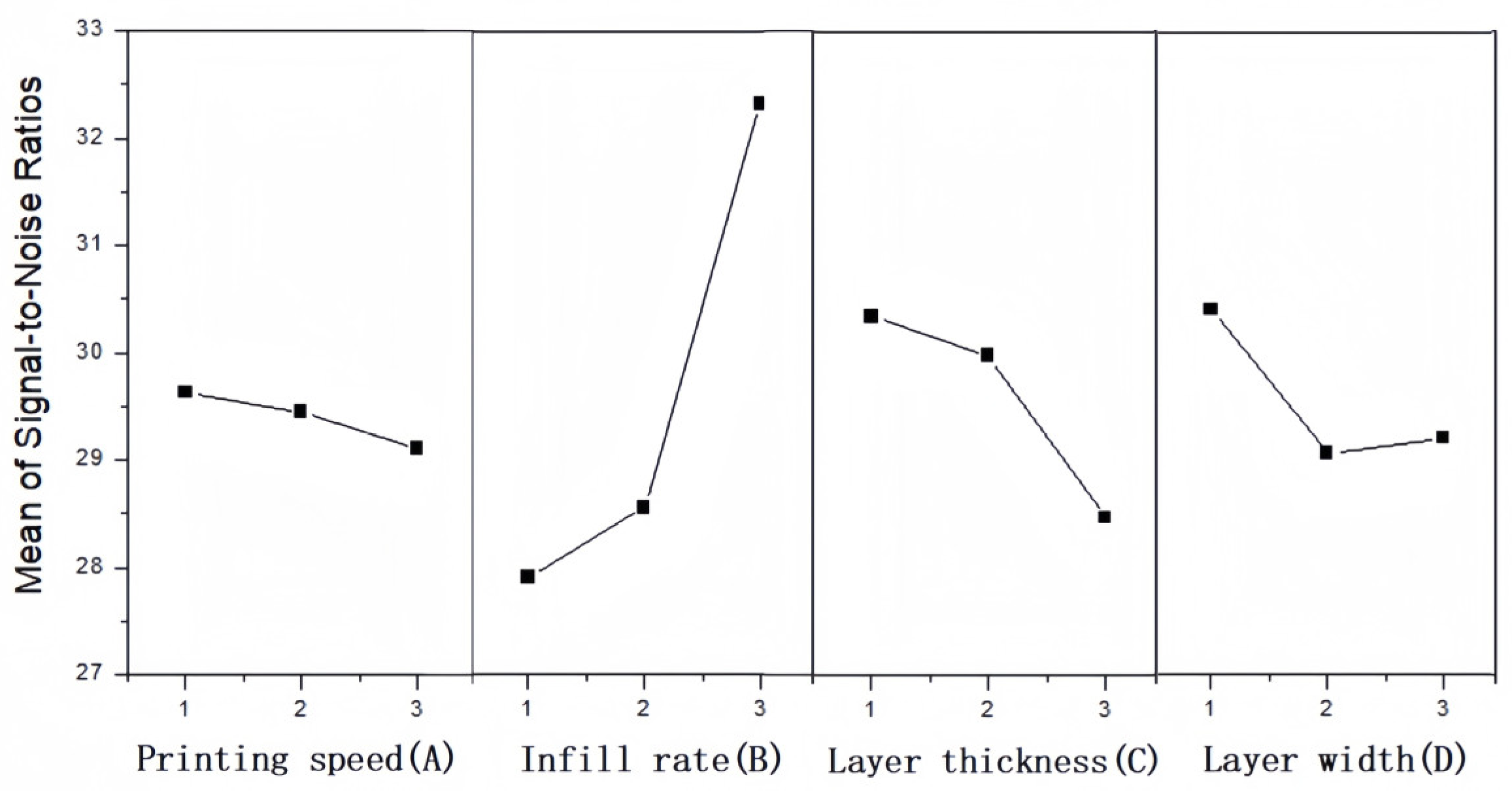
Figure 5 shows the response values of the signal-to-noise ratio (S/N ratio) of tensile strength and the significance ranking of parameters. Among all the studied parameters, the infill rate has the greatest effect on tensile strength, followed by layer thickness and layer width, and the printing speed has the smallest effect.
It can be seen from Figure 5 that factors B and C have a relatively significant impact on the signal-to-noise ratio (S/N ratio). Specifically, with factor B, as the infill rate increases from 70% to 90%, the S/N ratio increases sharply. This is because a higher infill density results in a more compact internal structure of the specimen and an increase in the number of filaments inside. Within a given size, the increase in the number of filaments makes the internal structure of the specimen closer to a solid structure, and the interlayer bonding degree is improved. Therefore, the tensile strength is correspondingly enhanced. It should be noted that an excessively high infill rate (>90%) was not investigated in this study. This is primarily because a high infill density can cause nozzle clogging, which disrupts the printing process. Furthermore, extremely high infill rates can lead to excessive internal stress within the printed parts and a deterioration in surface quality.
With factor C, as the printing layer height increases from 0.2 mm to 0.4 mm, the S/N ratio decreases sharply. This is because with the increase in layer height, the number of printed filaments and layers constituting the specimen decreases for a given specimen size. A larger layer height results in a looser internal structure of the specimen and more pores generated during the printing process, thereby weakening the interlayer bonding and reducing the tensile strength accordingly. Although Sample 1-3 has an appropriate printing speed and infill rate, its tensile strength is still not the highest, which is due to its relatively large layer height. With factor A, as the printing speed increases from 200 mm/s to 300 mm/s, the S/N ratio changes little but shows a decreasing trend overall. This is because an excessively high printing speed accelerates the extrusion rate of the printing material, leading to an increase in porosity during the material accumulation process and weakening of interlayer bonding. Meanwhile, due to air convection, an overly fast printing speed causes heat loss from the printing nozzle, resulting in low interfacial bonding strength and thus a reduction in tensile strength.
Therefore, through the analysis of the main effect plot, the optimal combination of printer process parameters for achieving the maximum tensile strength of the specimens is determined as A1B3C1D1. To verify this result, we designed printing experiments to investigate the effect of a single variable on the tensile properties of the material. The specific experimental process parameters and tensile test results are shown in Table 5.
It can be seen from Table 5 that when the printing speed is 200 mm/s, the infill rate is 90%, the layer thickness is 0.2 mm, and the layer width is 0.4 mm, the measured tensile strength reaches 48.37 MPa, which is higher than that of Sample 1-9.

4.2. Scanning Electron Microscopy (SEM) Analysis

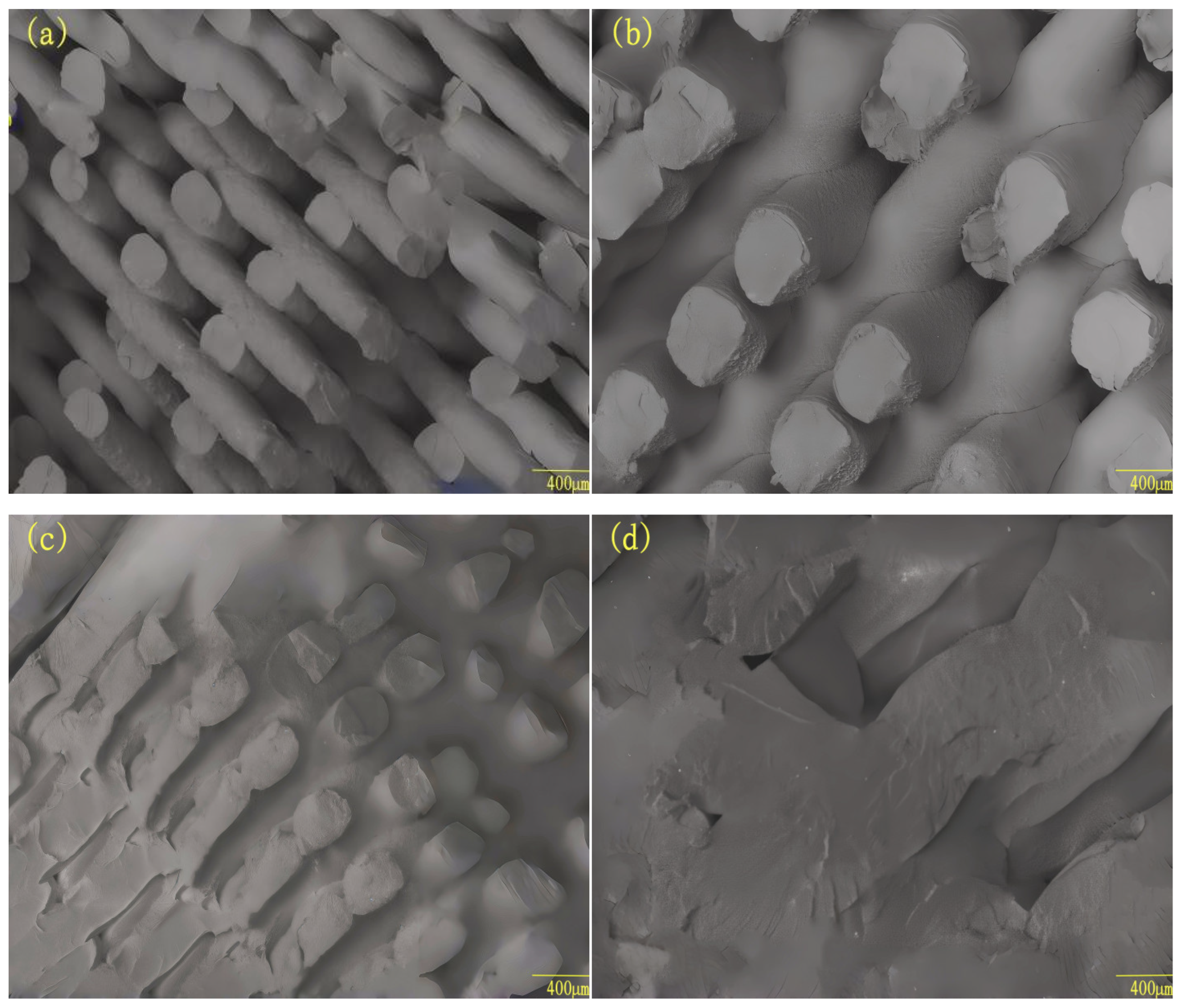
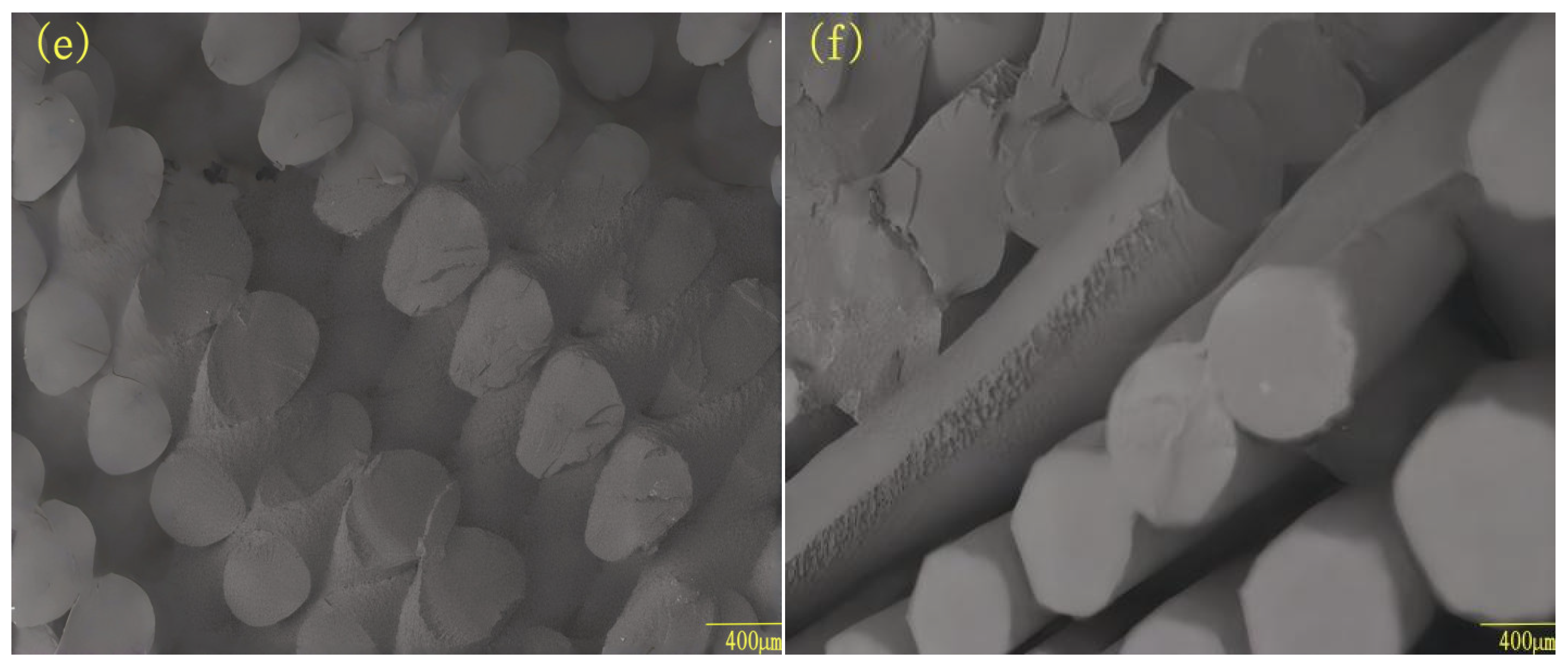
Images a–f in Figure 6 correspond to the SEM images of tensile fractures of Specimens 2-1 to 2-6, respectively. It can be observed from images a–c that when the infill rate is low, the internal structure is relatively loose with obvious voids. The insufficient fusion between adjacent filaments also tends to act as crack initiation sites. With the infill rate increased while other parameters remain unchanged, the structure near the fracture becomes increasingly dense, the bonding between filaments is more sufficient, and the tensile properties of the specimens are consequently improved. The porosity of the printed samples was measured using the Archimedes method, as shown in Table 6.
When comparing Figure 6c with Figure 6d, it can be seen that Specimen 2-3 has a smaller layer thickness and a more uniform filament distribution. A change in layer thickness implies a change in the fiber content of the sample. A decrease in layer thickness leads to an increase in the number of layers for a sample of the same size, i.e., an increase in the number of fiber layers, while the resin matrix wrapping the fibers decreases as the layer thickness reduces. On the other hand, when the layer thickness is small, the pressure exerted on the composite material at the nozzle increases, leading to more resin impregnating the interior of the filaments. This reduces the internal pores of the filaments and enhances the interfacial bonding strength between the matrix and fibers, between layers, and between filaments, thereby improving the mechanical properties of the material. In contrast, when the layer thickness is large, the bonding between resin matrices becomes poorer, the number of internal pores in the material increases, and the fibers within the layer tend to be unevenly distributed and experience stress concentration. When the material is subjected to external forces, it cannot effectively transfer stress along the interfaces, which may result in fiber pull-out and a reduction in mechanical properties.
When comparing Figure 6b with Figure 6e, it can be observed that Specimen 2-2 features a smaller layer width, more overlap between adjacent filaments, and lower porosity. If there is no contact or little overlap between filaments in the same layer, a large number of gaps will form, leading to a decrease in the mechanical properties of the material. As the printing distance increases, the size and number of pores increase accordingly, and the interfacial properties between layers and filaments of the sample weaken. However, an excessively small printing distance will result in excessive overlap of filaments, an increase in layer thickness, fiber breakage and abrasion, and even disruption of the printing process, making it impossible to form the part. Therefore, the printing distance and printing layer thickness are closely interrelated.

4.3. Surface Roughness Analysis

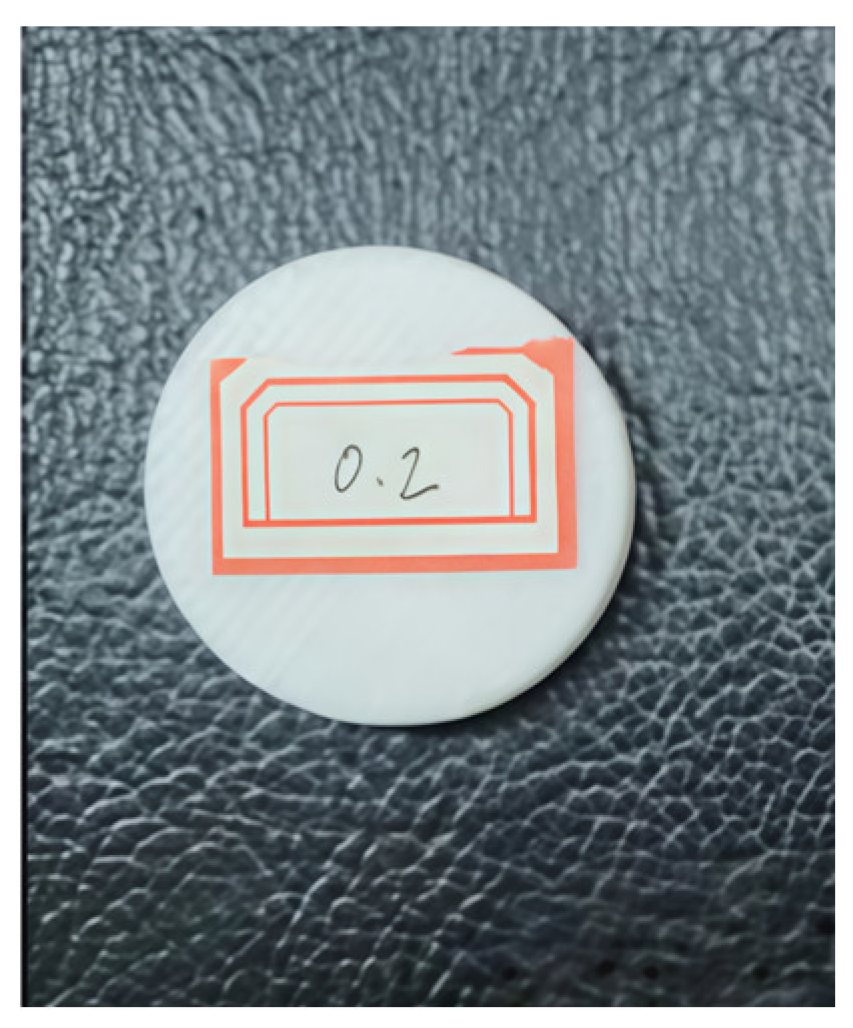
To investigate the effects of different printing temperatures and layer thicknesses on the surface roughness of ABS-ZnO, five different temperatures (210 °C, 220 °C, 230 °C, 240 °C, 250 °C) and five different layer thicknesses (0.2 mm, 0.25 mm, 0.3 mm, 0.35 mm, 0.4 mm) were selected for sample printing. The remaining printing parameters were set as follows: printing speed of 200 mm/s, infill rate of 90%, and layer width of 0.4 mm. The layer thickness was fixed at 0.2 mm when varying the printing temperature, whereas the printing temperature was fixed at 230 °C when varying the layer thickness. The specimen was a solid cylinder with a radius of 15 mm and a thickness of 3 mm. The obtained samples are shown in Figure 7.
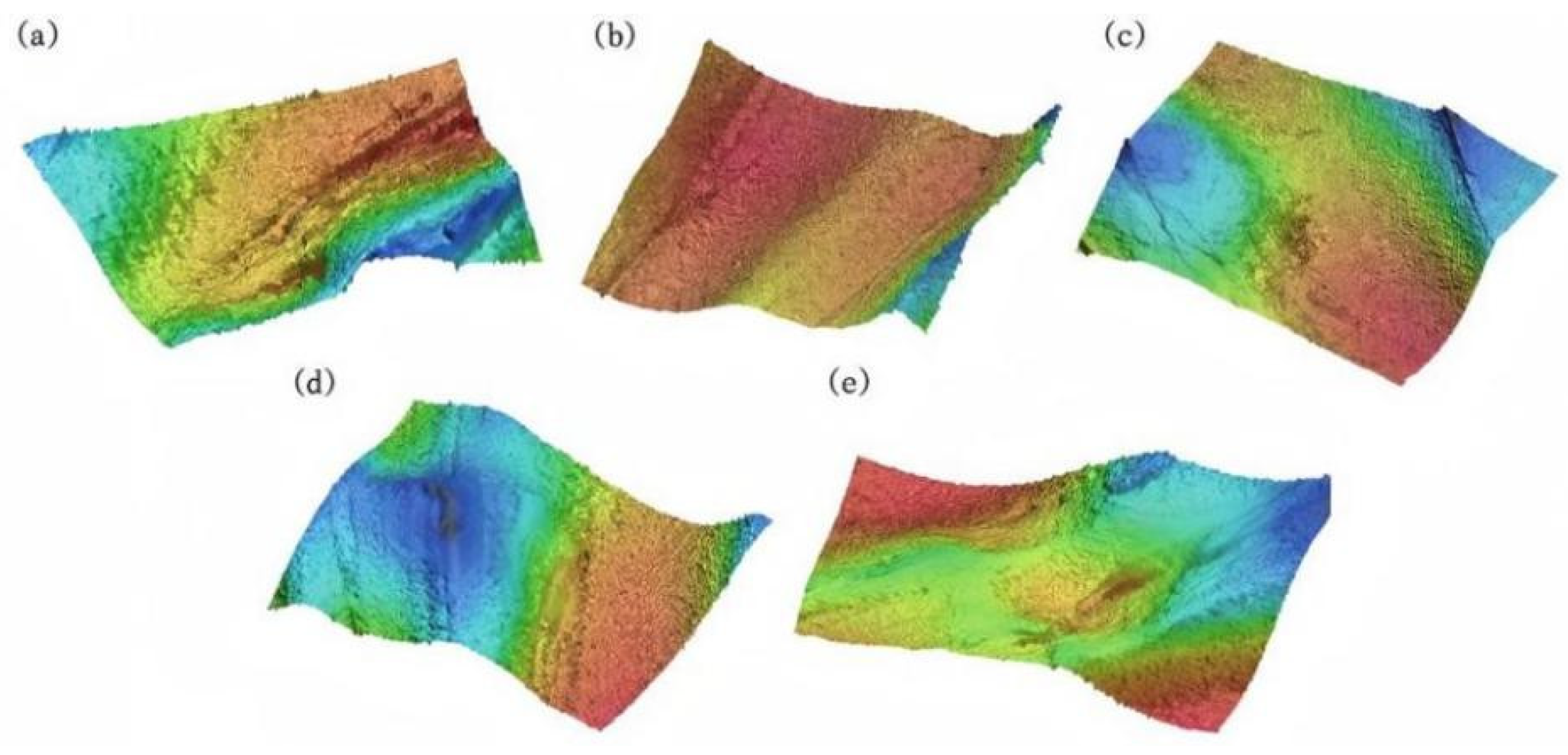
The printing material is thermoplastic, so temperature exerts a significant influence on the surface morphology. The surface of the samples was observed using a shape-measuring laser microscopy system. Figure 8 shows the surface morphology of the samples at different printing temperatures. It can be observed that the sample surfaces are relatively flat and smooth when the printing temperature is 220 °C and 230 °C, while the surfaces of the other samples exhibit protrusions of varying sizes and uneven distributions.
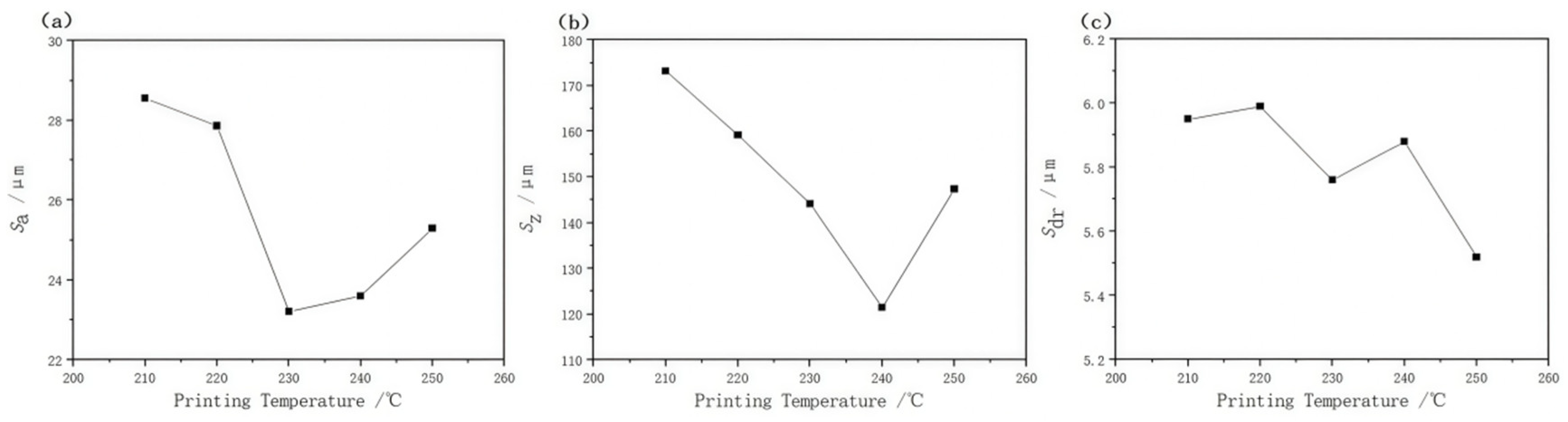
The effect of temperature on the surface roughness of the samples was further analyzed by measuring the surface roughness data. The corresponding variation trends of the parameters with printing temperature are presented in Figure 9.
Sa is the average of the absolute values of the heights of each point in the defined area of the sample. Sz is the sum of the maximum peak height and the maximum valley depth in the defined area of the sample. Sdr denotes the surface developed ratio, which is the ratio relative to the area of the defined region.
It can be seen from Figure 9 that the Sa value generally shows a decreasing trend in the range of 210–230 °C and an increasing trend in the range of 230–250 °C. The Sz value generally exhibits a decreasing trend in the range of 210–240 °C and an increasing trend in the range of 240–250 °C. Due to the poor flexural strength and compressive strength of ABS-ZnO materials, which are highly susceptible to temperature, the higher the printing temperature, the greater the temperature difference between the bulk temperature of the material and room temperature during cooling, and the longer the cooling time, making the surface morphology more prone to being affected. Smaller Sa and Sz values indicate lower surface roughness of the printed parts and a smoother surface. This can save time for subsequent polishing and effectively improve processing efficiency.
Sdr takes the flat state as the reference and expresses the degree of increase in the actual surface area in proportion. It can be seen from Figure 9 that the Sdr values are smaller at 230 °C and 250 °C, which indicates that the material surface is flatter. However, it can be clearly observed from Figure 8 that there are obvious protrusions on the material surface when the printing temperature is 250 °C. This may be due to the flow control failure caused by the excessive melting of the material at a relatively high printing temperature, which leads to a mismatch with the equipment/parameters. The high requirement of small layer thickness on extrusion accuracy is completely offset by the negative effects brought by high temperature.
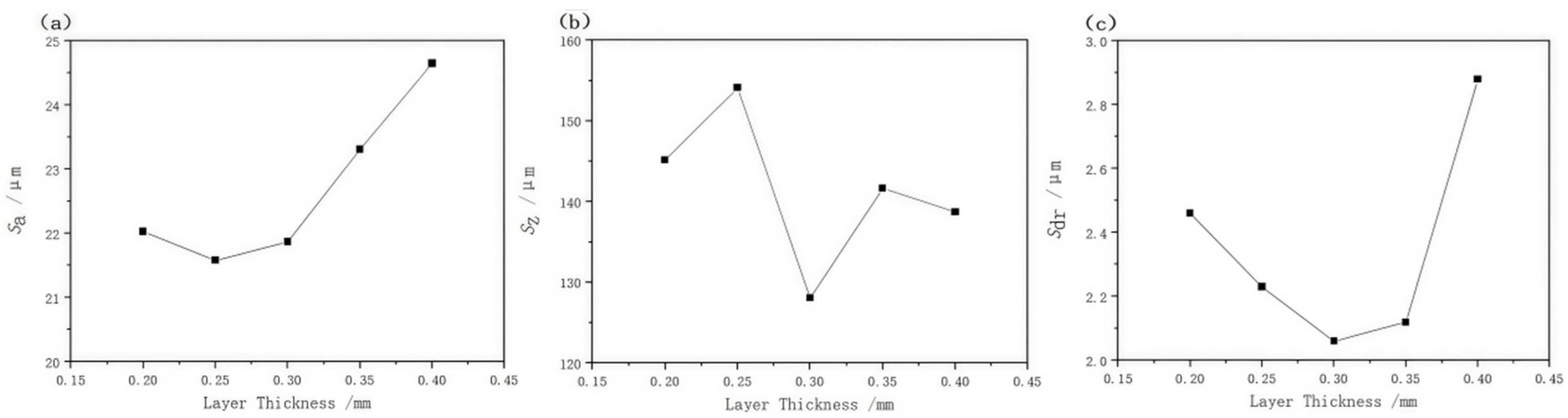
A comprehensive analysis of the surface morphology and parameter values of the samples shows that the printed samples exhibit the lowest surface roughness when the printing temperature is 230 °C. Similarly, we also analyzed the effect of layer thickness variation on the surface roughness of the samples at 230 °C. As shown in Figure 10.
It can be found from Figure 10 that with the increase of layer height, the Sa value first decreases and then increases, reaching the minimum when the layer thickness is 0.25 mm. ABS polymer materials exhibit obvious orientation during filling, and the material shrinkage during filling in the cross-sectional direction is different from that in the forming direction (i.e., the z-direction). Therefore, it is inevitable that with the increase in layer thickness, the gaps and pores in the material become larger, and the surface is more prone to defects. A comprehensive analysis of the three parameters shows that the surface is the smoothest and the roughness is the lowest when the layer thickness is 0.3 mm.

5. Conclusions

In this study, we prepared ABS-ZnO composites as FDM printing materials and focused on analyzing the influence of printing process parameters on the tensile properties and surface roughness of the samples. Through orthogonal experiments and analysis of variance, among all the studied parameters, we found that the infill rate exerts the most significant effect on the tensile strength, followed by the layer thickness and layer width, while the printing speed exerts the smallest effect. By analyzing the main effects of the signal-to-noise ratio for tensile strength, it is concluded that ABS-ZnO achieves the highest tensile strength with the printing process parameters of 90% infill rate, 0.2 mm layer thickness, 0.4 mm layer width, and 200 mm/s printing speed. This result was verified by experiments, and the tensile strength of the samples with these parameters reached a maximum value of 48.37 MPa. Scanning electron microscopy (SEM) analysis of the tensile fracture surfaces revealed that with the increase in infill rate, the structure near the fracture surface became increasingly dense, and the bonding between filaments was more sufficient. In contrast, as the printing layer thickness and layer width increased, the number of pores inside the material increased, the filaments within the layer tended to be unevenly distributed in the matrix, and stress concentration occurred. When the material was subjected to external forces, it could not effectively transfer stress along the interface, resulting in a decrease in mechanical properties. By investigating the effects of printing temperature and layer thickness on the surface roughness of the samples, it was concluded that the samples exhibited the lowest surface roughness when the printing temperature was 230 °C and the layer thickness was 0.3 mm.

Author Contributions

Methodology, C.D. and Y.L.; Software, C.D. and Y.Z.; Validation, Y.Z. and Y.L.; Data curation, C.D.; Writing – original draft, C.D.; Writing – review & editing, C.D.; Project administration, C.D.; Funding acquisition, C.D. All authors have read and agreed to the published version of the manuscript.

Funding

This research was funded by the Natural Science Foundation for Young Scientists of Shanxi Province (Grant No. 202303021222260) and the Scientific Research Project of the “Young Talents” Support Program of Jinzhong University (Grant No. jzxyqnyc202403).

Data Availability Statement

The original contributions presented in this study are included in the article. Further inquiries can be directed to the corresponding author.

Conflicts of Interest

The authors declare no conflicts of interest.

References

  1. Zhang, Z.; Wang, B.; Hui, D.; Qiu, J.; Wang, S. 3D bioprinting of soft materials-based regenerative vascular structures and tissues. Compos. Part B Eng. 2017, 123, 279–291. [Google Scholar] [CrossRef]
  2. Zhou, X.; Liu, G.; Bai, Y.; Zhang, H. Research progress on 3D printed geopolymer materials. Vibroeng. Procedia 2025, 59, 216–222. [Google Scholar] [CrossRef]
  3. Liu, T.; Tian, X.; Kang, Y.; Li, H.; Yang, T.; Zhang, H.; Wen, Y.; Lei, M.; Wang, X.; Zhu, C.; et al. Progress in 3D Printing of Polymer and Composites for On-Orbit Structure Manufacturing. Addit. Manuf. Front. 2025, 4, 200234. [Google Scholar] [CrossRef]
  4. Zheng, Y.; Lou, H.; Gao, Z.; Zhu, L.; Zhang, Y.; Lin, H.; Li, Z.; Yue, X.; Kong, W.; Yang, H.; et al. Progress in the integration of 3D printing technology with photothermal materials for osteosarcoma treatment. Adv. Compos. Hybrid Mater. 2025, 8, 327. [Google Scholar] [CrossRef]
  5. Sun, H.; Cheng, X.; Dong, R.; Liu, H.; Zheng, G.; He, L.; Wang, W.; Tan, K. Study of thermal stress deformation in hybrid 3D printing and milling process of PEEK material. Proc. Inst. Mech. Eng. Part L J. Mater. Des. Appl. 2025, 239, 1435–1446. [Google Scholar] [CrossRef]
  6. Ünal, M.; Sürer, E.; Ucar, Y.; Aygün, E.B.G. Evaluating the Mechanical Properties and Fracture Surfaces of Interim Restorative Materials Produced by Different Three-Dimensional Printer Technologies: An In-Vitro Study. Int. J. Prosthodont. 2025, 1–27. [Google Scholar] [CrossRef]
  7. Ma, L.; Sun, H.; Dong, X.; Liu, Z.; Wang, B. Bending-Induced Progressive Damage of 3D-Printed Sandwich-Structured Composites by Non-Destructive Testing. Polymers 2025, 17, 1936. [Google Scholar] [CrossRef]
  8. Ranjbar, F.; Rezadoust, A.M.; Sadjadi, S.; Atai, M. 3D-printed cyclodextrin polymer-g-C3N4 nanocomposite as a monolithic adsorbent for dye removal. Prog. Addit. Manuf. 2025, 11, 1317–1340. [Google Scholar] [CrossRef]
  9. Balina, K.; Gailitis, R.; Sinka, M.; Argalis, P.P.; Radina, L.; Sprince, A. Prospective LCA for 3D-Printed Foamed Geopolymer Composites Using Construction Waste as Additives. Sustainability 2025, 17, 6459. [Google Scholar] [CrossRef]
  10. Paul, A.A.; Kryukov, O.; Bandela, A.K.; Muadi, H.; Ashkenasy, N.; Cohen, S.; Marks, R.S. Development of Covalently Functionalized Alginate–Pyrrole and Polypyrrole–Alginate Nanocomposites as 3D Printable Electroconductive Bioinks. Materials 2025, 18, 3120. [Google Scholar] [CrossRef]
  11. Colucci, G.; Sacchi, F.; Bondioli, F.; Messori, M. 3D printing of lignin-based polymeric composites obtained using liquid crystal display as a vat photopolymerization technique. Polym. Int. 2025, 74, 828–838. [Google Scholar] [CrossRef]
  12. Mansouri, A.; Wolde, J.G.; Joda, A. The Potential of Sand as a Sustainable Infill for 3D Concrete Printed Building Walls. Heat Transf. 2025, 54, 2912–2921. [Google Scholar] [CrossRef]
  13. Yang, Z.C.; He, F.Y.; Khan, M. An empirical torsional spring model for the inclined crack in a 3D-printed acrylonitrile butadiene styrene (ABS) cantilever beam. Polymers 2023, 15, 496. [Google Scholar] [CrossRef]
  14. Soni, A.; Vellaisamy, M.; Gupta, S.K.; Veeman, D.; Katiyar, J.K. Physico-tribo-mechanical Performance of Banana Peel Powder Reinforced PLA-based 3D printed Biocomposites. Proc. Inst. Mech. Eng. 2026, 240, 139–153. [Google Scholar] [CrossRef]
  15. Zhang, Y.; Huang, S.; Zhu, M.; Zhang, H.; Qian, Z.; Xue, B.; Zhang, J.; Agyenim-Boateng, E.; Zhou, J. Mechanical Properties of 4D Printed Origami Honeycomb Metamaterials Based on Nano-Fe3O4 Shape Memory Polymer Composites. Polym. Eng. Sci. 2025, 65, 6622–6634. [Google Scholar] [CrossRef]
  16. Nasution, A.; Hakim, M.L.; Herianto, H.; Rifai, A.P. Flexural performance and interfacial bonding of PLA/ABS/HIPS composites in multi-nozzle 3D printing. J. Braz. Soc. Mech. Sci. Eng. 2025, 48, 47. [Google Scholar] [CrossRef]
  17. Mahouti, T.; Örnek, E.; Çevir, B.; Berber, H.; Belen, M.A.; Sadıkoğlu, H.; Yilmazer, H. SLA-Printed BaTiO3-Reinforced Bio-Nanocomposites: Influence of Printing Parameters on Mechanical, Dielectric, and Thermal Properties. ACS Omega 2025, 10, 53350–53363. [Google Scholar] [CrossRef]
  18. Kou, X.; Liu, J.; Wang, X.; Xinglong, W.; Jiaqi, W.; Xin, W.; Xianglong, L.; Yue, Z.; Ying, L.; Yuehui, H.; et al. A general strategy for constructing robust superhydrophobic and self-healing coatings based on waterborne polyurethane with dynamic covalent bonds. ACS Appl. Mater. Interfaces 2021, 13, 47033–47041. [Google Scholar] [CrossRef]
  19. Kong, Y.D.; Shi, L.; Liu, M.M.; Zhang, W.; Cheng, R.; Zheng, X. Removal of viral aerosols by 3D-printed visible photocatalytic system with mixed substrates. China Environ. Sci. 2020, 40, 5055–5062. [Google Scholar] [CrossRef]
  20. Vidakis, N.; Petousis, M.; Maniadi, A.; Koudoumas, E.; Kenanakis, G.; Romanitan, C.; Tutunaru, O.; Suchea, M.; Kechagias, J. The Mechanical and Physical Properties of 3D-Printed Materials Composed of ABS-ZnO Nanocomposites and ABS-ZnO Microcomposites. Micromachines 2020, 11, 615. [Google Scholar] [CrossRef] [PubMed]
  21. Aw, Y.Y.; Yeoh, C.K.; Idris, M.A.; Teh, P.L.; Elyne, W.N.; Hamzah, K.A.; Sazali, S.A. Influence of Filler Precoating and Printing Parameter on Mechanical Properties of 3D Printed Acrylonitrile Butadiene Styrene/Zinc Oxide Composite. Polym.-Plast. Technol. Mater. 2019, 58, 1–13. [Google Scholar] [CrossRef]
  22. ASTM D638-22; Standard Test Method for Tensile Properties of Plastics. ASTM International: West Conshohocken, PA, USA, 2022.
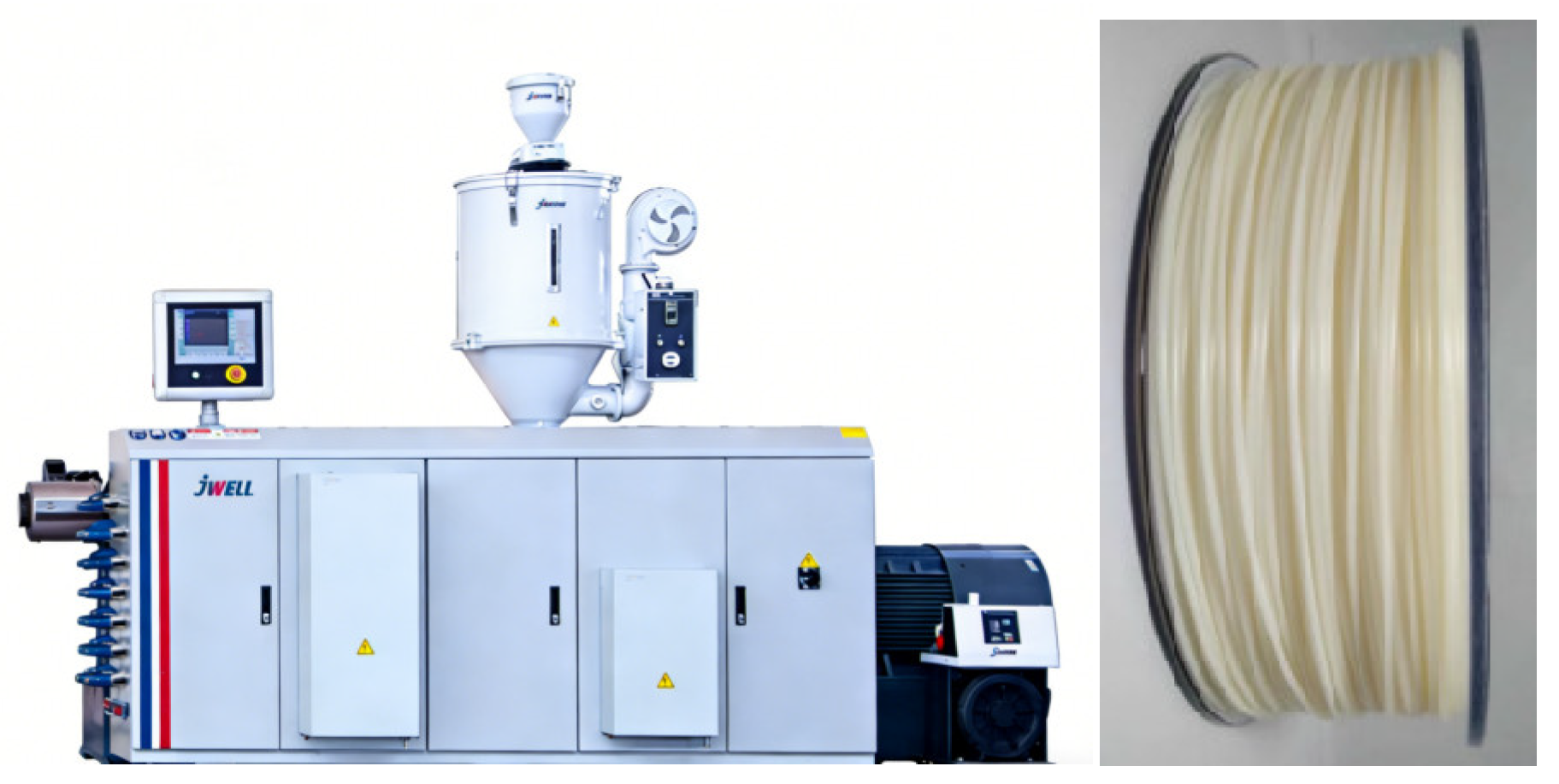
Figure 1. The single-screw extruder and the prepared ABS-ZnO composite material.
Fibers 14 00019 g001
Figure 2. Schematic diagram of tensile specimen (dimensions in mm).
Fibers 14 00019 g002
Figure 3. As-printed tensile specimens.
Fibers 14 00019 g003
Figure 4. Tensile strength histogram of orthogonal test of ABS-ZnO.
Fibers 14 00019 g004
Figure 5. Main effect plot of Signal-to-noise ratio for tensile strength.
Fibers 14 00019 g005
Figure 6. The SEM characterization images of the tensile fracture ((af) correspond to specimens 2-1 to 2-6, respectively).
Fibers 14 00019 g006aFibers 14 00019 g006b
Figure 7. As-printed cylindrical samples.
Fibers 14 00019 g007
Figure 8. Surface morphology of ABS-ZnO samples at different printing temperatures. ((ae) correspond to samples printed at 210 °C to 250 °C, respectively).
Fibers 14 00019 g008
Figure 9. Variation trends of surface parameter values with printing temperature.((ac) show the trends of A, B, and C as functions of printing temperature respectively).
Fibers 14 00019 g009
Figure 10. Variation trends of surface parameter values with layer thickness.
Fibers 14 00019 g010
Table 1. The physical properties of ABS and ZnO.
MaterialElastic ModulusDensityPoisson’s RatioSize
ABS2.3 GPa1.05 g/cm30.361.5 mm
ZnO110 GPa5.61 g/cm30.28100 nm
Table 2. Selection of process parameters in orthogonal experiment.
ParameterSymbolUnitLevel
123
Printing speedAmm/s200250300
Infill rateB%507090
Layer thicknessCmm0.20.30.4
Layer widthDmm0.40.60.8
Table 3. Orthogonal experimental design table.
Experiment NumberABCDParameter Combination
1-11111200 mm/s-50%-0.2 mm-0.4 mm
1-21222200 mm/s-70%-0.3 mm-0.6 mm
1-31333200 mm/s-90%-0.4 mm-0.8 mm
1-42123250 mm/s-50%-0.3 mm-0.8 mm
1-52231250 mm/s-70%-0.4 mm-0.4 mm
1-62312250 mm/s-90%-0.2 mm-0.6 mm
1-73132300 mm/s-50%-0.4 mm-0.6 mm
1-83213300 mm/s-70%-0.2 mm-0.8 mm
1-93321300 mm/s-90%-0.3 mm-0.4 mm
Table 4. Analysis of variance of ABS-ZnO tensile test.
SourceSum of SquaresDegree of FreedomContribution RateF-Valuep-Value
Printing speed (A)0.56523.23%--
Infill rate (B)240.000287.48%424.78˂0.01
Layer thickness (C)124.700248.32%220.70˂0.01
Layer width (D)62.51225.39%110.64˂0.01
Table 5. The process parameters and tensile test results of verification experiments.
Experiment NumberInfill RateLayer ThicknessLayer WidthPrint SpeedTensile
Strength
2-150%0.2 mm0.4 mm200 mm/s30.06 MPa
2-270%0.2 mm0.4 mm200 mm/s31.46 MPa
2-390%0.2 mm0.4 mm200 mm/s48.37 MPa
2-490%0.4 mm0.4 mm200 mm/s42.19 MPa
2-570%0.2 mm0.8 mm200 mm/s28.34 MPa
2-670%0.4 mm0.8 mm200 mm/s23.81 MPa
Table 6. Porosity and structural characteristics of samples prepared with different parameters.
Experiment NumberPorosityStructural Characteristics
2-173.26%Parallel filaments with medium diameter
2-275.52%Parallel filaments with medium diameter
2-318.23%Dense fibers with medium diameter
2-430.14%Dense fibers with large diameter
2-577.13%Dispersed fine filaments
2-682.64%Dispersed fine filaments
Disclaimer/Publisher’s Note: The statements, opinions and data contained in all publications are solely those of the individual author(s) and contributor(s) and not of MDPI and/or the editor(s). MDPI and/or the editor(s) disclaim responsibility for any injury to people or property resulting from any ideas, methods, instructions or products referred to in the content.