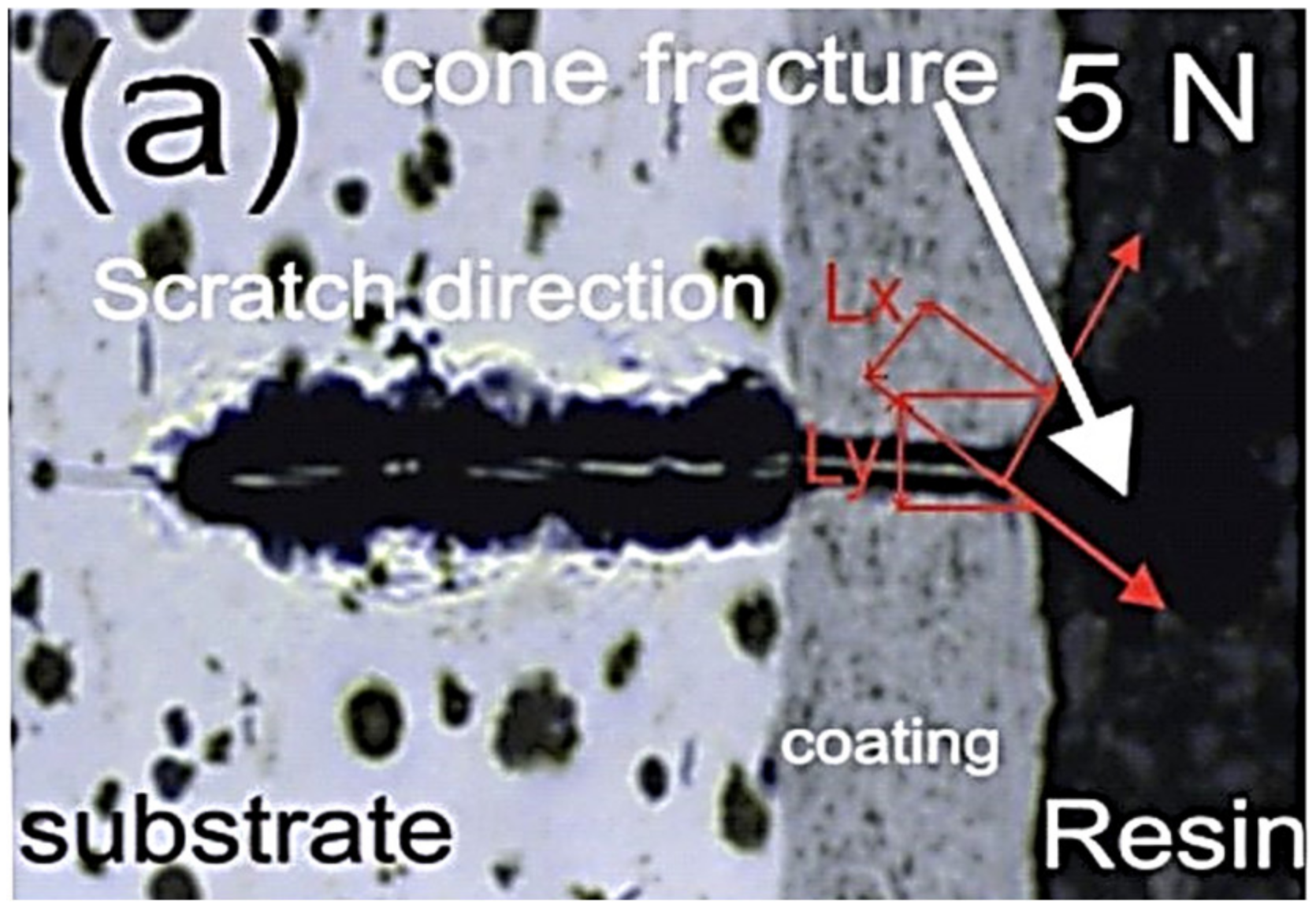
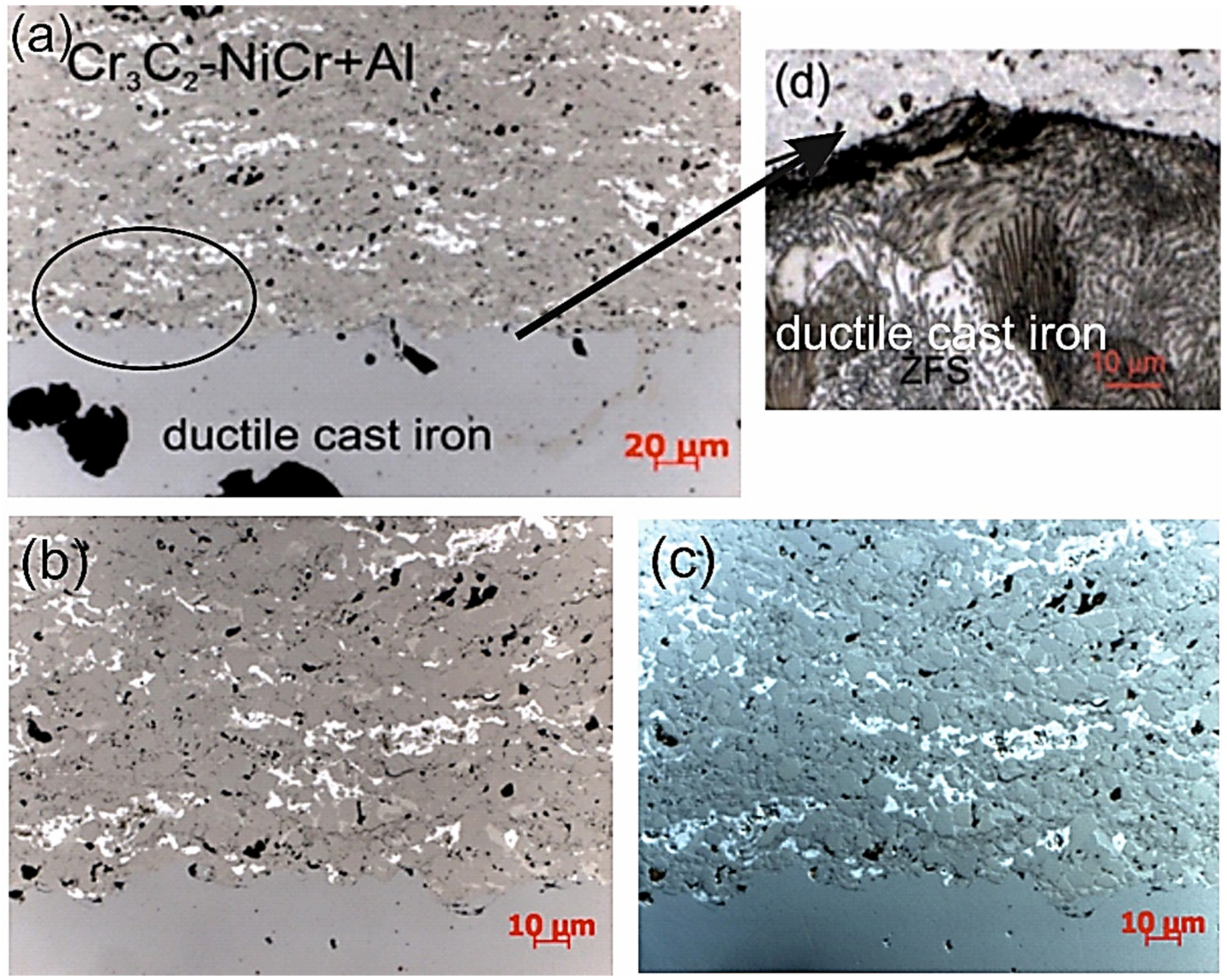
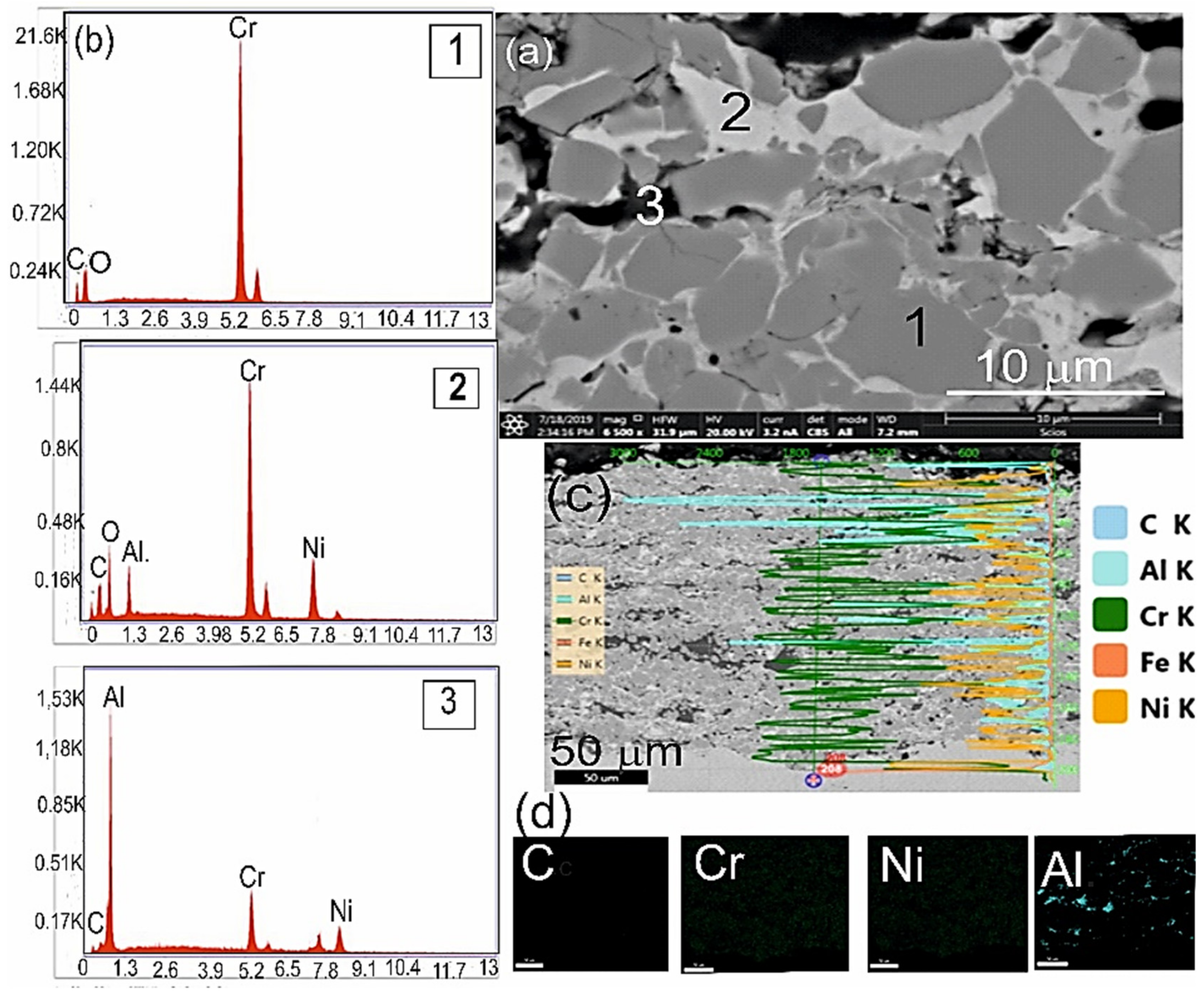
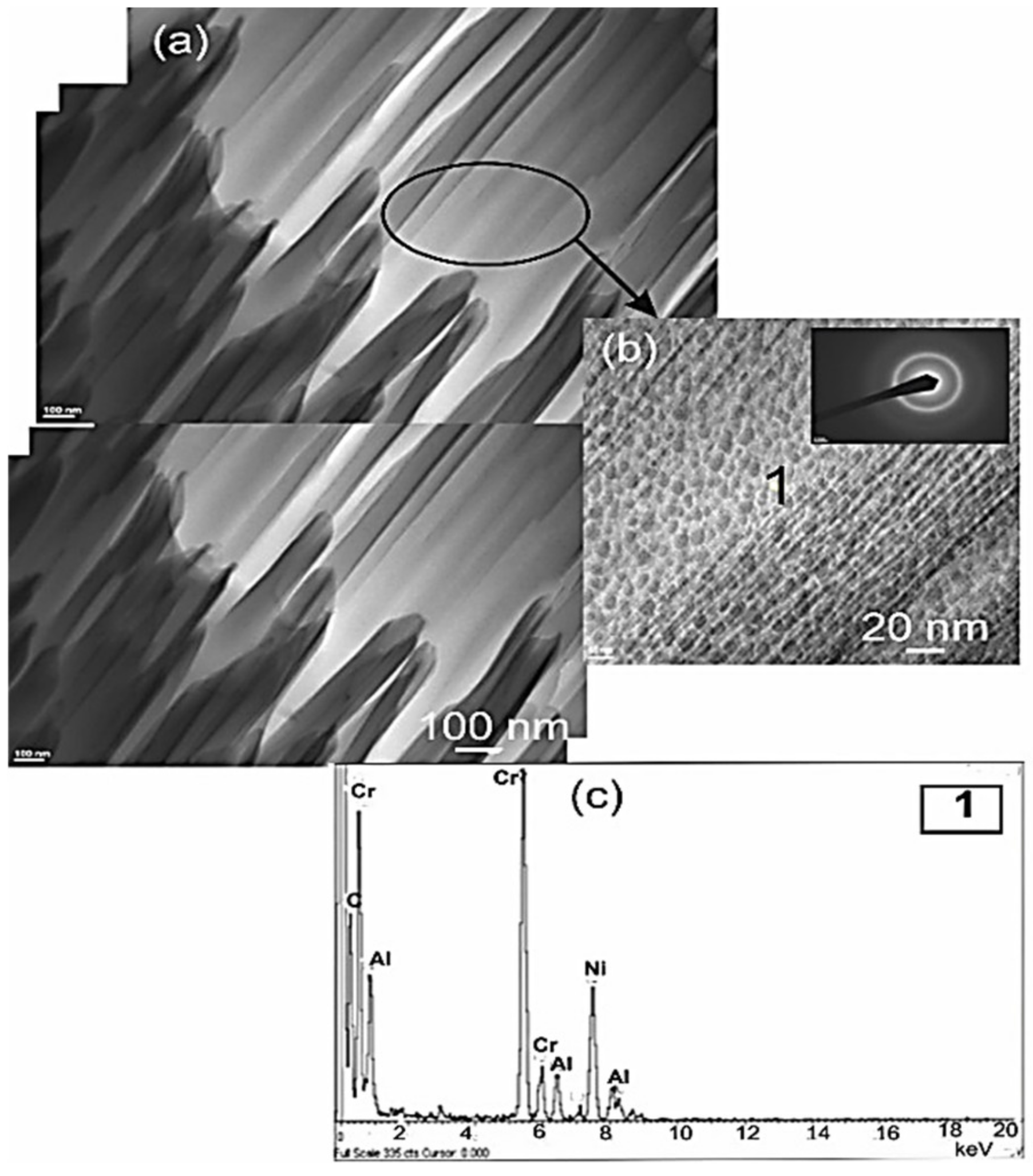
Microstructure, Mechanical Properties and Wear Behavior of High-Velocity Oxygen-Fuel (HVOF) Sprayed (Cr3C2-NiCr+Al) Composite Coating on Ductile Cast Iron


Abstract
Share and Cite
Ksiazek, M.; Boron, L.; Tchorz, A. Microstructure, Mechanical Properties and Wear Behavior of High-Velocity Oxygen-Fuel (HVOF) Sprayed (Cr3C2-NiCr+Al) Composite Coating on Ductile Cast Iron. Coatings 2019, 9, 840. https://doi.org/10.3390/coatings9120840
Ksiazek M, Boron L, Tchorz A. Microstructure, Mechanical Properties and Wear Behavior of High-Velocity Oxygen-Fuel (HVOF) Sprayed (Cr3C2-NiCr+Al) Composite Coating on Ductile Cast Iron. Coatings. 2019; 9(12):840. https://doi.org/10.3390/coatings9120840
Chicago/Turabian StyleKsiazek, Marzanna, Lukasz Boron, and Adam Tchorz. 2019. "Microstructure, Mechanical Properties and Wear Behavior of High-Velocity Oxygen-Fuel (HVOF) Sprayed (Cr3C2-NiCr+Al) Composite Coating on Ductile Cast Iron" Coatings 9, no. 12: 840. https://doi.org/10.3390/coatings9120840
APA StyleKsiazek, M., Boron, L., & Tchorz, A. (2019). Microstructure, Mechanical Properties and Wear Behavior of High-Velocity Oxygen-Fuel (HVOF) Sprayed (Cr3C2-NiCr+Al) Composite Coating on Ductile Cast Iron. Coatings, 9(12), 840. https://doi.org/10.3390/coatings9120840