Article

Diode Laser Processing of 3D-Printed Polymers for Microchannel Fabrication and Surface Modification


Faculty of Chemical Engineering and Technology, University of Zagreb, Trg Marka Marulića 19, 10000 Zagreb, Croatia
*
Authors to whom correspondence should be addressed.
Coatings 2026, 16(9), 1102; https://doi.org/10.3390/coatings16091102

Submission received: 25 August 2026 / Revised: 14 September 2026 / Accepted: 15 September 2026 / Published: 16 September 2026
(This article belongs to the Special Issue Recent Developments in Additive Manufacturing of Functional Coatings)

Abstract

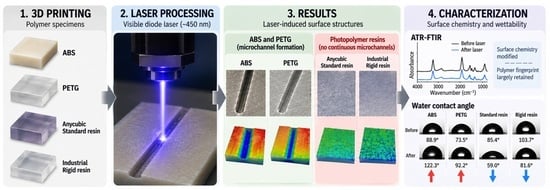
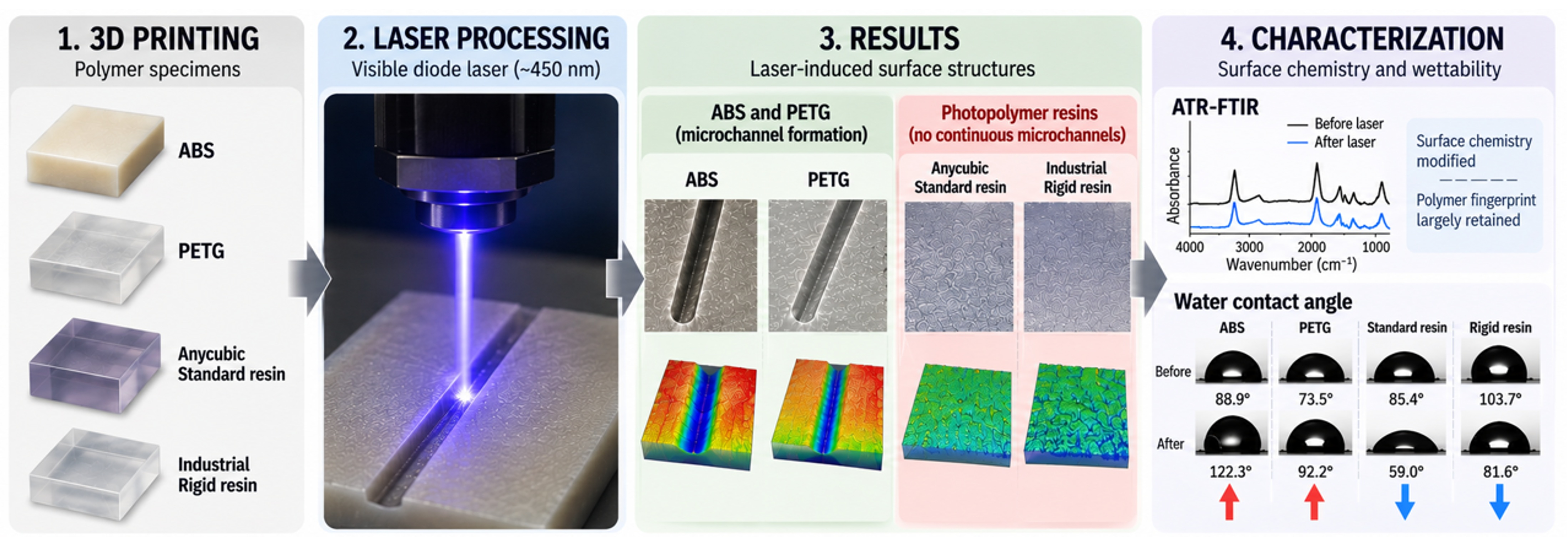
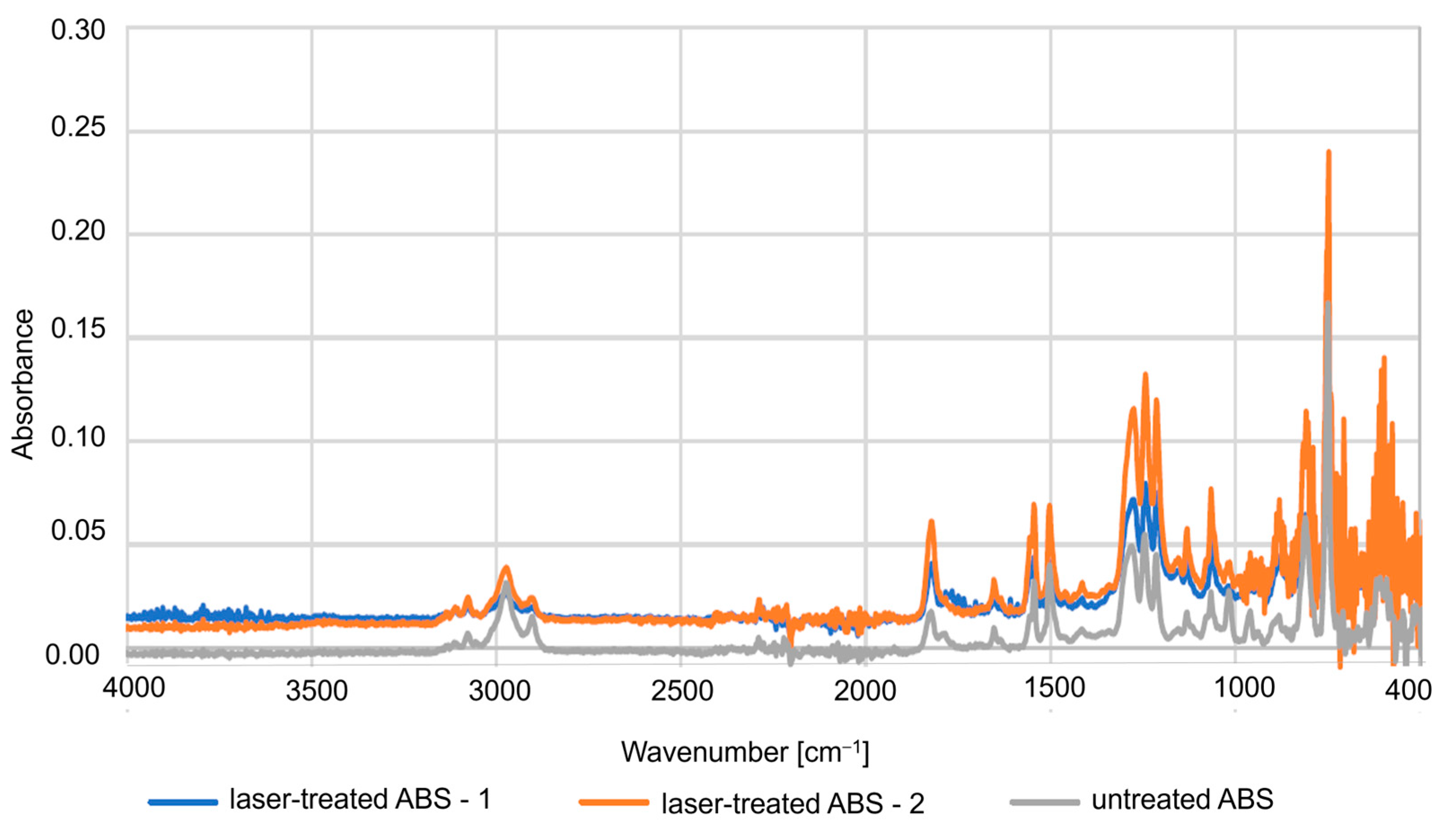
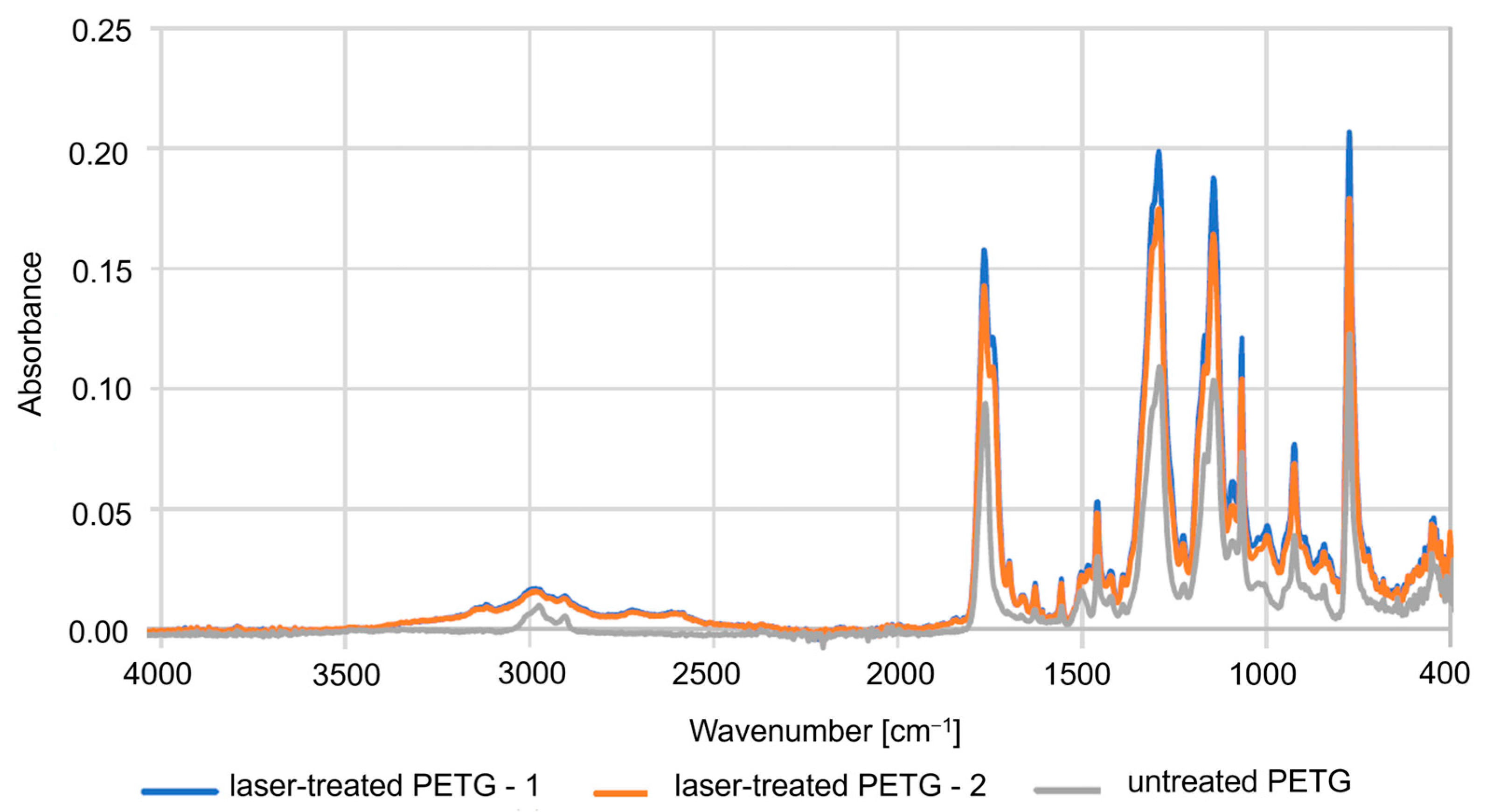
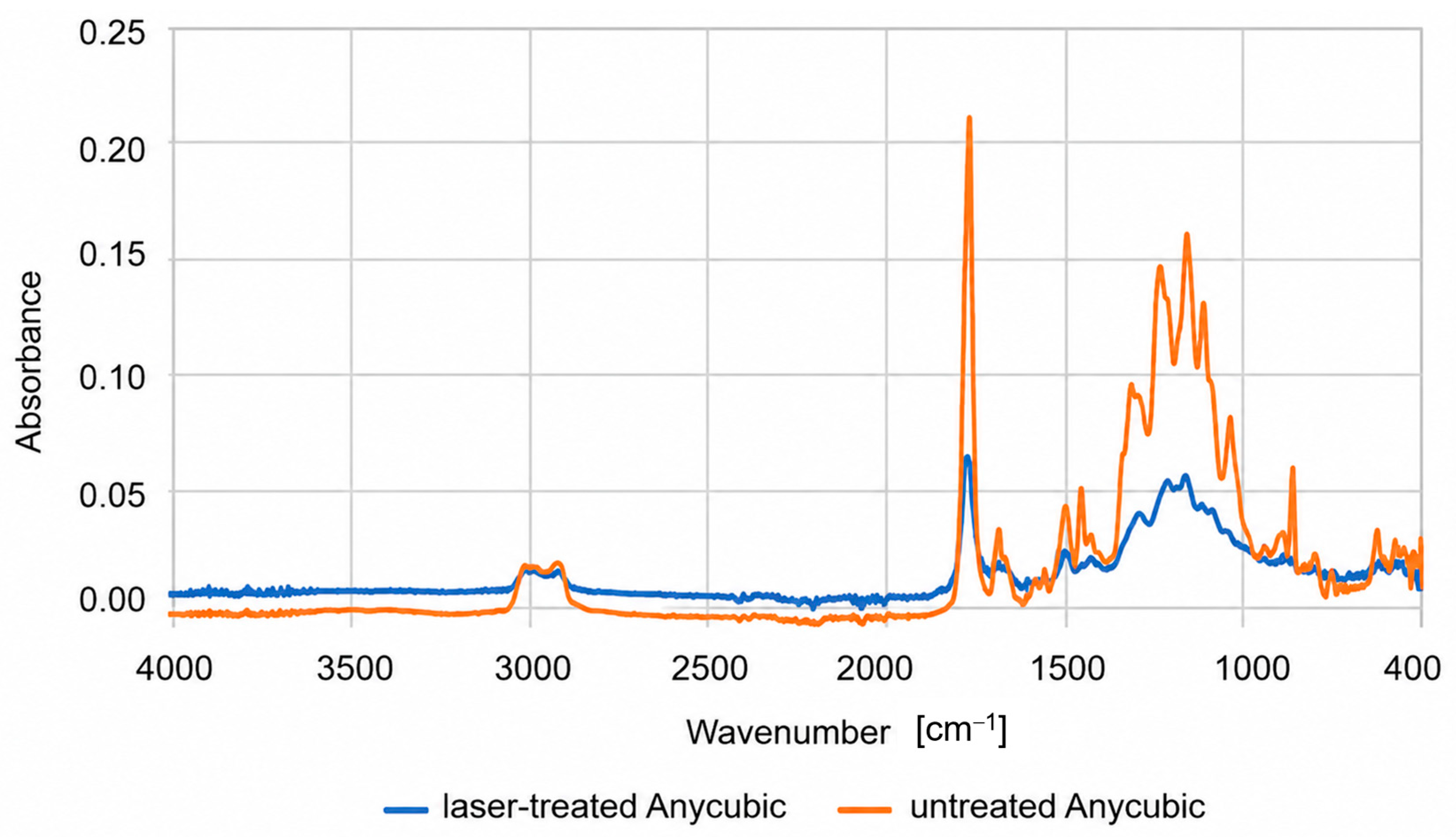
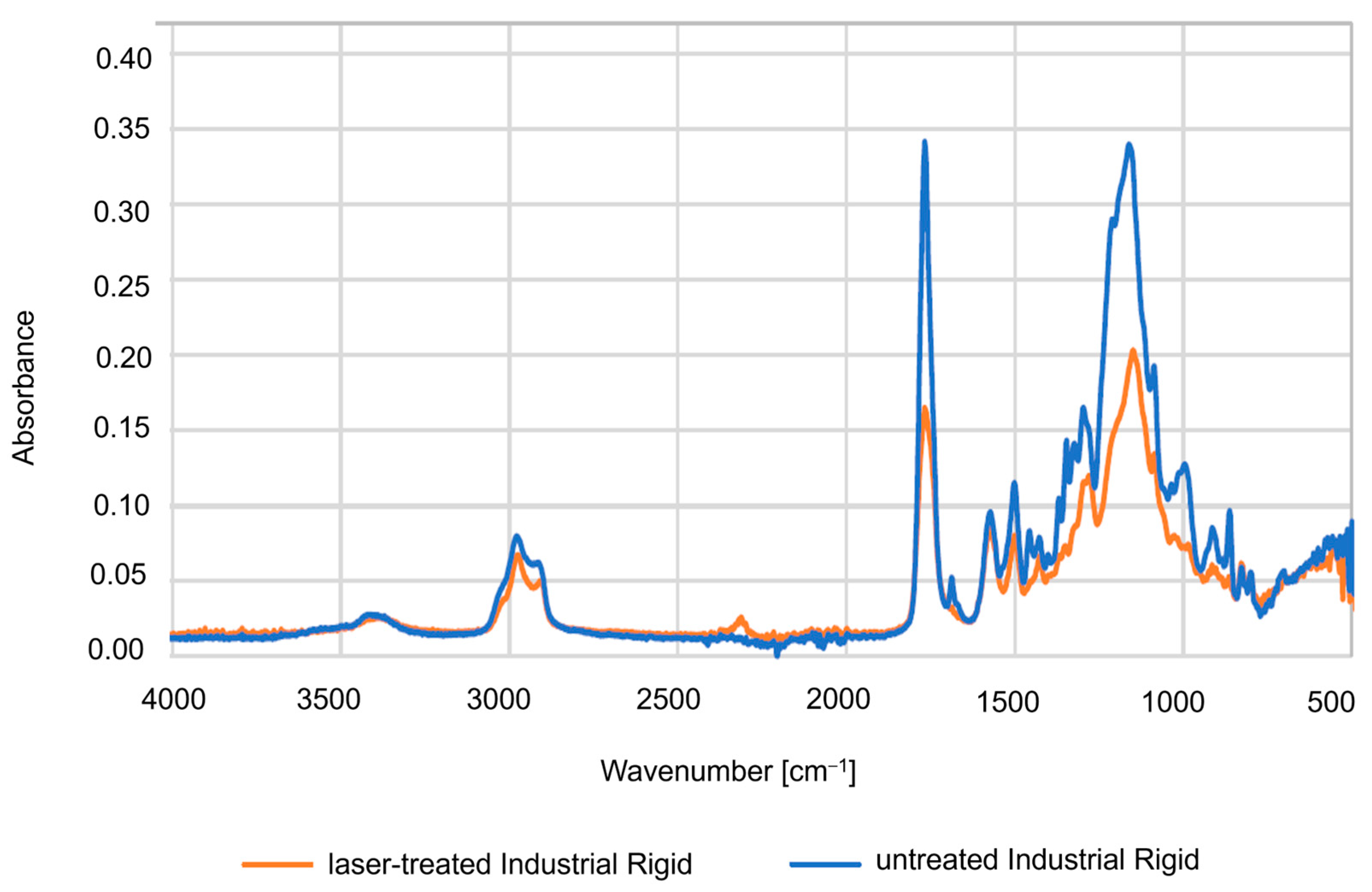
Additive manufacturing enables rapid fabrication of polymer components, but the direct production of well-defined microchannels remains challenging. Laser processing offers an attractive approach for introducing microscale features and modifying polymer surface properties. This study investigates visible diode laser processing of four additively manufactured polymers: acrylonitrile butadiene styrene (ABS), polyethylene terephthalate glycol (PETG), Anycubic Standard resin, and Industrial Rigid resin. Laser-processing conditions were screened and selected for each material, and surface modifications were evaluated using attenuated total reflectance Fourier transform infrared (ATR-FTIR) spectroscopy, contact angle measurements, and surface free energy calculations. ABS and PETG enabled successful microchannel formation, whereas continuous microchannels could not be obtained in the photopolymer resins under the investigated conditions. ATR-FTIR analysis revealed material-dependent surface modifications while largely preserving the characteristic polymer fingerprints. Laser treatment increased the water contact angle of ABS from 88.9° to 122.3° and PETG from 73.5° to 92.2°. In contrast, it decreased from 85.4° to 59.0° for Anycubic Standard resin and from 103.7° to 81.6° for Industrial Rigid resin. These contrasting responses demonstrate that diode laser processing can induce microstructuring, surface modification, or both, depending on the polymer substrate.
Keywords: diode laser processing; additive manufacturing; polymer surface modification; microchannel fabrication; surface wettability diode laser processing; additive manufacturing; polymer surface modification; microchannel fabrication; surface wettability
Graphical Abstract