1. Introduction
Sodium-ion batteries (SIBs), as an emerging electrochemical energy storage technology, have garnered widespread attention from both academia and industry in recent years. This is due to their advantages, including abundant sodium resources, low raw material costs, environmental friendliness, and working principles similar to lithium-ion batteries (LIBs). Particularly in cost-sensitive applications such as large-scale energy storage, smart grids, and low-speed electric vehicles, sodium-ion batteries are regarded as the most promising alternative or supplementary technology to lithium-ion batteries. Compared to lithium, sodium is extremely abundant in the Earth’s crust (accounting for 2.64% of crustal elements) and evenly distributed globally, mitigating supply chain risks associated with uneven lithium resource distribution. Additionally, sodium-ion batteries generally outperform lithium-ion batteries in terms of safety, as sodium’s chemical properties are relatively mild, and aluminum foil can serve as the anode current collector, avoiding the dissolution issues of copper foil at low potentials, thereby further reducing costs and process complexity.
Table 1 is the summary of key performance characteristics and advantages of sodium-ion batteries (SIBs). Recent comparative testing of commercial sodium-ion and lithium iron phosphate cells, together with optimization studies on wind–solar–storage systems, further demonstrates the growing role of sodium-based storage in grid-oriented and renewable-energy applications [
1,
2].
However, the commercialization of sodium-ion batteries still faces numerous challenges. First, the ionic radius of sodium (1.02 Å) is larger than that of lithium (0.76 Å), resulting in slower intercalation/deintercalation kinetics in electrode materials and significant volume changes, which affect the structural stability and cycling life of the electrodes. Second, the standard electrode potential of sodium (−2.71 V vs. SHE) is higher than that of lithium (−3.04 V vs. SHE), leading to a theoretical energy density of sodium-ion batteries that is generally lower than that of lithium-ion batteries [
3,
4]. Additionally, unstable interfacial reactions between electrode materials and electrolytes, along with the repeated formation and decomposition of the solid electrolyte interphase (SEI) and cathode electrolyte interphase (CEI), cause continuous consumption of active sodium, increased impedance, and capacity decay, severely limiting the cycling life and rate performance of the batteries.
To address the aforementioned issues, researchers have conducted extensive and in-depth studies in three key directions: electrolyte optimization, electrode material innovation, and interface engineering. As the “blood” of batteries, electrolytes are responsible not only for ion transport between the positive and negative electrodes but also directly participate in the formation and evolution of the electrode/electrolyte interface, playing a decisive role in the electrochemical performance, safety, and temperature adaptability of batteries. Although traditional carbonate-based liquid electrolytes exhibit high ionic conductivity and excellent electrode wetting properties, they suffer from problems such as volatility, flammability, narrow electrochemical windows, and poor compatibility with high-voltage cathodes/sodium metal anodes. To overcome these limitations, researchers have developed novel liquid electrolytes (e.g., locally high-concentration electrolytes, ether-based electrolytes, fluorinated electrolytes), solid-state electrolytes (e.g., polymer, inorganic ceramic, and composite electrolytes), as well as aqueous electrolytes, aiming to broaden electrochemical windows, enhance safety, and improve interface stability. Beyond the electrode–electrolyte pair, separator architecture is also an important auxiliary factor in ion transport and cell safety; cellulose nanofiber/halloysite nanotube separators illustrate the potential of structure-controlled separator engineering for sodium-ion batteries [
5].
Electrode materials are the core of energy storage in sodium-ion batteries, with their structural characteristics, electronic/ionic conductivity, and mechanical stability directly influencing battery capacity, voltage, and cycle life. In terms of cathode materials, layered transition metal oxides (NaTMO
2, TM=Ni, Co, Mn, Fe, etc.), poly-anion compounds (such as Na
3V
2(PO
4)
3, NaFePO
4), and Prussian blue analogs (PBAs) are currently the focus of research. Strategies like elemental doping, surface coating, morphology control, and defect engineering can effectively enhance the structural stability, electronic conductivity, and sodium-ion diffusion rates of cathode materials. For anode materials, hard carbon (HC) holds the most promising commercial potential due to its low cost, abundant sources, and high reversible capacity [
6]. Additionally, alloy-type anodes (e.g., Sn, Sb, Bi), conversion reaction-type anodes (e.g., metal oxides, sulfides, phosphides), and organic anode materials have also garnered significant attention. Techniques such as nanoscale processing, carbon composites, and structural design can effectively mitigate volume expansion during cycling and improve their cycling stability.
The interface between the electrode and electrolyte is a critical region that determines the performance of sodium-ion batteries. A stable SEI/CEI membrane can effectively suppress the continuous decomposition of electrolytes and the leaching of transition metal ions, reduce the loss of active sodium, and thus improve the coulombic efficiency and cycle life of the battery. However, the interface reaction mechanism in sodium-ion batteries is complex and significantly different from that in lithium-ion batteries. For example, sodium-based SEI films are typically thicker and more unstable, and their composition and properties are more influenced by electrolyte formulation, electrode materials, and cycling conditions. For this reason, researchers have developed a variety of interface control strategies, including electrolyte additive engineering (such as film-forming additives, flame-retardant additives, degassing agents, etc.), in situ/non-in situ construction of interface layer, electrode surface modification, and new binder design, to build a thin, dense, stable and inorganic rich interface facial mask.
Although significant progress has been made in the research of sodium-ion batteries, their performance in practical applications still lags behind that of lithium-ion batteries. Especially in terms of high voltage, wide temperature range, long cycle life, and high safety requirements, higher challenges are posed to electrolytes, electrode materials, and their interface engineering. Therefore, it is of great significance to systematically review the latest research achievements in electrolyte innovation, electrode material design, and interface regulation of sodium-ion batteries, deeply analyze the advantages and disadvantages of various technical routes, and look forward to future research directions to promote the commercialization process of sodium-ion batteries.
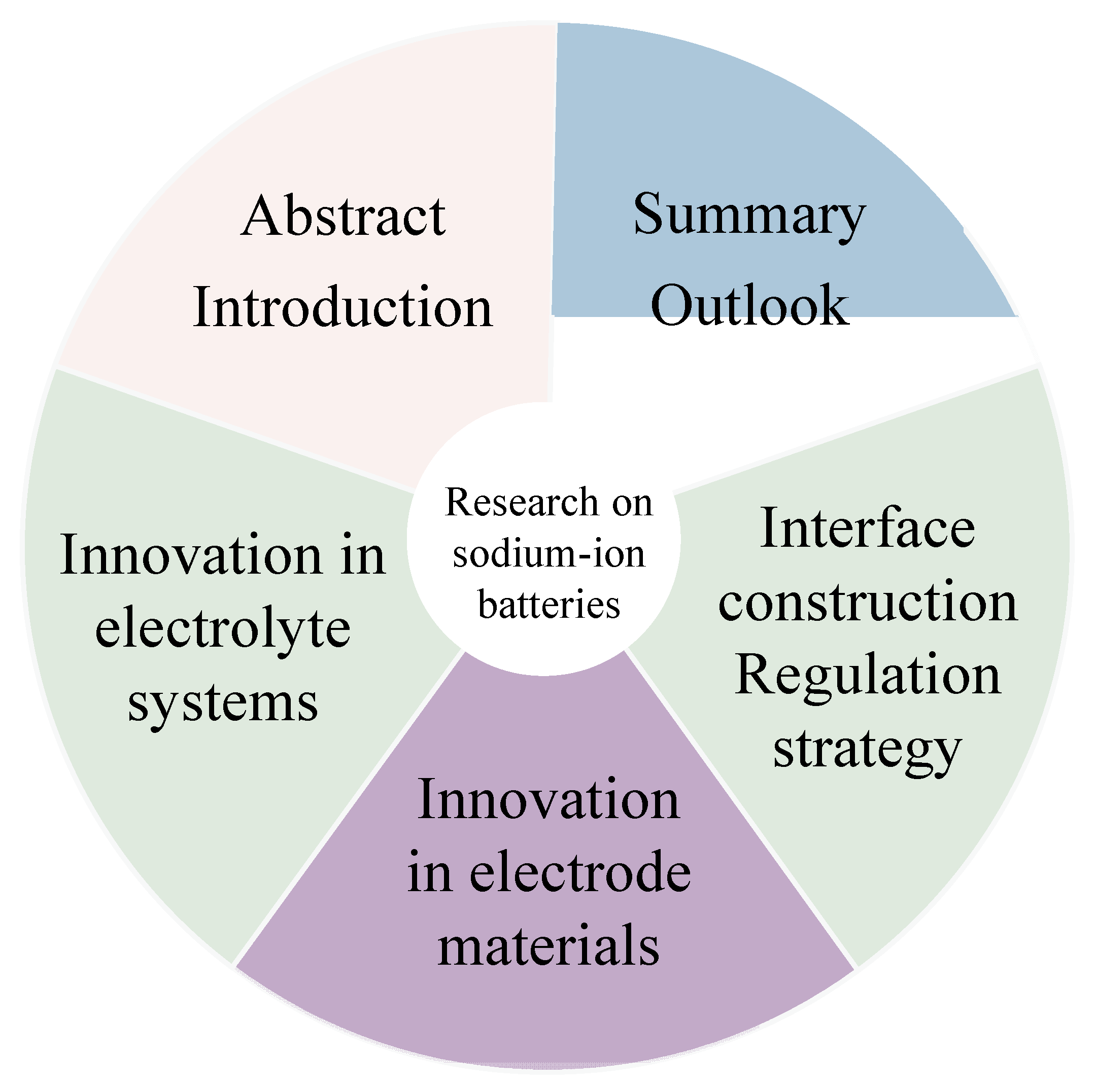
This article provides an overview of the electrolyte system, electrode materials, and interface construction strategies for sodium-ion batteries. Firstly, the system analyzes the composition, characteristics, and optimization directions of various electrolytes. Secondly, we summarize the research progress and design strategies of cathode and anode materials. Then, we explore the formation mechanism, characterization methods, and regulatory measures of the electrode/electrolyte interface. Finally, by comparing and analyzing the performance of different technological routes, the development trends and research focuses of future sodium-ion batteries in material innovation and interface engineering are proposed.
Figure 1 is the article structure diagram of this paper.
2. Innovation in Electrolyte Systems
As the core component of sodium-ion batteries, electrolytes not only serve as the medium for the transport of sodium ions between the cathode and anode, but also directly participate in the formation process of the electrode/electrolyte interface, exerting a decisive influence on the electrochemical performance, safety, and lifespan of the battery. Ideal sodium-ion battery electrolytes should possess high ionic conductivity, a wide electrochemical stability window, good thermal and chemical stability, strong compatibility with electrode materials, as well as low cost and environmental friendliness. In recent years, researchers have conducted extensive and in-depth studies on different types of electrolyte systems, primarily including liquid organic electrolytes, solid electrolytes, and aqueous electrolytes.
The performance bottlenecks, safety risks, and operational adaptability of sodium-ion batteries are largely constrained by the electrolyte system. Traditional carbonate-based electrolytes, despite their high ionic conductivity and good electrode wettability, are widely used. However, their inherent defects have become key obstacles restricting the development of sodium-ion batteries towards high energy density, long cycle life, and wide temperature range applications. These issues are mainly manifested in four aspects: First, interfacial instability makes it difficult to form a stable and dense solid electrolyte interphase (SEI) on the surface of the anode (especially hard carbon and alloy materials), leading to continuous electrolyte decomposition and active sodium consumption, manifested as low coulombic efficiency and rapid capacity fading [
7,
8]; on the surface of high-voltage cathodes (such as layered oxides), the electrolyte is prone to oxidative decomposition, resulting in an unstable cathode electrolyte interphase (CEI), transition metal ion leaching, and gas generation, accelerating performance degradation [
8,
9,
10]. Second, intrinsic safety risks, due to the flammable and volatile nature of organic solvents, pose a risk of combustion or even explosion in batteries during thermal abuse or internal short circuits [
9,
11,
12,
13]. The third issue is narrow temperature adaptability, where side reactions intensify at high temperatures, while electrolyte viscosity increases sharply and ionic conductivity drops significantly at low temperatures, leading to severe battery performance degradation at extreme temperatures [
14,
15,
16,
17]. Fourth, there is a limited electrochemical window, where the anodic oxidation stability of traditional carbonate-based electrolytes is usually below 4.3 V (vs. Na
+/Na), limiting the application of high-voltage cathode materials and thus restricting the further improvement of battery energy density [
8,
9,
12]. Recent reviews of low-temperature sodium-ion anodes and battery-heating strategies further emphasize that extreme-temperature performance should be addressed through coordinated electrolyte, electrode, and thermal-management design [
18,
19].
2.1. Liquid Organic Electrolytes
To address the aforementioned challenges, researchers have developed multi-dimensional electrolyte engineering strategies. In the field of liquid electrolytes, innovations focus on regulating the molecular structures and interactions of solvents, sodium salts, and additives. Locally high-concentration electrolytes (LHCEs) overcome the disadvantages of high viscosity and high cost by introducing nonsolvent diluents (such as HFE), while maintaining the stable interfacial solvation structure dominated by “ion-pair-aggregate” in high-concentration electrolytes. Ding et al. showed that LHCEs designed by introducing HFE into NaPF
6/EC electrolyte induce the formation of NaF-rich SEI on the electrode surface by regulating the solvation structure, significantly improving the cycling stability of the battery [
7]. Ingebrand et al. further confirmed that compared to conventional carbonate-based electrolytes, LHCEs can form a thinner and more stable CEI on the surface of high-voltage cathodes, resulting in a 37% increase in capacity retention of hard carbon||NaNi
1/3Fe
1/3Mn
1/3O
2 soft-pack batteries after 200 cycles [
8].
In the field of solid-state electrolytes, beyond oxide systems, sulfide and halide solid electrolytes are also demonstrating significant application potential. Sulfide solid electrolytes (such as Na3PS4, Na3SbS4, and their derivatives) are highly regarded for their extremely high room-temperature ionic conductivity (exceeding 10−3 S cm−1, and even higher in some doped systems) and good mechanical flexibility. This flexibility enables them to form intimate solid–solid contact with electrode materials through cold pressing, effectively reducing interfacial impedance. Recent advancements, such as W-Cl co-doping in Na3SbS4, have not only enhanced ionic conductivity to 12.66 mS cm−1 but also enabled the in situ formation of an electronically insulating NaCl interfacial layer. This significantly improves interfacial stability against sodium metal anodes, achieving stable cycling in symmetric cells for over 800 h. However, challenges remain for sulfide electrolytes, including their sensitivity to air and moisture, a relatively narrow electrochemical window, and poor compatibility with high-voltage cathodes.
Concurrently, halide solid electrolytes (based on LaCl3, Na3YCl6, etc.) have rapidly emerged as a new class of materials. These electrolytes offer both high ionic conductivity and excellent oxidation stability (compatible with 4V-class cathode materials), along with good deformability. Through strategies like cation vacancy control, such as in the development of Na0.4Ta0.236La0.472Cl3 electrolytes, a 3D Na+ transport network has been constructed, achieving a high ionic conductivity of 1.38 × 10⁻³ S cm−1 at 30 °C and demonstrating good interfacial compatibility with uncoated NaCrO2 cathodes. While the stability of halide electrolytes on the anode side (e.g., against sodium metal) remains a challenge, interfacial layer design (e.g., forming a LiCl- or NaCl-based interphase) has proven to be an effective mitigation strategy. The diversification of inorganic solid electrolyte systems provides a richer material selection to balance ionic conductivity, interfacial stability, and electrochemical stability window.
Ether-based electrolytes exhibit unique advantages in achieving fast charging and excellent low-temperature performance due to their low viscosity, low melting point, and weak solvation ability. Zhang et al. constructed a solvation structure conducive to rapid sodium ion transport and desolvation by fine-tuning the molar ratio of DME and MeTHF, significantly improving the rate performance of hard carbon electrodes [
20]. However, the poor antioxidant capacity of ether solvents limits their compatibility with high-voltage cathodes, often necessitating the use of cathode surface coatings [
21] or specific additives [
22] to compensate. Anion-screening studies in ether-based electrolytes further show that PF6—can promote inorganic-rich SEI formation and improve low-temperature charge-transfer kinetics [
23].
In terms of sodium salts, NaPF6 and emerging alternatives such as NaFSI and NaDFOB have attracted sustained attention because salt chemistry directly affects ion transport, thermal stability, and interphase formation. Systematic evaluations of key sodium salts indicate that NaFSI may replace NaPF
6 under specific conditions, whereas NaDFOB is more suitable as a functional additive for improving high-temperature performance [
24,
25].
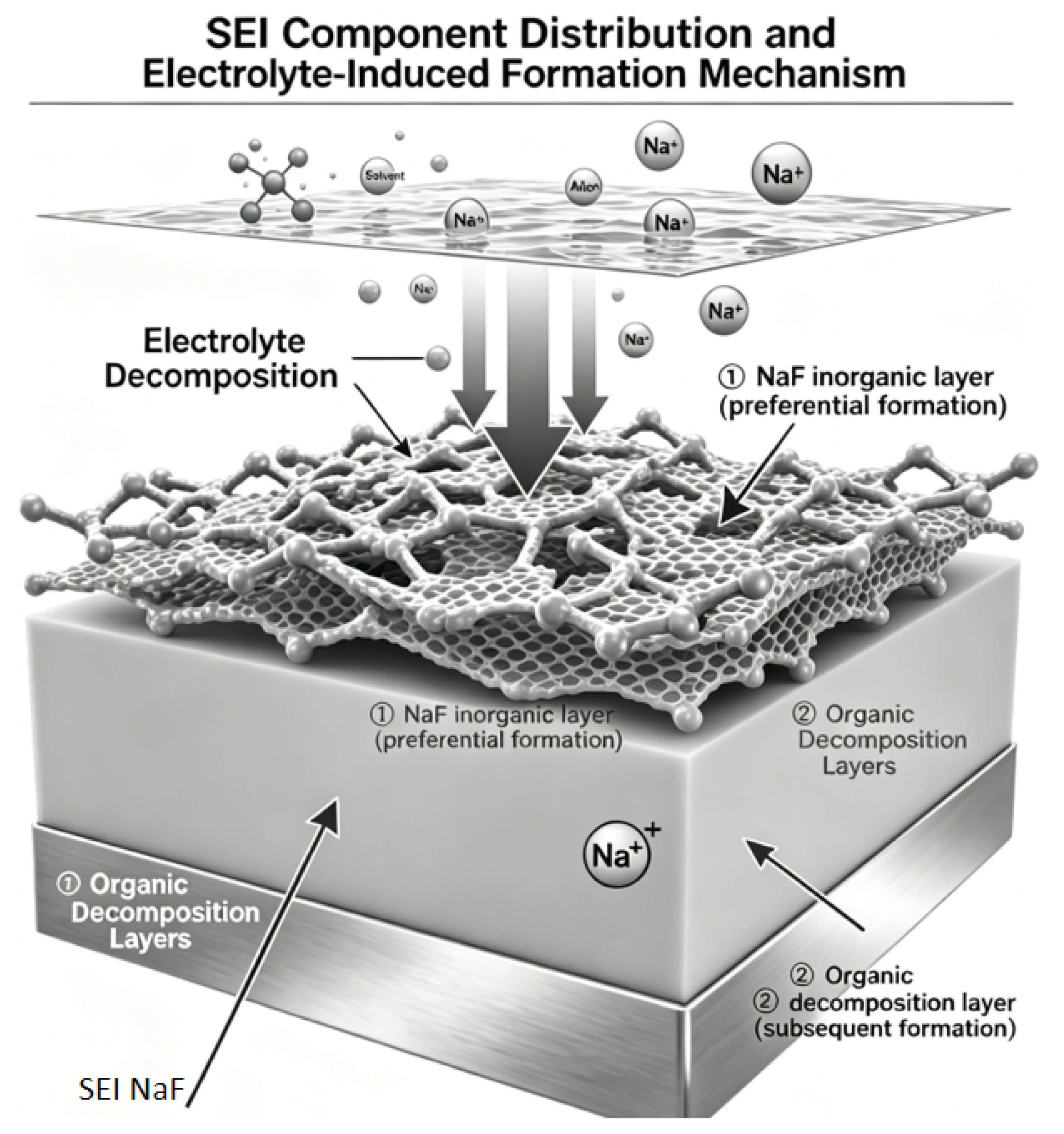
Figure 2 provides an intuitive explanation of how the electrolyte induces the formation of this membrane.
Functional additives, such as fluorine-containing (FEC), sulfur-containing (DTD, PS, PCS), and boron-containing (TMSB) compounds, are one of the most economical and effective strategies to optimize electrolyte interfacial chemistry by preferentially undergoing redox reactions on the electrode surface to directionally construct a stable interfacial layer. Liu Deshuai et al.’s research showed that the dual additives of FEC and PS can synergize to form a CEI/SEI film containing alkyl sulfonate and sodium fluoride on the electrode surface [
22,
26]. This film exhibits high mechanical strength and good flexibility, enabling the NFM||HC pouch cell to maintain a capacity retention rate of up to 85.1% after 600 cycles at a 1 C rate. Long et al. found that the introduction of tris(trimethylsiloxy)borate (TMSB) can weaken the interaction between Na
+ and solvent molecules, promote Na
+ desolvation, and participate in the formation of a stable interface, resulting in an increase in capacity retention rate from 72.03% to 86.38% after 200 cycles at 1 C for the NFM||Na battery [
27]. At elevated temperatures, rational screening of siloxane additives has likewise demonstrated that anion-interaction regulation can promote NaF-rich SEI formation and enhance cycling stability [
28].
2.2. Solid-State and Aqueous Electrolytes
In the face of the ultimate pursuit of safety, significant progress has been made in the research of solid-state electrolytes. This mainly includes polymer solid-state electrolytes, inorganic solid-state electrolytes, and composite polymer solid-state electrolytes that combine the advantages of both [
29]. Polymer systems (such as PEO-based) exhibit good flexibility and are easy to process, but their low ionic conductivity at room temperature is a bottleneck for their application. Functional integrated gel polymer electrolytes developed for sodium-metal batteries further demonstrate the value of coupling wide-temperature adaptability with interfacial regulation [
30]. The intelligent gel polymer electrolyte developed by Du et al. undergoes further crosslinking at temperatures above 120 °C, blocking ion transport and thus significantly enhancing the safety of pouch cells [
31]. Quantitative safety assessments further validate the advantages of solid-state systems. For instance, in nail penetration tests, pouch cells utilizing this smart gel polymer electrolyte exhibited no thermal runaway, with a maximum surface temperature remaining below 80 °C, whereas conventional liquid electrolyte cells exceeded 150 °C and ignited [
31]. Inorganic systems, especially the NASICON-type structure Na
3Zr
2Si
2PO
12, exhibit high ionic conductivity and mechanical strength. The Sb-doped NZSP (NZSbSP) studied by Akbar et al. exhibits higher sodium ion conductivity and transfer number at 60 °C, and its Na‖NZSbSP‖Na symmetric cell can stably cycle for 3055 h [
32]. Composite polymer electrolytes achieve complementary performance by dispersing inorganic fillers (such as LLTO, TiO
2) in a polymer matrix. Related studies on PEO-based composite electrolytes show that active ceramic fillers, ionic liquids, and defect-rich oxide fillers can cooperatively promote ion transport and interface stabilization [
33,
34]. The PEO-LLTO-TiO
2 composite electrolyte developed by Helaley et al. achieves an ionic conductivity of 0.20 mS cm
−1 at 55 °C, and utilizes atomic layer deposition technology to modify TiO
2 on the surface of cathode materials, further reducing the interfacial impedance and stabilizing the performance of Na
0.7MnO
2-based batteries over 100 cycles [
35].
For low-cost, high-safety large-scale energy storage scenarios, aqueous electrolytes are an attractive option, but their narrow electrochemical window is a major constraint. By using high-concentration strategies such as “water-in-salt” or adjusting pH values, the stability window can be effectively broadened. Direct flammability tests have confirmed the inherent safety of these systems: unlike organic carbonate electrolytes which ignite instantly upon exposure to an open flame, concentrated aqueous electrolytes (e.g., 17 mol kg
−1 NaClO
4) exhibit no flammability, and the separator remains intact without combustion. Zhu et al. reported that sodium-rich water–sodium manganese oxide (NaMnO
2·0.1H
2O) increases the charging cut-off potential to 1.4 V, achieving a specific capacity of 199.9 mAh g
−1 [
36]. Zhang et al. used an alkaline electrolyte combining TBAH and Cl
−, effectively inhibiting the insertion of H
+ and the formation of manganese hydroxide passivation layers, thereby enhancing the performance of MnO
2 cathodes [
37].
Table 2 shows a comprehensive comparison of electrolyte systems for sodium-ion batteries.
In the realm of sodium-based electrolytes, Luo et al. addressed the critical issues of high interfacial resistance and severe sodium dendrite growth in Na
3Zr
2Si
2PO
12 (NZSP) electrolytes by proposing an interface-targeting integrated sandwich-structured design. By introducing an artificial SbF
3 layer on the anode side of NZSP, an in situ reaction with Na metal formed a Na
3Sb/NaF composite conductive layer, which significantly improved interfacial wettability and suppressed dendrite growth. Simultaneously, a flexible PVDF layer was coated on the cathode side to accommodate volume expansion and enhance solid–solid contact. Benefiting from this bilateral interface design, Na/NZSP/Na symmetric cells achieved a critical current density of 1.9 mA cm
−2 and stable cycling for over 2600 h, while Na
3V
2(PO
4)
3-based full cells maintained a capacity retention of 90.0% after 2100 cycles at 0.5 C [
38]. In the field of lithium-based composite solid electrolytes, Liu et al. developed a multi-component synergistic system based on a PVDF matrix combined with high-concentration LiTFSI, polar solvent DMF, and active LATP filler. DMF not only promoted the dissociation of lithium salts but also formed ionic liquid-like complexes [Li(DMF)
nTFSI] with Li
+, enhancing ionic conductivity. The high concentration of LiTFSI led to the aggregation of TFSI
− anions into ion clusters, which, interconnected by the LATP filler network, formed rapid ion conduction pathways. The resulting composite electrolyte exhibited a room-temperature ionic conductivity of 2.44 × 10
−4 S cm
−1, an electrochemical stability window up to 4.8 V, and enabled stable cycling of Li symmetric cells for over 3000 h. It also demonstrated excellent rate capability and cycling stability when paired with various cathodes including LiFePO
4, LiCoO
2, and NCM622 [
39]. These studies collectively demonstrate that through rational interface regulation and multi-component synergy, key bottlenecks such as interfacial stability, ion transport, and electrochemical compatibility in inorganic solid electrolytes can be effectively overcome, providing critical support for the development of high-safety and high-energy-density solid-state batteries.
2.3. Summary and Future Directions
In the future, innovations in electrolyte systems will evolve towards multifunctional integration and precise regulation. Firstly, the design of novel electrolyte components is crucial, such as developing new sodium salts (e.g., monovalent chelated borates), multifunctional solvents (e.g., fluorinated ethers, sulfones), and efficient multifunctional additives, to simultaneously achieve high oxidation stability, non-flammability, and excellent interfacial film-forming ability. Secondly, mixed electrolyte systems (e.g., liquid–solid mixtures) may become an effective approach to balance interfacial contact and safety; progress in in-situ polymerized solid/quasi-solid electrolytes provides a useful cross-system reference for improving electrolyte integration and interfacial contact [
40]. Furthermore, developing smart responsive electrolytes that can automatically trigger protective mechanisms under abusive conditions such as overcharge, overdischarge, and high temperature will be a cutting-edge direction to enhance the intrinsic safety of batteries. Stimuli-responsive polymer systems developed for 4D printing provide cross-disciplinary inspiration for programmed material responses, while overcharge-abuse studies of sodium-ion cells further underline the need for condition-triggered protection [
41,
42]. Lastly, guiding the rational design of electrolytes through theoretical calculations and machine learning will accelerate the discovery and optimization process of new materials. Recent intelligent time-series prediction frameworks in renewable-energy systems also demonstrate the capability of advanced learning algorithms to extract complex nonlinear patterns, offering methodological inspiration for data-assisted battery-material screening [
43]. Ultimately, these approaches are expected to support synergistic breakthroughs in sodium-ion batteries with high energy density, high safety, and wide temperature range. Beyond materials discovery, physics-constrained state-of-health modeling also indicates that embedding physical knowledge into data-driven frameworks can improve interpretability and credibility, providing a methodological reference for future sodium-ion degradation and lifetime assessment [
44].
3. Innovative Design of Electrode Materials
As the core of energy storage in sodium-ion batteries, the structural characteristics, electron/ion conduction ability, and mechanical stability of electrode materials directly affect the battery’s capacity, voltage platform, rate performance, and cycle life. Due to the larger ionic radius of sodium ions compared to lithium ions and their higher standard electrode potential, typical electrode materials suitable for lithium-ion batteries (such as graphite anode and LiCoO2 cathode) are not fully applicable to sodium-ion batteries. Therefore, developing new electrode materials with high reversible capacity, suitable working potential, excellent structural stability, and rapid sodium ion transport kinetics has become a key topic in the research of sodium-ion batteries.
However, the larger radius and mass of sodium ions pose severe challenges to electrode materials. For cathode materials, the main issues are poor structural stability, which can easily lead to harmful phase transitions during the insertion/extraction process of sodium ions, resulting in structural collapse and capacity degradation [
45,
46]; low electronic/ionic conductivity, which limits the performance at high rates; and numerous interfacial side reactions, especially the sensitivity of layered oxides to moisture and carbon dioxide, as well as side reactions with electrolytes at high voltages [
47,
48].
The electrochemical energy storage in sodium-ion batteries is realized through reversible sodiation/desodiation reactions at both cathode and anode materials. Based on the nature of the electrode reactions, the sodium-ion storage mechanisms can be systematically classified into four categories: intercalation/insertion, alloying, conversion, and adsorption-filling mechanisms. Each mechanism exhibits distinct electrochemical characteristics, capacity potential, and structural stability profiles, which fundamentally determine the selection and design strategies of electrode materials.
3.1. Cathode Materials
In terms of anode materials, hard carbon (HC) is currently the most promising candidate for commercialization. However, its intrinsic limitations hinder further performance breakthroughs. The main challenges for HC are its low initial coulombic efficiency (ICE) (typically below 85%) and its sloping voltage plateau, which directly lead to irreversible active sodium loss and reduced energy density in full cells. The origins of these issues lie in the complex microstructure of HC and the underlying sodium-ion storage mechanism. The currently accepted storage mechanisms primarily involve “adsorption-filling” or “adsorption-intercalation-pore filling” models: in the sloping voltage region (>0.1 V), Na+ ions are mainly adsorbed onto defect sites and carbon layer surfaces; in the low-voltage plateau region (<0.1 V), Na+ ions fill into closed nanopores or intercalate between carbon layers. The low ICE is primarily attributed to the irreversible decomposition of the electrolyte on numerous defect sites on the HC surface, forming an excessively thick SEI layer, and the irreversible trapping of some Na+ ions within defects or closed pore structures. The sloping voltage plateau is related to the turbostratic disorder of carbon layers and the inhomogeneous pore size distribution in HC, leading to varied energy barriers for Na+ intercalation/filling.
Guided by these mechanistic understandings, researchers are improving HC performance through precursor selection and heat treatment process optimization, focusing on microstructural control. Jia et al. used waste peanut shells as a raw material to prepare high-performance hard carbon via hydrothermal treatment and high-temperature carbonization. Its lamellar structure facilitates electrolyte wetting, exhibiting a reversible capacity of 357.55 mAh g
−1 at 30 mA g
−1 [
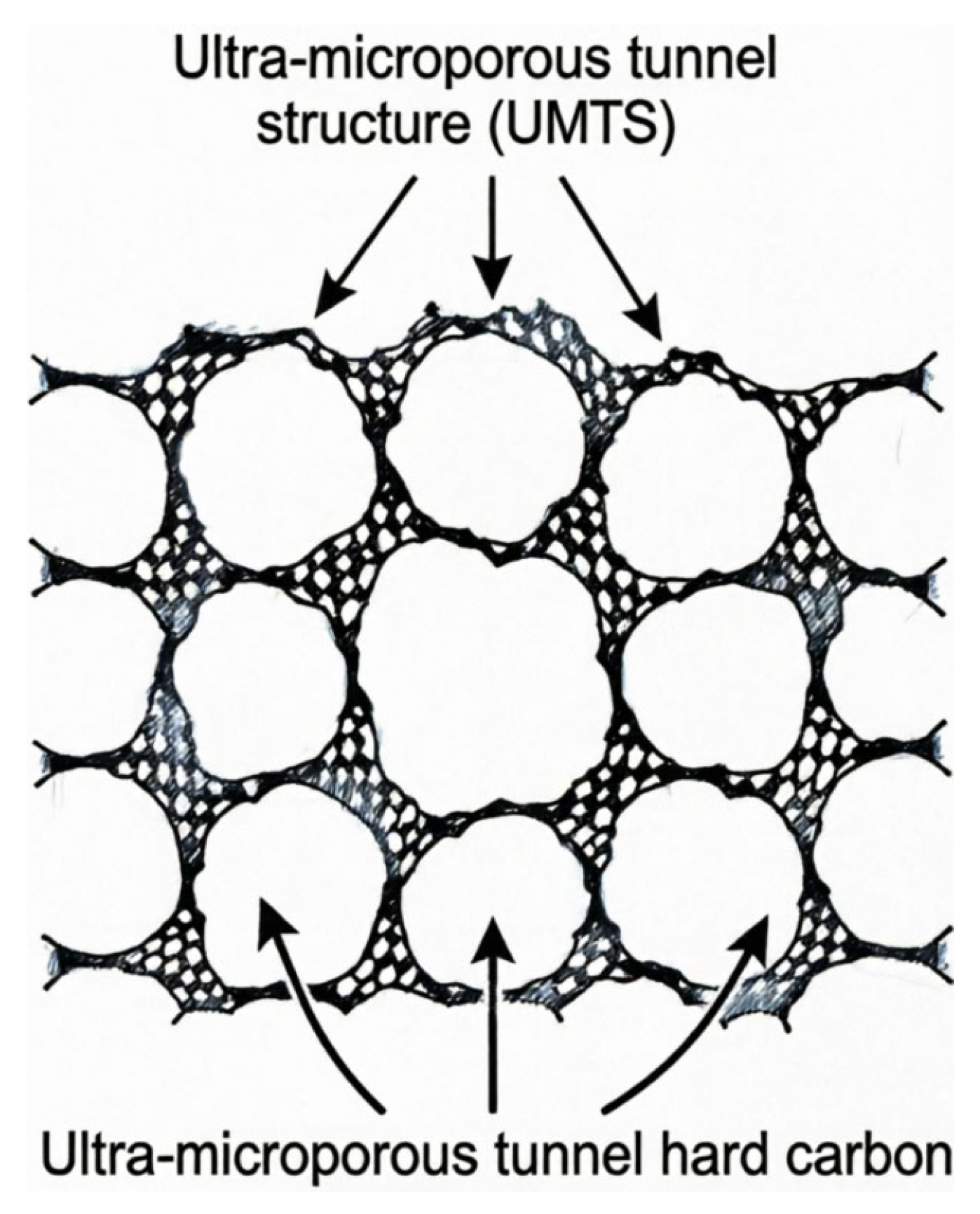
6]. Feng et al. precisely engineered hard carbon with an ultra-microporous tunnel structure (UMTS) by optimizing the precursor polymerization reaction. UMTS not only promotes rapid Na
+ transport but also reduces electrolyte decomposition due to its weak capillary effect, enabling the material to achieve an ultra-high ICE of 90.9% and an excellent reversible capacity of 357.2 mAh g
−1 in ester-based electrolytes [
49]. Structure–mechanism correlation analysis reveals that the UMTS, by reducing surface defects and increasing the volume and uniformity of closed pores, effectively suppresses excessive SEI growth while providing more active sites for Na
+ filling in the low-voltage region, thereby synergistically enhancing both ICE and reversible capacity. Furthermore, advanced characterization techniques such as Pair Distribution Function (PDF) analysis and solid-state Nuclear Magnetic Resonance (ssNMR) allow researchers to track the evolution of carbon layer spacing and local coordination environments during sodiation, further confirming the decisive role of the closed-pore filling mechanism in plateau capacity. While alloy-based (such as Sn, Sb, Bi) and conversion reaction-based (such as metal phosphides, sulfides) anodes have high theoretical capacities, they undergo significant volume changes (>200%) during cycling, leading to electrode pulverization, repeated rupture and regeneration of the solid electrolyte interface (SEI) film, and ultimately rapid capacity degradation [
50,
51,
52,
53].
To address these challenges, innovative designs of cathode materials revolve around three major systems. Layered transition metal oxides (NaTMO
2) stabilize their crystal structure through element doping and microstructure control. Chen et al. synthesized layered self-assembled microspherical Na
0.7Mn
0.6Ni
0.3Co
0.1O
2 through morphology control. Its unique spherical structure enhances the contact area between the electrode and electrolyte, improving the sodium ion transport efficiency. It exhibited a high initial capacity of 200.12 mAh g
−1 at 26 mA g
−1 and maintained 81% capacity retention after 100 cycles [
45]. Yang et al. constructed a TiB
2 coating layer on the surface of O3-type Na
0.9Cu
0.12Ni
0.33Mn
0.4Ti
0.15O
2, effectively isolating the direct contact between the electrolyte and electrode and suppressing side reactions. This improved the capacity retention from 80.07% to 93.90% after 250 cycles at 500 mA g
−1 [
46]. Polyanion compounds demonstrate advantages in high-safety and long-cycle-life applications due to their stable framework structure and adjustable working voltage; olivine-type sodium iron phosphate cathodes have also been systematically reviewed as an important polyanion branch [
54]. Liu et al. significantly improved the rate performance and cycle stability of the Na
4Fe
3(PO
4)
2P
2O
7 cathode by systematically optimizing the electrode loading, conductive additives (carbon nanotubes), and electrolyte composition, successfully assembling a full battery with practical potential [
55]. Prussian blue analogs (PBAs) have attracted attention for their open framework and low cost. Researchers optimize their performance by regulating element composition and reducing defects. Kuang et al. synthesized nickel–manganese bimetallic PBAs through co-precipitation, adjusting the ratio of electrochemically inert (Ni) and active (Mn) elements to reasonably control the depth of charge and discharge, resulting in a Ni
0.1Mn
1.9HCF electrode with a capacity retention of 70.5% after 100 cycles at 500 mA g
−1 [
56]. Yan et al. employed in situ polymerization to coat polyaniline (PANI) onto the surface of iron-based Prussian blue (FeHCF). This coating layer enhanced conductivity and inhibited metal ion dissolution, allowing FeHCF@PANI to maintain a capacity of 105.4 mAh g
−1 even at a high rate of 10 C, with a capacity retention rate as high as 91.4% after 700 cycles [
57].
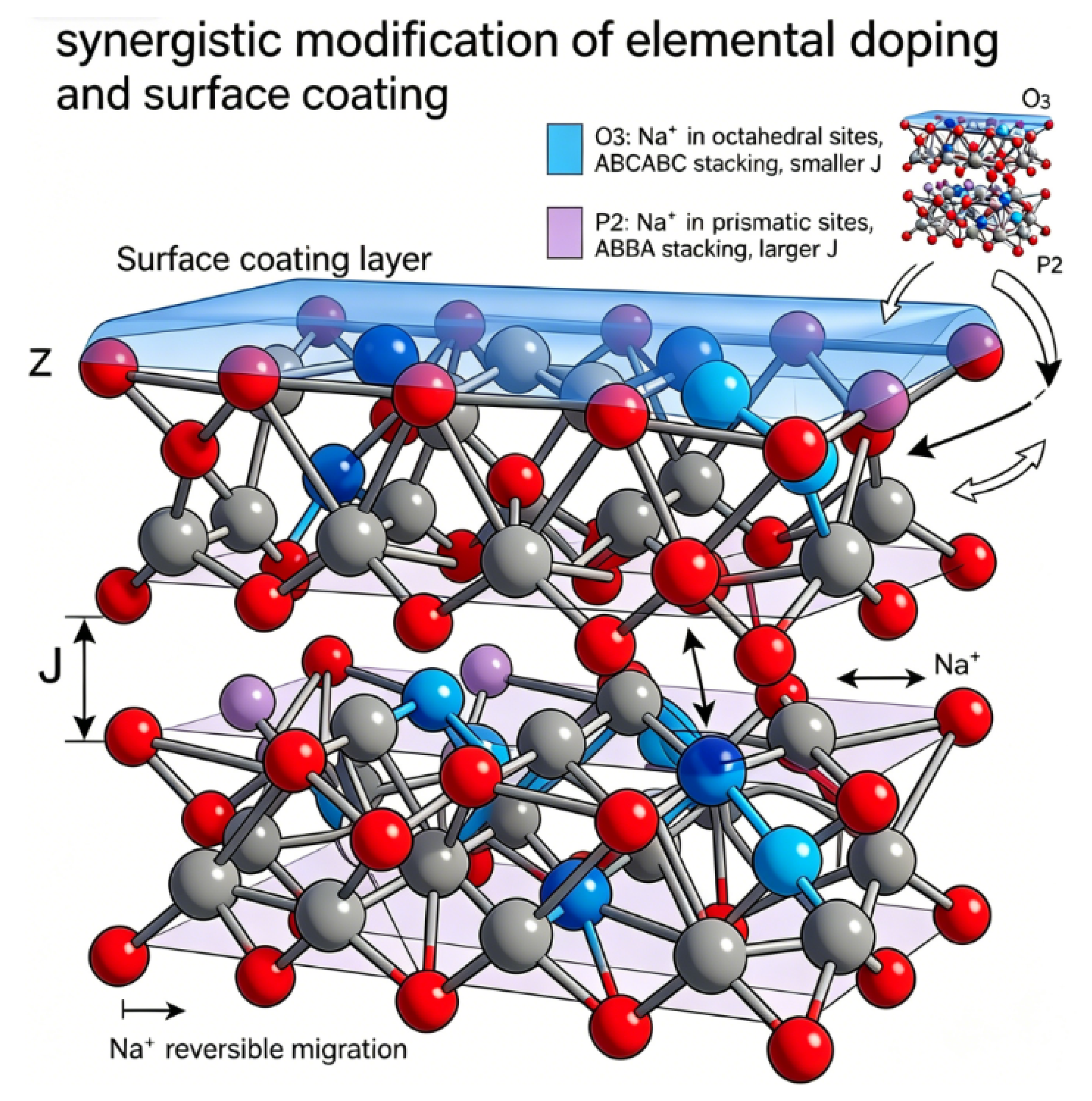
Figure 3 illustrates the layered crystal structure of O3/P2-type layered oxides.
3.2. Anode Materials
In terms of anode materials, the improvement of hard carbon mainly focuses on precursor selection and heat treatment process optimization. Jia et al. used waste peanut shells as raw materials and prepared high-performance hard carbon through hydrothermal method and high-temperature carbonization. Its lamellar structure facilitates electrolyte wetting, exhibiting a reversible capacity of 357.55 mAh g
−1 at 30 mA g
−1 [
6]. Feng et al. precisely constructed hard carbon with ultra-microporous tunnel structure (UMTS) by optimizing the precursor polymerization reaction. UMTS not only promotes the rapid transport of sodium ions, but its weak capillary effect also reduces electrolyte decomposition, enabling the material to achieve an ultra-high initial coulombic efficiency of 90.9% and an excellent reversible capacity of 357.2 mAh g
−1 in ester-based electrolytes [
49]. For alloy anodes with significant volume effects, nanocrystallization, carbon compositing, ball-milling-assisted preparation, and three-dimensional structural design are effective solutions [
58]. The hierarchical porous structure of the 3D Cu@Bi electrode prepared by Sun provides buffer space for volume changes and fast ion transport channels, thus achieving an ultra-long cycle life (15,500 cycles at 10 A g
−1, with a capacity retention rate of 67.5%) and excellent rate performance (352 mAh g
−1 at 40 A g
−1) [
50]. Yang et al. designed a functional sulfur-doped Ti
3C
2T
x confined Sb composite material (Sb/STi
3C
2T
x), which effectively inhibits the volume expansion of antimony and enhances the interfacial reaction kinetics by forming strong Ti-S-Sb chemical bonds, enabling the anode to maintain a high capacity of 450.9 mAh g
−1 at 5.0 A g
−1 [
51]. Conversion reaction anodes improve reaction kinetics and buffer volume changes by constructing unique microstructures. Qiu et al. constructed three-dimensional flower-like carbon-coated Fe
2P nanosheets on foamed iron through a quasi-chemical vapor deposition method. This structure shortens the Na
+ migration path and enhances electrode/electrolyte contact, thus achieving ultra-high areal capacity and excellent cycle stability (capacity retention of 81% after 2000 cycles at 5 mA cm
−2) [
52].
Figure 4 illustrates the microstructures of two typical hard carbons: the lamellar structure of peanut shell-based hard carbon and the ultra-microporous tunnel structure (UMTS) of hard carbon. Biomass-derived carbon design is also expanding beyond conventional hard carbon, as lignin-derived sustainable core-shell structures provide another route to regulate carbon architecture [
59].
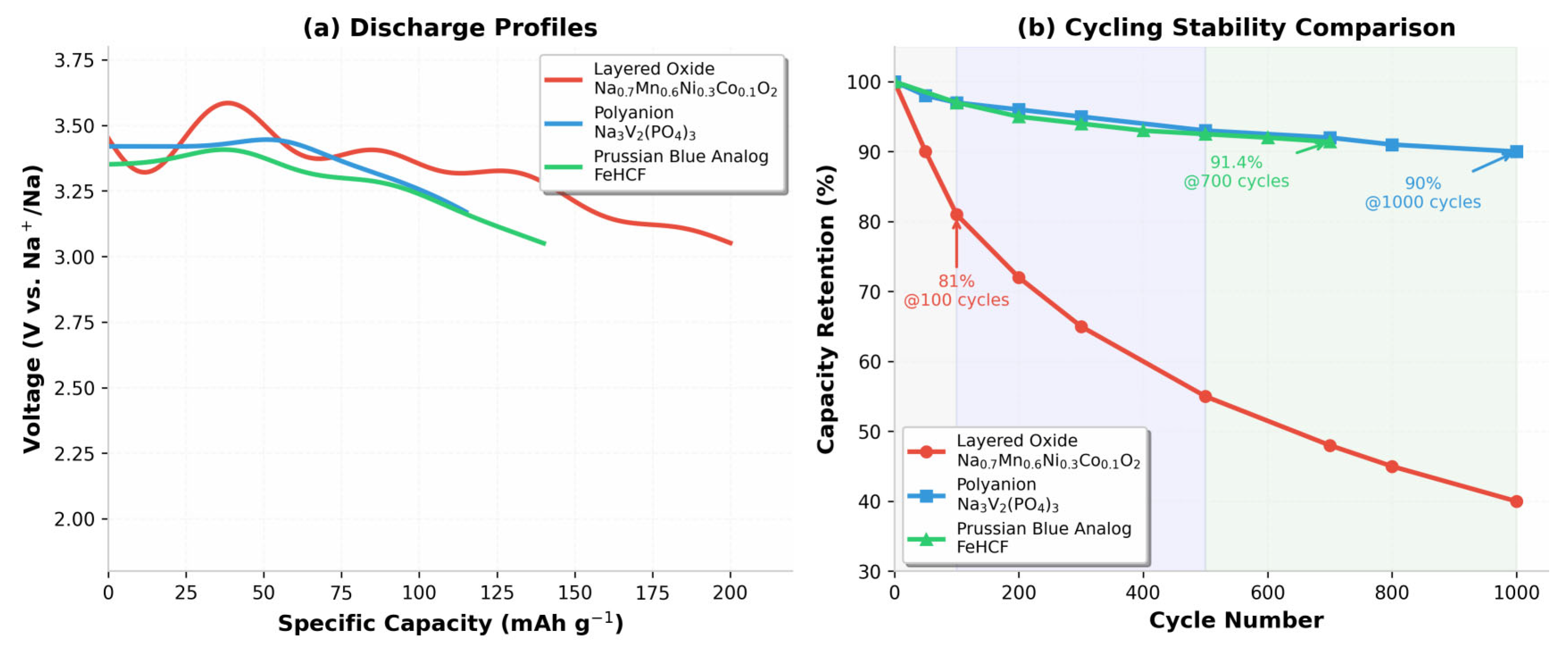
To quantitatively compare the electrochemical characteristics of the three mainstream cathode systems discussed above,
Figure 5 presents their discharge profiles and long-term cycling stability. The results clearly illustrate the fundamental trade-off between energy density and cycle life: layered oxides offer higher specific capacity but suffer from rapid capacity degradation, whereas polyanion compounds and Prussian blue analogs exhibit superior structural stability at the expense of lower energy density. These performance disparities underscore the necessity of targeted interface engineering strategies, which will be discussed in the following section.
(a) Discharge voltage profiles of layered oxide (Na
0.7Mn
0.6Ni
0.3Co
0.1O
2), polyanion (Na
3V
2(PO
4)
3), and Prussian blue analog (FeHCF) cathodes, illustrating the distinct voltage platforms and specific capacity ranges. (b) Cycling stability comparison showing capacity retention as a function of cycle number. The layered oxide delivers the highest initial capacity (~200 mAh g
−1) but exhibits rapid capacity fading (81% retention after 100 cycles). In contrast, the polyanion and Prussian blue analog cathodes demonstrate superior long-term stability, achieving 90% retention after 1000 cycles and 91.4% after 700 cycles, respectively. Data were compiled from representative studies [
45,
55,
56,
57].
The future development of electrode materials will tend towards multi-scale precise design and synergistic optimization of performance. At the atomic scale, theoretical calculations and advanced characterization will be used to deeply understand the sodium ion storage mechanism and attenuation principle, guiding the rational design of materials. At the nanoscale, fine morphology control (such as hollow, porous, core–shell structures) and surface/interface engineering will become important means to enhance the structural stability and reaction kinetics of materials. Cross-disciplinary defect engineering studies combining oxygen vacancies and heterojunctions further highlight the coupled role of defect states and interfacial charge transfer [
60]. At the micrometer scale, macroscopic structural assembly (such as three-dimensional networks, gradient structures) is crucial for achieving high-loading electrodes and suppressing overall volume changes of the electrode, while process-oriented studies on cathode cycling stability and industrialization emphasize the importance of translating multi-scale design into manufacturable electrodes [
48]. Furthermore, developing low-cost material systems based on sodium-rich elements (Fe, Mn) and exploring high-performance materials with novel reaction mechanisms (such as high-entropy materials [
61,
62], organic materials [
63,
64]) will be key paths to break through existing performance bottlenecks and reduce costs. The ultimate goal is to achieve the unity of high capacity, long lifespan, low cost, and high safety through the synergistic design of material–electrolyte interfaces. In addition, lattice-matching strategies that strengthen built-in electric fields in heterostructured battery cathodes provide a transferable reference for rational heterointerface design [
65].
4. Construction and Regulation Strategies of Electrode/Electrolyte Interface
The interface between the electrode and electrolyte is the most complex and dynamically changing region in sodium-ion batteries, and its stability directly determines the coulombic efficiency, cycle life, and safety of the battery. The challenges faced by the interface stem from its dynamism and complexity. Firstly, the interface is not static but continuously evolves during the first cycle and subsequent cycles, with its composition and structure being deeply influenced by the electrode material, electrolyte formulation, and electrochemical conditions (voltage, current, temperature) [
66,
67]. Secondly, the inherent characteristics of sodium-based SEI/CEI differ from those of lithium-based ones, and are generally considered to be thicker, less stable, and mechanically weaker, leading to a higher likelihood of cracking and regeneration, which continuously consumes active sodium and electrolyte. Furthermore, the diversity of side reactions at the interface poses a significant challenge, including the reduction/oxidation decomposition of electrolytes, the leaching of transition metal ions, gas generation [
10], and the potential growth of sodium dendrites at high rates or low temperatures. It is particularly noteworthy that misleading test conditions may lead to cognitive bias. Studies by Fitzpatrick et al. and Guo et al. both reveal that using a sodium metal counter electrode in a half-cell significantly affects the formation and evolution of SEI on the working electrode, and the interfacial chemistry differs significantly from the actual situation in a full-cell battery [
67,
68].
4.1. Formation Mechanism and Evolution Law of Electrode/Electrolyte Interface
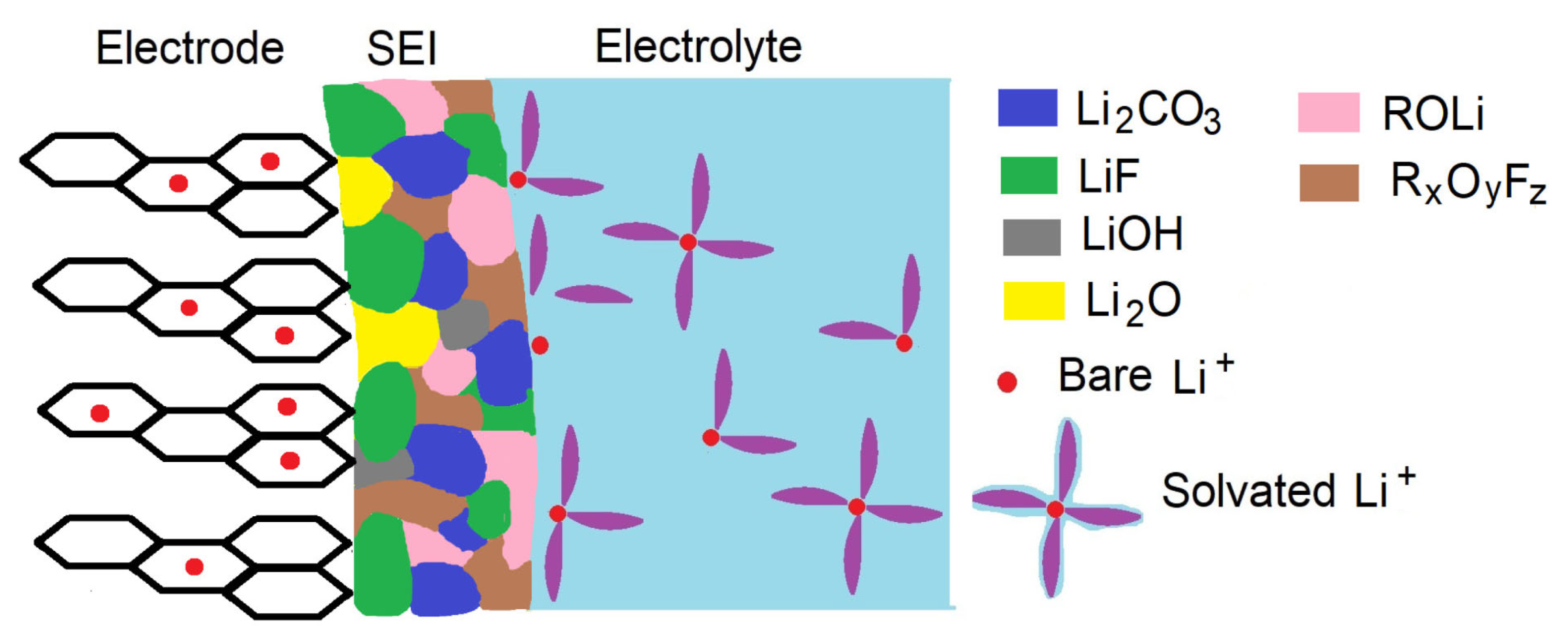
Figure 6 presents schematic models illustrating the structural characteristics of these interfacial layers.
The formation of the electrode/electrolyte interface is a dynamic and complex process, involving the reduction/oxidation decomposition of the electrolyte, the dissolution of electrode materials, and the deposition and dissolution of interface reaction products. In sodium-ion batteries, the formation mechanism and evolution of the interfacial film are closely related to the electrolyte composition, electrode surface characteristics, and electrochemical conditions. Battaglia et al. first visually studied the impact of electrolyte degradation in sodium-ion batteries using 2D and 3D neutron imaging techniques, thereby visualizing the degradation process of the battery. The experiments were conducted on an original full sodium-based battery and two extensively cycled half-cells with different electrolyte compositions. Electrolytes based on NaPF
6 but with different solvents (propylene carbonate and dimethoxyethane) were selected due to their different cycling performance, which can induce two different sodium plating mechanisms. The study found that the electrolyte type is related to the sodium plating mechanism, with batteries based on propylene carbonate showing a larger sodium plating area than those based on dimethoxyethane. The research conducted on the full battery enabled the quantification of voltage-induced electrolyte degradation, while the research on the half-cell first visualized the chemical reactions occurring on the surface of the sodium metal electrode through 3D neutron imaging of the sodium plating area on the electrode [
66].
Fitzpatrick et al. conducted an in-depth study on the evolution of the composition of the solid electrolyte interphase (SEI) in sodium-ion batteries during cycling, with a focus on the consequences of using sodium metal as the counter electrode. Advanced analytical techniques, including hard X-ray photoelectron spectroscopy (HAXPES) and time-of-flight secondary ion mass spectrometry (ToF-SIMS), were employed to obtain depth-resolved information on the chemical composition and structural changes of the SEI on the hard carbon anode during cycling. The research results showed that battery configuration significantly affects the evolution of the SEI, which in turn influences battery performance. These findings indicate the need for full-cell studies to better simulate actual operating conditions, posing a challenge to traditional half-cell experiments [
67]. Guo et al. investigated the origin of coulombic efficiency (CE) anomalies in sodium-ion batteries, focusing on the influence of linear carbonates and the sodium interface. The study found that the commonly observed V-shaped CE anomaly (initial decrease followed by gradual recovery) in positive half-cell tests originates from the interfacial interaction between the electrolyte and the sodium metal counter electrode, rather than the positive electrode. Specifically, linear carbonate solvents (such as DMC) react with sodium metal to generate highly reactive alkyl radicals, which subsequently attack cyclic carbonates. This chain reaction triggers continuous side reactions at the interface, increasing interfacial impedance and accelerating performance degradation. It is worth noting that excluding linear carbonates from the electrolyte can effectively suppress this phenomenon [
68].
4.2. Interface Modification and Regulation Strategies
To construct a stable and efficient electrode/electrolyte interface, researchers have developed various interface modification and regulation strategies, mainly including electrolyte additive engineering, electrode surface modification, novel binder design, and in situ/ex situ construction of the interface layer.
Electrolyte additive engineering is one of the most economical and effective means of interface regulation. By adding a small amount of functional substances, these additives preferentially undergo oxidation or reduction reactions on the electrode surface compared to the base electrolyte, forming a stable protective layer at the interface. Liu Deshuai et al. studied the effects of FEC and PS as electrolyte additives on the performance of sodium-ion batteries and found that using an optimized FEC + PS dual-additive electrolyte formulation, the capacity retention rate of the pouch cell reached 85.1% after 600 cycles at a 1 C rate, and its cycling performance was significantly better than that of cells without any additives or with only FEC additive. Transmission electron microscopy and X-ray photoelectron spectroscopy analysis showed that the CEI/SEI film containing ROSO
2Na and NaF had high mechanical strength and good flexibility, significantly enhancing the stability of the electrode/electrolyte interface, effectively inhibiting the leaching of transition metals from the NFM cathode and sodium deposition from the HC anode during cycling, and alleviating the gas production issue in pouch cells [
22,
26]. Long et al. introduced tris(trimethylsiloxy)borate (TMSB) into the electrolyte to improve interface stability and promote Na
+ transport. TMSB can preferentially form a stable and uniform interface layer on the NFM cathode surface, enhancing the stability of the electrode–electrolyte interface and reducing the dissolution of transition metal ions. In addition, TMSB can weaken the interaction between Na
+ and solvent molecules, promoting Na
+ desolvation, thereby improving Na
+ diffusion and deposition. After adding 2% TMSB, the capacity retention rate of the NFM||Na battery increased from 72.03% for the baseline electrolyte to 86.38% after 200 cycles at 1 C [
27].
Electrode surface modification involves constructing a physical or chemical protective layer on the surface of electrode materials to prevent direct contact between the electrode and electrolyte, thereby inhibiting the occurrence of side reactions. To address the capacity-fading issue caused by the incompatibility of alcohol ether electrolytes with high-potential cathode materials, Maejima et al. synthesized alumina-coated Na
5/6[Ni
1/3Mn
1/6Fe
1/6Ti
1/3]O
2 cathode materials. After cycling in a half-cell for 50 times, the capacity retention rate of the alumina-coated material was 93%, and the coulombic efficiency was >99%, significantly superior to the uncoated material (capacity retention rate of 76%, coulombic efficiency of 92%). The uncoated cathode material underwent anodic decomposition of the electrolyte at the active material/electrolyte interface, leading to pitting corrosion and the formation of a rock salt phase on the surface of the active material, thereby increasing interfacial resistance and causing capacity fading. In contrast, alumina coating effectively mitigated electrolyte decomposition and surface degradation, achieving stable battery operation [
21].
The design of a novel binder involves developing water-based or functional binders with specific functional groups to improve the mechanical integrity of electrodes, inhibit volume changes of electrode materials, and participate in the formation of interfacial films. Xian et al. proposed a novel composite water-soluble binder system (LA133/LS) through molecular engineering strategies, combining LA133 with biomass-derived sodium lignosulfonate (LS). The cyano group (-C≡N) in LA133 forms strong chemisorption with the defect sites on the surface of hard carbon. Meanwhile, the reversible capture of Na
+ by the amide (-CONH-), carboxyl (-COOH), and sulfonic acid (-SO
3H) groups in LS promotes its transport within the electrode and improves Na
+ desolvation through Lewis acid–base interactions. The large aromatic framework and amphiphilicity of LS enhance the dispersibility of the binder, effectively dissipate stress during charge–discharge cycles, and optimize the mechanical–electrochemical synergistic effect of the electrode. Experimental results show that the initial coulombic efficiency (ICE) of the hard carbon electrode using LA133/LS (mass ratio of 1:1) as a binder reaches 83.5%, with an average reversible specific capacity of 353.17 mAh g
−1 at a current density of 0.05 A g
−1, and a stable SEI film mainly composed of inorganic materials with a certain amount of organic compounds is formed [
70].
In situ/ex situ interface layer construction involves the pre-construction or in situ formation of a stable artificial interface layer on the electrode surface through chemical or electrochemical methods to enhance interface stability. Yang et al. proposed a strategy for in situ construction of an artificial cathodic electrolyte interface (CEI) layer, which promotes rapid Na
+ diffusion kinetics and inhibits harmful interfacial side reactions. The modified Na
2/3Ni
1/3Mn
2/3O
2 electrode provided an excellent reversible capacity of 150 mAh g
−1 at 0.1 C, while maintaining a capacity retention rate of 84% after 200 cycles at 1 C (compared to 67% for the original material). Notably, the CEI-modified cathode exhibited remarkable air tolerance, retaining 96% of its initial capacity after 7 days of environmental exposure. Furthermore, thermal analysis confirmed the enhanced thermal stability of the battery, effectively mitigating safety issues [
47].
4.3. Application of Advanced Characterization Techniques and Theoretical Simulations in Interface Research
A deep understanding of the formation mechanism and evolution law of the electrode/electrolyte interface cannot be achieved without the support of advanced characterization techniques and theoretical simulations. With the continuous development of in situ/operational condition characterization techniques and theoretical calculation methods, people’s understanding of the sodium-ion battery interface has gradually shifted from macroscopic to microscopic, and from static to dynamic. Battaglia et al. utilized neutron imaging technology to visually study the electrolyte degradation and sodium plating mechanism in sodium-ion batteries, and for the first time, demonstrated the chemical reactions occurring on the surface of sodium metal electrodes through 3D neutron imaging of the sodium plating area on the electrodes [
66]. Fitzpatrick et al. employed advanced analytical techniques such as HAXPES and ToF-SIMS to obtain depth-resolved information on the chemical composition and structural changes of the solid electrolyte interface (SEI) on the hard carbon anode during cycling, revealing the significant influence of battery configuration on SEI evolution [
67].
In terms of theoretical simulation, Zhang et al. investigated the compatibility of petroleum coke-based sodium-ion battery anodes with electrolytes through quantum mechanics, molecular dynamics calculations, and electrochemical analysis and testing. The study found that petroleum coke-based anode materials exhibit significant amorphous carbon structural characteristics, which facilitate the insertion/extraction of Na
+. Compared to ester electrolytes, ether electrolytes have higher LUMO energy levels and better reduction stability, thus facilitating the formation of a thin and stable SEI film on the electrode surface, which helps reduce the migration impedance of Na
+. Furthermore, in bulk electrolytes, the migration rate of Na
+ in ether electrolytes is approximately twice that in ester electrolytes. The infrared and Raman spectroscopy results of the electrolytes indicate that, compared to ester electrolytes, PF
6− in ether electrolytes is more likely to enter the solvation shell and form coordination with Na
+, which is related to the weak solvation characteristics of ether solvents. Wang et al. designed a tin-based nitrogen-functionalized carbon (Sn-NFC) architecture with optimized specific surface area (208.1 m
2 g
−1 for 17% Sn-NFC), adjustable Sn-Clu size, and SnSA/Sn-Clu ratio by precisely controlling the content of the SnCl
2 precursor. Synchrotron radiation spectroscopy and density functional theory revealed that the coexistence of SnSAs and Sn-Clu enhances Na
+ adsorption (ΔE = −2.56 to −2.64 eV) and electronic conductivity through coordinated Sn–N bonds and cluster-mediated charge redistribution [
71]. In parallel, systematic reviews of sodium-ion electrolyte salts summarize the transport, stability, and interfacial implications of NaPF6 and emerging salts, providing a materials-selection framework that complements atomistic simulation [
25].
Table 3 shows the comparative analysis of performance regulation strategies for sodium-ion batteries.
The construction and regulation of the sodium-ion battery electrode/electrolyte interface is a complex systems engineering task involving multiple scales and processes. By employing strategies such as electrolyte additive engineering, electrode surface modification, novel binder design, and in situ/ex situ construction of the interfacial layer, the stability and ion transport performance of the interface can be effectively enhanced. Combined with advanced in situ characterization techniques and theoretical simulation methods, the formation mechanism and evolution law of the interface can be deeply revealed, providing guidance for the rational design of high-performance sodium-ion battery interfaces. Future research will focus more on real-time monitoring and regulation of the dynamic evolution process of the interface, as well as the establishment of multi-scale interface models, laying the foundation for achieving long cycle life and high safety of sodium-ion batteries. Advances in flexible tactile sensing and synchronized electromechanical measurement demonstrate the value of conformal, high-sensitivity, and time-aligned multi-parameter acquisition, providing methodological inspiration for future in-situ battery monitoring [
72,
73].
5. Results and Discussion
It should be noted that this section presents a comprehensive analysis and discussion of representative research results reported in the literature, rather than experimental data obtained by the authors. The comparative evaluation of different electrolyte systems, electrode materials, and interface engineering strategies is based on published studies, with specific references cited for each data point and conclusion. The authors’ own contribution lies in the systematic categorization, quantitative comparison, and scenario-oriented technical route analysis of these existing research achievements.
5.1. Effectiveness Evaluation of Interface Engineering Strategies
Electrolyte additive engineering is the most widely applied interface modulation method due to its simplicity and low cost. Its core principle relies on the preferential oxidation/reduction of additives compared to the baseline electrolyte, directionally constructing an interphase film rich in specific components (e.g., NaF, alkyl sulfonates, borates) on the electrode surface. Regarding effectiveness, fluorine-containing additives (e.g., FEC) generally induce the formation of NaF-rich SEI/CEI films with high ionic conductivity and mechanical strength, significantly enhancing the cycling stability of graphite or hard carbon anodes [
7,
22]. However, they may not fully suppress side reactions on high-voltage cathodes when used alone. Sulfur-containing additives (e.g., DTD, PS) can introduce flexible sulfate/sulfonate components, enhancing the toughness of the interphase film and improving ion transport, exhibiting particularly good performance under high-temperature conditions [
26]. Boron-containing additives (e.g., TMSB) weaken the interaction between Na
+ and solvent molecules, promoting desolvation and participating in the formation of a stable interphase layer, uniquely benefiting rate capability and inhibiting transition metal dissolution [
27]. Notably, dual-additive or multifunctional additive systems often exhibit synergistic effects. For instance, the FEC+PS dual-additive system achieved a capacity retention of 85.1% after 600 cycles in NFM||HC pouch cells, outperforming single-additive counterparts [
22,
26]. However, excessive additive concentrations can lead to overly thick interphase layers or harmful by-products, necessitating fine optimization of the optimal concentration for each specific system.
Electrode surface modification constructs a physical barrier (e.g., Al
2O
3, TiO
2, PANI coatings) on the surface of active materials, directly isolating the electrode from electrolyte contact and fundamentally inhibiting side reactions. The effectiveness of this strategy is particularly pronounced in protecting high-voltage cathodes (e.g., layered oxides) and anodes with high volume strain (e.g., alloy materials). For example, Al
2O
3 coating enabled a Na
5/6[Ni
1/3Mn
1/6Fe
1/6Ti
1/3]O
2 cathode to achieve a capacity retention of 93% after 50 cycles in half-cells, significantly higher than the 76% of the uncoated sample [
21]. PANI-coated FeHCF cathodes maintained a capacity of 105.4 mAh g
−1 at a high rate of 10 C, with a capacity retention of 91.4% after 700 cycles [
57]. However, the thickness and uniformity of the coating are critical: an overly thick coating increases Li
+/Na
+ diffusion impedance, while an excessively thin coating fails to provide effective protection. Furthermore, the electronic/ionic conductivity of the coating and its interfacial bonding strength with the substrate also significantly influence the final outcome. Although advanced techniques like atomic layer deposition (ALD) enable precise control, their high cost limits large-scale application.
Novel binder design addresses interface stability from the perspective of electrode mechanical integrity and interfacial chemistry synergy. Unlike traditional inert binders such as PVDF, functional binders (e.g., the LA133/LS composite) utilize polar functional groups (-C≡N, -COOH, -SO3H) to chemically adsorb onto the active material surface, reversibly capture/release Na+, and participate in interphase film formation. This strategy not only improves the mechanical stability of the electrode, mitigating pulverization caused by volume expansion, but also optimizes the interfacial chemical environment. For instance, hard carbon electrodes using the LA133/LS binder achieved an increased initial coulombic efficiency of 83.5% and formed a stable SEI film. The limitation lies in the relatively complex synthesis of functional binders and the need for further validation of their electrochemical stability and processing compatibility.
In situ/ex situ construction of artificial interface layers represents a more proactive approach to interface design. By pre-constructing an artificial SEI/CEI layer with an ideal composition and structure on the electrode surface through chemical or electrochemical methods (e.g., in situ polymerization, chemical grafting), precise control over interface properties can be achieved. For example, the artificial CEI layer constructed in situ by Yang et al. improved the capacity retention of a Na
2/3Ni
1/3Mn
2/3O
2 cathode from 67% to 84% after 200 cycles at 1 C and significantly enhanced the material’s air stability [
47]. The advantage of this strategy lies in the pre-designable composition, thickness, and structure of the interphase layer. However, the technical complexity is high, and its compatibility with existing battery manufacturing processes requires further improvement.
Comparative analysis (
Table 4) reveals that each interface engineering strategy has its own focus: additive engineering is most suitable for rapid screening and performance optimization but lacks atomic-level precision control; surface modification provides durable protection but may introduce additional interfacial impedance; novel binder design balances mechanical and electrochemical properties, but material development cycles are long; artificial interface layers offer superior performance but involve complex processes. The future direction of interface engineering lies in multi-strategy synergy, such as combining functional additives with surface coatings or developing multifunctional binders that integrate binding, conductive, and film-forming capabilities, to achieve a comprehensive enhancement of interface performance. Simultaneously, establishing structure–property relationships between interphase composition/structure and electrochemical performance, guided by theoretical calculations and advanced characterization, will be key to rational interface design.
Beyond interface engineering, the intrinsic performance of electrolyte systems and electrode materials directly determines the core electrochemical behavior of SIBs.
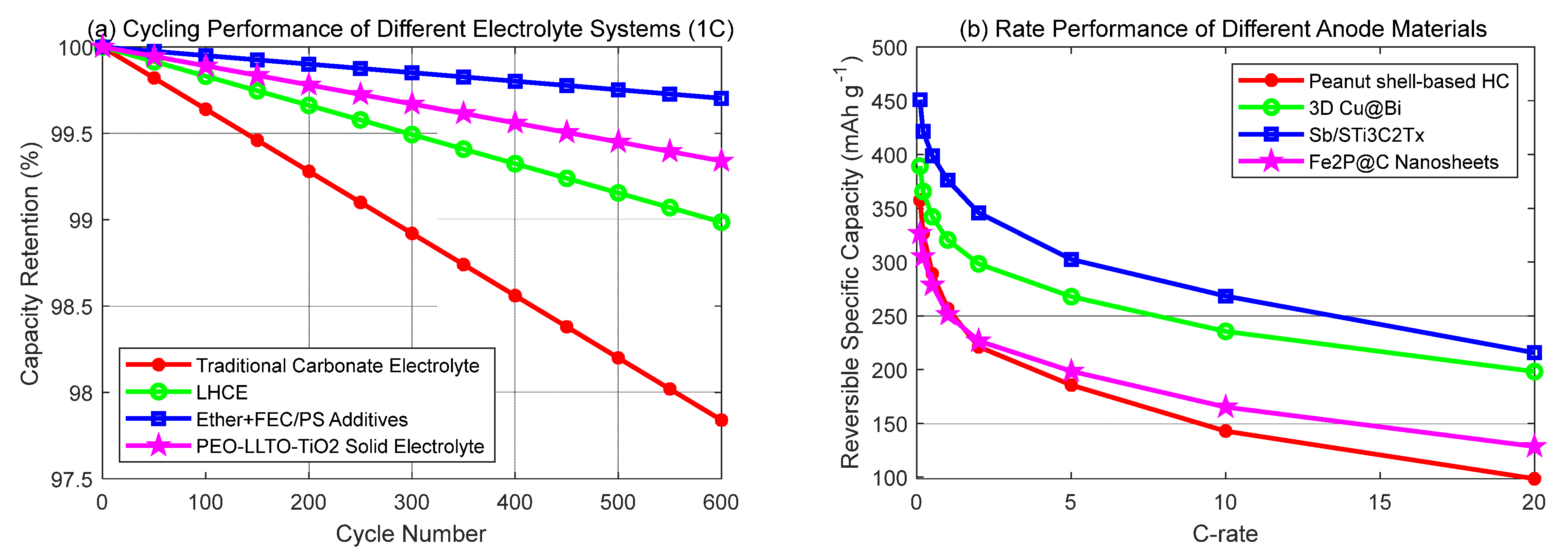
Figure 7 quantitatively compares the long-cycle stability of representative electrolyte systems and the rate capability of typical anode materials. As shown in
Figure 7, the traditional carbonate electrolyte exhibits the fastest capacity fading, while the ether-based electrolyte with FEC/PS additives maintains the highest capacity retention of ~99.8% after 600 cycles at 1 C, verifying the superiority of electrolyte optimization in enhancing cycling stability [
22,
35]. For anode materials (
Figure 7b), the Sb/STi
3C
2T
x composite anode delivers the best rate performance, retaining a reversible specific capacity of ~220 mAh g
−1 even at 20 C, which is attributed to the accelerated reaction kinetics and mitigated volume expansion via structural design and carbon confinement [
6,
50,
51,
52]. These results intuitively demonstrate the effectiveness of electrolyte innovation and electrode material design in boosting the electrochemical performance of SIBs, providing a data basis for the matching analysis of technical challenges and solutions.
5.2. Analysis of the Matching Between Technical Challenges and Solutions
Balancing high energy density and high safety is one of the core challenges faced by sodium-ion batteries. On the one hand, the energy density of batteries can be enhanced by developing high-voltage cathode materials (such as those with a voltage > 4.2 V) and high-capacity anode materials (such as alloys and conversion reaction materials). However, high-voltage cathodes often exhibit poor compatibility with electrolytes, leading to unstable interfaces and capacity degradation. Solutions include developing high-voltage stable electrolytes (such as LHCE, fluorinated electrolytes) and coating the cathode surface. Studies by Ingebrand et al. have shown that LHCE significantly improves the cycling stability in a high-voltage hard carbon||NaNi
1/3Fe
1/3Mn
1/3O
2 full-cell battery [
8]. On the other hand, solid-state electrolytes can fundamentally address safety issues, but room-temperature ionic conductivity and interface contact problems urgently need to be resolved. Composite polymer electrolytes may be an effective approach to balance performance, such as the PEO-LLTO-TiO
2 CPSE developed by Helaley et al., which exhibits good comprehensive performance at 55 °C [
35].
The realization of long cycle life requires a stable electrode structure and interface. For electrode materials with large volume changes (such as alloys and conversion reactions), volume effects can be effectively mitigated through nanocrystallization, carbon compositing, and structural design. Sun et al. achieved an ultra-long cycle life (15,500 cycles) for the 3D Cu@Bi electrode through a hierarchical porous structure [
50]. For interface instability issues, stable interface films can be constructed through electrolyte additive engineering and electrode surface modification. Liu Deshuai et al.’s dual-additive strategy significantly improved the cycle stability of NFM||HC pouch cells. Wide temperature range adaptability is crucial for the practical application of sodium-ion batteries. Low-temperature performance is mainly limited by electrolyte ionic conductivity and interface desolvation kinetics. By using low-viscosity solvents (such as ethers), weakly solvating electrolytes, and low-impedance interface design, low-temperature performance can be improved. Tang et al. discovered through anion screening that PF
6− is beneficial for forming an inorganic-rich solid electrolyte interface (SEI) in ether-based electrolytes, enhancing interface stability, accelerating Na
3+ transport, and improving charge transfer kinetics at low temperatures [
23]. High-temperature performance is mainly limited by electrolyte decomposition and interface side reactions. By using thermally stable sodium salts (such as NaFSI), high-temperature film-forming additives, and electrode surface modification, high-temperature performance can be improved. Sun et al. screened a series of siloxane molecules as electrolyte additives and found that octamethyltrisiloxane (MDM) tends to interact with anions due to its unique Si→CH
3 electron-donating ability, weakening the P-F bond and promoting the formation of a NaF-rich SEI, significantly improving the cycle performance of commercial Sn particles at 60 °C [
28]. Cost control is an important consideration for the commercialization of sodium-ion batteries. By using sodium-rich materials (such as Fe- and Mn-based cathodes, biomass hard carbon anodes), simplifying the preparation process, and developing low-cost electrolyte systems, battery costs can be effectively reduced. Jia et al. prepared high-performance hard carbon using waste peanut shells as a raw material, providing a paradigm for the development of low-cost anode materials [
6]. Wang et al. systematically evaluated the application potential of NaPF
6, NaFSI, and NaDFOB, pointing out that NaFSI can replace NaPF
6 under certain conditions, while NaDFOB is more suitable as an additive to improve high-temperature performance, providing a cost–performance balance reference for sodium salt selection [
24].
In summary, the performance enhancement of sodium-ion batteries requires the collaborative optimization of electrolytes, electrode materials, and interface engineering. Different application scenarios have varying requirements for battery performance, necessitating targeted selection of technical routes. For instance, in scenarios demanding high energy density, consideration may be given to high-voltage cathodes, alloy-based anodes, and stable interface design; in scenarios emphasizing safety, solid-state electrolytes and stable electrode materials may be considered; and in cost-sensitive scenarios, Fe/Mn-based cathodes, hard carbon anodes, and optimized traditional electrolytes may be considered. Future research should focus more on the compatibility and synergistic effects among various components, aiming to achieve breakthroughs in the comprehensive performance of sodium-ion batteries through full-cell design and system optimization.
5.3. Scenario-Oriented Optimal Technical Route and Material Combination
Sodium-ion batteries are tailored for diverse practical applications including large-scale energy storage, low-temperature operating environments and low-cost power supply scenarios, with each scenario having distinct core performance priorities that demand customized material combinations and targeted regulation strategies to realize the matching of battery performance with actual application requirements. For large-scale energy storage scenarios such as grid energy storage and wind–solar complementary storage, the core requirements are long cycle life (>3000 cycles), high safety without thermal runaway, excellent rate performance and moderate energy density, with low self-discharge rate and wide ambient temperature adaptability (−20 °C to 60 °C) as secondary demands, and the optimal material combination is Fe/Mn-based layered oxide (P2-Na0.7Mn0.6Fe0.3Ni0.1O2) or a low-defect Prussian blue analog (Ni0.1Mn1.9HCF) cathode paired with a biomass-derived hard carbon (ultra-microporous tunnel structure) anode, matched with locally high-concentration carbonate electrolyte (NaPF6/EC-DMC+HFE diluent) + FEC/TMSB composite additive, and assisted by interface regulation measures of ALD Al2O3 thin coating (5–10 nm) on the cathode surface and an LA133/LS composite water-based binder for the anode, while the targeted regulation strategies include optimizing the electrolyte concentration and additive ratio to reduce LHCE cost while maintaining interfacial regulation performance, adopting Mg2+/Ti4+ doping for cathode materials to enhance structural stability during long-term Na+ intercalation/deintercalation, and designing hard carbon anodes with a hierarchical porous structure to reduce initial coulombic efficiency loss and improve full-cell energy density. For low-temperature operating environments like cold-region energy storage, low-temperature electric vehicles and outdoor backup power, the core performance requirements are excellent low-temperature electrochemical performance (normal operation at −40 °C to 25 °C), high low-temperature rate capacity (≥60% capacity retention at 1 C at −20 °C) and stable low-temperature cycle life, with moderate safety and cost as secondary requirements, the optimal material system is the Na3V2(PO4)3 (NASICON-type) cathode + Sb/STi3C2Tx composite alloy anode, combined with ether-based electrolyte (NaBF4/DME-MeTHF) + PF6− anion modification, and the interface regulation adopts in situ CEI construction on the cathode surface via electrochemical oxidation and DTD additive for anode SEI optimization, the targeted regulation strategies involve fine-tuning the molar ratio of DME and MeTHF in ether electrolyte to optimize the Na+ solvation structure and improve low-temperature ionic conductivity, conducting nanocrystallization and carbon coating on Na3V2(PO4)3 to enhance electronic conductivity and low-temperature reaction activity, and optimizing Sb content in the Sb/STi3C2Tx composite anode to balance specific capacity and volume expansion at low temperatures. For low-cost application scenarios such as low-speed electric vehicles, portable electronic devices and low-power industrial batteries, the core demands are ultra-low material and preparation cost, moderate cycle life (>1000 cycles) and energy density (≥200 Wh kg−1), with simple preparation process and easy industrialization as key supporting requirements. The optimal material combination is un-doped Mn-based layered oxide (Na0.7MnO2) cathode + commercial petroleum coke-based hard carbon anode, matched with conventional carbonate electrolyte (NaPF6/EC-DMC) + single FEC additive, and interface regulation relies on liquid-phase polyaniline (PANI) coating on the cathode surface and PVDF binder modified by sodium lignosulfonate for the anode. The targeted regulation strategies include optimizing the calcination process of Na0.7MnO2 to reduce defect content and improve structural stability without additional doping or complex modification, using low-cost biomass-based sodium lignosulfonate to modify the PVDF binder for reducing cost and improving electrode wettability to the electrolyte, and simplifying the electrolyte preparation process with industrial-grade sodium salts and solvents while controlling FEC additive content at 5–8 wt% to balance interface regulation effect and cost.
6. Summary and Outlook
This article systematically reviews the latest research progress in sodium-ion batteries, focusing on electrolyte system innovation, electrode material design, and electrode/electrolyte interface engineering. Through the analysis and synthesis of 103 representative articles, this review comprehensively summarizes the current research status, technical advantages, and existing challenges of key materials and interface regulation strategies for sodium-ion batteries. Additionally, it provides a comprehensive comparison and evaluation of different technical routes. The main research findings are summarized as follows:
In terms of electrolyte systems, liquid organic electrolytes remain the most extensively researched and widely applied systems. Among them, locally high-concentration electrolytes (LHCEs) and ether-based electrolytes exhibit unique advantages in high-voltage compatibility and fast-charging/low-temperature performance, respectively. Solid electrolytes have garnered significant attention due to their high safety, particularly NASICON-type inorganic solid electrolytes and composite polymer electrolytes, which have made remarkable progress in ionic conductivity and interfacial compatibility. Aqueous electrolytes, on the other hand, continue to expand their electrochemical window and application range through high-concentration strategies and the development of novel electrode materials. In terms of electrode materials, research on cathode materials primarily focuses on three major systems: layered oxides, polyanion compounds, and Prussian blue analogs. Strategies such as element doping, surface coating, morphology control, and defect engineering have effectively enhanced the structural stability and ion transport capabilities of cathode materials. For anode materials, hard carbon is the primary focus, with continuous improvements in initial efficiency and capacity achieved through precursor selection and heat treatment process optimization. For alloy-based and conversion reaction-based anodes, nanostructure design and carbon composite strategies are employed to mitigate volume effects and enhance cycle stability. In terms of interfacial engineering, various strategies such as electrolyte additive engineering, electrode surface modification, novel binder design, and in situ/ex situ construction of interfacial layers have been developed to construct stable and efficient electrode/electrolyte interfaces. The application of advanced characterization techniques (such as neutron imaging, HAXPES, ToF-SIMS, etc.) and theoretical simulations provides powerful tools for understanding the formation mechanism and evolution of interfaces, guiding the rational design of interfacial materials.
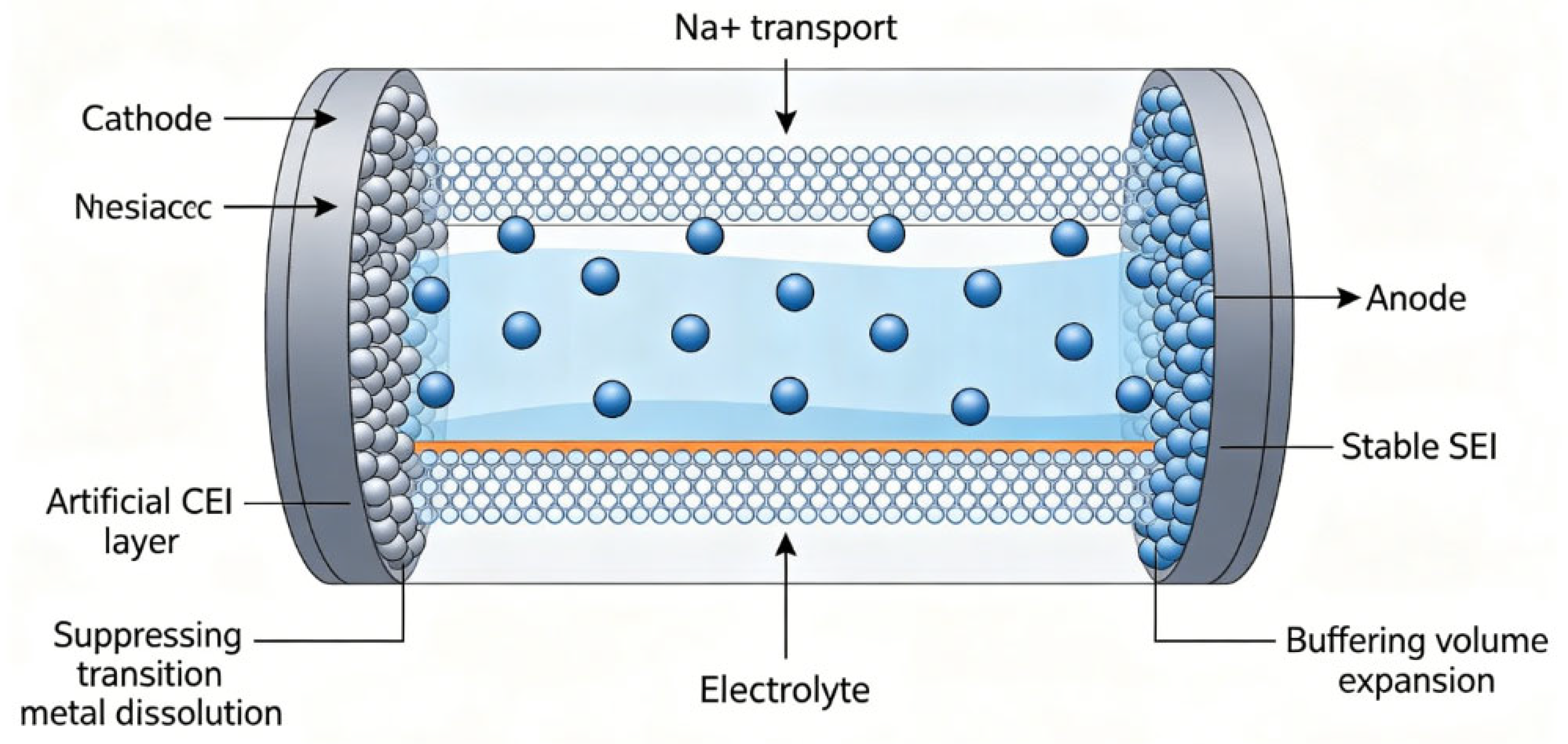
Although significant progress has been made in the research of sodium-ion batteries, there is still a gap in their practical performance compared to lithium-ion batteries, especially in terms of energy density, cycle life, and low-temperature performance. Based on the current research status and existing issues, future research on sodium-ion batteries can focus on the following directions: innovation and integration of electrolyte systems; developing new sodium salts (such as monovalent chelated borates), multifunctional solvents (such as fluorinated ethers, sulfones), and efficient additives (such as multifunctional group additives) to further enhance the oxidation stability, thermal stability, and interface formation ability of electrolytes; studying liquid–solid electrolyte hybrid systems to balance safety and interface contact; developing intelligent responsive electrolytes to achieve self-protection under abuse conditions such as overcharge, overdischarge, and high temperature; multi-scale precise design of electrode materials; through atomic-level doping, nanoscale morphology control, and micrometer-scale structural assembly, synergistically optimizing the electronic/ionic conduction, structural stability, and mechanical integrity of electrode materials; developing new high-performance cathode materials, such as sodium-rich layered oxides, high-voltage polyanion compounds, and low-defect Prussian blue analogs. To visually clarify the technical routes for future performance enhancement,
Figure 8 demonstrates a representative design schematic of electrode/electrolyte interfaces toward next-generation high-performance sodium-ion batteries.
Other research directions include the following: exploring new anode materials, such as hard carbon precursor screening and structural regulation, self-healing design of alloy materials, and polymerization and curing strategies of organic materials; interface dynamic evolution mechanism and regulation; developing more advanced in situ/operating condition characterization techniques to monitor the interface formation and evolution process in real time, establishing a structure–property relationship between interface composition/structure and battery performance; studying the interface behavior under different operating conditions (such as high voltage, low temperature, fast charging); developing operating condition adaptive interface regulation strategies; exploring the precise construction of artificial interface layers, such as using atomic layer deposition (ALD), molecular layer deposition (MLD), and other technologies to prepare ultra-thin, dense, high-ion-conductive artificial SEI/CEI films; full-cell design and system integration; strengthening the research on the compatibility of electrode materials and electrolytes, considering factors such as first-cycle compensation, sodium source supply, and interface compatibility, to optimize the full-cell design.
Further areas of research include studying the performance degradation mechanism of sodium-ion batteries under extreme conditions (such as high and low temperatures, high rates, long cycles), to develop targeted solutions; promoting the engineering research of sodium-ion batteries, including electrode preparation processes, battery packaging technologies, and group management strategies, to accelerate their commercialization process; sustainability and cost control; further developing electrode materials based on sodium-rich elements (such as Fe, Mn, Cu, etc.), reducing dependence on expensive elements such as cobalt and nickel; exploring biomass raw materials and green synthesis routes to reduce the preparation cost and environmental pollution of electrode materials and electrolytes; research on the recycling and regeneration technology of sodium-ion batteries to achieve circular utilization of resources.
Sodium-ion batteries, as an important supplement or alternative technology to lithium-ion batteries, have broad application prospects in large-scale energy storage, low-speed electric vehicles, backup power supplies, and other fields. With continuous advancements in material innovation, interface engineering, and manufacturing technology, the performance of sodium-ion batteries will continue to improve and costs will continue to decrease, providing strong support for achieving the “dual carbon” goals and energy structure transformation. Future research should focus more on the integration of basic research and application development, the synergy between material innovation and system optimization, and promoting the maturity and industrialization of sodium-ion battery technology.
Table 5 and
Table 6 compile the typical performance indicators for electrolyte systems and electrode materials.
We have explicitly identified four key bottlenecks that must be overcome before large-scale commercialization: the energy density bottleneck, as mass-produced sodium-ion batteries (175 Wh/kg) have approached LiFePO4 levels but still lag behind ternary lithium batteries, and further improvement requires high-voltage cathodes, alloy anodes, and solid-state electrolytes; the cost crossover point, with current layered oxide/polyanion sodium-ion batteries priced at approximately 0.55–0.6 RMB/Wh, and clear cost advantages over lithium-ion batteries not expected until after 2027; the cycle life gap, given that energy storage applications demand over 10,000 cycles, which only a few systems (e.g., Na3V2(PO4)3) have achieved in the lab, while long-term cycling stability in full cells still needs improvement; and the low-temperature and fast-charge synergy, where although capacity retention at −40 °C can exceed 90%, the synergistic optimization of rate capability and fast-charging performance at low temperatures remains insufficient.