Insights into the Adsorption Mechanism and Corrosion Protection of Phytic Acid Conversion Coatings on Fe, Cu, and Al Surfaces: A Combined Theoretical and Experimental Study




Abstract
1. Introduction
2. Calculation Method and Materials
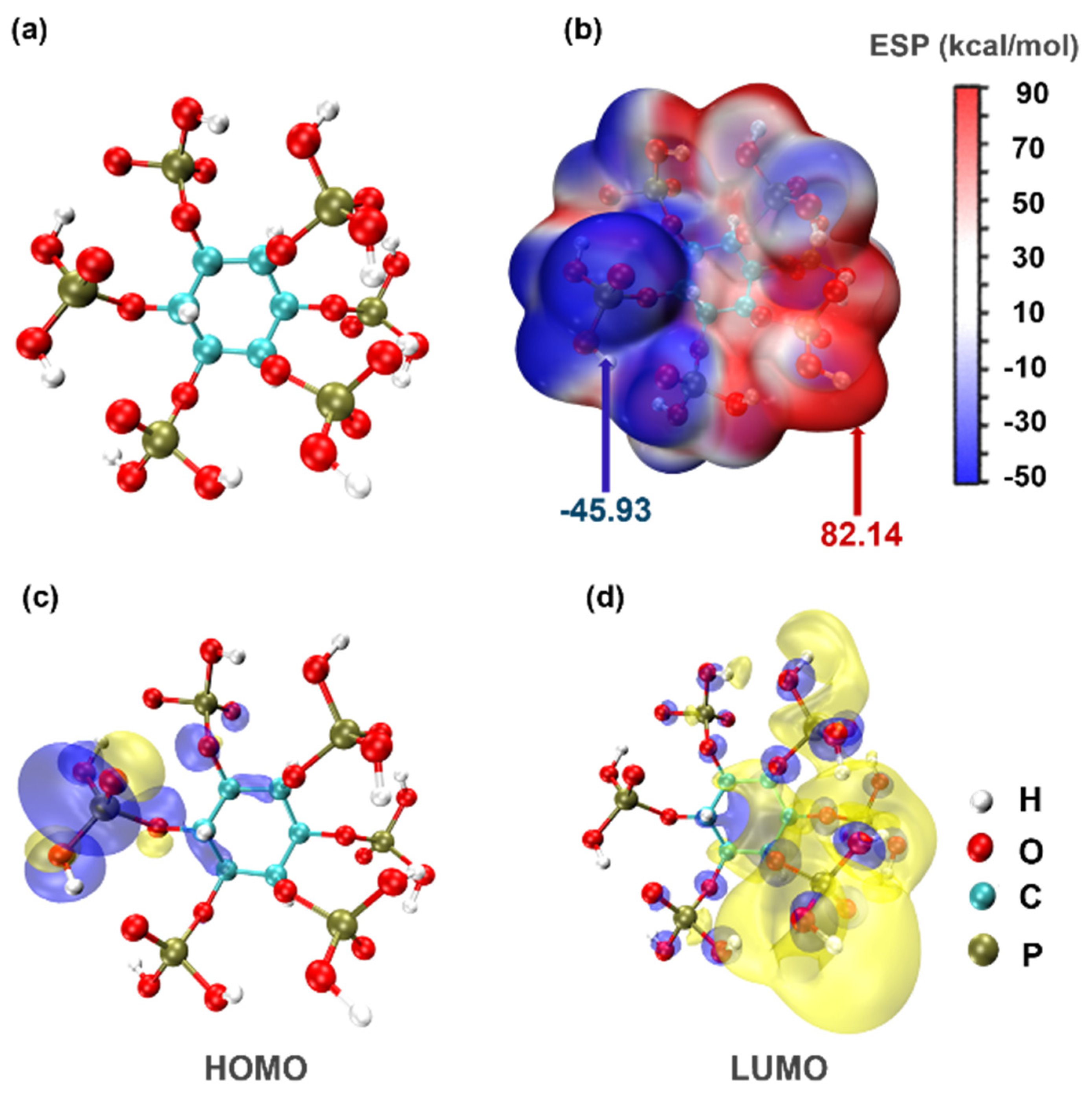
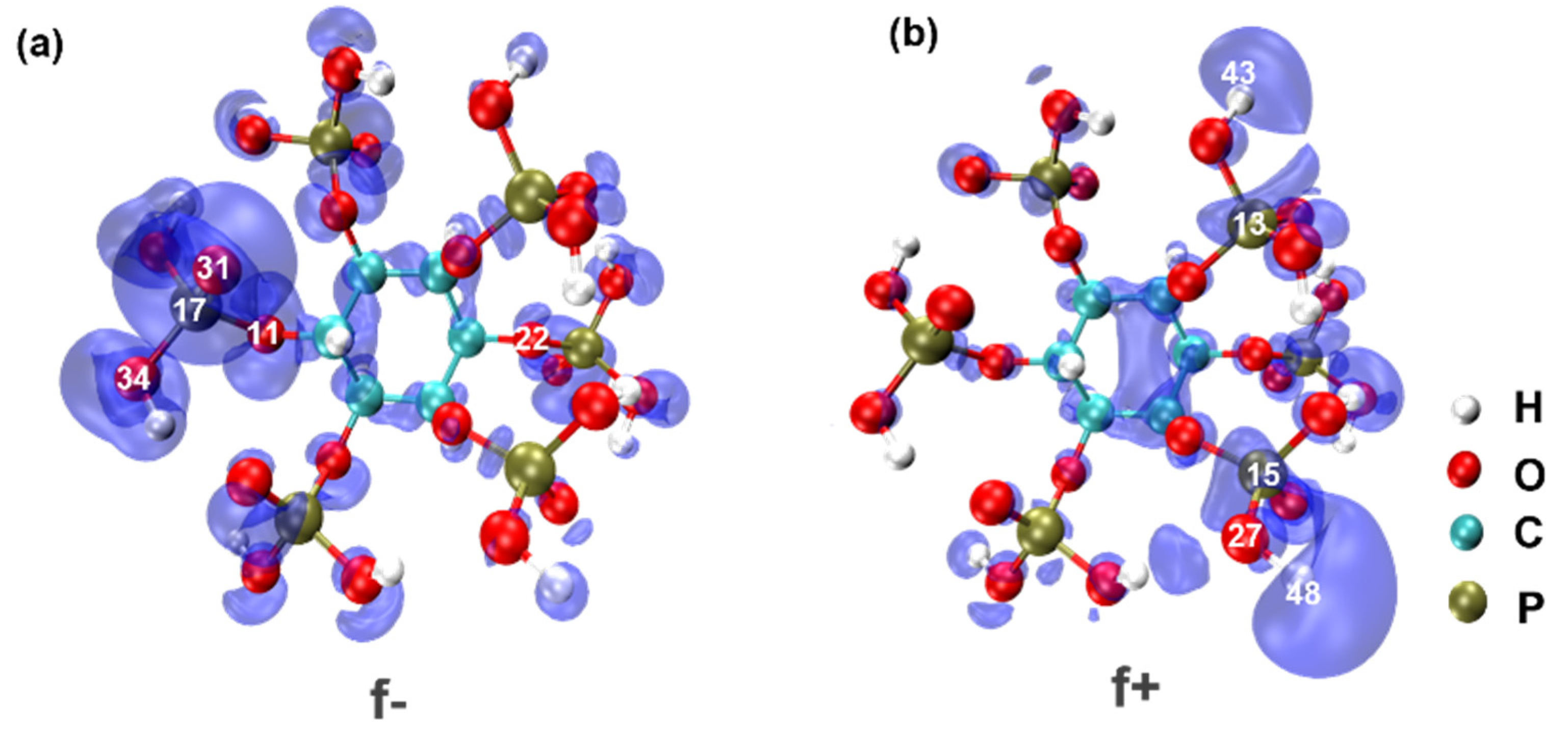
2.1. Quantum Chemical Calculations
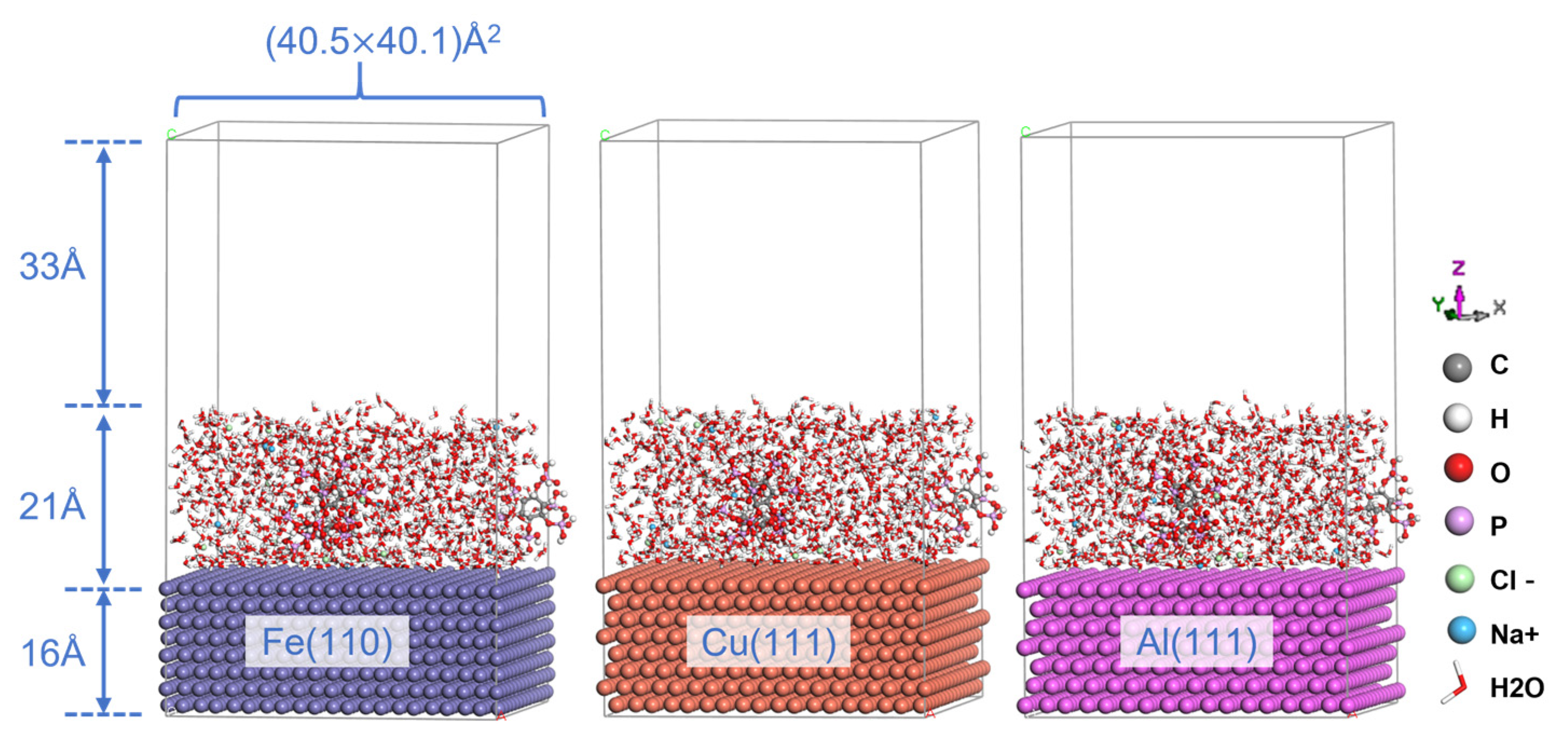
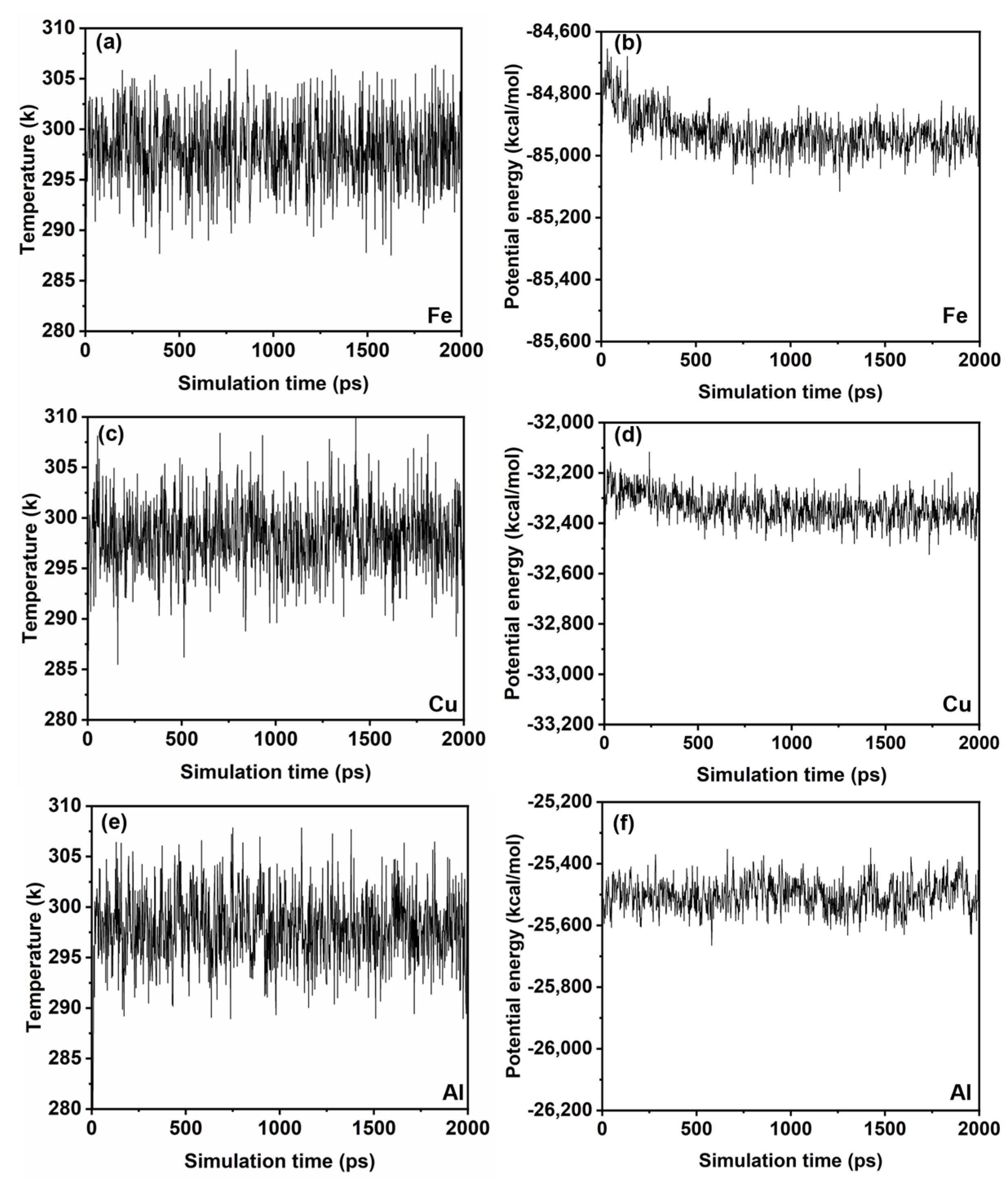
2.2. Molecular Dynamics Simulations
2.3. Experimental Materials
2.4. Electrochemical Testing
2.5. Film Composition and Morphology Characterization
3. Results and Discussion
3.1. Quantum Chemical Calculation of PA Molecule Activity
3.2. Molecular Dynamics Simulations Results
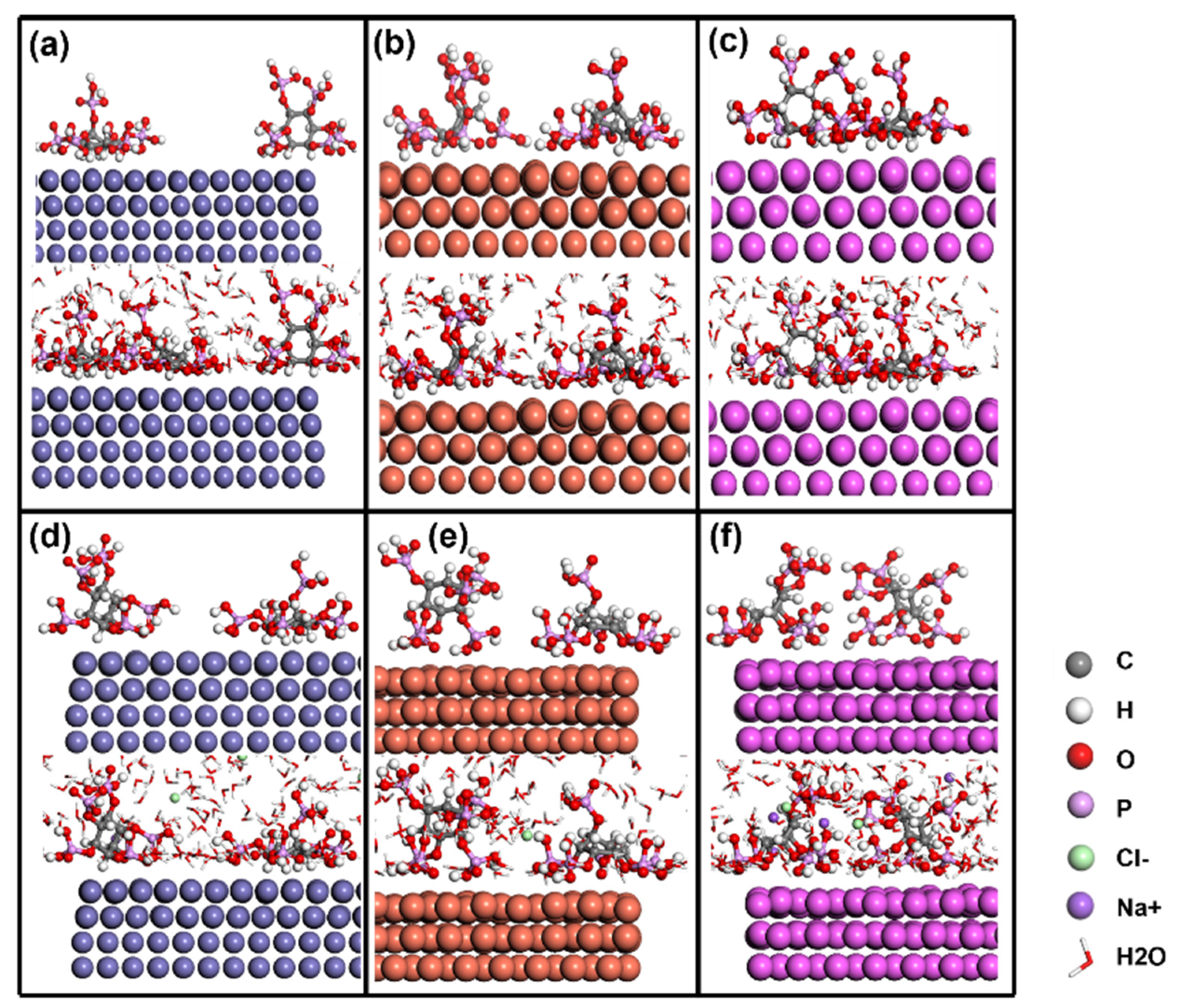
3.2.1. Adsorption Configuration of PA Molecules on Metal Surfaces
3.2.2. Adsorption Stability of PA Films
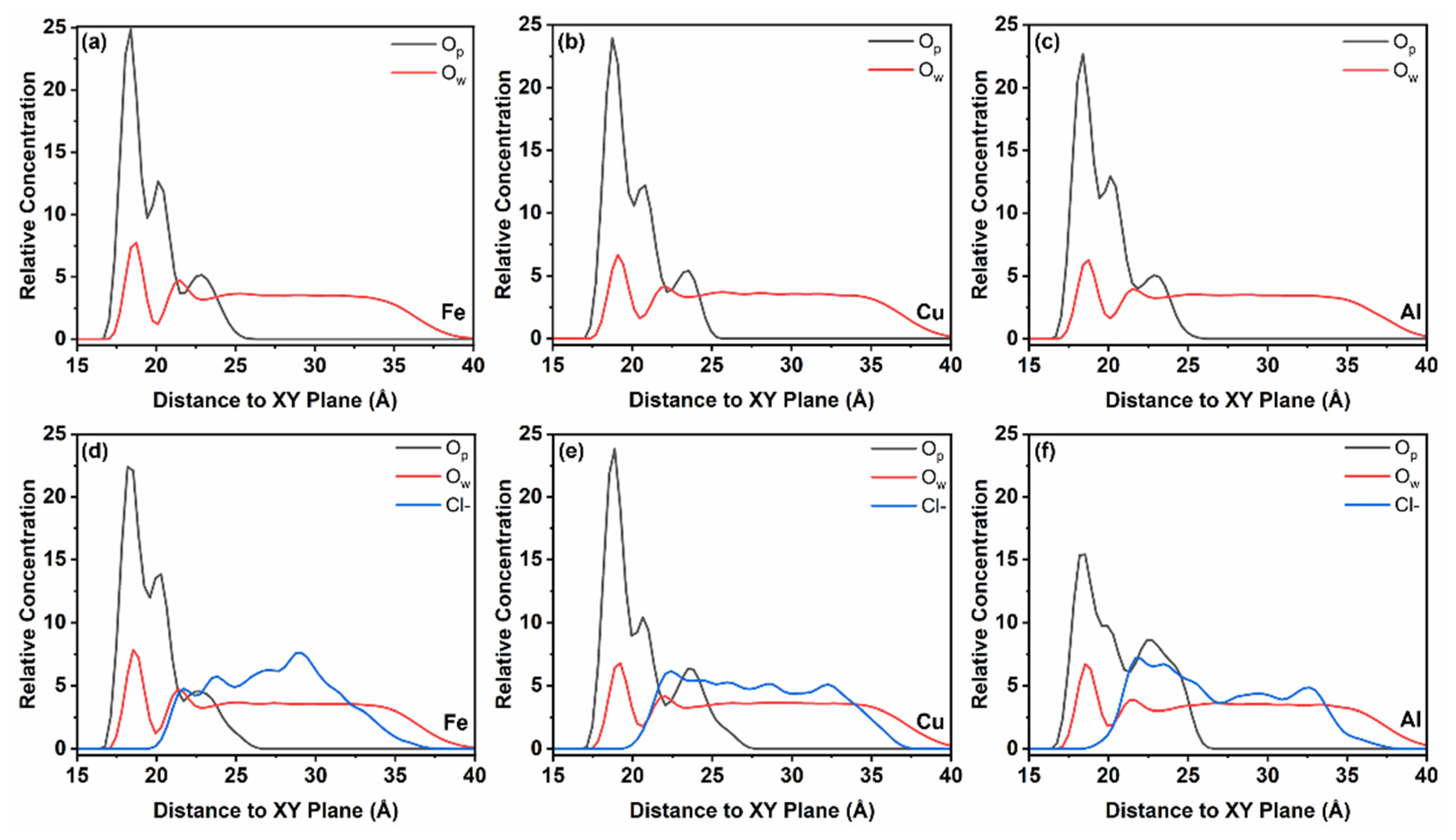
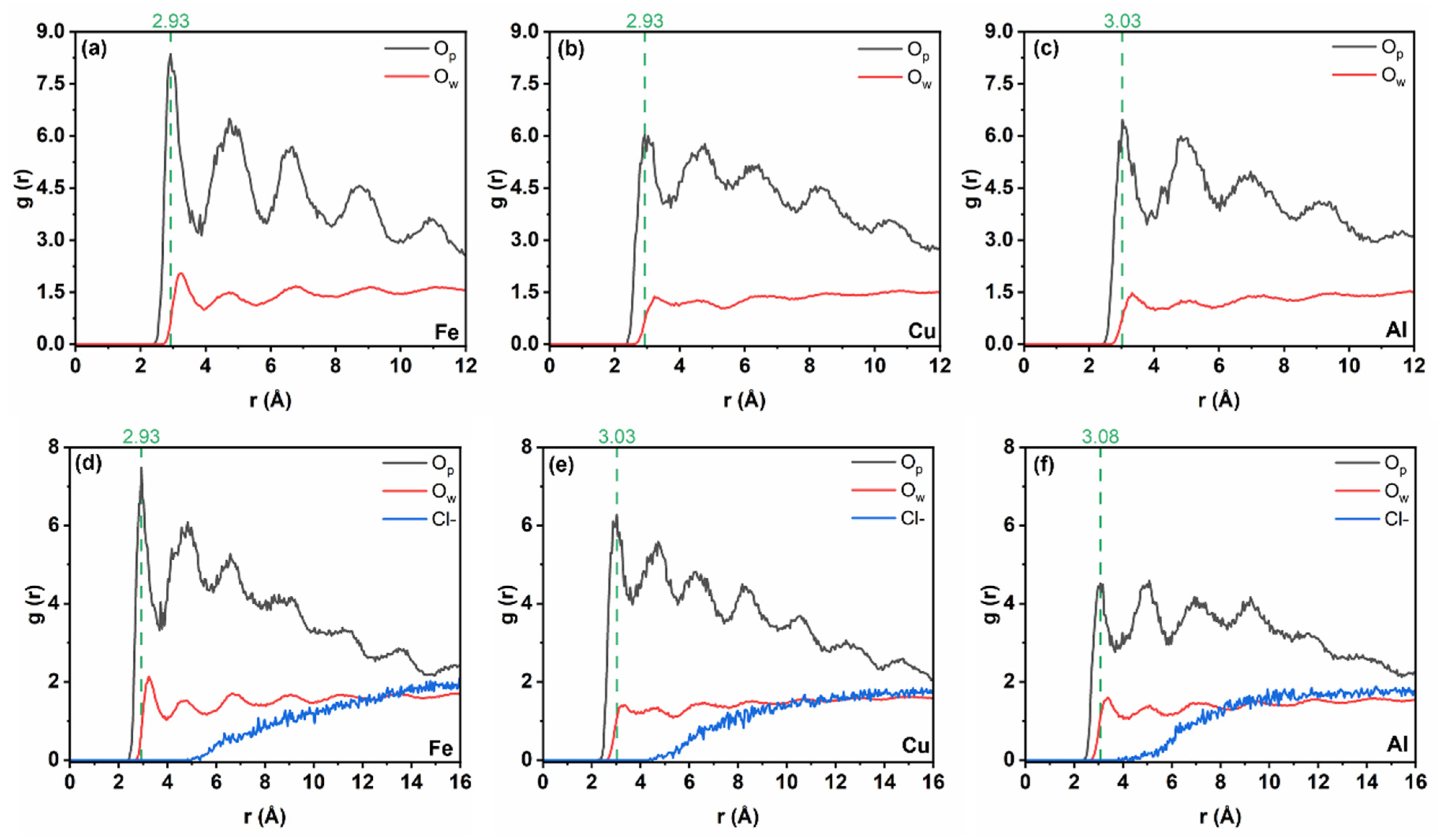
3.2.3. Distribution of Particles on Metal Surfaces
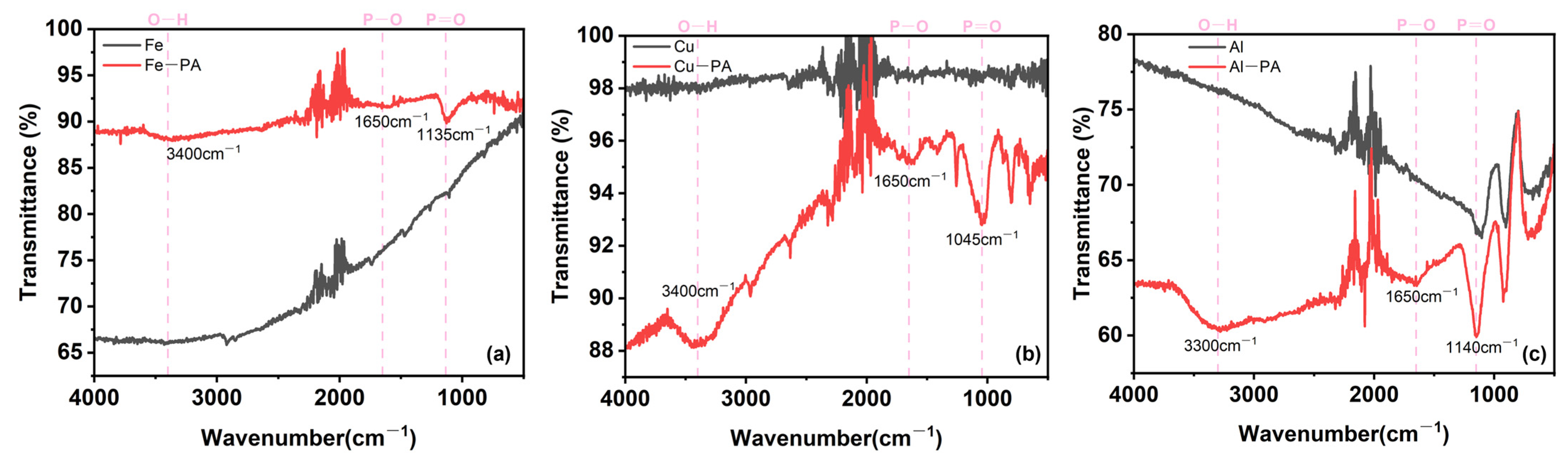
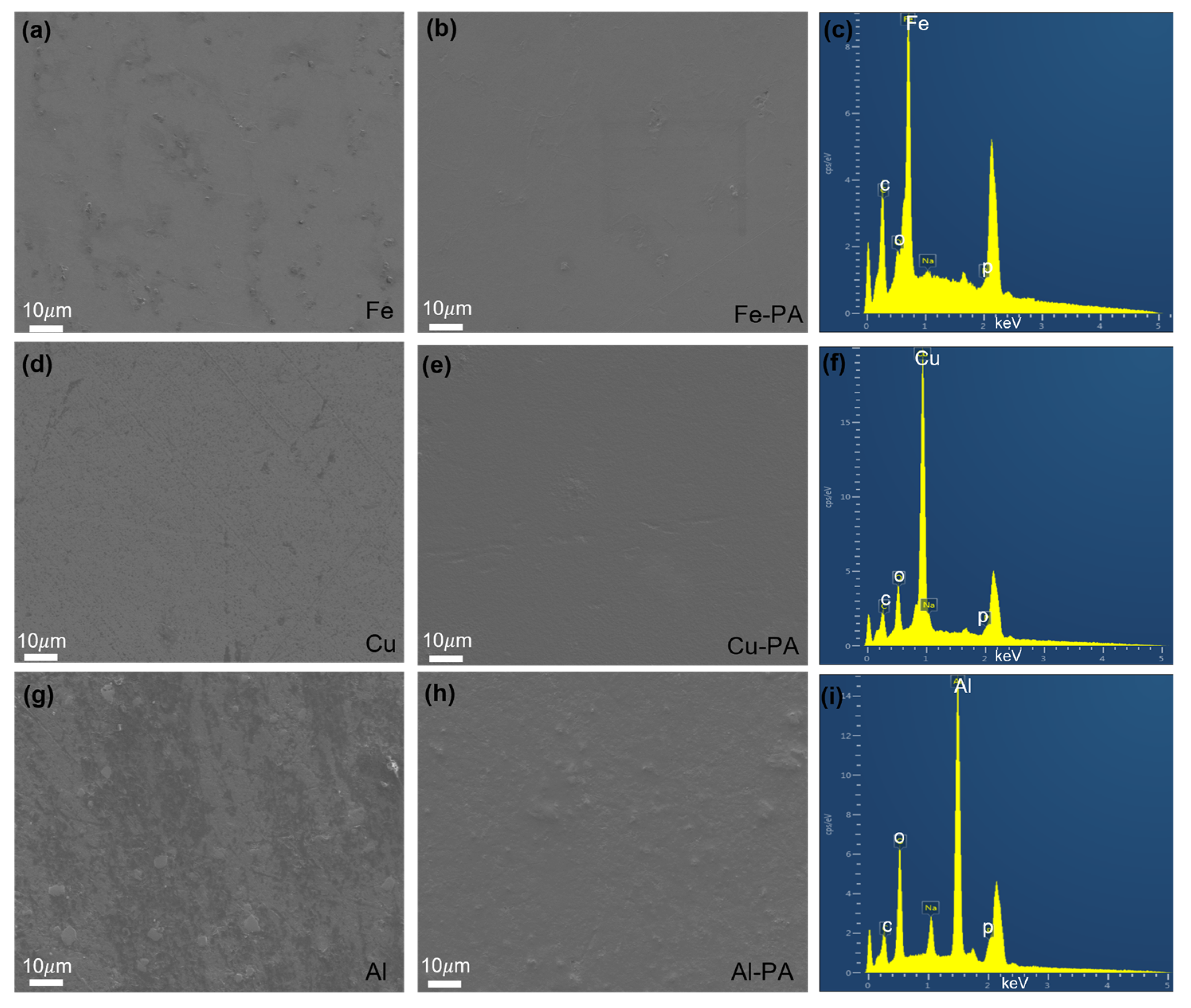
3.3. Compositional and Morphological Characterization of PA Conversion Films
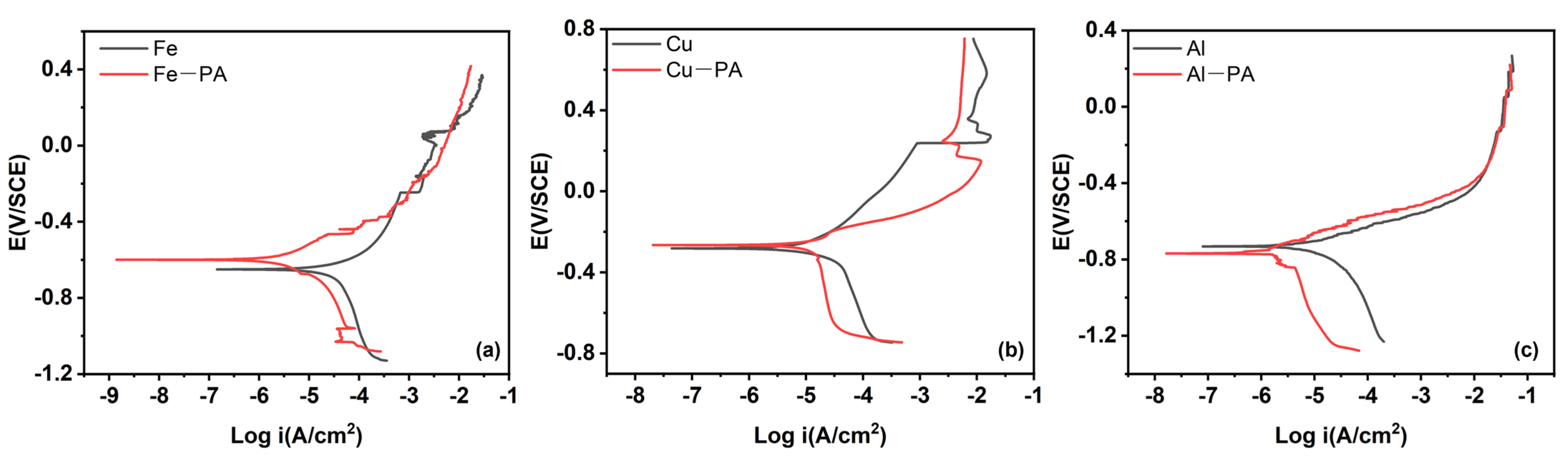
3.4. Polarization Results
4. Conclusions
- (1)
- Quantum chemical calculations identified the active sites of PA molecules, which, in combination with MD simulation results, revealed two adsorption configurations of PA on metal surfaces: perpendicular adsorption and parallel adsorption.
- (2)
- The negative adsorption energies of PA on all three metal surfaces indicate spontaneous and stable adsorption. The adsorbed PA film effectively inhibits the interfacial diffusion of corrosive species (H2O and Cl−) through steric hindrance, elucidating the physical barrier protection mechanism of the PA film at the atomic/molecular level.
- (3)
- PA conversion coatings were successfully fabricated on the three metal surfaces via a simple immersion method. Electrochemical tests confirmed that these coatings enhance the corrosion resistance of the metals. Under identical immersion conditions (1 h), the protection efficiency of the conversion coating on the Cu surface was relatively low, attributed to the slow oxidation process of Cu involving dissolved oxygen. Therefore, prolonged treatment time or the addition of oxidation promoters is recommended to facilitate PA conversion coating formation on Cu surfaces.
- (1)
- Exploring process optimization strategies, such as extending the treatment time and introducing oxidation promoters for Cu-based materials, to improve the film quality and protection performance of PA conversion coatings.
- (2)
- Investigating the long-term protection performance of PA conversion coatings in other corrosive media (e.g., acidic and alkaline environments) and under complex service conditions to advance their engineering applications.
Author Contributions
Funding
Data Availability Statement
Acknowledgments
Conflicts of Interest
References
- Popoola, L.T. Organic green corrosion inhibitors (OGCIs): A critical review. Corros. Rev. 2019, 37, 71–102. [Google Scholar] [CrossRef]
- Obot, I.B.; Solomon, M.M.; Umoren, S.A.; Suleiman, R.; Elanany, M.; Alanazi, N.M.; Sorour, A.A. Progress in the development of sour corrosion inhibitors: Past, present, and future perspectives. J. Ind. Eng. Chem. 2019, 79, 1–18. [Google Scholar] [CrossRef]
- Tang, Z.L. A review of corrosion inhibitors for rust preventative fluids. Curr. Opin. Solid State Mater. Sci. 2019, 23, 100759. [Google Scholar] [CrossRef]
- Zhu, Y.; Free, M.L.; Woollam, R.; Durnie, W. A review of surfactants as corrosion inhibitors and associated modeling. Prog. Mater. Sci. 2017, 90, 159–223. [Google Scholar] [CrossRef]
- Goulart, C.M.; Esteves-Souza, A.; Martinez-Huitle, C.A.; Ferreira Rodrigues, C.J.; Medeiros Maciel, M.A.; Echevarria, A. Experimental and theoretical evaluation of semicarbazones and thiosemicarbazones as organic corrosion inhibitors. Corros. Sci. 2013, 67, 281–291. [Google Scholar] [CrossRef]
- Verma, C.; Ebenso, E.E.; Quraishi, M.A. Ionic liquids as green and sustainable corrosion inhibitors for metals and alloys: An overview. J. Mol. Liq. 2017, 233, 403–414. [Google Scholar] [CrossRef]
- Kusmierek, E.; Chrzescijanska, E. Atmospheric corrosion of metals in industrial city environment. Data Brief 2015, 3, 149–154. [Google Scholar] [CrossRef] [PubMed]
- Wiener, M.S.; Salas, B.V. Corrosion of the marine infrastructure in polluted seaports. Corros. Eng. Sci. Technol. 2005, 40, 137–142. [Google Scholar] [CrossRef]
- Verma, C.; Ebenso, E.E.; Quraishi, M.A.; Hussain, C.M. Recent developments in sustainable corrosion inhibitors: Design, performance and industrial scale applications. Mater. Adv. 2021, 2, 3806–3850. [Google Scholar] [CrossRef]
- Boudellioua, H.; Hamlaoui, Y.; Tifouti, L.; Pedraza, F. Effects of polyethylene glycol (PEG) on the corrosion inhibition of mild steel by cerium nitrate in chloride solution. Appl. Surf. Sci. 2019, 473, 449–460. [Google Scholar] [CrossRef]
- Li, C.C.; Guo, X.Y.; Shen, S.; Song, P.; Xu, T.; Wen, Y.; Yang, H.F. Adsorption and corrosion inhibition of phytic acid calcium on the copper surface in 3 wt% NaCl solution. Corros. Sci. 2014, 83, 147–154. [Google Scholar] [CrossRef]
- Sun, G.; Jiang, M.; Wang, S.; Fu, L.; Zuo, Y.; Zhang, G.; Hu, Z.; Zhang, L. Enhancement of copper metal dissolution in sulfuric acid solution with oxygen and ultrasound. J. Mater. Res. Technol. 2023, 26, 5016–5027. [Google Scholar] [CrossRef]
- Yang, C. Facile fabrication of nickel–cobalt phosphate-based fluorine-free superhydrophobic film with anti-corrosion and self-cleaning properties on Al alloy. J. Mater. Sci. 2024, 60, 881–890. [Google Scholar] [CrossRef]
- Mohammadi, I.; Shahrabi, T.; Mahdavian, M.; Izadi, M. Sodium diethyldithiocarbamate as a novel corrosion inhibitor to mitigate corrosion of 2024-T3 aluminum alloy in 3.5 wt% NaCl solution. J. Mol. Liq. 2020, 307, 112965. [Google Scholar] [CrossRef]
- Ahangar, M.; Izadi, M.; Shahrabi, T.; Mohammadi, I. The synergistic effect of zinc acetate on the protective behavior of sodium lignosulfonate for corrosion prevention of mild steel in 3.5 wt% NaCl electrolyte: Surface and electrochemical studies. J. Mol. Liq. 2020, 314, 113617. [Google Scholar] [CrossRef]
- Raja, P.B.; Ismail, M.; Ghoreishiamiri, S.; Mirza, J.; Ismail, M.C.; Kakooei, S.; Rahim, A.A. Reviews on Corrosion Inhibitors: A Short View. Chem. Eng. Commun. 2016, 203, 1145–1156. [Google Scholar] [CrossRef]
- Wazzan, N.A.; Obot, I.B.; Kaya, S. Theoretical modeling and molecular level insights into the corrosion inhibition activity of 2-amino-1,3,4-thiadiazole and its 5-alkyl derivatives. J. Mol. Liq. 2016, 221, 579–602. [Google Scholar] [CrossRef]
- Zhang, C.; Liu, B.; Yu, B.; Lu, X.; Wei, Y.; Zhang, T.; Mol, J.M.C.; Wang, F. Influence of surface pretreatment on phosphate conversion coating on AZ91 Mg alloy. Surf. Coat. Technol. 2019, 359, 414–425. [Google Scholar] [CrossRef]
- Balgude, D.; Sabnis, A. Sol-gel derived hybrid coatings as an environment friendly surface treatment for corrosion protection of metals and their alloys. J. Sol-Gel Sci. Technol. 2012, 64, 124–134. [Google Scholar] [CrossRef]
- Verma, C.; Hussain, C.M.; Quraishi, M.A.; Alfantazi, A. Green surfactants for corrosion control: Design, performance and applications. Adv. Colloid Interface Sci. 2023, 311, 102822. [Google Scholar] [CrossRef] [PubMed]
- Quraishi, M.A.; Chauhan, D.S.; Saji, V.S. Heterocyclic biomolecules as green corrosion inhibitors. J. Mol. Liq. 2021, 341, 117265. [Google Scholar] [CrossRef]
- Tang, F.; Wang, X.Y.; Xu, X.J.; Li, L.D. Phytic acid doped nanoparticles for green anticorrosion coatings. Colloids Surf. A-Physicochem. Eng. Asp. 2010, 369, 101–105. [Google Scholar] [CrossRef]
- Kaghazchi, L.; Naderi, R.; Ramezanzadeh, B. Improvement of the dual barrier/active corrosion inhibition function of the epoxy composite filled with zinc doped-phytic acid-modified graphene oxide nanosheets. Prog. Org. Coat. 2022, 168, 106884. [Google Scholar] [CrossRef]
- Gao, L.L.; Zhang, C.H.; Zhang, M.L.; Huang, X.M.; Jiang, X. Phytic acid conversion coating on Mg-Li alloy. J. Alloys Compd. 2009, 485, 789–793. [Google Scholar] [CrossRef]
- Su, J.; Wu, X.L.; Yang, C.P.; Lee, J.S.; Kim, J.; Guo, Y.G. Self-Assembled LiFePO4/C Nano/Microspheres by Using Phytic Acid as Phosphorus Source. J. Phys. Chem. C 2012, 116, 5019–5024. [Google Scholar] [CrossRef]
- Chen, J.; Song, Y.W.; Shan, D.Y.; Han, E.H. Modifications of the hydrotalcite film on AZ31 Mg alloy by phytic acid: The effects on morphology, composition and corrosion resistance. Corros. Sci. 2013, 74, 130–138. [Google Scholar] [CrossRef]
- Cui, X.F.; Li, Y.; Li, Q.F.; Jin, G.; Ding, M.H.; Wang, F.H. Influence of phytic acid concentration on performance of phytic acid conversion coatings on the AZ91D magnesium alloy. Mater. Chem. Phys. 2008, 111, 503–507. [Google Scholar] [CrossRef]
- Kaghazchi, L.; Naderi, R.; Ramezanzadeh, B. Synergistic mild steel corrosion mitigation in sodium chloride-containing solution utilizing various mixtures of phytic acid molecules and Zn2+ ions. J. Mol. Liq. 2021, 323, 114589. [Google Scholar] [CrossRef]
- Li, Q.-W.; Liu, X.-f.; Wang, W.-j. Corrosion resistance and forming mechanism of phytic acid conversion film on copper foil prepared by electrolysis. Colloids Surf. A Physicochem. Eng. Asp. 2025, 704, 135504. [Google Scholar] [CrossRef]
- Shi, H.; Han, E.-H.; Liu, F.; Kallip, S. Protection of 2024-T3 aluminium alloy by corrosion resistant phytic acid conversion coating. Appl. Surf. Sci. 2013, 280, 325–331. [Google Scholar] [CrossRef]
- Gao, X.; Zhao, C.C.; Lu, H.F.; Gao, F.; Ma, H.Y. Influence of phytic acid on the corrosion behavior of iron under acidic and neutral conditions. Electrochim. Acta 2014, 150, 188–196. [Google Scholar] [CrossRef]
- Chang, L.; Zheng, H.P.; Shao, Y.W.; Wang, Y.Q.; Liu, B.; Meng, G.Z. Effect of phytic acid/rust conversion layer on corrosion protection of rusty mild steel. Surf. Coat. Technol. 2024, 492, 131243. [Google Scholar] [CrossRef]
- Guo, X.H.; Du, K.Q.; Guo, Q.Z.; Wang, Y.; Wang, R.; Wang, F.H. Effect of phytic acid on the corrosion inhibition of composite film coated on Mg-Gd-Y alloy. Corros. Sci. 2013, 76, 129–141. [Google Scholar] [CrossRef]
- Usman, B.J.; Curioni, M. Influence of temperature on the corrosion testing of anodized aerospace alloys. Corros. Sci. 2021, 192, 109772. [Google Scholar] [CrossRef]
- Yan, L.D.; Xiao, K.; Yi, P.; Dong, C.F.; Wu, J.S.; Bai, Z.H.; Mao, C.L.; Jiang, L.; Li, X.G. The corrosion behavior of PCB-ImAg in industry polluted marine atmosphere environment. Mater. Des. 2017, 115, 404–414. [Google Scholar] [CrossRef]
- Natesan, M.; Selvaraj, S.; Manickam, T.; Venkatachari, G. Corrosion behavior of metals and alloys in marine-industrial environment. Sci. Technol. Adv. Mater. 2008, 9, 045002. [Google Scholar] [CrossRef] [PubMed]
- Santa, A.C.; Tamayo, J.A.; Correa, C.D.; Gómez, M.A.; Castaño, J.G.; Baena, L.M. Atmospheric corrosion maps as a tool for designing and maintaining building materials: A review. Heliyon 2022, 8, e10438. [Google Scholar] [CrossRef] [PubMed]
- Frisch, M.J.; Trucks, G.W.; Schlegel, H.B.; Scuseria, G.E. Gaussian 09, Revision D.01; Gaussian, Inc.: Wallingford, CT, USA, 2013. [Google Scholar]
- Lu, T.; Chen, F.W. Multiwfn: A multifunctional wavefunction analyzer. J. Comput. Chem. 2012, 33, 580–592. [Google Scholar] [CrossRef] [PubMed]
- Lu, T.; Chen, F.W. Calculation of Molecular Orbital Composition. Acta Chim. Sin. 2011, 69, 2393–2406. [Google Scholar]
- Lu, T. A comprehensive electron wavefunction analysis toolbox for chemists. Multiwfn. J. Chem. Phys. 2024, 161, 082503. [Google Scholar] [CrossRef] [PubMed]
- Humphrey, W.; Dalke, A.; Schulten, K. VMD: Visual molecular dynamics. J. Mol. Graph. Model. 1996, 14, 33–38. [Google Scholar] [CrossRef]
- Sun, H. COMPASS: An ab initio force-field optimized for condensed-phase applications—Overview with details on alkane and benzene compounds. J. Phys. Chem. B 1998, 102, 7338–7364. [Google Scholar] [CrossRef]
- Chen, W.; Fu, X.; Cao, L.; Gao, S.; Wan, Y. Ultralow friction of copper by a green water-based lubricant containing phytic acid. J. Mol. Liq. 2021, 338, 116704. [Google Scholar] [CrossRef]
- Shen, S.; Du, J.; Guo, X.Y.; Wen, Y.; Yang, H.F. Adsorption behavior of pH-dependent phytic acid micelles at the copper surface observed by Raman and electrochemistry. Appl. Surf. Sci. 2015, 327, 116–121. [Google Scholar] [CrossRef]






| Solution Type | Density ρ (g/cm3) | Num. of Water Molecules (nw) | Num. of PA Molecules (nPA) | Num. of Cl− Ions (nCl−) | Num. of Na+ Ions (nNa+) |
|---|---|---|---|---|---|
| Pure water | 1.000 | 1000 | 0 | 0 | 0 |
| PA | 1.021 | 1000 | 3 | 0 | 0 |
| NaCl | 1.025 | 1000 | 0 | 11 | 11 |
| NaClPA | 1.030 | 1000 | 3 | 11 | 11 |
| Molecule | (eV) | (eV) | (eV) | (eV) | (eV) | (eV) | (eV) |
|---|---|---|---|---|---|---|---|
| PA | −7.567 | −0.720 | 6.847 | −4.143 | 4.143 | 3.423 | 0.292 |
| Molecule | PA | ||||
|---|---|---|---|---|---|
| O11 | P17 | O22 | O31 | O34 | |
| 0.0635 | 0.0619 | 0.0791 | 0.1633 | 0.0755 | |
| P13 | P15 | O27 | H43 | H48 | |
| 0.0387 | 0.0495 | 0.0435 | 0.0505 | 0.0795 | |
| Metal Type | PA (kcal/mol) | NaClPA (kcal/mol) |
|---|---|---|
| Fe | −514.317 | −504.516 |
| Cu | −268.598 | −232.502 |
| Al | −235.568 | −167.778 |
| Substrate Type | Pure Water (H2O) D (Å2/ps) | PA (H2O) D (Å2/ps) |
|---|---|---|
| Fe | 0.255 | 0.238 |
| Cu | 0.275 | 0.265 |
| Al | 0.285 | 0.254 |
| Substrate Type | NaCl (Cl−) D (Å2/ps) | NaClPA (Cl−) D (Å2/ps) |
|---|---|---|
| Fe | 0.104 | 0.069 |
| Cu | 0.151 | 0.112 |
| Al | 0.178 | 0.043 |
| Samples | (A/cm2) | (V/SCE) | |
|---|---|---|---|
| Fe | 2.72 × 10⁻⁵ | −0.66 | --- |
| Fe-PA | 2.12 × 10⁻⁶ | −0.61 | 92 |
| Cu | 1.54 × 10⁻⁵ | −0.24 | --- |
| Cu-PA | 1.14 × 10⁻⁵ | −0.22 | 26 |
| Al | 8.05 × 10⁻⁶ | −0.71 | --- |
| Al-PA | 1.09 × 10⁻⁶ | −0.77 | 86.5 |
Disclaimer/Publisher’s Note: The statements, opinions and data contained in all publications are solely those of the individual author(s) and contributor(s) and not of MDPI and/or the editor(s). MDPI and/or the editor(s) disclaim responsibility for any injury to people or property resulting from any ideas, methods, instructions or products referred to in the content. |
© 2026 by the authors. Licensee MDPI, Basel, Switzerland. This article is an open access article distributed under the terms and conditions of the Creative Commons Attribution (CC BY) license.
Share and Cite
Guan, M.; Wang, X.; Xie, D.; Jing, F.; Wen, F.; Leng, Y. Insights into the Adsorption Mechanism and Corrosion Protection of Phytic Acid Conversion Coatings on Fe, Cu, and Al Surfaces: A Combined Theoretical and Experimental Study. Coatings 2026, 16, 819. https://doi.org/10.3390/coatings16070819
Guan M, Wang X, Xie D, Jing F, Wen F, Leng Y. Insights into the Adsorption Mechanism and Corrosion Protection of Phytic Acid Conversion Coatings on Fe, Cu, and Al Surfaces: A Combined Theoretical and Experimental Study. Coatings. 2026; 16(7):819. https://doi.org/10.3390/coatings16070819
Chicago/Turabian StyleGuan, Min, Xiaoting Wang, Dong Xie, Fengjuan Jing, Feng Wen, and Yongxiang Leng. 2026. "Insights into the Adsorption Mechanism and Corrosion Protection of Phytic Acid Conversion Coatings on Fe, Cu, and Al Surfaces: A Combined Theoretical and Experimental Study" Coatings 16, no. 7: 819. https://doi.org/10.3390/coatings16070819
APA StyleGuan, M., Wang, X., Xie, D., Jing, F., Wen, F., & Leng, Y. (2026). Insights into the Adsorption Mechanism and Corrosion Protection of Phytic Acid Conversion Coatings on Fe, Cu, and Al Surfaces: A Combined Theoretical and Experimental Study. Coatings, 16(7), 819. https://doi.org/10.3390/coatings16070819