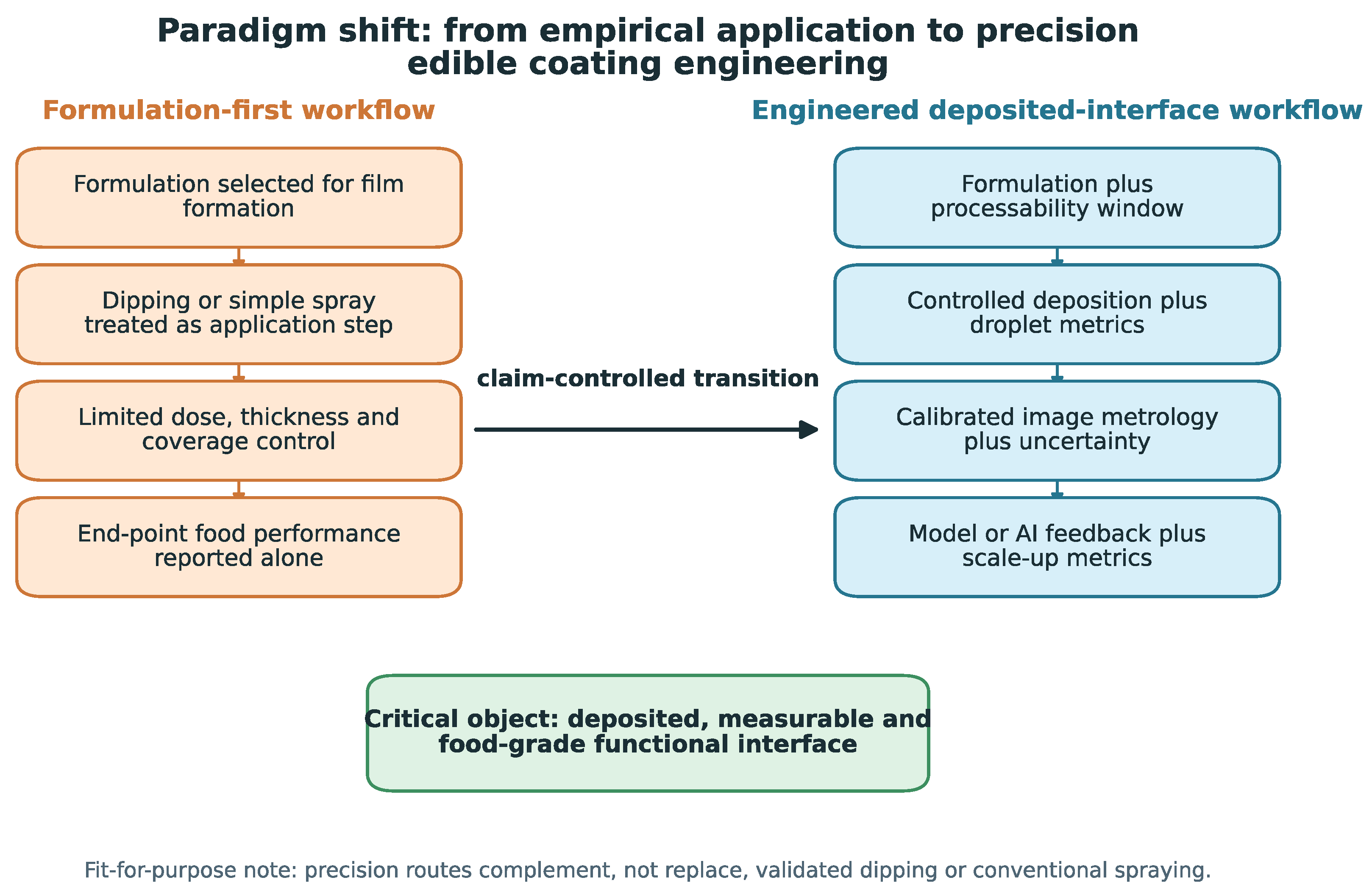
Figure 1.
Paradigm shift from empirical edible coating application to precision deposited-interface engineering. The diagram separates a formulation-first workflow from a claim-controlled engineering workflow in which processability, controlled deposition, image metrology, uncertainty and scale-up metrics are part of the evidence chain. The scheme is conceptual and does not imply universal superiority of AI, microfluidics or precision spray; each food-coating system requires validation.
Figure 1.
Paradigm shift from empirical edible coating application to precision deposited-interface engineering. The diagram separates a formulation-first workflow from a claim-controlled engineering workflow in which processability, controlled deposition, image metrology, uncertainty and scale-up metrics are part of the evidence chain. The scheme is conceptual and does not imply universal superiority of AI, microfluidics or precision spray; each food-coating system requires validation.
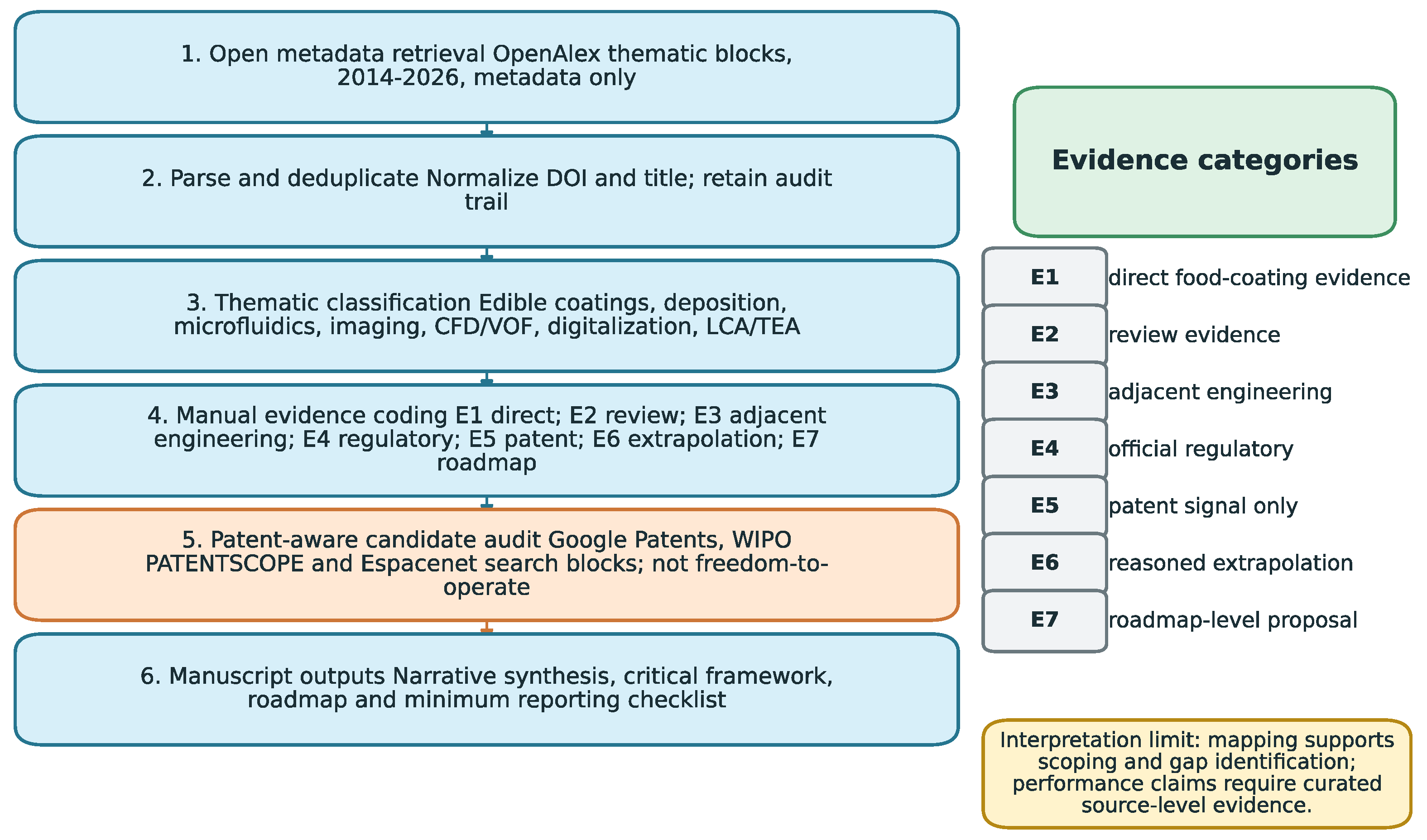
Figure 2.
Open evidence-mapping and claim-control workflow used in this review. OpenAlex metadata support thematic scoping and gap identification, whereas curated references are assigned evidence categories before they support manuscript claims. Patent-aware scouting is used only to identify disclosed technological activity and does not constitute a freedom-to-operate, patentability or regulatory assessment.
Figure 2.
Open evidence-mapping and claim-control workflow used in this review. OpenAlex metadata support thematic scoping and gap identification, whereas curated references are assigned evidence categories before they support manuscript claims. Patent-aware scouting is used only to identify disclosed technological activity and does not constitute a freedom-to-operate, patentability or regulatory assessment.
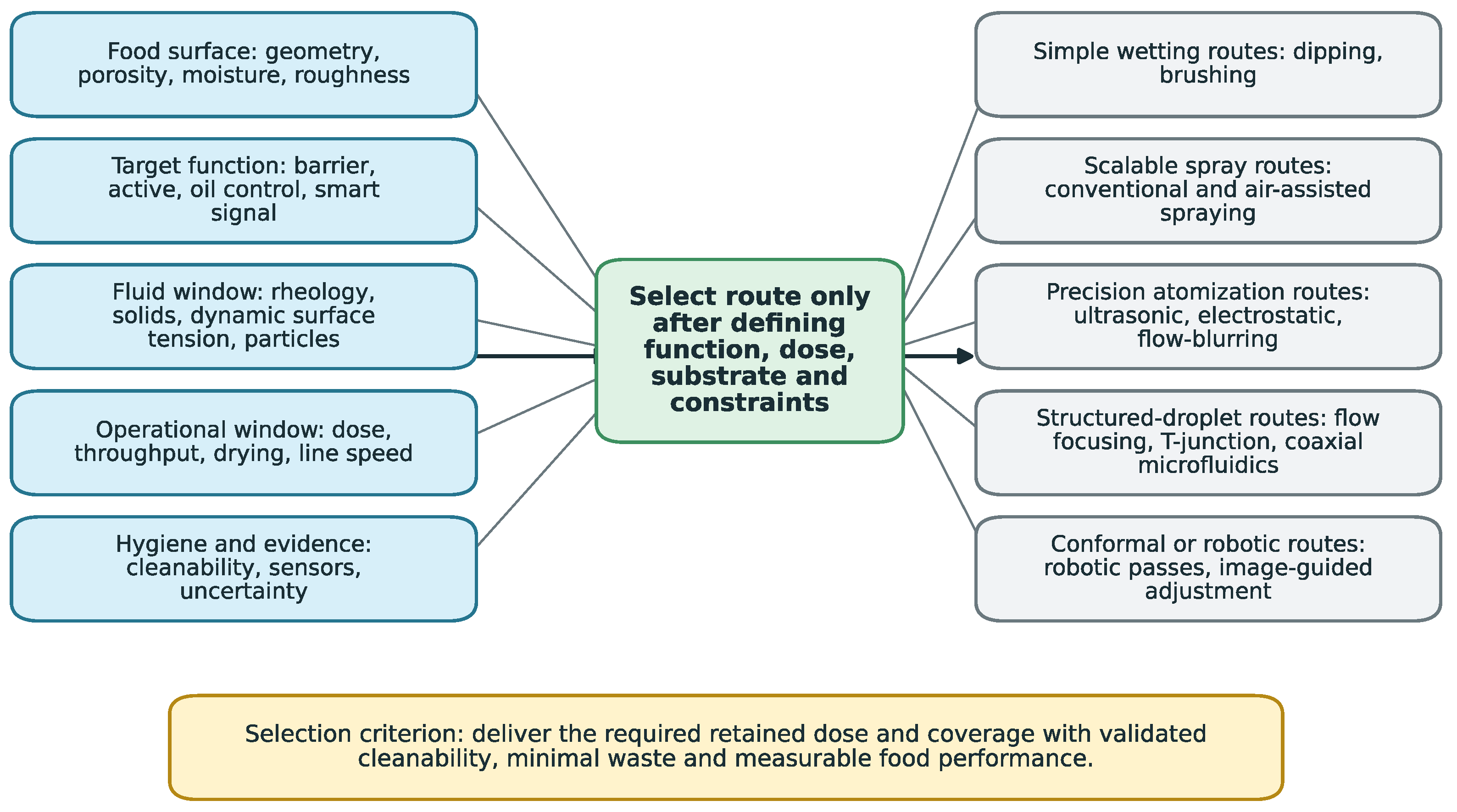
Figure 3.
Deposition-route selection logic for edible coating engineering. Route selection starts from food-surface constraints, target function, formulation processability, operating window, hygiene and measurement strategy, and only then considers dipping, conventional spraying, precision atomization, structured-droplet generation or robotic/conformal deposition. The framework is a decision aid, not a technology ranking.
Figure 3.
Deposition-route selection logic for edible coating engineering. Route selection starts from food-surface constraints, target function, formulation processability, operating window, hygiene and measurement strategy, and only then considers dipping, conventional spraying, precision atomization, structured-droplet generation or robotic/conformal deposition. The framework is a decision aid, not a technology ranking.
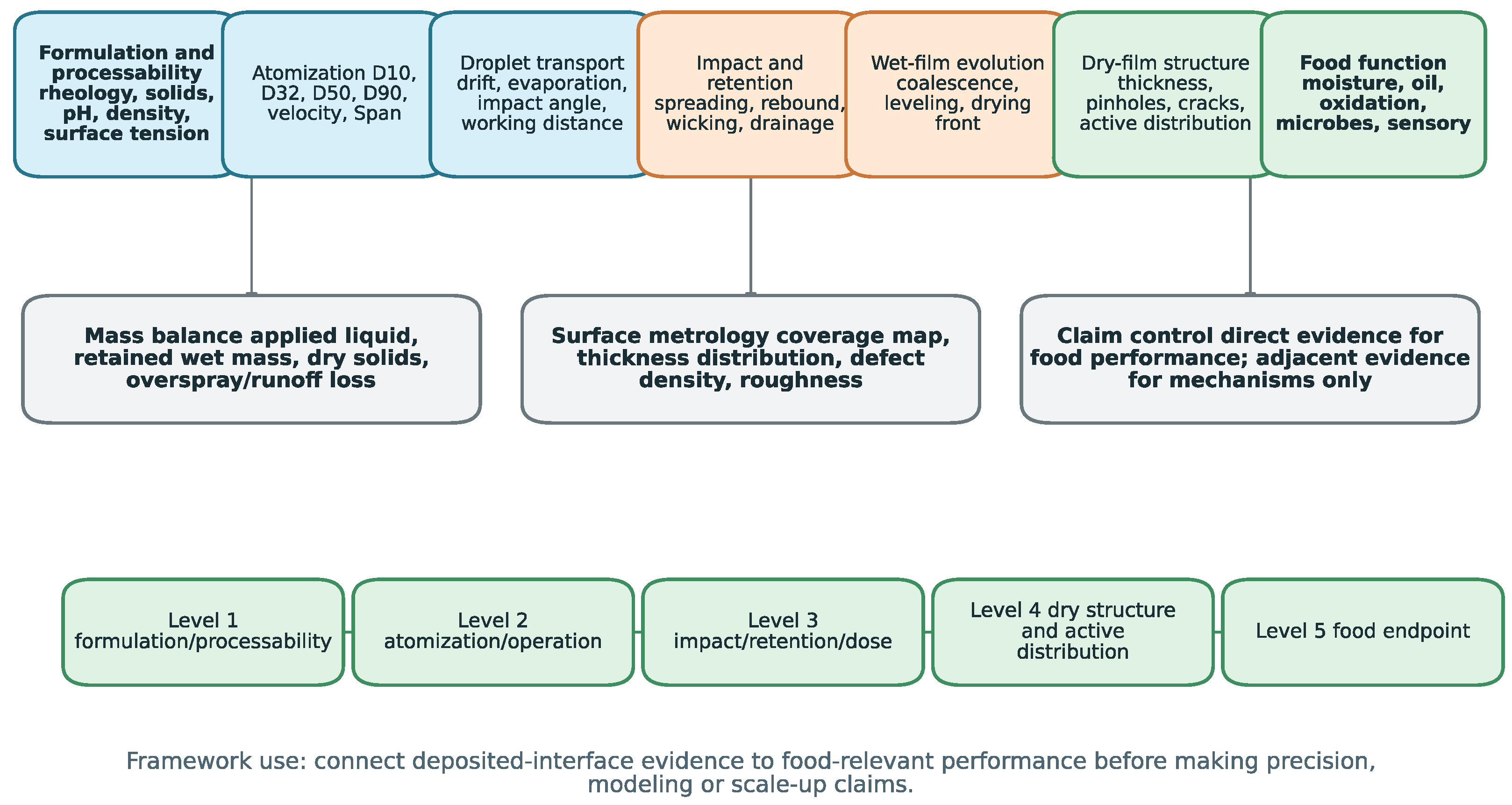
Figure 4.
Droplet-to-film-to-function framework for precision edible coatings. Liquid properties and process settings determine atomization, transport, impact, retention, wet-film evolution, dry-film structure and food-performance endpoints. Mass balance, calibrated surface metrology and claim-control evidence are required before precision, modeling, AI or scale-up claims are made.
Figure 4.
Droplet-to-film-to-function framework for precision edible coatings. Liquid properties and process settings determine atomization, transport, impact, retention, wet-film evolution, dry-film structure and food-performance endpoints. Mass balance, calibrated surface metrology and claim-control evidence are required before precision, modeling, AI or scale-up claims are made.
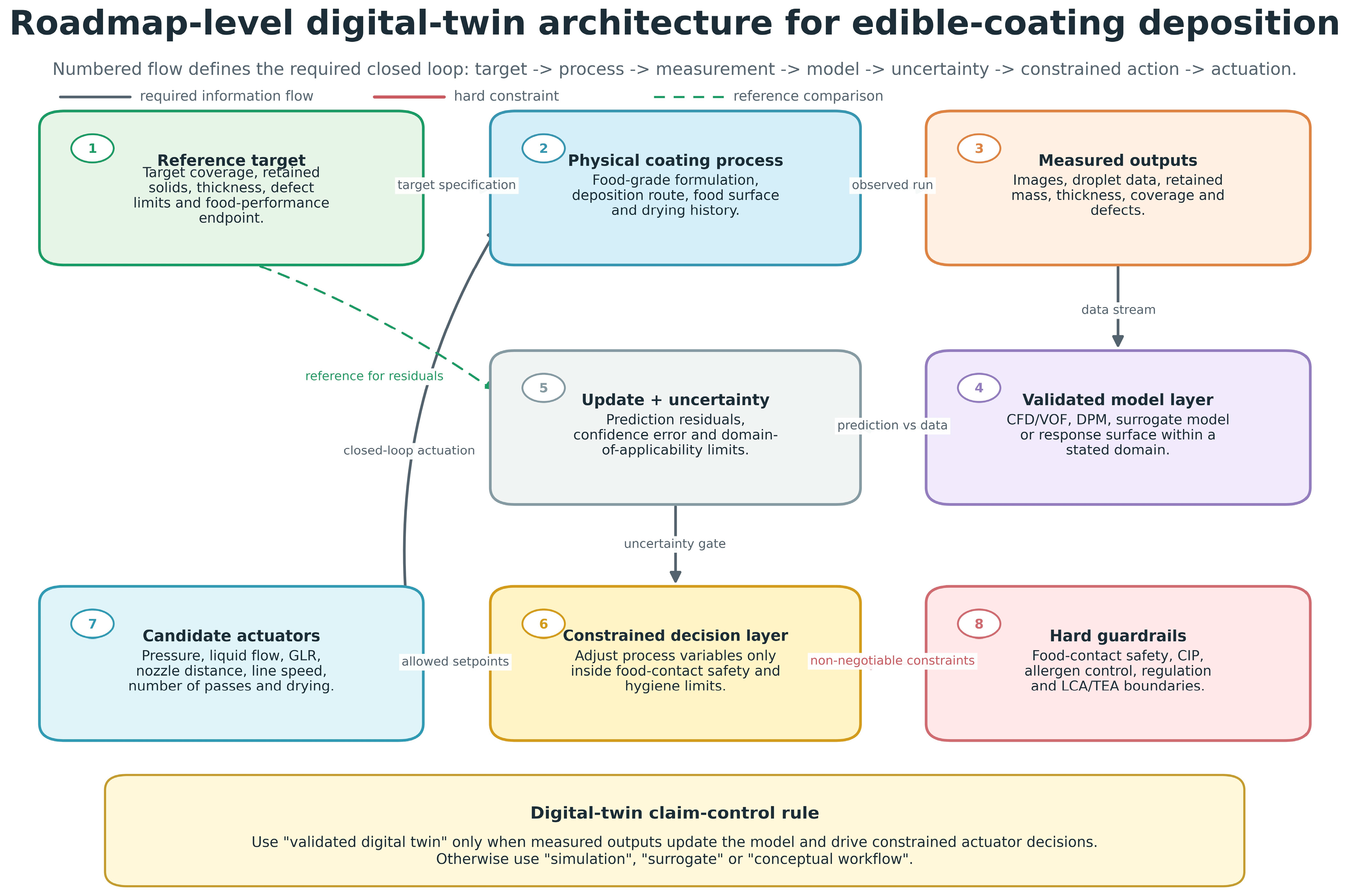
Figure 5.
A defensible loop requires a reference target, a physical coating process, measured outputs, a validated model layer, uncertainty updating and constrained actuator decisions within food-contact safety, hygiene and regulatory limits. Without measured outputs and experimental updating, the workflow should be described as a simulation or surrogate rather than a validated digital twin.
Figure 5.
A defensible loop requires a reference target, a physical coating process, measured outputs, a validated model layer, uncertainty updating and constrained actuator decisions within food-contact safety, hygiene and regulatory limits. Without measured outputs and experimental updating, the workflow should be described as a simulation or surrogate rather than a validated digital twin.
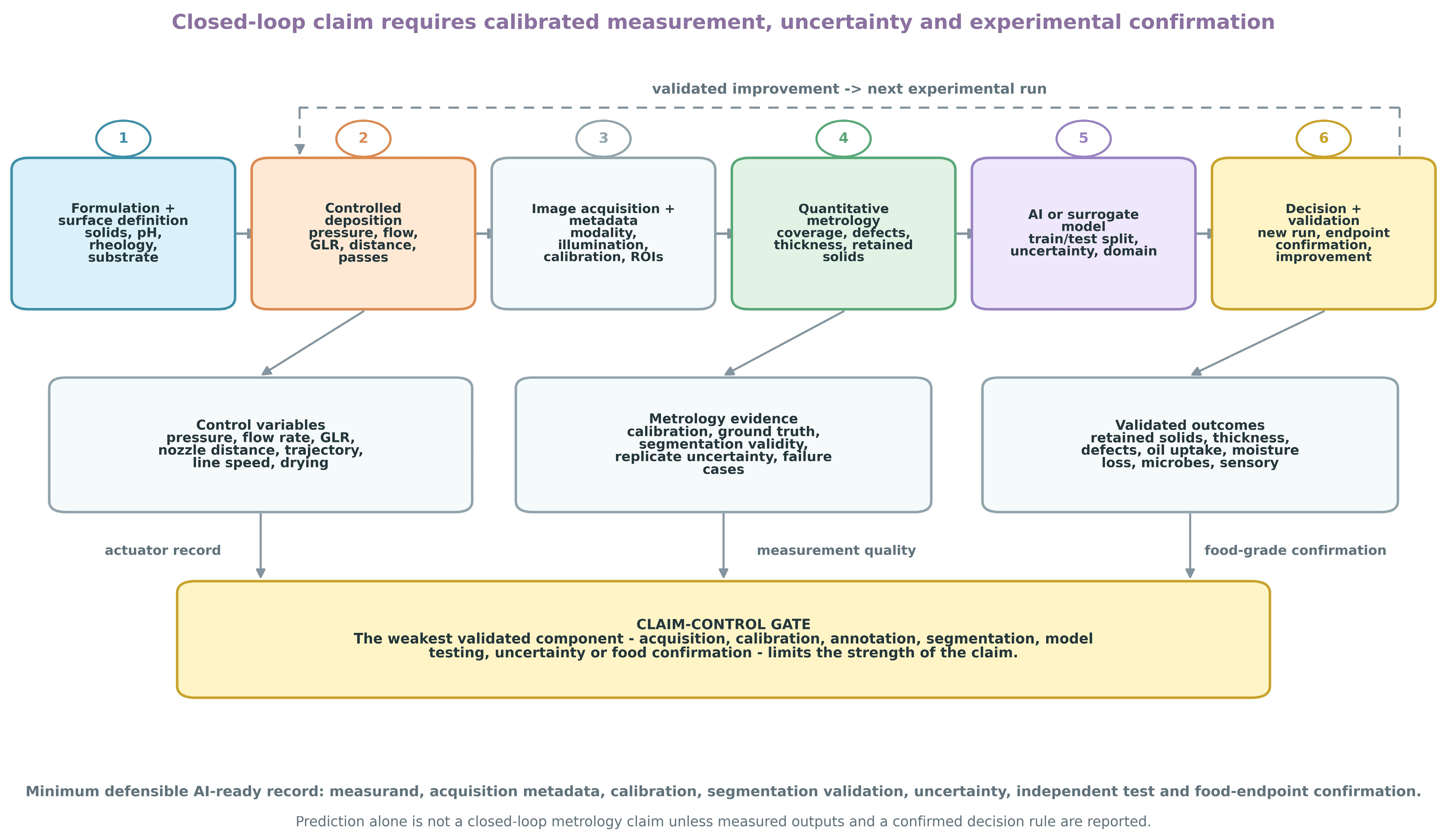
Figure 6.
Measurement-to-decision pipeline for AI-ready edible coating metrology. Image acquisition becomes actionable only when the measurand, metadata, calibration, segmentation validity, uncertainty, model testing, decision rule and experimental confirmation are reported. Suggested control variables include pressure, liquid flow rate, gas–liquid ratio (GLR), nozzle distance, trajectory, line speed and drying conditions.
Figure 6.
Measurement-to-decision pipeline for AI-ready edible coating metrology. Image acquisition becomes actionable only when the measurand, metadata, calibration, segmentation validity, uncertainty, model testing, decision rule and experimental confirmation are reported. Suggested control variables include pressure, liquid flow rate, gas–liquid ratio (GLR), nozzle distance, trajectory, line speed and drying conditions.
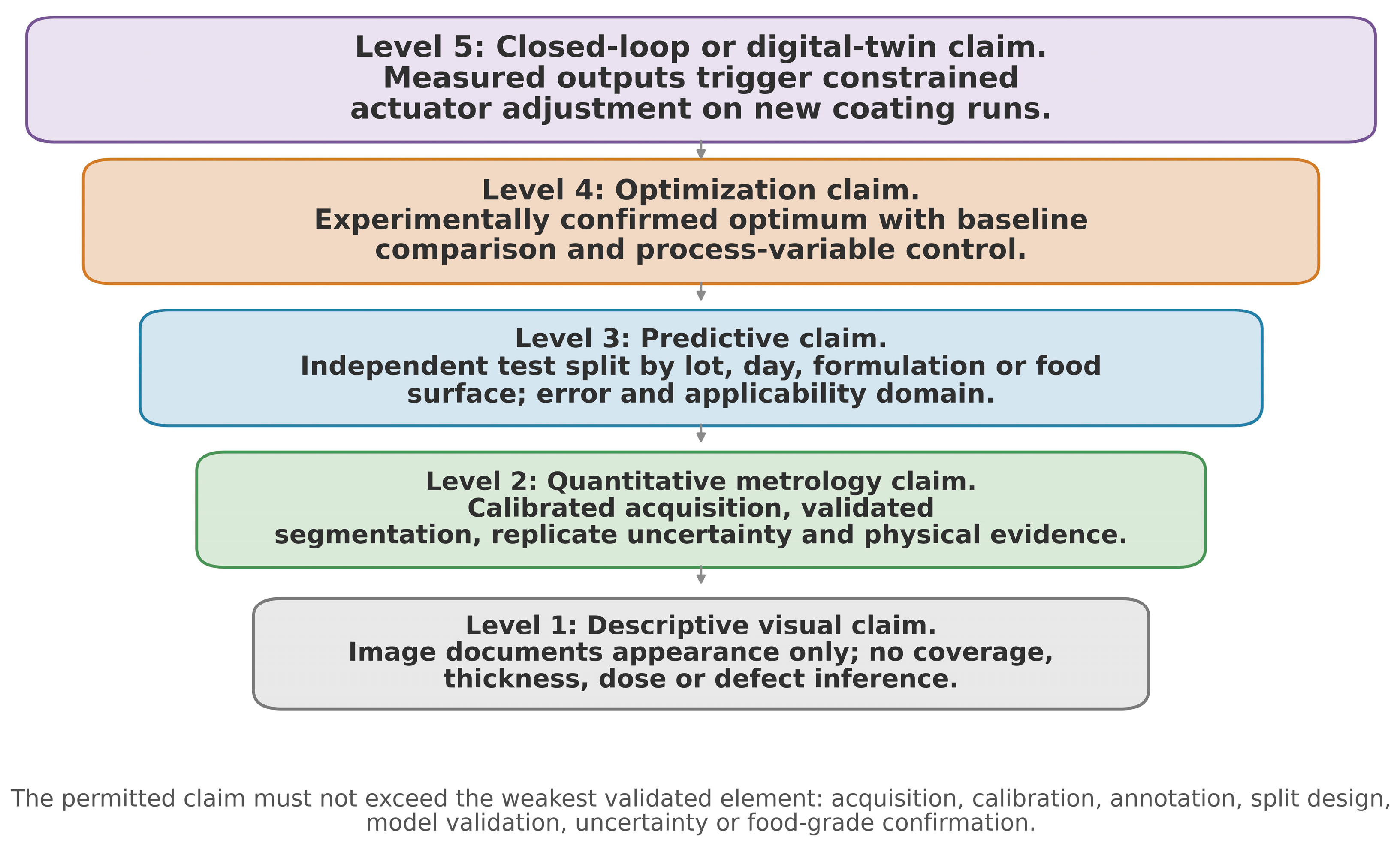
Figure 7.
AI claim-control hierarchy for edible coating image metrology. Descriptive images support qualitative discussion, but quantitative metrology, prediction, optimization and closed-loop or digital-twin claims require progressively stronger evidence, including calibrated measurements, independent testing, uncertainty reporting and confirmation on new coating runs.
Figure 7.
AI claim-control hierarchy for edible coating image metrology. Descriptive images support qualitative discussion, but quantitative metrology, prediction, optimization and closed-loop or digital-twin claims require progressively stronger evidence, including calibrated measurements, independent testing, uncertainty reporting and confirmation on new coating runs.
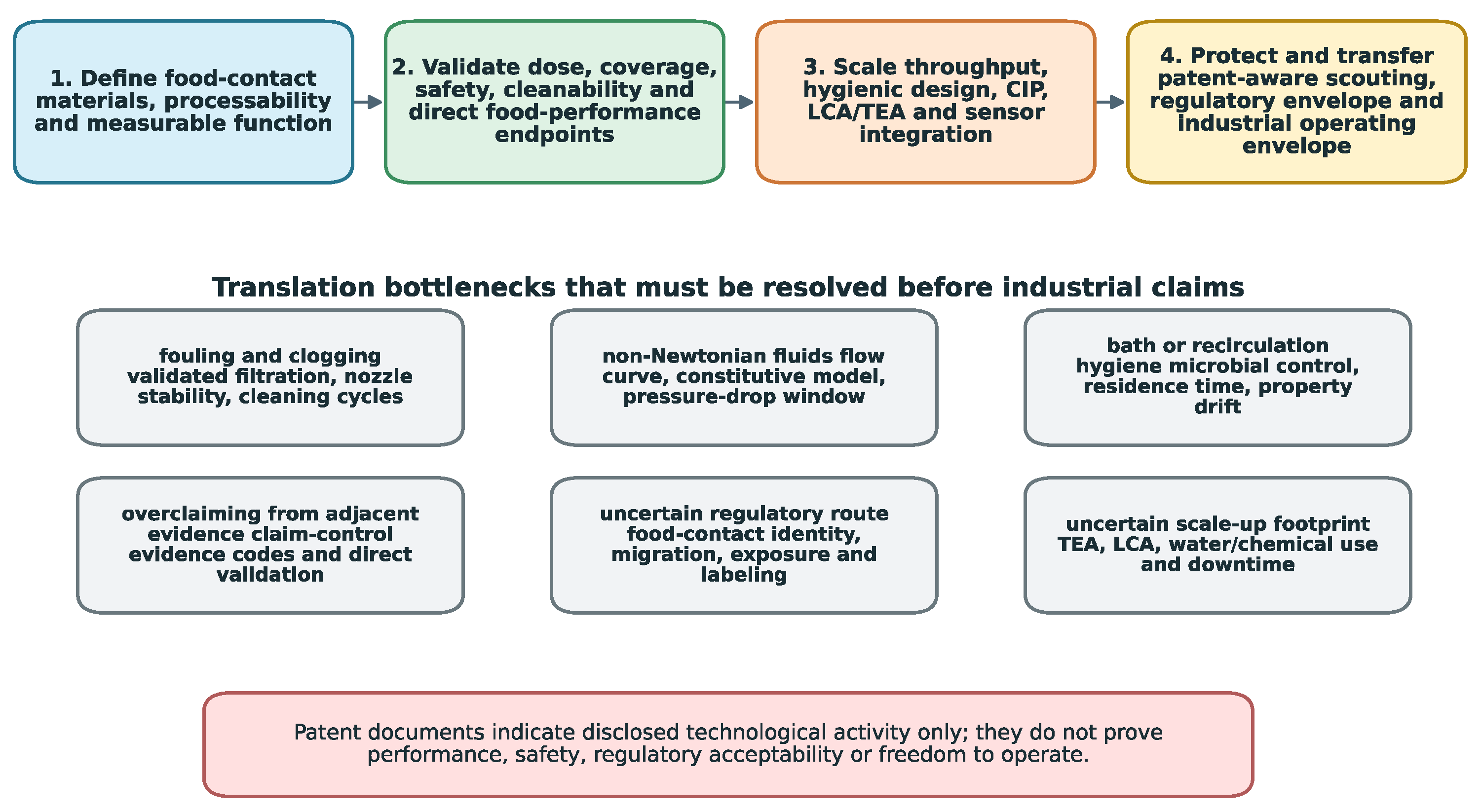
Figure 8.
Industrial translation and patent-aware technology roadmap. The roadmap connects processability, dose and coverage validation, food-contact safety, cleanability, scale-up, CIP, LCA, TEA, sensor integration and patent-aware scouting. Patent documents are interpreted as technology signals only and do not establish performance, regulatory acceptability or freedom to operate.
Figure 8.
Industrial translation and patent-aware technology roadmap. The roadmap connects processability, dose and coverage validation, food-contact safety, cleanability, scale-up, CIP, LCA, TEA, sensor integration and patent-aware scouting. Patent documents are interpreted as technology signals only and do not establish performance, regulatory acceptability or freedom to operate.
Table 1.
Open evidence-mapping search blocks used for scoping the review. Each block defines the thematic evidence stream and its role in linking edible coating formulation, deposition, metrology, modeling, translation and sustainability.
Table 1.
Open evidence-mapping search blocks used for scoping the review. Each block defines the thematic evidence stream and its role in linking edible coating formulation, deposition, metrology, modeling, translation and sustainability.
| Block | Scope | Role in the Review |
|---|
| A | Edible coatings and edible films | Core field definition; formulation and material-performance evidence. |
| B | Deposition and spray application | Links coating performance with application route, dose and transfer efficiency. |
| C | Microfluidics and carrier delivery | Mechanistic support for controlled droplets, carriers and active delivery. |
| D | AI, ML and image analysis | Supports data-driven optimization and intelligent metrology when food-relevant. |
| E | CFD, VOF and multiphase modeling | Methodological bridge for atomization, breakup and deposition physics. |
| F | Digital twins and Industry 4.0 | Roadmap-level support for closed-loop coating engineering. |
| G | LCA, TEA and circularity | Sustainability, cost and industry-transfer framing. |
Table 4.
Evidence-classification rules used to control claim strength. The categories separate direct edible coating evidence from reviews, adjacent engineering evidence, official regulatory sources, patent signals, reasoned extrapolations and roadmap-level proposals.
Table 4.
Evidence-classification rules used to control claim strength. The categories separate direct edible coating evidence from reviews, adjacent engineering evidence, official regulatory sources, patent signals, reasoned extrapolations and roadmap-level proposals.
| Code | Evidence Category | Permitted Use |
|---|
| E1 | Direct edible coating/food coating evidence | Direct claims about formulation, deposition or food performance. |
| E2 | Review evidence | Synthesis, background and gap identification. |
| E3 | Adjacent engineering evidence | Cautious methodological extrapolation for atomization, microfluidics, image analysis, CFD, VOF or AI. |
| E4 | Official regulatory evidence | Food-contact, safety, migration, regulation and standardization. |
| E5 | Patent evidence | Disclosed technological activity only. |
| E6 | Reasoned extrapolation | Cautious wording with explicit transfer limitation. |
| E7 | Roadmap-level proposal | Future direction; not validated industrial practice. |
Table 5.
Function-based classification of edible coating systems for engineering design. The table links intended coating function with typical materials, critical process variables, deposition concerns and minimum processability evidence.
Table 5.
Function-based classification of edible coating systems for engineering design. The table links intended coating function with typical materials, critical process variables, deposition concerns and minimum processability evidence.
| Function | Typical Materials | Critical
Variable | Deposition/Processability Concern | Minimum Processability Report | Selected Supporting References |
|---|
| Moisture-barrier coating | Lipids, waxes, protein–lipid or polysaccharide–lipid composites | Water-vapor transfer, continuity, adhesion | Brittleness, phase separation, poor wetting, wax crystallization, nozzle fouling and sensory residues | Flow curve, dynamic surface tension, emulsion/dispersion stability, filtration step, wetting/coverage map and cleanability | [5,15,16,17,18,30] |
| Oil-uptake reduction coating | Proteins, hydrocolloids, crosslinked systems | Continuity, adhesion, thermal stability | High viscosity, yield stress, thermal gelation, non-uniformity on porous fried surfaces and clogging during spraying | Shear-rate-dependent viscosity, yield stress when relevant, thermal history, D50/D90, retained solids and clogging time | [15,17,22,79] |
| Oxygen-barrier coating | Proteins and polysaccharides | Pinholes, humidity sensitivity, thickness | Defects, humidity-induced plasticization, thickness variability and poor control of dry-film continuity | Solids content, flow curve, drying conditions, coverage/thickness uncertainty and defect-density analysis | [3,15,16,17,18] |
| Antimicrobial coating | Chitosan, organic acids, essential oils, bacteriocins, phenolic extracts | Surface dose, release, safety | Active-compound loss, pH drift, emulsion instability, matrix crosslinking, microbial risk during recirculation and sensory impact | Active dose, pH/ionic strength, dynamic surface tension, rheology after active addition, microbial stability and recirculation tolerance | [3,7,10,12] |
| Antioxidant coating | Phenolics, extracts, protein–polyphenol systems | Stability and location of active compound | Phenolic–polymer interactions, viscosity increase, gelation, color change, oxidation during storage and fouling | Rheology before/after extract addition, color stability, oxygen/light exposure history, particle/aggregate size and filtration | [11,13,15,27] |
| Smart/responsive coating | pH indicators, anthocyanins, responsive matrices, nano-enabled indicators | Sensitivity, reversibility, safety and signal stability | Leaching, photobleaching, optical interference, altered rheology, nozzle clogging and uncertain food-contact safety | Indicator dose, leaching/photostability, signal-to-noise ratio, dynamic surface tension, flow curve after indicator incorporation and safety classification | [80,81,82,83] |
Table 6.
Comparative matrix of deposition technologies for precision edible coating engineering. Strengths, best-use cases and limitations should be interpreted relative to formulation rheology, food geometry, target dose, throughput, hygiene and metrology.
Table 6.
Comparative matrix of deposition technologies for precision edible coating engineering. Strengths, best-use cases and limitations should be interpreted relative to formulation rheology, food geometry, target dose, throughput, hygiene and metrology.
| Technology | Strength | Best Use | Main Limitation | Selected Supporting References |
|---|
| Dipping | Low cost and complete wetting | Simple geometries and broad contact | Dose control, bath hygiene and waste | [4,15,24,40,89,96,97] |
| Conventional spray | Industrial compatibility | Fruits, bakery, meat and fried matrices | Overspray, shadowing and variable droplet size | [15,29,55,56] |
| Ultrasonic spray | Fine droplets and thin layers | Low-flow precision coatings | Throughput, fouling and cost | [29,98] |
| Electrostatic spray | Improved transfer efficiency | Irregular surfaces and active coatings | Conductivity, safety and humidity sensitivity | [56] |
| Flow-blurring | Strong gas–liquid interaction | Precision atomization of selected fluids | Food-specific validation and solids tolerance | [22,48] |
| Microfluidic carrier or structured-droplet generation | Droplet precision and carrier design | Carrier preparation, structured droplets, active delivery studies, and low-throughput deposition tests | Numbering-up, cleaning and scale-up | [22,48,87,88,90,91,93,94] |
| Robotic/conformal deposition | Geometry-adaptive targeting | High-value complex surfaces | Cost, hygiene, speed and robust vision | [26,99,100,101,102,103] |
Table 7.
Formula-level interpretation of droplet descriptors, dimensionless groups and deposition-mode constraints for non-Newtonian edible coating fluids. Descriptors are engineering aids, not universal thresholds; their validity depends on the selected fluid model, measurement window, route and food surface.
Table 7.
Formula-level interpretation of droplet descriptors, dimensionless groups and deposition-mode constraints for non-Newtonian edible coating fluids. Descriptors are engineering aids, not universal thresholds; their validity depends on the selected fluid model, measurement window, route and food surface.
| Engineering Element | Suggested Definition or
Descriptor | Main Limitation in Edible
Coatings | Minimum Reporting or Validation |
|---|
| D10, D32, D50, D90, CV and Span | Distribution descriptors for fine fraction, surface-area scale, median scale, coarse tail and distribution width. | Distribution values can look favorable while transfer efficiency, velocity, drying, retention or coverage remain poor. | Report method, weighting basis, sample size, replicate runs, uncertainty, droplet velocity, working distance and environmental conditions. |
| Re_app | Re_app = ρ U D/μ_app; inertial-to-viscous ratio using apparent viscosity. | Low-shear viscosity can misrepresent nozzle passage, ligament breakup or spreading in shear-thinning fluids. | Report shear-rate window, rheological model, temperature, solids content, hydration/aging time and the viscosity value used. |
| We_dyn | We_dyn = ρ U2 D/σ_dyn; inertial-to-interfacial ratio during breakup or impact. | Equilibrium surface tension can be misleading when proteins, surfactants, lipids or phenolics adsorb during atomization. | Use dynamic or short-time surface tension when available; state measurement time scale and interface age. |
| Oh_app | Oh_app = μ_app/√(ρ σ D); combines viscous, inertial and interfacial effects. | A single Newtonian value can hide viscoelastic damping, gelation, particle burden or solids-induced breakup changes. | Report apparent viscosity, surface-tension basis, characteristic diameter, density and uncertainty. |
| Ca | Ca = μ_app U/σ; viscous-to-interfacial stress during spreading, leveling or drainage. | May fail when the wet layer develops yield stress, gelation, strong thixotropy or rapid solvent loss. | Report spreading time, substrate, temperature, liquid age and whether the liquid is Newtonian or non-Newtonian. |
| Bo | Bo = Δρ g D2/σ; gravity-to-capillarity ratio. | Small droplets may be capillary-dominated, whereas larger retained drops can drain or run off on curved or inclined foods. | Report orientation, curvature, residence time before drying and whether runoff/drainage was measured. |
| Pe | Pe = UL/α or Pe_m = UL/D_m; convective-to-diffusive transport. | Thermal or mass-transfer Pe values depend on the chosen length scale and diffusivity; misuse can obscure drying gradients. | Define whether Pe refers to heat, water, solvent or active-compound transport; report L, U, diffusivity and drying conditions. |
| De | De = λ/t_process; material relaxation time relative to process time. | Often omitted although elastic filament persistence, recoil or stringing can influence atomization and impact. | Report relaxation-time method when measurable; otherwise state that viscoelastic effects were not quantified. |
| Contact angle and hysteresis | Apparent, advancing and receding wetting descriptors. | Static contact angle alone does not capture roughness, porosity, absorption, time-dependent wetting or contact-line pinning. | Report substrate, droplet volume, time after deposition, temperature, humidity and model-surface rationale. |
| Transfer efficiency and retained mass | Applied liquid mass, retained wet mass, dry solids per area or food mass and overspray/runoff loss. | Coverage images can overestimate functional dose when material drifts, drains, penetrates or dries before impact. | Report mass-balance closure, surface-area estimation, retained wet mass, dry-solids conversion and uncertainty. |
| Route-specific constraints | Ultrasonic, pneumatic/flow-blurring, conventional or air-assisted spray restrictions. | Each route changes the relationship between rheology, breakup, droplet statistics, fouling and throughput. | Report nozzle type, frequency or pressures, liquid/gas flow rates, GLR, pressure stability, clogging/fouling time and sequential-run repeatability. |
| Drying and defect descriptors | Wet-to-dry conversion, thickness dispersion, pinholes, cracks, edge thickening and active distribution. | A uniform wet layer can dry into a cracked, edge-thickened or compositionally heterogeneous dry film. | Report drying temperature, relative humidity, airflow, residence time, surface temperature, imaging method, defect definition and replicate stability. |
Table 8.
Tiered reporting matrix for precision edible coating studies. Core tiers support reproducibility; advanced tiers are required when the manuscript claims precision deposition, modeling, AI optimization, digital-twin readiness or industrial translation.
Table 8.
Tiered reporting matrix for precision edible coating studies. Core tiers support reproducibility; advanced tiers are required when the manuscript claims precision deposition, modeling, AI optimization, digital-twin readiness or industrial translation.
| Validation Tier | Metric or Evidence Layer | Role in Edible Coating
Engineering | Recommended Reporting Logic |
|---|
| Level 1: formulation/processability | Composition, solids, density, pH, rheology, surface tension and stability. | Defines whether the liquid can plausibly be pumped, atomized, deposited and dried. | Report temperature, hydration/aging time, rheological model, shear-rate window, surface-tension basis and filtration/particle status. |
| Level 2: atomization and operating variables | D10, D32, D50, D90, CV, Span, velocity, nozzle geometry, flow rate, pressure, GLR, working distance, angle and environment. | Connects droplet formation and transport to the process window. | Report equipment geometry, method, sample size, weighting basis, confidence interval, pressure/flow stability, temperature, relative humidity, airflow and replicate runs. |
| Level 3: impact, wet film and delivered dose | Retention, rebound/splash, spreading, wicking, drainage, coverage map, dry solids per unit area or food mass, transfer efficiency and overspray/runoff loss. | Determines how much coating actually remains and how it is distributed before drying. | Report retained wet mass, drainage time, solids conversion, surface-area estimation method, image calibration, segmentation method, mass-balance closure and uncertainty. Report mass-balance closure error (%) and define whether evaporative loss was measured or estimated. |
| Level 4a: dry structure | Thickness, thickness dispersion, pinholes, cracks, edge thickening, optical defects and film continuity. | Connects deposition pattern with barrier, release and sensory function. | Use cross-section, profilometry, mass-balance estimate or validated imaging; report defect definition, analysis area, drying conditions and replicate variability. |
| Level 4b: active distribution and drying uncertainty | Active-compound location, drying time, temperature, humidity, airflow, surface temperature and wet-to-dry conversion. | Controls antimicrobial, antioxidant, barrier and sensory outcomes. | Report whether drying is in-line or post-process, whether active compounds are surface-localized or embedded, and whether drying alters release or activity. |
| Level 5: food endpoint | Oil uptake, moisture loss, oxidation, microbial counts, respiration, texture, color, gloss, sensory acceptance or shelf life. | Links film structure to real food performance. | Report food matrix, storage/processing conditions, endpoint method, controls, statistics, food-relevant replication and failure cases. |
| Claim-control layer | Evidence category and validation depth. | Prevents overclaiming from adjacent engineering evidence or small laboratory datasets. | Use direct edible coating evidence for food-performance claims; use adjacent evidence only for mechanisms, measurement selection or validation requirements. |
Table 9.
Minimum reporting and validation matrix for intelligent image metrology in edible coating engineering. The table links imaging tasks to measurable outputs, suitable modalities, likely artifacts and validation requirements.
Table 9.
Minimum reporting and validation matrix for intelligent image metrology in edible coating engineering. The table links imaging tasks to measurable outputs, suitable modalities, likely artifacts and validation requirements.
| Imaging Task | Measured Output | Suitable Modality or
Approach | Critical Artifacts | Minimum Validation/Reporting Requirement |
|---|
| Droplet and spray characterization | D10, D32, D50, D90, Span, velocity, drift-prone fine fraction | High-speed imaging, shadowgraphy, laser diffraction or calibrated droplet imaging | Motion blur; out-of-plane droplets; threshold bias; evaporation before impact | Report acquisition rate, exposure time, sampling volume, weighting basis, sample size, calibration, velocity basis and replicate variability. |
| Wet surface coverage | Percent coverage, wet-area fraction, coalescence and local gaps | Controlled RGB/macro imaging, fluorescence-assisted imaging or controlled illumination | Specular highlights; shadows; wet patches; food-color heterogeneity; curved surfaces | Report ROI definition, blank controls, spatial calibration, illumination geometry, segmentation method, ground truth and confidence intervals. When RGB imaging is used, include a color/illumination reference and flat-field correction. |
| Dry-film continuity | Pinholes, cracks, islands, dry gaps and edge thickening | Microscopy, fluorescence, cross-sectional imaging, profilometry or optical inspection | Resolution below defect scale; drying shrinkage; optical contrast loss | Report defect definition, minimum detectable defect size, defect density per area, replicate surfaces, drying conditions and uncertainty. |
| Thickness and topography | Mean thickness, thickness coefficient of variation, roughness and edge-thickening ratio | Profilometry, OCT, confocal microscopy, cross-section microscopy or mass-per-area conversion | Porosity; penetration into food; surface curvature; film swelling | Report calibration, measurement grid, wet/dry state, number of profiles or points and independent mass-balance support. |
| Color, gloss and optical response | Delta E, gloss variation, indicator response and visual uniformity | Calibrated RGB, colorimetry, multispectral or hyperspectral imaging | Illuminant drift; sensor white balance; background; surface wetness | Report color space, white/black calibration, illumination, camera settings, reference target and time after deposition. |
| Active-compound localization | Spatial distribution of antioxidants, antimicrobials, indicators or carriers | Fluorescence, hyperspectral imaging, chemical mapping or labeled tracer studies | Quenching; leaching; photobleaching; matrix autofluorescence | Report marker chemistry, calibration curve or qualitative status, stability, leaching control, signal-to-noise ratio and functional endpoint. |
| Drying kinetics | Drying-front velocity, area shrinkage, crack-onset time and wet-to-dry transition | Time-lapse imaging, thermal imaging or gravimetry-coupled imaging | Temperature gradients; airflow variability; surface cooling; changing reflectance | Report time resolution, humidity, temperature, airflow, surface temperature, mass loss and replicate drying runs. |
| AI segmentation or defect detection | Pixel-level mask, object-level defect counts and class labels | Classical segmentation, U-Net, Mask R-CNN or another validated model | Annotation bias; class imbalance; leakage between images from the same batch | Report split by lot/day/formulation, Dice/IoU, precision, recall, confusion matrix, external validation and failure examples. |
Table 10.
AI/ML use cases, validation boundaries and permitted claims in edible coating engineering. Each use case is constrained by its inputs, outputs, main risk and minimum evidence needed to avoid overclaiming.
Table 10.
AI/ML use cases, validation boundaries and permitted claims in edible coating engineering. Each use case is constrained by its inputs, outputs, main risk and minimum evidence needed to avoid overclaiming.
| AI/ML Use Case | Typical Inputs | Typical Outputs | Main Risk | Minimum Validation/Permitted Claim |
|---|
| Image segmentation | Calibrated images, masks, annotations and lighting metadata | Coverage, masks and defect labels | Learning lighting, background or batch artifacts | Independent test split by lot/day; Dice/IoU; precision/recall; failure examples. Permitted claim: validated image-metrology tool for the studied setup. |
| Defect detection | Microscopy, RGB or fluorescence images and expert labels | Pinholes, cracks, islands and edge defects | Class imbalance and false negatives | Sensitivity, specificity, F1, minimum detectable defect size. Permitted claim: defect-screening method within defined resolution and substrate range. |
| Property-performance prediction | Rheology, surface tension, solids, pH and process variables | Coverage, thickness, oil uptake, moisture loss or shelf-life endpoint | Overfitting small formulation datasets | External validation or leave-lot/day/formulation-out testing; baseline comparison. Permitted claim: predictive model for the validated formulation-food-process domain. |
| Surrogate model for CFD/VOF or experiments | Simulation outputs, experimental droplet data and process variables | Fast estimates of droplet descriptors, deposition flux or coverage probability | Learning simulation bias or invalid boundary conditions | Validation against measured coating outcomes, not only against simulations. Permitted claim: surrogate within the validated operating domain. |
| Bayesian or active-learning optimization | Candidate formulations, process variables, objectives and constraints | Next experiment, Pareto set or operating window | Optimizing an artifact or unsafe/unfeasible condition | Report acquisition function, feasible domain, stopping rule, uncertainty and confirmation run. Permitted claim: experimentally confirmed optimization within stated constraints. |
| Digital twin or closed-loop control | Sensor stream, calibrated model, control variables and endpoint target | Updated prediction and constrained process adjustment | Calling a static model a digital twin | Online or batch updating, validated feedback signal and confirmation on new runs. Permitted claim: roadmap level unless closed-loop validation is shown. |
| Explainable AI and diagnosis | Feature importance, SHAP/LIME-type summaries, process metadata | Ranked drivers, failure hypotheses and process windows | Interpreting correlation as mechanism | Use as hypothesis support, checked against physical knowledge and designed experiments. Permitted claim: interpretive support, not mechanistic proof. |
Table 11.
Food-performance endpoints linked to coating engineering variables. The endpoints should be statistically connected to retained dose, coverage, thickness, continuity, defects and drying history rather than interpreted from formulation alone.
Table 11.
Food-performance endpoints linked to coating engineering variables. The endpoints should be statistically connected to retained dose, coverage, thickness, continuity, defects and drying history rather than interpreted from formulation alone.
| Food System | Main Problem | Coating Logic | Critical Endpoints |
|---|
| Fried foods | Oil uptake and moisture loss | Protein/polysaccharide barrier; controlled spray or flow-blurring | Oil uptake, moisture retention, texture, color, sensory acceptance. |
| Fruits and vegetables | Dehydration, respiration and microbial spoilage | Polysaccharide/lipid/active coatings; dipping or spray | Weight loss, firmness, respiration, microbial counts, appearance. |
| Meat and seafood | Oxidation and microbial growth | Chitosan/protein/active coatings; spray/electrostatic | TBARS, microbial counts, color, odor, sensory quality. |
| Bakery products | Moisture migration and texture loss | Hydrocolloid/protein coatings; localized spray | Water activity, texture profile, staling, sensory quality. |
| Cheese and dairy surfaces | Mold, dehydration and surface defects | Protein/lipid/antimicrobial coatings; multilayer spray | Shelf life, mold growth, moisture loss, flavor. |
Table 12.
Industrial barriers and engineering responses for scalable edible coating implementation. The barriers translate laboratory formulation success into process, hygiene, safety, regulatory, economic and monitoring requirements.
Table 12.
Industrial barriers and engineering responses for scalable edible coating implementation. The barriers translate laboratory formulation success into process, hygiene, safety, regulatory, economic and monitoring requirements.
| Barrier | Cause | Engineering Response |
|---|
| Clogging | Solids, gelation, aggregates or fibers | Filtration, rheological control, removable nozzle and cleaning validation. |
| Droplet variation | Unstable pressure, flow rate or viscosity drift | Sensors, flow control and image-based monitoring. |
| Low uniformity | Irregular geometry and shadowed regions | Vision-guided trajectories and coverage feedback. |
| Contamination | Residues in lines or baths | Good Manufacturing Practice (GMP), HACCP and CIP. |
| High cost | Specialized equipment and low throughput | Modular scale-up and TEA. |
| Weak sustainability claim | Circular source without quantified impact | LCA and food-loss reduction metrics. |




 ,
,