Article

HiPIMS-Deposited Nb/NbC/C Multilayer Coatings on 316L Stainless Steel for PEMFC Bipolar Plates

1
School of Mechanical Engineering, Shandong University of Technology, Zibo 255000, China
2
Institute of Mechanics, Chinese Academy of Sciences, Beijing 100190, China
*
Authors to whom correspondence should be addressed.
Coatings 2026, 16(6), 707; https://doi.org/10.3390/coatings16060707 (registering DOI)
Submission received: 21 May 2026 / Revised: 8 June 2026 / Accepted: 12 June 2026 / Published: 13 June 2026
(This article belongs to the Section Surface Characterization, Deposition and Modification)

Highlights

  • Nb/NbC/C multilayer coatings were successfully prepared on 316L stainless steel by HiPIMS, showing good potential for use in PEMFCs.
  • Adjusting the NbC interlayer deposition time significantly changed the sp2, sp3 bond contents and the coating adhesion.
  • Nb/NbC/C multilayer coating exhibits desirable corrosion resistance and electrical conductivity, satisfying the 2025 technical targets set by the U.S. Department of Energy (DOE).

Abstract

In view of the fact that there are few reports on the preparation of NbC coating by high-power pulsed magnetron sputtering (HiPIMS) technology. In this study, the effects of NbC interlayer thickness on the microstructure, corrosion resistance and electrical conductivity of Nb/NbC/C multilayer coatings for proton exchange membrane fuel cell (PEMFC) bipolar plates were studied by using the high ionization characteristics of HiPIMS technology. A series of Nb/NbC/C multilayer coatings with varying NbC interlayer thicknesses was deposited via HiPIMS by modulating the deposition time (20, 40, and 60 min). The microstructure and properties of the coatings were characterized using scanning electron microscopy (SEM), Raman spectroscopy, interfacial contact resistance (ICR), and corrosion current, among other methods. The results indicate that as the NbC interlayer thickness increases, the total coating thickness increases from 0.43 μm to 1.42 μm. All coatings exhibit a uniform and dense microstructure lacking typical coarse columnar structures. Raman and XPS analyses show that the ID/IG ratio increases from 1.98 to 4.04, indicating an increase in sp2-hybridized bond content and a decrease in sp3 content. At a deposition time of 60 min, the coating achieved optimal performance, yielding a critical load (Lc1) of 31.9 N, the lowest average friction coefficient (0.27), the minimum corrosion current density, and an interfacial contact resistance of 7.5 mΩ·cm2. These results demonstrate that the NbC interlayer thickness significantly governs the structure and properties of the Nb/NbC/C multilayer coatings. Specifically, an appropriate increase in the NbC interlayer thickness optimizes the sp2/sp3 hybrid bond ratio, thereby enhancing the overall coating performance.

1. Introduction

In the harsh operational environment of proton exchange membrane fuel cells (PEMFCs), metal bipolar plates must not only withstand long-term erosion from acidic corrosive solutions, but also maintain excellent electrical conductivity to ensure high energy conversion efficiency [1,2]. Stainless steel has emerged as an attractive candidate material for bipolar plates due to its good performance in terms of mechanical strength, formability, and thermal conductivity, as well as relatively low cost. However, in the acidic environment, it suffers from severe electrochemical corrosion, leading to significantly increased contact resistance and decreased corrosion resistance [3,4]. Surface protective coating technology has become an effective means to overcome this critical limitation.
In the acidic operating environment of PEMFCs, titanium (Ti) and chromium (Cr) are prone to passivation, forming TiO2 and Cr2O3 films that offer initial corrosion protection. However, these passive films tend to dissolve slowly under long-term service conditions. In contrast, niobium (Nb) forms a highly stable Nb2O5 passive film within the typical operating potential and pH range of PEMFCs [5], exhibiting excellent insolubility. Supporting this, the German Aerospace Center (DLR) [6] conducted a durability test on Nb-based coatings using a fuel cell electrolyzer platform, reporting a lifetime of up to 14,000 h. These results confirm the superior application stability of Nb, highlighting its broad potential for bipolar plate protection. Although Nb exhibits exceptional corrosion stability, the native Nb2O5 passive film suffers from poor electrical conductivity, which may increase the interfacial contact resistance of the bipolar plate. Therefore, the carbon element is introduced to form a high proportion of sp2 hybrid bonds, which can improve the graphitization degree of the coating and effectively reduce the interface contact resistance. Sala [7] prepared nanostructured NbC coatings with variable Nb and C content through direct current magnetron sputtering and improved the tribological properties. Zhang [8] used plasma surface modification technology to prepare an NbC modified layer on the surface of the titanium plate to improve the performance of the bipolar plate. The titanium bipolar plate prepared by this method still has a certain degree of corrosion, and the current density is 3–4 × 10⁻⁶ A·cm−2. In contrast to conventional physical vapor deposition and chemical vapor deposition techniques, the HiPIMS technology employed in this study generates high-density plasma via high-power pulses. As the coating thickness increases, high-energy ions bombard the growth surface under bias acceleration, promoting surface adatom migration and subsurface implantation effects. These mechanisms drive the evolution of the coating microstructure, thereby exerting a significant influence on the final coating performance [9]. Particularly in HiPIMS multilayer systems, the deposition time of the functional interlayer has been identified as a critical process parameter governing the microstructure and properties of the coating [10].
In this work, Nb/NbC/C multilayer coatings were deposited via HiPIMS technology. Specifically, the carbon top layer was designed to ensure excellent electrical conductivity, while the metallic Nb buffer layer served as a transitional buffer to enhance adhesion between the substrate and the functional NbC interlayer. By controlling the deposition time of the NbC interlayer, a series of Nb/NbC/C multilayer coatings with different thicknesses of NbC interlayer were prepared. The effect of interlayer thickness on the microstructure, composition, mechanical properties, and corrosion resistance of the multilayer coatings was systematically investigated with the aim of optimizing their performance for PEMFC bipolar plate applications.

2. Materials and Methods

2.1. Preparation of Coatings

The Nb/NbC/C multilayer coating was prepared using HiPIMS vacuum deposition system. The experimental parameters were set as: pulse frequency 100 Hz, pulse width 100 μs, and operating voltage 650 V. Niobium (Nb) and carbon target materials were used, and the working gases were pure argon (99.99%). Stainless steel and silicon wafers were selected as the substrate. The distance between the substrate bracket and the target was fixed, and the substrate bracket was allowed to rotate at a speed of 18 rpm during the deposition process. The samples were polished sequentially using 80, 240, 500, 1000, 2000, and 3000 # mesh silicon carbide sandpaper, and then the surface of the substrate was polished to a mirror effect. Subsequently, all samples were ultrasonically cleaned with alcohol for 15 min to remove surface impurities and ensure good adhesion of the coating. Before deposition, a molecular pump system was used to reach a basic pressure of about 5 × 10⁻³ Pa in the vacuum chamber, and a bias voltage of 600 V was applied to the substrate support under 0.8 Pa argon pressure for 30 min. The sample surface was glow cleaned, and then the Nb target was sputtered in pure argon for 5 min to increase the bonding force between the sample and the substrate. After that, the multilayer coating was sputtered at different deposition times of 20, 40, and 60 min, and finally the carbon top layer was deposited for 5 min. According to the different deposition times, the three samples are represented by the numbers NbC-1, NbC-2, and NbC-3, respectively. The key parameters of the coating deposition process are shown in Table 1.

2.2. Characterization of Coatings

The surface morphology and elemental composition of the coating were examined by a SUPRA55 scanning electron microscope (SEM, ZEISS, Oberkochen, Germany). X-ray diffraction (XRD, Rigaku D/Max 2550, Matsumoto, Japan) with CuKα radiation in grazing incidence mode (2°) was used to determine the phase composition and crystal structure of the coatings. An X-ray photoelectron spectrometer (XPS, 250XI, Thermo Fisher Scientific, Horsham, UK) was used to analyze and study the element types and chemical states of the coating, using a single Al Kα radiation source as the excitation source. The LabRAM HR Evolution type Raman produced in Kyoto, Japan was used to analyze the material composition of the coating. The parameter settings were spectral test range 1100~2000 cm−1, laser 532 nm, and integration time 60 s. The MFT-4000 (Lanzhou Huahui Instrument Technology China) multifunctional material surface performance tester was used to test the wear resistance and bonding strength of the coating. The loading rate of the scratch test was 100 N/min (range 0 to 50 N), and the scratch length was 5 mm. The main test conditions of wear test include: the grinding ball material is WC-Co ball with a diameter of 5 mm; the applied load is 5 N; the sliding mode is reciprocating (friction speed 240 mm/min, friction length 5 mm).
The CHI600C (Shanghai Chenhua Instrument China) electrochemical workstation and a three-electrode system were used for electrochemical testing. The reference electrode was a saturated calomel electrode (SCE), the auxiliary electrode was a platinum electrode, and the sample was used as the working electrode. The exposed working area of the sample was 7 cm2. The solution parameter used for testing was a sulfuric acid solution with a mass concentration of 0.5 mol/L. Prior to each electrochemical measurement, the coated samples were ultrasonically cleaned in ethanol, mounted in the corrosion test cell, and allowed to stabilize at the open-circuit potential (OCP) for 5 min. Subsequently, potentiodynamic polarization tests were conducted. All electrochemical measurements were performed at least three times to ensure reproducibility and reliability.

3. Results

3.1. Microstructural Analysis of Nb/NbC/C Multilayer Coating

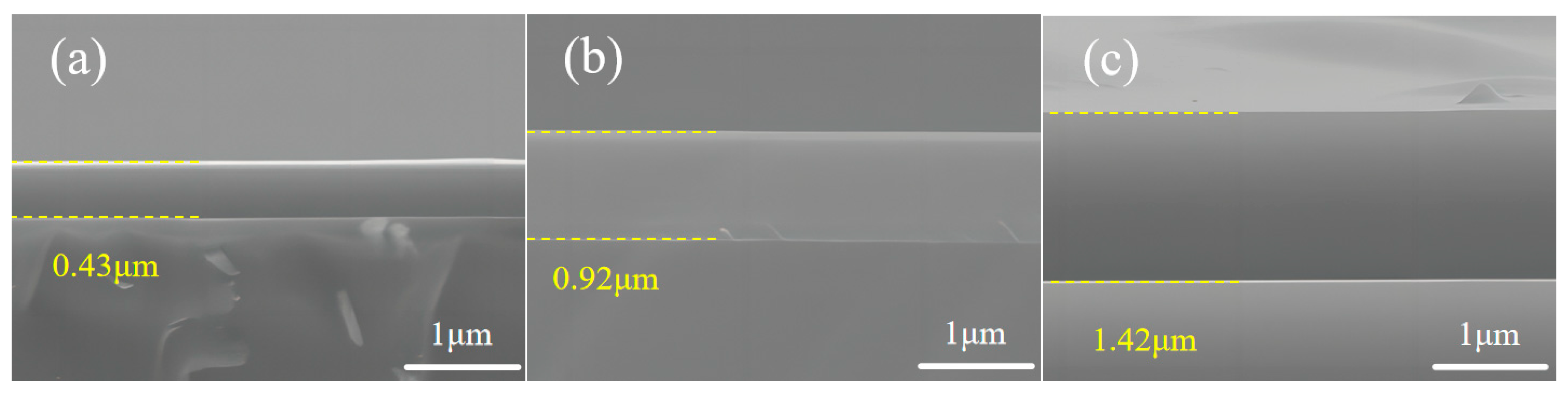
The morphology of the sample after coating treatment was characterized. Figure 1 shows the scanning electron microscope images of Nb/NbC/C multilayer coatings with different NbC interlayer thicknesses. The coating structure is uniform and dense, showing a fine-grained structure without the appearance of coarse columnar crystals, and can be well combined with the matrix [11], which helps the multilayer coating to prevent matrix corrosion. As can be seen from Figure 1, the thickness of the multilayer coating prepared under the conditions of NbC interlayer deposition time of 20 min, 40 min and 60 min is 0.43 μm, 0.92 μm and 1.42 μm, respectively. The thickness of each sublayer was calculated based on deposition rates calibrated via single-layer experiments under identical HiPIMS conditions, as presented in Table 2.
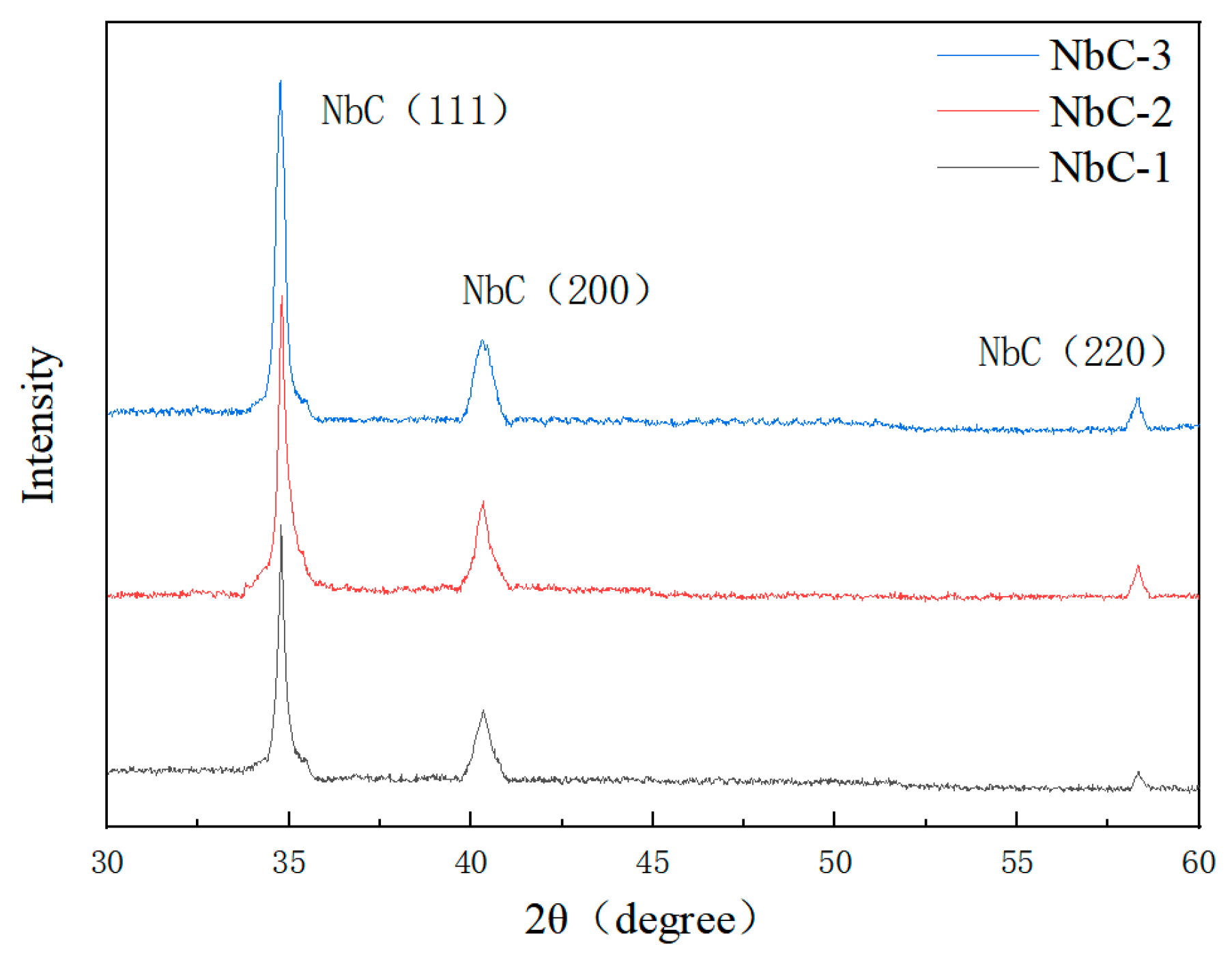
Figure 2 presents the XRD patterns of the Nb/NbC/C multilayer coatings with varying NbC interlayer thicknesses. All coatings exhibit three distinct diffraction peaks located at 2θ = 34.7°, 40.3°, and 58.3°. Compared with the standard PDF card [12], these peaks correspond to the (111), (200), and (220) planes of cubic NbC, revealing a dominant (111) preferred orientation. As the NbC interlayer thickness increases, the intensity of the NbC (111) diffraction peak gradually intensifies. As the thickness of the NbC interlayer increases, the intensity of the diffraction peak gradually increases. Among them, the diffraction peak of sample NbC-3 shifted to the left, and the lattice constant increased accordingly, which indicated that the residual compressive stress inside the coating decreased.
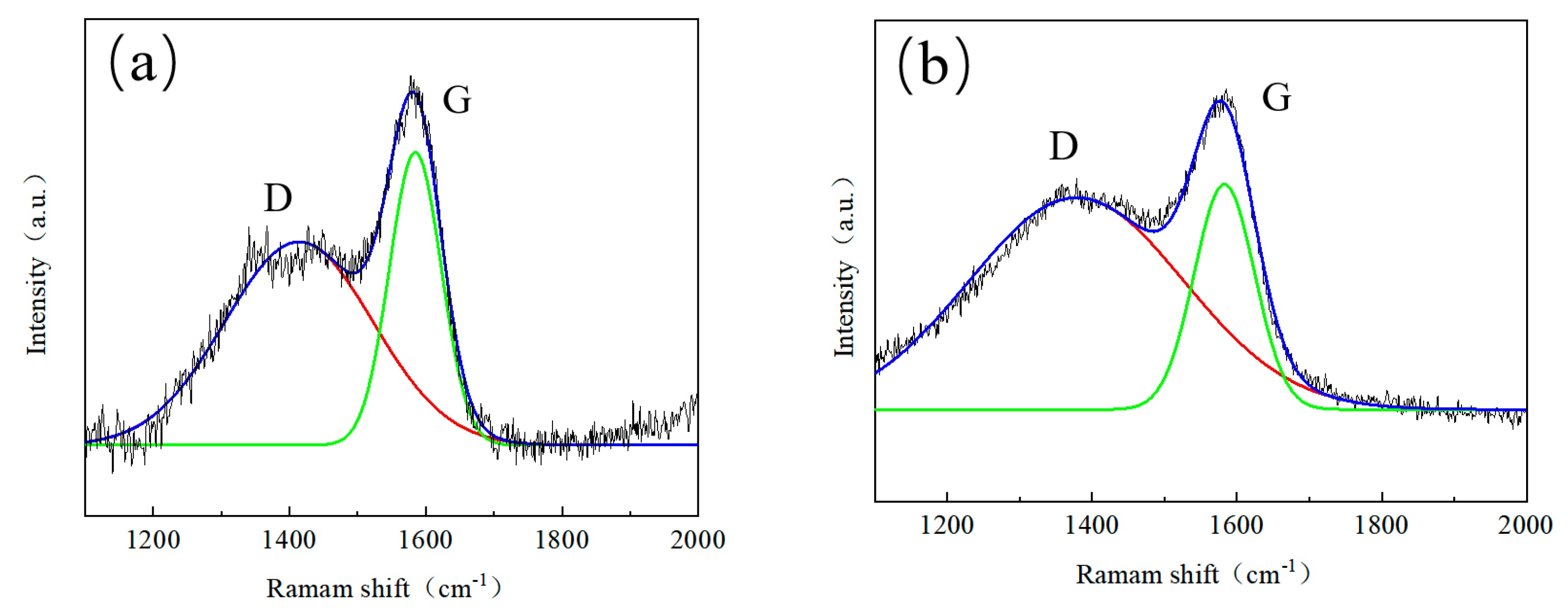
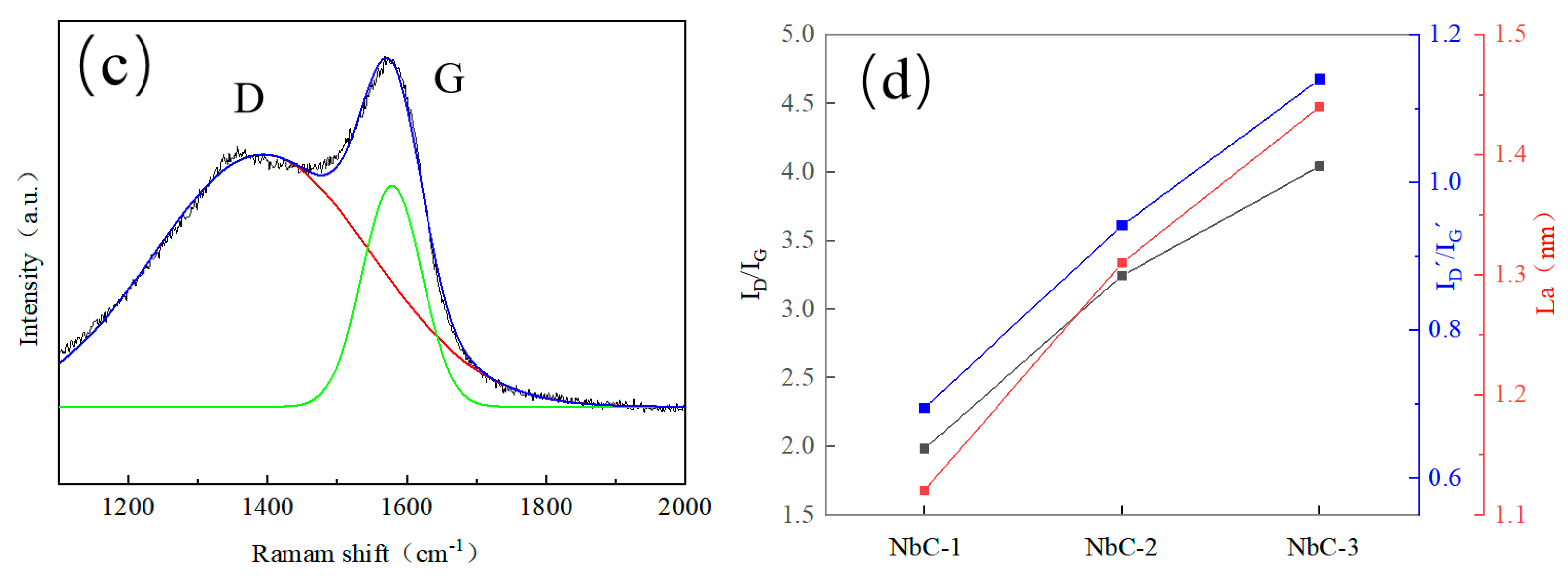
Figure 3 shows the Raman spectra of multilayer coatings with different thicknesses. The chemical bonding state of the coating can be characterized through Raman spectroscopy, and the content of sp2 and sp3 hybrid bonds in the coating can be analyzed semi-quantitatively. The D and G peaks were deconvoluted using two Gaussian components. Curve fitting analysis indicates that the characteristic D and G Raman peaks, corresponding to sp2-hybridized disordered carbon, are located at 1360 and 1580 cm−1, respectively. The D peak mainly comes from the in-plane breathing vibration of the aromatic ring formed by sp2 hybridized carbon atoms, and the G peak mainly comes from the stretching vibration of sp2 hybridized carbon atoms [13]. ID/IG can be used to qualitatively determine the relative content of sp2 and sp3 hybridized bonds in the coating [14]. Figure 3d is the Raman spectrum fitting data diagram. In the multilayer coating prepared by HiPIMS, as the thickness of the NbC interlayer increases, the ratio of coating ID/IG increases from 1.98 to 4.04, indicating that the content of sp3 hybrid bonds in the coating decreases [15]. The finding implies that thicker NbC interlayer provides a more favorable growth environment for the nucleation and growth of graphitic-like carbon clusters. In contrast, the G peak position shows no significant shift across different interlayer thicknesses.
In addition, the peak intensity ratio between the D and G peaks (ID′/IG′) is related to the size of the nanographite crystals (La) characterizing the coating [16].
ID′/IG′= cLa2
Among them, the constant c is about 0.0055 (for La in Angstroms). According to the value of ID′/IG′, the average grain size of graphite crystallites can be estimated. The results of Figure 3d show that the size of sp2 hybrids in the coating continues to increase, from 1.12 nm for sample NbC-1, to 1.31 nm for NbC-2, and then to 1.44 nm for NbC-3. The increase in sp2 hybrid size further indicates the increase in sp2 content in the coating.
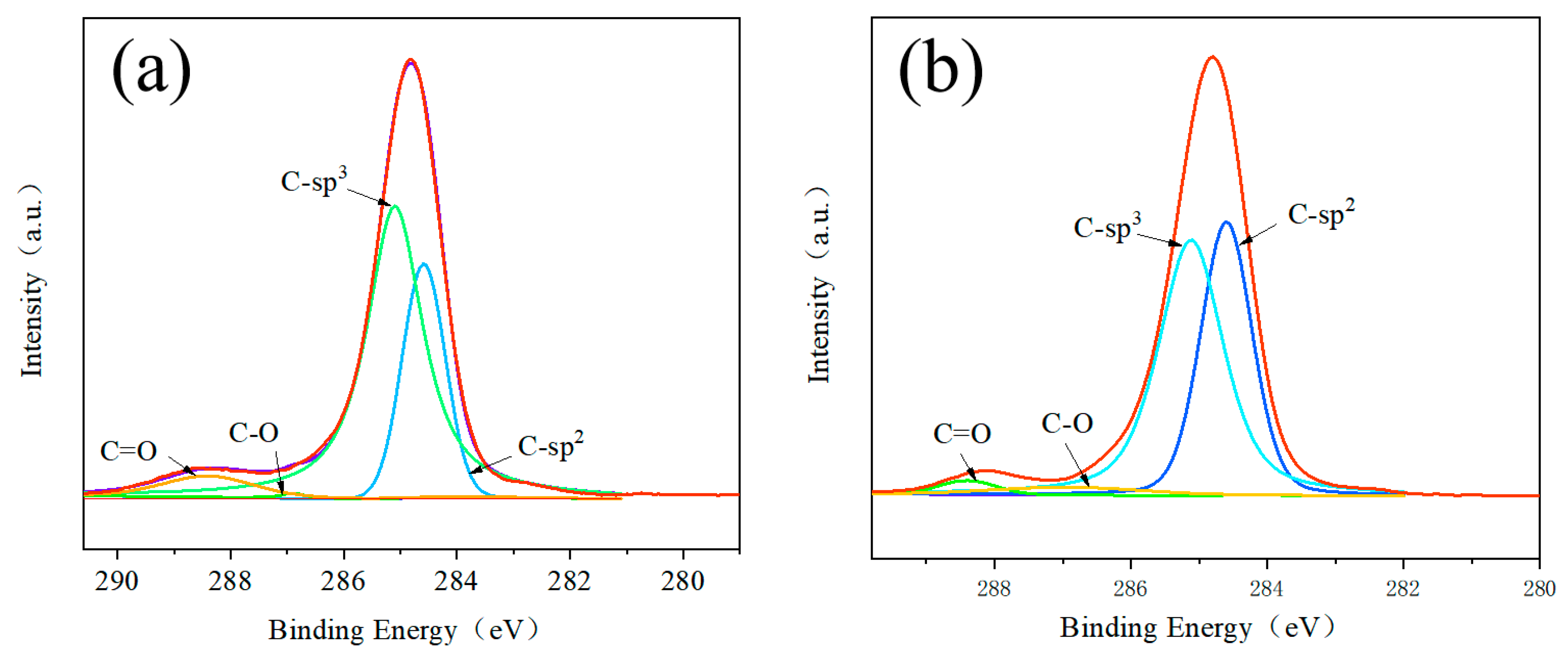
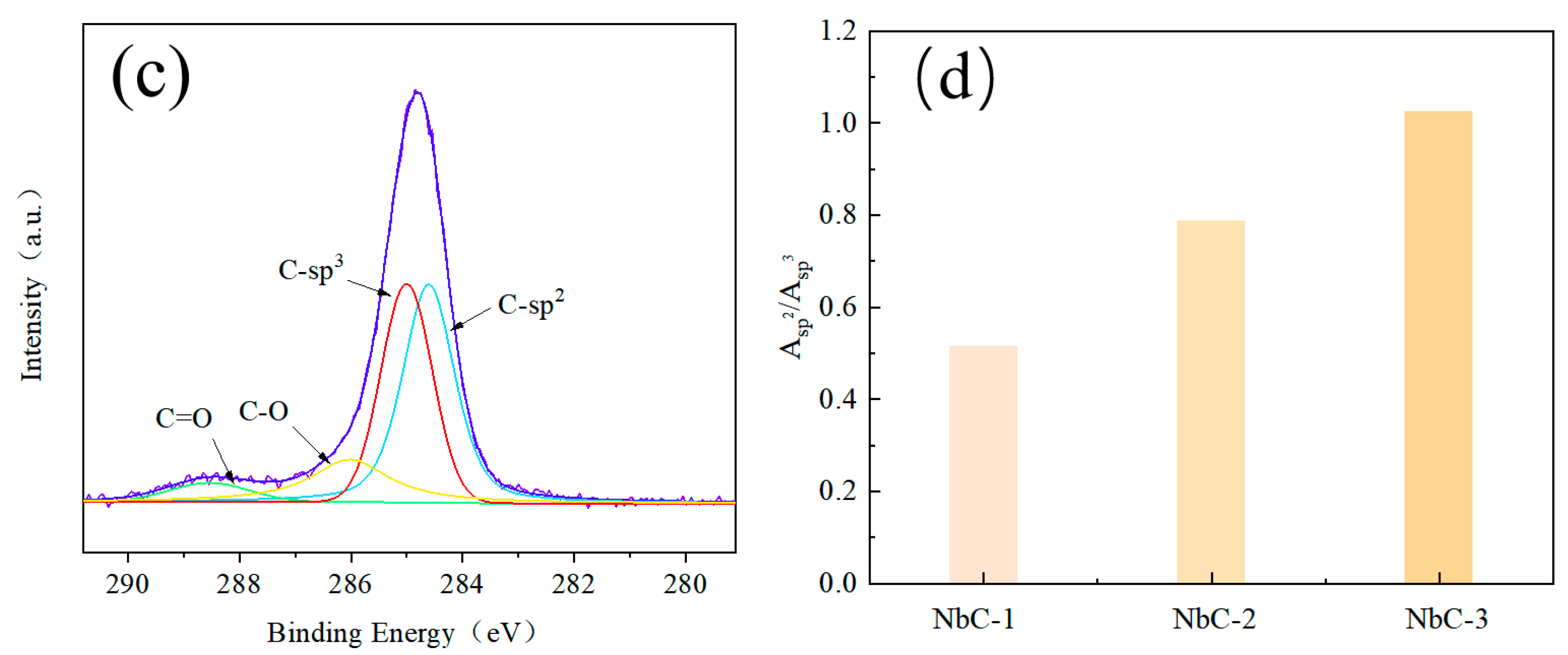
Figure 4 shows the XPS spectra of multilayer coatings with different thicknesses. XPS can be used to analyze the binding energy of atoms in the coating and quantitatively analyze the content of sp3 and sp2-hybridized bonds in the coating. The C1s peak was obtained using XPS Peaks 4.1 software. The Lorentz/Gauss ratio (80%) is fixed, and the C1s peak is deconstructed into four peaks [17], namely C-sp2 (284.6 eV), C-sp3 (285.1 eV), C-O (286.9 eV), and C=O (288.4 eV). As the thickness of the NbC interlayer increases, it is found that the sp2-hybridized bonds content ratio increases from 34% to 50.6%, and the sp3 hybrid bond content ratio drops from 66% to 49.4%. From the fitted data diagram of the XPS spectrum in Figure 4d, it can be observed that the area ratio of Asp2/Asp3 increases from 0.52 to 1.02, which is consistent with the Raman spectrum analysis result. Comparing the three samples, as the thickness of the NbC interlayer increases, the sp3 content of the carbon top layer gradually decreases. This phenomenon can be attributed to the fact that the prolonged sputtering time of the NbC interlayer elevates the substrate temperature, which promotes the migration of carbon atoms and facilitates the formation of sp2-hybridized bonds. This observation corroborates the previous study by Shi [18]. The sp2-hybridized bond content increases, the graphitization degree of the coating increases, and the interface conductivity also increases.

3.2. Bonding Strength Analysis of Nb/NbC/C Multilayer Coating

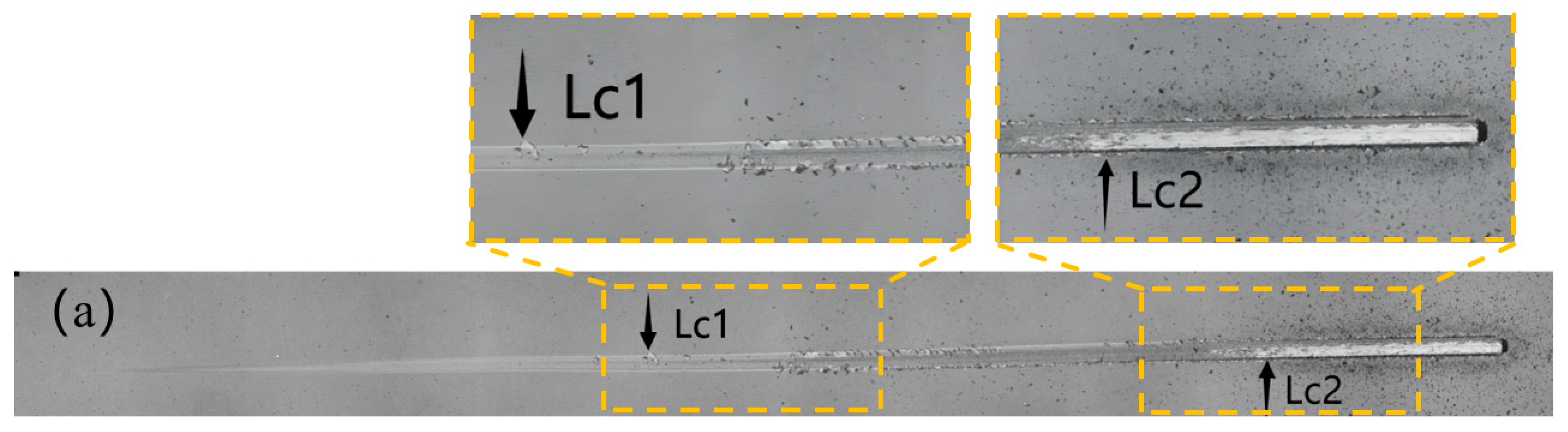
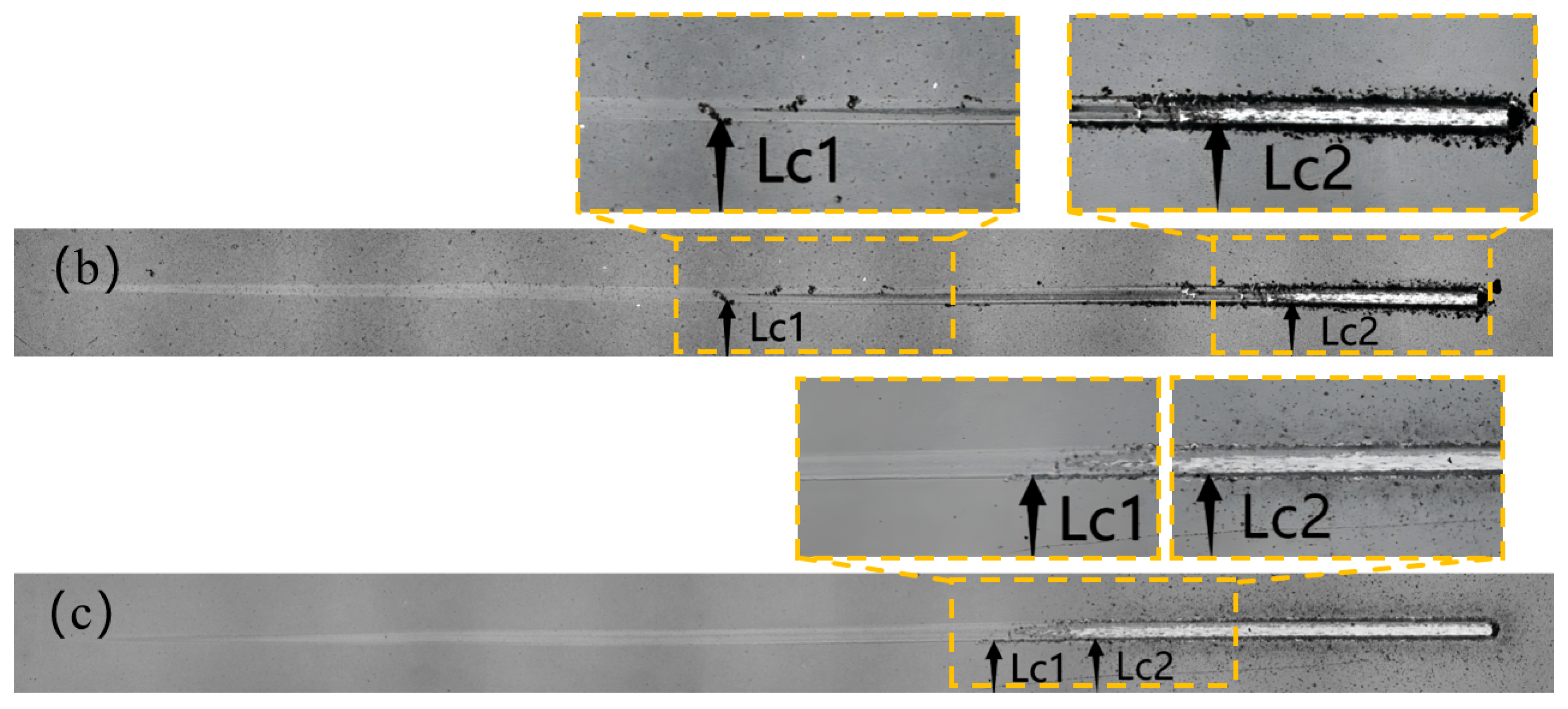
The bonding strength test results of the Nb/NbC/C multilayer coating are displayed in Figure 5. The scratch test results show that all the multilayer coatings with different thicknesses undergo spalling, which indicates that the multilayer coatings prepared under these conditions possess a certain degree of hardness and brittleness [18]. As observed for sample NbC-2 in Figure 5b, no cracks are present within the scratch track, and no coating cracking occurs at the edges before the Lc1 region, where only plastic deformation is observed. Prior to the Lc2 region, discontinuous cracking appears at the scratch edges. Beyond Lc2, extensive spalling occurs over large areas, resulting in complete exposure of the underlying substrate [19]. The bonding strength of multilayer coating increases with NbC interlayer thickness, thus the sample NbC-3 has the best bonding strength with a critical load Lc1 of 31.9 N.
The changes in the bonding strength of this series of coatings are contrary to our expected results. In conventional PVD coatings, an increase in thickness usually leads to the accumulation of residual stress, resulting in a decrease in bonding strength. In this series of samples, the bonding strength of the multilayer coating gradually increases with the increase in interlayer thickness [20]. The main reason is that the NbC interlayer acts as a buffer layer and can absorb and release part of the internal stress. When the thickness of the NbC interlayer is appropriately increased, the buffer layer more effectively prevents stress from being transferred directly and concentratedly to the key interface between the coating and the substrate, thus protecting the film-base bonding strength [21]. Therefore, in the multilayer structure system, appropriately increasing the thickness of the NbC interlayer can improve the bonding strength of the coating through stress buffering.

3.3. Friction and Wear Analysis of Nb/NbC/C Multilayer Coating

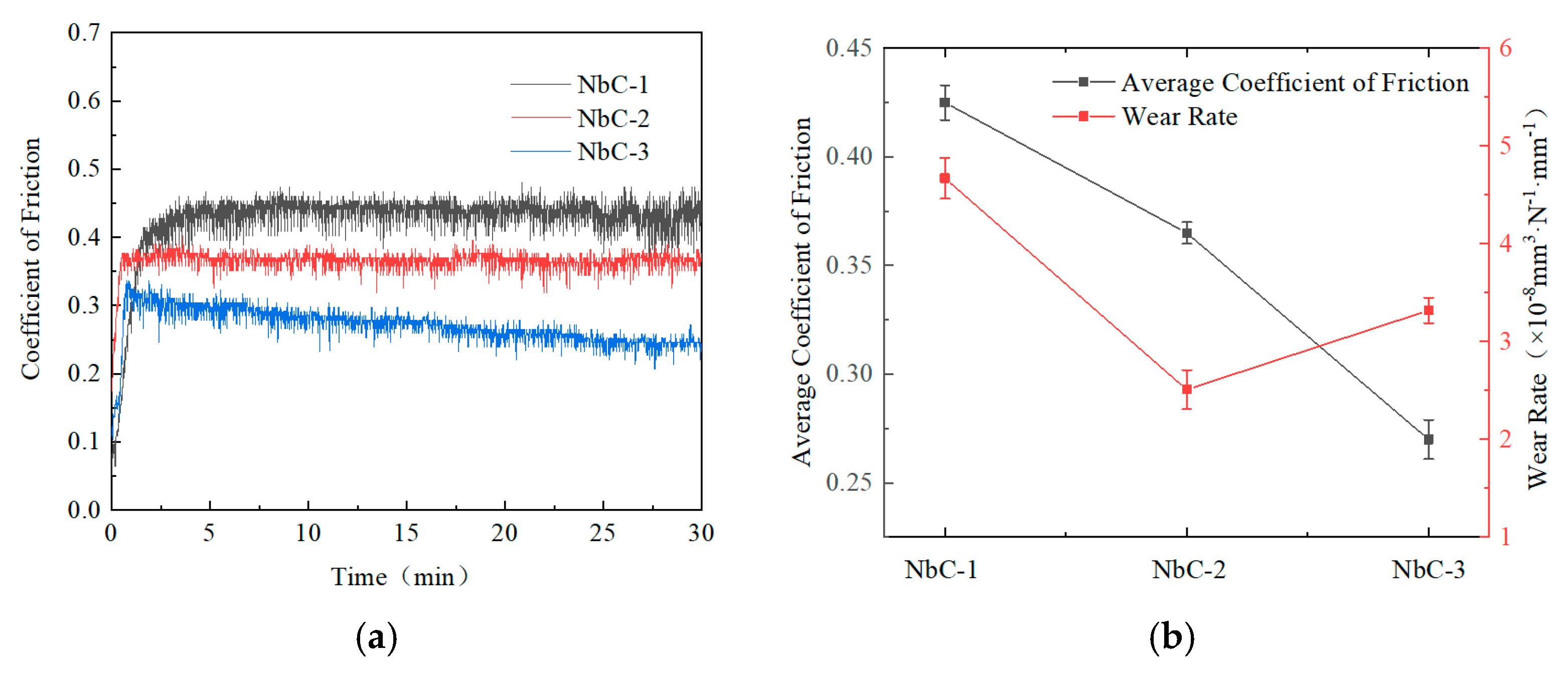
PEMFC bipolar plates are subjected to friction and wear during both assembly and long-term operation. Consequently, the wear resistance of their surface protective coatings has become a critical factor affecting the long-term stability of bipolar plates, making the investigation of coating tribological behavior essential [22]. As shown in Figure 6a, the friction coefficient of the Nb/NbC/C multilayer coating exhibits a distinct evolution process, comprising a running-in wear stage followed by a steady-state wear stage. During the running-in stage, the friction coefficient increases rapidly with sliding time. Subsequently, in the steady wear stage, the friction coefficient fluctuates within a limited range, and the curve becomes relatively smooth.
It can be seen from Figure 6b that the average friction coefficient of the multilayer coating progressively decreases as the thickness of the interlayer increases. The maximum average friction coefficient is observed for the sample NbC-1 (0.425), while the lowest value is recorded for the sample NbC-3 (0.27), indicating that the latter exhibits significantly improved wear resistance. Raman and XPS analyses (Figure 3 and Figure 4) reveal that the fraction of sp2-hybridized carbon bonds increases with increasing individual layer thickness. An increase in sp2 content facilitates the formation of a friction-induced graphitic lubricating layer, thereby reducing the friction coefficient. In Figure 6b, the wear rate of the multilayer coating first decreases and then increases as the thickness of the interlayer increases. As the thickness of the coating interlayer increases, the buffering effect brought about by the increase in thickness and the improvement in the coating’s hardness enhances the coating’s resistance to wear by the grinding ball, thereby reducing the wear rate.
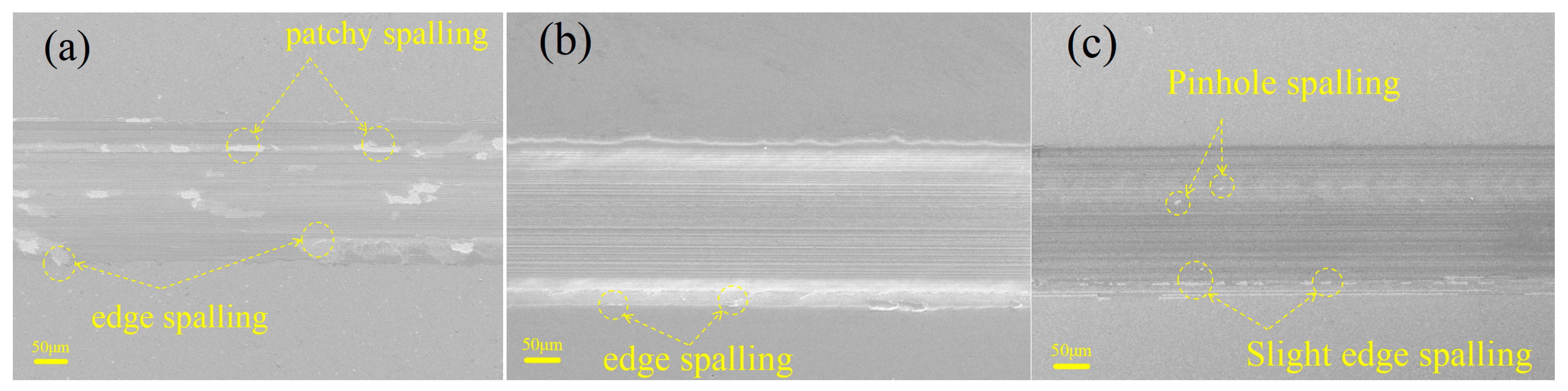
Figure 7 is the wear SEM morphology of multilayer coating under different thicknesses. The wear morphologies vary noticeably among coatings with different individual layer thicknesses. The surface wear of the sample NbC-1 is the most severe, with a large amount of spalling off on the surface, and the substrate is exposed in some places, indicating that the wear resistance of the coating decreases significantly after long-term friction and wear. The deteriorated wear morphology of the sample NbC-1 is consistent with its relatively high friction coefficient observed during the tribological test. Following wear testing, the sample NbC-2 shows only limited edge spalling. The surface coating is well adhered to the substrate and has high wear resistance [23]. For the sample NbC-3, minor localized spalling is observed in the central region, along with slight edge spalling. Compared to the sample NbC-2, the coating exhibits a higher degree of wear, characterized by more pronounced wear tracks. This is because an excessively high sp2 content compromises the coating’s hardness and load-bearing capacity, thereby elevating the wear rate. In Figure 7, both the average friction coefficient and the wear rate exhibit a slight increase for the multilayer coating. Appropriately increasing the coating thickness and wear resistance will increase.

3.4. Corrosion Analysis of Nb/NbC/C Multilayer Coating

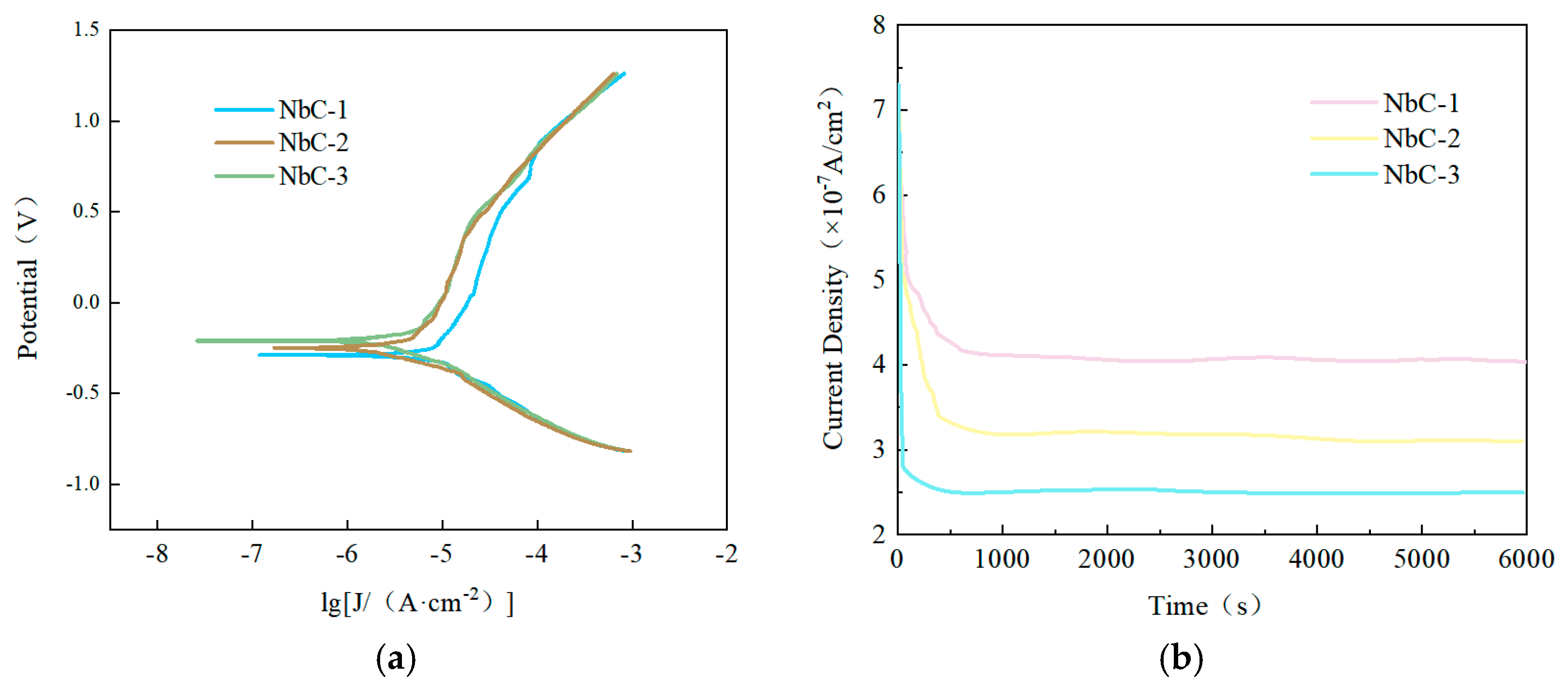
Figure 8a presents the potentiodynamic polarization curves of Nb/NbC/C multilayer coatings with different thicknesses. Among them, the corrosion performance of coating can be evaluated by self-corrosion current density (icorr) and self-corrosion potential (Ecorr). A lower self-corrosion current density corresponds to a reduced corrosion rate per unit area, indicating slower material degradation [24]. A comprehensive evaluation of corrosion resistance requires consideration of both icorr and Ecorr. The positive movement of the self-corrosion potential represents the enhancement of the thermodynamic stability of the coating. The decrease in the self-corrosion current density indicates that the actual corrosion resistance of the coating is enhanced [25]. It can be seen from Figure 8 that as the thickness of the interlayer increases, the corrosion resistance of the coating shows a gradually increasing trend. The sample NbC-3 has the best corrosion resistance, with a corrosion current density icorr = 3.25 × 10⁻⁶ A·cm−2, and a corrosion potential Ecorr = −0.31 V. The sample NbC-1 has the poorest corrosion resistance, with a corrosion current density icorr = 7.03 × 10⁻⁶ A·cm−2, corrosion potential Ecorr = −0.24 V. This variation in corrosion resistance is primarily attributed to the increased coating thickness, which extends the diffusion path and delays the penetration of corrosive species from the surface to the substrate. As shown in Figure 1, the multilayer coating is uniform and dense, with a complete structure, which helps prevent the intrusion of corrosive electrolytes. During corrosion, the coating promotes the formation of a stable passive film that inhibits further propagation of localized corrosion. Consequently, appropriately increasing the coating thickness can increase the corrosion resistance to a certain extent.
To evaluate the long-term electrochemical stability of the coating in corrosive solutions, the potentiostatic polarization test method was used. Figure 8b presents the potentiostatic polarization test results of the multilayer coating. The results indicate that as the interlayer thickness increases, the potentiostatic corrosion current density of the multilayer coating gradually decreases. The sample NbC-3 exhibits the best long-term stability. The potentiostatic corrosion current density is 0.249 × 10⁻⁶ A·cm−2. The highest current density of the multilayer coating is 0.403 × 10⁻⁶ A·cm−2.

3.5. Conductivity Analysis of Nb/NbC/C Multilayer Coating

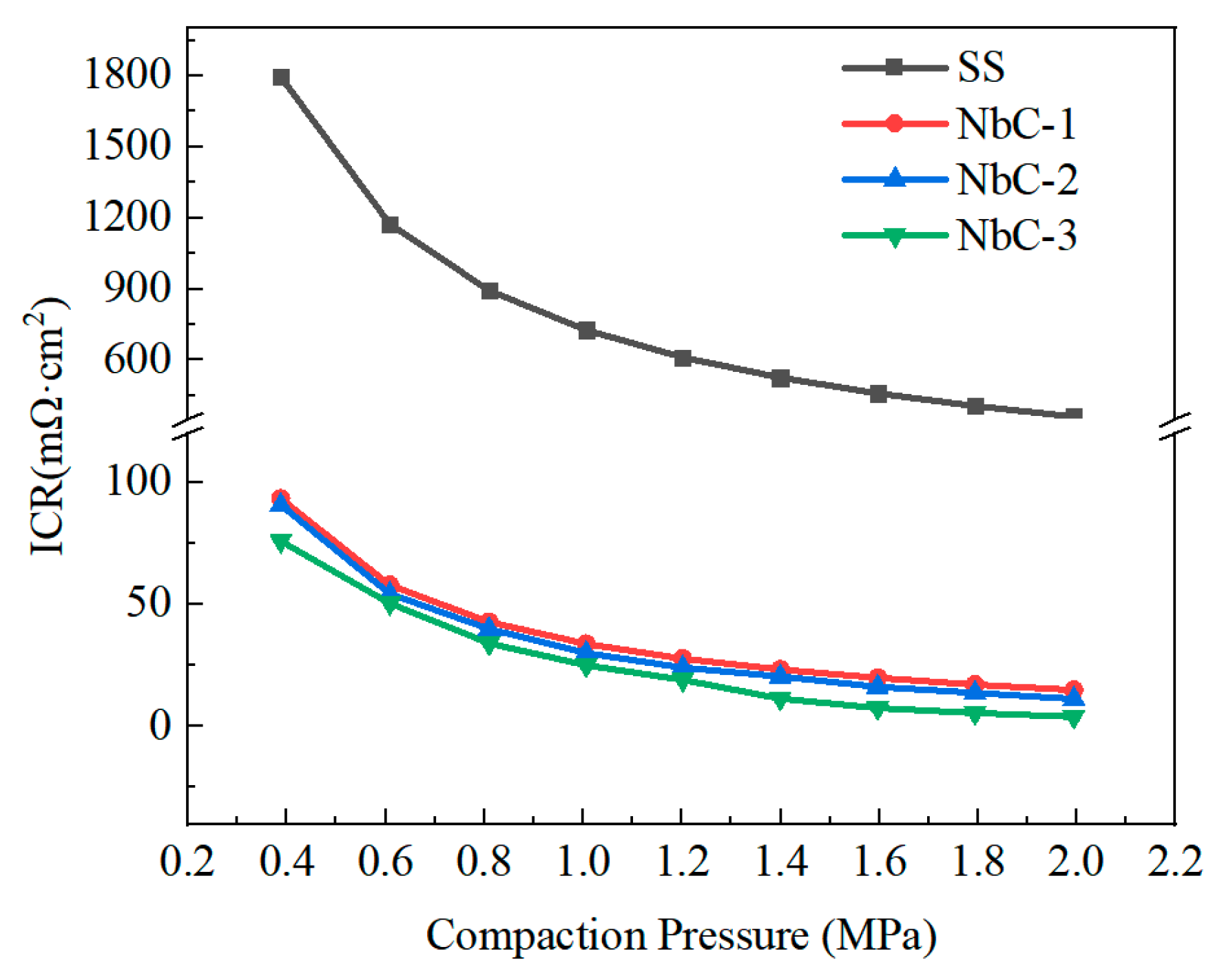
In practical PEMFC applications, the interfacial contact resistance (ICR) between the bipolar plate and the gas diffusion layer (GDL) significantly influences the cell’s working efficiency. Figure 9 presents the ICR measurements of Nb/NbC/C multilayer coatings with varying thicknesses as a function of applied pressure. As shown in Figure 9, the contact area between the sample and the carbon paper initially expands continuously with increasing pressure, leading to a rapid drop in contact resistance. As the pressure further increases, the sample and carbon paper become fully conformal, and the contact area stabilizes [26]. Therefore, the contact resistance value at a pressure of 1.6 MPa was adopted as the standard metric for evaluating the coating’s electrical conductivity.
For the bare 316L stainless steel substrate, the contact between the carbon paper and the native passive film is characterized by point contacts, resulting in a limited conductive cross-sectional area. At a pressure of 1.6 MPa, the substrate exhibits a high contact resistance of 459.8 mΩ·cm2. In contrast, all NbC-coated demonstrate significantly lower contact resistance, confirming the excellent electrical conductivity of the coatings [27]. The superior performance is attributed to the smooth surface morphology of the multilayer coatings, which facilitates electron transport. Furthermore, in the multilayer architecture, while the outer coating/carbon paper interface remains a point contact, planar contacts are established between the outer and inner layers, as well as between the inner layer and the substrate. This structural feature enables a more uniform current distribution, thereby enhancing the overall conductivity [28].
As shown in Figure 9, the contact resistance decreases with increasing interlayer thickness: the sample NbC-3 achieves the lowest value of 7.5 mΩ·cm2, followed by sample NbC-2 (16.2 mΩ·cm2) and sample NbC-1 (19.9 mΩ·cm2). This trend correlates with the Raman and XPS results (Figure 3 and Figure 4), where the increasing proportion of sp2-hybridized bonds promotes enhanced electrical conductivity.

4. Discussion

Based on the experimental results, a strong correlation exists between the microstructure, chemical composition, and performance of the Nb/NbC/C multilayer coatings. The increase in NbC interlayer thickness enhances the interfacial adhesion, which is primarily attributed to the fact that the NbC interlayer serves as a compliant buffer that effectively absorbs internal stress and mitigates the stress concentration at the interface. Consequently, the average friction coefficient decreased from 0.425 (sample NbC-1) to 0.27 (sample NbC-3), and the wear rate initially declined before slightly rebounding. This trend arises from the synergistic effect of improved adhesion and the increased sp2-bonded graphite phase. While stronger interfacial bonding prevents coating spallation during friction, the higher graphitization degree provides inherent lubricity, effectively reducing the coefficient of friction. SEM observations of worn surfaces corroborate this mechanism: the sample NbC-1 surface exhibited extensive spallation exposing the substrate, whereas the sample NbC-2 surface remained smooth and crack-free, indicating optimal wear resistance.
Furthermore, extending the NbC interlayer deposition time from 20 to 60 min elevates the substrate temperature, which promotes the surface migration of carbon atoms. This facilitates the formation of sp2-hybridized bond, as evidenced by an increase in the ID/IG ratio from 1.98 to 4.04 and the sp2 cluster size from 1.12 to 1.44 nm. Since sp2 bonds provide efficient pathways for electron transport, the contact resistance is significantly reduced from 19.9 to 7.5 mΩ·cm2. Simultaneously, cross-sectional SEM reveals a uniform and dense structure devoid of coarse columnar crystals; this densification extends the penetration pathway for corrosive media. Electrochemical tests confirm this, showing that the sample NbC-3 achieves the lowest corrosion current density (3.25 × 10⁻⁶ A·cm−2) and potentiostatic polarization current density (0.249 × 10⁻⁶ A·cm−2).

5. Conclusions

To mitigate the performance degradation of stainless steel bipolar plates in harsh acidic environments, this study employs Nb/NbC/C multilayer coatings deposited via HiPIMS. Through a systematic investigation of the coating’s microstructure, chemical composition, and functional properties, the following conclusions can be drawn:
  • Extending the deposition duration of NbC interlayer from 20 min to 60 min increases the coating thickness from 0.43 μm to 1.42 μm, and the obtained coatings possess uniform and dense microstructures without coarse columnar grains. Raman spectra and XPS results reveal that the increased interlayer thickness raises the content of sp2 hybrid bonds while reducing the proportion of sp3 hybrid bonds. Consequently, the graphitization degree of the coatings is improved, the ID/IG ratio rises from 1.98 to 4.04, the size of sp2 clusters enlarges, and the electrical conductivity is effectively enhanced.
  • As the interlayer thickness increases, the sample NbC-3 exhibits excellent adhesion strength, with its critical load Lc1 reaching 31.9 N. The average friction coefficient of the coatings decreases from 0.425 to 0.27, accompanied by an obvious improvement in wear resistance. Wear morphology observed via SEM demonstrates that the sample NbC-2 features a smooth worn surface and delivers favorable tribological performance.
  • Electrochemical measurements confirm that the Nb/NbC/C multilayer coatings possess outstanding corrosion resistance in simulated PEMFC working environments. Among all samples, the sample NbC-3 delivers the minimum corrosion current density, with its potentiostatic polarization current density reaching 0.249 × 10⁻⁶ A·cm−2, which manifests its excellent long-term service stability. In addition, contact resistance tests verify that the multilayer coating can effectively reduce the contact resistance of the substrate. At an applied pressure of 1.6 MPa, the contact resistance of sample NbC-3 is as low as 7.5 mΩ·cm2, fully satisfying the relevant DOE technical criteria.

Author Contributions

Conceptualization, X.Z., L.H., G.L. and Y.X.; investigation, X.Z.; project administration, X.Z., L.H. and G.L.; validation, X.Z., L.H., G.L. and Y.X.; visualization, X.Z.; writing—original draft, X.Z.; writing—review and editing, X.Z. All authors have read and agreed to the published version of the manuscript.

Funding

This research was funded by the National Key Research and Development Plan [2022YFB3404203].

Institutional Review Board Statement

Not applicable.

Informed Consent Statement

Not applicable.

Data Availability Statement

Data are contained within the article.

Conflicts of Interest

The authors declare no conflict of interest.

References

  1. Zhang, H.H.; Guo, Q.Q.; Qi, Y.H.; Feng, Y.P.; Tian, X.; Yang, Z. Microstructure and properties of CrN/CrCN coatings via multi-arc ion plating used for proton exchange membrane fuel cell bipolar plates. Ceram. Int. 2026, 52, 1200–1212. [Google Scholar] [CrossRef]
  2. Song, Y.X.; Zhang, C.Z.; Ling, C.Y.; Han, M.; Yong, R.Y.; Sun, D.; Chen, J.R. Review on current research of materials, fabrication and application for bipolar plate in proton exchange membrane fuel cell. Int. J. Hydrog. Energy 2020, 45, 29832–29847. [Google Scholar] [CrossRef]
  3. Sigrid, L.; Ole, E.K.; Anders, O.; Håvard, K.; Frode, S. Materials for Proton Exchange Membrane water electrolyzer bipolar plates. Int. J. Hydrog. Energy 2017, 42, 2713–2723. [Google Scholar]
  4. Ren, P.; Pei, P.C.; Li, Y.H.; Wu, Z.Y.; Chen, D.F.; Huang, S.W. Degradation mechanisms of proton exchange membrane fuel cell under typical automotive operating conditions. Prog. Energy Combust. Sci. 2020, 80, 100859. [Google Scholar] [CrossRef]
  5. Zhan, Q.; Luo, F.; Huang, J.; Wang, Z.; Ma, B.; Liu, C. Corrosion Resistance and Wear Behavior of Ni60/TiC and NbC Composite Coatings Prepared by Laser Cladding. Materials 2025, 18, 2459. [Google Scholar] [CrossRef]
  6. Stiber, S.; Hehemann, M.; Carmo, M.; Müller, M.; Ayers, K.E.; Capuano, C.; Danilovic, N.; Morawietz, T.; Biswas, I.; Gazdzicki, P.; et al. Long-Term Operation of Nb-Coated Stainless Steel Bipolar Plates for Proton Exchange Membrane Water Electrolyzers. Adv. Energy Sustain. Res. 2022, 3, 2200024. [Google Scholar] [CrossRef]
  7. Nils, N.; Olof, T.; Erik, L.; Andrej, F.; Per, E.; Lars, H.; Ulf, J. Structural, mechanical and electrical-contact properties of nanocrystalline-NbC/amorphous-C coatings deposited by magnetron sputtering. Surf. Coat. Technol. 2011, 206, 354–359. [Google Scholar]
  8. Sala, N.; Abad, M.D.; Sánchez-López, J.C.; Cruz, M.; Caro, J.; Colominas, C. Tribological performance of Nb-C thin films prepared by DC and HiPIMS. Mater. Lett. 2020, 277, 128334. [Google Scholar] [CrossRef]
  9. Xu, Y.; Li, G.D.; Li, G.; Gao, F.Y.; Xia, Y. Effect of bias voltage on the growth of super-hard (AlCrTiVZr)N high-entropy alloy nitride films synthesized by high power impulse magnetron sputtering. Appl. Surf. Sci. 2021, 564, 150417. [Google Scholar] [CrossRef]
  10. Zhang, P.C.; Hao, C.M.; Han, Y.T.; Du, F.M.; Wang, H.Y.; Wang, X.Y.; Sun, J.C. Electrochemical behavior and surface conductivity of NbC modified Ti bipolar plate for proton exchange membrane fuel cell. Surf. Coat. Technol. 2020, 397, 126064. [Google Scholar] [CrossRef]
  11. Almeida Alves, C.F.; Serra, R.; Bayat, R.; Ferreira, F.; Cavaleiro, A.; Carvalho, S. Synergetic effect of thickness and oxygen addition on the electrochemical behaviour of tantalum oxide coatings deposited by HiPIMS in DOMS mode. Electrochim. Acta 2022, 423, 140497. [Google Scholar] [CrossRef]
  12. Zhang, H.B.; Lin, G.Q.; Hou, M.; Hu, L.; Han, Z.Y.; Fu, Y.; Shao, Z.G.; Yi, B.L. CrN/Cr multilayer coating on 316L stainless steel as bipolar plates for proton exchange membrane fuel cells. J. Power Sources 2012, 198, 176–181. [Google Scholar] [CrossRef]
  13. Gao, Z.Y. Research on Surface Modification of Titanium Bipolar Plates for Proton Exchange Membrane Fuel Cells. Master’s Thesis, Dalian Maritime University, Dalian, China, 2019. [Google Scholar]
  14. Li, L.X.; Ye, D.H.; Xiang, Y.; Guo, W. Effect of deposition temperature on columnar structure of α-C nano-coatings of PEMFC metal bipolar plates. Int. J. Electrochem. Sci. 2023, 18, 100188. [Google Scholar] [CrossRef]
  15. Cui, W.G.; Lai, Q.B.; Zhang, L.; Wang, F.M. Quantitative measurements of sp3 content in DLC films with Raman spectroscopy. Surf. Coat. Technol. 2010, 205, 1995–1999. [Google Scholar] [CrossRef]
  16. Yu, S.S.; Li, D.S.; Ye, Y.; Ye, Z.G.; Xu, F.; Lang, W.C.; Liu, J.H.; Yu, X.X.; Qin, Q.H. Tribological and corrosive performance of functional gradient DLC coatings prepared by a hybrid HiPIMS/CVD techniques. Vacuum 2025, 238, 114160. [Google Scholar] [CrossRef]
  17. Meng, W.; Wang, X.P.; Zhu, H.F.; Kong, F.T.; Sun, D. Effect of vacuum heat treatment temperature on anti-corrosion and conductivity properties of C/TiC nanocomposite coated titanium foil for PEMFC bipolar plates. Fuel 2025, 384, 133676. [Google Scholar] [CrossRef]
  18. Hou, K.; Yi, P.X.; Peng, L.F.; Lai, X.M. Niobium doped amorphous carbon film on metallic bipolar plates for PEMFCs: First principle calculation, microstructure and performance. Int. J. Hydrog. Energy 2019, 44, 3144–3156. [Google Scholar] [CrossRef]
  19. Shi, X.R.; Shi, Y.G.; Chen, J.; Tomasz, W.L.; Ben, D.B.; Zhou, Z.H.; Wang, Z.H.; Wu, G.S. Influence of gradient interlayer thickness on corrosion and tribological behavior of Ti-containing multilayer graphite-like carbon films. Wear 2022, 488, 204177. [Google Scholar] [CrossRef]
  20. Song, M.; Guo, J.J.; Yang, Y.F.; Geng, K.; Xiang, M.Q.; Zhu, Q.S.; Hu, C.Q.; Zhao, H.D. Fe2Ti interlayer for improved adhesion strength and corrosion resistance of TiN coating on stainless steel 316L. Appl. Surf. Sci. 2020, 504, 144483. [Google Scholar] [CrossRef]
  21. Ishiaka, S.A.; Esah, H.; Muhammad, A.M.Y.; Bushroa, A.R.; Shadi, M.M.; Al-Ashhab, M.S. Taguchi optimization of hardness and scratch adhesion strength of multilayer Ti/TiN coatings on Ti-51 at% Ni alloy deposited via magnetron sputtering technique. J. Mater. Res. Technol. 2023, 27, 7664–7672. [Google Scholar]
  22. Jiang, J.P.; Ouyang, S.L.; Zhong, Z.Q.; Qiu, L.C.; Guo, S.D.; Tan, Z.P.; Chen, H. Effects of different nitrogen pressure sintering on the surface structure and properties of WC-TiC-NbC-Co cemented carbide. Nonferrous Metal. Sci. Eng. 2021, 12, 57–63. [Google Scholar]
  23. Huang, X.; Izhak, E.; Shao, T.M. Effects of elastic modulus mismatch between coating and substrate on the friction and wear properties of TiN and TiAlN coating systems. Wear 2015, 338–339, 54–61. [Google Scholar] [CrossRef]
  24. Wang, Z.W.; Zhang, Z.H.; Li, J.H.; He, Y.Y.; Li, Y. Bias-induced sp3 bonding gradient design for enhancing the frictional bearing capacity of superhard Ta-C coating. Tribol. Int. 2026, 219, 111780. [Google Scholar] [CrossRef]
  25. Gan, L.; Jiang, C.M.; Peng, Y.F.; Han, L.H.; Qiu, W.; Ren, Y.J.; Zhao, Y.H. Highly anticorrosive Cr2AlC coatings on 304 stainless steels as bipolar plates for proton exchange membrane fuel cells. Appl. Surf. Sci. 2025, 685, 162018. [Google Scholar] [CrossRef]
  26. Tan, Q.Y.; Wang, Y.L. Preparation and properties of conductive Ti4O7 surface coating for Ti bipolar plates of proton exchange membrane fuel cells. J. Alloys Compd. 2022, 911, 165098. [Google Scholar] [CrossRef]
  27. Tohid, R.; Masoud, A.; Hasan, E.; Saied, M.N. Nanometric CrN/CrAlN and CrN/ZrN multilayer physical vapor deposited coatings on 316L stainless steel as bipolar plate for proton exchange membrane fuel cells. Thin Solid Films 2022, 753, 139288. [Google Scholar]
  28. Leng, Y.; Yang, D.J.; Min, J.Y.; Lv, X.Y.; Yang, J.; Qian, J.F.; Ming, P.W.; Zhang, C.M. Improvement of corrosion resistance and electrical conductivity of a Cr–C coated heat-assisted forming stainless steel bipolar plate for proton exchange membrane fuel cell. Int. J. Hydrog. Energy 2024, 70, 183–194. [Google Scholar] [CrossRef]
Figure 1. SEM images of Nb/NbC/C multilayer coating cross-sections. (a) Sample NbC-1 (20,000×). (b) Sample NbC-2 (20,000×). (c) Sample NbC-3 (20,000×).
Coatings 16 00707 g001
Figure 2. XRD pattern of Nb/NbC/C multilayer coating.
Coatings 16 00707 g002
Figure 3. Raman spectra of Nb/NbC/C multilayer coatings and fitting data. (a) Sample NbC-1. (b) Sample NbC-2. (c) Sample NbC-3. (d) Fitting data of Raman spectroscopy.
Coatings 16 00707 g003aCoatings 16 00707 g003b
Figure 4. XPS spectra of Nb/NbC/C multilayer coatings and fitting data. (a) Sample NbC-1. (b) Sample NbC-2. (c) Sample NbC-3. (d) Fitting data of XPS spectrum.
Coatings 16 00707 g004aCoatings 16 00707 g004b
Figure 5. Bonding strength of Nb/NbC/C multilayer coating. (a) Sample NbC-1. (b) Sample NbC-2. (c) Sample NbC-3.
Coatings 16 00707 g005aCoatings 16 00707 g005b
Figure 6. Wear morphology of Nb/NbC/C multilayer coating. (a) Friction coefficient test results of multilayer coating. (b) Average friction coefficient and wear rate of multilayer coating.
Coatings 16 00707 g006
Figure 7. Friction and wear test results of Nb/NbC/C multilayer coating. (a) Sample NbC-1. (b) Sample NbC-2. (c) Sample NbC-3.
Coatings 16 00707 g007
Figure 8. Electrochemical corrosion test results of Nb/NbC/C multilayer coating. (a) Potentiodynamic polarization test results of multilayer coating (b) Potentiostatic polarization test results of multilayer coating.
Coatings 16 00707 g008
Figure 9. Contact resistance test results of Nb/NbC/C multilayer coating.
Coatings 16 00707 g009
Table 1. Key parameters for coating deposition process.
Critical
Activity
Impulse
Frequency/Hz
Impulse
Voltage/V
Ar Flow/sccmBias
Voltage/V
Target-Substrate Distance/cmTime/min
Glow Cleaning//2506001010
Nb//13050105
NbC100650130501020/40/60
C10065013050105
Table 2. Thickness of Nb/NbC/C multilayer coatings.
SampleThickness/μm
Buffer Layer 1Interlayer 2Top Layer 3Total
NbC-1Nb 0.1NbC 0.28C 0.050.43
NbC-2Nb 0.1NbC 0.77C 0.050.92
NbC-3Nb 0.1NbC 1.27C 0.051.42
Disclaimer/Publisher’s Note: The statements, opinions and data contained in all publications are solely those of the individual author(s) and contributor(s) and not of MDPI and/or the editor(s). MDPI and/or the editor(s) disclaim responsibility for any injury to people or property resulting from any ideas, methods, instructions or products referred to in the content.