The Role of Temperature Field Distribution in the Microstructural Evolution of High-Strength Aluminum Alloys During Laser Powder Bed Fusion
 ,
, 
Abstract
1. Introduction
2. Experiments and Modeling
2.1. Preparation of LPBF Samples
2.1.1. Materials
2.1.2. LPBF Fabrication
2.1.3. Microstructure Characterization
2.2. Numerical Model
2.2.1. Modeling and Meshing
- (1)
- (2)
- The thermophysical properties of the materials were considered temperature-dependent, whereas the convective heat transfer coefficient and surface emissivity were assumed constant.
- (3)
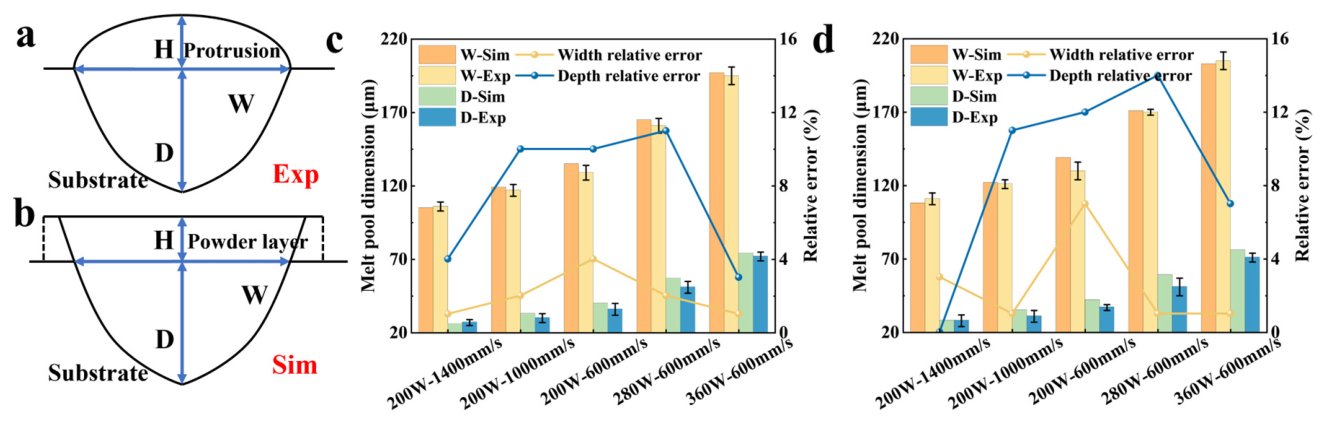
- The laser absorptivity was experimentally measured for both powders and used as a constant in the FEM simulation.
- (4)
- Powder evaporation and the associated vapor recoil pressure were not considered. This simplification is further justified by the experimental observation that the LPBF process operated in the stable conduction regime without keyhole formation, where evaporation-induced effects are limited.
2.2.2. Governing Equation for Heat Transfer
2.2.3. Heat Source Model
2.2.4. Thermophysical Properties of Materials
3. Results and Discussion
3.1. Crack Characteristics
3.2. Microstructural Characterization
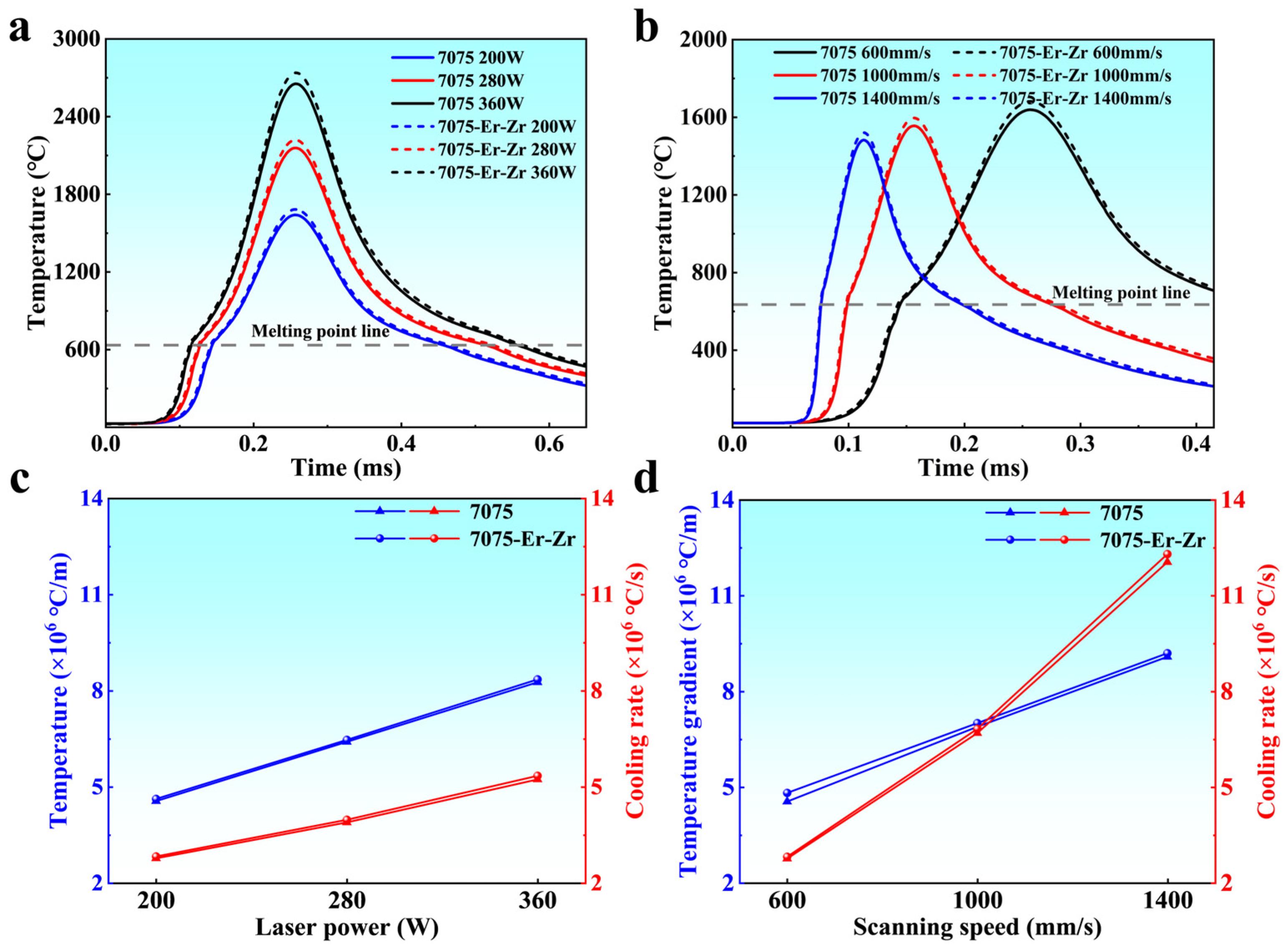
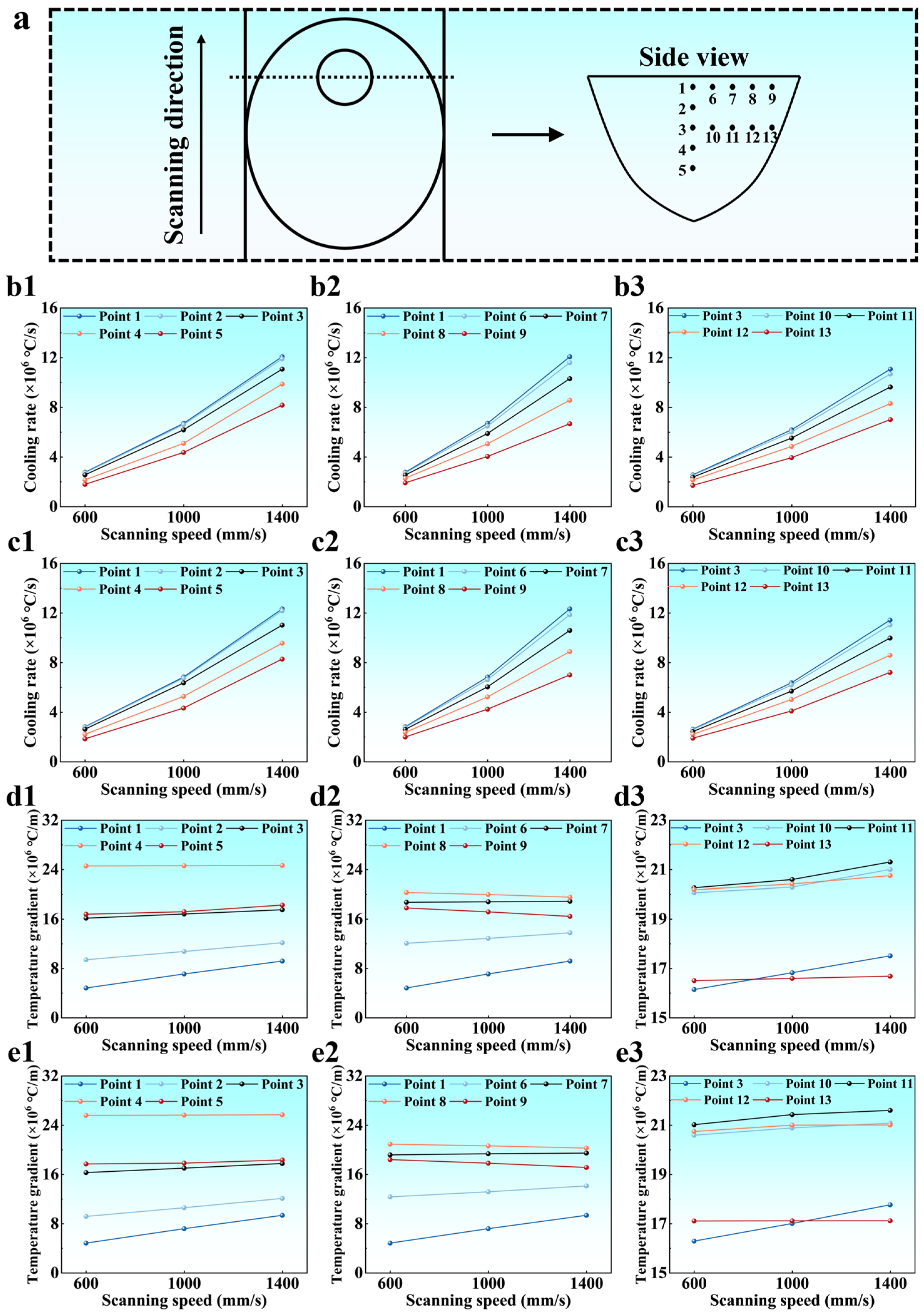
3.3. Temperature Field Analysis
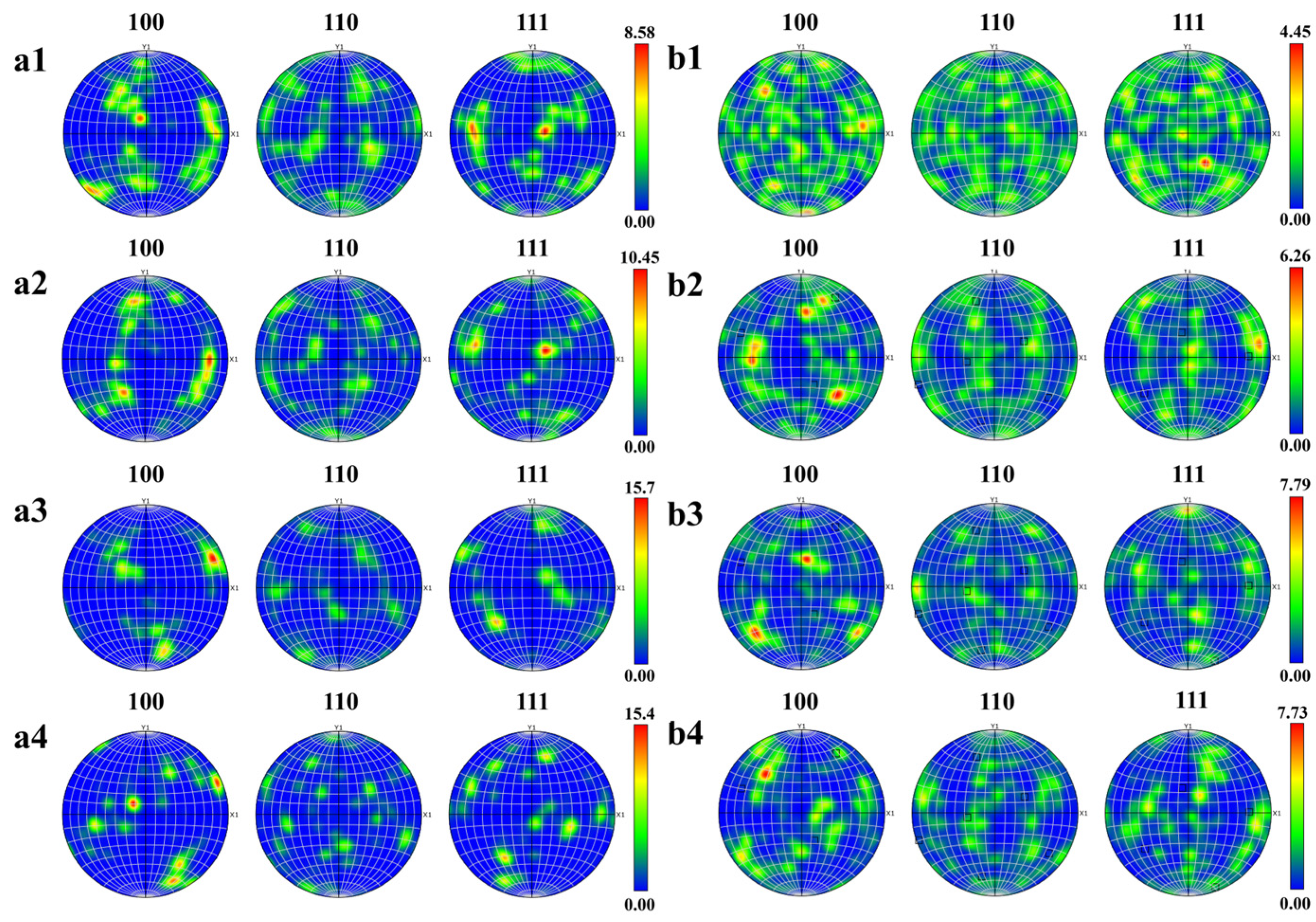
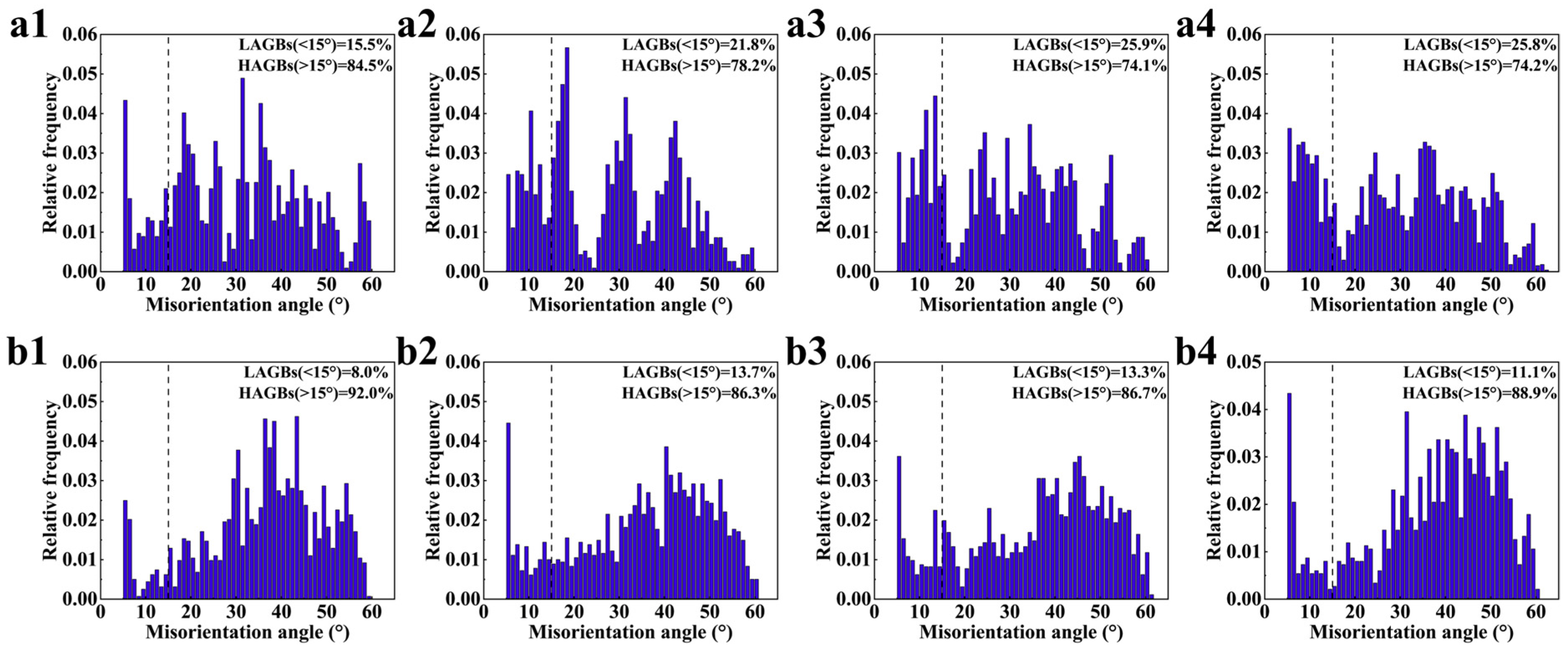
3.4. Influence of Temperature Field Distribution on Microstructure
3.5. Crack Suppression Mechanism
4. Conclusions
- (1)
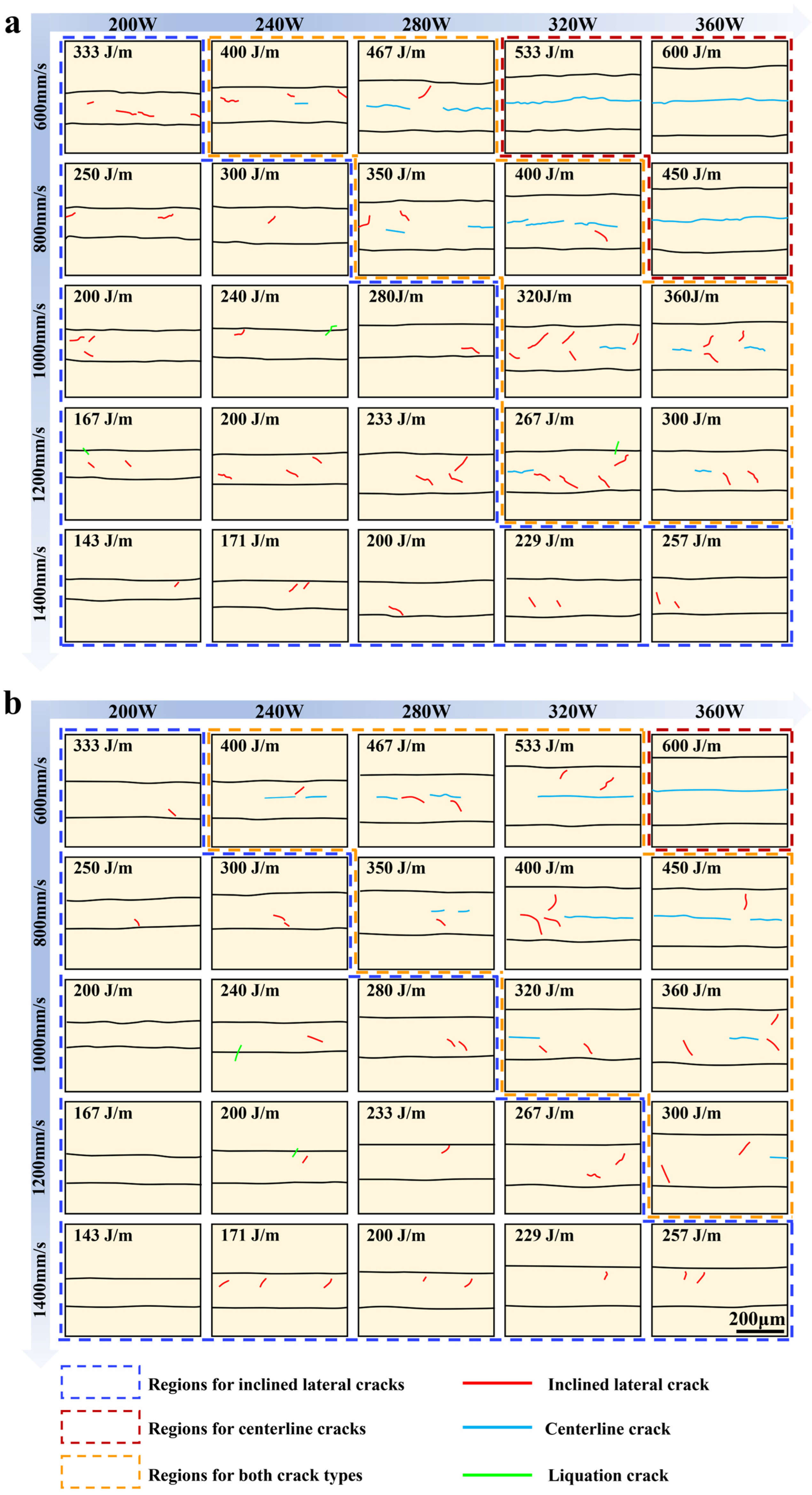
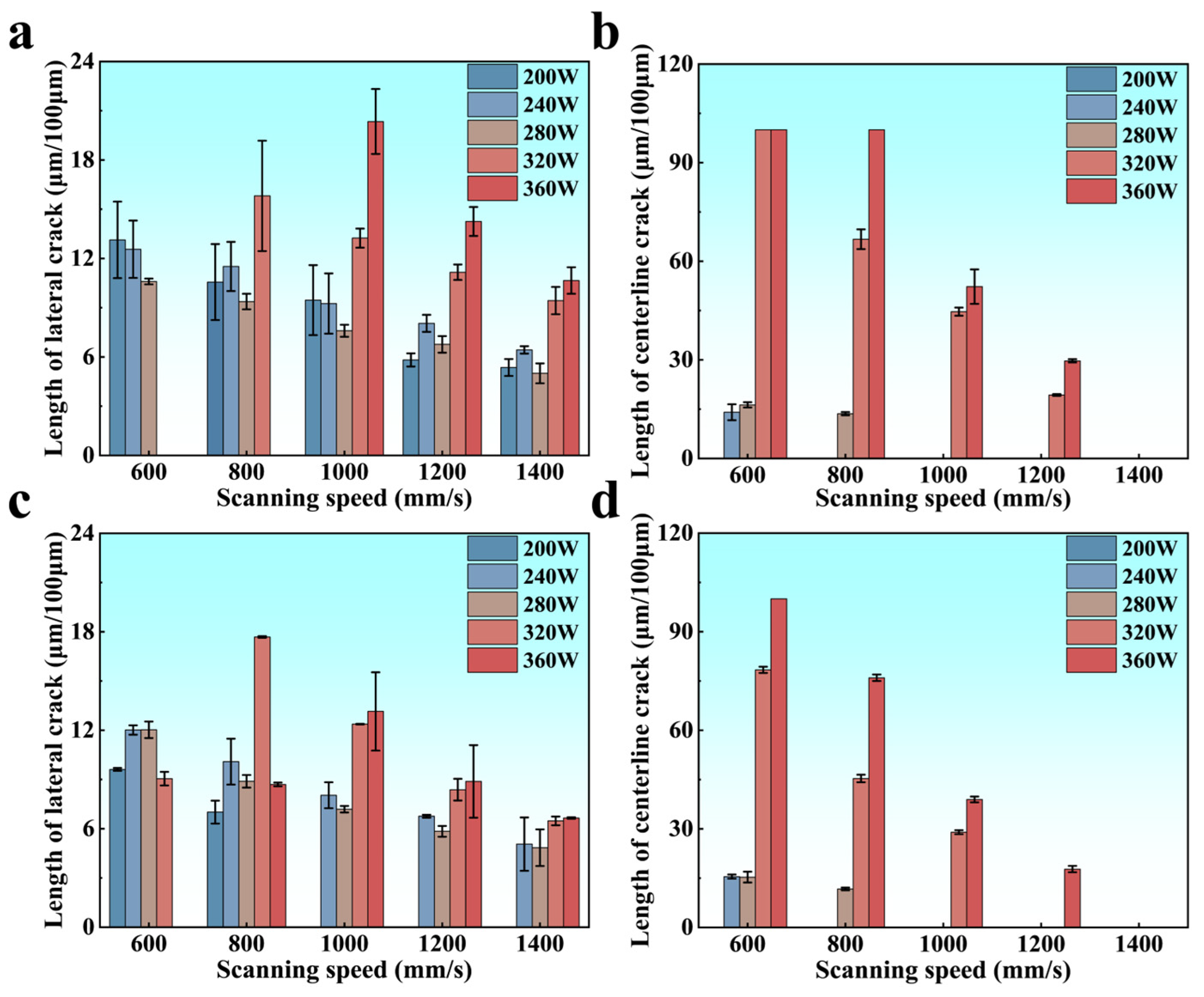
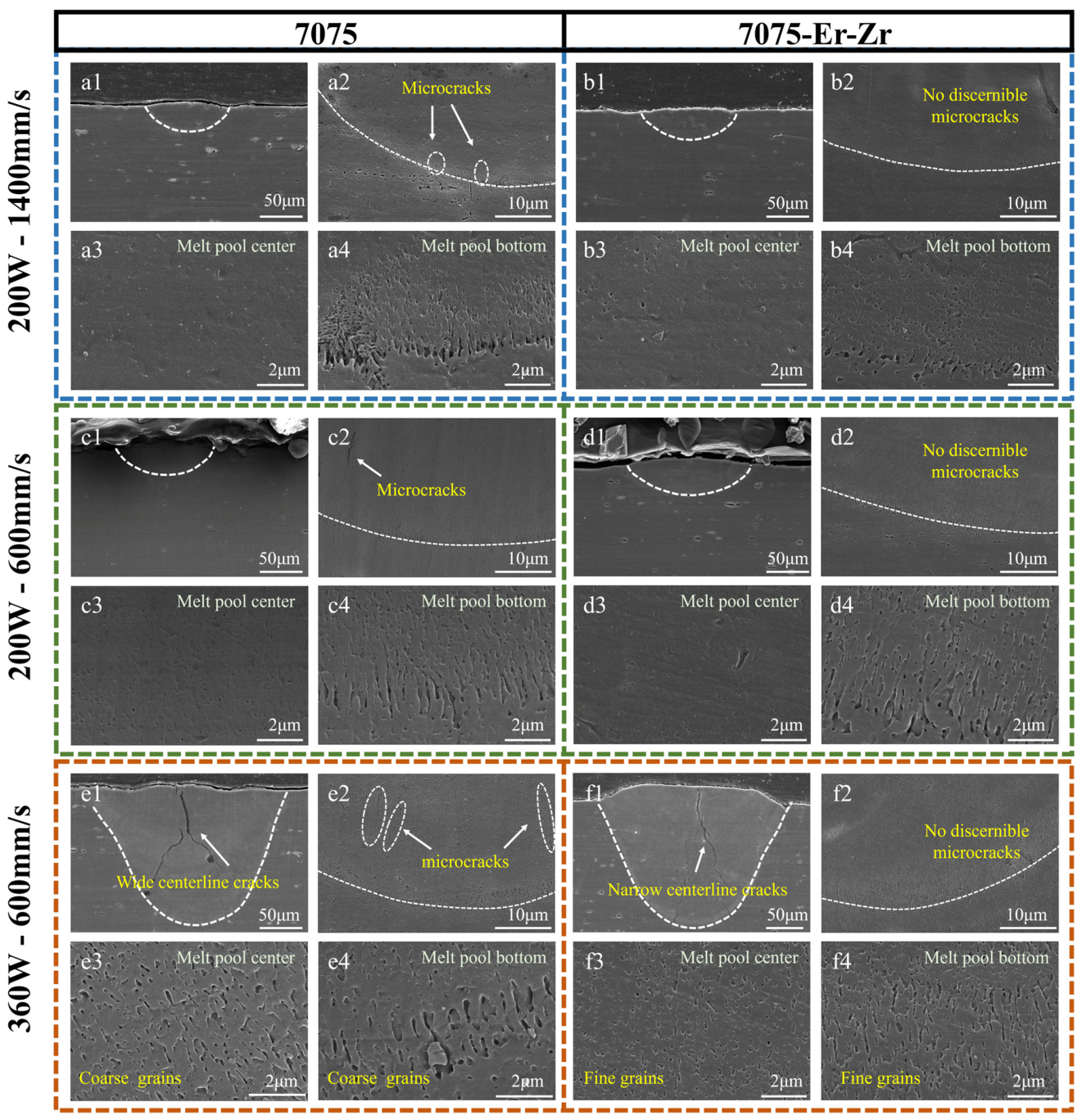
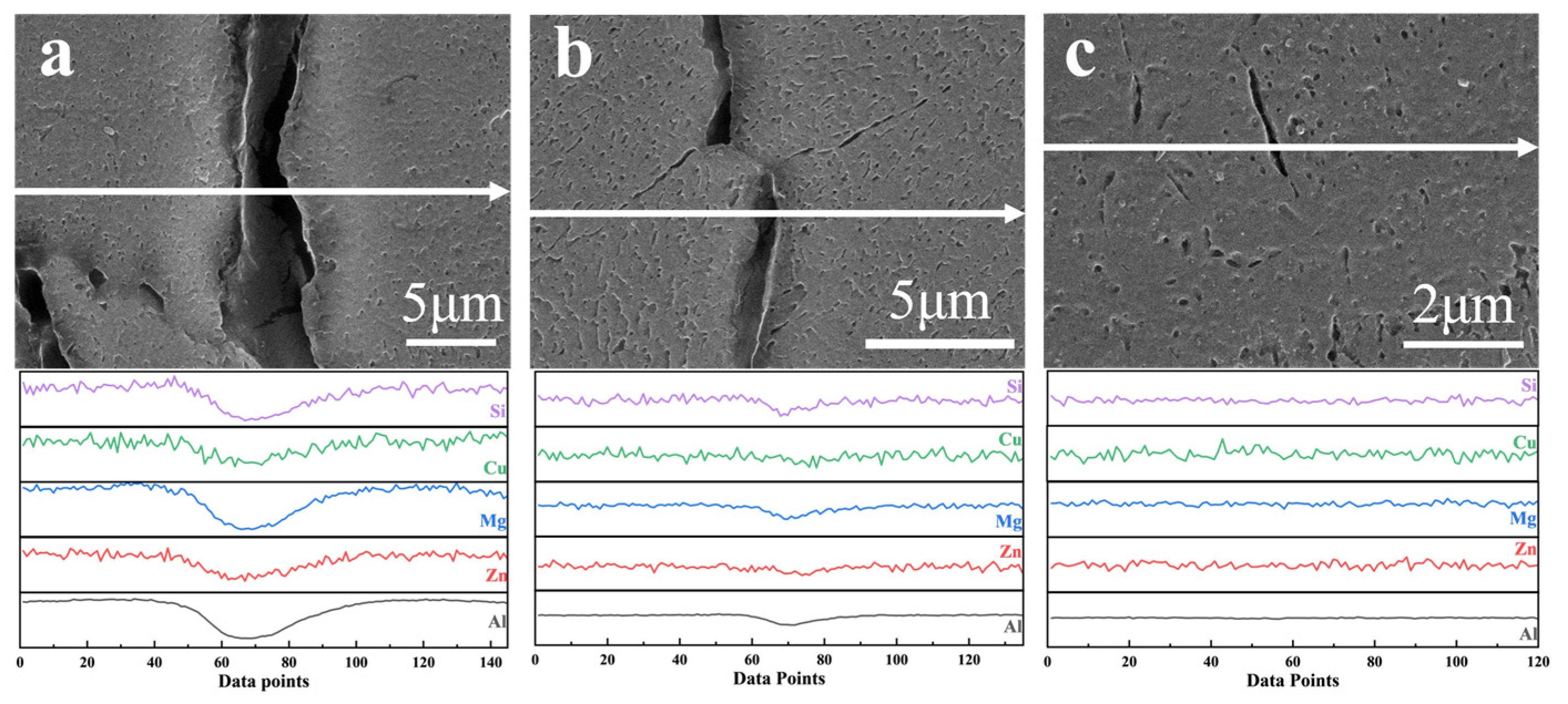
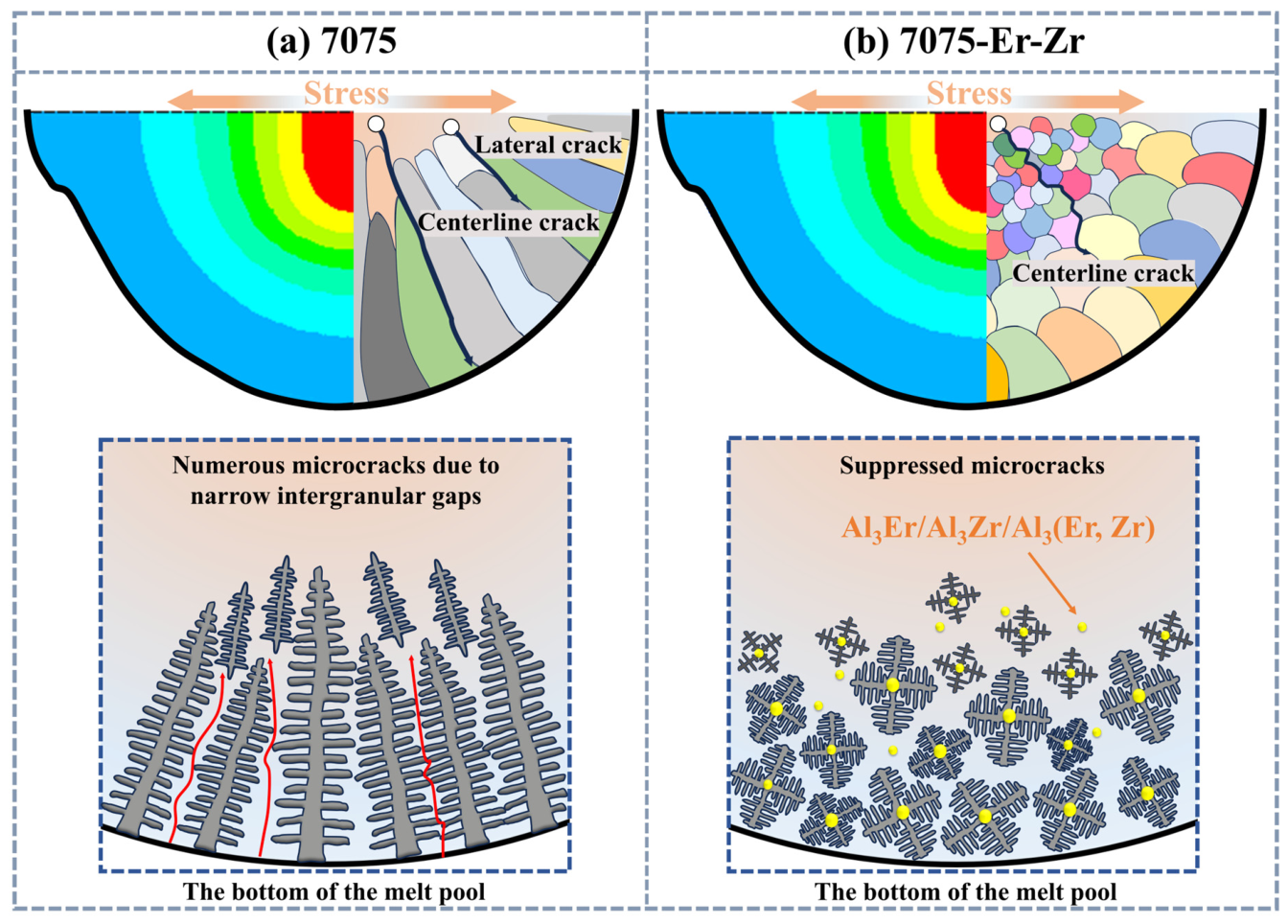
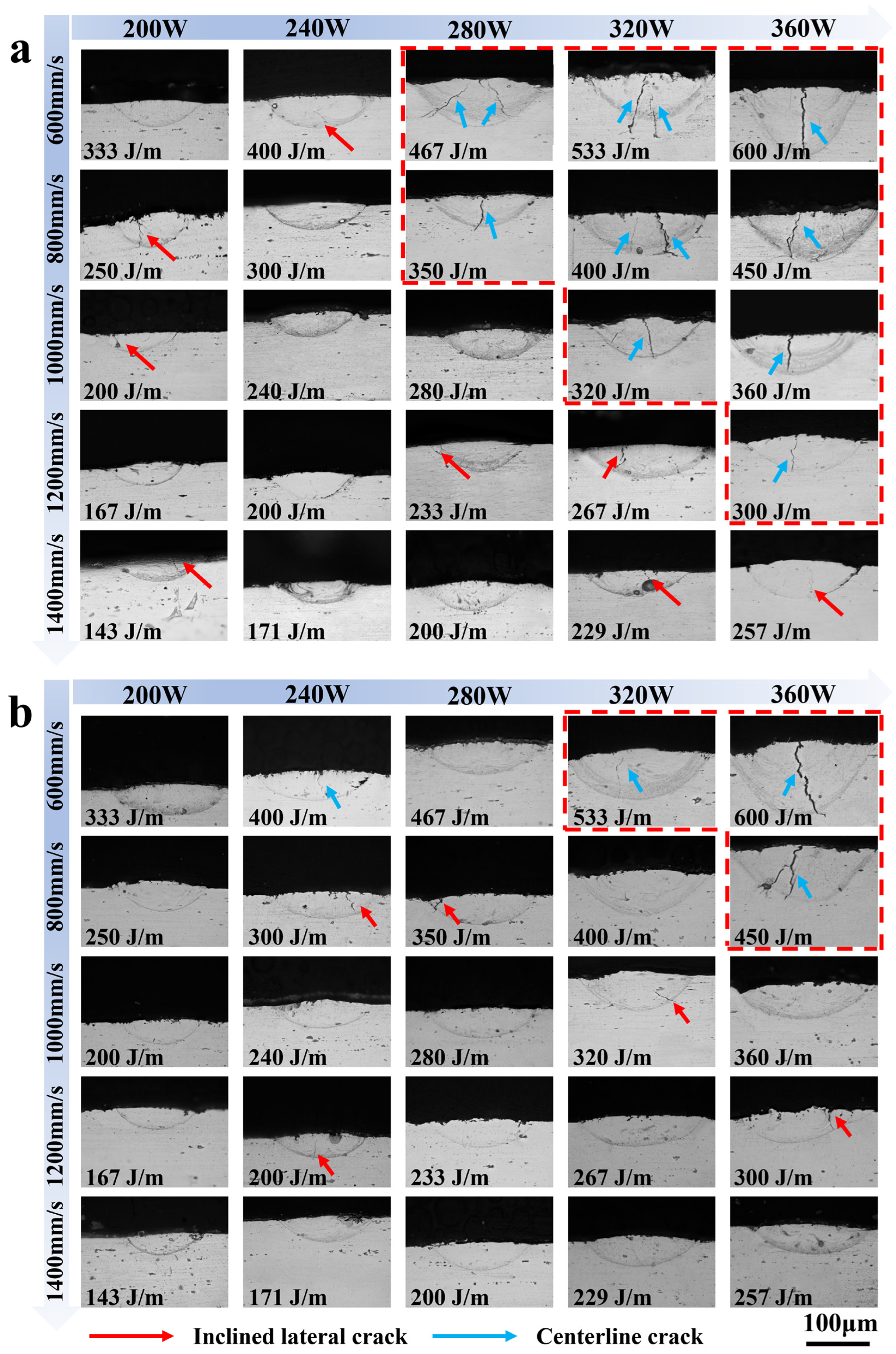
- Three characteristic crack modes are identified, showing a strong correlation with energy density. For AA7075, with EL < 450 J/m, cracks propagated laterally. As energy density increases to above this value, deep centerline penetration becomes dominant. Microcracks are always observed at the bottom of the melt pool.
- (2)
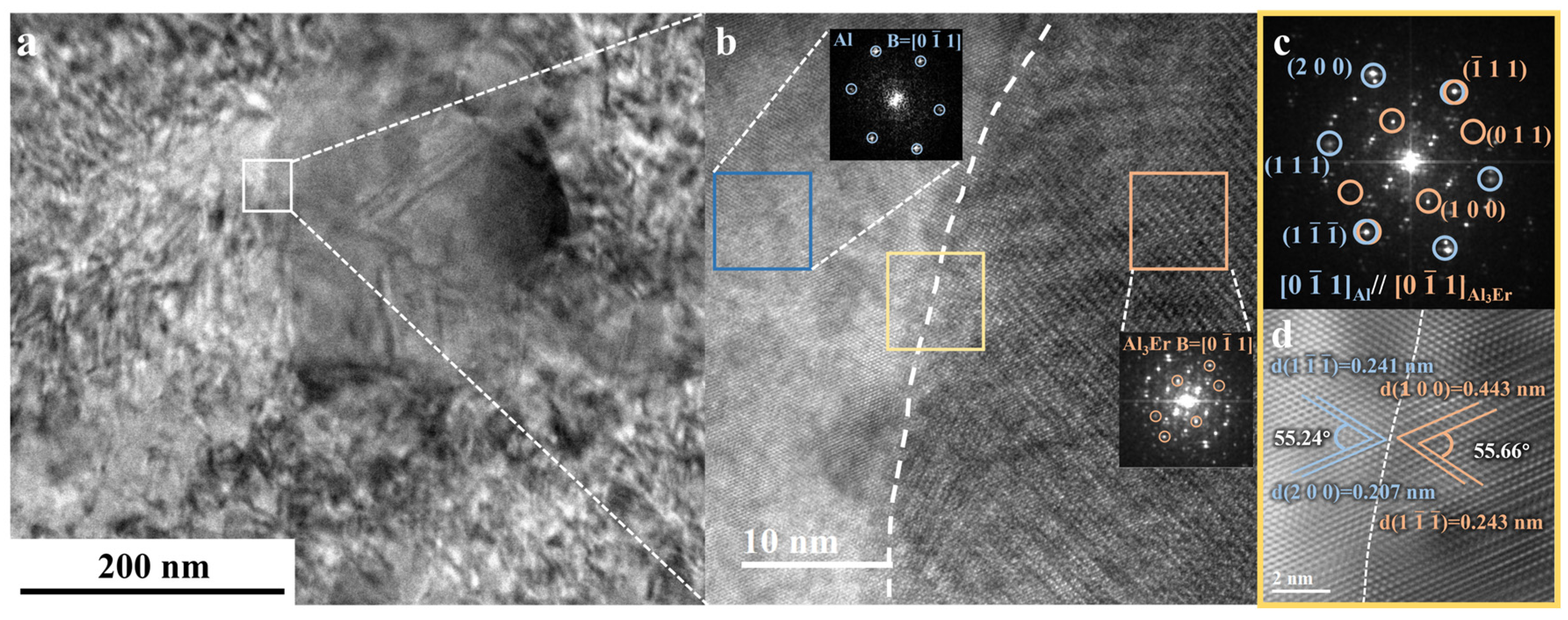
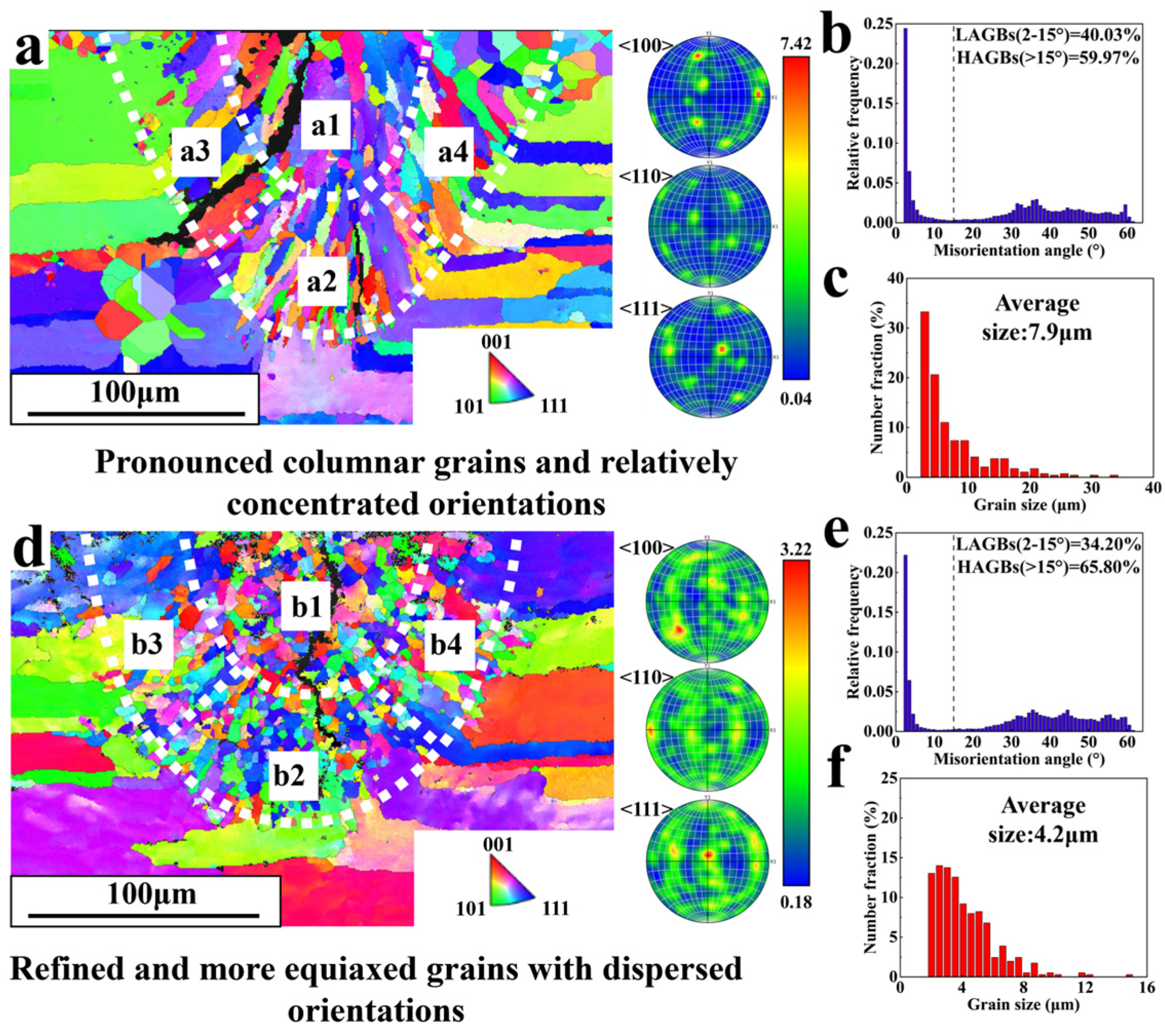
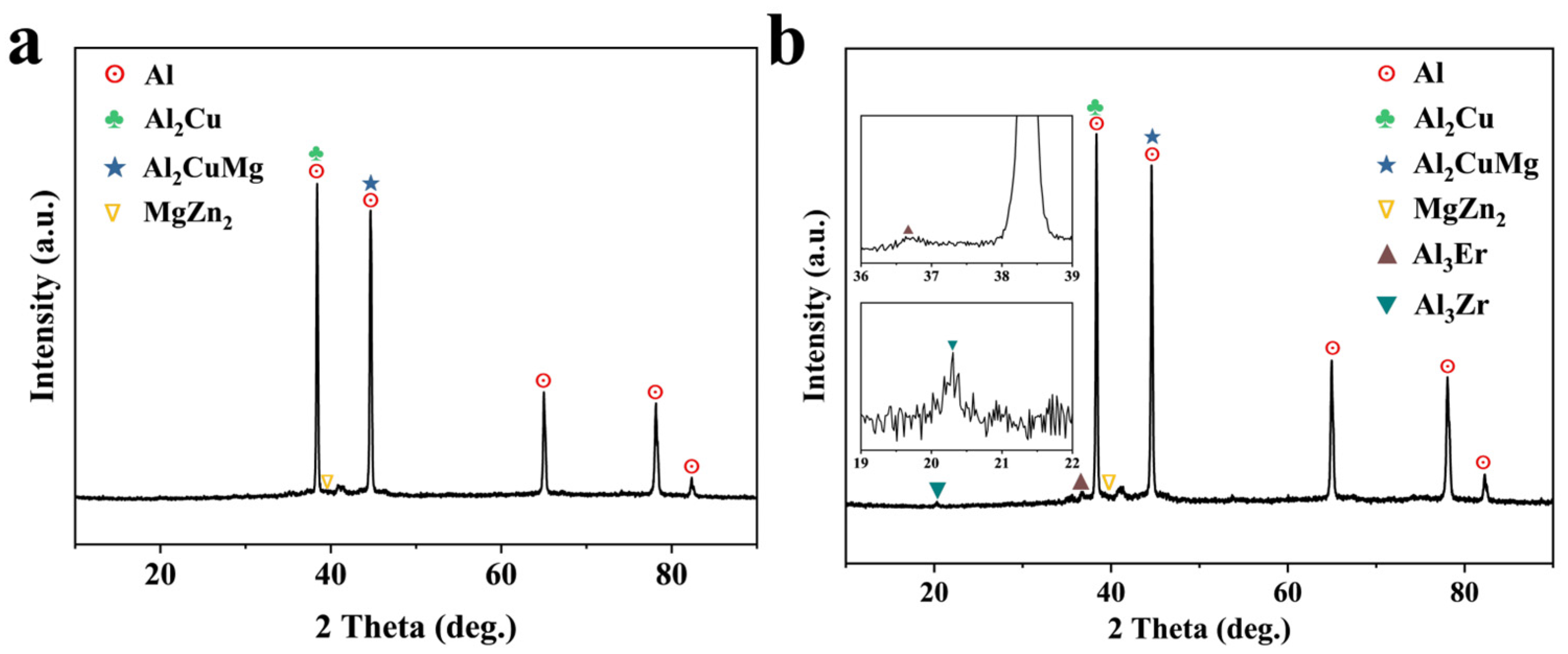
- The 7075-Er-Zr alloy exhibits significantly improved cracking resistance. At EL = 600 J/m, longitudinal centerline cracks still penetrate along the track. Crack-free fabrication is achieved at 200 W with scanning speeds above 1000 mm/s, while only short and discontinuous cracks form otherwise. Microcracks in 7075-Er-Zr are eliminated. The hot crack resistance enhancement is attributed to grain refinement and a transition to an equiaxed grain structure induced by microalloying, which randomizes grain orientation and disrupts long-range crack propagation.
- (3)
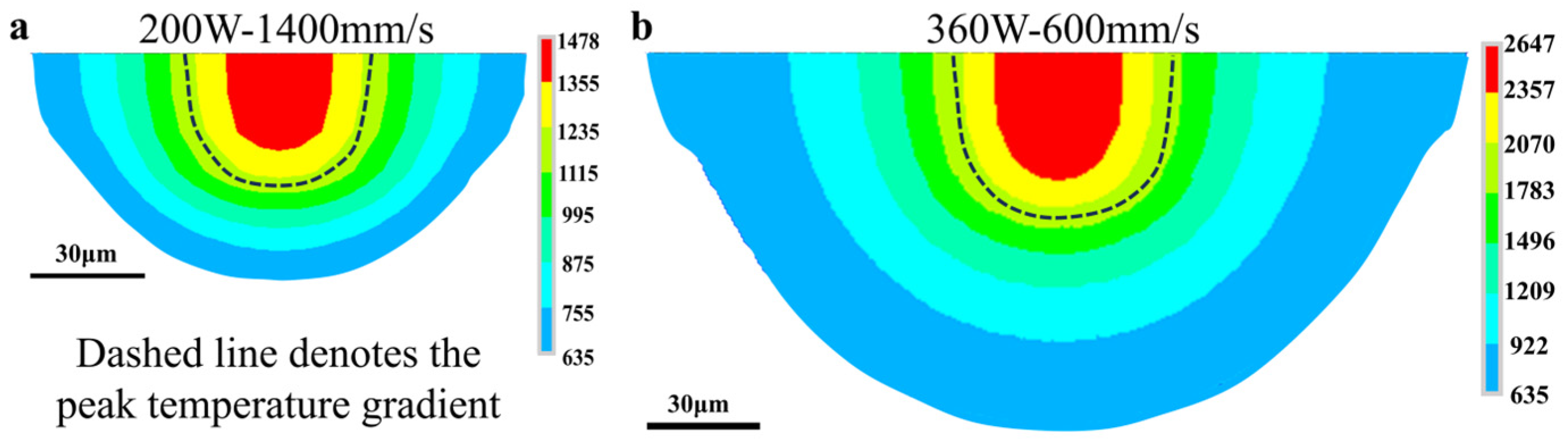
- A critical annular region dictated by the peak temperature gradient is identified in both alloys. In AA7075, this region contains aligned columnar grains that facilitate both microcracks and centerline cracks. In the 7075-Er-Zr alloy, microcracks are completely suppressed due to grain refinement and orientation randomization in this region. However, the annular region still retains a certain degree of crystallographic orientation, which grain refinement alone cannot fully eliminate. This residual texture is responsible for the continued occurrence of centerline cracks under high power densities.
Supplementary Materials
Author Contributions
Funding
Institutional Review Board Statement
Informed Consent Statement
Data Availability Statement
Conflicts of Interest
Abbreviations
| LPBF | Laser Powder Bed Fusion |
| AA7075 | Aluminum Alloy 7075 |
| CET | Columnar-to-equiaxed Transition |
| FEM | Finite Element Method |
| SEM | Scanning Electron microscopy |
| EBSD | Electron Backscatter Diffraction |
| XRD | X-ray Diffraction |
| TEM | Transmission Electron Microscopy |
| HRTEM | High-Resolution Transmission Electron Microscopy |
| 3D | Three-Dimensional |
| LAGBs | Low-Angle Grain Boundaries |
| HAGBs | High-Angle Grain Boundaries |
References
- Kotadia, H.R.; Gibbons, G.; Das, A.; Howes, P.D. A review of Laser Powder Bed Fusion Additive Manufacturing of aluminium alloys: Microstructure and properties. Addit. Manuf. 2021, 46, 102155. [Google Scholar] [CrossRef]
- Zhang, J.; Song, B.; Wei, Q.; Bourell, D.; Shi, Y. A review of selective laser melting of aluminum alloys: Processing, microstructure, property and developing trends. J. Mater. Sci. Technol. 2019, 35, 270–284. [Google Scholar] [CrossRef]
- Stopyra, W.; Gruber, K.; Smolina, I.; Kurzynowski, T.; Kuźnicka, B. Laser powder bed fusion of AA7075 alloy: Influence of process parameters on porosity and hot cracking. Addit. Manuf. 2020, 35, 101270. [Google Scholar] [CrossRef]
- Wimmer, A.; Panzer, H.; Zoeller, C.; Adami, S.; Adams, N.A.; Zaeh, M.F. Experimental and numerical investigations of the hot cracking susceptibility during the powder bed fusion of AA 7075 using a laser beam. Prog. Addit. Manuf. 2023, 9, 1589–1603. [Google Scholar] [CrossRef]
- Li, G.; Jadhav, S.D.; Martín, A.; Montero-Sistiaga, M.L.; Soete, J. Investigation of Solidification and Precipitation Behavior of Si-Modified 7075 Aluminum Alloy Fabricated by Laser-Based Powder Bed Fusion. Metall. Mater. Trans. A 2021, 52, 194–210. [Google Scholar] [CrossRef]
- Abdollahi, A.; Nganbe, M.; Kabir, A.S. On the elimination of solidification cracks in fusion welding of Al7075 by TiC-nanoparticle enhanced filler metal. J. Manuf. Process. 2022, 81, 828–836. [Google Scholar] [CrossRef]
- Yuan, G.; Wang, Y.; Niu, G.; Mao, J. A review: Investigation, insights and perspectives on current hot tearing criteria of aluminum alloys. Proc. Inst. Mech. Eng. Part L J. Mater. Des. Appl. 2025, 240, 409–435. [Google Scholar] [CrossRef]
- Tan, Q.; Fan, Z.; Tang, X.; Yin, Y.; Li, G.; Huang, D. A Novel Strategy to Additively Manufacture 7075 Aluminium Alloy with Selective Laser Melting. Mater. Sci. Eng. A 2021, 821, 141638. [Google Scholar] [CrossRef]
- Rappaz, M.; Drezet, J.-M.; Gremaud, M. A new hot-tearing criterion. Metall. Mater. Trans. A 1999, 30, 449–455. [Google Scholar] [CrossRef]
- Roy, A.; Singh, A.K.; Arora, A.; McWilliams, B.A.; Mock, C.; Cho, K.C.; Mishra, R.S. Columnar-to-equiaxed transition in laser fusion additive manufacturing. Scr. Mater. 2025, 259, 116565. [Google Scholar] [CrossRef]
- He, Y.; Zhong, M.; Jones, N.; Beuth, J.; Webler, B. The Columnar-to-Equiaxed Transition in Melt Pools During Laser Powder Bed Fusion of M2 Steel. Metall. Mater. Trans. A 2021, 52, 4206–4221. [Google Scholar] [CrossRef]
- Bayoumy, D.; Kan, W.; Wu, X.; Zhu, Y.; Huang, A. The latest development of Sc-strengthened aluminum alloys by laser powder bed fusion. J. Mater. Sci. Technol. 2023, 149, 1–17. [Google Scholar] [CrossRef]
- Yu, W.; Xiao, Z.; Zhang, X.; Sun, Y.; Xue, P.; Tan, S.; Wu, Y.; Zheng, H. Processing and characterization of crack-free 7075 aluminum alloys with elemental Zr modification by laser powder bed fusion. Mater. Sci. Addit. Manuf. 2022, 1, 4. [Google Scholar] [CrossRef]
- Liang, Y.; Han, Q.; Sui, Z.; Zhang, Z.; Zhang, H.; Gu, H.; Wu, D.; Wang, L.; Liu, H.; Setchi, R. Laser powder bed fusion of high-strength crack-free Al7075 alloy with the in-situ formation of TiB2/Al3Ti-reinforced phases and nucleation agents. Compos. Part B Eng. 2025, 289, 111940. [Google Scholar] [CrossRef]
- Li, M.; Yao, S.; Wang, J.; Chen, Z.; Zhang, G.; Zhang, S.; Li, Y. Role of Er on the densification, microstructure and mechanical properties of 7075 aluminium alloys manufactured by laser powder bed fusion. J. Mater. Res. Technol. 2022, 20, 2021–2033. [Google Scholar] [CrossRef]
- Griffiths, S.; Croteau, J.R.; Rossell, M.D.; Erni, R.; De Luca, A.; Vo, N.Q.; Dunand, D.C.; Leinenbach, C. Coarsening- and creep resistance of precipitation-strengthened Al–Mg–Zr alloys processed by selective laser melting. Acta Mater. 2020, 188, 192–202. [Google Scholar] [CrossRef]
- Knipling, K.E.; Dunand, D.C.; Seidman, D.N. Criteria for developing castable, creep-resistant aluminum-based alloys—A review. Int. J. Mater. Res. 2022, 97, 246–265. [Google Scholar] [CrossRef]
- Wen, T.; Li, Z.; Wang, J.; Yang, F.; Zhu, M.; Luo, Y. CALPHAD aided design of a crack-free Al-Mg-Si-Ti alloy with high strength: Heterogeneous nucleation and eutectic filling during additive manufacturing. Virtual Phys. Prototyp. 2024, 19, e2378930. [Google Scholar] [CrossRef]
- Geng, Y.; Jia, C.; Xu, J.; Zhang, Z.; Ju, H.; Wang, D. Selective laser melting of a novel high-strength Er- and Zr-modified Al-Mn-Mg alloy. Mater. Lett. 2022, 313, 131762. [Google Scholar] [CrossRef]
- Bi, J.; Lei, Z.; Chen, Y.; Chen, X.; Tian, Z.; Liang, J.; Zhang, X.; Qin, X. Microstructure and mechanical properties of a novel Sc and Zr modified 7075 aluminum alloy prepared by selective laser melting. Mater. Sci. Eng. A 2019, 768, 138478. [Google Scholar] [CrossRef]
- Wang, T.; Zeng, W.; Wang, R.; Xia, T. A novel inoculation strategy combined with mechanical alloying for preparing crack-free 7075 alloy in laser powder bed fusion. J. Alloys Compd. 2025, 1040, 183364. [Google Scholar] [CrossRef]
- Choe, J.; Kim, K.T.; Yu, J.H.; Park, J.M.; Yang, D.Y.; Jung, S.h.; Jo, S.; Joo, H.; Kang, M.; Ahn, S.Y.; et al. A novel route for predicting the cracking of inoculant-added AA7075 processed via laser powder bed fusion. Addit. Manuf. 2023, 62, 103370. [Google Scholar] [CrossRef]
- Patel, M.; Aggarwal, A.; Kumar, A. Investigation of Cracking Susceptibility and Porosity Formation and Its Mitigation Techniques in Laser Powder Bed Fusion of Al 7075 Alloy. Met. Mater. Int. 2023, 29, 2358–2373. [Google Scholar] [CrossRef]
- Mosleh, A.O.; Khalil, A.M.; Loginova, I.S.; Solonin, A.N. Influence of Adding Modifying Elements and Homogenization Annealing on Laser Melting Process of the Modified AlZnMgCu with 4%Si Alloys. Materials 2021, 14, 6154. [Google Scholar] [CrossRef]
- Montero-Sistiaga, M.L.; Mertens, R.; Vrancken, B.; Wang, X.; Hooreweder, B.V. Changing the alloy composition of Al7075 for better processability by selective laser melting. J. Mater. Process. Technol. 2016, 238, 437–445. [Google Scholar] [CrossRef]
- Grasso, M.; Remani, A.; Dickins, A.; Colosimo, B.M.; Leach, R.K. In-situ measurement and monitoring methods for metal powder bed fusion: An updated review. Meas. Sci. Technol. 2021, 32, 112001. [Google Scholar] [CrossRef]
- Vallabh, C.K.P.; Zhao, X. Melt pool temperature measurement and monitoring during laser powder bed fusion based additive manufacturing via single-camera two-wavelength imaging pyrometry (STWIP). J. Manuf. Process. 2022, 79, 486–500. [Google Scholar] [CrossRef]
- Luo, Z.; Zhao, Y.F. A survey of finite element analysis of temperature and thermal stress fields in powder bed fusion Additive Manufacturing. Addit. Manuf. 2018, 21, 318–332. [Google Scholar] [CrossRef]
- Ricci, S.; Testa, G.; Iannitti, G.; Ruggiero, A. Laser powder bed fusion of AlSi10Mg alloy: Numerical investigation on the temperature field evolution. Forces Mech. 2022, 8, 100109. [Google Scholar] [CrossRef]
- Hussein, A.; Hao, L.; Yan, C.; Everson, R. Finite element simulation of the temperature and stress fields in single layers built without-support in selective laser melting. Mater. Des. (1980–2015) 2013, 52, 638–647. [Google Scholar] [CrossRef]
- Elahi, S.M.; Tavakoli, R.; Boukellal, A.K.; Isensee, T.; Romero, I.; Tourret, D. Multiscale simulation of powder-bed fusion processing of metallic alloys. Comput. Mater. Sci. 2022, 209, 111383. [Google Scholar] [CrossRef]
- Zagade, P.; Gautham, B.P.; De, A.; DebRoy, T. Analytical estimation of fusion zone dimensions and cooling rates in part scale laser powder bed fusion. Addit. Manuf. 2021, 46, 102222. [Google Scholar] [CrossRef]
- Mishra, A.K.; Kumar, A. Effect of Different Powder Bed Thermal Conductivity Models on the Melt Pool Characteristics and Solidification Parameters during Laser Powder Bed Fusion of Ti6Al4V. Trans. Indian Inst. Met. 2023, 77, 2971–2975. [Google Scholar] [CrossRef]
- Yin, J.; Zhu, H.; Ke, L.; Hu, P.; He, C.; Zhang, H.; Zeng, X. A finite element model of thermal evolution in laser micro sintering. Int. J. Adv. Manuf. Technol. 2015, 83, 1847–1859. [Google Scholar] [CrossRef]
- Zhao, Z.; Wang, J.; Du, W.; Bai, P.; Wu, X. Numerical simulation and experimental study of the 7075 aluminum alloy during selective laser melting. Opt. Laser Technol. 2023, 167, 109814. [Google Scholar] [CrossRef]
- Yanpu, C.; Lehua, Q.; Zhengmin, B. 3D Dynamic Simulation Analysis of Thermal-Mechanical Coupling during 7075 Aluminum Alloy Micro-droplet Deposition Manufacture. Rare Met. Mater. Eng. 2016, 45, 1924–1930. [Google Scholar] [CrossRef]
- Sonawane, A.; Roux, G.; Blandin, J.-J.; Despres, A.; Martin, G. Cracking mechanism and its sensitivity to processing conditions during laser powder bed fusion of a structural aluminum alloy. Materialia 2021, 15, 100976. [Google Scholar] [CrossRef]
- Dasgupta, S.; Thoma, D.; Kou, S. A Test for Susceptibility to Solidification Cracking and Liquation Cracking in Additive Manufacturing. Metals 2025, 15, 1147. [Google Scholar] [CrossRef]
- Tang, L.; Xiao, C.; Ni, S.; Jiang, W.; Fan, C.; Chen, Z. Enhanced mechanical properties of LPBF-fabricated CoCrNi/TiN composites via in-situ nanoparticle reinforcement. Intermetallics 2026, 188, 109084. [Google Scholar] [CrossRef]
- Guo, Y.; Wei, W.; Shi, W.; Zhang, B.; Zhou, X.; Wen, S.; Wu, X.; Gao, K.; Rong, L.; Huang, H.; et al. Effect of Er and Zr additions and aging treatment on grain refinement of aluminum alloy fabricated by laser powder bed fusion. J. Alloys Compd. 2022, 912, 165237. [Google Scholar] [CrossRef]
- Li, X.; Sun, G.; Ren, B.; Li, W.; Zhao, X.; Chen, C. Microstructure and mechanical properties of 7075 aluminum alloy welded joints fabricated by MIG welding with 7085-Sc welding wire. Mater. Sci. Eng. A 2025, 944, 148969. [Google Scholar] [CrossRef]
- Ullah, R.; Lian, J.; Akmal, J.; Wu, J.; Niemi, E. Prediction and validation of melt pool dimensions and geometric distortions of additively manufactured AlSi10Mg. Int. J. Adv. Manuf. Technol. 2023, 126, 3593–3613. [Google Scholar] [CrossRef]
- Coen, V.; Goossens, L.; Hooreweder, B.V. Methodology and experimental validation of analytical melt pool models for laser powder bed fusion. J. Mater. Process. Technol. 2022, 304, 117547. [Google Scholar] [CrossRef]
- Karimi, P.; Sadeghi, E.; Ålgårdh, J.; Olsson, J.; Colliander, M.H.; Harlin, P.; Toyserkani, E.; Andersson, J. Tailored grain morphology via a unique melting strategy in electron beam-powder bed fusion. Mater. Sci. Eng. A 2021, 824, 141820. [Google Scholar] [CrossRef]
- Wang, T.; Zhu, Y.Y.; Zhang, S.Q.; Tang, H.B.; Wang, H.M. Grain morphology evolution behavior of titanium alloy components during laser melting deposition additive manufacturing. J. Alloys Compd. 2015, 632, 505–513. [Google Scholar] [CrossRef]
- Jin, K.; Yang, Z.; Chen, P.; Huang, G.; Qiao, X. Dynamic solidification process during laser cladding of IN718: Multi-physics model, solute suppressed nucleation and microstructure evolution. Int. J. Heat Mass Transf. 2022, 192, 122907. [Google Scholar] [CrossRef]
- He, P.; Webster, R.F.; Yakubov, V.; Kong, H.; Yang, Q.; Huang, S.; Ferry, M.; Kruzic, J.J.; Li, X. Fatigue and dynamic aging behavior of a high strength Al-5024 alloy fabricated by laser powder bed fusion additive manufacturing. Acta Mater. 2021, 220, 117312. [Google Scholar] [CrossRef]
- Huang, G.; Shen, T.; Li, B. Microstructural evolution modelling and low-stress fatigue performance of bimodal-structured Al-Mg-Sc-Zr alloy produced by laser powder bed fusion additive manufacturing. Virtual Phys. Prototyp. 2024, 19, e2346287. [Google Scholar] [CrossRef]
- Sun, J.e.; Kumar, P.; Wang, P.; Ramamurty, U.; Qu, X.; Zhang, B. Effect of columnar-to-equiaxed microstructural transition on the fatigue performance of a laser powder bed fused high-strength Al alloy. J. Mater. Sci. Technol. 2025, 227, 276–288. [Google Scholar] [CrossRef]
- Zhang, D.; Han, Y.; Sun, Z.; Gao, Y.; Sun, S.; Li, J.; Qi, X.; He, Y.; Yu, Y. Coherent interface and synergistic regulation of CeB6 for achieving crack-free and high-strength 7075 aluminum alloy fabricated by LPBF. Mater. Lett. 2026, 413, 140465. [Google Scholar] [CrossRef]
- Sun, Z.; Soh, V.; Lee, C.; Wuu, D.; Lau, D.; Wei, S.; Ng, C.K.; Sing, S.L.; Tan, D.; Wang, P. Effects of carbon content on precipitate evolution and crack susceptibility in additively manufactured IN738LC. Mater. Sci. Addit. Manuf. 2024, 3, 2264. [Google Scholar] [CrossRef]
- Yu, H.; Huang, H.; Nie, Z.; Wen, S.; Gao, K.; Wang, W. Effect of Al–Er–Zr Master Alloy on Grain Refinement After Heat Treatment. In Physics and Engineering of Metallic Materials; Springer Proceedings in Physics; Springer: Singapore, 2019; pp. 231–240. [Google Scholar]











| Elements | Si | Fe | Cu | Mn | Mg | Zn | Cr | Ti | O | Er | Zr | Al |
|---|---|---|---|---|---|---|---|---|---|---|---|---|
| wt.% | 0.06 | 0.06 | 1.57 | <0.02 | 2.53 | 5.9 | 0.21 | 0.005 | 0.046 | / | / | Bal. |
| wt.% | 0.09 | 0.85 | 1.74 | 0.02 | 2.39 | 4.2 | 0.31 | 0.086 | 0.079 | 0.65 | 0.29 | Bal. |
| Process Parameters | Setting |
|---|---|
| Laser power (W) | 200, 240, 280, 320, 360 |
| Scanning speed (mm/s) | 600, 800, 1000, 1200, 1400 |
| Layer thickness (μm) | 30 |
| Laser spot diameter (μm) | 80 |
| Temperature (°C) | Density (kg/m3) | Thermal Conductivity (W/m·K) | Specific Heat (J/kg·K) | Laser Absorptivity | ||||
|---|---|---|---|---|---|---|---|---|
| AA7075/ 7075-Er-Zr | AA7075/ 7075-Er-Zr | AA7075/ 7075-Er-Zr | AA7075/ 7075-Er-Zr | |||||
| 25 | 2811 | 2826 | 14.0 | 14.7 | 860 | 856.7 | 0.46 | 0.49 |
| 100 | 2797 | 2812 | 16.1 | 16.9 | 901 | 894.7 | ||
| 200 | 2776 | 2792 | 17.5 | 18.4 | 944 | 937 | ||
| 300 | 2753 | 2769 | 18.9 | 19.8 | 984 | 977 | ||
| 400 | 2730 | 2746 | 19.9 | 20.9 | 1024 | 1017 | ||
| 500 | 2705 | 2721 | 30 | 31.8 | 1137 | 1130 | ||
| 600 | 2630 | 2681 | 50 | 52.2 | 5698 | 5733 | ||
| 700 | 2478 | 2496 | 181 | 188.5 | 1280 | 1273 | ||
| 800 | 2250 | 2260 | 220 | 229.1 | 1350 | 1343 | ||
| Direction | Point | G/R Values for AA7075 (×106 °C·s·m−2) | G/R Values for 7075-Er-Zr (×106 °C·s·m−2) |
|---|---|---|---|
| Depth direction | 1 | 8.38 | 8.25 |
| 2 | 32.56 | 30.26 | |
| 3 | 102.35 | 101.26 | |
| 4 | 282.11 | 297.17 | |
| 5 | 158.15 | 170.35 | |
| Transverse direction | 1 | 8.38 | 8.25 |
| 6 | 53.99 | 55.20 | |
| 7 | 138.48 | 141.20 | |
| 8 | 181.14 | 185.49 | |
| 9 | 166.47 | 170.42 |
Disclaimer/Publisher’s Note: The statements, opinions and data contained in all publications are solely those of the individual author(s) and contributor(s) and not of MDPI and/or the editor(s). MDPI and/or the editor(s) disclaim responsibility for any injury to people or property resulting from any ideas, methods, instructions or products referred to in the content. |
© 2026 by the authors. Licensee MDPI, Basel, Switzerland. This article is an open access article distributed under the terms and conditions of the Creative Commons Attribution (CC BY) license.
Share and Cite
Ding, M.; Yu, W.; Xiao, J.; Xiao, Z.; Sun, J.; Qi, D.; Zhu, L.; Xin, W.; Zheng, H. The Role of Temperature Field Distribution in the Microstructural Evolution of High-Strength Aluminum Alloys During Laser Powder Bed Fusion. Coatings 2026, 16, 706. https://doi.org/10.3390/coatings16060706
Ding M, Yu W, Xiao J, Xiao Z, Sun J, Qi D, Zhu L, Xin W, Zheng H. The Role of Temperature Field Distribution in the Microstructural Evolution of High-Strength Aluminum Alloys During Laser Powder Bed Fusion. Coatings. 2026; 16(6):706. https://doi.org/10.3390/coatings16060706
Chicago/Turabian StyleDing, Mingjun, Wenhui Yu, Jiaxing Xiao, Zhen Xiao, Junhao Sun, Dongfeng Qi, Lihua Zhu, Wuhong Xin, and Hongyu Zheng. 2026. "The Role of Temperature Field Distribution in the Microstructural Evolution of High-Strength Aluminum Alloys During Laser Powder Bed Fusion" Coatings 16, no. 6: 706. https://doi.org/10.3390/coatings16060706
APA StyleDing, M., Yu, W., Xiao, J., Xiao, Z., Sun, J., Qi, D., Zhu, L., Xin, W., & Zheng, H. (2026). The Role of Temperature Field Distribution in the Microstructural Evolution of High-Strength Aluminum Alloys During Laser Powder Bed Fusion. Coatings, 16(6), 706. https://doi.org/10.3390/coatings16060706