Article

The Influence of Grain Boundary Diffusion of Cu28Ce72 Alloy on the Magnetic Properties of HDDR NdFeB Powders
1
School of Construction Machinery, Shandong Jiaotong University, Jinan 250357, China
2
Institute for Advanced Materials and Technology, University of Science and Technology Beijing, Beijing 100083, China
*
Author to whom correspondence should be addressed.
Coatings 2026, 16(6), 694; https://doi.org/10.3390/coatings16060694
Submission received: 16 April 2026 / Revised: 29 May 2026 / Accepted: 9 June 2026 / Published: 10 June 2026

Highlights

What are the main findings?
  • The magnetic properties of HDDR NdFeB can be improved by adding Cu28Ce72 alloy.
  • The Hcj, Br and BHmax of the bonded magnet respectively increased by 12.91%, 12.4% and 27.1%.
What are the implications of the main findings?
  • Cu and Ce elements enter the NdFeB particles along the grain boundaries to repair the grain boundaries.

Abstract

In this paper, the magnetic properties of HDDR NdFeB powders were improved by the grain boundary diffusion of Cu28Ce72 alloy. The influence and mechanism of Cu28Ce72 alloy and heating process on the coercivity (Hcj), remanence (Br), and maximum magnetic energy product (BHmax) of magnetic powders were investigated. The grain boundary diffusion of Cu28Ce72 alloy can effectively improve the Hcj, Br and BHmax of bonded magnets, exhibiting a trend of first increasing and then decreasing with the increase in diffusion temperature and Cu28Ce72 addition, and the maximum values of 927 kA/m, 0.625 T and 61 kJ/m3 are obtained at the Cu28Ce72 content of 5.0 wt% and the heating temperature of 380 °C. The demagnetization coupling effect is increased by a continuous grain boundary phase formed by the diffusion of Ce and Cu elements into the grain boundaries, and thus the coercivity of magnetic powder is improved. During the diffusion process, Ce element diffuses along the grain boundaries to repair the defective areas around the grains and form a Ce2Fe14B phase, which improves the Hcj and Br of magnetic powders; on the other hand, Ce element diffuses into Nd2Fe14B grains to replace the Nd crystal sites, reducing the Hcj and Br of magnet; therefore, the Hcj and Br of HDDR NdFeB powders are comprehensively affected by these two aspects.

1. Introduction

Bonded NdFeB magnets are characterized by a high degree of shape freedom, high dimensional accuracy, the elimination of secondary processing, and high material utilization. They are widely used in the fabrication of micro-motors for applications such as automotive, home appliances, and consumer electronics industries [1,2,3]. With the development of China’s green and low-carbon economy and the national goals of “Carbon Peak” and “Carbon Neutrality”, micro-motors are evolving toward miniaturization, high efficiency, energy conservation, and intelligence. This trend places higher demands on the magnetic properties of bonded NdFeB magnets, particularly concerning coercivity [4,5].
Typically, the fabrication of Bonded NdFeB magnets involves mixing and compounding NdFeB magnetic powder with coupling agents, binders and lubricants in specific proportions and sequences. The mixture is then formed into green compacts using injection molding, calendering, extrusion, or compression molding processes, and finally prepared by surface anti-corrosion treatment and magnetic field orientation [6,7,8,9]. The magnetic properties of bonded NdFeB magnets are influenced by both the magnetic powder and the preparation process. As the foundation of magnet fabrication, the magnetic powder plays a decisive role in determining the magnet performance [10,11,12]. Kurniawan C et al. [13] found that beyond the intrinsic magnetic properties of the powder, factors such as particle size distribution of the magnetic powder also affect the magnetic performance of the final magnets. Liang Chao et al. [14] significantly improved the magnetic properties of NdFeB powder by modifying the HDDR process and combining it with grain boundary diffusion and tempering treatments, achieving results of Br = 6.24 kGs, Hcj = 14.67 kOe, and BHmax = 7.06 MGOe. Zhang Wen et al. [15] investigated the effect of Zr addition on the structure and magnetic properties of NdFeB powder, and the results showed that Zr addition effectively refines the grain size and enhances the exchange coupling interaction between the hard and soft magnetic phases, thereby improving overall performance. The addition of heavy rare earth elements such as Dy/Tb can effectively enhance the coercivity of the magnetic powder. Honkura et al. [16] introduced Dy element into NdFeB powder prepared by the d-HDDR process, increasing the intrinsic coercivity from 1.12 MA/m to 1.56 MA/m. However, since heavy rare earth elements such as Dy and Tb are non-renewable resources with prohibitive costs, research has prioritized the reduction or complete elimination of heavy rare earth usage in magnet fabrication [17,18]. Conversely, grain boundary diffusion using low-melting-point alloys of light rare earths like Pr/Nd facilitates the formation of a continuous intergranular phase, which increases decoupling between main-phase grains, suppresses intergranular magnetic reversal, and thereby enhances coercivity [19,20,21,22]. Lin Zhong et al. added Pr68Cu32 alloy powder to Pr9.5Fe83Zr2B5.5 [23] and Nd13Fe79.4B7Nb0.3Ga0.3 [24] HDDR magnetic powders for grain boundary diffusion treatment. As a result, the coercivity of the magnets respectively increased from 6.5 kOe and 13 kOe to 26 kOe and 18 kOe, with no significant decrease in remanence or maximum energy product.
With the significant increase in the price of Pr/Nd rare earth elements in recent years, the substitution of Pr/Nd with lower-cost and more abundant alternatives has become a research hotspot in the industry. As byproducts of Nd/Pr extraction, La/Ce cost less than one-twentieth of Nd/Pr and are far more abundant in nature. Developing Nd-Ce-Fe-B or Nd-La-Fe-B magnets by substituting Pr/Nd with La/Ce is an effective approach to alleviating the rare earth resource crisis and reducing the cost of Nd-Fe-B magnets [25,26,27,28]. This study employed low-melting-point Cu28Ce72 alloy (with a eutectic temperature of 407 °C) [29] as diffusion source for diffusion heat treatment of HDDR NdFeB magnetic powder. The effects of Cu28Ce72 alloy concentration and heat treatment processes on coercivity, remanence and maximum magnetic energy product were investigated, along with the underlying mechanisms.

2. Materials and Methods

In this study, NdFeB magnetic powder, prepared via the HDDR process, was sieved through a 60-mesh screen to obtain particles smaller than 250 μm. The Cu28Ce72 diffusion alloy was prepared using vacuum arc melting furnace under argon atmosphere (Beijing Wuke Optoelectronics, Beijing, China). Cu and Ce metals were weighed according to the atomic ratio of Cu28Ce72, with the surface oxide layer of Ce mechanically removed. An additional 5 wt% of Ce was added to compensate for potential oxidation losses during melting. The melted Cu28Ce72 ingot was mechanically crushed under nitrogen protection and passed through 100-mesh sieve (Shaoxing Shangyu Huafeng Hardware & Instrument, Shaoxing, China) (particle size < 150 μm). Under a nitrogen atmosphere, the NdFeB magnetic powder (20.0 g) and a specific mass ratio of Cu28Ce72 powder were placed into ball milling jar (Changsha Tianchuang Powder Technology, Changsha, China), along with 25 large (9.6 mm diameter) and 50 small (5.8 mm diameter) grinding balls. The mixture was ball-milled at 60 rpm, promoting adhesion of fine Cu28Ce72 particles onto the surface of the NdFeB powders.
The ball-milled powder was pre-pressed and formed under pressure of 200 MPa to ensure tight compaction during the diffusion heat treatment. The pre-pressed compact was placed in a vacuum furnace, evacuated to 5 × 10⁻³ Pa and heated to temperature range of 380 °C to 700 °C for diffusion heat treatment for 1.0 h, then cooled to room temperature. The heat-treated compact was then ground into powder using a mortar and suspended in acetone. Epoxy resin (2.5 wt%) and KH550 coupling agent (0.5 wt%) relative to the magnetic powder mass were added and thoroughly mixed by stirring. After acetone evaporation and drying, the mixture was ground in a mortar for 10 min and left in air for 24 h to ensure complete removal of residual solvent. The magnet was prepared using BCY200 magnetic field press (Baiqida Intelligent Technology, Ningbo, China). The mixed magnetic powder was placed in mold at 140 °C and oriented under 1.8 T alternating magnetic field, the mixture was pressed into 7 mm × 7 mm × 7 mm bonded magnet under 450 MPa pressure, followed by curing at 120 °C for 30 min to yield the final product.
The magnetic properties of the magnets were characterized using a NIM-2000 permanent magnet material measuring instrument (National Institute of Metrology, Beijing, China) to determine the remanence, coercivity, and maximum magnetic energy product. The morphology and composition of the magnets were examined using a field emission scanning electron microscope (Zeiss SUPRATM55, Carl Zeiss AG, Oberkochen, Germany) equipped with energy dispersive spectrometer (EDS) (INCA X-MAX 50, Oxford Instruments, Abingdon, UK).

3. Results and Discussion

Figure 1 shows the variation curves of the coercivity of bonded NdFeB magnets with different Cu28Ce72 addition amounts as a function of the diffusion temperature. For the bonded magnet without Cu28Ce72, the Hcj decreases slightly with increasing diffusion temperature below 380 °C and decreases sharply above 380 °C. This phenomenon occurs because magnetic powders undergo minimal oxidation at temperatures below 380 °C, while higher temperatures accelerate the grain growth and oxidation, resulting in reduced Hcj. For magnets containing Cu28Ce72 as a diffusion agent, increasing the diffusion temperature facilitates the diffusion of Cu and Ce into the interior of the NdFeB particles, effectively repairing grain boundaries and enhancing Hcj. The Hcj reaches its maximum at a diffusion temperature of 380 °C. Beyond this temperature, the Hcj decreases due to oxidation and the bulk diffusion of Ce elements [30,31].
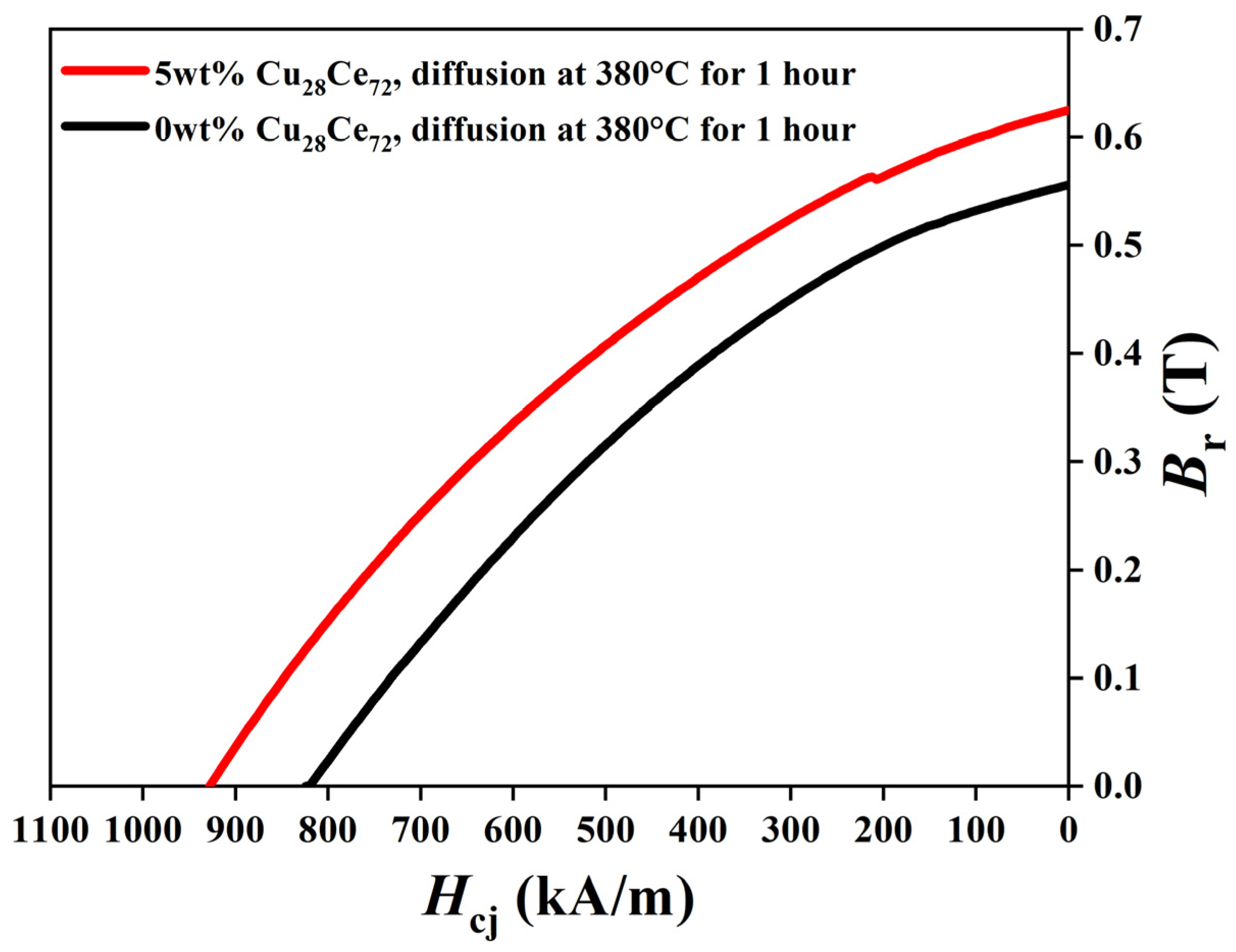
As shown in Figure 1, with the increase in the Cu28Ce72 addition, the effect of diffusion-repaired grain boundaries is significantly enhanced and the Hcj of the bonded magnet increases accordingly, reaching a maximum at an addition amount of 5.0 wt%. With a further increase in the addition amount, Ce element bulk diffusion leads to a decrease in Hcj. At a diffusion temperature of 380 °C, the bonded magnet with 5.0 wt% Cu28Ce72 exhibits the highest Hcj of 927 kA/m, representing a 12.91% improvement over the magnet without Cu28Ce72 diffusion agent (821 kA/m). The demagnetization curve of the magnet is shown in Figure 2.
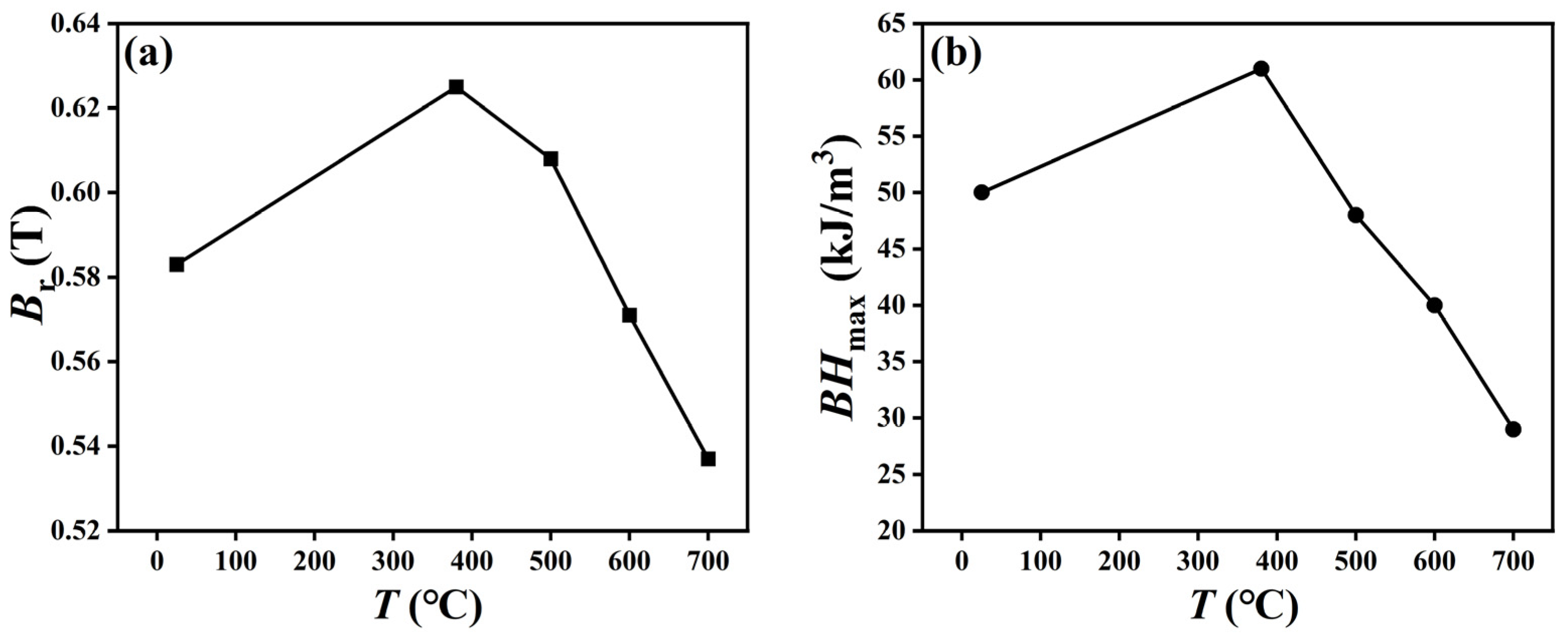
Figure 3 shows the curves of remanence (Figure 3a) and maximum energy product (Figure 3b) as a function of the diffusion temperature for bonded NdFeB magnets with 5.0 wt% Cu28Ce72 addition. As the diffusion temperature increases, both the Br and BHmax of the bonded magnets initially increase and then decrease, reaching maximum values of 0.625 T and 61 kJ/m3 at 380 °C, which are 7.2% and 22.0% higher than those of magnets without heat treatment (0.583 T and 50 kJ/m3). The diffusion temperature is determined by the melting point of the Cu28Ce72 alloy at 407 °C. As the pre-pressed compact under 200 MPa presents low density and many pores, the HDDR NdFeB powders and Cu28Ce72 alloy are easily oxidized during high-temperature diffusion process, which results in the decrease in magnetic properties. As the diffusion temperature of 380 °C is lower than the melting point of the Cu28Ce72 alloy, the solid-state diffusion effect has limited effect on improving magnetic properties, but it also greatly reduces the oxidation effect of HDDR magnetic powder. Under the influence of these two aspects, the optimal properties occur at 380 °C. The effect of Cu28Ce72 grain boundary diffusion gradually strengthens with increasing heat treatment temperature. On the one hand, Ce elements diffuse along the grain boundaries into defect regions of the grains to form the (Nd1−xCex)2Fe14B phase, which repairs grain boundary defects and enhances Br and BHmax. On the other hand, the volume diffusion of Ce elements substitutes for Nd sites, forming the (Nd1−xCex)2Fe14B phase, which leads to reduction in Br and BHmax [32,33]. Additionally, the increased oxidation caused by excessively high temperatures is another important factor contributing to the decrease in Br and BHmax.
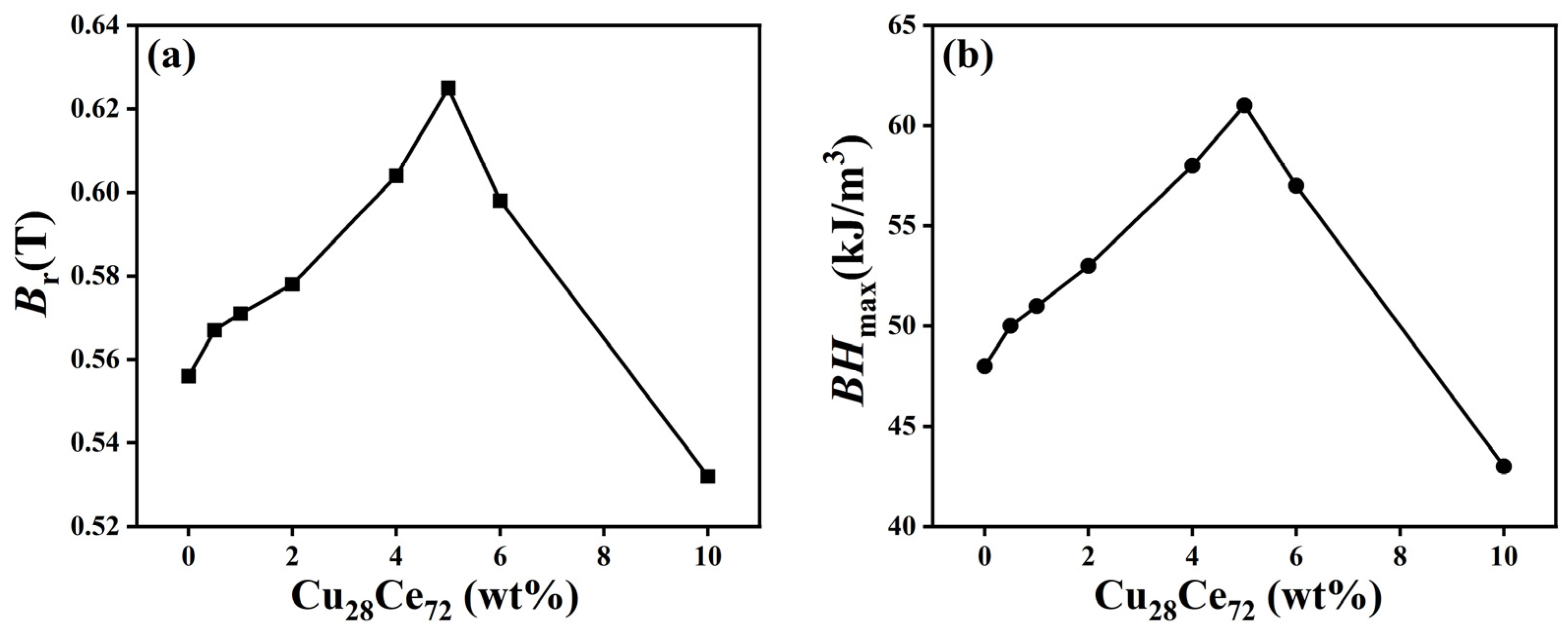
Figure 4 shows the variation curves of remanence (Figure 4a) and maximum magnetic energy product (Figure 4b) of bonded NdFeB magnets at a diffusion temperature of 380 °C with increasing Cu28Ce72 addition. As the Cu28Ce72 content increases, both the Br and BHmax of the bonded magnets initially increase and then decrease. The maximum values of 0.625 T and 61 kJ/m3 are achieved at an addition of 5.0 wt%, which are 12.4% and 27.1% higher than the magnets without Cu28Ce72 (0.556 T and 48 kJ/m3). The corresponding demagnetization curves are shown in Figure 2. With the increase in Cu28Ce72 addition, the effectiveness of Ce elements in repairing defective grain regions is significantly enhanced, thereby improving the Br and BHmax. However, as the Cu28Ce72 diffusant is a non-magnetic phase, excessive addition inevitably leads to a reduction in Br and BHmax.
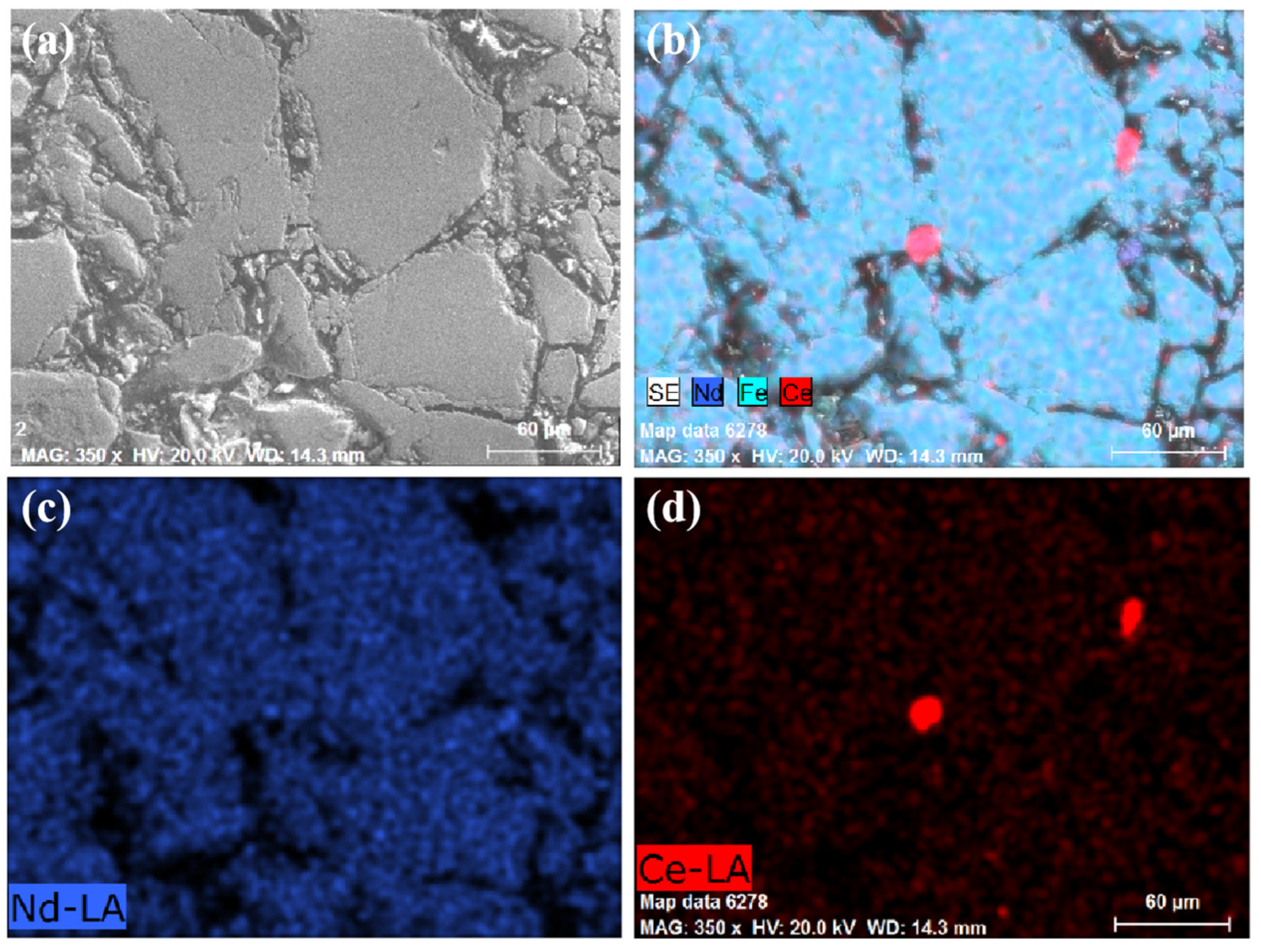
Figure 5 presents the SEM energy spectrum of the cross-section of bonded NdFeB magnet with 5.0 wt% Cu28Ce72 addition after diffusion treatment at 380 °C for 1.0 h. The melting point of the Cu28Ce72 alloy is 407 °C, which is higher than the diffusion treatment temperature of 380 °C. Therefore, the solid-state Cu28Ce72 alloy can be observed as red blocky regions in the figure. The distribution of Ce within the NdFeB particles indicates that, during diffusion, Ce penetrates into the interior of the magnetic powder along grain boundaries. The irregular atomic arrangement and the presence of various defects at the Nd2Fe14B grain boundaries render them prone to softening and liquefaction at elevated temperatures [34]. During diffusion, Ce and Cu elements infiltrate the NdFeB particles along these boundaries, repairing defects and forming a continuous grain boundary phase. This isolates magnetic decoupling between grains, thereby improving the Hcj of the magnetic powder [23,24]. Furthermore, incomplete defect regions exist around the Nd2Fe14B grains, preventing the formation of a fully developed Nd2Fe14B tetragonal phase. Ce atoms diffuse along the grain boundaries into these defect regions and substitute for Nd sites, resulting in the formation of a (Nd1−xCex)2Fe14B phase [34,35]. Although Ce2Fe14B has a lower saturation polarization (1.17 T) and anisotropy field (3.0 T) than those of Nd2Fe14B (1.60 T, 7.3 T), the formation of the (Nd1−xCex)2Fe14B phase can still fill the non-magnetic phases originally present in the defects of the magnetic powder, thereby enhancing both the Hcj and Br [36,37].
Increasing the Cu28Ce72 addition and raising the diffusion temperature enhance the diffusion efficiency, promoting bulk diffusion of Ce. When the addition amount is excessive (exceeding 5.0 wt%) or the diffusion temperature is too high (above 380 °C), Ce elements not only occupy the defect regions of the grains but also penetrate into the Nd2Fe14B phase to substitute for Nd at lattice sites, forming the (Nd1−xCex)2Fe14B phase, which leads to a reduction in both Hcj and Br. Additionally, high-temperature oxidation and the doping of the non-magnetic Cu28Ce72 alloy phase also contribute to the decrease in Hcj and Br.

4. Conclusions

This study investigates the use of Cu28Ce72 alloy as a diffusion agent for grain boundary diffusion heat treatment of HDDR NdFeB magnetic powder. The effects of the Cu28Ce72 addition amount and heat treatment process on the Hcj, Br and BHmax of the magnetic powder and the associated mechanisms were studied. The main conclusions are summarized as follows:
(1)
The Hcj, Br, and BHmax of the diffused magnets exhibited a trend of first increasing and then decreasing with increasing Cu28Ce72 addition amount and rising diffusion temperature. The maximum values of 927 kA/m, 0.625 T, and 61 kJ/m3 were achieved at an addition amount of 5.0 wt% and diffusion temperature of 380 °C, which are 12.91%, 12.4%, and 27.1% higher than those of the magnets without Cu28Ce72 addition (821 kA/m, 0.556 T, and 48 kJ/m3).
(2)
The diffusion of Ce and Cu into the grain boundaries facilitates the formation of a continuously distributed grain boundary phase, which enhances the demagnetization coupling between the main-phase grains and improves the coercivity of the magnetic powder.
(3)
During the diffusion process, on the one hand, Ce elements diffuse along grain boundaries to repair incomplete defect regions around the grains, forming the (Nd1−xCex)2Fe14B phase, which enhances the Hcj and Br of the magnetic powder. On the other hand, they undergo volume diffusion into the grain interiors to substitute for Nd sites in the Nd2Fe14B phase, which reduces the Hcj and Br of the magnetic powder. These two effects collectively influence the Hcj and Br of the diffused magnetic powder.

Author Contributions

B.M.: Methodology, Investigation, Writing—Review and Editing. H.L.: Formal Analysis, Writing—non-diffused draft. J.Z.: Funding acquisition. Y.S.: Supervision. A.S.: Resources, Conceptualization. All authors have read and agreed to the published version of the manuscript.

Funding

This research received no external funding.

Institutional Review Board Statement

Not applicable.

Informed Consent Statement

Not applicable.

Data Availability Statement

Data are contained within the article.

Conflicts of Interest

The authors declare no conflicts of interest.

References

  1. Luo, Q.S.; Luo, Y.; Wang, Z.L.; Peng, H.J.; Yan, W.; Yan, W.; Li, T.; Zhu, S.; Yu, D. Magnetic properties and magnetization mechanism of anisotropic NdFeB/SmFeN hybrid bonded magnets prepared with different coercivity NdFeB powders. J. Rare Earths 2023, 41, 1353. [Google Scholar] [CrossRef]
  2. Xiao, K.Y.; Xu, H.; Guo, Z.W.; Zheng, W.; Zheng, X.J. Research on the Shaping Process of Bonded NdFeB Magnets. Powder Metall. Ind. 2019, 29, 54. [Google Scholar] [CrossRef]
  3. Zhong, H.H.; Ni, Y.; Cheng, M.; Mou, H.H.; Jiang, Y. Effect of Binder and Warm Compaction Process on Properties of Bonded NdFeB Materials. Powder Metall. Ind. 2018, 28, 61. [Google Scholar] [CrossRef]
  4. Shen, Y.L. Technical Development and Application Status of Bonded NdFeB Permanent Magnet Materials in China. Adv. Mater. Ind. 2022, 2, 30. [Google Scholar] [CrossRef]
  5. Huang, L.; Zheng, Y.N.; Li, X.Y.; Zhang, J.S. Preparation process of bonded NdFeB magnets. Acta Mater. Compos. Sin. 2006, 23, 5. [Google Scholar] [CrossRef]
  6. Yang, M.N.; Xue, C.R.; Zhong, S.W.; Li, J.; UrRehman, S.; Yang, B.; Qu, Z. Bonded Nd-Fe-B magnets: Materials, processing, properties and outlook. J. Rare Earths, 2026; in press. [CrossRef]
  7. Xiao, K.Y.; Xu, H.; Zheng, X.J.; Zheng, W.; Guo, Z.W. Corrosion Behavior and Mechanism of Bonded NdFeB Magnets. Powder Metall. Ind. 2018, 28, 59. [Google Scholar] [CrossRef]
  8. Ma, B.M.; Herchenroeder, J.; Smith, B.; Suda, M.; Brown, D.; Chen, Z. Recent development in bonded NdFeB magnets. J. Magn. Magn. Mater. 2002, 239, 418. [Google Scholar] [CrossRef]
  9. Ma, B.; Sun, A.Z.; Gao, X.X.; Bao, X.; Li, J. Preparation of parylene-coated bonded NdFeB magnets. J. Magn. Magn. Mater. 2018, 467, 114. [Google Scholar] [CrossRef]
  10. Plusa, D.; Slusarek, B.; Dospial, M.; Kotlarczyk, U.; Mydlarz, T. Magnetic properties of anisotropic Nd-Fe-B resin bonded magnets. J. Alloys Compd. 2006, 423, 81. [Google Scholar] [CrossRef]
  11. Perigo, E.A.; Campos, M.F.; Faria, R.N.; Landgraf, F.J.G. The effects of the pressing step on the microstructure and aging of NdFeB bonded magnets. J. Powder Technol. 2012, 224, 91. [Google Scholar] [CrossRef]
  12. Li, L.; Tirado, A.; Conner, B.; Chi, M.; Elliott, A.M.; Rios, O.; Zhou, H.; Paranthaman, M.P. A novel method combining additive manufacturing and alloy infiltration for NdFeB bonded magnet fabrication. J. Magn. Magn. Mater. 2017, 438, 163. [Google Scholar] [CrossRef]
  13. Kurniawan, C.; Wahyuni, S.; Ramlan; Setiadi, E.A.; Sebayang, P. Effect of Particle Size Distribution on the Preparation of Bonded NdFeB Permanent Magnet. IOP Conf. Ser. Mater. Sci. Eng. 2019, 622, 012012. [Google Scholar] [CrossRef]
  14. Liang, C. Study on Coercivity Mechanism and Properties of Nd-Fe-B Magnetic Powder Prepared by d-HDDR Process. Master’s Thesis, Taiyuan University of Science and Technology, Taiyuan, China, 2023. [Google Scholar] [CrossRef]
  15. Zhang, W.; Zhang, M.G.; Li, X.F.; Cao, J.P.; Gui, Y.Q.; Liu, W.H.; Zhao, D.Y.; Guo, Y.P.; Chen, F.H. Effect of Zr Addition on the Structure and Magnetic Properties of Bonded NdFeB Magnetic Powder. J. Magn. Mater. Devices 2019, 50, 17. [Google Scholar] [CrossRef]
  16. Mishima, C.; Hamada, N.; Mitarai, H.; Honkura, Y. Development of a Co-free NdFeB anisotropic bonded magnet produced from the d-HDDR processed powder. J. IEEE Trans. Magn. 2001, 37, 2467. [Google Scholar] [CrossRef]
  17. Cha, H.R.; Jeon, K.W.; Yu, J.H.; Kwon, H.W.; Kim, Y.D.; Lee, J.G. Coercivity enhancement of hot-deformed Nd-Fe-B magnet by grain boundary diffusion process using the reaction of NdHx and Cu nanopowders. J. Alloys Compd. 2017, 693, 744. [Google Scholar] [CrossRef]
  18. Huang, Y.L.; Yao, Y.; Wang, F.; Li, H.; Wu, Z.; Feng, Q.; Li, W.; Luo, J.; Pang, Z.; Zhong, C.; et al. Improving inter-granular phase and enhanced coercivity: A grain boundary diffusion of non heavy rare earth PrNdAl alloy in sintered NdFeB magnets. J. Mater. Res. Technol. 2022, 21, 4320. [Google Scholar] [CrossRef]
  19. Sepehri-Amin, H.; Liu, L.; Ohkubo, T.; Yano, M.; Shoji, T.; Kato, A.; Schrefl, T.; Hono, K. Microstructure and temperature dependent of coercivity of hot-deformed Nd-Fe-B magnets diffusion processed with Pr-Cu alloy. Acta Mater. 2015, 99, 297. [Google Scholar] [CrossRef]
  20. Zeng, H.; Liu, Z.; Li, W.; Zhang, J.; Zhao, L.; Zhong, X.; Yu, H.; Guo, B. Significantly enhancing the coercivity of NdFeB magnets by ternary Pr-Al-Cu alloys diffusion and understanding the elements diffusion behavior. J. Magn. Magn. Mater. 2019, 471, 97. [Google Scholar] [CrossRef]
  21. Coey, J.M.D. Perspective and Prospects for Rare Earth Permanent Magnets. Engineering 2020, 6, 119. [Google Scholar] [CrossRef]
  22. Chen, X.; Chang, X.; Lai, J.; He, Y.; Yang, Q.; Shao, B.; Ma, Y. Microstructure and magnetic properties evolution of isotropic nanocrystalline NdFeB hot-pressed magnets with Ce-Cu addition. J. IEEE Trans. Magn. 2021, 57, 2101806. [Google Scholar] [CrossRef]
  23. Lin, Z.; Han, J.Z.; Xing, M.; Wan, F.; Li, C.; Liu, S.; Wang, C.; Du, H.; Yang, J.; Yang, Y. Coercivity enhancement in Pr9.5Fe83Zr2B5.5 magnetic nanomaterials. Appl. Phys. Lett. 2012, 112, 073924. [Google Scholar] [CrossRef]
  24. Lin, Z.; Han, J.Z.; Xing, M.; Liu, S.; Wu, R.; Wang, C.; Zhang, Y.; Yang, Y.; Yang, J. Improvement of coercivity and thermal stability of anisotropic Nd13Fe79.4B7Nb0.3Ga0.3 powders by diffusion of Pr-Cu alloys. Appl. Phys. Lett. 2012, 100, 052409. [Google Scholar] [CrossRef]
  25. Li, Z.; Liu, W.; Zha, S.; Li, Y.; Wang, Y.; Zhang, D.; Yue, M.; Zhang, J. Effects of lanthanum substitution on microstructures and intrinsic magnetic properties of Nd-Fe-B alloy. J. Rare Earths 2015, 33, 961. [Google Scholar] [CrossRef]
  26. Jin, J.; Zhang, Z.; Zhao, L.; Peng, B.; Liu, Y.; Greneche, J.-M.; Yan, M. Evolution of REFe2 (RE=rare earth) phase in Nd-Ce-Fe-B magnets and resultant Ce segregation. Scr. Mater. 2019, 170, 150. [Google Scholar] [CrossRef]
  27. Liu, Z.W.; Zhou, B.; Liao, X.F.; He, J.Y. Research Status and Future Development of (Ce, La, Y)-Fe-B Permanent Magnets Based on Full High-Abundance Rare Earth Elements. Acta Metall. Sin. 2024, 60, 585–604. [Google Scholar] [CrossRef]
  28. Zhang, Y.; Ma, T.; Yan, M.; Jin, J.; Liu, X.; Xu, F.; Miao, X.; Liu, C. Squareness factors of demagnetization curves for multi-main-phase Nd-Ce-Fe-B magnets with different Ce contents. J. Magn. Magn. Mater. 2019, 487, 165355. [Google Scholar] [CrossRef]
  29. Zhou, H.Y.; Tang, C.Y.; Tong, M.M.; Gu, Z.; Yao, Q.; Rao, G. Experimental investigation of the Ce-Cu phase diagram. J. Alloys Compd. 2012, 511, 262. [Google Scholar] [CrossRef]
  30. Zhang, D.M.; Zhu, M.G.; Zuo, J.Y.; Sun, Q.; Song, X.; Duan, Z.; Wu, X. Manipulation of the reversed domain nucleation via constructing grain size gradient distribution in Nd-Fe-B. J. Alloys Compd. 2025, 1021, 179553. [Google Scholar] [CrossRef]
  31. Li, W.F.; Ohkubo, T.; Hono, K.; Sagawa, M. The origin of coercivity decrease in fine grained Nd-Fe-B sintered magnets. J. Magn. Magn. Mater. 2009, 321, 1100–1105. [Google Scholar] [CrossRef]
  32. Li, Z.; Liu, W.Q.; Zha, S.S.; Li, Y.Q.; Wang, Y.; Zhang, D.; Yue, M.; Zhang, J.; Huang, X. Effects of Ce substitution on the microstructures and intrinsic magnetic properties of Nd-Fe-B alloy. J. Magn. Magn. Mater. 2015, 393, 551. [Google Scholar] [CrossRef]
  33. Shi, G.B.; Wang, Z.L.; Bai, X.Y.; Yan, W.; Luo, Y.; Yu, D. Magnetic properties enhancement of hot-deformed NdFeB magnets by two different methods of CeNdCu diffusion. J. Rare Earths 2020, 38, 1312. [Google Scholar] [CrossRef]
  34. Poenaru, I.; Lixandru, A.; Güth, K.; Malfliet, A.; Yoon, S.; Škulj, I.; Gutfleisch, O. HDDR treatment of Ce-substituted Nd2Fe14B-based permanent magnet alloys-phase structure evolution, intergranular processes and magnetic properties development. J. Alloys Compd. 2020, 814, 152215. [Google Scholar] [CrossRef]
  35. Lin, Z.C.; Zha, L.; Wang, F.G.; Liu, Z.; Wu, R.; Yang, J.; Xue, M.; Yang, W.; Tian, G.; Ma, X.; et al. Effect of Ce substitution on the structural and magnetic properties of Nd2Fe14B. Acta Mater. 2020, 200, 502. [Google Scholar] [CrossRef]
  36. Ji, C.S.; Huang, Y.Z.S.; An, X.S.; Geng, Q.; Zheng, Q.; Du, J. High-performance and high-temperature-stable NdFeB magnets via grain boundary diffusion of TbCo-based alloys. J. Alloys Compd. 2026, 1065, 188178. [Google Scholar] [CrossRef]
  37. Ma, B.; Wen, C.L.; Zhou, J.H.; Sun, Y.J.; Sun, A.Z. Recycling of Sintered NdFeB Magnet Wastes Using Nd85Al15 Alloy Diffusion. Coatings 2026, 16, 293. [Google Scholar] [CrossRef]
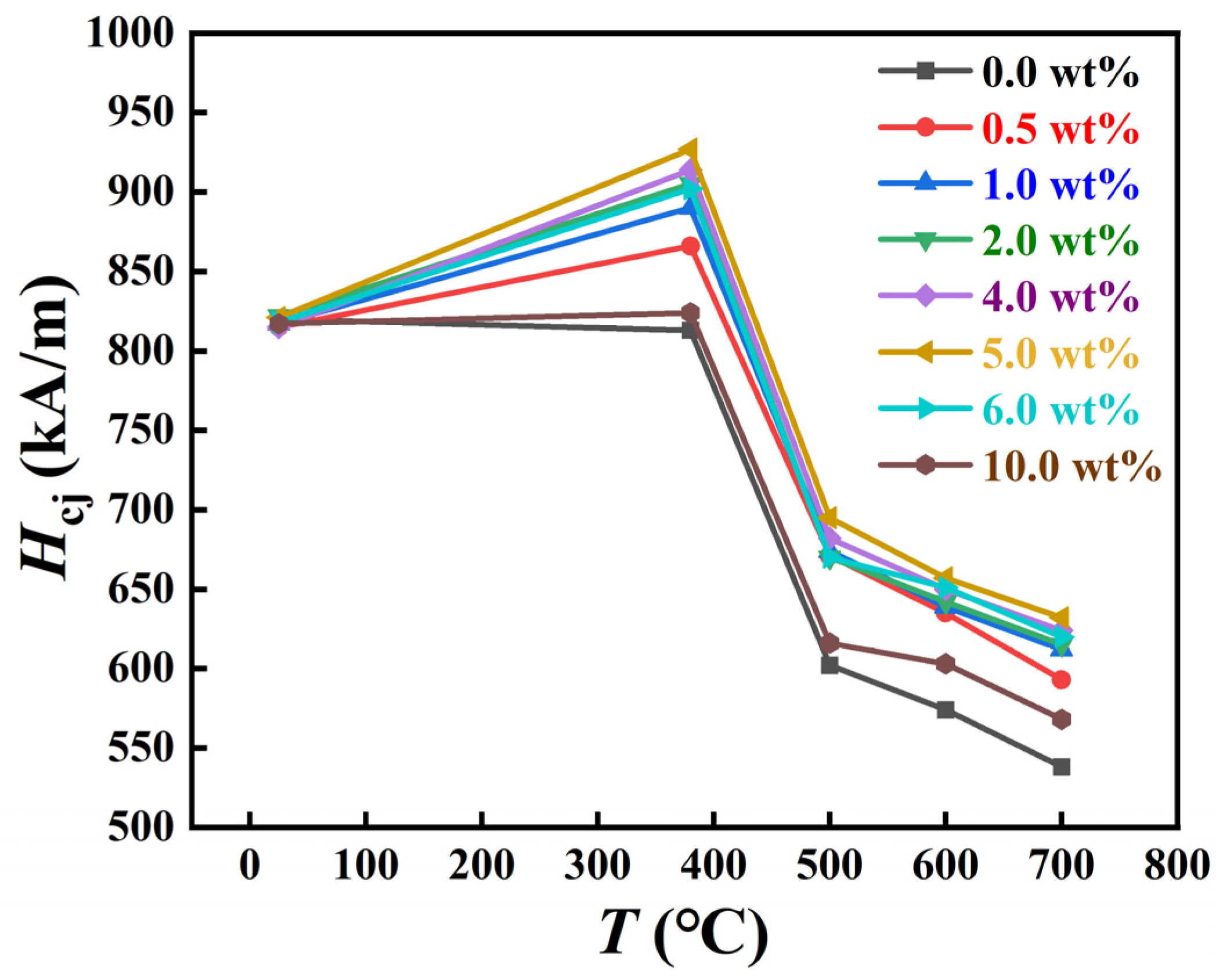
Figure 1. Coercivity curves as a function of diffusion temperature for bonded NdFeB magnets with varying Cu28Ce72 addition.
Coatings 16 00694 g001
Figure 2. Demagnetization curves of the bonded magnets.
Coatings 16 00694 g002
Figure 3. Remanence and maximum energy product as a function of diffusion temperature for bonded NdFeB magnets with 5.0 wt% Cu28Ce72 addition. (a) Remanence as a function of diffusion temperature. (b) Maximum energy product as a function of diffusion temperature.
Coatings 16 00694 g003
Figure 4. Remanence and maximum energy product as a function of Cu28Ce72 addition for bonded NdFeB magnets after diffusion at 380 °C. (a) Remanence as a function of Cu28Ce72 addition content. (b) Maximum energy product as a function of Cu28Ce72 addition content.
Coatings 16 00694 g004
Figure 5. SEM-EDS spectrum of the polished cross-section of bonded magnet with 5.0 wt% Cu28Ce72 addition diffused at 380 °C. (a) SEM image of the bonded magnet. (b) Elemental distribution maps of Nd, Ce and Fe. (c) Nd elemental distribution map. (d) Ce elemental distribution map.
Coatings 16 00694 g005
Disclaimer/Publisher’s Note: The statements, opinions and data contained in all publications are solely those of the individual author(s) and contributor(s) and not of MDPI and/or the editor(s). MDPI and/or the editor(s) disclaim responsibility for any injury to people or property resulting from any ideas, methods, instructions or products referred to in the content.