1. Introduction
The development of efficient, durable and economically viable electrode materials remains a central challenge in alkaline water electrolysis. Among non-noble metals, nickel is still regarded as one of the most important electrode materials because of its good corrosion resistance in concentrated alkaline electrolytes, satisfactory catalytic activity, and industrial relevance [
1]. However, the catalytic performance of compact nickel is still insufficient for high-efficiency hydrogen production, which is why numerous strategies have been proposed to improve its activity toward the hydrogen evolution reaction (HER) and, in some cases, the oxygen evolution reaction (OER) [
2,
3,
4,
5].
Two general approaches are commonly used to enhance the electrochemical behaviour of Ni-based electrodes. The first is compositional modification through alloying or surface enrichment with a second metallic component [
6,
7]. The second is morphological design aimed at generating highly developed surfaces with a large number of catalytically accessible sites [
8,
9]. In practice, both effects are often combined, since the highest activity is usually achieved when favourable surface chemistry is accompanied by high roughness, high defect density, and open transport pathways for electrolyte penetration and gas evolution [
10,
11].
Among the alloying elements used for nickel-based electrocatalysts, cobalt is particularly attractive. Ni–Co systems have been extensively investigated because cobalt may alter the electronic structure of nickel, influence hydrogen adsorption/desorption behaviour, and modify the phase composition and microstructure of the deposited material [
12,
13,
14,
15,
16]. In alkaline media, Ni–Co alloys have frequently shown better HER performance than pure nickel, while cobalt-containing Ni-based systems have also been considered promising for anodic processes because of their favourable redox chemistry and good stability. These effects make cobalt a valuable non-noble component for the design of advanced water-splitting electrodes.
At the same time, the role of surface development cannot be overstated. A classic example is Raney nickel, obtained by selective removal of aluminium from Ni–Al precursor alloys, which produces a highly porous metallic skeleton with a very large active surface area [
17,
18,
19,
20]. More recently, various strategies have been developed to fabricate porous nickel-based architectures, including hydrogen-bubble-assisted electrodeposition [
21,
22], plasma processing [
23], and controlled preparation of micro- and nanostructured metallic frameworks.
An alternative and particularly attractive route for generating porous metallic electrodes is based on high-temperature molten-salt treatment. In this approach, aluminium is electrochemically deposited from chloride–fluoride melts onto a metallic substrate, where it reacts with the matrix to form transient Al-containing intermetallic compounds [
24]. These phases are then selectively removed by anodic dissolution, leaving behind a porous metallic structure strongly bonded to the substrate [
25]. Compared with conventional chemical dealloying or pre-alloy casting routes, the molten-salt method offers a high degree of control over phase formation, reaction depth, and final architecture.
This concept has already been demonstrated for nickel and related systems [
26,
27]. Earlier studies showed that porous Ni surfaces can be generated by Al deposition/dissolution in molten salts and that the resulting structures display promising electrocatalytic behaviour [
27]. Subsequent work extended this concept to Co–containing systems and confirmed that layered and compositionally modified porous structures can also be produced in this way. More recent studies further showed that the location of the catalytically active component before molten-salt treatment strongly affects the phase-transformation pathway, final porous morphology, and electrochemical response [
28,
29]. This indicates that, in such systems, catalytic activity is governed not only by composition but also by the spatial arrangement of layers within the precursor electrode.
This architecture-dependent behaviour is especially important from a materials-design point of view. If the active or modifying metal is directly exposed to molten aluminium, it may react intensively and strongly participate in intermetallic formation. If, however, it is buried beneath an outer layer of another metal, the reaction sequence and the resulting porous structure may be significantly different. Therefore, apparently similar precursor systems may evolve into distinctly different porous electrodes after molten-salt treatment, despite containing the same metallic components overall [
30].
In particular, our recent work on layered porous electrodes prepared by molten-salt Al deposition/dissolution demonstrated that the position of the catalytically active layer before high-temperature treatment had a direct effect on element distribution in the final porous framework and, consequently, on electrochemical performance. These observations motivated the present study, in which cobalt was selected as a more economical and technologically relevant modifying component. Despite previous progress in molten-salt-derived porous Ni-based materials, the role of cobalt position in layered Ni-based precursors remains insufficiently clarified. In particular, it is still unclear whether a Co-rich layer exposed directly to molten Al and a Co–rich layer located below an outer Ni overlayer lead to the same Al infiltration behaviour, the same intermetallic products, and the same electrochemical response after selective dissolution. Clarifying this point is necessary for moving from empirical porous-electrode preparation towards rational architecture-controlled design.
In the present work, two layered precursor architectures, namely Ni–Co and Ni–Co–Ni, were prepared by aqueous electrodeposition and subsequently subjected to molten-salt Al deposition and selective anodic dissolution. In this work, the term “Ni–Co” refers to a bilayer architecture consisting of a Ni substrate covered with an electrodeposited Co–rich layer. The term “Ni–Co–Ni” refers to a sandwich-type architecture in which the Co–rich layer is additionally covered by an electrodeposited Ni overlayer. These terms therefore describe the spatial arrangement of metallic layers before molten-salt treatment, rather than the number of chemical elements present in the final porous surface. The objective was to determine how the initial arrangement of Ni and Co layers affects intermetallic formation, elemental redistribution, porous-structure development, and HER activity in alkaline solution. Structural evolution was examined by SEM/EDS and XRD at successive stages of treatment, while electrocatalytic behaviour was evaluated in alkaline electrolyte and compared with untreated Ni and porous Ni references. Particular attention was paid to the relationship between precursor architecture, final pore morphology, and hydrogen–evolution performance.
The main hypothesis of this study is that cobalt distribution prior to molten-salt treatment determines the dominant reaction pathway during Al infiltration and dealloying, which in turn governs the morphology and catalytic behaviour of the final porous electrode. By comparing the binary Ni–Co system with the sandwich-type Ni–Co–Ni configuration, this work aims to clarify how non-noble layered architectures may be rationally designed to produce efficient porous electrodes for alkaline hydrogen generation.
2. Experimental Procedure
2.1. Substrate and Surface Preparation
Nickel plates (15 mm × 10 mm × 1 mm, 99.9% purity) were used as the substrate material. Prior to processing, each sample was polished with SiC abrasive paper of up to #800 grit to remove surface oxides, which was followed by ultrasonic degreasing in acetone and ethanol. Samples were rinsed thoroughly with deionised water and dried in ambient air.
2.2. Electrodeposition of Ni–Co and Ni–Co–Ni Layered Electrodes
Two coating architectures were fabricated via galvanostatic electrodeposition: a bilayer Ni–Co and a sandwich-type Ni–Co–Ni system. All depositions were performed at 20 mA·cm−2. For the Ni–Co system, cobalt was deposited directly on the Ni substrate from a CoSO4– and H3BO3–based aqueous electrolyte. In the Ni–Co–Ni sandwich coating, a Co layer was first deposited and later overcoated with a nickel layer from a standard Watts bath. Coatings after electrodeposition were rinsed with distilled water and dried prior to further treatment.
2.3. Aluminium Deposition and Selective Dealloying in Molten Salt
The coated Ni–Co and Ni–Co–Ni samples were fixed in a molybdenum holder and immersed in a molten NaCl–KCl–AlF3 (3.5 mol%) electrolyte at 750 °C under flowing argon. Aluminium was deposited potentiostatically at −1.4 V vs. Ag/AgCl for 3600 s using a graphite counter electrode and a solid-state Ag/AgCl reference electrode (Ag wire in NaCl–KCl–AgCl melt). At this temperature, Al exists in liquid form and provides rapid interdiffusion with both Ni and Co, leading to the formation of intermetallic phases in the near-surface region.
After deposition, the applied potential was changed to −0.7 V and held until the anodic current decreased to near zero. This step is related to the electrochemical dissolution of both residual Al and Al–rich compounds formed during the solid–state reaction stage. Following treatment, the samples were cooled in ambient air and washed repeatedly with deionised water to remove any remaining salt.
2.4. Structural and Microstructural Characterisation
Cross-sections of Ni–Co and Ni–Co–Ni electrodes before and after molten-salt modifications were embedded in epoxy and polished to a mirror finish using diamond suspensions. Microstructural features and elemental distributions (Al, Ni, and Co) were analysed using scanning electron microscopy (SEM, JEOL, Tokyo, Japan) equipped with energy-dispersive X-ray spectroscopy (EDS). Both surface and cross-sectional observations were performed.
Phase identification was investigated by X-ray diffraction (XRD, Rigaku Miniflex, Tokyo, Japan) using Cu Kα radiation (λ = 1.5406 Å). Measurements were performed in the 2θ range of 20–80° with a step size of 0.02°, and the obtained patterns were characterised using standard ICDD reference cards.
2.5. Electrochemical Measurements
Electrocatalytic activity was evaluated in 1 M NaOH aqueous solution using a three-electrode configuration: the tested electrode was set as the working electrode, a platinum mesh was a counter electrode, and a mercury/mercury oxide electrode (Hg/HgO) was used as the reference. Measurements were carried out at 25 °C using a Biologic SP-300 potentiostat (Seyssinet-Pariset, France). All registered potentials were recalculated to the RHE.
Linear sweep voltammetry (LSV) was conducted in the potential range relevant to HER and OER, with a scan rate of 10 mV·min−1. Moreover, current densities were normalised to the geometric area (~1.6 cm2) of the sample. Tafel slopes were extracted from the linear range of the polarisation curve (1–10 mA·cm−2) by linear regression. No post-measurement iR correction was applied to the polarisation curves. Therefore, the reported overpotentials should be regarded as apparent values that may include contributions from uncompensated solution resistance. The stability was tested by galvanostatic polarisation at −10 and −100 mA·cm−2 under cathodic conditions for 2 h. For reference, untreated Ni and porous Ni fabricated without a Co layer were tested under identical electrochemical protocols.
3. Results and Discussion
3.1. Initial Layered Structure of Bilayer Ni–Co vs. Sandwiched Ni–Co–Ni
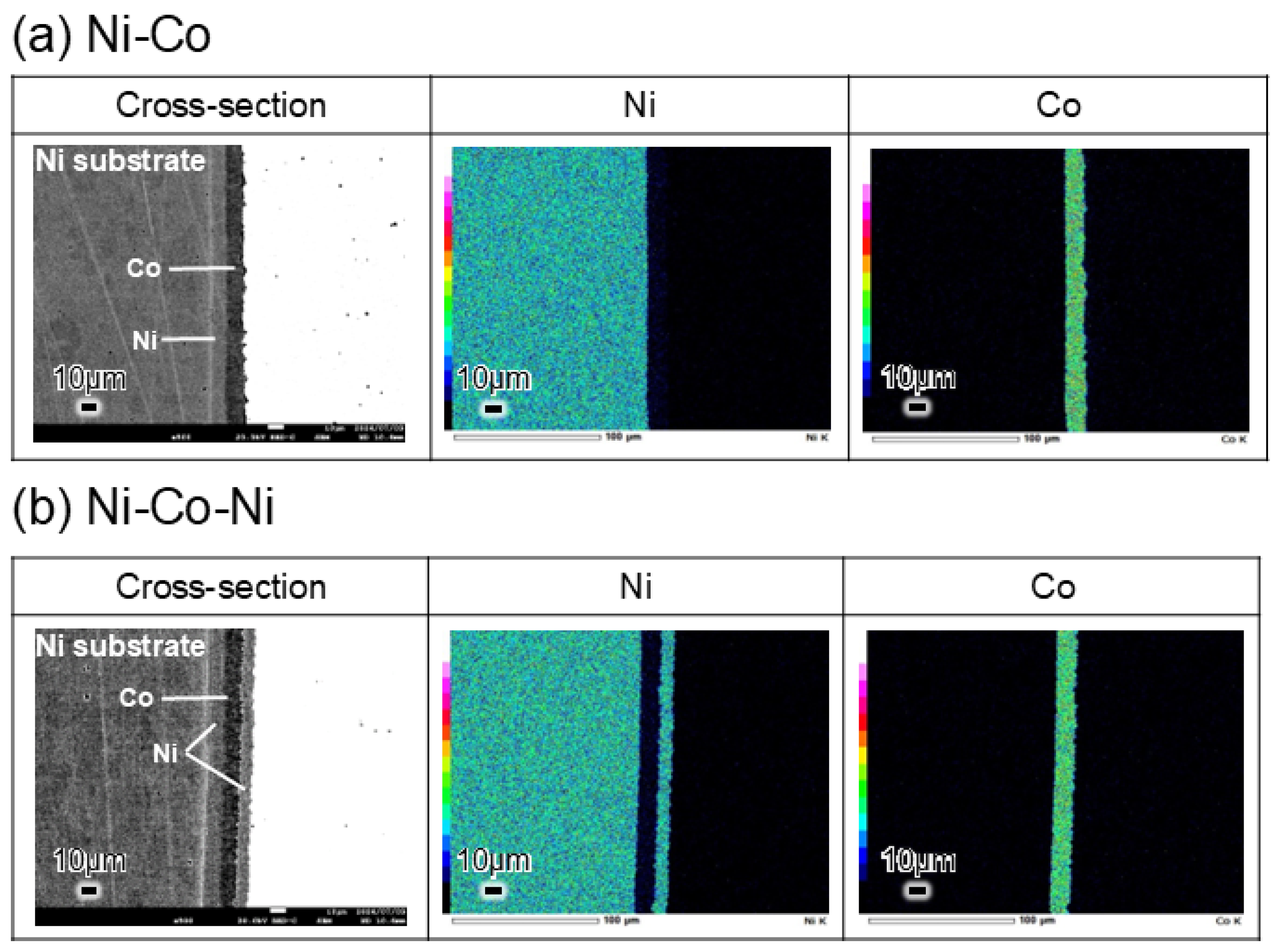
Cross-section SEM images of the deposited coatings are presented in
Figure 1. The Ni–Co electrode (
Figure 1a) consists of a bilayer: a nickel substrate and a cobalt-rich top layer deposited from aqueous solution. The Co layer is uniform and dense, with a thickness of 12 μm.
The Ni–Co–Ni sample exhibits a three-layer “sandwich” architecture (
Figure 1b). A cobalt-rich band is also deposited under identical conditions to the Ni–Co system, but it is covered by a Ni layer. EDS mapping analysis confirms that in Ni–Co–Ni, the intermediate layer has a high Co content and sharp interfaces with the Ni regions. Both coatings are well-adhered to the Ni substrate and show a fine-grained columnar morphology characteristic of electrodeposited metals. Micro–cracks are absent in the as-plated state, indicating that any thermal stresses or hydrogen evolution during plating were minimal. These different layered structures were designed to test the influence of cobalt position in terms of the application of the Al deposition/dissolution technique and fabrication of highly active materials for water splitting. This approach mimics the strategy used with Pt in our earlier work, which confirmed there is a significant difference between porous materials obtained from different layered architectures [
30].
3.2. Molten-Salt Electrodeposition of Al on Ni–Co and Ni–Co–Ni Layered Systems
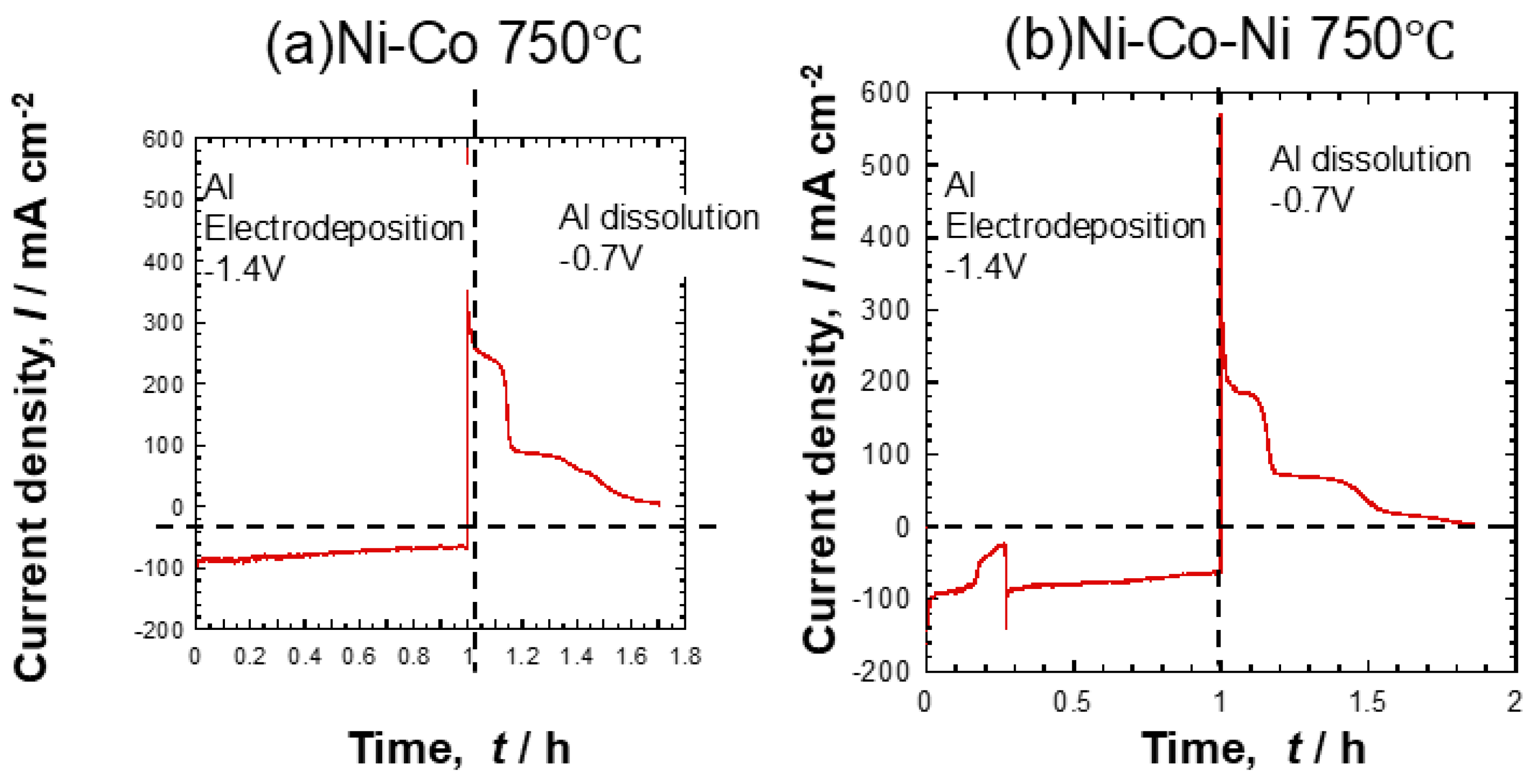
The aluminium deposition and dissolution processes were performed by chronoamperometry. The corresponding current–time curves for Ni–Co and Ni–Co–Ni electrodes are presented in
Figure 2. In the case of the Ni–Co electrode (
Figure 2a), applying a cathodic potential of −1.4 V at 750 °C resulted in an immediate increase in cathodic current density to approximately −100 mA·cm
−2, which remained stable during the deposition process according to the reaction: Al
3+ + 3e
− → Al
0. After completion of the deposition step, the potential was shifted to −0.7 V to initiate anodic dissolution. The current density switched to positive values and exhibited a sharp peak around +600 mA·cm
−2, corresponding to rapid oxidation of the freshly deposited aluminium and Al–Ni intermetallic phases. One notable feature was the presence of distinct current steps or plateaus during the decay, which may be associated with the sequential dissolution of different Al–Ni intermetallic phases (e.g., NiAl
3, NiAl, and Ni
3Al), each with distinct electrochemical stability. The anodic current gradually decreased over time, and after approximately 50 min it reached a near-zero level. This indicates that aluminium and Al-rich compounds had been dissolved, leaving a metallic Ni–Co matrix.
The chronoamperometric behaviour of the Ni–Co–Ni electrode under identical conditions is shown in
Figure 2b. During the Al deposition at −1.4 V, the current response was similar in magnitude to the Ni–Co sample, with a cathodic current close to −100 mA·cm
−2. This suggests that the additional Ni layer in the Ni–Co–Ni configuration had a limited influence on the overall Al deposition rate. During anodic dissolution at −0.7 V, the Ni–Co–Ni electrode also exhibited a high initial anodic current, peaking near +600 mA·cm
−2. After roughly 45 min, the anodic current approached zero, indicating that all aluminium-containing phases had been removed. The overall current–time characteristics were broadly similar for both electrode types, and unlike Ni–Pt and Ni–Pt–Ni systems studied previously, no big differences were observed between the two-layer and three-layer Ni–Co configurations [
30]. This is attributed to the fact that Co, unlike Pt, actively forms intermetallic phases with Al and does not remain as a separate metallic phase during infiltration [
17].
3.3. Structural Observations of Ni–Co and Ni–Co–Ni Layered Systems After Al Electrodeposition from Molten Salts
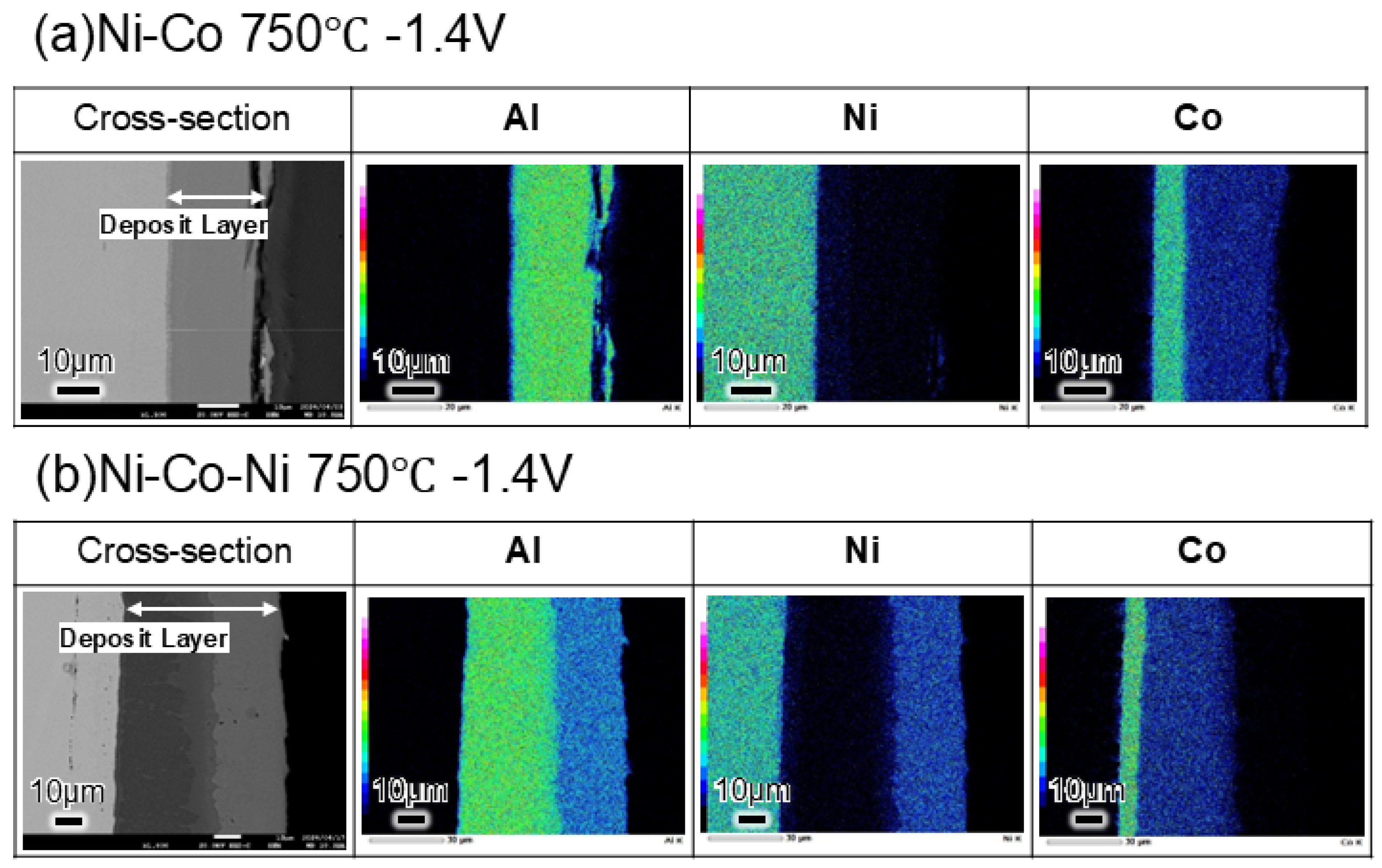
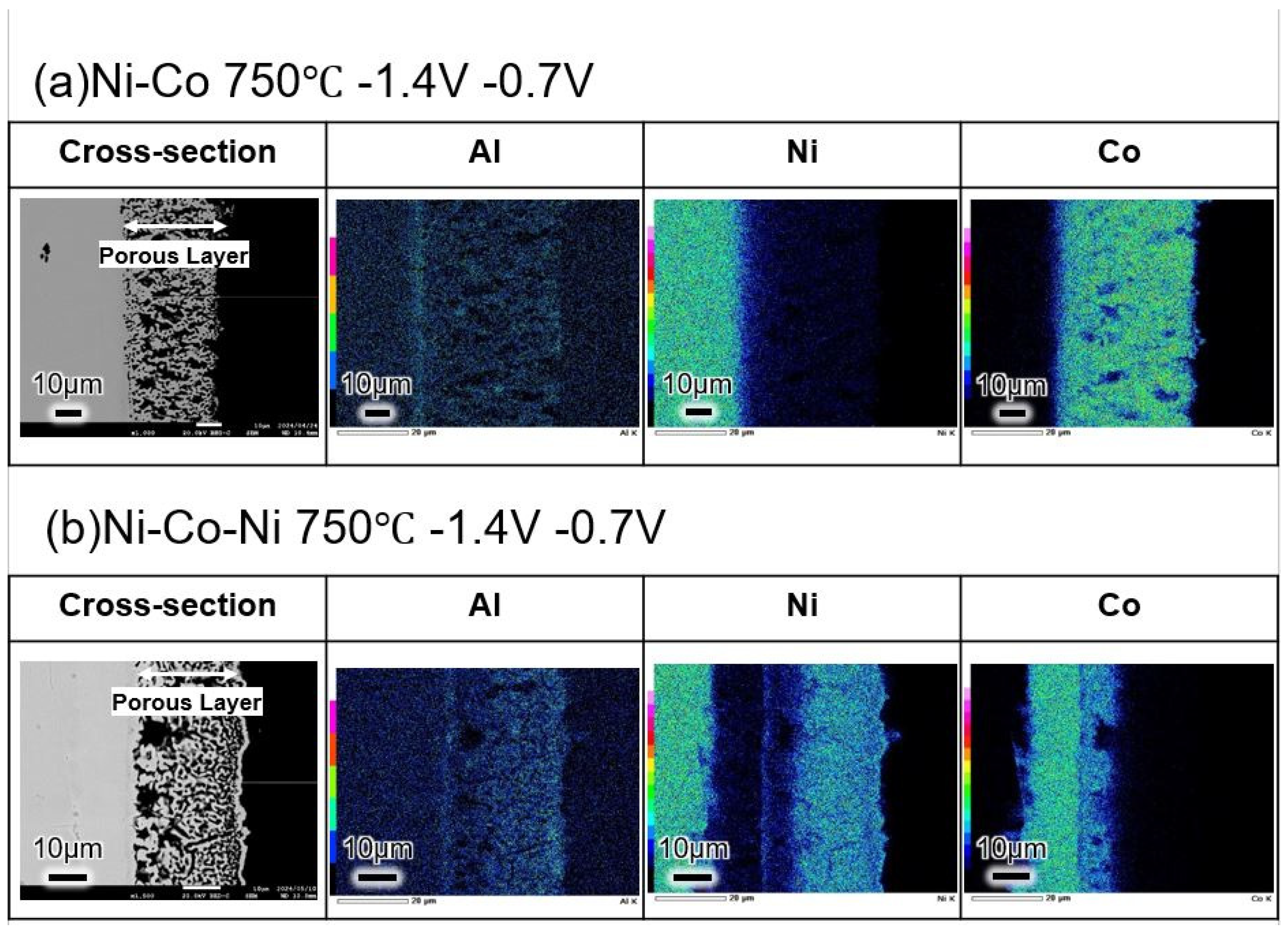
More detailed insights into the process and differences between binary and three-layer systems can be observed by SEM/EDS mapping analysis of Al–post-deposited cross-sections of Ni–Co and Ni–Co–Ni layers, which are presented in
Figure 3.
In the case of the Ni–Co electrode (
Figure 3a), a modified zone has developed at the surface, with a clear contrast indicating the formation of phases. The Al map shows a relatively homogeneous distribution of aluminium within this near-surface layer. The Ni signal is intense in the bulk plate unmodified area and in a low-intensity layer, which is overlapping with the presence of a Co–rich area. This result suggests that it is more thermodynamically favourable to create the Al–Co than the Al–Ni phases in the investigated system. It should also be underlined that the Co presence is non-uniform in the Ni–Co sample. We can see a highly intense layer and a grown Al-based interface area with the presence of Co. The Ni–Co–Ni system (
Figure 3b) shows that Al strongly penetrates the layers of Ni and Co, which can be seen as a higher concentration of this element closer to the substrate than the interface area. Signals from Ni are almost absent in the middle section of the observed structure, which consists almost only of Al and Co. Ni can also be detected in the interface region due to the fact that it was the top layer of the tested sample. Also, with Ni, Al and Co can be detected. Presented images confirm the hypothesis on the thermodynamic favourability of Co–Al interaction in comparison to Ni–Al. It should be emphasised that SEM/EDS observations alone do not provide a direct thermodynamic measurement. In the present context, “favourability” refers to the experimentally observed reaction pathway under the applied molten-salt conditions. The preferential formation of Al-containing regions associated with Co may result from a combination of thermodynamic driving force, liquid–Al infiltration, interdiffusion kinetics, and the spatial accessibility of the Co–rich layer.
3.4. Structural Observations of Ni–Co and Ni–Co–Ni Layered Systems After Al Dissolution
The next step in this research was related to anodic polarisation of Ni–Co and Ni–Co–Ni systems, which led to the formation of porous structures. Cross–sections obtained post-dissolution are presented in
Figure 4.
In the Ni–Co sample (
Figure 4a), the Al signal is nearly absent across the cross-section, confirming that Al and Al–containing intermetallic phases formed during the previous step were effectively dissolved. The Ni signal is detected throughout this porous layer, with slightly diminished intensity near the interface area. The Co distribution is now more uniform and appears further into the porous zone compared to the pre-dissolution state. This indicates that the thick layer created by Al–Co phases was dissolved. An interesting point is that for the post-deposited Al sample, there are two regions rich with Co, but in dissolution images they are not visible at all. This effect can be related to longer exposure of the sample to a higher temperature (750 °C), where solid-state reactions between Al and Co could take place, and the Co-rich layer could be consumed in the formation of Al–Co phases.
In contrast, the Ni–Co–Ni sample (
Figure 4b) exhibits a more layered, visible porous region. As with the Ni–Co system, the Al map also confirms successful elimination of Al. The porous layer extends across the previously modified zone, both the top Ni and the covered Co interface seen in
Figure 3b. The diminished intensity of the Ni signal can be seen only in the Co–rich area, while Co is still detected in the Ni–based interface region. Moreover, Co is concentrated mainly around the mid-region, where the original deposited Co layer was detected in the as-prepared sample. There is a visible difference in the thickness of the Co–based porous structure in comparison to the Ni–Co system. Moreover, the SEM image clearly shows a quite compact interface layer of Ni on top of the Ni–Co–Ni electrode, which is not observed in the Ni–Co system. This visible difference will have a very significant impact on the catalytic activity of the electrode, due to the limited access of electrolyte inside the porous body.
3.5. X-Ray Diffraction of Ni–Co and Ni–Co–Ni Systems Before and After Al Deposition/Dissolution Process
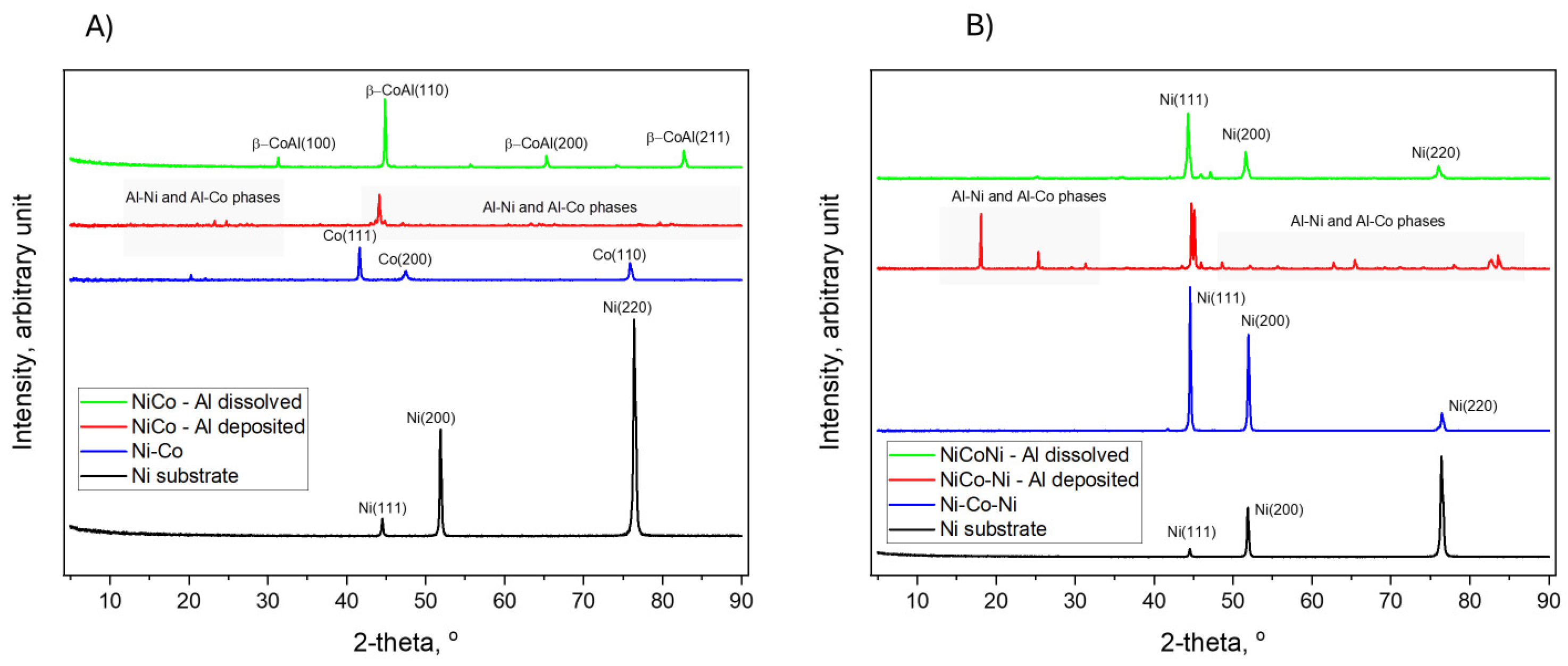
X-ray diffraction (XRD) was used to analyse the phase composition of the samples at the successive stages of molten-salt modification.
Figure 5 shows the XRD patterns recorded for
Figure 5A bilayer Ni–Co and
Figure 5B Ni–Co–Ni systems in four conditions: (1) the untreated Ni substrate, shown in black, (2) after electrodeposition of the metallic layers, shown in blue, (3) after Al electrodeposition from molten salts, shown in red, and (4) after anodic dissolution of Al, corresponding to the final porous state shown in green. The diffraction data indicate the structural changes occurring during the treatment and provide insight into the phases present at each stage. For both systems, the baseline sample was the Ni substrate. The black patterns show the characteristic reflections of fcc Ni, with the three main peaks corresponding to Ni (111), Ni (200), and Ni (220) located at 44.5°, 52.1°, and 76.4° (2θ), respectively. In the Ni–Co bilayer system (
Figure 5A), the blue pattern changes markedly after Co electrodeposition. The reflections originating from metallic Ni disappear completely, indicating that the substrate was fully covered by the Co layer and that its thickness exceeded the penetration depth of the X-ray beam. Instead, reflections assigned to metallic Co are observed at 41.3°, 47.7°, and 76.0°, corresponding to Co (111), Co (200), and Co (220), respectively (JCPDS/ICDD card No. 15-0806). After Al electrodeposition from molten salts, significant changes occur in the diffraction pattern of the Ni–Co electrode. Due to the elevated process temperature and the presence of freshly deposited Al in the liquid state, rapid interaction between Co and Al takes place, leading to the formation of Co–Al intermetallic compounds. The red pattern is dominated by one intense peak at 44.2°, assigned to CoAl (110), together with a series of low-intensity reflections that can be indexed to other Co–Al intermetallic phases of different stoichiometry. After the anodic dissolution step, the diffraction pattern changes again. We expected to reveal primary fcc-Co reflexes, but the residual, undissolved β–CoAl signals are present (JCPDS–00-44-1115). The presence of such residual and well-crystalline phases could be expected in this case, due to the signals detected during EDX/mapping analysis indicating Al on the interface area. It should also be pointed out that the reconstruction of the fcc–Co phase was observed for the same sample after electrocatalytic tests. A different phase evolution is observed for the layered Ni–Co–Ni system. In this case, the Co coating was additionally covered by an outer Ni layer, and the blue pattern therefore remains dominated by Ni reflections. However, the relative peak intensities differ from those of the untreated substrate. While the initial Ni substrate showed the strongest contribution from the 220 reflection, the electrodeposited Ni layer is characterised by much stronger 111 and 200 peaks, indicating a different preferred orientation of the deposited nickel. At the same time, the presence of the Co interlayer is effectively masked by the outer Ni coating and is not directly visible in the diffraction pattern. Following Al electrodeposition, the red pattern of the Ni–Co–Ni sample exhibits a larger number of low-intensity reflections than that observed for the Ni–Co system. These peaks can be assigned mainly to Al
3Ni and Al
2Ni intermetallic phases, indicating that in this layered architecture the interaction with liquid Al proceeds predominantly through the outer Ni layer. After the anodic dissolution step, these reflections disappear completely, and the green pattern shows only the peaks associated with metallic Ni. This indicates that the Al–containing intermetallic compounds formed in this system were removed much more completely than in the bilayer Ni–Co case. Overall, the XRD results demonstrate clear differences in phase evolution between the two electrode architectures. In the Ni–Co system, Al deposition leads mainly to the formation of Co–Al intermetallics, whereas in the Ni–Co–Ni system the reaction proceeds predominantly through Ni–Al phase formation. These observations confirm that the initial arrangement of the metallic layers strongly affects the reaction pathway during molten–salt treatment and, consequently, the crystalline structure of the final porous material. The formation of these intermetallic compounds was also confirmed by cross–sectional elemental mapping results, which remained in good agreement with the phase analysis and the expected reaction mechanism.
3.6. Morphology Observations of Ni–Co and Ni–Co–Ni Systems Before and After Al Deposition/Dissolution Process
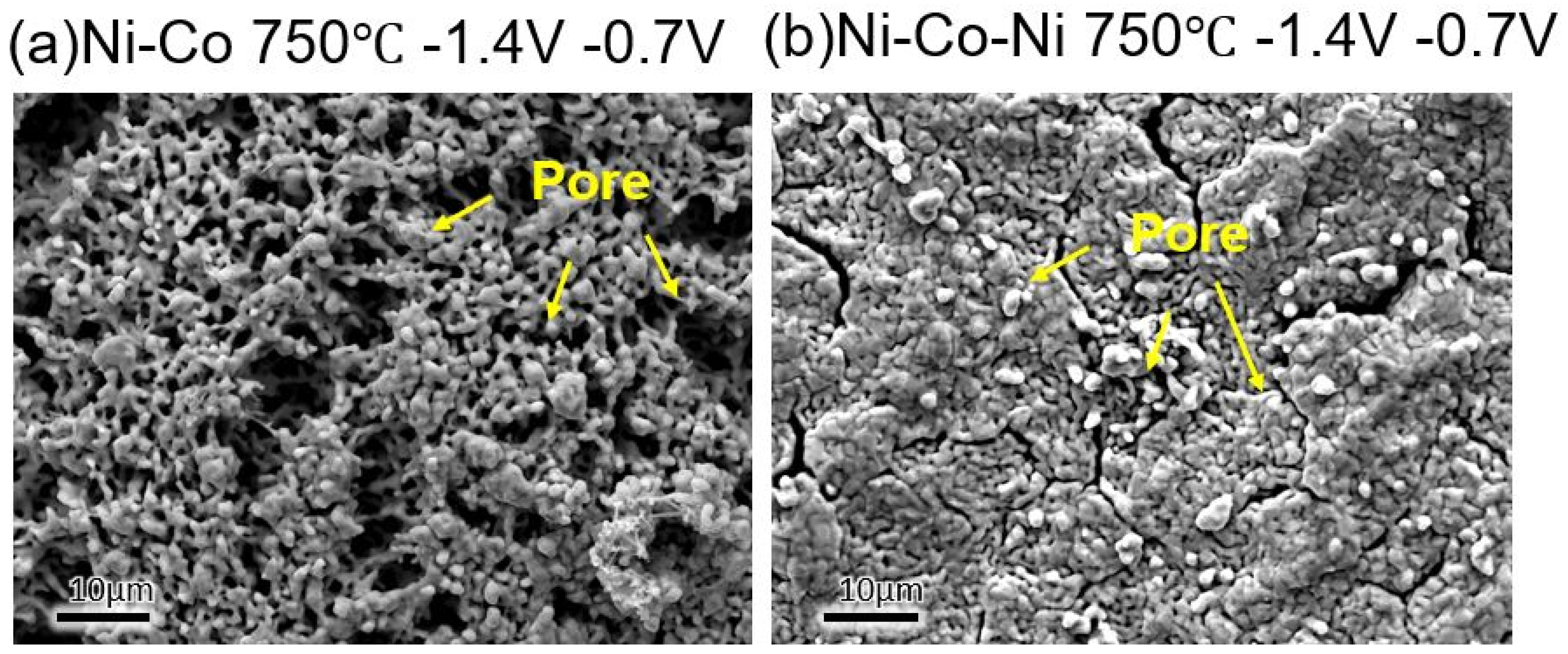
Obtained top-view SEM images of Ni–Co and Ni–Co–Ni layered electrodes after Al dissolution are presented in
Figure 6.
These top-view SEM images for
Figure 6a Ni–Co and
Figure 6b Ni–Co–Ni demonstrate clear structural differences in pore size, openness, and surface uniformity between the two layered configurations, which correspond well with the architectural and elemental effects previously observed in cross-sections. The surface of the Ni–Co electrode (
Figure 6a) is highly developed with an open porous network. The structure is irregular and has a coral–like or sponge–like structure. Numerous large, interconnected pores are visible, with broad openings and thin surrounding ligaments. The porosity is deep and forms an accessible, bi–continuous metallic surface. This morphology is attributed to the direct contact of the surface Co layer with molten Al during deposition, which promoted rapid and extensive intermetallic formation followed by aggressive solid-state reaction. Since Co was not covered by any Ni overlayer (as in the case of Ni–Co–Ni), it reacted with Al, giving a more open porous network upon Al–phase removal. This surface is likely enriched in Co and some traces of Ni in a solid-solution or mixed-metallic form, as was seen in mapping analysis.
In contrast, the sandwich Ni–Co–Ni electrode (
Figure 6b) has a different surface structure. While the porosity is still present, the top layer is more compact, with numerous small pores distributed non-uniformly across a relatively solid-looking matrix with visible cracks. This plate–like interface layer is consistent with mapping data, which confirmed the formation of dense Ni during Al–Ni intermetallic formation. This compact, porous Ni layer partially blocks the underlying porosity of the electrode and will have a significant impact on the electrochemical behaviour of the electrode during the hydrogen evolution reaction process.
3.7. Electrocatalytic Properties of Ni–Co and Ni–Co–Ni Systems in Hydrogen Evolution Reaction in Alkaline Solutions
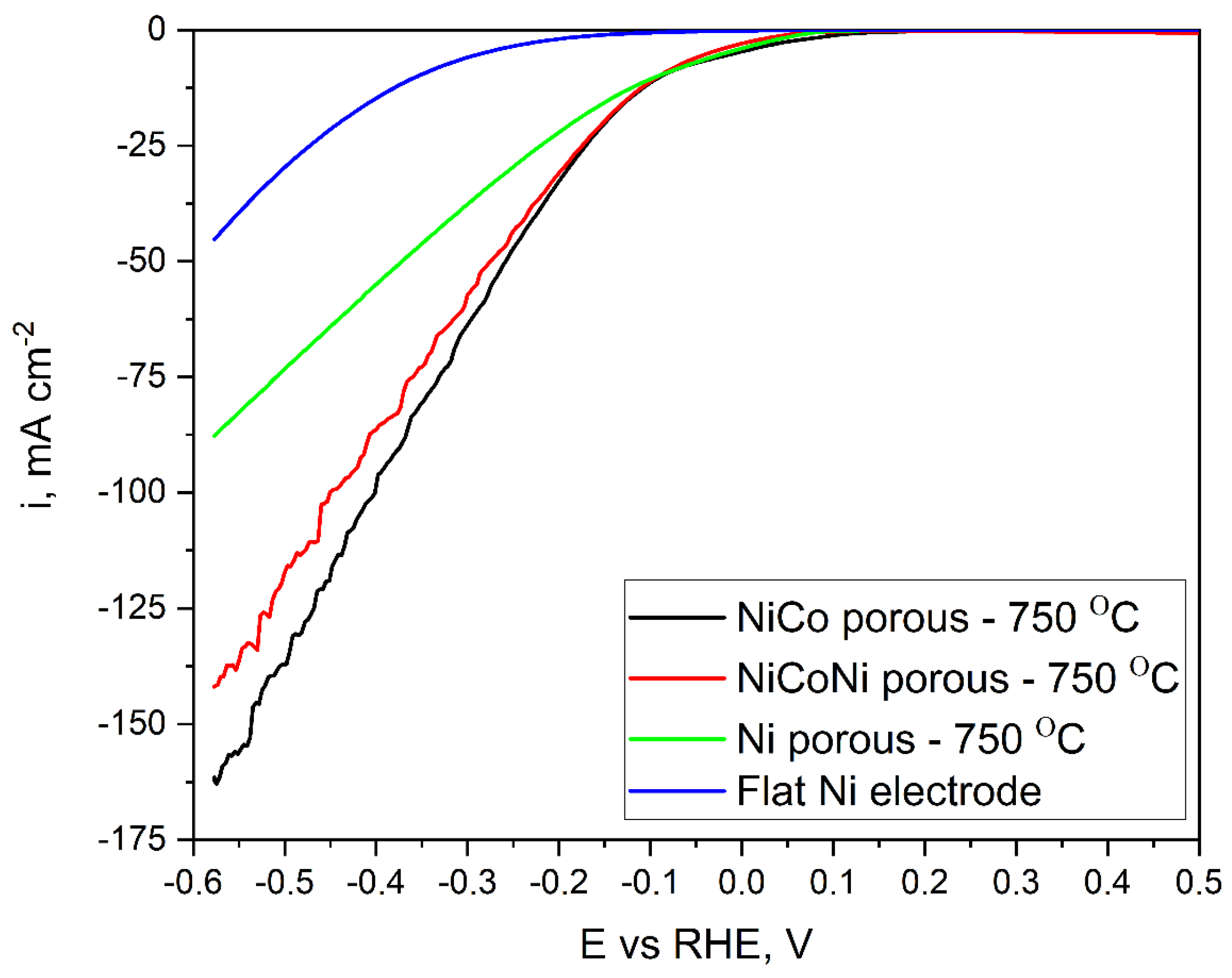
The electrochemical performance of the prepared electrodes was evaluated for the hydrogen evolution reaction (HER) in 1 M NaOH solution. Prior to the measurements, the samples were immersed in the electrolyte for 1 h in order to stabilise the open-circuit potential. Linear sweep voltammetry was then performed from the established OCP at a low scan rate of 10 mV s−1, using a Hg/HgO electrode as the reference. Four different electrodes were compared: the porous Ni–Co electrode (black), the porous Ni–Co–Ni layered structure (red), porous Ni obtained after molten-salt treatment (green), and untreated Ni used as the reference material (blue). In all cases, the measured currents were normalised to the geometric surface area of the electrode.
Figure 7 shows the cathodic polarisation curves recorded for the investigated materials. It can be seen that the binary and ternary porous layered electrodes are significantly more active than both the untreated and porous Ni electrodes. At the final potential of −0.6 V vs. RHE, the untreated Ni and porous Ni electrodes reached current densities of only −45 and −87 mA cm
−2, respectively. In contrast, the layered porous materials exhibited substantially higher cathodic currents, with the Ni–Co–Ni electrode reaching −141 mA·cm
−2 and the Ni–Co system showing the highest value of −162 mA·cm
−2. This improvement in catalytic activity can be attributed to the much more developed porous structure of the layered systems compared with porous Ni alone. The molten-salt treatment not only increases the effective surface area but also introduces a large number of structural defects and highly developed interface regions, which can lower the overpotential required for hydrogen evolution.
This effect is also reflected in the onset potential for HER. In comparison with the smooth, untreated Ni electrode, all porous materials show a clear shift in the onset potential towards less negative values. At the same time, no major differences in onset potential were observed between porous Ni and the layered porous systems, and in all three cases the onset of hydrogen evolution was located at around −0.04 V vs. RHE. This suggests that the main distinction between the materials becomes more evident at higher cathodic polarisation, where the effect of surface development and pore architecture is more pronounced. More detailed information concerning the HER kinetics is provided by the Tafel analysis (
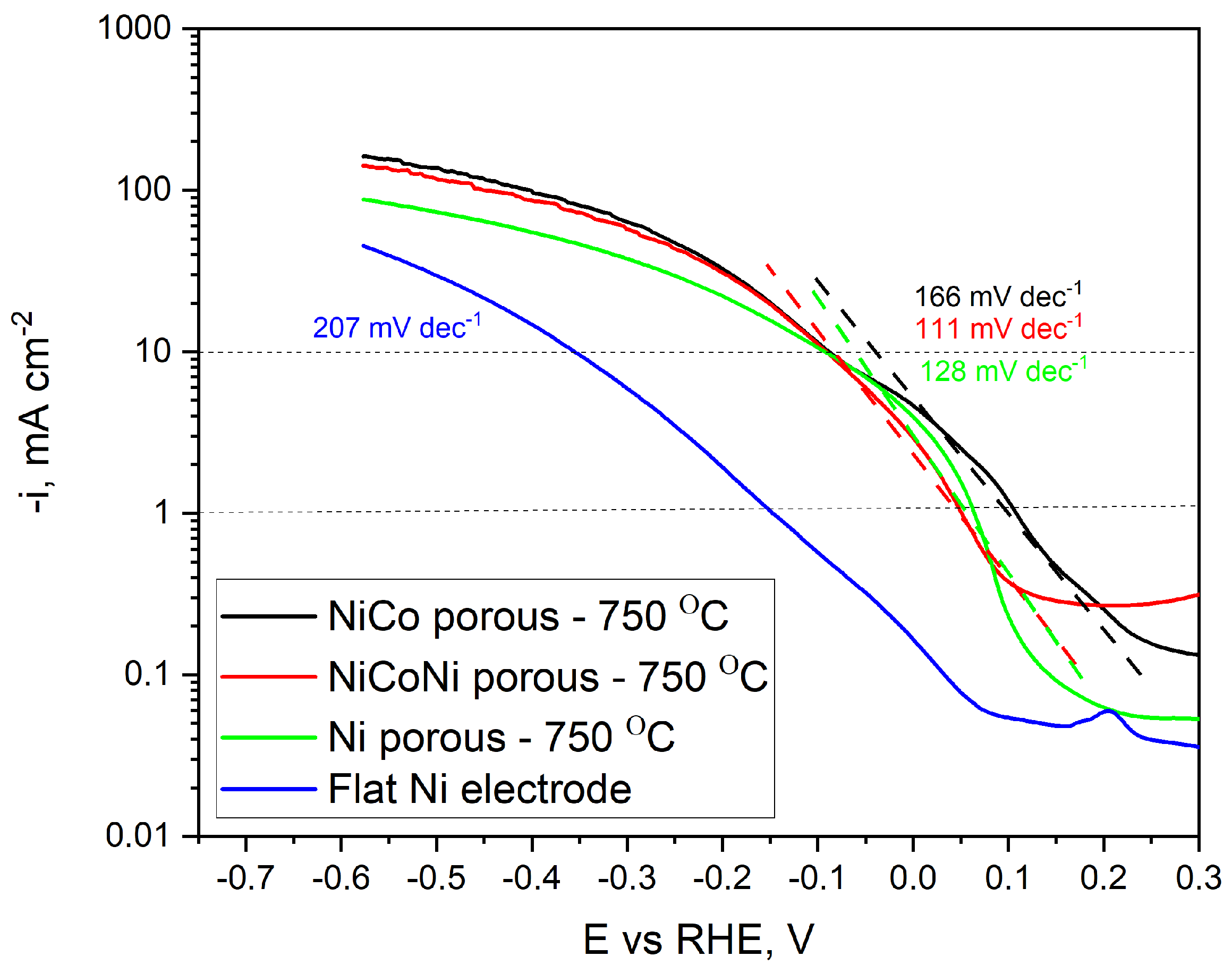
Figure 8).
For this purpose, the LSV data were replotted in semi-logarithmic form as log|i| versus E, and the Tafel slopes were determined from the linear region in the current density range of 1–10 mA·cm−2. The highest slope, and thus the slowest HER kinetics, was observed for the untreated Ni electrode, for which the Tafel slope reached 207 mV dec−1. This behaviour is expected for a compact nickel surface with a relatively low number of active sites. After porous structure formation, the Tafel slope decreased to 128 mV dec−1, confirming that the increase in surface area and defect density improves the catalytic response of Ni towards hydrogen evolution.
Interestingly, the porous Ni–Co electrode, despite showing the highest cathodic current density at large negative polarisation, exhibited a Tafel slope of 166 mV dec−1, which is higher than that of porous Ni. From the literature point of view, the Tafel slope for Ni should be lower than for Co, which is related to the better catalytic activity of Ni electrodes. A similar trend can be observed for porous electrodes, where the kinetics for Ni are better than for the NiCo bilayer. This can be attributed to the fact that the interface area is mostly pure porous Co. But overall catalytic activity, measured as current density for fixed potential, is higher for the bilayer and indicates the superior activity of the Ni–Co electrode. In contrast, the sandwich-type Ni–Co–Ni architecture showed the lowest Tafel slope among the porous materials, equal to 111 mV dec−1. This phenomenon can be explained by the superposition of the kinetic issue related to the Ni–rich interface. These findings suggest that the introduction of an additional Ni layer before molten–salt treatment modifies the final porous architecture and local chemical environment in a way that tailors the catalytic activity of electrodes.
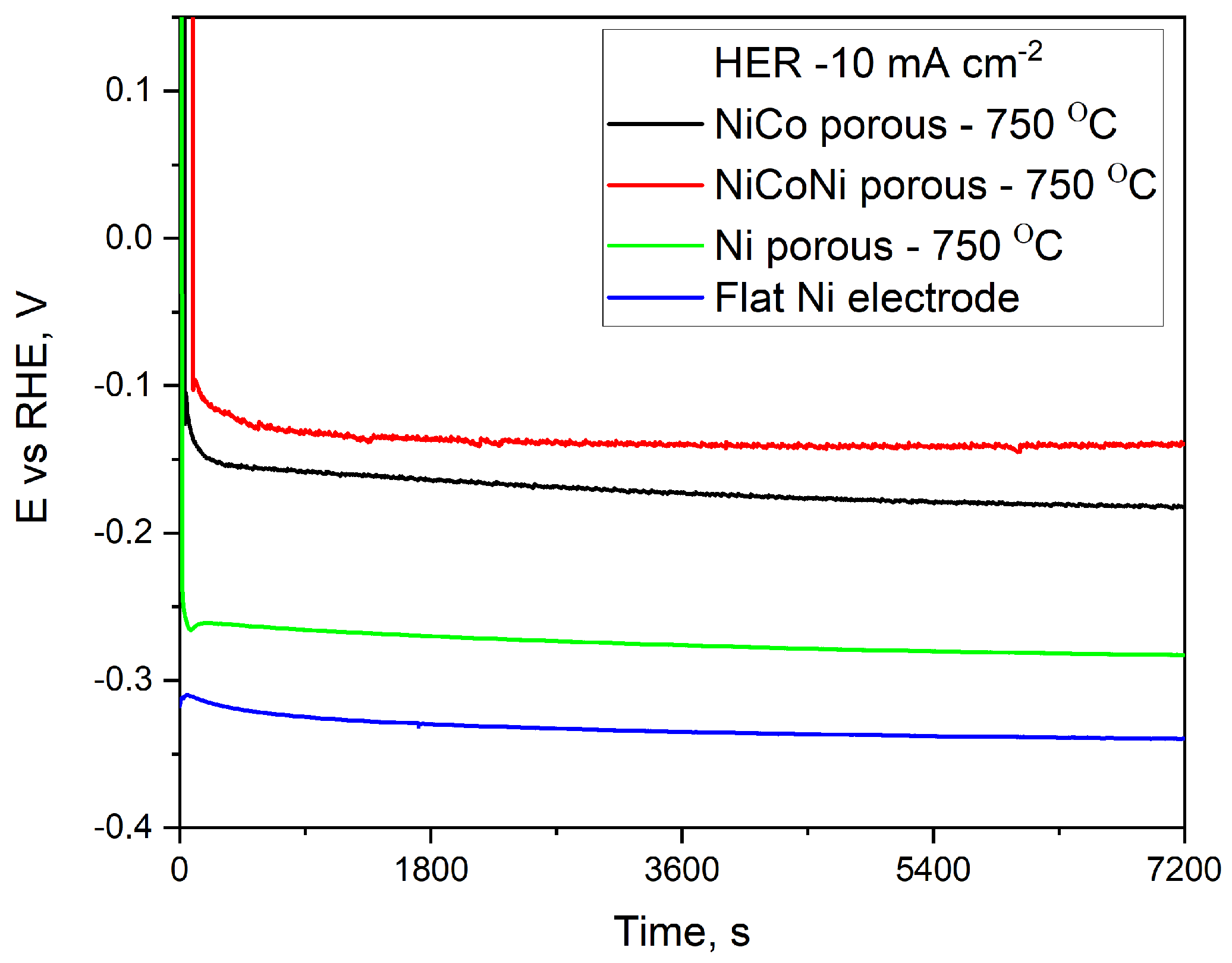
These observations further confirm that the catalytic response of the modified electrodes depends not only on their overall composition but also on the initial arrangement of the metallic layers prior to molten-salt processing. A similarly strong architecture-dependent effect was observed previously for Ni–Pt and Ni–Pt–Ni porous electrodes, where the presence of an additional Ni overlayer altered the distribution of the catalytically active phase and, consequently, the electrochemical performance. In the present case, the bilayer Ni–Co and Ni–Co–Ni systems show that even when both materials develop a highly porous structure, their HER behaviour may still differ substantially depending on how the active metallic phases are spatially arranged within the porous body. The next step in the evaluation of hydrogen evolution reaction activity was chronopotentiometric tests at constant polarisation. Generally, in the scientific literature, it can be found that the application of a −10 mA·cm
−2 value can be a fair measure for comparative analysis of catalytic activity. Results obtained for the investigated systems are presented in
Figure 9.
First, the recorded potential–time curves indicate very good stability during the whole measurement period, which suggests good resistance of the investigated electrode materials under cathodic polarisation and no significant deactivation with time. After 2 h of polarisation, the untreated Ni electrode exhibited the most negative potential, reaching approximately −0.336 V, which confirms its lowest catalytic activity toward the hydrogen evolution reaction. The porous Ni electrode showed slightly improved behaviour and operated at a less negative potential of about −0.280 V. A much larger decrease in the required potential was observed for the layered porous systems, which developed a more highly defected micro- and nanostructured surface during the molten-salt treatment. The bilayer Ni–Co electrode reached approximately −0.183 V under constant current conditions, whereas the Ni–Co–Ni layered structure exhibited the lowest potential among all investigated materials, around −0.132 V. This behaviour indicates that the layered architectures are significantly more active than both flat and porous Ni. The improved HER response of the Ni–Co and Ni–Co–Ni electrodes can be attributed to the strongly developed porous surface and the high concentration of electrochemically active defects generated during the formation and dissolution of Al-containing intermetallic phases. In the case of the sandwich Ni–Co–Ni system, the best performance may additionally be related to the presence of the outer Ni–rich layer, which appears to be more favourable for hydrogen evolution under the applied conditions than the Co-terminated surface. As a result, the Ni–Co–Ni architecture combines a highly developed porous structure with a more beneficial surface composition for HER. This observation is also consistent with the Tafel slope analysis, where the sandwich Ni–Co–Ni electrode showed the lowest slope among the porous layered systems. It, therefore, appears that, although the Ni–Co electrode is able to reach slightly higher cathodic currents at large negative polarisation during LSV measurements, the Ni–Co–Ni structure is more favourable in the lower-current regime represented by the 10 mA·cm
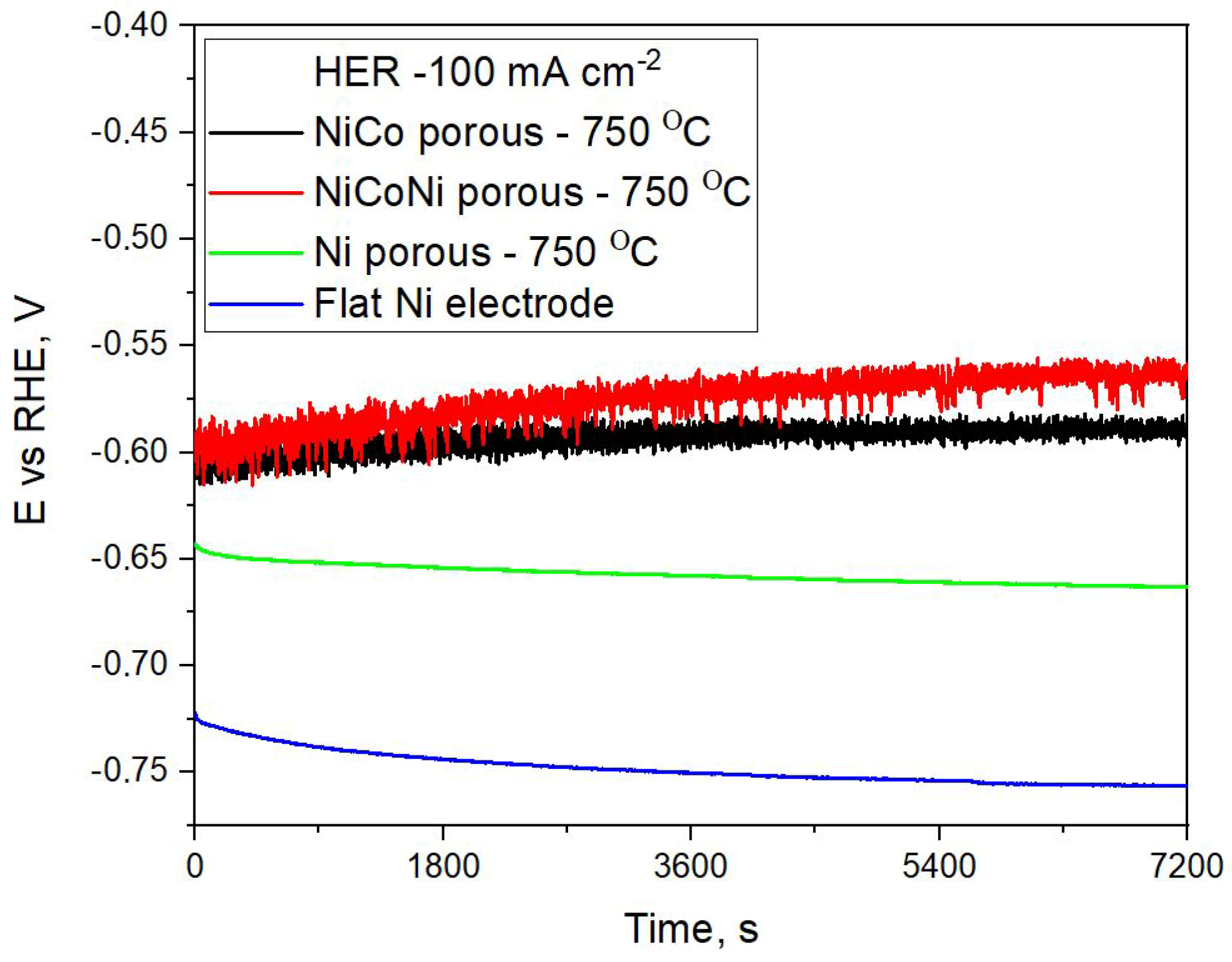
−2 benchmark. Lastly, the cathodic current density was increased to −100 mA·cm
−2 in order to compare the behaviour of the investigated electrodes under more demanding hydrogen evolution conditions (
Figure 10).
The obtained results remained in good agreement with those registered at the lower current density of −10 mA·cm−2. In all cases, the recorded potential–time curves showed good stability during polarisation, with no significant fluctuations or progressive deterioration of the response, which confirms the good electrochemical resistance of the investigated materials under strongly cathodic conditions. The most negative potential was recorded for the untreated Ni electrode, which reached approximately −0.785 V. The porous Ni electrode was slightly more active and achieved the applied current density at around −0.668 V. A much better catalytic response was observed for the hierarchical layered electrodes. The porous bilayer Ni–Co system reached −0.591 V, while the Ni–Co–Ni layered electrode exhibited the highest activity, requiring only −0.556 V to sustain the same cathodic current density. These results are fully consistent with the trends observed at lower current density and confirm that the layered porous architectures are more effective HER materials than both flat and porous Ni. The improved performance of the Ni–Co and sandwich Ni–Co–Ni electrodes can again be related to the strongly developed surface area and the high density of micro– and nanodefects generated during the molten-salt treatment. At the same time, the slightly better performance of the Ni–Co–Ni system suggests that the final surface composition and the arrangement of the metallic layers prior to modification play an important role in determining the catalytic response. Overall, these results clearly show that the proper design and preparation of layered materials is crucial for tailoring the electrocatalytic activity of bulk and porous electrodes intended for water-splitting applications.
Such behaviour confirms that the catalytic response depends not only on the total surface development but also on the spatial arrangement of the metallic layers before molten-salt treatment. A similar architecture-dependent effect was observed previously for Ni–Pt and Ni–Pt–Ni porous systems, where the presence of an additional Ni overlayer changed the distribution of the catalytically active phase and influenced the HER performance [
30].
4. Conclusions
Layered Ni–Co and Ni–Co–Ni electrodes were successfully transformed into porous catalytic architectures by molten-salt Al deposition at −1.4 V and selective anodic dissolution at −0.7 V in NaCl–KCl–AlF3 melt at 750 °C. The chronoamperometric responses of both systems were similar, with cathodic currents close to −100 mA·cm during Al deposition and anodic peaks of about +600 mA·cm−2 during dissolution, confirming efficient formation and subsequent removal of Al-containing phases.
The initial metallic architecture strongly influenced the phase-transformation pathway during molten-salt treatment. XRD and SEM/EDS showed that the Ni–Co electrode favoured the formation of Co–Al intermetallics, whereas the Ni–Co–Ni electrode reacted mainly through Ni–Al phase formation. After anodic dissolution, the Ni–Co material retained traces of Al–Ni-related phases, while the Ni–Co–Ni system returned predominantly to metallic Ni reflections, indicating more complete removal of transient intermetallic products.
The final porous morphology depended strongly on cobalt location before treatment. The Ni–Co electrode developed a highly open, interconnected, coral-like porous network, whereas the Ni–Co–Ni sample exhibited a more compact porous surface with smaller pores and a dense Ni-rich outer region. This difference shows that the outer Ni overlayer acts as a structural modifier, limiting direct access of the electrolyte to the deeper porous body.
Both layered porous electrodes showed clearly superior HER activity to untreated Ni and porous Ni in 1 M NaOH. At −0.6 V, the current density increased from −45 mA·cm−2 for flat Ni and −87 mA·cm for porous Ni to −162 mA·cm−2 for porous Ni–Co and −141 mA·cm−2 for porous Ni–Co–Ni. Thus, introducing Co–containing layered architectures before molten-salt treatment markedly enhanced the cathodic response.
The best overall HER kinetics were obtained for the Ni–Co–Ni architecture. Although porous Ni–Co delivered the highest current at strong cathodic polarisation, Ni–Co–Ni exhibited the lowest Tafel slope, 111 mV·dec−1, compared with 166 mV·dec−1 for Ni–Co, 128 mV·dec−1 for porous Ni, and 207 mV·dec−1 for flat Ni. This indicates that the Ni-rich outer layer is more beneficial for HER in the low-current kinetic region than the more open Co–terminated surface.
Galvanostatic tests confirmed good cathodic stability and reinforced the architecture-property relationship. At −10 mA·cm, the required potential decreased from −0.336 V for flat Ni and −0.280 V for porous Ni to −0.183 V for porous Ni–Co and −0.132 V for porous Ni–Co–Ni. At −100 mA·cm, the corresponding values were −0.785, −0.668, −0.591, and −0.556 V, respectively. These results show that Ni–Co–Ni is the most effective architecture under practical HER benchmark conditions.




 ,
,