3.1. Performance Analysis of the Al43.5Mg2Ni28Cu15Ti11.5 Coating
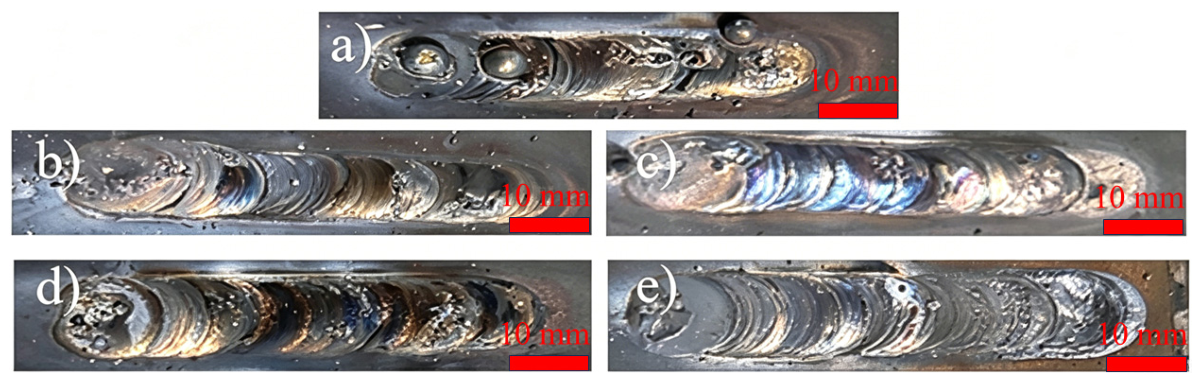
Figure 3 presents the morphologies of laser-cladded coatings deposited using the Al
43.5Mg
2Ni
28Cu
15Ti
11.5 cable-type wire under different laser powers.
When the laser power was below 1200 W (
Figure 3a,b), discontinuous fish-scale-like protrusions appeared on the coating surface. This is likely attributed to insufficient laser power, which prevented complete melting and mixing of the various components of the cable-type wire. Given the significant differences in melting points and laser absorptivity among the constituent elements (Al-Mg, Ni, Cu, Ti), lower power levels may result in incomplete melting of high-melting-point elements such as Ti into the molten pool. Consequently, localized compositional deviations from the designed values occur, inducing compositional fluctuations at the solidification front and leading to the formation of irregular protrusions.
When the laser power was increased to 1400 W or above (
Figure 3d,e), the coating surface became relatively rough. This is likely due to excessive energy input, which promotes rapid evaporation of low-boiling-point elements such as Al and Mg. The resulting recoil pressure induces vigorous agitation of the molten pool, degrading surface quality. Moreover, preferential burnout of these elements causes compositional fluctuations in the molten pool, adversely affecting coating performance.
At a laser power of 1200 W, the coating surface appeared smooth (
Figure 3c), indicating that stable and sufficient molten pool convection can be achieved at this power level. This enables simultaneous melting of the peripheral wires and the central Al-Mg wire, thorough elemental diffusion, and uniform in situ alloying.
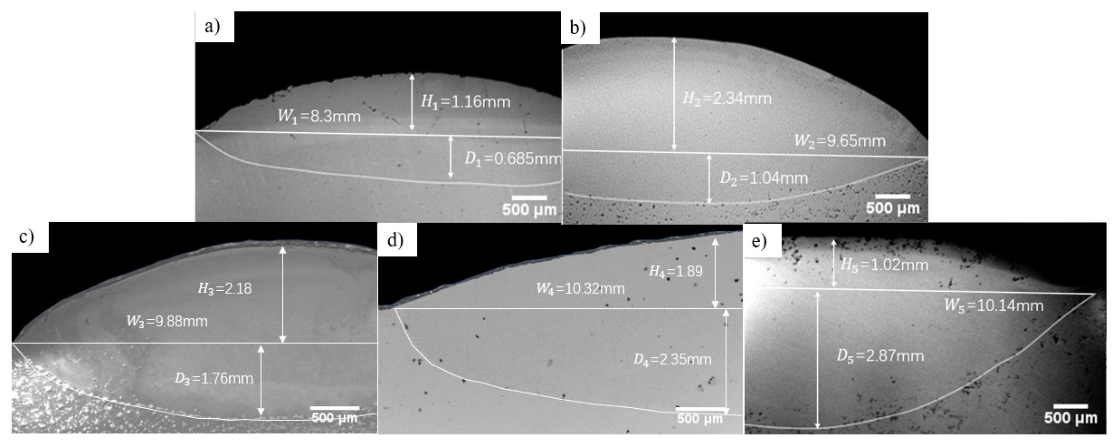
Figure 4 displays the cross-sectional morphologies of the cladding layers prepared at different laser powers, with key geometric parameters including cladding width (W), cladding height (H), and penetration depth (D) clearly marked for each condition.
At the lowest laser power condition (corresponding to
Figure 4a), the cladding layer exhibits a relatively narrow width of W
1 = 8.3 mm, a low height of H
1 = 1.16 mm, and a shallow penetration depth of D
1 = 0.685 mm. Notably, microcracks are observed in the cross-section. This phenomenon is mainly attributed to insufficient energy input, which leads to incomplete melting and poor mixing of the alloy materials. Incomplete melting and insufficient mixing result in localized unmelted solid composition inhomogeneity within the coating. During rapid solidification, these regions exhibit different thermal expansion coefficients, cooling rates, and shrinkage rates. The constrained shrinkage between unmelted regions, partially melted regions, and fully melted regions generates non-uniform thermal stress and phase transformation stress, which accumulate as high internal stress and exceed the coating’s strength, leading to the formation of microcracks.
As the laser power increases to moderate levels (corresponding to
Figure 4b,c), the cladding width gradually increases from W
2 = 9.65 mm to W
3 = 9.88 mm, while the cladding height first rises to H
2 = 2.34 mm and then slightly decreases, and the penetration depth increases significantly from D
2 = 1.04 mm to D
3 = 1.76 mm. At these intermediate power levels, the molten pool temperature and fluidity are sufficiently high to promote full melting and uniform mixing of the alloying elements, resulting in well-bonded cladding layers free of obvious cracks or pores. This enhanced fluidity also contributes to a more spread-out, flatter morphology, consistent with the previously observed trend that the width-to-height ratio increases with laser power. A favorable cladding layer morphology is achieved at a laser power of 1200 W, scanning speed of 0.1 mm/s, and wire feeding speed of 100 mm/min, as evidenced by the smooth cross-sectional profile, complete fusion with the substrate, and absence of microcracks or porosity. The corresponding dimensions at this condition demonstrate a balanced combination of sufficient penetration, appropriate height, and moderate width, indicating an optimal energy density for stable molten pool behavior and defect-free solidification.
When the laser power is further increased to excessively high levels (corresponding to
Figure 4d,e), the cladding width reaches up to W
4 = 10.32 mm and W
5 = 10.14 mm, while the penetration depth increases dramatically to D
4 = 1.59 mm and D
5 = 2.87 mm, accompanied by a significant reduction in cladding height: H
4 = 1.89 mm and H
5 = 1.02 mm. Notably, keyholes appear in the cross-section of the cladding layer. Excessive laser power induces a deep keyhole effect in the molten pool. The unstable keyhole collapses during rapid solidification, trapping gas and forming irregular pores. In addition, the high heat input induces excessive melting of the substrate, resulting in significant dilution and potential degradation of the coating composition.
Table 1 systematically summarizes the detailed experimental process parameters adopted in this work, together with the corresponding macroscopic surface morphological characteristics of the laser cladding coatings obtained under different working conditions. As clearly listed in the statistical data presented in
Table 1, when the applied laser power was gradually increased within the designed experimental range, the effective cladding width exhibited a continuous rising trend, rising steadily from 9.65 mm to 10.32 mm. In contrast, the forming height of the fabricated cladding layer showed an obvious declining trend, decreasing from 2.34 mm to 1.89 mm accordingly. On this basis, the calculated width-to-height ratio of the cladding coating correspondingly increased from 4.12 to 5.46. The above regular variation trend fully demonstrates that the elevation of laser input power can effectively promote the formation of cladding layers with wider transverse dimension and flatter surface profile. Such distinctive morphological evolution law can be reasonably explained from the perspective of molten pool thermodynamics and fluid dynamics. Specifically, higher laser power input will significantly raise the internal temperature of the in situ formed molten pool and greatly improve the flow performance of the molten metallic liquid phase. Under such thermal conditions, the fully melted raw materials possess better spreading capability and can diffuse and extend more sufficiently along the transverse direction of the substrate surface during solidification. Ultimately, this physical change results in the final formation of laser cladding coatings featuring larger width dimension and lower forming height.
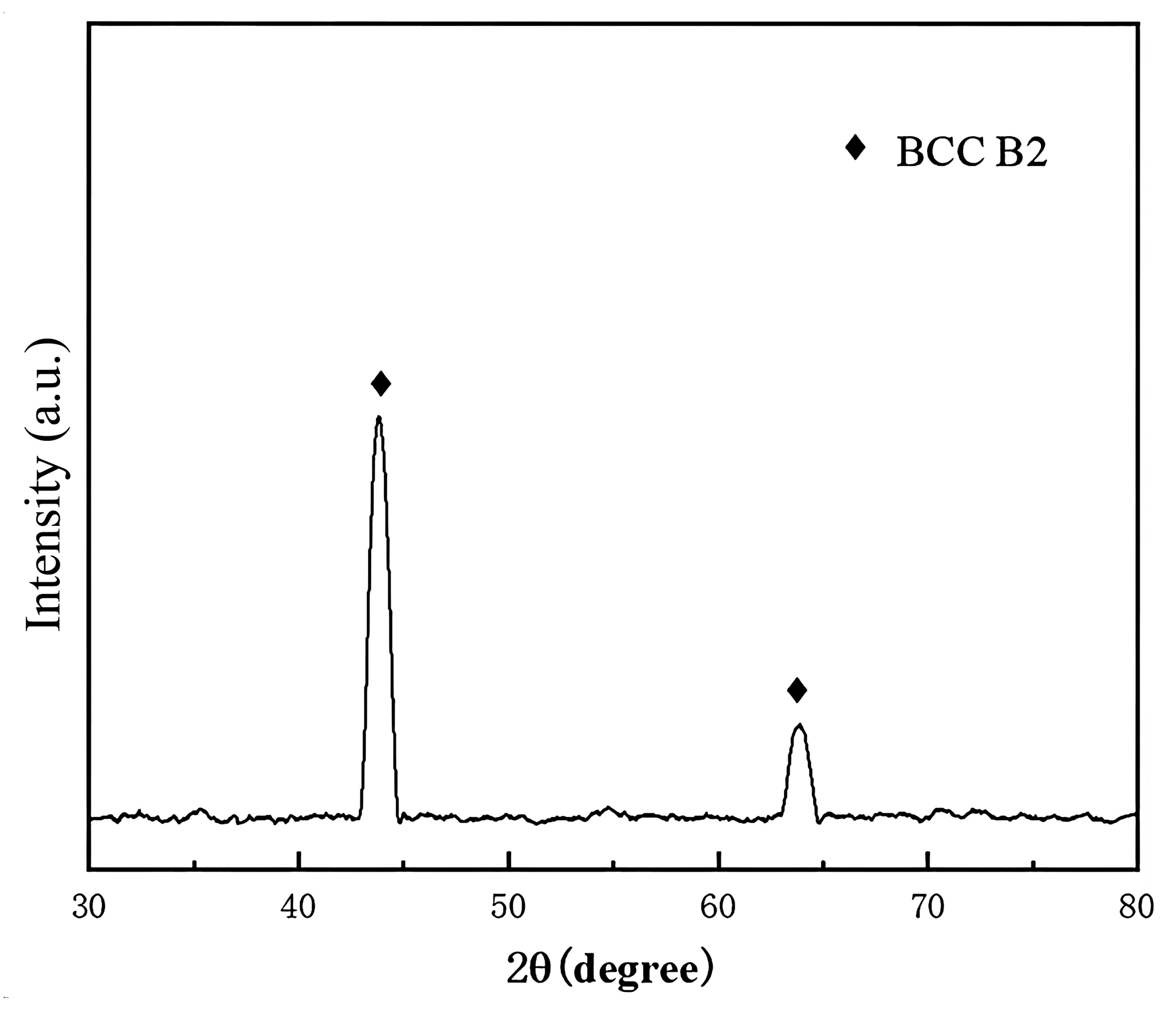
The XRD results of the Al
43.5Mg
2Ni
28Cu
15Ti
11.5 cladded coating are presented in
Figure 5. As shown, the coating exhibits characteristic diffraction peaks corresponding to the BCC and B2 phases. The presence of the B2 phase contributes to the improved mechanical properties of the alloy.
This phase constitution arises from interactions among the constituent elements, particularly Al and Ti. The relatively large atomic radius of Al induces significant lattice distortion, which favors the formation of a BCC structure. In addition, Al exhibits large negative mixing enthalpies with transition metals such as Ti and Ni, promoting the formation of the ordered B2 phase [
22]. Thus, Al both stabilizes the BCC phase and facilitates B2 phase formation.
Ti plays a similar role, stabilizing the BCC phase and promoting ordered-phase formation. The coexistence of BCC and B2 phases, dominated by Al and Ti, enables the formation of a stable phase structure in the present Al–Mg-based multi-principal element alloy coating.
The cross-sectional microstructural characteristics of the Al
43.5Mg
2Ni
28Cu
15Ti
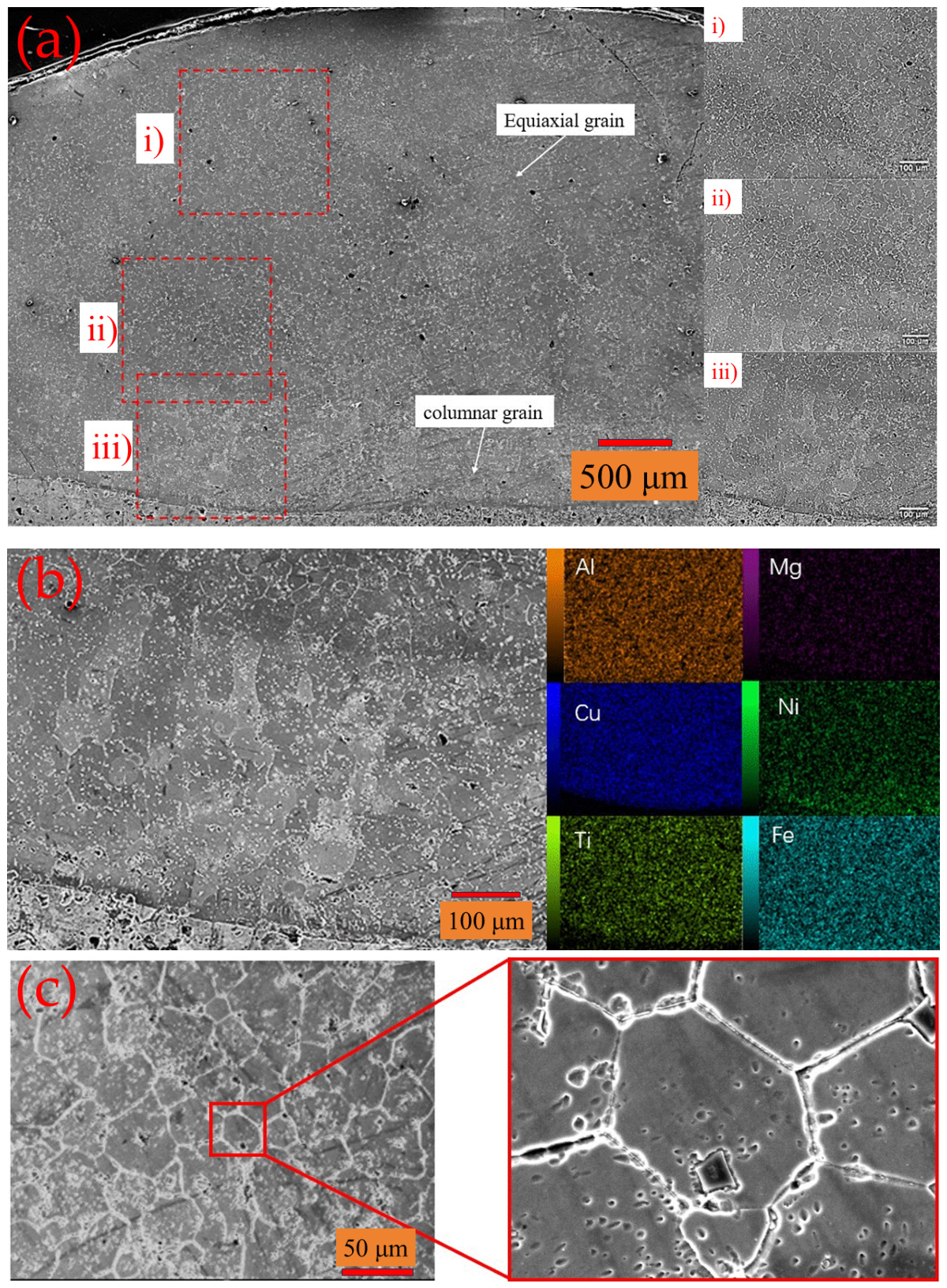
11.5 high-entropy alloy coating fabricated at the optimal laser power of 1200 W are comprehensively presented in
Figure 6. As shown in
Figure 6a, a continuous and defect-free metallurgical bonding interface is achieved between the cladding coating and the substrate, with no visible cracks, pores, or unbonded regions. The microstructure exhibits a distinct gradient distribution along the deposition direction, directly governed by the solidification conditions and thermal gradient variations during laser cladding. Specifically, the grain morphology evolves systematically from the bottom (adjacent to the substrate) to the top of the coating. Near the coating–substrate interface, the temperature gradient is high and the solidification rate is relatively low. There, columnar grains (grain size number of G = 6) are dominant, growing perpendicular to the heat flow. In contrast, the middle and upper regions of the coating experience reduced thermal gradients and enhanced constitutional supercooling. These regions are characterized by refined equiaxed grains with a grain size number of G = 7.5. This gradient grain structure is typical of laser cladding processes, where the transition from columnar to equiaxed grains reflects the progressive change in solidification mode. As the thermal gradient decreases with increasing distance from the substrate, the solidification mode shifts from planar/columnar growth to equiaxed dendritic growth.
The EDS elemental mapping results of the transition zone (
Figure 6b) reveal that the six constituent elements—Al, Mg, Ni, Cu, Ti, and Fe—are homogeneously distributed throughout the coating cross-section, with no significant macro-segregation, elemental enrichment, or depletion regions. This uniform elemental distribution confirms that the cable-type wire achieved complete melting and sufficient convective mixing in the molten pool at 1200 W, enabling thorough elemental diffusion and uniform in situ alloying. Notably, the presence of Fe in the coating indicates moderate substrate dilution. This dilution is inevitable in laser cladding but remains at a low level without compromising the overall compositional uniformity of the high-entropy alloy matrix. The absence of severe elemental segregation further validates the stable molten pool behavior and optimal processing conditions at this power level, which are critical for achieving consistent microstructural and mechanical properties.
Further high-magnification observation (
Figure 6c) reveals the detailed intragranular microstructure of the equiaxed grain regions. Dispersed rectangular particles, with an average edge length of approximately 7 μm and a volume fraction of about 5%, are clearly visible within the grain interiors. Combined with EDS analysis, these particles are identified as TiC carbides, formed by the in situ reaction between Ti and carbon. These TiC particles act as potent heterogeneous nucleation sites during solidification, contributing to the refinement of the equiaxed grain structure. Additionally, their presence is expected to enhance the mechanical performance of the coating through dispersion strengthening and grain boundary pinning, which inhibits grain growth and improves hardness and wear resistance.
The microhardness distribution and average hardness values of the Al
43.5Mg
2Ni
28Cu
15Ti
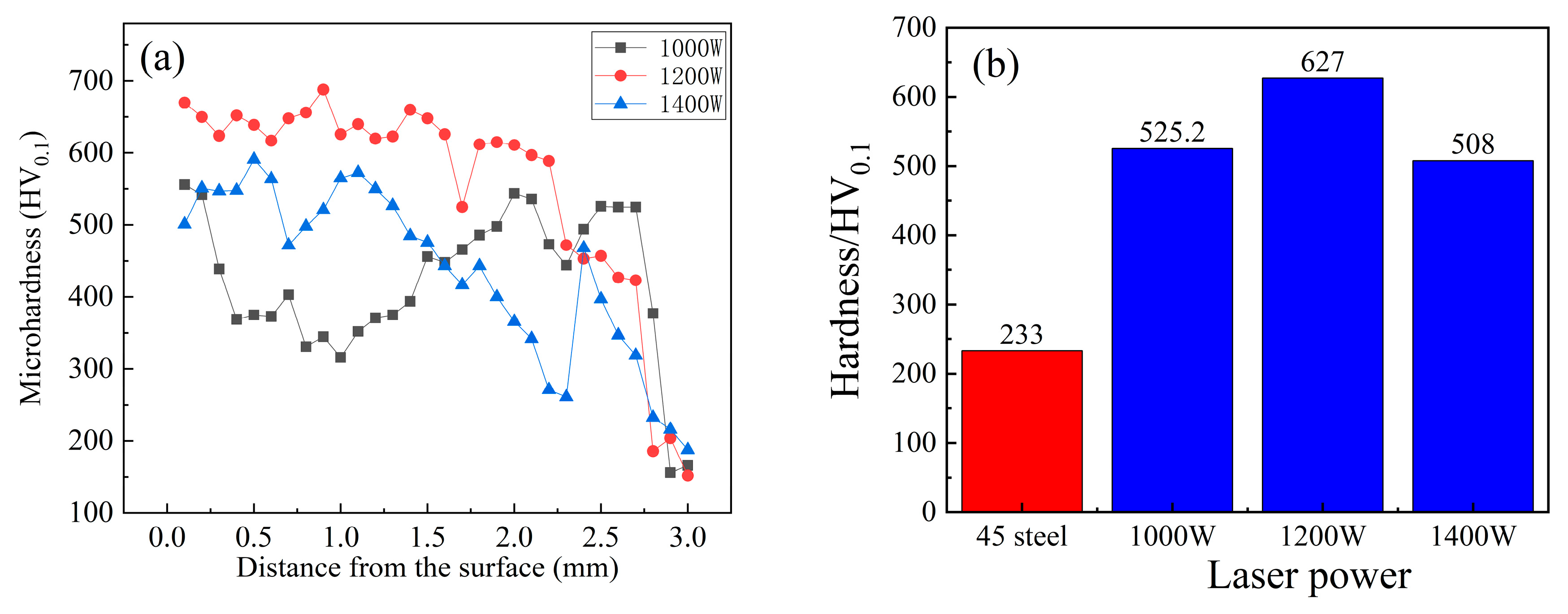
11.5 high-entropy alloy coatings prepared at different laser powers are presented in
Figure 7. As shown in
Figure 7a, the microhardness profiles along the cross-section reveal a typical gradient distribution, with higher values near the coating surface and a gradual decrease towards the substrate. Meanwhile,
Figure 7b quantifies the average microhardness of the coatings under each condition, demonstrating that all cladded layers exhibit significantly higher hardness than the 45 steel substrate (233 HV
0.1).
At the laser power of 1000 W, the coating shows the lowest average microhardness of 525.2 HV0.1. This phenomenon is directly related to the insufficient energy input at low power levels. As a result, incomplete melting of the cable-type wire, non-uniform elemental distribution, and a high level of compositional inhomogeneity occur. Insufficient convective mixing and poor homogenization in the molten pool weakens the solid solution strengthening effect and reduces the volume fraction of reinforcing phases, resulting in an overall low hardness.
As the laser power increases to 1200 W, the coating achieves the highest average microhardness of 627 HV0.1, approximately 2.7 times that of the 45 steel substrate. This significant enhancement in hardness is attributed to the synergistic effects of multiple strengthening mechanisms, enabled by the optimal processing conditions at this power level. First, the uniform and complete melting of the cable-type wire, together with sufficient convective mixing in the molten pool, promotes the formation of a homogeneous high-entropy alloy matrix with severe lattice distortion. The atomic size differences among the constituent elements (Al, Mg, Ni, Cu, Ti) lead to significant lattice strain in the BCC matrix, which acts as a strong barrier to dislocation motion, resulting in pronounced solid solution strengthening. Second, the coherent B2 precipitates distributed within the BCC matrix induce a high-strain coherent interface, creating a local stress field that further hinders dislocation movement. The combined effect of lattice distortion, solid solution strengthening, and precipitation strengthening provides the primary contribution to the high hardness observed at 1200 W. Additionally, the refined equiaxed grain structure formed under this condition also contributes to the hardness improvement via grain boundary strengthening.
When the laser power is further increased to 1400 W, the average microhardness of the coating decreases to 508 HV
0.1. As shown in the depth-dependent profile (
Figure 7a), although the surface region still exhibits a relatively high hardness, the hardness decreases rapidly with increasing distance from the surface, showing the most severe fluctuation and the lowest values near the coating–substrate interface. This degradation is mainly caused by excessive energy input at high power levels. On the one hand, overheating of the molten pool promotes excessive vaporization of low-melting-point elements such as Al and Mg, altering the alloy stoichiometry and weakening the solid solution strengthening effect. On the other hand, the high heat input increases substrate dilution, leading to a higher Fe content in the coating matrix, which reduces the lattice distortion degree and deteriorates the strengthening effect. Furthermore, the coarse columnar grain structure formed under high thermal gradients at high power reduces the grain boundary strengthening contribution, further lowering the overall hardness of the coating.
3.2. Performance Analysis of the Al43.6Mg2.1Cr2.5Ni25.2Cu15.2Ti11.4 Coating
For the laser cladding of the Al
43.6Mg
2.1Cr
2.5Ni
25.2Cu
15.2Ti
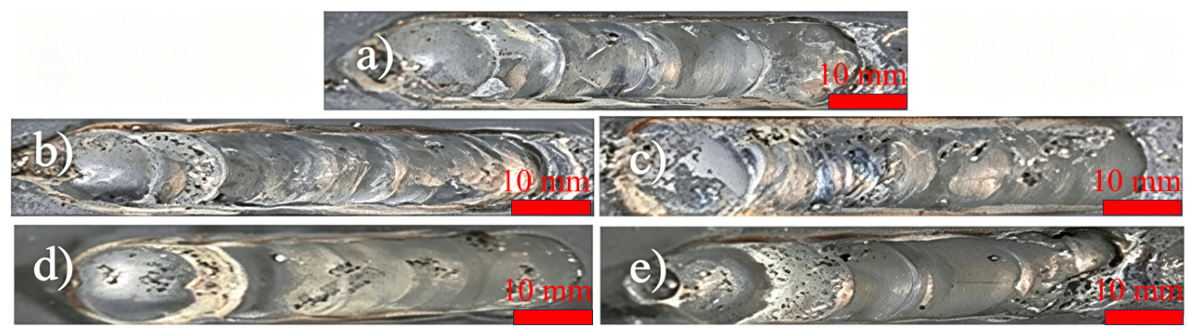
11.4 cable-type wire, the addition of a small amount of Cr shifts the optimal laser power window relative to the previously studied Cr-free composition. To clarify the effect of laser power on forming quality for this new cable-type wire, this study investigated cladding behavior within the range of 1100–1300 W, with the corresponding surface morphologies presented in
Figure 7.
At the lowest power level of 1100 W (
Figure 8a), the cladding surface exhibits significant irregularities, including uneven fish-scale patterns, discontinuous tracks, and visible surface cracks. This poor forming quality arises from insufficient laser energy input, which fails to fully melt the multi-component cable-type wire and achieve homogeneous mixing in the molten pool. The presence of Cr further elevates the effective melting point of local regions, exacerbating incomplete melting and compositional inhomogeneity. During rapid solidification, these non-uniform regions experience inconsistent thermal contraction, leading to the formation of thermal cracks and an uneven surface profile.
As the laser power increases to 1150 W (
Figure 8b), the surface irregularities are reduced, but the track still lacks continuity, with residual spatter and uneven ripples indicating unstable molten pool behavior. At this intermediate power level, energy input remains marginally insufficient to achieve full melting and stable spreading of the alloy melt, resulting in suboptimal surface quality.
At the optimized laser power of 1200 W (
Figure 8c), the cladding surface is continuous, smooth, and free of obvious defects such as cracks, balling, or spatter. The fish-scale patterns are uniform and well-defined, indicating stable molten pool flow and balanced solidification conditions. At this power level, the laser energy density is sufficiently high to compensate for the increased melting point associated with Cr addition, enabling complete melting of all constituent elements, including high-melting-point Cr and Ti. Enhanced convective mixing in the molten pool promotes uniform elemental distribution and stable spreading, resulting in a flat, continuous track with consistent surface morphology.
When the laser power is further increased to 1250 W (
Figure 8d) and 1300 W (
Figure 8e), the cladding surface deteriorates again, becoming rougher and exhibiting signs of spattering, oxidation, and irregular ripples. At these excessively high power levels, overheating of the molten pool leads to violent agitation and enhanced vaporization of low-boiling-point elements such as Al and Mg. The resulting recoil pressure and unstable keyhole dynamics induce droplet ejection and surface rippling, while preferential element burnout causes compositional fluctuations that degrade surface quality. Additionally, the high heat input promotes excessive oxidation of the molten surface, resulting in uneven coloration and further compromising the forming quality.
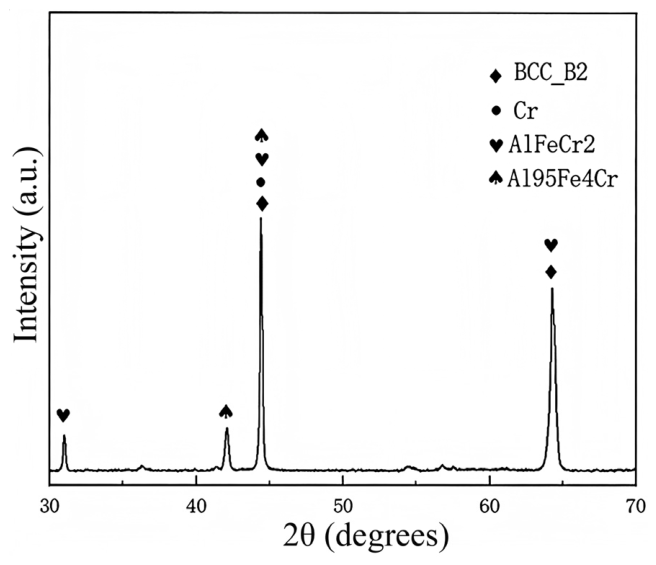
Figure 9 presents the XRD pattern of the Al
43.6Mg
2.1Cr
2.5Ni
25.2Cu
15.2Ti
11.4 high-entropy alloy coating prepared at the optimized laser power of 1200 W. The diffraction pattern reveals a multi-phase structure dominated by a disordered BCC matrix with an ordered B2 phase, alongside minor peaks corresponding to Cr-rich phases (Cr and AlFeCr
2) and the intermetallic phase Al
95Fe
4Cr.
Following the addition of Cr, new ordered ternary phases, including AlFeCr2 and Al95Fe4Cr, are observed in the coating. However, the relatively low intensity of their diffraction peaks indicates a low volume fraction of these precipitates, suggesting that the majority of Cr atoms remain dissolved in the BCC matrix, forming a supersaturated solid solution. This behavior arises from the high cooling rate during laser cladding, which limits the time available for long-range diffusion and precipitation, favoring the retention of Cr in the metastable BCC matrix. The presence of these minor phases also confirms that Cr does not fully remain in solid solution but participates in the formation of Cr-rich intermetallics, albeit in small quantities.
The incorporation of Cr significantly influences both the matrix structure and precipitation behavior. As a transition metal with a moderate atomic radius, Cr readily dissolves into the BCC lattice, causing further lattice distortion and enhancing solid solution strengthening. Additionally, its high affinity for Fe and Al promotes the formation of ordered intermetallic phases such as AlFeCr2 and Al95Fe4Cr. These phases, although present in low volume fractions, can act as heterogeneous nucleation sites during solidification, potentially refining the grain structure and providing additional precipitation strengthening effects. The coexistence of the BCC matrix, B2 phase, and Cr-rich intermetallics suggests that Cr modifies the phase equilibrium and solidification path, altering the precipitation kinetics of the ordered phases. This multi-phase microstructure, enabled by Cr addition, offers new possibilities for tailoring the mechanical properties of the coating through synergistic solid solution and precipitation strengthening mechanisms.
The cross-sectional microstructural characteristics of the Al
43.6Mg
2.1Cr
2.5Ni
25.2Cu
15.2Ti
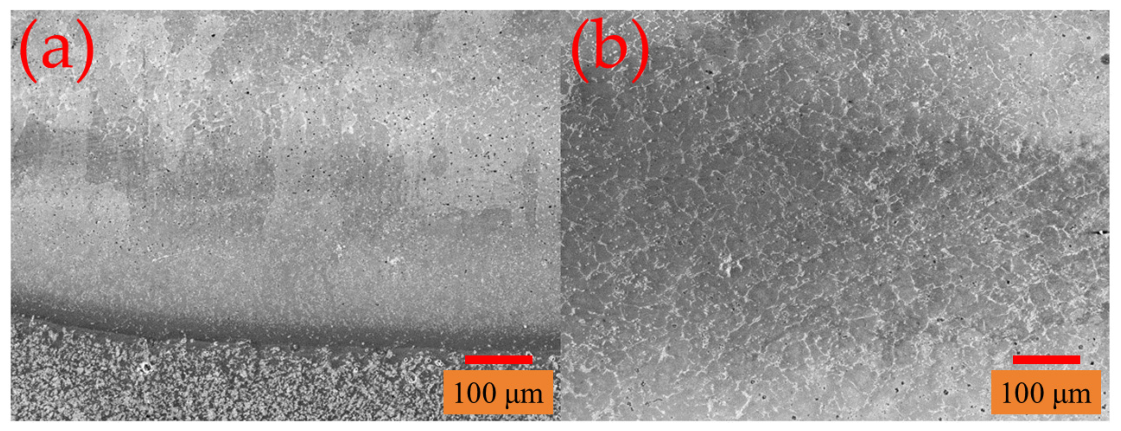
11.4 high-entropy alloy coating fabricated at the optimized laser power of 1200 W are comprehensively presented in
Figure 10. Compared with the previously studied Cr-free Al
43.5Mg
2Ni
28Cu
15Ti
11.5 coating, a significant grain refinement effect is clearly observed in the Cr-containing coating.
At low magnification (
Figure 10a), the cross-section reveals a continuous, defect-free metallurgical bond between the coating and the substrate, with no visible cracks, pores, or unbonded regions. The microstructure exhibits a uniform, fine-grained morphology across the entire coating cross-section. At higher magnification (
Figure 10b), the refined equiaxed grain structure is clearly resolved, with significantly smaller grain sizes than those observed in the Cr-free counterpart. This pronounced grain refinement can be directly attributed to the addition of Cr, which modifies the solidification behavior and promotes heterogeneous nucleation during laser cladding.
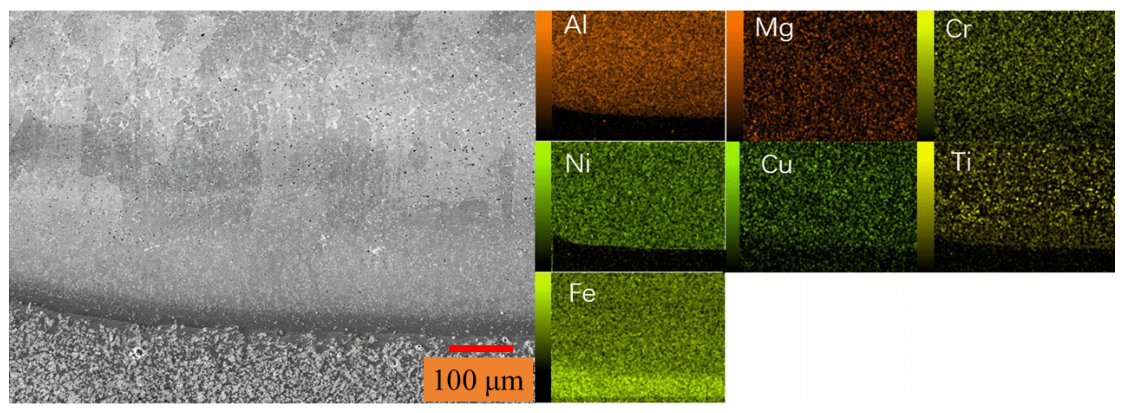
EDS elemental mapping of the coating–substrate interface region (
Figure 11) demonstrates that all constituent elements—Al, Mg, Cr, Ni, Cu, Ti, and Fe—are homogeneously distributed throughout the coating cross-section, with no evidence of macro-segregation, elemental enrichment, or depletion. The uniform distribution confirms that the cable-type wire achieved complete melting and sufficient convective mixing in the molten pool at 1200 W, enabling thorough elemental diffusion and uniform in situ alloying. Notably, the Fe signal shows a gradual increase near the interface, indicating moderate substrate dilution, which remains at a low level without compromising the overall compositional uniformity of the high-entropy alloy matrix.
The significant grain refinement observed in the Cr-containing coating arises from multiple factors. First, the addition of Cr increases the constitutional supercooling during solidification, which promotes the formation of additional nucleation sites and suppresses grain growth. Second, Cr has a high affinity with other elements in the alloy, leading to the formation of fine intermetallic phases (as confirmed by XRD analysis) that act as potent heterogeneous nucleation sites, further refining the grain structure. Third, the rapid cooling rate inherent to laser cladding, combined with the increased thermal conductivity and modified solidification kinetics introduced by Cr, results in a higher nucleation rate and shorter grain growth time, ultimately yielding a much finer grain size.
According to the Hall–Petch relationship, grain refinement is a highly effective mechanism for improving both the strength and hardness of metallic materials. The finer grain structure in the Cr-containing coating increases the grain boundary area per unit volume, providing more obstacles to dislocation motion. These grain boundaries hinder dislocation slip and multiplication, thereby significantly enhancing the yield strength and hardness of the coating. Furthermore, the refined microstructure is expected to improve the coating’s toughness and wear resistance by distributing stress more uniformly and reducing the likelihood of crack initiation and propagation.
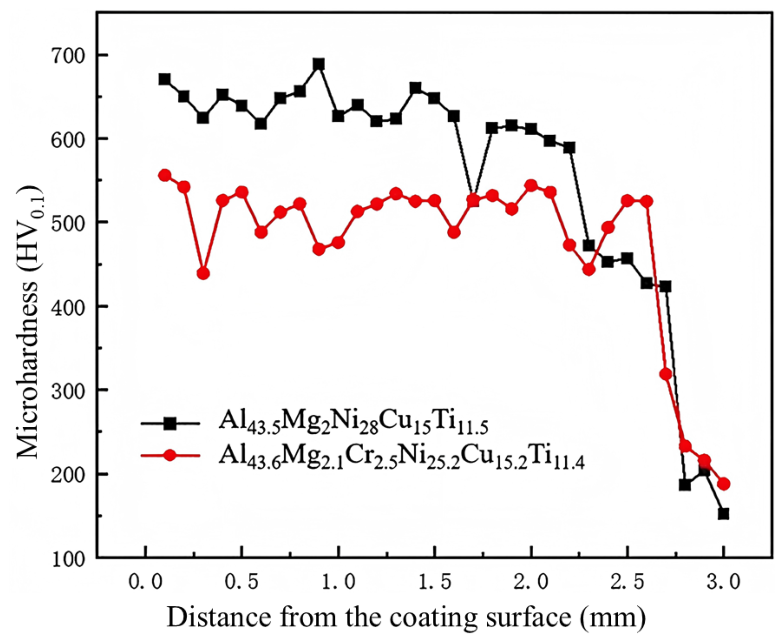
The cross-sectional microhardness profiles of the two Al-Mg-based high-entropy alloy coatings are presented in
Figure 12, revealing a continuous gradient distribution from the coating surface to the substrate interface. Both coatings exhibit relatively uniform hardness values across most of their thickness, with a gradual decrease in hardness near the coating–substrate interface as the substrate dilution effect becomes more pronounced.
For the Cr-free Al43.5Mg2Ni28Cu15Ti11.5 coating, the average microhardness reaches 627 HV0.1, consistent with the multi-strengthening mechanisms arising from severe lattice distortion, supersaturated solid solution, and coherent B2 phase precipitation. In contrast, the Cr-containing Al43.6Mg2.1Cr2.5Ni25.2Cu15.2Ti11.4 coating shows a lower average hardness of 523 HV0.1, despite the significant grain refinement observed in its microstructure.
This unexpected reduction in hardness can be attributed to the modifying effect of Cr on the phase evolution and strengthening mechanisms. As indicated by XRD analysis, Cr atoms primarily dissolve into the BCC matrix, with only minor fractions forming Cr-rich intermetallic phases. The dissolved Cr atoms tend to occupy the lattice sites of B2-forming elements such as Al and Ti, altering the stoichiometric ratio required for ordered B2 phase formation. This inhibits the nucleation and growth of the B2 phase during rapid solidification, reducing its volume fraction and weakening the precipitation strengthening effect. Additionally, Cr atoms may segregate at grain and phase boundaries, further suppressing the formation and coarsening of B2 precipitates. While the grain refinement introduced by Cr would normally enhance hardness via the Hall–Petch effect, this beneficial effect is outweighed by the reduction in precipitation strengthening, leading to an overall decrease in average hardness.
It is worth noting that, despite the lower average hardness, the Cr-containing coating still maintains a high hardness level that is significantly higher than that of the 45 steel substrate. Furthermore, the more uniform hardness distribution across the coating thickness suggests improved compositional and microstructural homogeneity, which is favorable for consistent service performance [
22].
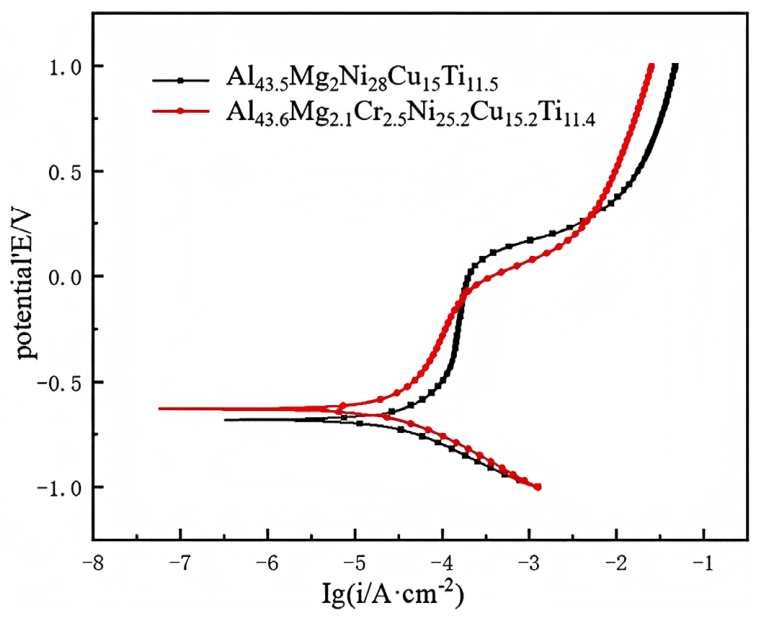
The electrochemical corrosion behavior of the two Al-Mg-based high-entropy alloy coatings in 3.5 wt% NaCl solution is comprehensively investigated via potentiodynamic polarization tests, with the polarization curves and corresponding electrochemical parameters presented in
Figure 13 and
Table 2, respectively. Both coatings exhibit characteristic passive behavior with a distinct passive region spanning approximately −0.43 V to 0.34 V, indicating the formation of protective oxide films on their surfaces during anodic polarization.
As shown in the polarization curves, the Cr-free Al43.5Mg2Ni28Cu15Ti11.5 coating displays a steeper increase in current density in the transpassive region, suggesting a higher susceptibility to pitting corrosion and localized breakdown of the passive film at elevated potentials. In contrast, the Cr-containing Al43.6Mg2.1Cr2.5Ni25.2Cu15.2Ti11.4 coating maintains a lower and more stable current density over a wider potential range, indicating superior passive film stability and corrosion resistance.
The quantitative electrochemical parameters further confirm the beneficial effect of Cr addition on corrosion performance. The Cr-containing coating exhibits a lower corrosion current density Icorr of 2.80 × 10⁻⁶ A/cm2, compared to 5.50 × 10⁻⁶ A/cm2 for the Cr-free counterpart. Since Icorr is directly proportional to the corrosion rate, the significantly lower value for the Cr-containing coating indicates a substantially reduced anodic dissolution rate and improved kinetic corrosion resistance. Meanwhile, the Cr-containing coating shows a slightly higher corrosion potential Ecorr of −0.623 V, compared to −0.655 V for the Cr-free coating. Although the difference in Ecorr is relatively small, the nobler potential indicates improved thermodynamic stability of the Cr-containing coating under open-circuit conditions, consistent with its enhanced ability to form a passive film.
The superior corrosion resistance of the Cr-containing coating can be attributed to the synergistic effects of compositional modification and microstructural uniformity induced by Cr addition. First, Cr has a high affinity for oxygen and exhibits preferential oxidation in corrosive environments, leading to the rapid formation of a continuous, dense, and chemically stable Cr2O3-rich passive film on the coating surface. This oxide film, with its corundum-type crystal structure, possesses an extremely low ionic diffusion coefficient, effectively blocking the penetration and diffusion of corrosive species such as Cl−, O2, and H2O into the underlying alloy matrix. Unlike the Cr-free coating, which relies primarily on a mixed Al/Ti oxide film, the Cr-containing coating forms a more protective and self-repairing Cr2O3 layer that is less prone to localized breakdown and pitting corrosion.
Second, the uniform distribution of Cr in the BCC matrix, as confirmed by EDS mapping, ensures that the entire coating surface has a sufficient and homogeneous supply of Cr atoms for passive film formation. During the initial stage of corrosion, Cr atoms readily react with dissolved oxygen to form a thin, compact oxide layer, which gradually thickens and stabilizes with time. The self-healing capability of the Cr2O3 film further enhances its long-term protective performance, as any local damage to the film is quickly repaired by the diffusion of Cr atoms from the matrix to the surface.
In contrast, the Cr-free coating lacks the critical element for forming a stable Cr2O3 passive film. Although it forms a mixed oxide layer containing Al and Ti oxides, this film is less dense and more susceptible to attack by Cl− ions, which leads to localized film breakdown and higher corrosion rates. The higher Icorr and steeper polarization curve observed for the Cr-free coating reflect its weaker passive film stability and higher tendency for anodic dissolution.
Furthermore, the refined and uniform grain structure of the Cr-containing coating also contributes to its improved corrosion resistance. The reduced grain size increases the number of grain boundaries, which can act as preferential sites for Cr diffusion and passive film nucleation, promoting the formation of a more continuous and uniform protective layer. In addition, the absence of significant elemental segregation or phase separation in the Cr-containing coating eliminates potential galvanic cells that could accelerate localized corrosion.



 ,
,