Article

In Situ Atmospheric Corrosion Monitoring of Coated Aluminum Alloys Exposed in Tropical Monsoon Climate


1
CRRC Qingdao Sifang Co., Ltd., No. 88 Jinhongdong Road, Chengyang District, Qingdao 266111, China
2
Qingdao Aokang Quality Inspection Technology Co., Ltd., Qingdao 266071, China
3
National Metal and Materials Technology Center (MTEC), National Science and Technology Development Agency (NSTDA), 111 Thailand Science Park, Paholyothin Road, Klong Luang, Pathum Thani 12120, Thailand
*
Authors to whom correspondence should be addressed.
Coatings 2026, 16(6), 667; https://doi.org/10.3390/coatings16060667
Submission received: 1 April 2026 / Revised: 25 May 2026 / Accepted: 27 May 2026 / Published: 2 June 2026
(This article belongs to the Section Corrosion, Wear and Erosion)

Abstract

Organic coatings are the most widely utilized corrosion protection strategy for metallic materials. Nevertheless, they can degrade over time through the effects of UV, moisture, and corrosive media, compromising their protective performance. In order to monitor the coating performance for predictive maintenance, an electrochemical sensor was fabricated using 6005A aluminum alloy and coated with four coating systems: (1) epoxy primer, (2) epoxy primer/polyurethane topcoat, (3) epoxy primer/polyurethane topcoat/aluminum-powder-containing polyester resin, and (4) epoxy primer/polyurethane topcoat/aluminum-powder-containing polyester resin/acrylic coat. The sensors and corresponding coupon samples were exposed for 24 months at two sites in Thailand: Pathum Thani (PTI, suburban) and Chon Buri (CBI, mild marine). Electrochemical impedance spectroscopy (EIS) measurements were conducted at a fixed frequency of 117 Hz, synchronized with on-site meteorological monitoring. Impedance data were converted into a coating aging index (AI) to quantitatively assess the coating degradation. Coating deterioration was observed in PTI as early as at 6 months of exposure. Machine learning modeling revealed that cumulative rainfall was the dominant environmental factor influencing coating degradation. The single epoxy primer layer exhibited the poorest durability, while the incorporation of polyurethane, aluminum-pigmented polyester, and acrylic layers significantly prolonged the protective service life of the coating system.

1. Introduction

Aluminum alloys are extensively applied in transportation, construction, and aerospace industries owing to their high strength-to-weight ratio, excellent formability, and inherent passive film stability. Short- and long-term field exposure atmospheric corrosion tests of aluminum alloys have been conducted in diverse climatic regions worldwide [1,2,3,4]. Key corrosive aerosols, including chloride (Cl) [5], sulfur dioxide (SO2) [6], nitrogen oxides (NOx), carbon dioxide (CO2), and ammonia (NH3), act as critical accelerants for atmospheric corrosion. When metal surfaces contact condensed moisture or rainwater, corrosive electrolytes form, triggering the initiation and propagation of atmospheric corrosion. Atmospheric corrosivity is commonly classified by deposition rates of corrosive constituents, encompassing rural, urban, marine, industrial, and mixed environments, where the increased amount of sulfur compounds leads to an increase in pit depth and a decrease in pit initiation sites in aluminum alloys [7]. In marine environments, Cl deposition rates exceed 9 mg/m2/day [mmd] [5] or 3 mmd per MICAT criteria [8]. Cl deposition is governed by the distance from the coastline and sea wind speed, which regulate the transport of ocean-derived salts [9]. Chloride irons play a pivotal role in the pitting corrosion initiation of aluminum alloys [7].
Beyond conventional physical exposure tests [3,8,9], advanced sensing technologies have been developed for in situ atmospheric corrosion monitoring, with a particular focus on aluminum alloys [10,11,12,13]. These techniques are generally categorized into physical/non-destructive and electrochemical methods. Physical approaches include quartz crystal microbalance (QCM) sensors [10,11] and optical fiber corrosion sensing (OFCS) [12], which detect mass changes and surface oxide film variations, respectively. Acoustic emission (AE) [13,14] and radiofrequency (RF) [15,16] monitoring identify structural degradation and localized corrosion via frequency response changes, and electrical resistance (ER) sensors enable real-time thickness loss measurements [17], but fail to accurately characterize localized pitting, which is the primary corrosion mode of aluminum alloys.
Electrochemical techniques demonstrate superior performance due to high sensitivity and well-established theoretical foundations. Electrochemical impedance spectroscopy (EIS) has emerged as a powerful tool for in situ monitoring, capable of quantifying the stability of passive aluminum film [18]. Passive aluminum exhibits high impedance (105–106 Ω·cm2), while chloride-rich environments induce film breakdown, reducing impedance to 103–104 Ω·cm2. In addition, EIS also provides in-depth insights into corrosion kinetics and time-dependent degradation of coated aluminum alloys. In situ EIS sensors have been developed for coating health monitoring under simulated environments [19,20] and subjected to field tests at Kennedy Space Center, Florida, USA [19]. Coating performance is typically evaluated by low-frequency impedance (<107 Ω) [19] or sharp reductions in pore resistance accompanied by an increased coating capacitance [20]. A comprehensive review of EIS sensors highlighted efforts to develop compact, high-sensitivity devices for thin water film condensation monitoring [21], with electrode designs focusing on conductive materials such as gold, silver, and nickel [22,23].
Measurement and analysis efficiency are critical for practical EIS sensor applications, and rapid evaluation methods for coating degradation using impedance data have been proposed [24,25,26,27,28]. Low-frequency impedance (0.01–1 Hz) characterizes coating/substrate interface corrosion [29,30,31,32] but requires lengthy measurement times, whereas breakpoint frequency (102–103 Hz) detects initial coating delamination [24] but is not applicable for all coating systems [26,27,28]. A fixed frequency of 117 Hz has been validated for rapid coating aging classification [27], balancing measurement and analysis efficiency, having been verified in salt spray and UV accelerated tests. However, field validation under natural atmospheric conditions remains lacking.
Recent advances have integrated machine learning (ML) to enhance coating degradation prediction. Hybrid studies by Ma et al. [33] combined mechanistic empirical models with artificial neural networks (ANNs) and random forests (RFs) using environmental and EIS data from coupon samples to predict service life, while Li et al. [34] developed a semi-supervised ML model to predict the low-frequency impedance of acrylic coatings using field data from 13 test sites. To address the limitation of using EIS data in coating aging prediction, Chen et al. [35] proposed a two-stage ML model for coating failure prediction, where environmental factors were used to predict physical properties and EIS data for failure assessment; this concept has not been validated for multi-layer coating systems, which exhibit complex aging mechanisms. The deployment of EIS sensors coupled with rapid degradation evaluation shows strong potential for real-time coating monitoring, representing a critical technical gap in current research.
This study combines in situ EIS sensing with 24-month atmospheric exposure to evaluate the coating degradation of aluminum alloys under a tropical monsoon climate. EIS sensors were fabricated from aluminum alloy and applied with four multi-layer coating systems. Real-time impedance and coating aging index (AI) data were acquired in suburban (PTI) and mild marine (CBI) environments in Thailand, moving beyond laboratory-accelerated tests to capture natural degradation behavior. The continuous field deployment of EIS sensors with fixed-frequency impedance measurement, validated by parallel coupon testing, provides systematic evidence of coating performance under operational conditions. This research supports the predictive maintenance and lifecycle assessment of coatings for high-speed rail vehicles, offering practical technological contributions to transportation infrastructure protection.

2. Experimental Methods

2.1. Test Sites

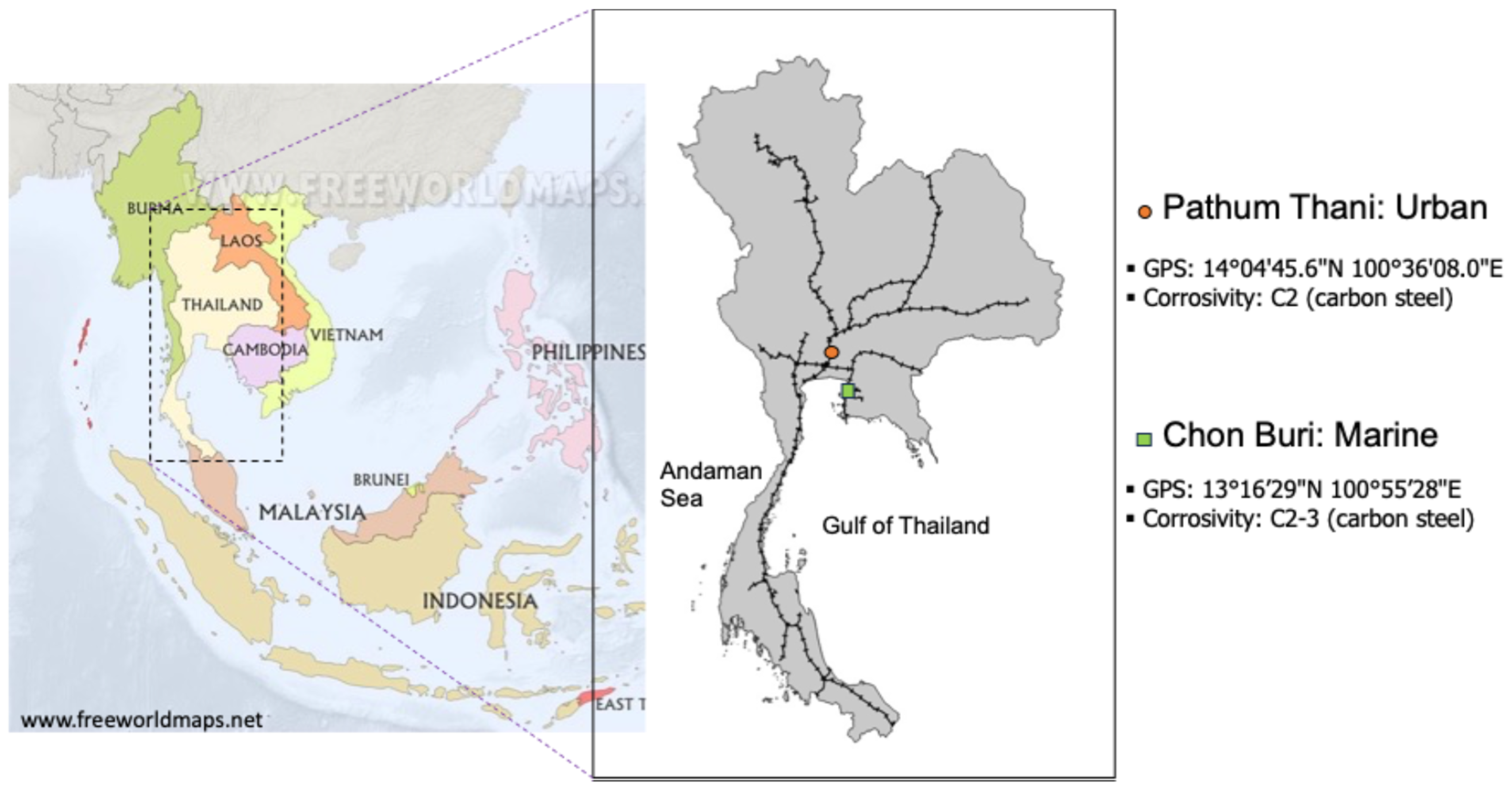
The railway track map given in [36] shows the railway network operated by the State Railway of Thailand. An exposure test was conducted at two sites adjacent to planned high-speed railways in Thailand (Figure 1). The first site is on the roof of a one-story building at Thailand Science Park in Pathum Thani province (PTI), approximately 64 km from the coastline and within 3 km from the planned high speed rail depot, while the second site is on the rooftop of a four-story building at Burapha University in Chon Buri province (CBI), approximately 0.4 km from the coastline and located on the planned three-airport high-speed railway. Corrosivity classification (ISO 9223) and site details are summarized in Table 1.

2.2. Materials and Sample Preparation

The substrate material is 6005A aluminum alloy, processed into 150 × 70 mm coupons and 20 mm diameter circular EIS sensor electrodes. Four coating systems were applied: Coating 1 is an epoxy resin primer with a thickness of 50–70 μm, Coating 2 is composed of an epoxy primer with a thickness of 50–70 μm and polyurethane topcoat with a thickness of 30–50 μm, Coating 3 is composed of an epoxy resin primer with a thickness of 50–70 μm, polyurethane topcoat with a thickness of 30–50 μm, and aluminum-powder-containing polyester resin with a thickness of 10–30 μm, and Coating 4 is composed of an epoxy resin primer with a thickness of 50–70 μm, polyurethane topcoat with a thickness of 30–50 μm, aluminum-powder-containing polyester resin with a thickness of 10–30 μm, and acrylic clear coat with a thickness of 30–50 μm.
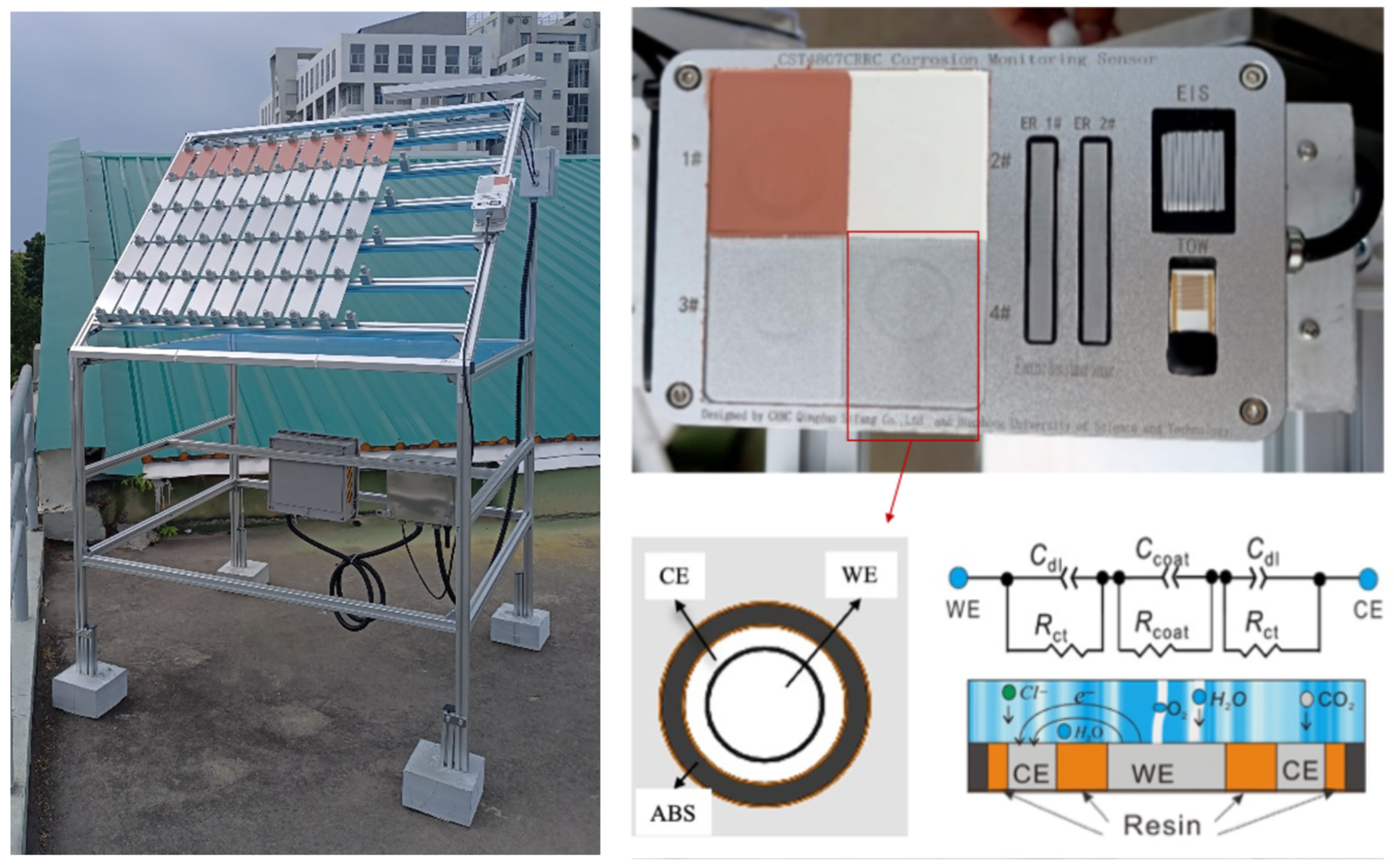
EIS sensors consisted of aluminum alloy working electrodes (WEs) and counter electrodes (CEs) electrically separated by insulating resin and coated with the test systems (Figure 2).

2.3. Data Acquisition

2.3.1. Environmental Monitoring

Meteorological parameters were monitored every 10 min onsite by a weather station. Air temperature (T), relative humidity (RH), wind speed (WS), wind direction (WD), and rainfall (Rain) were recorded, and time of wetness (TOW) was calculated from the total time when RH was greater than 80% when temperature was above 0 °C. Chloride and sulfur dioxide deposition rates were monitored monthly based on ISO 9225 using a dry gauze method and lead dioxide cylinder method, respectively [38]. Weather data were processed by Python 3.14.0 to calculate monthly averages, sums, and TOW.

2.3.2. EIS Measurement

A well-preserved coating is assumed to have a relatively high resistance and very low capacitance. The coating acts like a capacitor, so the current flows through it, and the phase angle is close to 90°. However, with a longer immersion time in the electrolyte, the capacitance gradually increases and the resistance decreases, where some of the current passes through the resistance. At this time, the phase angle will gradually decrease. Moreover, when the coating absorbs water to the point of saturation, the change in coating capacitance is relatively small, while the resistance continues to decrease, and the phase angle also decreases significantly. Therefore, the change in the phase angle and the corresponding frequency can reflect the changes in the resistance and capacitance of the coating.
The high-frequency region (above 1 kHz) reflects the capacitive change of the coating itself (water penetration into the coating).
The medium-frequency region (10 Hz–100 Hz) reflects the pore resistance of the coating (micropore expansion).
The low-frequency region (0.01 Hz) reflects the charge transfer at the metal substrate (onset of actual corrosion of the metal).
The phase angle corresponding to each frequency region can be selected as a parameter for evaluating the coating’s protective performance within each stage.
The characteristic frequency is the frequency corresponding to the phase angle of −45°. It is believed to be related to the peeling area of the coating, and it is usually in the high-frequency range [24,26]. Without the complex equivalent electrical circuit processing, it can be extracted from the impedance data and used as a rapid evaluation parameter for the coating performance. Phase angle (θ) is expressed as
tan θ = 2 π f R c C c
where C C represents the electrical capacitance of the coating and R c is the coating resistance. At θ = −45°, the characteristic frequency is f b :
2 π f b R C C C = 1
C C = ε ε 0 A d
where C C represents the electrical capacitance of the coating, A is the coated area, d is the coating thickness, ε represents the dielectric constant, and ε 0 is the dielectric constant of the vacuum, which is 8.86 × 10⁻¹⁴ F/cm. The coating resistance is related to the porosity in the coating:
R C = ρ d A d = R C 0 A d
where ρ represents the porosity resistivity, Ad is the area of the coating delamination, and R C 0 is the initial resistance of the coating. Substitute Equations (3) and (4) into Equations (2):
f b = 1 2 π ε ε 0 ρ A / A d
f b = f b 0 A d A
where f b 0 is the frequency of the complete peeling off of the coating.
Therefore, it can be observed that f b is related to the area of the coating that falls off from the substrate. When the coating is intact, f b is smaller. As the coating ages and the area of its detachment gradually increases, f b also becomes larger. This method is valid for the initial state of delamination, but not at an extended attack [26].

2.4. Coating Aging Evaluation

Based on the visual grading method for coating aging in the national standard “GB/T 1766-2008 Paints and Varnishes–Rating Method for Coating Aging [39]”, correlations between coating resistance, frequency-dependent impedance, and characteristic frequency were investigated [27]. A non-destructive evaluation method for coatings based on the coating aging index ( A I ) can, using the impedance value |Z| at a specific frequency (e.g., f = 117 Hz) based on the frequency-dependent impedance results, be calculated as follows:
A I = log Z f t 0 l o g [ Z f t x ] log Z f t 0 log Z b ×   100 %
where f represents the selected frequency and Z b is the logarithmic value of the impedance of the coating at 100% aging, which is the polarization resistance of the substrate (104 Ω·cm2). In addition, the aging state of the coating can also be rapidly evaluated based on the characteristic impedance |Z|117Hz. The established aging classification index is shown in Table 2.
The sensor and the online monitoring potentiostat (CST 4807) were manufactured by Wuhan Corrtest Instruments Co., Ltd., Wuhan, China. Prior to the field test, the sensor system prototype was validated in the laboratory, including system calibration and EIS measurement by an electrochemical workstation, to ensure reproducibility. During the field test, the sensor with the online monitoring potentiostat recorded |Z|117Hz based on the rapid evaluation approach, and transferred the measurements to a cloud server. The coating performance was monitored at 1 h intervals by the EIS sensors for 24 months.
In parallel, coated coupons with the same coating types were exposed onsite. Every 6 months during the 24-month test, samples were collected and examined by EIS measurement in the laboratory. A three-electrode cell (PTC1 Paint Test Cell, Gamry Instruments, Warminster, PA, USA) was filled with a 3.5% NaCl solution that was in contact with the coated sample, with an exposed area of 12.56 cm2. The metal part of the coated sample was used as a working electrode and a graphite rod was used as a counter electrode. Together with an Ag/AgCl reference electrode, they were connected to a Gamry REF600P-40068 potentiostat (Gamry Instruments, Warminster, PA, USA). An EIS scan was conducted with a 10 mV sinusoidal potential amplitude from 100 kHz to 0.01 mHz, and the EIS spectrum was analyzed and simulated using pyZwx V. 1.03 software (Japan) [40].

2.5. Machine Learning Analysis

Random forest models were employed to identify key environmental factors influencing coating degradation. The training–testing dataset ratio was 0.9:0.1, and all input data were standardized using StandardScaler—scikit-learn 1.8.0 documentation. Hyperparameters were configured with n_estimator = 85 and max_depth = 20, and the prediction accuracy was determined using mean absolute error (MAE), mean squared error (MSE), and R2. Mean absolute error represents the average magnitude of the differences between predicted and actual values, mean squared error is the average of the squared differences of the error, and R2 is the goodness of fit, indicating how well the model predicts the dependent variable from the independent variables. To avoid overfitting, K-fold cross validation was conducted with n_splits = 20, where the resulting R2 should be close to the model R2. Most important factors were analyzed by SHAP (SHapley Additive exPlanations) in order to understand the contribution of influencing factors on the model output [41].

3. Results and Discussion

3.1. Environmental Characteristics

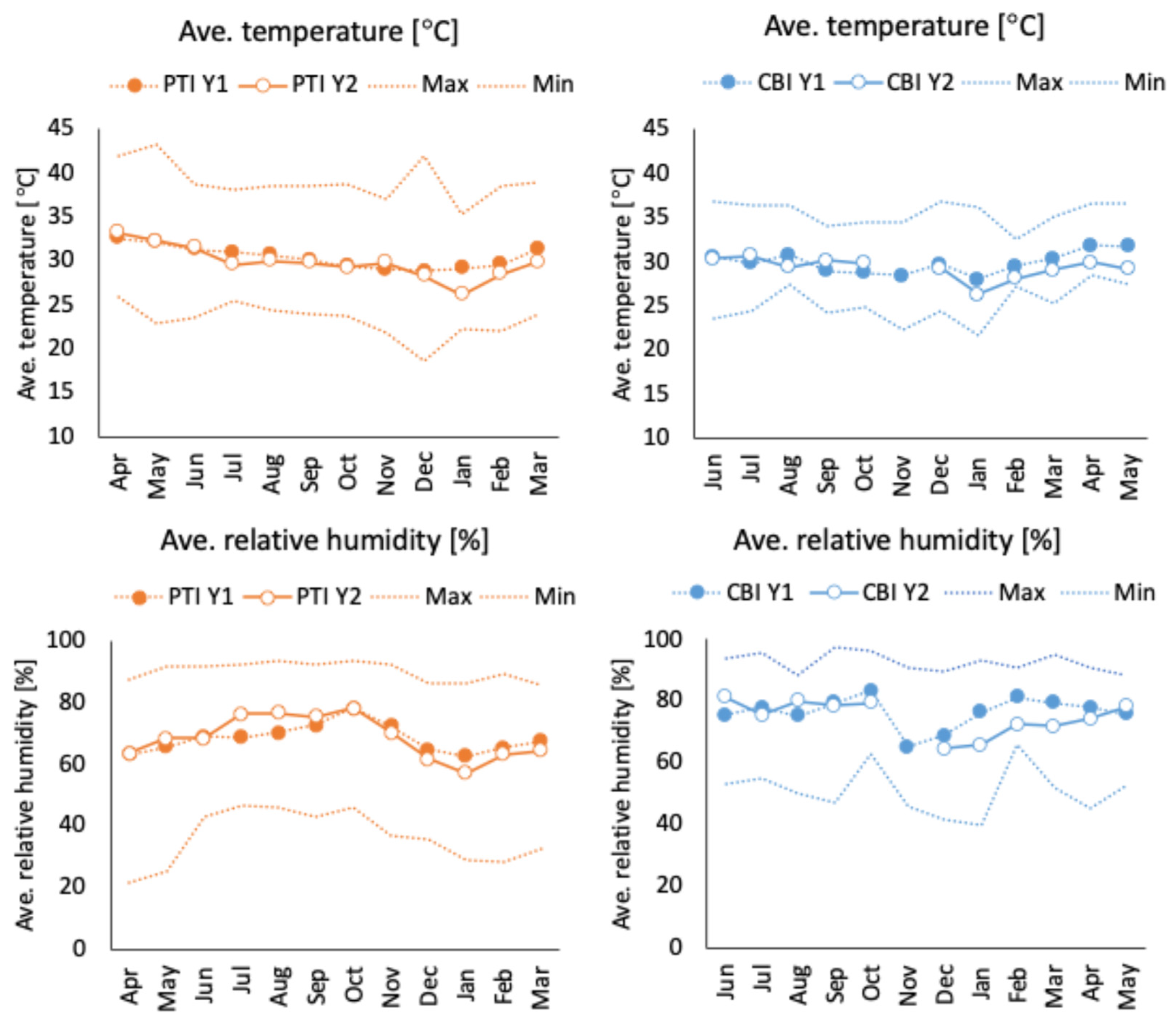
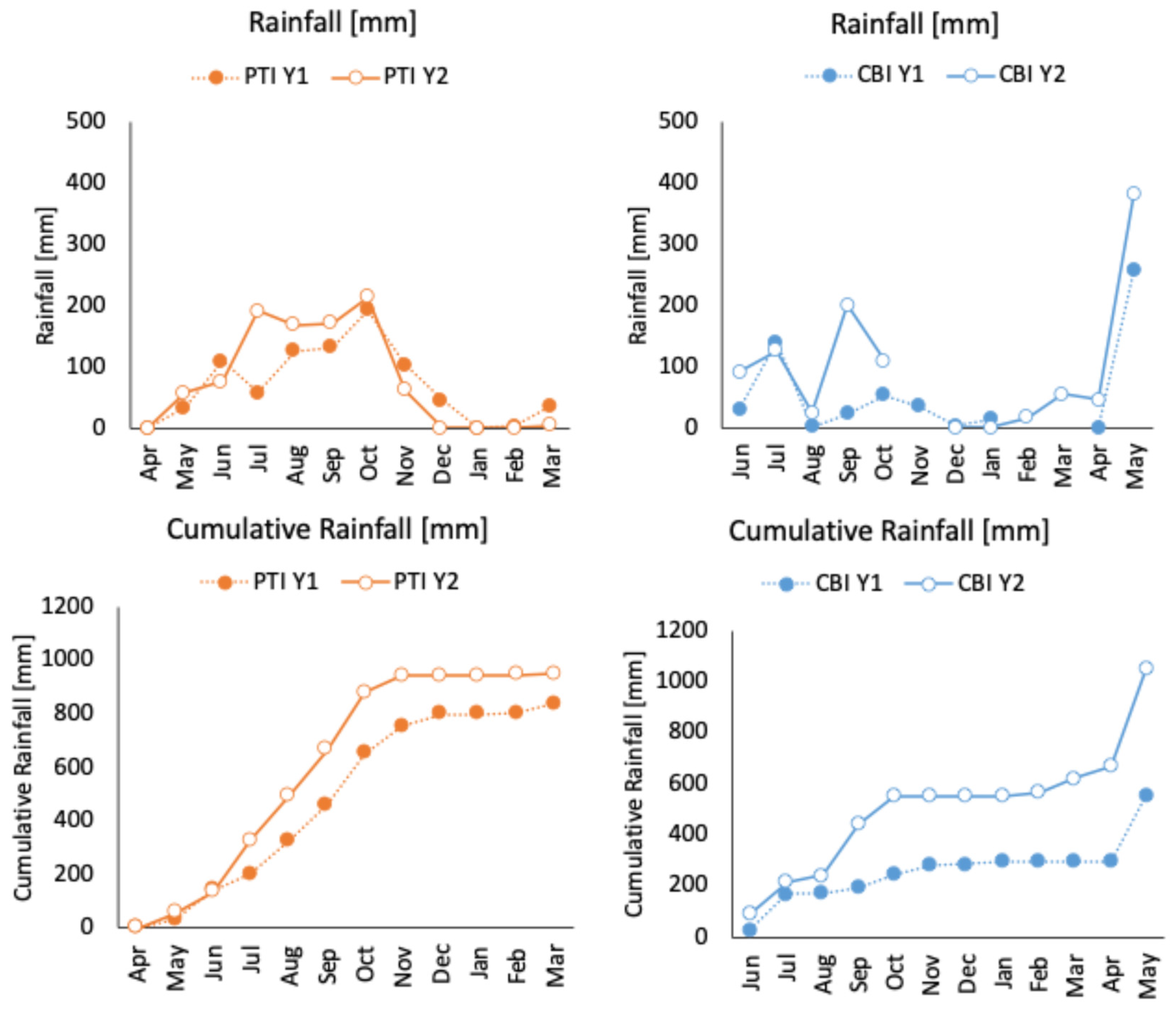
Weather data were recorded at 10-min intervals over a 24-month period. The test began in April 2023 and June 2023 in PTI and CBI, respectively. Figure 3 and Table 3 present the monthly average temperature, monthly average relative humidity, monthly total rainfall, and cumulative rainfall.
During the first year of exposure tests in PTI, the maximum monthly average temperature occurred in April 2023 (32.5 °C). The temperature then decreased monthly until approaching the minimum monthly average temperature of 28.8 °C in December 2023. Then, the temperature returned to above 30 °C. The patterns were similar in the second year; however, the maximum monthly average temperature was 33.2 °C in April 2024 and the minimum monthly average temperature was 26.2 °C in January 2025. The monthly average relative humidity pattern corresponds to the monthly total rainfall: the highest relative humidity occurred in October 2023 and 2024, when there was maximum monthly rainfall; in contrast, the minimum relative humidity occurred during months with no rainfall, such as in April and January. During the rainy season, the amount of rainfall in the second year was higher than in the first year. From the cumulative rainfall plot, it is evident that there are distinct wet (April–October) and dry (November–March) seasons in Thailand’s tropical climate.
Regarding the first year of exposure tests in CBI, the maximum monthly average temperature occurred in April 2024 (32 °C) and the minimum monthly average temperature occurred in January 2024 (28 °C). In the second year, the temperatures were approximately 2–3 °C lower compared to those in the first year during January–April. Relative humidity also followed the pattern of rainfall and was inversely proportional to the temperature, with the wet season taking place from April to October and dry season occurring from November to March. The amount of rain during the second year was significantly greater, especially in May 2025. However, it is noted that rain data are missing for 3 months of the first year, from February to April 2024.
The weather characteristics may vary from year to year at both locations. During the test period, PTI exhibited higher temperatures and lower relative humidity compared to CBI, and rainfall in PTI was greater than in CBI in the first year and less than in CBI in the second year. The higher rainfall in CBI occurred in May 2025; thus, the impact of increased rainfall might not contribute significantly in this 24-month study. Moreover, the temperature and relative humidity fluctuations (maximum–minimum) were more prominent in PTI.
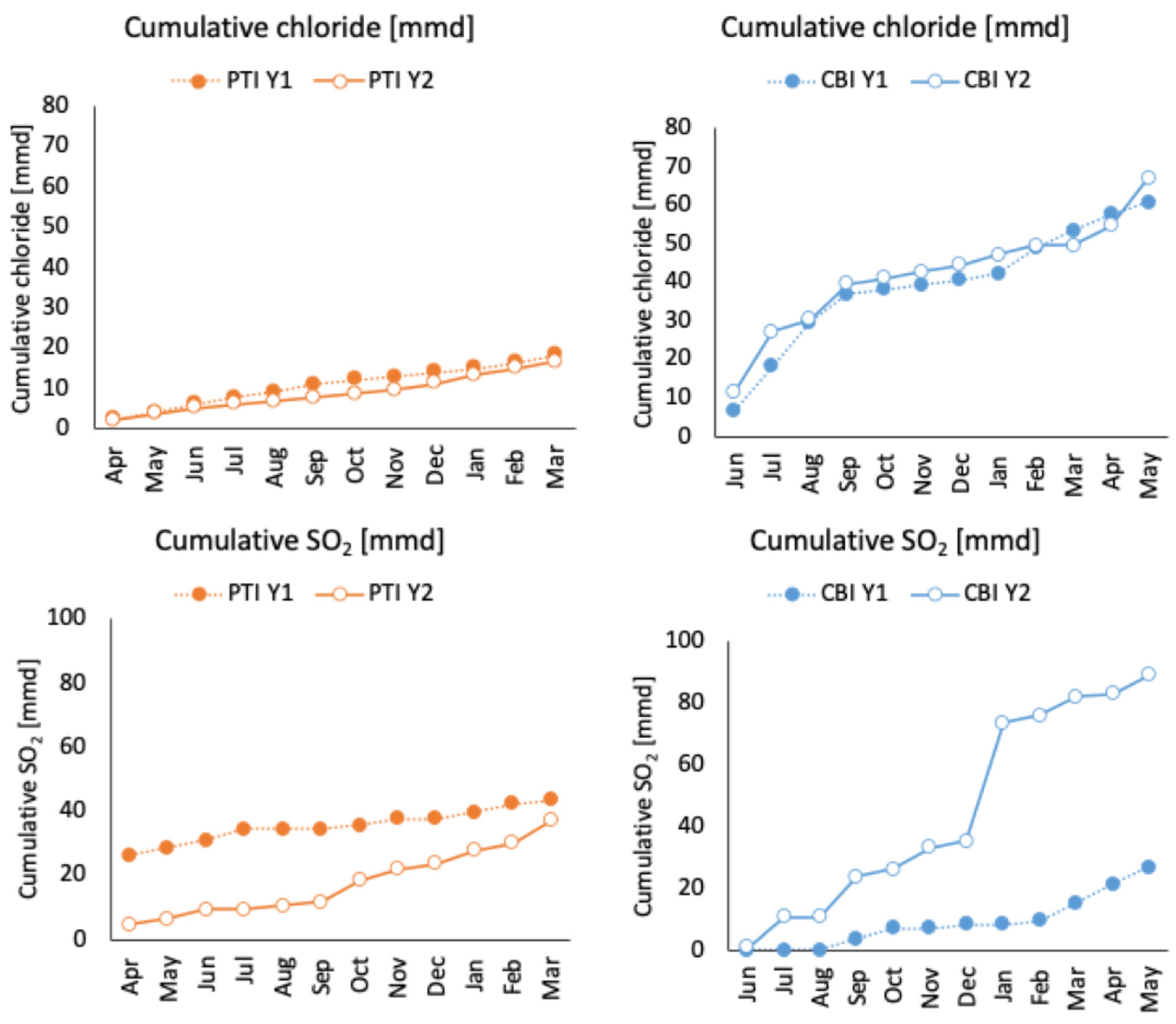
Figure 4 summarizes the cumulative chloride and sulfur dioxide deposition rates. The cumulative chloride deposition rates in PTI were consistently in the range of 20 mmd for both years. In contrast, the cumulative sulfur dioxide deposition rates during the first year were greater than those during the second year. The pattern of cumulative chloride deposition rates in CBI resembles that of cumulative rainfall due to a southwest wind that brought rain and chloride. The cumulative sulfur dioxide deposition rates in the first year were considerably low, while they drastically increased in the second year; the cause of this increase is not yet known. Overall, the ISO 9223 [42] airborne salinity classification in PTI and CBI was S0 and S1, respectively. ISO 9223 sulfur dioxide deposition rate classification in PTI was P2, whereas that in CBI was P2–P3. CBI exhibited higher corrosion severity than PTI in terms of chloride and sulfur dioxide deposition rates, and the monthly average chloride deposition rates throughout the year revealed a larger standard deviation in CBI due to the change in wind direction, where the chloride deposition rates were significantly higher during the wet season’s southwest wind. The monthly average sulfur dioxide deposition rates at both test sites throughout the year exhibited a large standard deviation, implying that sulfur dioxide could originate from highly variable and non-predictable sources.

3.2. Coating Performance Monitored by EIS Sensors

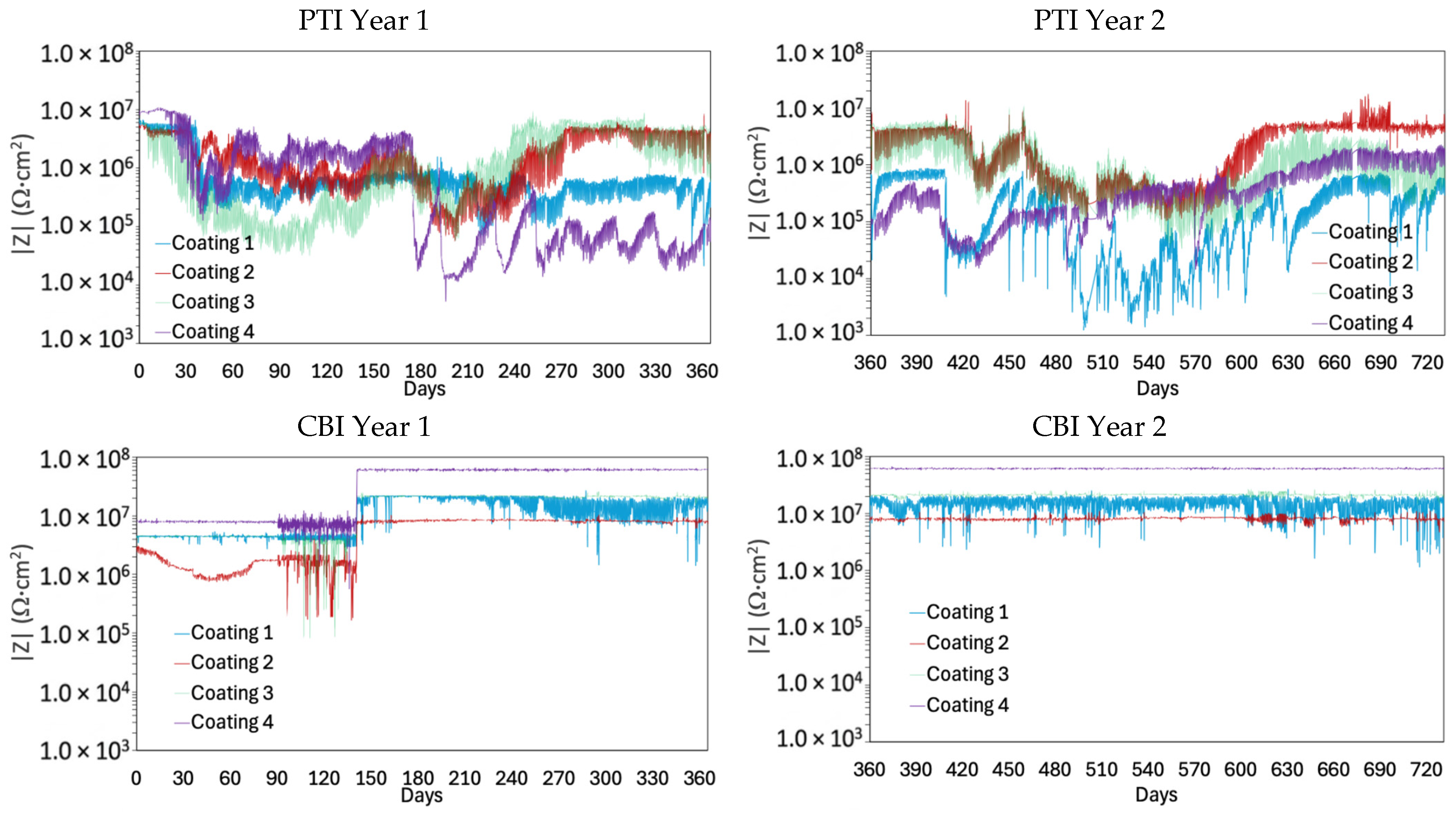
The sensor continuously recorded EIS parameters every hour throughout the 24-month exposure test, and raw impedance data were plotted over exposure time as shown in Figure 5. The daily signal exhibited cyclic behavior, indicating the impedance response to daytime and nighttime weather. Dew point phenomena could lead to moisture uptake in the coating, causing the resistance to decrease and capacitance to increase. The PTI results show that coating impedance at 117 Hz decreased during the first 180 days and then increased as the one-year period progressed; this pattern then repeated during the second year. This pattern aligns with the wet and dry seasons, where impedance decreased during the wet season and increased during the dry season. When the coating absorbed moisture or rain, the water may have reached the substrate, resulting in a corrosion reaction and lowering the impedance. On the other hand, when the coating was dry, the impedance of the coating remained high due to the lower moisture and wetness inside the pores. Although the coating was less conductive or more resistive during the dry season, degradation might occur from other factors, such as UV and accumulated ions [34,43]. In addition, there was variation among Coatings 1–4, where Coating 1 appeared to be the least corrosion-resistant and Coating 2 was the most corrosion-resistant at the end of the second year.
The result of impedance in CBI was different from that in PTI, where the daily cyclic pattern appeared to have smaller amplitudes. In the first year, impedance was stable from the beginning until October; then, the impedance increased instantly by one order of magnitude and stayed constant throughout the second year. All impedances were above 106 Ω·cm2, which implies excellent corrosion protection. Coating 2 had the lowest impedance, while Coating 4 exhibited the highest impedance. Overall, the coatings exposed in CBI exhibited more stable protection than those exposed in PTI.
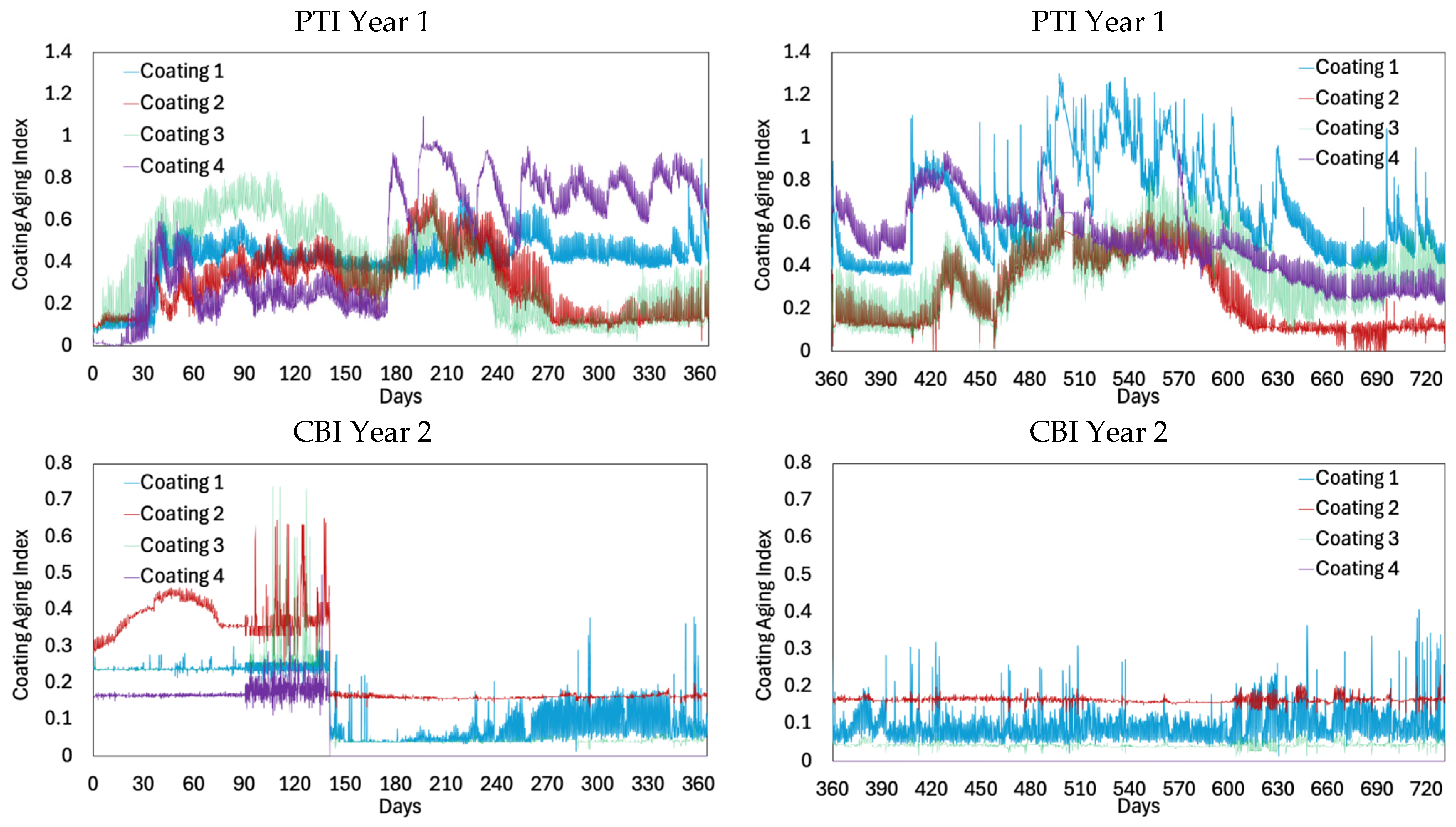
Coating degradation can also be represented by the coating aging index expressed as Equation (7). The raw data of the coating aging index are illustrated in Figure 6. The pattern is the inverse of the impedance value. A larger coating aging index indicates poor corrosion resistance. For Coating 1 PTI, the coating aging index in the second year increased significantly. During the first-year dry season (day 180–390), the epoxy primer might have been degraded by UV exposure, which reduced the mechanical property and chemical compositions [43], where their effects appeared at the beginning of the wet season. For CBI, the coating aging indices were stabilized below 0.5 throughout the test period. Coating 1 showed a daily cyclic increase and decrease pattern without seasonal change, while Coating 4 presented a coating aging index of 0 after 145 days.

3.3. EIS Validation with Coupon Samples

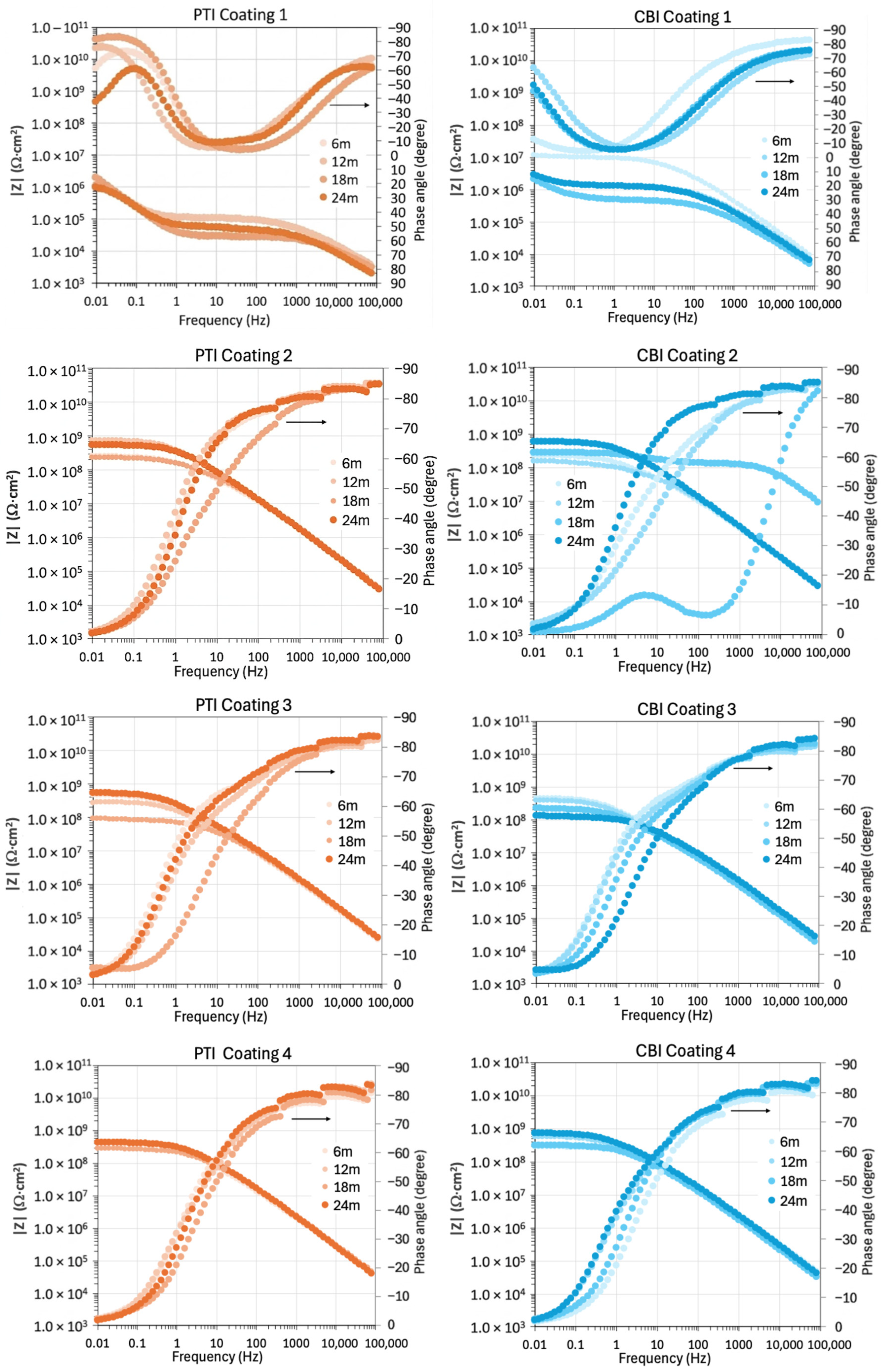
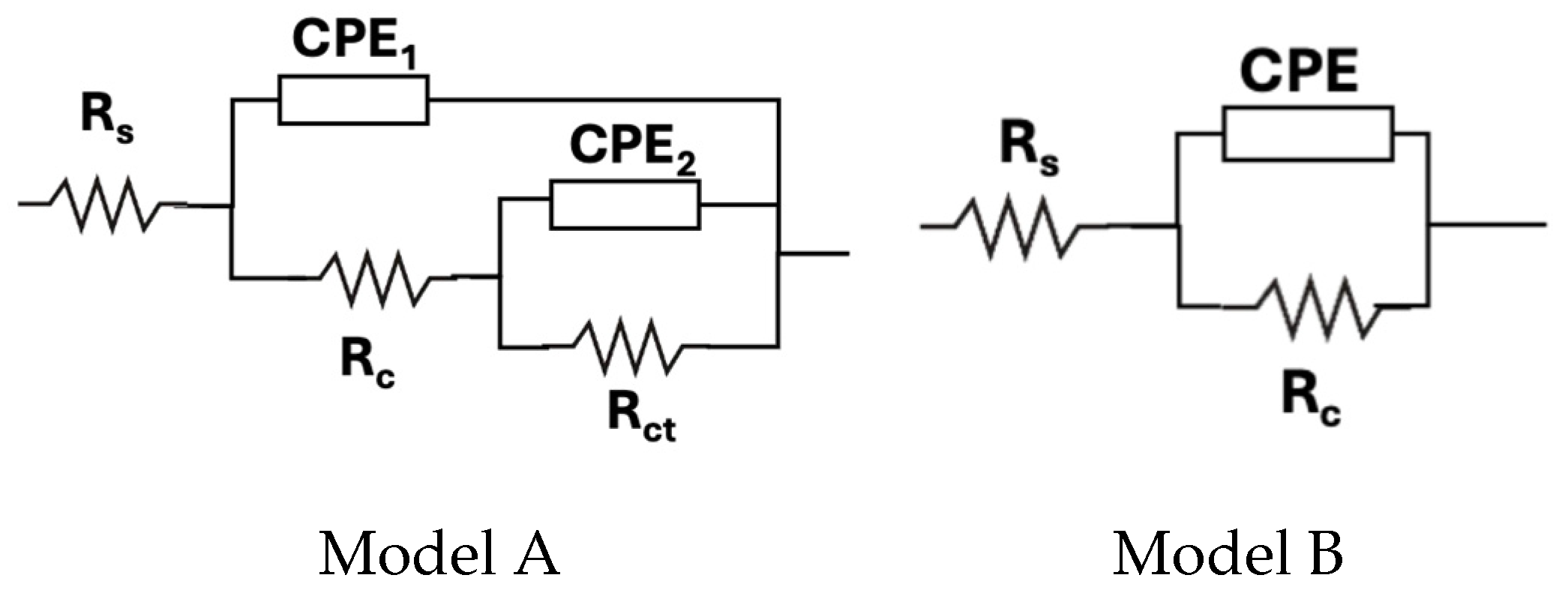
Coated coupon samples exposed in the same locations and periods as the sensors were collected every 6 months, and three coupon copies were collected. EIS measurements were carried out on one copy. In the case of an out-of-range result, the measurement would be repeated. EIS measurements were recorded on the first day of immersion and every 24 h for 7 days to evaluate their corrosion resistance after the field exposure test. Figure 7 illustrates the Bode plots on day 7 of immersion in 3.5% NaCl solution, where those of Coating 1 were distinct from other coatings for both PTI and CBI samples. To correlate the EIS results to physical behaviors, equivalent electrical circuits were fitted by two models as shown in Figure 8. Model A was applied to Coating 1 of PTI and CBI [44,45,46] and Model B was applied to Coatings 2–4 [44,47]. Fitting parameters are summarized in Table 4 and Table 5.
The EIS analysis reveals variation in the durability and barrier performance of the four coating systems over the 24-month study at the two test sites. Rc defines coating resistance; CPE1 is the constant phase element of coating capacitance, which behaves as a non-ideal capacitor indicated by the n1 value; Rct represents the charge transfer resistance at the epoxy/metal interface; and CPE2 is the constant phase element of double-layer capacitance, which behaves as a non-ideal capacitor indicated by the n2 value. Coating 1 (epoxy) exposed in PTI demonstrated immediate and severe failure as early as 6 months and throughout the 24 months. Rc is in the range of 104–105 Ω·cm2, as shown by the plateau impedance at mid-range frequency due to water uptake through the microporosity of epoxy. CPE1 is 10−8 S·sn·cm−2 and n1 is 0.5–0.7, suggesting a porous texture with substantial water penetration. The presence of Rct along with CPE2 indicates that the electrolyte reached the metal substrate. In contrast, Coating 1 exposed in CBI showed 1 to 2 orders of magnitude higher Rc and Rct with a lower CPE value, implying that a lower amount of water was absorbed in the coating and at the epoxy/metal interface. Compared to the 50 μm epoxy-coated aluminum tested in Hainan, China [46], the coating performance in PTI and CBI was more severe than their 7-year results. Direct comparison might not be reliable due to different coating process parameters; however, the average temperature in Thailand is significantly higher, which might cause accelerated coating degradation.
The barrier properties of Coatings 2–4 at both test sites remained excellent over 24 months. A high Rc (108 Ω·cm2) and low CPE1 (10−10 S·sn·cm−2) confirmed intact coating with a dry hydrophobic and minimal ionic path. According to the exposure test at South China Sea [48], a single layer of 80 μm polyurethane coating on aluminum alloy revealed one time constant in the EEC up to only 6 months, and then a second time constant of care transfer appeared. Therefore, it is implied that the epoxy primer and subsequent topcoats effectively increased the barrier resistance for the tropical climate. The result of 18-month Coating 2 exposed in CBI was the only outcome that showed two time constants in the EEC, but the Rc and Rct were exceptionally high with extremely low CPE1 and CPE2, and the coating remained protective. The coating resistance in PTI being less than that in CBI could be caused by two factors: (1) a higher average temperature and (2) a higher monthly rainfall pattern.
The comparison between data from 1 h interval sensors and 6-month interval coupons produced results of varying consistency. Both approaches revealed that Coating 1 degraded the most, and more severely in PTI, and that Coatings 2–4 remained protective over 24 months in CBI. An inconsistency was observed for PTI Coatings 2–4, where the sensor captured a time-dependent variation that was not detectable from coupon samples. As a result, it is considered an advantage that the coated EIS sensor can detect coating impedance instantly on an hourly basis, where its rapid fixed frequency evaluation can identify signs of aging before the coating forms visible defects.
A comparison of the coupon and sensor results is shown in Table 6, where the degree of aging classification—referred to in Table 2—based on |Z|0.1Hz from the coupon test and|Z|117Hz from the coupon test and sensor is given. The classification using |Z|0.1Hz from the coupon test is in good agreement with that using |Z|117Hz from the sensor test for all coatings and test sites. However, |Z|117Hz from the coupon test overestimates the aging class. This discrepancy might be due to the inconsistent quality of the coating on the larger-area coupon compared to the sensor-confined surfaces. Due to the limitation of measuring low-frequency impedance using a small-form EIS sensor, the use of |Z|117Hz in the field test has been validated by |Z|0.1Hz on the coupon exposed under the same conditions. Overall, the proposed sensor demonstrated a reliable capability in assessing coating resistance and degradation, and is potentially applicable for in situ coating performance monitoring.

3.4. Key Degradation Factors

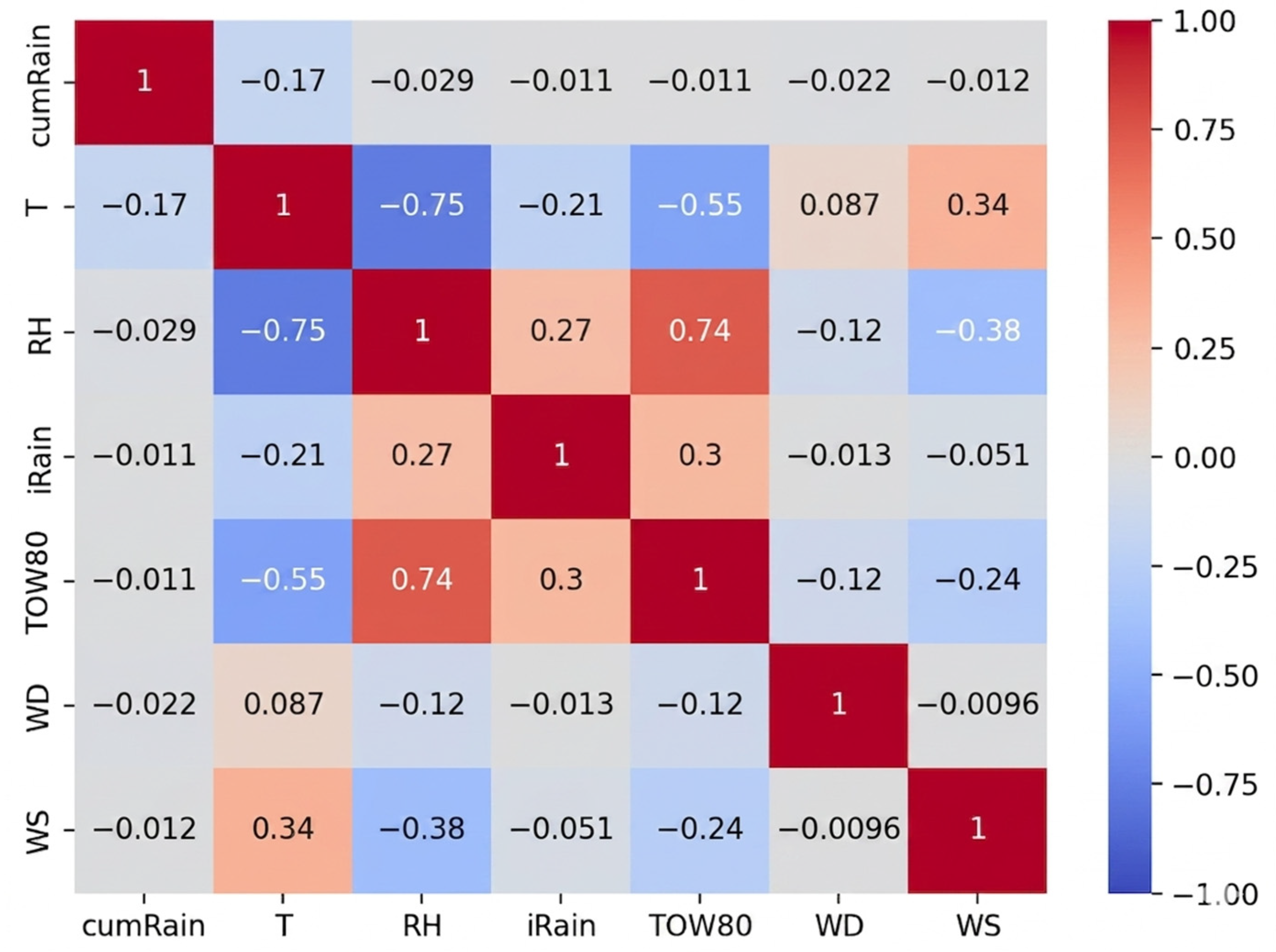
Machine learning is employed to understand the influencing factors on coating degradation. Missing data and error-recorded data were excluded from the dataset. In total, the EIS sensor exposed in PTI consisted of 15,193 rows, whereas that in CBI consisted of 4114 rows. Due to missing several months of weather data, the analysis excluded the CBI dataset and focused only on the PTI dataset. Input features were defined from the existing dataset, and input parameters included temperature (T), relative humidity (RH), incremental rainfall (iRain), wind direction (WD), wind speed (WS), time of wetness (TOW80), and cumulative rain (cumRain). Time of wetness was determined from the total number of hours when RH > 80% at a T above 0 °C. Spearman’s rank correlation was applied to capture the linear and non-linear relationship of input data that are not normally distributed. The results of Spearman’s rank correlation coefficients are depicted in Figure 9.
Cumulative rain and temperature exhibited weak negative correlation, and temperature and relative humidity and time of wetness were negatively correlated—a higher temperature leads to a higher water vapor capacity, causing the relative humidity as well as time of wetness to decrease. Temperature showed a weak positive correlation with wind speed, implying that stronger wind speed occurred in the summer, whereas relative humidity and time of wetness had weak negative correlations with wind speed, suggesting that wind induced evaporation. Finally, relative humidity, rainfall, and time of wetness were positively correlated, acting as indicators of the moisture or water film of the surface.
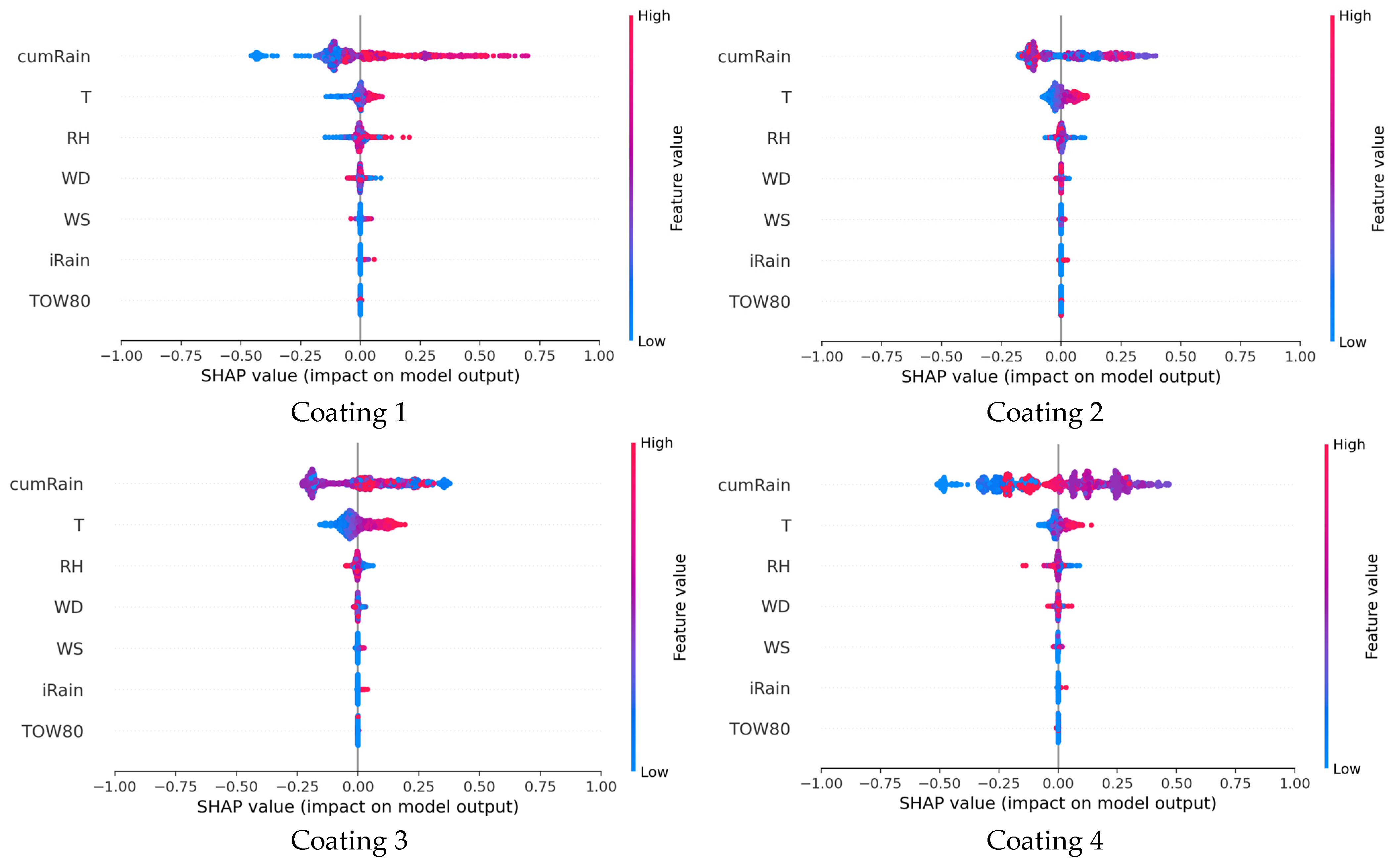
A random forest model was applied to learn the degree of contributing factors (inputs) on the coating aging index (output). The advantage of random forests is that each decision tree is constructed from the best features among random subsets and the results are derived from the average of multiple decision trees. The most important factors were ranked on SHAP value plots, and the results are shown in Figure 10. Accuracy parameters predicted by the top three important factors are concluded in Table 7.
The results indicate that the coating aging index mostly depended on cumulative rainfall, temperature, and relative humidity. A possible reason for this is that the change in coating aging index at current time might be caused by accumulated effects from the previous events, which can be a limitation for impedance sensor output and temporal weather correlation [49]. However, the obtained output data indicated the state of coating protection, which was essential for monitoring the coating performance over time. Prediction model development might be possible with long-term testing and seasonal weather data based on long short-term memory (LSTM) recurrent networks [50].
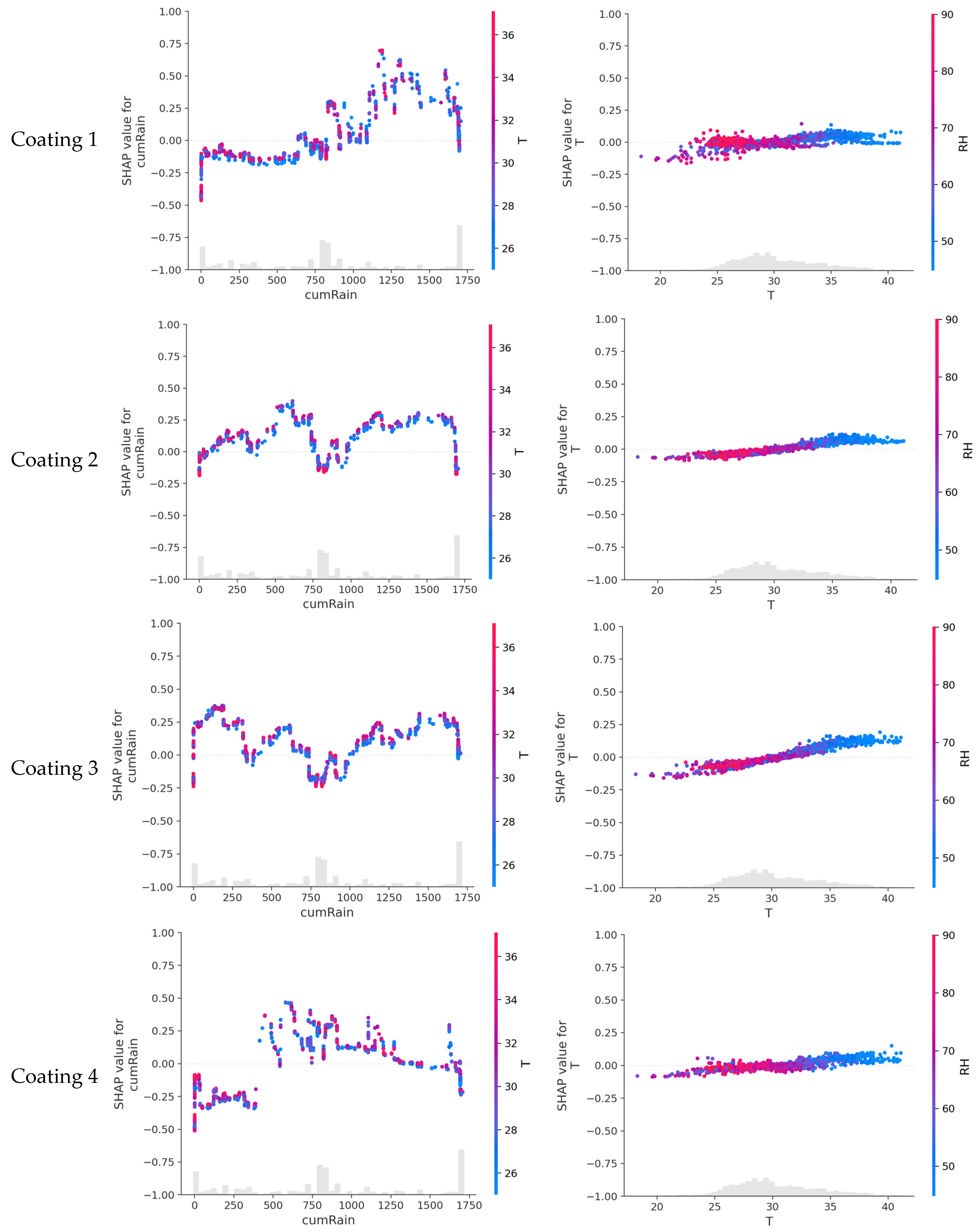
The SHAP dependency plot (Figure 11) illustrates the impact of individual features on the coating aging index from PTI data, offering insights into feature importance and the impact of their influences along with the interaction with the second feature. The color gradient, ranging from blue (low second feature values) to red (high second feature values), further contextualizes the interaction between two features on the direction and strength of the model’s predictions.
During the first year, Coating 1 revealed negative SHAP values until cumulative rainfall reached 850 mm, suggesting that epoxy served as an effective moisture barrier. After that, the SHAP value increased to the positive zone with some sudden drops when the cumulative rain was stable. Coatings 2 and 3 exhibited similar trends. The increased rainfall resulted in a higher coating aging index during 0–850 mm rain accumulation. The moisture and water may have been trapped in the polyurethane and aluminum-powder-containing polyester resin and may have slowly penetrated into the epoxy primer layer. In the middle range of cumulative rainfall (850–1000 mm), the SHAP value was negative. The negative effect occurred during the dry period, as well as the period of transition from the dry to wet season, where there was less rainfall and fewer corrosive ions. After more than 1000 mm cumulative rainfall, the SHAP value was positive again, entering the wet season of the second year. The study in Hainan, China, also reported degradation of polyurethane at the early stage of exposure due to the surface roughness and pigment particles on the coating [46].
Temperature demonstrated a moderate effect, where a higher temperature (low relative humidity) tended to positively influence the coating aging index, though to a lesser extent than the cumulative rainfall, especially for Coatings 2–4. There existed a transition temperature of around 30 °C above which the coating aging index increased with temperature. Although UV radiation was not directly recorded onsite in this study, it is in fact positively related to maximum temperature [35]. Thus, the effect within the high temperature range could be attributed partly to UV radiation, causing synergic thermal and chemical degradation. For Coating 1, the coating aging index was more sensitive to the temperature as observed by the drop in critical temperature to 23 °C. Therefore, it is an indicator of coating degradation at a lower temperature range.
From this analysis, it can be determined that cumulative rainfall, temperature, and relative humidity played important roles in coating degradation. The results explain that the PTI test site was more severe than that in CBI due to a higher monthly rainfall accumulation and higher average temperature during this early stage of degradation. In addition, the ion permeation into the coating is still minimal at this stage. However, as the exposure time increased, it is possible that coatings exposed in CBI will degrade more aggressively due to the contribution of higher sea salt deposition rates.

3.5. Coating System Performance

Based on the sensor and coated coupon exposure test results, Coating 1, which consisted of an epoxy resin primer with a thickness of 50–70 μm, exhibited the lowest low-frequency impedance (<106 Ω·cm2), as expected. Epoxy materials are known to degrade under sunlight due to thermal–oxidative degradation [51]. Coating 1 exhibited highly unstable electrochemical behavior, characterized by substantial and frequent impedance oscillations between 103 Ω⋅cm2 and 5 × 10⁵ Ω⋅cm2. Because this single-layer system lacked overlapping inter-layer barriers, the substrate remained highly active and directly exposed to microclimatic transitions. The dramatic decreases corresponded to periods of high wetness during the second wet season; however, this oscillation was only observed by the sensors. Coating 2 incorporated an additional 30–50 μm thick polyurethane topcoat. Polyurethane provides excellent resistance to UV radiation and photodegradation, resulting in a significant increase in low-frequency impedance (>106 Ω·cm2), as shown in Figure 5, and (109 Ω·cm2), as shown in Figure 7. Although Coating 2 suffered a substantial decrease in impedance between days 30 and 180 due to gradual water absorption and capillary diffusion through the topcoat, it exhibited a pronounced electrochemical recovery (self-healing) after day 200 with increased impedance. Coating 3 included a 10–30 μm thick aluminum-powder-containing polyester resin layer on top. Both sensor and coupon impedance data revealed protective barrier and self-healing properties that were relatively equivalent to Coating 2. While Coating 4 further added a 30–50 μm thick acrylic clear coat, the sensor and coupon results showed different behaviors in PTI. The sensor revealed high initial barrier properties that were reduced drastically around day 170 to below 104 Ω⋅cm2 throughout the dry season. Excessive thickness may induce severe internal residual stresses during curing and environmental transitions [52]. This stress accumulation triggers inter-layer delamination or micro-cracking at the sub-layer boundaries. Continual impedance recovery occurred after day 420–720, reaching 106 Ω·cm2. The coupon EIS spectra could only capture steady low-frequency impedance from 6 to 24 months. The role of the aluminum powder composite layer acts as barrier protection due to the passive aluminum oxide and hydroxide corrosion products [53]. On the other hand, the sensor and coupon results from CBI were in agreement that the fourth layer did not lead to increased impedance; however, the overall performance stability over time improved noticeably, where the low-frequency impedance remained relatively stable during 24-month exposure, and the multi-layer coatings maintained their protective integrity with no major degradation.
The proposed in situ atmospheric monitoring system demonstrates high sensitivity in a tropical monsoon climate. Real-world high-speed train deployment requires specific engineering challenges. Under prolonged high-humidity conditions, sensor stability over extended periods (>5–10 years) requires robust protective packaging to prevent crevice corrosion and damaged or loosened fastening due to dynamic train operation. Together with the durable design of the sensor package, a predictive model using an LSTM approach will be possible with a long-term dataset recorded on this coated sensor framework.

4. Conclusions

An EIS sensor of coated aluminum alloy was exposed in outdoor environments in Pathum Thani (PTI: suburban) and Chon Buri (CBI: mild marine), Thailand. The exposure duration was 24 months, and the conclusions are as follows:
The in situ EIS sensor quantified the initial stages of coating degradation by capturing transient responses to localized temperature and relative humidity cycles. Random forest modeling identified cumulative rainfall as the primary environmental driver of early-phase barrier loss, followed by thermal influence, specifically in PTI, which was characterized by high-amplitude hygroscopic fluctuations.
The conversion of fixed-frequency impedance data (|Z|117Hz) into a normalized coating aging index provided reliable early-stage health monitoring. This index was cross-validated with traditional electrochemical coupons and demonstrated a high correlation with |Z|0.1Hz benchmarks for barrier integrity.
While subsequent pigmented and clear coat layers did not result in a significant increase in total system impedance, they functioned as critical sacrificial barriers. These layers prevented the degradation of the primary epoxy primer by isolating it from direct UV exposure and cyclic moisture saturation.
The sensor system provides real-time coating degradation data for a high-performance coating system, enabling a predictive maintenance program for high-speed trains in Thailand.

Author Contributions

Methodology, X.S.; Investigation, P.W. and P.K.; Formal analysis, W.P.; Visualization, W.P.; Writing—original draft, W.P. and E.V.; Writing—review and editing, W.P. and X.S.; Supervision, X.S. and E.V.; Project administration, C.L.; Resources, J.W.; Funding acquisition, J.W. All authors have read and agreed to the published version of the manuscript.

Funding

This work was financially supported by the Key R&D Program of Shandong Province (2025KJHZ030), China.

Institutional Review Board Statement

Not applicable.

Informed Consent Statement

Not applicable.

Data Availability Statement

The datasets presented in this article are not readily available because the data are part of an ongoing study. Requests to access the datasets should be directed to corresponding authors.

Acknowledgments

The authors are also grateful for administrative and technical supports provided by National Metal and Materials Technology Center (MTEC), National Science and Technology Development Agency (NSTDA), Thailand.

Conflicts of Interest

P.W., P.K., E.V., and W.P. declare no conflicts of interest. X.S. and C.L. are employed by CRRC Qingdao Sifang Co., Ltd. and Qingdao Aokang Quality Inspection Technology Co., Ltd., and J.W. is employed by Qingdao Aokang Quality Inspection Technology Co., Ltd. Their contributions to this work and manuscript were made independently without any requirement, guidance, or input by their employers. They received no financial compensation from any source for the contributions that they made to this scientific work and manuscript.

References

  1. Sun, S.; Zheng, Q.; Li, D.; Wen, J. Long-Term Atmospheric Corrosion Behaviour of Aluminium Alloys 2024 and 7075 in Urban, Coastal and Industrial Environments. Corros. Sci. 2009, 51, 719–727. [Google Scholar] [CrossRef]
  2. Cui, Z.; Ge, F.; Li, X.; Zhu, M.; Xiao, K.; Dong, C.; Wang, X. Mechanistic Studies of Atmospheric Corrosion Behavior of Al and Al-Based Alloys in a Tropical Marine Environment. J. Wuhan Univ. Technol.-Mater. Sci. Ed. 2017, 32, 633–639. [Google Scholar] [CrossRef]
  3. Cui, Z.; Li, X.; Zhang, H.; Xiao, K.; Dong, C.; Liu, Z.; Wang, L. Atmospheric Corrosion Behavior of 2A12 Aluminum Alloy in a Tropical Marine Environment. Adv. Mater. Sci. Eng. 2015, 2015, 163205. [Google Scholar] [CrossRef]
  4. Mariaca, L.; Menchaca, C.; Sarmiento, E.; Sarmiento, O.; Ramirez, J.; Uruchurtu, J. Atmospheric Corrosion Dose/Response Functions from Statistical Data Analysis for Different Sites of Mexico. Innov. Corros. Mater. Sci. Former. Recent Pat. Corros. Sci. 2014, 4, 11–20. [Google Scholar] [CrossRef]
  5. Chico, B.; de la Fuente, D.; Díaz, I.; Simancas, J.; Morcillo, M. Annual Atmospheric Corrosion of Carbon Steel Worldwide. An Integration of ISOCORRAG, ICP/UNECE and MICAT Databases. Materials 2017, 10, 601. [Google Scholar] [CrossRef] [PubMed]
  6. Syed, S. Atmospheric Corrosion of Materials. Emir. J. Eng. Res. 2006, 11, 1–24. [Google Scholar]
  7. Hernández, F.J.; Santana, J.J.; Souto, R.M.; González, S.; Morales, J. Characterization of the Atmospheric Corrosion of Aluminum in Archipelagic Subtropical Environments. Int. J. Electrochem. Sci. 2011, 6, 6567–6580. [Google Scholar] [CrossRef]
  8. Cole, I.S.; Paterson, D.A.; Ganther, W.D.; Neufeld, A.; Hinton, B.; McAdam, G.; McGeachie, M.; Jeffery, R.; Chotimongkol, L.; Bhamornsut, C.; et al. Holistic Model for Atmospheric Corrosion: Part 3—Effect of Natural and Man Made Landforms on Deposition of Marine Salts in Australia and South-East Asia. Corros. Eng. Sci. Technol. 2003, 38, 267–274. [Google Scholar] [CrossRef]
  9. Pongsaksawad, W.; He, J.; Li, C.; Klomjit, P.; Khamsuk, P.; Wang, R.; Wangjina, P.; Sun, X.; Viyanit, E. Atmospheric Corrosion Behaviors of 6000-Series Aluminum Alloy under Tropical Climate Influences of Thailand. Mater. Test. 2023, 65, 924–933. [Google Scholar] [CrossRef]
  10. Fujii, K.; Ohashi, K.; Hashimoto, T.; Hara, N. Atmospheric Corrosivity Estimation at Electrical Control Unit Room by Multichannel Quartz Crystal Microbalance Corrosion Sensors. Mater. Trans. 2012, 53, 412–416. [Google Scholar] [CrossRef][Green Version]
  11. Zakipour, S.; Leygraf, C. Quartz Crystal Microbalance Applied to Studies of Atmospheric Corrosion of Metals. Br. Corros. J. 1992, 27, 295–298. [Google Scholar] [CrossRef]
  12. Benounis, M.; Jaffrezic-Renault, N. Elaboration of an Optical Fibre Corrosion Sensor for Aircraft Applications. Sens. Actuators B Chem. 2004, 100, 1–8. [Google Scholar] [CrossRef]
  13. Bellenger, F.; Mazille, H.; Idrissi, H. Use of Acoustic Emission Technique for the Early Detection of Aluminum Alloys Exfoliation Corrosion. NDT E Int. 2002, 35, 385–392. [Google Scholar] [CrossRef]
  14. Geng, R. Modern Acoustic Emission Technique and Its Application in Aviation Industry. Ultrasonics 2006, 44, e1025–e1029. [Google Scholar] [CrossRef]
  15. Yasri, M.; Lescop, B.; Diler, E.; Gallée, F.; Thierry, D.; Rioual, S. Fundamental Basis of Electromagnetic Wave Propagation in a Zinc Microstrip Lines during Its Corrosion. Sens. Actuators B Chem. 2016, 223, 352–358. [Google Scholar] [CrossRef]
  16. Yasri, M.; Lescop, B.; Diler, E.; Gallée, F.; Thierry, D.; Rioual, S. Monitoring Uniform and Localised Corrosion by a Radiofrequency Sensing Method. Sens. Actuators B Chem. 2018, 257, 988–992. [Google Scholar] [CrossRef]
  17. Diler, E.; Lédan, F.; LeBozec, N.; Thierry, D. Real-Time Monitoring of the Degradation of Metallic and Organic Coatings Using Electrical Resistance Sensors. Mater. Corros. 2017, 68, 1365–1376. [Google Scholar] [CrossRef]
  18. Xia, D.-H.; Ma, C.; Song, S.; Xu, L. Detection of Atmospheric Corrosion of Aluminum Alloys by Electrochemical Probes: Theoretical Analysis and Experimental Tests. J. Electrochem. Soc. 2019, 166, B1000. [Google Scholar] [CrossRef]
  19. Davis, G.D.; Krebs, L.A.; Dacres, C.M. Coating Evaluation and Validation of Accelerated Test Conditions Using an In-Situ Corrosion Sensor. J. Coat. Technol. 2002, 74, 69–74. [Google Scholar] [CrossRef]
  20. Waters, N.; Connolly, R.; Brown, D.; Laskowski, B. Electrochemical Impedance Spectroscopy for Coating Evaluation Using a Micro Sensor. Annu. Conf. PHM Soc. 2014, 6. [Google Scholar] [CrossRef]
  21. Frias-Cacho, X.; Castro, M.; Nguyen, D.-D.; Grolleau, A.-M.; Feller, J.-F. A Review of In-Service Coating Health Monitoring Technologies: Towards “Smart” Neural-Like Networks for Condition-Based Preventive Maintenance. Coatings 2022, 12, 565. [Google Scholar] [CrossRef]
  22. Kittel, J.; Celati, N.; Keddam, M.; Takenouti, H. New Methods for the Study of Organic Coatings by EIS: New Insights into Attached and Free Films. Prog. Org. Coat. 2001, 41, 93–98. [Google Scholar] [CrossRef]
  23. Allahar, K.N.; Upadhyay, V.; Bierwagen, G.P.; Gelling, V.J. Monitoring of a Military Vehicle Coating under Prohesion Exposure by Embedded Sensors. Prog. Org. Coat. 2009, 65, 142–151. [Google Scholar] [CrossRef]
  24. Hack, H.P.; Scully, J.R. Defect Area Determination of Organic Coated Steels in Seawater Using the Breakpoint Frequency Method. J. Electrochem. Soc. 1991, 138, 33. [Google Scholar] [CrossRef]
  25. Mahdavian, M.; Attar, M.M. Another Approach in Analysis of Paint Coatings with EIS Measurement: Phase Angle at High Frequencies. Corros. Sci. 2006, 48, 4152–4157. [Google Scholar] [CrossRef]
  26. Feng, Z.; Frankel, G.S. Evaluation of Coated Al Alloy Using the Breakpoint Frequency Method. Electrochimica Acta 2016, 187, 605–615. [Google Scholar] [CrossRef]
  27. Xu, Z.; Zhou, H.; Lu, S.; Zhang, C.; Gao, C.; Xu, F. Methods for Evaluation of Coating Performance Based on AC Impedance Technique. Chin. J. Ship Res. 2020, 15, 110–116. [Google Scholar] [CrossRef]
  28. Fan, C.; Liu, Y.; Yin, X.; Shi, J.; Dilger, K. Electrochemical Behavior and Interfacial Delamination of a Polymer-Coated Galvanized Steel System in Acid Media. ACS Omega 2021, 6, 20331–20340. [Google Scholar] [CrossRef] [PubMed]
  29. Yasuda, H.; Yu, Q.S.; Chen, M. Interfacial Factors in Corrosion Protection: An EIS Study of Model Systems. Prog. Org. Coat. 2001, 41, 273–279. [Google Scholar] [CrossRef]
  30. De Rosa, R.L.; Earl, D.A.; Bierwagen, G.P. Statistical Evaluation of EIS and ENM Data Collected for Monitoring Corrosion Barrier Properties of Organic Coatings on Al-2024-T3. Corros. Sci. 2002, 44, 1607–1620. [Google Scholar] [CrossRef]
  31. Sanchez-Amaya, J.M.; Osuna, R.M.; Bethencourt, M.; Botana, F.J. Monitoring the Degradation of a High Solids Epoxy Coating by Means of EIS and EN. Prog. Org. Coat. 2007, 60, 248–254. [Google Scholar] [CrossRef]
  32. Adhikari, S.; Unocic, K.A.; Zhai, Y.; Frankel, G.S.; Zimmerman, J.; Fristad, W. Hexafluorozirconic Acid Based Surface Pretreatments: Characterization and Performance Assessment. Electrochim. Acta 2011, 56, 1912–1924. [Google Scholar] [CrossRef]
  33. Ma, H.; Qin, P.; Cui, Y.; Liu, R.; Ke, P.; Wang, F.; Liu, L. Prediction of Multilayer Cr/GLC Coatings Degradation in Deep-Sea Environments Based on Integrated Mechanistic and Machine Learning Models. Corros. Sci. 2023, 224, 111513. [Google Scholar] [CrossRef]
  34. Li, Y.; Fu, Z.; Yu, X.; Jin, Z.; Gong, H.; Ma, L.; Li, X.; Zhang, D. Developing an Atmospheric Aging Evaluation Model of Acrylic Coatings: A Semi-Supervised Machine Learning Algorithm. Int. J. Miner. Metall. Mater. 2024, 31, 1617–1627. [Google Scholar] [CrossRef]
  35. Chen, W.; Ma, L.; Li, Y.; Wu, D.; Zhou, K.; Wang, J.; Chen, Z.; Guo, X.; Li, Z.; Chowwanonthapunya, T.; et al. Prediction of Coating Degradation Based on “Environmental Factors–Physical Property–Corrosion Failure” Two-Stage Machine Learning. npj Mater. Degrad. 2025, 9, 67. [Google Scholar] [CrossRef]
  36. Hijmans, R.J.; Guarino, L.; Mathur, P. DIVA-GIS. Available online: https://diva-gis.org/docs/DIVA-GIS_manual_7.pdf (accessed on 16 April 2026).
  37. Southeastasia-Countries-Map.Jpg (1000 × 764). Available online: https://www.freeworldmaps.net/asia/southeastasia/southeastasia-countries-map.jpg (accessed on 16 April 2026).
  38. ISO 9225:2012; Corrosion of Metals and Alloys—Corrosivity of Atmospheres—Measurement of Environmental Parameters Affecting Corrosivity of Atmospheres. ISO: Geneva, Switzerland, 2012.
  39. GB/T 1766-2008 (GBT 1766); Paints and Varnishes—Rating Schemes of Degradation of Coats. China Standards Press: Beijing, China, 2008.
  40. National Institute for Materials Science—Welcome to pyZwx Website. Available online: https://www.nims.go.jp/pyZwx/en/index.html (accessed on 10 April 2026).
  41. Lundberg, S.M.; Erion, G.; Chen, H.; DeGrave, A.; Prutkin, J.M.; Nair, B.; Katz, R.; Himmelfarb, J.; Bansal, N.; Lee, S.-I. From Local Explanations to Global Understanding with Explainable AI for Trees. Nat. Mach. Intell. 2020, 2, 56–67. [Google Scholar] [CrossRef]
  42. ISO 9223:2012; Corrosion of Metals and Alloys—Corrosivity of Atmospheres—Classification, Determination and Estimation. ISO: Geneva, Switzerland, 2012.
  43. Ci, S.; Wang, B.; Di, C.; Wang, M.; Zhu, B.; Qiao, K. Effect of Ultraviolet Aging on Properties of Epoxy Resin and Its Pultruded Fiber-Reinforced Composite. Polymers 2025, 17, 294. [Google Scholar] [CrossRef]
  44. Duan, S.; Lin, X.; Dou, B.; Yang, H.; Zhang, Y.; Emori, W.; Gao, X.; Fang, Z. Triton X-100 Assisted Composite of Fluorinated Graphene and ZIF-8 for Epoxy Coatings with High Corrosion and Wear Resistance on Carbon Steel. Prog. Org. Coat. 2022, 171, 107047. [Google Scholar] [CrossRef]
  45. Yuan, X.; Yue, Z.F.; Liu, Z.Q.; Wen, S.F.; Li, L.; Feng, T. Comparison of the Failure Mechanisms of Silicone-Epoxy Hybrid Coatings on Type A3 Mild Steel and 2024 Al-Alloy. Prog. Org. Coat. 2016, 90, 101–113. [Google Scholar] [CrossRef]
  46. Zhang, T.; Zhang, T.; He, Y.; Zhang, S.; Ma, B.; Gao, Z. Long-Term Atmospheric Aging and Corrosion of Epoxy Primer-Coated Aluminum Alloy in Coastal Environments. Coatings 2021, 11, 237. [Google Scholar] [CrossRef]
  47. Yuan, X.; Yu, R.; Du, Y.; Lei, B. EIS Study on the Barrier Properties of Silicone-Epoxy Coatings Enhanced by Different PDA-BN@ZnO Nano-Pigment Contents. Corros. Sci. 2024, 228, 111810. [Google Scholar] [CrossRef]
  48. Liu, J.; Li, Z.; Zhang, L.; Hou, J.; Lu, Z.; Zhang, P.; Wang, B.; Jin, N. Degradation Behavior and Mechanism of Polyurethane Coating for Aerospace Application under Atmospheric Conditions in South China Sea. Prog. Org. Coat. 2019, 136, 105310. [Google Scholar] [CrossRef]
  49. Wang, B.; Cheng, X.; Wang, L.; Li, Z.; Liu, C.; Zhang, D.; Li, X. Big Data Mining of Corrosion for Weathering Steel in Marine Atmospheric Environments: Discovery and Mechanism of Critical Temperature Influencing Corrosion Resistance. J. Mater. Sci. Technol. 2025, 256, 221–235. [Google Scholar] [CrossRef]
  50. Ruiz, D.; Casas, A.; Escobar, C.A.; Perez, A.; Gonzalez, V. Advanced Machine Learning Techniques for Corrosion Rate Estimation and Prediction in Industrial Cooling Water Pipelines. Sensors 2024, 24, 3564. [Google Scholar] [CrossRef]
  51. Awaja, F.; Pigram, P.J. Surface Molecular Characterisation of Different Epoxy Resin Composites Subjected to UV Accelerated Degradation Using XPS and ToF-SIMS. Polym. Degrad. Stab. 2009, 94, 651–658. [Google Scholar] [CrossRef]
  52. Hadi, J.H. Investigation of Residual Stress in Epoxy-Based Coatings Using X-Ray and FEM-ANN Techniques. Phys. Sci. 2023, 65, 54–61. [Google Scholar] [CrossRef]
  53. Liang, Y.; Liu, F.-C.; Nie, M.; Zhao, S.; Lin, J.; Han, E.-H. Influence of Nano-Al Concentrates on the Corrosion Resistance of Epoxy Coatings. J. Mater. Sci. Technol. 2013, 29, 353–358. [Google Scholar] [CrossRef]
Figure 1. Test station map (source: Southeast Asia map [37]).
Coatings 16 00667 g001
Figure 2. Test rack and EIS sensor exposed in CBI. The sensor was fabricated from aluminum alloy (gray) as working electrodes (WEs) and counter electrodes (CEs), which were electronically separated by resin (orange). Then, the sensor was coated with single- to multi-layer polymer coatings (blue).
Coatings 16 00667 g002
Figure 3. Weather parameters during 24-month exposure test in PTI and CBI.
Coatings 16 00667 g003aCoatings 16 00667 g003b
Figure 4. Cumulative chloride and sulfur dioxide deposition rates during 24-month exposure test in PTI and CBI.
Coatings 16 00667 g004
Figure 5. Recorded impedance at 117 Hz of Coating 1–4 sensors.
Coatings 16 00667 g005
Figure 6. Coating aging index results from the sensors as calculated by Equation (7).
Coatings 16 00667 g006
Figure 7. Bode plots of coated coupons exposed for 6, 12, 18, and 24 months. (The arrow sign “→” indicates the secondary y-axis plots.)
Coatings 16 00667 g007
Figure 8. Equivalent electrical circuit models.
Coatings 16 00667 g008
Figure 9. Spearman’s rank correlation coefficients of PTI input parameters.
Coatings 16 00667 g009
Figure 10. SHAP value ranking for each coating type.
Coatings 16 00667 g010
Figure 11. SHAP dependency plots for Coatings 1 to 4. The x-axis displays the feature value, the y-axis displays the corresponding SHAP value, the secondary y-axis displays the interacting features from low to high in gradient colors, and bar plots display the frequency of the feature value.
Coatings 16 00667 g011
Table 1. Information of exposure sites.
No.IDGPSCorrosivity
(Carbon Steel)
Distance from the Sea (km)
1.Pathum Thani (PTI)14°04′45.6″ N 100°36′08.0″ EC264
2.Chon Buri (CBI)13°16′29″ N 100°55′28″ EC2–C30.4
Table 2. Aging discrimination grading criteria based on coated fixed-frequency impedance.
Evaluation Criteria
Degree of Aging
ClassificationZ117Hz[Ω·cm2]
Intact1106~109
Mid-aged stage of aging2105~106
Aging failure3104~105
Table 3. Annual average values.
PTICBI
Year 1Year 2Year 1Year 2
T [°C]30.40 ± 1.2629.84 ± 1.8729.87 ± 1.2429.28 ± 1.20
RH [%]68.21 ± 4.4768.53 ± 6.8376.33 ± 5.0574.66 ± 5.66
Total rainfall [mm]8389486721052
Cl [mmd]1.53 ± 0.481.38 ± 0.475.07 ± 3.736.11 ± 5.14
SO2 [mmd]3.62 ± 7.272.50 ± 1.692.23 ± 2.507.43 ± 10.52
Table 4. Equivalent electrical circuit from EIS results conducted on coupon samples exposed in PTI.
TypeMonthsRc
Ω·cm2
Rct
Ω·cm2
CPE1
S·sn·cm−2
n1CPE2
S·sn·cm−2
n2|Z| at 0.1 Hz
Ω·cm2
Coating 163.26 × 1045.00 × 1061.97 × 10−80.728366.11 × 10−60.928492.39 × 105
121.20 × 1051.24 × 1073.05 × 10−80.694566.43 × 10−60.925382.67 × 105
182.68 × 1048.81 × 1072.85 × 10−70.508116.53 × 10−60.988442.33 × 105
245.17 × 1041.44 × 1064.34 × 10−80.710056.56 × 10−60.875842.62 × 105
Coating 262.55 × 10⁸ 9.07 × 10−100.71491  2.35 × 10⁸
127.51 × 10⁸ 4.15 × 10−100.79546  6.89 × 10⁸
182.29 × 10⁸ 8.59 × 10−100.69564  2.14 × 10⁸
245.35 × 10⁸ 3.98 × 10−100.8023  5.06 × 10⁸
Coating 364.67 × 10⁸ 9.87 × 10−100.76475  4.05 × 10⁸
122.85 × 10⁸ 1.06 × 10−90.75633  2.64 × 10⁸
188.41 × 10⁷ 1.21 × 10−90.70845  8.18 × 10⁷
245.40 × 10⁸ 7.46 × 10−100.76226  4.79 × 10⁸
Coating 464.10 × 10⁸ 5.71 × 10−100.74219  3.77 × 10⁸
124.69 × 10⁸ 5.48 × 10−100.71691  4.33 × 10⁸
182.71 × 10⁸ 4.88 × 10−100.73259  2.62 × 10⁸
244.28 × 10⁸ 4.05 × 10−100.76482  4.06 × 10⁸
Table 5. Equivalent electrical circuit from EIS results conducted on coupon samples exposed in CBI.
TypeMonthsRc
Ω·cm2
Rct
Ω·cm2
CPE1
S·sn·cm−2
n1CPE2
S·sn·cm−2
n2|Z| at 0.1 Hz
Ω·cm2
Coating 167.81 × 1058.22 × 1084.17 × 10−80.733292.38 × 10−50.623921.01 × 107
121.28 × 1061.37 × 1098.11 × 10−90.707545.01 × 10−60.808571.41 × 106
184.62 × 1058.81 × 1071.51 × 10−80.715674.67 × 10−60.80936.75 × 106
241.11 × 1064.37 × 1077.88 × 10−90.740744.04 × 10−60.804041.29 × 106
Coating 262.30 × 10⁸ 1.11 × 10−90.69226  2.10 × 10⁸
121.58 × 10⁸ 1.63 × 10−90.59694  1.38 × 10⁸
181.30 × 1081.50 × 1088.17 × 10−130.893248.09 × 10−100.692942.74 × 108
245.94 × 10⁸ 3.93 × 10−100.79738  5.59 × 10⁸
Coating 364.72 × 10⁸ 9.67 × 10−100.76177  4.10 × 10⁸
123.99 × 10⁸ 1.11 × 10−90.74823  3.47 × 10⁸
182.21 × 10⁸ 1.29 × 10−90.74373  2.02 × 10⁸
241.24 × 10⁸ 9.62 × 10−100.72863  1.19 × 10⁸
Coating 462.79 × 10⁸ 4.73 × 10−100.73679  2.66 × 10⁸
125.87 × 10⁸ 5.95 × 10−100.71951  5.24 × 10⁸
183.38 × 10⁸ 5.35 × 10−100.73776  3.30 × 10⁸
247.45 × 10⁸ 4.80 × 10−100.73809  6.72 × 10⁸
Table 6. Degree of aging classification (1–3) comparison from coupons and sensors.
CoatingsPTI-Sensor
|Z|117Hz
PTI-Coupon
|Z|0.1Hz
PTI-Coupon
|Z|117Hz
CBI-Sensor
|Z|117Hz
CBI-Coupon
|Z|0.1Hz
CBI-Coupon
|Z|117Hz
1223113
2112112
3112112
Table 7. Accuracy parameters from random forest model.
StationPTI
Coating1234
MAE0.03390.02010.02760.0294
MSE0.00330.00110.00170.0023
R20.93000.95750.95450.9585
Cross-validation R20.89270.94130.93840.9439
Disclaimer/Publisher’s Note: The statements, opinions and data contained in all publications are solely those of the individual author(s) and contributor(s) and not of MDPI and/or the editor(s). MDPI and/or the editor(s) disclaim responsibility for any injury to people or property resulting from any ideas, methods, instructions or products referred to in the content.