Coupled Modeling of Vehicle Fleet Renewal Policies and Urban Environmental Corrosion: Dynamic Emission Trajectories and Infrastructure Coating Durability

 ,
,
Highlights
- Aggressive subsidies drive fleets to heavy NEVs, causing severe upstream emission spikes.
- This emission inversion sharply raises SO2 and NOx, severely worsening urban corrosivity.
- Induced acidic stress prematurely cuts protective coating lifespans by 1.3 to 2.3 years.
- A subsidy of 8000–10,500 CNY optimally balances climate and material goals.
- Transport decarbonization must integrate material durability and corrosion metrics.
- Overlooking coating degradation leads to massive, unplanned infrastructure repair costs.
- Uniform incentives should be replaced by differentiated, life-cycle-based subsidies.
- Policy formulation requires a holistic surface-to-system engineering perspective.
Abstract
1. Introduction
1.1. Research Background and Significance
1.2. Literature Review
1.2.1. Research on LCA Models in the Transportation Sector
1.2.2. Research on Discrete Choice Models in the Transportation Sector
1.2.3. Research on Environmental Corrosion and the Durability of Infrastructure Coatings
1.2.4. Literature Commentary
1.3. Research Scope
2. Model Construction and Research Methods
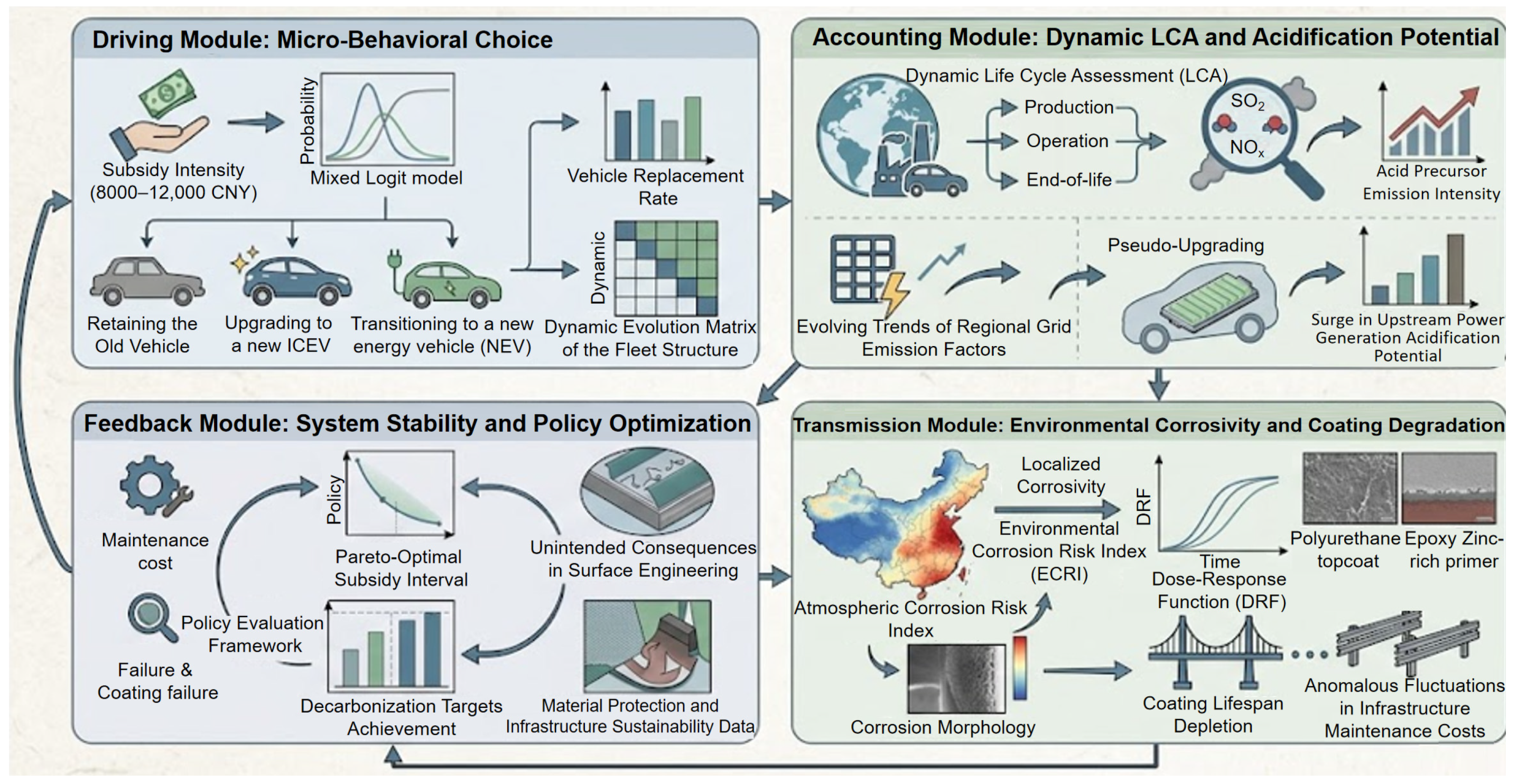
2.1. Integrated Framework for Policy-Induced Environmental Corrosivity and Coating Durability Assessment
2.1.1. Driving Module: Micro-Behavioral Choice
2.1.2. Accounting Module: Dynamic LCA and Acidification Potential
2.1.3. Transmission Module: Environmental Corrosivity and Coating Degradation
2.1.4. Feedback Module: System Stability and Policy Optimization
2.2. Core Assumptions and System Boundary
2.2.1. System Boundary and Scope
2.2.2. Core Research Assumptions
2.3. Empirical Data Acquisition and Parameter Initialization
2.4. Mathematical Modeling and Formulation
2.4.1. The Driving Module: Mixed Logit Model for Fleet Evolution
2.4.2. The Accounting Module: Dynamic AP
2.4.3. The Transmission Module: Dose–Response Function for Coating Degradation
2.4.4. The Feedback Module: Pareto Optimization for Subsidy Strategy
2.5. Scenario Setting and Simulation Parameters
2.5.1. Policy-Driven Environmental Stress Scenarios
2.5.2. Dynamic Atmospheric and Grid Parameters
2.5.3. Coating Material Properties and Failure Thresholds
2.6. Simulation Implementation and Sensitivity Setup
3. Data Analysis and Empirical Results
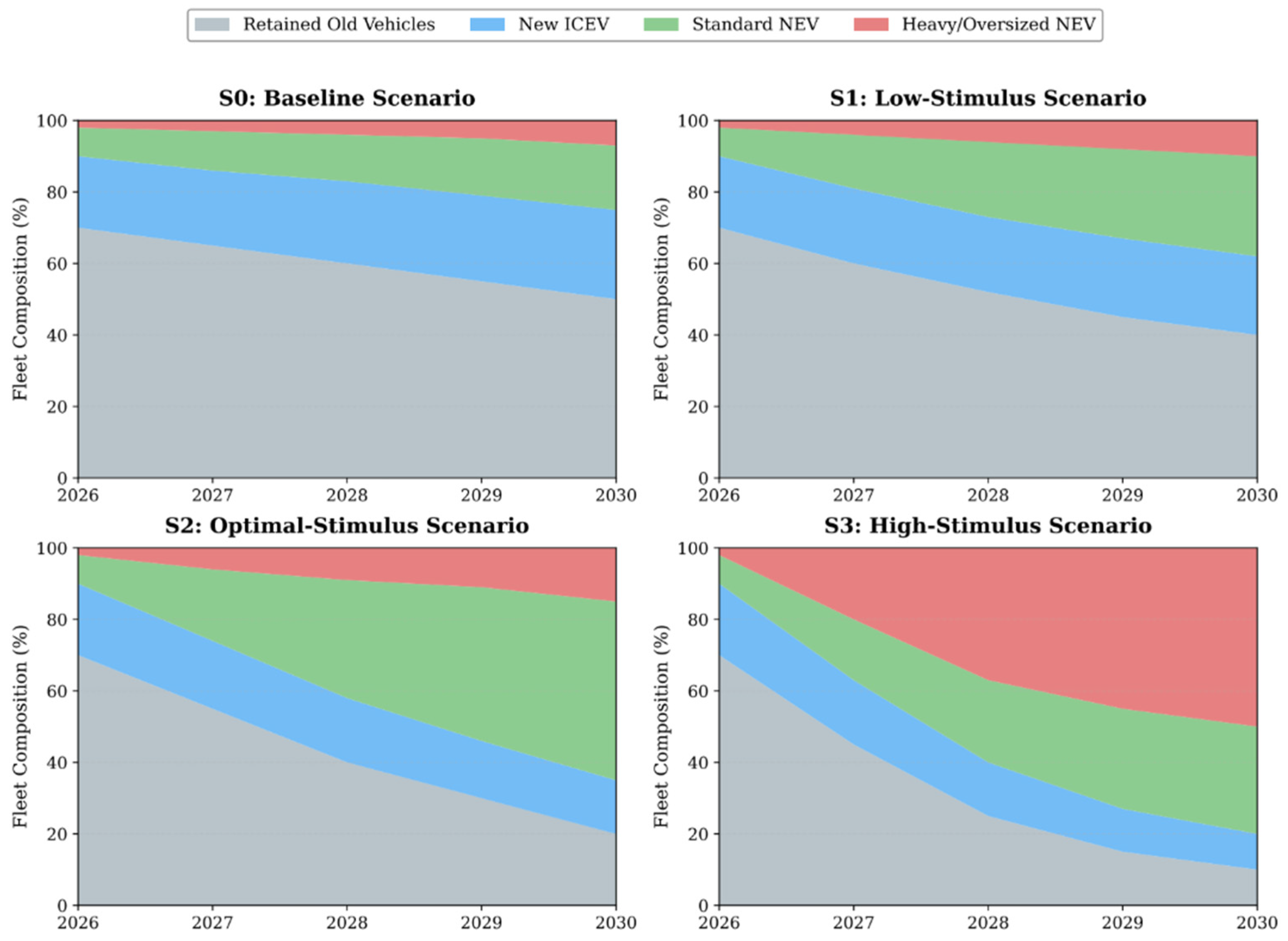
3.1. Behavioral Drivers and Fleet Transition Dynamics
3.1.1. Mixed Logit Model Estimation and Preference Heterogeneity
3.1.2. Subsidy-Driven Fleet Evolution and the Pseudo-Upgrading Effect
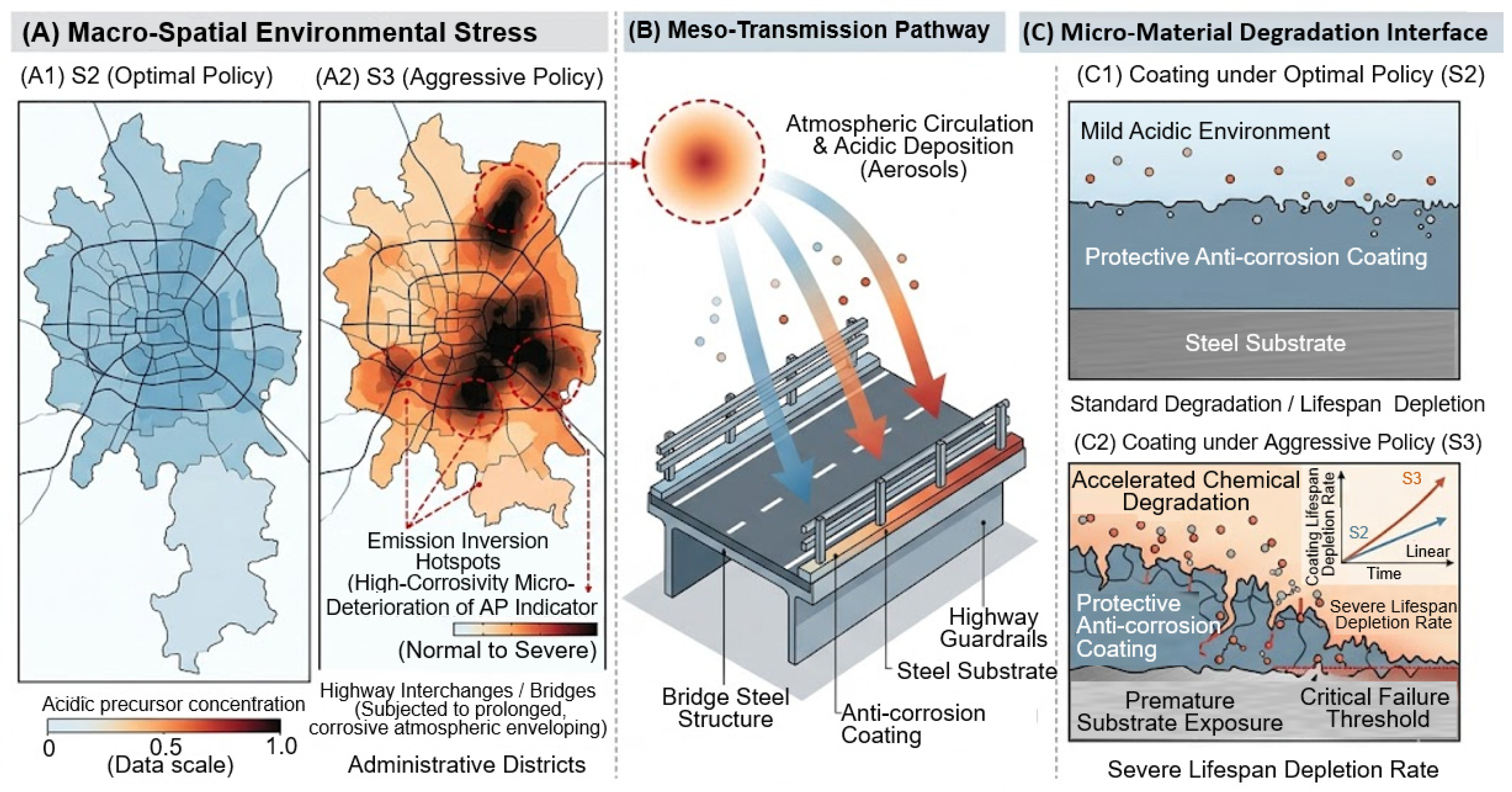
3.1.3. Transmission Mechanism from Micro-Behavior to Macro-Environmental Stress
3.2. Spatiotemporal Evolution of Atmospheric AP
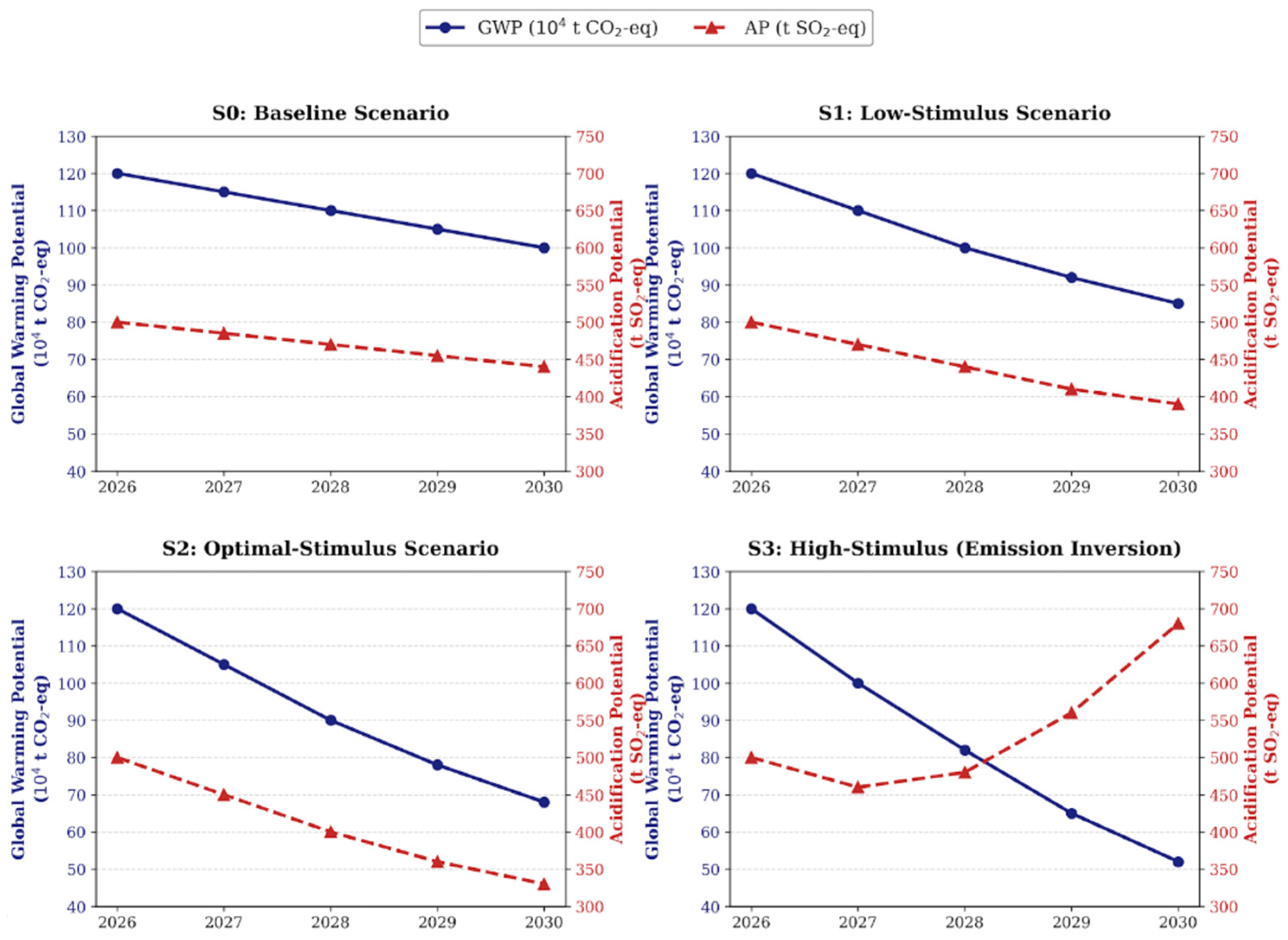
3.2.1. Policy-Induced Decoupling of Life-Cycle Emissions
3.2.2. The Emission Inversion Phenomenon Under Aggressive Subsidies
3.2.3. Latent Environmental Effects on Infrastructure Corrosivity
3.3. Quantitative Assessment of Infrastructure Coating Degradation
3.3.1. Translating Acidic Stress to Surface Degradation Kinetics
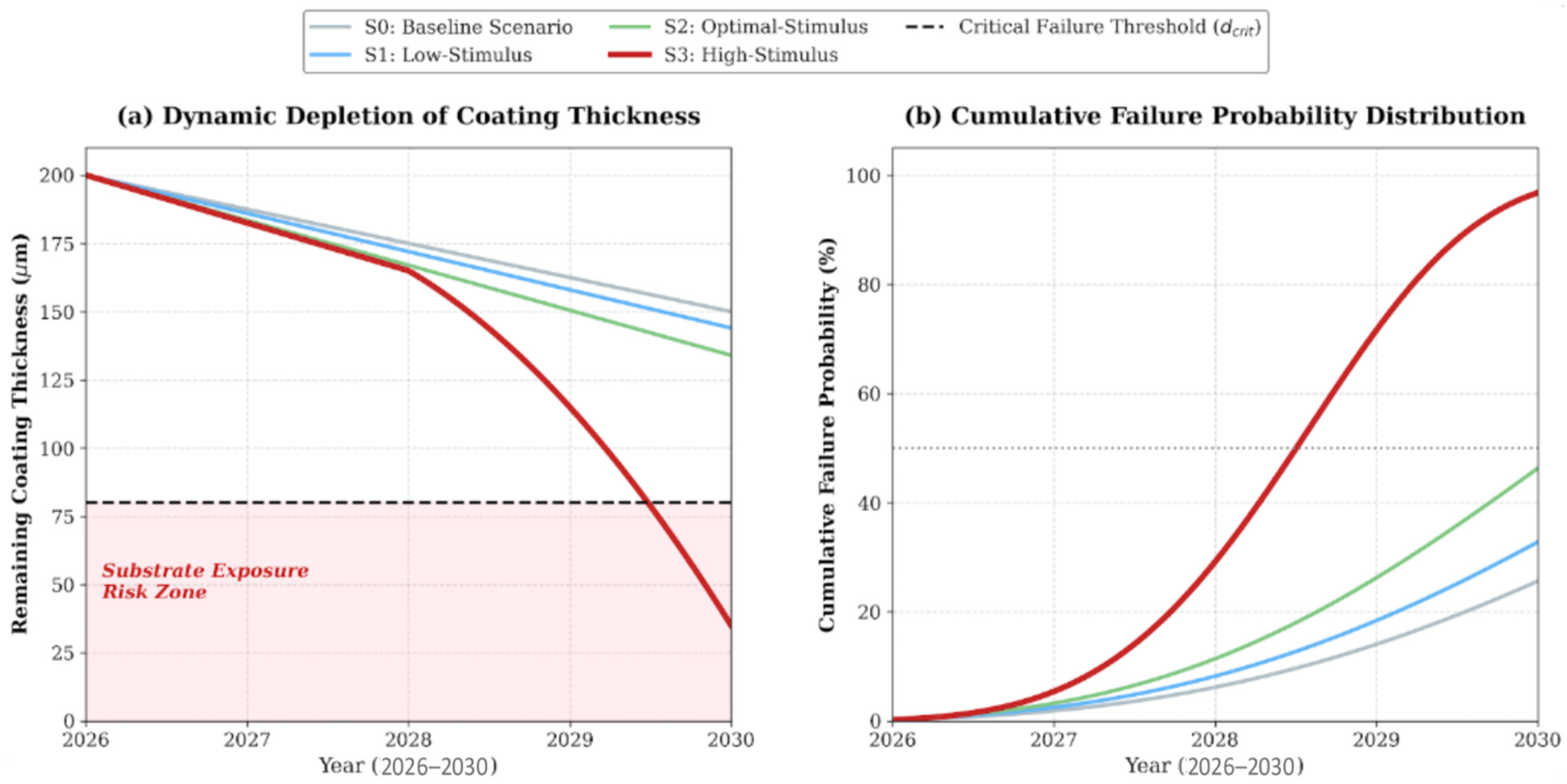
3.3.2. Spatiotemporal Evolution of Coating Thickness and Failure Probability
3.3.3. Remaining Lifespan Assessment and Premature Failure
3.4. Model Validation and Methodological Uncertainties
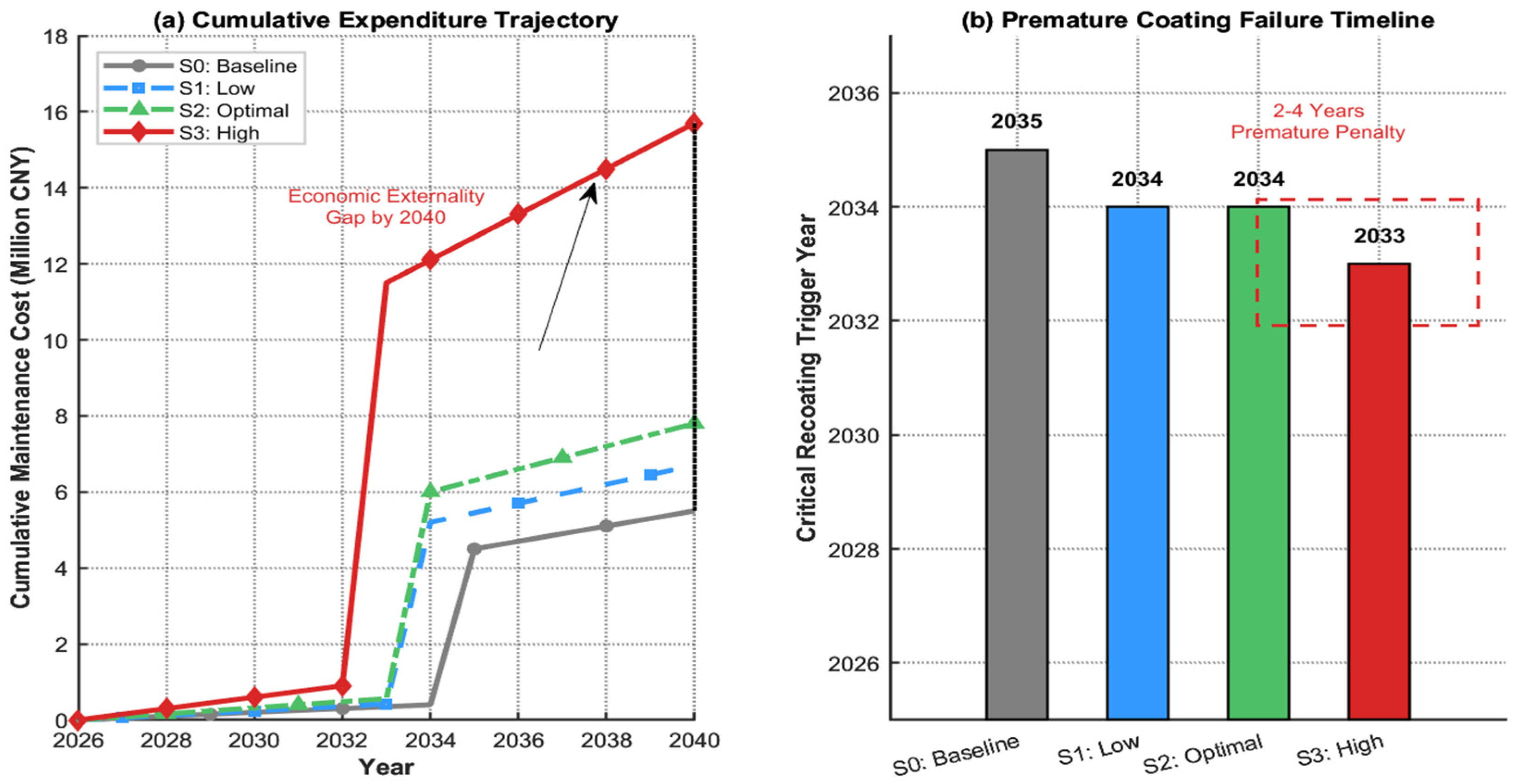
3.5. Impact on Maintenance Cycles and Economic Externality
3.5.1. Monetization of Material Degradation and Maintenance Triggers
3.5.2. Quantification of Premature Recoating Expenditures
3.5.3. Hidden Economic Externalities in Policy Evaluation
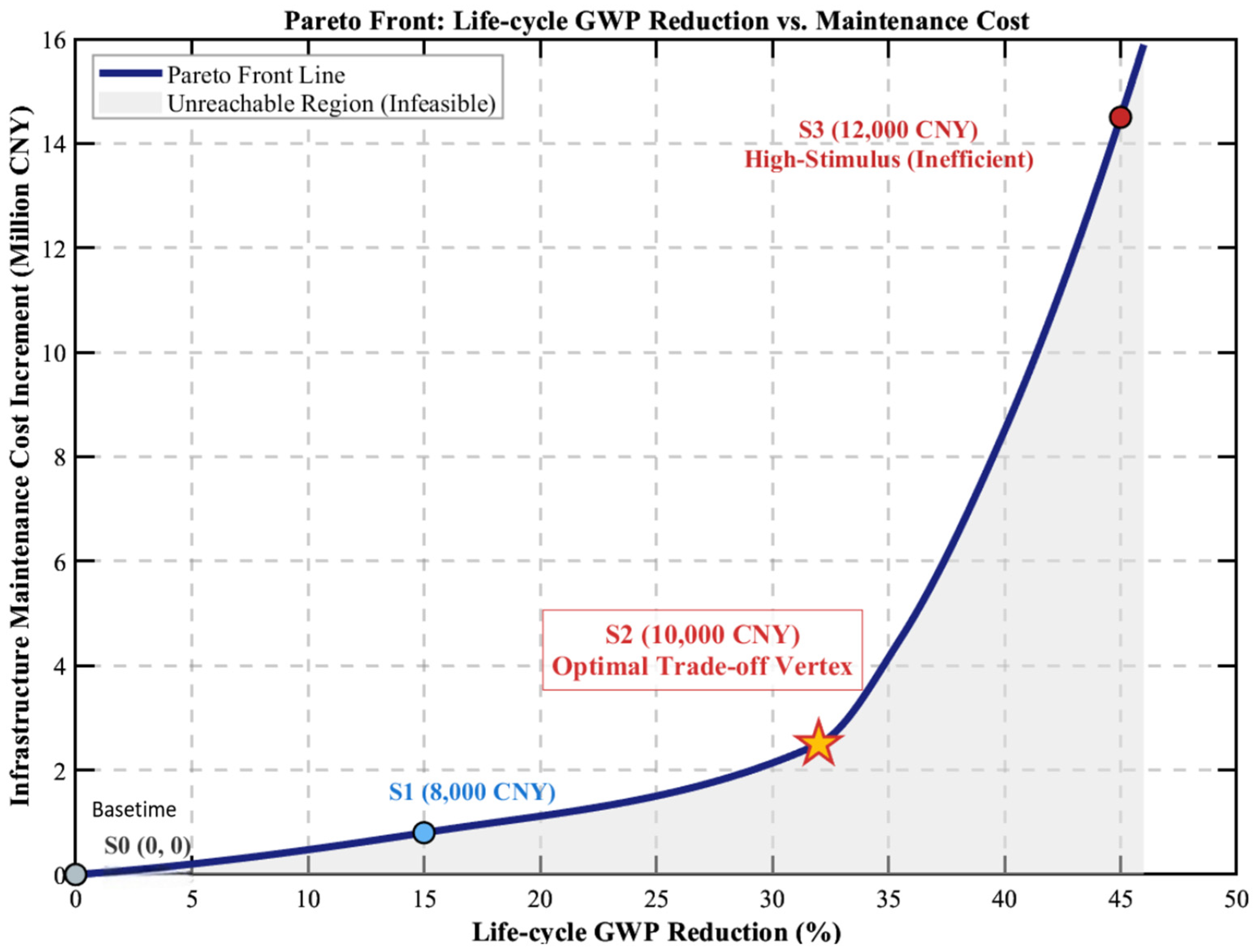
3.6. Pareto Optimization: Balancing Decarbonization and Coating Durability
3.6.1. Objective Function Integration and Trade-Off Analysis
3.6.2. Identification of the Optimal 8000–10,500 CNY Subsidy Window
3.6.3. Strategic Synergy for Decarbonization and Material Longevity
4. Discussion and Recommendations
4.1. Discussion
4.1.1. Resilience Differences and Vulnerability Mechanisms in Transport-Energy Coupled Systems
4.1.2. Local Optimization Bias and Unintended Systemic Effects of Universal Subsidies
4.1.3. Policy Optimization Logic from a Multi-System Coordination Perspective
4.2. Policy Recommendations
4.2.1. Establishing a Differentiated Subsidy System Based on Full-Life-Cycle Emissions Reduction
4.2.2. Improving Dynamic Fleet Structure Regulation to Mitigate Emissions Rebound Risks
4.2.3. Strengthening Infrastructure Durability Assurance by Integrating Atmospheric Corrosion Impacts
4.2.4. Establish a Multi-System Coupled Mechanism for Dynamic Policy Monitoring and Optimization
5. Conclusions
Supplementary Materials
Author Contributions
Funding
Institutional Review Board Statement
Informed Consent Statement
Data Availability Statement
Acknowledgments
Conflicts of Interest
Abbreviations
| AP | Acidification Potential |
| BEV | Battery Electric Vehicle |
| CNY | Chinese Yuan |
| CO2 | Carbon Dioxide |
| DRF | Dose–Response Function |
| ECRI | Environmental Corrosion Risk Index |
| EIA | Environmental Impact Assessment |
| EV | Electric Vehicle |
| GWP | Global Warming Potential |
| HEV | Hybrid Electric Vehicle |
| ICEV | Internal Combustion Engine Vehicle |
| LCA | Life Cycle Assessment |
| LCC | Life Cycle Cost |
| LDR | Lifespan Depletion Rate |
| MNL | Multinomial Logit |
| NEV | New Energy Vehicle |
| NOx | Nitrogen Oxides |
| PHEV | Plug-in Hybrid Electric Vehicle |
| RL | Remaining Lifespan |
| SO2 | Sulfur Dioxide |
References
- Humphrey, E.; Elisaus, V.; Rahmani, R.; Mohammadpour, M.; Theodossiades, S.; Morris, N.J. Diamond Like-Carbon Coatings for Electric Vehicle Transmission Efficiency. Tribol. Int. 2023, 189, 108916. [Google Scholar] [CrossRef]
- Zhang, W.H.; Zhang, W.Y.; Qiao, X.T.; Lyu, W.J. Pure Electric Bus Life Cycle Carbon Emission Calculation and Emission Factors. J. Jilin Univ. (Eng. Technol. Ed.) 2026, in press. [Google Scholar]
- Zhang, F.A.; Li, N.; Da, Q.L.; Wang, W. Low-Carbon Remanufacturing Research in Closed-Loop Supply Chain with Multiple Demands Based on Two Subsidy Policies. Chin. J. Manag. Sci. 2023, 31, 116–127. [Google Scholar]
- Weng, J.C.; Zhou, H.Y.; Zhang, M.Y.; Yu, J.B. Effectiveness of New Energy Vehicle Incentive Strategies Considering City and Group Heterogeneity. J. Transp. Syst. Eng. Inf. Technol. 2025, 25, 2–14. [Google Scholar]
- Yang, Z.; Wang, B.; Jiao, K. Life Cycle Assessment of Fuel Cell, Electric and Internal Combustion Engine Vehicles under Different Fuel Scenarios and Driving Mileages in China. Energy 2020, 198, 117365. [Google Scholar] [CrossRef]
- Ahmadzadeh, O.; Rodriguez, R.; Getz, J.; Panneerselvam, S.; Soudbakhsh, D. The Impact of Lightweighting and Battery Technologies on the Sustainability of Electric Vehicles: A Comprehensive Life Cycle Assessment. Environ. Impact Assess. Rev. 2025, 110, 107668. [Google Scholar] [CrossRef]
- Liu, H.; Hu, D.; Kelleher, L.; Wang, L. Life Cycle Assessment: Driving Strategies for Promoting Electric Vehicles in China. Int. J. Sustain. Transp. 2024, 18, 843–857. [Google Scholar] [CrossRef]
- Chen, Y.S.; Liu, Q.Y.; Xing, Y.X.; Zhang, C.M.; Zhang, C. Life Cycle Assessment and Uncertainty Analysis of Intelligent Electric Vehicles: A Case Study of BYD Han EV. Acta Sci. Circumstantiae 2025, 45, 527–540. [Google Scholar]
- Koffler, C.; Rohde-Brandenburger, K. On the Calculation of Fuel Savings through Lightweight Design in Automotive Life Cycle Assessments. Int. J. Life Cycle Assess. 2010, 15, 128–135. [Google Scholar] [CrossRef]
- Zhang, S.; Cao, Z.Q.; Zhang, C.M.; Chen, Y.-S. Life Cycle Assessment and Scenario Simulation of Plug-in Hybrid Electric Vehicles. Environ. Sci. 2025, 46, 3604–3618. [Google Scholar]
- Zhang, S.; Zhang, C.M.; Cai, X.; Lan, L.B.; Zhang, J.Z.; Zhang, X.Q.; Chen, Y.S. Life Cycle Environmental Impact Prediction of Hydrogen Fuel and Diesel Heavy Commercial Vehicles towards 2035. Res. Environ. Sci. 2023, 36, 1892–1904. [Google Scholar]
- Zhu, H.; Yu, Z.P. Hydrogen Pathway Analysis of Fuel Cell Vehicles Based on Life Cycle Assessment. J. Tongji Univ. (Nat. Sci.) 2017, 45, 138–143+151. [Google Scholar]
- Qian, S.D.; Li, L. Life Cycle Carbon Emission and Energy Consumption Analysis of Hydrogen Fuel Cell Locomotives Based on GREET Model. Railw. Transp. Econ. 2024, 46, 112–119. [Google Scholar]
- Shao, W.L.; Chen, M.F.; Chang, C. Life Cycle Carbon Emission Comparison between Battery Electric Vehicles and Internal Combustion Engine Vehicles in China and Carbon Emission Prediction for 2030. Acta Sci. Circumstantiae 2025, 45, 449–460. [Google Scholar]
- Li, D. Artificial Intelligence Applications in Cervical Cancer: Current Progress and Future Prospects. In Proceedings of the ICCMT 2025: 2025 2nd International Conference on Computer and Multimedia Technology, Sanming, China, 6–8 June 2025; pp. 116–121. [Google Scholar]
- Yang, L.; Yu, B.Y.; Feng, Y. Life Cycle Carbon Emission Assessment of Electric Vehicles: A Case Study of Passenger Cars in China. China Popul. Resour. Environ. 2023, 33, 113–124. [Google Scholar]
- Kang, X.P.; Nie, H.H.; Gao, M.; Wu, F.B. Life Cycle Carbon Emissions of Electric Vehicles. Energy Storage Sci. Technol. 2023, 12, 976–984. [Google Scholar]
- Lu, M.Q.; Chen, L.J. Community Residents’ Willingness to Contribute to Wetland Conservation Based on MNL Discrete Choice Model: A Case Study of Daqing Wetland. J. Nat. Resour. 2021, 36, 449–458. [Google Scholar]
- Wang, C.S.; Xu, C.C.; Ren, W.L.; Peng, C.; Jiao, L.J. Analysis of Tricycle Rider Injury Severity in Crashes Based on Machine Learning and Discrete Choice Models. J. Jilin Univ. (Eng. Technol. Ed.), 2026; in press.
- Pourmatin, M.; Moeini-Aghtaie, M.; Hassannayebi, E.; Hewitt, E. Transition to Low-Carbon Vehicle Market: Characterization, System Dynamics Modeling, and Forecasting. Energies 2024, 17, 3525. [Google Scholar] [CrossRef]
- Torren-Peraire, D.; Bassart-i-Loré, M. Driving in the Wrong Direction? A Co-Evolutionary Model of Electric Vehicle Adoption and Innovation. SSRN 2024, preprint. [Google Scholar]
- Osawa, J. Consumer Preferences for Second-Life Electric Vehicle Batteries across Multiple Applications. Clean. Responsible Consum. 2025, 19, 100337. [Google Scholar] [CrossRef]
- Fernando, C. Consumer Behaviour Integrated Dynamic-Life Cycle Assessment of Car-Based Sharing Economy. Ph.D. Thesis, The Australian National University, Canberra, Australia, 2023. [Google Scholar]
- Li, N.; Sun, L. Research on the Behavioral Differences between New Energy Vehicle Enterprises’ Innovation and Consumers’ Purchase: From the Perspective of Government Subsidy Effectiveness. J. Ind. Technol. Econ. 2025, 44, 15–24. [Google Scholar]
- Qi, J.Y.; Zhang, J. Experimental Investigation on Heat Transfer Performance and Temperature Uniformity of Two-Phase Cooling in Microchannels with Different Cross-Section Geometries. Case Stud. Therm. Eng. 2026, 81, 107740. [Google Scholar] [CrossRef]
- Chen, Z.; Chen, M.T.; Jia, S.W. Simulation and Optimization of New Energy Vehicles Promotion Policy Strategies Considering Energy Saving, Carbon Reduction, and Consumers’ Willingness Based on System Dynamics. Sustainability 2025, 17, 2811. [Google Scholar] [CrossRef]
- Zhang, Y.; Dong, C. Exploring the digital transformation of generative AI-assisted foreign language education: A socio-technical systems perspective based on mixed-methods. Systems 2024, 12, 462. [Google Scholar] [CrossRef]
- Ammari, F.; Le Penglau, R.; Bouhier, M.; Neff, D. Characterization of Long-Term Atmospheric Corrosion of Iron in Indoor and Outdoor Conditions Using Raman Spectroscopy Coupled to Multivariate Curve Resolution-Alternating Least Squares. Talanta 2026, 305, 129569. [Google Scholar] [CrossRef] [PubMed]
- Aljibori, H.S.; Alamiery, A.; Kadhum, A.A.H. Advances in Corrosion Protection Coatings: A Comprehensive Review. Int. J. Corros. Scale Inhib. 2023, 12, 1476–1520. [Google Scholar] [CrossRef]
- Antony Jose, S.; Lapierre, Z.; Williams, T.; Hope, C.; Jardin, T.; Rodriguez, R.; Menezes, P.L. Wear-and Corrosion-Resistant Coatings for Extreme Environments: Advances, Challenges, and Future Perspectives. Coatings 2025, 15, 878. [Google Scholar] [CrossRef]
- Panchenko, Y.M.; Marshakov, A.I.; Kudryavtseva, L.A.; Igonin, T.N. Prediction of Atmospheric Corrosivity Categories with Respect to Typical Metals. Int. J. Corros. Scale Inhib. 2025, 14, 2201–2231. [Google Scholar] [CrossRef]
- Sawyer-Beaulieu, S.; Tam, E.; Hussein, A. Measuring Corrosion on Vehicles, in Real-Time, Using Digital Imaging and Analysis Techniques. Materials 2022, 15, 3053. [Google Scholar] [CrossRef]
- Hensher, D.A.; Greene, W.H. The Mixed Logit model: The state of practice. Transportation 2003, 30, 133–176. [Google Scholar] [CrossRef]
- Liao, F.; Molin, E.; van Wee, B. Consumer preferences for electric vehicles: A literature review. Transp. Rev. 2017, 37, 252–275. [Google Scholar] [CrossRef]
- Li, W.; Long, R.; Chen, H.; Geng, J. A review of factors influencing consumer intentions to adopt battery electric vehicles. Renew. Sustain. Energy Rev. 2017, 78, 318–328. [Google Scholar] [CrossRef]
- Hawkins, T.R.; Singh, B.; Majeau-Bettez, G.; Strømman, A.H. Comparative environmental life cycle assessment of conventional and electric vehicles. J. Ind. Ecol. 2013, 17, 53–64. [Google Scholar] [CrossRef]
- Wang, R.; Song, Y.; Xu, H.; Li, Y.; Liu, J. Life Cycle Assessment of Energy Consumption and CO2 Emission from HEV, PHEV and BEV for China in the Past, Present and Future. Energies 2022, 15, 6853. [Google Scholar] [CrossRef]
- Huo, H.; Zhang, Q.; Wang, M.Q.; Streets, D.G.; He, K. Environmental implication of electric vehicles in China. Environ. Sci. Technol. 2010, 44, 4856–4861. [Google Scholar] [CrossRef]
- Zhu, Y.; Zhang, J.; Long, Y. A Comparative Life Cycle Assessment of Carbon Emissions for Battery Electric Vehicle Types. Energies 2026, 19, 377. [Google Scholar] [CrossRef]
- Morcillo, M.; Chico, B.; Díaz, I.; Cano, H.; de la Fuente, D. Atmospheric corrosion data of weathering steels: A review. Corros. Sci. 2013, 77, 6–24. [Google Scholar] [CrossRef]
- Sørensen, P.A.; Kiil, S.; Dam-Johansen, K.; Weinell, C.E. Anticorrosive coatings: A review. J. Coat. Technol. Res. 2009, 6, 135–176. [Google Scholar] [CrossRef]
- Kucera, V. The effect of acidification on corrosion of structures and cultural property. Water Air Soil. Pollut. 1995, 85, 161–171. [Google Scholar]
- Marler, R.T.; Arora, J.S. Survey of multi-objective optimization methods for engineering. Struct. Multidiscip. Optim. 2004, 26, 369–395. [Google Scholar] [CrossRef]
- Lidicker, J.; Sathaye, N.; Madanat, S.; Horvath, A. Pavement resurfacing policy for minimization of life-cycle costs and greenhouse gas emissions. J. Infrastruct. Syst. 2013, 19, 129–137. [Google Scholar] [CrossRef]
- Syed, S. Atmospheric corrosion of materials. Electrochim. Acta 2006, 52, 1039–1051. [Google Scholar]
- ISO 12944; Paints and Varnishes—Corrosion Protection of Steel Structures by Protective Paint Systems. International Organization for Standardization: Geneva, Switzerland, 2017.
- Tidblad, J.; Kucera, V.; Mikhailov, A.A.; Henriksen, J.; Kreislova, K.; Yates, T. UN ECE ICP materials: Dose-response functions on dry and wet acid deposition effects after 8 years of exposure. Water Air Soil. Pollut. 2001, 130, 1457–1462. [Google Scholar] [CrossRef]
- Feliu, S.; Morcillo, M.; Feliu, S. The prediction of atmospheric corrosion from meteorological and pollution parameters—I. Annual corrosion. Corros. Sci. 1993, 34, 403–414. [Google Scholar] [CrossRef]
- Helveston, J.P.; Liu, Y.; Feit, E.M.; Fuchs, E.; Klampfl, E.; Michalek, J.J. Will subsidies drive electric vehicle adoption? Measuring consumer preferences in the US and China. Transp. Res. Part A Policy Pract. 2015, 73, 96–112. [Google Scholar] [CrossRef]
- Wang, N.; Tang, L.; Pan, H. Effectiveness of policy incentives on electric vehicle acceptance in China: A discrete choice analysis. Transp. Res. Part A Policy Pract. 2017, 105, 210–218. [Google Scholar] [CrossRef]
- Maness, M.; Lin, P.S. An Exploratory Analysis to Estimate the Value of Free Charging Bundle in Electric Vehicle Purchases. Transp. Res. Part D Transp. Environ. 2021, 92, 102720. [Google Scholar]
- Ou, S.; Zhang, X.; Washington, S. Analytical models for the impact of electric vehicle charging on the power grid. Appl. Energy 2020, 257, 114002. [Google Scholar]
- Requia, W.J.; Mohamed, M.; Higgins, C.D.; Arain, A.; Ferguson, M. How clean are electric vehicles? Evidence-based review of the effects of electric mobility on air pollutants, greenhouse gas emissions and human health. Atmos. Environ. 2018, 185, 64–77. [Google Scholar] [CrossRef]
- Huijbregts, M.A.J.; Steinmann, Z.J.N.; Elshout, P.M.F.; Stam, G.; Verones, F.; Vieira, M.; Zijp, M.; Hollander, A.; van Zelm, R. ReCiPe2016: A harmonised life cycle impact assessment method at midpoint and endpoint level. Int. J. Life Cycle Assess. 2017, 22, 138–147. [Google Scholar] [CrossRef]
- ISO 9223:2012; Corrosion of Metals and Alloys—Corrosivity of Atmospheres—Classification, Determination and Estimation. International Organization for Standardization: Geneva, Switzerland, 2012.
- Lyon, S.B.; Bingham, R.; Mills, D.J. Advances in corrosion protection by organic coatings: What we know and what we would like to know. Prog. Org. Coat. 2017, 102, 2–7. [Google Scholar] [CrossRef]
- Shokri, M.; Traverso, M.; Mankaa, R.N. A coupled Monte Carlo–Pareto approach for sustainable asphalt mix optimization: Life cycle insights into green hydrogen and reclaimed materials. J. Clean. Prod. 2026, 554, 148042. [Google Scholar] [CrossRef]
- Ramezanzadeh, B.; Attar, M.M.; Farzam, M. A study on the anticorrosive performance of the epoxy-polyamide zinc-rich primer on steel substrates. Prog. Org. Coat. 2011, 72, 410–422. [Google Scholar] [CrossRef]
- Frangopol, D.M.; Kong, J.S.; Gharaibeh, E.S. Reliability-based life-cycle management of highway bridges. J. Comput. Civ. Eng. 2001, 15, 27–34. [Google Scholar] [CrossRef]
- Xiang, J.; Wan, X.; Ni, S. CoastCor-Net: A Wind Turbine Blade Defect Detection Network for Coastal Environments. Coatings 2026, 16, 373. [Google Scholar] [CrossRef]
- Safi, M.; Sundquist, H.; Karoumi, R. Cost-efficient maintenance of bridges using life-cycle cost analysis. Struct. Infrastruct. Eng. 2015, 11, 763–775. [Google Scholar]
- Kendall, K.; Keoleian, G.A.; Helfand, G.E. Integrated life-cycle assessment and life-cycle cost analysis model for concrete bridge deck applications. J. Infrastruct. Syst. 2008, 14, 214–222. [Google Scholar] [CrossRef]
- Zayed, T.M.; Chang, L.M.; Fricker, J.D. Life-cycle cost-based maintenance plan for steel bridge protection systems. J. Perform. Constr. Facil. 2002, 16, 55–62. [Google Scholar] [CrossRef]
- Hjorteset, M.A.; Böcker, L. Car sharing in Norwegian urban areas: Examining interest, intention and the decision to enrol. Transp. Res. Part D. Transp. Environ. 2020, 84, 102322. [Google Scholar] [CrossRef]
- Miettinen, K. Nonlinear Multiobjective Optimization; Kluwer Academic Publishers: Boston, MA, USA, 1999. [Google Scholar]
- Deb, K.; Sindhya, K.; Hakanen, J. Multi-objective optimization. In Decision Sciences; CRC Press: Boca Raton, FL, USA, 2016; pp. 161–200. [Google Scholar]
- Wan, X.; Liu, C.; Song, Y.; Lau, T.L. Prediction of post-earthquake node damage using a two-step intelligent method for prefabricated steel structures. Structures 2026, 89, 112125. [Google Scholar] [CrossRef]
- Yue, S.; Liu, C.; Wan, X. Intelligent multi-objective optimization of dynamic subsea cable systems for offshore energy platforms. J. Braz. Soc. Mech. Sci. Eng. 2026, 48, 64. [Google Scholar] [CrossRef]




| Attribute Variable | Variable Definition | Attribute Level Setting |
|---|---|---|
| Subsidy intensity | The amount of fiscal subsidy provided by the government for scrapping an old vehicle and purchasing a new one | CNY 0; CNY 3000; CNY 5000; CNY 10,000 |
| Daily operating cost | Unit mileage energy expenditure and routine maintenance cost during vehicle operation | Calibrated according to respondents’ subjective evaluation: low; medium; high |
| Charging convenience | Accessibility of charging infrastructure at the vehicle owner’s residence or workplace | Convenient, with a fixed charging pile; inconvenient, without fixed charging conditions |
| Vehicle-type preference | The technological route preference of the target replacement vehicle under equivalent policy incentives | ICEV; NEV |
| Parameter | Symbol | Initial Value | Unit |
|---|---|---|---|
| Initial Coating Thickness | d0 | 200 | μm |
| Critical Failure Thickness | dcrit | 80 | μm |
| Standard Degradation Rate | LDRbase | 12.5 | μm/year |
| Acidic Sensitivity Coefficient | α | 1.25 | Dimensionless |
| Maintenance Trigger Threshold | η | 60 | % of d0 |
| Variables | Coefficient (β) | Std. Error | z-Value | p-Value |
|---|---|---|---|---|
| Alternative Specific Constant: ICEV | 1.142 | 0.215 | 5.31 | <0.001 |
| Alternative Specific Constant: NEV | 0.875 | 0.243 | 3.6 | <0.001 |
| Subsidy Intensity | 1.583 | 0.142 | 11.15 | <0.001 |
| Operating Cost | −0.046 | 0.007 | −6.57 | <0.001 |
| Charging Convenience | 0.812 | 0.118 | 6.88 | <0.001 |
| Battery Capacity & Weight Index | 0.435 | 0.082 | 5.3 | <0.001 |
| Random Parameters | ||||
| SD of Subsidy Intensity | 0.924 | 0.176 | 5.25 | <0.001 |
| SD of Operating Cost | 0.018 | 0.005 | 3.6 | 0.001 |
| Model Fit Statistics | ||||
| Number of Respondents | 597 | |||
| NullLog-likelihood | −655.82 | |||
| FinalLog-likelihood | −382.45 | |||
| Pseudo R2 (McFadden’s) | 0.416 |
| Policy Scenario | Average ECRI (2026–2030) | Mean Depletion Rate (μm/Year) | Predicted Lifespan (Years) | Lifespan Penalty vs. S0 (Years) | Critical Recoating Trigger Year |
|---|---|---|---|---|---|
| S0: Baseline | 1 | 12.5 | 9.6 | - | 2035 |
| S1: Low-Stimulus | 1.08 | 13.5 | 8.9 | 0.7 | 2034 |
| S2: Optimal-Stimulus | 1.16 | 14.5 | 8.3 | 1.3 | 2034 |
| S3: High-Stimulus | 1.32 | 16.4 | 7.3 | 2.3 | 2033 |
| Subsidy Threshold (CNY) | Fleet Electrification Rate (%) | ΔGWP (Carbon Reduction vs. S0) | ΔAP (Acidification Variation vs. S0) | Coating Lifespan Penalty (Years) | Systemic Trade-off Ratio (ΔGWP/Penalty) |
|---|---|---|---|---|---|
| 0 (Baseline, S0) | 18 | Reference | Reference | 0 | - |
| 5000 (Under-stimulus) | 21.5 | −4.20% | −3.50% | 0.2 | 21 |
| 8000 (Lower Bound, S1) | 28 | −15.00% | −12.00% | 0.7 | 21.4 |
| 10,000 (Pareto Vertex, S2) | 50 | −32.00% | −18.00% | 1.3 | 24.6 (Max) |
| 10,500 (Upper Bound) | 58.5 | −35.50% | −8.00% | 1.6 | 22.1 |
| 12,000 (Over-stimulus, S3) | 80 | −45.00% | +25.0% (Inversion) | 2.3 | 19.5 |
Disclaimer/Publisher’s Note: The statements, opinions and data contained in all publications are solely those of the individual author(s) and contributor(s) and not of MDPI and/or the editor(s). MDPI and/or the editor(s) disclaim responsibility for any injury to people or property resulting from any ideas, methods, instructions or products referred to in the content. |
© 2026 by the authors. Licensee MDPI, Basel, Switzerland. This article is an open access article distributed under the terms and conditions of the Creative Commons Attribution (CC BY) license.
Share and Cite
Cheng, Z.; Qi, J.; Li, D.; Mei, T.; Sun, T.; Zhang, J.; Zhao, J.; Lu, T. Coupled Modeling of Vehicle Fleet Renewal Policies and Urban Environmental Corrosion: Dynamic Emission Trajectories and Infrastructure Coating Durability. Coatings 2026, 16, 666. https://doi.org/10.3390/coatings16060666
Cheng Z, Qi J, Li D, Mei T, Sun T, Zhang J, Zhao J, Lu T. Coupled Modeling of Vehicle Fleet Renewal Policies and Urban Environmental Corrosion: Dynamic Emission Trajectories and Infrastructure Coating Durability. Coatings. 2026; 16(6):666. https://doi.org/10.3390/coatings16060666
Chicago/Turabian StyleCheng, Zihan, Jingya Qi, Dan Li, Ting Mei, Tianyu Sun, Jinjian Zhang, Jinming Zhao, and Tansheng Lu. 2026. "Coupled Modeling of Vehicle Fleet Renewal Policies and Urban Environmental Corrosion: Dynamic Emission Trajectories and Infrastructure Coating Durability" Coatings 16, no. 6: 666. https://doi.org/10.3390/coatings16060666
APA StyleCheng, Z., Qi, J., Li, D., Mei, T., Sun, T., Zhang, J., Zhao, J., & Lu, T. (2026). Coupled Modeling of Vehicle Fleet Renewal Policies and Urban Environmental Corrosion: Dynamic Emission Trajectories and Infrastructure Coating Durability. Coatings, 16(6), 666. https://doi.org/10.3390/coatings16060666