Article

Effect of Sr Addition in the Microstructure and Corrosion Resistance of Hot-Dip Al-Si Coatings for Hot-Press-Formed Steel

Department of Ocean Advanced Materials Convergence Engineering, Korea Maritime and Ocean University, Busan 49112, Republic of Korea
*
Author to whom correspondence should be addressed.
These authors contributed equally to this work.
Coatings 2026, 16(5), 621; https://doi.org/10.3390/coatings16050621
Submission received: 3 April 2026 / Revised: 8 May 2026 / Accepted: 15 May 2026 / Published: 21 May 2026
(This article belongs to the Section Liquid–Fluid Coatings, Surfaces and Interfaces)

Abstract

Hot-press forming (HPF) steel is a promising lightweight material for automotive applications but suffers from oxidation and reduced corrosion due to high-temperature processing. Aluminized coatings, particularly Al-10Si, are widely used to mitigate this issue. However, HPF heat treatment can create brittle alloy layers with cracks, compromising retention and increasing corrosion risk. This study investigated the effects of Sr addition on the microstructure and corrosion resistance of Al-Si-coated HPF steel. Al-Si and Al-Si-Sr coatings were applied to steel substrates and subjected to heat treatment to produce heat-treated (HT) Al-Si and HT Al-Si-Sr samples. Sr addition refined and spheroidized eutectic Si particles, improved coating homogeneity, and mitigated vertical crack formation in the Al-Fe-Si intermetallic layer. The resulting dense, crack-free alloy layer effectively shielded the Fe substrate from corrosion. After heat treatment, Sr facilitated the formation of a fine lamellar microstructure and a dense, continuous oxide film, enhancing coating retention and sustaining barrier protection. These improvements significantly delayed corrosion propagation into the Fe substrate. Corrosion resistance was evaluated using salt-spray tests (ASTM B117), potentiodynamic polarization, and electrochemical impedance spectroscopy in 3.5 wt.% NaCl solutions. Microstructural analyses revealed that even minimal Sr content (0.05%) considerably enhanced the performance of Al-Si coatings, demonstrating industrial applicability. This study highlights the potential of Sr-added Al-Si coatings in addressing the demand for lightweight and corrosion-resistant materials in the automotive industry, offering a viable solution for high-performance and environmentally sustainable applications.

1. Introduction

The escalating effects of climate change and the growing demand for environmental sustainability have led to stricter global regulations and widespread adoption of Environmental, Social, and Governance strategies across industries. According to the International Energy Agency (IEA), the transport sector is a major contributor, accounting for nearly one-quarter of global energy-related CO2 emissions [1]. In response, the automotive industry faces stringent emissions and fuel efficiency regulations, accelerating the development of lightweight technologies and eco-friendly vehicles to achieve carbon neutrality.
Lightweighting is a crucial strategy for improving fuel efficiency and reducing emissions in vehicles powered by internal combustion engines, as well as hybrid, electric, and hydrogen systems. However, the growing use of high-strength materials for safety and the development of advanced components to enhance passenger comfort has increased vehicle weight, posing challenges to weight reduction efforts. Consequently, hot-press forming (HPF) has emerged as a key technology to address these challenges, enabling the production of ultra-high-strength steel with reduced thickness and weight while maintaining structural rigidity and enhancing passenger safety [2].
Initially developed in the 1970s and widely adopted in the automotive industry during the 1990s, HPF involves heating steel sheets to austenitization temperatures (850–950 °C) and rapidly quenching them during the forming process. This process transforms the steel microstructure into martensite, achieving tensile strengths of up to 1.5 GPa [3]. Despite its advantages, the high-temperature HPF process exposes steel sheets to oxidation and decarburization, thereby compromising their surface properties. To mitigate these issues, aluminized coatings—particularly Type 1 Al-10Si coatings—have been widely employed. These coatings form Al-Fe-Si intermetallic layers during heat treatment, providing effective protection against oxidation and corrosion [4,5].
However, the high-temperature heat treatment inherent in the HPF process can induce undesirable microstructural changes in aluminized coatings, such as the formation of brittle Al-Fe-Si alloy layers with vertical cracks. These defects degrade coating adhesion and create pathways for corrosion, especially under harsh conditions involving high temperature, humidity, and salt exposure [6,7,8,9]. These limitations highlight the urgent need for innovative coating designs to enhance corrosion resistance while preserving mechanical performance.
Sr has shown promise as an alloying element for addressing these challenges. Studies have demonstrated that Sr addition refines and spheroidizes eutectic Si particles in Al-Si alloys, leading to improved microstructural homogeneity [10,11,12,13]. For instance, a recent study found that adding Sr to Al-Si alloys increased the uniformity of Si distribution, significantly reducing the formation of stress concentration points and improving the mechanical properties [14,15,16,17]. Another study demonstrated that Sr addition transformed brittle Al5FeSi intermetallic phases into more ductile Al8Fe2Si, improving the overall coating adhesion and resistance to cracking [18,19].
Furthermore, Sr addition has been reported to alter the solidification behavior of Al-Si alloys by transforming plate-like Si phases into fibrous or lamellar structures. This transformation improves mechanical properties such as tensile strength, yield strength, and elongation [20,21]. In industrial applications, these improvements have been shown to increase the durability of components such as exhaust systems and heat exchangers, which operate in high-temperature and corrosive environments. In addition, even ppm-level additions of Sr have been reported to effectively refine the microstructure of Al–Si alloys by reducing the size of eutectic Si particles, suggesting a high level of cost efficiency [22]. However, Sr is known to exhibit a fading phenomenon during melt holding in a furnace, where its concentration gradually decreases due to oxidation or reactions with other elements. As a result, maintaining a stable Sr content becomes challenging, making precise control of concentration difficult [23].
According to previous studies on alloying additions in hot-dip Al–Si coatings, Mg predominantly improves protection through corrosion-product-mediated shielding behavior, whereas Mn enhances the intrinsic robustness of the intermetallic layer itself, sus-taining barrier functionality without generating Mn-based surface corrosion products [24]. However, most studies have focused on the effects of Sr in Al alloys, whereas investigations into its role in hot-dip Al–Si coatings—particularly for HPF steels—remain limited.
High-temperature heat treatment of HPF substantially alters the microstructure of aluminized coatings. Fe diffusion from steel substrate into the coating modifies the composition and properties of the Al-Fe-Si alloy layers, thereby affecting corrosion behavior [25,26,27]. Understanding how Sr influences these microstructural transformations and improves corrosion resistance under HPF conditions is critical for developing high-performance coatings tailored for industrial applications.
This study systematically investigates the effects of Sr addition on the microstructure and corrosion resistance of Al-Si-coated HPF steel used in automotive structural components. By examining the role of Sr in refining Si particles, forming dense and uniform alloy layers, and enhancing coating adhesion, this study aims to address the current limitations of HPF coatings. Electrochemical and microstructural analyses were conducted to evaluate the impact of Sr on corrosion behavior under HPF conditions. Additionally, this study explores the influence of Sr addition on intermetallic phase formation during the hot-dip aluminizing (HDA) process and subsequent heat treatment. These findings provide a comprehensive understanding regarding the potential of Sr in revolutionizing aluminized coatings, enabling the development of lightweight, durable, and corrosion-resistant materials for automotive applications that align with global sustainability goals.

2. Experimental Details

2.1. Sample Preparation and Experimental Conditions

In this study, aluminized steel sheets were fabricated using a HDA simulator with 22MnB5 steel substrates. The HDA simulator was specifically designed to replicate the industrial HDA process by sequentially incorporating heat treatment, coating, and cooling in a continuous operation. This system comprises a sample loading unit that facilitates heating, cooling, and transportation of specimens to a molten Al bath. A heat treatment unit performs annealing under conditions similar to industrial continuous annealing processes. Additionally, a cooling section precisely controls the cooling rate of the specimens. At the bottom of the simulator, the molten coating bath enables the immersion of steel substrates in the Al alloy, ensuring the formation of a uniform coating layer.
To enhance the corrosion resistance of aluminized steel, 0.05 wt.% Sr was added to the molten Al bath with compositions of Al-9%Si. The Sr-modified aluminized steel produced through this process is expected to offer improved corrosion resistance compared to conventional aluminized coatings.
After fabricating the aluminized coating on 22MnB5 steel substrates using the HDA simulator, the specimens underwent heat treatment to simulate the thermal conditions of industrial HPF processes. As shown in Figure S1, heat treatment was conducted in electric heating furnace to reach the temperature conditions commonly applied in HPF production lines. Specifically, the aluminized specimens were heated at 950 °C—the austenitization temperature—for 5 min, followed by rapid quenching in water to obtain a martensitic microstructure.
To achieve the required temperature, the specimens were heated from room temperature (25 °C) at a controlled rate of 3 °C/min, taking approximately 310 min to reach 950 °C. Once the target temperature was stabilized, heat treatment was conducted. The complete thermal cycle applied during this process is shown in Figure S1, and the detailed experimental conditions for the fabricated specimens are summarized in Table 1.

2.2. Microstructure Evaluation

The surface and cross-sectional morphologies of the aluminized coatings were examined using field-emission scanning electron microscopy (FE-SEM, Tescan CLARA, Czech) and an electron probe microanalyzer (EPMA, JEOL JXA-8230). Elemental compositions of the coatings were analyzed using energy-dispersive spectroscopy (EDS, Oxford Ultim Max, UK). For cross-sectional observations, the specimens were mounted in resin with their coating layers positioned vertically. The mounted samples were then Au-coated to enhance their conductivity for scanning electron microscopy (SEM) analysis.
The cross-sectional specimens were mechanically polished in successive steps using 200, 400, 800, 1000, and 2000 grit SiC abrasive papers, followed by polishing with 3 and 1 μm diamond suspensions, and a final 0.03-μm colloidal silica polish. Subsequently, the specimens were cleaned ultrasonically in deionized water and dried in a desiccator. Elemental depth profiling of the coatings was performed using glow discharge spectrometry (GDS, HORIBA HY 10000 RF, Japan) to analyze the depth-dependent elemental distribution. To further investigate nanoscale diffusion behavior at the coating-substrate interface, secondary ion mass spectrometry (SIMS, CAMECA IMS 6F, France) was employed. SIMS provided detailed profiles of trace elements such as Sr at the nanometer scale. After completing GDS and SIMS measurements, the crater depth of each coating layer was measured by profilometer and divided by the corresponding sputtering time to determine the layer-specific sputtering rate, which was then multiplied by each time point to convert the time axis into a depth scale.
The chemical bonding states of the elements in the coatings were examined using X-ray photoelectron spectroscopy (XPS, Thermo VG K Alpha+, Japan). Analysis was performed over a 400-μm area using an Al Kα X-ray source (1486.6 eV), with an electron acceleration voltage of 15 kV and a power of 100 W. Binding energy (BE) values were calibrated using the C 1 s peak at 284.6 eV, and baselines were corrected using Shirley’s method.

2.3. Electrochemical Evaluation

The corrosion characteristics of the coatings were investigated using potentiodynamic polarization and electrochemical impedance spectroscopy (EIS). Specimens with an exposed area of 1.13 cm2 were tested using a potentiostat (Gamry Interface 1010E, USA) in a three-electrode cell configuration. The cell comprised an Ag/AgCl electrode as the reference electrode (RE), a coated sample as the working electrode (WE), and a Pt coil as the counter electrode (CE). Tests were conducted in a 3.5 wt. % NaCl solution.
Potentiodynamic polarization was conducted over a potential range of −0.2 V to 1 V (vs. open-circuit potential (OCP)) at a scan rate of 0.16 mV/s. EIS measurements were performed across a frequency range of 105 to 10−2 Hz with an applied alternating current (AC) voltage amplitude of 20 mV for the high-resistance coating system [28]. All electrochemical tests were repeated a minimum of three times to ensure reproducibility of the results.
The corrosion resistances of the aluminized coatings were evaluated in a salt-spray environment in accordance with ASTM B117-16. The test was conducted at a constant chamber temperature of 35 ± 2 °C using a 5 wt.% NaCl solution. The specimens were mounted at an angle of 20 ± 5° to ensure proper drainage of the salt solution. To prevent galvanic corrosion at the exposed edges, all edges except for the coated surface were sealed with protective tape. The corrosion performance was periodically evaluated through visual inspection, with photographic documentation captured using a digital camera.

2.4. Corrosion Behavior

After the salt-spray tests (SSTs), the surface morphology of the corroded specimens was examined using a high-resolution three-dimensional (3D) optical microscope (KEYENCE VHX-7000, Japan) to analyze the distribution and formation of the corrosion products. Specimens exhibiting severe corrosion at critical time points were further analyzed using SEM/EDS to investigate the morphology and composition of the corroded regions. Based on microstructural and chemical analyses, as well as corrosion resistance evaluations, the corrosion mechanisms of the four coating systems—Al-Si, Al-Si-Sr, heat-treated (HT) Al-Si, and HT Al-Si-Sr—were elucidated. The combined results provide insight into the influence of Sr addition and heat treatment on the corrosion behavior of aluminized coatings.

3. Results and Discussion

3.1. Microstructural Analysis

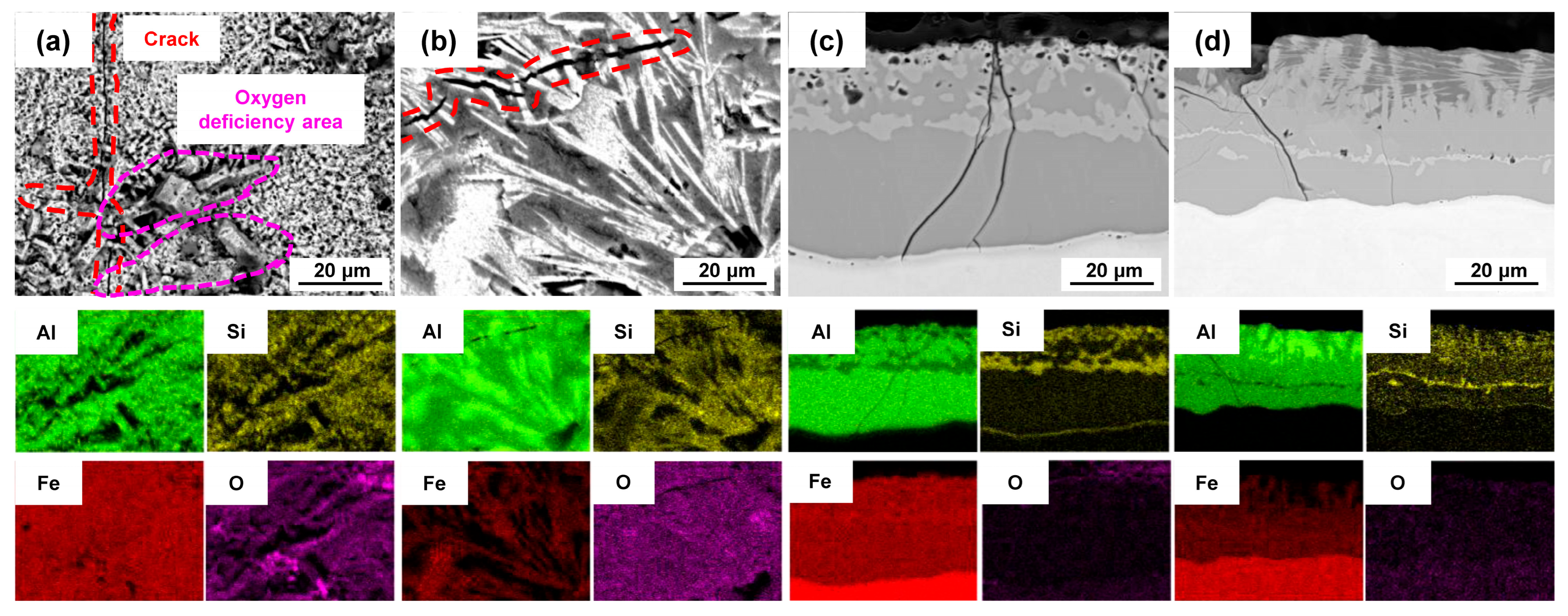
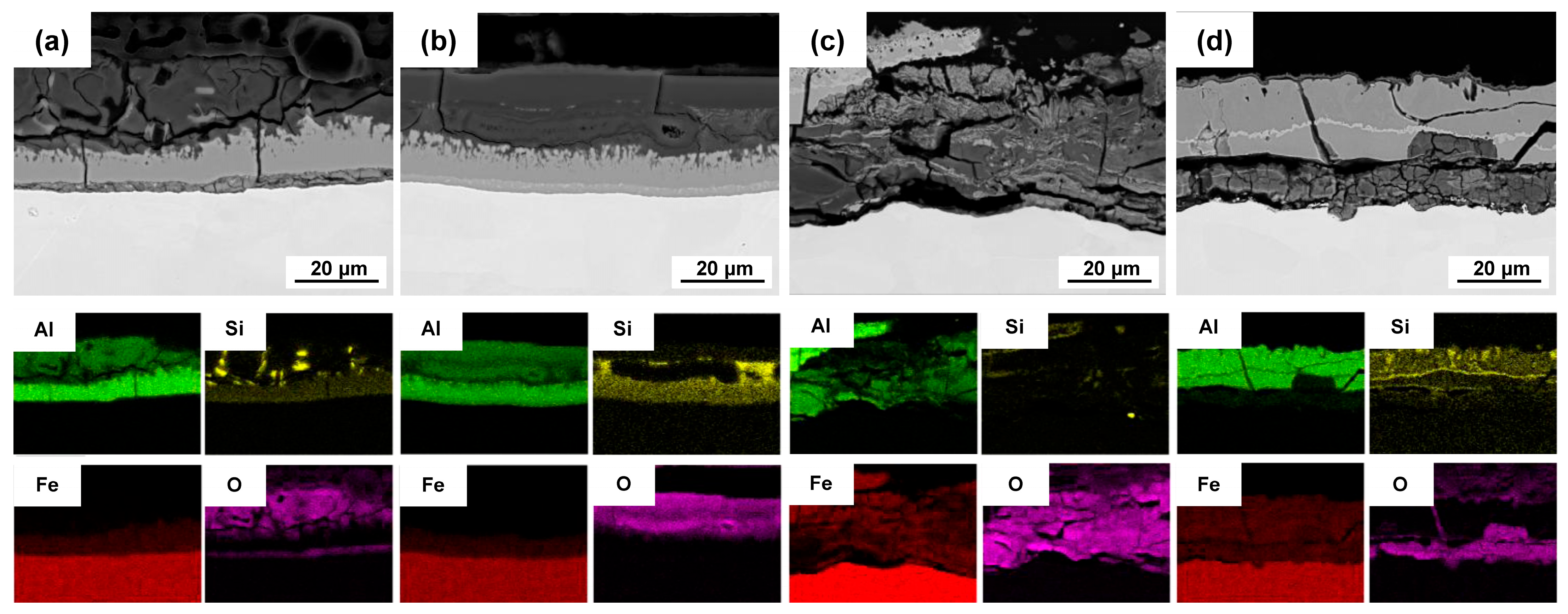
The microstructures of the hot-dip aluminized steel, with and without Sr addition, were analyzed before and after heat treatment. Figure 1 presents the surface and cross-sectional backscattered electron (BSE) images of the samples before heat treatment. Surface analysis revealed that the Sr-free (Al-Si) in Figure 1a exhibited coarse Si phases without observable Fe intermetallic compounds (IMCs). In contrast, as shown in Figure 1b, Sr addition refined and spheroidized the Si particles, while Fe IMCs precipitated on the surface. This phenomenon was attributed to the improved fluidity of the molten Al bath during the coating process, facilitated by Si refinement, which enhanced Fe diffusion from the substrate [29]. Cross-sectional analysis revealed that all samples exhibited three distinct layers: a black Al layer, a gray intermetallic layer, and a white Fe substrate layer. However, in the absence of Sr, as shown in Figure 1c, numerous vertical cracks formed in the Al-Fe-Si intermetallic layer formed during the coating process. In contrast, Sr addition is considered to promote a denser and more uniform Al–Fe–Si intermetallic layer with reduced cracking by refining the eutectic Si morphology [30]. According to recent studies on hot-dip Al–Si coatings, Mn addition reduces coating cracks through the formation of Mn-containing intermetallic compounds [24]. Interestingly, Sr exhibits a distinct behavior, as it does not form separate intermetallic phases but instead mitigates cracking by controlling the morphology of the Si phase.
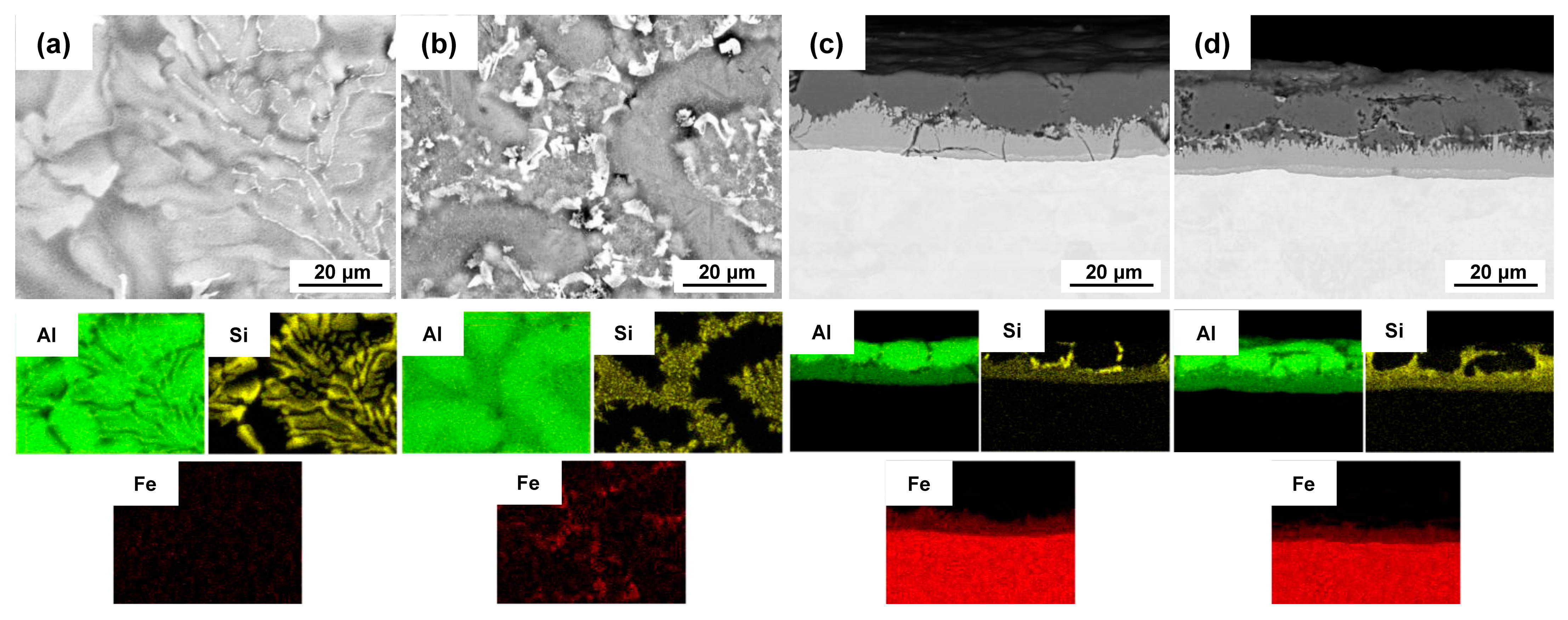
EPMA was conducted to examine the elemental distribution on the surfaces and cross-sections of the coated samples, as shown in Figure 2. Surface analysis confirmed that Sr addition refined the Si particles, consistent with the SEM observations. The elemental mapping data in Figure 2a,b showcase a broader distribution and reduced concentration of Si in the Sr-modified coatings. Furthermore, Sr was not incorporated into the coating matrix but remained on the coating surface without forming Sr IMCs, indicating that Sr did not directly alter the properties of the black Al coating layer but instead improved the microstructure by refining the Si particles. Consequently, Sr promotes the formation of a dense intermetallic layer through Si refinement without significantly affecting the intrinsic characteristics of the Al coating layer.
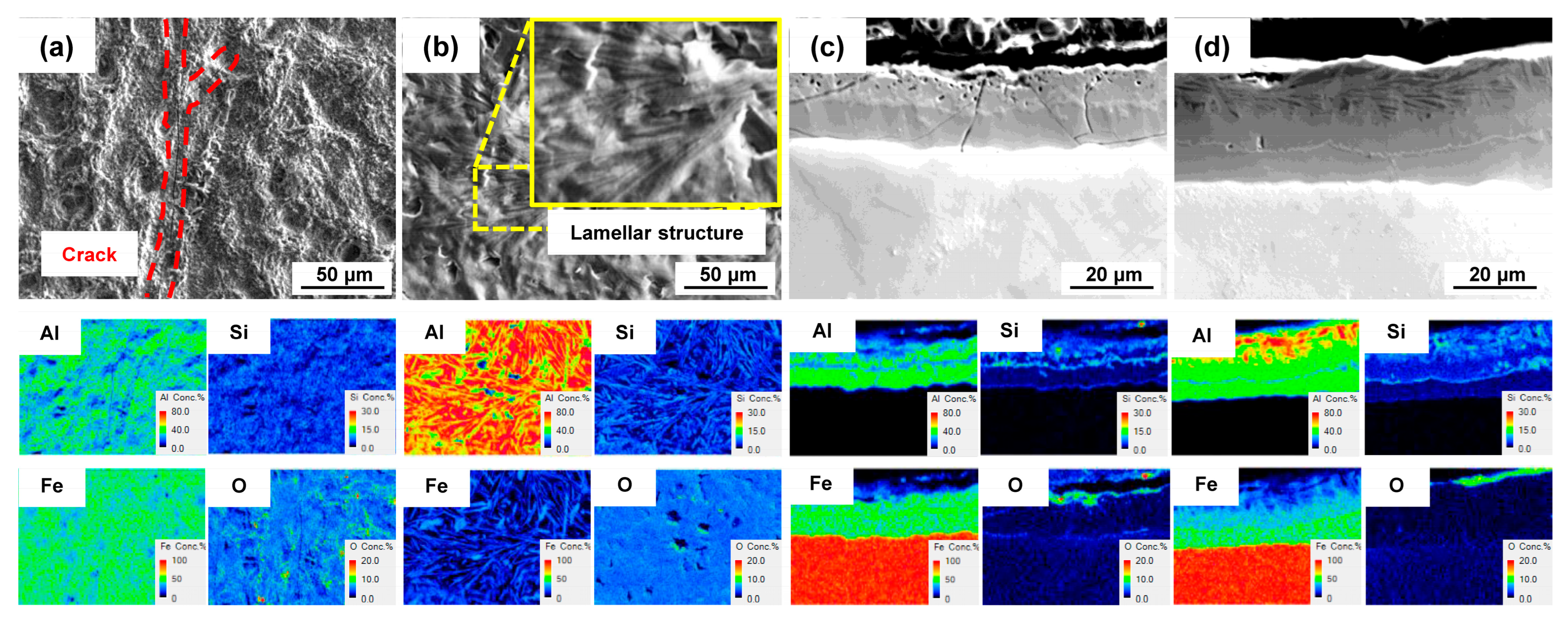
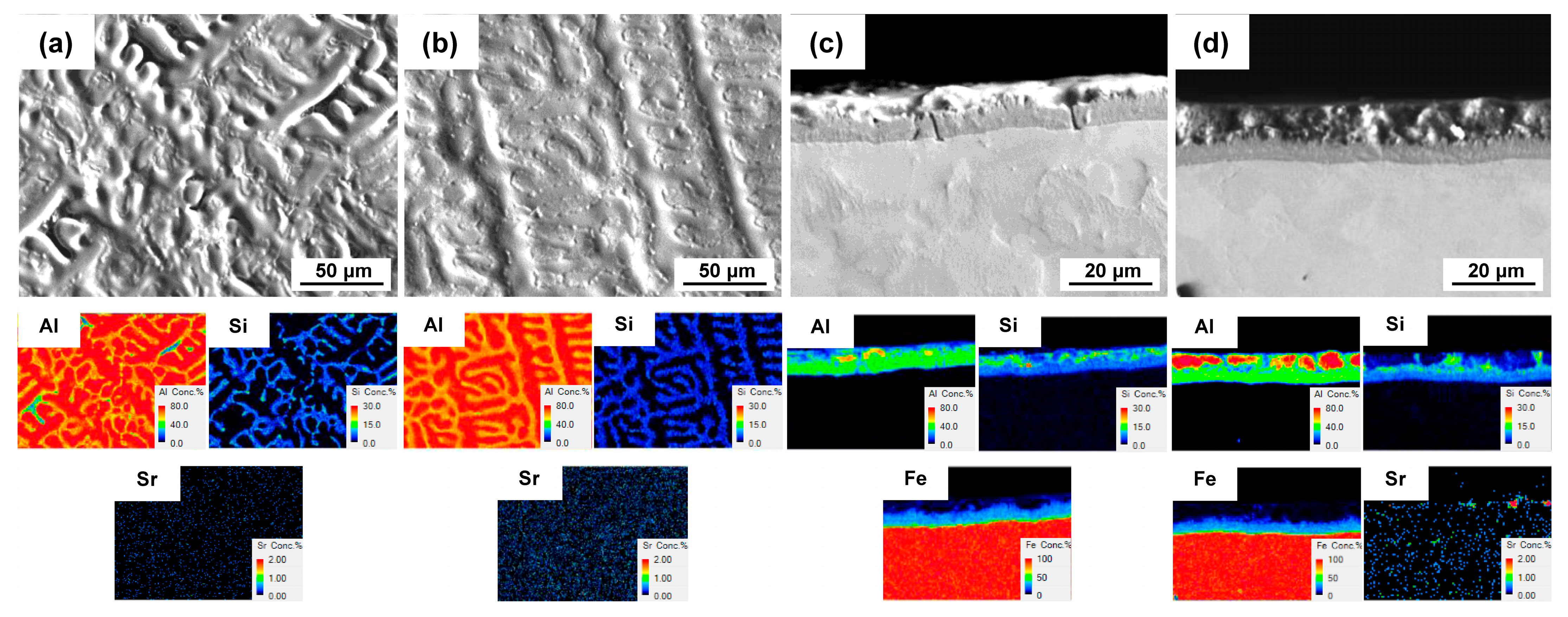
Subsequently, heat treatment was performed to replicate the HPF process, resulting in the fabrication of HT Al-Si and HT Al-Si-Sr samples. The surface and cross-sectional microstructures of the coatings were analyzed using SEM/EDS, as shown in Figure 3. After heat treatment, both samples exhibited oxide layers on the surface, and vertical cracks extending to the Fe substrate interface were observed. Interestingly, as shown in Figure 3c, cross-sectional analysis of the coating layer confirmed the presence of numerous pores in the outermost layer of the HT Al-Si coating. As indicated by the EDS mapping results in Figure 3a, these pores led to the formation of O-deficient regions within the oxide layer. In contrast, compared with HT Al-Si, the HT Al-Si-Sr coating exhibited significantly fewer vertical cracks, no pores in the outermost layer, and dense acicular morphologies of the Al and Fe-Si phases. Accordingly, the EDS mapping results in Figure 3b further support that the oxide layer in the HT Al-Si-Sr sample formed uniformly without O-deficient regions. The differences in the morphology of the outermost coating layers were attributed to the unincorporated Sr observed on the surface before heat treatment, which likely influenced the coating microstructure during the thermal process. This aspect will be discussed further in subsequent sections.
Additionally, EPMA was conducted to evaluate the elemental distribution across the surface and cross-section of the heat-treated coatings, as illustrated in Figure 4. The results in Figure 4b indicate that Sr addition promotes the formation of a fine lamellar microstructure composed of Al and Al-Fe-Si phases. This lamellar structure led to a significantly higher Al content in the outermost layer of the HT Al-Si-Sr coating than in the HT Al-Si coating. Consequently, the Fe concentration in the outermost layer was significantly lower, while the O content in the oxide layer exhibited a uniform gradient without any localized deficiencies. These findings suggest that the formation of a fine lamellar structure not only increases the Al content in the outermost layer but also enlarges the contact area with atmospheric O, resulting in the development of a uniform and dense oxide layer.
The distinct microstructures of the coatings also contributed to differences in their compositions. As shown in Figure 4d, both the HT Al-Si and HT Al-Si-Sr coatings displayed two Al-rich Al-Fe-Si intermetallic layers—separated by an Fe-Si-rich Al-Fe-Si layer. However, the HT Al-Si-Sr coating exhibited an additional layer in the outermost region, consisting of a lamellar structure of Al and Al-Fe-Si phases. This layer was further characterized using EDS compositional analysis and depth profiling to identify its unique features.
The cross-sectional analysis of the coatings, as presented in Figure S2, revealed that the pre-heat-treated samples could be classified into three layers based on EDS compositional data: an upper Al-Si coating layer (①), a middle Al-Fe-Si intermetallic layer (②), and an Fe-diffusion layer near the substrate (③). As summarized in Table S1, the Al content of each layer decreased while the Fe content increased toward the substrate, reflecting diffusion behavior; this trend was consistently observed regardless of Sr addition [31], considering only the layered structure and excluding the Fe IMCs precipitated on the surface due to the Si spheroidization and refinement caused by Sr addition, as shown in Figure 1.
As discussed in the theoretical background, heat treatment rearranged the coating layers through Fe diffusion from the substrate, resulting in the formation of four distinct intermetallic layers, which were categorized based on EDS compositional analysis in this study. In HT Al-Si coatings, the layers were identified in the following order from the outermost region: an Al-rich alloy layer (①), a Fe/Si-rich alloy layer (②), another Al-rich alloy layer (③), and a Fe-diffusion layer (④). In contrast, the HT Al-Si-Sr coatings featured an additional Al-rich alloy layer of lamellar microstructures in the uppermost region. Notably, the Si content in all intermetallic layers of the HT Al-Si-Sr coatings was consistently lower than that in the Sr-free samples, as confirmed by the EDS and EPMA mapping results. These findings clearly demonstrate the influence of Sr on the microstructural evolution of aluminized coatings during HPF.
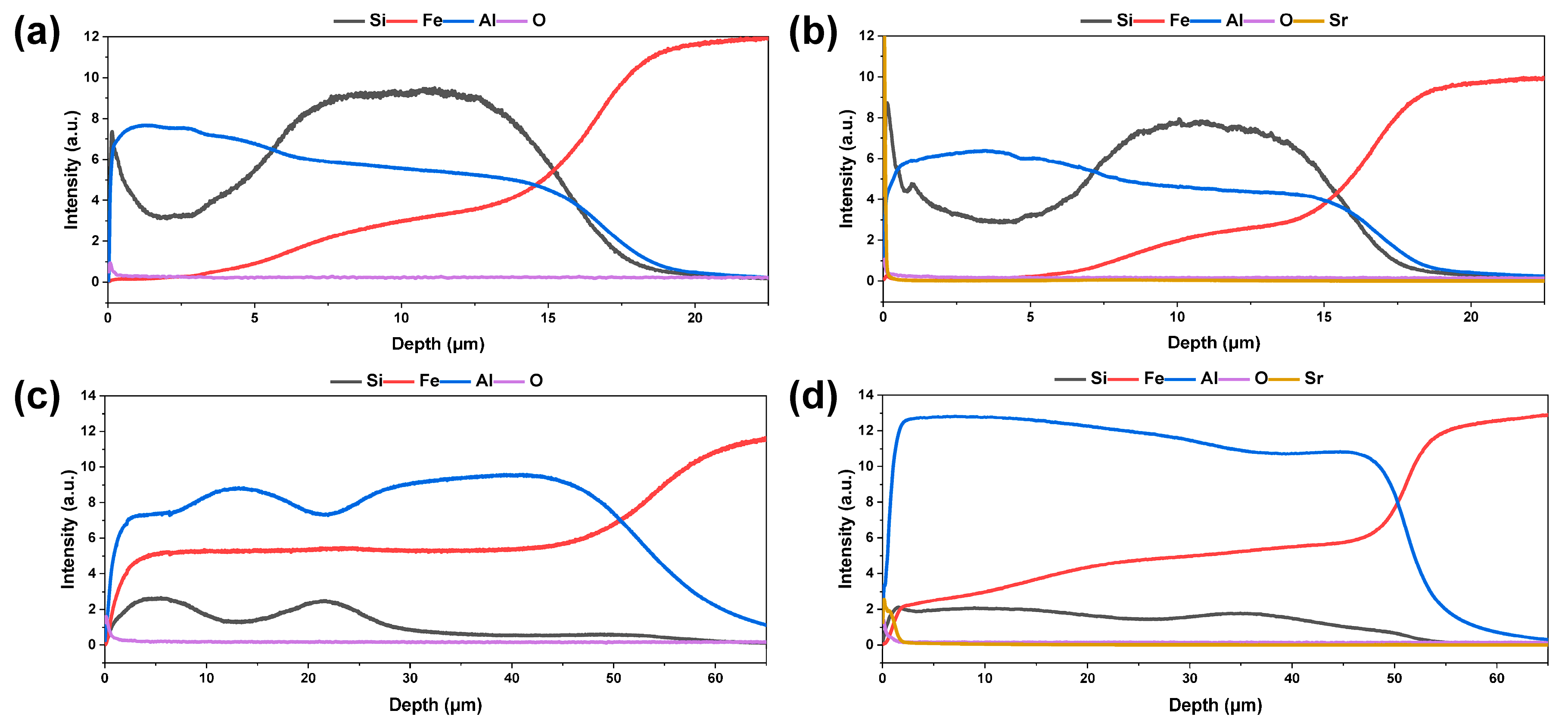
To clarify the depth-wise elemental distribution within each coating layer, a glow discharge spectroscopy (GDS) analysis was conducted, with the results shown in Figure 5. A comparison between Figure 5a,b confirms that the coating structure—comprising an Al-Si coating layer, an Al-Fe-Si intermetallic layer, and an Fe diffusion layer—remained consistent regardless of Sr addition. This observation aligns with the SEM and EPMA results, which revealed no significant structural differences between Al-Si and Al-Si-Sr coatings prior to heat treatment. Additionally, as shown in Figure 5b, Sr was detected on the outermost surface of the coating in the Sr-added sample, confirming the earlier finding shown in Figure 2d that Sr was not incorporated into the coating matrix.
However, differences in the coating structure were observed after heat treatment. The depth-wise elemental distribution of the HT Al-Si-Sr sample, as illustrated in Figure 5d, showed a higher overall Al intensity and a more uniform Si distribution across the entire coating. Furthermore, Figure 5d indicates that Sr, initially present on the outermost surface of the coating, diffused toward the Fe substrate after heat treatment. This redistribution of Sr highlights its potential influence on the microstructural evolution of coatings during high-temperature processing.
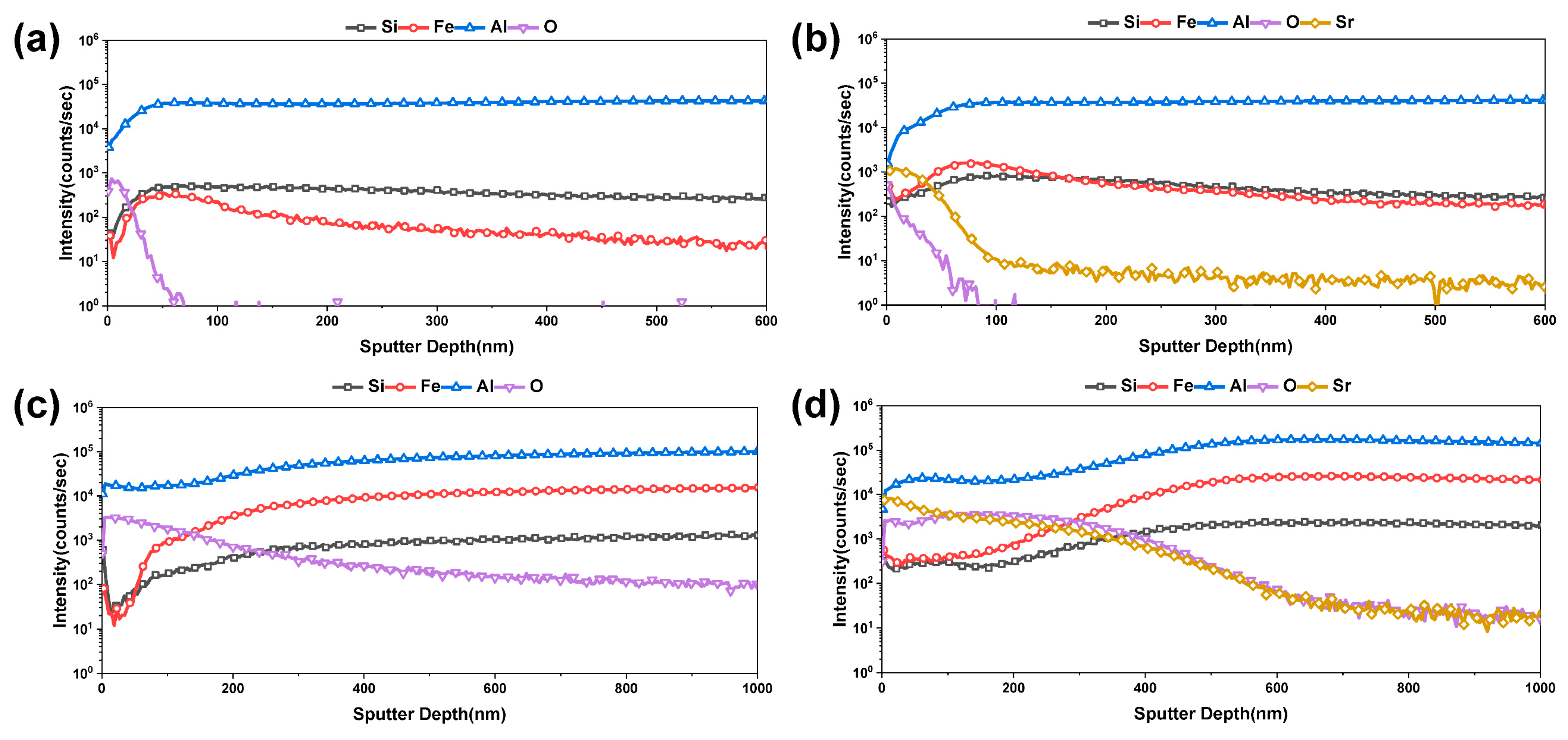
Subsequently, SIMS analysis was conducted to overcome the micrometer-scale resolution limitations of GDS and investigate surface oxide behavior at the nanometer scale. The results are presented in Figure 6. Both Al-Si and Al-Si-Sr coatings exhibited surface oxide layers approximately 80 nm thick, attributed to the natural formation of a passive Al2O3 film upon exposure of the Al coating to air [9,26,32]. Additionally, Figure 6b confirms the presence of Sr within the Al-Si-Sr coating, which extends from the surface to a depth of approximately 100 nm. According to the literature, Sr has very low solid solubility in Al and a small partition coefficient (k < 1) in the Al-Si eutectic composition, resulting in its rejection into the liquid ahead of the solid–liquid interface during solidification. That is, Sr becomes progressively concentrated in the surface region of the coating, which solidifies last [33]. Therefore, it is interpreted that when Sr is added to the molten Al-Si coating bath in the liquid state, it controls Si growth, and subsequently becomes concentrated at the surface as solidification proceeds. As observed in the SEM results, the Fe intensity in the Al-Si-Sr samples exceeded that in the Al-Si samples owing to the presence of Fe IMCs near the surface.
After heat treatment, oxide layers formed on the surfaces of both the HT Al-Si and HT Al-Si-Sr coatings. The oxide layer in the HT Al-Si extended to a depth of approximately 400 nm, whereas that in the HT Al–Si–Sr reached approximately 600 nm. As shown in Figure 6d, Sr, initially confined to 100 nm depth before heat treatment, diffused to approximately 600 nm in the HT Al-Si-Sr sample after heat treatment. Notably, the Sr intensity peak closely aligned with the O intensity peak, indicating a correlation between Sr diffusion and oxide formation.
These findings suggest that Sr during heat treatment contributed to the formation of a lamellar structure in the outermost coating layer, as observed in Figure 3 and Figure 4. This lamellar structure likely facilitates the development of a continuous and dense oxide film, enhancing the overall protective properties of the coating. According to the literature, the formation of lamellar structures in the outermost layer is attributed to the combined effects of Sr-induced Si modification and subsequent interdiffusion during heat treatment. Sr promotes the spheroidization and refinement of eutectic Si via a twin-plane poisoning mechanism, leading to a more homogeneous Si distribution in the Al matrix. During heat treatment, Fe diffusion from the substrate and the redistribution of Al and Si facilitate the formation of Al–Fe–Si intermetallic phases. Owing to modified interfacial energy and enhanced nucleation behavior, these phases grow in an alternating layered manner, resulting in lamellar Al/Al–Fe–Si structures, particularly in the outermost region. This lamellar structure enhances surface oxide formation and promotes the development of continuous protective passive films [34,35].
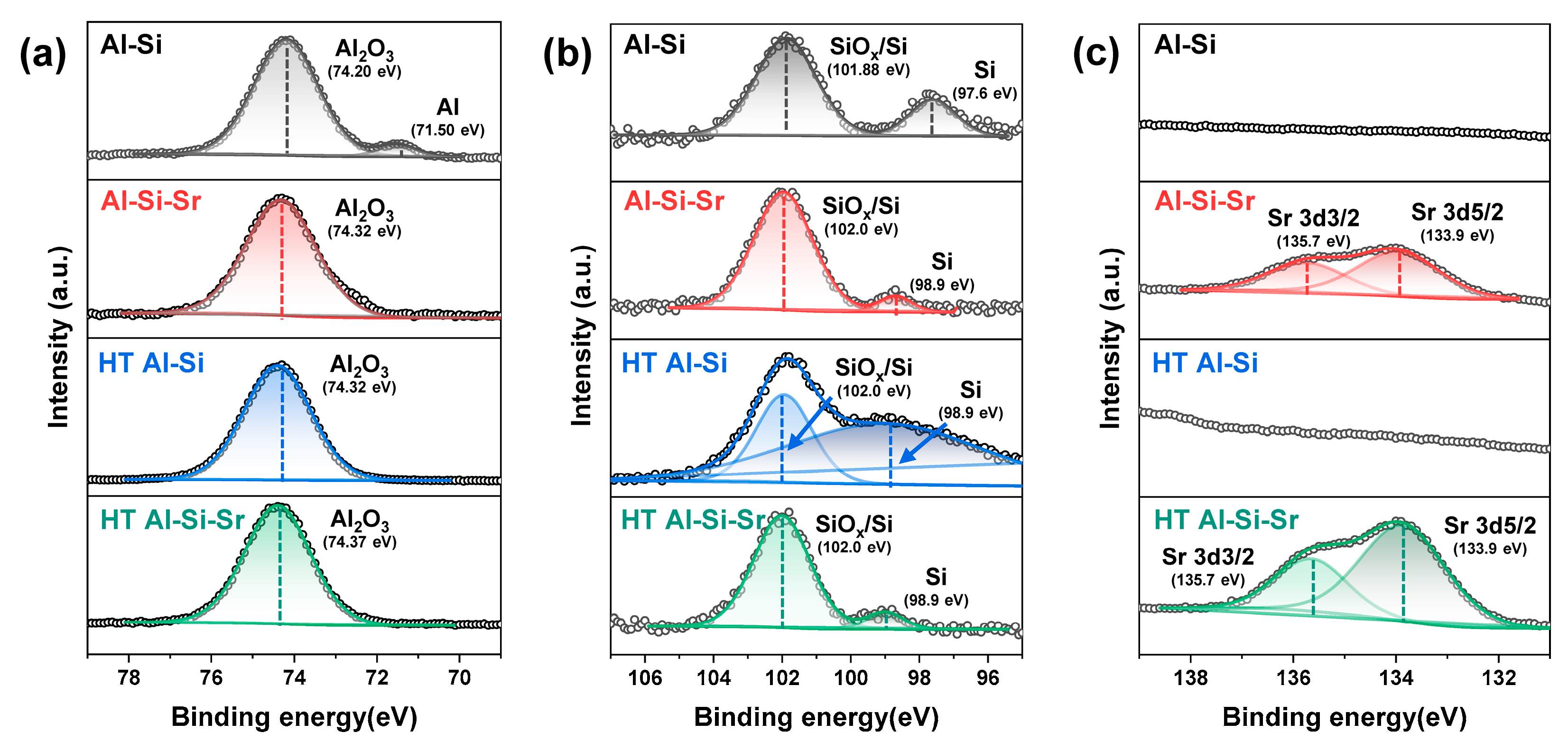
Figure 7 presents the quantitative elemental analysis and bonding state evaluation of the coating surfaces using XPS, comparing samples with and without Sr addition before and after heat treatment. Peaks corresponding to Al 2p [36], and Si 2p [36] were detected in all samples, whereas Sr 3d [36] peaks appeared exclusively in the Al-Si-Sr and HT Al-Si-Sr samples, consistent with the results of GDS and SIMS analyses, thus confirming the presence of Sr in the coatings.
In Figure 7a, an Al 2p peak at approximately 71.5 eV was observed only in the Al-Si sample among all specimens. This peak is attributed to metallic Al, while in the Sr-added (Al-Si-Sr) and heat-treated (HT Al-Si and HT Al-Si-Sr) samples, the absence of this metallic Al peak is likely due to the formation of a denser Al2O3 film and oxide layers on the surface. Considering this, no significant change in the BE of the Al 2p peak was observed regardless of Sr addition or heat treatment. In addition, as shown in Figure 7c, although the resolution of the XPS spectra in this study limits exact precise differentiation of peak, the presence of Sr is clearly distinguishable. While no significant change in BE is observed between the Al-Si-Sr and HT Al-Si-Sr samples, this indicates that the BE of the Sr 3d peak does not significantly change with heat treatment.
However, in Figure 7b, the Si peak of the Al-Si sample appears at approximately 97.6 eV, which is slightly lower than the bulk Si reference value. This negative shift is attributed to the electron donation from Al to Si within the Al-Si eutectic microstructure, consistent with the relatively lower electronegativity of Al compared to Si, which increases the local electron density around Si atoms and reduces its binding energy [37]. Whereas the Al-Si-Sr, HT Al-Si, and HT Al-Si-Sr samples exhibit a shift toward a higher BE of approximately 98.9 eV, corresponding to an increase of about 1.3 eV. This shift is attributed to enhanced interactions between Al and Si oxides on the coating surface. Specifically, in the Al-Si-Sr sample, the spheroidization and refinement of Si particles expanded the contact area between Al and Si oxides in ambient air, facilitating their oxidation. The higher oxidation state of Si withdraws electron density from the Si atom, resulting in an increase in BE [38]. For the HT Al-Si and HT Al-Si-Sr samples, the formation of surface oxide layers during heat treatment was considered the primary factor driving the Si peak shift. These findings further emphasize the role of heat treatment in altering the surface chemical states of the coatings through oxide formation.

3.2. Corrosion Resistance Evaluation

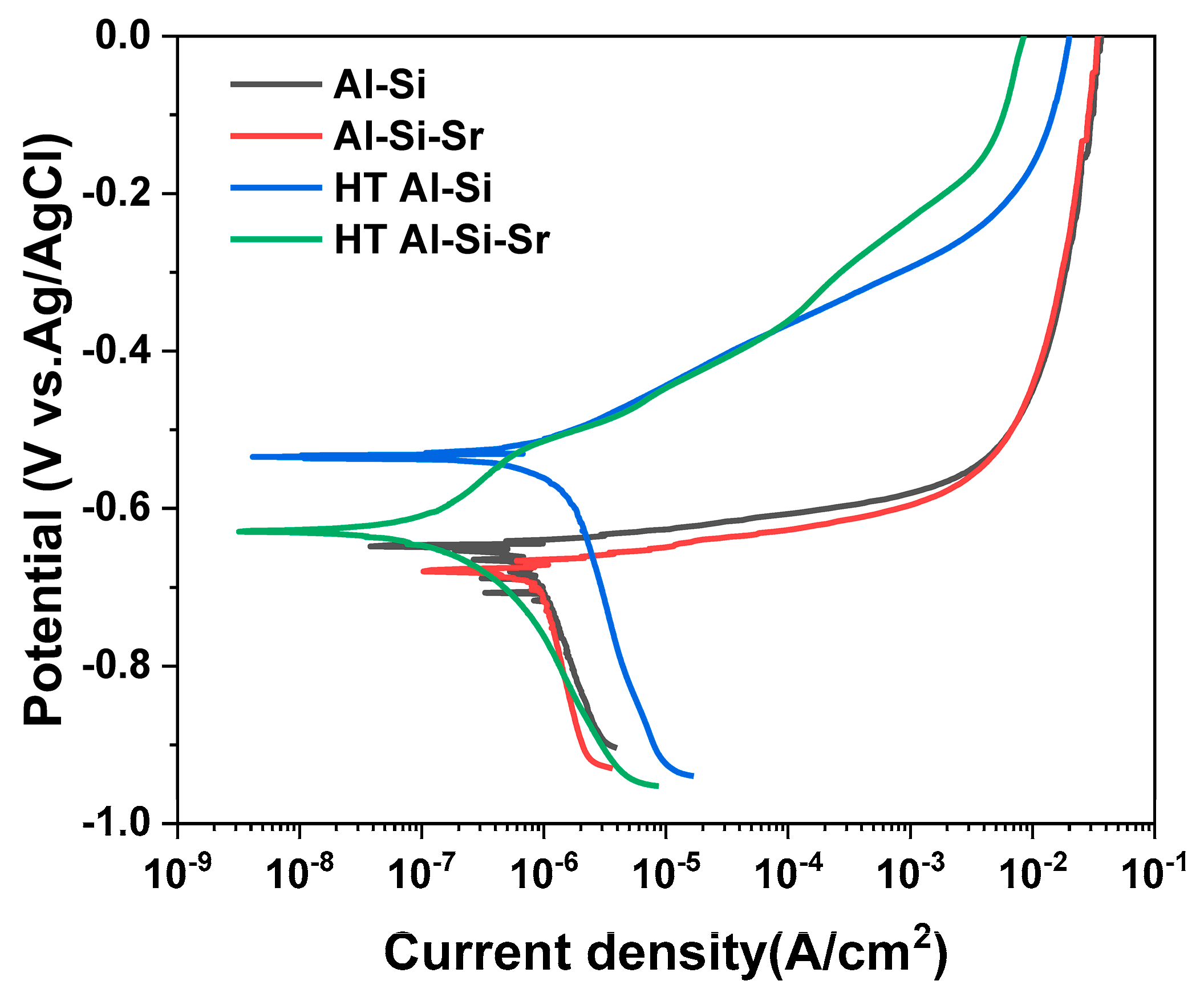
To evaluate the corrosion resistance of each coating, electrochemical tests were conducted in a 3.5 wt.% NaCl solution—chosen to simulate a seawater environment where Al coatings are susceptible to corrosion. Figure 8 presents the potentiodynamic polarization curves, comparing the effects of Sr addition and heat treatment. The corrosion potential (Ecorr) and corrosion current density (icorr) derived from the polarization tests are summarized in Table 2. The measured Ecorr for the Al-Si, Al-Si-Sr, HT Al-Si, and HT Al-Si-Sr samples were −656.6, −679.6, −528.6, and −629.6 mV (vs. Ag/AgCl), respectively. These results indicate that Sr addition had no significant effect on the Ecorr. Before heat treatment, Sr addition did not alter the coating structure or induce the precipitation of IMCs within the Al-Si coating. Consequently, the Ecorr remained unchanged. After heat treatment, the HT Al-Si coating exhibited a more noble Ecorr, likely due to the formation of an Al-rich Fe-Si intermetallic layer driven by Fe diffusion from the substrate. The HT Al-Si-Sr coating maintained a Ecorr similar to that of Al in its outermost lamellar structure.
However, Sr addition significantly reduces the icorr. Before heat treatment, the corrosion current densities of Al-Si and Al-Si-Sr coatings were 1.106 and 0.896 μA/cm2, respectively, confirming that Sr addition provided comparable or slightly superior corrosion resistance. Notably, the HT Al-Si-Sr coating exhibited an extended anodic range, from approximately −600 mV to −200 mV (vs. Ag/AgCl), above Ecorr, in which stable oxide behavior was maintained. In contrast, the HT Al-Si coating showed a relatively rapid increase in current density over the anodic region above Ecorr, from approximately −520 mV to −200 mV. The icorr of HT Al-Si-Sr was measured at 0.094 μA/cm2, significantly lower than the 1.440 μA/cm2 recorded for HT Al-Si.
This improvement can be attributed to the formation of a fine lamellar structure in the outermost layer of the HT Al-Si-Sr coating. According to the literature, the lamellar structure increases the contact area between Al and atmospheric O, promoting the formation of a dense and continuous oxide film on the surface. The oxide film serves as an effective barrier, slowing corrosion progression [34,35]. Consequently, HT Al-Si-Sr exhibited enhanced corrosion resistance, as evidenced by its reduced corrosion propagation rate.
EIS, which employs an AC power source, enables the quantitative determination of resistance and capacitance values during corrosion processes by fitting the experimental data to an equivalent electrical circuit model. Through this approach, EIS determines various corrosion-related parameters, facilitating the evaluation of electrochemical reaction characteristics and coating performance.
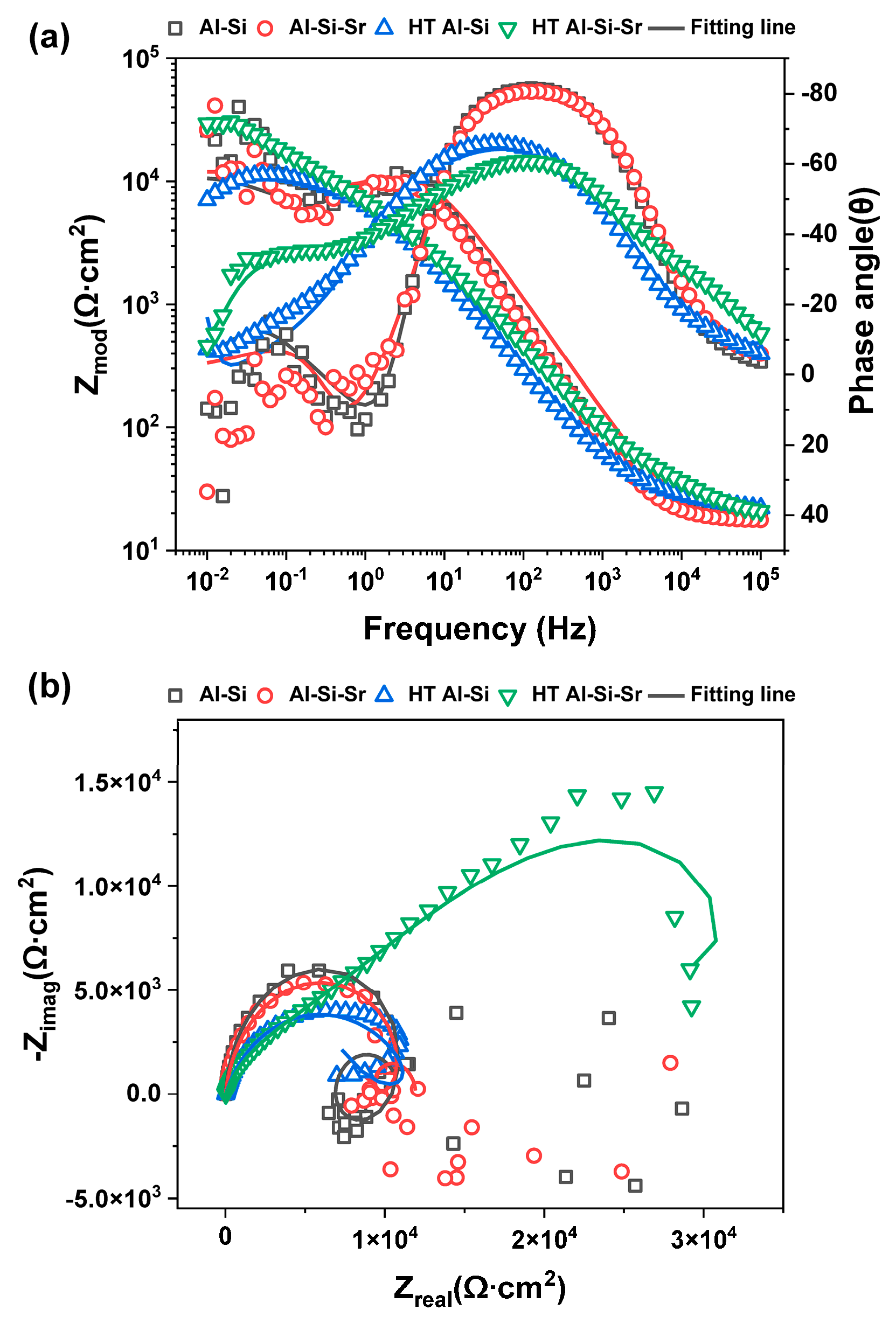
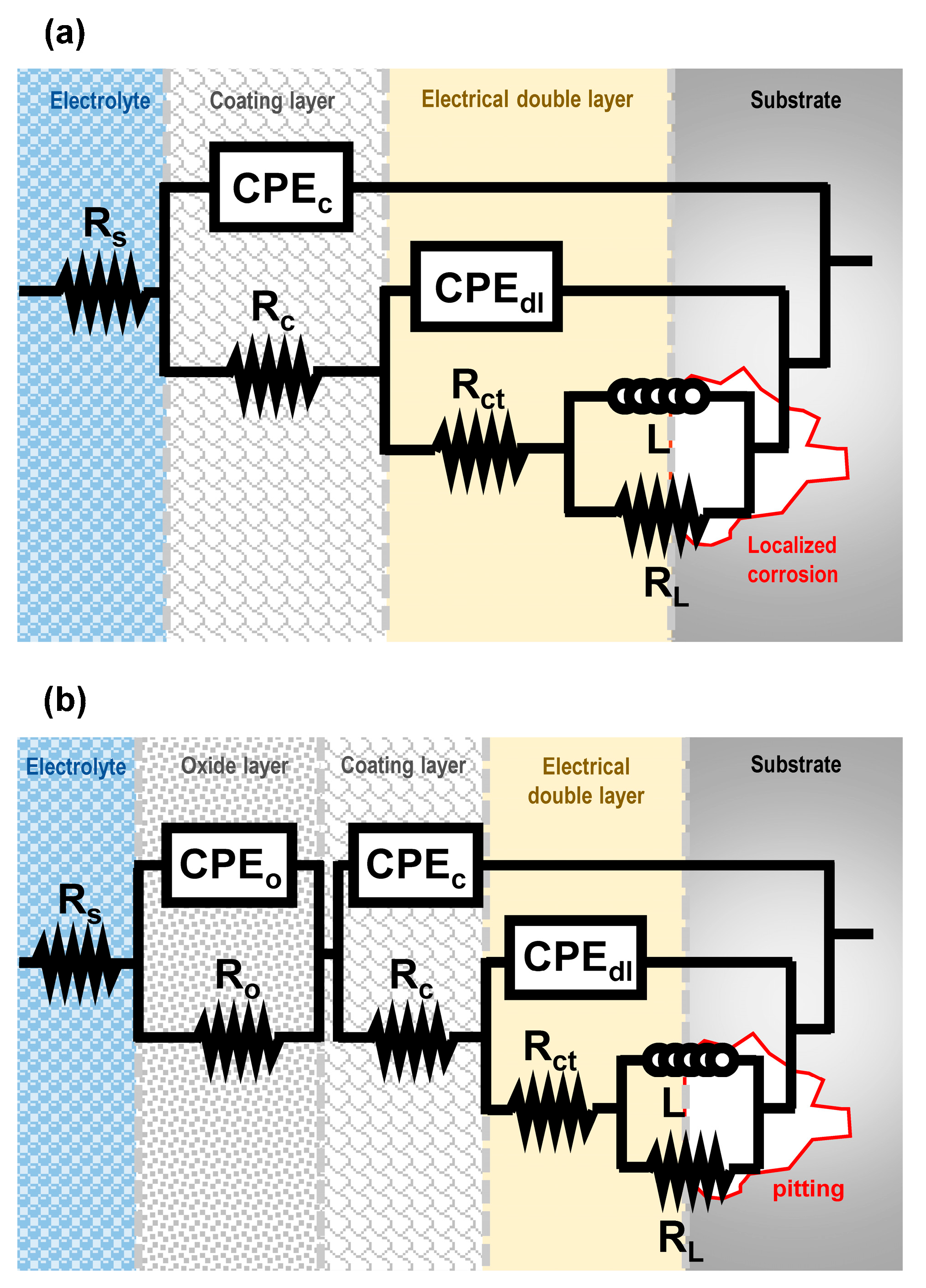
Figure 9 shows the EIS results for the Al-Si, Al-Si-Sr, HT Al-Si, and HT Al-Si-Sr-coated steel samples. The data are displayed as Bode impedance plots and Bode phase angle plots in Figure 9a, and as Nyquist plots in Figure 9b. The EIS data for each sample were fitted using two equivalent circuit models, as shown in Figure 10, with the resulting corrosion parameters summarized in Table 3. The impedance (Z) of the CPE was calculated using Equation (1) [39]:
Z C P E = 1 / Q j ω n ,
where ω is the angular frequency (ω = 2πf), and Q and n are the CPE fitting parameters [40]. In the equivalent circuit, Rs denotes the solution resistance between the RE and WE. Rct corresponds to the charge transfer resistance at the metal interface owing to polarization, Rc represents the coating resistance, and Ro denotes the resistance associated with oxide formation. The constant phase element (CPE) accounts for imperfect capacitance behavior during corrosion, where CPEdl refers to the double-layer capacitance, CPEc denotes the coating capacitance, and CPEo represents the capacitance of the oxide layer. Additionally, L and RL represent the inductive element and its associated resistance, respectively, which describe the inductive electrical loop formed when the corrosion processes are not effectively inhibited [41].
The EIS results for the Al-Si and Al-Si-Sr samples before the heat treatment revealed that the total impedance increased with Sr addition. Both samples exhibited inductive behavior in the low-frequency region, attributed to Al dissolution from the Al-Si coating, aligning with the equivalent circuit model shown in Figure 10a. Furthermore, a phase-angle peak appeared in the low-frequency region, indicating coating-layer resistance. As presented in Table 3, CPEc admittance decreased with Sr addition, demonstrating improved capacitive performance. This improvement was accompanied by a higher coating resistance, suggesting that the formation of a dense Al-Fe-Si intermetallic layer without vertical cracks contributed to the enhanced resistance.
For the heat-treated samples, HT Al-Si and HT Al-Si-Sr, the equivalent circuit model shown in Figure 10b was applied owing to the presence of surface oxide layers. The EIS results for the heat-treated coatings exhibited three distinct phase-angle peaks. These peaks corresponded to the oxide layer (CPEo) at high frequencies, electric double layer (CPEdl) at intermediate frequencies, and the coating layer (CPEc) at low frequencies, indicating that the surface oxide layer of the coating provided primary protection against corrosion.
When comparing the oxide layer resistance of the HT Al-Si and HT Al-Si-Sr samples, the resistance significantly improved with Sr addition. The resistance of the electric double layer showed no significant differences between the two samples. However, the coating resistance increased substantially with Sr addition, confirming that Sr improves the overall resistance of the coating layer. These results demonstrate that Sr addition enhances the corrosion resistance of both the surface oxide layer and the coating layer during heat treatment.
In summary, Sr addition to hot-dip aluminized steel enhanced the shielding performance of the Al-Fe-Si intermetallic layer against corrosion. Furthermore, even after HPF heat treatment, Sr promoted the formation of a dense surface oxide layer through the lamellar microstructure in the outermost coating. This enhancement leads to improved corrosion resistance of the coating layer, confirming the superior corrosion resistance of Sr-modified coatings.
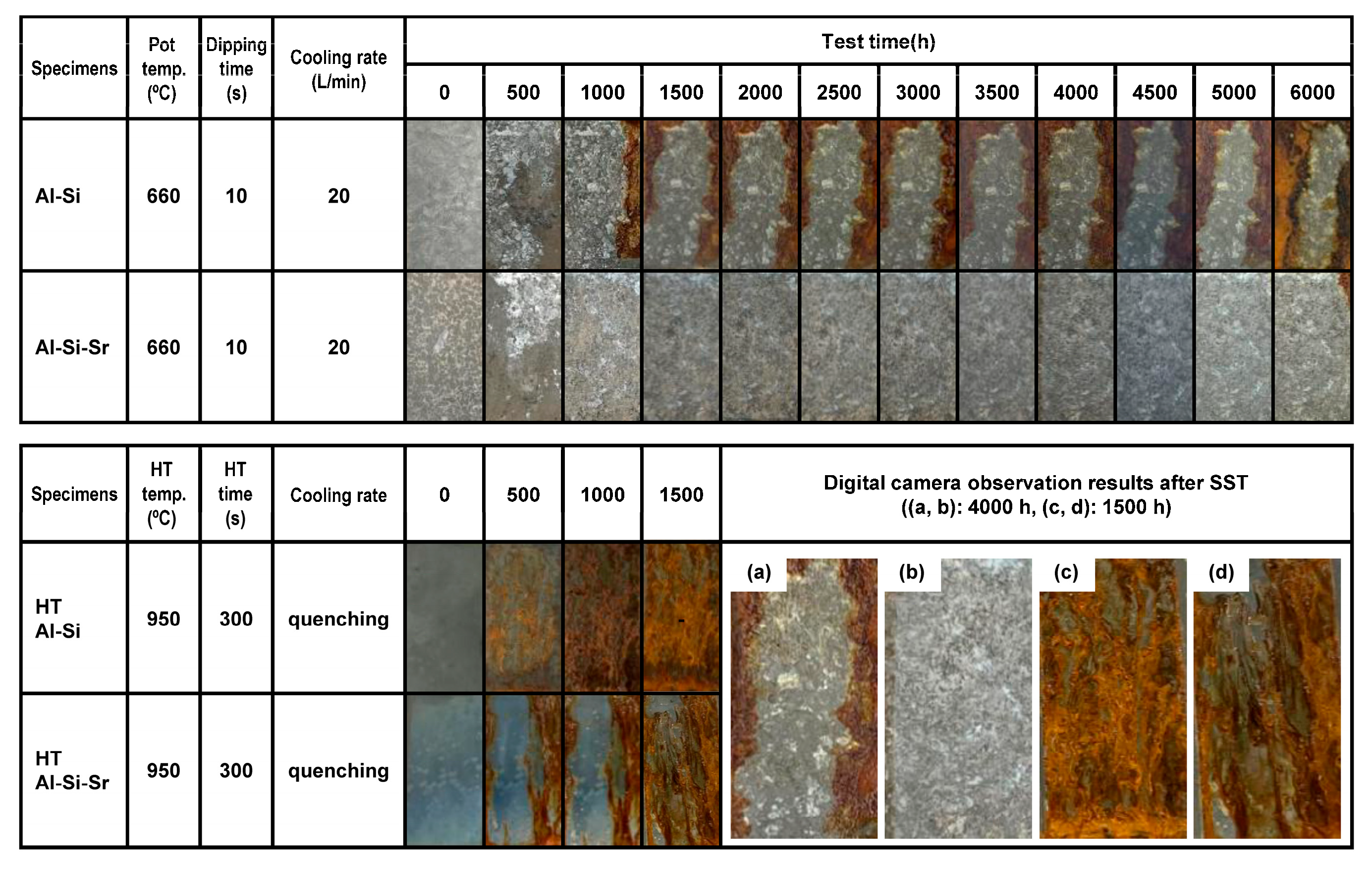
SSTs were conducted on the four coated steel samples following the ASTM B117 standard, with their surface appearances being periodically observed. Figure 11 depicts the SST results for the Al-Si, Al-Si-Sr, HT Al-Si, and HT Al-Si-Sr coatings fabricated in this study.
For the Al-Si coating, red rust appeared after 1000 h of SST exposure, indicating the onset of substrate corrosion and insufficient corrosion protection provided by the coating layer. In contrast, the Al-Si-Sr coating exhibited a white rust layer that persisted up to 6000 h of SST, effectively delaying Fe substrate corrosion. Specifically, the appearance of red rust in the Al-Si-Sr coating was delayed by more than six times compared to that in the Al-Si coating. These findings confirm that Sr addition to the molten Al bath significantly enhances the corrosion resistance of the Al coating. This improvement was attributed to the formation of a dense intermetallic layer within the coating, as observed during the microstructural analysis, which effectively inhibited corrosion propagation into the Fe substrate.
For the heat-treated samples, both HT Al-Si and HT Al-Si-Sr exhibited red rust formation after 500 h of SST, regardless of Sr addition, likely due to vertical cracks traversing the coating layer and extending to the Fe substrate, which formed during the cooling process following the austenitization heat treatment. These cracks likely acted as initiation sites for direct substrate corrosion, thereby diminishing the barrier protection effect of the coating and accelerating red rust during SST. Additionally, after 1000 h of SST, the HT Al-Si coating surface was completely covered with red rust.
In contrast, while the HT Al-Si-Sr coating developed red rust after 500 h, its spread across the surface was significantly delayed. This slower corrosion progression is attributed to the microstructural characteristics of the Sr-modified coating, which will be further examined in subsequent sections through detailed corrosion-morphology observations.

3.3. Corrosion Behavior in Heat-Treated HPF

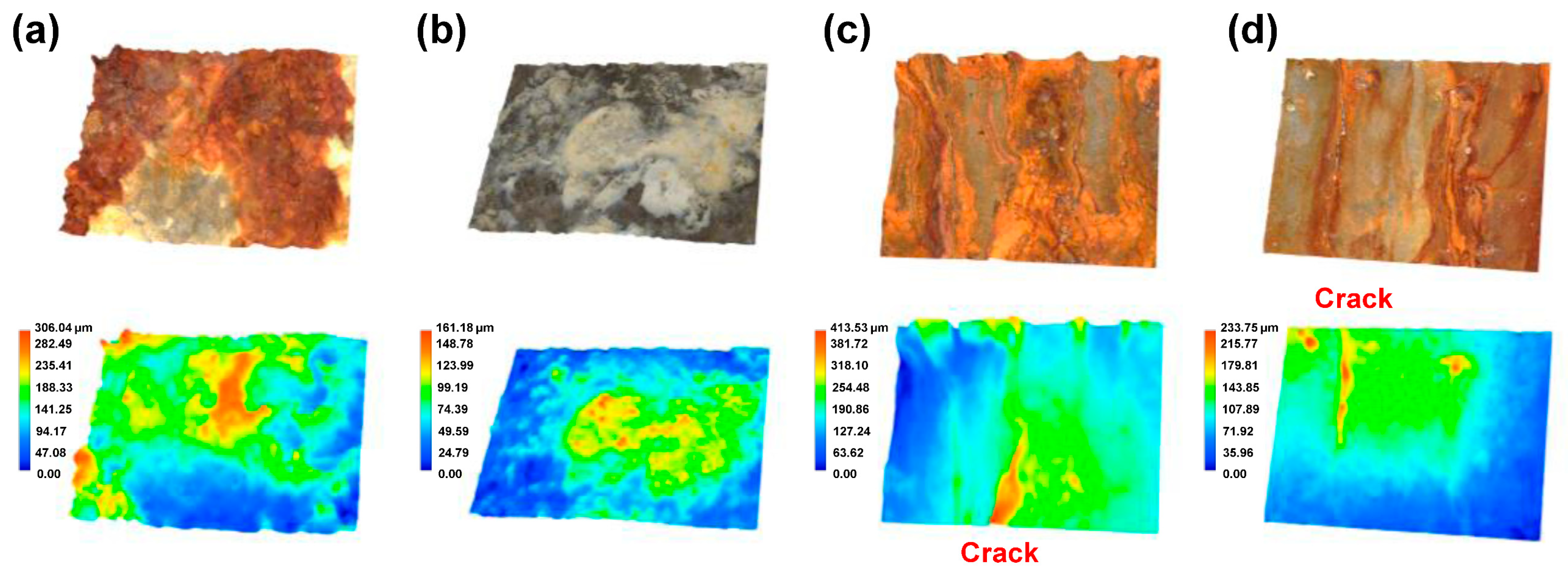
The formation of corrosion products on the surfaces of the four coated steel samples was examined using a high-resolution optical 3D surface analyzer after 4000 h of SST for the non-heat-treated samples and 1000 h for the heat-treated samples. The results are presented in Figure 12.
As illustrated in Figure 12a, the Al-Si coating exhibited significant red rust formation after 4000 h of SST, with a maximum height of approximately 306 μm. In contrast, Figure 12b show that the Al-Si-Sr coating displayed no red rust after 4000 h. Instead, a white rust layer, primarily composed of Al corrosion products, formed with a maximum height of 161 μm. These findings suggest that in the Al-Si coating, extensive dissolution of the coating layer led to advanced corrosion of the Fe substrate, resulting in excessive Fe ion release and the subsequent formation of large amounts of red rust. Conversely, the Al-Si-Sr coating experienced only Al ion dissolution, with no significant corrosion progression into the Fe substrate.
For the heat-treated samples, both HT Al-Si and HT Al-Si-Sr developed red rust and streaking after 1000 h of SST. Figure 12c,d show that red rust followed the cracks formed in the coating layers during heat treatment, with heights of 413 and 233 μm, respectively. These findings indicate that corrosion initiated and progressed along the cracks in the coating layers, regardless of Sr addition. However, consistent with the electrochemical evaluation results, the lower icorr and higher resistance of the intermetallic layer in the HT Al-Si-Sr coating reduced the corrosion rate. This deceleration effectively delayed the corrosion progression on the Fe substrate.
Figure 13 presents the cross-sectional SEM images of the four coated steel samples after 4000 h of SST for the non-heat-treated samples and 1000 h for the heat-treated samples.
For the Al-Si coating, after 4000 h of SST, as shown in Figure 13a, corrosion penetrated the Al-Si coating and advanced through vertical cracks in the Al-Fe-Si intermetallic layer. The corrosion further propagated along the interface between the Fe substrate and the coating, leading to severe substrate corrosion and the formation of red rust on the surface, as seen in the SST results. In contrast, as shown in Figure 13b, the Al-Si-Sr coating exhibited a different corrosion-progression pattern. While corrosion advanced horizontally along the Al-Si coating, forming Al oxides, the intermetallic layer remained significantly dense, preventing corrosion from propagating toward the Fe substrate. Consequently, only white rust, composed of Al oxides, was detected on the surface after SST.
Among the heat-treated samples, the HT Al-Si coating showed severe corrosion after 1000 h of SST, accompanied by delamination of the coating layer and extensive Fe-substrate corrosion. In contrast, the HT Al-Si-Sr coating retained its coating layer without delamination, with FE-substrate corrosion being less pronounced than in HT Al-Si.
The observed corrosion behavior suggests that although both coatings experienced corrosion initiation at vertical cracks in the rearranged intermetallic layer, their progression differed. In the HT Al-Si-Sr, after corrosion initiated at the Fe substrate–coating interface, it did not advance significantly into the Fe substrate. Instead, the intermetallic layer underwent corrosion, indicating that its superior retention continued to provide sacrificial protection to the Fe substrate, effectively slowing the corrosion rate [27].
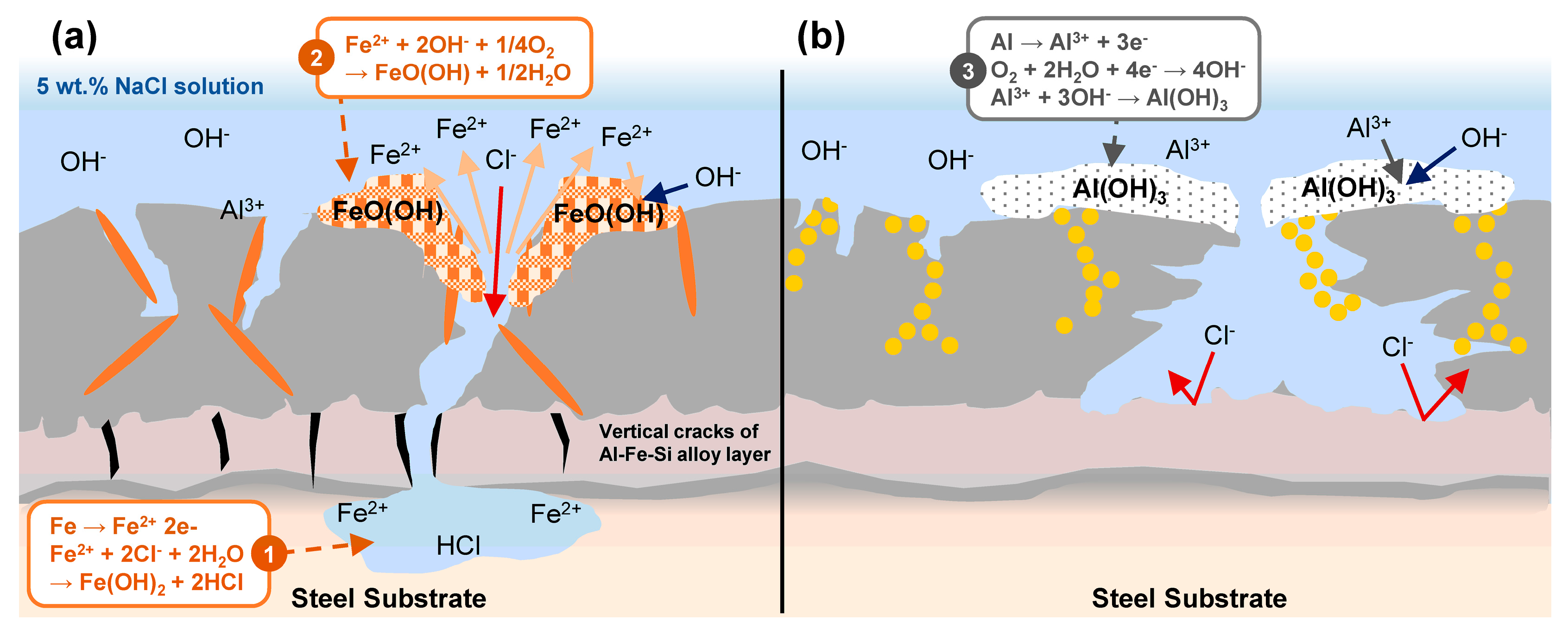
Based on the microstructural analysis and corrosion resistance evaluation, the corrosion mechanisms of the coatings were identified, as schematically illustrated in Figure 14.
As shown in Figure 14a, the Al-Si coating exhibited coarse Si crystals within the Al-Si layer, promoting a deep-pitting corrosion morphology. During the dissolution process of the Al-Si coating, vertical cracks in the Al-Fe-Si intermetallic layer acted as pathways for corrosion to penetrate into the Fe substrate. Consequently, red rust formed after 1000 h of SST in a corrosive environment. The corrosion of the Fe substrate is shown in Equations (2)–(4).
F e F e 2 + + 2 e
F e 2 + + 2 C l + 2 H 2 O F e ( O H ) 2 + 2 H C l
F e 2 + + 2 O H + 1 / 4 O 2 F e O ( O H ) + 1 / 2 H 2 O
In contrast, as illustrated in Figure 14b, the addition of Sr to the Al-Si coating refined and spheroidized the Si crystals, resulting in a shallower pitting morphology. The Al-Fe-Si intermetallic layer formed in the Sr-modified coating was dense and free of vertical cracks, exhibiting higher capacitance and superior resistance. These properties enhanced its ability to shield against corrosion factors, causing corrosion to progress horizontally along the Al-Si coating rather than penetrating the Fe substrate. As a result, even after 6000 h of SST, the surface of the Al-Si-Sr coating remained covered with Al corrosion products, with the overall appearance remaining intact. The Al corrosion products were produced as shown in Equations (5)–(7).
A l A l 3 + + 3 e
O 2 + 2 H 2 O + 4 e 4 O H
A l 3 + + 3 O H A l ( O H ) 3
The galvanic interaction between the Al-Si coating and Fe substrate enables the sacrificial anode protection effect of the Al-Si layer, effectively delaying the initiation of substrate corrosion. Thus, the addition of Sr to the molten Al bath suppressed the growth rate of Si crystals, altering their chemical properties. Furthermore, the Al-Fe-Si intermetallic layer formed during the coating process became dense and compact, offering superior corrosion resistance compared to conventional Al-Si coatings.
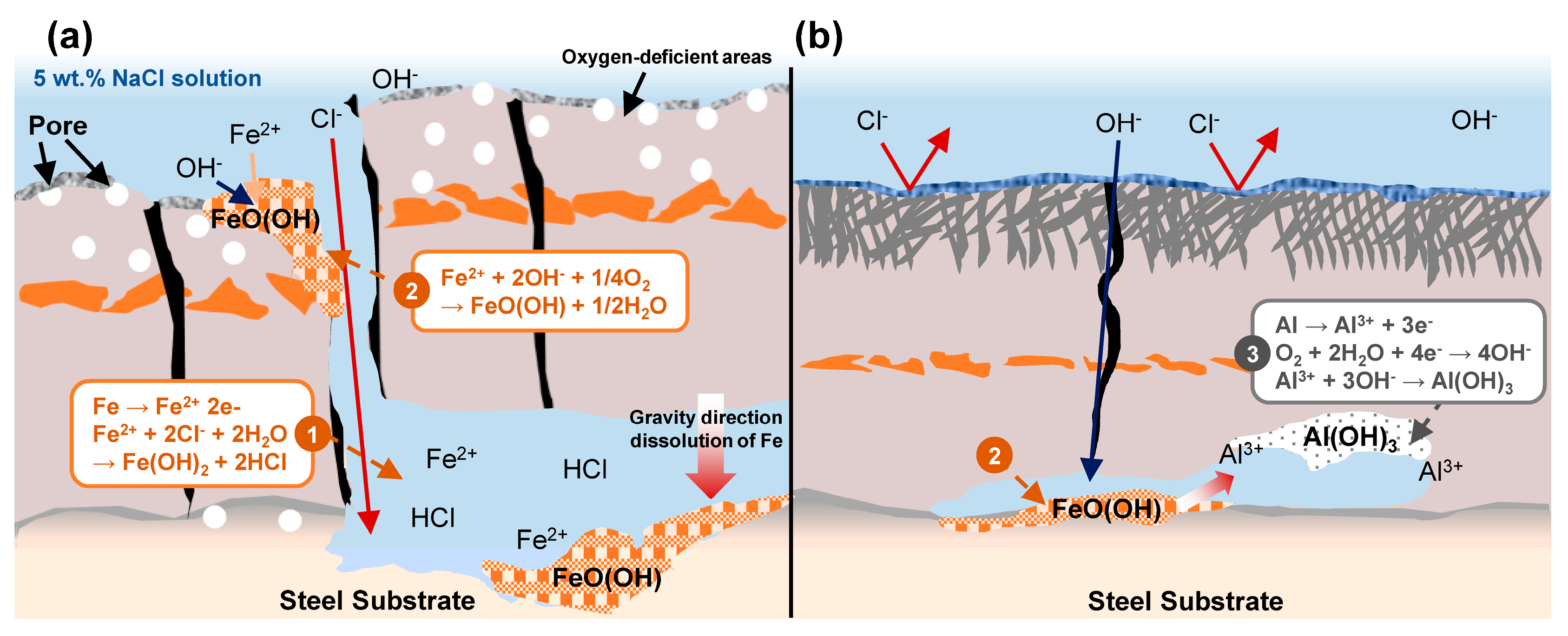
Following HPF heat treatment, the rearrangement of intermetallic layers introduces significant differences in the corrosion mechanisms of aluminized steel coatings compared to those commonly reported, as illustrated in Figure 14. These differences are further detailed in Figure 15.
For both samples, Fe diffusion into the intermetallic layers during heat treatment led to the rearrangement of the intermetallic structure, alongside the formation of vertical cracks extending to the Fe substrate interface. Additionally, an oxide layer developed on the outermost surface of the coating during the heat treatment. As shown in Figure 15a, the HT Al-Si coatings formed an Al8Fe2Si intermetallic layer due to Fe diffusion, accompanied by numerous pores in the outermost coating layer. These pores disrupted the connectivity of the oxide layer, creating O-deficient regions that served as initiation sites for additional corrosion [26,42]. Furthermore, vertical cracks within the coating acted as pathways for aggressive ions (such as Cl) to penetrate and rapidly initiate Fe-substrate corrosion. Insufficient coating retention further reduced its ability to provide effective barrier protection, resulting in severe vertical corrosion of the Fe substrate.
In contrast, the Sr-modified HT Al-Si-Sr coatings exhibited a different corrosion mechanism, as illustrated in Figure 15b. The intermetallic layer in HT Al-Si-Sr primarily consisted of Al-rich and Si-depleted phases such as AlFeSi. Although the elemental distribution within the coating layers was similar to that of HT Al-Si, the outermost layer of HT Al-Si-Sr featured a fine lamellar microstructure composed of Al- and Al-rich Al-Fe-Si phases with no evidence of pores. The formation of this fine lamellar structure increased the contact area between Al and atmospheric O, promoting the development of a dense and continuous oxide layer [43]. Potentiodynamic polarization tests confirmed this superior oxide layer behavior. The results revealed an extended oxide stability potential range and a lower icorr compared with those of HT Al-Si. These findings demonstrate the enhanced corrosion resistance of HT Al-Si-Sr.
While corrosion initiation in HT Al-Si-Sr coatings also occurs at vertical cracks, similar to HT Al-Si, the corrosion progression differs significantly. Instead of advancing vertically into the Fe substrate, the corrosion propagated into the tightly adhered intermetallic layer. This behavior highlights the superior capacitance and resistance of the intermetallic layer in HT Al-Si-Sr coatings. The improved retention between the Fe substrate and the AlFeSi intermetallic layer enables galvanic interactions, providing effectively delayed substrate corrosion. These findings demonstrate that Sr addition enhances the retention and structural integrity of the coating, ultimately improving the corrosion resistance of the Fe substrate.


4. Conclusions

This study demonstrates the potential applicability of highly corrosion-resistant Al-Si-Sr coatings in industrial HPF environments.
(1)
Adding 0.05% Sr to molten Al-Si coatings did not result in the formation of a solid solution or IMCs within the coating layer. Instead, Sr promoted the refinement and spheroidization of Si particles and facilitated the formation of dense Al-Fe-Si alloy layers without vertical cracks.
(2)
During austenitization heat treatment in the HPF process, the coating layers underwent significant rearrangement. Notably, Sr addition resulted in the formation of a fine lamellar structure comprising Al- and Al-rich Al-Fe-Si phases in the outermost coating layer.
(3)
The addition of Sr improved the corrosion resistance of the coating layers after HPF heat treatment. This improvement is considered to be associated with enhanced coating retention, which likely contributes to maintaining the sacrificial anodic and barrier protection effects of the coating, thereby delaying corrosion progression into the Fe substrate.

(4)
The superior resistance of the oxide layers formed in Sr-containing coatings was attributed to their lamellar structure, which increased the contact area between Al and atmospheric O, promoting the formation of a dense and continuous oxide film. Electrochemical evaluation confirmed the superior corrosion resistance of Al-Si-Sr coatings.
(5)
Adding Sr altered the typical Type 1 corrosion behavior of Al-Fe-Si alloy layers in conventional aluminized steel. The prevention of crack-induced corrosion propagation significantly delayed substrate corrosion. Even after HPF heat treatment, the dense oxide layers and improved coating retention contributed to the superior corrosion resistance of Al-Si-Sr coatings.
In conclusion, Sr addition promoted the formation of a dense corrosion-resistant coating and enhanced retention after HPF, leading to superior corrosion resistance. Future research will focus on investigating the mechanisms of crack formation by measuring the elastic modulus and elongation of the coating and alloy layers before and after HPF, with and without Sr addition. This study proposes a viable method for enhancing the performance of HPF coatings in lightweight, corrosion-resistant materials, facilitating their adoption in the automotive industry for sustainable applications.

Supplementary Materials

The following supporting information can be downloaded at: https://www.mdpi.com/article/10.3390/coatings16050621/s1, Figure S1. Heat cycle during heat treatment. Figure S2. BSE images of the cross-section of (a) Al-Si, (b) Al-Si-Sr, (c) HT Al-Si and (d) HT Al-Si-Sr coatings. Table S1. Relative proportions of the elements in phases suggested from SEM images shown in Figure 4 and Figure 5 measured using EDS (at. %).

Author Contributions

Conceptualization, D.-W.S., S.-H.P. and S.-H.L.; Methodology, D.-W.S., S.-H.P. and S.-H.L.; Validation, D.-W.S., S.-H.P. and S.-H.L.; Formal analysis, D.-W.S.; Investigation, D.-W.S. and S.-H.P.; Resources, S.-H.L.; Writing—original draft, D.-W.S.; Writing—review & editing, D.-W.S., S.-H.P. and S.-H.L.; Visualization, D.-W.S. and S.-H.P.; Supervision, S.-H.L. All authors have read and agreed to the published version of the manuscript.

Funding

This research was supported by Korea Institute of Marine Science & Technology Promotion (KIMST) funded by the Ministry of Oceans and Fisheries (No. 20220603).

Institutional Review Board Statement

Not applicable.

Informed Consent Statement

Not applicable.

Data Availability Statement

The original contributions presented in this study are included in the article/Supplementary Material. Further inquiries can be directed to the corresponding author.

Conflicts of Interest

The authors declare no conflict of interest.

References

  1. International Energy Agency (IEA). Transport, Energy and CO2. Available online: https://www.iea.org/reports/transport-energy-and-co2 (accessed on 1 April 2026).
  2. Han, B.-S.; Kim, S.-H.; Shin, J.-H.; Kim, J.-P.; Kim, D.-O.; Seong, S.-Y. Automotive technology trends and lightweighting technology. J. Korea Foundry Soc. 2022, 42, 97–104. [Google Scholar]
  3. Löbbe, C.; Hering, O.; Hiegemann, L.; Tekkaya, A.E. Setting mechanical properties of high strength steels for rapid hot forming processes. Materials 2016, 9, 229. [Google Scholar] [CrossRef]
  4. Maki, J. Corrosion behavior of aluminized steel sheets in 50-year outdoor exposure test. ISIJ Int. 2019, 59, 1870–1877. [Google Scholar] [CrossRef]
  5. Fan, D.W.; De Cooman, B.C. State-of-the-knowledge on coating systems for hot stamped parts. Steel Res. Int. 2012, 83, 412–433. [Google Scholar] [CrossRef]
  6. Gui, Z.-X.; Wang, K.; Zhang, Y.-S.; Zhu, B. Cracking and interfacial debonding of the Al–Si coating in hot stamping of pre-coated boron steel. Appl. Surf. Sci. 2014, 316, 595–603. [Google Scholar] [CrossRef]
  7. Wang, K.; Jin, Y.; Zhu, B.; Zhang, Y. Investigation on cracking characteristics of Al–Si coating on hot stamping boron steel parts based on surface strain analysis. Surf. Coat. Technol. 2017, 309, 282–294. [Google Scholar] [CrossRef]
  8. Peng, H.; Zhao, Y.; Fu, W.; Chen, Z.; Zhang, M.; Liu, J.; Tan, X. Comparative study of anti-corrosion properties of different types of press-hardened steels. Materials 2024, 17, 1022. [Google Scholar] [CrossRef] [PubMed]
  9. Macháčková, N.; Rudomilova, D.; Prošek, T.; Sturel, T.; Brossard, M. Corrosion mechanism of press-hardened steel with aluminum-silicon coating in controlled atmospheric conditions. Metals 2025, 15, 97. [Google Scholar] [CrossRef]
  10. Djurdjevic, M.; Stockwell, T.; Sokolowski, J. The effect of strontium on the microstructure of the aluminium-silicon and aluminium-copper eutectics in the 319 aluminium alloy. Int. J. Cast. Met. Res. 1999, 12, 67–73. [Google Scholar] [CrossRef]
  11. Eidhed, W. Modification of β-Al5FeSi compound in recycled Al-Si-Fe cast alloy by using Sr, Mg and Cr additions. J. Mater. Sci. Technol. 2008, 24, 45. [Google Scholar]
  12. Timpel, M.; Wanderka, N.; Schlesiger, R.; Yamamoto, T.; Lazarev, N.; Isheim, D.; Schmitz, G.; Matsumura, S.; Banhart, J. The role of strontium in modifying aluminium-silicon alloys. Acta Mater. 2012, 60, 3920–3928. [Google Scholar] [CrossRef]
  13. Öztürk, İ.; Ağaoğlu, G.H.; Erzi, E.; Dispinar, D.; Orhan, G. Effects of strontium addition on the microstructure and corrosion behavior of A356 aluminum alloy. J. Alloys Compd. 2018, 763, 384–391. [Google Scholar] [CrossRef]
  14. Lee, Y.-S.; Jung, J.-K.; Kim, S.-B.; Kim, S.-H.; Lim, C.-Y.; Kim, H.-W.; Kim, W.-K.; Hyun, S.-K. Effect of thermo-mechanical treatment and strontium addition on workability and mechanical properties of Al-Si-Cu casting alloy. Mater. Charact. 2021, 178, 111256. [Google Scholar] [CrossRef]
  15. Zeng, L.; Jin, Y.; Gao, J.; Yi, W.; Chen, L.; Zhang, L. Achieving simultaneous improvement in strength and ductility in Al-Si-Mg-Ce alloy through synergistic morphology modification of eutectic (Si) and Al2Si2Ce phases by Sr addition. J. Mater. Res. Technol. 2024, 33, 975–981. [Google Scholar] [CrossRef]
  16. Ma, X.; Pei, J.; Pan, Y.; Chen, L.; Tian, J.; Hou, H.; Hou, J.; Zhao, Y. Effects of different Si content and Sr addition on microstructure characteristics and mechanical properties of cast Al-Si-Cu-Mg-Mn alloys. J. Mater. Res. Technol. 2025, 37, 5053–5069. [Google Scholar] [CrossRef]
  17. Sui, Y.; Wang, Q.; Wang, G.; Liu, T. Effects of Sr content on the microstructure and mechanical properties of cast Al-12Si-4Cu-2Ni-0.8Mg alloys. J. Alloys Compd. 2015, 622, 572–579. [Google Scholar] [CrossRef]
  18. Samuel, F.H.; Samuel, A.M.; Ouellet, P.; Doty, H.W. Effect of Mg and Sr additions on the formation of intermetallics in Al-6 wt pct Si-3.5 wt pct Cu-(0.45) to (0.8) wt pct Fe 319-type alloys. Metall. Mater. Trans. A 1998, 29, 2871–2884. [Google Scholar] [CrossRef]
  19. Tang, S.Q.; Zhou, J.X.; Tian, C.W.; Yang, Y.S. Morphology modification of Mg2Si by Sr addition in Mg-4% Si alloy. Trans. Nonferrous Met. Soc. China 2011, 21, 1932–1936. [Google Scholar] [CrossRef]
  20. Zhao, P.; Wang, Q.; Zhai, C.; Zhu, Y. Effects of strontium and titanium on the microstructure, tensile properties and creep behavior of AM50 alloys. Mater. Sci. Eng. A 2007, 444, 318–326. [Google Scholar] [CrossRef]
  21. Wang, B.; Xue, S.B.; Han, Y.L.; Lin, Z.Q. Effect of combinative addition of Ti and Sr on modification of AA4043 welding wire and mechanical properties of AA6082 welded by TIG welding. Trans. Nonferrous Met. Soc. China 2017, 27, 272–281. [Google Scholar] [CrossRef]
  22. Firoozbakht, M.; Blond, A.; Fleck, C.; Kaya, A.C.; Bührig-Polaczek, A. Modification of open-cell cast aluminum–silicon foams with strontium. J. Alloys Compd. 2024, 1002, 175426. [Google Scholar] [CrossRef]
  23. Djurdjevic, M.; Manasijevic, S.; Smiljanic, S.; Ristic, M. Quantification of modifiers fading during melt holding in the aluminum casting furnace. Crystals 2023, 13, 191. [Google Scholar] [CrossRef]
  24. Kim, J.; Park, S.; Lee, S. Role of manganese in microstructural improvement and corrosion resistance of hot-dip aluminized steel. J. Ind. Eng. Chem. 2026; in press. [CrossRef]
  25. Windmann, M.; Röttger, A.; Theisen, W. Phase formation at the interface between a boron alloyed steel substrate and an Al-rich coating. Surf. Coat. Technol. 2013, 226, 130–139. [Google Scholar] [CrossRef]
  26. Kucera, V.; Cabibbo, M.; Prusa, F.; Fojt, J.; Petr-Soini, J.; Pilvousek, T.; Kolarikova, M.; Vojtech, D. Phase composition of Al-Si coating from the initial state to the hot-stamped condition. Materials 2021, 14, 1125. [Google Scholar] [CrossRef]
  27. Couto, C.P.; Andreatta, F.; Lanzutti, A.; Costa, I.; Panossian, Z.; De Graeve, I.; Terryn, H.; Rossi, J.L.; Revilla, R.I. Depth profiling approach to evaluate the influence of hot stamping on the local electrochemical behaviour and galvanic series of hot-dip Al-Si coating on 22MnB5 steel. Corros. Sci. 2021, 185, 109435. [Google Scholar] [CrossRef]
  28. Šoljić, I.; Šoić, I.; Kostelac, L.; Martinez, S. AC interference impact on EIS assessment of organic coatings using dummy cells, calibration foils and field exposed coated samples. Prog. Org. Coat. 2022, 165, 106767. [Google Scholar] [CrossRef]
  29. Fracchia, E.; Gobber, F.S.; Rosso, M. Effect of alloying elements on the Sr modification of Al-Si cast alloys. Metals 2021, 11, 342. [Google Scholar] [CrossRef]
  30. Min, K.-M.; Shin, J.-S.; Kim, J.-M. Effects of Sr additions on the interfacial reaction layers formed between liquid Al-Si-Cu alloy and cast iron. Korean J. Mater. Res. 2023, 33, 353–359. [Google Scholar] [CrossRef]
  31. Xu, G.; Wang, K.; Dong, X.; Yang, L.; Ebrahimi, M.; Jiang, H.; Wang, Q.; Ding, W. Review on corrosion resistance of mild steels in liquid aluminum. J. Mater. Sci. Technol. 2021, 71, 12–22. [Google Scholar] [CrossRef]
  32. Allély, C.; Dosdat, L.; Clauzeau, O.; Ogle, K.; Volovitch, P. Anticorrosion mechanisms of aluminized steel for hot stamping. Surf. Coat. Technol. 2014, 238, 188–196. [Google Scholar] [CrossRef]
  33. Sigworth, G.K. Theoretical and practical aspects of the modification of Al–Si alloys. AFS Trans. 1983, 91, 715–725. [Google Scholar]
  34. Jie, L.L.; Baig, M.F.; Mhd Noor, E.E. Effects of strontium modification on corrosion resistance of Al-Si alloys in various corrosive environments. Materials 2024, 17, 4923. [Google Scholar] [CrossRef]
  35. Duygun, İ.K.; Ağaoğlu, G.H.; Dispinar, D.; Orhan, G. Time-dependent corrosion properties of Sr-modified AlSi9 alloy analyzed by electrochemical techniques. J. Alloys Compd. 2019, 803, 786–794. [Google Scholar] [CrossRef]
  36. National Institute of Standards and Technology (NIST). NIST X-Ray Photoelectron Spectroscopy Database; Measurement Services Division, National Institute of Standards and Technology: Gaithersburg, MD, USA, 2008.
  37. Zanatta, A.R.; Chambouleyron, I. Local electronegativity and chemical shift in Si and Ge based molecules and alloys. Solid. State Commun. 1995, 95, 207–210. [Google Scholar] [CrossRef]
  38. Loi, F.; Pozzo, M.; Sbuelz, L.; Bignardi, L.; Lacovig, P.; Tosi, E.; Lizzit, S.; Kartouzian, A.; Heiz, U.; Larciprete, R.; et al. Breakdown of the correlation between oxidation states and core electron binding energies at the sub-nanoscale. Appl. Surf. Sci. 2023, 619, 156755. [Google Scholar] [CrossRef]
  39. Trdan, U.; Grum, J. Evaluation of corrosion resistance of AA6082-T651 aluminium alloy after laser shock peening by means of cyclic polarisation and EIS methods. Corros. Sci. 2012, 59, 324–333. [Google Scholar] [CrossRef]
  40. Sluyters-Rehbach, M. Impedances of electrochemical systems: Terminology, nomenclature and representation—Part I: Cells with metal electrodes and liquid solutions (IUPAC Recommendations 1994). Pure Appl. Chem. 1994, 66, 1831–1891. [Google Scholar] [CrossRef]
  41. Ma, J.; Wen, J.; Li, G.; Xu, C. The corrosion behaviour of Al–Zn–In–Mg–Ti alloy in NaCl solution. Corros. Sci. 2010, 52, 534–539. [Google Scholar] [CrossRef]
  42. Fan, D.W.; Kim, H.S.; Oh, J.-K.; Chin, K.-G.; De Cooman, B.C. Coating degradation in hot press forming. ISIJ Int. 2010, 50, 561–568. [Google Scholar] [CrossRef]
  43. Kim, C.; Yang, W.; Castaneda, H. Delaying hydrogen permeation by Mg and Sr added Al-Si coating during hot-press-forming of boron steels. Mater. Lett. 2024, 371, 136924. [Google Scholar] [CrossRef]
Figure 1. BSE images and corresponding EDS analysis results of the surface (a,b) and cross-section (c,d) of (a,c) Al-Si and (b,d) Al-Si-Sr coatings.
Coatings 16 00621 g001
Figure 2. BSE images and corresponding EPMA analysis results of the surface (a,b) and cross-section (c,d) of (a,c) Al-Si and (b,d) Al-Si-Sr coatings.
Coatings 16 00621 g002
Figure 3. BSE images and corresponding EDS analysis results after austenitization of the surface (a,b) and cross-section (c,d) of (a,c) HT Al-Si and (b,d) HT Al-Si-Sr coatings.
Coatings 16 00621 g003
Figure 4. BSE images and corresponding EPMA analysis results after austenitization of the surface (a,b) and cross-section (c,d) of (a,c) HT Al-Si and (b,d) HT Al-Si-Sr coatings.
Coatings 16 00621 g004
Figure 5. GDS sputter depth profiles for (a) Al-Si, (b) Al-Si-Sr, (c) HT Al-Si, and (d) HT Al-Si-Sr coatings.
Coatings 16 00621 g005
Figure 6. SIMS sputter depth profiles for (a) Al-Si, (b) Al-Si-Sr, (c) HT Al-Si, and (d) HT Al-Si-Sr coatings.
Coatings 16 00621 g006
Figure 7. XPS narrow scan Analysis of (a) Al 2p, (b) Si 2p, and (c) Sr 3d binding energy of the surface of coating layer.
Coatings 16 00621 g007
Figure 8. The potentiodynamic polarization curves in 3.5 wt.% NaCl aqueous solution.
Coatings 16 00621 g008
Figure 9. The EIS (a) Bode plots, (b) Nyquist plot of Al-Si, Al-Si-Sr, HT Al-Si, HT Al-Si-Sr coatings in 3.5 wt. % NaCl aqueous solution.
Coatings 16 00621 g009
Figure 10. Equivalent circuit models used to fit EIS results of (a) Al-Si, and Al-Si-Sr and (b) HT Al-Si, and HT Al-Si-Sr respectively; CPEc: constant phase element of aluminum coating, CPEdl: CPE of electric double layer, CPEo: CPE of oxide layer, Rs: solution resistance, Rc: aluminum coating resistance, Rct: charge transfer resistance, Ro: oxide layer resistance, L: inductance.
Coatings 16 00621 g010
Figure 11. Digital camera observation of SST results for (a) Al-Si, (b) Al-Si-Sr, (c) HT Al-Si, and (d) HT Al-Si-Sr coatings.
Coatings 16 00621 g011
Figure 12. 3D profile image of 3D-OM measurement after 4000 h of SST for (a) Al-Si and (b) Al-Si-Sr, and after 1000 h of SST for (c) HT Al-Si and (d) HT Al-Si-Sr.
Coatings 16 00621 g012
Figure 13. SEM cross-sectional images and EDS mapping of after 4000 h of SST for (a) Al-Si and (b) Al-Si-Sr, and after 1000 h of SST for (c) HT Al-Si and (d) HT Al-Si-Sr.
Coatings 16 00621 g013
Figure 14. Schematic diagram of the proposed corrosion mechanism for coatings with (a) Al-Si and (b) Al-Si-Sr.
Coatings 16 00621 g014
Figure 15. Schematic diagram of the proposed corrosion mechanism for coated with (a) HT Al-Si, (b) HT Al-Si-Sr.
Coatings 16 00621 g015
Table 1. Chemical composition and heat treatment condition of specimens.
SpecimensChemical Composition (wt.%)Condition of Heat Treatment
AlSiSrTemp (°C)Time (min)Cooling
Al-Sibal.9----
Al-Si-Srbal.90.05---
HT Al-Sibal.9-9505quenching
HT Al-Si-Srbal.90.059505quenching
Table 2. Electrochemical parameters obtained from the potentiodynamic polarization curve.
SpecimenEcorr
(mV vs. Ag/AgCl)
icorr
(μA/cm2)
βa
(mV/dec)
βc
(mV/dec)
Al-Si−656.61.10627.3642.0
Al-Si-Sr−679.60.89639.9481.1
HT Al-Si−528.61.44086.6356.5
HT Al-Si-Sr−629.60.094120.795.1
Table 3. Equivalent circuit (EC) curve fitting parameters for electrochemical impedance spectroscopy (EIS) results of Al-Si, Al-Si-Sr, HT Al-Si, HT Al-Si-Sr coatings.
ParametersAl-SiAl-Si-SrHT Al-SiHT Al-Si-Sr
Rs
(Ωcm2)
20.4420.6121.9620.40
CPEO
(Ω−1sncm−2)
--134.2 × 10−623.85 × 10⁻⁶
nc--780 × 103854 × 10−3
RO
(Ωcm2)
--8.09 × 10326.97 × 103
CPEdl
(Ω−1sncm−2)
958.0 × 106132.6 × 1066.21 × 10641.27 × 106
nc0.9520.9990.5150.888
Rct
(Ωcm2)
4.28 × 1034.42 × 10324.4921.18
CPEc
(Ω−1sncm−2)
2.93 × 1062.31 × 106140 × 10627.67 × 106
nc0.9570.9260.9850.688
Rc
(Ωcm2)
6.64 × 1037.44 × 1033.67 × 1039.49 × 103
L
(Hcm2)
465.3626.1716.3550.6
RH
(Ωcm2)
6.80 × 1034.35 × 1032.20 × 1031.01 × 103
Rp
(Ωcm2)
10.92 × 10311.86 × 10311.78 × 10336.46 × 103
Disclaimer/Publisher’s Note: The statements, opinions and data contained in all publications are solely those of the individual author(s) and contributor(s) and not of MDPI and/or the editor(s). MDPI and/or the editor(s) disclaim responsibility for any injury to people or property resulting from any ideas, methods, instructions or products referred to in the content.