1. Introduction
Brass is widely used in the manufacturing of sealing rings, valves, and cooling system components due to its excellent mechanical properties, corrosion resistance, and good machinability. However, in practical service conditions, brass components are often subjected to complex operating environments, including dry friction, wet friction, and oil lubrication. These conditions frequently lead to high friction coefficients and severe wear, resulting in reduced service life and compromised operational reliability. Therefore, improving the tribological performance of brass under multi-operating conditions has become a critical issue that urgently needs to be addressed.
In the field of surface modification for friction and wear reduction, surface micro-texturing technology has been extensively applied to enhance tribological performance. Cai Y [
1] systematically reviewed the applications of laser surface texturing in tribology and pointed out that micro-scale textures can effectively reduce the real contact area, trap wear debris, and regulate lubricant distribution, thereby significantly decreasing the friction coefficient and wear rate. However, their work mainly focused on macroscopic performance summaries and lacked quantitative analysis for specific material systems. Mohit V [
2] compared various surface texturing fabrication methods and found that different texture types exhibit significant differences in tribological performance, but did not further investigate their adaptability under multi-condition coupling environments. Mao B [
3] summarized the application of laser surface texturing in engineering materials and highlighted the critical role of texture parameters in determining friction behavior; however, their study mainly focused on steels and ceramics, with limited attention to copper alloys. In addition, Wang Zexiao [
4] investigated the coupling effects of texture geometry and operating conditions, revealing that texture shape and load significantly influence tribological performance, although the study was limited to specific conditions without systematic multi-environment analysis.
Regarding fabrication methods, laser processing has been widely recognized as a core technique for micro/nano-scale surface structuring. Wang J [
5] elaborated on the mechanisms of laser processing from micro- to atomic scales, demonstrating its capability for high-precision structural control, yet without linking it to specific tribological applications. Fomicheva I [
6] investigated the formation mechanism of laser-induced periodic surface structures (LIPSS) on titanium alloys using picosecond lasers, revealing the influence of laser energy density and pulse number on structure size and morphology; however, its applicability to copper-based materials remains unclear. Hongfei S [
7] systematically analyzed the effects of femtosecond laser parameters on metallic surface properties, indicating that pulse mode and energy input are key factors governing texture precision and functional performance, but did not address tribological evolution mechanisms. Guillemot F [
8] conducted early studies on ultraviolet laser surface treatment of titanium alloys, confirming its capability for precise structural fabrication, although focusing mainly on biocompatibility rather than engineering tribology. Meanwhile, Balage P [
9] demonstrated high-aspect-ratio micro-hole fabrication in glass using femtosecond lasers, highlighting the advantages of laser processing in complex structure fabrication, but with limited relevance to metallic tribological behavior.
In terms of bio-inspired micro-textures and functional surfaces, Wu S [
10] constructed bio-inspired microstructures on Ti6Al4V surfaces using femtosecond lasers and found significant improvements in friction reduction and wear resistance; however, the study was limited to single materials and specific conditions. Chen Z [
11] reviewed laser-fabricated special wettability surfaces, suggesting that bio-inspired structures can indirectly improve tribological performance by regulating interfacial wettability, although quantitative relationships remain unclear. Yong J [
12] developed super-lubricated surfaces via femtosecond laser processing, enabling controllable droplet manipulation, which demonstrates the potential of micro-textures in interfacial control but focuses mainly on fluid behavior rather than solid friction and wear. Li Z [
13] investigated the corrosion resistance of bio-inspired wettability surfaces, confirming the potential of laser micro-texturing in functional surface engineering, but without in-depth analysis of wear mechanisms.
Additionally, studies on other material systems provide valuable insights into this work. Fernandez G J [
14] reported that micro-textures on tool surfaces can significantly improve machining performance, though such studies mainly focus on cutting processes rather than sliding friction. Peixuan L [
15] summarized the effects of laser texturing on wettability and tribological behavior, emphasizing the importance of texture geometry but lacking systematic comparisons under different operating conditions. Bonse J [
16] demonstrated the effectiveness of femtosecond laser texturing in reducing friction, yet did not establish a unified relationship between texture parameters and tribological performance. Demófilo M [
17] experimentally compared different texture geometries and confirmed their significant influence on friction behavior, although limited to single-condition testing. Hu Y [
18] achieved nanoparticle embedding in flexible substrates using femtosecond lasers, enhancing surface functionality and indicating the broad applicability of laser micro/nano-structuring, but without addressing metallic tribology.
For copper-based materials, previous studies have shown that micro-texturing can effectively improve tribological performance. Li P [
19] fabricated micro-textures on copper alloy surfaces and filled them with solid lubricants, demonstrating the formation of a stable lubricating film during friction and a significant reduction in friction coefficient and wear rate; however, the study focused on specific conditions without systematic validation under varying environments. Gao Q [
20] developed a micro-pore texture-based lubrication storage and release system, suggesting that micro-textures can synergistically interact with lubricants to continuously improve tribological performance, though lacking in-depth mechanistic analysis and systematic experimental validation. Zhu L [
21] analyzed wear behavior and friction film evolution of copper-based materials from a microscopic perspective, revealing the involvement of multiple complex wear mechanisms, but most existing studies still focus on macroscopic evaluation, with insufficient correlation to micro-scale mechanisms.
Despite extensive research, several limitations remain. First, most studies focus on single texture geometries or single friction conditions, lacking systematic comparisons under multi-operating conditions. Second, research predominantly targets steels, ceramics, and titanium alloys, with relatively limited studies on brass and other copper alloys under complex environments. Third, although the influence of laser processing parameters on micro-textures has been widely recognized, their coupling with real service conditions is not yet well understood. Furthermore, environmental factors such as humidity and lubrication have been partially considered, but a comprehensive analytical framework is still lacking [
22,
23].
Based on the above research status, this paper takes H62 brass as the research object. Three typical micro-dimple textures—circular, rectangular, and hexagonal—are fabricated on its surface using an ultraviolet laser, and systematic comparative studies are conducted under three typical working conditions: dry friction, wet friction, and oil lubrication. Different from existing studies that mainly focus on a single working condition or a single texture type, this paper adopts a multi-dimensional coupling perspective of “texture shape–parameter–working condition” to systematically reveal the adaptation laws and synergistic mechanisms of different micro-textures under multi-working conditions. Through reciprocating friction and wear tests, combined with characterization of the worn surfaces using a digital microscope, scanning electron microscopy (SEM), and energy-dispersive spectroscopy (EDS), a unified mechanism framework for friction reduction and wear resistance of micro-textures under multi-working conditions is established, and the optimal combination of micro-texture parameters suitable for complex working conditions is identified. This study provides new experimental evidence and mechanistic support for the surface structure design of key brass components under complex service environments.
To further improve the structural clarity and goal orientation of this research, the following research objectives are explicitly proposed:
Objective 1: To clarify the influence of laws of different micro-texture shapes (circular, rectangular, and hexagonal) on the tribological properties of brass under multi-working conditions including dry friction, wet friction, and oil lubrication;
Objective 2: To reveal the regulation mechanisms of micro-texture parameters such as size and area density on the friction coefficient and wear behavior, and to determine the optimal parameter combination;
Objective 3: To analyze the wear mechanisms under different working conditions and the friction-reducing and anti-wear mechanisms of micro-textures based on SEM and EDS characterization.
2. Materials and Methods
2.1. Specimen Preparation and Micro-Texture Design
H62 brass specimens with dimensions of 30 mm × 8 mm were used in this study. Prior to laser processing, the specimen surfaces were polished using a polishing machine (LAP-2000S, Naibo Precision Machinery Co., Ltd., Dongguan, China) with W10 diamond suspension to achieve a surface roughness of approximately 0.3 μm. The specimens were then ultrasonically cleaned using an ultrasonic cleaner (YA008G, Yuny Ultrasonic Equipment Co., Ltd., Shenzhen, China) in 99% anhydrous ethanol for 10 min, dried with compressed air, and sealed for storage to prevent surface contamination. Surface pretreatment plays a critical role in the fabrication of microstructures on copper-based materials. Previous studies on hierarchical microstructures of pure copper have shown that a low surface roughness (≤0.3 μm) after polishing can effectively reduce laser energy dissipation during processing and improve the dimensional accuracy and morphological consistency of micro-textures. Therefore, the pretreatment procedure adopted in this study (polishing to 0.3 μm followed by ultrasonic cleaning) was based on established processing strategies for copper-based materials, providing a reliable foundation for subsequent micro-texture fabrication.
Subsequently, a Cypress-355-15 ultraviolet nanosecond laser system (Huaray Precision Laser Co., Ltd., Wuhan, China) was employed to fabricate micro-textures on the brass surface. Laser processing parameters exert a significant influence on the formation of micro-textures. In this study, fixed laser parameters were adopted to ensure the comparability among different textures: laser power P = 15 W, repetition frequency f = 50 kHz, scanning speed v = 10 mm·s−1, and spot diameter d ≈ 0.03 mm. By controlling the scanning spacing and scanning path, the consistency and repeatability of texture morphology were guaranteed.
The laser energy density can be expressed as:
where
P is the laser power,
v is the scanning speed, and
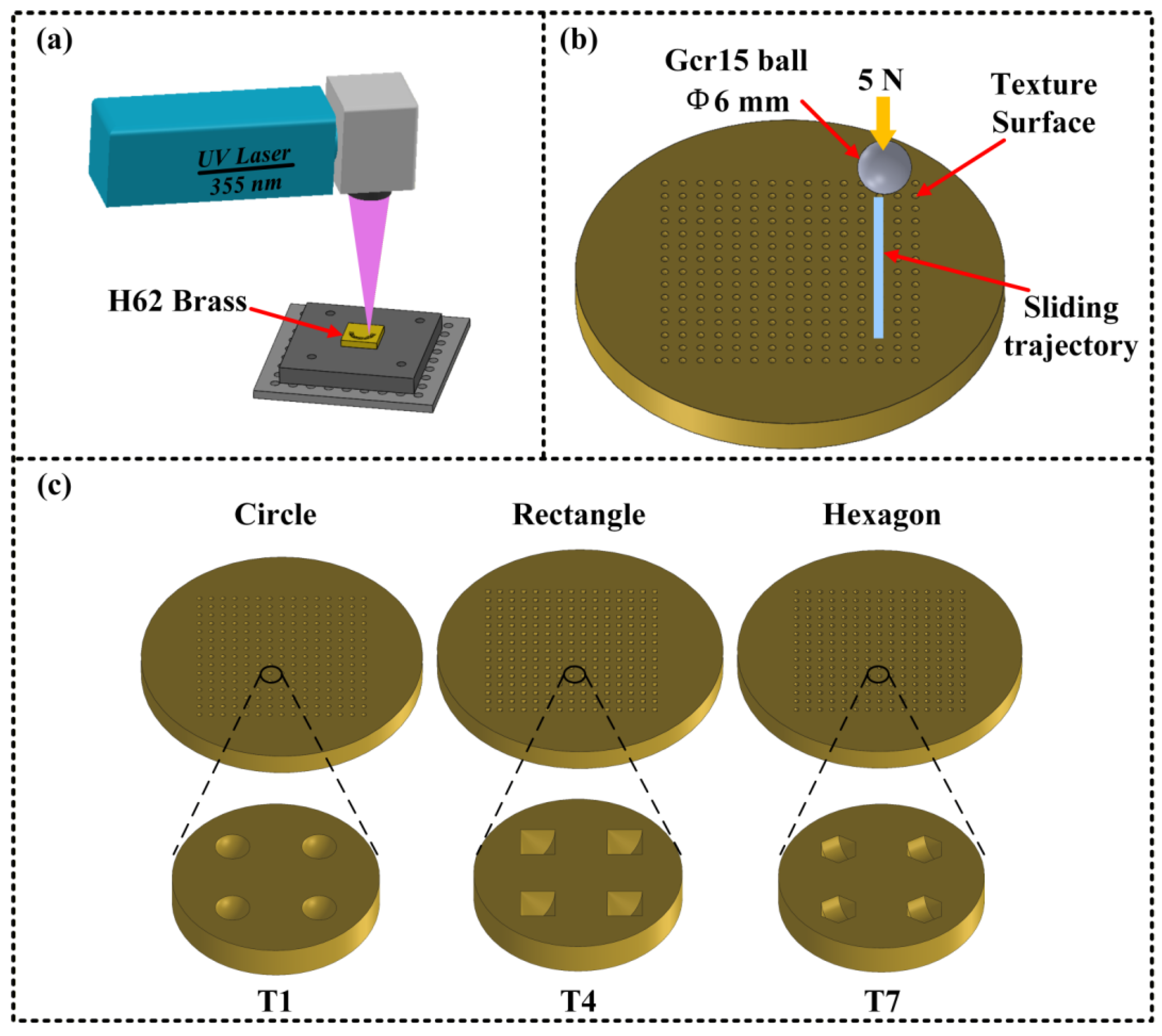
d is the spot diameter. In the preliminary experiment, the effects of different energy densities on the edge integrity of micro-textures were compared, and the current parameters were finally selected. All experimental parameters were controlled within the stable processing range to ensure the consistency of texture morphology, so that the research could focus on the influence of geometric structure on tribological properties. The laser processing setup is illustrated in
Figure 1a, and the micro-textures were distributed within a 20 mm × 20 mm square region, as shown in
Figure 1b. After laser processing, the specimen surfaces were re-polished to remove the recast layer generated during laser ablation [
24]. The samples were then ultrasonically cleaned again to eliminate residual debris and molten particles, ensuring the integrity of the micro-texture morphology.
The accuracy of laser surface texturing is strongly dependent on the laser intensity distribution. Studies on femtosecond laser processing have demonstrated that a uniform intensity profile can reduce edge defects and minimize dimensional deviations. This principle is also applicable to ultraviolet nanosecond laser processing. By optimizing the laser intensity parameters, the continuity of micro-texture edges and dimensional consistency can be effectively ensured, thereby providing reliable samples for subsequent tribological testing [
25]. During nanosecond laser processing of metallic materials, high-energy pulses tend to induce the formation of recast layers and residual slag on the surface. If not properly removed, these defects can adversely affect both the geometric accuracy of micro-textures and their tribological performance. Previous studies on nanosecond laser processing of polycrystalline diamond have shown that combining laser processing with subsequent grinding or polishing can effectively eliminate the influence of recast layers on surface quality. This combined processing strategy is also applicable to brass micro-texture fabrication and provides a valuable reference for the post-treatment procedures adopted in this study.
To comprehensively investigate the effects of micro-texture parameters on the tribological performance of brass, nine groups of micro-texture schemes with varying parameters were designed. In addition, a non-textured specimen was set as a control group (denoted as T10). The specific parameters are listed in
Table 1. The designed schemes include three texture geometries: circular dimples, rectangular dimples, and hexagonal dimples. For each geometry, different diameters (or side lengths) and area densities were applied to enable a controlled variable study.
The design of laser surface texturing schemes should be based on the synergistic effects of multiple parameters. Previous review studies have indicated that the combination of texture shape, size, and area density must be properly coordinated to maximize wear resistance, and optimization of a single parameter alone is insufficient to fully exploit the benefits of surface texturing. Therefore, the multi-geometry and multi-parameter design adopted in this study follows this principle, ensuring the identification of optimal texture parameters suitable for different operating conditions.
2.2. Friction and Wear Test Conditions and Characterization Methods
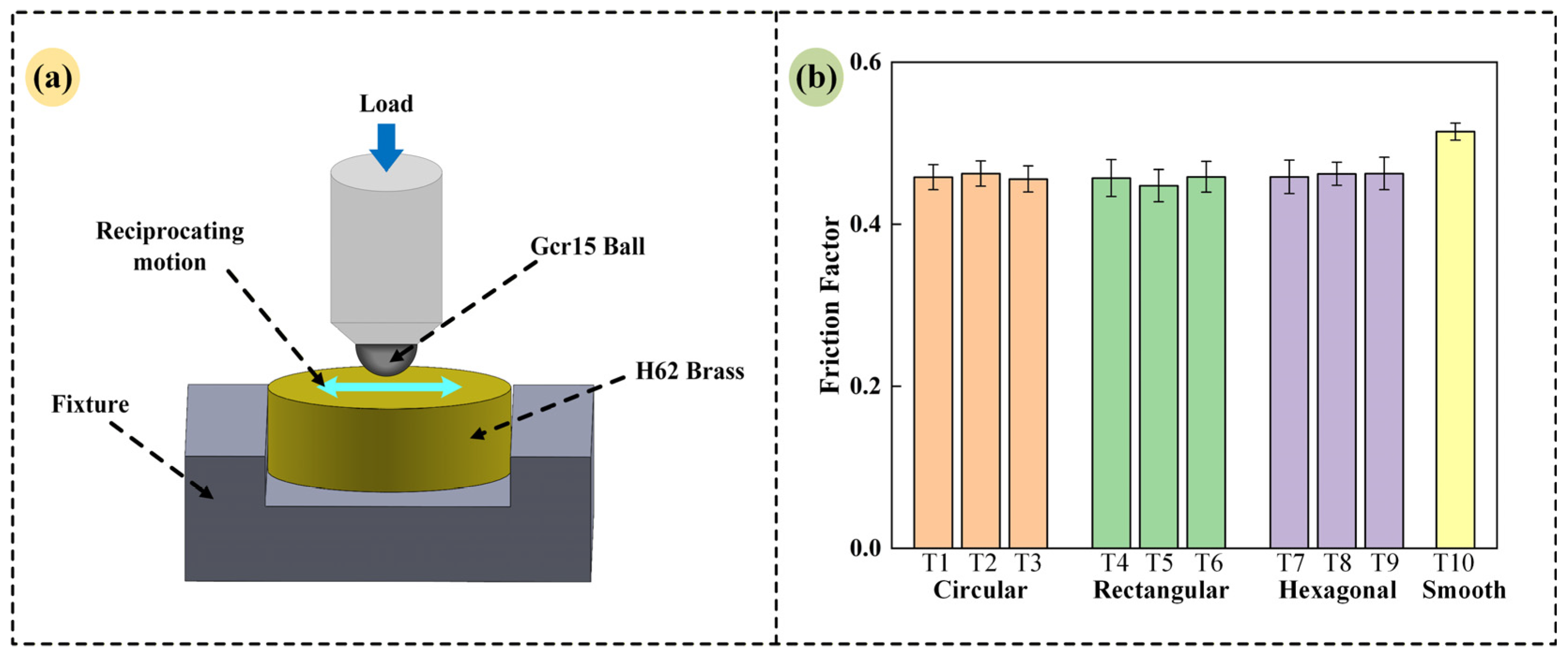
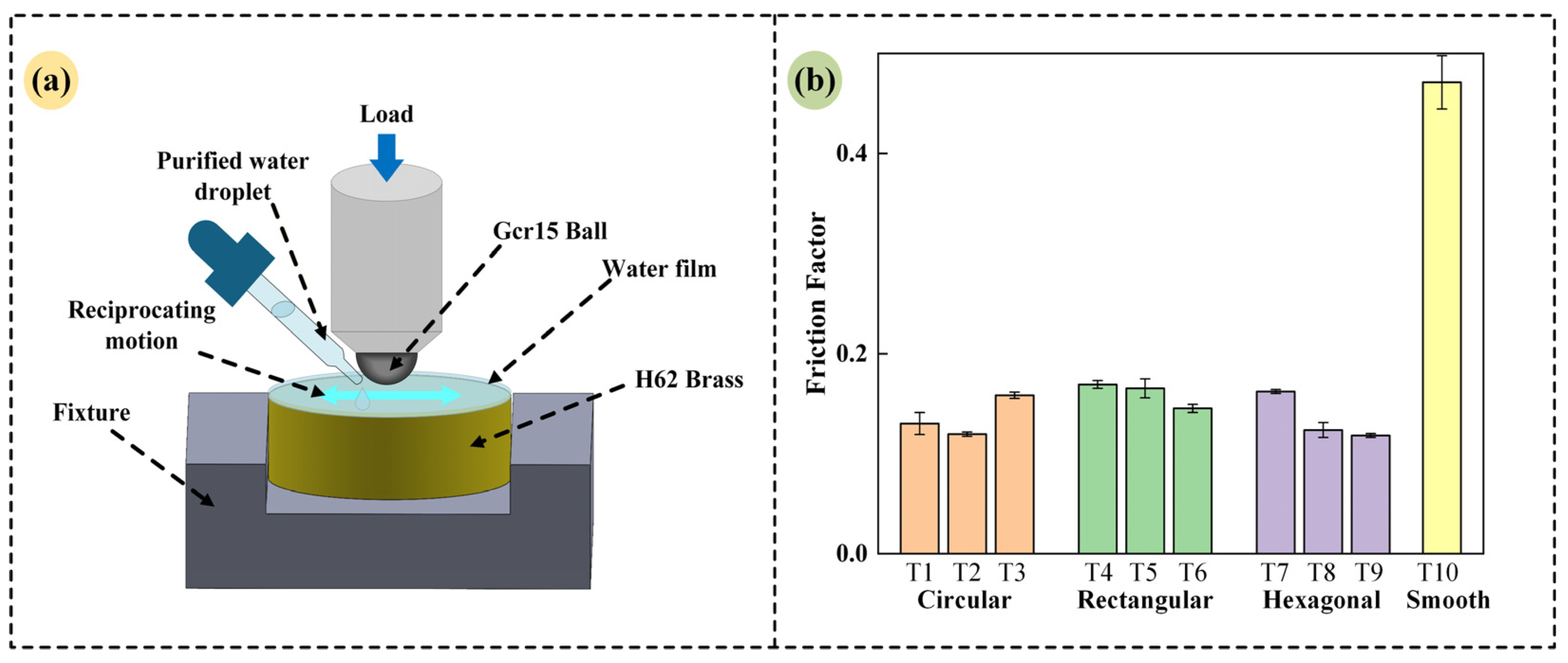
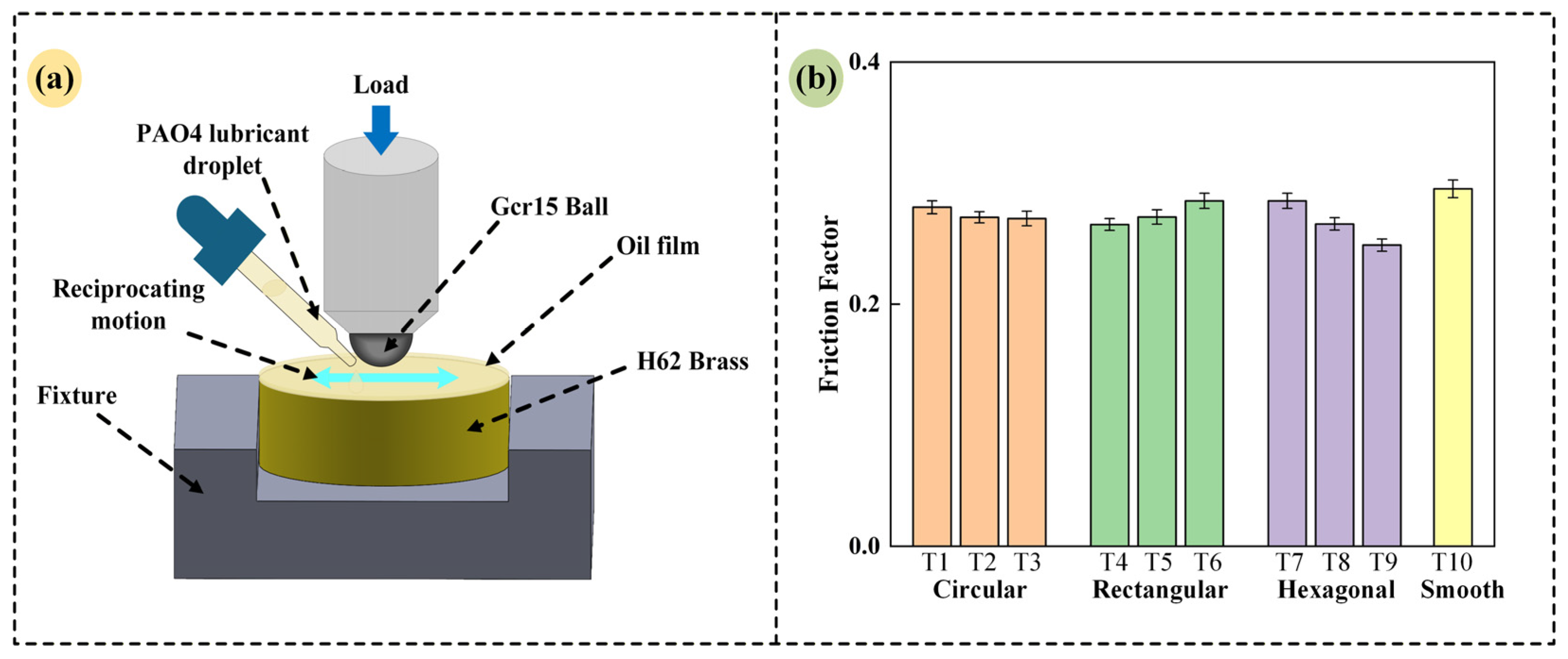
Reciprocating ball-on-disk tribological tests were carried out using a reciprocating friction and wear testing machine (MFT-5000, Rtec Instruments Inc., San Jose, CA, USA). The friction pair consisted of an H62 brass specimen and a GCr15 steel ball with a diameter of 6 mm, forming a typical hard-soft contact configuration, as shown in
Figure 1b. The test parameters were set as follows: a normal load of 5 N, a frequency of 2 Hz, a stroke length of 10 mm, and a test duration of 10 min for each run, ensuring consistent experimental conditions. Three typical operating conditions were investigated: dry friction, wet friction, and oil-lubricated friction. For the dry condition, tests were conducted at room temperature without any lubricant or abrasive particles. For the wet condition, deionized water was used as the medium and uniformly introduced into the contact interface to ensure a fully wetted state, simulating humid working environments. For the oil-lubricated condition, PAO4 polyalphaolefin lubricant (Mobil SHC Series, ExxonMobil Corporation, Irving, TX, USA) was applied to the contact surfaces and filled into the contact region to ensure the formation of a stable lubricating film during sliding, thereby simulating practical oil-lubricated conditions and reducing direct asperity contact. Prior to the formal tests, the reciprocating friction and wear tester was rigorously calibrated to ensure measurement accuracy. The resolution of the friction coefficient was 0.001, and the repeatability error was controlled within ±3%, which enabled reliable identification of the small differences in friction coefficients among different groups.
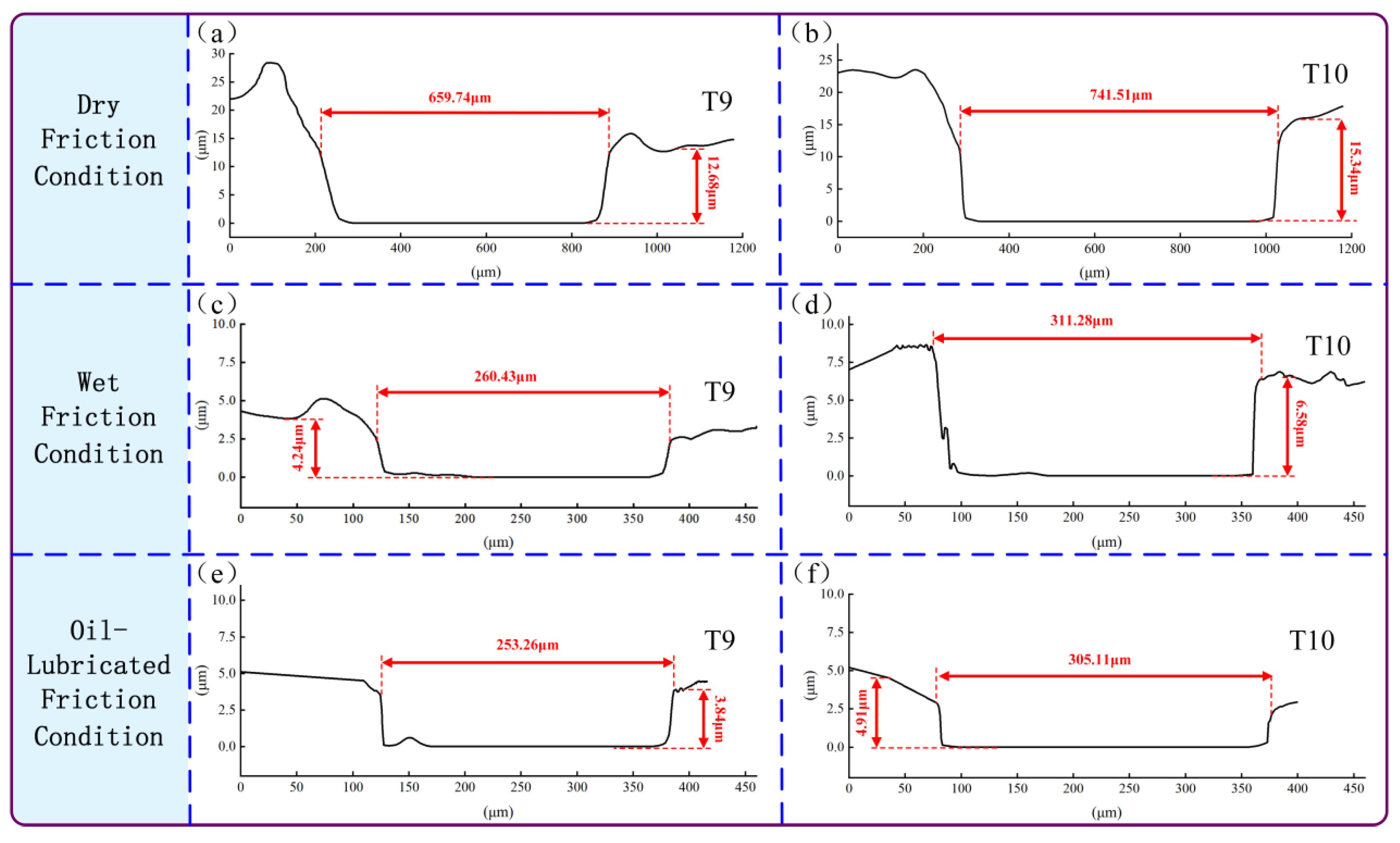
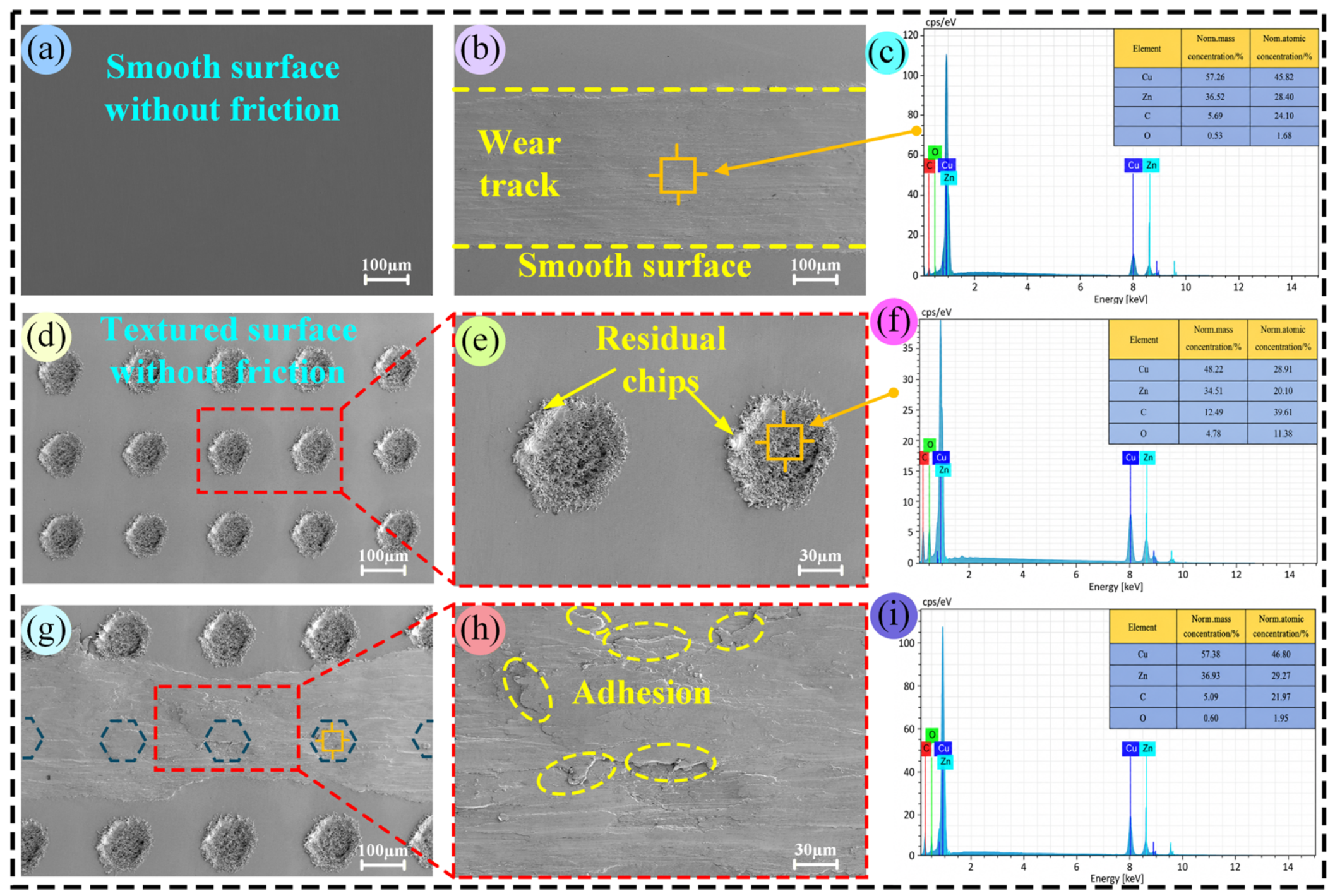
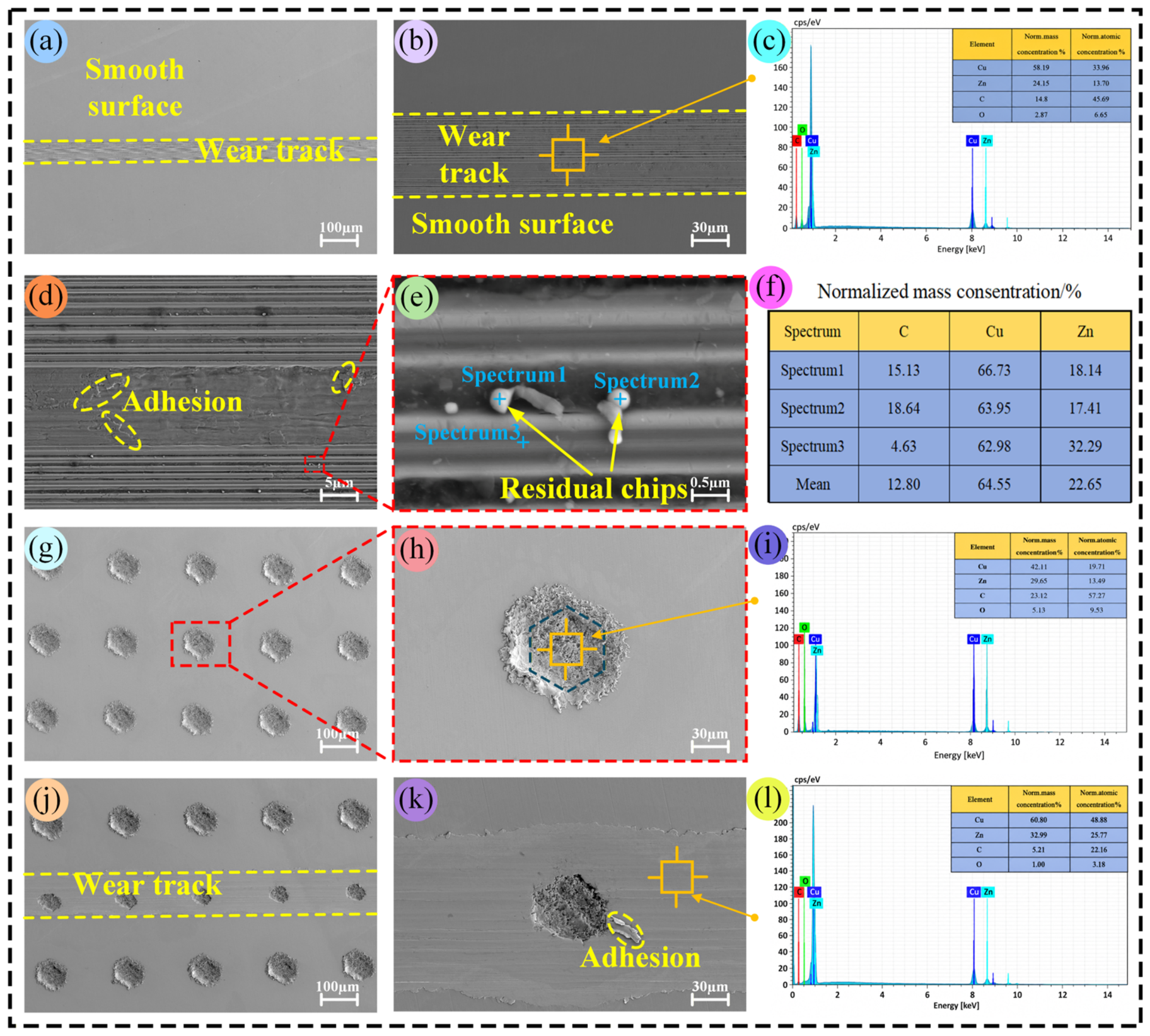
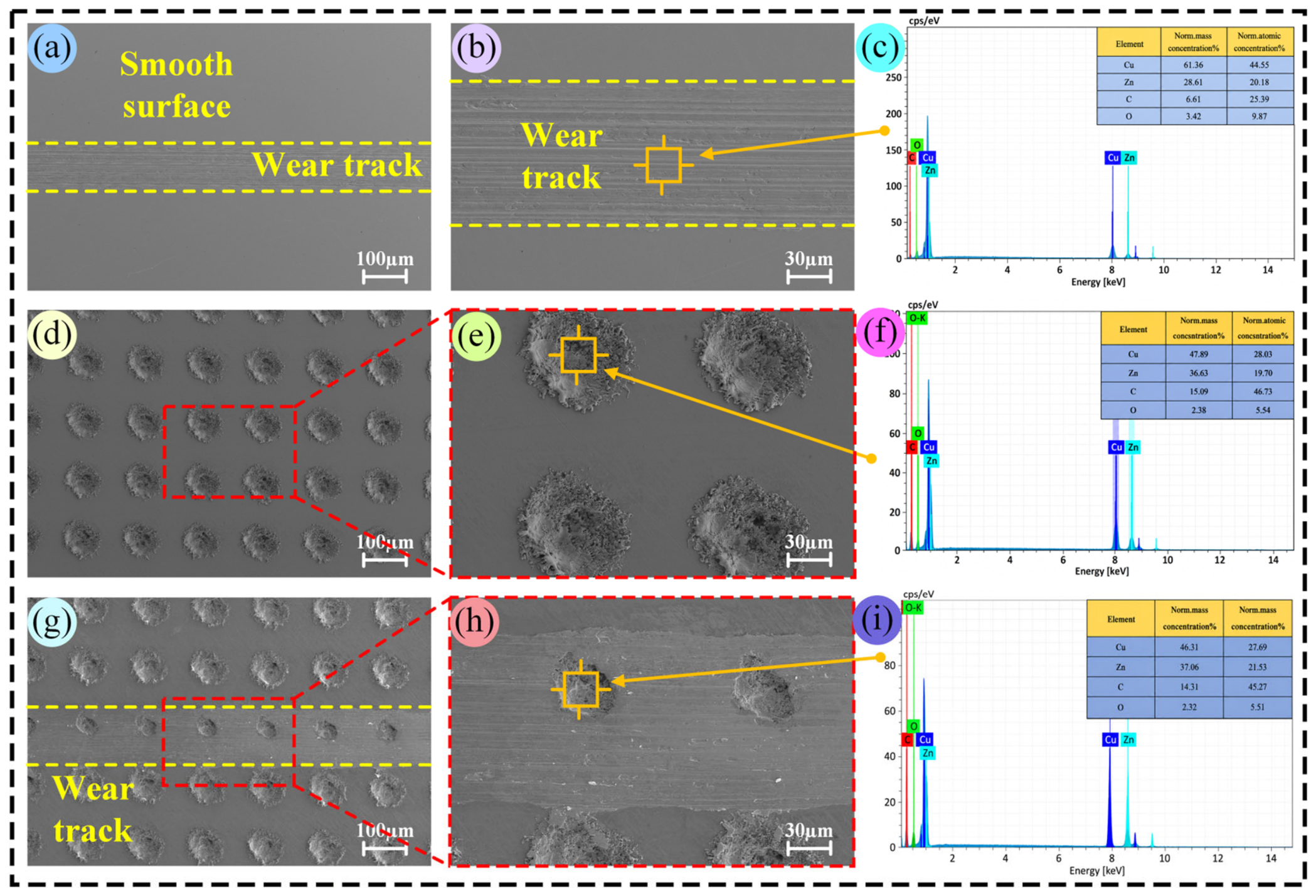
After the tests, the experimental data were sorted and analyzed. Firstly, the mass change of the GCr15 steel ball before and after the test was measured by the weighing method to calculate its wear loss and wear rate. Meanwhile, a VHX-1000 ultra-depth-of-field optical microscope (Keyence Corporation, Osaka, Japan) was used to observe the worn morphology of micro-textures on the surface of brass specimens. Profile scanning was performed on the wear scar regions perpendicular to the friction direction to obtain the cross-sectional profile curves of the wear tracks, and the wear scar width W, maximum depth h max, and cross-sectional area A were measured. Finally, scanning electron microscopy (SEM) was adopted to observe the micro-morphology of wear scars, and energy-dispersive spectroscopy (EDS) was used to analyze the elemental distribution on the worn surfaces, so as to reveal the wear mechanism.
The volume wear loss of the brass specimen
Vbrass is calculated by the following formula:
where
l is the wear scar length (
l =
S = 10 mm). On this basis, the volume wear rate
WR-brass of the brass specimen is further calculated.
To quantitatively evaluate the wear performance of the friction pair, the volume wear rate (
WR) is adopted as the evaluation index, and its calculation formula is as follows:
where:
WR—volume wear rate, unit: mm3·N−1·m−1;
V—volume wear loss of the specimen. The volume wear loss of the GCr15 steel ball is calculated from the mass loss Δm and material density ρ, namely In this work, the density of GCr15 steel ball is ρ = 7810 kg·m−3;
F—applied test load, set as 5 N in this experiment;
L—total friction sliding distance, which can be calculated according to friction frequency and test time: L = 2 × S × f × t = 24 m.
This parameter is used for the comparative analysis of wear performance under different working conditions and micro-texture parameters in the subsequent study. All experimental data are uniformly calculated and processed based on the above methods to ensure the comparability of results under various test conditions. To guarantee the reliability of experimental data, each group of tests is repeated three times, and the average value is taken as the final result. The experimental error is controlled within ±3%, indicating that the test system possesses favorable stability and repeatability.
The experimental scheme in this paper corresponds one-to-one with the research objectives:
Objective 1: Investigate the effect of texture shape through friction tests under three conditions: dry friction, wet friction, and oil lubrication.
Objective 2: Analyze the influence of texture parameters and wear performance using nine sets of textures with different sizes and areal densities.
Objective 3: Complete the analysis of wear mechanisms and anti-friction/wear resistance mechanisms through SEM morphology and EDS energy spectrum.
2.3. Texture Morphology Characterization and Dimensional Measurement
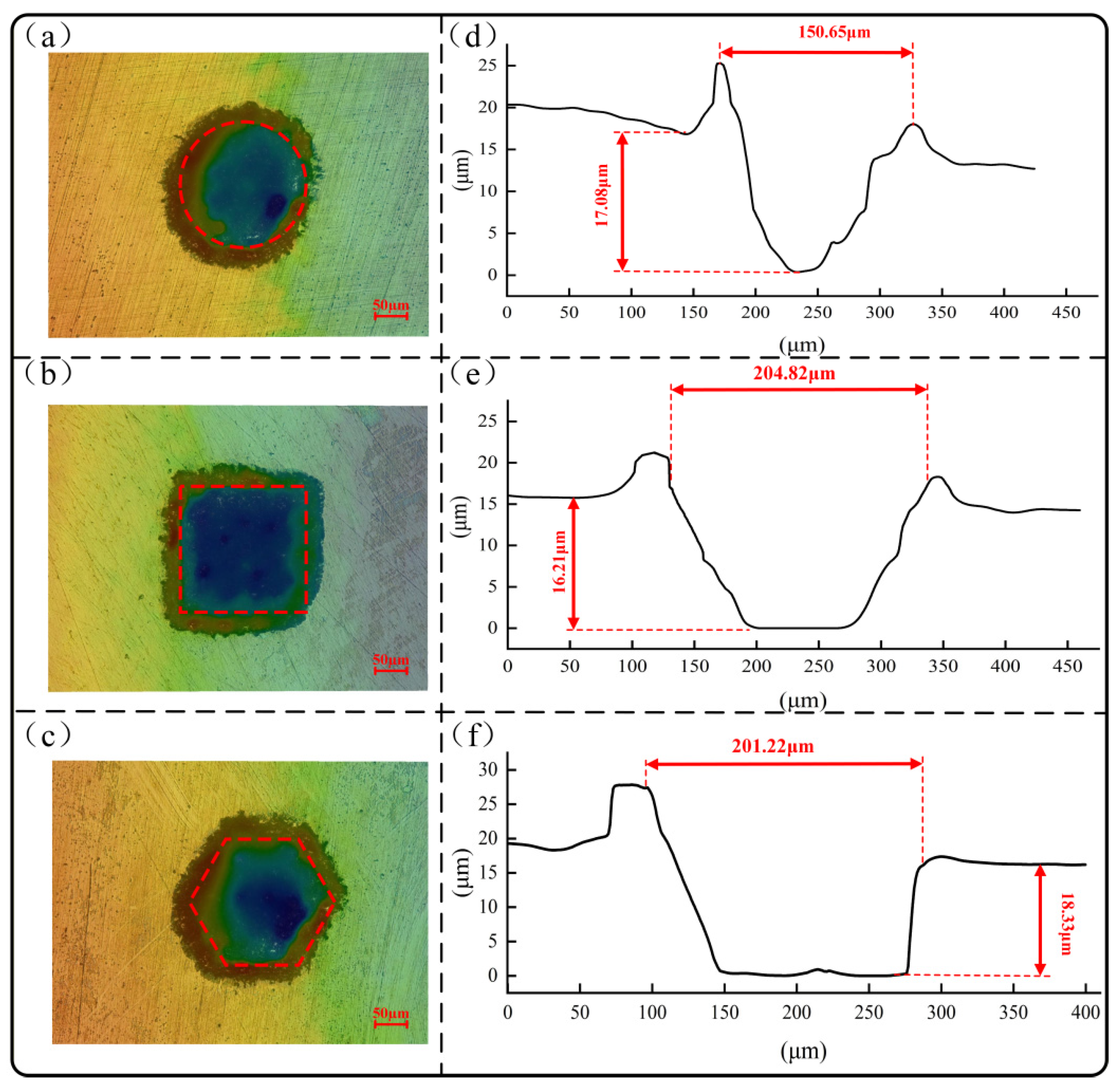
A VHX-1000 digital microscope (Keyence Corporation, Osaka, Japan) was used to quantitatively characterize the surface micro-textures after laser processing. Geometric parameters such as diameter, depth, and surface roughness (Sa) of different textures were measured and analyzed (
Figure 2). For each specimen, measurements were taken at three different positions, and the average values were taken as the final results. The results show that due to the melting and re-solidification of the material during the laser processing, certain deviations exist between the actual texture dimensions and the design values. The deviation between actual and design dimensions is less than 3%, which does not affect the observed trends. The measured geometric parameters of various typical textures are presented in
Table 2.
2.4. Theoretical Calculation and Analysis Method
To quantitatively characterize the regulation mechanism of micro-textures on contact stress and lubrication state, relevant calculations are performed based on the Hertz contact theory and elastohydrodynamic lubrication (EHL) theory. The corresponding formulas are given below.
2.4.1. Contact Stress Calculation
The contact behavior of the ball-on-disk friction pair follows the Hertz contact theory. The contact radius
a is calculated as:
where:
F—normal load;
R—radius of the steel ball (R = 3 mm in this work);
E∗—equivalent elastic modulus, determined by the elastic modulus and Poisson’s ratio of the two materials:
where
E1,
v1 are the elastic modulus and Poisson’s ratio of brass, respectively (
E1 = 100 GPa,
ν1 = 0.34);
E2,
v2 are the elastic modulus and Poisson’s ratio of GCr15 steel, respectively (
E2 = 210 GPa,
v2 = 0.3).
The formula for the maximum contact stress
Pmax is expressed as:
2.4.2. Lubrication State Judgment
The lubrication state of the friction pair is evaluated by the film thickness ratio
λ:
where
hmin—minimum lubrication film thickness;
Rq1,
Rq2—root-mean-square surface roughness of the brass specimen and steel ball, respectively (approximately 0.3 μm for polished brass and 0.05 μm for the GCr15 steel ball).
Under oil lubrication conditions, the minimum film thickness
hmin is estimated by the Hamrock–Dowson formula:
The dynamic viscosity η ≈ 0.04 Pa·s, the pressure-viscosity coefficient α ≈ 1.5 × 10⁻⁸ m2·N−1, and the entrainment velocity U ≈ 0.06 m/s.
4. Conclusions
This paper takes H62 brass as the research object. To address the problems of high friction coefficient and severe wear under three typical working conditions—dry friction, wet friction, and oil lubrication—circular, rectangular, and hexagonal dimple micro-textures were fabricated on the brass surface using an ultraviolet nanosecond laser. The influence laws of micro-texture shape, size, and area density on the friction and wear properties of brass were systematically investigated through the control variable method. Furthermore, the wear characteristics under multiple working conditions and the friction-reducing and anti-wear mechanisms of the micro-textures were revealed using a digital microscope, scanning electron microscopy (SEM), and energy-dispersive spectroscopy (EDS). The main conclusions are as follows:
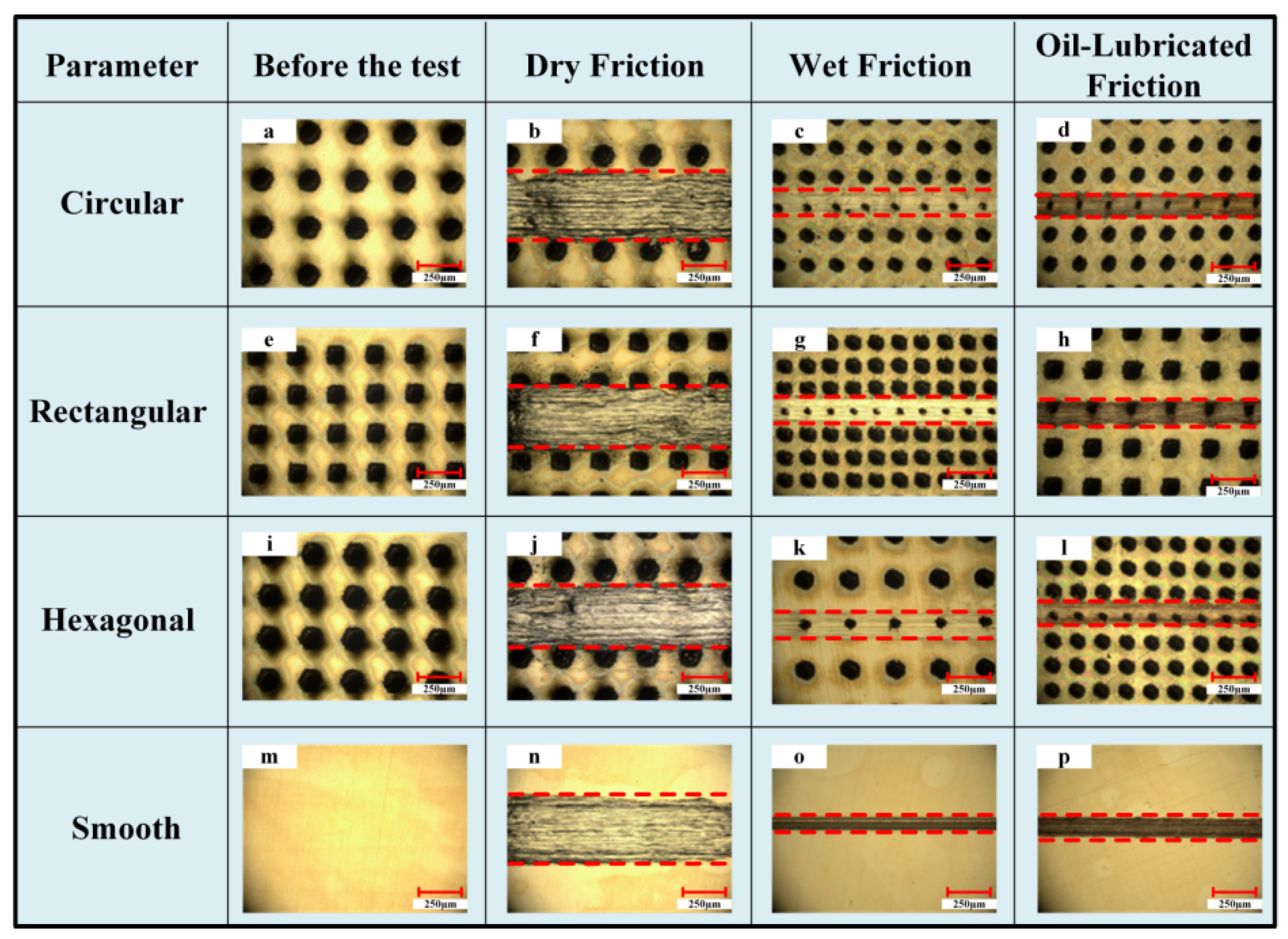
Corresponding to Objective 1 (Influence of texture shape): Surface micro-textures can significantly improve the multi-condition tribological performance of H62 brass, with the friction-reducing and anti-wear capacity following a clear hierarchy: hexagonal > circular > rectangular. Owing to their rounded transition structure and multi-directional interconnected geometric features, hexagonal micro-textures exhibit the best friction-reducing and anti-wear capability under all three working conditions—dry friction, wet friction, and oil lubrication.
Corresponding to Objective 2 (Influence of parameters): The geometric dimensions and area density of micro-textures have a significant coupling regulation effect on tribological performance. The hexagonal dimple texture (200 μm, 10% area density) is identified as the optimal parameter combination for multi-condition applications. Under this parameter configuration, the protective effect of the micro-texture on the soft brass substrate is far superior to that on the hard counterpart (GCr15 steel ball), confirming the core mechanism that micro-textures preferentially protect softer surfaces by reducing contact stress.
Corresponding to Objective 3 (Mechanism analysis): The friction-reducing and anti-wear effect of micro-textures results from multi-mechanism synergy: reducing contact stress and optimizing stress distribution based on Hertz contact theory; regulating the lubrication state from boundary lubrication to mixed/hydrodynamic lubrication according to the Stribeck curve; and achieving efficient debris evacuation and stress dispersion through geometric structure optimization. The dominant mechanisms vary under different working conditions: dry friction is dominated by “contact reduction + debris storage,” wet friction by “hydrodynamic lubrication + oxidation inhibition,” and oil lubrication by “hydrodynamic lubrication + oil storage and stabilization.”
This study confirms the optimization effect of UV laser-machined surface micro-textures on the multi-condition wear performance of H62 brass, systematically reveals the coupling mechanism between texture parameters and service environments, and provides a theoretical basis and data support for the anti-wear surface design of brass components under complex working conditions. Future work can further explore the design of groove-type and hybrid micro-textures, combined with finite element simulation and fluid dynamics numerical modeling, to deepen the understanding of laser processing parameter optimization and lubricant flow behavior, thereby promoting the refined design of micro-texture structures.