3.1. Phase Constitution
To clarify the phase evolution along the gradient transition direction,
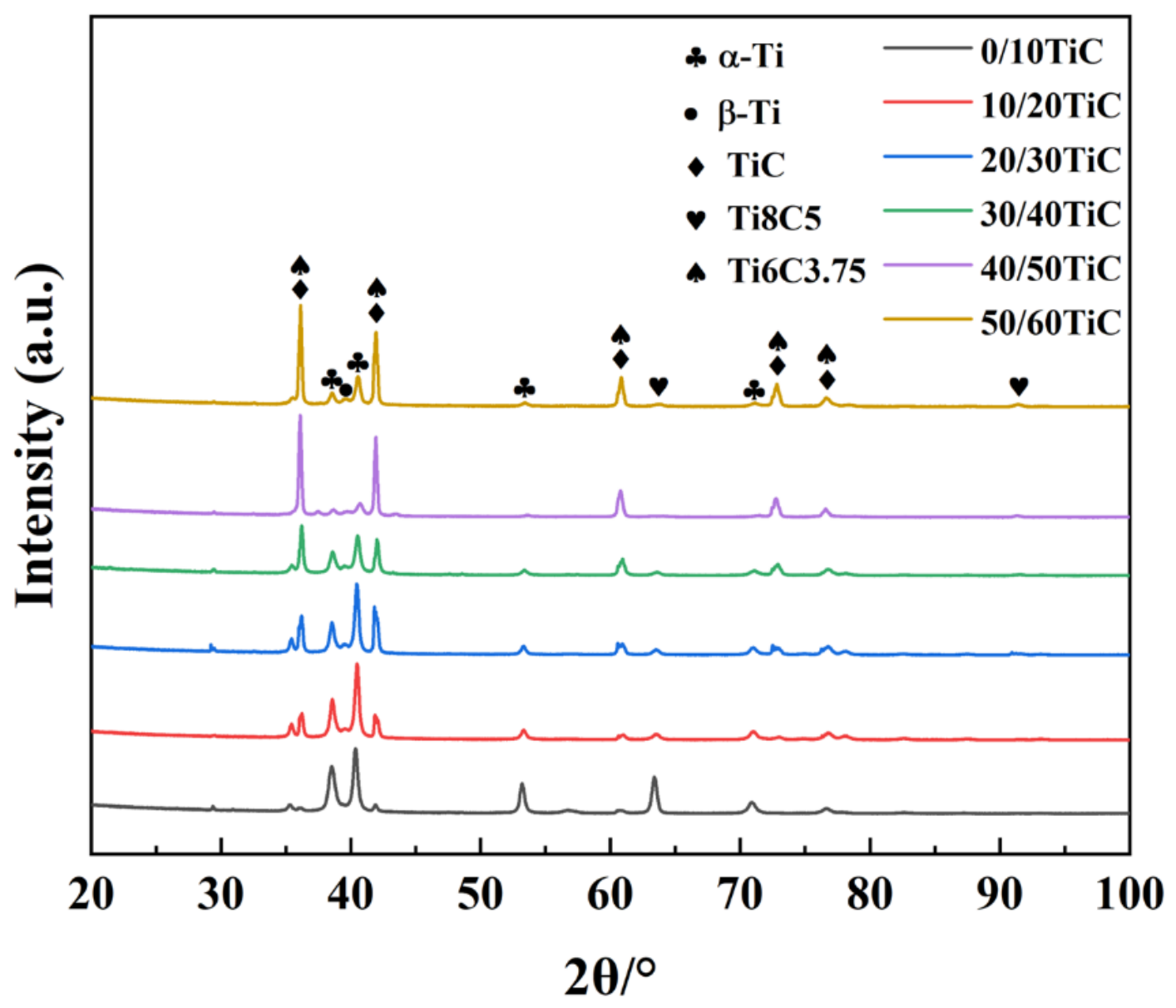
Figure 3 presents the X-ray diffraction (XRD) results for regions spanning from the 0TiC/10TiC interface to the 50TiC/60TiC interface. As shown, the 0TiC/10TiC interfacial region is mainly composed of a large amount of α-Ti, together with small quantities of β-Ti and TiC phases. With the progressive increase in TiC particle addition, diffraction peaks appearing at 2θ ≈ 36°, 41°, 60°, and 72° and gradually intensifying can be indexed to face-centered cubic TiC (PDF#32-1383) [
23]. These peaks are significantly enhanced in the high-TiC-content gradient regions, indicating the formation of a large amount of TiC during deposition. Along the gradient direction, the relative intensity of the main TiC peaks increases markedly, whereas the diffraction peaks of α-Ti gradually weaken, demonstrating that the TiC content in the composites increases substantially with increasing external addition. This can be attributed to the fact that during LDED, TiC particles cannot be regarded as inert reinforcements within the melt pool. Instead, they undergo partial dissolution and actively participate in in situ chemical reactions, followed by non-equilibrium re-precipitation under rapid solidification conditions, thereby sustaining the formation and growth of TiC phases. With increasing TiC content, pronounced local enrichment of carbon occurs within the molten pool, which significantly enhances the thermodynamic driving force for TiC formation and concurrently promotes both heterogeneous nucleation and phase fraction increase. Concurrently, the progressive incorporation of TiC leads to a relative depletion (dilution) of Ti in the liquid matrix, which destabilizes α-Ti formation, as evidenced by the continuous attenuation of α-Ti diffraction peak intensities. From a thermodynamic and kinetic standpoint, the graded evolution of phase constitution is governed by the coupled effects of solute redistribution, preferential carbon activity, and competitive phase selection during rapid solidification. Accordingly, the continuous intensification of TiC within the graded region originates from the synergistic interplay between enhanced particle-derived solute supply and laser-induced in situ reaction pathways, whereas the suppression of α-Ti reflects a competitive phase selection mechanism under non-equilibrium solidification conditions.
Moreover, in regions with high TiC content, the relative intensities of the TiC diffraction peaks are slightly higher than those in the standard PDF card, suggesting the presence of a certain degree of preferred orientation of TiC in the graded material [
24]. This phenomenon is closely related to the directional growth of columnar grains and the thermal cycling characteristics inherent to the LDED process. Notably, characteristic diffraction peaks corresponding to Ti
8C
5 and Ti
6C
3.75 appear in the spectra near the 40TiC/50TiC and 50TiC/60TiC interfaces, indicating that TiC is not the sole stable phase under the rapid solidification conditions of LDED. In localized regions, carbon supersaturation, extremely high cooling rates, and restricted diffusion paths prevent some Ti–C phases from fully transforming into equilibrium TiC, leading instead to the preferential formation of metastable Ti
xC
y phases under conditions of high undercooling. This can be attributed to the extreme thermal conditions inherent to the LDED process, where the melt pool is subjected to a very high thermal gradient and an ultrafast cooling rate, driving the system far from thermodynamic equilibrium. Under such conditions, the local supersaturation of carbon in the liquid phase is significantly enhanced; however, due to the extremely limited solidification time and restricted atomic diffusion pathways, the Ti-C system cannot fully transform into the equilibrium TiC phase with a 1:1 stoichiometry. Instead, during the early stages of solidification, the system preferentially stabilizes metastable titanium carbide phases with lower nucleation energy barriers, such as Ti
8C
5 and Ti
6C
3.75. The formation of these metastable phases is a direct manifestation of kinetic dominance over thermodynamic equilibrium, where phase selection is governed not by equilibrium phase diagrams but by local compositional fluctuations and transient nucleation kinetics. Moreover, the insufficient time for atomic rearrangement under high cooling rates leads to localized carbon enrichment and the stabilization of short-range ordered structures with non-stoichiometric compositions, which are retained within the rapidly solidified microstructure. With subsequent thermal accumulation or local remelting during layer-by-layer deposition, these metastable phases may partially transform into stable TiC. However, within the present rapidly solidified cross-section, they remain “frozen-in” as Ti
8C
5 and Ti
6C
3.75. Therefore, this phenomenon can be attributed to the combined effects of non-equilibrium solidification and diffusion-limited phase transformation inherent to the LDED process.
3.2. Microstructure
To investigate the microstructural evolution of the TiC/Ti6Al4V gradient composites along the build direction,
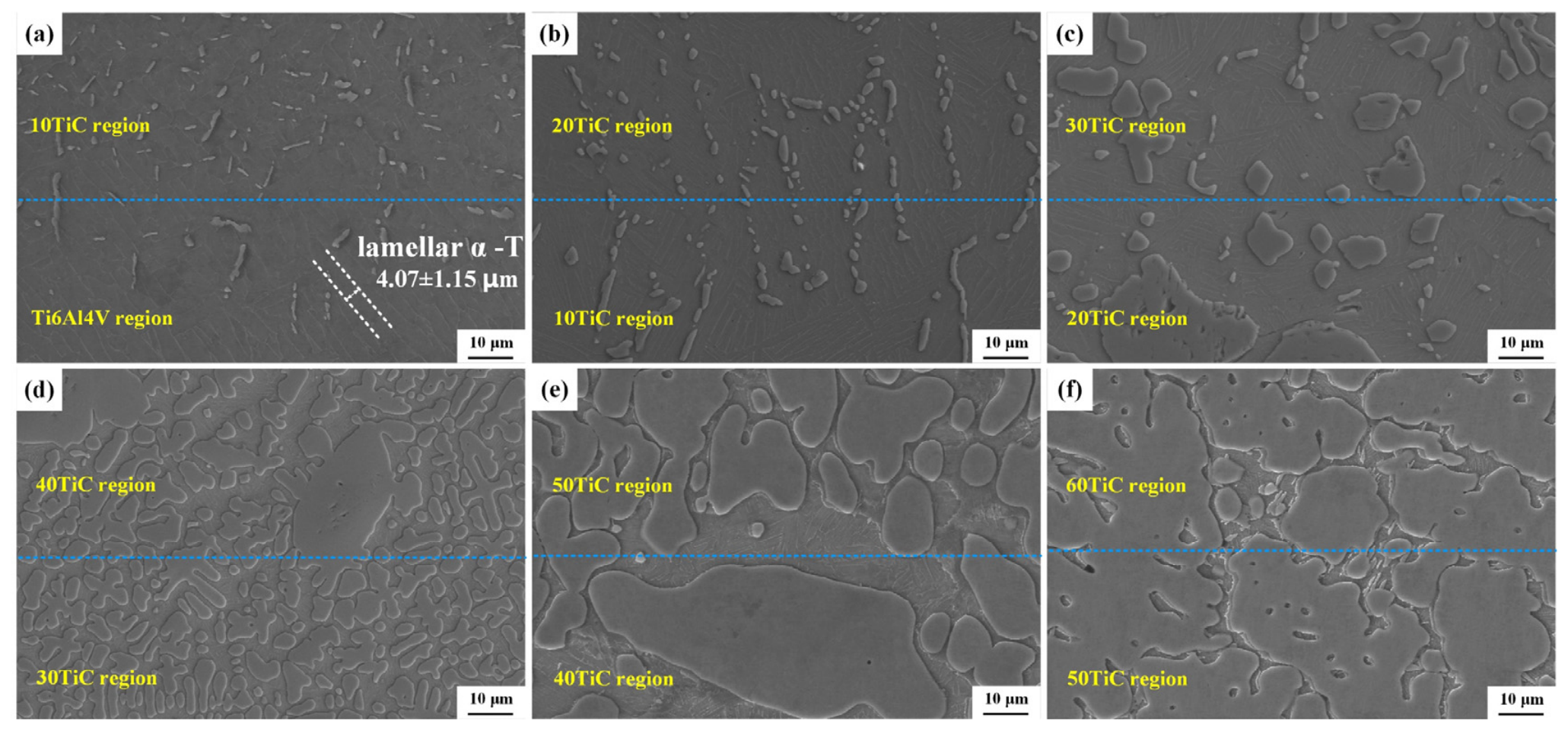
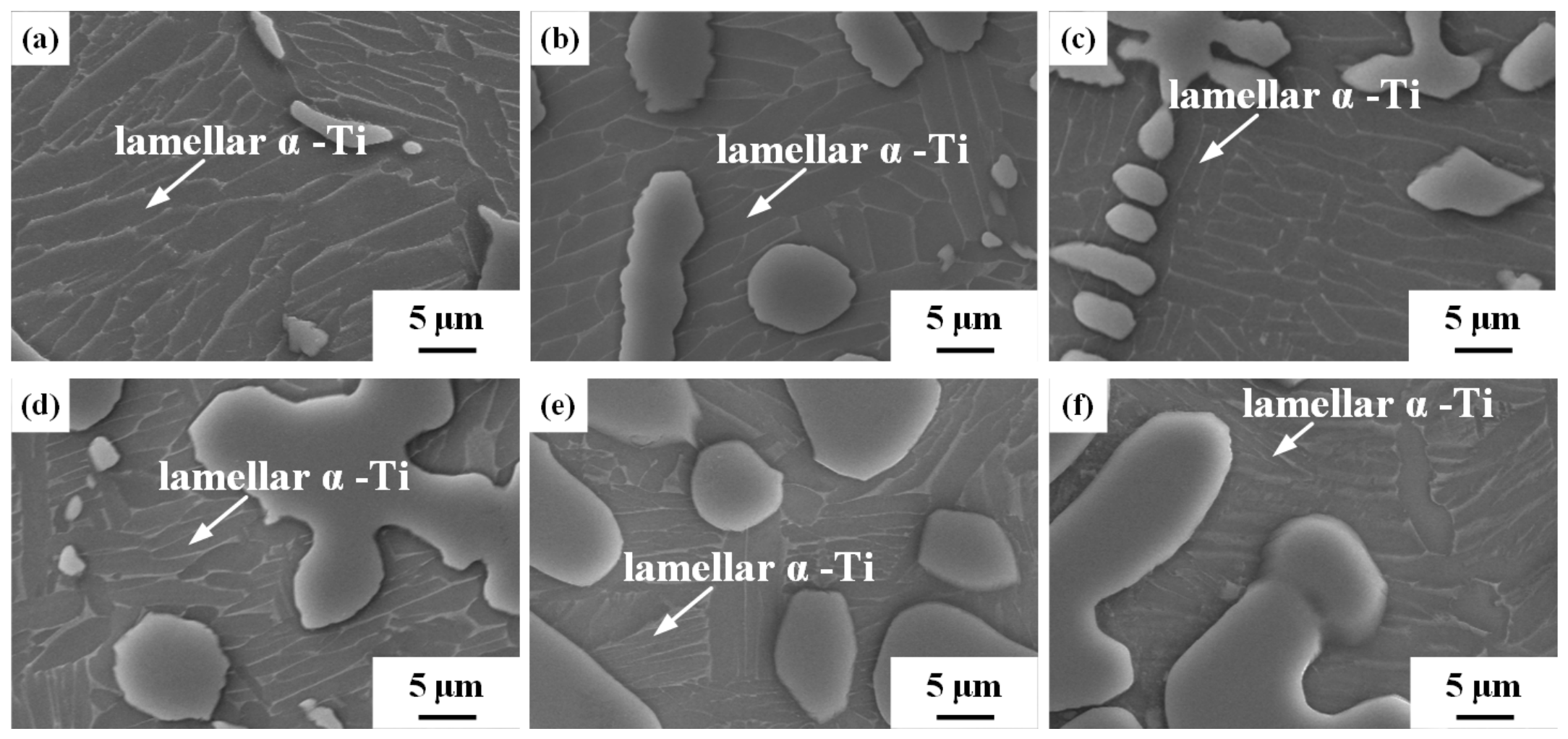
Figure 4 presents the microstructural morphologies at different gradient interfacial regions.
Figure 4a shows the 0TiC/10TiC interface. Below the interface, a typical basketweave microstructure can be observed, consisting of interlaced lamellar α-Ti, which is a characteristic feature of the solid-state transformation of β-Ti during rapid cooling in the LDED process [
25]. Above the interface, bright precipitate particles are distributed within the basketweave Ti6Al4V matrix. In the 0TiC region, β-Ti forms first during melt pool solidification; owing to the extremely high cooling rates associated with LDED, when the temperature drops below the β → α transformation range, β-Ti predominantly transforms into interwoven lamellar α-Ti via martensitic transformation or rapid precipitation mechanisms, thereby resulting in a basketweave structure [
26]. In the 10TiC region, although TiC particles possess a very high melting point, partial dissolution may still occur in the laser melt pool, leading to a localized increase in carbon content in the melt. When the composition of the residual liquid during solidification reaches the Ti–C eutectic composition, a eutectic reaction of L → TiC + β-Ti takes place [
27]. Consequently, discontinuously distributed particulate eutectic TiC can be observed above the interface in
Figure 4a.
As shown in
Figure 4b, a pronounced change in microstructural features occurs during the transition from the 10TiC region to the 20TiC region. The discontinuously distributed particulate eutectic TiC gradually transforms into continuous chain-like eutectic TiC. With further increases in TiC particle addition, the concentration of carbon in the melt pool rises markedly, leading to significant enrichment of carbon ahead of the solid–liquid interface and a corresponding expansion of the enriched region. Under conditions of increased carbon availability, the eutectic reaction can proceed continuously, thereby promoting the sustained precipitation of TiC [
28]. During matrix solidification, eutectic TiC preferentially precipitates within interdendritic regions or along grain boundaries. When the carbon content is sufficient and the local supersaturation is high, TiC grows continuously along these regions, forming chain-like or networked morphologies with high aspect ratios. Compared with particulate TiC, such chain-like TiC provides more pronounced strengthening and reinforcing effects, effectively enhancing the load-bearing capacity of the material [
29]. However, the continuous distribution of TiC may also induce localized stress concentrations, thereby offering relatively low-energy preferential paths for crack propagation and influencing the fracture behavior of the graded composites.
As shown in
Figure 4c, during the transition from the 20TiC region to the 30TiC region, the interfacial microstructure exhibits pronounced dendritic TiC as well as some undissolved TiC particles, indicating that the formation mechanism of TiC gradually shifts from being dominated by eutectic precipitation to the nucleation and growth of primary TiC. When the TiC addition is increased to 30.0 wt.%, the volume fraction of TiC in the melt pool rises significantly, accompanied by a further increase in carbon content in the melt, which promotes the nucleation of primary TiC at the early stages of solidification. Under the high undercooling conditions inherent to the LDED process, primary TiC and β-Ti competitively nucleate within the melt. The high degree of constitutional undercooling and rapid solidification rate cause TiC to preferentially undergo nonequilibrium dendritic growth along specific crystallographic orientations, resulting in dendritic morphologies. Notably, the presence of such dendritic TiC can effectively impede the growth of the β-Ti phase. As primary TiC preferentially grows during solidification and occupies part of the matrix volume, its dendrite arms exert a pinning effect on β-Ti grains, thereby significantly refining the subsequently formed matrix microstructure [
30]. Grain refinement not only increases the dislocation density but also enhances grain boundary strengthening in the matrix [
31]. Consequently, the formation of dendritic TiC contributes to hardness enhancement and improves the overall load-bearing capacity of the composite.
As shown in
Figure 4d–f, in the regions from 40TiC to 60TiC, the microstructure of the composites is mainly composed of particulate primary TiC together with a large amount of undissolved TiC particles. With further increases in TiC addition, the nucleation rate of primary TiC rises markedly, leading to a continuous increase in its distribution density within the matrix. In the 60TiC region, pronounced particle agglomeration can be observed in localized areas. This microstructural feature originates from two primary mechanisms. On the one hand, the higher TiC addition makes it difficult for TiC particles to fully dissolve within the short solidification time of the melt pool, resulting in the retention of a large fraction of TiC in their original particulate form. On the other hand, the continuously increasing carbon content in the melt pool partially suppresses the sufficient growth of primary TiC, causing it to exhibit a high-density, fine-sized distribution, and thus leading to the coexistence of undissolved TiC and primary TiC. These results indicate that, under high TiC content conditions, the dissolution–precipitation–growth processes are constrained by both thermodynamic and kinetic factors. The distribution of a high volume fraction of TiC significantly enhances the overall hardness and resistance to plastic deformation of the material. However, the presence of densely distributed reinforcements also introduces severe local stress gradients, particularly at the TiC/matrix interfaces. Owing to the large mismatch in elastic modulus and coefficient of thermal expansion between TiC and the matrix [
32], these regions are prone to pronounced stress concentration, which markedly increases the susceptibility to thermal crack initiation and propagation, thereby potentially reducing the fracture toughness and service reliability of the material.
As illustrated in the optimized SEM micrographs (
Figure 4), the gradient transition remains structurally sound without observable delamination, while the corresponding high-magnification details provided in
Figure 5 further reveal the intricate morphological evolution of the reinforcements. In the 0TiC/10TiC region (
Figure 4a), the average width of lamellar α-Ti is approximately 4.07 ± 1.15 μm. As the TiC addition increases to the 10TiC region (
Figure 5a), the lamellar α-Ti width slightly decreases to 3.43 ± 0.85 μm. Although the reduction is limited, this trend indicates that the introduction of TiC particles begins to influence the β-Ti → α-Ti solid-state transformation process. When transitioning to the 20TiC region, the refinement of lamellar α-Ti becomes significantly more pronounced. In the 20TiC region (
Figure 5b), the lamellar width decreases to 1.29 ± 0.45 μm, and in the 30TiC region (
Figure 5c), it is further reduced to 0.92 ± 0.34 μm. This region corresponds to the transition in the TiC formation mechanism from eutectic-dominated to primary TiC-dominated behavior. Upon entering the high TiC content regions from 50TiC to 60TiC, the size of lamellar α-Ti is stably constrained to the submicrometer scale, with widths of 0.56 ± 0.32 μm in the 50TiC region (
Figure 5e) and further reduced to 0.45 ± 0.29 μm in the 60TiC region (
Figure 5f). The substantial decrease in lamellar α-Ti width from 4.07 ± 1.15 μm to 0.45 ± 0.29 μm clearly demonstrates the pronounced microstructural regulation effect induced by TiC addition, and grain refinement plays a critical role in enhancing the strength and hardness of the composites.
The pronounced refinement of lamellar α-Ti can be attributed to the synergistic effects of two mechanisms. First, TiC exerts an indirect constraining effect on the grain size of β-Ti. During the early stages of solidification, TiC particles, owing to their high melting point and favorable crystallographic compatibility with β-Ti, can act as effective heterogeneous nucleation sites for β-Ti. With increasing TiC particle addition, the density of available nucleation sites in the melt pool rises sharply, resulting in a significantly higher nucleation rate of β-Ti compared with that in the monolithic Ti6Al4V alloy. As the nucleation rate increases, the space available for competitive grain growth is suppressed, leading to a reduction in the average β-Ti grain size and a more refined grain distribution [
33]. Because the nucleation and growth of α-Ti are governed by the grain boundaries and length scale of β-Ti, refinement of β-Ti grains is directly transferred to α-Ti, thereby promoting the concurrent refinement of lamellar α-Ti. Second, TiC directly pins the growth of α-Ti. In regions with TiC contents of 40TiC and above, a large number of primary TiC and undissolved TiC particles are distributed along β-Ti grain boundaries and within interdendritic regions. During the β-Ti → α-Ti solid-state transformation, these reinforcement particles exert a strong pinning force on the advancing α-Ti growth fronts, effectively restricting the growth and coarsening of α-Ti. Even under the multiple rapid thermal cycles inherent to the LDED process, lamellar α-Ti can retain an ultrafine structure without significant coarsening. In addition, partial dissolution of TiC and the subsequent release and redistribution of carbon during melt pool solidification and solid-state transformation further contribute to α-Ti refinement. As carbon is a β-Ti stabilizing element, its local enrichment may slightly reduce the thermodynamic driving force for the β → α transformation and, by modifying interface migration rates and diffusion behavior, influence the nucleation mode and growth kinetics of α-Ti, thereby further strengthening the refinement tendency of lamellar α-Ti [
34].
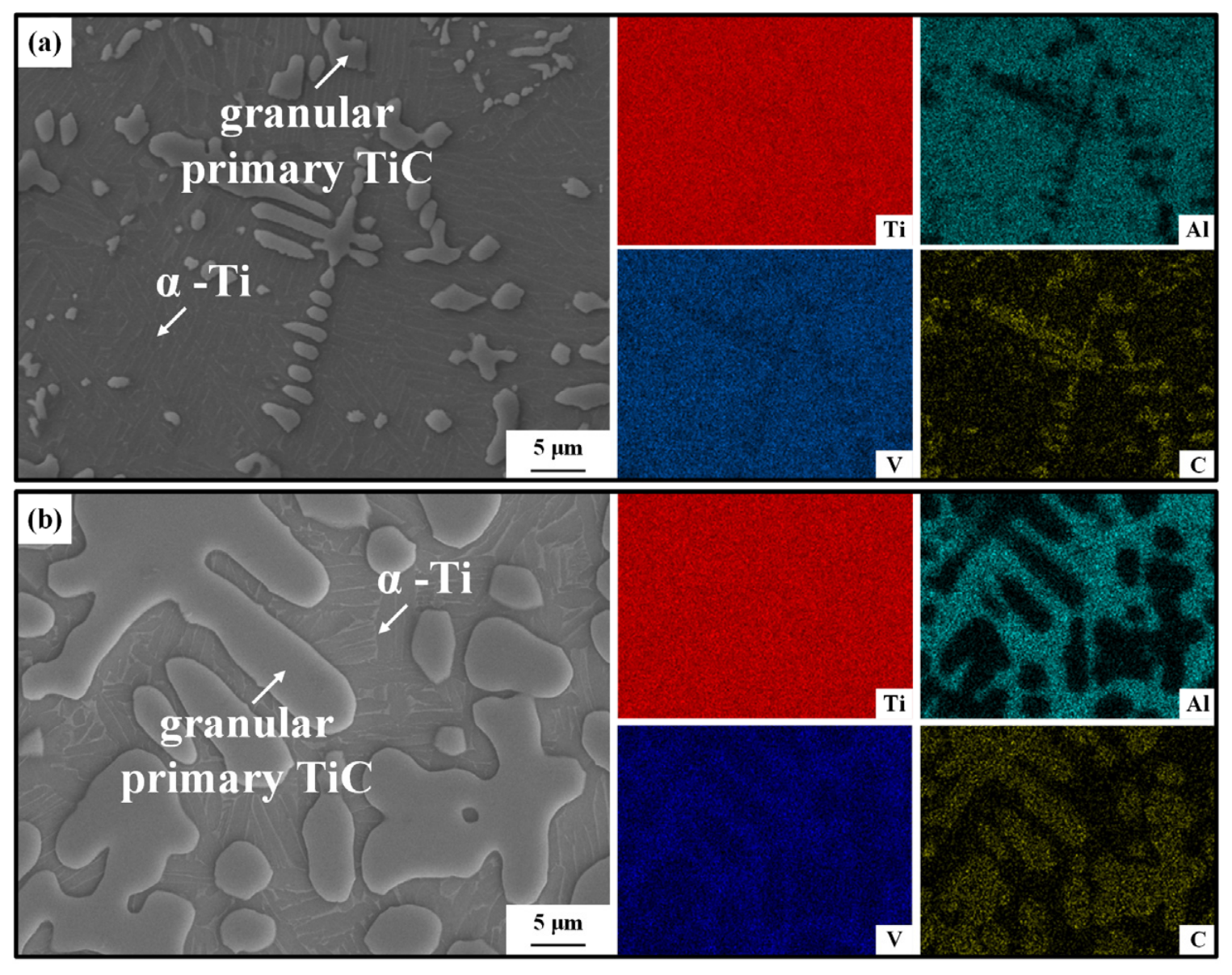
Figure 6 presents the EDS elemental mapping results for the 20TiC and 40TiC regions. It can be clearly observed that the bright, high-contrast reinforcement phases in both regions are mainly composed of Ti and C, whereas Al and V are markedly depleted within these phases, further confirming that the reinforcements are TiC. Owing to the extremely low solid solubility of Al and V in the TiC lattice, TiC exhibits a strong rejection effect toward these alloying elements during solidification. As a result, Al (an α-phase stabilizer) and V (a β-phase stabilizer) originating from the Ti6Al4V matrix are expelled into the surrounding residual liquid adjacent to TiC particles, leading to the formation of pronounced local compositional gradients [
35]. Notably, in the TiC-reinforced regions (such as 20TiC and 40TiC), V exhibits evident enrichment in the Ti matrix between TiC particles due to the solute rejection effect during solidification. This localized solid-solution enrichment is more pronounced in the 40TiC region, which further enhances the thermodynamic stability of β-Ti. The increased stability of β-Ti not only alters the thermodynamic driving force for the β → α transformation, but also affects interface migration rates, diffusion processes, and the ultimate kinetic pathway of the phase transformation. Combined with the lamellar α-Ti refinement observed in
Figure 5, it can be inferred that the element redistribution induced by TiC particles acts synergistically with their heterogeneous nucleation capability and interfacial pinning effect to strongly suppress α-Ti growth. In the 40TiC region, the locally elevated V concentration enhances β-phase stability, while TiC particles further inhibit α-Ti coarsening through nucleation-induced subdivision and interfacial pinning, resulting in a pronounced reduction in lamellar α-Ti to the submicrometer scale.
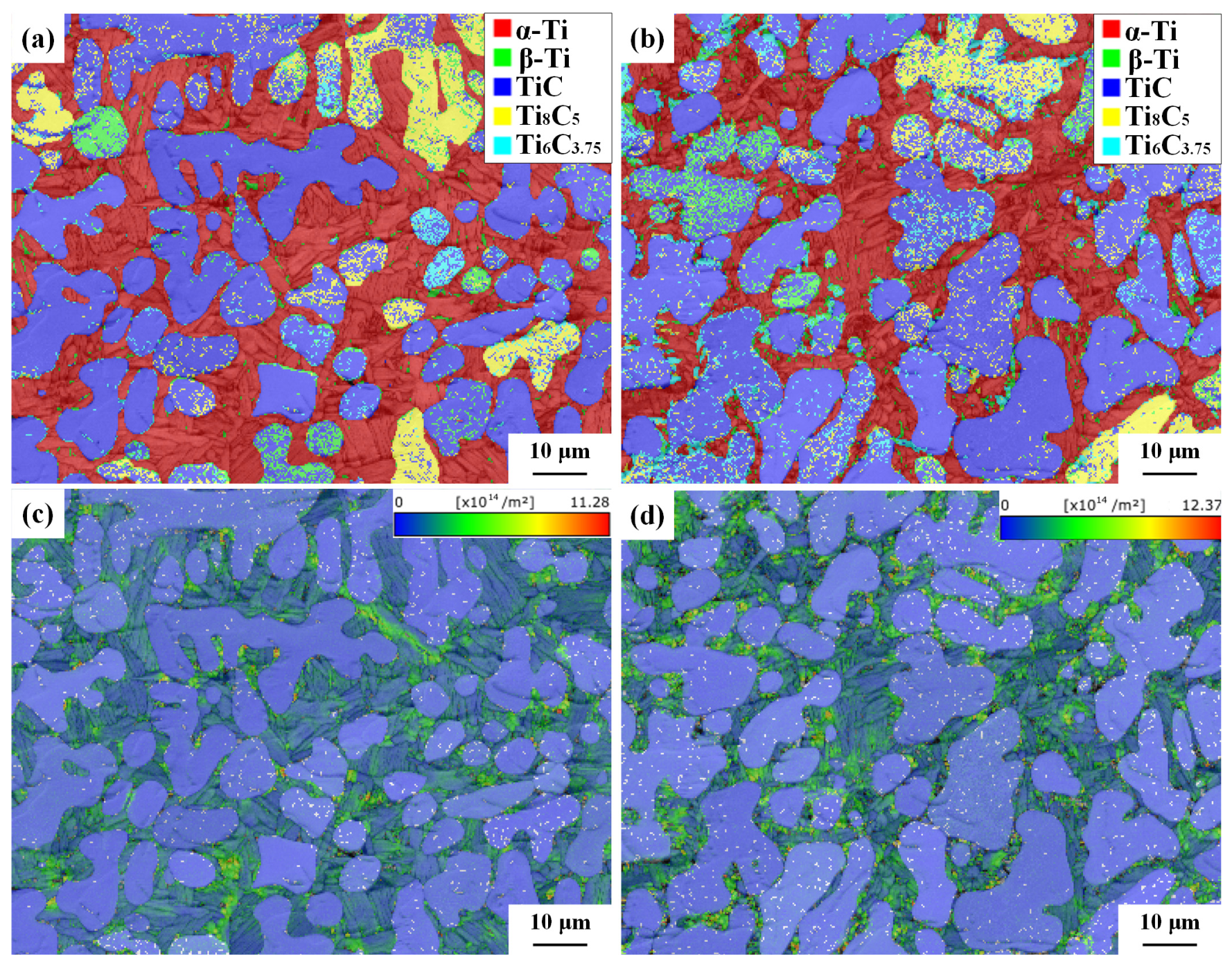
Figure 7a,b show the EBSD phase distribution maps of the 40TiC and 50TiC regions, respectively, clearly revealing the regulatory effect of increasing TiC reinforcement content on the matrix phase constitution and microstructure. During the transition from 40TiC to 50TiC, the dominant trend is a pronounced increase in the volume fraction and spatial density of the TiC reinforcement (dark blue), which directly influences subsequent solid-state transformations and the local stress state. First, the increased distribution density of TiC indicates that the melt pool supersaturation has reached a critical level. The reduced interparticle spacing of TiC implies that the density of heterogeneous nucleation sites provided by TiC for the Ti6Al4V matrix has approached its maximum, which is the primary reason why the lamellar α-Ti (red) in the 50TiC region is constrained to the submicrometer scale (0.56 ± 0.32 μm). Second, such a high density of TiC intensifies the local redistribution of alloying elements. Vanadium, a β-Ti stabilizing element, is more strongly rejected by TiC particles into the surrounding Ti matrix, further enhancing the stability of the β-Ti (green) regions adjacent to TiC. In the 50TiC region, the β-Ti phase is distributed in a finer and denser manner around the boundaries of the TiC reinforcements, which not only reflects the local chemical suppression of the β-Ti → α-Ti transformation induced by TiC particles, but also indicates that the TiC/matrix interfaces in the 50TiC region are subjected to higher concentrations of thermal stress. Overall, the EBSD results demonstrate that the microstructure in the 50TiC region has reached an extreme state characterized by pronounced grain refinement and high local strain accumulation. This microstructural condition underpins the attainment of maximum hardness and strengthening capability in the graded composite.
The KAM (Kernel Average Misorientation) maps shown in
Figure 7c,d provide a qualitative assessment of the evolution of microscale lattice distortion and Geometrically Necessary Dislocation (GND) density in the TiC gradient composites. The KAM value is intrinsically linked to the density of GNDs; an increase in KAM signifies intensified local lattice curvature and serves as a critical indicator of microscale strain accumulation [
36]. As observed, when transitioning from 40TiC (
Figure 7c) to 50TiC (
Figure 7d), the high-KAM regions become more densely distributed with stronger color contrast, particularly concentrated at the interfaces between TiC particles and the Ti6Al4V matrix. The average KAM value in the 50TiC region is markedly higher than that in the 40TiC region, indicating that local strain accumulation and lattice mismatch intensity are significantly enhanced at higher TiC contents.
This increase in KAM arises from the accommodation of thermophysical mismatches between the hard phase and the matrix. As a ceramic phase with a high elastic modulus and low coefficient of thermal expansion (CTE), TiC exhibits pronounced physical property disparities with the Ti6Al4V matrix [
37]. During the rapid cooling inherent to the LDED process, these disparities induce severe localized strain at the particle–matrix interfaces. To accommodate the resulting geometric incompatibility, the surrounding matrix undergoes lattice rotation and triggers the nucleation and continuous build-up of GNDs, leading to a substantial rise in KAM values. In the 50TiC region, the higher volume fraction of TiC and reduced interparticle spacing further intensify the pinning and obstruction of dislocation motion, resulting in regions with even higher dislocation densities. This behavior reflects a stronger tendency toward strain localization in this region. However, the sustained accumulation of high-density GNDs also implies reduced local ductility and a heightened risk of interfacial instability, which may facilitate the nucleation and propagation of microcracks under complex service loading conditions [
38].
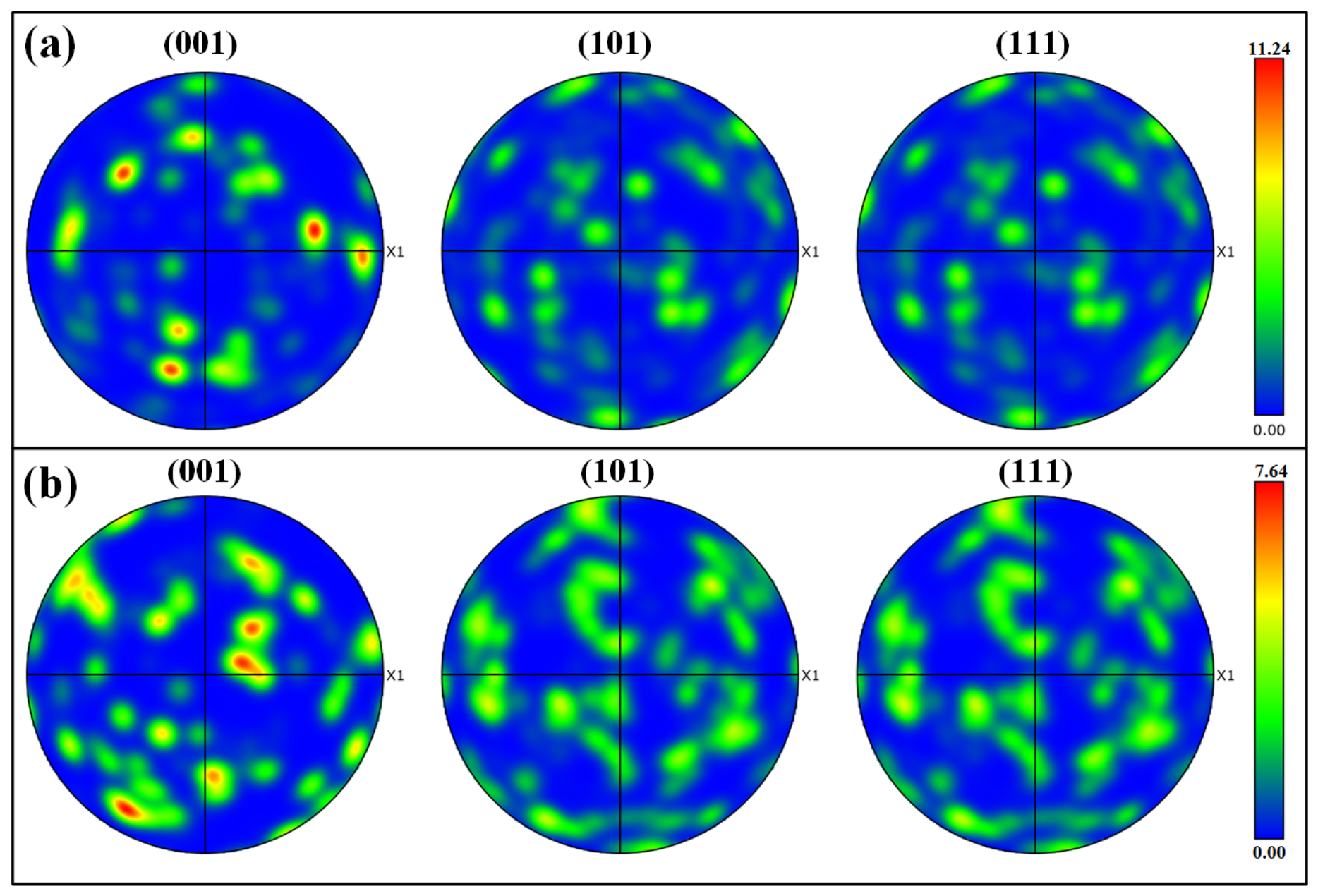
EBSD pole figure analysis provides critical evidence for elucidating the regulatory effect of TiC particles on the crystallographic orientation preference of the Ti6Al4V matrix during the LDED process. The {001}, {101}, and {111} pole figures shown in
Figure 8a,b all reveal a pronounced <001> texture of the Ti6Al4V matrix along the deposition direction, which is consistent with the classical behavior of β-Ti undergoing epitaxial growth along the direction of minimum undercooling during LDED solidification. However, when the TiC content increases from 40.0 wt.% to 50.0 wt.%, the texture intensity is noticeably weakened, with the maximum pole density decreasing from 11.24 to 7.64. The attenuation of texture arises from structural changes induced by the competitive nucleation effect of TiC particles during solidification. In regions with low TiC content, solidification is dominated by epitaxial growth of β-Ti grains from the underlying layers, leading to the formation of a strong <001> columnar grain texture. In contrast, in regions with high TiC content, the volume fraction of TiC particles increases substantially, and these particles act as highly efficient heterogeneous nucleation sites, markedly enhancing the volumetric nucleation rate of β-Ti. This can be attributed to the fact that, during the rapid solidification process in LDED, TiC particles, owing to their high melting point, high interfacial energy, and significant lattice mismatch with the Ti matrix, provide a large number of effective heterogeneous nucleation sites for the β-Ti phase, thereby markedly reducing the nucleation energy barrier. In contrast to the epitaxial solidification mechanism governed by the continuation of underlying substrate grains, TiC-induced volumetric heterogeneous nucleation enables the simultaneous formation of a large number of randomly oriented β-Ti nuclei within the melt pool over a very short time scale. With increasing TiC volume fraction, this “multi-source random nucleation” mechanism becomes dominant, progressively weakening the directional competitive growth driven by the thermal gradient. As a result, the continuous epitaxial growth of columnar grains is frequently interrupted. In addition, TiC-induced local solute redistribution and thermal field perturbations further destabilize the solidification front, suppressing the development of preferential growth along a single crystallographic orientation. Consequently, the solidification mode transitions from epitaxial competitive growth dominance to a heterogeneous nucleation-controlled multidirectional growth regime. This leads to a more randomized crystallographic orientation distribution, ultimately manifested as a significant weakening of the <001> texture, with the maximum pole density decreasing from 11.24 to 7.64.
As a result, the solidification behavior transitions from epitaxial growth to nucleation-dominated solidification. The β-Ti grains induced by TiC particles exhibit a high degree of orientation randomness, effectively disrupting the continuity of columnar grain epitaxial growth and significantly suppressing the overall texture intensity.
3.3. Mechanical Properties
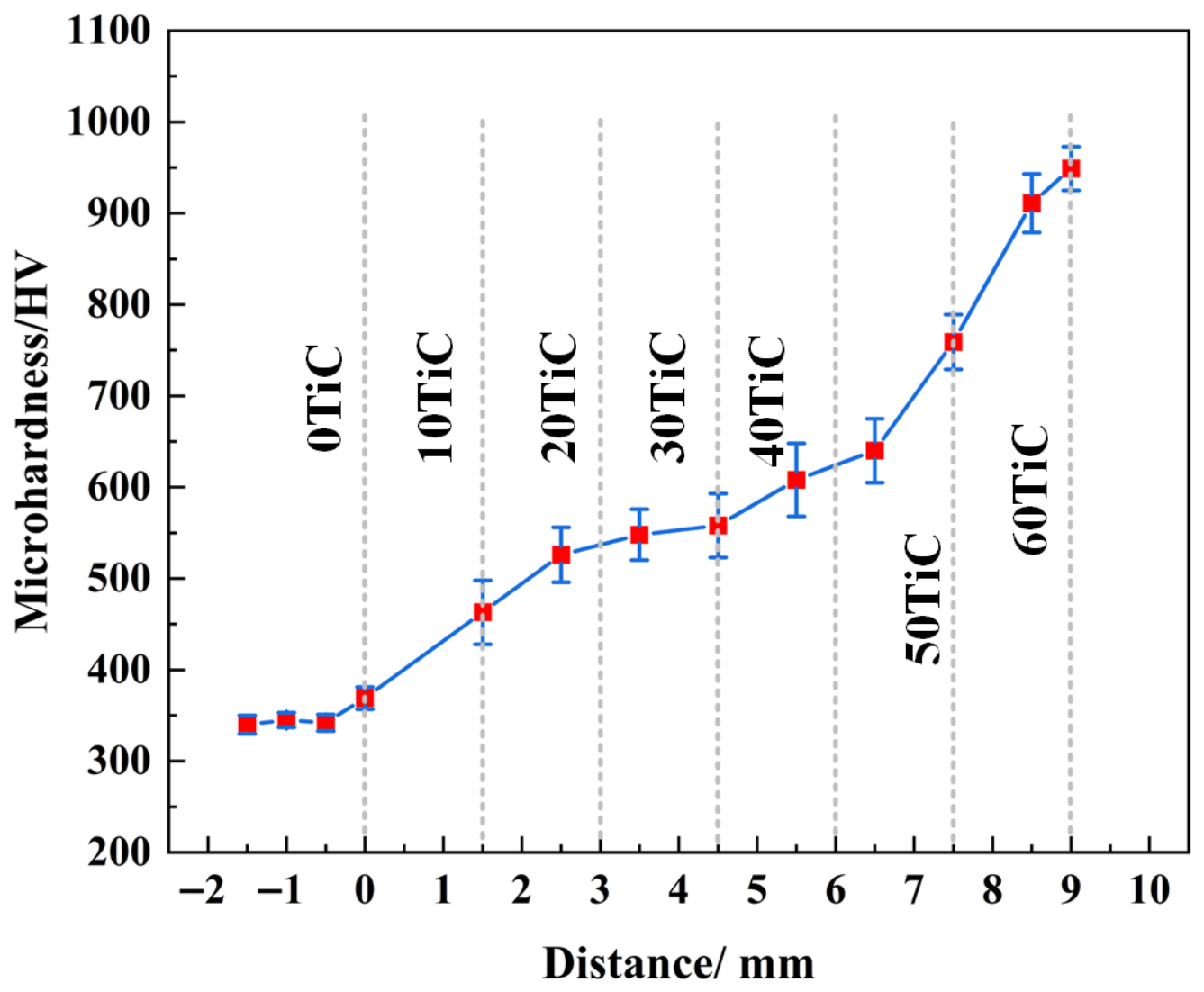
The microhardness distribution along the build direction, as illustrated in
Figure 9, validates the successful implementation of the structural design objectives for the TiC/Ti6Al4V graded composites. The vertical dashed lines in the figure delineate the physical interfaces between successive deposition layers with varying TiC weight fractions, marking the transition zones of the compositional gradient. As the TiC content increases progressively from 10 wt.% to 60 wt.%, the hardness exhibits a continuous and monotonic rising trend, reaching a peak value of 950 HV, a 164% enhancement over the Ti6Al4V matrix. To ensure statistical reliability, each data point represents the average of at least five independent measurements. It is worth noting that while the Ti6Al4V substrate exhibits a negligible standard deviation due to its homogeneous rolled microstructure, the TiC-reinforced regions show higher but consistent deviations. This reflects the inherent microstructural heterogeneity where the indenter may interact with either the discrete, hard TiC particles or the relatively softer Ti matrix.
This macroscopic performance enhancement stems from the systematic microstructural regulation induced by TiC particles during LDED solidification and subsequent solid-state phase transformations. From a morphological perspective, the transition from eutectic chain-like TiC to primary dendritic TiC not only improves load transfer efficiency but also provides a higher density of heterogeneous nucleation sites for β-Ti. As a result, the lamellar α-Ti width is significantly refined from 4.07 μm to 0.45 μm. This can be attributed to the role of TiC particles as high-melting-point heterogeneous reinforcements during the rapid solidification inherent to LDED. These particles not only exert a pronounced Zener pinning effect, effectively suppressing β-Ti grain growth, but also enhance heterogeneous nucleation, thereby significantly increasing the nucleation density and promoting substantial grain refinement. In addition, the pronounced mismatch in thermal and mechanical properties between TiC and the Ti matrix induces local stress redistribution and modifies the solidification thermal gradient, which further facilitates the transition of grain morphology from coarse lamellar structures to refined equiaxed and fine lamellar architectures. From a strengthening perspective, the refined α-Ti lamellar structure follows the classical Hall–Petch relationship [
39], where grain refinement increases grain boundary area and effectively impedes dislocation motion, thereby enhancing hardness. Meanwhile, the uniformly dispersed TiC reinforcements contribute to load-bearing capability during plastic deformation, while interfacial dislocation pile-up further strengthens resistance to deformation. Accordingly, the synergistic contribution of grain refinement strengthening, dispersion strengthening, and interfacial load transfer leads to a continuously increasing hardness gradient in the TiC/Ti-6Al-4V graded composite, ultimately enabling tunable mechanical performance from the substrate to the high-TiC-content region.
Concurrently, EBSD pole figure analysis confirms that the volumetric nucleation effect induced by TiC effectively disrupts the inherent <001> epitaxial texture, reducing the maximum texture intensity from 11.24 to 7.64. This can be attributed to the role of TiC particles as high-density heterogeneous nucleation sites during the rapid solidification process in LDED. Their introduction significantly increases the fraction of equiaxed grains formed during solidification, thereby weakening the columnar grain growth pathway originally governed by epitaxial growth from the substrate. The initial <001> preferred orientation arises from a competitive growth mechanism, where partially remelted substrate grains at the melt pool bottom continue to grow epitaxially along the dominant thermal gradient direction, leading to texture development. With the addition of TiC particles, this continuous epitaxial growth is effectively disrupted. On one hand, the particle-induced volumetric heterogeneous nucleation promotes the simultaneous formation and growth of randomly oriented grains within the melt pool, increasing the overall orientation randomness. On the other hand, local thermal gradient perturbations and solute redistribution induced by the TiC/matrix interfaces further diversify grain growth directions, thereby suppressing the dominance of any single crystallographic orientation. Consequently, with increasing TiC content, the solidification mechanism transitions from epitaxial competitive growth to multi-source heterogeneous nucleation dominance. This results in a pronounced reduction in texture intensity (from 11.24 to 7.64), reflecting significant texture weakening and microstructural homogenization.
Furthermore, the high hardness in TiC-rich regions is a synergistic result of matrix strengthening and the load-bearing effect of the ceramic reinforcement. KAM analysis reveals a pronounced accumulation of geometrically necessary dislocations (GNDs) in high-TiC regions. Due to the substantial mismatch in elastic modulus and coefficient of thermal expansion between TiC and the Ti6Al4V matrix, rapid cooling during LDED triggers intense thermal stress concentrations at the interfaces [
40]. In regions with high TiC content, the pronounced mismatch in elastic modulus, thermal expansion coefficient, and plastic deformability between the ceramic reinforcement and the Ti matrix inevitably leads to deformation incompatibility during rapid solidification and subsequent thermo-mechanical coupling, thereby generating significant local strain gradients in the interfacial vicinity. Under external loading or indentation, to maintain deformation compatibility between the matrix and the rigid TiC particles, a large number of GNDs are generated near the interfaces to accommodate lattice distortion. These GNDs primarily act to relax the strain incompatibility around the particles and consequently give rise to local dislocation pile-up and strain concentration. Therefore, the increase in KAM values essentially reflects an enhanced local orientation gradient within grains, while the corresponding enrichment of GNDs indicates a transition in the deformation mechanism from single-phase matrix plasticity to a cooperative mode involving matrix plastic deformation, particle-constrained dislocation accumulation, and interfacial strain accommodation. This pronounced evolution of dislocation structures ultimately leads to enhanced work-hardening capability and a significant increase in microhardness in the high-TiC region. The non-linear surge in hardness at high TiC fractions (50–60 wt.%) suggests a transition from matrix-dominated strengthening to a regime governed by the load-bearing capacity of a semi-continuous ceramic skeleton.
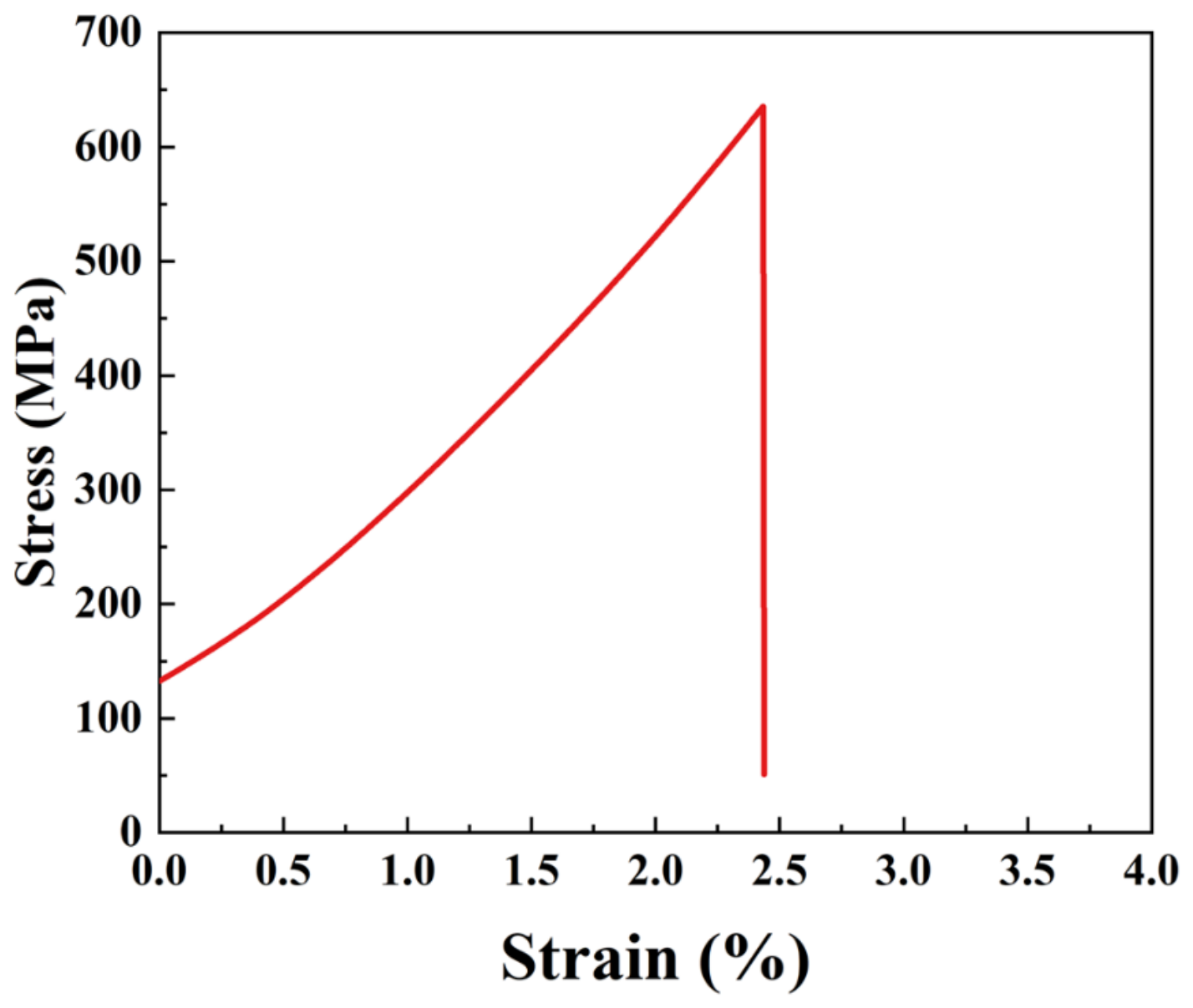
The longitudinal tensile behavior of the TiC/Ti6Al4V gradient composite, as depicted in
Figure 10, exhibits a characteristic high-strength–low-ductility profile, with an ultimate tensile strength (UTS) of 630 MPa and an elongation of 2.4%. This performance compares favorably with the homogeneous 50 wt.% TiC/Ti6Al4V composites reported by Ma et al., which achieved a UTS of 515.5 ± 5.3 MPa and an elongation of 1.83 ± 0.06% [
38]. This performance is a macroscopic manifestation of the synergistic competition between multiple strengthening and embrittlement mechanisms inherent to the LDED-WP graded microstructure [
41]. This can be attributed to the fact that, within the TiC/Ti-6Al-4V graded structure formed during rapid solidification in LDED, multiple strengthening mechanisms and strain incompatibility effects coexist across different length scales, collectively governing the observed high-strength yet reduced-ductility mechanical response. On one hand, the introduction of TiC particles significantly refines the α-Ti lamellar structure and enhances the overall load-bearing capacity through dispersion strengthening and load transfer mechanisms. Meanwhile, in high-TiC-content regions, the abundant interfaces and second-phase particles act as strong barriers to dislocation motion, severely impeding slip activity and thereby leading to a substantial increase in yield and ultimate tensile strength. On the other hand, the pronounced mismatch in elastic modulus and plastic deformability between TiC and the Ti matrix hinders effective strain accommodation at the interfaces, promoting localized stress concentration and acting as preferential sites for microcrack initiation. In addition, the mechanical incompatibility between layers with different TiC contents within the graded architecture induces interlayer strain localization during tensile deformation, accelerating damage accumulation and crack propagation.
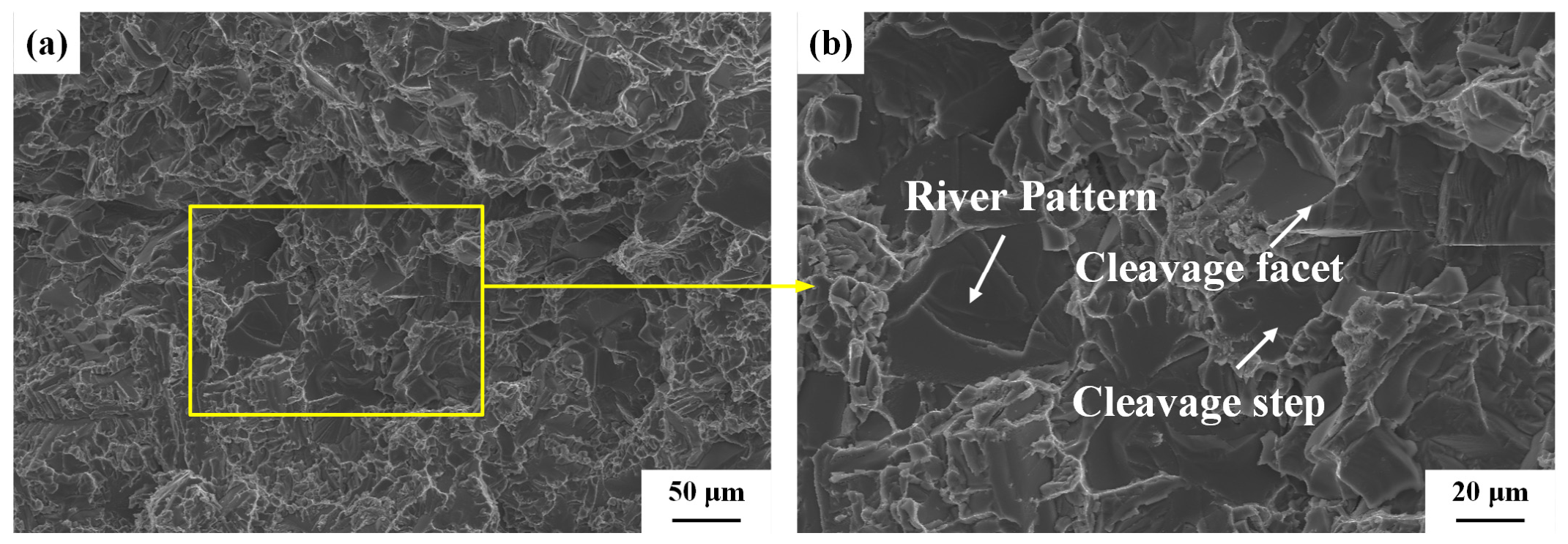
However, the pronounced CTE and elastic modulus mismatch between TiC and the matrix triggers intense local strain accumulation and lattice distortion during the rapid cooling of the LDED process. These pre-existing localized strains superimpose with external loading, causing stress amplification at the interfaces that exceeds the critical fracture strength. As a result, failure primarily initiates within the 60TiC layer, which acts as the brittle “weakest link” under longitudinal tension. This is attributed to its semi-continuous ceramic skeleton and minimum localized ductility, which coincide with the highest intensity of strain accumulation and lattice distortion as evidenced by our KAM and GND analysis. As confirmed by the fractographs in
Figure 11, fracture preferentially initiates at these TiC-rich sites within the 60TiC zone. The presence of fragmented TiC particles and interfacial debonding facets, coupled with the absence of significant matrix blunting, confirms that crack initiation and rapid propagation through the reinforcement network dominate the failure behavior [
42]. Notably, the absence of failure at compositional interfaces (such as 40TiC/50TiC or 50TiC/60TiC) demonstrates the effectiveness of the LDED-WP process and interfacial remelting in achieving strong metallurgical bonding that exceeds the fracture strength of the most heavily reinforced layer. Therefore, the crack initiation mechanism is interpreted as the synergistic result of interfacial instability and strain-gradient-induced local embrittlement within the high-TiC region. Crack propagation subsequently proceeds rapidly along the TiC particle network and weakly bonded interfacial paths, ultimately resulting in a dominant failure mode characterized by TiC fracture, interfacial debonding, and brittle crack propagation.