Article

Effect of Welding Current on Microstructure and Properties of 7075/6061 Aluminum Alloy Dissimilar Pulsed MIG Welded Joints

1
National United Engineering Laboratory for Advanced Bearing Tribology, Henan University of Science and Technology, Luoyang 471023, China
2
School of Mechanical Engineering, North China University of Water Resources and Electric Power, Zhengzhou 450045, China
3
School of Materials Science and Engineering, Dalian University of Technology, Dalian 116024, China
*
Authors to whom correspondence should be addressed.
Coatings 2026, 16(5), 608; https://doi.org/10.3390/coatings16050608 (registering DOI)
Submission received: 21 April 2026 / Revised: 9 May 2026 / Accepted: 15 May 2026 / Published: 18 May 2026
(This article belongs to the Special Issue Laser Welding and Cladding for Enhanced Mechanical Performance)

Abstract

Dissimilar 7075-T6 and 6061-T6 aluminum alloy joints were fabricated using pulsed metal inert gas (P-MIG) welding with ER5356 filler wire. The effects of welding current (224 A, 234 A, and 244 A) on macro-morphology, microstructure, mechanical properties, and corrosion behavior were systematically investigated. As welding current increased, the top and bottom reinforcements first increased and then decreased, reaching maximum values at 234 A, while the front weld width exhibited the opposite trend. The weld zone consisted of equiaxed and dendritic grains, with partial remelting of AlFeMnSi intermetallic compounds observed in the heat-affected zones. The microhardness and tensile strength of the joints followed a similar trend of first decreasing and then increasing with welding current, achieving a maximum tensile strength of 203.9 MPa at 244 A, corresponding to 89.5% of the 6061-T6 base metal strength. Corrosion resistance varied across regions depending on the evaluation method. In intergranular corrosion tests, the 7075-HAZ showed the highest susceptibility due to grain boundary segregation of Mg and Zn. In electrochemical tests, the WZ exhibited the poorest corrosion resistance. For the 7075-HAZ, optimal corrosion resistance was achieved at 234 A, attributed to a stable passive film and uniform precipitate distribution. These findings provide valuable guidance for optimizing P-MIG welding parameters for dissimilar 7075/6061 aluminum alloy joints.

1. Introduction

7075 aluminum alloy, a typical Al-Zn-Mg-Cu series ultra-high-strength aluminum alloy, is widely used in aerospace, military equipment, and other fields due to its excellent specific strength and good comprehensive mechanical properties [1]. In contrast, 6061 aluminum alloy, which belongs to the Al-Mg-Si series heat-treatable strengthened aluminum alloy, exhibits good corrosion resistance, weldability, and formability, and is extensively applied in transportation, structural construction, marine engineering, and other fields [2,3]. In certain engineering applications, the high strength of 7075 aluminum alloy and the good corrosion resistance and weldability of 6061 aluminum alloy are complementary properties that make dissimilar joints attractive. Therefore, research on dissimilar welded joints of 7075/6061 aluminum alloys holds significant engineering application value [4,5,6]. However, due to notable differences in chemical composition, thermophysical properties, and solidification characteristics between the two alloys, issues such as microstructural inhomogeneity, cracking, and degradation of mechanical properties readily occur during welding, which severely limit their engineering application [7,8].
Currently, commonly used aluminum alloy welding methods include friction stir welding (FSW), laser welding, and gas metal arc welding. Wang et al. [9] investigated the effects of 7075 filler wire and 7075 filler wire with the addition of 1.0 wt.% TiC nanoparticles on the microstructure and mechanical properties of laser-metal inert gas (MIG) hybrid welded 7075/6061 aluminum alloy joints. The study found that the addition of 1.0 wt.% TiC nanoparticles transformed the weld microstructure from coarse dendrites to fine equiaxed dendrites, increasing the average ultimate tensile strength of the joint from 95.7 MPa to 208.9 MPa and the yield strength from 57.1 MPa to 155.1 MPa. Sofian et al. [10] studied the effects of guide hole size and welding parameters on the microstructure and mechanical properties of friction stir spot-welded 7075/6061 aluminum alloy joints, and found that the guide hole size influenced the microstructure and mechanical properties of the material. Yang et al. [11] compared the effects of circular oscillating laser welding and conventional non-oscillating laser welding on the quality of dissimilar 6061/7075 aluminum alloy joints. Compared with conventional oscillation, circular oscillation was found to improve weld formation, eliminate porosity, and refine the microstructure of the fusion zone, effectively enhancing the microstructure and mechanical properties of the 6061/7075 aluminum alloy joints. Liu et al. [4] employed a nanotreatment-assisted laser–MIG hybrid welding technique to achieve crack-free dissimilar welding of 7075-T6/6061-T6 aluminum alloys.
Pulsed metal inert gas (P-MIG) welding offers unique advantages in the welding of dissimilar aluminum alloy joints due to its precise controllability of heat input, excellent arc stability, and low spatter. Cao et al. [12] investigated the effect of water cooling on the microstructure and properties of P-MIG welded joints of 6N01 aluminum alloy and found that water cooling optimized the microstructure and improved the mechanical properties of the joints. Wang et al. [13] performed P-MIG welding on 12 mm thick Al-Zn-Mg alloy plates using ER5356, ER5087, and ER4043 filler wires. The results showed that the weld filled with ER5087 consisted of columnar grains with a relatively large grain size, whereas the weld filled with ER5356 exhibited equiaxed grains with a smaller grain size. The weld filled with ER4043 featured a typical eutectic dendritic structure. Li et al. [14] studied the effect of welding speed on the properties of P-MIG welded 7075/6061 aluminum alloy joints and found that as the welding speed increased, the tensile strength first increased and then decreased, reaching a maximum at 500 mm/min, while corrosion behavior became more severe with increasing welding speed. In addition, welding speed is positively correlated with cooling rate. Haghdadi et al. [15] systematically investigated the solidification behavior of the B206 aluminum alloy at cooling rates ranging from 1 to 15 K/min using differential scanning calorimetry and microstructural characterization. Their results showed that the nucleation temperature of primary α-Al was essentially unaffected by the cooling rate, whereas the transformation temperatures of Al-Cu-Fe intermetallic compounds and the eutectic reaction decreased significantly with increasing cooling rate. Furthermore, a higher cooling rate resulted in a finer secondary dendrite arm spacing and a more refined grain structure.
However, systematic studies on the effects of welding current on the microstructure evolution, mechanical property variation mechanisms, and corrosion behavior of dissimilar 7075/6061 aluminum alloy P-MIG welded joints remain insufficient, particularly regarding comparative analyses of property differences across various regions of the joint, which warrant further investigation. Based on this, this paper takes dissimilar 7075-T6 and 6061-T6 aluminum alloys as the research objects and employs ER5356 filler wire for P-MIG welding. The effects of different welding currents on the macro-morphology, microstructure, elemental distribution, microhardness, tensile properties, and corrosion resistance of the joints are systematically investigated. Combined with characterization techniques such as scanning electron microscopy (SEM) and energy-dispersive X-ray spectroscopy (EDS), an in-depth analysis is conducted on the evolution behavior of precipitates under the welding thermal cycle and its influence on joint performance, exploring the underlying causes for the differences in corrosion resistance across different regions. This study aims to provide a theoretical basis and experimental support for optimizing the P-MIG welding process of dissimilar 7075/6061 aluminum alloys, thereby promoting the engineering application of dissimilar aluminum alloy welded structures.

2. Experimental Procedure

2.1. Material Preparation

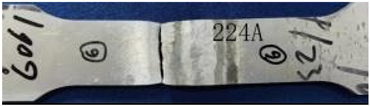
The base metals used in this experiment are 7075-T6 and 6061-T6 aluminum alloys, with dimensions of 200 mm × 100 mm × 6 mm. ER5356 filler wire with a diameter of 1.6 mm was used as the filler material, and 99.99% argon was employed as the shielding gas. In this study, the A7 MIG Welder 450 manufactured by KEMPPI (Finland) was used to weld dissimilar aluminum alloys 7075-T6 and 6061-T6 using the P-MIG welding process. Prior to welding, the surfaces of the 7075-T6 and 6061-T6 aluminum alloy plates to be welded were ground with sandpaper to remove the surface oxide layer, then cleaned with anhydrous ethanol to remove surface oil, and dried using a dryer for subsequent use. The schematic diagram of the welded joint is shown in Figure 1. Li et al. [14] investigated the effect of welding speed on the microstructure and properties of P-MIG welded joints of 7075/6061 aluminum alloys. The study found that at a welding current of 234 A and a welding speed of 500 mm/min, the joint exhibited optimal mechanical properties and excellent corrosion performance. Based on this, the present study primarily investigates the influence of welding current on joint properties while maintaining a constant welding speed of 500 mm/min. The chemical compositions of the base metals and the filler wire are shown in Table 1. Detailed information on the welding process parameters is presented in Table 2.

2.2. Microstructure Characterization

The microstructure of the welded joints was observed and analyzed using a scanning electron microscope (SEM) (model ZEISS Sigma 300, Germany), with particular focus on the structural characteristics of the weld zone (WZ), heat-affected zone (HAZ), and base metal (BM). EDS was used to perform elemental distribution analysis and local point scanning analysis on key regions of the welded joint to determine the composition of precipitated phases and the elemental segregation behavior.

2.3. Mechanical Properties Testing

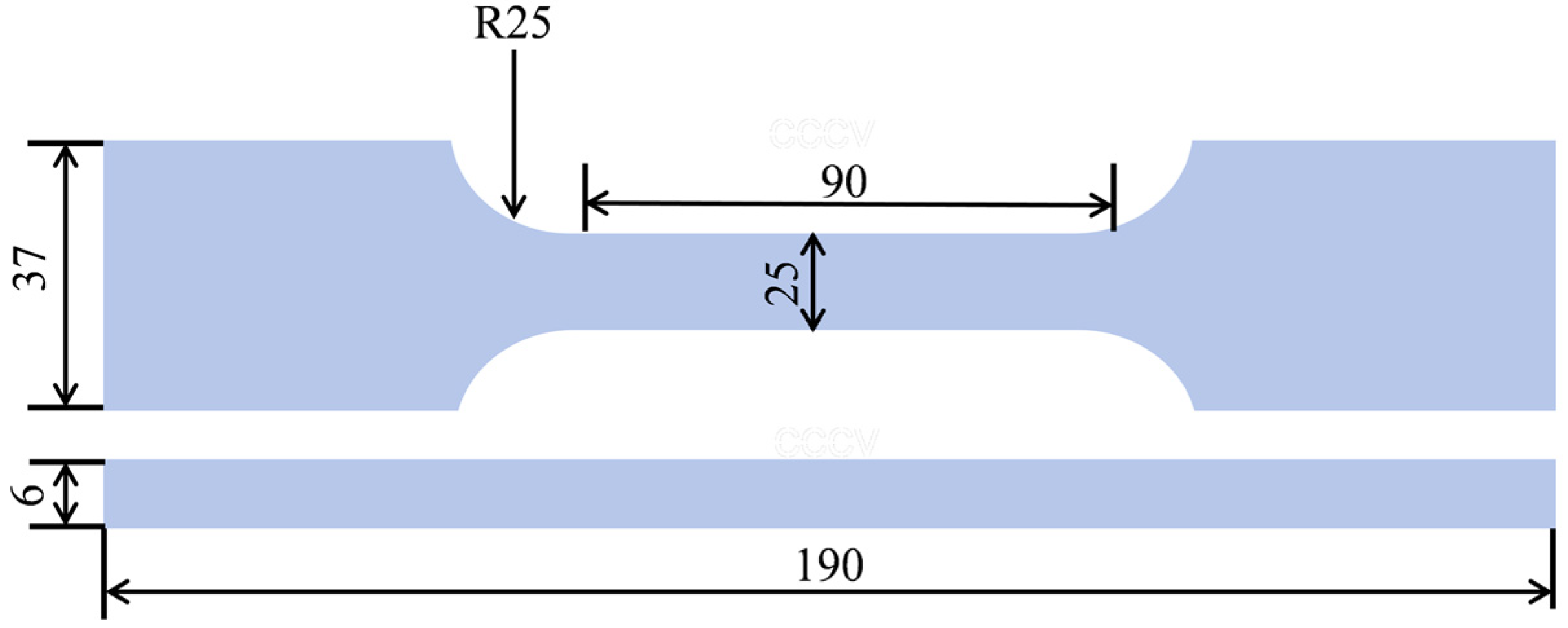
The tensile property testing of the 7075/6061 aluminum alloy welded joints was conducted at room temperature (23 °C ± 5 °C). To ensure accuracy, three tests were performed for each set of welding parameters, and the average value was taken as the final measured result under those conditions. The schematic diagram of the tensile specimen is shown in Figure 2. Vickers hardness testing of the welded joints was carried out using an HVS-1000 Vickers hardness tester (Laizhou Jincheng Industrial Equipment Co., Ltd., Laizhou, China). The sample dimensions were 80 mm × 10 mm × 6 mm. Measurements were made on the cross-section at intervals of 1 mm symmetrically about the weld center region, with a load of 0.1 kg and a dwell time of 15 s.

2.4. Corrosion Performance Testing

2.4.1. Intergranular Corrosion

The intergranular corrosion test was conducted in accordance with the standard GB/T 7998-2005. Prior to testing, the specimens were ground to 2000# grit and then cleaned with acetone to remove surface grease and dried for further use. Subsequently, the specimens were immersed in a 10 wt.% NaOH solution for 5 to 15 min, removed, rinsed thoroughly with deionized water, and dried. They were then placed in a 30 vol.% HNO3 solution until the surface became bright, again rinsed with deionized water, and dried. The non-working surfaces of the specimens were sealed with epoxy resin AB adhesive. The intergranular corrosion solution consisted of 57 g of analytical grade NaCl and 10 mL of H2O2, diluted with deionized water to 1 L. The specimens were immersed in the solution using a constant temperature water bath for 12 h, with the temperature controlled at 35 °C ± 2 °C. After the test, a 5 mm section was cut from one end along the direction perpendicular to the main deformation direction using mechanical machining. The specimen was then mounted, ground, and polished, and the corrosion depth was observed and measured under an optical microscope (OM).

2.4.2. Electrochemical Corrosion

The electrochemical performance testing of the aluminum alloy joints was conducted at room temperature (23 °C ± 5 °C) using a CS310M electrochemical workstation manufactured by Wuhan Corrtest Instruments Corp., Ltd., Wuhan, China. A three-electrode system was established using a flat corrosion cell for the tests. In the flat corrosion cell, a platinum electrode served as the auxiliary electrode (AE), the specimen to be tested served as the working electrode (WE), and a saturated calomel electrode (SCE) served as the reference electrode (RE). The flat corrosion cell was filled with a 3.5 wt.% NaCl solution.
Considering the size of each region of the joint and the difficulty of sample preparation, a rubber gasket with a diameter of 6 mm was used to control the contact area between the specimen and the solution, resulting in a test surface area of 0.28 cm2. The electrochemical specimens were ground with sandpaper up to 2000# grit, cleaned with ethanol, and dried before testing. The electrochemical tests were performed in the following sequence: open circuit potential (OCP), electrochemical impedance spectroscopy (EIS), and polarization curve (PC). For the WZ, the circular gasket was centered on the weld centerline, covering only the fusion zone. For the HAZ on both sides, the gasket was placed approximately 3 mm from the fusion line, within the HAZ identified by optical microscopy. For the BM, the gasket was placed on the 7075-BM and 6061-BM regions at least 15 mm away from the weld center to avoid thermal effects. Three parallel specimens were tested for each welded joint position to ensure the authenticity and repeatability of the results. The OCP test duration was set to 1800 s with a filter capacitance of 10 nF. Subsequently, EIS measurements were conducted in the frequency range from 105 Hz to 10−1 Hz with an excitation signal amplitude of 10 mV. Finally, potentiodynamic polarization curve tests were performed at a scan rate of 1 mV/s within a potential range of ±200 mV relative to the OCP. After the tests, the fitting results were analyzed.

3. Experimental Results

3.1. Macroscopic Weld Formation

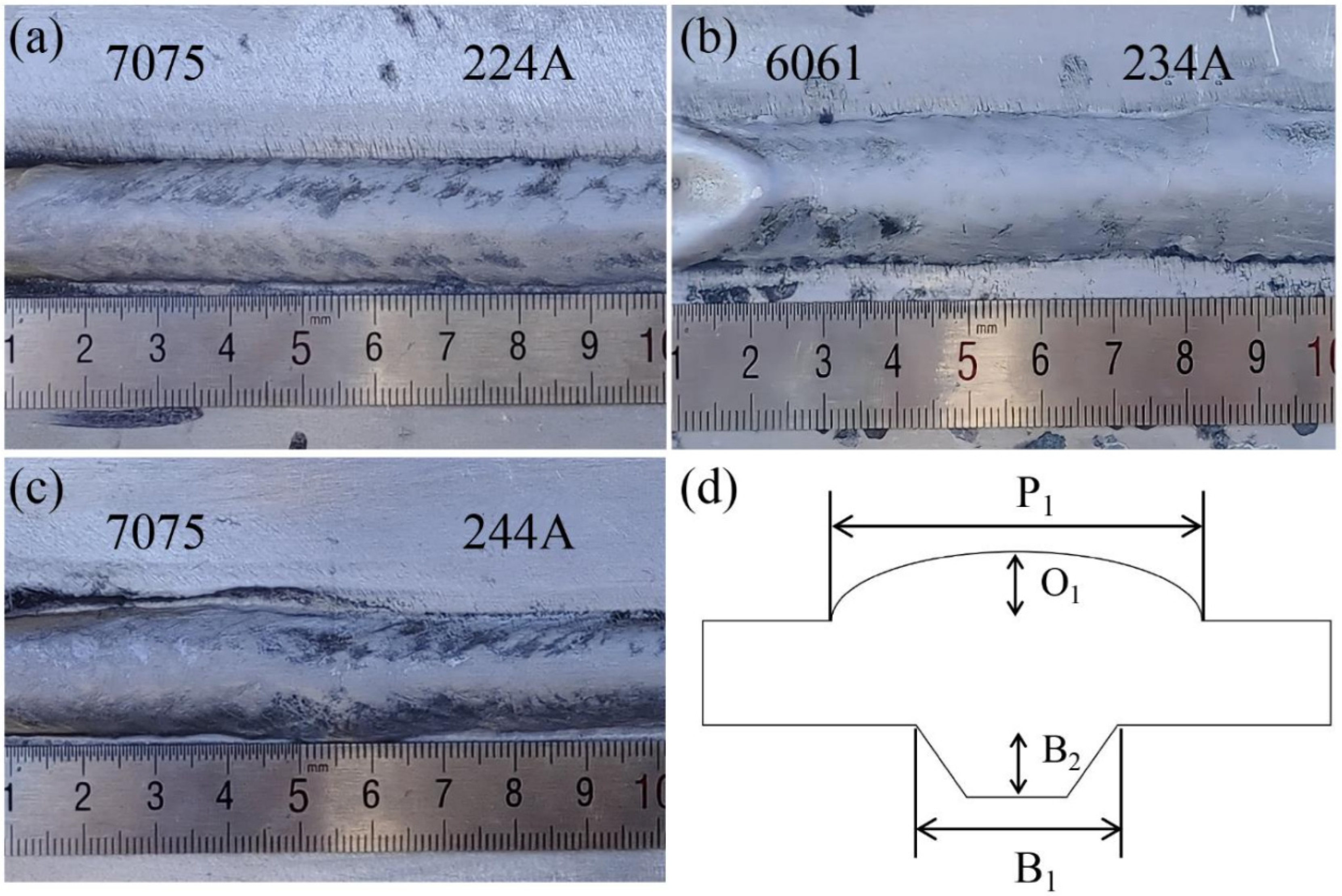
The macroscopic morphology of the welded plates is shown in Figure 3. It can be seen from the figure that as the welding current increases, the welding heat input increases significantly, the weld morphology becomes fuller, and there are no obvious defects on the surface. To specifically investigate the effect of welding current on weld formation, as shown in Figure 3d, the weld width and reinforcement were measured, and the back width ratio R was compared to evaluate the weld quality. Table 3 lists the trends of weld reinforcement, weld width, and back width ratio as functions of welding speed, where the top reinforcement is denoted as O1, the bottom reinforcement as B2, the front weld width as P1, and the back weld width as B1. The back width ratio R is defined as the ratio of the back weld width B 1 to the front weld width P 1 of the formed weld, i.e., R = B 1 / P 1 .
The top reinforcement and bottom reinforcement first increased and then decreased with increasing welding current, reaching their maximum values of 2.54 mm and 2.49 mm, respectively, at a welding current of 234 A, while the front weld width exhibited an opposite trend, first decreasing and then increasing. As the welding current increased, the back width ratio first increased and then decreased. This may be because at a welding current of 224 A, the heat input is relatively low, resulting in poor molten pool fluidity and a low reinforcement. As the current increases, the heat input rises, the molten pool becomes deeper, and the liquid metal gains better fluidity, causing the metal in the pool to accumulate upward and form a higher reinforcement. Since the heat input is more concentrated in the deeper part of the molten pool and the fluidity of the liquid metal is enhanced, more liquid metal piles up upward, which in turn limits the lateral spreading of the filler wire on the top surface of the weld, leading to a slight decrease in the front weld width. When the welding current further increases, the heat input becomes excessive, the molten pool temperature rises significantly, and the fluidity of the filler wire is greatly enhanced, resulting in an increase in the front weld width. At the same time, the amount of filler wire accumulating as reinforcement in the WZ decreases, i.e., the reinforcement decreases. Pathak et al. [16] reported that the welding current exhibits an approximately linear relationship with penetration depth, top reinforcement, and weld width; penetration depth and weld width increase with increasing current, while top reinforcement decreases with increasing current, which is consistent with the experimental results. It can be seen from the figure that at a welding current of 234 A, the back weld width is the largest while the front weld width is the smallest, resulting in the largest back width ratio. An excessively large back width ratio indicates an excessive amount of filler wire during welding, which may cause the root of the welded joint to protrude excessively, potentially leading to a degradation in the mechanical properties of the joint.

3.2. Microstructure and Elemental Analysis of Dissimilar Joint

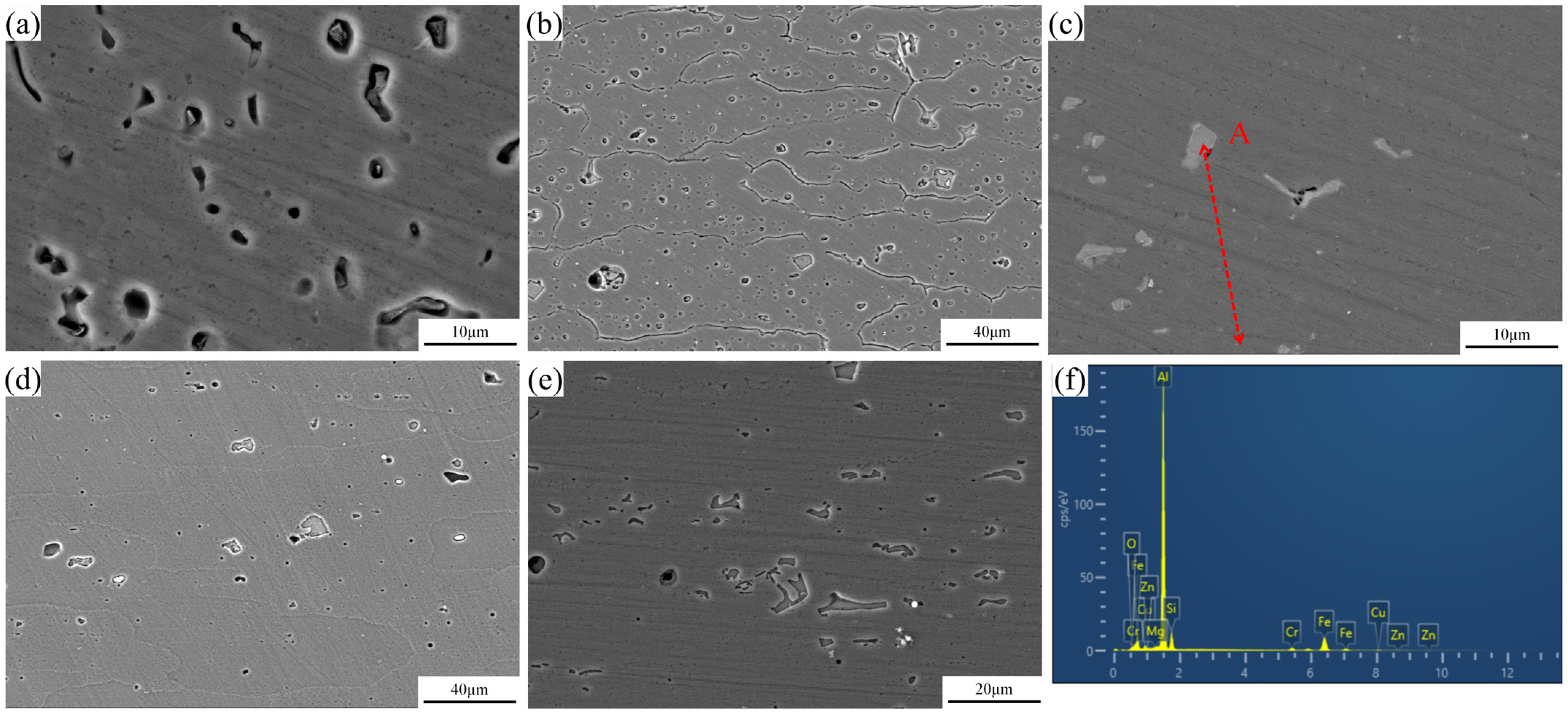
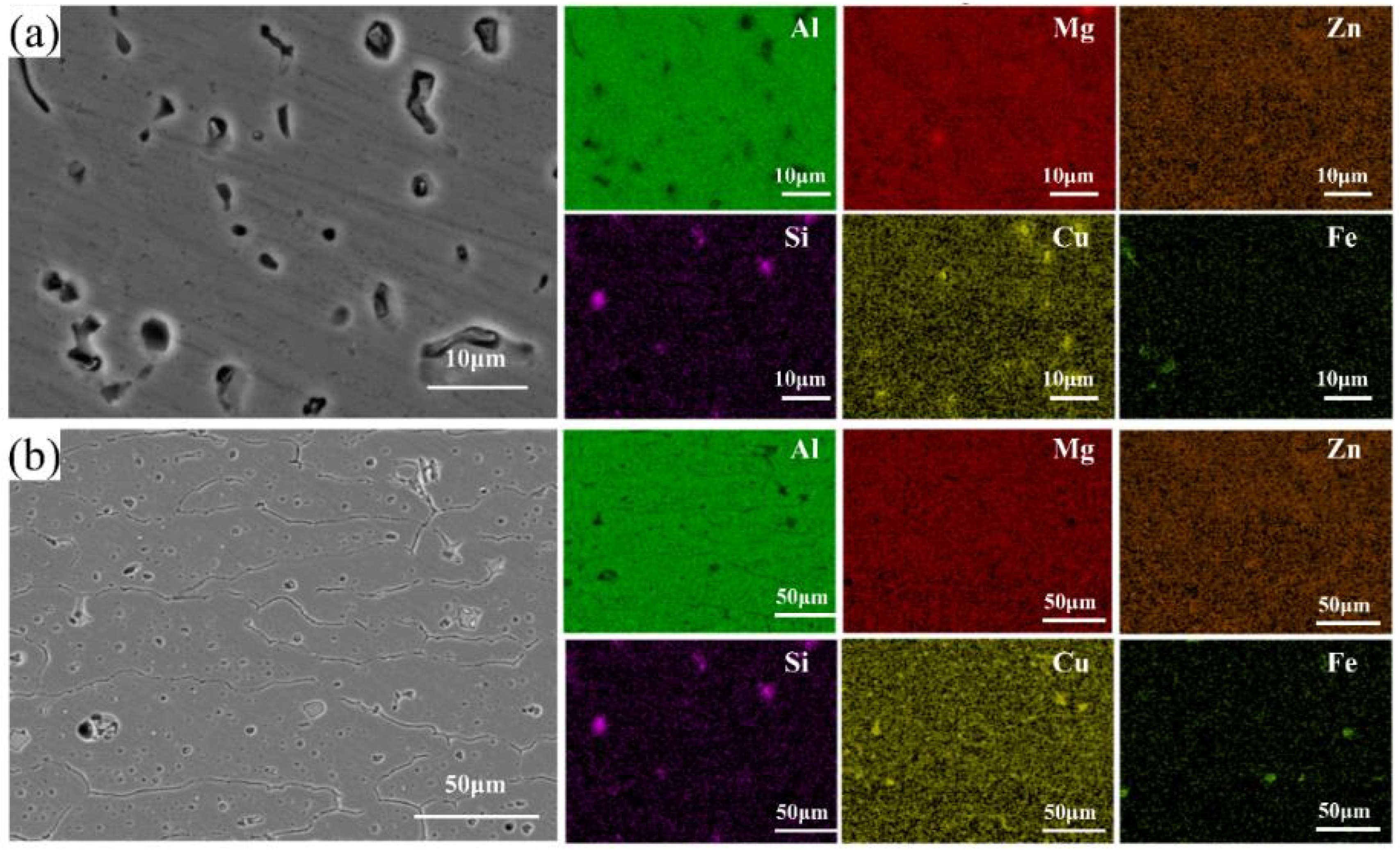
SEM was employed to observe the microstructure of the 7075/6061 aluminum alloy dissimilar joint at a welding current of 234 A and a welding speed of 500 mm/min, and EDS was used to analyze the elemental distribution in key regions. The results are shown in Figure 4 and Figure 5. The findings indicate that the WZ mainly consists of equiaxed grains and dendrites, with obvious elemental migration and enrichment observed at the interface between the WZ and the HAZ. Based on the EDS point analysis at point A, it is speculated that the white flaky compounds appearing in Figure 4a–e may be AlFeMnSi intermetallic compounds. The AlFeMnSi phase originates from the inherent impurity elements Fe and Si in the alloy, as well as from Mn added to refine the microstructure, and is present in both the 6061 and 7075 base metals. These phases are formed during the homogenization treatment of the ingots. After subsequent processing and heat treatment (e.g., T6 temper), they are typically dispersed in the aluminum matrix in the form of irregular blocks, spheroidized particles, or short rods [17,18]. However, compared with the base metals, the content of AlFeMnSi intermetallic compounds in the 7075 HAZ and 6061 HAZ decreased. This is likely attributed to the partial remelting of these compounds under the high temperature of the welding thermal cycle, while the rapid cooling may have suppressed their reprecipitation. In addition, the heterogeneous distribution of these second phases may contribute to local microstructural inhomogeneity and influence both the mechanical properties and corrosion behavior of the welded joint. In particular, these intermetallic particles may act as local cathodic sites during corrosion, thereby promoting localized corrosion in certain regions of the joint [19,20].
The reduction of these compounds has a complex impact on the joint performance. The decrease in AlFeMnSi intermetallic compounds weakens their pinning effect on grain boundaries, potentially leading to an increase in grain size within the HAZ, thereby reducing the yield strength and tensile strength of the material [21,22]. Experimental observations reveal that the HAZ often serves as the initiation site for tensile fracture, further corroborating the aforementioned mechanism. Additionally, during the welding thermal cycle, solute elements undergo significant redistribution, resulting in elemental enrichment at certain grain boundaries, particularly in the 7075 HAZ region. Such elemental enrichment significantly increases the corrosion activity at grain boundaries, rendering this region susceptible to pitting and intergranular corrosion, thereby adversely affecting the corrosion resistance of the dissimilar joint. The severe intergranular corrosion observed in the 7075 HAZ is also closely related to the heterogeneous distribution of Mg-, Zn-, and Cu-rich precipitate phases [23,24,25].

3.3. Mechanical Properties of the Joint

3.3.1. Microhardness of Dissimilar Joint

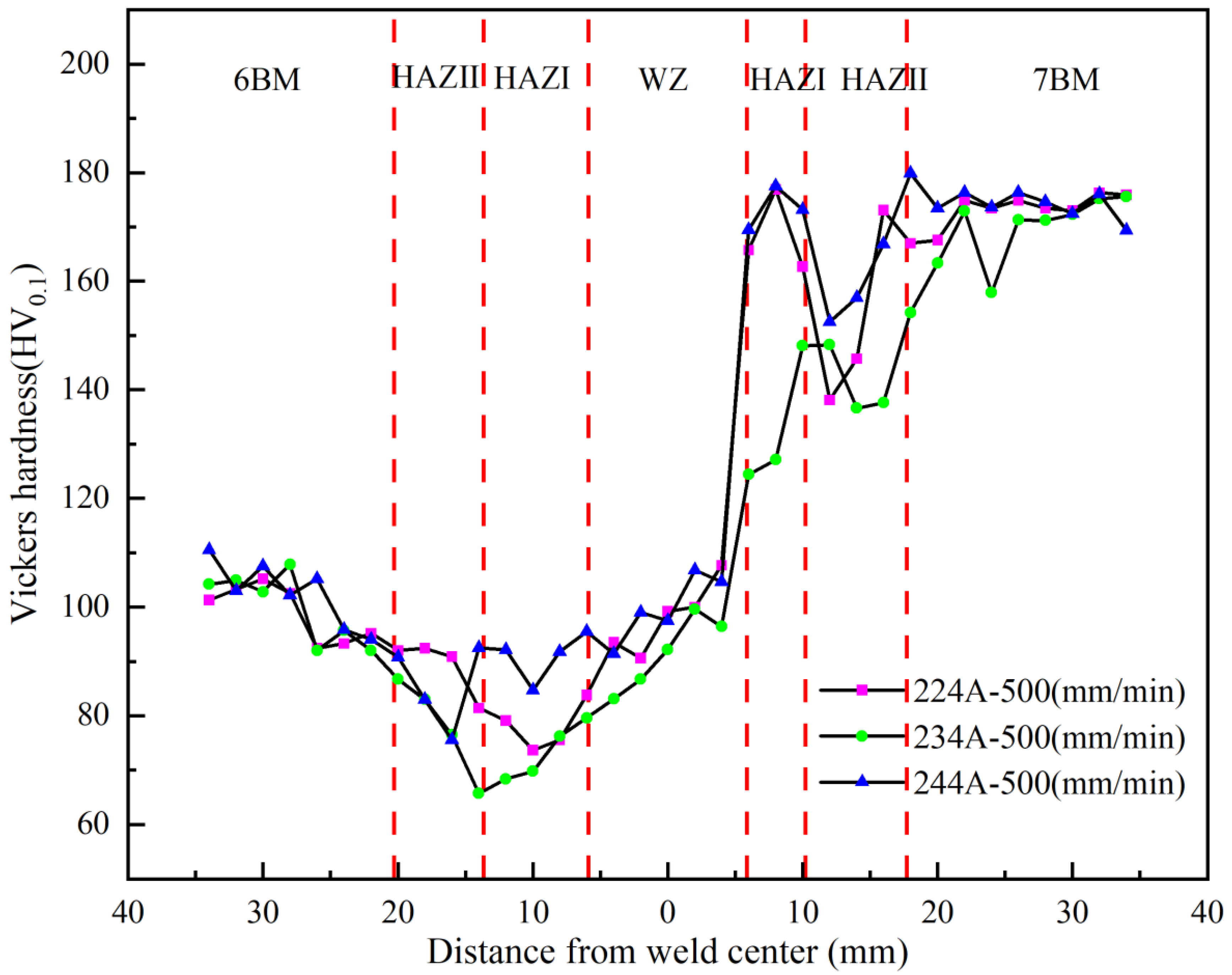
The microhardness distribution of the dissimilar joint is shown in Figure 6. Due to the significant difference in mechanical properties between the 6061 and 7075 aluminum alloy base metals in the dissimilar joint, the hardness on the 7075 side is significantly higher than that on the 6061 side, and the hardness curve exhibits a large disparity. Based on the characteristics of the microhardness distribution, the joint can be roughly divided into five regions: 7075-BM, 6061-BM, 7075-HAZ, 6061-HAZ, and the WZ. When further refining the hardness variation, the 7075-HAZ and 6061-HAZ can be subdivided into two subregions: HAZ I and HAZ II.
It can be seen from the figure that the hardness values in the 6061-HAZ and WZ regions are relatively low, representing the low-hardness zones of the entire joint, while the 7075 base metal exhibits the highest hardness. The overall hardness distribution trend is as follows: 7075-BM > 6061-BM > 7075-HAZ > WZ > 6061-HAZ. This indicates a significant hardness difference between the base metals, the WZ, and the HAZ, reflecting the microstructural heterogeneity of the dissimilar joint.
The effect of welding current on the hardness of the WZ is particularly significant. At welding currents of 224 A, 234 A, and 244 A, the average hardness values of the WZ were 98.2 HV0.1, 91.6 HV0.1, and 99.1 HV0.1, respectively, exhibiting a trend of first decreasing and then increasing with increasing welding current. This phenomenon may be related to the influence of welding heat input on the microstructure of the WZ. At a relatively low welding current (224 A), the lower heat input may help maintain relatively stable microstructural characteristics, resulting in higher hardness. As the welding current increases to 234 A, the increased heat input may promote softening effects in the weld zone, leading to a decrease in hardness. When the welding current further increases to 244 A, the hardness slightly recovers, which may be associated with changes in microstructural homogeneity under higher heat input conditions.

3.3.2. Tensile Test

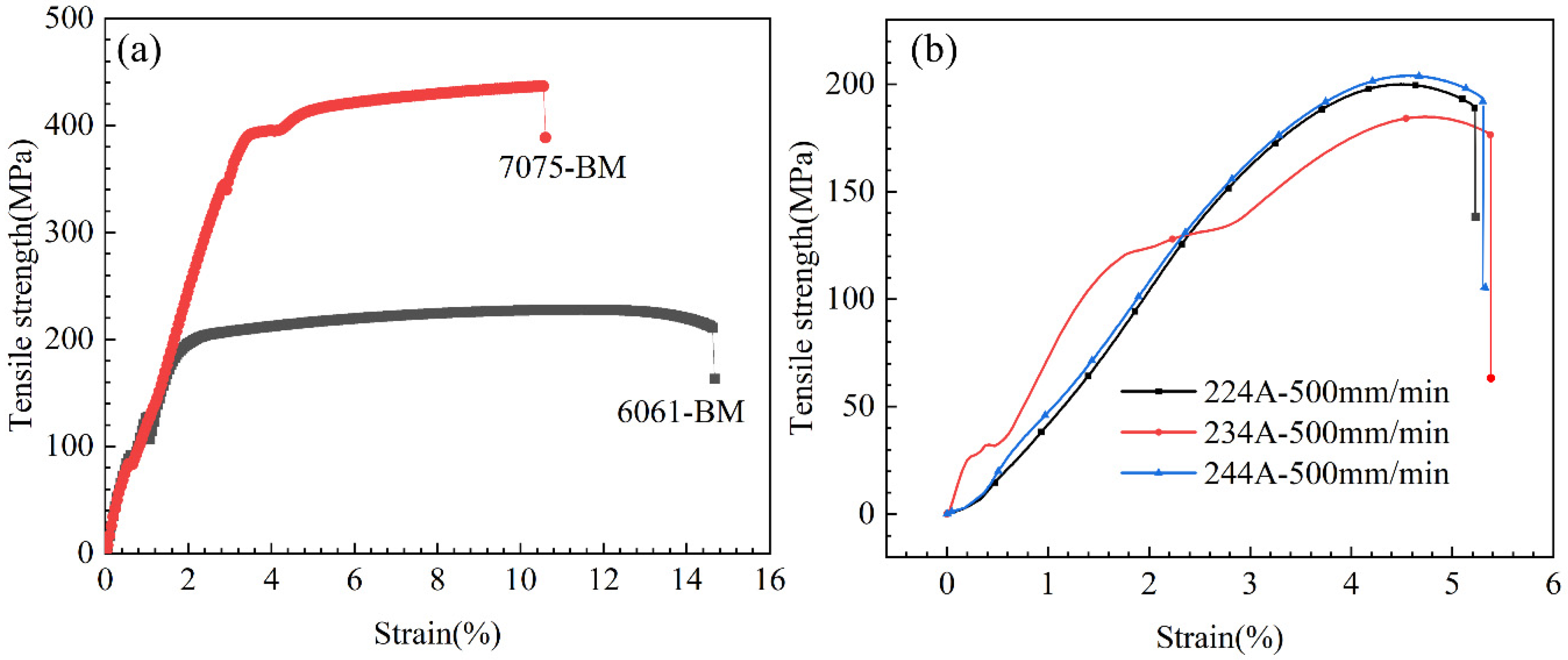
Tensile tests were conducted on the 6061-T6 base metal, 7075-T6 BM, and 7075/6061 P-MIG welded joints at a welding speed of 500 mm/min under room temperature conditions (23 °C ± 5 °C). The welded joints were fabricated with welding currents of 224 A, 234 A, and 244 A, and their corresponding stress–strain curves are shown in Figure 7. The experimental results indicate that the tensile strength of the joints at welding currents of 224 A and 244 A is relatively similar, whereas a significant decrease in tensile strength is observed at 234 A. The tensile strength and fracture locations of the joints are presented in Table 4. Under all three welding current conditions, the fracture occurred in the HAZ on the 6061-T6 side. The tensile strength exhibited a trend of first decreasing and then increasing with increasing welding current, with values of 199.8 MPa, 184.4 MPa, and 203.9 MPa, respectively. When the welding current increased to 244 A, the joint achieved the maximum tensile strength, reaching 89.5% of that of the 6061-T6 BM. This variation in strength is likely closely related to the microstructure of the joint and the evolution of strengthening phases in the HAZ under the influence of welding heat input. At a relatively low welding current (224 A), insufficient heat input leads to a relatively uniform distribution of precipitates. When the welding current increases to 234 A, the higher heat input may cause partial remelting of the strengthening phases and grain coarsening, thereby reducing the tensile strength. As the welding current further increases to 244 A, the precipitates may re-form and become uniformly distributed, and recrystallization occurs, refining the grains, which increases the tensile strength. The slight serrations and fluctuations observed in the stress–strain curves in Figure 7 are characteristic of the Portevin–Le Chatelier (PLC) effect, which arises from dynamic strain aging due to the interaction between mobile dislocations and solute Mg atoms in the Al-Mg system (6061 base metal and ER5356 filler wire) [26]. This phenomenon is commonly observed in aluminum–magnesium alloys during plastic deformation and does not affect the measured tensile strength or fracture location.
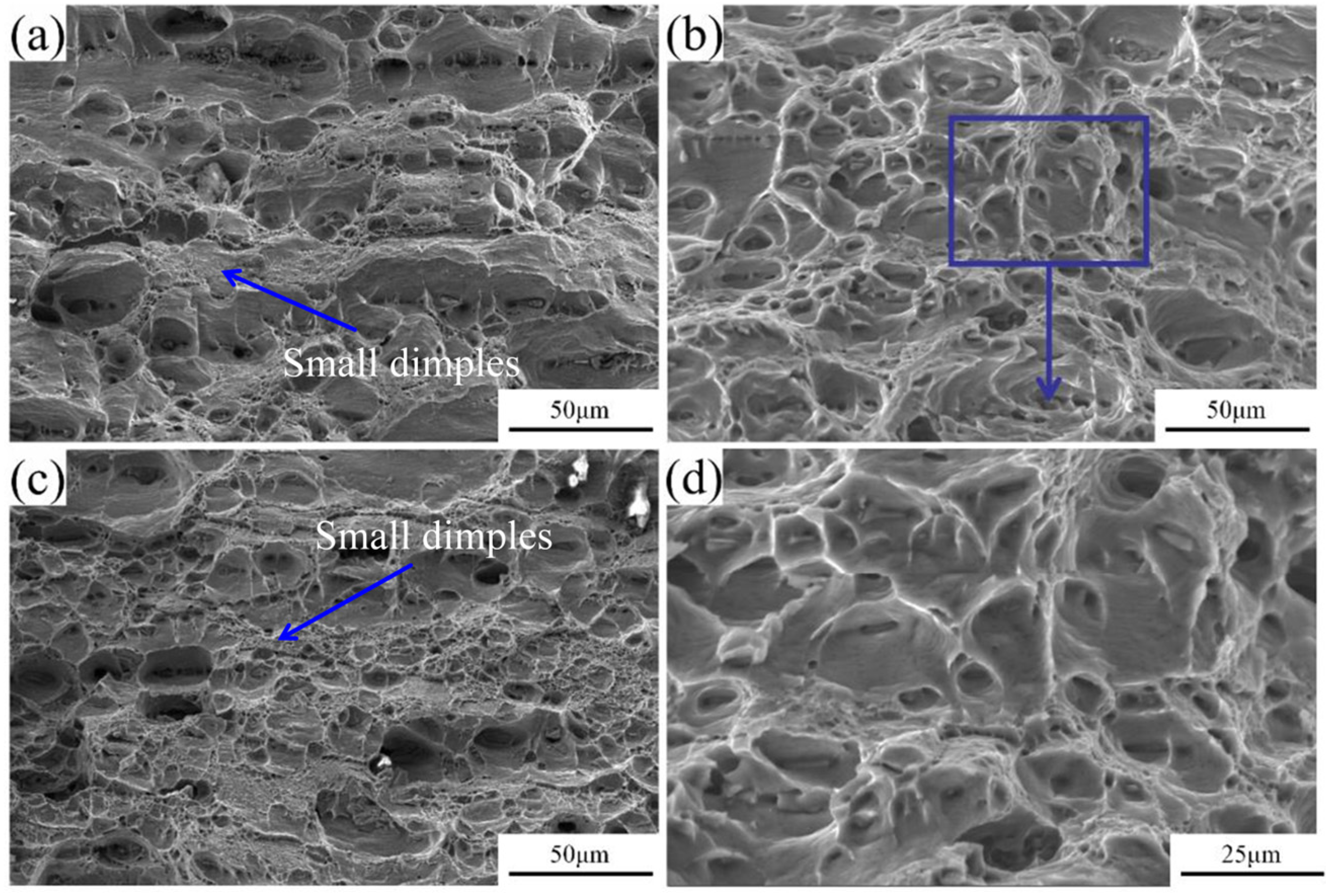
Figure 8 shows the fracture morphologies of the joints at different welding currents. It can be observed from the figure that under all three welding current conditions, the fracture surfaces exhibit typical ductile fracture characteristics, mainly consisting of elongated dimples and equiaxed dimples [27]. However, closer examination reveals significant differences in fracture morphology among the different welding current conditions. At a welding current of 224 A, a large number of small dimples appear on the fracture surface, which are highly aggregated, indicating significant localized plastic deformation capacity during crack propagation. The aggregated distribution of small dimples effectively disperses stress concentration, and therefore, the joint exhibits relatively high tensile strength under this welding condition. As the welding current increases, the number of small dimples gradually decreases, and the fracture surface is mainly composed of uniformly distributed large dimples. The presence of these large dimples indicates that the material experienced substantial plastic deformation during crack propagation, reflecting superior plastic strain capacity. However, due to the reduction in small dimples, the ability to disperse stress concentration diminishes, leading to a corresponding decrease in tensile strength. When the welding current further increases, bright white inclusions appear on the fracture surface, while the number of large dimples significantly decreases, and small dimples re-form and aggregate. This microstructural change suggests that under high welding current conditions, the crack propagation resistance of the weld material is enhanced. At this point, with the recovery of the aggregation effect of small dimples, the tensile strength of the joint reaches its maximum value of 203.9 MPa. Furthermore, relevant studies have shown a positive correlation between grain size and dimple size; that is, the smaller the grain size, the smaller the dimple size, and the more numerous and densely distributed the dimples [28,29,30]. Therefore, based on the fracture morphology, it can be inferred that the grain size in the HAZ on the 6061 side is relatively small at welding currents of 224 A and 244 A, while it is larger at a welding current of 234 A. This is consistent with the results of microstructure and hardness testing.

3.4. Corrosion Resistance Analysis of Dissimilar Joint

3.4.1. Intergranular Corrosion of Dissimilar Joint

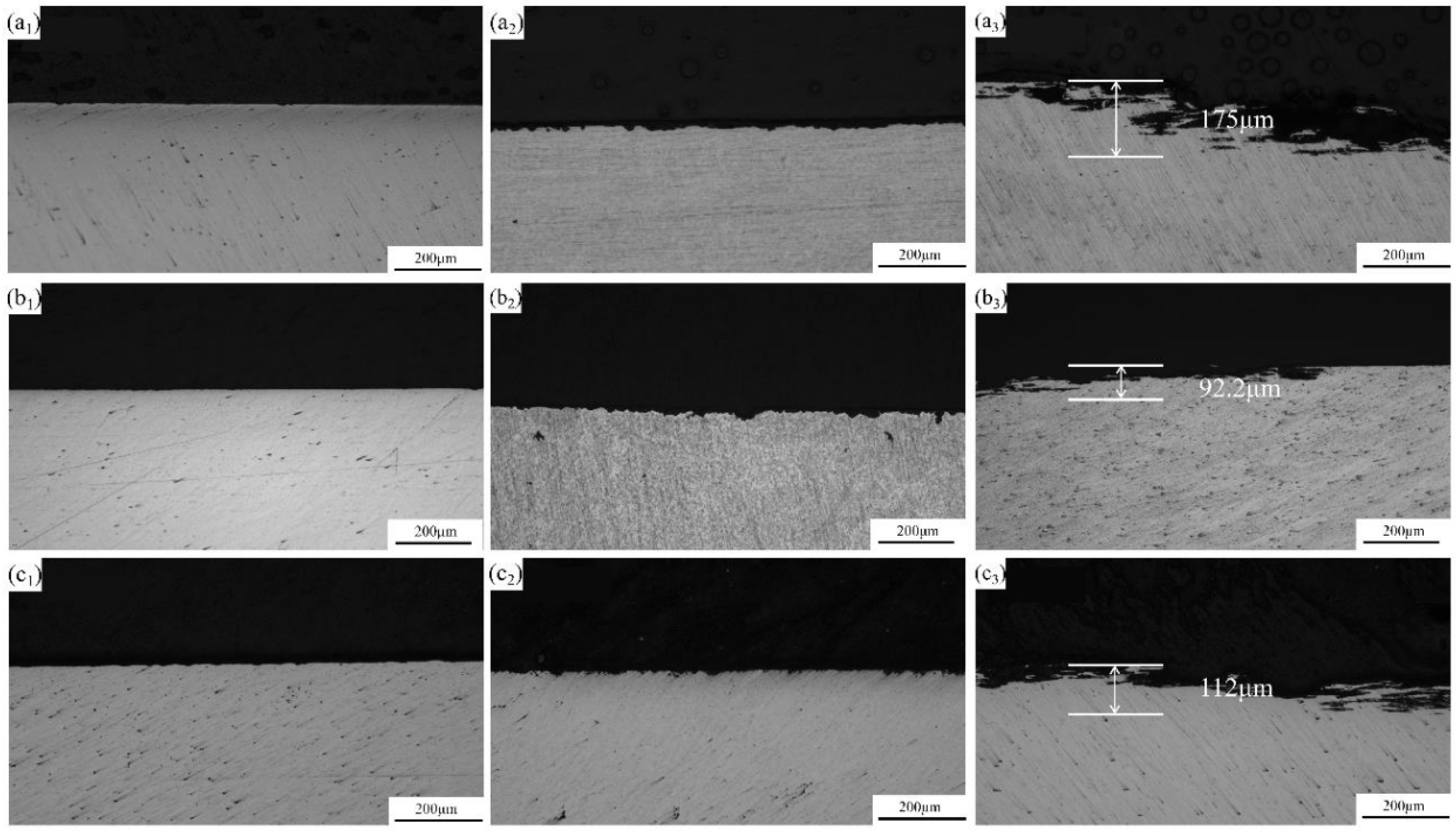
The intergranular corrosion morphologies of the dissimilar joints under different welding currents are shown in Figure 9, where a1–c1 correspond to the 6061-HAZ region, a2–c2 to the WZ, and a3–c3 to the 7075-HAZ region. No obvious corrosion was observed in the 6061-HAZ region, while pitting corrosion occurred in the WZ, but still without intergranular corrosion, indicating that both the WZ and the 6061-HAZ region exhibit good resistance to intergranular corrosion. The most severe corrosion was observed in the 7075-HAZ region, where extensive intergranular corrosion occurred, with exfoliation in the severely affected central areas. The differences in intergranular corrosion morphology across regions can be attributed to the higher content of Mg and Zn elements in the 7075 aluminum alloy, which results in higher corrosion activity. Under the effect of the welding thermal cycle, Mg and Zn elements segregate at the grain boundaries in the 7075-HAZ region, and these segregated regions form micro-galvanic couples with the matrix, acting as anodes that preferentially corrode [25,31]. The maximum corrosion depth was 175 μm at a welding current of 224 A, 92.2 μm at 234 A, and 112 μm at 244 A. At a welding current of 234 A, the best corrosion resistance is achieved. This is likely attributable to the partial dissolution of strengthening phases in the 7075 HAZ of the dissimilar joint, along with the formation of a dispersed and discontinuous distribution, thereby reducing its susceptibility to intergranular corrosion [32].
The distinct intergranular corrosion susceptibility among the three regions can be further explained by their microstructural characteristics. The 6061-HAZ exhibits no obvious corrosion, likely because its primary strengthening phase (Mg2Si) is relatively stable under the welding thermal cycle, and the grain boundary segregation of active elements (Mg, Zn) is limited due to the lower initial Zn content in the 6061 alloy. In contrast, the 7075-HAZ contains much higher levels of Zn (approximately 8.07 wt.%, Table 1) and Mg (approximately 2.52 wt.%), which segregate strongly to grain boundaries during welding, forming anodic paths. The WZ shows pitting but no continuous intergranular corrosion, likely because its rapidly solidified structure is more compositionally uniform and the grain boundary precipitates are finer and less continuous.

3.4.2. Electrochemical Corrosion of Dissimilar Joint

Similarly, electrochemical tests were conducted on different regions of the dissimilar welded joints at a welding speed of 500 mm/min and welding currents of 224 A, 234 A, and 244 A, respectively. The testing methods included OCP, EIS, and PC.
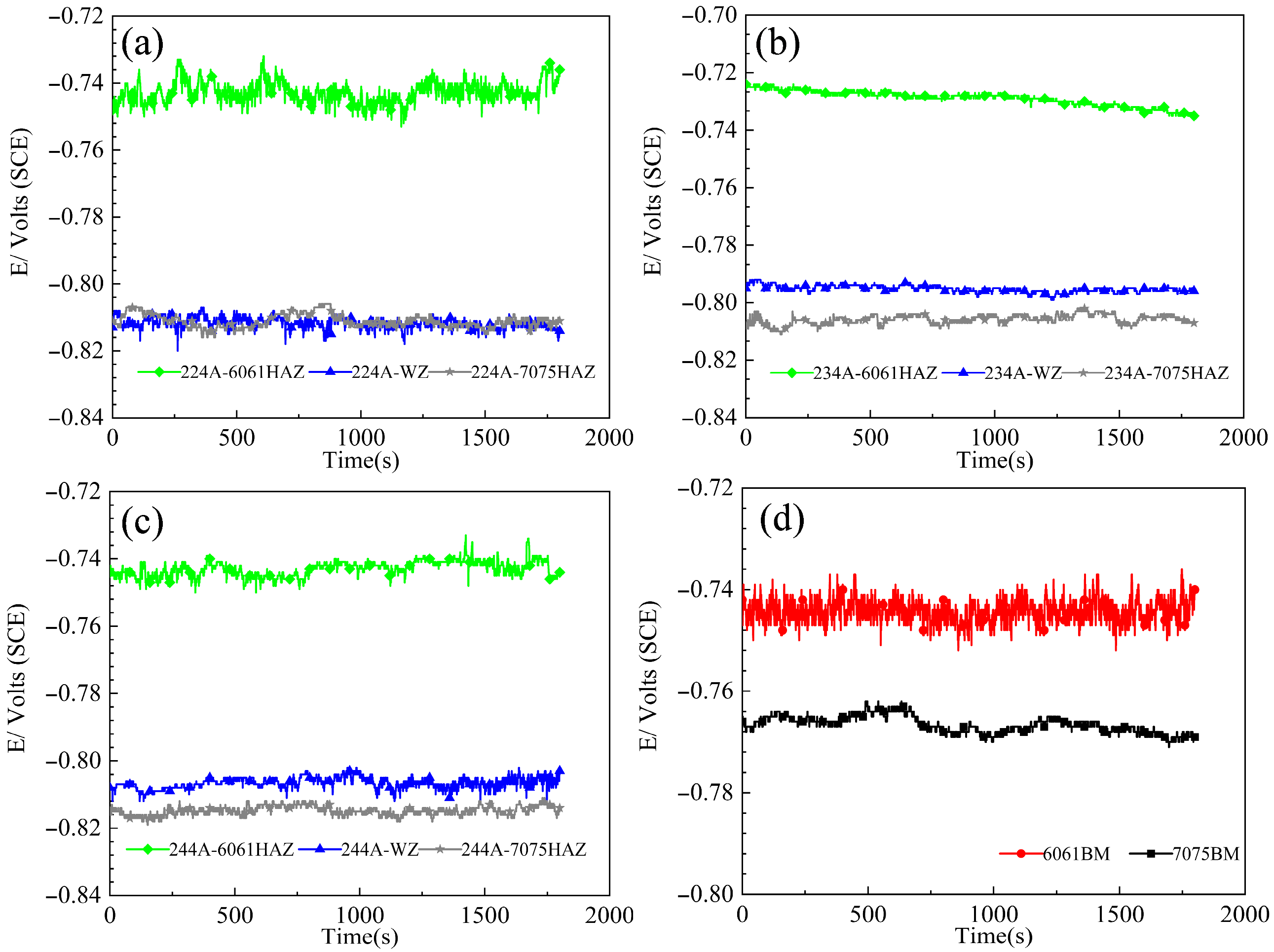
Figure 10a–d presents the OCP curves under welding currents of 224 A, 234 A, 244 A, and for the BM, respectively. The experimental results show that after a testing duration of 1800 s, the OCP under all testing conditions tended to stabilize. It can be observed from the figure that there are significant differences in the OCP values across different regions, and this distribution pattern is primarily attributed to the differences in electrochemical performance among the materials in the dissimilar joint. The 6061-T6 aluminum alloy BM exhibits better corrosion resistance, thus showing the highest OCP; in contrast, the 7075-T6 aluminum alloy, containing higher amounts of copper and other elements, demonstrates lower corrosion resistance, and therefore its OCP is relatively low. With increasing welding current, the OCP of the 7075-side HAZ and the WZ shows a trend of first increasing and then decreasing. This indicates that at lower welding currents, the welding heat input helps reduce the corrosion susceptibility of these two regions. However, as the welding current is further increased to 244 A, the higher welding heat input may induce reprecipitation of precipitates in the WZ and HAZ, resulting in the formation of continuous precipitates, which in turn increases the corrosion susceptibility once more.
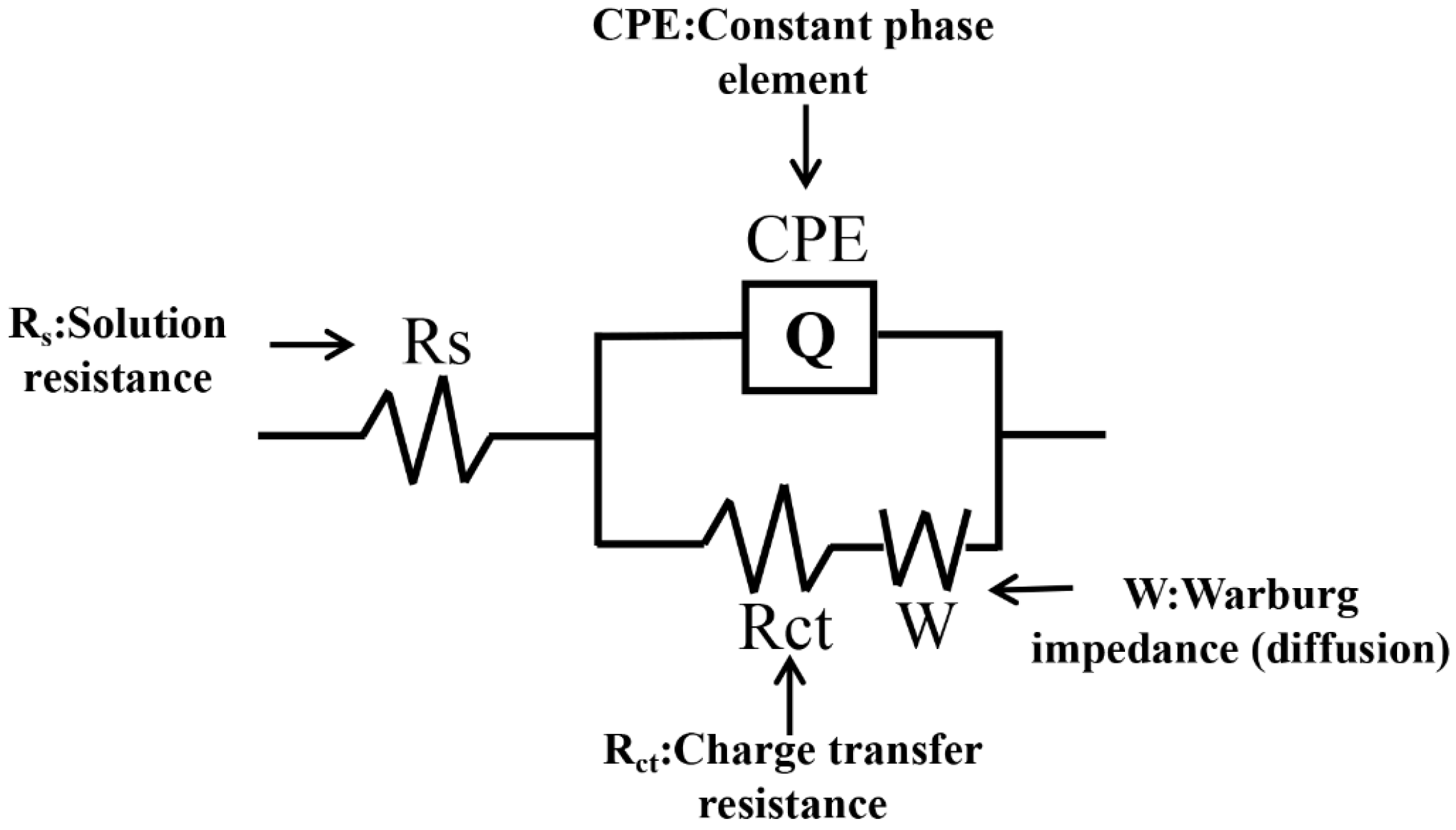
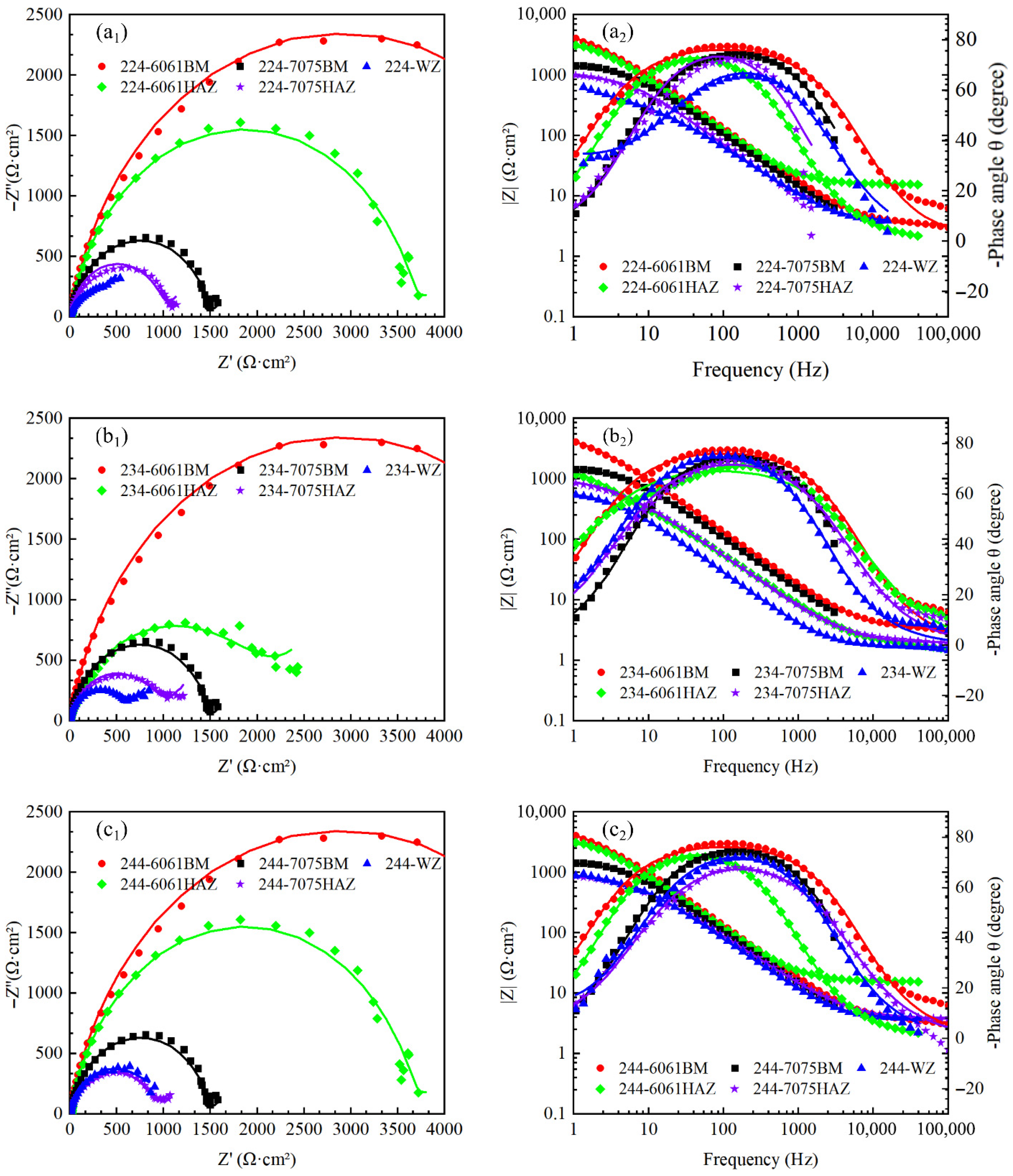
The equivalent circuit is shown in Figure 11. Figure 12 presents the results of the EIS experiments and the corresponding fitted curves. Figure 12a1–c1 show the Nyquist plots for welding currents of 224 A, 234 A, and 244 A, respectively, while Figure 12a2–c2 show the corresponding Bode plots. These two types of plots comprehensively illustrate the electrochemical behavior and corrosion resistance of the dissimilar joints during EIS testing. The fitted parameters are listed in Table 5, Table 6 and Table 7, which allow for further analysis of the effect of different welding currents on the corrosion resistance of each region of the joint. In this study, the value of R ct was used as the evaluation index for the corrosion resistance of the joints. The results indicate that as the welding current increases, the Rct values of the 7075-HAZ region are 0.930, 0.956, and 0.905 kΩ·cm2, respectively, exhibiting a trend of first increasing and then decreasing, with the maximum value achieved at a welding current of 234 A, indicating optimal corrosion resistance of this region under this welding current. This non-monotonic trend may be associated with the formation of a relatively more stable passive behavior and a more homogeneous precipitate distribution at a moderate welding current of 234 A, thereby hindering charge transfer. However, these interpretations are mainly inferred from the electrochemical results and intergranular corrosion behavior. The lower Rct at 224 A indicates an insufficiently developed passive layer, while the decrease at 244 A may be related to precipitate coarsening or increased surface heterogeneity.
In contrast, the Rct values of the WZ increase continuously with increasing welding current, reaching 0.334, 0.571, and 0.850 kΩ·cm2, respectively. This monotonic improvement suggests that a higher heat input (570 J/mm at 244 A) may lead to a more homogeneous microstructure and reduced elemental segregation in the WZ, thereby enhancing its corrosion resistance. The Rct values of the 6061-HAZ and 6061-BM remain relatively high and stable, confirming their intrinsically better corrosion resistance compared to the 7075 side.
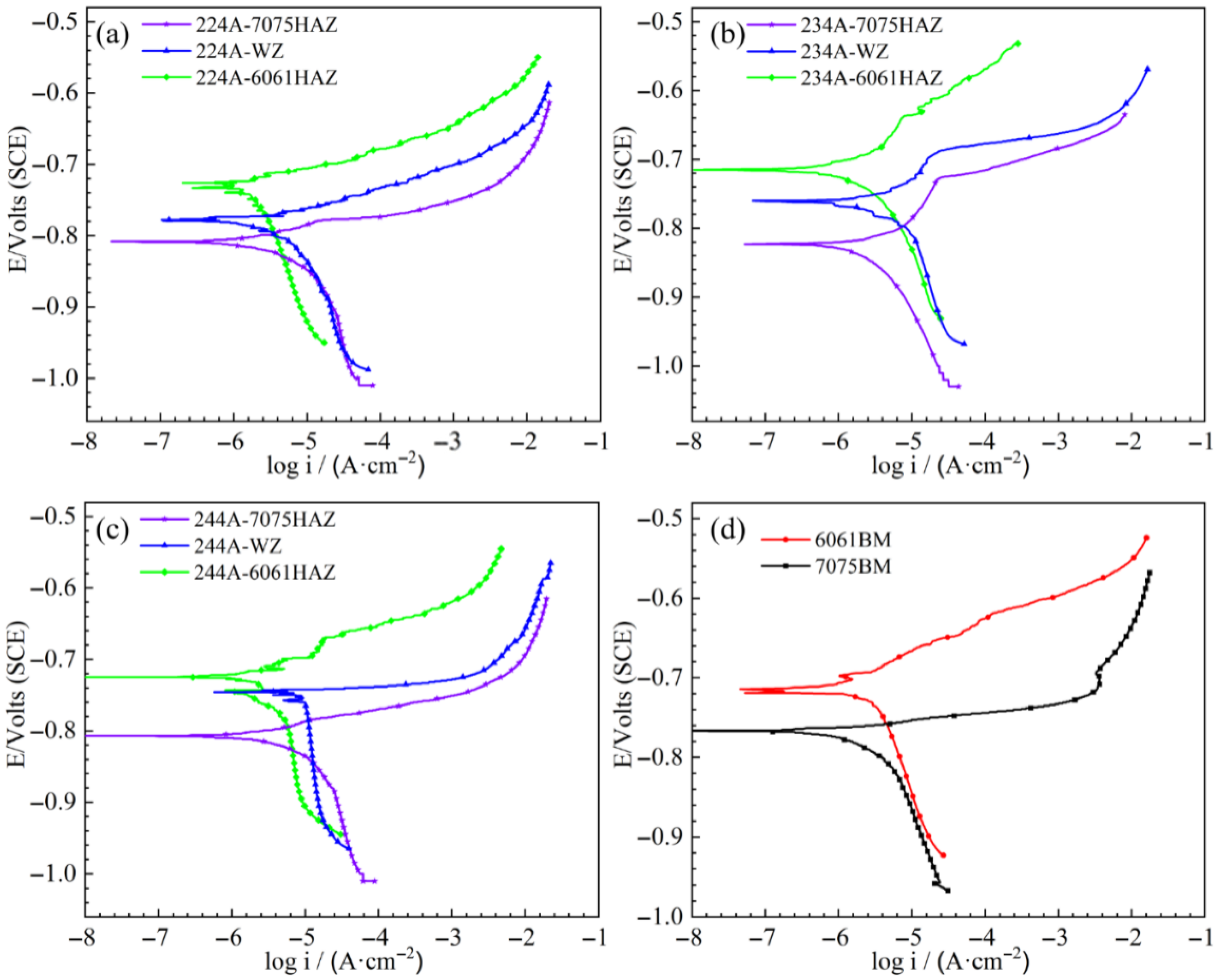
Figure 13 presents the polarization curve results of the joints under different welding current conditions. The experiments show that the welding current has a significant effect on the polarization behavior of the joints, particularly exhibiting obvious differences in the anodic region. As can be seen from Figure 13a,c, at welding currents of 224 A and 244 A, almost no obvious passivation behavior is observed in the anodic curves of the 6061-HAZ. Although a very small inflection point in the corrosion current density appears in the anodic curves under these conditions, the corrosion current density subsequently increases rapidly. This phenomenon may be attributed to the rapid breakdown of the passive film after its transient formation on the joint surface, leading to aggravated corrosion. In contrast, the polarization curve at a welding current of 234 A exhibits distinctly different characteristics. Under this welding condition, relatively pronounced passivation regions appear in the 7075-HAZ, WZ, and 6061-HAZ. The curves show that during this stage, the corrosion current density increases slowly with increasing corrosion voltage, indicating that the formation of the passive film effectively inhibits the corrosion reaction. However, when the corrosion voltage increases to a certain critical value, the passive film breaks down, leading to a significant intensification of the corrosion reaction and a rapid increase in the corrosion current density.
To further investigate the specific variation patterns of corrosion potential and corrosion current density in the polarization curves, Tafel fitting was performed on the polarization curves, and the fitting results are presented in Table 8, Table 9 and Table 10. The results indicate that under different welding current conditions, the corrosion potential and corrosion current density in each region exhibit significant variation characteristics. In the 7075-HAZ region, both the corrosion potential and corrosion current density show a trend of first decreasing and then increasing with increasing welding current. The corrosion potential exhibits relatively small variations, whereas the changes in corrosion current density are more pronounced. At a welding current of 234 A, the corrosion potential and corrosion current density in the 7075-HAZ region reach their minimum values of −0.82318 mV and 4.1478 × 10⁻⁶ A·cm−2, respectively, indicating that the corrosion resistance of the 7075-HAZ region is optimal under this welding parameter. In contrast, the variation trends of corrosion potential and corrosion current density in the WZ are somewhat different. As the welding current increases, the corrosion potential in the WZ gradually decreases, while the corrosion current density exhibits a trend of first decreasing and then increasing. At a welding current of 234 A, the corrosion potential and corrosion current density in the WZ are −0.76655 mV and 3.9625 × 10⁻⁶ A·cm−2, respectively. This suggests that at a moderate welding current, the corrosion resistance of the WZ is significantly improved. Further examination of the fitting data for the 6061-HAZ region reveals that this region exhibits the best corrosion resistance at a welding current of 234 A. Specifically, under this condition, the corrosion potential is the highest, while the corrosion current density is the lowest. This indicates that the 6061-HAZ region has the lowest corrosion susceptibility and a low corrosion rate under this welding current, demonstrating excellent corrosion resistance.
When comparing the three regions under the same welding current, a consistent ranking of corrosion resistance emerges based on the Rct and Icoor values: 6061-HAZ > 7075-HAZ > WZ. The 6061-HAZ consistently exhibits the highest Rct and the lowest Icoor, which may be attributed to its fine recrystallized grain structure and the preservation of a protective oxide film due to the low electrochemical activity of the Al-Mg-Si system. The 7075-HAZ shows poor corrosion resistance at 224 A and 244 A, possibly due to the enrichment of Zn and Mg at grain boundaries, creating a micro-galvanic effect. At 234 A, the 7075-HAZ achieves its best performance, likely because the precipitates partially dissolve under this condition, reducing corrosion susceptibility. The WZ exhibits slightly poorer corrosion resistance, which may be attributed to its dendritic structure and the presence of residual AlFeMnSi particles that act as local cathodic sites. However, at 244 A, the Rct of the WZ increases markedly, possibly because the higher heat input homogenizes the weld microstructure and reduces the number of active galvanic cells.

4. Conclusions

In this study, dissimilar 7075-T6 and 6061-T6 aluminum alloy joints were successfully fabricated using P-MIG welding with ER5356 filler wire. The effects of welding current on the macro-morphology, microstructure, mechanical properties, and corrosion resistance were systematically investigated. The main conclusions are as follows:
  • The weld macro-morphology was significantly influenced by welding current. The top and bottom reinforcements first increased and then decreased with increasing current, peaking at 234 A, while the front weld width showed the opposite trend.
  • The fusion zone consisted of equiaxed and dendritic grains. Partial remelting of AlFeMnSi intermetallic compounds occurred in the HAZs, weakening the grain boundary pinning effect.
  • The microhardness and tensile strength of the joints exhibited a trend of first decreasing and then increasing with welding current. The maximum tensile strength of 203.9 MPa was achieved at 244 A, reaching 89.5% of the 6061-T6 base metal strength.
  • Corrosion resistance varied across regions depending on the evaluation method. In intergranular corrosion tests, the 7075-HAZ exhibited the highest susceptibility due to grain boundary segregation of Mg and Zn. In electrochemical tests, the WZ showed the poorest corrosion resistance, attributed to its dendritic structure and residual AlFeMnSi particles.
  • From an industrial perspective, a moderate-to-high welding current range is recommended for achieving improved comprehensive performance in 7075/6061 dissimilar P-MIG welded joints. For future academic studies, further investigation on post-weld heat treatment, residual stress evolution, and long-term corrosion behavior is suggested to further enhance joint reliability and service performance.

Author Contributions

Conceptualization, S.L. and S.D.; Methodology, Z.L. and S.D.; Validation, S.D.; Formal analysis, S.D.; Investigation, Z.L. and S.L.; Resources, S.D.; Data curation, Z.L. and L.L.; Writing—original draft, Z.L. and L.L.; Writing—review & editing, L.L.; Supervision, S.D.; Project administration, S.L.; Funding acquisition, S.L. All authors have read and agreed to the published version of the manuscript.

Funding

This work was financially supported by the fund of the National Natural Science Foundation of China (No. 52575379), Henan Provincial Key Research and Development Program Project (No. 251111222600), Henan International Science and Technology Cooperation Project (No. 252102521057), Science & Technology Innovation Talents in Universities of Henan Province (26HASTIT033), and Henan Provincial Foreign Experts Program (No. HNGD2025027).

Institutional Review Board Statement

Not applicable.

Informed Consent Statement

Not applicable.

Data Availability Statement

Data will be made available on request.

Conflicts of Interest

The authors declare no conflict of interest.

References

  1. Bunaziv, I.; Akselsen, O.M.; Ren, X.; Nyhus, B.; Eriksson, M. Laser Beam and Laser-Arc Hybrid Welding of Aluminium Alloys. Metals 2021, 11, 1150. [Google Scholar] [CrossRef]
  2. Wei, S.; Zhang, R.; Liu, X.; Zhang, Y. Comparative Study on the Effect of External Magnetic Field on Aluminum Alloy 6061 and 7075 Resistance Spot-Welding Joints. Metals 2024, 14, 1196. [Google Scholar] [CrossRef]
  3. Babiş, C.; Dimitrescu, A.; Rugescu, A.M.; Chivu, O.R.; Enache, C.I. Comparison between gas flame welding and shielded gas welding in case of aluminium alloys. IOP Conf. Ser. Mater. Sci. Eng. 2024, 1303, 012032. [Google Scholar] [CrossRef]
  4. Liu, W.; Wu, X.; Cai, D.; Chi, Y.; Luo, Z.; Khaskin, V.; Shevchenko, V.; Chen, L. High Performance 7075-T6/6061-T6 Dissimilar Joint Fabricated via Laser-MIG Hybrid Welding Assisted by Nanotreating and Postweld Heat Treatment. Adv. Eng. Mater. 2025, 27, 2500095. [Google Scholar] [CrossRef]
  5. Zhang, B.; Zhang, Y.; Zheng, K.; Chi, Y. Research on the microstructure, mechanical and fatigue performance of 7075/6061 dissimilar aluminum alloy fusion welding joint treated by nanoparticle and post-weld heat treatment. Eng. Fract. Mech. 2024, 311, 110550. [Google Scholar] [CrossRef]
  6. Xing, W.; Yu, Z.; Zhou, J.; Zhang, Z.; Liu, C.; Zhao, H. Study of the friction stir welding process and mechanical behavior of 7075/6061 heterogeneous aluminum alloys based on in-situ EBSD/DIC testing. Mater. Today Commun. 2025, 44, 112000. [Google Scholar] [CrossRef]
  7. Liu, S.; Ren, Y.; Hu, X. Characterization of microstructure and mechanical properties of dissimilar FSW joints of 7075/6061 aluminum alloys: The effects of welding heat input and material flow behavior. Structures 2025, 80, 110030. [Google Scholar] [CrossRef]
  8. Ishak, M.; Mohd Noordin, N.; Shah, L. Feasibility study on joining dissimilar aluminum alloys AA6061 and AA7075 by Tungsten inert gas (TIG). J. Teknol. 2015, 75, 79–84. [Google Scholar] [CrossRef]
  9. Wang, G.; Tian, R.; Cao, J.; Xu, Z.; Yao, Z.; Zhang, H.; Yin, L. Effects of nano-modification on the microstrfuctural evolution and mechanical properties of AA7075/AA6061 aluminum alloy joints fabrica ted by laser-MIG hybrid welding technique. Mater. Today Commun. 2024, 41, 110959. [Google Scholar] [CrossRef]
  10. Sofian, N.; Shah, L.; Ishak, M. A parametric study on the effect of pilot hole diameter on the mechanical and microstructural properties of AA6061-AA7075 friction stir spot welding. J. Adhes. Sci. Technol. 2025, 39, 2262–2279. [Google Scholar] [CrossRef]
  11. Yang, H.; Ji, X.; Cheng, R.; Liu, C.; Wang, X.; Niu, F.; Guo, Y. Improving weld quality of 6061/7075 dissimilar aluminum alloy joints using laser oscillation welding. Mater. Lett. 2026, 405, 139743. [Google Scholar] [CrossRef]
  12. Cao, Y.; Li, H.; Liang, Z.; Wang, D. Effect of Water Cooling on the Microstructure and Mechanical Properties of 6N01 Aluminum Alloy P-MIG-Welded Joints. J. Mater. Eng. Perform. 2017, 26, 3929–3938. [Google Scholar] [CrossRef]
  13. Wang, D.; Diao, G.; Liang, Z. Comparison of Al-Zn-Mg Alloy P-MIG Welded Joints Filled with Different Wires. High Temp. Mater. Process. 2019, 38, 516–524. [Google Scholar]
  14. Li, S.; Liu, L.; Liu, H.; Yang, J.; Liao, C.; Wang, X.; Dong, H. Effect of welding speed on the microstructure, mechanical and corrosion properties of 6061/7075 pulsed MIG welded joints. J. Mater. Res. Technol. 2025, 38, 5909–5928. [Google Scholar] [CrossRef]
  15. Haghdadi, N.; Phillion, A.B.; Maijer, D.M. Microstructure Characterization and Thermal Analysis of Aluminum Alloy B206 During Solidification. Metall. Mater. Trans. A 2015, 46, 2073–2081. [Google Scholar] [CrossRef]
  16. Pathak, D.; Pratap Singh, R.; Gaur, S.; Balu, V. To study the influence of process parameters on weld bead geometry in shielded metal arc welding. Mater. Today Proc. 2021, 44, 39–44. [Google Scholar] [CrossRef]
  17. Meyer, B.C.; Tempus, G.; Doyen, H.; Emanowski, D.; Hirsch, T.; Mayr, P. Dispersoid-free zones in the heat-affected zone of aluminum alloy welds. Metall. Mater. Trans. A 2000, 31, 1453–1459. [Google Scholar] [CrossRef]
  18. Yan, J.; Shi, S.; Fan, W.; Gao, W.; Luo, Y.; Chen, H.; Zhou, J. Microstructure and Mechanical Properties of As-Cast and T6 Heat-Treated Al-10Si-0.5Mg-0.5Mn Squeezing Cast Aluminum Alloy. Foundry 2021, 70, 1391–1396. [Google Scholar]
  19. Sun, F.; Li, X.; Lu, L.; Cheng, X.; Gao, J. Corrosion Behavior of 5052 and 6061 Aluminum Alloys in Deep Ocean Environment of South China Sea. Acta Metall. Sin. 2013, 49, 1219. [Google Scholar] [CrossRef]
  20. Yang, L.; Zhao, Q.; He, J.; Li, X.; Huang, Y. Corrosion Behavior of 6061 Aluminum Alloy in Simulative Industry-Marine Atmospheric Environment. Mater. China 2018, 37, 28–34. [Google Scholar]
  21. Zhang, Y.; Wang, S.; Lordan, E.; Wang, Y.; Fan, Z. Improve mechanical properties of high pressure die cast Al9Si3Cu alloy via dislocation enhanced precipitation. J. Alloys Compd. 2019, 785, 1015–1022. [Google Scholar] [CrossRef]
  22. Wang, J.; Zhou, X.; Thompson, G.E.; Hunter, J.A.; Yuan, Y. Microstructure Evolution in the Near-Surface Region During Homogenization of a Twin-Roll Cast AlFeMnSi Alloy. Metall. Mater. Trans. A 2016, 47, 4268–4275. [Google Scholar] [CrossRef]
  23. Wang, S.; Chen, S.; Yuan, T.; Jiang, X.; Zhao, P.; Shan, H.; Zhang, H.; Ding, W. Inhomogeneity and anisotropy of Al-Zn-Mg-Cu alloy manufactured by wire arc additive manufacturing: Microstructure, mechanical properties, stress corrosion cracking susceptibility. Virtual Phys. Prototyp. 2024, 19, e2348038. [Google Scholar] [CrossRef]
  24. Shi, L.; Xiang, L.; Tao, J.; Chen, Q.; Liu, J.; Zhong, Y. Actual Marine Atmospheric Pre-Corrosion Fatigue Performance of 7075-T73 Aluminum Alloy. Metals 2022, 12, 874. [Google Scholar] [CrossRef]
  25. Bertolini, R.; Simonetto, E.; Pezzato, L.; Fabrizi, A.; Ghiotti, A.; Bruschi, S. Mechanical and corrosion resistance properties of AA7075-T6 sub-zero formed sheets. Int. J. Adv. Manuf. Technol. 2021, 115, 2801–2824. [Google Scholar] [CrossRef]
  26. Reed-Hill, R.E.; Gülec, A.S. Concerning the mechanics of type-A portevin-Le chatelier plastic flow initiation in Al 6061. Metall. Trans. A 1975, 6, 461. [Google Scholar] [CrossRef]
  27. Li, S.; Dong, H.; Shi, L.; Li, P.; Ye, F. Corrosion behavior and mechanical properties of Al-Zn-Mg aluminum alloy weld. Corros. Sci. 2017, 123, 243–255. [Google Scholar] [CrossRef]
  28. Chen, W.; Xie, P.; Liu, D.; Shi, T.; Li, Z.; Wang, Y. Effects of grain size on the spall behaviors of high-purity aluminum plates. Explos. Shock. Waves 2021, 41, 043102. [Google Scholar]
  29. Zhai, Y.; Guo, X.; Ding, Z.; Li, Z. Analysis of fatigue fracture behavior of low-alloy high-strength steel with different strength grades. J. Plast. Eng. 2023, 30, 145–150. [Google Scholar]
  30. Li, W.T.; Cai, Z.Y.; Li, H.; Peng, L.F.; Lai, X.M.; Fu, M.W. The modified GTN-Thomason criterion for modelling of ductile fracture considering shear factor and size effect in micro-scaled plastic deformation. Int. J. Mech. Sci. 2021, 204, 106540. [Google Scholar] [CrossRef]
  31. Qiu, Y.; Liu, R.; Zou, L.; Chi, H.; Wang, C.; Wang, B.; Chen, J. Influence of Grain Boundary Precipitates on Intergranular Corrosion Behavior of 7050 Al Alloys. Coatings 2022, 12, 249. [Google Scholar] [CrossRef]
  32. Choudhary, S.; Kelly, R.G. Nanoscale heterogeneities dictate corrosion pathways in a high-strength aluminum alloy. npj Mater. Degrad. 2024, 8, 103. [Google Scholar] [CrossRef]
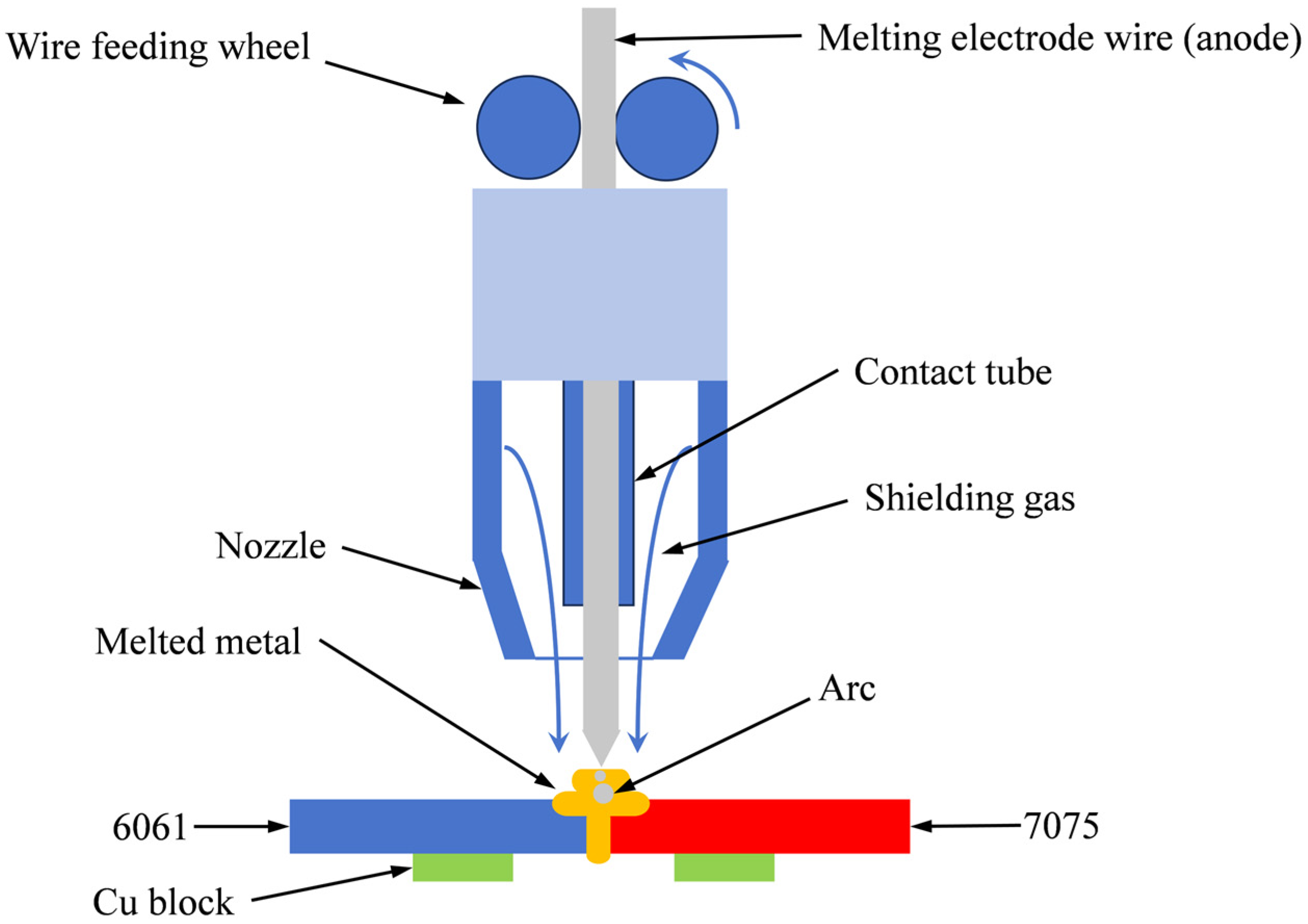
Figure 1. Schematic diagram of the welding structure [14].
Coatings 16 00608 g001
Figure 2. Tensile test specimen dimensions (mm) [14].
Coatings 16 00608 g002
Figure 3. Macroscopic morphology of welds in joints at different welding currents: (a) 224A, (b) 234A, (c) 244A, (d) Geometric dimensioning of butt weld profile.
Coatings 16 00608 g003
Figure 4. SEM microstructure of dissimilar joint at a welding current of 234 A: (a) WZ; (b) 7075 HAZ; (c) 6061 HAZ; (d) 7075 BM; (e) 6061 BM; (f) EDS point scan element analysis at point A.
Coatings 16 00608 g004
Figure 5. EDS mapping of specific regions in the dissimilar joint at a welding current of 234 A: (a) WZ; (b) 7075 HAZ.
Coatings 16 00608 g005
Figure 6. Hardness distribution of joints at different welding currents.
Coatings 16 00608 g006
Figure 7. Stress–strain curves of joints under tensile loading: (a) BM; (b) Joints with different welding currents.
Coatings 16 00608 g007
Figure 8. Fracture morphology of joints at different welding currents: (a) 224 A; (b) 234 A; (c) 244 A; (d) 234A.
Coatings 16 00608 g008
Figure 9. Intergranular corrosion depth of dissimilar joints at different welding currents: (a1a3) 224 A; (b1b3) 234 A; (c1c3) 244 A.
Coatings 16 00608 g009
Figure 10. Open circuit potential of joints at different welding currents: (a) 224 A; (b) 234 A; (c) 244 A; (d) BM.
Coatings 16 00608 g010
Figure 11. Equivalent circuit model.
Coatings 16 00608 g011
Figure 12. Electrochemical impedance spectroscopy (EIS) of joints at different welding currents: (a1,a2) 224 A; (b1,b2) 234 A; (c1,c2) 244 A.
Coatings 16 00608 g012
Figure 13. Polarization curves of joints at different welding currents: (a) 224 A; (b) 234 A; (c) 244 A; (d) BM.
Coatings 16 00608 g013
Table 1. Chemical compositions (wt.%) of the welding wire and two aluminum alloy base materials.
MaterialSiFeCuMnMgCrZnGaTiAl
ER53560.03000.09000.00030.10004.50000.09000.0100-0.0800Bal.
60612.81840.64340.37750.18960.96640.51030.11660.0286-Bal.
70752.16580.38441.94530.22382.51870.30958.07290.03200.0556Bal.
Table 2. Welding Process Parameters.
Average Welding Current (A)Welding Voltage (V)Welding Speed (mm/min)Heat Input (J/mm)
22424.3500522
23424.3500546
24424.3500570
Table 3. Weld width and reinforcement dimensions of joints at different welding currents.
Welding Current (mA)O1
(mm)
B2
(mm)
P1
(mm)
B1
(mm)
R
2241.912.2417.356.340.3654
2342.542.4916.947.060.4320
2442.462.1817.227.010.4071
Table 4. Tensile fracture locations of joints at different welding currents.
Welding CurrentTensile Strength
(MPa)
Fracture LocationMacro Fracture Location of the Welded Joint
6061WZ7075
224 A199.8 ± 1.936061-HAZCoatings 16 00608 i001
234 A184.4 ± 7.536061-HAZCoatings 16 00608 i002
244 A203.9 ± 5.766061-HAZCoatings 16 00608 i003
Table 5. EIS fitting results of different regions of the joint at a welding current of 224 A.
SamplesRs
(Ωcm2)
CPERct
(kΩcm2)
Yw
(10−3 Ω−1cm−2 s−0.5)
Y0
(10−4 Ω−1cm2 s−n)
n
(0 < n < 1)
7075-BM4.0063.0240.89461.4852.79
7075-HAZ0.6593.8590.91710.9300.83
WZ3.7365.6460.86480.3340.08
6061-HAZ15.202.720.89123.6481.28
6061-BM3.2362.6720.87495.5870.23
Table 6. EIS fitting results of different regions of the joint at a welding current of 234 A.
SamplesRs
(Ωcm2)
CPERct
(kΩcm2)
Yw
(10−3 Ω−1cm−2 s−0.5)
Y0
(10−4 Ω−1cm−2 s−n)
n
(0 < n < 1)
7075-BM4.0063.0240.89461.4852.79
7075-HAZ1.9487.7780.85050.9565.81
WZ1.6401.1100.89490.5715.05
6061-HAZ1.5410.1120.79932.0465.48
6061-BM3.2362.6720.87495.5870.23
Table 7. EIS fitting results of different regions of the joint at a welding current of 244 A.
SamplesRs
(Ωcm2)
CPERct
(kΩcm2)
Yw
(10−3 Ω−1cm−2 s−0.5)
Y0
(10−4 Ω−1cm−2 s−n)
n
(0 < n< 1)
7075-BM4.0063.0240.89461.4852.79
7075-HAZ3.6925.5210.82370.9050.95
WZ3.7174.3190.87940.8500.26
6061-HAZ15.522.7000.89103.6501.28
6061-BM3.2362.6720.87495.5870.23
Table 8. Fitting results of polarization curves for the joint at a welding current of 224 A.
SampleEcorr
(mV (SCE))
Icorr
(10−6 A·cm−2)
βa
(mV·dec−1)
βc
(mV·dec−1)
7075-BM−0.766493.099749.332−207.89
7075-HAZ−0.808295.916051.185−202.45
WZ−0.778586.041049.776−249.52
6061-HAZ−0.728272.862844.544−422.25
6061-BM−0.714980.967042.932−137.81
Table 9. Fitting results of polarization curves for the joint at a welding current of 234 A.
SampleEcorr
(mV (SCE))
Icorr
(10−6 A·cm−2)
βa
(mV·dec−1)
βc
(mV·dec−1)
7075-BM−0.766493.099749.332−207.89
7075-HAZ−0.823184.147896.831−237.63
WZ−0.766553.9625111.67−333.37
6061-HAZ−0.715112.236398.205−195.22
6061-BM−0.714980.967042.932−137.81
Table 10. Fitting results of polarization curves for the joint at a welding current of 244 A.
SampleEcorr
(mV(SCE))
Icorr
(10−6 A·cm−2)
βa
(mV·dec−1)
βc
(mV·dec−1)
7075-BM−0.766493.099749.332−207.89
7075-HAZ−0.807288.946753.171−232.09
WZ−0.745814.64252.119−401.14
6061-HAZ−0.72472.727551.139−308.87
6061-BM−0.714980.967042.932−137.81
Disclaimer/Publisher’s Note: The statements, opinions and data contained in all publications are solely those of the individual author(s) and contributor(s) and not of MDPI and/or the editor(s). MDPI and/or the editor(s) disclaim responsibility for any injury to people or property resulting from any ideas, methods, instructions or products referred to in the content.