1. Introduction
In recent years, antibacterial and mildew-resistant decorative coatings have been widely applied in residential buildings, commercial spaces, medical and health care, public facilities, and other fields, achieving remarkable practical effects [
1,
2]. For instance, antibacterial latex paints incorporated with inorganic or organic antibacterial agents have been routinely used on the kitchen and bathroom walls of residences, which can effectively inhibit mold propagation and bacterial adhesion under long-term high-humidity conditions [
3]. In medical scenarios such as hospital corridors, pediatric wards, and outpatient departments, antibacterial coatings have become essential materials for reducing the risk of cross-infection, meeting stringent environmental hygiene requirements [
4]. In densely populated public facilities including schools, kindergartens, nursing homes, and subway stations, antibacterial and mildew-resistant decorative coatings enable long-term microbial control, extend the service life of coating films, and safeguard indoor environmental safety [
5,
6]. These applications underscore the emergence of antibacterial and antifungal coatings as a pivotal trend in the modern coatings industry.
In the field of interior decorative coatings, they have long dominated wall decorative materials due to advantages such as simple construction processes, flexible color matching, and significant cost-effectiveness. However, the indoor environment exhibits significant heterogeneity, especially in functional areas such as kitchens and bathrooms, which are relatively enclosed and have high humidity [
7]. The specific temperature and humidity conditions in these areas provide a suitable environment for the growth and reproduction of microorganisms. From a microbial taxonomy perspective,
Escherichia coli (
E. coli), a Gram-negative bacterium, can cause human gastrointestinal infections through contact transmission. Meanwhile,
Staphylococcus aureus (
S. aureus), a Gram-positive bacterium, is a common pathogenic bacterium responsible for skin infectious diseases [
8,
9]. Furthermore, filamentous fungi represented by
Aspergillus niger and
Aspergillus flavus not only cause physical damage to paint films (e.g., discoloration, chalking, and peeling) but also produce mycotoxins through metabolism. These mycotoxins can irritate the respiratory mucosa, posing potential health risks to elderly and child populations with low immunity [
10,
11].
In the area of coating engineering and composites, the development of coatings with both outstanding mechanical properties and long-term antibacterial/antifungal functionalities is of great significance. As the core regulatory element governing the stability and efficacy of antibacterial systems, the physicochemical properties of carrier materials play a decisive role in coating application research [
12]. Compared with natural clay minerals (e.g., montmorillonite), hectorite, a synthetic layered silicate, offers distinct advantages over natural clays. From the microstructure perspective, the interlayer structure of hectorite exhibits high homogeneity. Its regular crystal lattice structure effectively mitigates performance variations induced by impurity doping and lattice defects in natural clays, thereby ensuring that the antibacterial system constructed based on hectorite maintains stable physicochemical properties during long-term storage and practical application [
13,
14]. In terms of ion exchange performance, a large number of exchangeable lithium ions (Li
+) are present in the interlayers of hectorite. As determined via potentiometric titration, its cation exchange capacity (CEC) can reach 92–100 meq/100 g, which is significantly higher than that of montmorillonite (60–100 meq/100 g) and kaolin (3–15 meq/100 g) [
15,
16]. This highly active ion exchange characteristic offers a robust thermodynamic driving force for the loading of antibacterial agents. Regarding physicochemical properties, hectorite features a unique ultra-thin lamellar structure: with a single lamella thickness of approximately 1 nm and a lateral dimension ranging from 25 to 100 nm, it yields a specific surface area as high as 750–800 m
2/g. This architecture provides abundant loading sites, facilitating efficient immobilization of antibacterial agents through multiple mechanisms, including ion exchange, electrostatic adsorption, and intercalation [
17]. In practical applications, hectorite exhibits good dispersibility in liquid media, and its unique colloidal properties can form stable thixotropic suspensions. In coating systems, it not only ensures the uniform dispersion of antibacterial agents but also enhances the mechanical properties and anti-sagging ability of coatings through its inherent network structure. In addition, it exhibits good compatibility with film-forming substances, additives and other components in latex paint systems, providing an ideal carrier platform for the development of high-performance antibacterial coatings [
18]. In terms of application characteristics, hectorite can be rapidly dispersed in aqueous systems to form transparent or translucent thixotropic gels, featuring excellent suspensibility, anti-settling property, anti-sagging property, and thickening property. It exhibits outstanding compatibility with systems including latex paints, putties and waterborne polymers, without defects such as delamination, regraining, or flocculation. Meanwhile, the lamellar sheets of hectorite can construct a dense physical barrier network within the coating, which elevates the coating’s water resistance, scrub resistance, adhesion strength, and mechanical strength, thereby fundamentally overcoming the shortcomings of traditional antibacterial fillers that are prone to agglomeration and impairing coating performance [
19,
20]. Benefiting from the aforementioned comprehensive advantages, hectorite is widely acknowledged as a high-end layered carrier for antibacterial agent immobilization, functional coating modification, and polymer strengthening and toughening, possessing irreplaceable application value in the fields of antibacterial coatings, medical materials, packaging materials, home decoration materials, and others.
Benzalkonium Chloride (BAC), a quaternary ammonium cationic surfactant, is a broad-spectrum antibacterial agent widely used in industry. The long-chain alkyl groups in its molecular structure can penetrate bacterial cell membranes, disrupt the cell osmotic balance, and ultimately result in bacterial lysis and death [
21]. Meanwhile, BAC can inhibit mold spore germination and mycelial elongation, exhibiting inhibitory effects against Gram-positive bacteria, Gram-negative bacteria, and various common molds [
22]. Additionally, BAC possesses chemical stability and controllable cost. It can undergo ion exchange with layered clay minerals without complex processes, thereby possessing potential for industrial application. However, existing studies on the composite of BAC and layered clays still have notable shortcomings: first, some studies adopt dry mechanical mixing processes, which easily lead to the agglomeration of BAC on the carrier surface. This not only reduces ion exchange efficiency but also causes uneven dispersion of antibacterial components in coatings [
23]; second, the characterization of composites mostly focuses on single indicators such as interlayer spacing variation, lacking systematic analysis of morphology, specific surface area, thermal stability, and actual BAC loading capacity. As a result, it is difficult to establish a clear correlation between material structure and antibacterial performance. From the perspective of preparation processes, the wet chemical method has become one of the mainstream technologies for the modification of layered silicate minerals, thanks to its advantages such as mild reaction conditions and controllable reactant dispersibility [
24,
25]. Existing studies have shown that the wet chemical method is maturely applied in the composite of natural clays (e.g., montmorillonite, kaolin) and quaternary ammonium salts. Through the dispersion effect of liquid media (mostly water or water–alcohol mixed systems), it can facilitate full contact between quaternary ammonium cations and exchangeable cations between clay layers, significantly improving ion exchange efficiency and antibacterial agent loading uniformity. Compared with dry processes, it can effectively reduce the agglomeration of antibacterial agents and loss caused by thermal decomposition [
26,
27]. A novel antimicrobial coating was developed by complexing methoxylated kaolin with benzalkonium chloride (BAC) for reusable produce-handling cardboard. The kaolin@BAC-coated cardboard achieved over 4-log reductions of
Listeria innocua and
Escherichia coli [
28]. Current research mostly focuses on the development of composite systems between hectorite and metal oxides or polymers, while studies on the wet chemical modification of quaternary ammonium antibacterial agents such as BAC are relatively scarce. Most studies only focus on the structural characterization and antibacterial performance of the composites themselves, without conducting targeted performance tests in combination with the actual application scenarios of coatings in indoor high-humidity functional areas (e.g., kitchens and bathrooms). Furthermore, there is a lack of in-depth analysis of the correlation mechanism among wet chemical process–composite structure-coating antibacterial and antifungal performance. These limitations make it difficult for the research results to directly support industrial applications or to provide comprehensive technical support for the practical preparation of antibacterial latex materials.
To address the above issues, this study adopts the wet chemical method as the core composite process for BAC and hectorite. By utilizing the good dispersibility of BAC and hectorite in a liquid environment, the quaternary ammonium cations (R4N+) in BAC molecules fully contact the exchangeable Li+ between hectorite layers. Under specific conditions, an efficient ion exchange reaction occurs: Li+ detaches from the interlayer domain of hectorite and enters the aqueous solution, while R4N+, due to the electrostatic attraction with the negative charges on the hectorite layer plates, intercalates stably into the interlayers and adsorbs uniformly onto the sheet surface. Eventually, a BAC-modified Hectorite (BAC-Hectorite) composite material with a stable structure is formed.
2. Materials and Methods
2.1. Experimental Materials
The hectorite used in the experiment was supplied by Zhejiang Fenghong New Materials Co., Ltd. (Huzhou, China), with a cation exchange capacity (CEC) of 90 meq/100 g. Benzalkonium chloride (BAC, C17H30ClN, 99%) was purchased from Wuhan Kemike Biomedical Technology Co., Ltd. (Wuhan, China). Kuaitubao Low-Odor Alkali-Resistant Putty was obtained from Nippon Paint Decoration Materials (Guangzhou) Co., Ltd., Guangzhou, China. Bacterial strains used in the experiments were the Gram-positive Staphylococcus aureus (ATCC 6538P) and the Gram-negative Escherichia coli (ATCC 8739), both purchased from BNCC. The components of the culture medium included LB agar powder (microbiological grade, Beijing Land Bridge Technology Co., Ltd., Beijing, China) and silver nitrate (0.1 M AgNO3 solution, Shenzhen Bolinda Technology Co., Ltd., Shenzhen, China). The water used in the experiments was ultrapure water with a resistivity of ≥18.2 MΩ·cm. Raw materials for coating formulation: SN5040, Dow BD109, Mineral Defoamer, Propylene Glycol, AMP-95, Dow HBR250, 996 TiO2, Heavy Calcium, Acrylic Emulsion, C-12 Alcohol Ester, Propylene Glycol, and Mineral Defoamer.
2.2. Experimental Equipment
The following equipment were utilized: vertical pressure steam sterilizer (Jiangsu Dengguan Medical Equipment Co., Ltd., Changzhou, China); biochemical incubator, ultrapure water system, constant temperature and humidity chamber (Shanghai Lichen Bangxi Instrument Technology Co., Ltd., Shanghai, China); clean bench (Shanghai Shangdao Instrument Manufacturing Co., Ltd., Shanghai, China); centrifuge (Hunan Kaida Scientific Instrument Co., Ltd., Changsha, China); electronic balance (OHAUS Instruments (Changzhou) Co., Ltd., Changzhou, China); high-speed disperser (Biaogeda Precision Instrument Co., Ltd., Guangzhou, China).
2.3. Latex Paint Formulation (Mass Fraction)
Tap water 30%, SN5040 0.4%, Dow BD109 0.1%, mineral defoamer 0.2%, propylene glycol 1%, AMP-95 0.1%, titanium dioxide 7%, heavy calcium 41%, acrylic emulsion 4%, film-forming additive C-12 alcohol ester 1%, propylene glycol 1%, SMP-1T 0.3%.
2.4. Preparation of BAC-Hectorite Composite Material
With reference to the cation exchange capacity (CEC = 90 meq/100 g) of hectorite (supplied by Zhejiang Fenghong New Materials Co., Ltd.), 20.0 g of hectorite powder was accurately weighed and slowly added into 2000 mL of ultrapure water, wherein the experimental water was ultrapure water with a resistivity of ≥18.2 MΩ·cm. The mixed system was transferred to a high-speed disperser and dispersed at 1500 rpm for 30 min at room temperature to ensure that hectorite particles were fully dissociated and a homogeneous, stable 1.0 wt% hectorite suspension was formed; air bubbles were avoided during the dispersion process.
Based on the cation exchange capacity (CEC) value of hectorite, 11.2 g of BAC was weighed and added to 400 mL of ultrapure water; this was conducted at a molar ratio of BAC to the exchangeable cations in hectorite of 1.2:1, with an excess of BAC to ensure complete ion exchange. This system was placed on a magnetic stirrer and stirred at 500 rpm for 15 min, until BAC was completely dissolved to form a transparent BAC aqueous solution, which was set aside for later use.
The previously prepared BAC aqueous solution was slowly added dropwise into the hectorite suspension via a constant-pressure dropping funnel, with the dropping rate controlled at 2 mL/min. Stirring was maintained at 300 rpm during the dropping process to ensure sufficient contact between reactants. After the dropping was completed, the mixture was stirred at a constant temperature of 60 °C for 4 h, allowing the quaternary ammonium cations (R4N+) in BAC molecules to undergo a full ion exchange reaction with the exchangeable lithium ions (Li+) between hectorite layers, thus forming a BAC-intercalated hectorite composite system.
The post-reaction composite suspension was transferred into centrifuge tubes and centrifuged at 3000 rpm for 10 min. The white precipitate at the bottom (i.e., crude BAC-Hectorite composite) was collected, while the supernatant liquid (containing unreacted Li+ and a small amount of free BAC) was discarded. Subsequently, ultrapure water was added to the centrifuged precipitate, followed by ultrasonic dispersion for 5 min; the mixture was then centrifuged again (3000 rpm, 10 min). This washing–centrifugation cycle was repeated three times to remove unreacted impurities. The process was terminated until 1 mL of the supernatant was sampled, and two drops of 0.1 M silver nitrate (AgNO3) solution were added to it without the formation of white precipitate—this indicated that unreacted Cl− had been completely washed away, and the purification of the composite product was complete. The purified BAC-Hectorite precipitate was transferred into a vacuum drying oven and dried at a constant temperature of 60 °C under a vacuum degree of 0.09 MPa for 12 h, until the sample reached constant weight (with a mass change rate ≤ 0.5%), which was to prevent thermal degradation of BAC molecules caused by high temperatures. After drying, the sample was ground manually using an agate mortar, then sieved through a 200-mesh standard sieve. The uniform powdery product, identified as the BAC-Hectorite composite, was collected and stored in a sealed desiccator.
2.5. Characterization of Materials
2.5.1. X-Ray Diffraction (XRD)
X-ray diffraction (XRD) analysis was performed on the samples at ambient temperature using a D8-Advance diffractometer (Bruker AXS GmbH, Karlsruhe, Germany) with Cu Kα radiation (λ = 1.5406 Å). The measurements were conducted at 40 kV tube voltage and 40 mA tube current, scanning 2~70° 2θ at 0.0057° steps.
2.5.2. Fourier Transformed Infrared Spectroscopy (FTIR)
ATR-FTIR spectroscopy was performed using a PerkinElmer Spectrum IR spectrometer, which is equipped with an ATR accessory covering a spectral range from 4000 to 450 cm−1. For each sample, 16 scans were recorded in transmission mode with a resolution of 4 cm−1.
2.5.3. Scanning Electron Microscopy (SEM)
Scanning electron microscopy (SEM) observations were performed using a Thermofisher FEI Apreo 2S (Waltham, MA, USA).
2.5.4. Surface Area and Pore Distribution Measurements
The surface area and total pore volume of dried hectorite powder were analyzed using a full-automatic surface area and pore size analyzer (Micromeritics ASAP 2460 Version 3.01) based on isothermal N2 adsorption at 77 K.
2.6. Antibacterial Activity Testing
2.6.1. Antibacterial Zone Test
Hectorite and BAC-Hectorite powders were ground and pressed into 6 mm-diameter, 1–2 mm-thick circular tablets. LB agar was dissolved, autoclaved, cooled to ~50 °C, and poured (20 mL per 90 mm sterile Petri dish) to solidify. Activated Escherichia coli (ATCC 8739) and Staphylococcus aureus (ATCC 6538P) were diluted to 0.5 McFarland standard (~5 × 10⁵ CFU/mL), evenly spread on the agar surface, and the tablets were attached (three replicates per sample). Plates were incubated at 27 °C for 24 h, and the inhibition zone diameter was measured with a vernier caliper (precision: 0.01 mm).
2.6.2. Determination of Minimum Inhibitory Concentration (MIC)
E. coli and S. aureus were activated and adjusted to 5 × 10⁵ CFU/mL. BAC and BAC- Hectorite were two-fold serially diluted (1–128 mg/mL) with sterile nutrient broth. Each test tube contained 2 mL of the diluted sample and 30 μL of bacterial suspension, then incubated at 37 °C with 160 r/min shaking for 24 h. Controls included Hectorite-only broth (control), broth with bacteria but no antibacterial agent (positive control), and pure broth (negative control). The MIC was the lowest concentration without bacterial growth.
2.6.3. Determination of Minimum Bactericidal Concentration (MBC)
0.1 mL of solution from MIC test tubes (concentrations above MIC with no bacterial growth) was inoculated onto nutrient agar plates via pour plate method. After incubation at 37 °C for 24 h, the MBC was defined as the lowest concentration without bacterial growth.
2.6.4. Antimicrobial Test of Paint Film
The antibacterial efficacy of the paint films was evaluated per ISO 22196:2011. Briefly, bacterial suspensions were inoculated onto the samples, covered with a sterile film to ensure uniform contact, and incubated. Subsequently, the viable bacteria were counted to determine the antibacterial efficacy.
The test sample size was 5 cm × 5 cm, the coating film thickness was 100 ± 10 μm, and three parallel samples were set for each group. Escherichia coli and Staphylococcus aureus strains were inoculated on Mueller–Hinton (MH) agar plates and incubated at 37 °C for 24 h. Three to four pure colonies were selected, suspended in sterile 0.9% sodium chloride solution, and turbidity was adjusted to 0.5 McFarland standard. The bacterial solution was diluted to a concentration of 5–10 × 105 CFU/mL, then 400 μL of diluted bacterial solution was dropped onto the latex paint sample, covered with sterile film, and placed in a constant temperature and humidity chamber (35 ± 1) °C, relative humidity RH = 95%, for 24 h. Then, SCDPL solution was added to rinse and elute repeatedly, and finally, viable bacteria were counted. The negative control was pure latex paint without composite.
The antibacterial rate was calculated as follows:
R indicates the antimicrobial rate, Ct was the mean value of viable bacteria in the control sample for 24 h (CFU/cm2), and Tt was the mean number of viable bacteria in the sample for 24 h (CFU/cm2).
2.6.5. Determination of Anti-Mold Property of Putty Powder
Based on the core principles of ISO 16869:2008 and taking into account the film-forming application characteristics of putty powder, this study quantitatively and qualitatively evaluated the antifungal efficacy of putty powder by exposing samples containing benzalkonium chloride-modified hectorite (BAC-Hectorite) to a mixed mold spore environment.
Nutrient salt agar was used to provide the moisture and inorganic nutrients required for mold growth (without carbon sources, so as to avoid interfering with the evaluation of the antifungal agent effect in the putty powder), while the germination and growth of mold on the sample surface and its surrounding areas were observed. If the antifungal agent in the putty powder is effective, it will inhibit spore germination or mycelial elongation, which is characterized by no mold coverage or only a small amount of initial mold growth on the sample surface; otherwise, obvious mold growth and sporulation will occur.
Aspergillus niger, Aspergillus flavus, Paecilomyces variotii, and Penicillium funiculosum were inoculated onto MEA (Malt Extract Agar) slant media and cultured at 24 °C ± 1 °C for 14–21 days until the slants were fully covered with spores. Chaetomium globosum was inoculated onto Czapek agar slants and cultured at the same temperature for 14–21 days to ensure the spores were fully mature.
To each activated slant, 5 mL of sterile 0.05% Tween 80 solution was added, and the spore layer was gently scraped with a sterile inoculating needle to elute the spores into the solution. The eluate was transferred to an Erlenmeyer flask containing 15 sterile glass beads, followed by vortexing for 5 min to disperse the spores. The mixture was filtered through sterile cotton wool to remove mycelial debris; the filtrate was then transferred to a centrifuge tube and centrifuged at 3000 rpm for 10 min. The supernatant was discarded, and the precipitate was resuspended in a nutrient salt solution. This centrifugation step was repeated once to remove residual medium. The spore suspension of each strain was diluted with the nutrient salt solution, and the spore concentration was counted using a hemocytometer, ensuring the concentration of each single strain was ≥5 × 10⁶ spores/mL.
The sample size was 50 mm × 50 mm; three parallel samples were set for each group. The negative control was pure putty powder. Five mold strains were activated, respectively, and spore suspension with concentration ≥5 × 10
6 spores/mL was mixed in equal volumes to prepare mixed spore suspension. Next, 0.4 mL of mixed spore suspension was sprayed onto the sample surface and cultured at (25 ± 1) °C, relative humidity ≥85%, for 21 days. After completion of incubation, complete surface images of the samples were captured. The total surface area and the area of the mold growth region were quantified using the image analysis software ImageJ 1.8.0. The mold coverage ratio was calculated in accordance with the following formula:
The mold rating criteria are presented in
Table 1.
2.7. Tensile Property Test
2.7.1. Sample Preparation
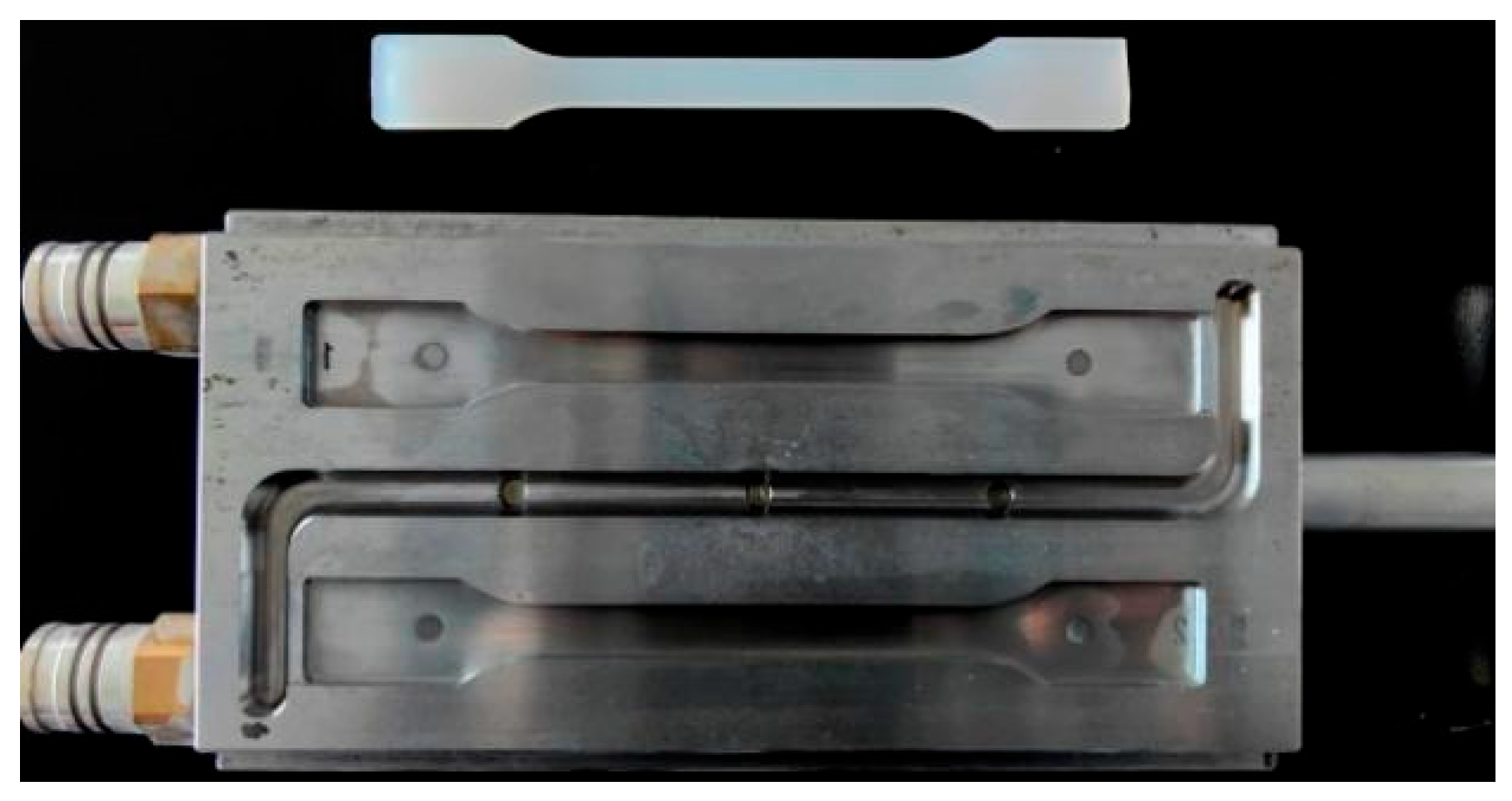
To prepare the samples, 3% (mass fraction) of hectorite and BAC-Hectorite with polypropylene (PP), respectively, were mixed, then extruded and granulated by a twin-screw extruder (screw section temperature 180 °C), injected into dumbbell-shaped samples using and injection molding machine (melting temperature 225 °C). The sample size was: total length 170 mm, thickness 4 mm, narrow section width 10 mm, gauge length 50 mm. Five parallel samples were set for each group.
Figure 1 shows the schematic illustration of the mold used for preparing dumbbell-shaped specimens.
2.7.2. Test Methods
Tensile testing of the hectorite- and BAC-hectorite-filled PP composites was conducted in accordance with GB/T 1040.1-2018. Prior to testing, all specimens were conditioned for 24 h. The tests were performed at a crosshead speed of 50 mm/min and a temperature of 23 °C.
3. Results and Discussion
3.1. XRD Analysis
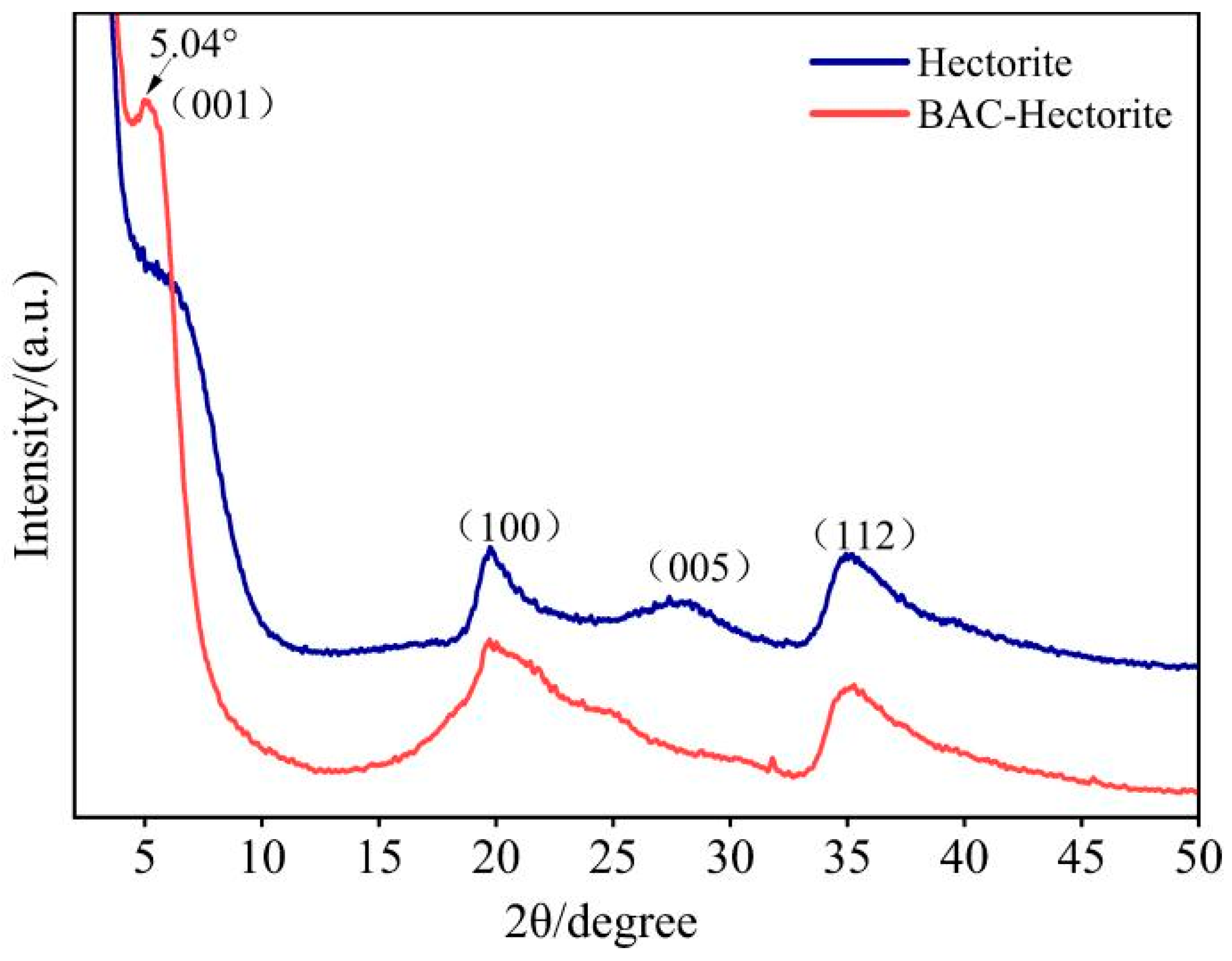
The XRD pattern of unmodified hectorite exhibits typical layered silicate crystal characteristics, as shown in
Figure 2. Its core diffraction signal corresponds to the 001 crystal plane peak, which is associated with the interlayer domain structure and serves as a critical indicator for reflecting the interlayer spacing and structural orderliness of layered minerals. Owing to the material property of hectorite, i.e., a large number of exchangeable Li
+ ions existing between its layers, the interlayers of pristine hectorite are only filled with small-molecule Li
+ ions (characterized by a small ionic radius and limited occupied space). According to Bragg’s equation (2d sinθ = nλ, where
n = 1 and
λ = 1.5406 Å), this results in a small interlayer spacing (d-value) and consequently positions the 001 diffraction peak at a relatively high 2θ angle. Specifically, the interlayer spacing is approximately 1.0–1.2 nm, corresponding to a 2θ range of 7.4–8.8° [
29]. Compared with unmodified hectorite, the core difference in the XRD pattern of BAC-Hectorite concentrates on the variation of the 001 crystal plane diffraction peak, and this variation serves as direct structural evidence of the successful intercalation of BAC into hectorite via the wet chemical method. The 001 crystal plane peak shifts significantly toward the lower 2θ direction. This low-angle shift of the modified 001 peak originates from the efficient ion exchange interaction between BAC and hectorite, which enables the quaternary ammonium cations (R
4N
+) in BAC molecules to fully contact the exchangeable Li
+ ions between hectorite layers. As R
4N
+ contains long-chain alkyl groups (with a much larger spatial volume than Li
+), its embedding into the interlayer domain expands the layered structure of hectorite, resulting in an increased interlayer spacing (d-value) [
30]. In combination with Bragg’s equation (where d is inversely proportional to θ), the increase in d-value directly causes the 001 peak to shift toward the lower 2θ direction. It is inferred that the interlayer spacing of modified hectorite increases to 1.5–1.8 nm, corresponding to a decrease in 2θ to 4.9–6.0°. This confirms that BAC has successfully entered the interlayer domain of hectorite rather than merely adsorbing onto the carrier surface. After modification, the 001 peak still maintains a relatively sharp shape without significant attenuation of diffraction intensity, indicating that the main layered ordered structure of hectorite remains undamaged during the BAC intercalation process. Two factors contribute to this: on the one hand, the mild reaction conditions of the wet chemical method avoid damage to the hectorite crystal structure caused by high temperature or mechanical force; on the other hand, the electrostatic attraction between R
4N
+ and the negative charges on hectorite lamellae ensures a certain degree of order in the interlayer domain after intercalation. This stable layered structure not only prevents the agglomeration of BAC during subsequent coating preparation but also provides an interlayer storage space for the long-term sustained release of antibacterial components [
31]. The high-order (005) diffraction peak of hectorite located at 2θ = 28.2° was significantly weakened or even eliminated after BAC intercalation. This is attributed to the fact that the intercalation of organic cations into the interlayer galleries destroyed the long-range ordered stacking along the c-axis, resulting in deteriorated interlayer periodicity and decreased crystallinity, which reflects the perturbation effect of organic intercalation on the microstructural order of layered clays [
32]. The wet chemical method enables efficient and stable intercalation of BAC between hectorite layers; after modification, the interlayer spacing of the composite increases significantly (as evidenced by the downshift of the 001 peak), while the main layered structure of hectorite remains intact. This result verifies the feasibility of the wet chemical method—ion exchange—interlayer intercalation preparation route, and provides crucial structural support for subsequent characterization and functional tests (including antibacterial and antifungal properties). Furthermore, it serves as one of the core bases for ensuring that the BAC-Hectorite composite meets the requirements for antibacterial modification of latex paints.
3.2. SEM Analyses
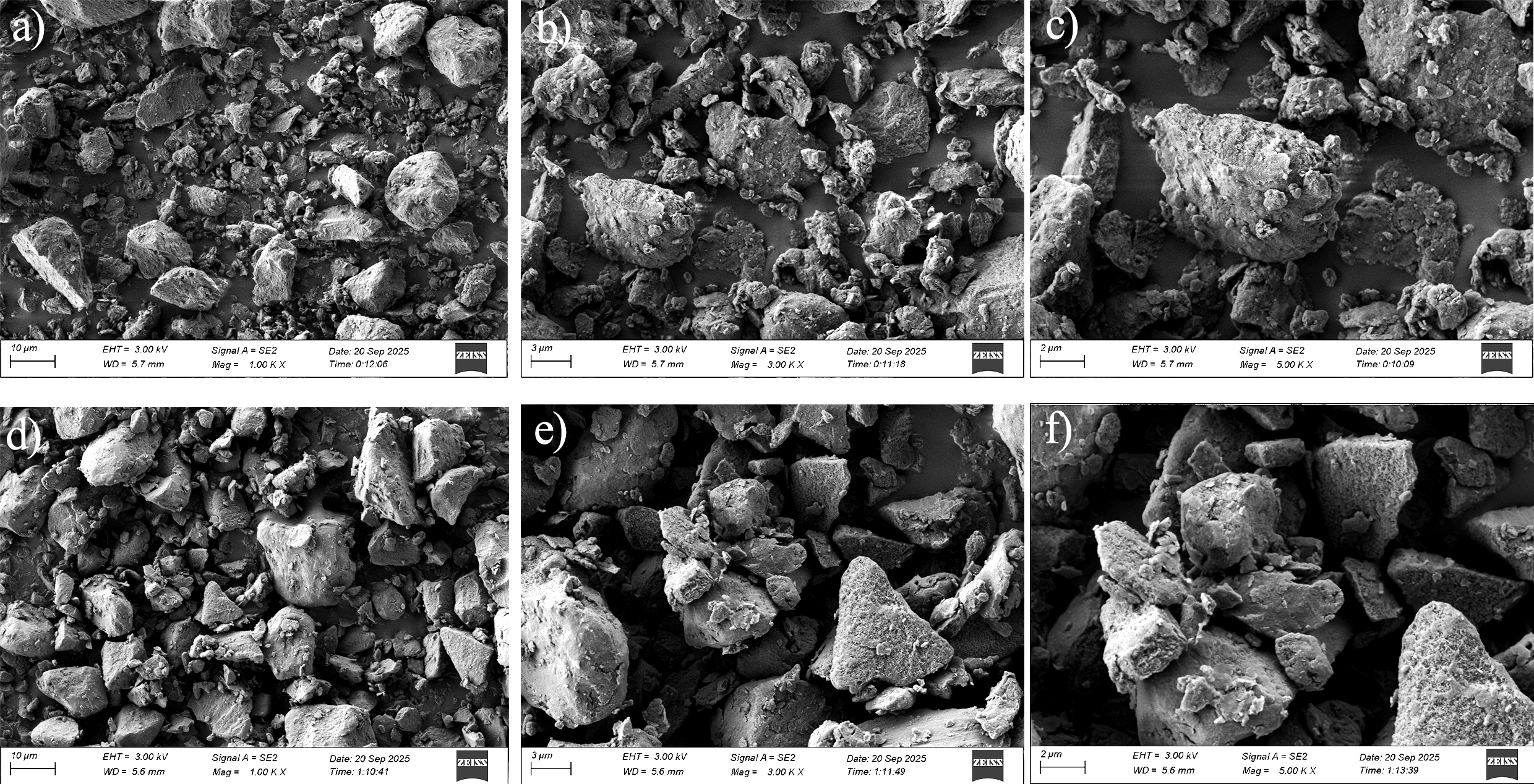
As shown in
Figure 3a–c, the particles display an irregular polyhedral morphology with a broad particle size distribution ranging from 0.5 μm to 15 μm. Distinct interparticle gaps are observed, wherein fine particles occupy the interstices between coarse counterparts, exhibiting multi-scale compositing characteristics. Upon high-resolution inspection, the particle surfaces are rough and irregular, and partial particle agglomeration is detected. Such soft agglomeration originates from weak interparticle interactions (e.g., van der Waals forces, surface adsorption forces) [
33,
34]. At high magnification, fracture features are discernible on particle peripheries, attributable to mechanical pulverization.
Figure 3d–f reveals that BAC-hectorite exhibits a more uniform particle size distribution and a more ordered stacking structure. The alleviated agglomeration is confirmed by the absence of large aggregates, a narrower particle size distribution, and fewer interparticle gaps compared with unmodified hectorite (
Figure 3a–c). Meanwhile, the surface roughness is visibly reduced, as reflected by smoother particle surfaces, sharper edges and corners, and fewer surface defects and fracture traces in
Figure 3e,f.
These changes are attributed to the intercalation of BAC cations via wet chemical treatment, which increases the interlayer spacing, weakens van der Waals attraction between layers, and improves surface hydrophobicity, thereby effectively suppressing particle agglomeration and improving dispersion uniformity. The improved dispersion and reduced surface roughness lay a structural foundation for uniform distribution of the antibacterial agent and stable performance in coating and polymer matrices.
3.3. ATR-FTIR Study
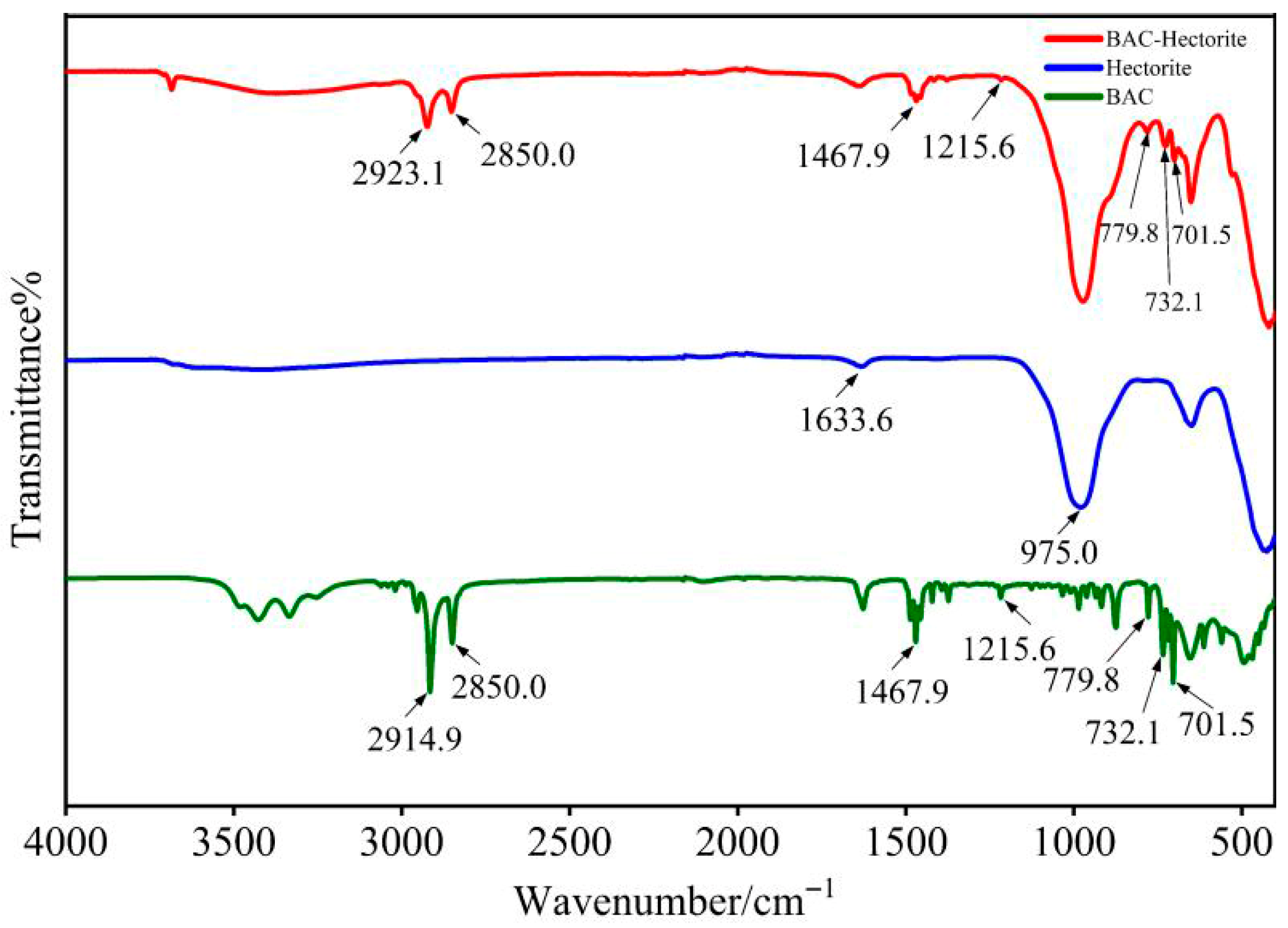
The strong absorption peak of hectorite near 1000 cm
−1 is attributed to the Si-O-Si stretching vibration of the silicate framework (corresponding to the characteristic peak at 975 cm
−1 in
Figure 4), which serves as a signature spectral signal of the layered silicate crystal structure of hectorite [
35]. The H-O-H bending vibration peak near 1633 cm
−1 originates from the strong hydrogen bonding interaction between interlayer water and hydroxyl groups on the silicate lamellae. This peak directly reflects the existing form and content of interlayer water [
36].
For benzalkonium chloride (BAC), the absorption peak at 2914.9 cm
−1 corresponds to the asymmetric stretching vibration of -CH
2-, the peak at 2850.0 cm
−1 is attributed to the symmetric stretching vibration of -CH
3, and the peak at 1467.9 cm
−1 represents the scissoring bending vibration of -CH
2-. These three peaks collectively characterize the conformation and vibration behavior of the long-chain alkyl groups in BAC molecules, serving as a direct spectral reflection of the alkyl structure in quaternary ammonium salts. the characteristic peaks at 779.8 cm
−1, 732.1 cm
−1, and 701.5 cm
−1 are the C-H bending vibration peaks of monosubstituted benzene rings. They act as fingerprint-level spectral markers for the benzyl structure in BAC molecules, exhibiting high specificity [
37].
The BAC-Hectorite composite exhibits the characteristic peaks of both BAC and hectorite simultaneously. From a spectroscopic perspective, this directly confirms the successful construction of the composite. The characteristic peaks of BAC are completely retained: the peak at 2923.1 cm−1 (slightly shifted from the 2914.9 cm−1 of pure BAC, resulting from changes in the interlayer chemical environment), along with peaks at 2850.0 cm−1, 1467.9 cm−1, 1215.6 cm−1, and the benzene ring fingerprint peaks (779.8, 732.1, 701.5 cm−1), are highly consistent with the peak positions of pure BAC, and no peak broadening or splitting was observed. This phenomenon indicates that no degradation or reconstruction of the BAC molecular structure occurred during the modification process, and BAC was loaded between the hectorite layers through chemical interactions.
From the molecular vibration dimension, FTIR spectroscopy intuitively and accurately corroborates the composite formation mechanism between BAC and hectorite: the quaternary ammonium cations (R4N+) in BAC molecules are embedded into the interlayer domain of hectorite via ion exchange, while forming strong electrostatic interactions with the silicate lamellae. This process ultimately achieves the retention of BAC’s structural integrity and its stable loading onto hectorite.
3.4. BET Surface Area and Pore Structure Analysis
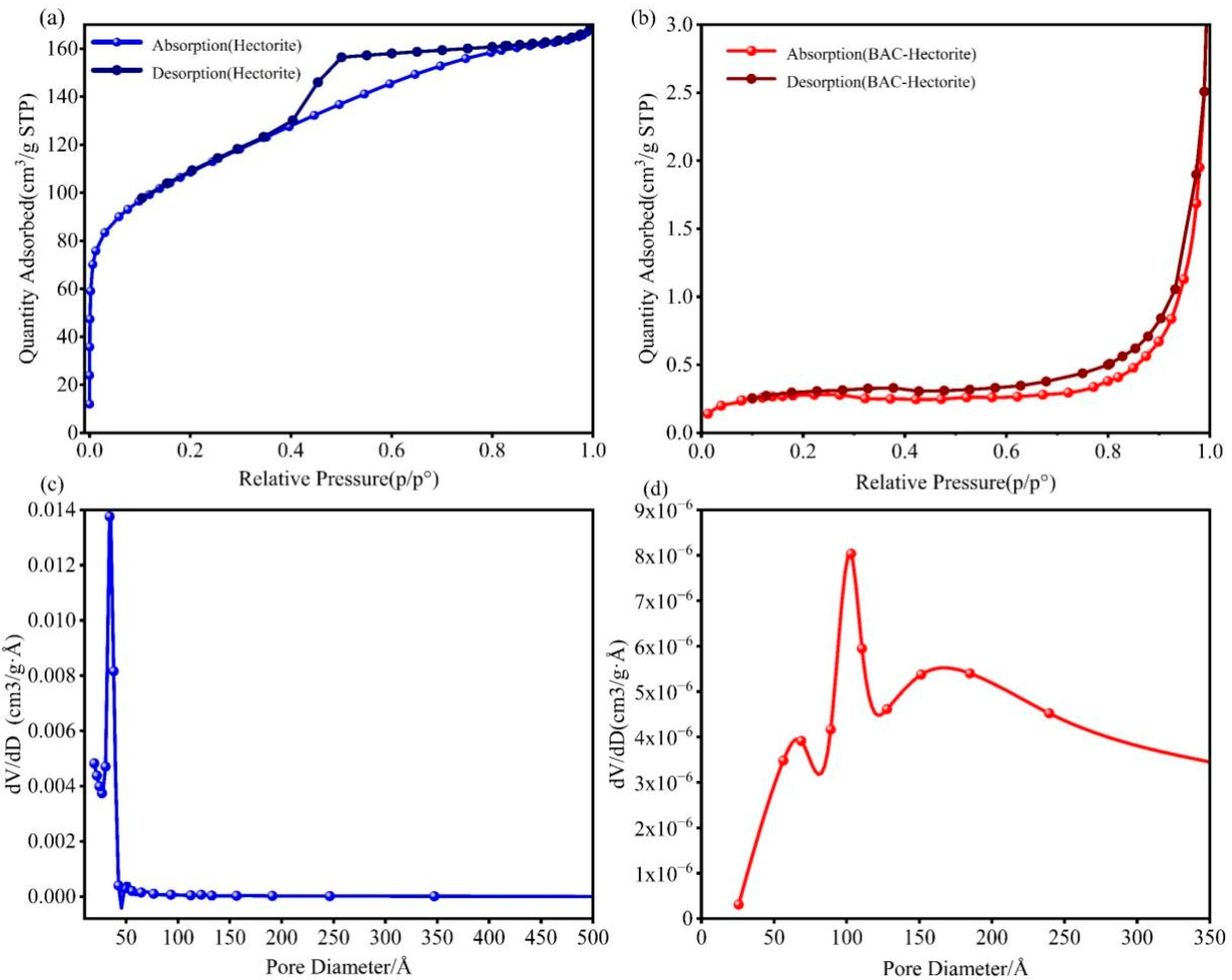
To investigate the regulatory effect of benzalkonium chloride (BAC) modification on the pore structure of hectorite, pore volume, and pore size distribution of pure hectorite and BAC-Hectorite composites were characterized using the nitrogen adsorption–desorption method (BET method), and the results are shown in
Figure 5. The isotherm of pure hectorite (
Figure 5a) belongs to the Type IV isotherm, which is characteristic of mesoporous materials. In the region with a relative pressure (p/p
0) > 0.4, the adsorption capacity increases significantly, and a distinct hysteresis loop (H-type) is observed in the adsorption–desorption curve. This indicates that the material has a mesoporous structure (2–50 nm), with slit-shaped pores as the dominant pore type-resulting from the stacking of layered silicate particles or interlayer domains. In the high relative pressure region ((p/p
0) → 1.0), the adsorption capacity increases continuously, suggesting the presence of macropores (>50 nm) or stacked pores formed by particle agglomeration. This phenomenon is directly related to the layered structure and particle dispersibility of hectorite.
For the BAC-Hectorite composite (
Figure 5b), its isotherm still belongs to type IV; however, the adsorption capacity is significantly lower than that of pure hectorite, which indicates a reduction in pore volume of the material after BAC loading. The range and shape of the hysteresis loop undergo changes, and the adsorption increment in the high relative pressure region slows down. This suggests that BAC molecules have filled part of the mesoporous channels; meanwhile, they may form new pore structures on the material surface or between layers (e.g., pores formed by the aggregation of BAC molecules), leading to an increase in the complexity of the pore structure.
The pore size distribution curves (
Figure 5c,d) can intuitively reflect the pore size and distribution uniformity; when combined with changes in pore structure, they further illustrate the modification mechanism. For pure hectorite (
Figure 5c), the pore size is mainly distributed around ~50 Å (5 nm), with a relatively narrow distribution peak. This indicates that the mesoporous structure of pure hectorite has good uniformity, and the pore type is interlayer slit-shaped pores, where the pore size is determined by the interlayer spacing and the stacking mode of lamellae. Nearly no pore distribution is observed above 50 Å, which further confirms that the pore structure is dominated by mesopores with a narrow distribution. This is highly consistent with the layered crystal structure of hectorite.
The pore size distribution of the BAC-Hectorite composite (
Figure 5d) exhibits a multi-peak characteristic, covering a range from tens to hundreds of Å (with peak positions at ~100 Å, ~200 Å, etc.), indicating that the pore structure becomes complex after BAC loading. On the one hand, BAC molecules fill part of the original mesopores, leading to a decrease in the proportion of small-sized pores; on the other hand, BAC molecules aggregate on the material surface or between layers, forming new macropores (>50 Å) and thus broadening the pore size distribution.
The regulation of BAC modification on the pore structure of hectorite can be summarized into two points: (1) BAC molecules are embedded into the interlayer domains of hectorite via ion exchange and partially adsorbed on the material surface, filling the original mesoporous channels and resulting in a decrease in pore volume; (2) the introduction of BAC molecules disrupts the original interlayer stacking order of hectorite, alters the particle agglomeration mode, and forms new macroporous structures, which is manifested as a multi-peak and broadened pore size distribution [
38]. The decrease in pore volume can mitigate the non-selective adsorption of impurities by the material, which is beneficial to the targeted action of the antibacterial component (BAC); the broadened pore size distribution provides a structural basis for the loading and sustained release of BAC (macropores facilitate the storage and slow release of BAC).
3.5. Antibacterial Tests
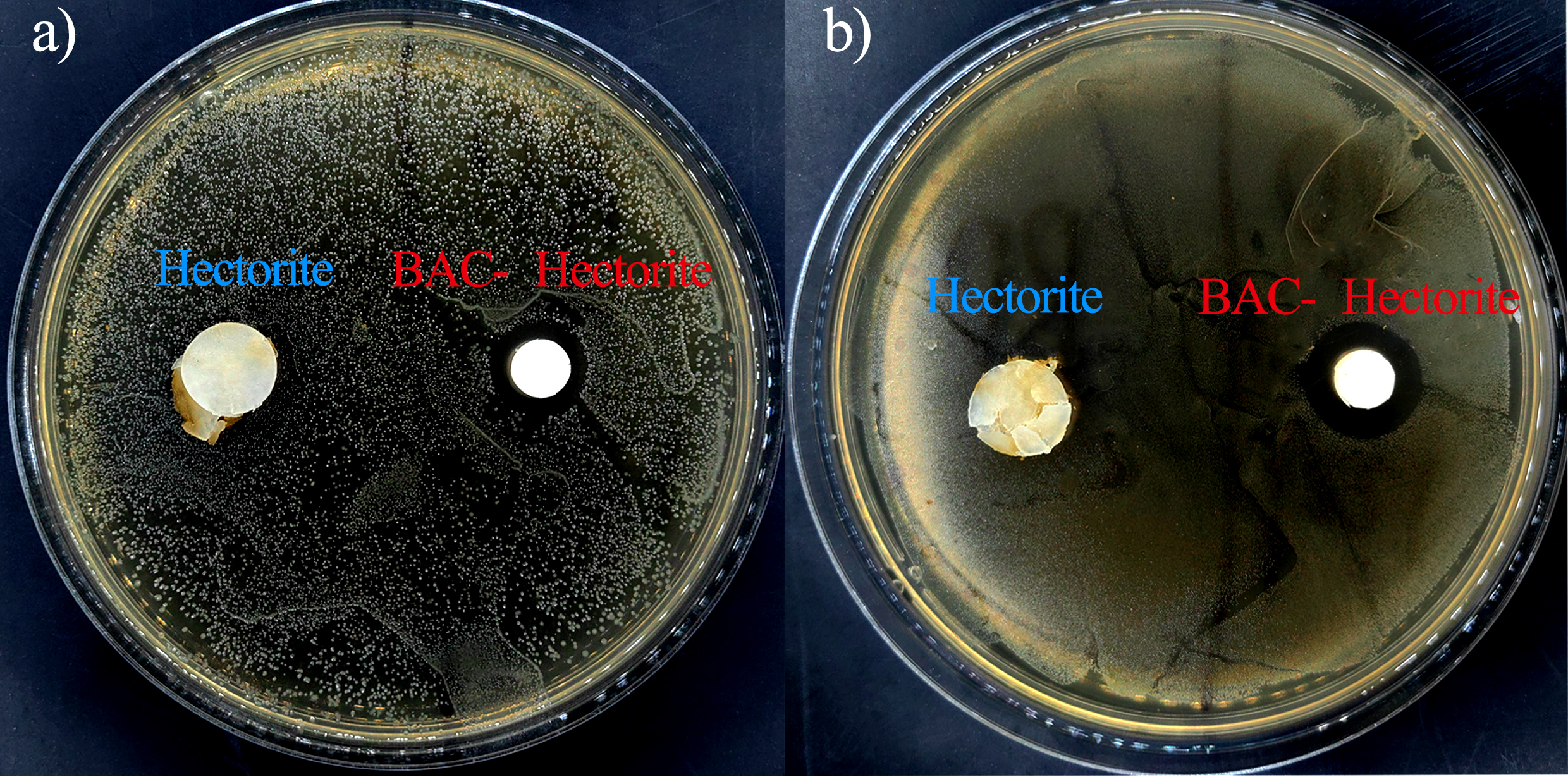
Figure 6 presents the comparative inhibition zones of hectorite and BAC-hectorite composite against Gram-negative
Escherichia coli and Gram-positive
Staphylococcus aureus. The zone of inhibition test used unmodified hectorite as the blank control, and the results showed that it did not form detectable zones of inhibition against either Gram-negative
E. coli (ATCC 8739) or Gram-positive
S. aureus (ATCC 6538P). This result indicates that pure hectorite, as a synthetic layered silicate mineral, lacks the ability to inhibit the growth of pathogenic bacteria, owing to its interlayer exchangeable Li
+ ions and Si-O-Si framework structure, which do not possess such inhibitory activity.
As shown in
Table 2, BAC-Hectorite exhibited significant antibacterial activity against both types of pathogenic bacteria: the diameter of the zone of inhibition against
E. coli reached 11.62 mm, while that against
S. aureus was even better, at 13.31 mm. The antibacterial activity of BAC-Hectorite against
S. aureus (zone of inhibition diameter: 13.31 mm) was significantly higher than that against
E. coli (11.62 mm). This difference stems from the inherent differences in cell wall structure between the two pathogenic bacterial strains, as well as the characteristics of BAC’s mechanism of action as a quaternary ammonium cationic surfactant. For the Gram-positive bacterium
S. aureus, its cell wall is mainly composed of peptidoglycan (accounting for over 90%), with a loose structure and no outer lipopolysaccharide (LPS) membrane barrier [
39]. The long-chain alkyl groups (hydrophobic) in BAC molecules can rapidly penetrate the peptidoglycan layer; meanwhile, its quaternary ammonium cations (R
4N
+, hydrophilic) undergo electrostatic adsorption with negatively charged groups (e.g., phosphatidylglycerol) on the bacterial cell membrane surface. This further destroys the integrity of the cell membrane, disrupts cellular osmotic pressure, and ultimately leads to bacterial lysis and death [
40], resulting in high antibacterial efficiency. In contrast, Gram-negative
Escherichia coli possesses an outer membrane exterior to its cell wall, which is composed of lipopolysaccharides (LPS), phospholipids, and outer membrane proteins. This highly hydrophobic and negatively charged structure forms a dense permeability barrier, preventing cationic surfactants such as quaternary ammonium salts (QAS) from entering the cytoplasm to exert their antibacterial activity. Meanwhile, the LPS on the outer membrane undergoes non-specific electrostatic adsorption with QAS, further reducing their efficiency in disrupting the cell membrane [
41]. This ultimately manifests as a slightly smaller zone of inhibition diameter. This mechanistic analysis not only reasonably explains the differences in experimental data but also reveals the targeted antibacterial characteristics of the BAC-Hectorite composite, exhibiting better inhibitory effects against Gram-positive bacteria without an outer membrane barrier. This is highly consistent with the requirements of indoor coating application scenarios (e.g., kitchens and bathrooms where skin-infecting pathogens such as
S. aureus are prone to proliferation), providing theoretical support for the subsequent targeted application of the composite in antibacterial coatings.
Table 2.
Inhibition zone diameters of BAC-Hectorite and pristine Hectorite against test bacteria.
Table 2.
Inhibition zone diameters of BAC-Hectorite and pristine Hectorite against test bacteria.
| Bacteria | BAC-Hectorite (mm) | Hectorite (mm) |
|---|
| E. coli | 11.62 ± 0.32 | ND |
| S. aureus | 13.31 ± 0.23 | ND |
3.6. Minimum Inhibitory Concentration
Minimum inhibitory concentration (MIC) values are presented in
Table 3. The minimum inhibitory concentrations (MICs) of unmodified Hectorite against the two bacterial strains were all >128 mg/mL, which were much higher than the MIC values of BAC-Hectorite at the microgram (μg) level, and far beyond the effective concentration range of conventional antibacterial materials; generally, the effective MIC of antibacterial materials falls in the low range from microgram (μg) level to milligram (mg) level. As a synthetic layered silicate mineral, pure Hectorite’s interlayer exchangeable Li
+ ions and silicate framework lack the ability to inhibit the growth of pathogenic bacteria. This definitively precludes the possibility of non-specific interference by the carrier material (pure Hectorite), thereby clearly ascribing the observed antibacterial activity of the BAC-Hectorite composite to the BAC loaded via the wet chemical method. This lays a premise of “unique active source” for the subsequent analysis of antibacterial mechanisms and evaluation of application value. BAC-Hectorite exhibited low MIC values against both pathogenic strains, which were significantly lower than those of unmodified Hectorite. This directly demonstrates that wet chemical modification can achieve efficient antibacterial performance (by stably loading BAC onto Hectorite to endow the composite with antibacterial activity).
For E. coli (Gram-negative, G−), the minimum inhibitory concentration (MIC) of BAC-Hectorite was 32 μg/mL, indicating that only 32 μg/mL of BAC-Hectorite was sufficient to completely inhibit its growth. For S. aureus (Gram-positive, G+), the MIC was even lower, at 4 μg/mL, which was only 1/8 of the MIC against E. coli. This indirectly reflects the process advantage of the wet chemical method in this study: via the dispersion effect of the liquid medium, BAC can be uniformly embedded between the hectorite layers with intact molecular structure, avoiding the problem of reduced antibacterial activity and thus achieving efficient antibacterial performance at low concentrations.
Table 3.
Minimum inhibitory concentration (MIC) values.
Table 3.
Minimum inhibitory concentration (MIC) values.
| Bacteria | BAC-Hectorite (μg/mL) | Hectorite (mg/mL) |
|---|
| E. coli | 32 | >128 |
| S. aureus | 4 | >128 |
3.7. Antimicrobial Test
The coating’s antimicrobial performance results are listed in
Table 4. The latex paint containing 0.4% BAC-Hectorite had an extremely low viable bacterial count at 24 h (
E. coli: 1.2 CFU/cm
2;
S. aureus: 0.6 CFU/cm
2), with an antibacterial rate greater than 99.9% for both bacteria. BAC-Hectorite did not lose its activity in the latex paint system due to encapsulation or adsorption by coating components (e.g., titanium dioxide, ground calcium carbonate, emulsion), and BAC could still be effectively released to act on bacteria. A 0.4% addition level is sufficient to achieve the effect of almost completely killing the two types of pathogenic bacteria, and no excessive addition is required, which provides a basis for cost control in subsequent industrial production.
Table 4.
Results of Antimicrobial Performance of the Coating.
Table 4.
Results of Antimicrobial Performance of the Coating.
| Sample | Test Strains | 0 h Control Viable Bacteria
(CFU/cm2) | 24 h Control Viable Bacteria
(CFU/cm2) | 24 h Test Viable Bacteria
(CFU/cm2) | Antibacterial Rate (%) |
|---|
| 0.4% BAC-Hectorite | E. coli | 4.6 × 10⁴ | 2.3 × 10⁵ | 1.2 | >99.9 |
| S. aureus | 3.2 × 10⁴ | 1.6 × 10⁵ | 0.6 | >99.9 |
3.8. Mold Resistance Test
Using putty powder as the application carrier, with reference to the core principles of the ISO 16869:2008 standard and considering the film-like application characteristics of putty powder, the anti-mold efficacy was comprehensively evaluated through both quantitative (mold area ratio) and qualitative (mold growth status) methods. This evaluation was conducted by exposing the samples to a mixed mold spore environment containing Aspergillus niger, Aspergillus flavus, Paecilomyces variotii, Penicillium funiculosum, and Chaetomium globosum.
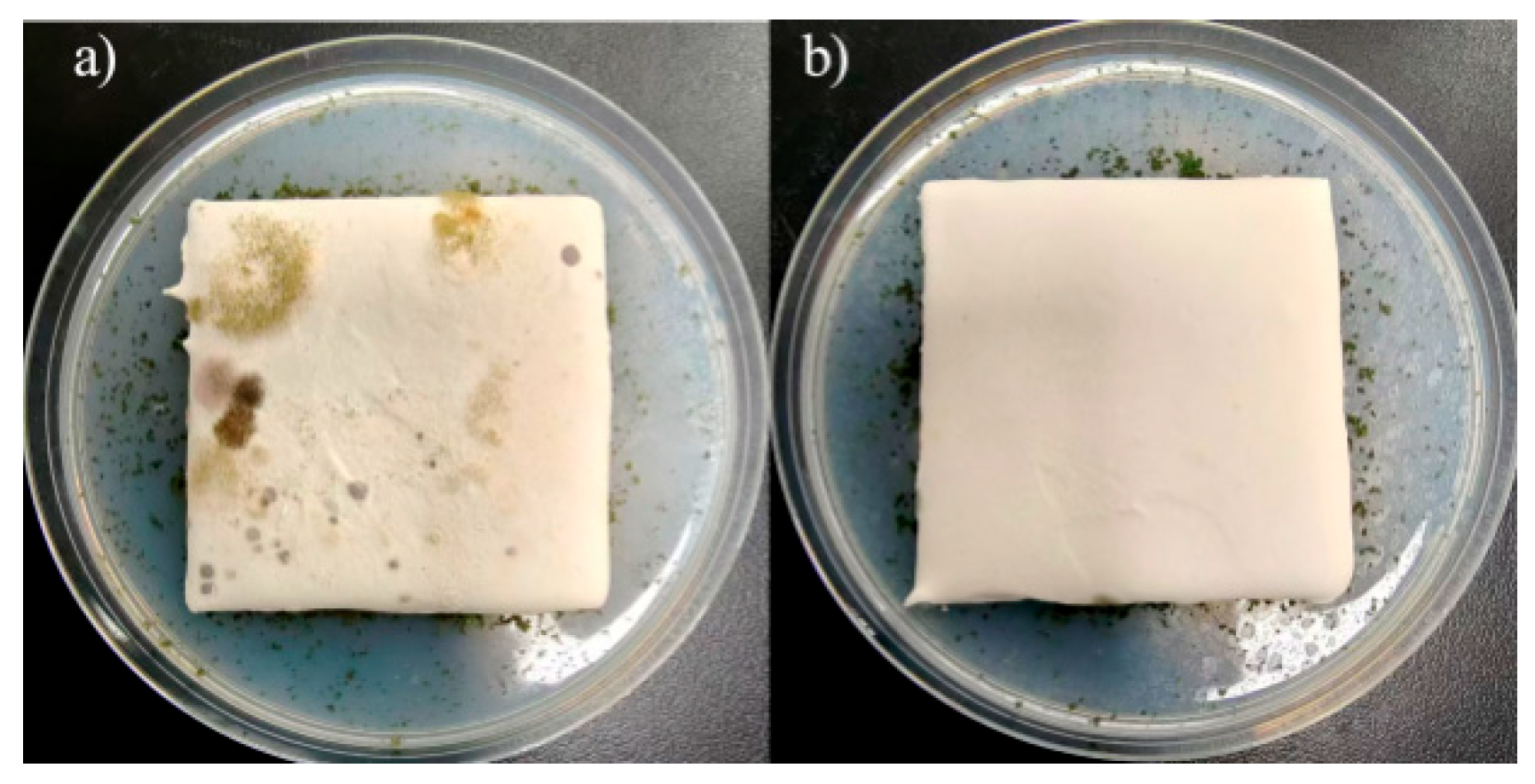
Table 5 shows the mold resistance results of the latex paint dry film, while
Figure 7 displays the 21-day mold resistance test results: control group and sample with 0.4% BAC- Hectorite added. For the blank control sample, the mold area ratio reached 64%, corresponding to an anti-mold grade of 4 (severe growth). This indicates that the pure putty powder matrix cannot inhibit the growth of mixed molds. Thickeners in putty powder (e.g., starch-based and cellulose-based types) provide carbon sources for molds, while the high-humidity environment meets the conditions for mold spore germination and mycelial growth, ultimately leading to extensive mold coverage on the sample surface.
For the sample with 0.4% BAC-Hectorite added, the mold area ratio was 0%, achieving an anti-mold grade of 0 (no mold growth). This demonstrates that BAC-Hectorite can inhibit mold growth and block the initial stage of mold reproduction (spore germination), which is a key advantage over only inhibiting mycelial elongation. It can fundamentally prevent physical damage (e.g., chalking, peeling) and chemical hazards (e.g., mycotoxin production) caused by molds to putty powder and subsequent paint films.
3.9. Tensile Properties
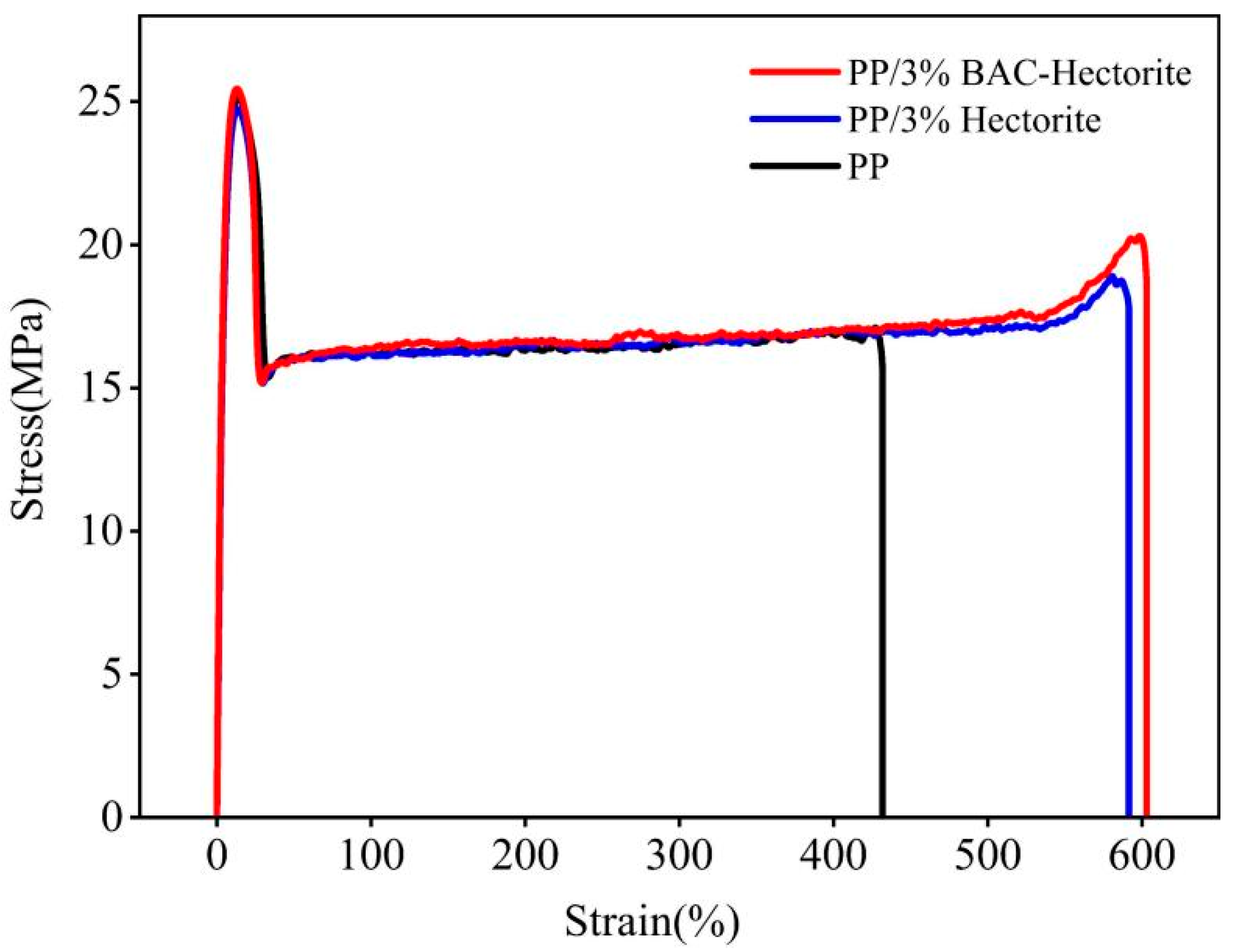
The elongation at break of both PP/3% hectorite and PP/3% BAC-modified hectorite (BAC-Hectorite) composites is significantly enhanced.
Figure 8 shows the stress–strain curves of neat PP, PP/3% hectorite, and PP/3% BAC-Hectorite.
Neat PP undergoes necking and fracture after yielding, with a strain at break of approximately 430%, exhibiting the typical tensile behavior of semi-crystalline polypropylene. Upon incorporation of 3% unmodified hectorite, the composite enters a stable cold-drawing stage after yielding, and the strain at break is drastically increased to 588%. The significantly improved toughness of the PP composite can be mainly attributed to the roles of hectorite nanosheets in the polymer matrix. On one hand, the nanosheets act as effective heterogeneous nucleating agents; on the other hand, they prevent crack propagation through crack arrest effects. Together, these two effects constitute the primary mechanism for the enhanced toughness of the composite [
42,
43]. After organic modification with BAC, the strain at break of PP/3% BAC-Hectorite further rises to 600%, while its yield strength and tensile strength are slightly higher than those of the unmodified system. This is ascribed to the fact that BAC intercalation significantly enlarges the interlayer spacing of hectorite, optimizes the interfacial compatibility and stress transfer efficiency between the filler and the PP matrix, realizing the integration of antibacterial functionality and synergistic strengthening–toughening effects.
In the field of antibacterial coatings, when BAC-Hectorite is compounded with coating film-forming substances (e.g., acrylic emulsion), its enhanced tensile strength may improve the impact resistance and crack resistance of the coating. This prevents the coating from damage caused by environmental stresses (e.g., temperature variation, substrate deformation) during service. Moreover, the significantly improved toughness can impart bending resistance to the coating, making it particularly suitable for scenarios such as kitchens and bathrooms, where frequent cleaning is required or slight substrate deformation may occur. Furthermore, while achieving efficient antibacterial activity, not only does BAC-Hectorite not impair the mechanical properties of the PP matrix, it synergistically enhances its strength and toughness. This solves the problem that traditional inorganic antibacterial fillers (e.g., silver ions, zinc oxide) tend to cause stiffening and embrittlement of polymer materials, providing a new idea for the design of multifunctional polymer materials.





 ,
,