Bamboo is a rapidly renewable biomass resource with a short growth cycle and a relatively low carbon footprint. Owing to its favorable mechanical performance, high strength-to-weight ratio, and environmental sustainability, bamboo has attracted increasing attention in applications such as construction, furniture manufacturing, and interior decoration [
1,
2,
3]. However, during practical service, bamboo surfaces are prone to scratches, abrasion, and contamination caused by daily friction or accidental impacts. These defects not only deteriorate the visual appearance of bamboo products but also accelerate surface degradation and shorten their service life. With the increasing demand for environmentally friendly and durable household materials, the development of protective coatings with enhanced durability and self-healing capability has become an effective strategy to improve the service performance of bamboo materials.
Microencapsulation technology has attracted extensive interest due to its ability to encapsulate functional substances and regulate their release behavior [
4]. By forming a protective shell around an active core material, microcapsules can effectively isolate sensitive components, stabilize functional substances, and improve the overall performance of composite systems. As a result, this technology has been widely explored in diverse fields, including energy-saving materials, pharmaceuticals, and military camouflage systems [
5,
6,
7]. In general, microcapsules are prepared by coating a core material with a polymer shell to achieve controlled release functionality, and the fabrication approaches can be broadly classified into three categories. The first category includes chemical methods, such as interfacial polymerization, which have been used to produce phase-change microcapsules with a latent heat of 100.21 ± 2.7 J/g as well as self-healing microcapsules [
8,
9]. The second category involves physical methods based on mechanical processes, including spray drying and solvent evaporation techniques [
10,
11]. The third category is physicochemical methods, in which the solubility of polymers is reduced through the addition of solvents, salts, electrolytes, or by adjusting parameters such as temperature and pH, allowing the polymer to deposit on the core material surface and form a shell layer. Typical examples include phase separation methods, ion exchange and Stöber processes, and complex coacervation techniques [
12,
13,
14,
15]. The selection of shell materials is critical for microcapsule formation; suitable shell materials should exhibit good film-forming ability, sufficient mechanical strength, ease of processing, low cost, and minimal toxicity. Generally, shell materials can be categorized into natural polymers, semi-synthetic polymers, and synthetic polymers. The choice of core material depends on the functional requirements of the microcapsules. For self-healing systems, the core material typically needs to possess adequate fluidity so that it can flow into damaged regions after release. Common healing agents include drying vegetable oils and isocyanates [
16,
17]. In addition, emulsifiers play a key role in stabilizing the emulsion system during microcapsule fabrication. Their type and dosage significantly influence the emulsification efficiency and ultimately determine the particle size and stability of the resulting microcapsules. Therefore, appropriate emulsifiers must be selected according to the specific core material in order to improve the microcapsule yield and performance. For instance, previous studies have shown that using sodium dodecyl benzene sulfonate (SDBS) as an emulsifier can produce microcapsules with uniform particle size and improved thermal stability [
18]. Since their first application in carbonless copy paper in 1954, microcapsule technologies have undergone rapid development, and the concept of self-healing microcapsules was later pioneered by the White research group and subsequently extended to applications such as concrete and marine coatings [
19].
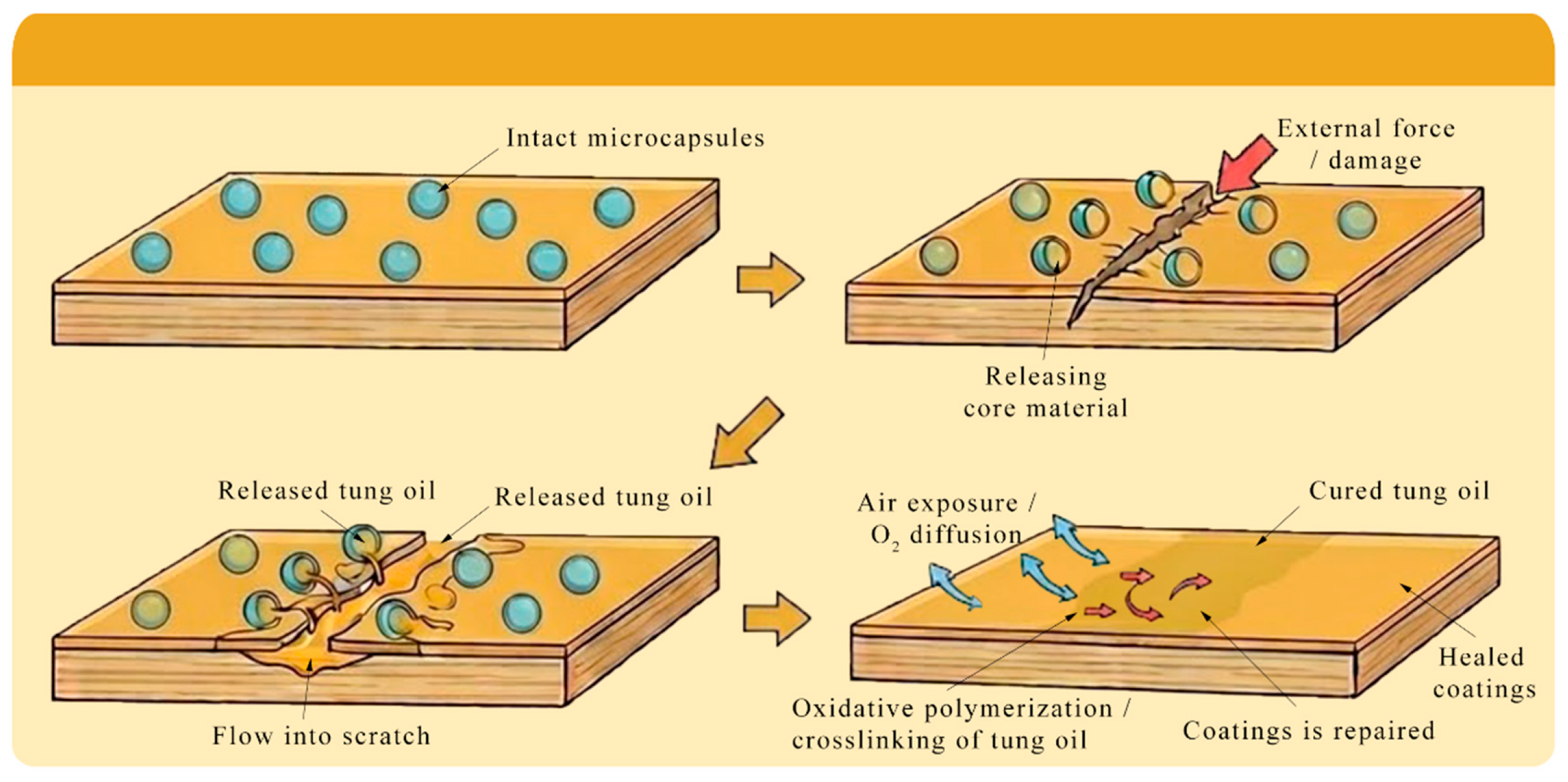
Tung oil, a natural drying oil extracted from the seeds of Vernicia fordii, exhibits an excellent oxidative self-polymerization ability [
20]. Through the conjugated double bonds in its molecular structure, tung oil can undergo free-radical oxidative crosslinking reactions in air, forming a dense and stable coating with good fluidity and film-forming properties. Compared with synthetic healing agents, tung oil is widely available, environmentally friendly, non-toxic, and biodegradable, which makes it consistent with the development trend of sustainable coating materials. Chitosan, a natural polysaccharide derived from chitin, contains abundant amino and hydroxyl functional groups, which endow it with excellent film-forming ability, biocompatibility, and mechanical strength [
21]. Gum arabic is another natural polysaccharide that exhibits excellent emulsifying stability and water solubility [
22]. Due to the electrostatic interactions between chitosan and gum arabic, these two biopolymers can form a stable composite shell structure, which can improve the encapsulation efficiency of microcapsules and enhance the mechanical stability of the shell wall [
23]. At present, microcapsules are commonly prepared using emulsion-based methods. However, these methods still suffer from several limitations, including low preparation efficiency, complex separation and drying processes, and the tendency of microcapsules to agglomerate, which restricts their large-scale industrial application [
24]. In contrast, spray drying has attracted increasing attention as an efficient microencapsulation technique due to its high preparation efficiency, continuous production capability, easy scalability, and good dispersibility of the resulting microcapsules. In particular, spray drying is highly suitable for microcapsules with natural polymer shell materials [
25,
26]. Previous studies have investigated the application of microcapsule-based self-healing coatings for wood substrates [
27,
28,
29]. For instance, Dong et al. prepared tung oil microcapsules using chitosan and sodium tripolyphosphate and demonstrated that the incorporation of such microcapsules could improve the durability of wood coatings [
27]. In addition, Chang et al. summarized the recent progress of self-healing microcapsules used in wood coatings and highlighted the importance of microcapsule structure and dispersion in improving coating performance [
29]. Nevertheless, most previous studies mainly focused on the selection of shell materials and core materials, whereas the influence of spray-drying parameters, particularly feed rate, on the microstructure of microcapsules and the resulting coating performance has rarely been systematically investigated [
4,
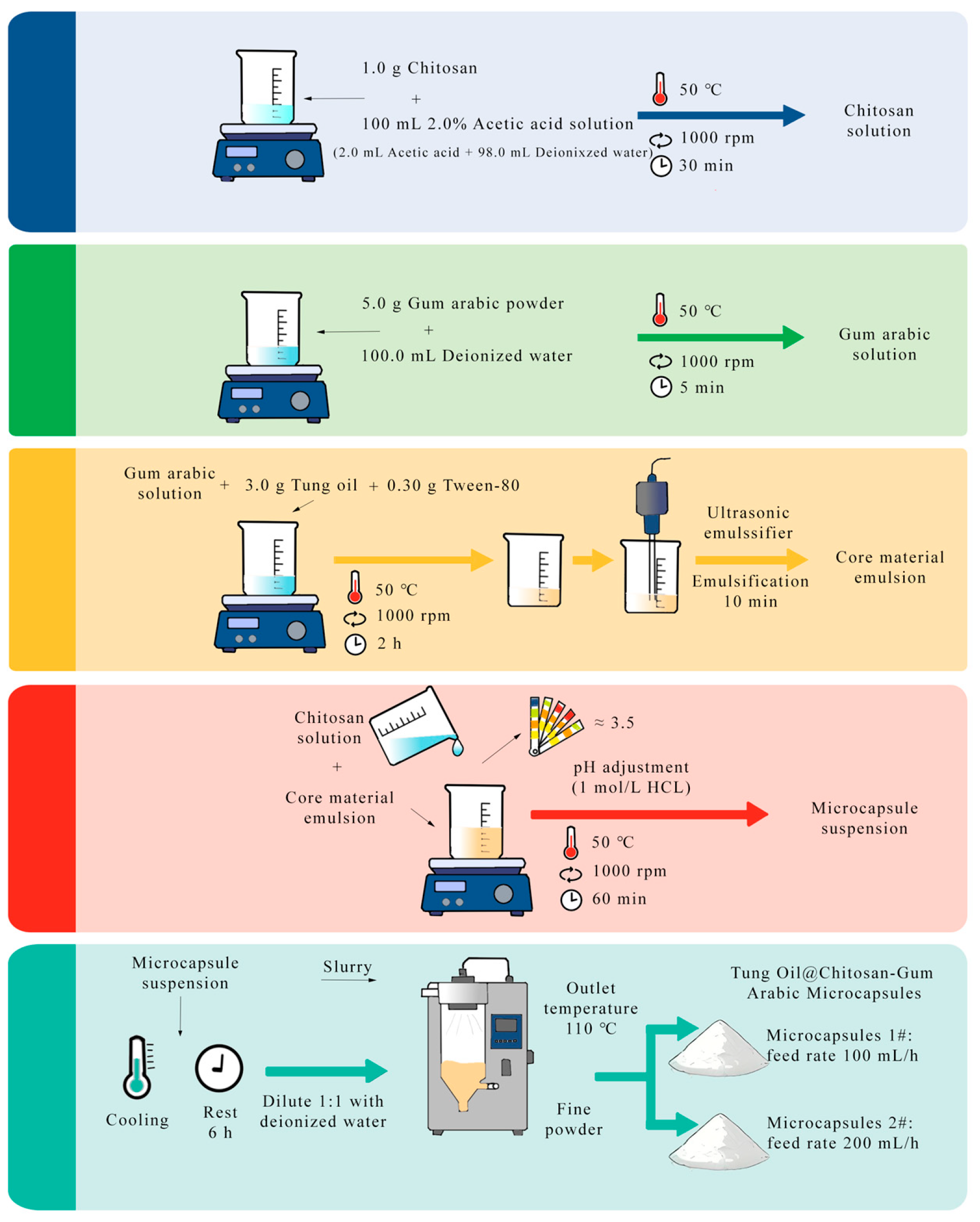
27]. Therefore, in this study, tung oil microcapsules encapsulated within chitosan and gum arabic (TO/CS–GA MCs) were prepared using a spray-drying technique. To highlight the influence of feed rate on atomization behavior and drying kinetics, two representative feed rates (100 and 200 mL h
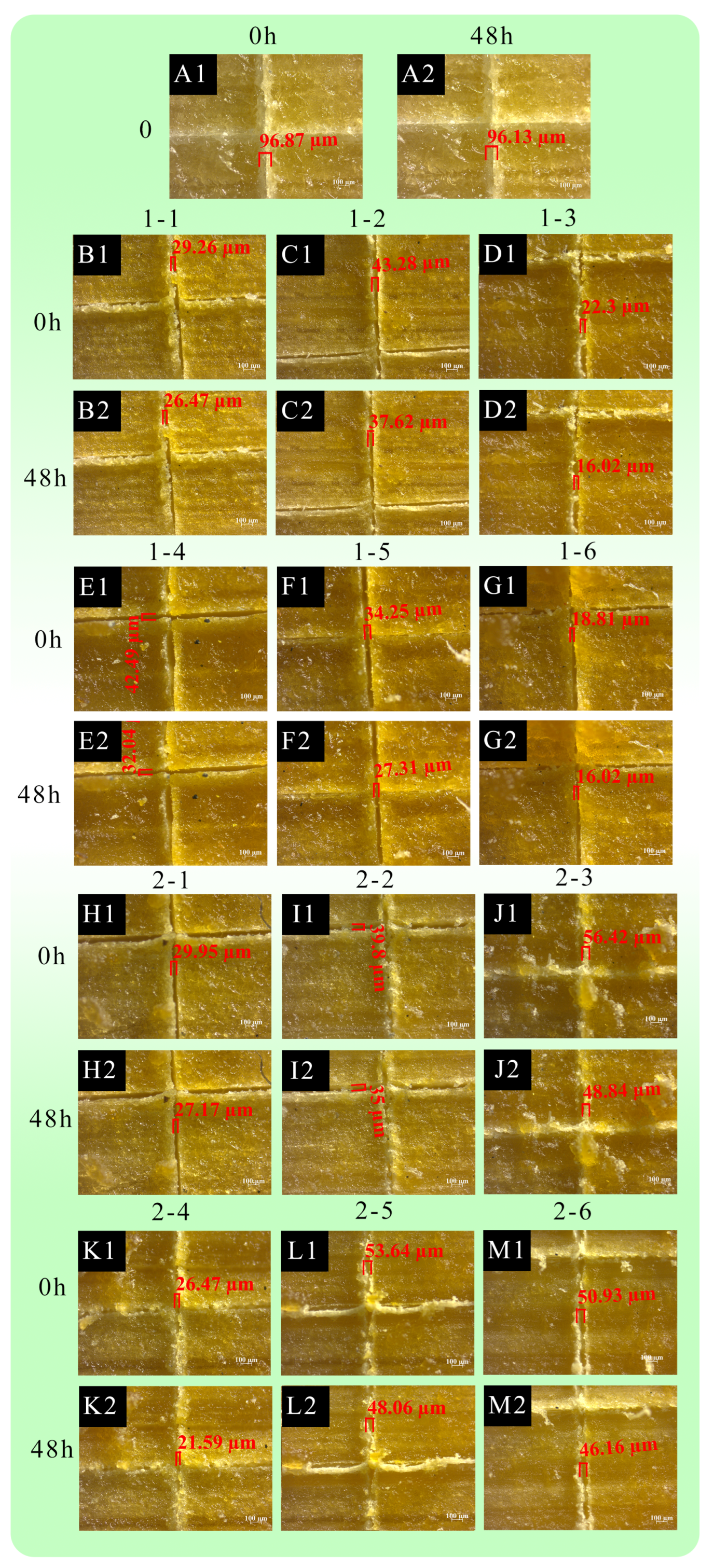
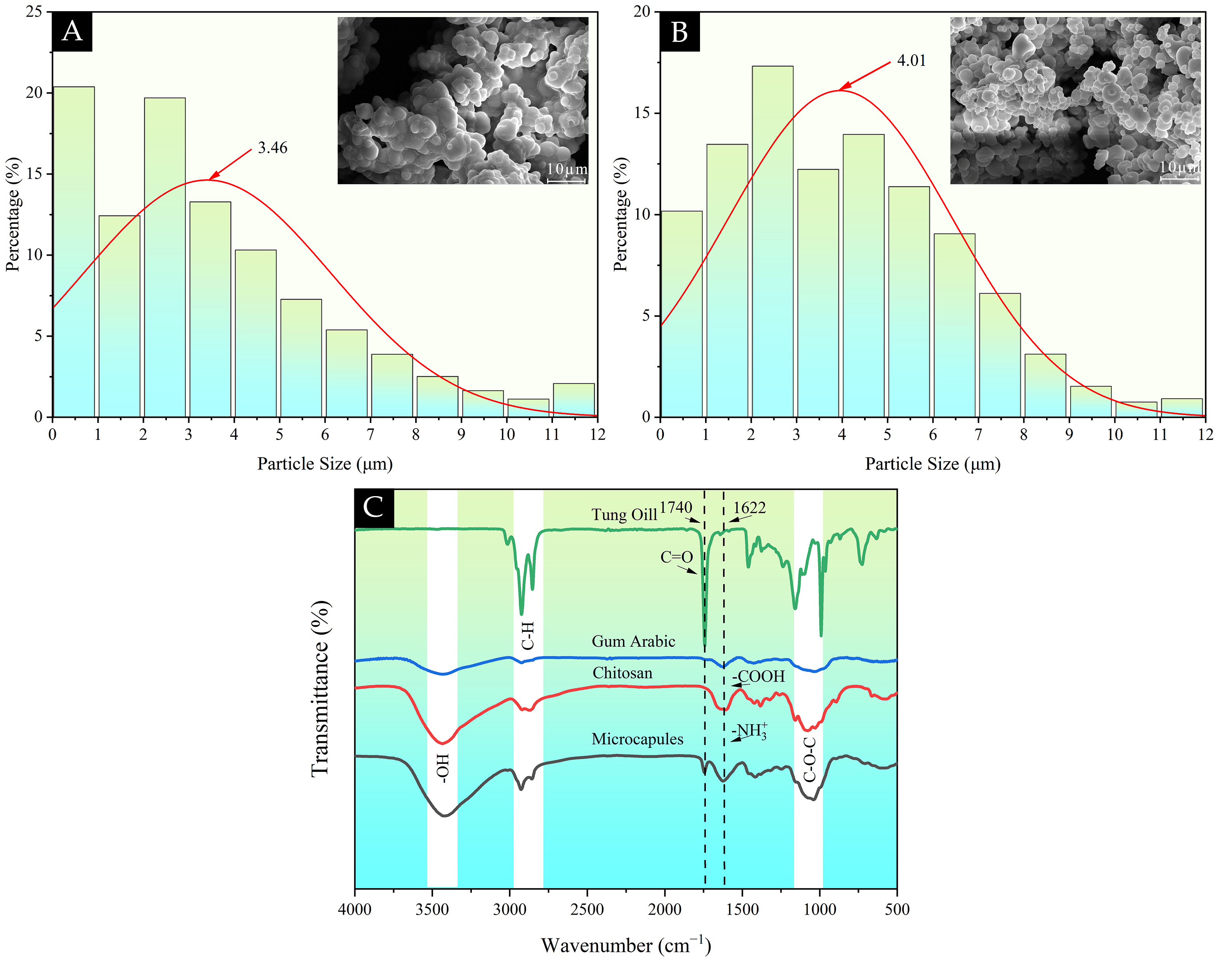
−1) were selected for comparison in order to generate distinct differences in microcapsule structure and coating performance. The prepared microcapsules were incorporated into tung-oil-based coatings applied on bamboo substrates. Subsequently, the optical performance, mechanical performance, and self-healing performance of the coatings were systematically evaluated. This study aims to clarify the relationship between spray-drying parameters, microcapsule structure, and coating performance. The results are expected to provide new insights into the design of environmentally friendly self-healing coatings and offer a feasible strategy for improving the durability of bamboo-based materials.