1. Introduction
Duplex stainless steels (DSS) are widely employed in critical applications such as offshore platforms, chemical processing equipment, and coastal infrastructure, owing to their excellent combination of high strength and corrosion resistance [
1,
2,
3]. This performance originates from a balanced dual-phase microstructure of ferrite and austenite. However, during welding, the introduced thermal cycles often disturb this equilibrium, leading to an altered ferrite-to-austenite ratio in the joint region and a consequent degradation in corrosion performance [
4,
5,
6,
7]. Conventional arc welding processes for thick-section DSS plates frequently face limitations such as high heat input, excessive distortion, and challenges in achieving consistent joint quality. In contrast, laser welding offers distinct advantages, including high welding speed, a narrow heat-affected zone (HAZ), and minimal workpiece distortion [
8,
9,
10,
11,
12].
Compared with conventional autogenous laser welding, laser welding with filler wire enables controlled addition of alloying elements through the wire, allowing active regulation of weld metal composition and thereby optimizing microstructural evolution [
13,
14,
15,
16]. Moreover, the laser, as a high-energy-density heat source, effectively suppresses the broadening of the heat-affected zone (HAZ), helping to preserve corrosion resistance and mechanical integrity in the joint region close to the base metal level. Narrow-gap laser welding with filler wire further combines the benefits of low heat input, high adaptability for thick plates, and reduced residual stress, making it particularly suitable for joining thick-section DSS where phase balance and comprehensive performance are critical [
17,
18]. Recent advances in functionally graded materials for high-performance applications highlight the importance of precise microstructural control in advanced manufacturing processes [
19]. He, Y. et al. [
20] demonstrated that narrow-gap laser welding with filler wire can overcome the limitations of autogenous laser welding by enabling modification of weld metal composition and improvement of mechanical performance. The welding performance and joint behavior of S32101 duplex stainless steel are optimized through strict control of carbon and nitrogen contents. Compared with conventional duplex stainless steels, its higher nitrogen content effectively improves the corrosion resistance of welded joints and promotes a balanced austenite–ferrite phase ratio. Meanwhile, its ultra-low carbon content significantly enhances weldability, resulting in joints with excellent mechanical and corrosion properties [
21,
22,
23,
24]. Based on the above background, the present study focuses on 25 mm thick S32101 duplex stainless steel joined by narrow-gap laser wire-fed welding. Compared with conventional arc welding, this approach is expected to provide lower heat input, a narrower heat-affected zone, and reduced distortion. Compared with autogenous laser welding, it also offers improved gap adaptability and compositional regulation through filler wire addition, which is particularly important for phase balance control in thick-section duplex stainless steel joints. Therefore, the distinctive feature of the present approach lies in the combination of narrow-gap geometry, laser high-energy-density heating, and filler wire-assisted compositional adjustment for thick-plate welding. On this basis, a systematic investigation was carried out on the microstructural morphology, austenite–ferrite phase ratio, mechanical properties, and corrosion behavior in different regions of the joint. The aim of this work is not only to evaluate the weld quality of thick-section S32101 duplex stainless steel, but also to clarify how this welding approach differs from existing technologies in terms of microstructural evolution, phase balance control, and the resulting mechanical and corrosion performance.
2. Materials and Methods
2.1. Materials
In this study, narrow-gap laser welding with filler wire was employed to join S32101 duplex stainless steel plates with dimensions of 300 mm × 150 mm × 25 mm. The welding trials employed a solid ER-2209 filler wire (ESAB, Sweden) with a diameter of φ1.2 mm. The chemical compositions of the base metal and the filler wire are summarized in
Table 1, and the mechanical properties of the S32101 duplex stainless steel are listed in
Table 2.
2.2. Welding Procedure
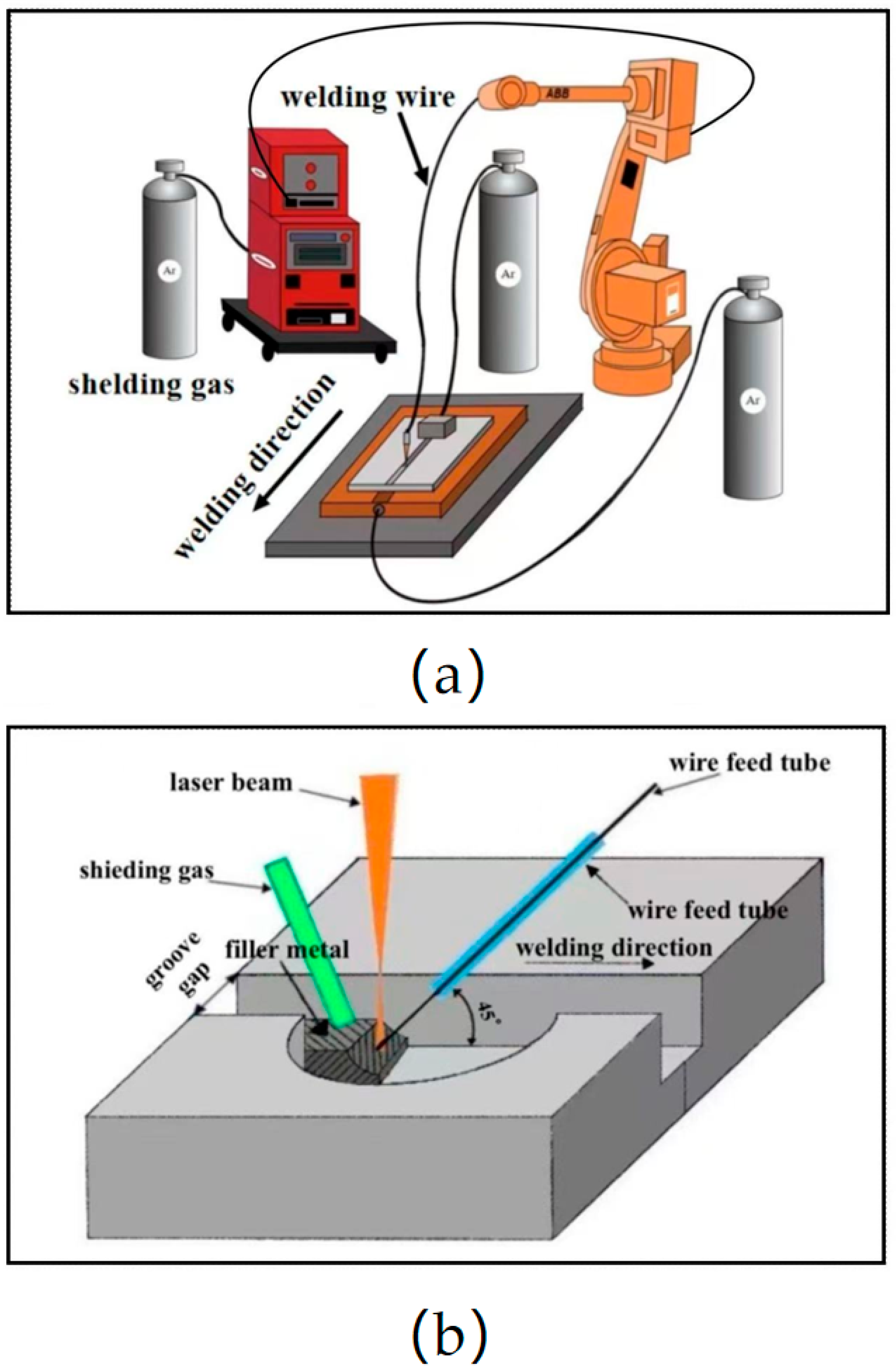
The laser wire-fed welding platform employed in this study consisted of three main components: an IPG YLS-6000 fiber laser (IPG Photonics Corporation, the USA), a Fronius welding power source, and an ABB IRB 4600 six-axis articulated robot (ABB Group, Sweden). The parameters are listed in
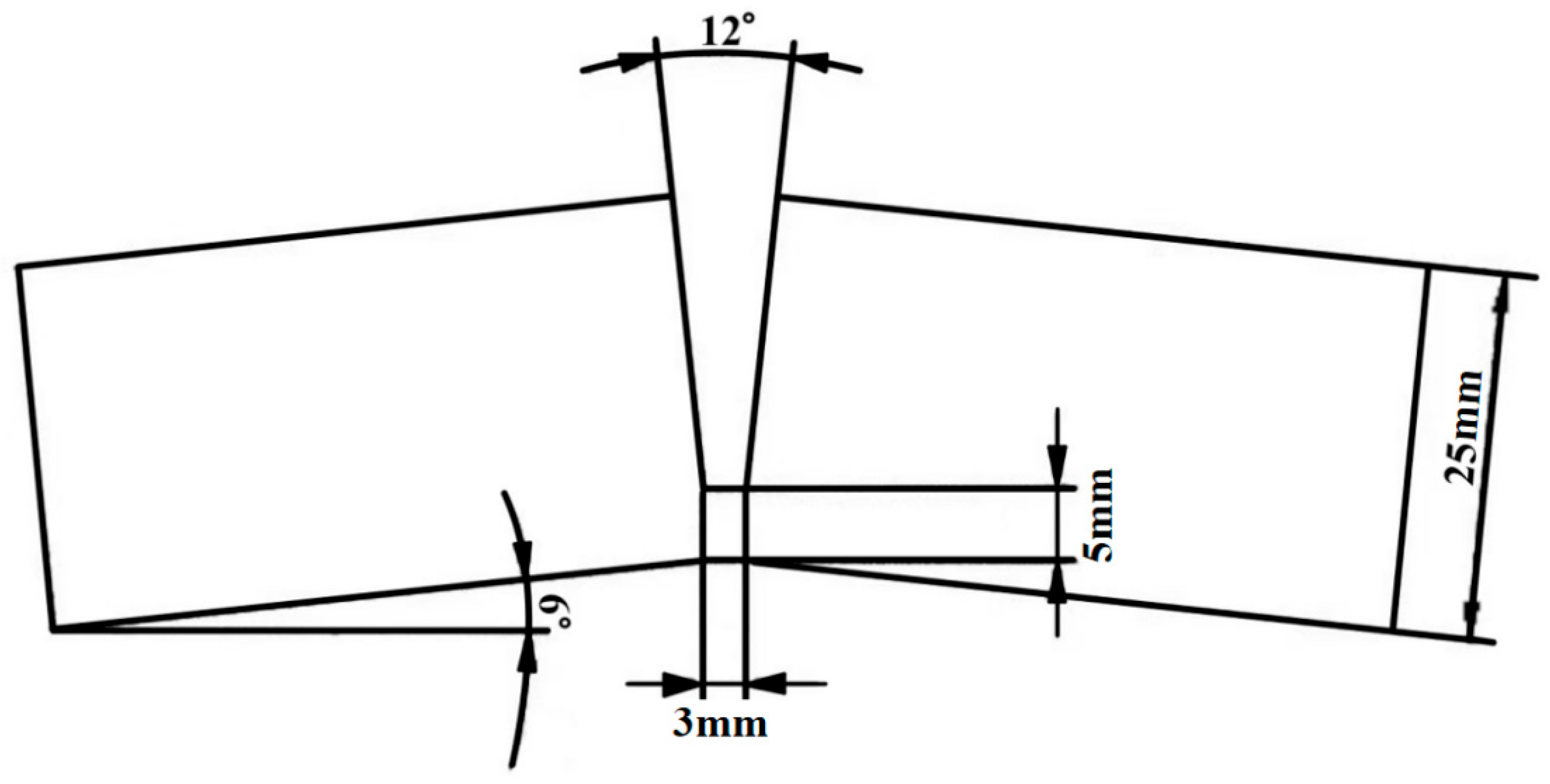
Table 3. A multi-pass welding strategy was adopted. To ensure successful welding, an appropriate pre-deformation (anti-distortion) technique was applied to the test plates prior to welding. The narrow-groove configuration designed for the 25 mm thick S32101 duplex stainless steel is illustrated in
Figure 1. To protect the molten pool and the high-temperature weld zone from oxidation, high-purity argon (99.99%) was used as the shielding gas during welding at a flow rate of 20 L/min, with coaxial shielding through the welding torch nozzle. Welding parameters—including laser power, welding speed, wire feed speed, and defocus amount—were optimized based on preliminary process trials. The specific welding parameters for each pass are detailed in
Table 4. To prevent microstructural coarsening caused by heat accumulation, the interpass temperature was controlled below 150 °C. After welding, the weld surface was inspected to ensure proper bead formation and the absence of defects such as undercut or lack of fusion. The narrow-gap laser wire-fed welding process for S32101 duplex stainless steel thick plates is schematically illustrated in
Figure 2.
2.3. Preliminary Process Optimization
To establish a robust processing window for the 25 mm thick S32101 plates, preliminary single-pass trials were conducted on both flat surfaces and narrow-gap grooves. Systematic optimization of the laser power, welding speed, defocus amount, and wire feed speed revealed that the ratio of wire feed speed to welding speed between 7.5 and 12.5 is critical for ensuring sound bead formation. Within this window, the laser power was dynamically matched with the energy required to melt the filler wire per unit length, allowing any two parameters to be calculated once the third is determined. Specifically, a defocus amount of +10 mm was selected for the root pass to ensure sufficient penetration, while +20 mm was utilized for filler passes to obtain a symmetrical, concave profile conducive to interlayer fusion. These optimized principles effectively prevent sidewall and interlayer lack of fusion, serving as the foundation for the multi-pass welding parameters detailed in
Table 4.
2.4. Mechanical and Microstructure Characterization
To characterize the microstructural morphology of the welded joint, samples were extracted through wire-cutting electric discharge machining (EDM) and then polished step by step using waterproof abrasive paper ranging from 180# to 2000# on a water grinder. Subsequently, polishing was performed using 2.5 μm abrasive paste, followed by etching treatment with FeCl
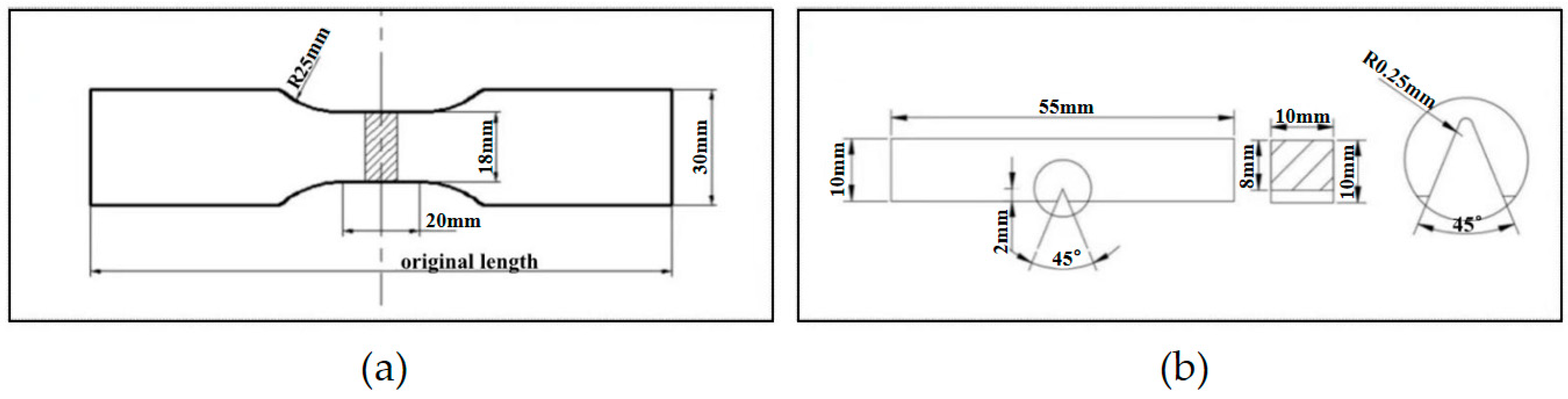
3–hydrochloric acid solution. Optical microscopy (OM) observations were carried out using a VHX-900 digital microscope (KEYENCE Corporation, Japan) under bright-field illumination, with magnifications ranging from 100× to 500×. Scanning electron microscopy (SEM) analysis was performed using a Zeiss microscope (Carl Zeiss AG, China). The observations were conducted at an accelerating voltage of 15 kV, with a working distance of approximately 8–10 mm. The secondary electron (SE) mode was employed to examine surface morphology. During microstructural analysis, images were acquired using a moderate scanning speed (frame time of ~60–120 s) to ensure adequate resolution and signal stability. The area fractions of austenite and ferrite were quantitatively analyzed using Image-Pro Plus 6.0 software. Microhardness distribution across the joint was measured using an MH-5 Vickers hardness tester (EVERONE, Shanghai, China) under a load of 0.5 kg with a dwell time of 10 s. Three measurements were taken at each location, and the average value was reported, following ASTM E384 standard. Tensile tests were conducted at room temperature using a hydraulic universal testing machine, and specimens were prepared in accordance with ASTM E8/E8M standard. Charpy V-notch impact tests were carried out at −40 °C following ASTM E23 standard. The sampling configuration and dimensions of the tensile and impact specimens are shown in
Figure 3. Corrosion resistance of the joint was evaluated by potentiodynamic polarization and electrochemical impedance spectroscopy (EIS) using an electrochemical workstation equipped with a three-electrode system, with the sample as the working electrode (exposed area of 1 cm
2), a platinum sheet as the counter electrode, and a saturated calomel electrode (SCE) as the reference electrode, in 3.5 wt.% NaCl solution at room temperature. Prior to each measurement, the samples were immersed in the electrolyte for 30 min to stabilize the open circuit potential (OCP). Polarization curves were recorded by scanning from −0.5 V to +1.5 V (vs. open circuit potential) at a scan rate of 1 mV/s, following ASTM G5 standard. EIS measurements were performed over a frequency range of 100 kHz to 10 mHz with a sinusoidal perturbation amplitude of 10 mV, following ASTM G106 standard.
3. Results
3.1. Microstructure of Different Regions in the Narrow-Gap Laser Wire-Fed Weld Joint
3.1.1. Analysis of Base Material Microstructure and Dual-Phase Ratio
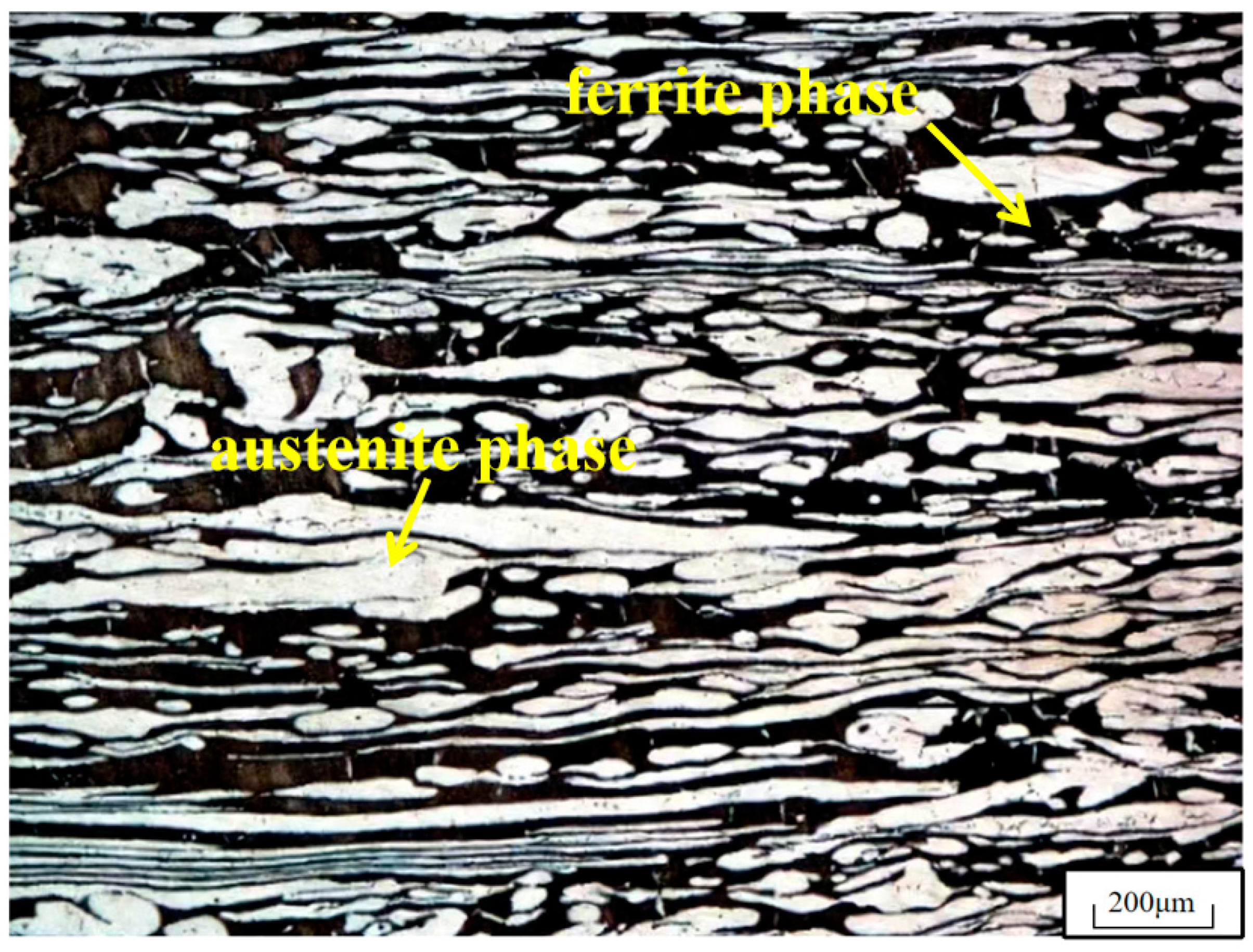
Figure 4 illustrates the microstructure of the base material of S32101 duplex stainless steel. The duplex microstructure of the base material is clearly discernible in the figure, with the white phase representing austenite and the black phase representing ferrite. These two phases are alternately distributed, exhibiting a smooth transition between them. Based on statistical analysis conducted using Image-Pro Plus, the proportion of austenite to ferrite in S32101 duplex stainless steel is approximately 51.02%:48.98%.
3.1.2. Microstructure of Backing Weld Bead and Proportion of Dual-Phase
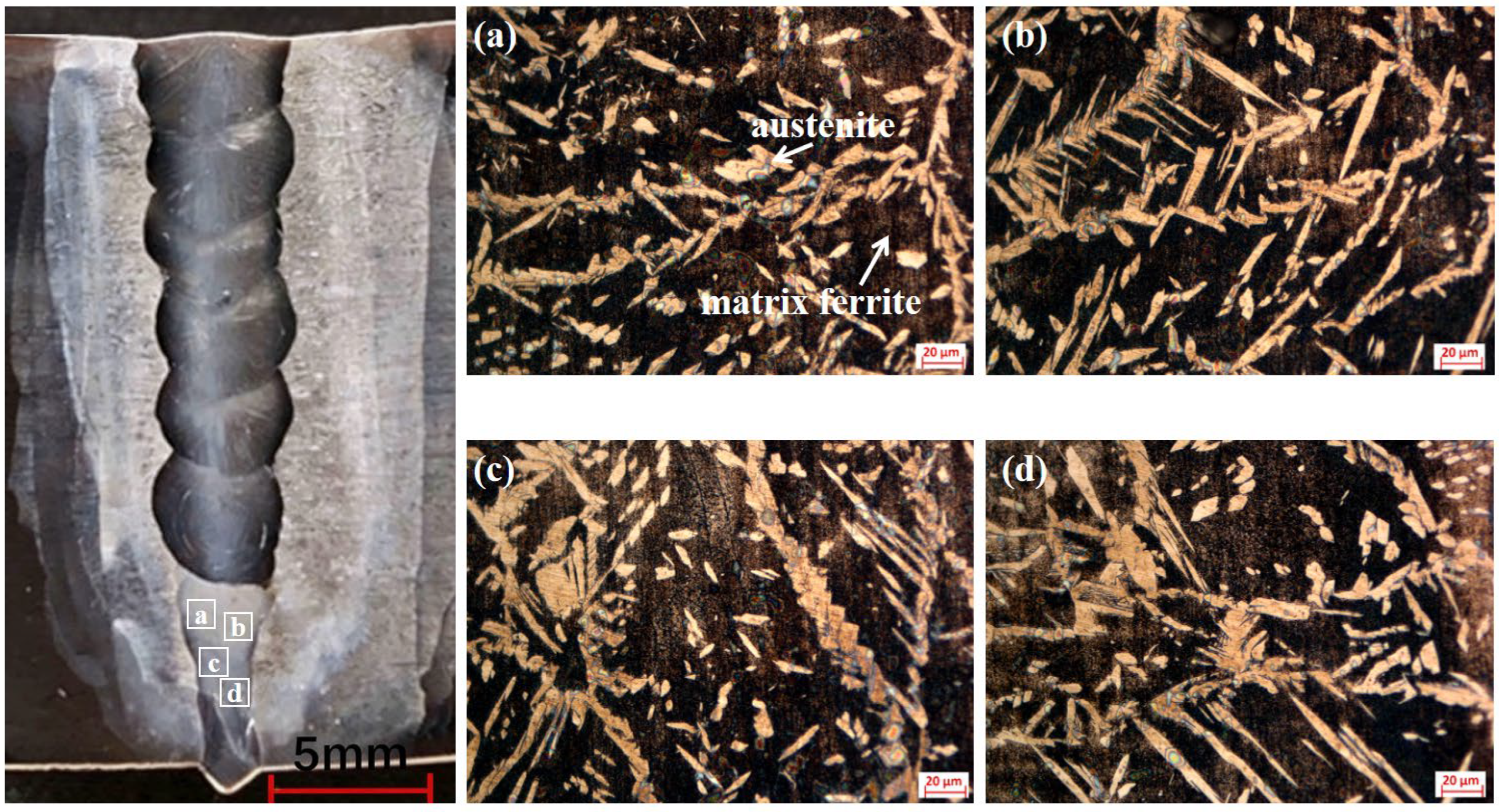
Figure 5 depicts four microstructure images of the backing weld bead of S32101 duplex stainless steel, narrow-gap laser wire-filling welding, captured with different fields of view. In these images, black represents the matrix ferrite and white represents austenite. It is evident that there are three forms of austenite present in the backing weld bead, namely intragranular austenite, grain boundary austenite, and Widmanstatten austenite. Each austenite grain exhibits a distinct growth direction, attributed to the fact that, following welding, as cooling and solidification proceed, grains tend to preferentially grow in the direction of fastest heat dissipation, specifically towards the center of the weld. The proportion of austenite to ferrite in the backing weld bead of duplex stainless steel narrow-gap laser wire-filling welding is 40.5%:59.5%.
During the welding process of duplex stainless steel, the weld metal initially forms a single ferrite phase during solidification, with part of the ferrite transforming into austenite as it cools. In the backing weld pass, a lower wire feed speed is used to ensure weld penetration, leading to an insufficient amount of alloy elements added through the welding wire per unit length of the weld. This results in a lower content of austenite-forming elements. Additionally, without the heat from the previous weld pass, the backing weld pass dissipates heat and cools down faster than the filler weld pass, which hinders the formation of austenite.
3.1.3. Microstructure and Dual-Phase Ratio of the Filled Weld Bead
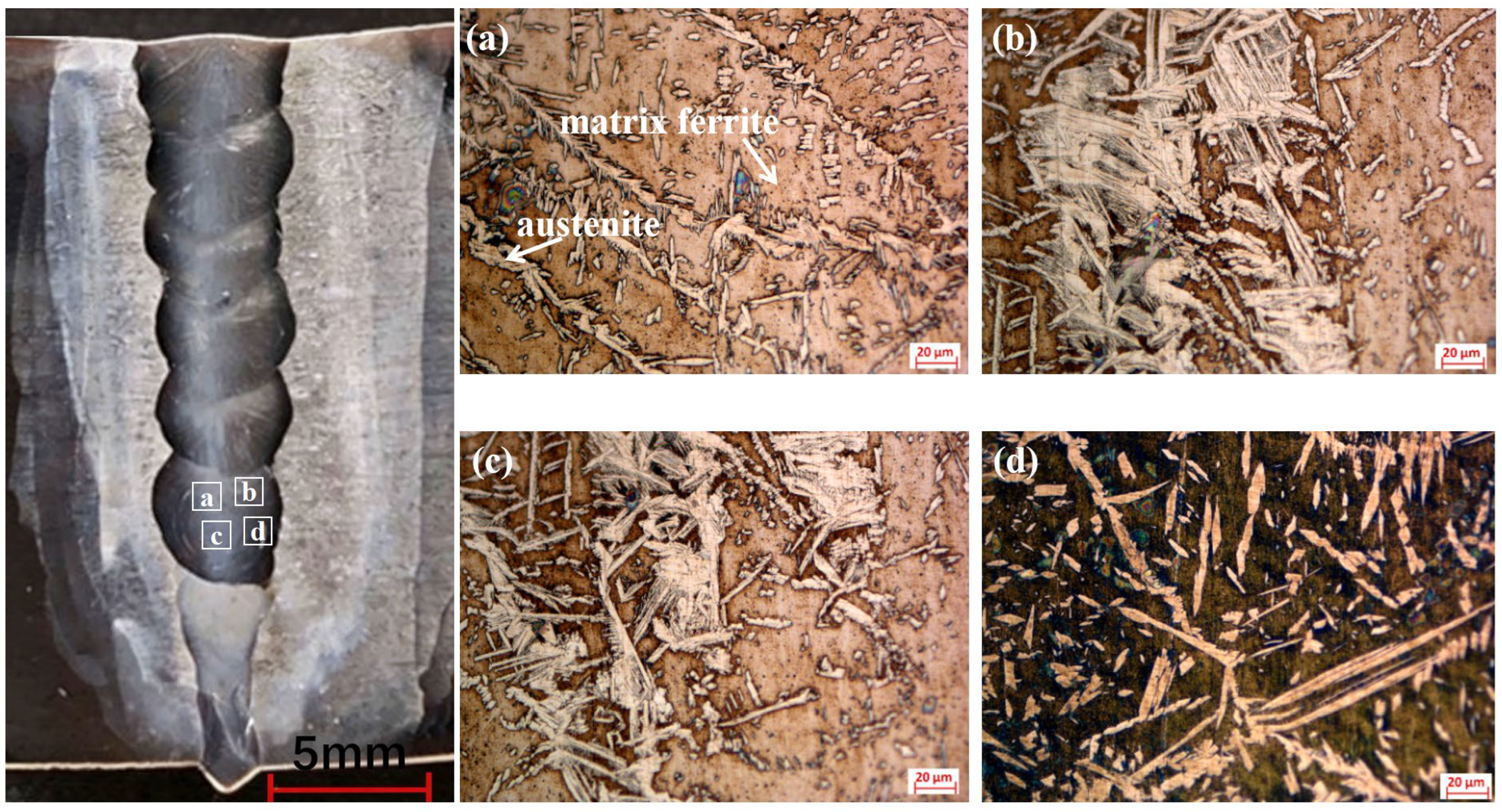
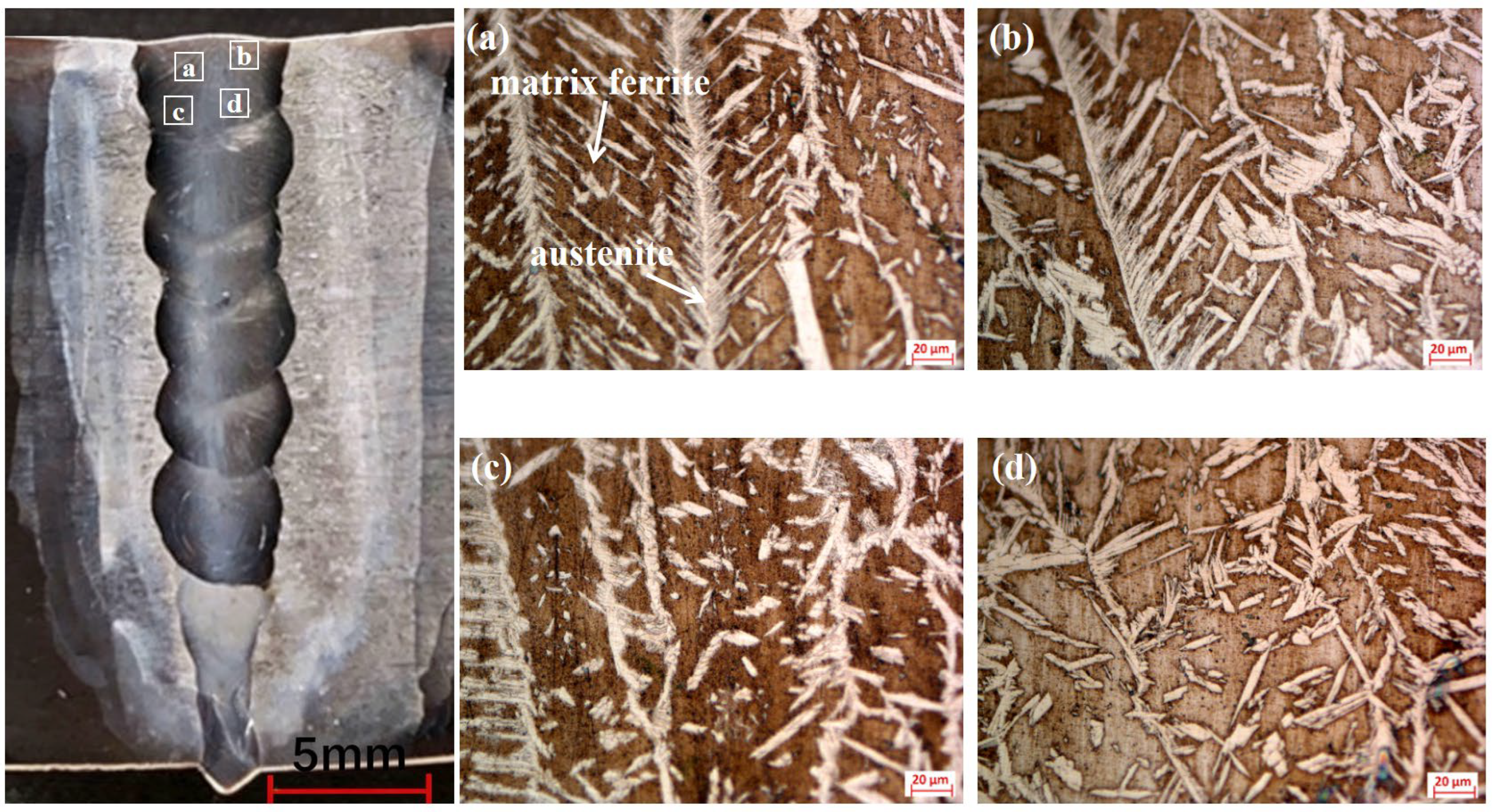
Figure 6 illustrates the microstructure of the filler weld bead in the narrow-gap laser wire-filling welding of S32101 duplex stainless steel, with the sampling location being the fourth weld seam. In the figure, white represents austenite, while brown represents the ferrite matrix. During the cooling process of the molten pool from liquid state to solidification at room temperature, a portion of the single-phase ferrite transforms into austenite and precipitates, growing towards the center of the weld seam, as illustrated in
Figure 6a. The morphology is characterized by dendritic grain boundary austenite combined with a portion of granular intragranular austenite. The grain sizes vary, but they are finer than those of the base material.
As can be observed in
Figure 6b,c, in the filling weld of laser wire-filling welding, there is a higher degree of austenite transformation in individual areas, with denser precipitation. The austenite exhibits a feather-like Widmanstatten austenite morphology, and the area of these regions is relatively large. Most of these regions are located in areas where heat dissipation is slower, resulting in longer holding times and slower cooling rates, allowing more time for austenite transformation and precipitation. In the narrow-gap laser wire-filling welding of S32101 duplex stainless steel, the ratio of austenite to ferrite in the filling weld bead is 41.5%:58.6%. Although the proportion of ferrite is dominant, it meets the requirements for the ratio of the two phases in duplex stainless steel welded joints.
3.1.4. Microstructure and Dual-Phase Ratio of the Cap Weld Bead
Figure 7 illustrates the microstructure of the cover weld seam of S32101 duplex stainless steel narrow-gap laser wire-filling welding, where white represents austenite and brown represents the matrix ferrite. The microstructure morphology of the cover weld seam primarily exhibits dendritic grain boundary austenite and feather-like Widmanstatten austenite, with their growth directions being relatively consistent. Despite the rapid heat dissipation after welding, the use of high laser power, high heat input, and long holding time provides sufficient conditions for the formation and growth of austenite.
The average ratio of austenite to ferrite in the cap weld is approximately 45.2%:54.8%, with the austenite proportion being higher than that of the filler weld bead, which stands at 41.5%. This is attributed to the higher heat input employed in the cap weld: on one hand, it facilitates the full melting of the welding wire, ensuring good groove filling and surface spreading; on the other hand, the cap weld is situated on the surface, where the cooling rate is relatively fast. Increasing the heat input appropriately can prolong the holding time for austenite precipitation, allowing for a more thorough transformation of austenite, thus ensuring sufficient austenite content in the joint.
3.1.5. Microstructure and Dual-Phase Ratio of Welding Heat-Affected Zone
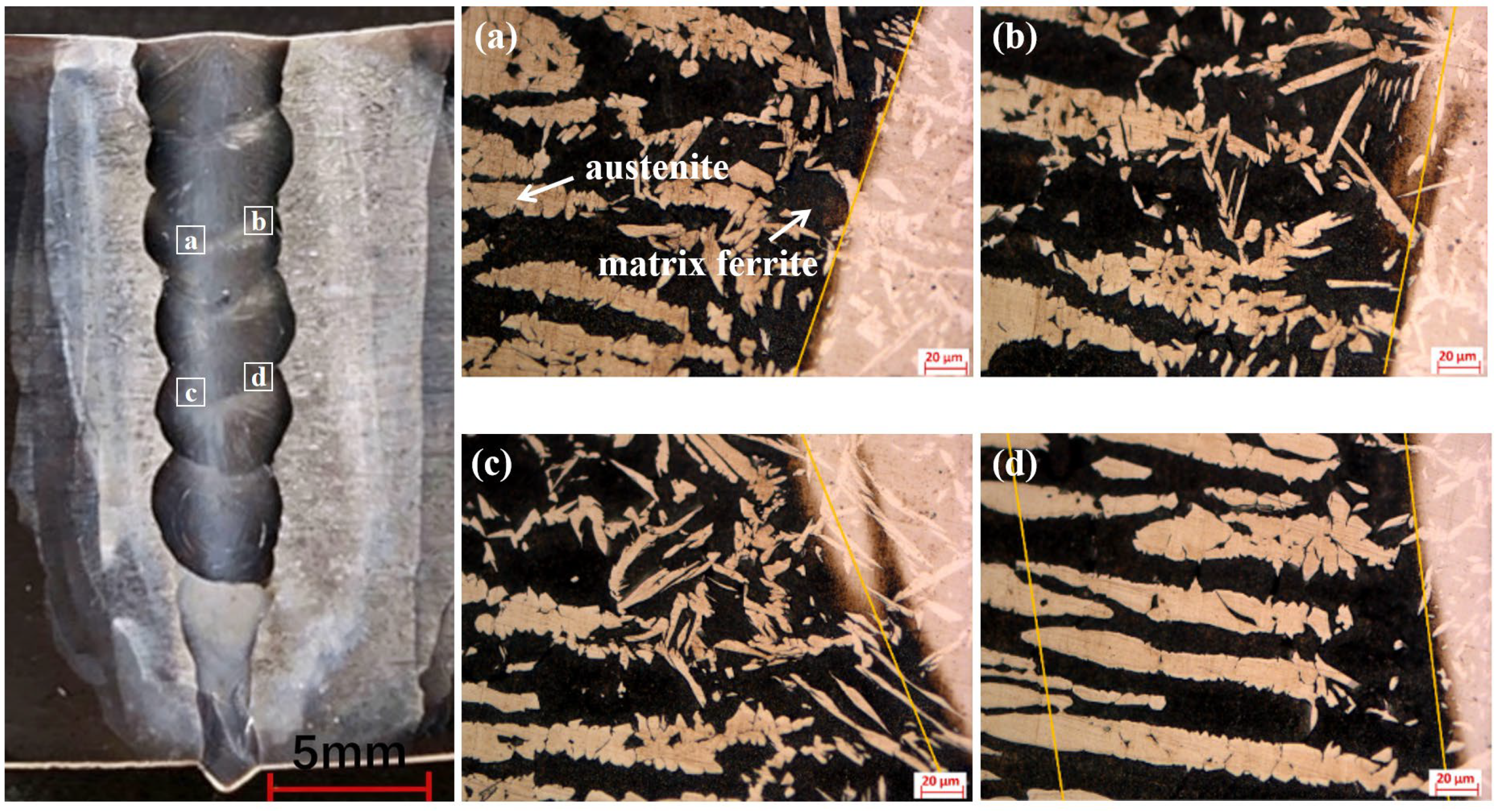
The welding heat-affected zone is located between two lines, where white indicates austenite and black indicates ferrite. The heat-affected zone of S32101 narrow-gap laser welding with filler wire can be divided into high-temperature and low-temperature zones. The high-temperature heat-affected zone is close to the fusion line, and its microstructure consists of strip-shaped austenite composed of several small block-shaped austenite grains. This is because the original austenite is transformed into coarse ferrite grains; during the subsequent cooling process, austenite precipitates along the ferrite grain boundaries and extends into the grains, but due to the rapid cooling rate, the precipitation of austenite is insufficient, and its content is low. The low-temperature heat-affected zone is close to the base material, and its austenite edges are serrated. The overall morphology is still similar to that of the base material, mainly because this area is less affected by the welding thermal cycle, and the microstructure has not undergone sufficient transformation.
The microstructure of the narrow-gap laser welding heat-affected zone with wire filling for S32101 duplex stainless steel, observed under different fields of view, is illustrated in
Figure 8. The photographing locations were randomly selected from the heat-affected zones on both sides of the weld seam. The average ratio of austenite phase to ferrite phase in the welding heat-affected zone is 39.4%:60.6%.
The austenite content in the heat-affected zone is relatively low (39.4%), and the cooling rate is relatively fast, making this area susceptible to corrosion. The enrichment of chromium and nitrogen in austenite is higher than that in ferrite, thus exhibiting excellent passive film stability. The decrease in austenite fraction in the heat-affected zone leads to a reduction in the overall chromium and nitrogen content on the surface, affecting the integrity of the passive film. In addition, the rapid cooling rate may promote the precipitation of harmful phases (such as Cr2N) at the ferrite grain boundaries, forming chromium-depleted areas, which are highly prone to localized corrosion. These microstructural characteristics make the heat-affected zone the most vulnerable area to corrosion.
3.1.6. Microstructure of Overlapping Weld Beads and Dual-Phase Ratio
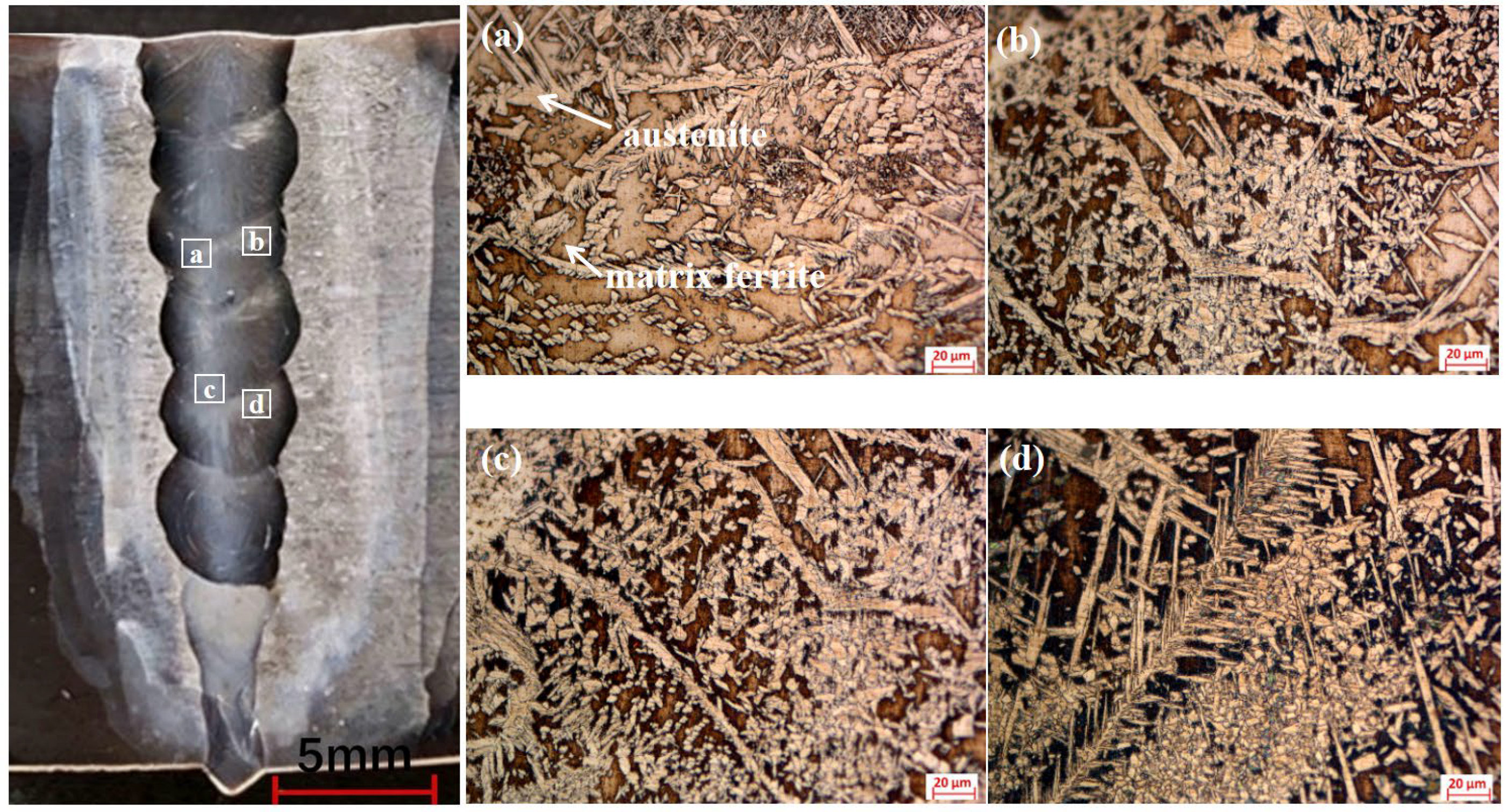
The sampling locations for the microstructure photos of the overlapping area of two weld seams in the narrow-gap laser wire-filling welding of S32101 duplex stainless steel are located in the overlapping areas between the third and fourth weld seams, as well as between the fifth and sixth weld seams. The microstructure images of different fields of view are presented in
Figure 9, where white indicates austenite and dark color signifies ferrite. Image analysis reveals that the average ratio of austenite to ferrite in the overlapping area is 56.2%:43.8%. This austenite content is significantly higher than the values observed in the single-pass weld area and the heat-affected zone.
The significant increase in this value is attributed to the secondary thermal cycling experienced by the overlapping region during multi-pass welding. When subsequent welding passes overlap, the previously formed overlapping region is reheated to a temperature below the melting point. This secondary heating reduces the cooling rate compared to the initial solidification process, thereby extending the time for austenite transformation. The slower cooling rate (estimated to be approximately 50 °C/s, compared to approximately 150 °C/s for subsequent welding passes) provides ample time for nitrogen and other austenite-stabilizing elements to diffuse from ferrite into austenite, facilitating a more complete phase transformation process. The austenite morphology in the overlapping region consists of feather-like Widmanstatten austenite and a large amount of fine, fragmented intragranular austenite, growing in multiple orientations. This multi-directional growth pattern is a direct result of the decreasing temperature gradient during the secondary thermal cycle, allowing the austenite to nucleate and grow more freely than in the columnar growth mode dominated by a single temperature gradient in a single weld seam. Furthermore, secondary heating leads to partial remelting and recrystallization of the previously formed columnar dendrites, transforming them into finer equiaxed grains. This grain refinement, coupled with the increase in austenite content, contributes to the improvement in hardness and corrosion resistance in the overlapping region.
3.1.7. Comparative Summary of Microstructural Characteristics in Different Regions
Based on the microstructural observations presented in
Section 3.1.1,
Section 3.1.2,
Section 3.1.3,
Section 3.1.4,
Section 3.1.5 and
Section 3.1.6, significant differences exist in phase content, austenite morphology, and grain structure among the weld metal, overlap zone, and heat-affected zone (HAZ). The overlap zone exhibits the highest austenite content (56.2%), followed by the cap weld bead (45.2%), the filler weld bead (41.5%), the root weld bead (40.5%), and finally the HAZ (39.4%).
This phenomenon reflects the combined effects of heat input, cooling rate, and secondary thermal cycling. The overlapping region benefits from secondary heating, extending the time for austenite transformation, while the heat-affected zone is significantly affected by rapid cooling and the absence of filler metal, resulting in the lowest austenite content.
The morphology of austenite also exhibits significant differences in different regions. In the weld metal, austenite primarily precipitates along the dendrite boundaries, forming grain boundary austenite with limited intragranular nucleation. In the overlapping region, a large amount of Widmanstatten austenite with feather-like and flat filamentous morphologies is observed, exhibiting diverse growth directions. The formation of this morphology is attributed to the reduction in temperature gradient and the slowdown of the cooling rate during the secondary thermal cycle. In the heat-affected zone, austenite presents striped or serrated morphologies, mainly covering the ferrite grain boundaries, but due to rapid cooling, it does not penetrate deeply into the grains.
3.2. Mechanical Properties of Narrow-Gap Laser Welding Joints with Wire Filling
3.2.1. Hardness Analysis of Welded Joints
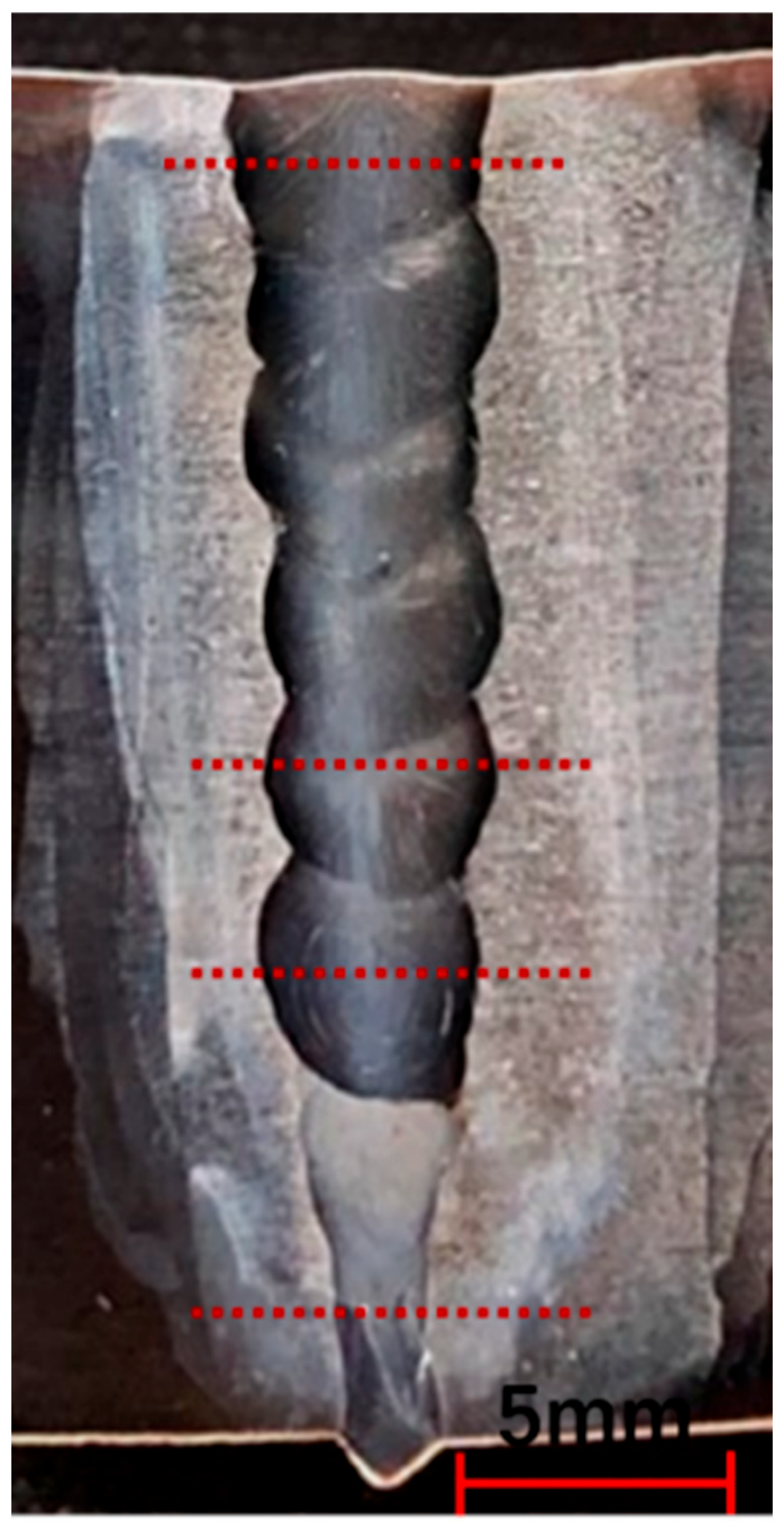
To test the mechanical properties of various regions of the welded joint after narrow-gap laser wire-filling welding of S32101 duplex stainless steel, micro-Vickers hardness tests were conducted at different parts of the post-welding joint. Four regions were selected for hardness measurement: the cover weld, the intermediate filler weld layer, the overlapping weld bead, and the lower part of the backing weld layer. The specific hardness measurement locations are shown in
Figure 10. The test selected a loading force of 0.5 kg, a point spacing of 0.3 mm, and a holding time of 10 s.
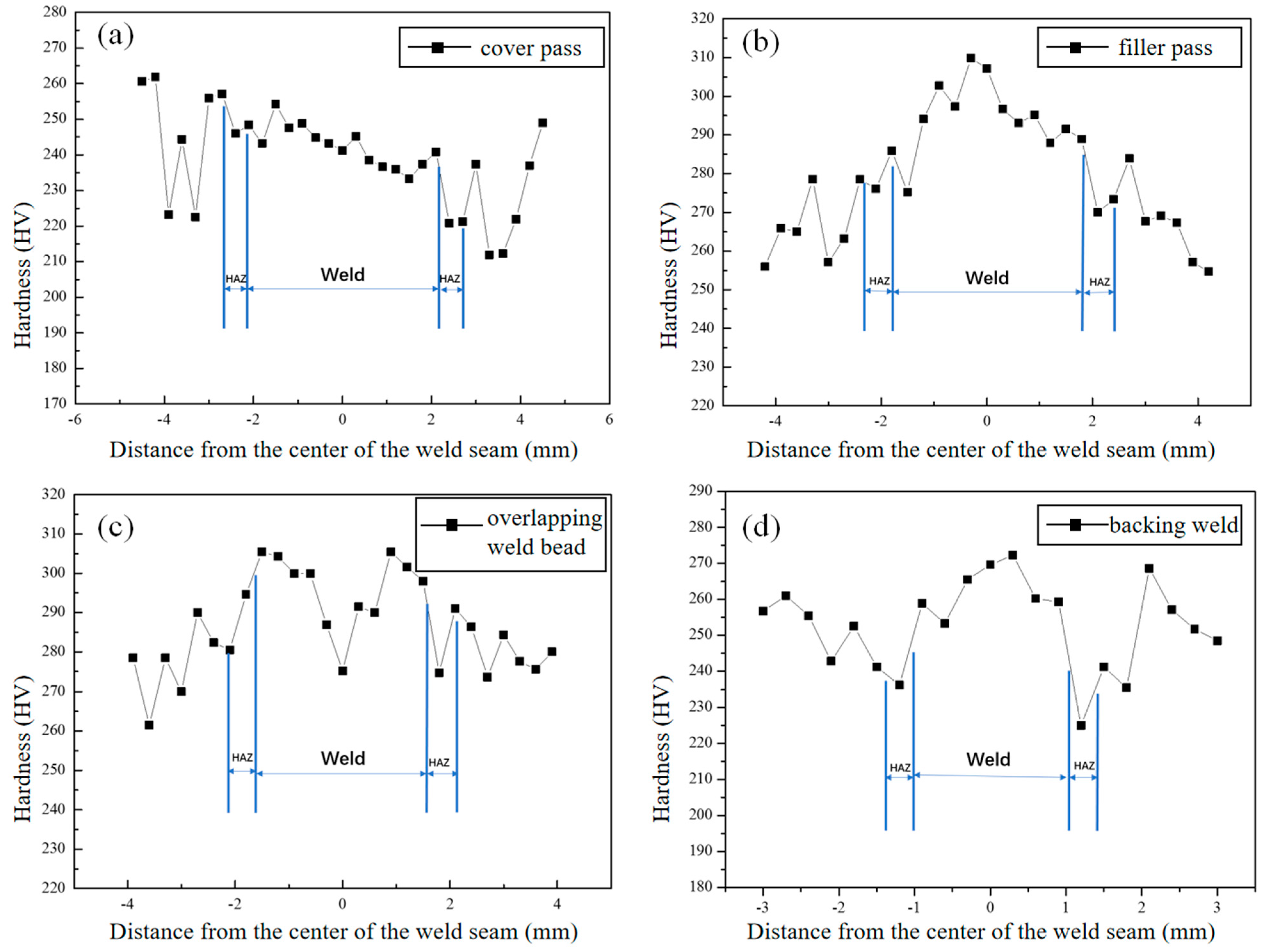
Figure 11 illustrates the hardness distribution curves.
Figure 11a–d correspond to the cap weld pass, fill weld pass, overlap weld pass, and root weld pass, respectively. The average hardness of the cap weld is 242.6 HV, which is comparable to that of the base material (approximately 240 HV). The heat-affected zone (HAZ) is extremely narrow, with a peak hardness of 254.2 HV located near the fusion line on the left side of the weld center. The hardness in this area is concentrated between 230 and 250 HV, showing no tendency towards quenching. This is attributed to the rapid cooling rate of laser welding, the low thermal conductivity of stainless steel, and the minimal HAZ. The average hardness of the fill weld pass is relatively high at 294.2 HV, which is approximately 22% higher than that of the base material, with a peak of 309.9 HV located at the center of the weld, gradually decreasing towards both sides. The average hardness of the overlap weld pass is 294.4 HV, also significantly higher than the base material, with the maximum hardness of 305.4 HV occurring on both sides of the center. The higher hardness in the filled and overlapping weld beads can be attributed to two mechanisms. Firstly, the secondary thermal cycles experienced in these areas promote additional austenite precipitation, thereby increasing the austenite content in the overlapping area to 56.2%. Austenite is harder than ferrite due to its higher nitrogen content and related solid solution strengthening effect. Secondly, the secondary heating leads to partial remelting and recrystallization of the previously formed columnar dendrites, transforming them into finer equiaxed grains. This grain refinement increases the number of grain boundaries, which act as barriers impeding dislocation movement, thereby enhancing hardness. The combined effect of increased austenite content and grain refinement results in a hardness value approximately 22% higher than that of the base material. The average hardness of the root weld pass is 262.7 HV, slightly higher than the base material, with a peak of 272.3 HV located at the center.
Figure 11 shows a significant decrease in hardness on the far-right side of the root weld.
3.2.2. Tensile Test of Welded Joints
The tensile test was conducted on the welded joints of 25 mm S32101 duplex stainless steel, narrow-gap laser welding with wire filling. According to ASTM standards, two tensile test specimens were taken from the welded joints in the direction perpendicular to the weld seam, and one tensile test specimen was taken from the base material as a reference. The results of the tensile test are shown in
Table 5.
According to the tensile test results presented in
Table 5, both specimens fractured at the base metal, exhibiting an average tensile strength of 705 MPa, slightly exceeding the base metal’s strength of 698 MPa. The enhancement in tensile strength can be attributed to two mechanisms. The first mechanism is solid solution strengthening. In the welding pool, atoms such as Cr and Ni replace iron atoms, forming a substitutional solid solution, which leads to lattice distortion and hinders dislocation movement. This effect persists throughout the weld metal. The second mechanism is structural strengthening. The microstructure of each weld area consists of coarse dendritic structures, which are more resistant to slip compared to the rounded, strip-like microstructure in the base material. This structural difference results in a higher tensile strength (705 MPa) in the welded joint, compared to the tensile strength of the base material, which is 698 MPa. The SEM morphology of the tensile fracture surface (
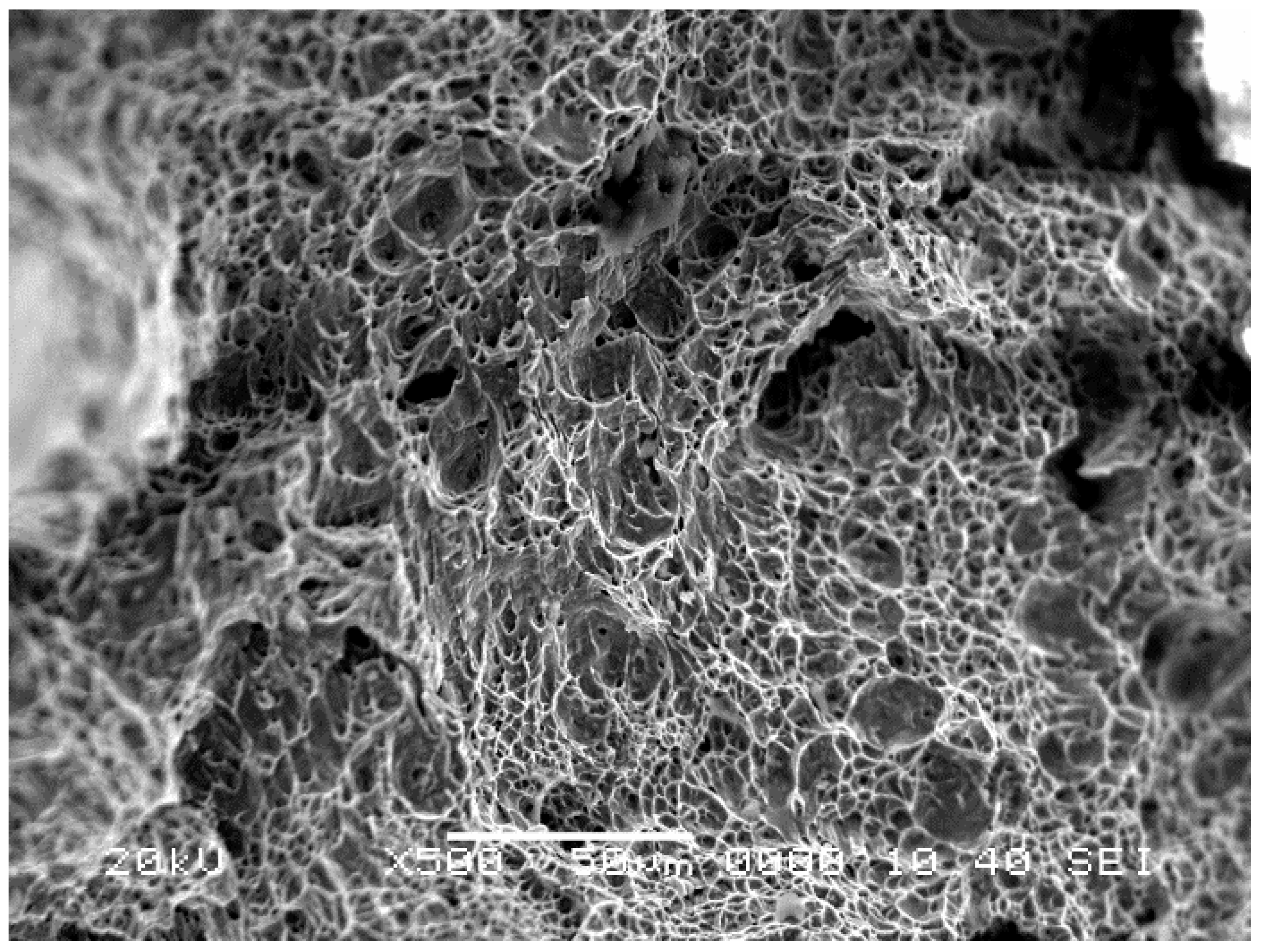
Figure 12) reveals uniform and fine equiaxed dimples, with an average section shrinkage rate of 6.8%, indicating a typical ductile fracture.
3.2.3. Impact Test of Welded Joints
Impact specimens with dimensions of 55 mm × 10 mm × 10 mm were taken from a position 2 mm below the upper surface of the test panel and a position 2 mm above the lower surface of the test panel, with three specimens taken from each location. The average impact energy was used to characterize the impact toughness of the joint, with the V-shaped impact notch located at the center of the weld. The impact test results are shown in
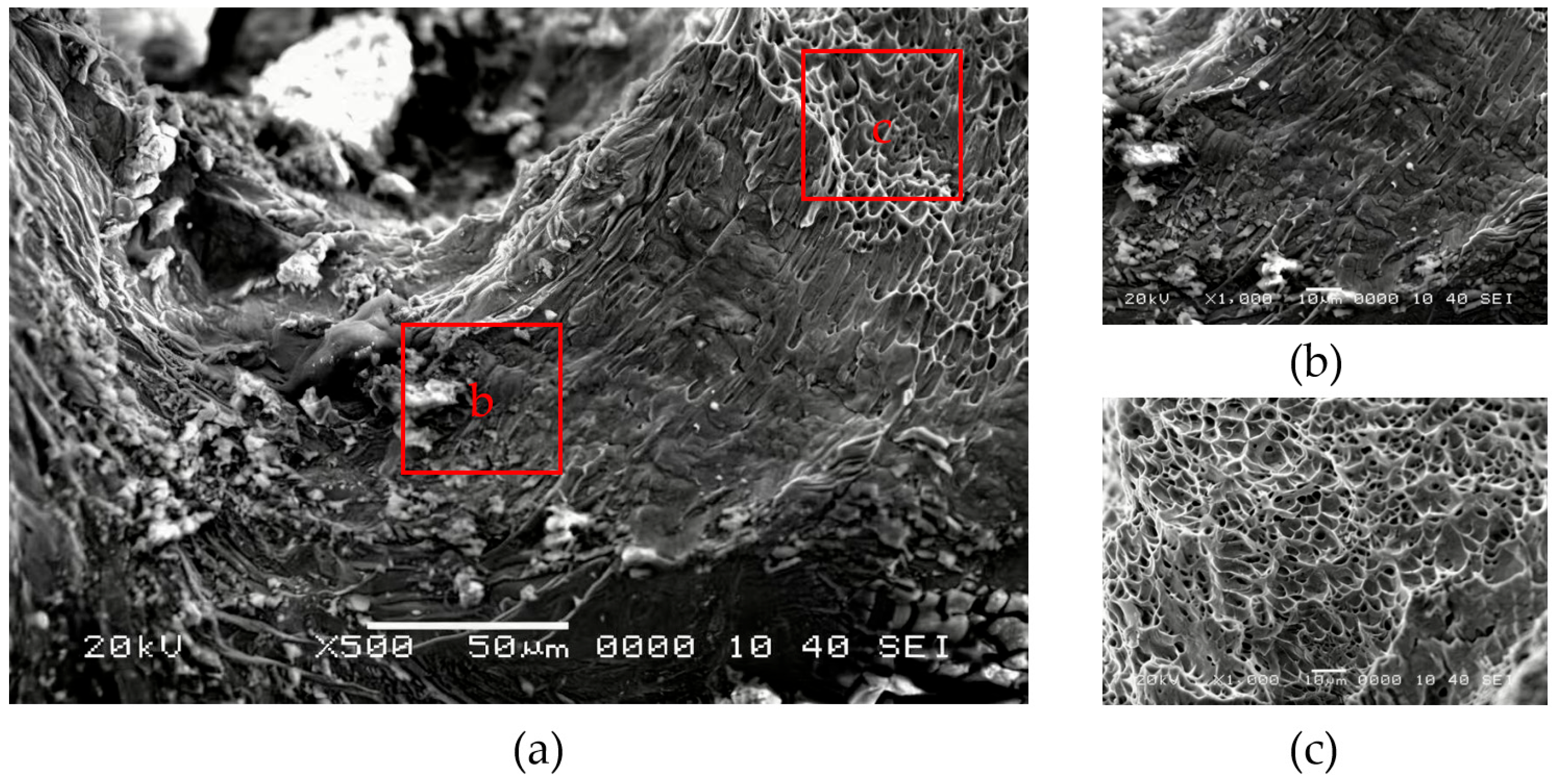
Table 6. The average impact absorption energy of the upper weld at −40 °C is 89.87 J, while that of the lower weld is 79.13 J. Both values significantly exceed the standard requirement of ≥27 J and are comparable to or slightly higher than the base material’s impact toughness (typically 80–100 J at −40 °C), indicating that the welded joint maintains excellent low-temperature impact toughness despite the welding thermal cycles. The impact fracture surface under scanning electron microscopy is shown in
Figure 13.
Figure 13a shows the cleavage steps in the impact fracture surface, which can be seen to consist of flaky cleavage facets of different heights and similar areas.
Figure 13b shows the dimples in the impact fracture surface, which are relatively fine and dense, uniform in size, and consistent in depth, belonging to the equiaxed dimples.
3.3. Study on the Corrosion Resistance of Narrow-Gap Laser Welding Joints with Filler Wire
3.3.1. The Influence of Joint Microstructure on Uniform Corrosion Resistance
The corrosion resistance of the weld seam and heat-affected zone in laser welding joints with filler wire varies due to differences in microstructure morphology and two-phase ratio. Compared to the base material, the corrosion resistance decreases significantly due to the lower austenite content in the heat-affected zone. If there are more precipitated phases in the weld seam area, the tendency for intergranular corrosion will also increase. The corrosion medium selected for the test is a 3.5% NaCl solution, and the sampling locations for the electrochemical corrosion test are shown in
Table 7.
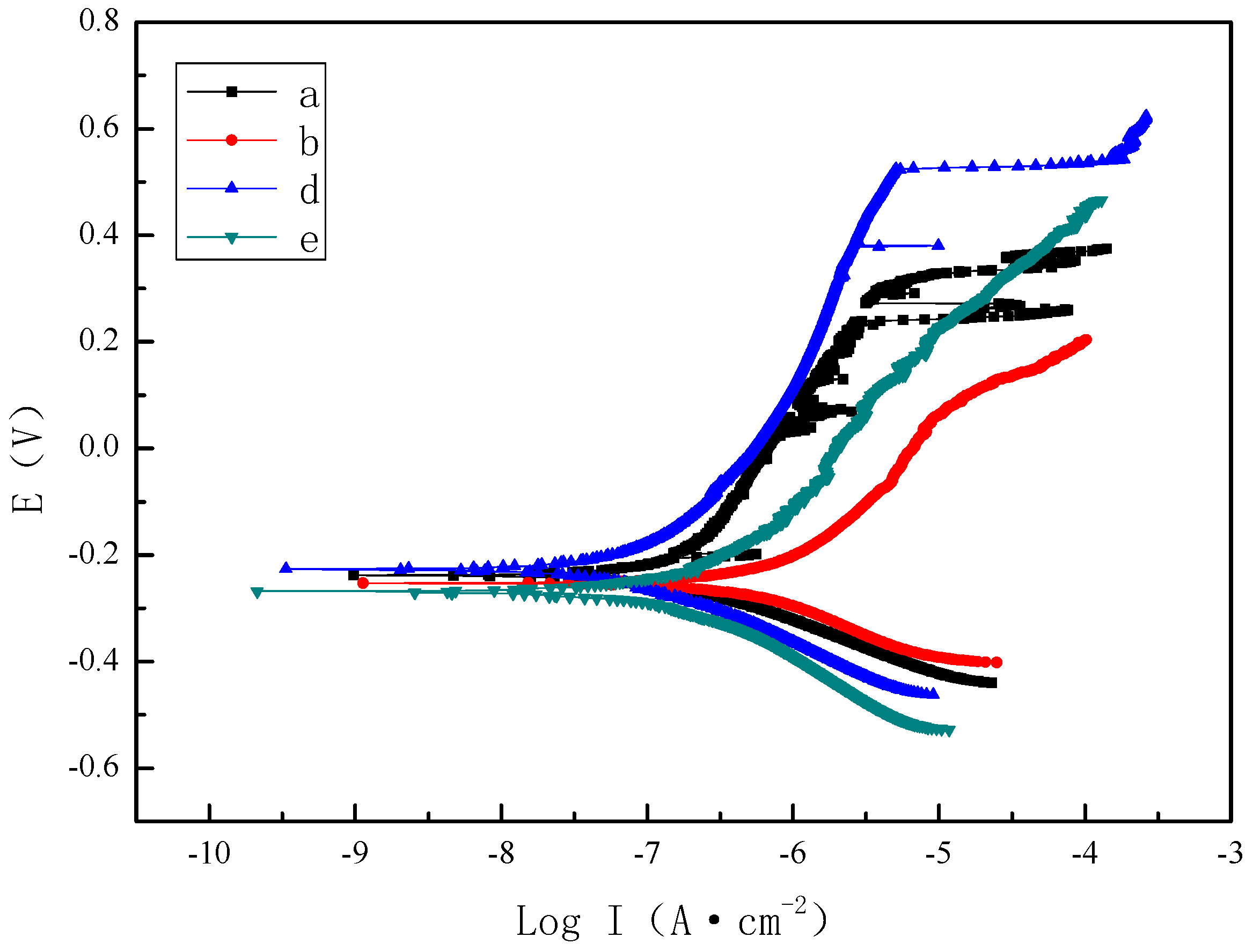
The polarization curve measured in a 3.5% NaCl solution, as depicted in
Figure 14, reveals that the curve shapes and trends of the cover weld bead, filler weld bead, and backing weld bead are essentially identical to those of the base material, indicating that their corrosion patterns are similar to that of the base material. The metal exhibits strong activity in the activation zone, with a high tendency towards corrosion; once it enters the passivation zone, corrosion tends to stabilize, and the current changes slowly; when it reaches the over-passivation zone, the passivation film is broken down at a specific potential, pitting corrosion begins, and the corrosion rate significantly accelerates.
According to the polarization curve depicted in
Figure 14, the base material (sample a) and the filler weld (sample d) underwent slight passivation, whereas the cover weld and the backing weld did not passivate, indicating that the former two exhibit stronger corrosion resistance. The corrosion parameters obtained through Tafel extrapolation are presented in
Table 8. In a 3.5% NaCl solution, the self-corrosion current (I) of the cover weld and the backing weld is greater than that of the base material, and the self-corrosion potential (E) is lower than that of the base material, indicating a faster corrosion rate and poorer corrosion resistance. The austenite contents of these two welds are 45.2% and 40.5%, respectively, both lower than that of the base material (51.02%). Furthermore, harmful phases may precipitate during solidification, impairing corrosion resistance; however, the austenite and ferrite grains in the weld center are interdigitated, which has a positive effect on corrosion resistance compared to the parallel distribution of the two phases in the base material. The self-corrosion potential and current of the base material (sample a) and the filler weld (sample d) are very close. It is analyzed that the sampling area of the filler weld includes the overlap zone of the weld beads, which undergoes secondary thermal cycling, promoting the precipitation of austenite and reducing harmful phases, thereby improving corrosion resistance.
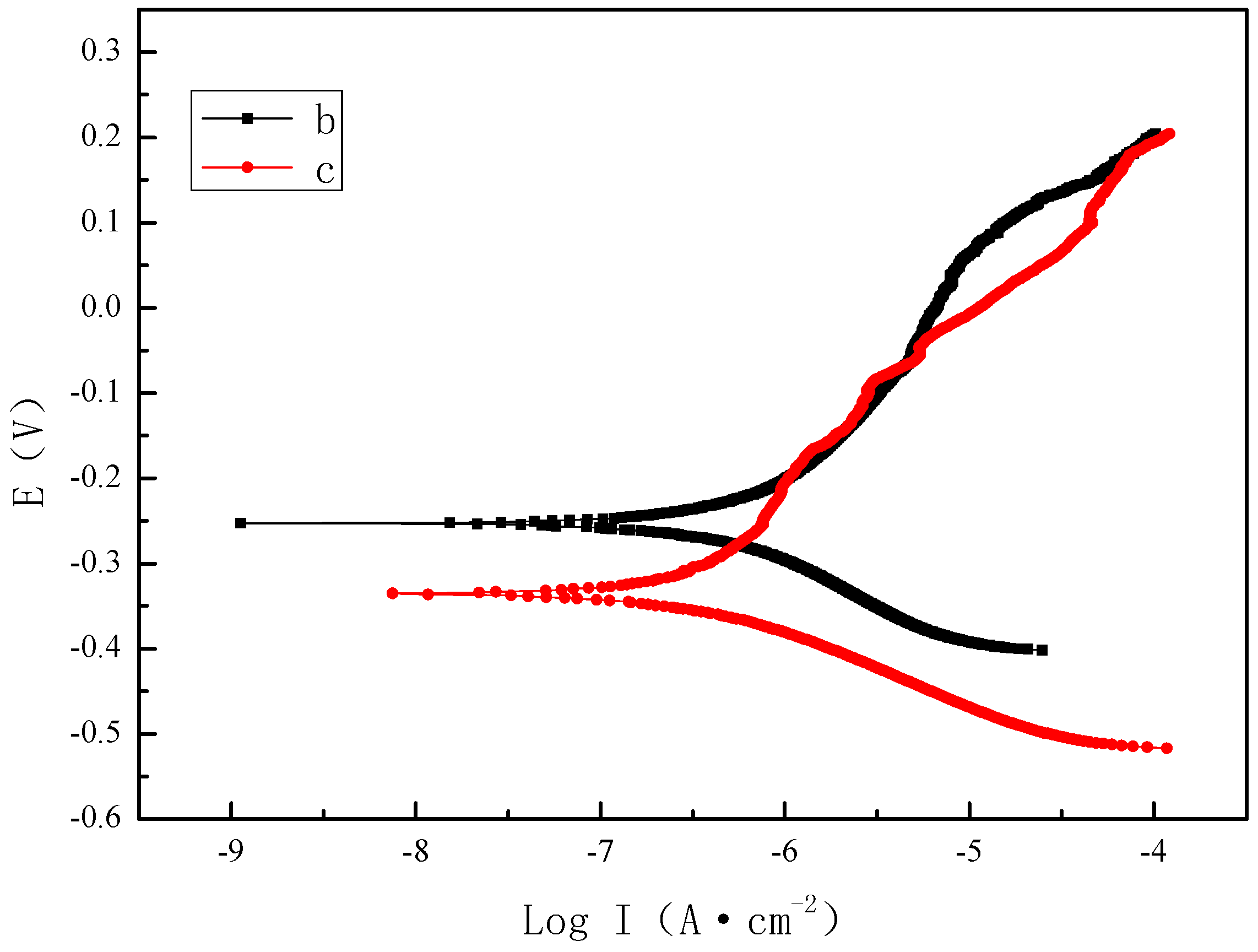
To assess the corrosion resistance of the heat-affected zone, a comparative experiment was designed: samples containing only weld metal (sample b) and samples containing both weld metal and the heat-affected zone (sample c) were taken from adjacent areas of the cover weld. By comparing the electrochemical corrosion results of the two in a 3.5% NaCl solution, the influence of the heat-affected zone was analyzed. The polarization curves are shown in
Figure 15.
According to the fitting parameters in
Table 9, the self-corrosion potential of the cap weld seam with a heat-affected zone is −0.35 V, which is lower than that of the weld metal alone, at −0.25 V, indicating a higher corrosion tendency. Its self-corrosion current is greater, and the corrosion rate is faster. The comparison shows that the heat-affected zone is the weakest area in terms of corrosion resistance of the joint. The reason is that the heat-affected zone only undergoes thermal cycling without the addition of alloy elements, leading to insufficient austenite transformation, lower content, and easy precipitation of harmful phases during cooling, thereby reducing corrosion resistance.
In addition to uniform corrosion behavior, the microstructural heterogeneity of duplex stainless steel welded joints plays an important role in localized corrosion. Localized corrosion in duplex stainless steels is closely related to the phase balance, elemental partitioning between ferrite and austenite, and the possible precipitation of secondary phases. In the present study, the HAZ exhibited the lowest austenite fraction (39.4%) and the highest corrosion tendency, indicating that this region is more susceptible to local passive film breakdown. This behavior can be attributed to the fact that the HAZ experiences only thermal cycling, without compositional compensation from the filler wire, resulting in insufficient austenite reformation during cooling. In addition, the rapid cooling condition may promote compositional inhomogeneity and the precipitation of detrimental phases such as Cr-rich nitrides, which may lead to local Cr-depleted regions and consequently increase pitting susceptibility. In contrast, the weld overlap region, which experienced a secondary thermal cycle, showed a higher austenite content (56.2%) and a more refined microstructure. These features are beneficial for reducing phase imbalance, improving elemental homogenization, and promoting the formation of a more stable passive film. Therefore, the corrosion weakness of the joint is governed not only by the average electrochemical response but also by the local microstructural characteristics that influence passive film stability and pit initiation.
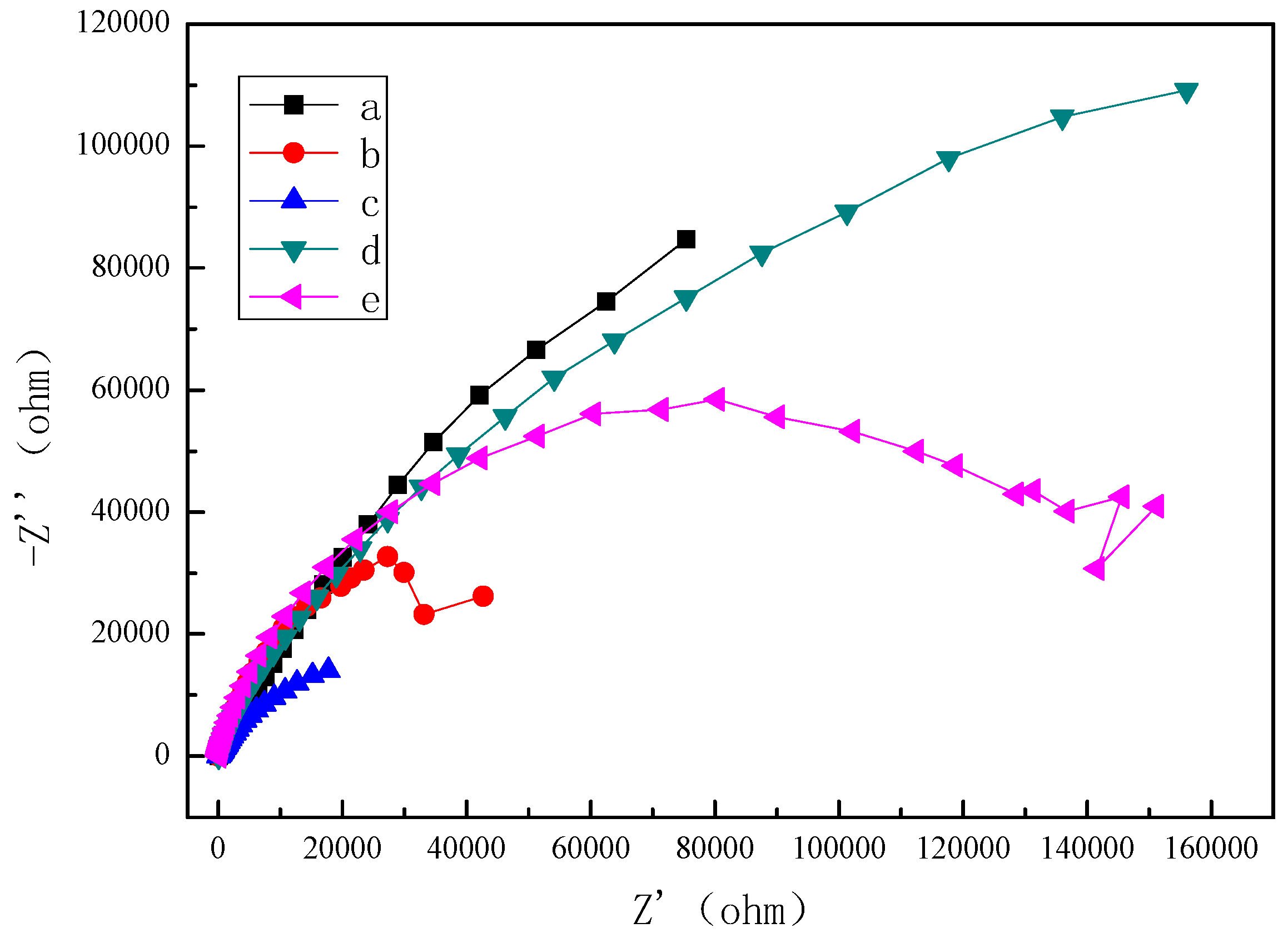
3.3.2. Analysis of Joint Impedance Spectrum
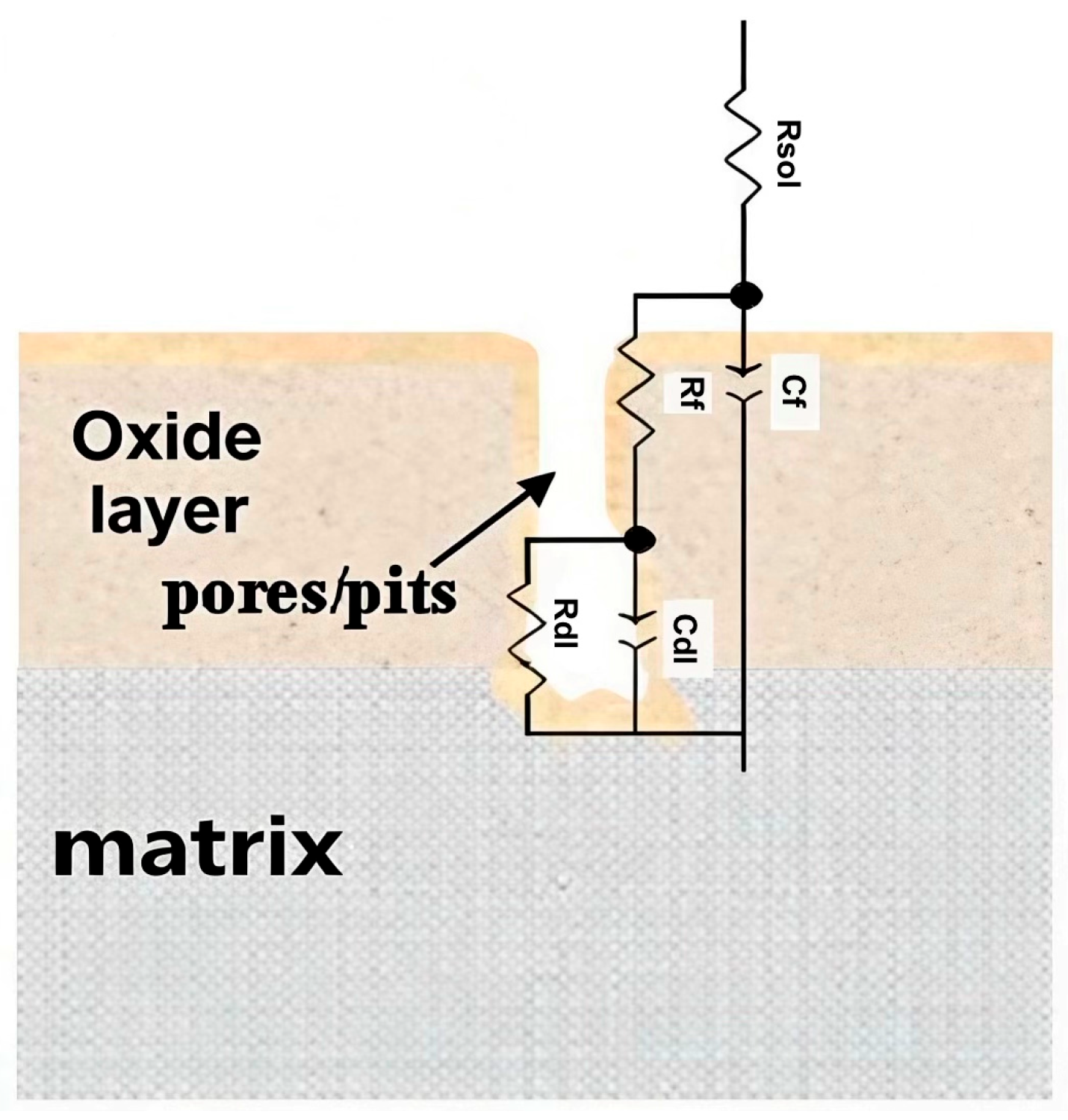
When analyzing electrochemical impedance spectroscopy, it is necessary to first construct an equivalent circuit based on the material and corrosion conditions to describe the electrode process. By fitting circuit parameters with software, the integrity of the passive film can be evaluated, and the corrosion resistance of different regions can be compared. At the same time, it can qualitatively reflect differences in defect, impurity, and grain boundary content. The equivalent circuit diagram and Nyquist plot obtained from the experiment are shown in
Figure 16 and
Figure 17.
Table 10 presents the impedance fitting data for various test parts in a 3.5% NaCl solution. Here, n
1 and n
2 represent the dispersion coefficients, and typically, the range of n values is 0 < n < 1. A larger n value indicates a more uniform passive film formed on the material surface, indicating better corrosion resistance.
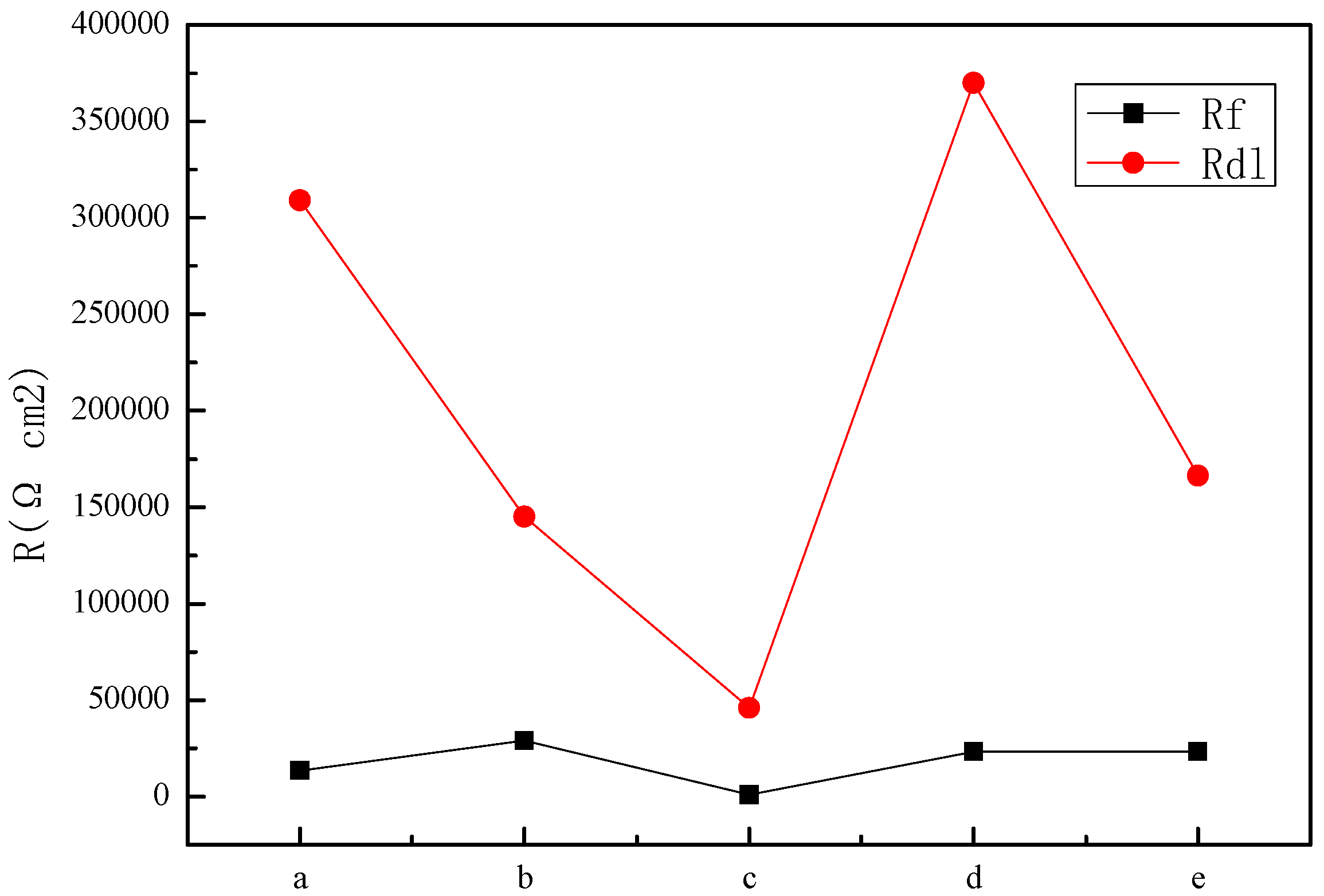
The EIS test results are presented in
Figure 18. The base material and the filler weld exhibit high passivation film resistance (R
f) and double-layer resistance (R
dl). The R
f and R
dl of the cap weld with heat-affected zone (HAZ) are significantly reduced, and the n value is small, indicating poor uniformity of the passivation film and decreased corrosion resistance. Due to the lack of alloy element replenishment in the HAZ, the austenite transformation is insufficient, and harmful phases such as Cr
2N may precipitate during the cooling process, making corrosion resistance the weakest link in the joint.
3.4. Microstructural Transformation Mechanism of Narrow-Gap Laser Welding with Wire Filling
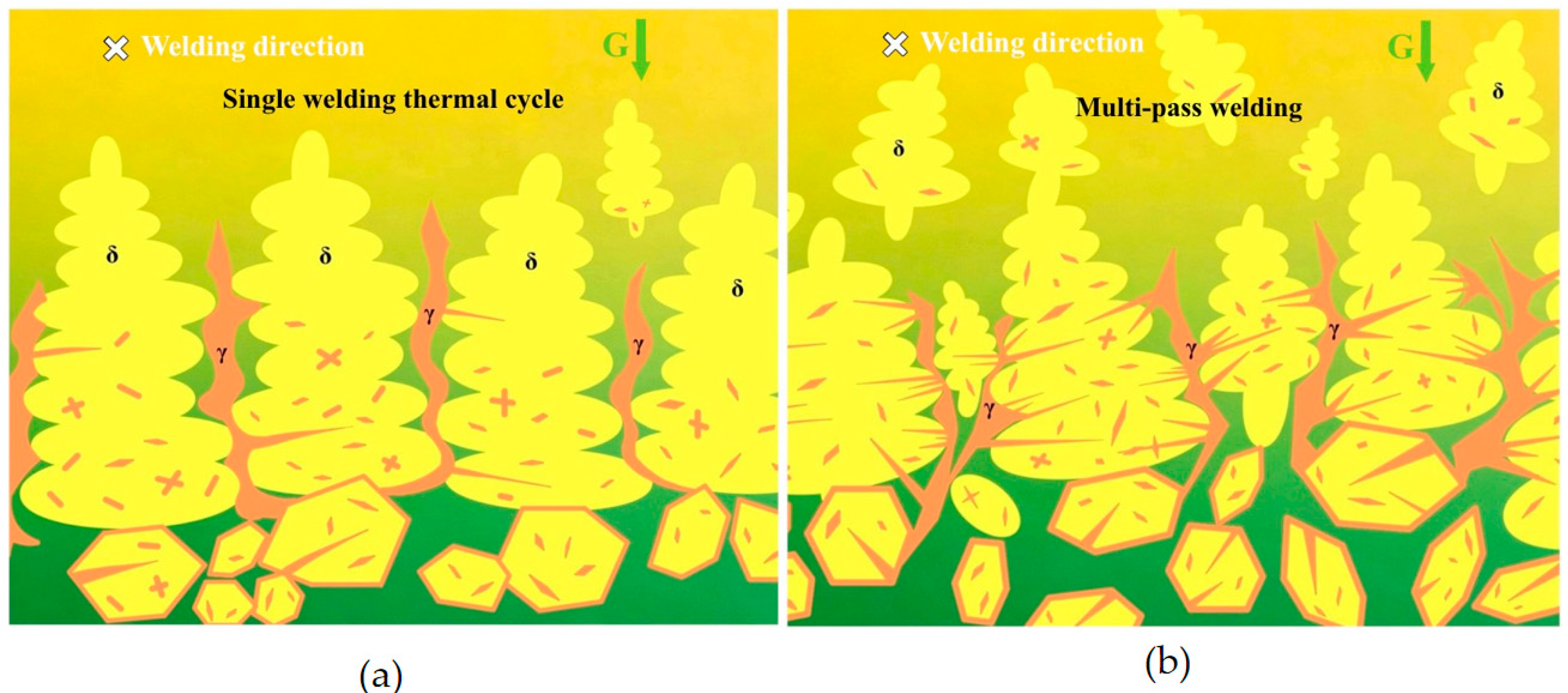
Figure 19 schematically illustrates the influence of multi-pass welding on dendrite growth and arrangement during solidification. G represents the temperature gradient. In single-pass welding (
Figure 19a), a steep temperature gradient leads to the growth of columnar dendrites along the direction of maximum heat flow, with austenite mainly precipitating at grain boundaries. In multi-pass welding (
Figure 19b), the preheated matrix reduces the temperature gradient and cooling rate. This allows columnar dendrites to transform into equiaxed grains through partial remelting and recrystallization and promotes the formation of multi-orientation growth of Widmanstatten austenite within the grains.
Multi-pass welding significantly reduces the temperature gradient and slows down the solidification rate, leading to an increased undercooling region and a greater tendency for dendritic growth at the solidification front. The formation mechanism of different austenite morphologies under various welding conditions varies. The formation of different austenite morphologies is influenced by local thermal conditions during welding, including cooling rate, temperature gradient, and number of thermal cycles. Under high cooling rates (for example, approximately 150 °C/s in the backing weld), the diffusion time is limited, and grain boundary austenite forms preferentially. Austenite nucleates at ferrite grain boundaries, where the nucleation activation energy is the lowest, and grows along the grain boundaries with limited intragranular penetration. This morphology is characteristic of rapidly cooled single-pass welds. Widmanstatten austenite forms at moderate cooling rates (for example, at approximately 50–80 °C/s for filler, cap, and overlap passes), allowing sufficient time for diffusion-controlled growth. The temperature gradient decreases during multi-pass welding, enabling austenite to nucleate at ferrite grain boundaries and grow into the grains along specific crystal orientations, forming a feather-like or flat strip morphology. Secondary thermal cycles promote the formation of this structure, further reducing the cooling rate and expanding the undercooling window for Widmanstatten formation. Under slow cooling and sufficient undercooling conditions, multiple nucleation sites within ferrite grains become active, leading to the formation of intragranular austenite. This morphology is most common in overlapping regions, as secondary thermal cycles provide thermal activation and extended diffusion time.
Meanwhile, a moderate cooling rate and sufficient heat provide adequate diffusion time and element homogenization conditions for austenite growth, promoting the full development of Widmanstatten in a typical feather-like or flat noodle-like morphology on the ferrite matrix. The Widmanstatten microstructure significantly enhances the hardness and strength of the joint through fine-grain strengthening and phase-boundary strengthening. Its multi-orientation distribution of flat noodle structure can effectively hinder crack propagation, enhance toughness, and improve mechanical properties. In terms of corrosion resistance, the alloy elements in Widmanstatten are distributed more uniformly, reducing the potential difference between the austenite and ferrite phases, which is conducive to the formation of a continuous and stable passivation film, thereby enhancing the uniform corrosion resistance of the joint and inhibiting the tendency for localized pitting and intergranular corrosion.
Therefore, multi-pass welding promotes the formation of Widmanstatten austenite within grains, which not only optimizes the microstructure of duplex stainless steel welded joints but also provides an effective organizational regulation approach for achieving synergistic improvements in high strength, high toughness, and excellent corrosion resistance.
4. Discussion
The present study demonstrates that the multi-pass thermal cycle is the key factor governing the microstructural evolution and performance of narrow-gap laser wire-fed welded S32101 duplex stainless steel joints. A particularly important finding is that the secondary thermal cycle in the overlap region between adjacent weld beads significantly promotes austenite reformation and grain refinement. Compared with the single-pass weld region, the overlap zone exhibits a markedly higher austenite content (56.2% vs. 40.5%), and the solidification morphology changes from coarse columnar crystals to finer equiaxed structures. This result indicates a clear dependence of phase balance and grain morphology on the local thermal history during multi-pass welding. The reduction in cooling rate caused by secondary heating provides more time for element diffusion and austenite precipitation, thereby promoting the formation of a more balanced and refined microstructure. In addition, the multi-orientation distribution of Widmanstatten austenite in the overlap region is beneficial to the strengthening and toughening of the joint.
By contrast, the heat-affected zone (HAZ) represents the most unfavorable region in terms of both phase balance and corrosion resistance. The austenite fraction in the HAZ decreases to 39.4%, which is the lowest among all investigated regions. This indicates that the local thermal cycle in the HAZ is insufficient to promote adequate austenite reformation during cooling. In the high-temperature HAZ near the fusion line, rapid cooling suppresses austenite precipitation, whereas in the low-temperature HAZ, the thermal effect is too weak to induce significant microstructural reconstitution. This microstructural imbalance is closely associated with the deterioration of corrosion resistance in the HAZ. Moreover, the possible precipitation of detrimental phases such as Cr2N may further damage passive film stability by generating local compositional inhomogeneity and Cr-depleted regions. Therefore, the present results reveal that the corrosion sensitivity of the welded joint is strongly dependent on the local phase balance and microstructural heterogeneity created by the welding thermal cycle.
The mechanical properties of the welded joint are also closely related to the microstructural characteristics produced by multi-pass welding. The average tensile strength reaches 705 MPa, which is slightly higher than that of the base metal, and all tensile specimens fracture in the base metal, indicating that the joint strength is not inferior to that of the substrate. This strengthening effect can be attributed to both solid solution strengthening and microstructural strengthening. On the one hand, the alloying elements introduced into the weld metal contribute to lattice distortion and hinder dislocation motion. On the other hand, the refined and heterogeneous weld microstructure, especially in the filler and overlap regions, provides enhanced resistance to slip and crack propagation. This interpretation is consistent with the hardness results, where the filler and overlap regions show average hardness values of about 294 HV, significantly higher than those of the base metal. In addition, the satisfactory low-temperature impact performance and the mixed fracture morphology of dimples and cleavage steps further confirm that the joint possesses a favorable combination of strength and toughness.
The corrosion results further support the above microstructure–property relationship. Although the weld metal shows corrosion resistance comparable to that of the base metal, the corrosion performance deteriorates significantly when the HAZ is included. The lower self-corrosion potential, higher corrosion current density, and reduced passivation film resistance indicate that the HAZ is the weakest region of the joint from the corrosion point of view. In contrast, the electrochemical behavior of the filler weld region, including the overlap zone, remains close to that of the base metal. This suggests that the secondary thermal cycle not only promotes austenite reformation but may also reduce microstructural heterogeneity and suppress the harmful influence of detrimental phases, thereby improving passive film stability. Therefore, one of the most significant findings of this study is that the local thermal history in multi-pass narrow-gap laser wire-fed welding directly controls the coupling relationship among phase balance, mechanical response, and corrosion resistance.
These findings provide further insight into the intrinsic dependence of joint performance on microstructural evolution in thick-section duplex stainless steel welding. In particular, the present work highlights that the overlap region can benefit from the secondary thermal cycle, whereas the HAZ remains the critical weak zone requiring further optimization. Future work should therefore focus on the precipitation behavior of detrimental phases in the HAZ and their relationship with localized corrosion, as well as on the regulation of heat input, interpass temperature, and possible post-weld heat treatment to achieve a more uniform and corrosion-resistant microstructure.
5. Conclusions
In this study, narrow-gap laser wire-fed welding was successfully applied to join 25 mm thick S32101 duplex stainless steel. Based on the analyses of microstructure, mechanical performance, and corrosion behavior, the main conclusions can be summarized as follows.
Microstructure: The weld zone was mainly composed of ferrite and austenite, with austenite preferentially precipitating along dendrite boundaries. Due to the secondary thermal cycle during multi-pass welding, the overlap region between adjacent weld beads exhibited a significantly increased austenite content of 56.2% together with grain refinement. In contrast, the heat-affected zone (HAZ) showed strip-shaped austenite and the lowest austenite fraction (39.4%), which was lower than that of the base metal (51.02%). The average austenite contents in the backing, filler, and cap weld beads were 40.5%, 41.5%, and 45.2%, respectively.
Mechanical properties: The welded joint exhibited excellent mechanical performance. The average tensile strength reached 705 MPa, which was slightly higher than that of the base metal (698 MPa), and all tensile specimens fractured in the base metal. Microhardness measurements showed that the weld region generally possessed higher hardness than the base metal, with the filler and overlap weld beads showing the highest average values (about 294 HV). The low-temperature impact absorbed energies at −40 °C were 89.87 J for the upper weld and 79.13 J for the lower weld, both satisfying the relevant standard requirements. The fracture morphology showed a mixed feature of dimples and cleavage steps.
Corrosion resistance: The corrosion resistance of the weld metal was close to that of the base metal, whereas the HAZ was the most corrosion-sensitive region. This was mainly attributed to the reduced austenite content and the possible precipitation of detrimental phases in the HAZ. Electrochemical impedance spectroscopy further showed that the passivation film resistance and double-layer resistance of samples containing the HAZ were significantly lower than those of the base metal and weld metal, confirming that the HAZ was the weakest region in terms of corrosion resistance.
Overall, narrow-gap laser wire-fed welding can achieve high-quality joining of thick S32101 duplex stainless steel plates and produce joints with favorable microstructural characteristics, excellent mechanical properties, and good overall corrosion resistance. However, further optimization of the welding thermal cycle is still needed to improve the microstructure and corrosion resistance of the HAZ.