Article

The Influence of Zn on the Surface Tension and Wettability of the Al-10Si Alloy on IF Steel at 1023 K


1
School of Materials Science and Engineering, Changzhou University, Changzhou 213164, China
2
Key Laboratory of Advanced Metal Materials of Changzhou City, Changzhou University, Changzhou 213164, China
*
Author to whom correspondence should be addressed.
Coatings 2026, 16(4), 434; https://doi.org/10.3390/coatings16040434
Submission received: 5 March 2026 / Revised: 27 March 2026 / Accepted: 31 March 2026 / Published: 3 April 2026

Highlights

What are the main findings?
The surface tension of the Al-10Si alloy decreases with an increase in Zn content, thereby improving the wettability of the alloy and enhancing coating performance.
The wetting interface of the Al-10Si-xZn alloy is composed of θ-FeAl3, η-Fe2Al5, τ1-Al2FeSi, τ5-Al8Fe2Si, and τ6-Al9Fe2Si2.
What are the implications of the main findings?
Zn can improve the surface tension of the Al-10Si alloy by destroying the oxide film.
Zn can improve the wettability of the alloy, thereby enhancing the surface quality of hot-dip Al-Si alloy coatings.

Abstract

Objective: This work aims to reduce the surface tension of an aluminum–silicon alloy melt by adding different amounts of the Zn element, thus improving the coatability and coating quality of hot-dip aluminum plating on steel plates. Method: Wetting experiments were conducted at 1023 K using a modified sessile drop method. Conclusions: The addition of the Zn element can reduce the surface tension of the Al-Si alloy, thus decreasing the wettability of the Al-Si alloy. Zn vapor can break down the surface oxide film to expose the fresh melt. The wettability of the Al-10Si alloy on interstitial-free (IF) steel and surface tension were investigated using the modified sessile drop method at 1023 K. Axisymmetric Drop Shape Analysis software was utilized to calculate the contact angles of the Al-10Si-xZn/Al2O3 and Al-10Si-xZn/IF steel systems (x ranges from 0 wt.% to 5 wt.%). Moreover, the microtopography and microstructure of surfaces and cross-sections were analyzed by means of an energy-dispersive spectrometer and scanning electron microscope. The results indicated that the surface tension of the alloy melt gradually decreases with an increase in Zn content, ranging from 874 to 760 mN/m. The contact angle of the Al-10Si-xZn alloy melt on IF steel also progressively decreases with increasing Zn content, which is attributed to the lower surface tension of Zn. This study also discovered that the Zn element can disrupt the oxide film of the Al-10Si alloy, exposing the fresh melt and thereby reducing the surface tension of the alloy liquid, thus enhancing wettability. The addition of Zn might be capable of improving the hot-dip aluminizing coatability of steel plates and the quality of the coating.

1. Introduction

Hot-dip aluminum coating is one of the most important anti-corrosion methods for steel materials. It is widely used in industries such as those related to automobiles, ships, bridges, and pressure vessels. The hot-dip aluminizing coating generates a dense and partially hydrated oxide protective film through passivation. This protective film possesses excellent anti-corrosion performance and physical barrier properties, which can effectively isolate the steel substrate from the external environment and prevent the steel substrate from being eroded by corrosive media. However, when steel undergoes hot-dip plating with pure aluminum, the excessively high viscosity and poor fluidity of the plating bath often result in the formation of an overly thick coating. This leads to defects such as missed plating and weak adhesion during the hot-dip aluminizing process, thus impairing coating quality. When these steel substrates are in contact with the external environment, galvanic corrosion occurs, resulting in the aluminum coating being unable to provide sacrificial anode protection for the steel substrate. As is well known, the microstructure and performance of the coating can be improved by adding small amounts of alloying elements to the molten aluminum. Among these elements, silicon not only reduces the thickness of the coating but also combines with other alloying elements to form new phases. Moreover, silicon can influence the sacrificial anode protection performance of the alloy by affecting the alloy’s electrode potential and corrosion process. In practical industrial production, some scholars have discovered that adding 8–10 wt.% Si to the molten aluminum bath yields the optimal results in terms of the fluidity of the Al-Si coating bath and the inhibition of Fe/Al intermetallic compound growth. Consequently, the Al-10Si hot-dip coating alloy has been widely applied.
In recent years, with the continuous development of materials science and electrochemical technology, significant progress has also been made in research on the sacrificial anode performance of Al-Si-coated alloys. Researchers have optimized the fluidity and adhesion of the plating bath by adding alloying elements to the molten pool, thus solving a series of problems during the hot-dip plating process. In particular, a small amount of alloying elements such as Sn, Mg, Zn, Hg, In, Ga, and rare earth elements are usually incorporated into aluminum-based sacrificial anode materials [1,2,3,4,5]. These elements can disrupt the integrity of the oxide film, thus restricting or inhibiting the formation of the surface oxide film. This process shifts the potential of the aluminum anode to a more negative value and improves its protective performance as an aluminum sacrificial anode.
The surface tension of liquid metals [6] is both a fundamental property and a parameter of great technological importance. The surface properties of the molten aluminum alloy, as well as its wettability, spreadability, and interfacial reactions with the surface of steel materials, are closely related to coating quality and serve as key properties for the preparation of metal matrix composites. Surface tension is one of the important physicochemical properties of Al-Si alloys [7]. It is the foundation for studying interface dynamics [8,9]. Therefore, it is essential to understand adhesion properties such as the work of adhesion, and adhesion tension and surface tension values are indispensable for these calculations [10]. The main measurement methods for surface tension include the capillary wave method, oscillating jet method, capillary rise method, spinning drop method, drop weight method, maximum bubble pressure method, pendant drop method, insertion method, drop shape analysis method, etc. Among these, the sessile drop method is one of the most commonly used techniques for measuring the surface tension of liquid metals, as it is relatively easy to perform and yields accurate measurement results at high temperatures [11]. However, due to the high reactivity between oxygen and aluminum alloys, the surface tension values of molten aluminum alloys should be correlated with their oxidized surfaces. However, since oxygen is highly reactive with aluminum alloys, the surface tension value of molten Al or its alloys should be associated with the oxidized surface. In order to obtain a relatively reliable value of the surface tension of molten Al or its alloys, it is necessary to improve the measurement method and better to adopt the surface tension value when surface oxidation is reduced as much as possible.
The majority of investigations in this field focus on binary alloy systems. Silicon is the most common element in aluminum alloys. For example, B. Reiplinger et al. [12] used the oscillating drop technique to measure surface tension. They found that an increase in surface tension was observed for increasing V content over a wide temperature and compositional range for the liquid Al–V alloy system. Li et al. [13] found that the contact angles for Al-12.2Si droplets were found to be approximately similar to those of pure Al droplets, with values of 45.2°, 29.2°, and 30.2° on the Fe (001), Fe (110), and Fe (111) crystal planes, respectively. The Si element has a tendency to segregate and move towards the Fe element, and there is a relatively stronger chemical reactivity between these two elements. Goicoechea et al. [6] used the maximum bubble pressure method to investigate the surface tension of binary and ternary aluminum alloys (Al-Mg, Al-Si, and Al-Si-Mg). They found that at a temperature of 973 K, the surface tension of all these aluminum alloys decreases with an increase in the concentration of the alloying elements; among them, the surface tension of the Al-Si and Al-Zn alloys varies linearly with their composition. As the results described in these studies show, the addition of Si can reduce the surface tension and improve the wettability of aluminum alloys. Huang, Ye et al. [14] found that an increase in Mg content leads to an increase in hydrodynamic pressure caused by metal evaporation and a decrease in surface tension. Wandong C et al. [15] investigated the wetting behavior and adhesion characteristics of aluminum droplets on silica surfaces. Their findings indicate that with an increase in Si content in the droplets, both the melting point and surface tension of the aluminum droplets decrease, leading to a corresponding reduction in wettability. Arslan, H et al. [16] measured the surface tension of liquid Al–Au alloys in a non-contact manner using the electromagnetic levitation oscillating drop technique and found that surface tension increased monotonically with increasing Au concentration at 1400 K.
As is well known, the surface tension and wettability of melts are influenced by their chemical composition. For example, adding elements such as Sn, Mg, Zn, Hg, In, and Ga and rare earth elements to molten aluminum can reduce its surface tension [6,17,18]. The principle is to reduce the surface tension of the liquid alloy and the solid–liquid interfacial energy at the particle–matrix interface by adding alloying elements. The added alloying elements should not only improve wettability but also not be at the expense of the performance of the coating. The addition of Zn not only helps improve the sacrificial anode protection performance of the Al-Si coating but also enhances wettability, thus improving coating quality.
To the best of the authors’ knowledge, there is currently no literature available on the surface tension of Al-10Si-xZn on Al2O3 substrates and the wetting of Al-10Si-xZn on IF substrates. Therefore, this experiment adopts the modified sessile drop method to study the surface tension of Al-10Si-xZn/Al2O3 systems and the wettability of Al-10Si-xZn/IF systems. The interrelationships between the distribution of alloying elements and the surface tension of the melt, wettability, and interfacial reactions were studied. Additionally, the relationships between wetting contact angle, spreading area and time, and elemental diffusion and chemical reactions were examined during wetting, and the spreading process was also investigated. The objective is to gain a greater understanding of the reactive wetting process of Al-10Si-xZn on IF steel surfaces, providing fundamental data for optimizing the quality of hot-dip aluminum-coated steel and useful and reliable data for any metallurgical and material-related processes.

2. Materials and Methods

This study used 20 mm × 20 mm × 2 mm Al2O3 ceramics and IF steel substrates. Table 1 shows the chemical composition of IF steel. Al-10Si-xZn alloys with Zn concentrations of 0~5 wt.% were prepared by the induction melting of high-purity Al (99.99 wt.%), Zn (99.9999 wt.%) and an Al-10Si (ZhongNuo Advanced Material (Beijing) Technology Co., Ltd., Beijing, China) master alloy in argon (99.999% purity) atmosphere at 1023 K. Six Al-10Si-xZn (x = 0, 1, 2, 3, 4, and 5 wt.%) ternary alloys were considered. The prepared samples were cut and ground into cylinders with a length of 5 mm and a radius of 1 mm. To measure the contact angle, the drop weight was about 0.15 g. However, to simultaneously determine surface tension, the drop weight was in the range of 0.15–0.20 g. Before conducting the wettability experiment, all the materials were polished with abrasive papers and washed in absolute alcohol for 15 min to remove surface oil stains and impurities.
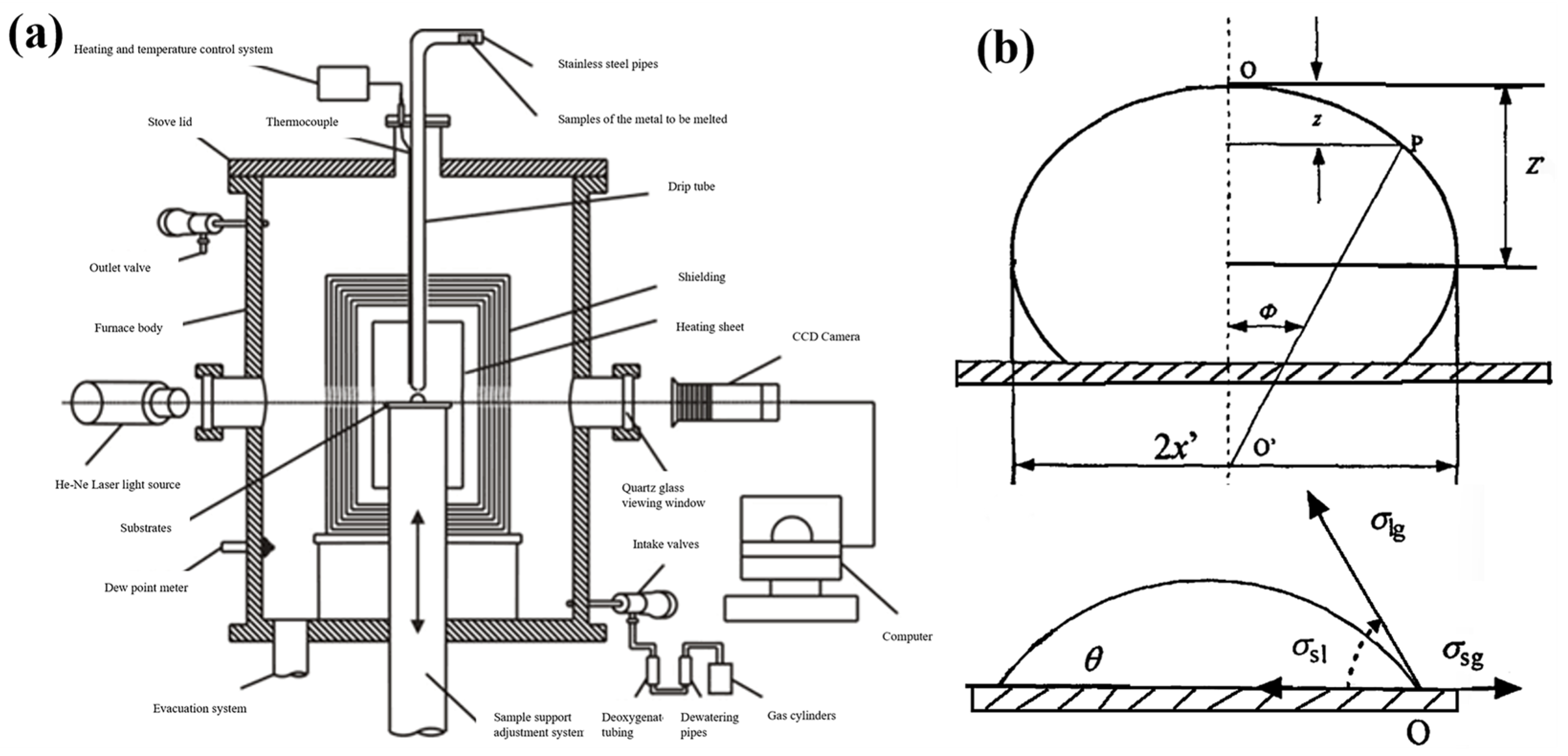
Wettability experiments were performed using an improved sessile drop method (Figure 1) [19]. The substrate was first placed on an alumina sample stage and adjusted to a horizontal position. At room temperature, the chamber was evacuated to below 5 × 10⁻⁴ Pa and filled with a purified Ar-3%H2 gas with the dew point under 20°. The pressure inside the furnace chamber was stabilized at 0.11 MPa, and the temperature was first raised to 673 K at a rate of 11 K/min, then to 1023 K at a rate of 6 K/min. After the temperature and the atmosphere were stabilized, Al-10Si-xZn segments were inserted into the bottom of the alumina tube and held for 30 min for them to melt. Subsequently, the molten Al-Si alloy was extruded through a small aperture due to the pressure differential generated between the interior of the tube and the interior of the chamber as a result of the gas outflow, and it then precipitated onto the substrate surface.
Upon the detachment of the drop from the alumina tube, a photograph was captured and designated as the drop profile at the initial time point. Subsequently, photographs were obtained at pre-determined intervals. Surface tension and contact angle were extracted through the utilization of Axisymmetric Drop Shape Analysis (ADSA) software (ADSA for Changzhou University(1280-720) program 2011), which provides a high level of precision and eliminates the subjectivity of the operator.
Following the wetting experiments, metallographic samples were prepared using standard procedures, including sandpaper grinding and mechanical polishing. The specimens were etched using Keller’s reagent to reveal the microstructures. The samples were finally analyzed using optical microscopy (OM)(Leica, Wetzlar, Germany), scanning electron microscopy (SEM, JSM-6510, JEOL, Tokyo, Japan), energy-dispersive spectroscopy (EDS) (Oxford Instruments, Oxford, England), and X-ray photoelectron spectroscopy (XPS) (ULVAC-PHI, Kanagawa, Japan).

3. Results

3.1. The Surface Tension of the Al-10Si-xZn/Al2O3 System

Owing to the poor wettability between the alloy melt and ceramics, the surface tension of the alloy melt can be calculated with relatively high accuracy. Additionally, the surface tension of Al-10Si-xZn alloy melts on Al2O3 substrates was measured, and the experimental data were analyzed using ADSA [20] software. This software is currently the one in use with the highest precision. It performs fitting using 99 data points, which is far more than the 10–20 points used by ordinary software. It is particularly suitable for calculating the surface tension of liquids.
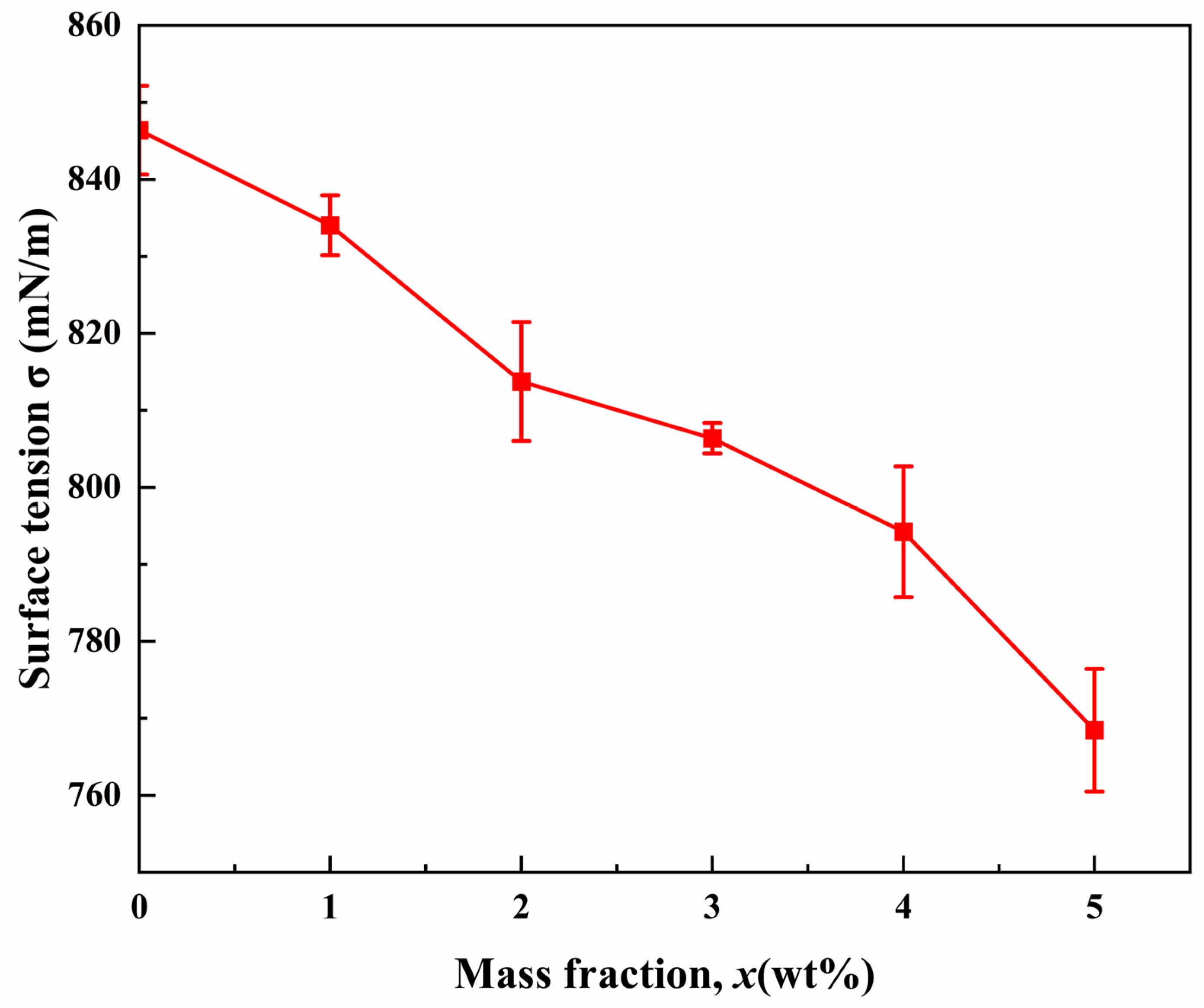
Figure 2 shows the curves of surface tension variation with Zn content for different Al-10Si-xZn alloy melts on ceramic substrates at 1023 K under an Ar-3%H2 atmosphere. When 1.0 wt.% Zn is added, the surface tension of the Al-10Si-xZn alloy is approximately 830 mN/m. As the Zn content increases, the surface tension of the Al-10Si-xZn alloy melt decreases gradually. When the Zn content reaches 5.0 wt.%, surface tension attains its minimum value, around 760 mN/m. The experimental results indicate that a small amount of zinc addition (5 wt.%) can significantly reduce the surface tension of the alloy melt. It is worth noting that Goicoechea et al. [6] measured the surface tension of alloys in the Al-Si system with a mass percentage below 15% Si and found that the measured values ranged from 830 to 870 mN/m at 973 K. Hiroyuki et al. [21] investigated the relationship between the surface tension and composition of molten Al-Si binary alloys at 1400 K and found that the surface tension of the Al-10Si alloy ranges from 825 to 870 mN/m. The surface tension of the Al-10Si alloy melt at 1023 K obtained through experiments is 847 mN/m. In general, the surface tension of an alloy decreases with increasing temperature. Combined with the studies by Goicoechea and Hiroyuki et al., the measured result of Al-10Si is found to be relatively accurate.
The influence of alloying element addition on the surface tension of liquid aluminum is usually expressed using the Gibbs adsorption equation [22,23]:
Γ =   C K B T × d σ d C
where Γ is the difference in the amount of solute between the interior and the surface of the melt per unit area, with its unit being mol·cm−2; C is the concentration of the solute; KB is the Boltzmann constant; and T is the temperature in Kelvins.
According to a study by XIAO et al. [24], elements with lower surface tension tend to segregate at the surface of liquid alloys. Additionally, the degree of element segregation is related to the atomic radius and the number of free electrons of the atoms. The greater the difference between the two elements, the more pronounced the segregation phenomenon. The atomic radius of Zn is slightly smaller than that of Al, and Zn tends to segregate on the alloy surface.
At its melting point of 788 K, the average surface tension of Zn is 789 mN/m [11,25,26,27], and the average temperature coefficient of surface tension is d σ d T = 0.12   m N · m 1 · K 1 . The relationship between surface tension and temperature can be described by the following equation [11]:
σ m N / m = 717 0.227 T 420
Using Equation (2), the surface tension of Zn at 1023 K can be calculated as approximately 642.09 mN/m, which is significantly lower than that of the Al-10Si alloy at the same temperature. This indicates that the addition of Zn reduces the surface tension of the Al-10Si alloy under high-temperature conditions, which is consistent with the experimental results.
From the physical meaning of surface tension, compared with the solvent component, if the surface tension of a solute alloying element is smaller, this component will have a higher concentration at the surface and segregate on the alloy surface. The surface tension of solute Zn is lower than that of the solvent Al-10Si. With increasing Zn concentration, the amount of solute at the alloy surface becomes higher than that in the bulk. According to Equation (1), under this condition, Γ is positive, and d σ d C < 0 with increasing solute concentration; thus the surface tension of the alloy decreases.
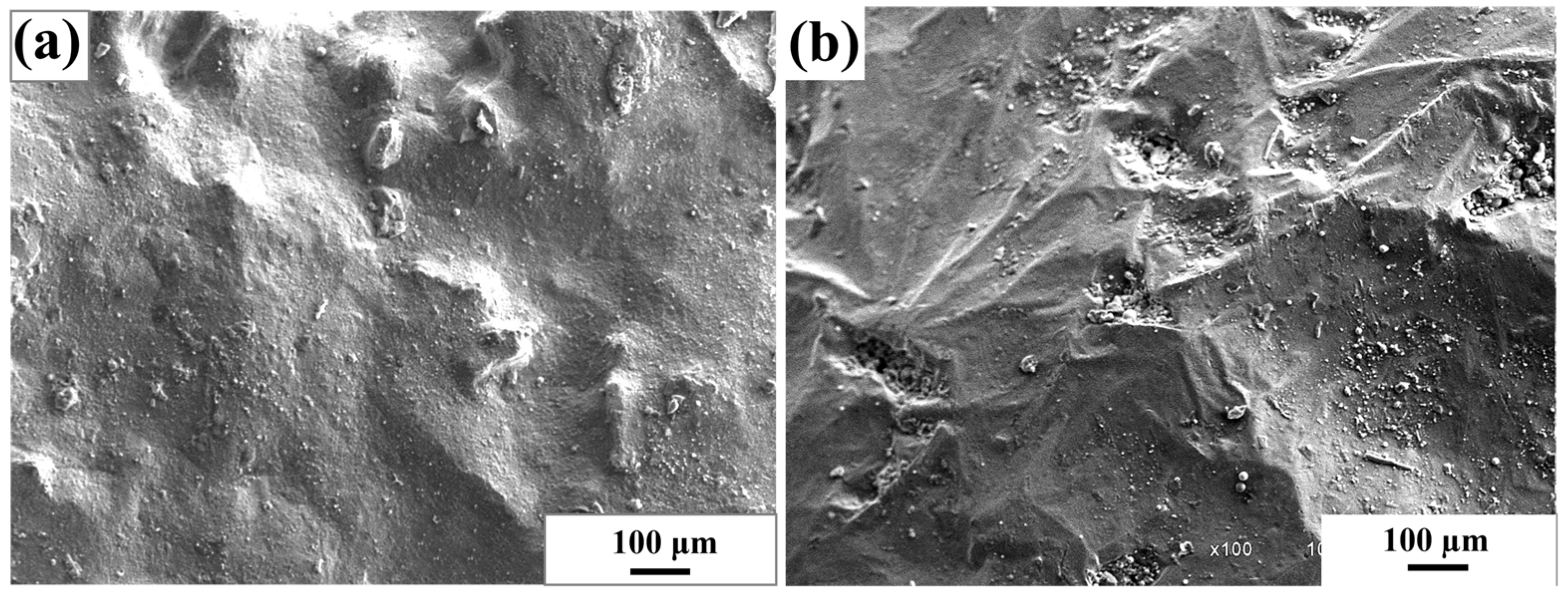
The properties of the oxide film itself, such as its morphology, roughness, composition, and thickness, have a certain influence on the surface tension of the melt. Eustathopoulos et al. [28] found that the surface tension of Al-Si alloys can be effectively reduced through the mechanical disruption of the oxide film on the alloy surface. Among other examples, the decrease in the surface tension of Al-Si-Mg alloys is attributed to the disruption of their surface oxide film caused by the volatilization of Mg. Therefore, as the saturated vapor pressure of zinc is higher than that of magnesium, the reduction in the surface tension of the Al-10Si-xZn alloy under high-temperature conditions may also be attributed to the change in the composition of the oxide film formed on its surface. The addition of Zn can interfere with the continuous and dense growth of Al2O3, leading to the formation of local defects or inhomogeneous structures in the oxide film and reducing the film’s continuity. In the Al-Zn alloy, some swells appear at the surface of the oxide film. One possible source is zinc vapor. The high value of Zn vapor pressure indicates that zinc is probably a significant contributor to blister formation. The evaporation of Zn atoms is more likely to be the reason for this. As the Zn content increases, the thickness of the oxide film decreases [29]. During the high-temperature wettability test of the Al-Si alloy, due to Zn’s relatively higher saturated vapor pressure, and the experimental temperature being high, Zn migrates from the interior of the melt to the surface in the form of vapor and then volatilizes. This process causes the formation of bubbles or channels in the surface oxide film, resulting in the local rupture, perforation, or wrinkling of the film. This observation is similar to the morphological results of the surface oxide films of the Al-10Si and Al-10Si-5Zn alloys presented in Figure 3: the overall film layer exhibits wavy wrinkles, with flaky peeling visible at the edges. It is precisely the local rupture of the oxide film caused by the volatilization of Zn that exposes the fresh melt directly, thus reducing the surface tension of the Al-Si alloy.
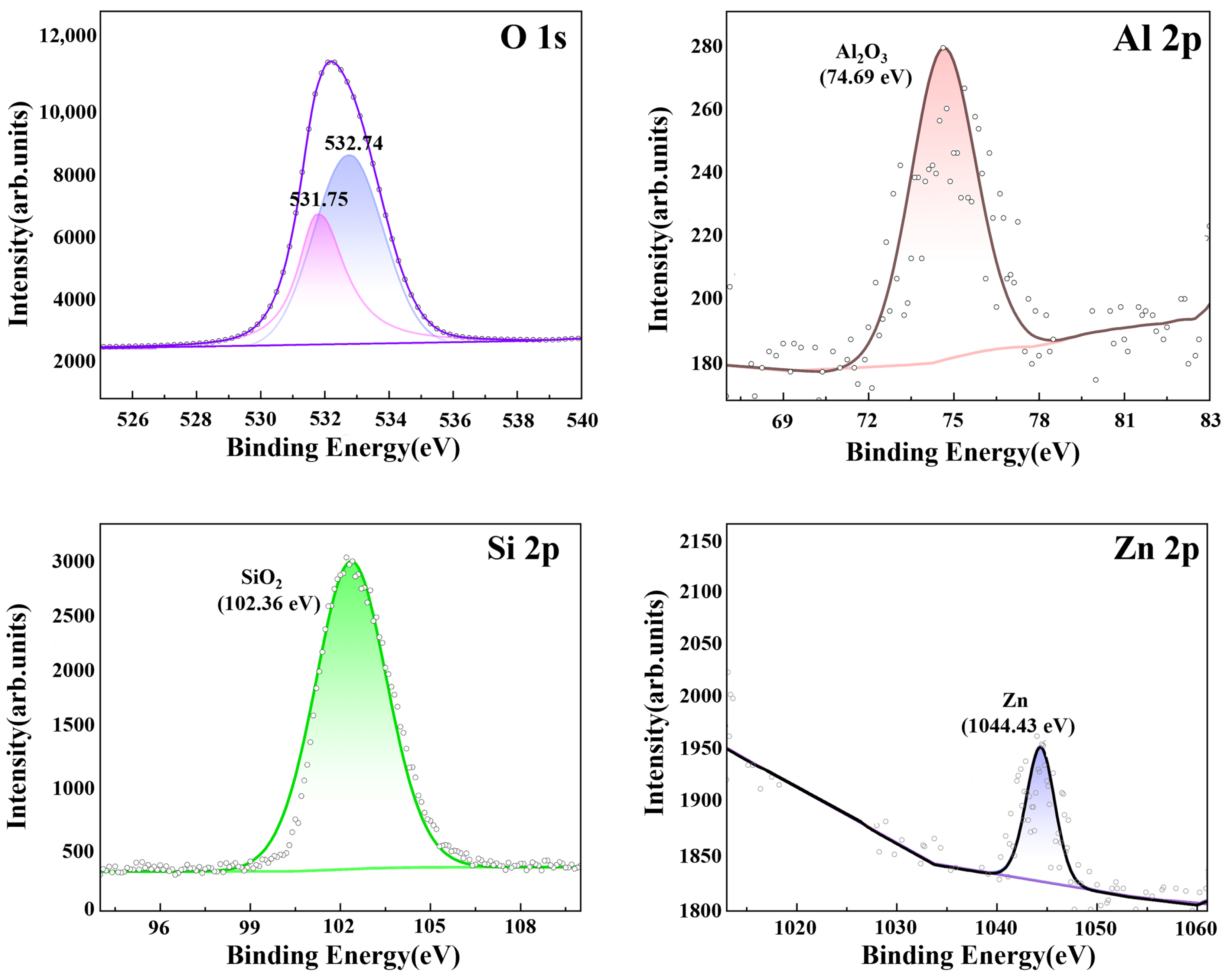
Since oxygen is highly reactive with aluminum alloys, oxidation inevitably occurs on the surface of the alloy melt, thus resulting in the Al-Si melt surface being covered with an oxide film composed of Al2O3 and SiO2. To further investigate the effect of oxide composition on the surface tension of the alloy, high-resolution X-ray photoelectron spectroscopy (XPS) measurements were performed on the Al-10Si-5Zn alloy (see Figure 4). The Al 2p XPS spectrum is located at 74.69 eV. According to the calibration database, this binding energy corresponds to the Al3+ valence state. Based on the binding energy, the oxide was identified as Al2O3, which covers the alloy surface. The oxide corresponding to the Si 2p XPS spectral peak appears at 102.36 eV, corresponding to the oxide SiO2. According to the O 1s peaks, 531.75 eV corresponds to Al2O3, and 532.74 eV corresponds to SiO2. A comprehensive analysis of O 1s peaks and Zn 2p peaks found that ZnO was not detected as a product in the XPS test. Therefore, the peak detected in the Zn 2p energy spectrum may be attributed to the evaporation of Zn elements at high temperatures. The presence of elemental Zn can disrupt the oxide film of the Al-Si alloy, rendering the oxide film on the alloy surface more porous. Additionally, Zn exhibits weak bonding with Al2O3 and SiO2, forming a discontinuous structure, thus promoting the exposure of the fresh melt and reducing the surface tension of the alloy.

3.2. The Wetting of the Al-10Si-xZn/IF System

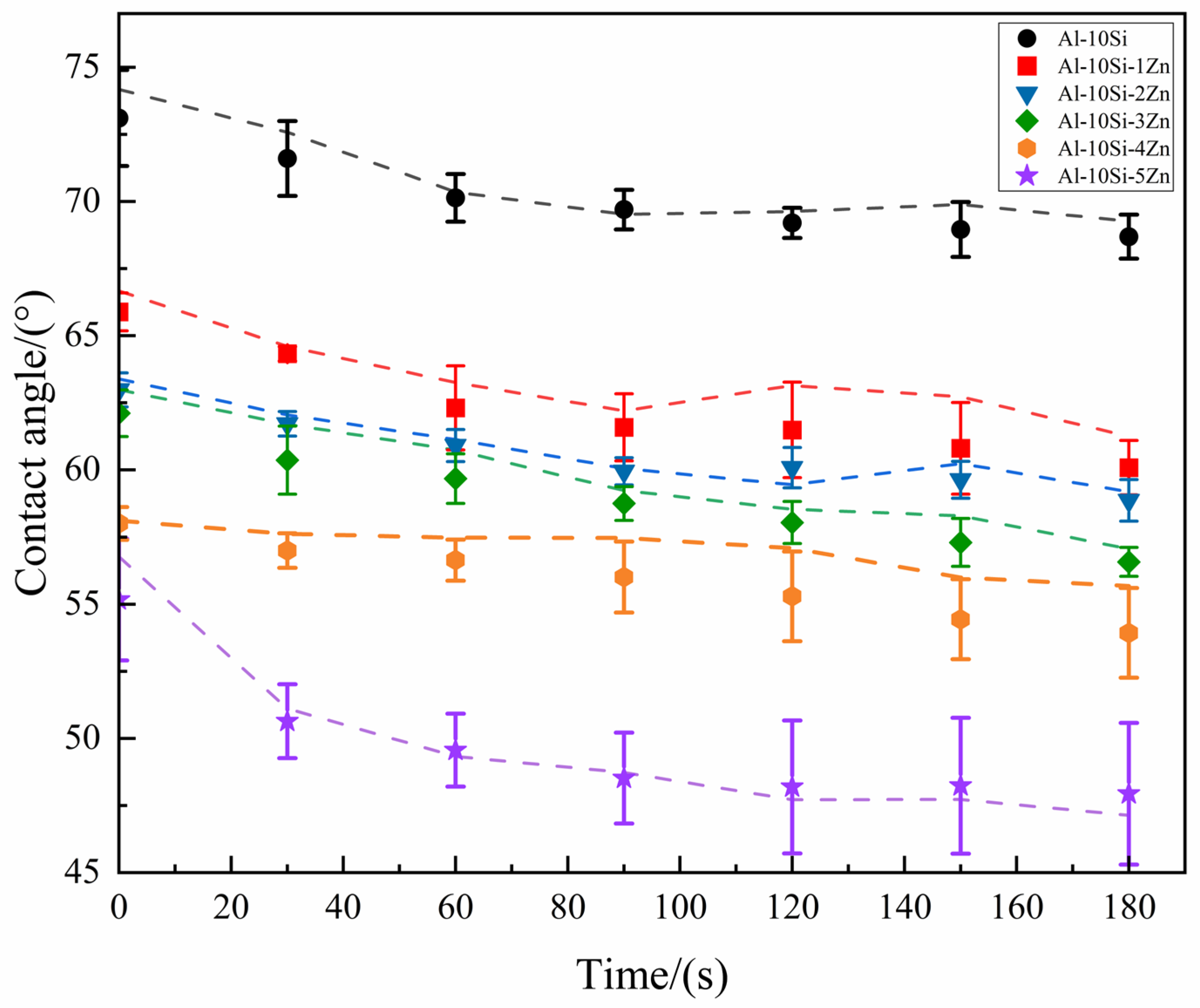
Typically, when the substrate is not oxidized, the alloy melt will always wet the metal substrate regardless of whether an interfacial reaction occurs between the metal/metal systems. Generally, the wetting contact angle (θ) and wetting diffusion area (A2) are key indicators for evaluating the wetting performance between liquid metals and metal substrates: a smaller contact angle indicates the better wettability of the system. Wetting experiments of the Al-10Si-xZn alloy melt on IF steel were conducted under the same experimental conditions. Figure 5 shows the variation in the contact angle between the Al-Si alloy melt and the IF steel substrate over time under different Zn contents. Due to the limitations of photographic equipment, data for the initial stage (0–5 s) were not captured, resulting in certain limitations of the experiment. The experimental results demonstrate that adding a small amount of Zn to the Al-Si alloy melt can effectively enhance its wettability with IF steel. As can be seen from the figure, the contact time between the melt and the substrate increases, and the contact angle gradually decreases and then stabilizes. As the Zn content increases, the contact angle of the Al-10Si-xZn/IF steel system decreases from 69° to 43°.
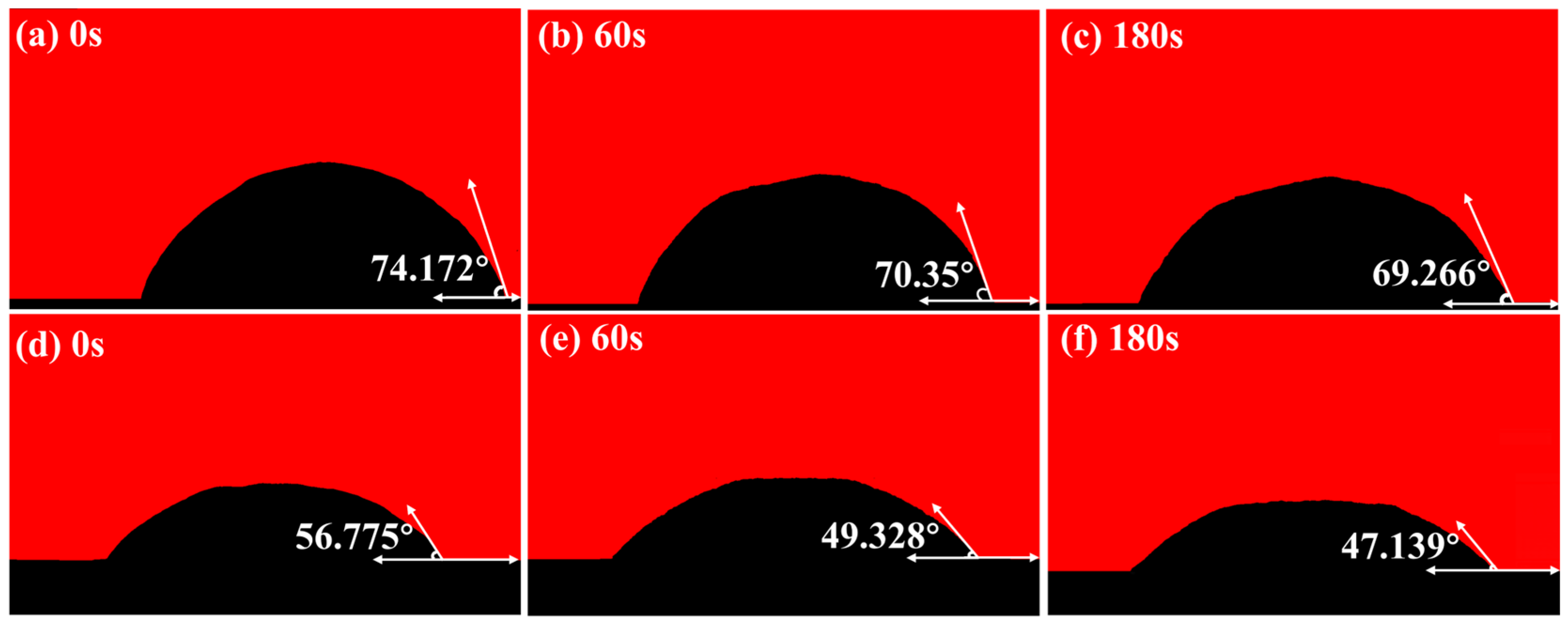
When the interfacial reaction is initiated, the final contact angle depends on the characteristics of the reaction products. As shown in Figure 6, at a relatively high temperature (1023 K), the Al-10Si and Al-10Si-5Zn alloys exhibit distinct diffusion behaviors. Over time, the alloys gradually start to diffuse on the IF steel substrate, with the diffusion area increasing steadily.
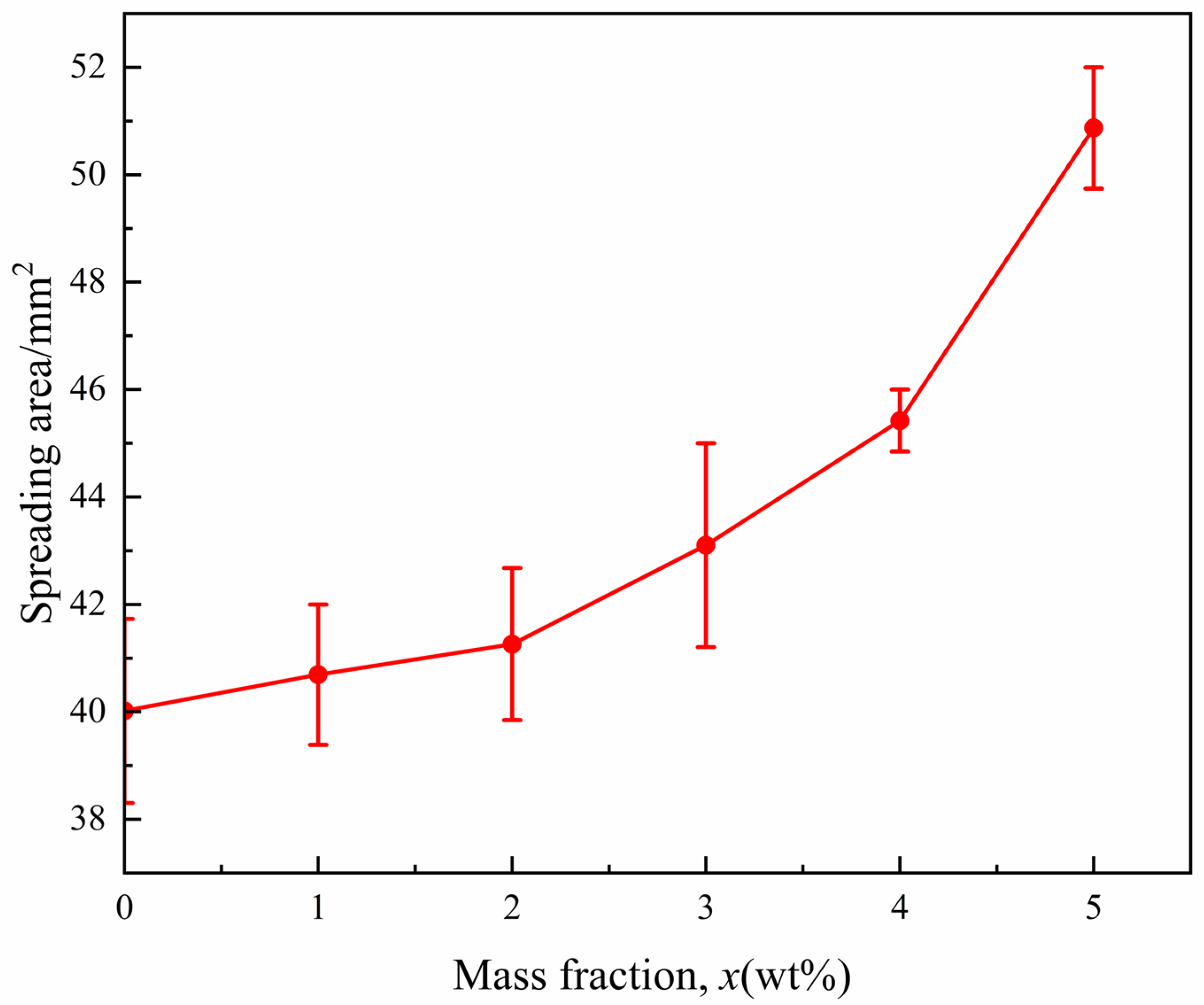
As shown in Figure 5, when the wetting time reaches 1 min, the wetting angle of the alloy on the steel plate is close to the minimum, and no significant change in the contact angle with time is observed. Meanwhile, the diffusion area of the alloy melt on the steel plate is already close to the maximum, and its shape is approximately circular. Figure 7 shows the final diffusion area of Al-10Si-xZn on IF steel, which only qualitatively indicates the degree of wettability. Therefore, the spreading temperature was set at 1023 K, the droplet mass at 0.15 g, and the time at 3 min, with the diffusion area of Al-10Si (40.016 mm2) used as the benchmark for comparison. As can be seen from the figure, as the addition of Zn to the Al-Si alloy increases, the diffusion area of the alloy on the steel plate expands. Specifically, when the Zn content reaches 5%, the diffusion area is the largest, approximately 50.870 mm2. The change in the final diffusion area of Al-10Si-xZn on the IF steel substrate can reflect the variation trend in its final contact angle at 1023 K.
Under the solid–liquid–gas three-phase state, when a liquid droplet falls onto a solid surface, a solid–liquid two-phase interface is formed. In the equation below, A is the contact area between the solid and liquid phases, σlv is the interfacial tension at the liquid–gas interface, σsv is the interfacial tension at the solid–gas interface, and σsl is the interfacial tension at the solid–liquid interface. The contact angle between the solid and liquid phases is expressed as θ. If the contact area of the liquid changes, δA represents the amount of this area change. Thus, the expression for the free energy δF is derived as follows:
δ F = δ A σ s l σ s v + δ A σ l v c o s θ δ θ
When the wetting process reaches equilibrium (δA/δF = 0), Young’s equation can be derived [30,31]:
c o s θ = σ s v σ s l σ l v
According to this equation, the wettability of the Al-10Si-xZn alloy melt on the IF steel substrate is determined by three factors: the surface tension of the alloy melt, the interfacial tension between the alloy melt and the IF steel substrate, and the surface tension of the IF steel substrate. The surface tension σsv is the contracting force inherent to the molten alloy, which tends to hinder wetting. Surface tension can be reduced by adding surface-active elements, thereby improving wetting. In contrast, the interfacial tension σsl reflects the strength of chemical bonding between liquid and solid atoms. If the alloy and the substrate can form strong metallic bonds or undergo interfacial reactions, the solid–liquid interfacial energy will decrease, leading to improved wetting. Among these three decisive factors, the solid surface tension σsv is determined by the composition of the substrate and the external environment. In this work, all the substrates and the surrounding environment remain consistent throughout the experiment. Therefore, the surface tension of the substrate can be regarded as a constant. The wetting of the Al-Si alloy melt on the IF steel substrate is reactive. During the wetting process, intermetallic interactions and atomic diffusion occur, which to a certain extent reduce the interfacial tension between the Al-Si alloy melt and the IF steel substrate, thus decreasing the contact angle and improving the wettability of the system.
In this work, the wetting time of the Al-Si alloy melt on the substrate was very short, and the wetting system reached equilibrium rapidly. Additionally, the amount of Zn added to the Al-Si alloy melt was minimal. According to the Fe-Zn binary phase diagram [32], the solid solubility between Fe and Zn is extremely low, and the alloy is still dominated by the α-Fe solid solution—insufficient to form intermetallic compounds at 1023 K. Therefore, it can be considered that the addition of Zn has a relatively minor effect on reducing the interfacial tension (σsl) between the Al-Si alloy melt and the IF steel substrate. Since σsv and σsl are constant, it can be derived from Young’s equation that the wetting angle of the Al-10Si-xZn/IF systems mainly depends on the surface tension (σlv) of the Al-Si alloy melt: the smaller the surface tension (σlv), the smaller the contact angle, meaning the better the wettability between the Al-Si alloy melt and the IF steel substrate.

3.3. Precursor Film

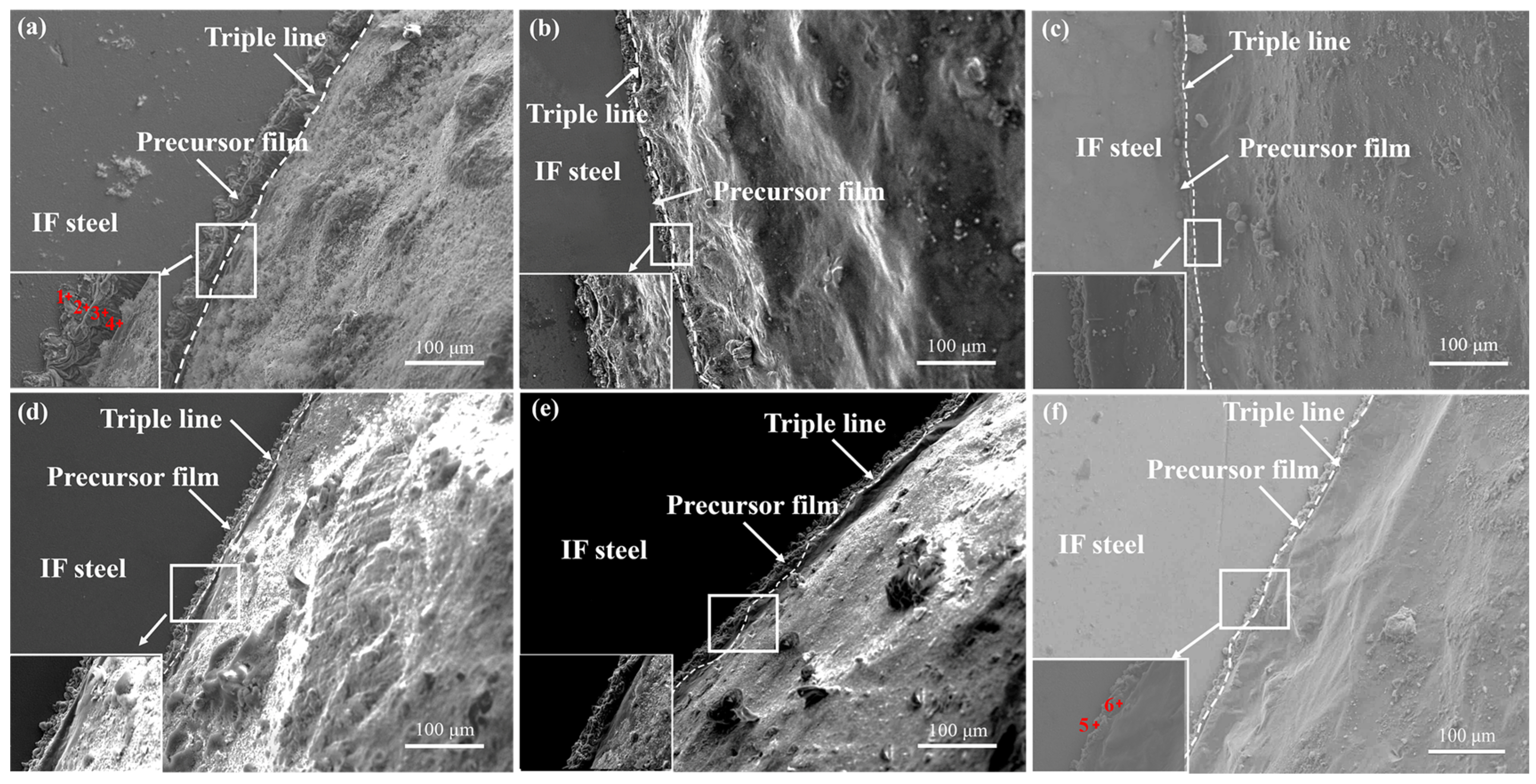
Figure 8 shows the surface morphology of the Al-10Si-xZn alloy/IF steel substrate after cooling from the wetting experiment at 1023 K, as well as the microtopography of the leading edge of the triple line. During the wetting of IF steel by the molten Al-10Si-xZn alloy, an extremely thin and relatively bright wetting ring emerges at the leading edge of the triple line, which is commonly referred to as a “precursor” [33]. A precursor film is an extremely thin film observed during the wetting process that precedes the macroscopic film [34].
Based on the magnified images, the morphology of the spreading front of the precursor film can be observed. Given the uneven width of the precursor film, the molten Al-10Si-xZn alloy flows faster in the regions where the precursor film is wider while flowing slower in narrower regions. This results in a zigzag appearance of the spreading front. The element distribution of the precursor film was analyzed by EDS spot scanning. The intermetallic compounds (16) are obtained, as shown in Table 2: points 1–4 in Figure 8a; points 5–6 in Figure 8f. The Fe/Al intermetallic compounds formed by the reaction between Al and Fe can not only break the oxide film but also promote the spreading of molten droplets, thus enabling the aluminum alloy molten droplets to easily penetrate beneath the oxide film and form Fe2Al5. The formation of the precursor film allows the subsequent Al-Si alloy melt to spread over it. When spreading reaches the area covered by the precursor film, a new precursor film is generated, and this process continues until the interface reaches equilibrium. At 1023 K, active Al can further damage the oxide film on the steel surface, thus promoting the formation of precursor films. The surface of the precursor film is relatively uneven, exhibiting a stepped groove morphology. To a certain extent, such groove-structured precursor films enhance the capillary force acting on the droplet during its spreading process, and this phenomenon is conducive to the flow of the aluminum–silicon alloy melt. It is worth noting that the elements Si and Zn do not participate in the formation of the precursor film. This is because the diffusion rate of Si with Fe is relatively slow, with a diffusion coefficient of approximately 1.6 × 10⁻¹² m2/s [35,36], while the diffusion coefficient of Al/Fe is about 1.23 × 10⁻⁶ m2/s [37,38,39]. The diffusion rate of Si/Fe is much lower than that of Al/Fe, which hinders the diffusion of Si at the interface and prevents it from spreading rapidly along the steel plate. The Si content in point 3 is relatively high, which is attributed to its proximity to the alloy and the continued diffusion of Si on the steel surface. According to the thermodynamic data of the Fe-Al-Zn reaction [40,41], it can be found that the Gibbs free energy of Fe/Zn compounds is significantly higher than that of Fe-Al compounds; thus the formation of Fe/Al compounds is more favored during the wetting process. In addition, due to the strong affinity between Al and the Fe matrix, Fe preferentially reacts with Al to form an Fe/Al intermetallic compound layer on its surface, which can inhibit the formation of Fe/Zn compounds. Additionally, the Zn content in Al-10Si-xZn alloys is relatively low, and the diffusion coefficient of approximately 5.7 × 10⁻¹⁴ m2/s [42] is too low to enable the formation of Fe/Zn compounds. Zn can reduce the Fe-O oxide film in the form of vapor. Meanwhile, the Fe/Al intermetallic compounds formed by the reaction between Al and Fe can also break up the oxide film. Both mechanisms can promote the spreading of the molten droplet, enabling the aluminum alloy melt to easily penetrate beneath the oxide film and participate in the reaction to form Fe2Al5 intermetallic compounds (precursor film), which is known as the subcutaneous penetration mechanism [43]. However, as shown in Figure 8, at the macroscopic level, as the Zn content changes, the width of the precursor film varies continuously, approximately between 10 and 20 μm. Therefore, this study believes that the effect of Zn vapor on the precursor film is small, and the main factor affecting the formation of the precursor film may be the reaction between Al and Fe.
Therefore, it can be inferred that, in the absence of other interferences, the Si and Zn elements in the material cannot alter the composition of the precursor film but can only lower the melting point of the alloy. However, in the wetting tests conducted in this study, both the droplets containing Zn and those without Zn were heated to temperatures above their melting points. The results show that after adding Zn, the wetting and spreading behaviors exhibit similar wetting characteristics.
Figure 8. Wetting surface morphologies of Al-10Si-xZn alloy melts and IF steel, x = (a) 0.0 wt.%, (b) 1.0 wt.%, (c) 2.0 wt.%, (d) 3.0 wt.%, (e) 4.0 wt.% and (f) 5.0 wt.% (mass fraction).
Coatings 16 00434 g008
Table 2. EDS analysis of precursor film on IF steel of Al-10Si-xZn alloy melt in Figure 9 (1–6) (at.%).
PointAlFeSiZn
146.0851.991.930
272.0625.942.000
370.8324.184.990
471.7211.5916.690
562.4534.512.620.42
631.8866.281.490.35
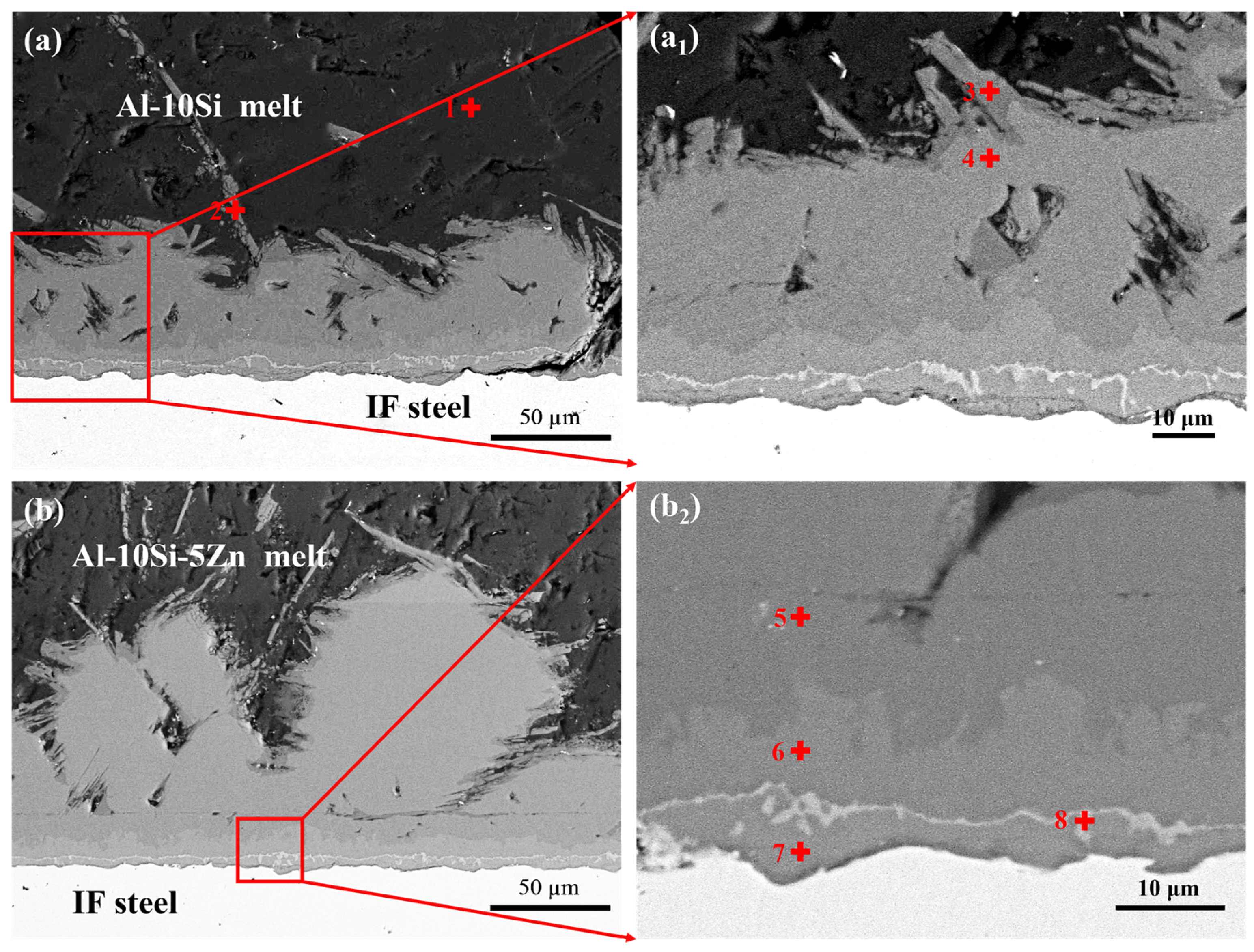
Figure 9. Al-10Si-xZn alloy melt/IF steel interface structure, (a,a1). x = 0.0 wt.%, (b,b2). x = 5.0 wt.% (mass fraction).
Coatings 16 00434 g009

3.4. Microscopic Interfacial Structure

It is well known that the interfacial microstructure has a significant influence on the wetting behavior of alloys on metal surfaces. Figure 9 shows the cross-sectional view of the wetting of the Al-10Si and Al-10Si-5Zn alloys on IF steel. As can been seen from Figure 10a,b, at the interface of both the Al-10Si/IF steel and Al-10Si-5Zn/IF steel systems, an IMC layer over 50 micrometers thick was formed, indicating that a chemical reaction occurred at the interface. Notably, the solid–liquid interfaces of both systems are relatively smooth, and there is almost no significant change in their interfacial morphologies.
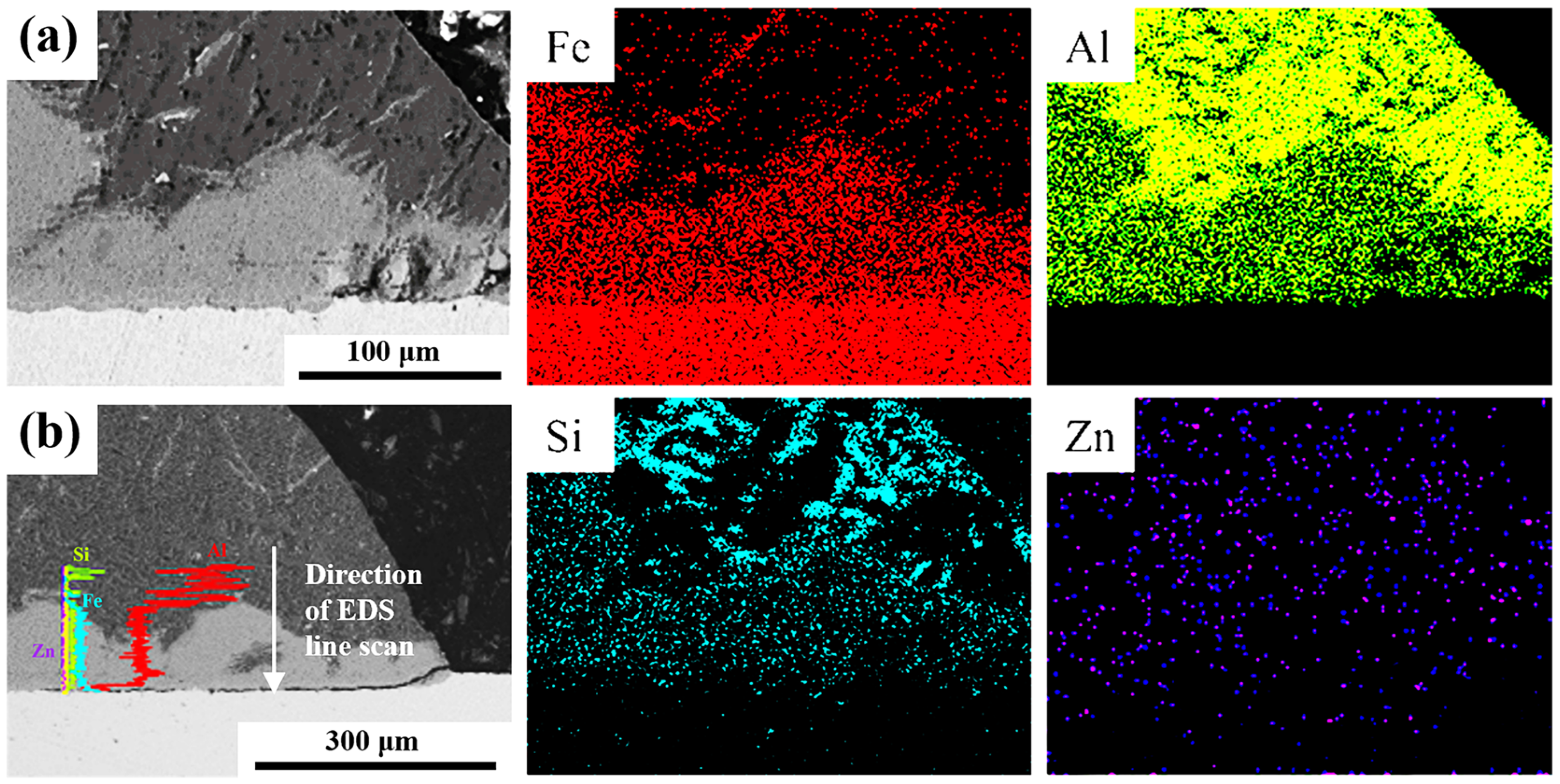
Figure 10 shows the EDS surface scanning results. As can be seen from the figure, a certain amount of Al, Fe, and Si and a small amount of Zn exist at the interface, and iron–aluminum intermetallic compounds are formed by the reaction between the alloy and IF steel. As the wetting process proceeds, a large amount of Fe in the bottom layer of the substrate dissolves into or diffuses into the molten Al-Si alloy, participating in the formation of the Fe/Al interfacial reaction layer. Si in the alloy diffuses into the substrate, while Al does not diffuse deeply into the substrate. With an increase in distance (from the IF substrate), the content of Fe decreases sequentially. A small amount of Fe is distributed in the Al-rich layer, participating in the formation of the τ6 [44] and τ5 [45] phases. Among them, the τ5-phase layer exhibits an irregular bulk morphology and is distributed between the Al-rich layer and the reaction layer. The τ6 phase, with a relatively high Si content, is formed on the side close to the Al-Si alloy and grows in an acicular/columnar manner toward the Al-Si alloy. Al-10Si-xZn/IF is a typical reactive wetting system. Similar to the formation of two compound layers (θ-FeAl3 [46,47] and η-Fe2Al5 [48,49]) at the steel interface during hot-dip aluminizing, the interfacial reaction layer in the Al-10Si-xZn alloy melt/IF steel wetting system also consists of two phase layers.
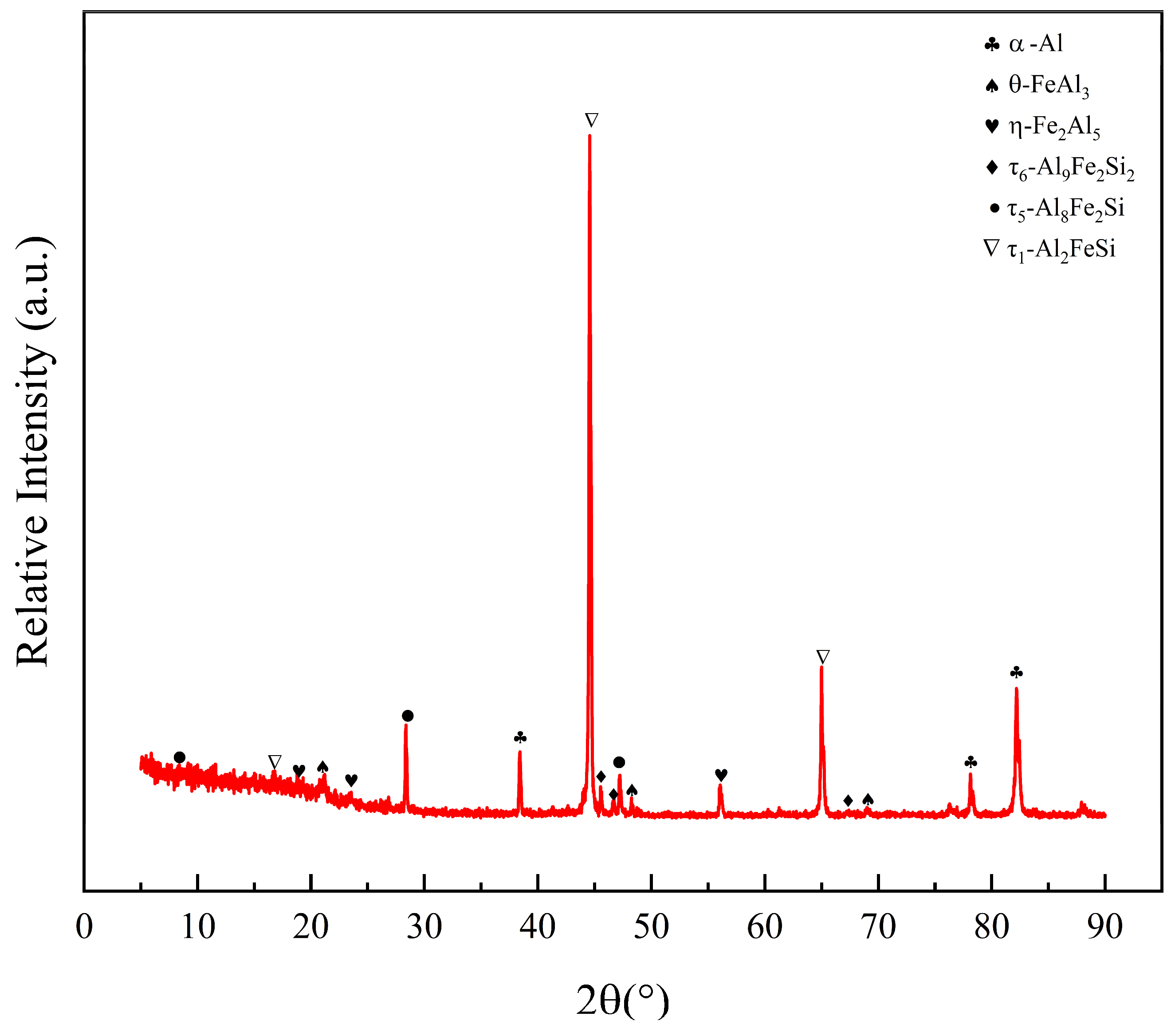
Table 3 shows the element distribution of the phase structure at the wetting and spreading interface by EDS spot scanning. It is found that the interfacial reaction layer is divided into three phases: θ-FeAl3, η-Fe2Al5, and τ5-Al8Fe2Si. Among them, the η-Fe2Al5 compound layer is adjacent to the steel substrate, while the τ5 compound layer is adjacent to the aluminum alloy melt. This is consistent with the research results of Valizadeh et al. [50] and Kucera et al. [51]. According to the Al-Si-Fe ternary alloy phase diagram [52], when the Fe content increases, intermetallic compounds with higher melting points are more likely to form. The presence of Si occupies the structural vacancies of the η-phase, hindering the rapid growth of the η-phase. Meanwhile, the excess Si accumulates and precipitates a small amount of the τ1-Al2FeSi phase. This is consistent with the research findings of Yulong Li et al. [13]. Based on thermodynamic calculations and experimental results [53], it is known that the solubility of Zn in Al exceeds 10%. Therefore, the addition of a small amount of Zn will not lead to the formation of Zn-containing compounds in the Al-Si alloy, nor will it affect the distribution and formation of phases. According to the Fe-Zn binary phase diagram [28], Zn does not react with Fe to form intermetallic compounds under the experimental conditions. Combined with area scan analysis, it can also be found that Zn diffuses at the interface but does not participate in reactions to form new phases, nor does it undergo segregation. To further verify that Zn does not participate in the formation of interfacial reaction compounds, XRD characterization was performed at the interface of the Al-10Si-5Zn/IF steel joint, as shown in Figure 11. The results indicate that the interfacial products are still dominated by Fe-Al-Si intermetallic compounds, suggesting that the addition of Zn does not alter the original Fe/Al reaction mechanism. Combining Figure 9 and Figure 10, it is found that the Fe element diffused into the alloy, and acicular microstructure phases protruded into the alloy at the cross-section, which is a common phase structure observed in hot-dip aluminized steel [54] and the wetting and diffusion processes of aluminum–steel systems [55]. In contrast, Al only forms compounds with Fe at the interface and does not diffuse into the substrate. However, Si and Zn exhibit significant diffusivity in the substrate and penetrate deeply into it.
In summary, when the molten Al-10Si-xZn alloy wets the IF steel, a precursor film is formed outside the reactive triple line at the interface between the molten aluminum alloy and the IF steel. The presence of this precursor film enables the subsequent molten Al-Si alloy to spread over it, thus promoting wetting. Zn can accelerate the interfacial reaction process, which in turn reduces the surface tension of the molten Al-Si alloy and enhances its wettability.

4. Conclusions

In this work, under the atmosphere of Ar-3%H2, the sessile drop method was modified to investigate the surface tension of molten Al-Si-xZn alloys (with Zn mass fractions of 0, 1, 2, 3, 4, and 5 wt.%) on Al2O3 ceramics, as well as the wettability of these alloys on IF steel. Current research mainly focuses on the Al-Si-Zn/Fe system, exploring the potential effects of the Zn element. This will further contribute to predicting and guiding process optimization, quality control, and material design. The main conclusions obtained so far are as follows:
  • The surface tension of the molten alloy decreases as the Zn content increases. The Zn element mainly changes wettability by affecting the surface tension of the alloy, and its impact on Al-10Si-xZn/IF steel interfacial tension is relatively small.
  • The addition of Zn can improve the wettability of the molten Al-Si alloy on IF steel to a certain extent. The contact angle of the Al-10Si-xZn/IF steel wetting system decreases gradually with an increase in Zn content. As the Zn content increases, the contact angle of the Al-10Si-xZn/IF steel system decreases from 69° to 43°. At the wetting–diffusion interface, intermetallic compounds such as FeAl3, Fe2Al5, Al2Fe3Si3, Al8Fe2Si, and Al9Fe2Si2 are formed.
  • Zn can improve the wettability between the molten Al-Si alloy and IF steel. The surface tension of Zn is lower than that of the Al-Si alloy. Moreover, this may be attributed to Zn causing the formation of bubbles or channels in the surface oxide film, leading to the local rupture, perforation, or wrinkling of the oxide film. This exposes the fresh molten alloy and significantly improves the actual contact between the molten alloy and the substrate, thus reducing the surface tension of the Al-Si alloy.
  • During the wetting process between the molten Al-10Si-xZn alloy and IF steel, a precursor film appears at the front of the reactive triple line. This allows the subsequent molten Al-Si alloy to spread over the precursor film, and the groove-like morphology of the precursor film enhances the capillary force, which facilitates the flow and spreading of the molten Al-Si alloy on the steel substrate. At 1023 K, the effect of Zn vapor on the precursor film is small, and the main factor affecting the formation of the precursor film may be the reaction between Al and Fe.

Author Contributions

X.C.: Writing—original draft, Visualization, Methodology, Investigation, Conceptualization. Y.L.: Writing—Review and Editing, Supervision. C.W.: Methodology, Investigation. X.S.: Writing—Review and Editing, Supervision, Conceptualization. All authors have read and agreed to the published version of the manuscript.

Funding

Financial Support was received from the National Natural Science Foundation of China (52171003).

Data Availability Statement

The original contributions presented in this study are included in the article. Further inquiries can be directed to the corresponding author.

Conflicts of Interest

The authors declare no conflicts of interest.

References

  1. Sharma, A.; Zhang, C.; Chang, Y.A.; Knoeppel, R.; Morgan, D. Ab initio and thermodynamic modelling of alloying effects on activity of sacrificial aluminium anodes. Corros. Sci. 2011, 53, 1724–1731. [Google Scholar] [CrossRef] [Scilit]
  2. Liu, X.; Lin, Y.; Liu, N.; Yuan, H. Effect of Alloy Elements on the Performance of Al Sacrificial Anode. J. Phys. Conf. Ser. 2024, 2679, 012036. [Google Scholar] [CrossRef] [Scilit]
  3. Jin, K.H.; Oh, M.S. Effects of the Mg Content on Microstructural and Corrosion Characteristics of Hot-Dip Al-Si-Mg Alloy-Coated Steel Sheets. Materials 2023, 16, 5827. [Google Scholar] [CrossRef] [Scilit]
  4. Gao, Y.; Chen, Y.; Xiao, S.; Li, T.; Wu, H.; Meng, X.; Li, W.; Fan, S.; Ye, Z.; Chen, G.; et al. Effects and mechanism of Zn on the structure and corrosion resistance of microarc oxidation coatings on aluminum alloy. Appl. Surf. Sci. 2024, 659, 159909. [Google Scholar] [CrossRef] [Scilit]
  5. Wei, C.; Wu, G.; Zhang, J. Design and properties of Al-10Si-xZn-yMg alloy for hot dip coating. Surf. Coat. Technol. 2021, 416, 127134. [Google Scholar] [CrossRef] [Scilit]
  6. Goicoechea, J.; Garcia-Cordovilla, C.; Louis, E.; Pamies, A. Surface tension of binary and ternary aluminium alloys of the systems Al-Si-Mg and Al-Zn-Mg. J. Mater. Sci. 1992, 27, 5247–5252. [Google Scholar] [CrossRef] [Scilit]
  7. Picha, R.; Vřešťál, J.; Kroupa, A. Prediction of alloy surface tension using a thermodynamic database. Calphad 2004, 28, 141–146. [Google Scholar] [CrossRef] [Scilit]
  8. Enomoto, Y.; Kawasaki, K.; Ohta, T.; Ohta, S. Interface dynamics under the anisotropic surface tension. Phys. Lett. A 1985, 107, 319–323. [Google Scholar] [CrossRef] [Scilit]
  9. Lallemand, P.; Luo, L.-S.; Peng, Y. A lattice Boltzmann front-tracking method for interface dynamics with surface tension in two dimensions. J. Comput. Phys. 2007, 226, 1367–1384. [Google Scholar] [CrossRef] [Scilit]
  10. Mao, W.; Noji, T.; Teshima, K.; Shinozaki, N. Wettability of Molten Aluminum-Silicon Alloys on Graphite and Surface Tension of Those Alloys at 1273 K (1000 °C). Metall. Mater. Trans. A 2016, 47, 3201–3212. [Google Scholar] [CrossRef] [Scilit]
  11. Keene, B.J. Review of data for the surface tension of pure metals. Int. Mater. Rev. 1993, 38, 157–192. [Google Scholar] [CrossRef]
  12. Reiplinger, B.; Seimiya, Y.; Brillo, J.; Ozawa, S. Density and surface tension of liquid Al, V and their binary alloys measured by electromagnetic levitation. J. Mater. Sci. 2024, 59, 13183–13199. [Google Scholar] [CrossRef] [Scilit]
  13. Li, Y.; Ye, J.; Wu, H.; Wang, H.; Pan, Y.; Weng, L.; Lin, W.; Wang, W.; Guo, W.; Lei, M. Experimental and molecular dynamics simulation of wetting and spreading of Al-Si brazing filler metal on Fe Substrate: Element diffusion and interfacial compounds. Surf. Interfaces 2025, 60, 106016. [Google Scholar] [CrossRef] [Scilit]
  14. Huang, Y.; Shen, C.; Ji, X.; Li, F.; Zhang, Y.; Hua, X. Effects of Mg content on keyhole behaviour during deep penetration laser welding of Al-Mg alloys. Opt. Laser Technol. 2020, 125, 106056. [Google Scholar] [CrossRef] [Scilit]
  15. Cheng, W.; Rui, Z.; Sun, H.; Lyu, X.; He, D.; Mei, C.; Dong, Y. Study on the wetting characteristics of liquid-Al/SiO2 interface with Si content in liquid-Al. Mater. Today Commun. 2024, 41, 110722. [Google Scholar] [CrossRef] [Scilit]
  16. Arslan, H.; Arslan, H. Investigation of surface tension and viscosity properties of liquid Al–Au binary alloys. Can. Metall. Q. 2022, 61, 108–117. [Google Scholar] [CrossRef] [Scilit]
  17. Zhu, M.; Zhang, B.; Li, Z.; Hao, S. Effect on wetting properties of the Al-Ti system by the addition of different alloying elements. J. Phys. Conf. Ser. 2024, 2730, 012009. [Google Scholar] [CrossRef] [Scilit]
  18. Dobosz, A.; Gancarz, T. Density, viscosity and surface tension of gallium rich Al-Ga alloys. Fluid Phase Equilibria 2021, 532, 112923. [Google Scholar] [CrossRef] [Scilit]
  19. Shen, P.; Fujii, H.; Matsumoto, T.; Nogi, K. The influence of surface structure on wetting of α-Al2O3 by aluminum in a reduced atmosphere. Acta Mater. 2003, 51, 4897–4906. [Google Scholar] [CrossRef] [Scilit]
  20. Chen, P.; Kwok, D.Y.; Prokop, R.M.; del Rio, O.I.; Susnar, S.S.; Neumann, A.W. Axisymmetric Drop Shape Analysis (ADSA) and its Applications. Stud. Interface Sci. 1998, 6, 61–138. [Google Scholar]
  21. Fukuyama, H.; Higashi, H.; Adachi, M.; Ohtsuka, M. Density and surface tension measurements of molten Al–Si based alloys. High Temp. Mater. Process. 2023, 42, 20220286. [Google Scholar] [CrossRef] [Scilit]
  22. Umarkhadzhiev, H.S.; Dadashev, R.K.; Umarkhadzhiev, S.M.; Elimkhanov, D.Z. Surface Tension and the Composition of Surface Layers of Binary Metal Systems. Russ. J. Phys. Chem. A 2022, 96, 648–653. [Google Scholar] [CrossRef] [Scilit]
  23. K, C.G. The Scientific Papers of J. Willard Gibbs. Nature 1907, 75, 361–362. [Google Scholar] [CrossRef] [Scilit]
  24. Xiao, F.; Liu, L.-x.; Yang, R.-h.; Zhao, H.-k.; Fang, L.; Zhang, C. Surface tension of molten Ni-(Cr, Co, W) alloys and segregation of elements. Trans. Nonferrous Met. Soc. China 2008, 18, 1184–1188. [Google Scholar] [CrossRef] [Scilit]
  25. Pstruś, J.; Moser, Z.; Gąsior, W.; Dębski, A. Surface tension and density measurements of liquid Sn-Zn alloys. Experiment vs. SURDATdatabase of Pb-free solders. Arch. Metall. Mater. 2006, 51, 335–343. [Google Scholar]
  26. Gancarz, T.; Gąsior, W.; Henein, H. The Discharge Crucible Method for Making Measurements of the Physical Properties of Melts: An Overview. Int. J. Thermophys. 2014, 35, 1725–1748. [Google Scholar] [CrossRef] [Scilit]
  27. Gancarz, T.; Gąsior, W.; Henein, H. Physicochemical Properties of Sb, Sn, Zn, and Sb–Sn System. Int. J. Thermophys. 2013, 34, 250–266. [Google Scholar] [CrossRef] [Scilit]
  28. Eustathopoulos, N.; Nicholas, M.G.D.; Drevet, B. Wettability at High Temperatures; Elsevier: Pergamon, Turkey, 1999; pp. 198–260. [Google Scholar]
  29. Taheri Bagh, N.; Divandari, M.; Shahmiri, M.; Akbarifar, M. Characteristics of Dynamically Formed Oxide Films in Al–Zn Melt. Int. J. Met. 2021, 15, 747–762. [Google Scholar] [CrossRef] [Scilit]
  30. Hans, J.B.; Golovko, D.S.; Elmar, B. On the Derivation of Young’s Equation for Sessile Drops:  Nonequilibrium Effects Due to Evaporation. J. Phys. Chem. B 2007, 111, 5277–5283. [Google Scholar]
  31. Young, T. An Essay on the Cohesion of Fluids. Philos. Trans. R. Soc. Lond. 2005, 95, 65–87. [Google Scholar] [CrossRef] [Scilit]
  32. Xiong, W.; Kong, Y.; Du, Y.; Liu, Z.-K.; Selleby, M.; Sun, W.-H. Thermodynamic investigation of the galvanizing systems, I: Refinement of the thermodynamic description for the Fe–Zn system. Calphad 2009, 33, 433–440. [Google Scholar] [CrossRef] [Scilit]
  33. Xu, M.; Feng, Y.; Li, Z.; Wang, X.; Li, C.; Jiang, H.; Chen, Y. A novel, efficient and cost-effective synthesis technique for the development of superhydrophobic glass surface. J. Alloys Compd. 2019, 781, 1175–1181. [Google Scholar] [CrossRef] [Scilit]
  34. Singler, T.J.; Clum, J.A.; Prack, E.R. Wetting Dynamics of Molten Solder Alloys on Metal Substrates. J. Electron. Packag. 1992, 114, 128–134. [Google Scholar] [CrossRef] [Scilit]
  35. Borg, R.J.; Lai, D.Y.F. Diffusion in α-Fe-Si Alloys. J. Appl. Phys. 1970, 41, 5193–5200. [Google Scholar] [CrossRef] [Scilit]
  36. Mirani, H.V.M.; Maaskant, P. Diffusion of Si in Fe/Si containing 8 to 11 at% Si. Phys. Status Solidi (A) 1972, 14, 521–525. [Google Scholar] [CrossRef] [Scilit]
  37. Debiaggi, S.B.; Decorte, P.M.; Monti, A.M. Diffusion by vacancy mechanism in Ni, Al, and Ni3Al: Calculation based on many-body potentials. Phys. Status Solidi 1996, 195, 37–54. [Google Scholar] [CrossRef] [Scilit]
  38. Poletaev, G.M.; Starostenkov, M.D. Contributions of different mechanisms of self-diffusion in face-centered cubic metals under equilibrium conditions. Phys. Solid State 2010, 52, 1146–1154. [Google Scholar] [CrossRef] [Scilit]
  39. Seeger, A. Investigation of point defects in equilibrium concentrations with particular reference to positron annihilation techniques. J. Phys. F Met. Phys. 1973, 3, 248. [Google Scholar] [CrossRef] [Scilit]
  40. Sundman, B.; Ågren, J. A regular solution model for phases with several components and sublattices, suitable for computer applications. J. Phys. Chem. Solids 1981, 42, 297–301. [Google Scholar] [CrossRef] [Scilit]
  41. Nakano, J.; Malakhov, D.V.; Yamaguchi, S.; Purdy, G.R. A full thermodynamic optimization of the Zn–Fe–Al system within the 420–500 °C temperature range. Calphad 2007, 31, 125–140. [Google Scholar] [CrossRef] [Scilit]
  42. Su, X.; Xu, P.; Liu, Y.; Wang, J.; Tu, H.; Wu, C.; Peng, H. Mathematical modeling and numerical simulation of layer growth and phase transformation during galvannealing process. Surf. Coat. Technol. 2012, 206, 5012–5021. [Google Scholar] [CrossRef] [Scilit]
  43. Jin, P.; Lin, Q.; Cao, R.; Chen, J. Reactive Wetting Behavior of Q235 Steel by Molten 4043/6061 Al Alloys andFormation Mechanism of Precursor Film. China Surf. Eng. 2016, 29, 116–121. [Google Scholar]
  44. Viala, J.C.; Peronnet, M.; Barbeau, F.; Bosselet, F.; Bouix, J. Interface chemistry in aluminium alloy castings reinforced with iron base inserts. Compos. Part A Appl. Sci. Manuf. 2002, 33, 1417–1420. [Google Scholar] [CrossRef] [Scilit]
  45. d’Heurle, F.M. Interface Reactions with Formation of a Solid Phase on a Solid Substrate: A Short Overview. Mater. Sci. Forum 1994, 155–156, 1–14. [Google Scholar] [CrossRef] [Scilit]
  46. Bouché, K.; Barbier, F.; Coulet, A. Intermetallic compound layer growth between solid iron and molten aluminium. Mater. Sci. Eng. A 1998, 249, 167–175. [Google Scholar] [CrossRef] [Scilit]
  47. Bouayad, A.; Gerometta, C.; Belkebir, A.; Ambari, A. Kinetic interactions between solid iron and molten aluminium. Mater. Sci. Eng. A 2003, 363, 53–61. [Google Scholar] [CrossRef] [Scilit]
  48. Wu, Y.; Shen, Y.; Wang, Q.; Liu, Y.; Shi, D.; Liu, Y.; Su, X. Effect of Si Content on Microstructures and Electrochemical Properties of Al-xSi-3.5Fe Coating Alloy. Materials 2023, 16, 7407. [Google Scholar] [CrossRef] [Scilit]
  49. Gebhardt, E.; Obrowski, W. Reaktionen von festem Eisen mit Schmelzen aus Aluminium und Aluminiumlegierungen. Int. J. Mater. Res. 1953, 44, 154–160. [Google Scholar] [CrossRef] [Scilit]
  50. Valizadeh, A. A Study of the Bonding of Aluminium Alloys to Mild Steel Prepared by an Overcasting Process. Ph.D. Thesis, Brunel University, London, UK, 2020. [Google Scholar]
  51. Kucera, V.; Cabibbo, M.; Prusa, F.; Fojt, J.; Petr-Soini, J.; Pilvousek, T.; Kolarikova, M.; Vojtech, D. Phase Composition of Al-Si Coating from the Initial State to the Hot-Stamped Condition. Materials 2021, 14, 1125. [Google Scholar] [CrossRef] [Scilit] [PubMed]
  52. Raghavan, V. Al-Fe-Si (Aluminum-Iron-Silicon). J. Phase Equilibria Diffus. 2012, 33, 322–326. [Google Scholar] [CrossRef] [Scilit]
  53. Xie, Y.; Hu, W.; Chen, Y.; Wu, G.; Zhang, J. Effect of heat treatment process on microstructure and corrosion resistance of Al–10%Si–24%Zn coating. Surf. Coat. Technol. 2020, 401, 126305. [Google Scholar]
  54. Wang, T.; Chen, C.; Ma, J.; Wei, S.; Xiong, M.; Mao, F.; Zhang, P.; Zhang, G. Influence of Si on the intermetallic compound formation in the hot-dipped aluminide medium carbon steel. Mater. Charact. 2023, 197, 112700. [Google Scholar] [CrossRef] [Scilit]
  55. Zheng, M.; Zhang, H.; Gao, Y.; Zhao, Y.; Tan, C.; Song, X.; Yang, J. Influence of porous high entropy alloy coating on wetting behavior and interfacial microstructure of Al-Si alloy on steel substrate. J. Alloys Compd. 2022, 912, 165154. [Google Scholar] [CrossRef] [Scilit]
Figure 1. (a) Schematic of high-temperature wettability measurement, (b) measurements of sessile drop for surface tension calculations.
Coatings 16 00434 g001
Figure 2. Variation in surface tension of Al-10Si-xZn alloy melt with Zn content, x = 0.0 wt.%–5.0 wt.% (mass fraction).
Coatings 16 00434 g002
Figure 3. Morphology of oxide film on surface of Al-10Si-xZn alloy, x = (a) 0.0 wt.%, (b) 5.0 wt.% (mass fraction).
Coatings 16 00434 g003
Figure 4. High-resolution X-ray photoelectron (XPS) spectra of oxides on surface of Al-10Si-5Zn alloy.
Coatings 16 00434 g004
Figure 5. Variation in contact angle of Al-10Si-xZn/IF steel with contact time, x = 0.0 wt.%–5.0 wt.% (mass fraction).
Coatings 16 00434 g005
Figure 6. Contact angles of Al-10Si-xZn on IF steel at 1 s, 60 s, and 180 s, (ac). x = 0.0 wt.%, (df). x = 5.0 wt.% (mass fraction).
Coatings 16 00434 g006
Figure 7. Spreading area of Al-10Si-xZn on IF steel, x = 0.0 wt.%–5.0 wt.% (mass fraction).
Coatings 16 00434 g007
Figure 10. (a) Element distribution of Al-10Si-5Zn alloy melt/IF steel interface; (b) EDS line scanning result.
Coatings 16 00434 g010
Figure 11. XRD patterns of Al-10Si-5Zn alloy melt/IF steel interface.
Coatings 16 00434 g011
Table 1. Chemical composition of IF steel (mass fraction, wt.%).
Chemical CompositionFeCSiMnTiAlsNbPS
Content>99.80.00110.0050.060.0710.0310.0010.0080.006
Table 3. EDS analysis of Al-10Si-xZn alloy/IF steel system in Figure 10 (1–8) (at.%).
PointAlFeSiZnPossible Phase
191.960.317.730α-Al
281.729.978.310τ6-Al9Fe2Si2
366.4615.0618.480τ6-Al9Fe2Si2
461.5412.0026.460τ5-Al8Fe2Si
567.9319.8112.260τ5-Al8Fe2Si
668.9724.546.470.03θ-FeAl3
765.6231.432.680.27η-Fe2Al5
845.3233.6521.210τ1-Al2FeSi
Disclaimer/Publisher’s Note: The statements, opinions and data contained in all publications are solely those of the individual author(s) and contributor(s) and not of MDPI and/or the editor(s). MDPI and/or the editor(s) disclaim responsibility for any injury to people or property resulting from any ideas, methods, instructions or products referred to in the content.