

Editorial

Special Issue: “Laser-Assisted Coating Techniques and Surface Modifications”


1
Strong-Field and Ultrafast Photonics Laboratory, School of Physics and Optoelectronic Engineering, Beijing University of Technology, Beijing 100124, China
2
Key Laboratory of Trans-Scale Laser Manufacturing Technology, Ministry of Education, Beijing University of Technology, Beijing 100124, China
*
Author to whom correspondence should be addressed.
Coatings 2026, 16(4), 430; https://doi.org/10.3390/coatings16040430
Submission received: 31 March 2026 / Accepted: 1 April 2026 / Published: 3 April 2026
(This article belongs to the Special Issue Laser-Assisted Coating Techniques and Surface Modifications)

1. Introduction

With its outstanding directionality, high energy density, and flexible controllability, laser technology has become a key and multifunctional core tool in advanced manufacturing systems [1,2,3]. As a highly localized and precisely controllable heat source, lasers have driven the development of a wide range of material processing technologies, including surface modification [4], coating fabrication [5], and micro- and nanoscale manufacturing [6], thereby giving rise to the broad and evolving field of Laser-assisted coating techniques and surface modifications (LACT & SM). From the perspective of surface performance enhancement, technologies such as laser shock peening [7] and laser surface hardening [8] have demonstrated great potential in improving wear resistance, corrosion resistance, and service reliability. In coating fabrication, laser cladding enables the formation of coating systems with strong metallurgical bonding and controllable microstructures on substrate surfaces [9], while laser remelting [10] can further improve coating density and uniformity. In addition, laser alloying [11] emphasizes elemental incorporation and localized compositional reconstruction, allowing for the tailored design of surface microstructures and properties. Together, these laser-enabled coating and modification technologies provide critical support for enhancing oxidation resistance, wear resistance, and overall service performance. At the micro- and nanoscale, laser surface texturing [12] has shown broad application prospects in regulating surface wettability, improving tribological behavior, and optimizing photothermal radiation characteristics. Meanwhile, as an efficient coherent light source, lasers are also widely applied in precision metrology [13], material characterization [14], and intelligent inspection [15]. Owing to these unique advantages, LACT & SM play an indispensable role in the manufacturing of high-end equipment, precision engineering components, and advanced functional materials, thereby continuously advancing modern manufacturing capabilities [3,16].
This Special Issue has systematically compiled the latest advances in LACT & SM, covering a broad range of processing techniques, fundamental mechanisms, and material systems, and highlights the emerging trend of multi-technology integration and interdisciplinary development aimed at enhancing surface performance [17].

2. Statistics of the Special Issue

This issue consists of 13 full-text articles written by 48 authors. The geographical distribution of the authors is shown in Figure 1. The authors come from six countries across three continents: Europe, Asia, and North America. On average, each paper has approximately four authors.

3. Brief Overview of the Contributions to This Special Issue

Lv et al. [18] proposed a two-dimensional elliptical ultrasonic vibration incremental forming process for laser shock peening pretreatment. This process significantly improves the surface microhardness of 7075 aluminum alloy plates through a dual mechanism that promotes internal softening during material deformation and surface strengthening, thereby improving the surface mechanical properties of the sheet. At the same time, it creates a strengthening coating with excellent mechanical properties and a residual compressive stress field on the surface, showing potential value in manufacturing aircraft panels with complex shapes and excellent surface properties. Záhon et al. [19] studied the changes in tribological properties of Austempered ductile iron (ADI) under laser surface strengthening at different isothermal holding temperatures. The results showed that the laser process achieved a homogeneous martensitic layer on the surface, and its hardness and wear resistance were significantly improved compared with the non-laser-hardened surface. This phenomenon supports the theory of a possible martensitic-phase transformation of high-carbon austenite contained in the structure of ADI castings. Huang et al. [20] found that the high-temperature oxidation performance of Ti60 alloy after laser cladding of a Ti-Hf-Mo-Ta-Nb-B composite coating was significantly improved, and they systematically explored the microstructure and oxidation behavior of the material, as well as the potential mechanism of the coating’s high-temperature oxidation resistance. Following the work in reference [20], to improve the wear resistance of Ti60 alloy, Huang et al. [21] obtained a composite coating containing a high-entropy (Ti0.2Zr0.2Mo0.2Ta0.2Nb0.2)B2 boride phase by laser cladding. When the surface of Ti60 alloy was coated with a high-entropy phase of 34.17 wt.%, the hardness of the composite coating was about 2.9 times that of the Ti60 alloy substrate, and the mass wear rate was about 1/11 of that of the Ti60 alloy substrate. Zhang et al. [22] reported a new surface microcrystallization technique for post-treatment of cermet coatings using high-temperature-assisted ultrasonic deep rolling (HT+UDR). They systematically studied the microstructure and tribological properties of Ni-WC coatings and achieved improvements in coating surface quality, hardness, and wear resistance, providing a reference for the field of high-temperature ultrasonic rolling of cermet coatings. To address the lack of research on laser modification technology for improving high-entropy alloy coatings by laser remelting, Lv et al. [23] used laser remelting to treat FeCoNiCrAl high-entropy alloy coatings prepared by laser cladding technology and discussed the effects of laser remelting on the phase composition, microstructure, wear resistance, and corrosion resistance of the coating. In the corrosion resistance study, they also used Scanning Vibration Electrode Technology, which was rarely used in previous studies, to accurately show the effect of laser remelting on the corrosion resistance of the coating. Górka et al. [24] compared the erosive wear resistance of ductile cast irons (DCIs) after laser surface melting (LSM) and laser surface alloying (LSA) treatments. They analyzed the effects of the process environment (argon and nitrogen), structural composition (TiC/TiCN fraction, cementite fraction), and hardness on the erosive wear resistance, as well as the erosion mechanisms. The results showed that laser melting and alloying processes with titanium powder had a positive effect on the hardness and erosive wear resistance of DCI surfaces. In response to the requirements for surface quality in High-Pressure Die Casting (HPDC), Sütőová et al. [25] investigated the lifetime of PVD-coated inserts and uncoated inserts, as well as inserts coated with three different nitride-based PVD coatings (TiN, TiAlN, and CrAlSiN) under actual mass production conditions. Compared with untreated mold inserts, mold inserts with deposited coatings had higher hardness and longer lifetime, with TiN coating achieving the longest lifetime.
In the paper by Park et al. [26], a laser-induced selective surface wetting technique (SSWT) was used to prepare patterned eutectic gallium-indium (EGaIn) flexible liquid metal electrodes. By establishing a perfluorinated self-assembled monolayer to impart super-hydrophobicity, followed by selective ultraviolet (UV) pulsed laser ablation to generate hydrophilic regions at predefined surface sites, liquid metal patterns with a linewidth of approximately 50 μm, superior flexibility, and simple fabrication were achieved. It is expected to be applied in the promising field of wearable and stretchable electronics with high flexibility when combined with a passivation layer to protect the liquid metal electrodes. Feng et al. [27] prepared SiCp aluminum matrix composites with different spherical WC contents by laser cladding. They analyzed the influence of various factors on the coating quality through single-factor experiments, and systematically studied the effects of different laser power, powder feeding rate, and scanning rate on melt width and dilution rate, micromorphology, phase composition, elemental distribution, microhardness, and wear performance. They determined the spherical WC content with the best comprehensive coating performance. Guo et al. [28] studied the application of femtosecond laser direct writing in the preparation of tungsten surface gratings and the modulation of their thermal radiation spectrum. They reported the effects of femtosecond lasers with different laser fluence on grating depth, direct-writing width, and nanostructured regions. The thermal radiation enhancement phenomenon caused by adjusting parameters such as structural period and temperature is expected to be applied to infrared remote sensing, infrared detection, and infrared guidance in the aerospace field. In laser manufacturing technologies such as additive manufacturing, advanced non-destructive technologies play an important role in detecting surface defects. In the study of Rodríguez et al. [29], a microsurface defect identification method based on microlaser line projection and affine moment invariants was proposed. Compared with traditional optical microscope imaging systems, which typically have a relative identification error exceeding 3%, this method exhibits higher accuracy, achieving a relative identification error of 0.721%.

4. Conclusions

Laser surface engineering is a vast subject, encompassing diverse processes, methods, materials, and applications. The field boasts a wealth of literature, including numerous reviews and specialized studies. In our Special Issue, we have collected recent works, in accordance with the authors’ choices, covering novel schemes for coating preparation and surface modification of advanced manufacturing materials. All of them are aimed at significantly enhancing the surface properties of devices using advanced laser technologies and bridging the gap between surface structure design and practical applications. While no research papers on the latest machine learning and AI-driven optimization methods for laser processing have yet emerged, our Special Issue clearly demonstrates the steadily growing interest among researchers in laser-assisted surface technologies for coatings and surface modification. We hope readers will find the published papers interesting and helpful.

Conflicts of Interest

The authors declare no conflicts of interest.

References

  1. Huang, Y.; Yang, R.; Li, M.G. Recent Advances in Laser Manufacturing: Multifunctional Integrative Sensing Systems for Human Health and Gas Monitoring. Adv. Funct. Mater. 2024, 34, 2407503. [Google Scholar] [CrossRef]
  2. Lian, R.; Xu, X.; Zhao, K.; Fei, X.; Cao, W.; Zhu, J. Advancements in Laser Processes for Additive Manufacturing: Techniques and Future Directions. J. Mater. Res. Technol. 2026, 41, 2428–2451. [Google Scholar] [CrossRef]
  3. Gao, B.; Tang, K.; Deng, Z.; Chen, Z.; Yuan, L.; Wang, W. A review of laser-assisted cutting of hard and brittle materials: Tools, devices and mechanisms. Opt. Laser Technol. 2025, 189, 113105. [Google Scholar] [CrossRef]
  4. Sypniewska, J.; Szkodo, M.; Majkowska-Marzec, B.; Pawłowski, Ł.; Mirowska, A.; Ryl, J.; Mielewczyk-Gryń, A.; Gaweł, G.Ł.; Campos, E.M.; Hernán, J.P.F. Hybrid laser-micro-arc oxidation techniques for enhanced biocompatibility and surface modification of Ti13Nb13Zr alloy in biomedical applications. Appl. Surf. Sci. 2025, 698, 163136. [Google Scholar] [CrossRef]
  5. Sun, G.; Cong, X.; Du, W.; Chen, C. Preparation of near iso-atomic ratio aluminium-based high-entropy alloyed high-performance coatings by laser multiple remelting process. Opt. Laser Technol. 2025, 191, 113285. [Google Scholar] [CrossRef]
  6. Li, M.; Chen, W.; Deng, C.; Li, D.; Ning, Z.; Hu, H.; Wang, W.; Gao, H.; Deng, L.; Xiong, W. Recent advances in femtosecond direct laser writing of micro-optical imaging components. Int. J. Extreme Manuf. 2026, 8, 022011. [Google Scholar] [CrossRef]
  7. Sahu, A.; Tewari, M.; Yarramilli, V.A.; Raj, S.; Rai, S.; Maharjan, N.; Kumar, S.; Bhatnagar, N.; Bhowmik, A. Modification of superficial microstructure of D2205 duplex stainless steel for improvement of mechanical properties and biocompatibility of surfaces by laser shock peening. Appl. Surf. Sci. 2026, 715, 164568. [Google Scholar] [CrossRef]
  8. Kluczyński, J.; Jasik, K.; Łuszczek, J.; Pokropek, J. Laser Surface Hardening of Carburized Steels: A Review of Process Parameters and Application in Gear Manufacturing. Materials 2025, 18, 3623. [Google Scholar] [CrossRef]
  9. Sun, J.; Zhang, Y.; Sun, Z.; Yu, T.; Wang, G. Microstructure and tribological property of laser cladding Stellite 6 alloy by laser remelting and ultrasonic surface rolling. Surf. Coat. Technol. 2025, 495, 131560. [Google Scholar] [CrossRef]
  10. Jiang, X.; Du, Y.; Peng, Y.; Chen, H.; Lei, X. Laser remelting post-treatment: Improving microstructure and tribological properties of laser cladded Stellite6 coating on 2507 duplex stainless steel. Opt. Laser Technol. 2026, 193, 114236. [Google Scholar] [CrossRef]
  11. Pulluru, S.K.; Birru, A.K.; Sharma, F.; Dixit, U.S. Laser surface alloying of 7075 aluminum alloy with Cr, SiC, and carbon nanotube powders. J. Mater. Eng. Perform. 2025, 34, 13941–13955. [Google Scholar] [CrossRef]
  12. Ince, F.D.; Özel, T. Laser surface texturing of materials for surface functionalization: A holistic review. Surf. Coat. Technol. 2025, 498, 131818. [Google Scholar] [CrossRef]
  13. Zhao, F.; Tang, H.; Zou, X.; Li, X. A Review of Optical Metrology Techniques for Advanced Manufacturing Applications. Micromachines 2025, 16, 1224. [Google Scholar] [CrossRef] [PubMed]
  14. Xu, L.; Tang, J.; Xiang, H.; Wu, X.; Hou, C.; Gan, Q.; Nie, Z.; Lan, P.; Lu, P. Single-shot characterization of ultrashort laser pulses on wide-bandgap solid material. Opt. Lett. 2025, 50, 932–935. [Google Scholar] [CrossRef]
  15. An, Z.; Pei, Y. Research on Power Laser Inspection Technology Based on High-Precision Servo Control System. Photonics 2025, 12, 944. [Google Scholar] [CrossRef]
  16. Yang, C.; Ji, C.; Feng, S.; Liu, Y.; Wei, W.; Long, Y. Ultrafast laser-matter interaction mechanisms and applications in functional device fabrication: Recent advances and perspectives. Appl. Phys. Rev. 2025, 12, 03325. [Google Scholar] [CrossRef]
  17. Song, H.; Wang, L.; Liu, S. Metasurface Properties Obtained via Laser-Assisted Surface Technology. Coatings 2023, 13, 251. [Google Scholar] [CrossRef]
  18. Lv, Y.; Dong, M.; Pan, X.; Yi, C.; Su, J. Surface Mechanical Properties and Micro-Structure Evolution of 7075 Aluminum Alloy Sheet for 2-Dimension Ellipse Ultrasonic Vibration Incremental Forming: A Pretreatment for Laser Shock Peening. Coatings 2022, 12, 1914. [Google Scholar] [CrossRef]
  19. Záhon, L.; Kuchař, J.; Horník, J.; Krčil, J.; Kudláček, J. Laser Surface Hardening of Austempered Ductile Iron (ADI). Coatings 2024, 14, 958. [Google Scholar] [CrossRef]
  20. Huang, K.; Han, X. High-Temperature Oxidation Properties of Ti-Hf-Mo-Ta-Nb-B Composite Coating Deposited on Ti60 Alloy with Laser Cladding. Coatings 2023, 13, 1646. [Google Scholar]
  21. Huang, K.; Han, X. Laser Cladding of a Ti–Zr–Mo–Ta–Nb–B Composite Coating on Ti60 Alloy to Improve Wear Resistance. Coatings 2024, 14, 1247. [Google Scholar] [CrossRef]
  22. Zhang, J.; Zhao, Y.; He, Y.; Meng, C.; Zhang, X.; Zhang, S. Effect of High-Temperature-Assisted Ultrasonic Deep Rolling on Microstructure and Tribological Properties of Ni-WC Coatings. Coatings 2023, 13, 499. [Google Scholar] [CrossRef]
  23. Lv, T.; Zou, W.; He, J.; Ju, X.; Zheng, C. Study on the Microstructure and Properties of FeCoNiCrAl High-Entropy Alloy Coating Prepared by Laser Cladding-Remelting. Coatings 2024, 14, 49. [Google Scholar] [CrossRef]
  24. Górka, J.; Lont, A.; Janicki, D.; Poloczek, T.; Rzeźnikiewicz, A. Comparison of the Erosive Wear Resistance of Ductile Cast Iron Following Laser Surface Melting and Alloying. Coatings 2024, 14, 646. [Google Scholar] [CrossRef]
  25. Sütőová, A.; Kočiško, R.; Petroušek, P.; Kotus, M.; Petryshynets, I.; Pylypenko, A. Study of PVD-Coated Inserts’ Lifetime in High-Pressure Die Casting Regarding the Requirements for Surface Quality of Castings. Coatings 2024, 14, 1043. [Google Scholar] [CrossRef]
  26. Park, S.J.; Yang, C. Flexible Finely and Directly Patternable Liquid Metal Electrodes via Selective Surface Wetting Technique. Coatings 2023, 13, 1922. [Google Scholar] [CrossRef]
  27. Feng, X.; Li, X.; Wang, F.; Liu, Z.; Wang, W. Effect of Spherical WC Content on the Microstructure and Properties of SiCp Aluminium Composite Material. Coatings 2023, 13, 1935. [Google Scholar] [CrossRef]
  28. Guo, R.; Zhou, P.; Zhang, W.; Song, H.; Liu, S. Study on the Thermal Radiation Characteristics of Tungsten Surface Grating Structures Prepared by Femtosecond Laser Direct Writing. Coatings 2024, 14, 1045. [Google Scholar] [CrossRef]
  29. Rodríguez, J.A.M. Microsurface Defect Recognition via Microlaser Line Projection and Affine Moment Invariants. Coatings 2025, 15, 385. [Google Scholar] [CrossRef]
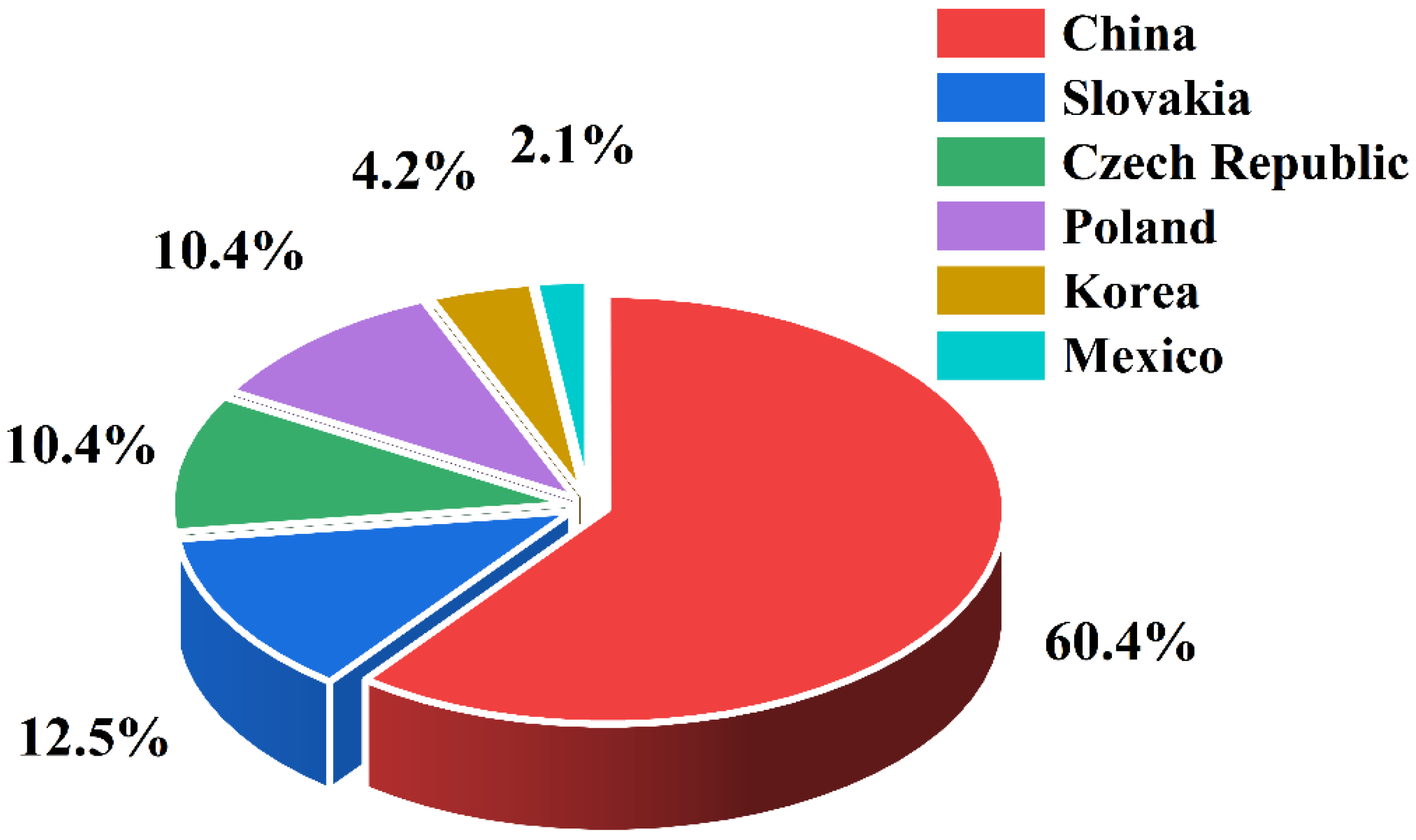
Figure 1. The distribution of authors by country.
Coatings 16 00430 g001
Disclaimer/Publisher’s Note: The statements, opinions and data contained in all publications are solely those of the individual author(s) and contributor(s) and not of MDPI and/or the editor(s). MDPI and/or the editor(s) disclaim responsibility for any injury to people or property resulting from any ideas, methods, instructions or products referred to in the content.


