Article

Optimization of Hot Forming Process Parameters of 7050 Aluminum Alloy Based on TOPSIS and EWM

1
Sichuan Provincial Engineering Research Center of Advanced Manufacturing Technology of Ramjet Engines, Sichuan Polytechnic University, Deyang 618000, China
2
Chongqing Key Laboratory of Advanced Mold Intelligent Manufacturing, College of Materials Science and Engineering, Chongqing University, Chongqing 400044, China
3
Chongqing Jiepin Technology Co., Ltd., Chongqing 401329, China
*
Author to whom correspondence should be addressed.
Coatings 2026, 16(3), 380; https://doi.org/10.3390/coatings16030380
Submission received: 4 September 2025 / Revised: 4 March 2026 / Accepted: 16 March 2026 / Published: 19 March 2026

Abstract

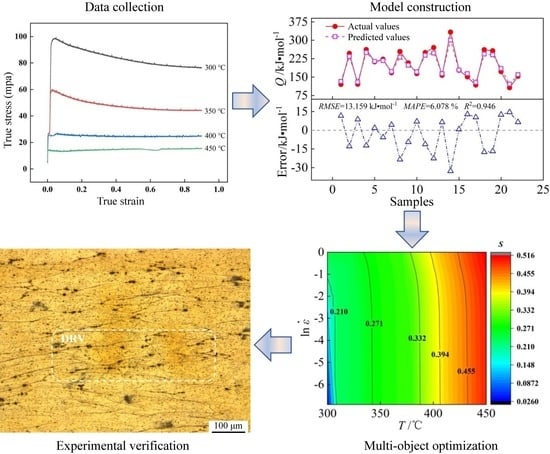
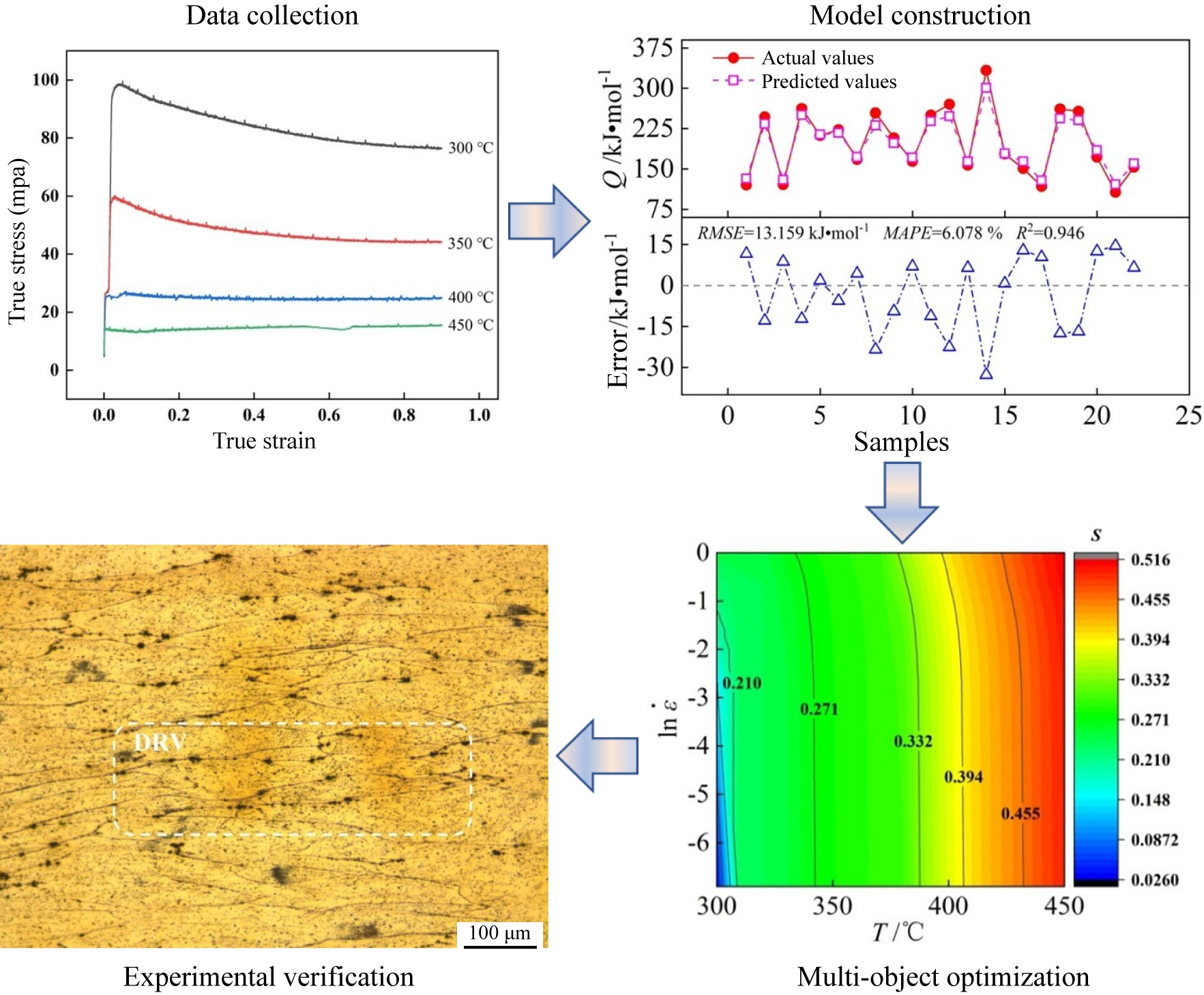
To accurately control the hot workability of 7050 aluminum alloy and determine the optimal process window, systematic hot compression experiments were carried out on the Gleeble-3500 thermal simulation test machine under the multi-group process conditions of deformation temperature 300~450 °C, strain rate 0.001~1 s−1, and maximum deformation of 60%. The high-temperature rheological curve data were collected, and the key hot deformation parameters, such as deformation activation energy Q, Zener–Hollomon (Z) parameter, and power dissipation efficiency η, were calculated based on the experimental results. The random forest prediction model between process parameters and thermal deformation parameters was innovatively constructed to realize the accurate quantification of the parameter relationship. On this basis, the multi-objective process optimization was further carried out by coupling the TOPSIS and EWMs. Finally, the optimal hot deformation process parameters of 7050 aluminum alloy were determined as 410~450 °C and 0.001~1 s−1. The microstructure analysis showed that the main deformation mechanism of the material in the optimized region was dynamic recrystallization, which could effectively ensure the microstructure uniformity and mechanical property stability of the formed parts.

Graphical Abstract

1. Introduction

Firstly, 7050 aluminum alloy, as one of the main materials for important load-bearing components of large aircraft, has high requirements for its mechanical properties and microstructure after hot forming [1,2,3]. Therefore, it is necessary to establish a mapping relationship between process parameters and thermal deformation parameters and optimize process parameters according to actual requirements to provide a theoretical basis for practical production [4,5,6].
At present, scholars at home and abroad have researched the coupling relationship between process parameters and thermal deformation parameters of metal materials, as well as the optimization of process parameters. Wang et al. [7] established the constitutive equation and hot working diagram of 2219 aluminum matrix composite through hot compression experiments, and multi-objective optimization of hot deformation process parameters was carried out, and the optimal hot deformation parameter interval was obtained. Wan et al. [8] studied the flow stress curve characteristics of Fe-Mn-Al-C alloy steel, and a physical constitutive model considering strain coupling was established. Then, the machinability of the steel was evaluated by using the intuitive processing map technology, and the best hot processing process window was obtained. Mohamadizadeh et al. [9] proposed a constitutive model construction method considering deformation conditions and analyzed the corresponding relationship between Q value and microstructure of Fe-18Mn-8Al-0.8C low-density steel under different deformation conditions. Zhao et al. [10] established a modified constitutive model to accurately quantify the rheological behavior of 300 M steel, and the three-dimensional instability diagram and three-dimensional power consumption diagram were constructed to evaluate the hot workability. To meet the precise control requirements of aluminum alloy performance, Wang et al. [11] innovatively combined gradient boosting regressors with genetic algorithms to construct an efficient reverse design system for aluminum alloy composition processing parameters. To explore the parameter optimization law of AlSi10Mg aluminum alloy prepared by powder bed melting additive manufacturing (AM) technology in micro milling, Cevik et al. [12] selected five advanced machine learning models for comparative research and systematically analyzed the prediction and adaptability of different models to the micro milling parameters of this type of AM aluminum alloy. To promote the directional and rational design of high-strength and high-toughness Al-Mg-Si alloys, Ye et al. [13] innovatively proposed an aluminum alloy process optimization system based on machine learning technology, which enables precise matching of material design and process parameters through algorithm empowerment.
To solve the optimization problem of hot processing technology for 7050 aluminum alloy, this paper first addresses the research gap in the existing literature on insufficient accuracy in obtaining high-temperature rheological data and fuzzy quantification of the correlation between thermal deformation parameter calculation and process parameters. Through isothermal thermal compression experiments, rheological data were accurately collected, and key thermal deformation parameters such as deformation activation energy Q, Z-parameters, and power consumption efficiency η were calculated, laying a reliable data foundation for subsequent research. Then, breaking through the limitations of traditional empirical modeling in terms of low fitting accuracy and narrow applicability of parameter relationships, a creative random forest prediction model between process parameters and thermal deformation parameters was constructed to achieve high-precision quantification of their correlation. In addition, breaking the limitations of a single optimization method, a systematic research path of “data collection-model construction-multi objective optimization” was formed by combining the similarity-based sequential preference technique (TOPSIS) with the entropy weight method (EWM). This article not only effectively obtained the optimal range of hot working process parameters for 7050 aluminum alloy, but also provided a directly referenceable process plan for its industrial production; Through the research framework of “experimental data + machine learning + multi method fusion optimization”, innovative technical ideas are provided for the optimization of hot processing technology of similar high-strength aluminum alloy materials, filling the gap in the full chain research of “data-model-optimization” in the process optimization of such materials.

2. Materials and Methods

2.1. Materials

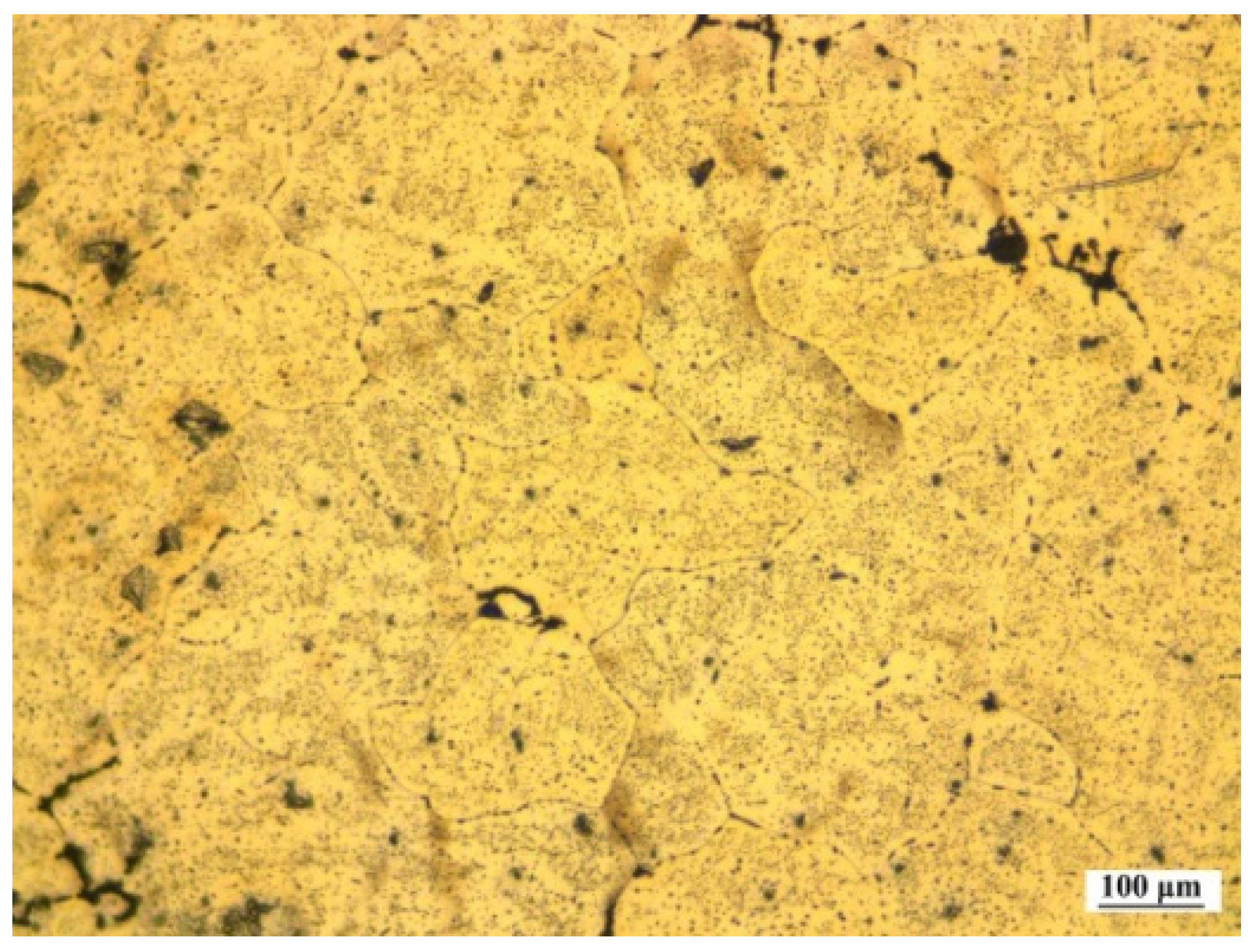
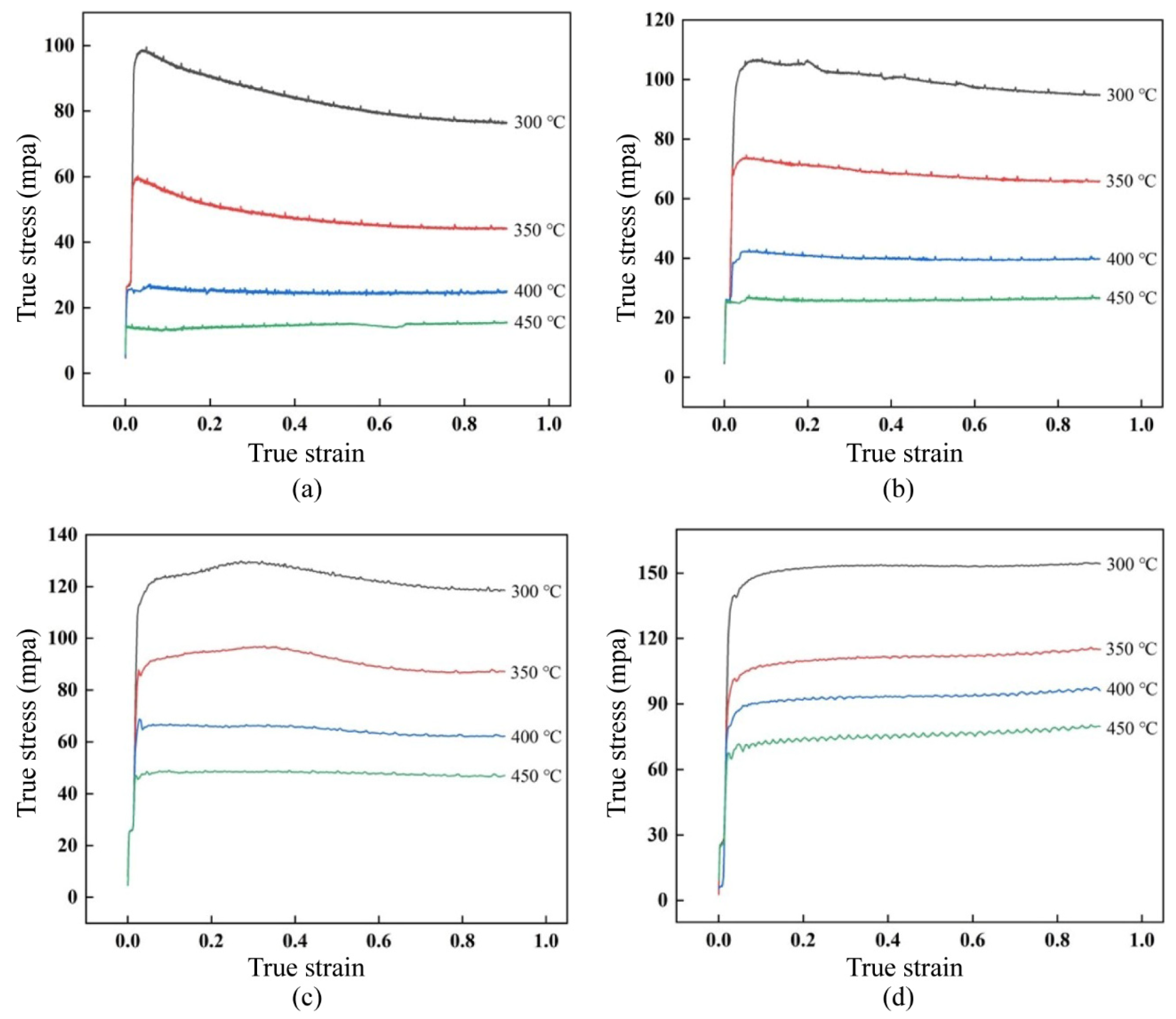
The material used in the experiment is homogenized 7050 aluminum alloy, with its metallographic structure shown in Figure 1 and chemical composition shown in Table 1. The sample was a cylindrical shape of ϕ 8 mm × 12 mm, and the Gleeble-3500 thermophysical simulation test machine was used for isothermal constant strain rate thermal compression experiments. The deformation temperature was 300–450 °C, the strain rate was 0.001–1 s−1, the maximum deformation degree was 60%, and water cooling was quickly carried out after compression. The hot compressed sample was subjected to electrolytic polishing, and surface corrosion was completed using Keller reagent (volume ratio of H2O:HNO3:HCl:HF = 190:5:3:2). Finally, a Leica DMILM metallographic microscope was used for metallographic observation and photography equipment. Figure 2 shows the true stress–strain curves of 7050 aluminum alloy under different thermal deformation conditions.

2.2. Thermal Deformation Activation Energy Q and Z Parameters

Metal materials undergo structural evolution processes such as dislocation climb, grain boundary sliding, and microstructural transformation during thermal deformation. This evolution process requires overcoming a certain energy barrier, and the activation energy Q for thermal deformation is an important parameter that characterizes the material’s thermal deformation process. It can be regarded as the lowest threshold for overcoming energy barriers during deformation [14,15,16]. The Z-parameter is one of the important indicators for measuring the influence of different deformation conditions on the thermal deformation of materials, commonly used to characterize the different softening mechanisms during the deformation process of materials [17,18].
A modified Arrhenius constitutive model considering deformation conditions was adopted to calculate Q and Z parameters. The modified model is as follows:
ε ˙ = A ε , ε ˙ , T sinh α σ n ε , T exp Q ε , ε ˙ , T R T
where ε is strain; ε ˙ is strain rate (s−1); σ is rheological stress (MPa); T is deformation temperature (K); Q is activation energy for deformation (kJ·mol−1); R is molar gas constant (8.314 J·mol−1·K−1); n is stress index; and A and α are constants related to the material.
Taking the logarithm on both sides of Equation (1) can be transformed into:
ln ε ˙ = ln A ε , ε ˙ , T + n ε , T ln sinh α σ Q ε , ε ˙ , T R T
Q ε , ε ˙ , T was jointly obtained by the following Equations (3)–(5):
Q ε , ε ˙ , T = R n ε , T S ε , ε ˙
n ε , T = ln ε ˙ ln sinh α σ ε , T
S ε , ε ˙ = ln sinh α σ 1 / T ε , ε ˙
The Z parameter was calculated using Equation (6) as follows:
Z = ε ˙ exp Q ε , ε ˙ , T R T

2.3. Power Dissipation Efficiency η

According to the dynamic material model theory proposed by Prasad et al. [19,20], metal thermal deformation can be regarded as an energy dissipation process, and the energy G consumed by plastic deformation and the energy J consumed by microstructure evolution are included in the total energy P. The relationship between the three is shown in Equation (7):
P = σ ε ˙ = G + J = 0 ε ˙ σ d ε ˙ + 0 σ ε ˙ d σ
At the specified deformation temperature T and strain ε, the rheological stress σ can be expressed as Equation (8):
σ = A ε ˙ m
where A is a parameter related to temperature and structure; M is a strain rate sensitive factor, which can be obtained by solving the first derivative of the ln σ ln   ε ˙ curve at a specified deformation temperature T and strain ε, that is m = ln σ ln ε ˙ .
Therefore, under different temperature and strain rate conditions, the value of J is
J = 0 σ ε ˙ d σ = m m + 1 σ ε ˙
Under ideal linear relationship conditions, when m = 1, J reaches its maximum value, that is J max = σ ε ˙ / 2 . Under non-ideal linear relationship conditions, the power dissipation efficiency η needs to be used to represent the following:
η = J J max = 2 m m + 1
The larger the value of η, the better the microstructure evolution mechanism during the hot deformation process, indicating that the alloy can obtain better microstructure and properties by processing in the process parameter range corresponding to this value of η.

3. Results and Discussion

3.1. Establishment of Random Forest Model

Using Equations (1)–(10) from the previous section, the values of three indicators, Q, ln Z, and η, can be calculated for different deformation temperatures T (300, 350, 400, and 450 °C), strain rates ε ˙ (0.001, 0.01, 0.1, and 1 s−1), and strain ε (0.05~0.9, with an interval of 0.05), with 288 sets of data for each indicator. Considering the highly nonlinear relationship between Q, ln Z, and η values and deformation temperature T, strain rate ε ˙ , and strain ε, the random forest algorithm was used to construct prediction models for Q, ln Z, and η values under different deformation conditions.
The random forest algorithm is a typical bagging algorithm in machine learning, which trains multiple decision trees and then fuses these results together to form the final result. It has the advantages of being less prone to overfitting, having a simple structure, and strong noise resistance [21,22,23]. The input features of the model are deformation temperature T, strain rate ε ˙ , and strain ε; the output variables are Q, ln Z, and η value, respectively. In the division of the training and testing sets, 266 sets of data were randomly selected to form the training set, and the remaining 22 sets of data were used to form the testing set. The regression performance of the random forest model was affected by the number of decision trees. In this study, the traversal method was used to search within the range of 10~800 decision trees during the model training process to find the optimal number of decision trees.
To test the fitting effect and accuracy of the constructed model, the regression performance and predictive ability of the model were evaluated using mean absolute percentage error (MAPE) (Equation (11)), root mean square error (RMSE) (Equation (12)), and coefficient of determination (R2) (Equation (13)) [24,25].
M A P E = 1 N i = 1 N E i P i E i × 100%
R M S E = 1 N i = 1 N E i P i 2
R 2 = 1 i = 1 N E i P i 2 i = 1 N E i E ¯ 2
where Ei is the actual experimental value, Pi is the model-predicted value, E ¯ is the mean of the actual experimental value, and N is the number of samples.
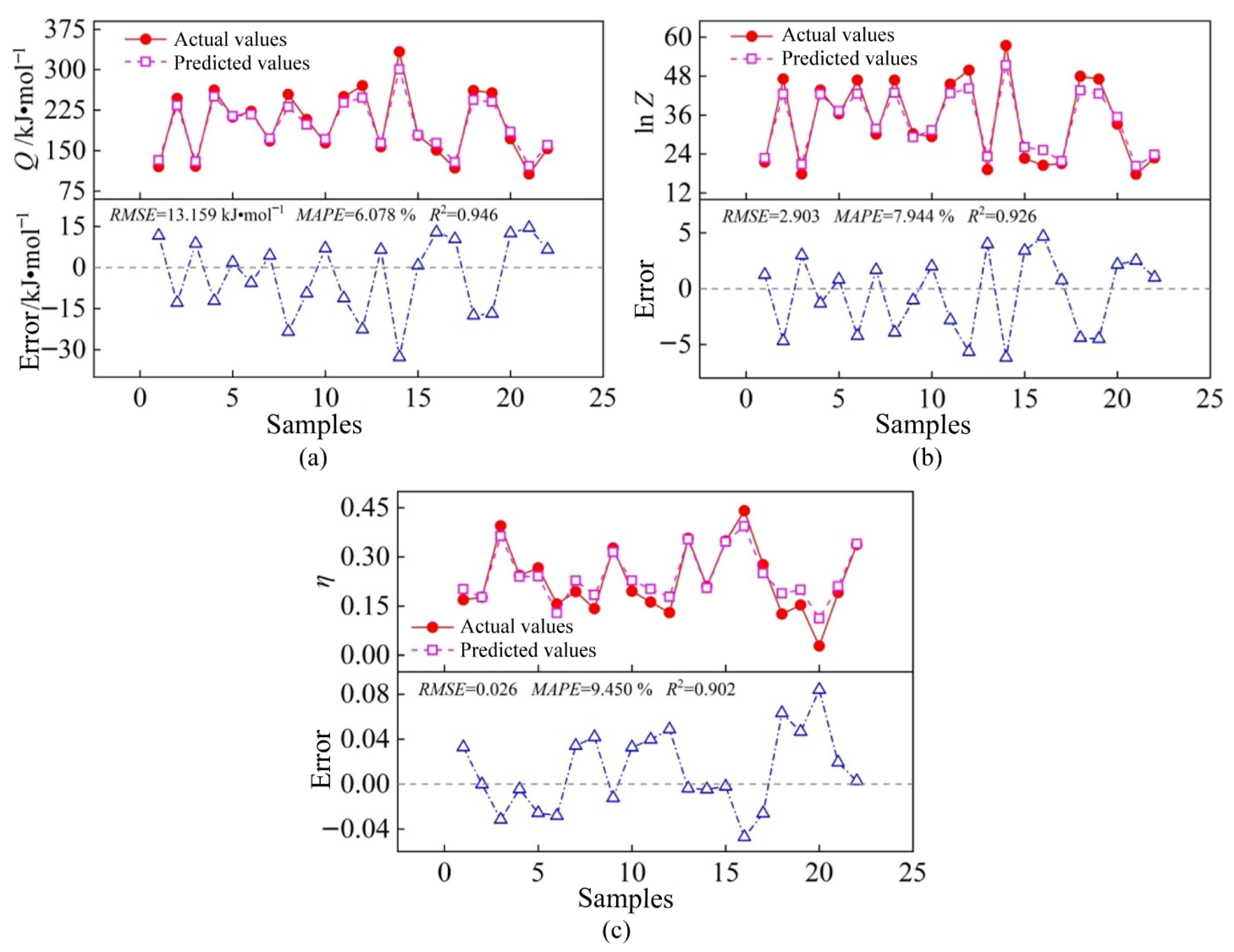
After the training of the random forest model was completed, the test set data were substituted into the trained model for Q, ln Z, and η value prediction, and the prediction performance was evaluated. Figure 3 shows the prediction results and error distribution of the random forest model on the test set. The R2 values of the three models were 0.946, 0.926, and 0.902, all of which were greater than 0.90, indicating that the regression fitting effect of the models was good. The MAPEs of the three models were 6.078%, 7.944%, and 9.45%, all of which were less than 10%, indicating that the prediction accuracy of the models was relatively high. In summary, the regression model constructed using the random forest algorithm could accurately reflect the complex relationship between deformation conditions and Q, ln Z, and η values.

3.2. Process Parameter Optimization Based on TOPSIS and EWMs

During the hot deformation process of 7050 aluminum alloy, it is hoped that deformation occurs easily, meaning the deformation resistance is small, corresponding to a smaller Q value. During the deformation process of 7050 aluminum alloy, it is desired to obtain a recrystallized structure with a small grain size, corresponding to a smaller ln Z value. Meanwhile, a good deformation mechanism generally occurs in the region corresponding to higher η values, which requires larger η values [26,27,28]. Based on the above analysis, it can be concluded that the optimal deformation range for 7050 aluminum alloy corresponds to the regions of small Q value, small ln Z value, and large η value.
For the optimization of process parameters under multi-objective conditions, a random forest regression model based on Q, ln Z, and η was used and combined with the TOPSIS and EWMs to comprehensively evaluate different process parameters, thereby achieving optimization that considered all three objectives. The specific calculation process is as follows:
Step 1: Normalization. The TOPSIS method used a distance scale to measure the gap between samples, so it required the normalization of various indicators with different attributes. If the data of one indicator were as large as possible and the data of another indicator were as small as possible, it would cause scale confusion between different indicators. Therefore, the Q and ln Z values were normalized using Equation (14), and the η value was normalized using Equation (15).
x i k = max   x i k x i k max   x i k min   x i k
x i k = x i k min   x i k max   x i k min   x i k
where x i k and x i k are the original data and the forward processed data, respectively. i = 1, 2, …, n. n is the object to be evaluated; k = 1, 2, …, m. m is the indicator.
Step 2: Standardization. The purpose of standardization was to eliminate the influence of different indicator dimensions. Each indicator was standardized by dividing each column element by the norm of the current column vector (Equation (16)), thereby obtaining the standardized standard matrix Y.
y i k = x i k i = 1 n x i k 2
Step 3: EWM calculates weights. Calculate the weight pik of the i-th evaluation object under the k-th indicator using the original data matrix using the following formula:
p i k = x i k i = 1 n x i k
The matrix composed of the weight pik was denoted as P , and the information entropy value Hk of the k-th evaluation index was calculated using Formula (18). Generally, the range of information entropy Hk was [0, 1]. When the weights of the k-th evaluation index were equal, Hk = 1. Calculate the redundancy of information ek (Equation (19)) and determine the weights ωk (Equation (20)) for each optimization objective.
H k = 1 ln n × i = 1 n p i k × ln p i k
e k = 1 H k
ω k = e k k = 1 m e k
Step 4: Calculate the distance between each evaluation object and the maximum and minimum values. The optimal solution Y+ consists of the maximum value of each column element in Y, while the worst solution Y consists of the minimum value of each column element in Y. Calculate the distance D i + and D i between each evaluation object and the optimal and worst solutions using Equations (21) and (22) respectively, and calculate the degree of closeness of each evaluation object using Equation (23) to obtain the score of each evaluation object.
D i + = k = 1 m ω k Y k + y i k 2
D i = k = 1 m ω k Y k y i k 2
S i = D i D i + + D i
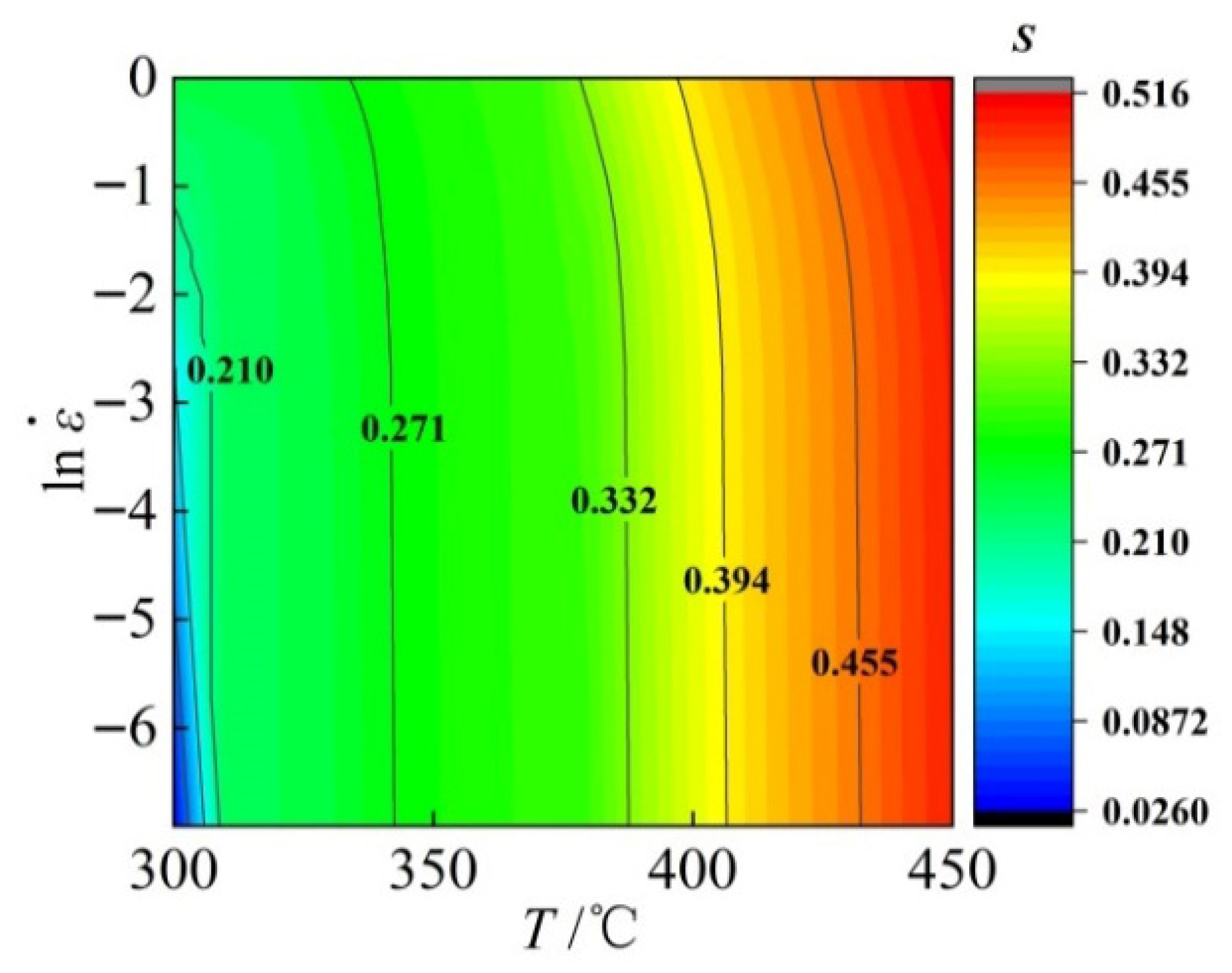
The above method was adopted to optimize the process parameters with a corresponding ε of 0.9. A random forest model was used to predict the Q, ln Z, and η values for 16 deformation temperatures T (300~450 °C, with intervals of 10 °C) and 16 strain rates (0.001~1, with equal intervals) under the condition of strain ε = 0.9, totaling 256 sets of data. Based on this data, EWM was used to calculate the weights of each indicator, and the results are shown in Table 2. The smaller the information entropy value, the greater the amount of information provided, and the corresponding weight is also larger. In this article, ln Z has a larger weight value, indicating a greater degree of value dispersion and impact; the Q value has a smaller weight value, and its value changes more steadily under different deformation conditions. Finally, based on the calculated weights, the TOPSIS method was applied to calculate the comprehensive rating values of each evaluation object, as shown in Figure 4.
As the deformation temperature T and strain rate ε ˙ gradually increased, the comprehensive score value gradually increased, but the influence of deformation temperature on S value was significantly greater than that of strain rate ε ˙ , as shown in Figure 4. The red area in the figure represented the optimal process parameter range after comprehensive evaluation based on the three objectives of Q, ln Z, and η value, with a range of 410~450 °C and 0.001~1 s−1.
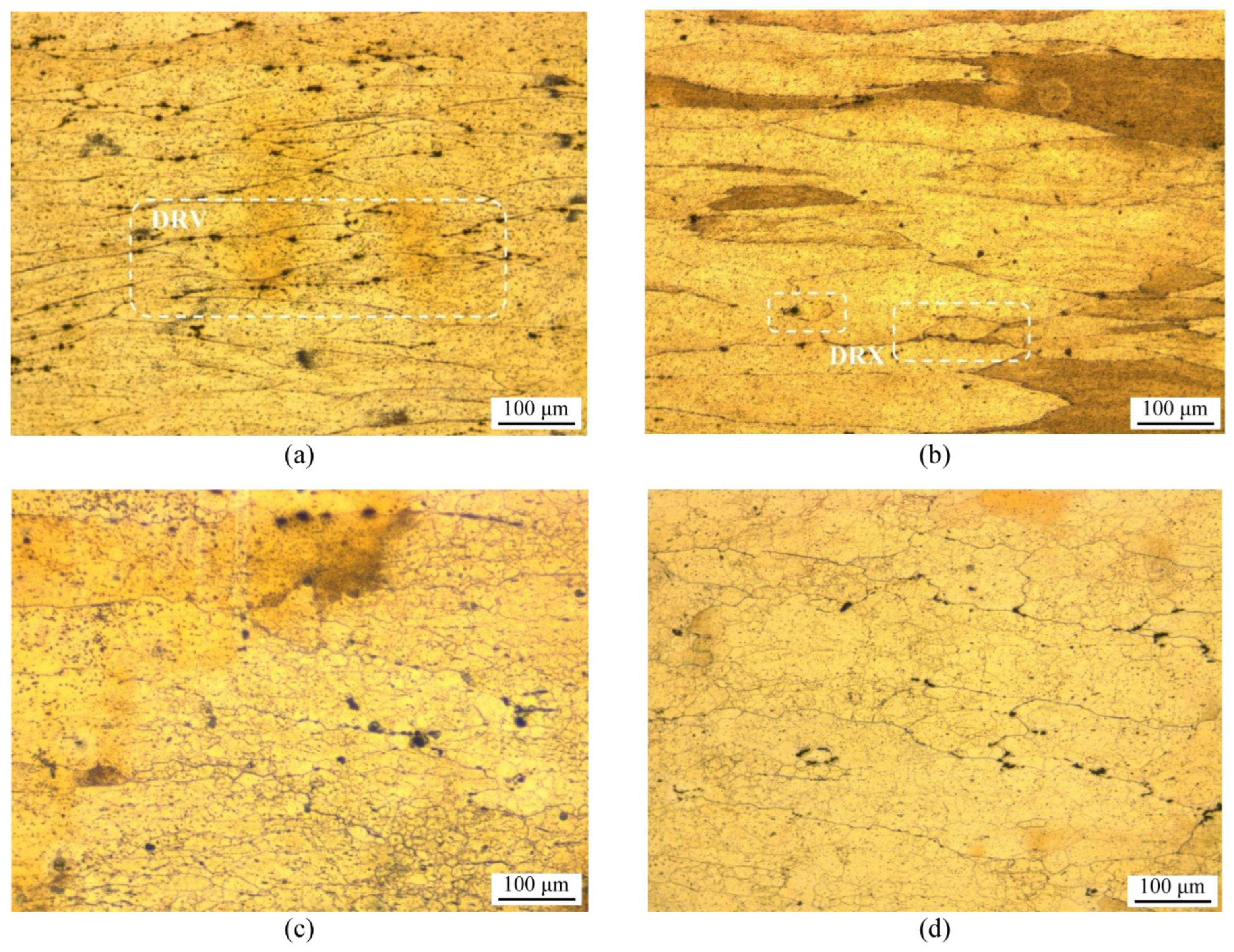
Figure 5 shows the metallographic structure under different process parameters when strain ε = 0.9. In Figure 5a, the microstructure was mainly composed of slender grains, and its main deformation mechanism was dynamic recovery (DRV), as shown in Figure 5a. Most of the grains were slender and dynamically recrystallized at the grain boundaries, and their deformation mechanisms were the coexistence of DRV and dynamic recrystallization (DRX), as shown in Figure 5b. A large number of small equiaxed recrystallized grains appeared, and the corresponding deformation mechanism was DRX, as shown in Figure 5c,d. This recrystallized structure had good mechanical properties and machinability and was an ideal microstructure for hot deformation of 7050 aluminum alloy. By observing the microstructure under different deformation conditions mentioned above, the microstructure state within the optimal process parameter range was good, which could meet the requirements of actual production for microstructure.

4. Conclusions

(1)
The real stress–strain curve of homogenized 7050 aluminum alloy was obtained under deformation conditions of 300~450 °C and a strain rate of 0.001~1 s−1. And the Q, ln Z, and η values were calculated under different deformation temperatures T, strain rates ε ˙ , and strain ε conditions.
(2)
A random forest model was established between process parameters and Q, ln Z, and η values. The R2 and MAPE of the three models were 0.946, 0.926, and 0.902, and 6.078%, 7.944%, and 9.45%, respectively, indicating that the predictive accuracy of the models was high and could be used for subsequent prediction and optimization of process parameters.
(3)
Based on TOPSIS and EWMs, the optimal hot deformation process parameters for 7050 aluminum alloy were obtained in the range of 410~450 °C and 0.001~1 s−1, with the microstructure mainly consisting of equiaxed recrystallized grains and the main deformation mechanism being dynamic recrystallization.

Author Contributions

Conceptualization, Z.L.; Methodology, G.F.; Software, G.F.; Validation, G.F. and X.C.; Formal analysis, D.W.; Investigation, X.C. and Z.L.; Writing—original draft, G.F.; Writing—review & editing, D.W. and Z.L.; Visualization, X.C.; Supervision, X.C. and D.W. All authors have read and agreed to the published version of the manuscript.

Funding

This work was supported by Sichuan Science and Technology Program (No. 2025ZDZX0052).

Institutional Review Board Statement

Not applicable.

Informed Consent Statement

Not applicable.

Data Availability Statement

The original contributions presented in this study are included in the article. Further inquiries can be directed to the corresponding author.

Conflicts of Interest

Author Zuofa Liu was employed by the company Chongqing Jiepin Technology Co., Ltd. The remaining authors declare that the research was conducted in the absence of any commercial or financial relationships that could be construed as a potential conflict of interest.

References

  1. Zhou, B.; Liu, B.; Zhang, S. The Advancement of 7XXX Series Aluminum Alloys for Aircraft Structures: A Review. Metals 2021, 11, 718. [Google Scholar] [CrossRef]
  2. Zhao, Z.; Hu, J.; Xing, C.; Wang, H.; Jin, M.; Huang, S. Microstructural Evolution and Regulation of Inhomogenized 7050 Aluminum Alloy during Compression at Low Temperature. J. Mater. Eng. Perform. 2024, 33, 7960–7974. [Google Scholar] [CrossRef]
  3. Yang, P.; Guan, Z.; Qian, W.; Meng, X.; Zou, S.; Ye, Y.; Hua, Y.; Cai, J. Microstructural evolution and mechanical properties of 7050 aluminum alloy modified via laser shock peening at different heat-treated states. Mater. Today Commun. 2024, 39, 108740. [Google Scholar] [CrossRef]
  4. Ge, J.; Chao, X.; Tian, W.; Zhang, S.; Qi, L. Numerical mapping relationship between process parameters and mechanical properties of unidirectional carbon/carbon composites. Int. J. Mech. Sci. 2024, 267, 109008. [Google Scholar] [CrossRef]
  5. Neethu, N.; Chakravarthy, P. Development of Processing Maps for Hot Deformation: Algorithm and Common Errors. Metall. Mater. Trans. A 2020, 51, 3398–3402. [Google Scholar] [CrossRef]
  6. Ma, X.-l.; Wen, L.-h.; Wang, S.-y.; Xiao, J.-y.; Li, W.-h.; Hou, X. Inherent relationship between process parameters, crystallization and mechanical properties of continuous carbon fiber reinforced PEEK composites. Def. Technol. 2023, 24, 269–284. [Google Scholar] [CrossRef]
  7. Wang, J.; Peng, K.; Liang, Q.; Zhang, J. Optimization of thermal deformation process parameters of 2219 Al matrix composites. Heliyon 2024, 10, e30082. [Google Scholar] [CrossRef]
  8. Wan, P.; Yu, H.; Li, F.; Gao, P.; Zhang, L.; Zhao, Z. Hot Deformation Behaviors and Process Parameters Optimization of Low-Density High-Strength Fe–Mn–Al–C Alloy Steel. Met. Mater. Int. 2022, 28, 2498–2512. [Google Scholar] [CrossRef]
  9. Mohamadizadeh, A.; Zarei-Hanzaki, A.; Abedi, H.R. Modified constitutive analysis and activation energy evolution of a low-density steel considering the effects of deformation parameters. Mech. Mater. 2016, 95, 60–70. [Google Scholar] [CrossRef]
  10. Zhao, M.; Huang, L.; Li, C.; Li, J.; Li, P. Evaluation of the deformation behaviors and hot workability of a high-strength low-alloy steel. Mater. Sci. Eng. A 2021, 810, 141031. [Google Scholar] [CrossRef]
  11. Wang, Y.; Wei, X.; Wang, C.; Xu, W. Physical metallurgy-guided machine learning for strength-plasticity optimization in aluminum alloys. Mater. Today Commun. 2025, 49, 113970. [Google Scholar] [CrossRef]
  12. Cevik, Z.A.; Ozsoy, K.; Ercetin, A.; Sariisik, G. Machine Learning-Driven Optimization of Machining Parameters Optimization for Cutting Forces and Surface Roughness in Micro-Milling of AlSi10Mg Produced by Powder Bed Fusion Additive Manufacturing. Appl. Sci. 2025, 15, 6553. [Google Scholar] [CrossRef]
  13. Ye, J.; Zhao, H.; Zhang, B.; Li, M.; Liang, X. Machine Learning-Assisted Process Optimization of Al-Mg-Si Alloys. J. Mater. Eng. Perform. 2025, 34, 24401–24414. [Google Scholar] [CrossRef]
  14. Cao, Y.; Ni, S.; Liao, X.; Song, M.; Zhu, Y. Structural evolutions of metallic materials processed by severe plastic deformation. Mater. Sci. Eng. R Rep. 2018, 133, 1–59. [Google Scholar] [CrossRef]
  15. Zhu, Q.; Huang, Q.; Zhou, H.; Wang, J. Inclination-governed deformation of dislocation-type grain boundaries. J. Mater. Res. 2021, 36, 1306–1315. [Google Scholar] [CrossRef]
  16. Yao, H.; Ye, T.; Wang, P.; Wu, J.; Zhang, J.; Chen, P. Structural Evolution and Transitions of Mechanisms in Creep Deformation of Nanocrystalline FeCrAl Alloys. Nanomaterials 2023, 13, 631. [Google Scholar] [CrossRef]
  17. Yu, Y.; Pan, Q.; Wang, W.; Huang, Z.; Xiang, S.; Liu, B. Dynamic softening mechanisms and Zener-Hollomon parameter of Al–Mg–Si–Ce–B alloy during hot deformation. J. Mater. Res. Technol. 2021, 15, 6395–6403. [Google Scholar] [CrossRef]
  18. Li, H.; Hu, Z.; Hua, L.; Sun, Q. Influence of Thermal Deformation Parameters on Mechanical Properties and Microstructure Evolution of AA7075 Aluminum Alloy during Hot Stamping-Quenching Process. JOM J. Miner. Met. Mater. Soc. 2019, 71, 4778–4788. [Google Scholar] [CrossRef]
  19. Prasad, Y.V.R.K.; Gegel, H.L.; Doraivelu, S.M.; Malas, J.C.; Morgan, J.T.; Lark, K.A.; Barker, D.R. Modeling of dynamic material behavior in hot deformation: Forging of Ti-6242. Metall. Trans. A 1984, 15, 1883–1892. [Google Scholar] [CrossRef]
  20. Prasad, Y.V.R.K.; Rao, K.P. Processing maps and rate controlling mechanisms of hot deformation of electrolytic tough pitch copper in the temperature range 300–950 °C. Mater. Sci. Eng. A 2005, 391, 141–150. [Google Scholar] [CrossRef]
  21. Sun, Z.; Wang, G.; Li, P.; Wang, H.; Zhang, M.; Liang, X. An improved random forest based on the classification accuracy and correlation measurement of decision trees. Expert Syst. Appl. 2024, 237, 121549. [Google Scholar] [CrossRef]
  22. Ao, Y.; Li, H.; Zhu, L.; Ali, S.; Yang, Z. The linear random forest algorithm and its advantages in machine learning assisted logging regression modeling. J. Pet. Sci. Eng. 2019, 174, 776–789. [Google Scholar] [CrossRef]
  23. Li, Y.; Yan, C.; Liu, W.; Li, M. A principle component analysis-based random forest with the potential nearest neighbor method for automobile insurance fraud identification. Appl. Soft Comput. 2018, 70, 1000–1009. [Google Scholar] [CrossRef]
  24. de Myttenaere, A.; Golden, B.; Le Grand, B.; Rossi, F. Mean Absolute Percentage Error for regression models. Neurocomputing 2016, 192, 38–48. [Google Scholar] [CrossRef]
  25. Karunasingha, D.S.K. Root mean square error or mean absolute error? Use their ratio as well. Inf. Sci. 2022, 585, 609–629. [Google Scholar] [CrossRef]
  26. Wang, Y.; Zhang, W.; Sun, X.; Huang, Z.; Sun, X.; Zhuang, X.; Zhao, Z. Flow Behavior and Dynamic Recrystallization Mechanism of 7050-T7451 Aluminum Alloy during Hot Deformation. J. Mater. Eng. Perform. 2025, 34, 18050–18065. [Google Scholar] [CrossRef]
  27. Li, J.-p.; Shen, J.; Yan, X.-d.; Mao, B.-p.; Yan, L.-m. Microstructure evolution of 7050 aluminum alloy during hot deformation. Trans. Nonferrous Met. Soc. China 2010, 20, 189–194. [Google Scholar] [CrossRef]
  28. Wu, K.; Bu, H.; Qi, Q.; Li, S.; Li, M. Asymmetry of hot deformation behavior of 7050-T7451 aluminum alloys under different stress conditions. Mater. Today Commun. 2025, 47, 113146. [Google Scholar] [CrossRef]
Figure 1. Microstructure of homogenization 7050 aluminum alloy.
Coatings 16 00380 g001
Figure 2. True strain-stress curves of 7050 alloy at different strain rates: (a) 0.001 s−1; (b) 0.01 s−1; (c) 0.1 s−1; (d) 1 s−1.
Coatings 16 00380 g002
Figure 3. Predictive result of random forest model: (a) prediction results and error distribution of Q value; (b) prediction results and error distribution of ln Z value; (c) prediction results and error distribution of η value.
Coatings 16 00380 g003
Figure 4. Optimization results at a strain of 0.9.
Coatings 16 00380 g004
Figure 5. Microstructures under different process parameters at a strain of 0.9: (a) 300 °C and 0.001 s−1; (b) 350 °C and 0.01 s−1; (c) 450 °C and 0.1 s−1; (d) 450 °C and 0.001 s−1.
Coatings 16 00380 g005
Table 1. Chemical composition of 7050 aluminum alloy (mass fraction, %).
ZnMgCuZrTiFeSiBeAl
6.052.212.160.110.0250.030.020.001Bal.
Table 2. The weight value of the optimization objective by EWM.
ObjectivesHkekωk
Q0.9970.002810.236
ln Z0.9950.004620.388
η0.9960.004470.375
Disclaimer/Publisher’s Note: The statements, opinions and data contained in all publications are solely those of the individual author(s) and contributor(s) and not of MDPI and/or the editor(s). MDPI and/or the editor(s) disclaim responsibility for any injury to people or property resulting from any ideas, methods, instructions or products referred to in the content.