Article

Facile Elaboration of TiO2-ZnO-Based Low-Cost H2 Gas Sensors

1
Multidisciplinary Laboratory of Exact and Applied Sciences (LPSEA), Higher School of Technology of Fkih Ben Salah, Sultan Moulay Slimane University, Fkih Ben Salah 23000, Morocco
2
LVOBEEN Laboratory, MEEM & DD Group, Faculty of Science and Technology Mohammedia, Hassan II University of Casablanca, BP 146, Mohammedia 20650, Morocco
3
Department of Metallurgy and Materials Engineering, Faculty of Engineering, Karadeniz Technical University, Trabzon 61000, Turkey
4
Department of Electrical and Electronics, Faculty of Engineering, Ataturk University, Erzurum 25240, Turkey
5
LaMCScI, CNRST-URL-17, Faculté des Sciences, Université Mohammed V de Rabat, BP 1014 RP, Rabat 10000, Morocco
*
Author to whom correspondence should be addressed.
Coatings 2026, 16(3), 375; https://doi.org/10.3390/coatings16030375
Submission received: 9 February 2026 / Revised: 12 March 2026 / Accepted: 12 March 2026 / Published: 17 March 2026

Abstract

This study presents the development of a low-cost H2 gas sensor made from a titanium dioxide–zinc oxide composite by means of a simple, cost-effective screen-printing method. The sensing material was created by mixing titanium dioxide and zinc oxide nanoparticles with an organic binder, which was screen-printed onto a glass substrate containing silver electrodes. These samples were then characterized using X-ray diffraction (XRD) and field-emission scanning electron microscopy (FESEM). The XRD results confirmed that the films boasted well-defined crystallinity, with predominant anatase and hexagonal ZnO phases, as well as uniformity of grains. Sensor performance was evaluated in a custom-built chamber at hydrogen concentrations of 100 to 1000 ppm and at operating temperatures of 100 °C, 200 °C, and 300 °C. The results indicate improved sensor performance as the operating temperature increased to 300 °C, with the best sensitivity values of 0.99, 1.17, and 1.31 at hydrogen concentrations of 100, 500, and 1000 ppm, respectively. The sensor showed stable and reproducible response characteristics, and its responses were retimed after a few hundred seconds. Low-cost fabrication, ease of processing, and reliable sensor performance make titanium oxide–zinc oxide composites promising candidates for hydrogen detection.

1. Introduction

Acetylene, ammonia, hydrogen, propane, propylene, and methane are all flammable gases, also known as combustible gases. They burn when mixed with an oxidizer and an ignition source. In any container or confined space, even the smallest amount of combustible gas can form an explosive mixture if all conditions are met. However, leaking flammable gases can form an explosive mixture with the surrounding air, resulting in a fire or explosion [1].
Hydrogen gas is tasteless, colorless, and odorless; it is therefore not detectable by humans. Its low ignition energy and wide burning range make it easily flammable and explosive. The rapid and accurate detection of hydrogen is therefore required during the production, storing, and processing of hydrogen. It is also critical for surveying/tracking the hydrogen concentration in nuclear reactors, coal mines, and semiconductor manufacturing [2,3]. Traditional hydrogen detectors, such as mass spectrometers, specific ionization gas pressure, and gas chromatograph sensors, are limited by their high cost, large size, slow response, and high operating temperature, with significant potential safety risks. Smaller hydrogen gas sensors, lower production costs and power consumption, lower operating temperatures, and faster responses are required for general purpose (e.g., portable) use.
Current work on chemiresistive hydrogen sensors indicates that MOS systems still stand out because they are straightforward, tough, durable, and cheap to make. Studies have shifted toward tuning charge movements at interfaces, adjusting defects inside materials, and boosting oxygen behavior on surfaces—this helps to increase response strength and lower the necessary heat levels [4]. Focusing on titanium dioxide, researchers often turn to its nano-sized versions and blended structures since they hold up well in harsh conditions, while allowing for control over oxygen gaps within the structure. Recently, detailed studies have pointed out that arranging TiO2 into tiny frameworks or mixing it with other materials can boost sensitivity by expanding the surface area where the reactions occur and making electron movement more efficient [5]. Just like before, ZnO still sets the standard for n-type MOS in detecting gases. Work has recently focused on changing its makeup through doping or blending with other materials. Tweaking flaws and contact zones in ZnO turns out to lift performance sharply. These adjustments open clearer paths to sharper detection results [6]. Mixing TiO2 with ZnO makes sense because it forms a junction where the two materials meet; this kind of boundary pushes electron-poor zones closer together. This shift boosts how much the material resists the current when hit by gases like hydrogen [5,7]. A single-file mixture of TiO2 and ZnO, equal in measure, was the starting point here—not for elegance but because it creates the most meeting zones between particles without clumping inside a printable goo. This even spread keeps the surface interactions steady through each sensor layer [7]. Even if TiO2 usually acts one way, some odd results show that it sometimes behaves in the opposite manner when flaws or surface quirks appear. This shift might occur because the inside pushes electrons while the outside pulls them in through behaviors such as hole buildup. Contacts or grain edges could tilt things further, especially if tiny bits of metal drift into spots where they should not be [8]. It is therefore clearer what makes our work stand out: we used an affordable, large-scale screen-printing method to make TiO2-ZnO films. Instead of skipping details, we looked closely at how hydrogen affects these materials across different temperatures and concentrations. What caught our attention was the unusual way in which the signal flipped, i.e., sometimes positive, sometimes negative, which led us into a deeper discussion about whether surfaces or interfaces drive this behavior [9].
The conventional metal oxide gas sensor consists of the following components: a sensitive layer, a substrate, electrodes, and a heater. At present, the majority of the metal oxide gas sensors are made by screen-printing on small and thin substrates. The benefit of this procedure is that the film’s semi-conductor can be fabricated via batch processing, leading to little physical characteristic variation for numerous sensor elements.
Recently, the fast development of the hydrogen economy has fostered research on new types of hydrogen gas sensors that enable the faster and more sensitive detection of hydrogen, as well as compatibility with microelectronic integrated circuits. Currently, many different types of hydrogen sensors are commercially available, ranging from electrochemical, semiconductor, thermoelectric, metallic, optical, and acoustic sensors. Among them, semiconductor sensors have high sensitivity, fast response, good stability, and promising integration potential in hydrogen detection performance [10,11,12]. The TiO2-ZnO mixture is the most studied metal oxide semiconductor with respect to a number of different applications, e.g., solar cells [13], photo-catalysis [14], photo-reduction [15], and gas sensors [16]. The semiconductors chosen in this work are TiO2 and ZnO because they are known to be chemically stable, non-toxic, biocompatible, and inexpensive broadband materials [17]. Due to their low cost, TiO2 gas sensors could also be safe and acceptable for hydrogen gas sensing [18]. As a metal oxide semiconductor, the TiO2 gas sensor is able to operate at low operating temperatures—i.e., up to room temperature [19,20,21]—with fast response [22]. Such criteria have made TiO2 a useful material for gas detection applications.
In this context, the present work aims to develop a simple and cost-effective hydrogen gas sensor based on a TiO2-ZnO composite sensing layer. Unlike many previous studies that rely on noble metal doping or complex nanostructure fabrication techniques, the proposed sensor is fabricated using a facile screen-printing method, which offers good reproducibility and scalability for practical applications. The TiO2-ZnO composite is designed to exploit the interfacial interactions between both oxides, which can enhance surface reaction processes and modulate electrical properties during gas adsorption. The sensing performance of the fabricated sensors is systematically investigated under different hydrogen concentrations (100–1000 ppm) and operating temperatures (100–300 °C) in a custom-built gas chamber. The present study, therefore, provides a low-cost alternative approach to hydrogen detection, while also offering insight into the sensing behavior of TiO2-ZnO composite systems.

2. Materials and Methods

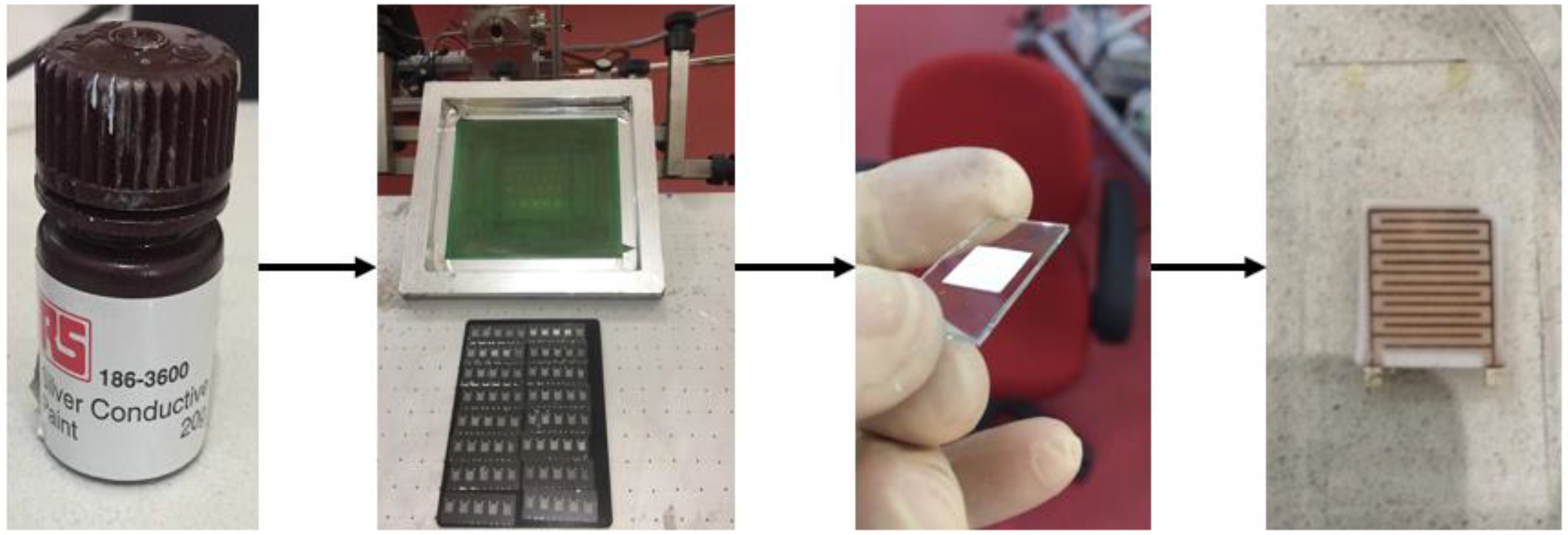
In this work, TiO2-ZnO mixture films were prepared using nanopowder deposited on electrode substrates. Before deposition, we manufactured the silver electrode. We used the painting of conductive silver RS 186-3600, and we deposited the sensing material—a mixture of TiO2 and ZnO nanopowder supplied by Sigma-Aldrich (Steinheim am Albuch, Germany). The sensing materials were prepared using commercially available titanium dioxide (TiO2) and zinc oxide (ZnO) nanopowders supplied by Sigma-Aldrich (Steinheim, Germany). The TiO2 nanopowder corresponds to the anatase phase, with a purity higher than 99% and an average particle size below 100 nm. The ZnO nanopowder also presents a purity higher than 99%, with a particle size below 100 nm. These nanopowders were used without further purification. The use of high-purity nanoscale oxides ensures good surface activity and reproducibility of the sensing layer. The TiO2 and ZnO powders were mixed in an equimolar ratio (1:1) and combined with an organic binder to form a printable paste suitable for the screen-printing deposition process. An organic binder consisting of m-xylene, linseed oil, and α-terpineol was used to mix TiO2 and ZnO nanopowders. These two oxide powders were first combined in an equimolar ratio (1:1); then, the organic binder was added gradually to create a homogeneous, viscous paste, as required for screen-printing. All the binder components serve to create satisfactory oxide particle dispersion, promote adhesion to the substrate, and provide the desired rheological properties during printing. The total number of components should be stirred continuously until a uniform paste is produced. Similar organic binder formulations have been widely used in the screen-printed metal oxide gas sensors reported in previous studies, where polymer binders such as ethyl cellulose and organic solvents like terpineol are employed to adjust the rheological properties of the printable paste and ensure the good adhesion of the sensing layer [23,24]. The electrode and sensing films was printed on the glass substrate using a screen-printing method (see Figure 1). First, as a first layer, the electrode was deposited on the glass substrate and cooled by the organic binder, which was prepared by mixing m-xylene, linseed oil, and α-terpineol. The purpose of this binder is to hold the electrodes on the substrate and to ensure good adhesion between the electrodes and the glass substrate, which is then annealed in the furnace at a temperature of 200 °C for 30 min. Then, we deposited a mixture of TiO2-ZnO with a molar ratio of 1:1 on these prepared electrodes. The sensitive metal oxides were also prepared from nanopowders of the TiO2-ZnO films.

Characterization Methods

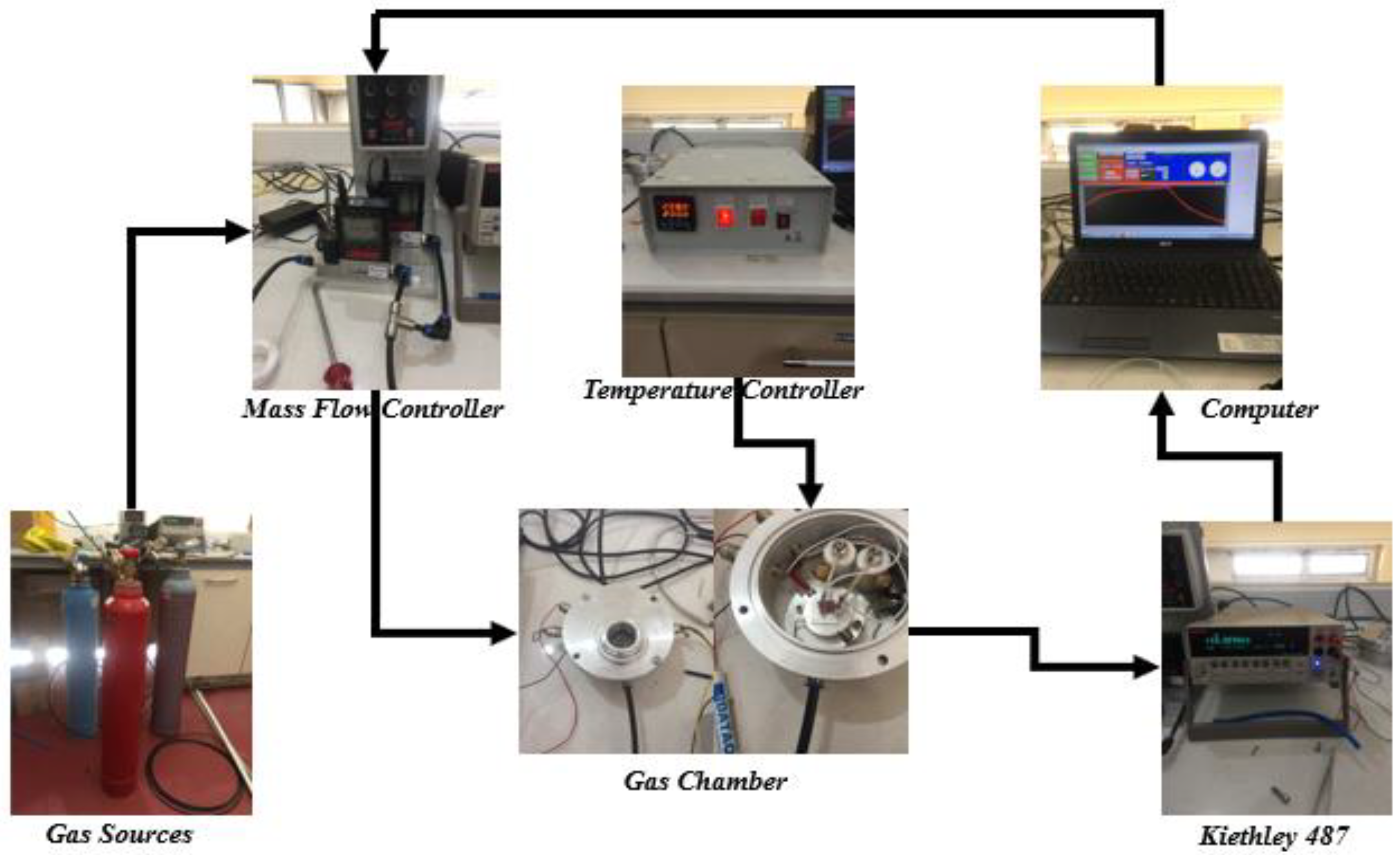
The structural properties were characterized by an X-ray diffractometer (with a wavelength of CuKα radiation of λ = 1.54056 Å) at a 2θ angle ranging from 20° and 90°, and the morphological properties were determined by field emission scanning electron microscopy (FESEM). After these conventional investigations, we placed the TiO2-ZnO film measurements in gas chambers with different hydrogen concentration levels, namely, 100, 500, and 1000 ppm. The gas chamber was connected to the mass flow controller, temperature controller, and Keithley 487. Three different operating temperatures were tested on the gas sensors, namely, 100 °C, 200 °C, and 300 °C. All experimental devices are summarized in Figure 2.

3. Results and Discussion

3.1. Structural Properties

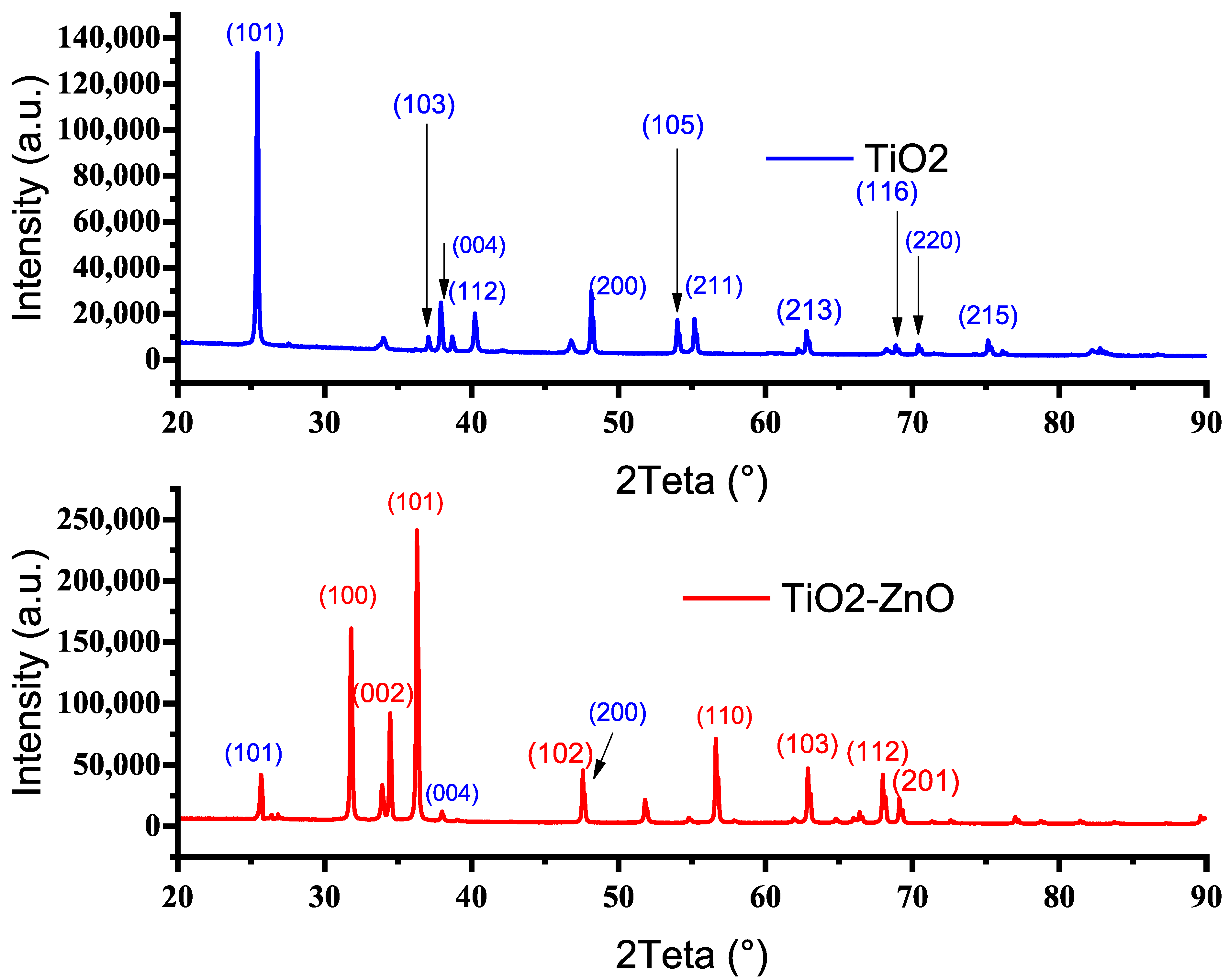
In Figure 3, the X-ray diffraction pattern of TiO2 and TiO2-ZnO peaks versus 2θ (ranging between 20° and 90°) is given. As seen from all X-ray diffraction peaks reflected at 25.30°, 36.96°, 37.82°, 38.59°, 48.06°, 53.91°, 55.08°, and 62.13° corresponding to (101), (103), (004), (112), (200), (105), (211), and (213) planes, on characterized TiO2 film, we observe that the high peaks correspond to 25.30, indicating the privileged orientation along the (101) plane. The peaks and preferential direction along the (101) plane indicate the presence of an anatase TiO2 structure, which are consistent with the JCPDS card no: 21-1272. No other peaks characteristics of other TiO2 phases were observed [25]. On the other hand, the X-ray diffraction of the TiO2-ZnO film displayed other peaks corresponding to (100), (002), (101), (102), (110), (103), (112), and (201) planes, i.e., those of the TiO2 when we added the ZnO portion. According to JCPDS card no: 36-1441, the peaks are of the ZnO hexagonal compound, indicating polycrystalline crystallization with an hexagonal wurtzite unit cell structure [26]. This behavior confirms both the good formation and crystallization of TiO2-ZnO.
The results obtained through X-ray diffraction are compared with those reported in the literature [26,27].
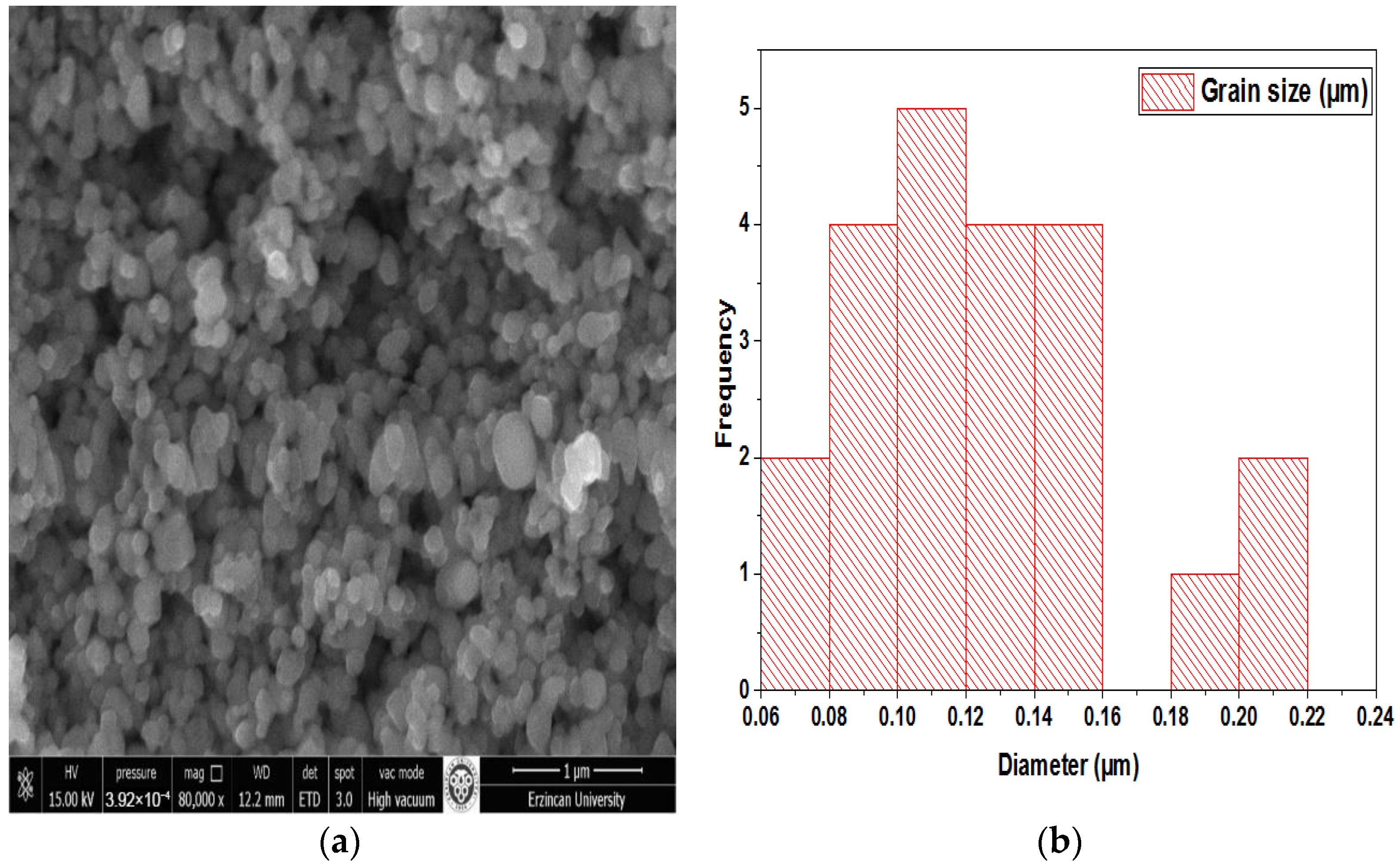
Figure 4a shows the FESEM image of the printed TiO2-ZnO film. We observed the homogeny and strong morphology of the TiO2-ZnO layer, and we revealed the smaller grain size distributed uniformly on all TiO2-ZnO compound.
However, Figure 4b reveals the distribution of the different grain sizes found in the thin layer obtained at 500 °C. The grains sizes vary between 0.06 and 0.22 µm, with a high frequency found for 0.12–0.12 nm, which confirms the nanostructure of the TiO2-ZnO films.
To obtain a strong gas sensor performance, the sensing material should have a rough, granular surface [28,29]. The image obtained clarifies the use of TiO2-ZnO films in gas sensing applications.

3.2. Performance of TiO2-ZnO Gas Sensor at Different Operating Temperatures

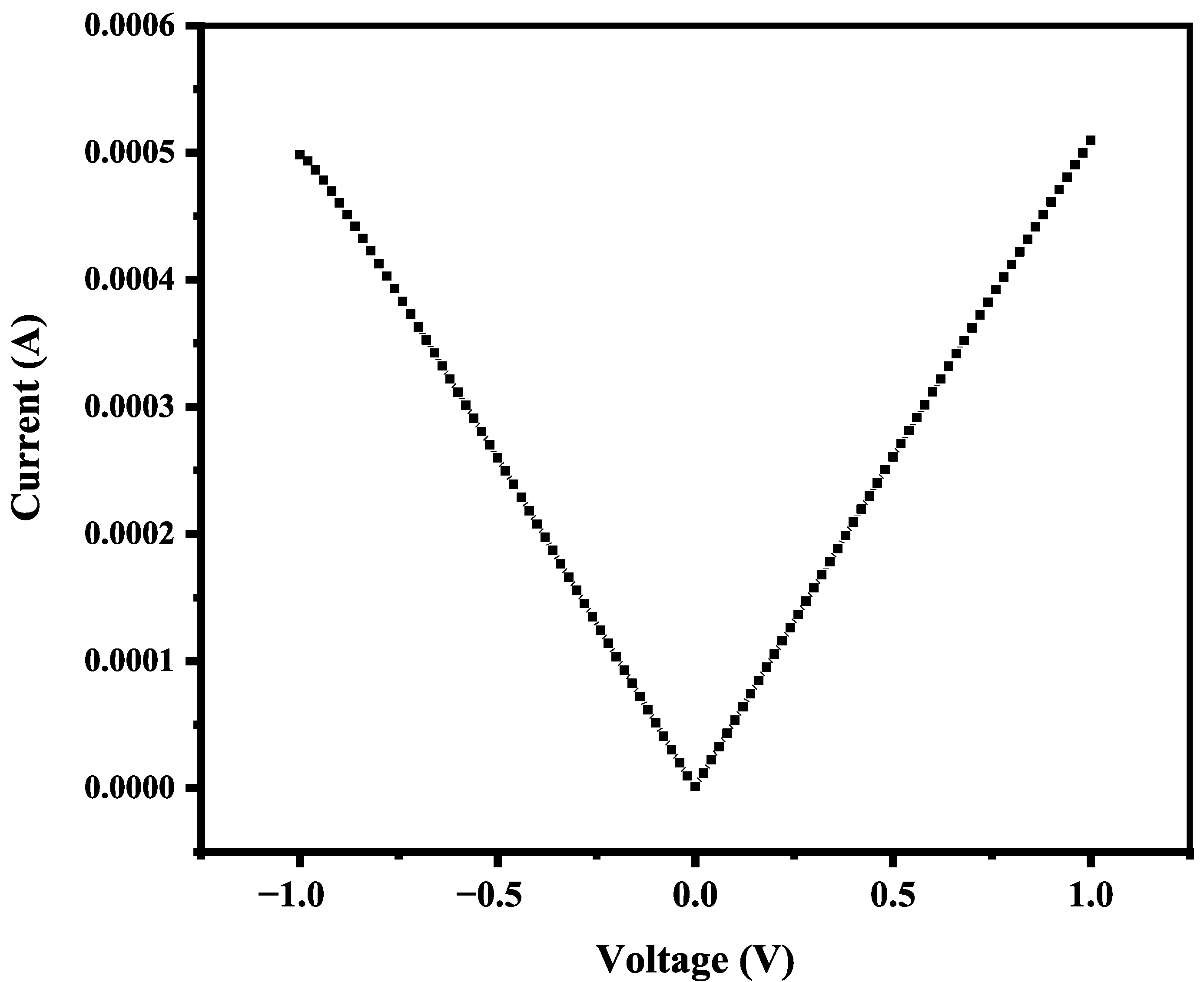
The sensing measurements of TiO2-ZnO were carried out using hydrogen gas, which behaves as an electron donor. In order to evaluate the sensitivity of our device, we first studied the current–voltage characteristics profile of a titanium oxide-doped zinc oxide gas sensor at various gate biases (varying from −1 V to 1 V), both before and after exposure to hydrogen. Figure 5 shows that the I–V characteristics of the gas sensor change linearly, which confirms the stability of the layer resistance before exposure to hydrogen. The nearly linear I–V behavior observed in Figure 5 suggests the formation of an ohmic contact between the Ag electrodes and the TiO2-ZnO sensing layer. Similar linear current–voltage characteristics have been widely reported in metal oxide semiconductor gas sensors operating in resistive configurations, where electrical transport mainly occurs through the grains and grain boundaries of the sensing material [30].
The TiO2-ZnO sensor’s I–V characteristics show an approximately linear response within the voltage range of −1 V and +1 V. Therefore, the linear I–V characteristic indicates good ohmic contact between the Ag electrodes and the oxide sensor layer such that charge carriers can pass freely through the semiconductor without being impeded by any significant barrier. This is a common characteristic in resistive metal oxide gas sensors since the primary means for conduction in these devices is charge transfer through both semiconductor grains and grain boundaries, rather than by electrode–semiconductor junction effects. In addition, the oxygen species adsorbed onto the surface of the oxide create depletion regions at the grain boundaries, which will control the resistance of the overall sensing layer. Therefore, when hydrogen gas is introduced, it will react with the oxygen species that have previously been adsorbed onto the surface of the oxide. This will modify the charge carrier concentration and will therefore alter the electrical resistance of the material while still preserving the overall linear I–V characteristic. Similarly to that which was observed for TiO2- and ZnO-based gas sensors utilizing resistive sensing configurations, all of these I–V characteristics exhibited similar linear or quasi-linear behaviors [11,31]. These observations confirm that the sensing mechanism is mainly governed by surface reactions and the modulation of the depletion layer within the semiconductor network.
Looking at how well the new TiO2-ZnO sensor works means checking it against earlier hydrogen sensors, shown in Table 1. As for SnO2, ZnO, NiO, and even forms of TiO2 on a tiny scale, these metal oxides pop up often when detecting H2 [11,18,20,31,32]. Instead of keeping things simple, some approaches add expensive metals like Pd or Pt, which boost speed and reactivity but bring greater costs and trickier production steps. Apart from needing temperatures around 300–400 °C, SnO2- and Pd-enhanced ZnO sensors often show high sensitivity. However, the TiO2-ZnO mix employed in this study matches their level, despite skipping the use of precious metals. While the reaction speed remains similar to standard metal oxides, what stands out is how affordably it can be made using screen-printing. Its structure holds up well over repeated uses, showing consistent results each time. It is built tough but is simple to produce—this becomes clear after testing. Even so, when placed beside carbon-based compounds like phthalocyanines, which are effective at cooler temperatures yet fragile under heat or harsh chemicals, the new TiO2-ZnO detector holds firm beyond 300 °C. The low cost, ease of production, and consistent response to hydrogen speak to this mixture’s significant potential for use in everyday sensors.
Compared to the noble metal-modified or complex nanostructured systems reported in [11,18,20,31,32], the proposed TiO2-ZnO sensor offers competitive sensitivity while avoiding expensive catalysts and maintaining a simple, low-cost screen-printing fabrication process.

3.3. Mechanism of Detection

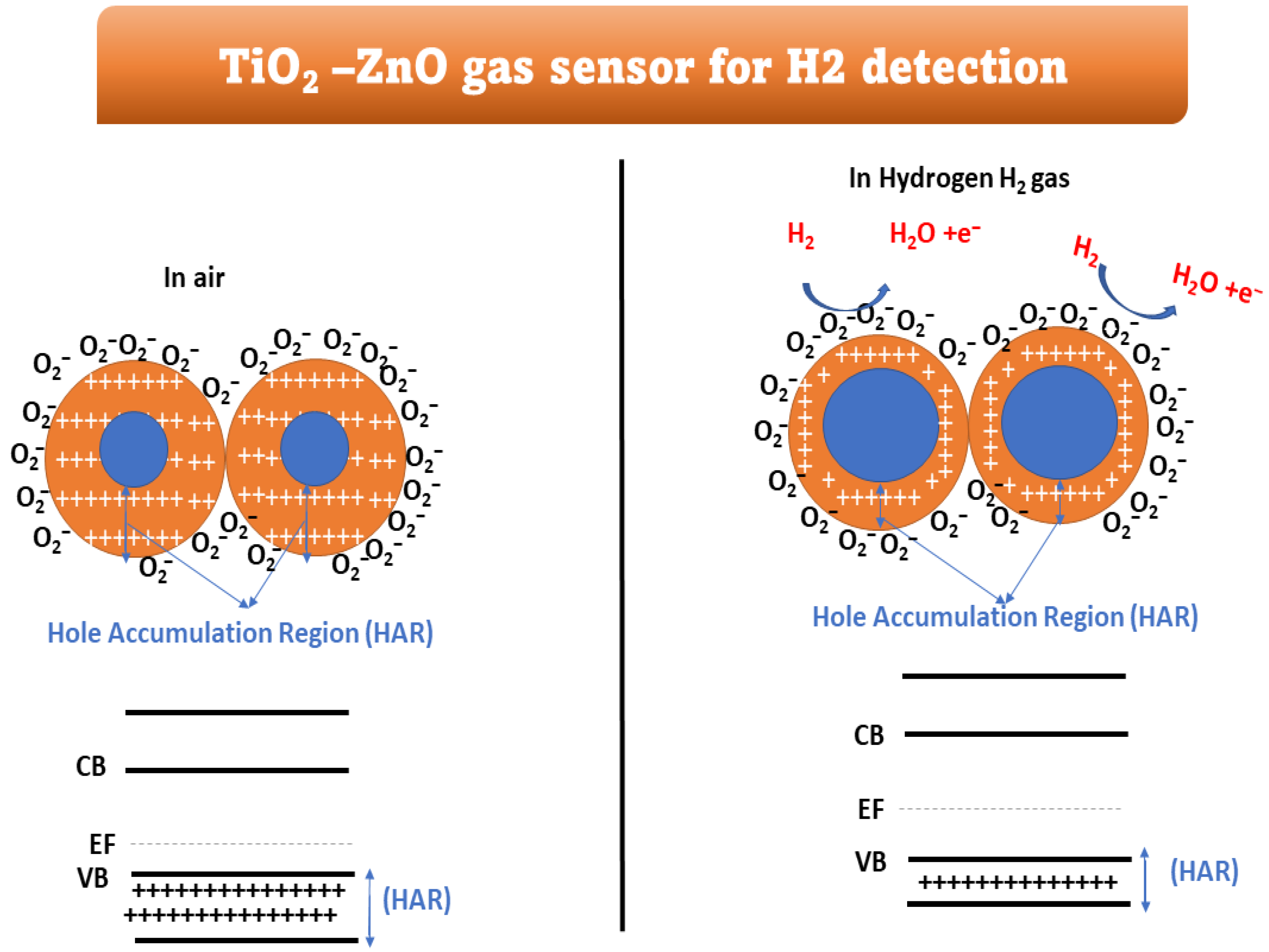
The sensing mechanism of the TiO2-ZnO resistive gas sensor is governed by surface reactions occurring on n-type metal oxide semiconductors. Both TiO2 and ZnO are well-known n-type semiconductors, where the sensing process is controlled by adsorption and desorption reactions of oxygen species on the oxide surface. This induced transfer of charge leads to a change in the sensor’s resistance. The charge transfer characteristics are generally monitored by factors such as the donor/acceptor characteristics of gas molecules with respect to their reducing or oxidizing properties and the intrinsic conductivity type of the semiconductors (n-or p-type) used in such studies. The sensing mechanism of n-type TiO2-ZnO films under H2 gas is depicted in Figure 6. This mechanism clearly contains two successive surface reactions, beginning with air adsorption coming from ambient air and followed by H2 gas (adsorption of H2 molecule).
In air, the O2 molecules are usually present on the surface. Oxygen molecules capture electrons from the conduction band (CB) of the semiconductor surface and form ionized oxygen species, which create an electron depletion layer (EDL). This sensing behavior follows the classical depletion layer model commonly observed in n-type metal oxide semiconductor gas sensors, where the adsorption of oxygen species increases depletion layer width, and exposure to reducing gases such as hydrogen decreases the width of this layer, as represented by the equations of oxidation (1–3) [31,33,34] and defined by Figure 6. Note that the sensors based on TiO2-ZnO are tested at the following working temperatures: 100, 200, 300 °C.
Oxidation equations:
O 2   g a s O 2   a d s
O 2   a d s + e O 2
O 2   a d s + e 2 O
The injection of the H2 gas changes the EDL due to the combined effects of, for example, the electron affinity of H2 gas and the chemisorption/physisorption rate. As a reducing gas with high electronic affinity, hydrogen serves as both a reducing gas and an electron donor, which can capture more electrons from the TiO2-ZnO surface (see reduction Equations (4) and (5)) [31,33,34], as described in Figure 6.
The n-type semiconductors TiO2 and ZnO have been explored extensively in the research literature due to their intrinsic defects (e.g., oxidized species such as oxygen vacancies). In an oxygen-rich (e.g., atmospheric) environment, molecular oxygen is adsorbed onto the surface of these oxide semiconductors and will chemically react with free electrons from the conduction band, creating an ionized form of the oxygen species (i.e., O2 and O). This electron transfer will create an electron depletion region (or layer) surrounding the grain boundaries, increasing the overall resistance of the entire sensing layer. When small quantities of hydrogen gas are introduced to the ambient environment, the hydrogen gas can readily react with the ionic oxygen species around the grain boundaries and effectively transfer free electrons back to the n-type oxide, thus effectively reducing the width of the electron depletion region around the grain boundaries, resulting in an increase in the electrical conductivity of the entire sensing layer.
Reduction equations:
H 2 + O a d s H 2 O + e
H 2 + O 2 H 2 O + 2 e
As the H2 adsorption process continues, the electron concentration increases due to the release of electrons from the surface reactions, which reduces the width of the depletion layer and, consequently, modifies the electrical resistance of the sensor.
The performance of TiO2 and ZnO composites will also be influenced by their actual physical or chemical interactions at the interface. Both materials contain n-type semiconductor properties (molecule structure and conduction), but they differ in their electron affinity value and band structures. At the point of contact between these two materials, a heterojunction can be formed between nearby TiO2 and ZnO grains. In addition, an interfacial potential barrier could modify the depletion region in proximity to each grain’s border. Thus, the interfacial potential barrier between the two oxides will influence how the current flows through the composite detection layer when the sensor is exposed to hydrogen gas. Specifically, as H2 is detected, the reaction that occurs between H2 and the adsorbed O species directly alters the electron density at the oxide surface, which directly alters the width of the depletion layer and thus affects the potential barrier at the TiO2-ZnO interface. Therefore, when compared to a single metal oxide detection system, the composite detection layer’s resistance variation is enhanced. A similar underlying sensing mechanism has been outlined in previously published studies by researchers investigating TiO2-ZnO composite gas sensor detection principles, as well as other mixed metal oxides [5,31].
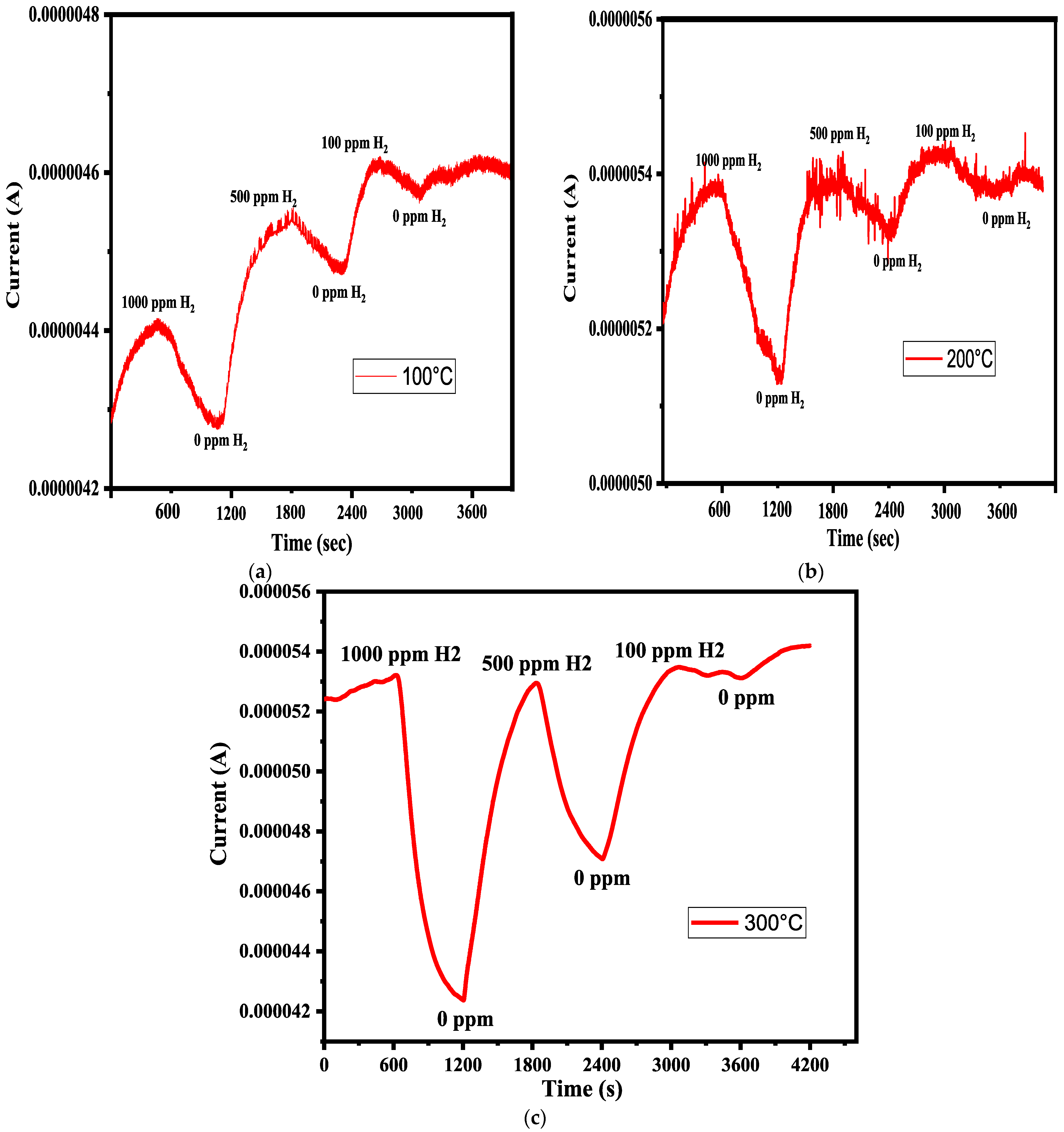
Figure 7a–c shows the H2 gas sensor based on TiO2-ZnO operating at various temperatures (100, 200, and 300 °C). The response of the sensors showed that the measured current decreased when the surface of the material was exposed to H2 hydrogen and increased when it was not exposed to H2 gas.
All our H2 sensors based on TiO2-ZnO have a current response at different operating temperatures, namely, 100 °C, 200 °C, and 300 °C, but it should be noted that the response at 300 °C is much smoother than other sensors operating at 100 and 200 °C.
According to the current response, the sensing behavior observed is consistent with the typical responses of n-type metal oxide semiconductor sensors, where the electrical resistance changes due to surface reactions between hydrogen molecules and adsorbed oxygen species, and where the operating hydrogen gas is an oxide type. This behavior could be explained by the diffusion of silver atoms in the n-type TiO2-ZnO. Similar results have been reported in the work of Sheini et al. [35]. In Figure 7a–c, when the time equals 0 s, we notice that the initial current increases from 0.0000044 to 0.0000054 A and from 0.0000054 to 0.000053 A for 100 to 200 °C and 200 to 300 °C, respectively. This behavior may be attributed to the increase in thermally activated charge carriers and the enhanced surface reaction kinetics at higher temperatures. The slight variations observed in the baseline signal at 0 ppm are mainly attributed to minor fluctuations in temperature stabilization and gas flow control during the measurement process.
The examination of hydrogen gas by our sensors based on the TiO2-ZnO-sensitive layer shows that all samples have a current response with all hydrogen quantities measured. In Figure 7a,b, the sensors operated at 100 and 200 °C; the current decreased from ~0.0000044 to ~0.0000042 A; and when the hydrogen concentration varied from 0 to 1000 ppm, the decreases in hydrogen concentration from 1000 to 500 ppm and from 500 to 100 ppm created a little variation in current, which shows that the response decreases with decreased concentration. In Figure 7c, we note that the current curve is very smooth, which shows that the responses of hydrogen sensors based on TiO2-ZnO were improved when changing the operating temperature to 300 °C. This behavior may be attributed to the increase in thermally generated charge carriers (electron–hole pairs) [35]. The current measured at 300 °C was decreased from ~0.000053 to ~0.000042 A, from ~0.000053 to ~0.000047 A, and from ~0.000053 to ~0.00052 A. This behavior is linked to the variation in hydrogen concentration from 1000 to 0 ppm, from 500 to 0 ppm, and from 100 to 0 ppm, respectively. These results show that 300 °C is the best and optimal temperature used in this work.
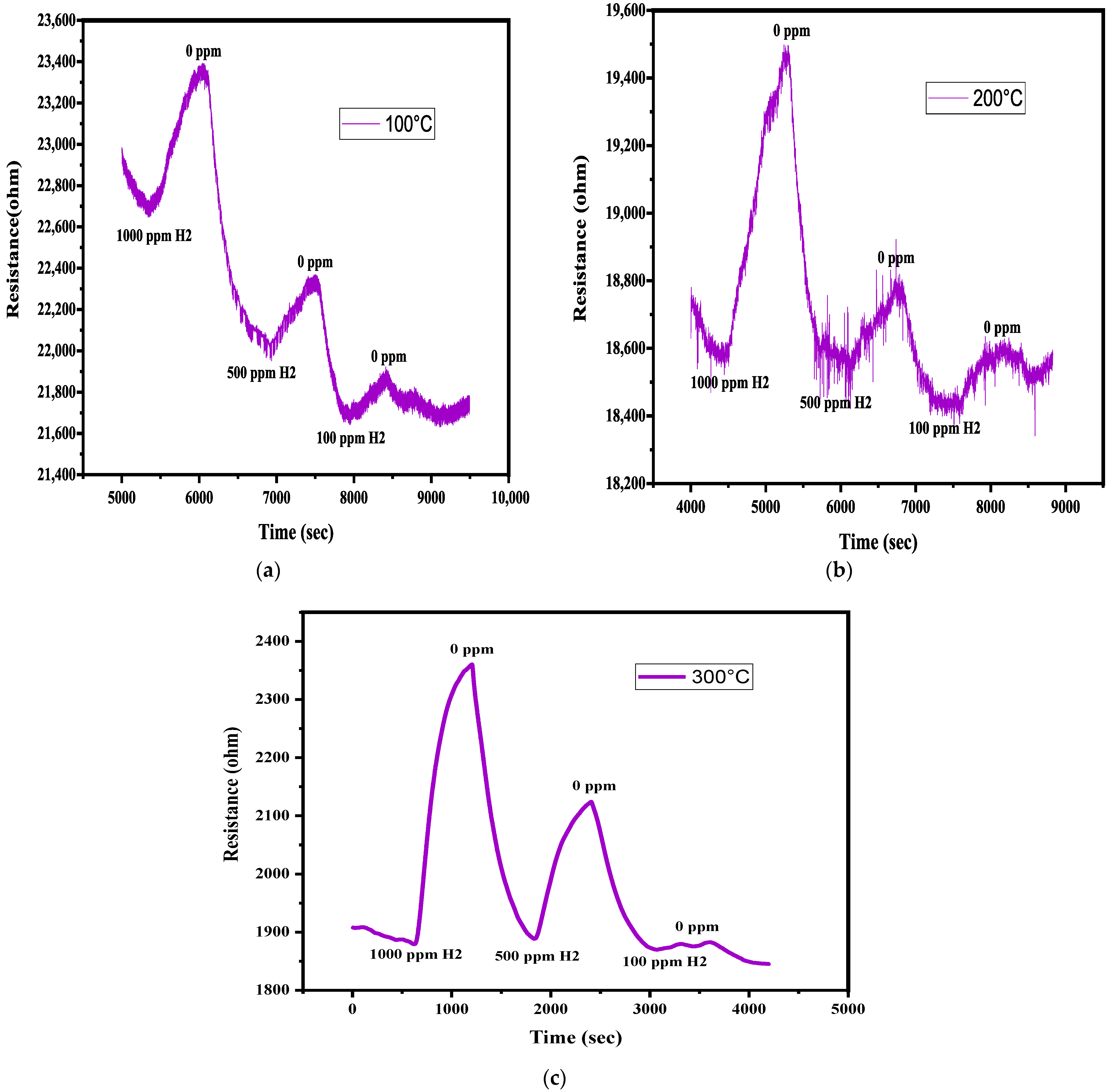
Contrary to the current response, Figure 8a–c shows that the resistance response increases with exposed gas concentration. Similarly to the current response, the resistance clarifies the 300 °C is the best temperature of the three used in this study, which further confirms that 300 °C is the optimal temperature with which to examine H2 gas.
Figure 8c shows that at 300 °C, the resistance varied with the variation in H2 concentration. The maximum resistance increased in the range of ~1900, ~2100, and ~2350 ohm for variations in the H2 concentration of 100, 500, and 1000 ppm, respectively. This increase in resistance is normally due to the greater capture of electrons with the target gas [35].
Sensitivity is an important parameter by which to characterize a sensor; this parameter defines the change in measured signal per target gas concentration [31].
The sensitivity (S) of the gas sensor can be calculated as follows [20,21,22]:
S = R H 2 R i
where RH2 denotes resistance under hydrogen flow, and Ri denotes initial resistance in air flow.
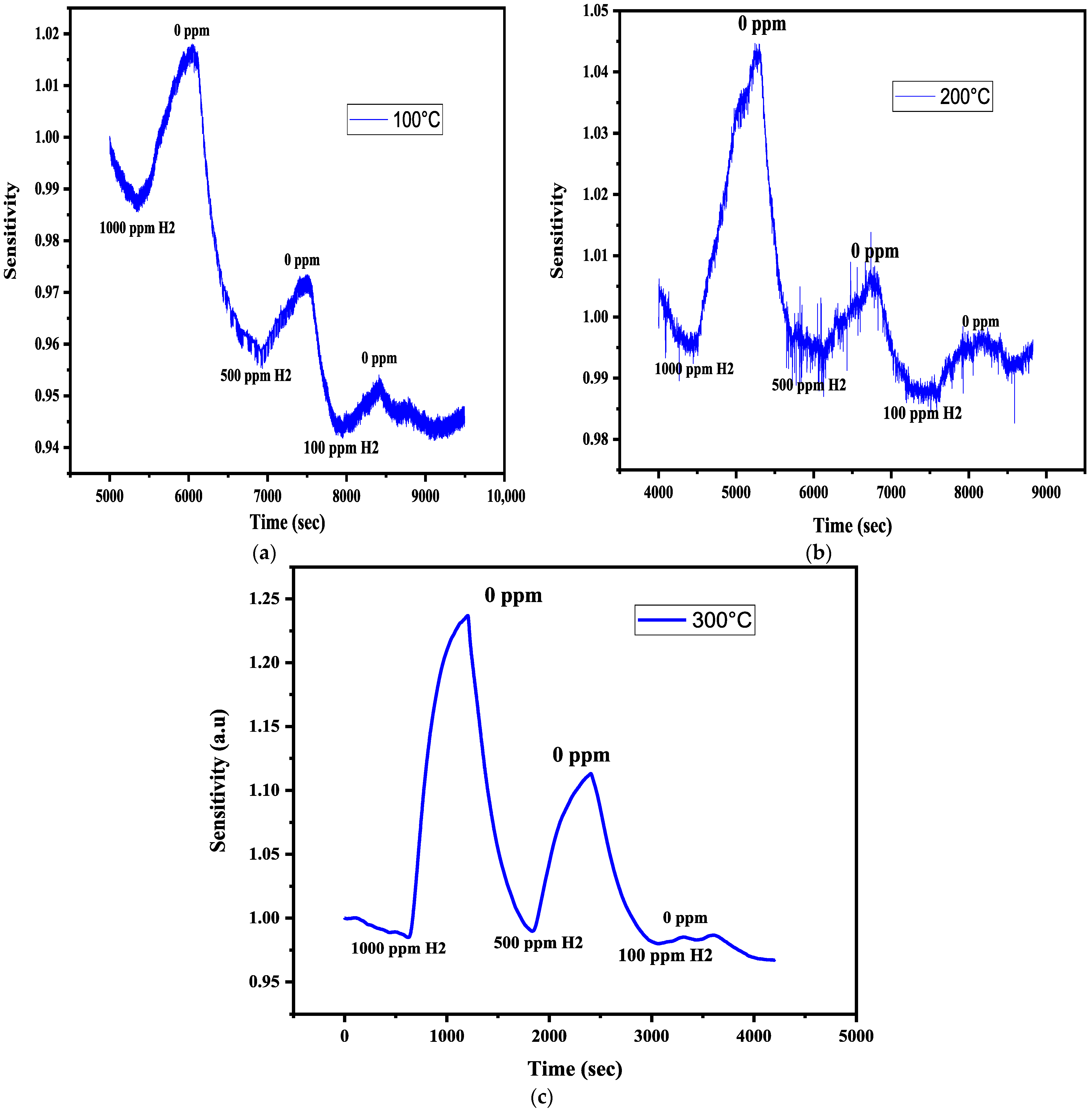
Figure 9 shows the variation in sensitivity of H2 gas sensors based on TiO2-ZnO films measured at different operating temperatures: (a) 100, (b) 200, and (c) 300 °C. The difference in the sensitivity of the sensor at different operating temperatures is presented in Figure 6. The gas sensor responded well to hydrogen. It can also be seen that the response values do not return to the initial value, which is around 1. This means that the responses were not fully recovered when the air flowed into the gas chamber. It can clearly be seen that the sensor response value was very low at an operating temperature of 100 °C compared to operating temperatures 200 °C and 300 °C. The maximum peak of the sensor response was reached at an operating temperature of 300 °C. Sensitivity was increased at higher operating temperatures. A sensitivity of 100 ppm H2 found at an operating temperature of 200 °C was the lowest because the sensor response was lowest at this temperature. Out of the three different temperatures, Figure 9c shows that the best sensitivity was obtained at an operating temperature of 300 °C, and the sensitivity values were 0.99, 1.17, and 1.31 at 100 ppm, 500 ppm, and 1000 ppm, respectively.
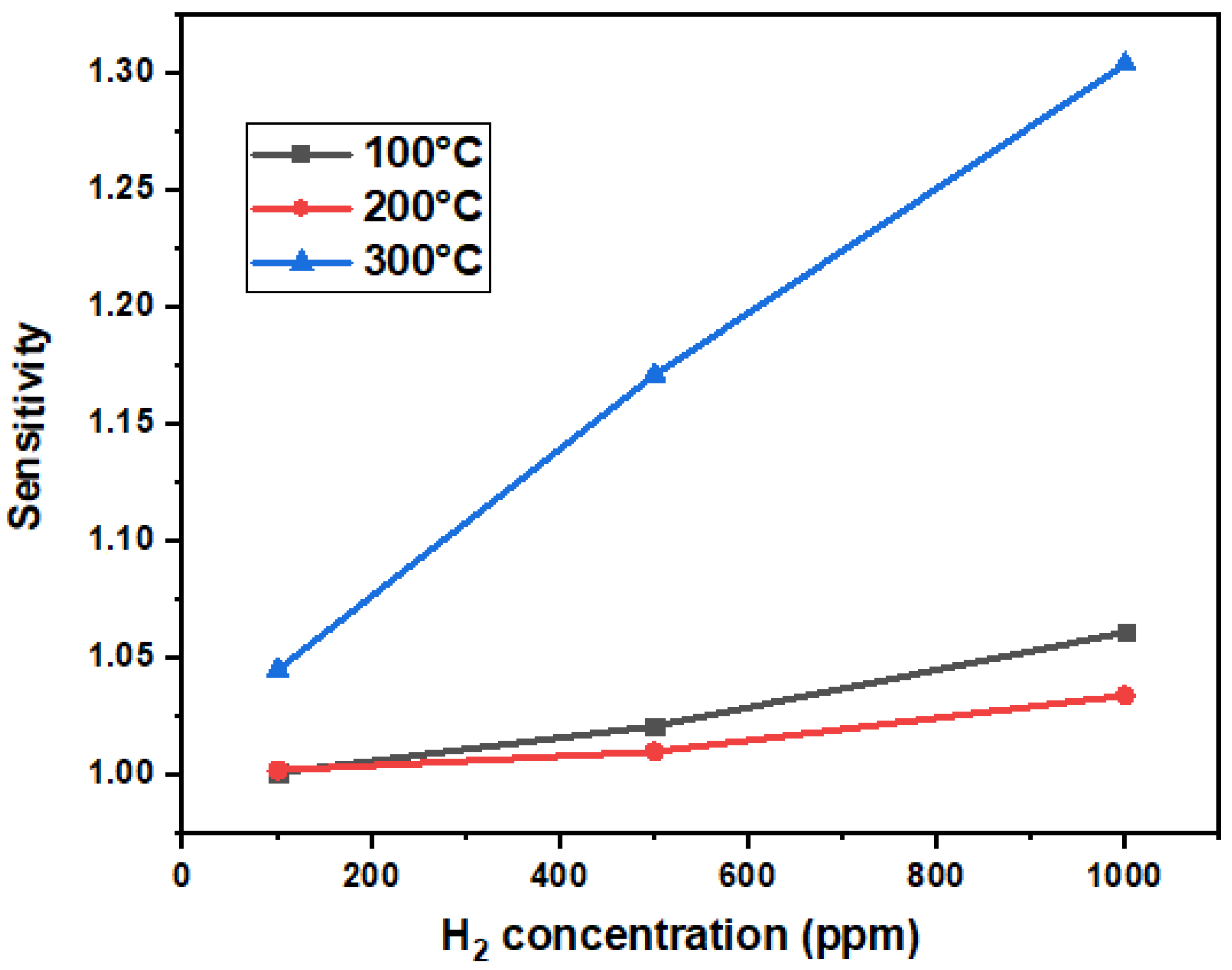
Figure 10 clearly shows the variation in sensitivity versus H2 concentration (100, 500 and 1000 ppm). The H2 sensitivity varied with the two parameters (i.e., temperature and H2 concentration). This figure proves that 300 °C is the best temperature at which to check H2 at various concentration because at 300 °C, the sensitivity has a larger value than one at 100 and 200 °C. The sensitivity increases from 1.05 to 1.30 when increasing the H2 concentration from 100 to 1000 ppm. This behavior is due to the increased creation of electron–hole pairs and the excess H2, which led to the easy capture of electrons generated by reducing H2 gas. The same behavior can also be observed on NiO-based H2 gas sensors [32].
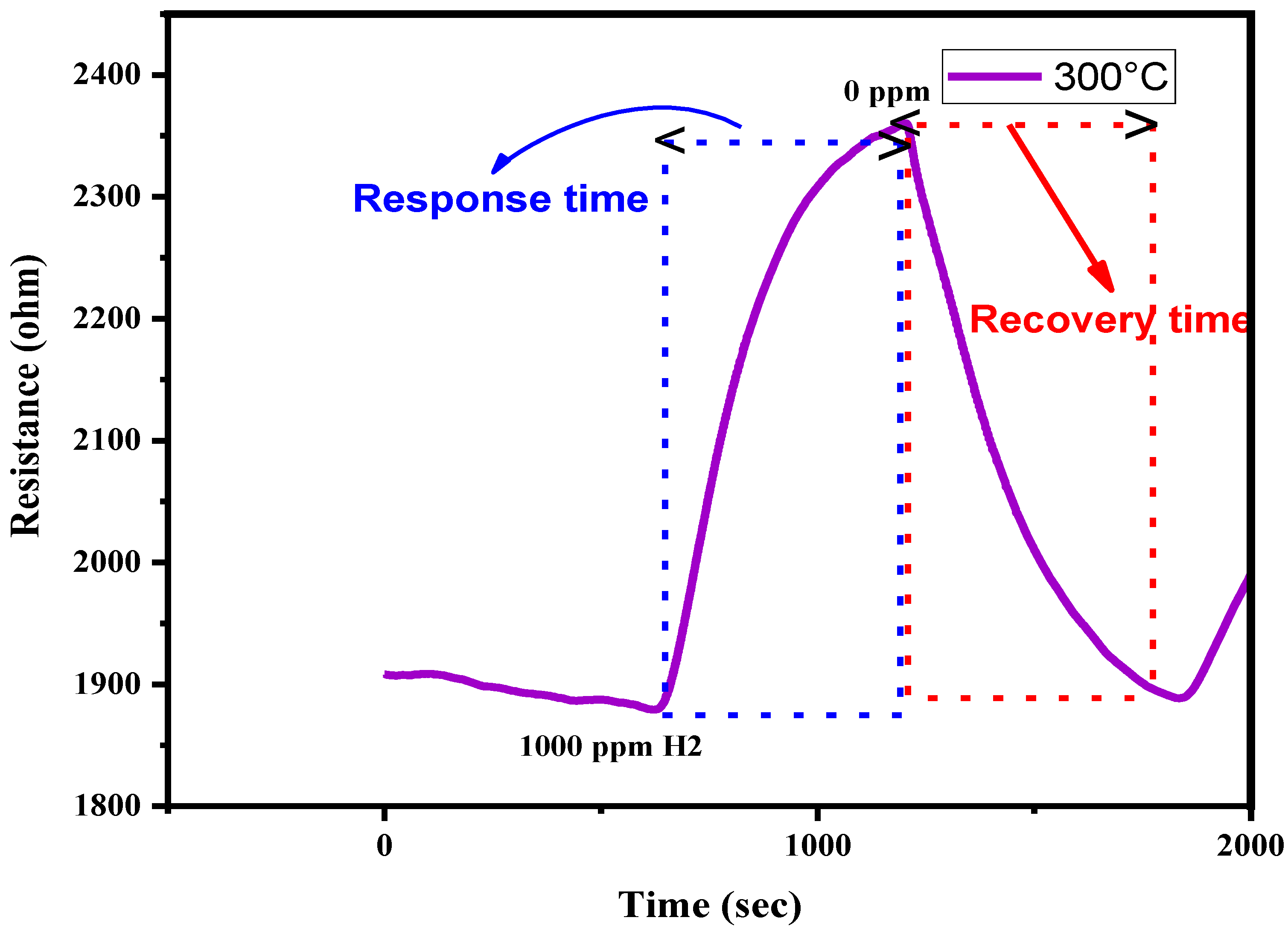
Figure 11 shows the response time and recovery time calculated from H2 gas sensors operating at 300 °C. The recovery and response time are the important gas sensor parameters, describing real-time sensing analysis [36]. The recovery time is defined as the time taken for the sensors to return to their initial value after the step removal (in our case, air flow). The response time is the time required for a sensor to reach a total or quasi-total response upon exposure to the gas target.
The recovery and response were calculated and summarized in Table 2.
The response varies with variation in the two effects studied (i.e., temperature and H2 concentration). At 100 °C, the response time varies in the range of 394.143, 577.656, and 543.768 s, corresponding to H2 concentrations of 100, 500, and 1000 ppm, respectively, and the recovery time varies between 360.908 and 813.346 s with H2 concentrations of 100, 500, and 1000 ppm. For the H2 gas sensor operating at 200 °C, the response time varied in the range of 346.653, 522.125, and 720.560 s, and the recovery time ranged between 174.534 and 438.874 s when the H2 concentration varied between 100 and 1000 ppm. The response and recovery times of the gas sensor measured at 300 °C are very close to those measured previously at 100 and 300 s. The results show that the H2 gas sensor fabricated via a facile and low-cost method has fast response and recovery times.

4. Conclusions

A hydrogen sensor based on a TiO2-ZnO composite sensing layer was fabricated using a practical and low-cost screen-printing method. By utilizing structural and morphological characterization techniques, crystalline oxide phases (which are suitable for use in gas detection) were confirmed to have been created in the sensing layer. Each of the gas sensors were subjected to varying levels of hydrogen (100, 500, and 1000 ppm) at various temperatures (100 °C to 300 °C inclusive). The sensing mechanism of the TiO2-ZnO composite sensor is mainly governed by the modulation of the electron depletion layer at the oxide surface and at the TiO2-ZnO heterojunction interface during hydrogen adsorption. Therefore, the results demonstrated that the gas sensor’s performance increased significantly as the temperature increased (with highest temperature being 300 °C). The response from the gas sensor when exposed to 100 ppm hydrogen at 300 °C was 0.99, whereas the gas sensors that detected 500 and 1000 ppm hydrogen at 300 °C returned optimum responses of 1.17 and 1.31, respectively. The mechanism for sensing hydrogen can be explained through the interaction of hydrogen molecules with the oxygen ions that are absorbed on the oxide surface, which modulate the conductivity of the sensing layer (i.e., by changing the resistance). The results indicate that the TiO2-ZnO composite, when combined with the screen-printing method, is a viable and economically friendly option for detecting hydrogen gas.

Author Contributions

Writing—review & editing, A.F.; Validation, Y.N.; Formal analysis, Investigation, B.H.; Methodology, Y.D.; Project administration, Formal analysis, M.E.; Investigation, Data curation, Ö.Ç.; Formal analysis, H.L. All authors have read and agreed to the published version of the manuscript.

Funding

This research received no external funding.

Institutional Review Board Statement

Not applicable.

Informed Consent Statement

Not applicable.

Data Availability Statement

The original contributions presented in this study are included in the article. Further inquiries can be directed to the corresponding author.

Acknowledgments

The author would like to thank the members of the DAYTAM Ataturk University, Turkey, for the providing the facilities necessary to conduct the characterization measurements, as well as the MEVLANA program exchange for their financial support.

Conflicts of Interest

The authors declare no conflict of interest.

References

  1. Kong, Y.; Li, Y.; Cui, X.; Su, L.; Ma, D.; Lai, T.; Yao, L.; Xiao, X.; Wang, Y. SnO2 nanostructured materials used as gas sensors for the detection of hazardous and flammable gases: A review. Nano Mater. Sci. 2021, 4, 339–350. [Google Scholar] [CrossRef]
  2. Hübert, T.; Boon-Brett, L.; Black, G.; Banach, U. Hydrogen sensors—A review. Sens. Actuators B Chem. 2011, 157, 329–352. [Google Scholar] [CrossRef]
  3. Buttner, W.J.; Post, M.B.; Burgess, R.; Rivkin, C. An overview of hydrogen safety sensors and requirements. Int. J. Hydrogen Energy 2011, 36, 2462–2470. [Google Scholar] [CrossRef]
  4. Gao, L.; Tian, Y.; Hussain, A.; Guan, Y.; Xu, G. Recent developments and challenges in resistance-based hydrogen gas sensors based on metal oxide semiconductors. Anal. Bioanal. Chem. 2024, 416, 3697–3715. [Google Scholar] [CrossRef] [PubMed]
  5. Tian, X.; Cui, X.; Lai, T.; Ren, J.; Yang, Z.; Xiao, M.; Wang, B.; Xiao, X.; Wang, Y. Gas sensors based on TiO2 nanostructured materials for the detection of hazardous gases: A review. Nano Mater. Sci. 2021, 3, 390–403. [Google Scholar] [CrossRef]
  6. Mustapha, N.; Ben Abdelaziz, B.; Benamara, M.; Hjiri, M. Recent Advances in Doping and Polymer Hybridization Strategies for Enhancing ZnO-Based Gas Sensors. Nanomaterials 2025, 15, 1609. [Google Scholar] [CrossRef]
  7. Navarro-Gázquez, P.J.; Muñoz-Portero, M.J.; Blasco-Tamarit, E.; Sánchez-Tovar, R.; García-Antón, J. Synthesis and applications of TiO2/ZnO hybrid nanostructures by ZnO deposition on TiO2 nanotubes using electrochemical processes. Rev. Chem. Eng. 2023, 39, 1153–1186. [Google Scholar] [CrossRef]
  8. Simonetti, E.A.N.; de Oliveira, T.C.; Machado, Á.E.d.C.; Silva, A.A.C.; dos Santos, A.S.; Cividanes, L.d.S. TiO2 as a gas sensor: The novel carbon structures and noble metals as new elements for enhancing sensitivity—A review. Ceram. Int. 2021, 47, 17844–17876. [Google Scholar] [CrossRef]
  9. Luo, S.; Fan, Z.; Ye, Y.; Li, X.; Yang, D. Metal oxide semiconductor-based hydrogen gas sensors: A comprehensive review. Int. J. Hydrogen Energy 2026, 206, 153405. [Google Scholar] [CrossRef]
  10. Wright, J.S.; Lim, W.; Norton, D.P.; Pearton, S.J.; Ren, F.; Johnson, J.L.; Ural, A. Nitride and oxide semiconductor nanostructured hydrogen gas sensors. Semicond. Sci. Technol. 2010, 25, 024002. [Google Scholar] [CrossRef]
  11. Wang, C.; Yin, L.; Zhang, L.; Xiang, D.; Gao, R. Metal Oxide Gas Sensors: Sensitivity and Influencing Factors. Sensors 2010, 10, 2088–2106. [Google Scholar] [CrossRef] [PubMed]
  12. Barsan, N.; Koziej, D.; Weimar, U. Metal oxide-based gas sensor research: How to? Sens. Actuators B Chem. 2007, 121, 18–35. [Google Scholar] [CrossRef]
  13. Ali, S.; Zareen, A.; Ikram, M.; Murray, R.; Hussain, A.; Shah, S.I. Effect of Mixing ZnO:TiO2 Nanoparticles in P3HT:PCBM Solar Cells. Eur. Sci. J. 2014, 2, 442–446. [Google Scholar]
  14. Pei, L.Z.; Wei, T.; Lin, N.; Yu, H.Y. Synthesis of Zinc Oxide and Titanium Dioxide Composite Nanorods and Their Photocatalytic Properties. Adv. Compos. Lett. 2016, 25, 096369351602500. [Google Scholar] [CrossRef]
  15. Thompson, W.A.; Olivo, A.; Zanardo, D.; Cruciani, G.; Menegazzo, F.; Signoretto, M.; Maroto-Valer, M.M. Systematic study of TiO2/ZnO mixed metal oxides for CO2 photoreduction. RSC Adv. 2019, 9, 21660–21666. [Google Scholar] [CrossRef]
  16. Hossein-Babaei, F. Porous silver-TiO2 Schottky-type chemical sensor fabricated on thermally oxidised titanium. Electron. Lett. 2008, 44, 161. [Google Scholar] [CrossRef]
  17. Banerjee, A. The design, fabrication, and photocatalytic utility of nanostructured semiconductors: Focus on TiO2-based nanostructures. Nanotechnol. Sci. Appl. 2011, 4, 35–65. [Google Scholar] [CrossRef]
  18. Mor, G.K.; Varghese, O.K.; Paulose, M.; Ong, K.G.; Grimes, C.A. Fabrication of hydrogen sensors with transparent titanium oxide nanotube-array thin films as sensing elements. Thin Solid Films 2006, 496, 42–48. [Google Scholar] [CrossRef]
  19. Li, Z.; Ding, D.; Ning, C. p-Type hydrogen sensing with Al- and V-doped TiO2 nanostructures. Nanoscale Res. Lett. 2013, 8, 25. [Google Scholar] [CrossRef]
  20. Şennik, E.; Çolak, Z.; Kılınç, N.; Öztürk, Z.Z. Synthesis of highly-ordered TiO2 nanotubes for a hydrogen sensor. Int. J. Hydrogen Energy 2010, 35, 4420–4427. [Google Scholar] [CrossRef]
  21. Krško, O.; Plecenik, T.; Moško, M.; Haidry, A.A.; Ďurina, P.; Truchlý, M.; Grančič, B.; Gregor, M.; Roch, T.; Satrapinskyy, L.; et al. Highly Sensitive Hydrogen Semiconductor Gas Sensor Operating at Room Temperature. Procedia Eng. 2015, 120, 618–622. [Google Scholar] [CrossRef]
  22. Zhang, M.; Yuan, Z.; Song, J.; Zheng, C. Improvement and mechanism for the fast response of a Pt/TiO2 gas sensor. Sens. Actuators B Chem. 2010, 148, 87–92. [Google Scholar] [CrossRef]
  23. Viricelle, J.-P.; Riviere, B.; Pijolat, C. Optimization of SnO2 screen-printing inks for gas sensor applications. J. Eur. Ceram. Soc. 2005, 25, 2137–2140. [Google Scholar] [CrossRef]
  24. Arshak, K.; Nicholson, M.; Arshak, A.; Moore, E.G.; Gaidan, I.; Cunniffe, C. Examining the effects of polymer binder in Fe2O3/ZnO thick film sensors on the response to propanol vapour. In Proceedings of the 2006 29th International Spring Seminar on Electronics Technology, St. Marienthal, Germany, 10–14 May 2006; pp. 489–494. [Google Scholar]
  25. Doubi, Y.; Hartiti, B.; Labrim, H.; Fadili, S.; Tahri, M.; Belafhaili, A.; Siadat, M.; Thevenin, P. Experimental study of properties of TiO2 thin films deposited by spray pyrolysis for future sensory applications. Appl. Phys. A 2021, 127, 475. [Google Scholar] [CrossRef]
  26. Mamat, M.H.; Halim, A.A.A.; Sahdan, M.Z.; Amizam, S.; Khusaimi, Z.; Rusop, M. Structural, Optical and Electrical Characteristics of Polycrystalline ZnO Thin Film Prepared by Sol-Gel Spin-Coating Method. Adv. Mater. Res. 2013, 667, 24–29. [Google Scholar] [CrossRef]
  27. Carrera López, R. Effect of the phase composition and crystallite size of sol-gel TiO2 nanoparticles on the acetaldehyde photodecomposition. Superf. Vacío 2012, 25, 82–87. [Google Scholar]
  28. Patekari, M.D.; Pawar, K.K.; Salunkhe, G.B.; Kodam, P.M.; Padvi, M.N.; Waifalkar, P.P.; Sharma, K.K.; Patil, P.S. Synthesis of Maghemite nanoparticles for highly sensitive and selective NO2 sensing. Mater. Sci. Eng. B 2021, 272, 115339. [Google Scholar] [CrossRef]
  29. Altamash, T.; Amhamed, A.; Aparicio, S.; Atilhan, M. Effect of Hydrogen Bond Donors and Acceptors on CO2 Absorption by Deep Eutectic Solvents. Processes 2020, 8, 1533. [Google Scholar] [CrossRef]
  30. Bercu, B.; Geng, W.; Simonetti, O.; Kostcheev, S.; Sartel, C.; Sallet, V.; Lérondel, G.; Molinari, M.; Giraudet, L.; Couteau, C. Characterisations of ohmic and Schottky contacts of a single ZnO nanowire. arXiv 2015, arXiv:1512.07321. [Google Scholar] [CrossRef]
  31. Gu, H.; Wang, Z.; Hu, Y. Hydrogen Gas Sensors Based on Semiconductor Oxide Nanostructures. Sensors 2012, 12, 5517–5550. [Google Scholar] [CrossRef]
  32. Nakate, U.T.; Lee, G.H.; Ahmad, R.; Patil, P.; Bhopate, D.P.; Hahn, Y.B.; Yu, Y.T.; Suh, E. Hydrothermal synthesis of p-type nanocrystalline NiO nanoplates for high response and low concentration hydrogen gas sensor application. Ceram. Int. 2018, 44, 15721–15729. [Google Scholar] [CrossRef]
  33. Zhang, J.; Liu, X.; Neri, G.; Pinna, N. Nanostructured Materials for Room-Temperature Gas Sensors. Adv. Mater. 2016, 28, 795–831. [Google Scholar] [CrossRef]
  34. Rsan, B.N.; Weimar, U. Understanding the fundamental principles of metal oxide based gas sensors; the example of CO sensing with SnO2 sensors in the presence of humidity. J. Phys. Condens. Matter 2003, 15, R813–R839. [Google Scholar] [CrossRef]
  35. Sheini, N.A.; Rohani, M. Ag-doped titanium dioxide gas sensor. IOP Conf. Ser. Mater. Sci. Eng. 2016, 108, 012033. [Google Scholar] [CrossRef]
  36. Harale, N.S.; Kamble, A.S.; Tarwal, N.L.; Mulla, I.S.; Rao, V.K.; Kim, J.H.; Patil, P.S. Hydrothermally grown ZnO nanorods arrays for selective NO2 gas sensing: Effect of anion generating agents. Ceram. Int. 2016, 42, 12807–12814. [Google Scholar] [CrossRef]
Figure 1. Manufactured TiO2-ZnO gas sensor on a glass substrate using a screen-printing method.
Coatings 16 00375 g001
Figure 2. Experimental installation of a gas sensing measurement.
Coatings 16 00375 g002
Figure 3. X-ray diffraction pattern of TiO2 and TiO2-ZnO.
Coatings 16 00375 g003
Figure 4. (a) FESEM image and (b) grain size distribution of TiO2-ZnO films.
Coatings 16 00375 g004
Figure 5. I–V characteristic of TiO2-ZnO.
Coatings 16 00375 g005
Figure 6. Gas-sensor mechanism of n-type TiO2-ZnO semiconductor film: reaction of O2 and H2 with TiO2-ZnO surface.
Coatings 16 00375 g006
Figure 7. Response of TiO2-ZnO gas sensor to hydrogen at different operating temperatures: (a) 100, (b) 200, and (c) 300 °C.
Coatings 16 00375 g007
Figure 8. Resistance variation in the TiO2-ZnO gas sensor under hydrogen concentration at different operating temperatures: (a) 100, (b) 200, and (c) 300 °C.
Coatings 16 00375 g008
Figure 9. Sensor sensitivity of TiO2-ZnO gas sensor at different operating temperatures: (a) 100, (b) 200, and (c) 300 °C.
Coatings 16 00375 g009
Figure 10. Sensitivity of H2 sensors based on TiO2-ZnO operating at 100, 200, and 300 °C.
Coatings 16 00375 g010
Figure 11. Response and recovery times of TiO2-ZnO film for H2 gas sensor under 1000 ppm H2 concentrations.
Coatings 16 00375 g011
Table 1. Comparison of the proposed TiO2-ZnO hydrogen sensor with representative materials reported in the literature.
MaterialFabrication MethodOperating Temp (°C)H2 Conc. (ppm)Sensitivity (S)Response Time (s)Reference
SnO2 nanoparticlesSol–gel300–40010001.5–2.0100–300[11,31]
Pd-doped ZnOHydrothermal200–300100–10002–550–150[11]
NiO nanoplates (p-type)Hydrothermal250–350500–10001.5–380–200[32]
TiO2 nanotubesAnodizationRoom–200100–10001.2–2.0100–400[18,20]
TiO2-ZnO (This work)Screen-printing300100–10000.99–1.31225–500This Work
Table 2. Recovery and response times versus measure conditions.
Measure ConditionsRecovery Time (s)Response Time (s)
100 °C100 ppm360.908394.143
500 ppm393.211577.656
1000 ppm813.346543.768
200 °C100 ppm174.534346.653
500 ppm465.976522.125
1000 ppm438.874720.560
300 °C100 ppm371.134225.989
500 ppm572.314501.346
1000 ppm602.514488.141
Disclaimer/Publisher’s Note: The statements, opinions and data contained in all publications are solely those of the individual author(s) and contributor(s) and not of MDPI and/or the editor(s). MDPI and/or the editor(s) disclaim responsibility for any injury to people or property resulting from any ideas, methods, instructions or products referred to in the content.