1. Introduction
H13 tool steel is widely used in the mold manufacturing industry due to its exceptional strength, toughness, and thermal fatigue resistance [
1,
2,
3]. However, when exposed to humid or chloride-containing environments, such as marine atmospheres or saline cooling conditions, H13 steel is prone to electrochemical corrosion, which can lead to premature surface degradation and reduced service life [
4,
5]. In particular, chloride ions are known to accelerate localized corrosion by destabilizing passive films on iron-based alloys, resulting in the initiation and propagation of pitting corrosion [
6,
7].
Surface engineering techniques have been extensively investigated to enhance the corrosion resistance of tool steels [
8,
9]. Conventional coating technologies, including thermal spraying and laser cladding, etc., can provide protective layers. However, these processes often involve high temperatures that induce phase transformations and oxidation, thereby damaging the intrinsic properties of the coating materials [
10,
11]. In contrast, cold spraying is a solid-state deposition technique in which particles are accelerated to supersonic velocities and plastically deform upon impact with the substrate, enabling coating formation at relatively low temperatures. As a result, cold-sprayed coating typically exhibit low oxidation levels, dense microstructures, and strong adhesion to metallic substrates, making the technique particularly attractive for corrosion protection applications [
12,
13,
14].
In recent years, MAX phase materials with a general formula of M
n+1AX
n (where M is an early transition metal, A is an A-group element, and X is carbon or nitrogen) have gained increasing attention due to their unique combination of metallic and ceramic characteristics [
15,
16,
17,
18]. Among them, Cr
2AlC is an attractive candidate for corrosion-resistant coating, as it contains chromium and aluminum elements capable of forming protective oxide layers, such as Cr
2O
3 and Al
2O
3, under corrosive environments. In addition, Cr
2AlC has chemical stability and damage tolerance, which are beneficial for maintaining coating integrity during electrochemical exposure [
19]. Compared with other Al-containing MAX phases such as Ti
2AlC and Ti
3AlC
2, Cr
2AlC exhibits a higher initial oxidation temperature (~800 °C versus ~400 °C for Ti
3AlC
2), indicating superior high-temperature stability during the spraying process. Furthermore, Cr
2AlC possesses a thermal expansion coefficient (CTE) of approximately 11–13.3 × 10
−6/K, which closely matches that of steel substrates, thereby minimizing thermal stress and reducing the risk of coating delamination during spraying or subsequent service [
19]. Although traditional Cr
3C
2-NiCr coatings have good wear and corrosion resistance, they do not match the CTE of steel substrates. While Al-based coatings can also form protective alumina scales, their lower mechanical strength and poorer high-temperature stability limit their applications in aggressive environments. Based on these considerations, Cr
2AlC is selected in this study as a promising corrosion-resistant coating candidate for H13 steel.
At present, the electrochemical corrosion behavior of cold-sprayed Cr2AlC coatings in chloride-containing environments has not been systematically clarified. In particular, the corrosion protection mechanism of cold-sprayed Cr2AlC coatings on tool steels such as H13, as well as the relationship between cold-spray-induced microstructure and electrochemical performance, remains insufficiently understood.
Herein, the Cr2AlC coating was deposited on the H13 steel substrate using the cold spraying technique. The electrochemical corrosion behaviors of bare H13 steel and Cr2AlC-coated samples were comparatively investigated in 3.5 wt.% NaCl solution by open circuit potential measurements, potentiodynamic polarization tests, and post-corrosion surface morphology analysis. The results provide insight into the role of cold-sprayed Cr2AlC coating in modulating the electrochemical response of H13 steel and clarify the underlying corrosion protection mechanisms.
2. Materials and Methods
2.1. Feedstock and Substrate
In the cold spraying process, spherical particles are commonly used to ensure efficient powder flow. The Cr
2AlC spherical particles used as feedstock were prepared through spray-drying granulation [
20]. Specifically, Cr
2AlC powder with a D50 size of 5 μm (China Porcelain Fuchi (Suzhou) High Tech Nano Materials Co., Ltd., Suzhou, China) served as the starting material. This powder was mixed with deionized water, dispersant, and binder in specific proportions, and then thoroughly stirred in a mechanical mixer to form a slurry. The slurry was then fed into a centrifugal spray granulation tower, where it was sprayed and dried to produce Cr
2AlC spherical particles.
H13 steel plates, with dimensions of 35 mm × 35 mm × 5 mm, were used as the substrate. The chemical composition of the H13 steel was as follows (wt.%): C 0.39, Si 0.83, Mn 0.38, Cr 5.00, Mo 1.22, V 0.86, and Fe as the balance. Prior to deposition, the steel plates were mechanically polished to 1000 mesh and sandblasted under a pressure of 2.0 MPa.
2.2. Cold Spray Deposition of Cr2AlC Coating
The Cr
2AlC coating was deposited using an intelligent cold spraying system (DSR3000, Wuxi Dongsheng High-Tech Materials Co., Ltd., Wuxi, China). The main spraying parameters were as follows: the process gas was N
2, the gas pressure was 5 MPa, the gas temperature was 800 °C, the nozzle-to-substrate standoff distance maintained at 20 mm, the spray gun angle was 90°, the spray gun traverse speed was controlled at 30 mm/s. The particle velocity was not directly measured in this study. However, based on previous reports under comparable processing conditions, the velocity is expected to exceed the critical deposition velocity of Cr
2AlC particles, enabling effective solid-state bonding [
21].
2.3. Electrochemical Test
The corrosion resistance of the bare H13 steel substrate and the Cr2AlC-coated sample in 3.5 wt.% NaCl solution was tested using a CHI660E electrochemical workstation. A conventional three-electrode system was used, with a saturated calomel electrode (SCE) as the reference electrode, a platinum plate as the counter electrode, and the sample as the working electrode. All potentials reported in this study are referenced to the SCE. The SCE was periodically calibrated against a standard hydrogen electrode (SHE) according to the manufacturer’s specifications. The back of the working electrode was connected to a copper wire and sealed in epoxy resin, leaving a 1 cm2 working area exposed to the NaCl solution.
The test was conducted under natural aeration conditions at room temperature (25 ± 1 °C). Prior to each measurement, samples were ultrasonically cleaned and then immersed in 3.5 wt.% NaCl solution for 1 h to stabilize open circuit potential (OCP). Subsequently, electrochemical impedance spectroscopy (EIS) measurements were performed under OCP conditions with a perturbation amplitude of 10 mV over a frequency range from 10−1 Hz to 105 Hz. All EIS data were fitted and analyzed using ZView2 software. Potentiodynamic polarization experiments were conducted at a scan rate of 10 mV/s within the potential range of −1.2 V vs. SCE to 0 V vs. SCE.
2.4. Characterizations
The phase composition of the cold-sprayed Cr2AlC coating was analyzed by X-ray diffraction (XRD, SmartLab, Rigaku, Japan) using Cu Kα radiation. XRD measurements were carried out in the 2θ range of 10–80°. The surface morphology and elemental distribution of the coating and substrate, both before and after corrosion, were characterized using a scanning electron microscope (SEM, JSM-7001F, JEOL, Tokyo, Japan) equipped with an X-ray energy dispersive spectrometer (EDS). Chemical analysis of the coating surfaces after corrosion was performed with X-ray photoelectron spectroscopy (XPS, K-Alpha, Thermo Scientific, Waltham, MA, USA). High-resolution spectra were recorded under conditions of a pass energy of 50 eV and a step size of 0.1 eV. The binding energy was calibrated by setting the C 1s peak to 284.8 eV, followed by peak fitting.
3. Results and Discussion
3.1. Characterization of the Cold-Sprayed Cr2AlC Coating
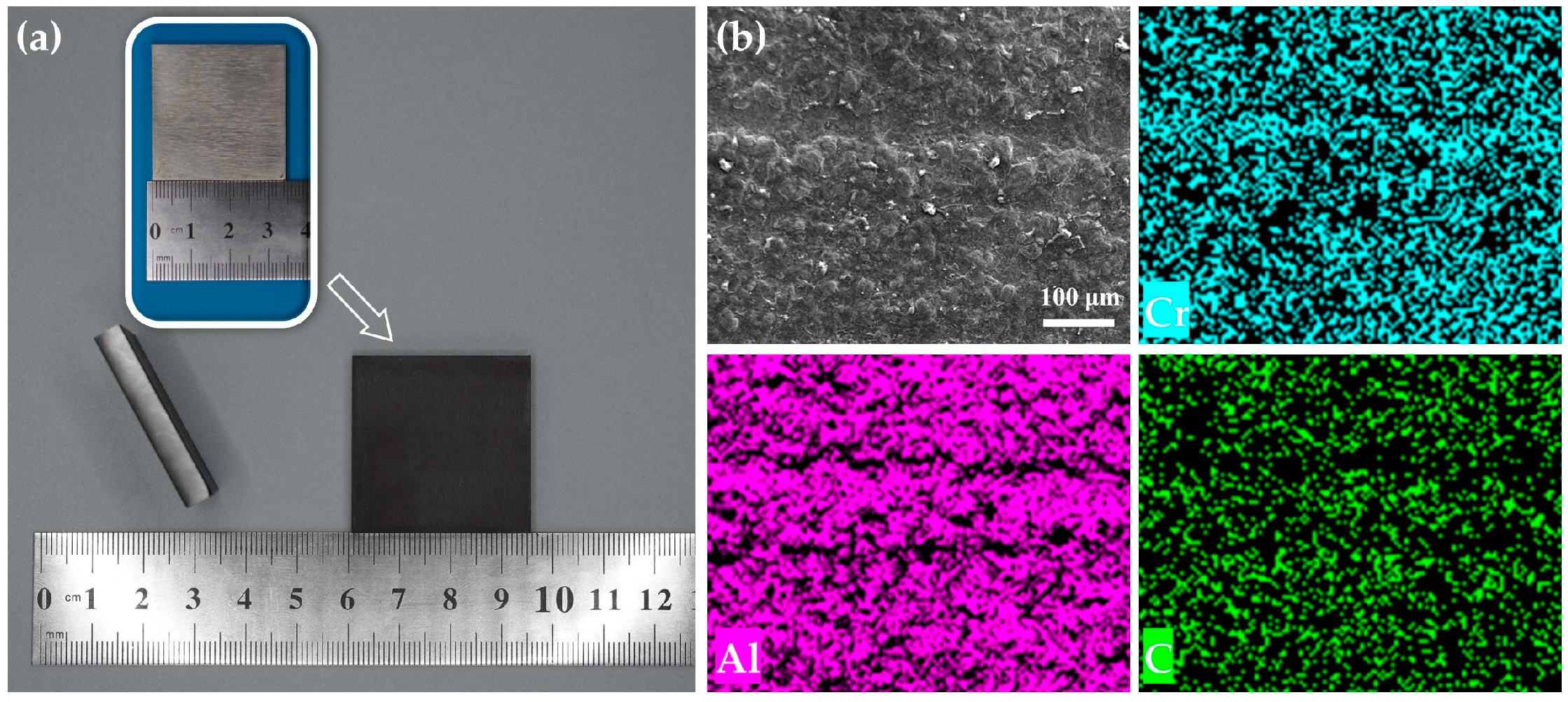
Figure 1a shows the optical photograph of the cold-sprayed Cr
2AlC coating deposited on the H13 steel substrate. The coating exhibits a uniform and continuous surface with well-defined edges, indicating effective coverage of the substrate after the cold spraying process. No macroscopic defects, such as peeling or delamination, are observed, suggesting good coating integrity at the macroscopic scale.
Figure 1b presents the SEM image of the coated surface along with the corresponding EDS elemental maps. The coating surface displays a relatively homogeneous morphology, free from obvious cracks or large pores. The EDS mappings reveal a uniform distribution of Cr, Al, and C elements across the coating surface, indicating good compositional homogeneity of the deposited Cr
2AlC coating.
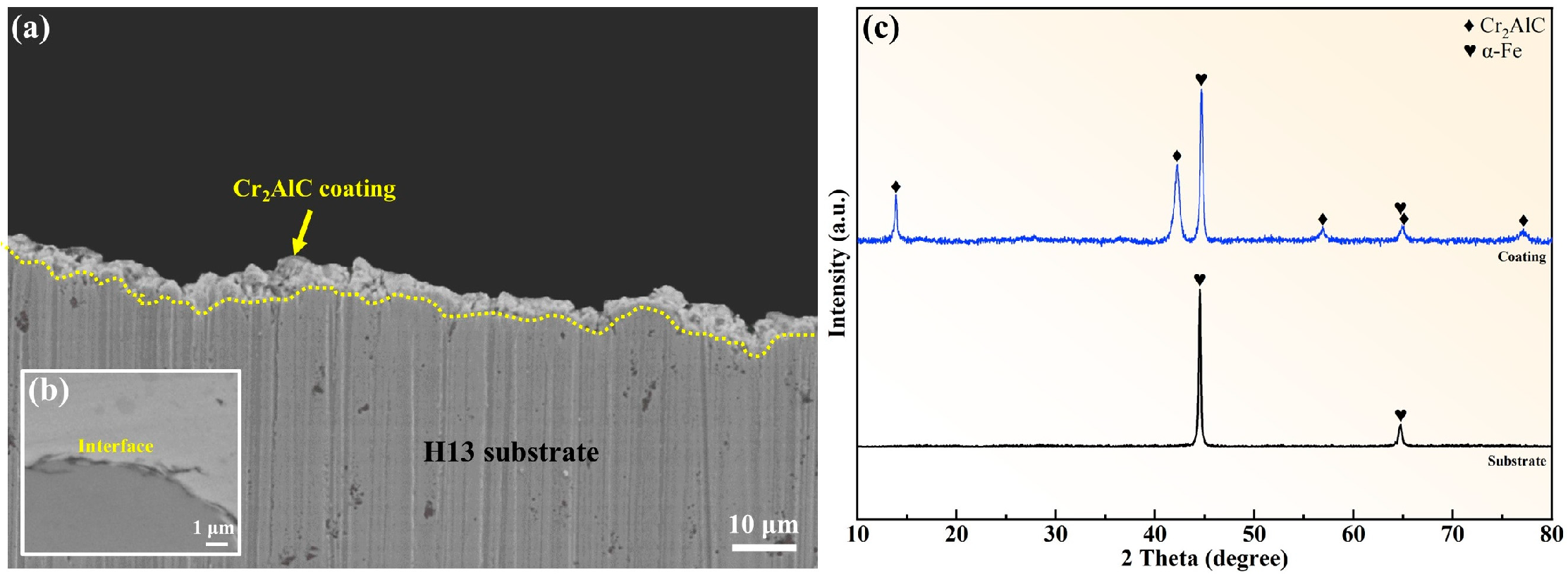
The cross-sectional morphology of the cold-sprayed Cr
2AlC coating is shown in
Figure 2a. A continuous coating with a thickness of approximately 5 μm is formed on the H13 steel substrate. The interface between the coating and substrate is dense and well bonded, with no apparent gaps or macro-cracks, demonstrating effective mechanical interlocking upon high-velocity particle impact, as illustrated in
Figure 2b. The coating surface displays a slightly undulating morphology, which is consistent with the rough surface characteristics observed in the top-view SEM and profilometry results discussed earlier. Such a morphology is typical for thin cold-sprayed ceramic coatings formed by the accumulation and deformation of agglomerated particles. The phase composition of the cold-sprayed Cr
2AlC coating was analyzed by X-ray diffraction, as shown in
Figure 2c. The diffraction patterns confirm that the characteristic diffraction peaks of the Cr
2AlC MAX phase are retained after cold spraying. No additional peaks corresponding to oxidation or decomposition products were detected within the resolution of the XRD technique.
This result suggests that the solid-state nature of cold spraying effectively preserves the crystal structure of Cr2AlC during deposition, avoiding thermal decomposition that may occur in conventional high-temperature spraying processes. The retention of the Cr2AlC phase provides a reliable material basis for the corrosion behavior observed in the subsequent electrochemical test.
3.2. Electrochemical Corrosion Behavior in 3.5 wt.% NaCl Solution
The electrochemical corrosion behavior of the bare H13 steel substrate and the Cr2AlC-coated sample was evaluated in 3.5 wt.% NaCl solution through open circuit potential (OCP) and potentiodynamic polarization curves.
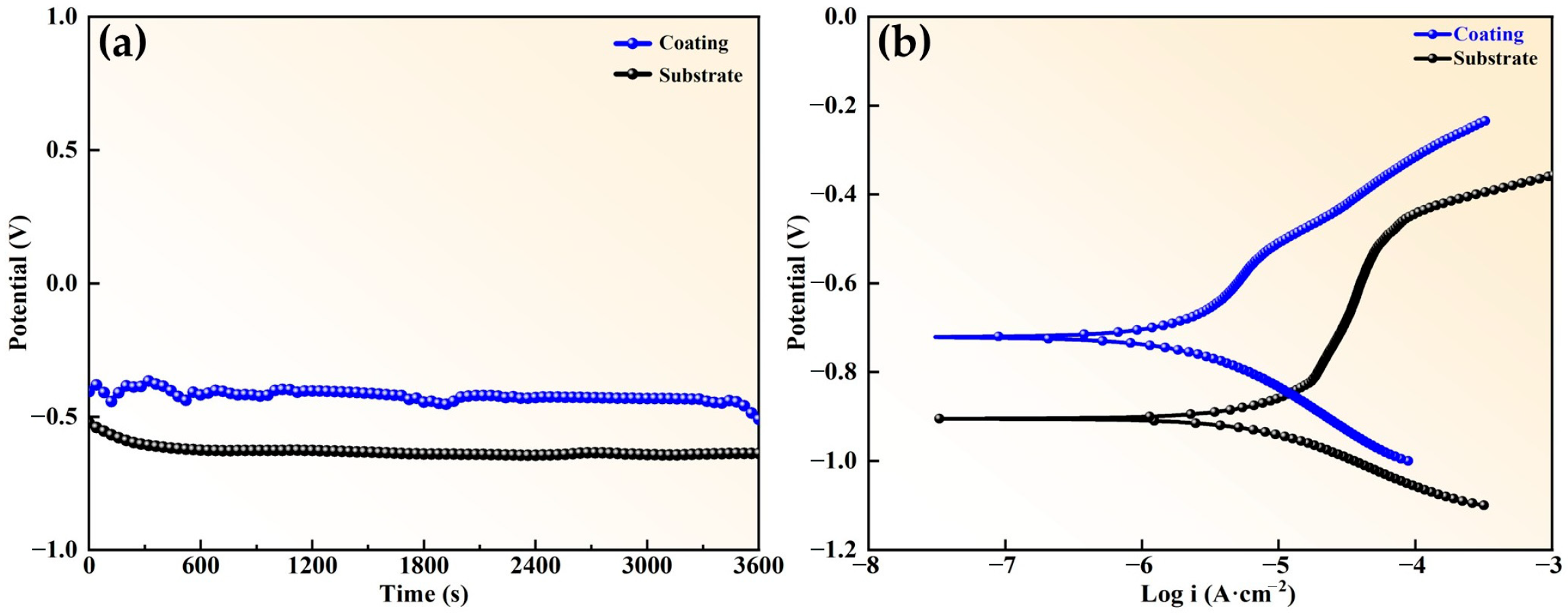
Figure 3a shows the OCP evolution of bare H13 steel substrate and the Cr
2AlC-coated sample immersed in 3.5 wt.% NaCl solution for 1 h. The substrate exhibits an initially negative potential, followed by gradual stabilization at approximately −0.65 V (vs. the reference electrode). This behavior suggests the rapid establishment of an active corrosion state, where iron dissolution dominates and a stable protective passive film is difficult to maintain in chloride-containing environment. In contrast, the Cr
2AlC coating shows a significantly higher OCP throughout the entire immersion period, stabilizing at around −0.45 V. The positive shift in OCP indicates that the coating effectively suppresses the electrochemical activity of the underlying H13 steel by acting as a physical barrier and promoting surface passivation [
22,
23]. The significant difference in OCP behavior between the substrate and the coating indicates that the cold-sprayed Cr
2AlC coating reduces the thermodynamic tendency of H13 steel to corrode in chloride environments.
The potentiodynamic polarization curves of bare H13 steel substrate and the Cr
2AlC-coated sample in 3.5 wt.% NaCl solution are shown in
Figure 3b. The substrate exhibits a relatively negative corrosion potential (E
corr) and high corrosion current density, indicating that the naturally formed iron oxide layer on H13 steel is unstable and readily disrupted by chloride ions, thereby accelerating corrosion processes. By comparison, the Cr
2AlC coating displays a more positive corrosion potential (E
corr) and a markedly reduced corrosion current density (I
corr). Both the anodic and cathodic branches of the polarization curve are shifted toward lower current densities, implying that the coating suppresses both anodic metal dissolution and cathodic reduction reactions. This behavior is characteristic of a barrier-type protective coating that limits electrolyte penetration, as observed in similar corrosion-resistant coating [
22,
24]. This behavior also can be attributed to the presence of chromium and aluminum in the Cr
2AlC phase, which are known to promote the formation of protective oxide films under electrochemical exposure [
25].
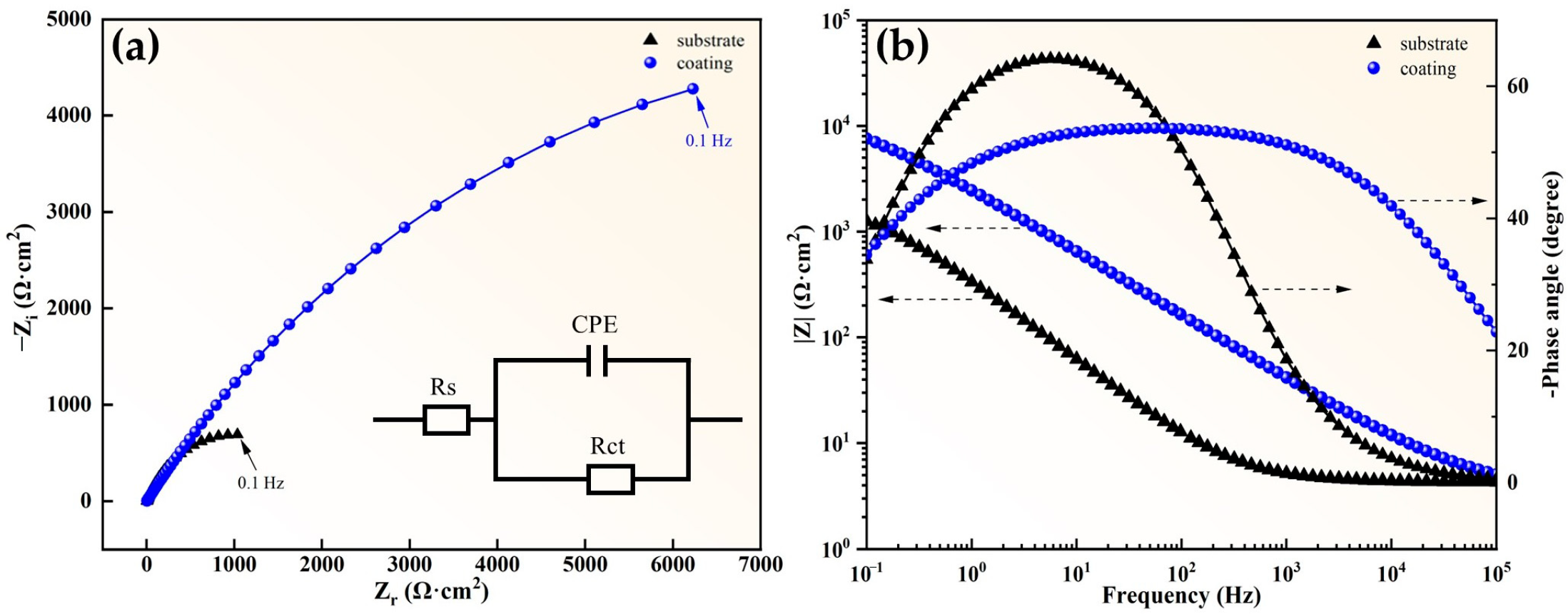
Figure 4 displays electrochemical impedance spectroscopy (EIS) plots of the bare H13 steel substrate and the Cr
2AlC-coated sample in 3.5 wt.% NaCl solution.
Figure 4a shows the Nyquist plots, where the Cr
2AlC-coated sample (blue) exhibits a significantly larger semicircle diameter than the bare substrate (black), indicating a higher charge transfer resistance and superior corrosion resistance.
Figure 4b shows the corresponding Bode plots. The Cr
2AlC coating displays a higher impedance moduli (|Z|) within the measured frequency range (especially in the low-frequency region) compared to the bare substrate, reflecting a significantly hindered penetration of corrosive media and transfer of charges, thereby enhancing the overall corrosion resistance. In addition, the maximum phase angle of the Cr
2AlC coating is slightly lower than that of the bare substrate in
Figure 4b. However, the phase angle plateau of the coating in the mid-frequency region is significantly wider, indicating that the capacitive response related to the passive oxide film formation on the coating is more stable. In contrast, the H13 steel substrate shows a relatively narrow peak in the phase angle, consistent with the occurrence of localized corrosion and active dissolution.
These EIS results are consistent with OCP and potentiodynamic polarization measurements, confirming that the cold-sprayed Cr2AlC coating significantly enhances the corrosion resistance of H13 steel substrate by providing a physical barrier and promoting surface passivation, thereby effectively mitigating localized corrosion in chloride-containing environments. To further clarify the origin of the improved electrochemical performance, post-corrosion surface morphologies were subsequently examined.
3.3. Post-Corrosion Surface Morphology
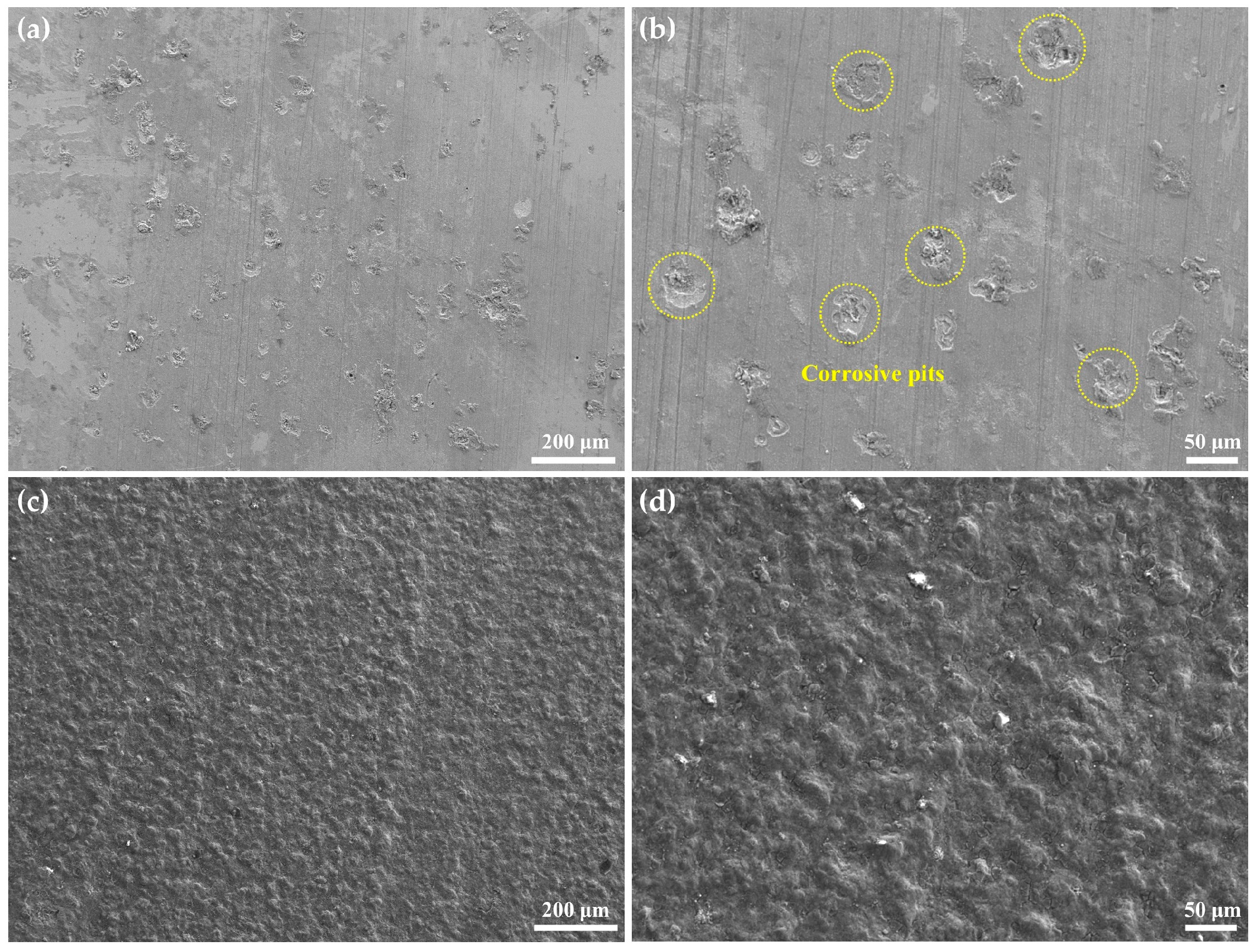
Figure 5 shows the surface morphologies of the bare H13 steel substrate and the Cr
2AlC-coated sample after electrochemical corrosion testing in 3.5 wt.% NaCl solution. Low and high magnification SEM images of the corroded H13 steel surface are presented in
Figure 5a and
Figure 5b, respectively. Numerous corrosion pits are clearly visible on the substrate surface, indicating severe localized corrosion. These pits exhibit irregular shapes and varying sizes, which are characteristic of chloride-induced pitting corrosion in tool steels. The formation of these pits suggests the breakdown of surface films and the preferential dissolution of the steel substrate in the aggressive chloride environment.
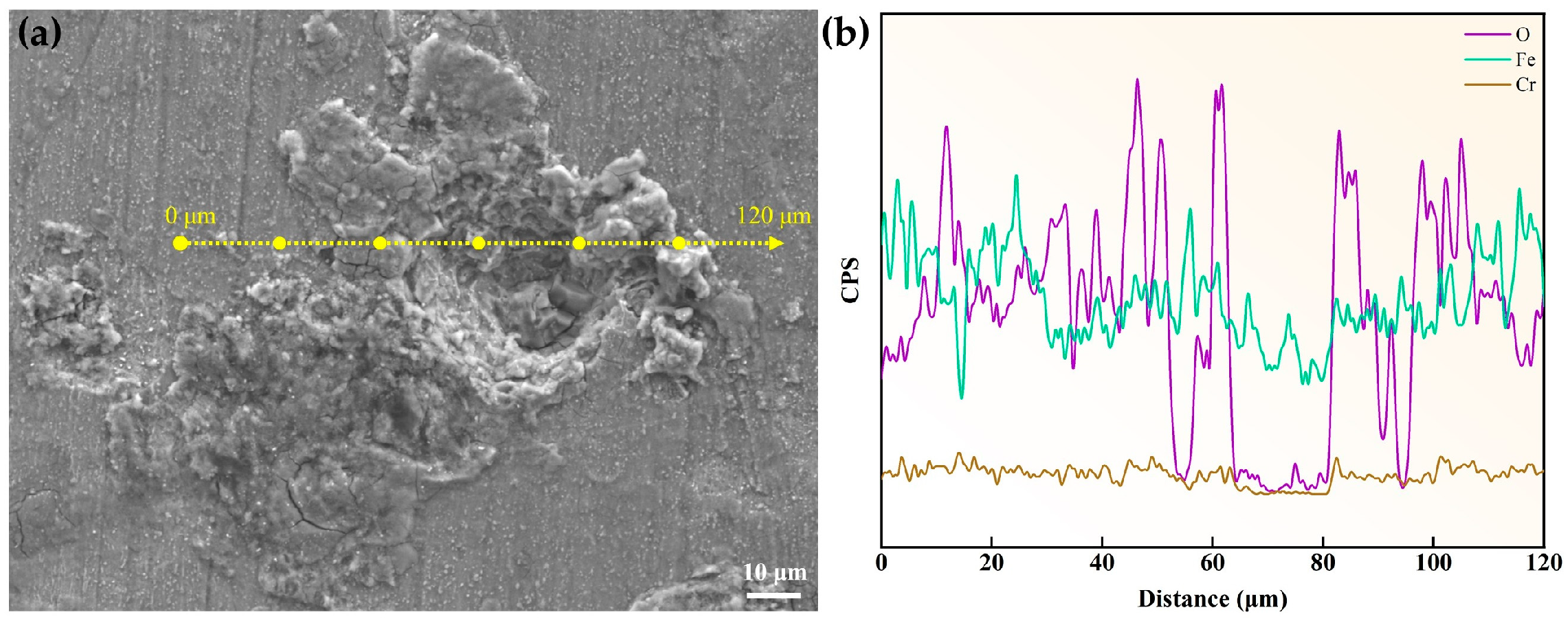
The interior of pits appears rough and layered, suggesting progressive dissolution of the matrix and repeated breakdown of corrosion products, as shown in
Figure 6a. To further clarify the elemental distribution within the pit region, an EDS line scan was performed across the pit (0–120 μm), as shown in
Figure 6b. The results reveal significant fluctuations in O and Fe signals within the pit area, while the Cr signal remains relatively low and stable throughout the scanned distance. Specifically, the oxygen (O) intensity in the uneven areas has significantly increased, indicating the accumulation of corrosion products (such as iron oxide or iron hydroxide). In addition, the iron (Fe) signal shows a drastic change, which may be caused by local matrix dissolution and the uneven deposition of corrosion products.
In contrast, the surface morphologies of the Cr
2AlC coating after corrosion are shown in
Figure 5c,d. It can be found that the coating surface remains morphologically stable, exhibiting no evident corrosion pits or localized attack features. The overall surface appearance reflects only the inherent surface roughness associated with the cold spraying process, with no significant degradation or surface damage detected after exposure to the NaCl solution.
The pronounced difference in post-corrosion surface morphologies between the bare substrate and the coated sample demonstrates that the cold-sprayed Cr2AlC coating effectively suppresses pitting corrosion of the H13 steel substrate. The absence of localized corrosion features on the coated surface indicates that the coating acts as an efficient protective layer, limiting direct contact between the corrosive electrolyte and the underlying steel.
3.4. Surface Chemical States of Cold-Sprayed Cr2AlC Coating After Corrosion
To further clarify the chemical mechanism of the enhanced corrosion resistance of the Cr
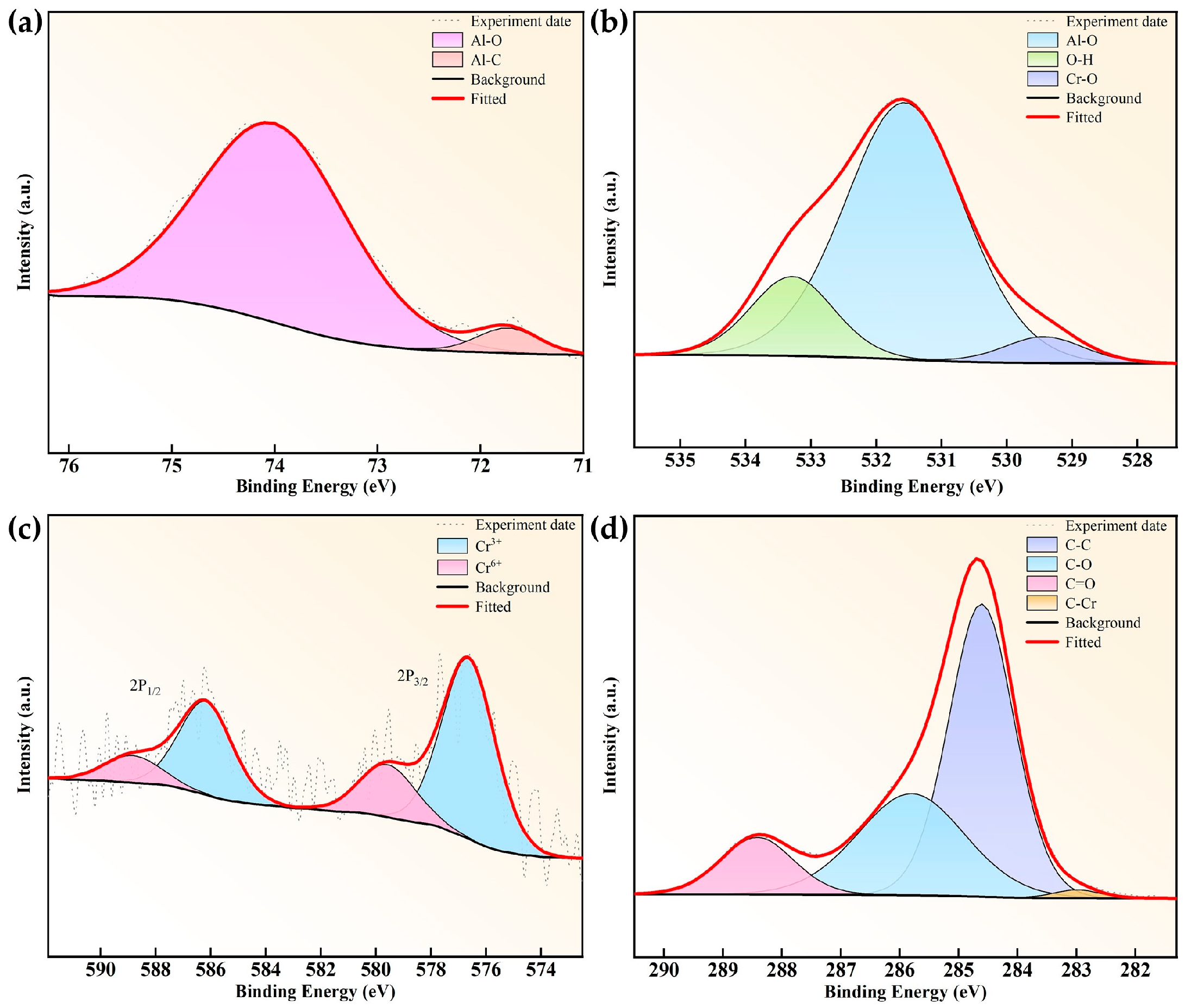
2AlC coating, X-ray photoelectron spectroscopy (XPS) analysis was conducted on the coating surface after electrochemical testing in 3.5 wt.% NaCl solution. The high-resolution XPS spectra of Al 2p, O 1s, Cr 2p and C 1s are presented in
Figure 7. The Al 2p and O 1s spectra both reveal a dominant peak corresponding to aluminum oxide, indicating the formation of Al
2O
3 on the coating surface after corrosion. Similarly, the Cr 2p spectrum displays characteristic features attributed to chromium oxide, confirming the presence of Cr
2O
3. Moreover, the C 1s spectrum reveals Cr-C bond at 282.8 eV and Al-C bond in Al 2p spectrum, consistent with the presence of Cr
2AlC in the cold-sprayed coating [
26,
27].
The co-existence of aluminum oxide and chromium oxide on the coating surface suggests a mixed Cr/Al-based oxide layer formed during corrosion exposure. These oxides are known for their chemical stability and low solubility in chloride environments, and their formation is commonly associated with passive film development on corrosion-resistant materials. Thus, the presence of these oxides on the Cr2AlC coating indicates that surface passivation occurred during immersion in NaCl solution.
The resulting Cr/Al oxide film can effectively hinder charge transfer and limit the penetration of aggressive chloride ions, thereby suppressing localized corrosion processes. Therefore, the XPS results provide direct chemical evidence supporting the improved corrosion resistance and surface stability of the cold-sprayed Cr2AlC coating.
3.5. Corrosion Protection Mechanism
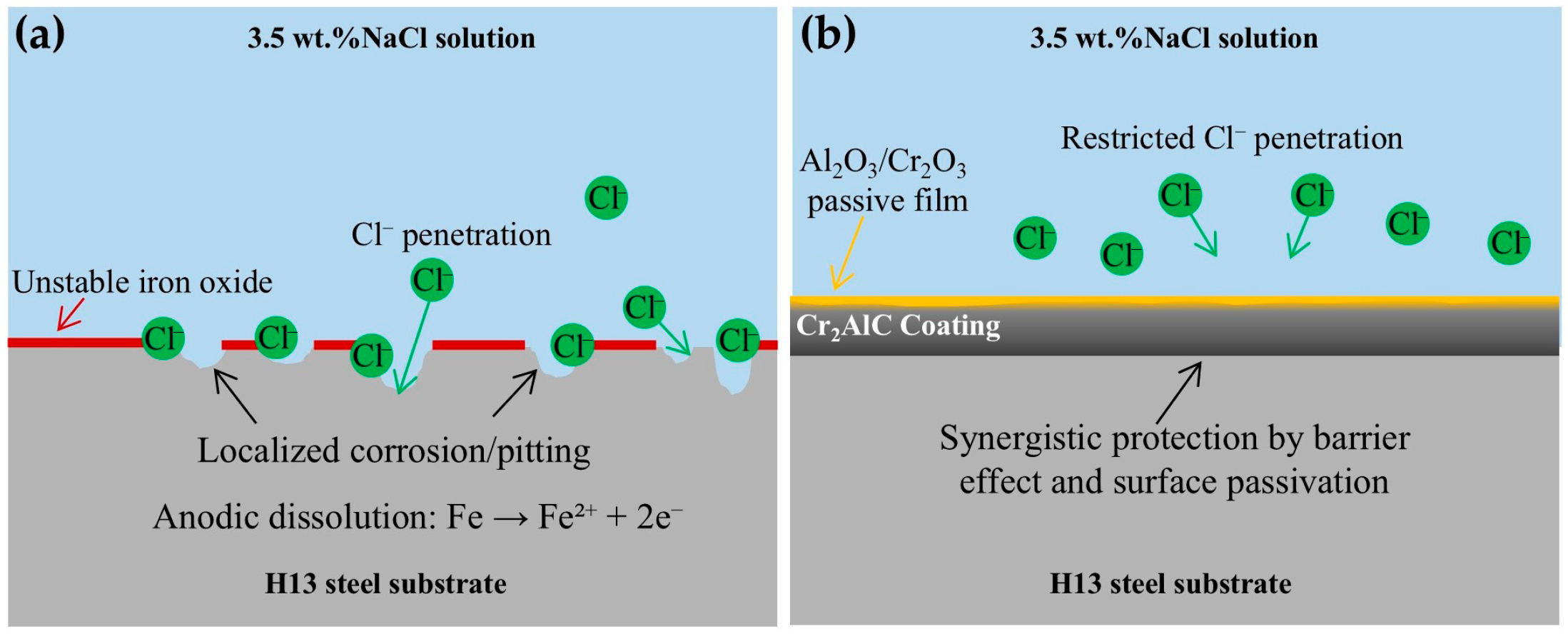
The corrosion protection mechanism of the cold-sprayed Cr
2AlC coating on H13 steel in 3.5 wt.% NaCl solution is illustrated schematically in
Figure 8, which highlights the distinct corrosion behaviors of H13 steel with and without Cr
2AlC coating. As shown in
Figure 8a, the bare H13 steel substrate is directly exposed to the chloride-containing electrolyte. Chloride ions readily penetrate the naturally formed iron oxide film, which is thermodynamically unstable in chloride environments, causing its breakdown. This leads to localized anodic dissolution of iron (Fe → Fe
2+ + 2e
−) and the initiation of pitting corrosion, consistent with the extensive corrosion pits observed on the substrate surface after immersion.
In
Figure 8b, cold-sprayed Cr
2AlC coating acts as a dense physical barrier, significantly restricting the penetration of Cl
− ions toward the substrate. More importantly, XPS analysis confirms the formation of a Al
2O
3/Cr
2O
3 passive film on the coating surface after corrosion exposure. This chemically stable oxide layer further suppresses electrochemical reactions at the coating/electrolyte interface and limits localized corrosion processes.
Thus, the improved corrosion resistance stems from the synergistic effect of the physical barrier provided by the Cr2AlC coating and the surface passivation induced by the oxides of Cr and Al, effectively protecting the H13 steel substrate in chloride-rich environments.