1. Introduction
Magnesium (Mg) and its alloy materials have great potential in a wide range of applications, including biodegradable implants due to their excellent mechanical properties, biocompatibility, avirulence and osteogenesis, as well as the electronics, automotive and aeronautical industries due to their strength-weight ratio, light-weight structural characteristics, excellent electromagnetic shielding performance and good castability [
1,
2,
3,
4,
5]. However, magnesium alloys are not only kinetically corrosion-susceptible and thermodynamically unstable, but also exhibit an excessively high corrosion rate due to a strong dissolution tendency in galvanic coupling systems or chloride-containing environments [
6,
7]. Therefore, the core of surface modification technologies for enhancing the corrosion resistance of magnesium alloys is to construct a continuous and compact protective coating with excellent interfacial bonding to the substrate, which can effectively isolate the magnesium matrix from corrosive media [
8]. In the past few decades, a variety of such surface technologies have been extensively investigated and widely applied, including the preparation technologies of inorganic ceramic coatings (e.g., micro-arc oxidation (MAO) [
9,
10] and chemical conversion coatings [
11,
12]), metal plating technologies (e.g., electroless plating and hot-dip plating [
13,
14]), and organic coating technologies [
15] and superhydrophobic surface protection technologies [
16].
MAO achieves microarc discharge through the plasma effect and electrochemical reactions in the electrolyte, enabling the in situ formation of an oxide ceramic coating on the magnesium alloy substrate. This coating forms a metallurgical bond with the magnesium alloy substrate, exhibiting excellent bonding strength and spalling resistance. It also features high compactness, along with good wear resistance and oxidation resistance, making it a mainstream technology for fabricating inorganic protective coatings in the field of magnesium alloy surface modification [
9]. However, MAO coatings inevitably contain micropores and microcrack defects, which tend to act as permeation pathways for corrosive media. Fortunately, recent studies have demonstrated that the synergistic integration of multiple technologies can significantly enhance the corrosion resistance of magnesium alloys. Representative examples include sol–gel sealing layers to plug MAO pores [
17], in situ grown Mg–Al layered double hydroxide (LDH) films followed by hydrophobic modification to construct a dense and water-repellent barrier [
18], MAO/epoxy hybrid coatings that seal defects and enable inhibitor-assisted protection/self-healing [
19], electrodeposited graphene oxide overlayers that cover porous MAO surfaces and reduce electrolyte ingress [
20], and one-step particle-assisted MAO (e.g., hydroxyapatite incorporation) that promotes the “self-sealing” of micropores and densifies the outer layer [
21]. Overall, the “MAO + sealing/topcoat” multi-technology synergy is widely recognized as an effective strategy to mitigate the intrinsic porosity of MAO coatings and substantially improve the long-term corrosion resistance of magnesium alloys [
22].
Among candidate sealing materials, TiO
2 is particularly attractive due to its high chemical stability and good corrosion resistance. Various TiO
2-containing coatings on magnesium alloys have been developed via different deposition techniques. For instance, Ma et al. employed atomic layer deposition (ALD) to prepare a TiO
2 layer on MAO-coated AZ31B magnesium alloy, which efficiently sealed the micropores and cracks in the MAO coating, thus significantly enhancing the corrosion resistance and biocompatibility [
23]; Liu et al. fabricated a hydrophobic TiO
2/MoS
2 nanocomposite coating on AZ31B via electrophoretic deposition, and the silane-modified coating exhibited excellent anti-corrosion performance with a low corrosion current density, supporting the feasibility of TiO
2 as a dense barrier or pore-plugging layer for magnesium alloy protection [
24]. Compared with techniques such as ALD and electrophoretic deposition, the sol–gel method is also a mainstream and widely applied technology for fabricating oxide ceramic coatings, boasting distinct advantages including a simple operational process, uniform film formation, and excellent compositional designability. However, the conversion of gel coatings into ceramic functional coatings under high-temperature conditions is accompanied by significant volume shrinkage, which readily induces cracking, delamination, and other failure phenomena of the functional coatings. Fortunately, Kim, Chen et al. have previously developed and demonstrated a modified sol–gel approach, specifically the deep ultraviolet (DUV)-assisted sol–gel technique. Utilizing this method, a series of dense, low-defect oxide coatings have been successfully fabricated at relatively low temperatures, including InGaZnO [
25], YBa
2Cu
3O
7−x [
26], Zn/Zr/HfO
x [
27], (Pb
0.76Ca
0.24)TiO
3 [
28]. Their experimental findings also confirmed that photons emitted from DUV irradiation can penetrate the gel films, triggering the formation of free radicals and thereby enabling the conversion of gel films into ceramic films at low temperatures. By promoting the controlled, gradual release of gaseous byproducts during the gel-to-ceramic transformation, this approach mitigates not only the internal stress induced by drastic volume shrinkage but also efficiently minimizes pore defects within the coating, which in turn brings about a remarkable enhancement in the compactness of the as-formed ceramic coatings. Furthermore, considering the relatively low thermal stability of magnesium and its alloys, they are highly susceptible to combustion in oxygen-rich environments at elevated temperatures. Therefore, the DUV-assisted sol–gel technique, characterized by a low thermal budget, represents an ideal strategy for fabricating TiO
2-based anticorrosive coatings on magnesium alloys. Nevertheless, to the best of our knowledge, relevant research has not been reported in the literature to date.
The corrosion behavior of magnesium alloys is closely related to their contact with aqueous corrosive media. Numerous studies have confirmed that constructing a superhydrophobic interface on magnesium alloys via surface modification technologies can form a stable air film on the surface based on the lotus-leaf effect, which effectively blocks direct contact between water, corrosive ions, and the magnesium alloy substrate, and cuts off the mass-transport pathways for corrosion reactions. Meanwhile, superhydrophobicity can significantly reduce the wettability and contact area of corrosive media on the substrate surface, fundamentally inhibiting the initiation and propagation of corrosion [
16,
29]. This strategy can also be combined synergistically with traditional anti-corrosion technologies to further enhance the corrosion protection performance of magnesium alloys [
30,
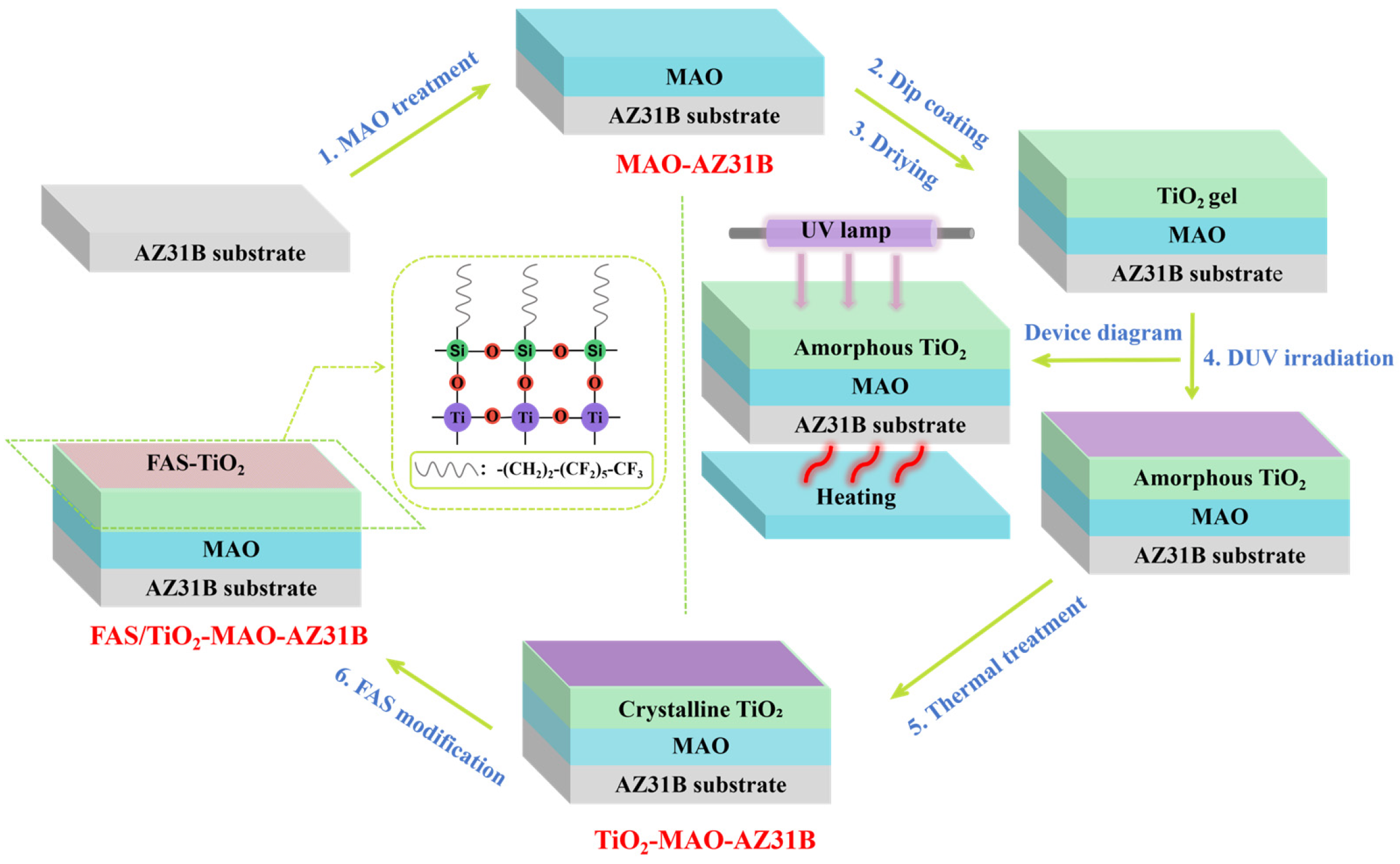
31]. In this work, aiming to improve the corrosion resistance of AZ31B magnesium alloy, an orders-of-magnitude enhancement in corrosion resistance was achieved through a three-step synergistic surface modification strategy: MAO treatment, deposition of a chemically stable TiO
2 barrier layer using a DUV-assisted sol–gel technique, and subsequent superhydrophobic functionalization via fluoroalkylsilane self-assembly. This research provides a feasible route for developing high-efficiency anti-corrosion technologies for magnesium alloys, and may offer a modest contribution to promoting their practical engineering applications in corrosive service environments.
3. Results and Discussion
When the TiO2-MAO-AZ31B reference sample was prepared via the conventional sol–gel method, the sample was found to be extremely prone to spontaneous combustion during thermal annealing. This phenomenon can be attributed to the rapid exothermic decomposition of organic components within the TiO2 gel layer at high temperatures, which triggered the combustion of magnesium. In addition, even when a TiO2 coating was successfully obtained by chance, it exhibited abundant surface cracks and poor adhesion with severe delamination. This is mainly ascribed to the rapid decomposition of organic species and significant volume shrinkage during direct thermal annealing, together with the relatively slow atomic diffusion rate and the constraint effect from the underlying layer, which generated considerable internal stress within the coating. For the sample treated only by DUV irradiation without thermal annealing, the TiO2 coating showed very weak adhesion and could be easily detached by slight scratching or abrasion. Both types of coatings are unsuitable for use as anticorrosive protective coatings. Therefore, only the specimens prepared by the DUV-assisted sol–gel method are included in the subsequent discussion.
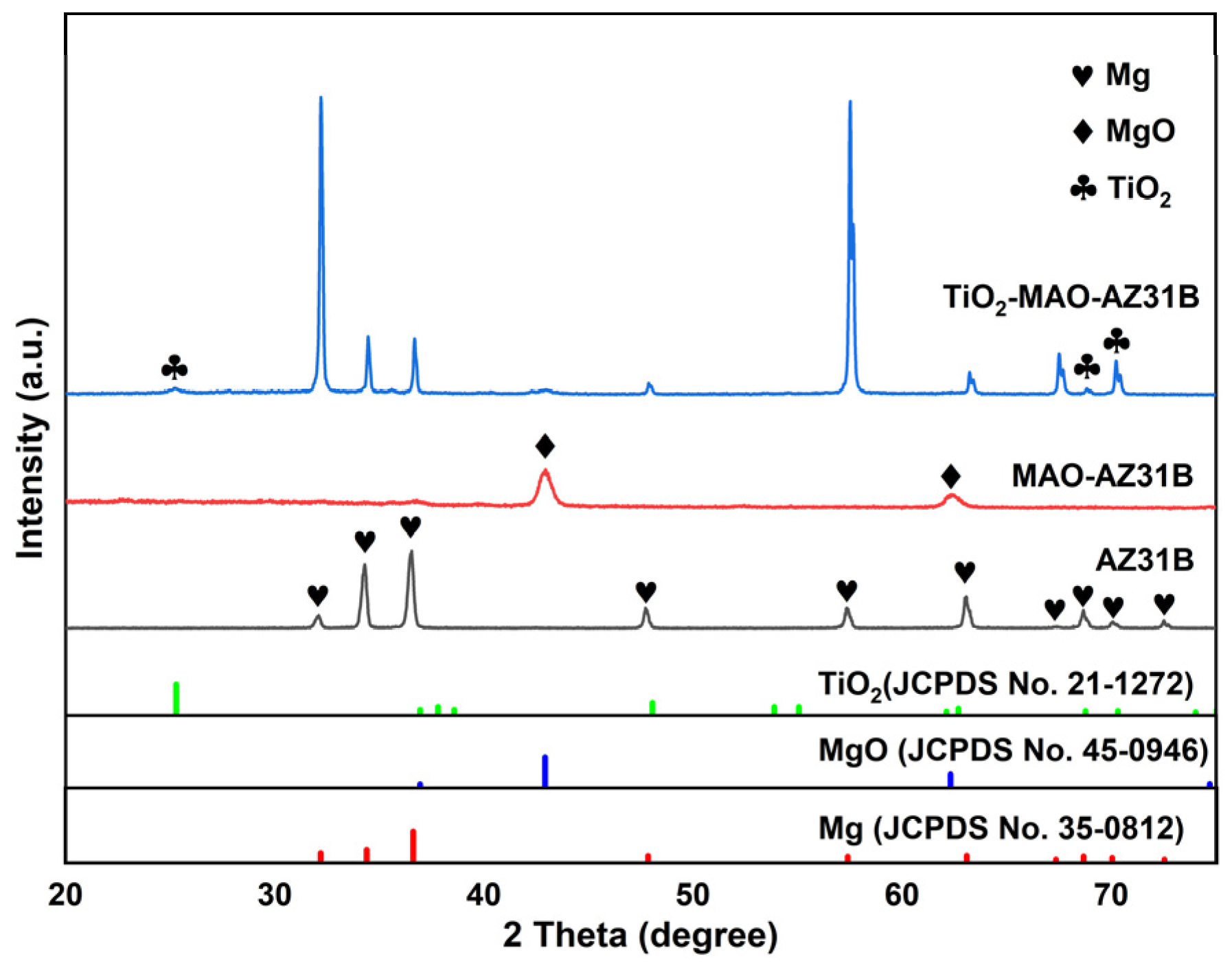
As depicted in
Figure 2, the XRD pattern of the AZ31B substrate is dominated by diffraction signals characteristic of metallic Mg with a hexagonal close-packed structure. The distinct diffraction peaks are mainly situated at around 2θ = 32.2°, 34.4°, 36.6°, 47.8°, 57.4°, and 63.1° which can be sequentially indexed to the (100), (002), (101), (102), (110) and (1120) crystallographic planes of α-Mg (JCPDS No. 35–0812). No diffraction peaks corresponding to Al- or Zn-bearing secondary phases are discernible, implying that the concentrations of alloying elements in the alloy are low and they exist in the Mg matrix mainly in the form of solid solution. Following MAO treatment, fresh diffraction peaks emerge at 2θ values of 42.9° and 62.3°, which are assigned to the (200) and (220) planes of cubic MgO (JCPDS No. 45–0946), respectively. This verifies that a crystalline MgO ceramic layer is in situ constructed on the AZ31B substrate through the MAO process. In the XRD pattern of the TiO
2-MAO-AZ31B specimen, apart from the characteristic peaks of the Mg substrate and the MgO ceramic layer, a set of additional diffraction signals is identified at 2θ = 25.3°, 68.8° and 70.3°. These peaks match well with the (101), (116) and (220) planes of anatase-phase TiO
2, in accordance with the JCPDS standard card No. 21–1272 [
33]. These findings confirm that a crystalline TiO
2 coating has been successfully deposited via the DUV-assisted sol–gel method, with anatase as the primary crystalline phase. It is widely acknowledged that the surface of anatase TiO
2 is more prone to hydroxylation relative to the rutile phase, and the resultant hydroxyl groups can covalently bond with fluoroalkylsilane, thereby endowing the surface with high hydrophobicity [
34].
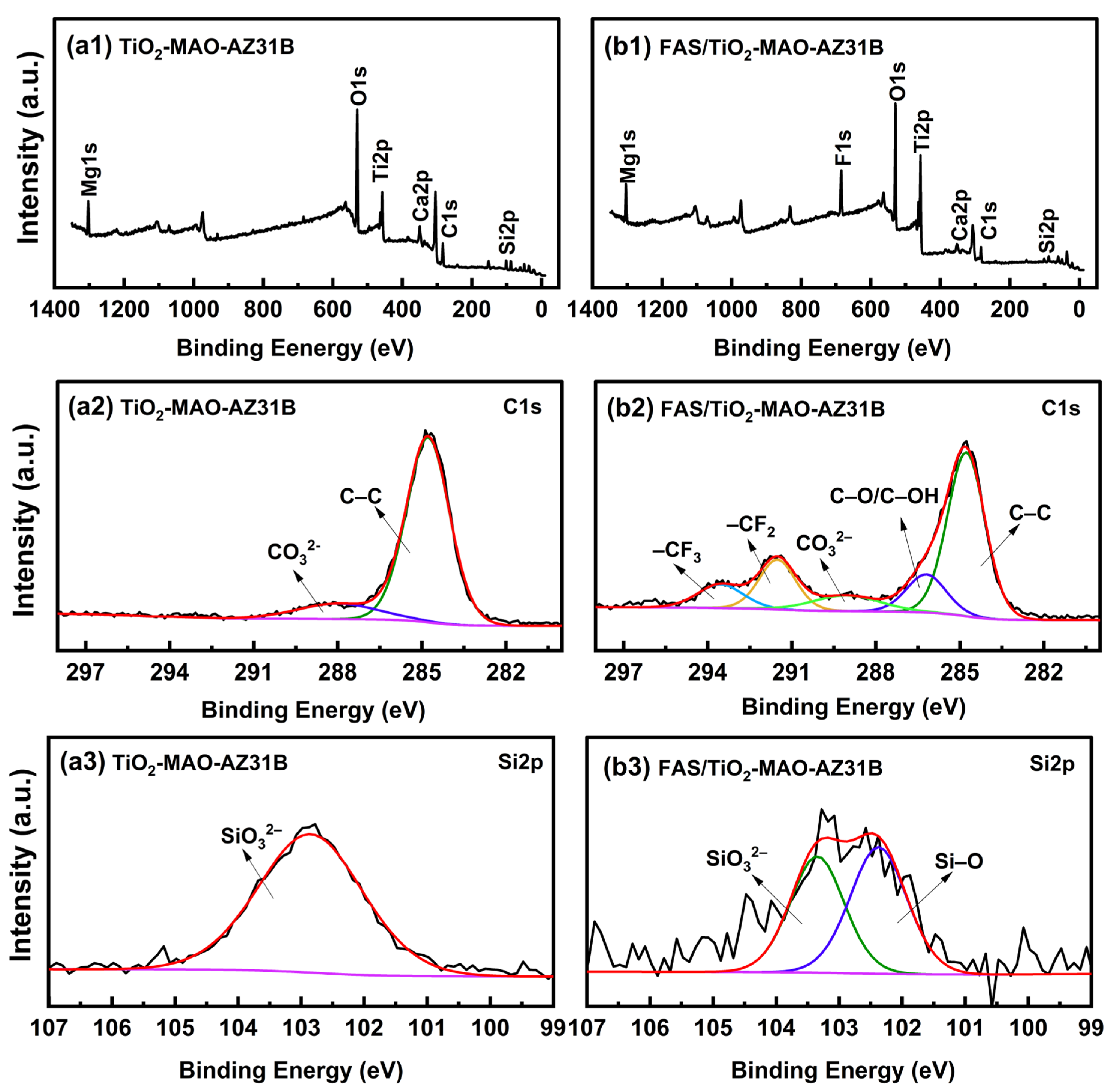
Figure 3 depicts the XPS survey and high-resolution spectra for the coatings prior to (group a: TiO
2-MAO-AZ31B) and following FAS functionalization (group b: FAS/TiO
2-MAO-AZ31B). The survey spectrum in
Figure 3(a1) reveals that the pristine TiO
2-MAO coating is composed predominantly of Mg, O, Ti, Ca, C, and Si. The elemental inventory of the FAS/TiO
2-MAO specimen is largely analogous, with the only new signature being a distinct fluorine (F) signal (
Figure 3(b1)). No discernible shifts in the binding energies of Mg, O, Ti and Ca are observed between the two specimens, a trend consistent with their respective sources: Mg and Ti are derived from the AZ31B substrate and the TiO
2 coating, respectively, while Ca is present as an impurity element introduced from the electrolyte during the MAO process. Relative to the bare TiO
2-MAO surface, the FAS/TiO
2-MAO surface presents a strong characteristic peak of fluorine, which provides direct spectroscopic proof that FAS molecules have been stably anchored onto the oxide coating. Pronounced differences are resolved in the high-resolution C 1s and Si 2p spectra between the two specimen groups. As illustrated in
Figure 3(a2), the high-resolution C 1s spectrum of TiO
2-MAO coating can be deconvoluted into two characteristic peaks at 284.8 eV and 288.8 eV. These peaks are assigned to adventitious carbon accumulated during XPS measurement and carbonate species formed from residual carbon upon thermal annealing in the DUV-assisted sol–gel procedure, respectively. The C 1s spectrum of FAS/TiO
2-MAO coating (
Figure 3(b2)) displays a more complex multiplet structure. In addition to the two common peaks at 284.8 eV and 288.8 eV, three extra fitted components are detected at 286.2 eV, 291.5 eV, and 293.5 eV, which correspond to C–O moieties, –CF
2 groups and –CF
3 terminal groups in turn. All these functionalities are characteristic structural segments of the FAS molecule [
35,
36]. The Si 2p peak of the TiO
2-MAO coating is centered at 103.4 eV (
Figure 3(a3)), consistent with the binding energy of Si 2p in Na
2SiO
3 [
37,
38], indicating that this silicon component originates from the electrolyte used in the MAO process. For the FAS/TiO
2-MAO coating (
Figure 3(b3)), the Si 2p signal can be curve-fitted into two distinct peaks at 103.4 eV and 102.3 eV. The peak at 103.4 eV is ascribed to residual Na
2SiO
3 from the MAO electrolyte, whereas the peak at 102.3 eV is assigned to Si–O chemical bonds. The appearance of this Si–O feature consolidates the conclusion that FAS is chemically conjugated to the TiO
2 coating via covalent Si–O linkages [
38,
39].
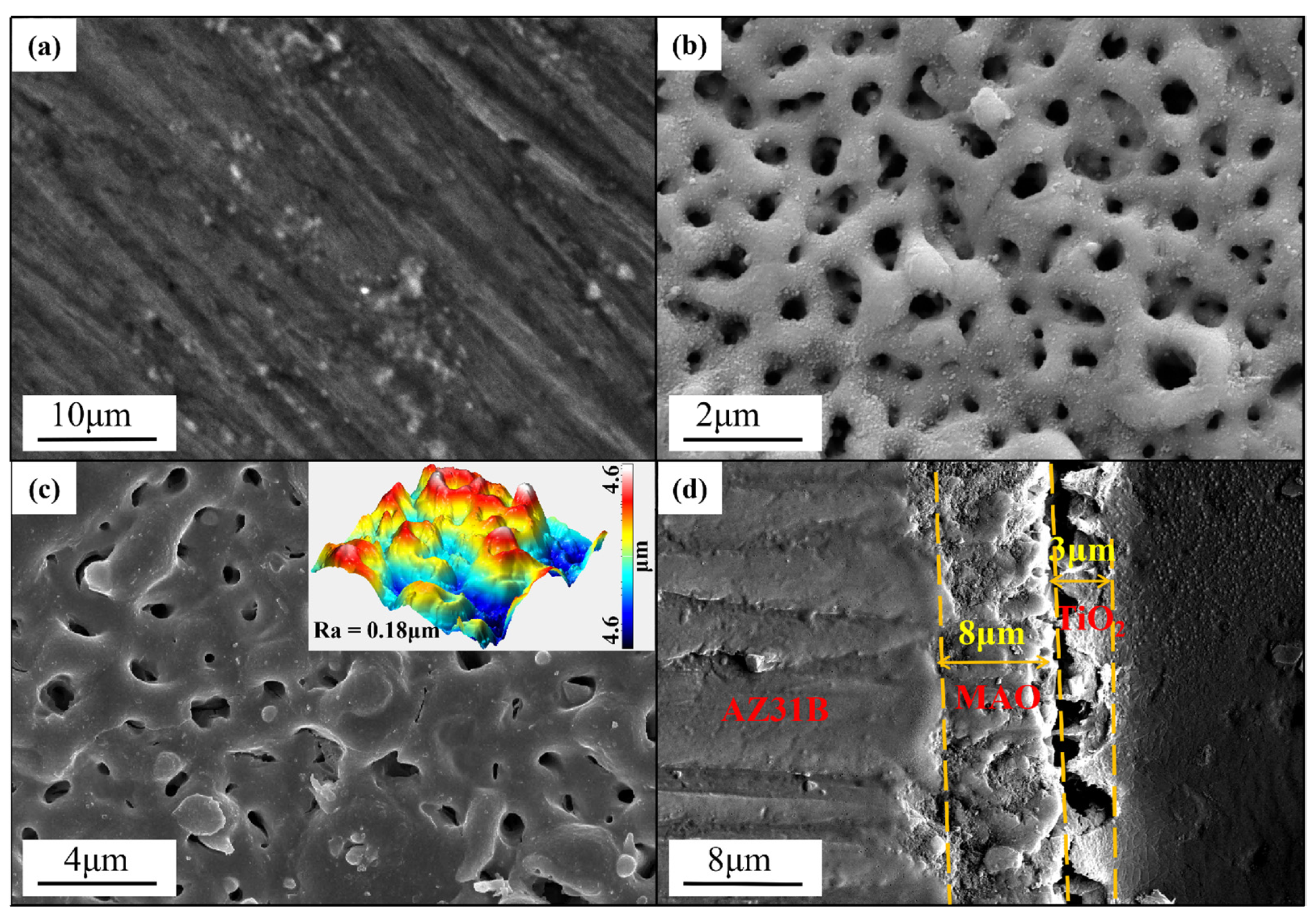
Figure 4a presents the SEM surface morphology of the mechanically polished AZ31B substrate. Strikingly, the surface is devoid of voids or other visible defects, and features uniformly oriented, continuously distributed shallow parallel polishing scratches. These observations collectively indicate that the AZ31B substrate boasts a dense microstructure and attains excellent overall surface planarity post-polishing.
Figure 4b illustrates the SEM surface morphology of the AZ31B substrate following MAO treatment. The surface displays a uniformly distributed honeycomb-like porous architecture, characterized by irregular near-circular or elliptical pores with diameters ranging from 0.5–1.5 μm and subtle size variations. The pore walls are rough and interconnected, thus forming a continuous 3D network framework—a signature morphology resulting from transient high-temperature melting, rapid solidification, and gas evolution during the MAO process. Of note, no discernible cracks or spalling are detected, demonstrating that the MAO ceramic layer exhibits favorable structural integrity and densification.
Figure 4c illustrates the SEM surface morphology of the TiO
2-MAO coating. Relative to the as-prepared MAO surface (
Figure 4b), the pore count is markedly diminished, with residual pores mostly <1 μm in diameter and no longer interconnected. In addition, the AFM topographic map (Inset of
Figure 4c) reveals a smooth surface with an arithmetic mean roughness (Ra) of only 0.18 μm. The TiO
2 coating has efficiently sealed and filled the porous structure of the MAO substrate, thereby yielding a substantial improvement in surface planarity and a relatively dense, continuous film morphology. Nevertheless, some reduced-size depressions and residual pores persist, reflecting incomplete filling of the MAO substrate’s inherent porous architecture. Evidently, no obvious cracks or delamination are observed on the coating surface, verifying robust interfacial adhesion between the TiO
2 coating and MAO substrate, and high structural integrity of the coating itself.
The cross-sectional SEM morphology of the TiO
2-MAO-AZ31B specimen is shown in
Figure 4d. A well-defined three-tiered architecture is evident, comprising the AZ31B magnesium alloy substrate (left), MAO ceramic interlayer (middle), and TiO
2 functional coating (right). The AZ31B substrate on the left preserves parallel polishing-induced textures and features a dense, defect-free microstructure, providing a stable foundation for the overlay coatings; the MAO interlayer in the middle possesses a typical porous columnar structure with a uniform thickness of ~8 μm, and this porous configuration not only bonds tightly to the substrate but also enhances mechanical interlocking and offers anchoring sites for TiO
2 deposition; The TiO
2 coating, with a thickness of approximately 3 μm, is generally continuous. The few voids observed in the composite coating can be ascribed to two factors: on the one hand, the entrapped air in the porous MAO layer prevents full infiltration of the TiO
2 sol, so some inherent voids remain even after DUV irradiation and thermal annealing, although the TiO
2 coating still fills and seals most pores and the mechanical interlocking and pinning effect in the filled regions ensure robust interfacial bonding between the TiO
2 coating and the MAO interlayer; on the other hand, these voids are also largely artifacts induced by the brittle fracture during cross-sectional sample preparation, as the brittle and porous MAO ceramic tends to crack under mechanical stress, rather than resulting from the failure of the TiO
2 coating itself. Of supplementary note, FAS molecules are anchored onto the TiO
2 surface through covalent Si–O–Ti bonds, forming a self-assembled monolayer. The as-formed modifier layer possesses a typical thickness of 1–10 nm, which is orders of magnitude smaller than the characteristic characterization scale of scanning electron microscopy (spanning from submicrometer to micrometer levels). Therefore, the surface topography of the FAS-TiO
2-MAO composite coating is highly consistent with that of the unmodified TiO
2-MAO coating, and no distinguishable morphological variations can be identified between these two specimens via SEM characterization.
Figure 5a depicts the WCA micrograph of the AZ31B substrate. The water droplet assumes a flattened, spread-out profile on the surface, yielding a measured WCA of 45°—this confirms the pronounced hydrophilic nature of the AZ31B substrate. The water droplet on the MAO-treated AZ31B retains a flattened, spread-out profile, with a measured contact angle of 26° (
Figure 5b)—a marked reduction from the 45° of the bare AZ31B substrate, indicating a substantial enhancement in surface hydrophilicity following MAO treatment. This enhancement is ascribed to the porous architecture of the MAO ceramic layer and abundant hydroxyl (–OH) polar groups derived from magnesium oxide phases, which not only increase surface adsorption sites but also elevate surface energy, thereby facilitating further spreading of water droplets. When a water droplet is deposited onto the surface of the TiO
2-MAO-AZ31B, it spreads rapidly into an extremely thin liquid film (
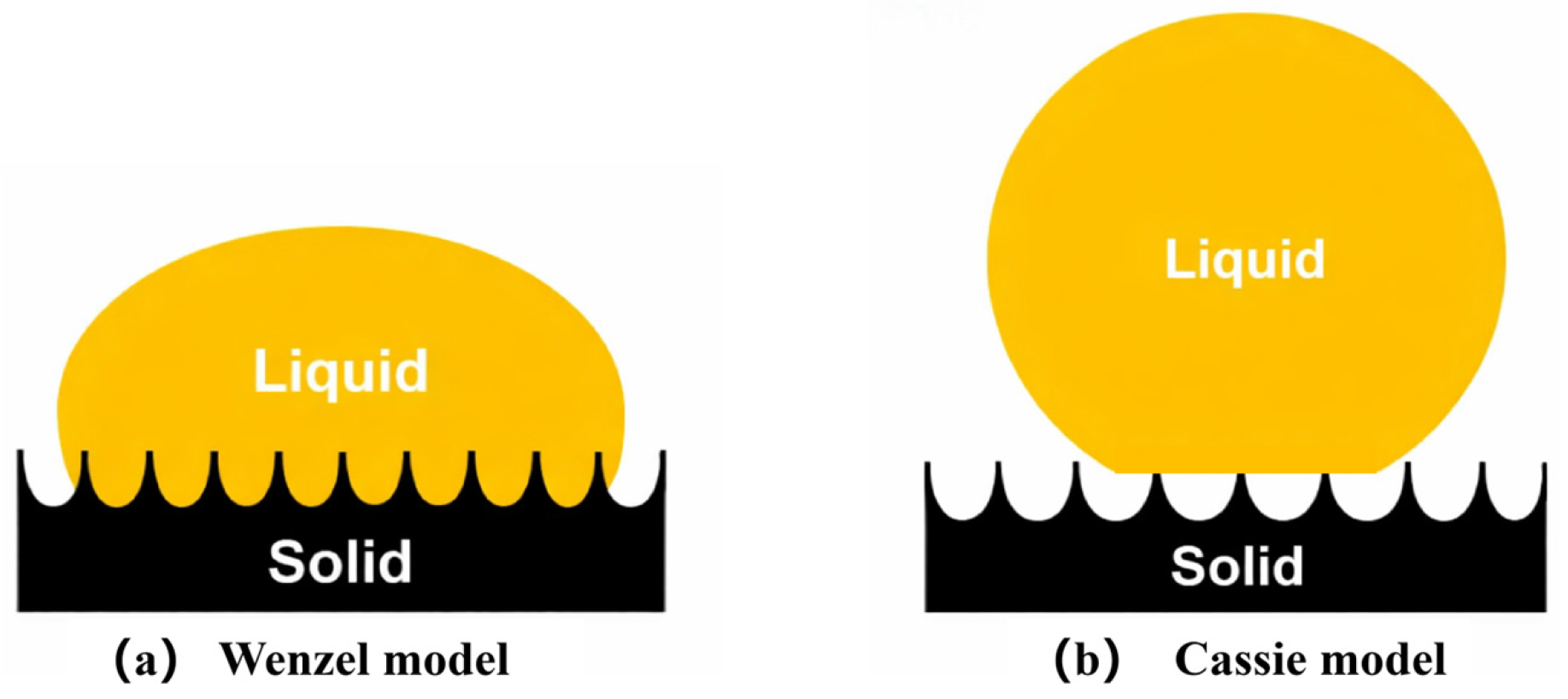
Figure 5c), with a measured WCA of only 3°, demonstrating that the coating exhibits prominent superhydrophilicity. The marked superhydrophilic performance observed here is well elucidated by the Wenzel wetting model (
Figure 6a), which correlates the apparent wettability and surface roughness through the equation
cos θr =
r ·
cos θy. In this expression,
θr is the experimentally measured contact angle on the rough coating surface,
r signifies the roughness factor (
r > 1 for surfaces with topological roughness), and
θy refers to the intrinsic contact angle on a smooth counterpart. Owing to the high density of polar hydroxyl (–OH) groups originating from the TiO
2 component, the coating displays strong intrinsic hydrophilicity with
θy typically lower than 30° [
40] corresponding to a large positive
cos θy. Since the TiO
2-modified MAO structure retains a hierarchically rough morphology with
r > 1, the Wenzel mechanism predicts a further enhancement in hydrophilicity, which pushes the apparent WCA down to only 3° and gives rise to the superhydrophilic characteristic.
Figure 5d displays the WCA micrograph of the FAS-functionalized TiO
2-MAO coating, where a water droplet rests stably in a near-spherical conformation, registering a WCA of 160°—clear evidence of the coating’s robust superhydrophobic nature. The underlying mechanism is well captured by the Cassie–Baxter wetting model (
Figure 6b), which describes wetting behavior on heterogeneous rough surfaces through the core relationship:
cos θc =
f1cos θ1 +
f2cos θ2. In this expression,
θc denotes the experimentally observed apparent contact angle,
f1 and
f2 represent the fractional areas of the solid–liquid and air-liquid interfaces, respectively (where
f1 +
f2 = 1),
θ1 is the intrinsic contact angle of the solid surface, and
θ2 corresponds to the contact angle of air (≈180°, so
cos θ2 = −1). For the FAS-TiO
2-MAO coating, FAS molecules are anchored to the surface via covalent Si–O–Ti bonds, introducing low-surface–energy fluorocarbon moieties (–CF
3, –CF
2–) that displace the polar hydroxyl (–OH) groups present on the pristine TiO
2-MAO coating. This chemical modification raises the intrinsic contact angle
θ1 to above 120° [
39,
41], leading to a negative value for
cos θ1. Simultaneously, the coating preserves the micro-nano hierarchical roughness inherited from the MAO substrate, which traps a significant volume of air within its textured crevices. This leads to a high value of
f2, the air–liquid interfacial area fraction. When these parameters are substituted into the Cassie–Baxter equation, the combined influence of the negative
cos θ1 and
cos θ2 values produces a more negative
cos θc, which corresponds to an apparent contact angle
θc approaching 180°. The measured 160° WCA is a direct manifestation of this synergistic interplay: chemical functionalization to lower surface energy, coupled with the retained micro-nano roughness, operates through the Cassie–Baxter mechanism to drive the dramatic transition from superhydrophilicity to superhydrophobicity.
Owing to its facile operation and rapid measurement, the Tafel polarization technique has been extensively adopted for the determination of instantaneous corrosion rates. Corrosion resistance of the specimens is generally evaluated on the basis of corrosion current density (
icorr) and corrosion potential (
Ecorr) [
42]. A lower
icorr value coupled with a more positive
Ecorr is indicative of superior anti-corrosion performance.
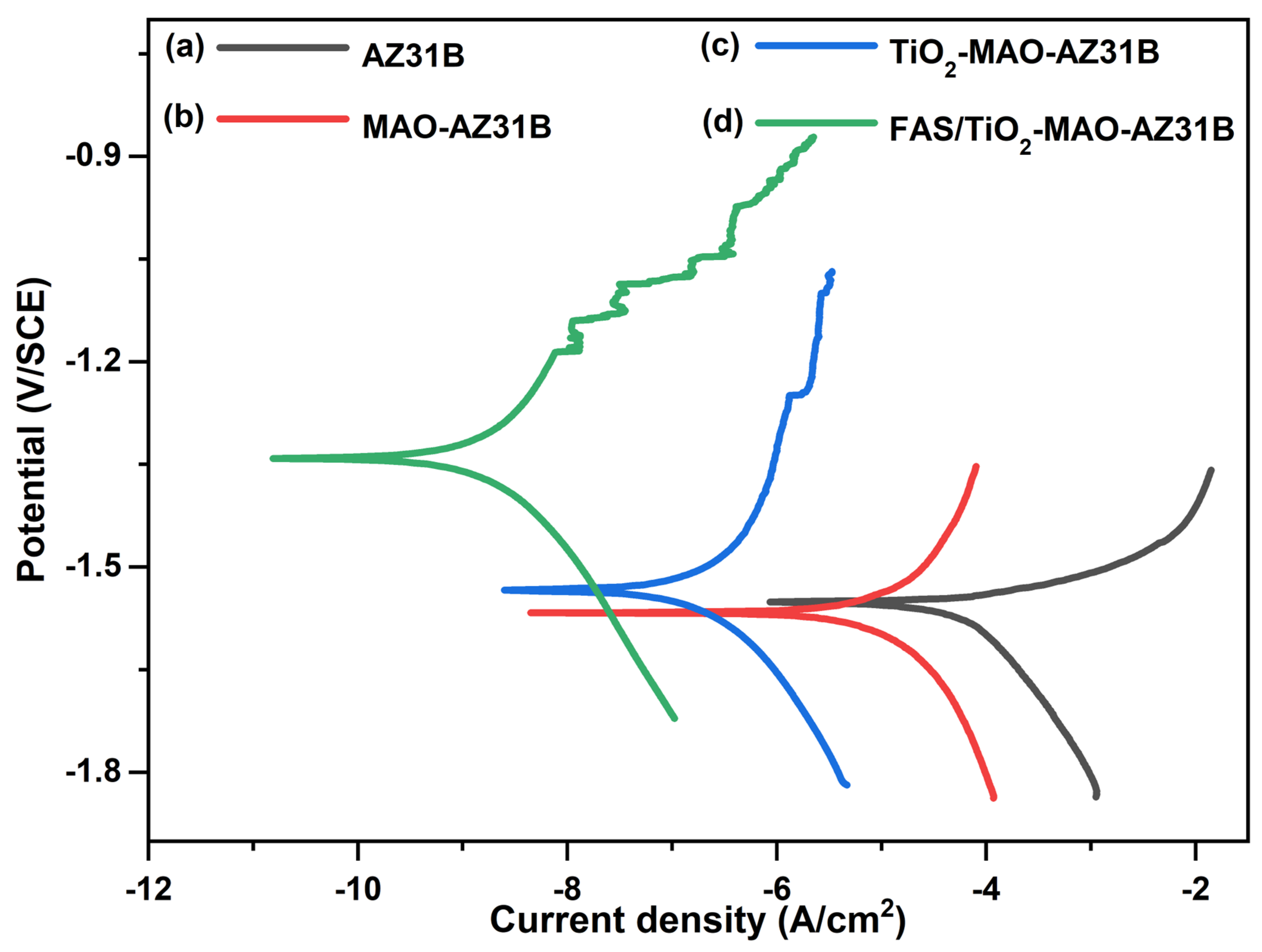
Figure 7 plots the Tafel polarization curves of the bare AZ31B substrate, MAO-AZ31B, TiO
2-MAO-AZ31B, and FAS/TiO
2-MAO-AZ31B specimens after 1 h immersion in 3.5 wt.% NaCl solution, enabling a comparative analysis of the electrochemical corrosion behaviors among the four specimens. The abscissa represents the logarithm of corrosion current density, while the ordinate denotes the potential relative to the saturated calomel electrode (VSCE). Of particular note, the FAS/TiO
2-MAO-AZ31B specimen exhibits the most positive corrosion potential at approximately −1.34 V, which is considerably higher than those of the TiO
2-MAO-AZ31B specimen (−1.53 V), bare AZ31B substrate (−1.55 V), and MAO-AZ31B specimen (−1.57 V) (
Table 1). From a thermodynamic perspective, the ranking of the four specimens in terms of thermodynamic stability and resistance to spontaneous corrosion is as follows: FAS/TiO
2-MAO-AZ31B > TiO
2-MAO-AZ31B > AZ31B substrate > MAO-AZ31B. Among these, the FAS/TiO
2-MAO-AZ31B specimen possesses the optimal thermodynamic stability and the lowest susceptibility to spontaneous corrosion. Unexpectedly, MAO treatment shifts the corrosion potential of AZ31B substrate negatively by 0.02 V, implying a deterioration in thermodynamic stability and corrosion resistance upon the application of MAO modification. This observation arises primarily because the porous ceramic layer generated via MAO allows electrolyte infiltration to the coating–substrate interface, giving rise to local galvanic couples consisting of the ceramic coating (cathodic phase) and the Mg alloy substrate (anodic phase). Such galvanic coupling drives the overall corrosion potential toward the negative potential regime associated with the anodic substrate. It should be emphasized that thermodynamic parameters merely reflect the intrinsic tendency toward corrosion, whereas the practical corrosion resistance is governed by the kinetic rate of the corrosion process.
The kinetic corrosion rate can be quantitatively described by icorr. The icorr value of the FAS/TiO2-MAO-AZ31B specimen is measured at approximately 1.31 × 10⁻⁹ A/cm2, which is orders of magnitude lower than those of the TiO2-MAO-AZ31B specimen (1.64 × 10⁻⁷ A/cm2), MAO-AZ31B specimen (5.04 × 10⁻⁶ A/cm2), and bare AZ31B substrate (1.69 × 10⁻⁴ A/cm2). Accordingly, the practical corrosion resistance of the specimens follows the sequence: FAS/TiO2-MAO-AZ31B > TiO2-MAO-AZ31B > MAO-AZ31B > AZ31B substrate, with the FAS/TiO2-MAO-AZ31B assembly delivering the slowest corrosion rate and the most prominent protective performance. The above trend originates from divergent protective mechanisms inherent to each coating system. The FAS/TiO2-MAO coating integrates the physical barrier effect of the compact TiO2-MAO ceramic layer and the hydrophobic shielding imparted by fluorocarbon groups introduced through FAS functionalization. This synergistic interaction significantly impedes electrolyte permeation and access to the underlying metallic surface. For the TiO2-MAO coating, TiO2 nanoparticles fill and refine the pore network within the MAO layer, reinforcing the barrier capability. In contrast, the pristine MAO coating consists solely of a porous ceramic structure, imposing only limited restriction on electrolyte penetration. The uncoated AZ31B substrate undergoes direct corrosive attack at the metallic surface, resulting in the highest kinetic corrosion rate among all investigated specimens.
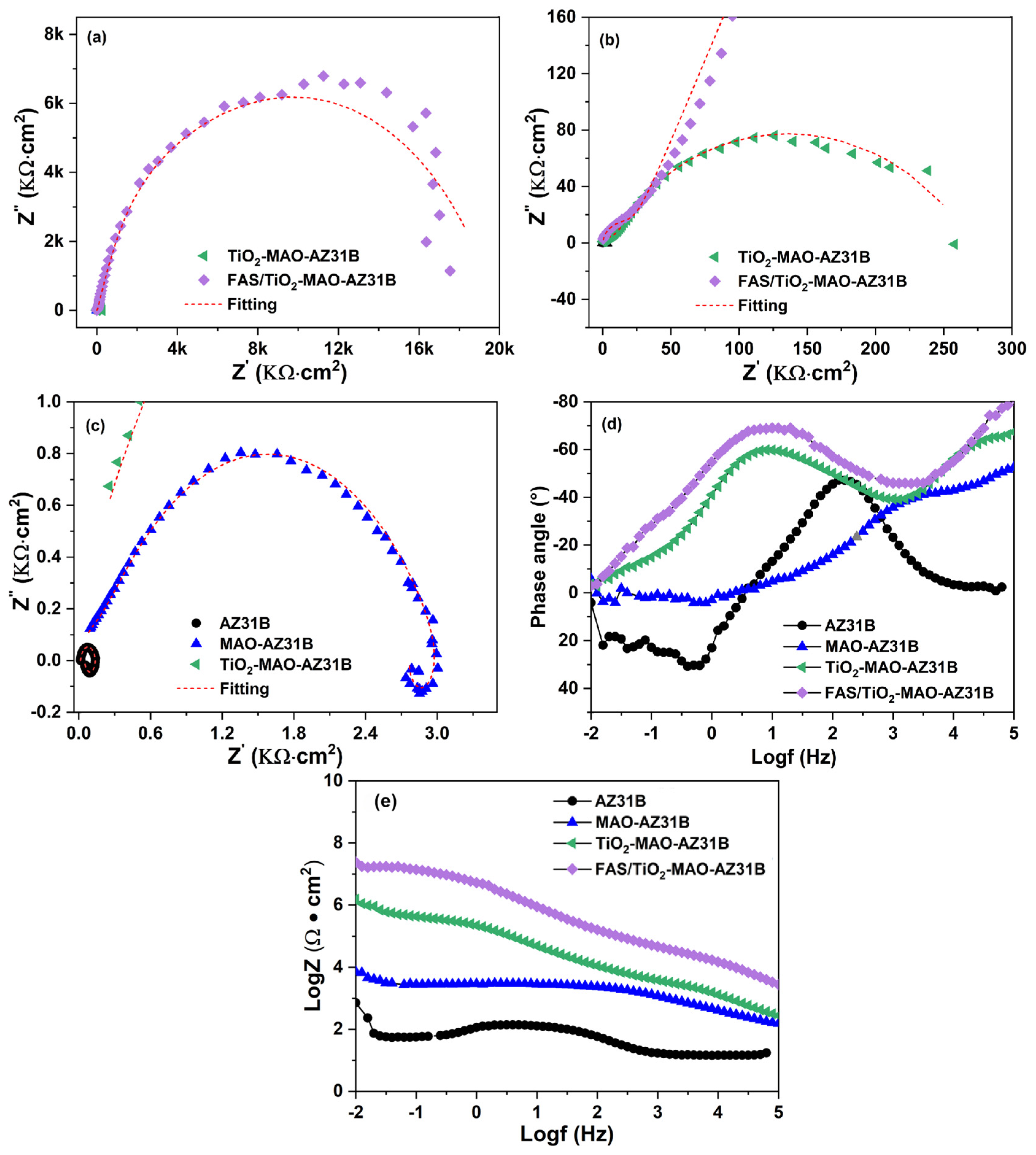
EIS measurements were further performed to evaluate the corrosion resistance of the four prepared specimens. The EIS plots of all specimens after 1 h of immersion in 3.5 wt.% NaCl electrolyte are depicted in
Figure 8, and the acquired EIS data were systematically fitted and analyzed using ZView software. The obtained Nyquist plots are shown in
Figure 8a–c. Both the FAS/TiO
2-MAO-AZ31B and TiO
2-MAO-AZ31B coatings exhibited the typical impedance response characteristics of magnesium alloy protective coatings. Combined with the Bode phase angle-frequency plot in
Figure 8d, it can be confirmed that both specimens presented a distinct double capacitive arc feature, which corresponded to the capacitive response of the coating bulk and the charge transfer process at the coating-substrate interface, respectively. In addition,
Figure 8d revealed that, in comparison with the TiO
2-MAO-AZ31B, the FAS/TiO
2-MAO-AZ31B exhibited the broadest phase angle plateau near 80° over the frequency range of 10
−2 to 10
4 Hz—a typical characteristic indicative of ideal capacitive protective behavior and excellent structural integrity of the coating. Meanwhile, the impedance modulus at 0.01 Hz (|Z|
0.01 Hz) in
Figure 8e remains at the 10
7 Ω·cm
2 order of magnitude, significantly higher than that of other samples, further verifying the long-term corrosion resistance and reliability of the coating system.
This characteristic directly verified their designed bilayer protective structure, which was composed of a hydrophobic top layer and a TiO
2/MAO ceramic barrier sublayer. Notably, the capacitive arc radius of the FAS/TiO
2-MAO-AZ31B (
Figure 8a) was considerably larger than that of the TiO
2-MAO-AZ31B (
Figure 8b). This significant performance enhancement was attributed to the fluorocarbon groups introduced by FAS modification on the surface of the TiO
2-MAO coating, which constructed a stable low-surface-energy hydrophobic layer on the coating surface. This hydrophobic layer thus significantly hindered the penetration of electrolyte into the coating top layer, thereby resulting in a remarkable improvement in the corrosion resistance of the coating system.
Figure 8c showed that the MAO-AZ31B and bare AZ31B substrates exhibited similar impedance response characteristics, with their Nyquist curves composed of both capacitive and inductive arcs. The radius of the capacitive arc for the MAO coating was significantly larger than that of the AZ31B substrate, which validated the basic protective effect of the MAO coating on the AZ31B substrate [
30]. In contrast, the bare AZ31B substrate presented an extremely small capacitive arc, accompanied by a low and drastically fluctuating phase angle (
Figure 8d), demonstrating intense corrosion reactions on its surface and extremely poor corrosion resistance. In EIS analysis, the low-frequency impedance modulus |Z|
f→0 from the Bode plot is a crucial parameter for evaluating the corrosion rate of specimens, where a higher |Z|
f→0 value indicates a lower corrosion rate [
19]. As shown in
Figure 8e, the |Z|
f→0 value of the AZ31B substrate increased from approximately 10
2 Ω·cm
2 to about 10
3 Ω·cm
2 after the deposition of the MAO coating. Subsequent deposition of the TiO
2 sealing barrier layer further raised this value to around 3 × 10
5 Ω·cm
2, and a dramatic increase to approximately 2 × 10
7 Ω·cm
2 was achieved after FAS modification. Collectively, the stepwise modification involving MAO treatment, TiO
2 sealing barrier deposition, and FAS superhydrophobic modification realized a progressive enhancement in the corrosion resistance of the AZ31B magnesium alloy. The synergistic effect of these three coating modification approaches ultimately improved the corrosion resistance of the AZ31B magnesium alloy by nearly six orders of magnitude relative to the bare substrate.
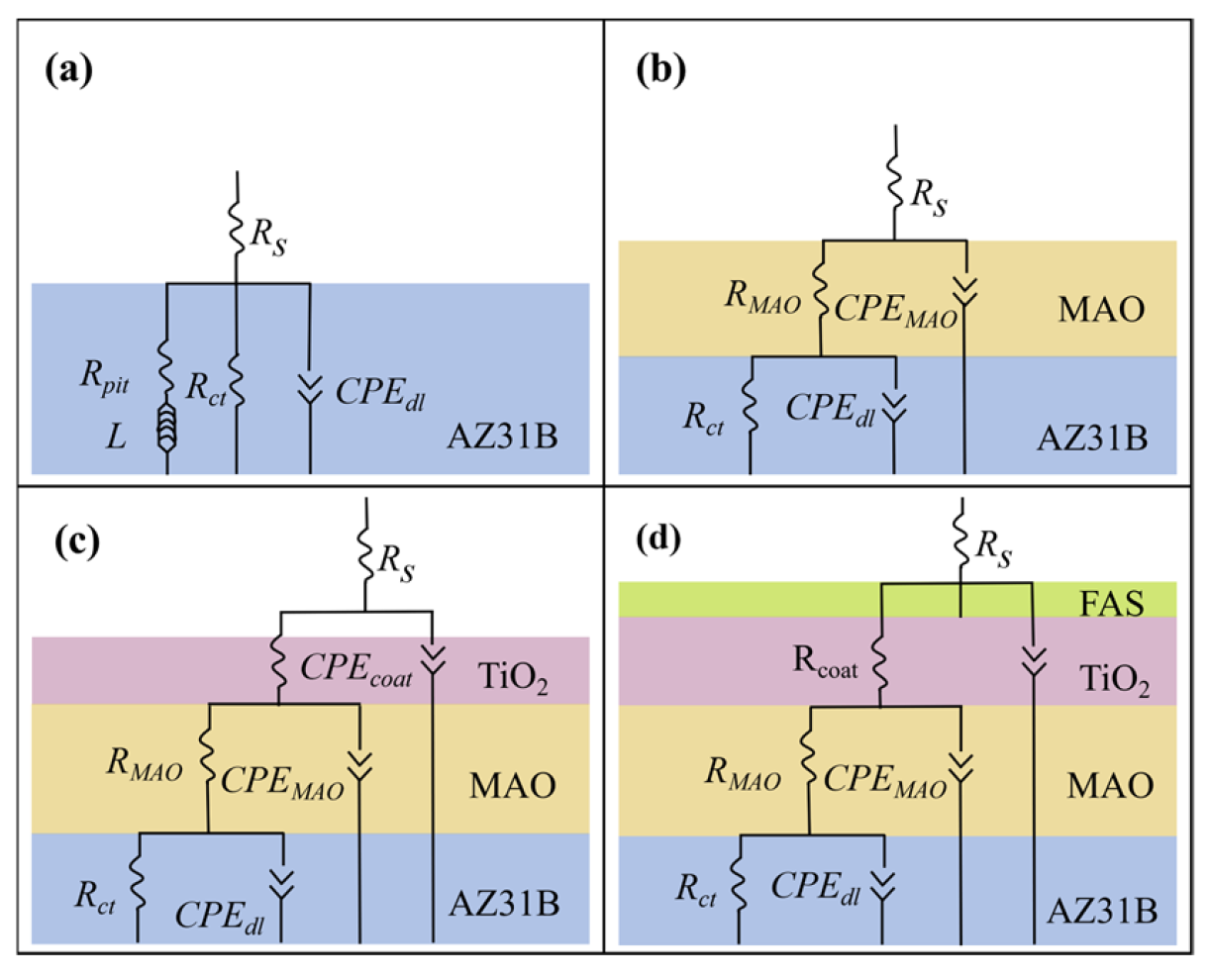
To quantitatively evaluate the corrosion resistance of the FAS-TiO
2-MAO coating, the EIS curves of the specimens were fitted and interpreted using the equivalent circuits illustrated in
Figure 9, with the corresponding fitting results summarized in
Table 2. The equivalent circuit in
Figure 9a was applicable to the AZ31B substrate, where the resistances
Rs,
Rct and
Rpit denote the electrolyte resistance, charge transfer resistance and pitting corrosion resistance, respectively. The inductance
L is associated with the deposition-dissolution process of corrosion products generated during the corrosion of the magnesium alloy substrate. To compensate for the system inhomogeneity caused by the rough and porous surface of the specimens, all capacitive components in the circuits were replaced by constant phase elements (
CPEcoat) [
43]. Herein,
CPEdl represents the capacitive component at the magnesium alloy/electrolyte interface. The equivalent circuit in
Figure 9b was used for the MAO ceramic coating, with
RMAO and
CPEMAO corresponding to the resistance and capacitance of the MAO coating, respectively. For the TiO
2-MAO composite coating, the equivalent circuit in
Figure 9c was adopted, where
Rcoat and
CPEcoat stand for the resistance and capacitance of the outer TiO
2 layer, respectively. It is well established that the capacitive arc in the high or medium frequency region is related to the outer coating layer, while the electrochemical behavior in the low frequency region is associated with the interface layer between the coating and the substrate. A higher
Rct value indicates a greater resistance to the corrosion reaction at the electrode/electrolyte interface, and a larger
Rcoat value reflects a stronger barrier property of the coating layer. In addition, a smaller
CPE value and a
CPE exponent
n closer to 1 imply that the capacitive behavior of the interface/coating is more similar to that of an ideal capacitor, corresponding to a more uniform surface. Since the FAS surface modification did not alter the serial bulk structure of the coating, the equivalent circuit for the FAS-TiO
2-MAO coating was identical to that for the TiO
2-MAO coating (
Figure 9d).
Analysis of the electrochemical data in
Table 2 revealed that the AZ31B substrate exhibited an extremely low
Rct value of only 1.26 × 10
2 Ω·cm
2, indicating a weak resistance to the interfacial corrosion reaction and thus poor corrosion resistance. After MAO treatment, the
Rct of the coating increased to 2.85 × 10
3 Ω·cm
2, which was approximately 20 times higher than that of the substrate. Meanwhile, the
CPEMAO value decreased to 9.42 × 10
−7 F/cm
2 compared with the substrate, implying a reduction in the double-layer capacitance. The formation of the MAO coating on the substrate surface constructed a physical barrier that significantly inhibited the corrosion process, thus improving the corrosion resistance to a certain extent. For the TiO
2-MAO coating, the
Rct value reached 2.52 × 10
5 Ω·cm
2, an increase of about 80 times relative to the single MAO coating, accompanied by a further decrease in the
CPE value. This result demonstrated that the TiO
2-MAO bilayer structure formed a dual protective barrier, which further hindered the penetration of corrosive media and led to a remarkable enhancement in corrosion resistance. As for the FAS/TiO
2-MAO composite coating, it achieved an
Rct value of 3.46 × 10
8 Ω·cm
2 and a
CPEcoat value of 2.22 × 10
−8 F/cm
2. Although the
CPEcoat value slightly increased in comparison with the TiO
2-MAO coating, the
Rct value was drastically elevated, and the
CPE exponent
n was closer to 1. These results indicated that the FAS modification effectively improved the hydrophobicity and surface uniformity of the coating, endowing the FAS/TiO
2-MAO coating with the optimal corrosion resistance among all the specimens.
As an anticorrosive coating, the adhesion between the FAS/TiO
2-MAO coating and the AZ31B substrate is critical for the long-term stability and protective performance of FAS/TiO
2-MAO-AZ31B. Tape-peel test results showed no obvious coating delamination at the cross-cut edges or intersections. According to GB/T 9286-2021, the coating achieved a grade 0 adhesion, indicating excellent bonding strength. Such superior adhesion can be attributed to the DUV-assisted sol–gel method, which minimizes defects in the TiO
2 coating, and the pinning effect provided by the TiO
2 filling into the MAO pores. A wear test was conducted to investigate the mechanical durability of the FAS/TiO
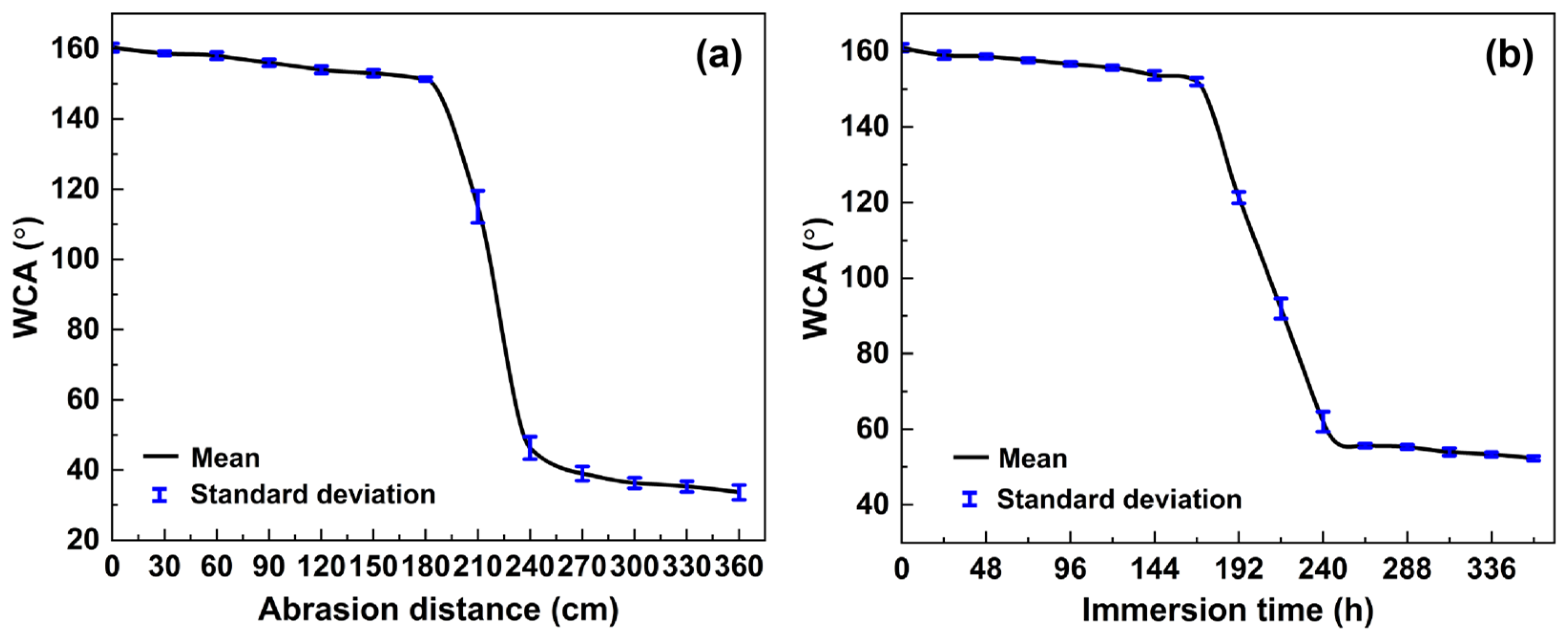
2-MAO coating. As shown in
Figure 10a, the WCA of the FAS/TiO
2-MAO-AZ31B surface decreases with increasing wear distance; the surface still exhibits a WCA higher than 150° at a wear distance of 180 cm, remaining superhydrophobic, which demonstrates that the FAS/TiO
2-MAO coating possesses reasonable wear resistance. Thereafter, the WCA decreases rapidly due to the significantly increased actual contact area and accelerated wear process.
Figure 10b displays the evolution of the WCA on the surface of the FAS/TiO
2-MAO-AZ31B specimen as a function of immersion time in 3.5 wt.% NaCl solution. Overall, the WCA decreases with increasing immersion time. Within the first 168 h, the WCA declines slowly and remains above 150°, retaining superhydrophobicity, which confirms that the FAS/TiO
2-MAO coating possesses excellent chemical stability. After 168 h, the WCA decreases significantly and drops to 52° at 360 h, indicating a complete loss of hydrophobicity, accompanied by local delamination of the coating. This phenomenon reveals that during the initial immersion stage, the FAS-dominated superhydrophobic coating can trap an air layer to isolate the substrate from corrosive media, thus remarkably reducing the corrosion rate. With prolonged immersion, the air layer gradually disappears, leading to an increased contact area between the corrosive medium and the TiO
2/MAO coating. Meanwhile, the penetration and pitting corrosion of the corrosive solution are continuously intensified, eventually resulting in the failure of the superhydrophobic anticorrosive coating. Therefore, improving the chemical stability and durability of superhydrophobic coatings is of great significance for enhancing their long-term corrosion resistance. In this work, the FAS superhydrophobic layer is a monomolecular self-assembled layer with limited chemical stability and shielding effect against aqueous corrosive media. Future studies focusing on increasing the thickness and stability of the superhydrophobic modifier are expected to achieve superior long-term corrosion resistance.
Overall, the as-prepared FAS/TiO
2-MAO coating exhibits excellent corrosion resistance and durability, with a
Ecorr of −1.34 V, a
icorr as low as 1.3 × 10
−9 A/cm
2, and an impedance modulus at 0.01 Hz (|Z|
0.01 Hz) of ~2 × 10
7 Ω·cm
2. The coating retains superhydrophobicity and effective corrosion protection for at least 168 h in 3.5 wt.% NaCl solution. As presented in
Table 3, its comprehensive performance outperforms that of several recently reported protective coatings on AZ31/AZ31B magnesium alloys, including superhydrophobic stearic acid-modified Ni-P/Cu/Ni [
44], silica-nanoparticle-reinforced hybrid sol–gel/polyaniline (PANI) [
45], organically modified silicate hybrid sol–gel [
46], self-healing CeO
x coatings [
47], ALD-deposited TiO
2 sealing layer on MAO [
23], hydrophobic TiO
2/MoS
2 nanocomposites [
24], and 3-glycidoxypropyltrimethoxysilane (GPTMS)/tetraethyl orthosilicate (TEOS)-derived organic-inorganic silica coatings [
48]. Meanwhile, it achieves comparable outstanding corrosion resistance to the superhydrophobic 1H,1H,2H,2H-perfluorooctyltriethoxysilane (PFOTES)-modified poly(vinylidene fluoride) (PVDF)/SiO
2 coating [
49], as reflected by the similarly ultralow
icorr and high impedance modulus. This work demonstrates that the proposed superhydrophobic multi-technology strategy combining MAO, sealing, and topcoat modification offers great significance for developing high-performance corrosion-resistant coatings on magnesium alloys.





 ,
,