Mechanical Properties and Hydration Characteristics of Weathered Residual Soil of Granite-Based Geopolymer



Highlights
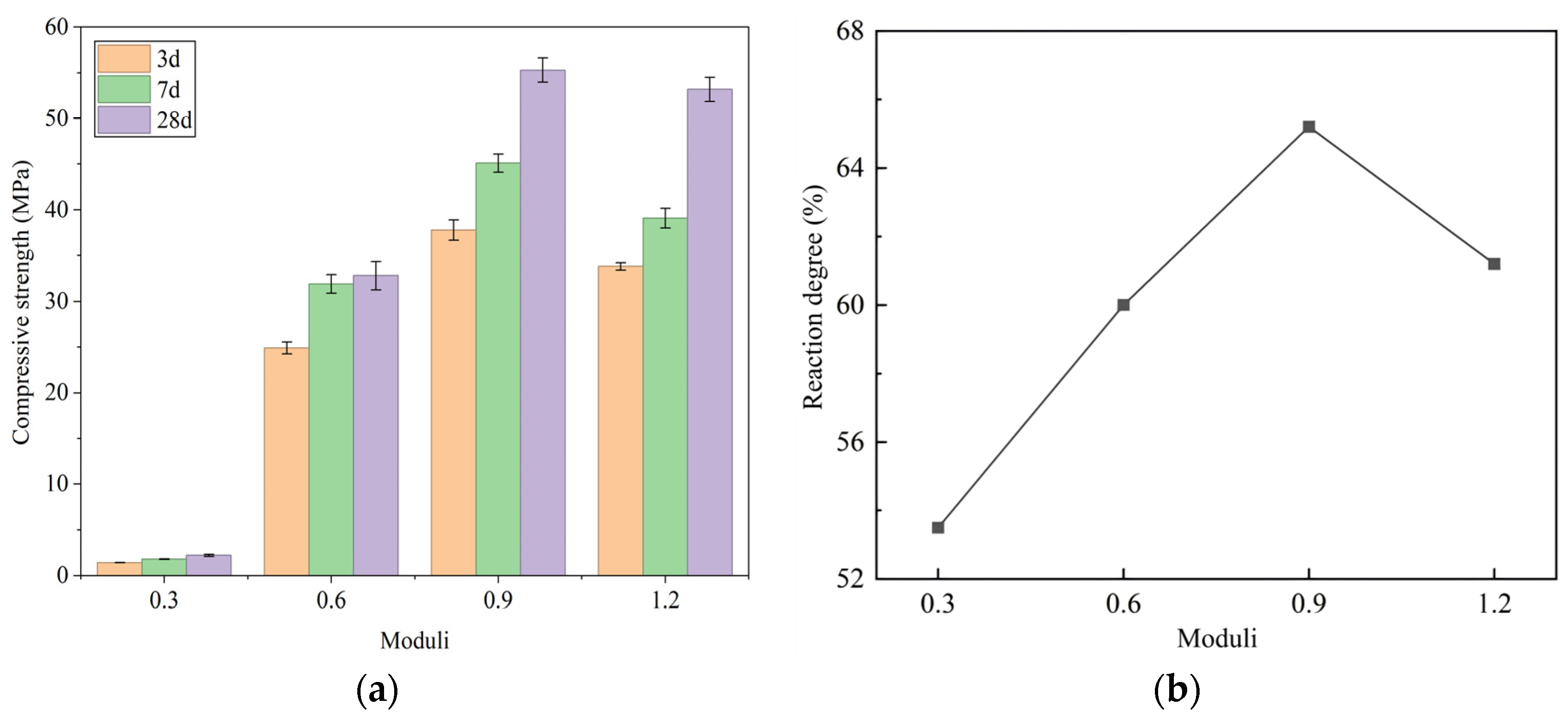
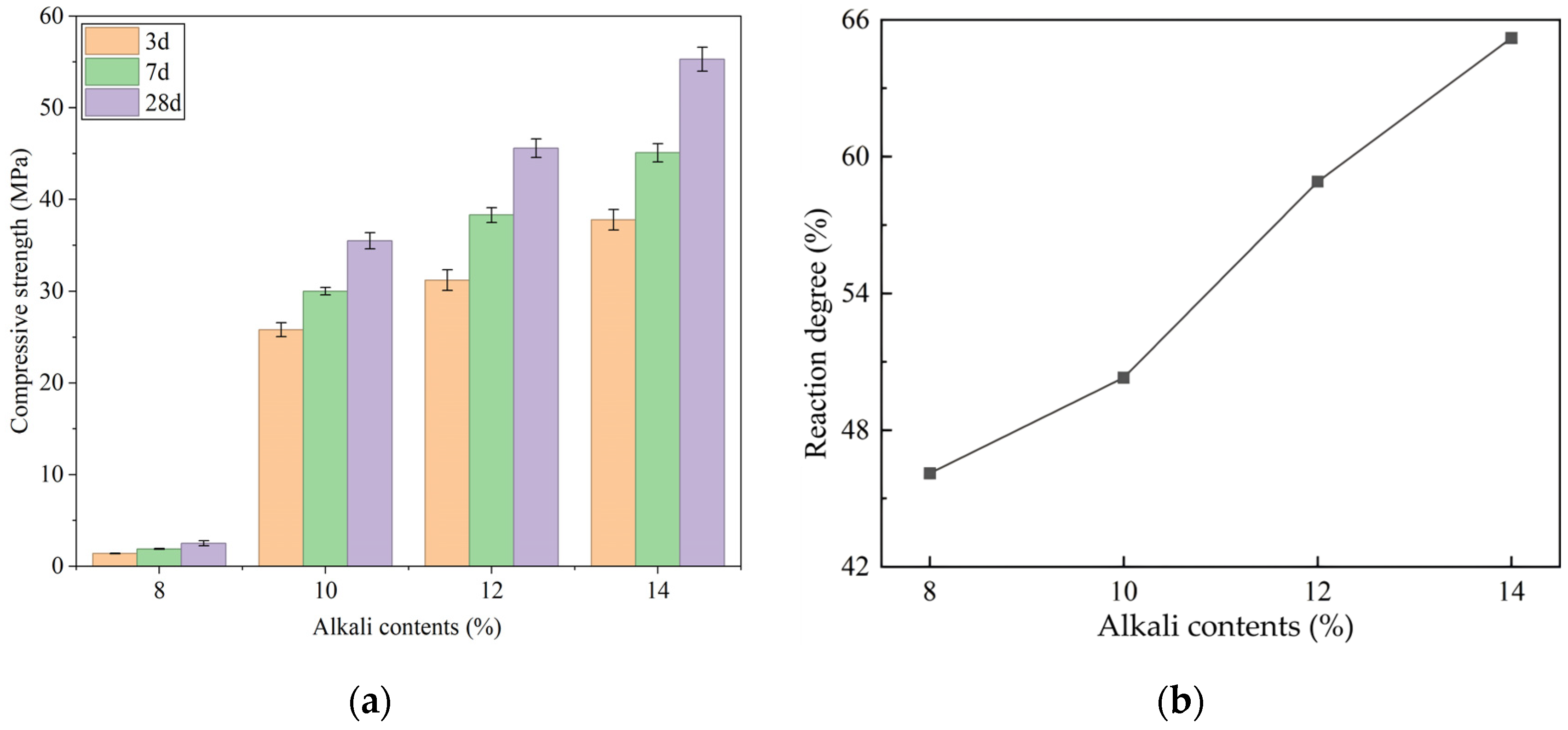
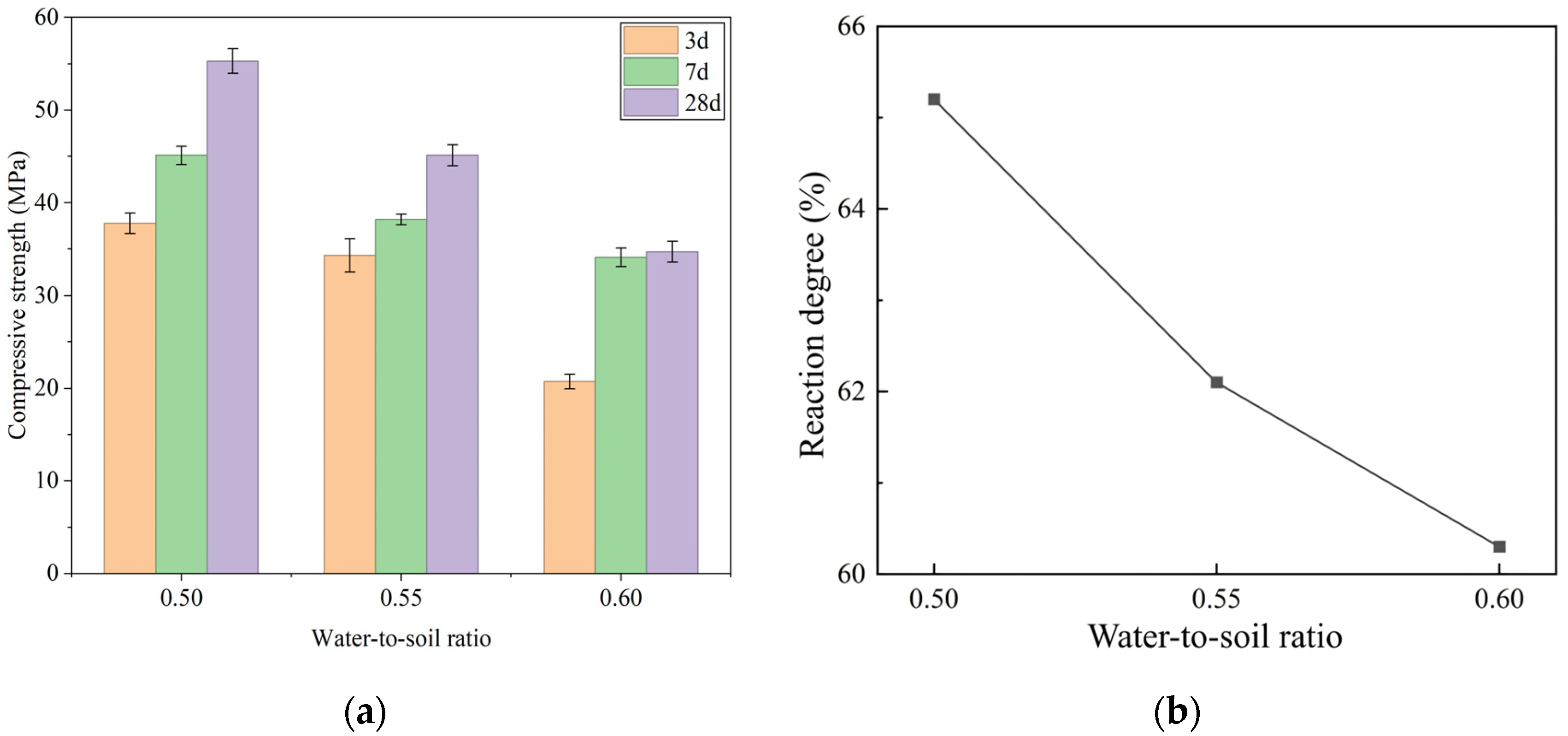
- Calcined WRSG can be activated by a sodium silicate activator. An optimum formula for activation consists of a sodium silicate modulus of 0.9, an alkali content of 14%, and a water-to-soil ratio of 0.5. The formula can achieve 28-day compressive strength of 53.5 MPa.
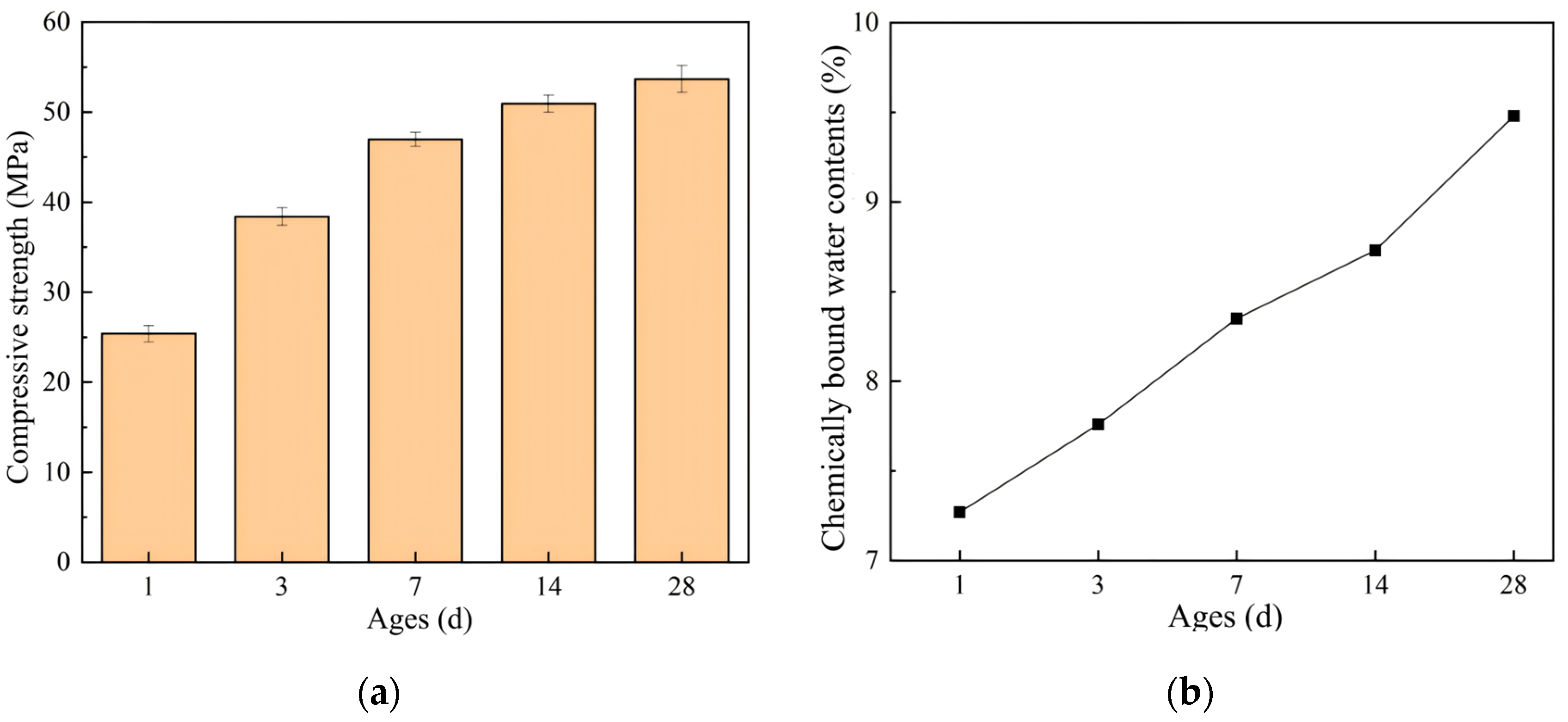
- WRSG geopolymer exhibits a characteristic of high early strength. Its compressive strengths are 25.6 and 38.1 MPa at one and three days respectively, which account for 48% and 71% of the value at 28 days.
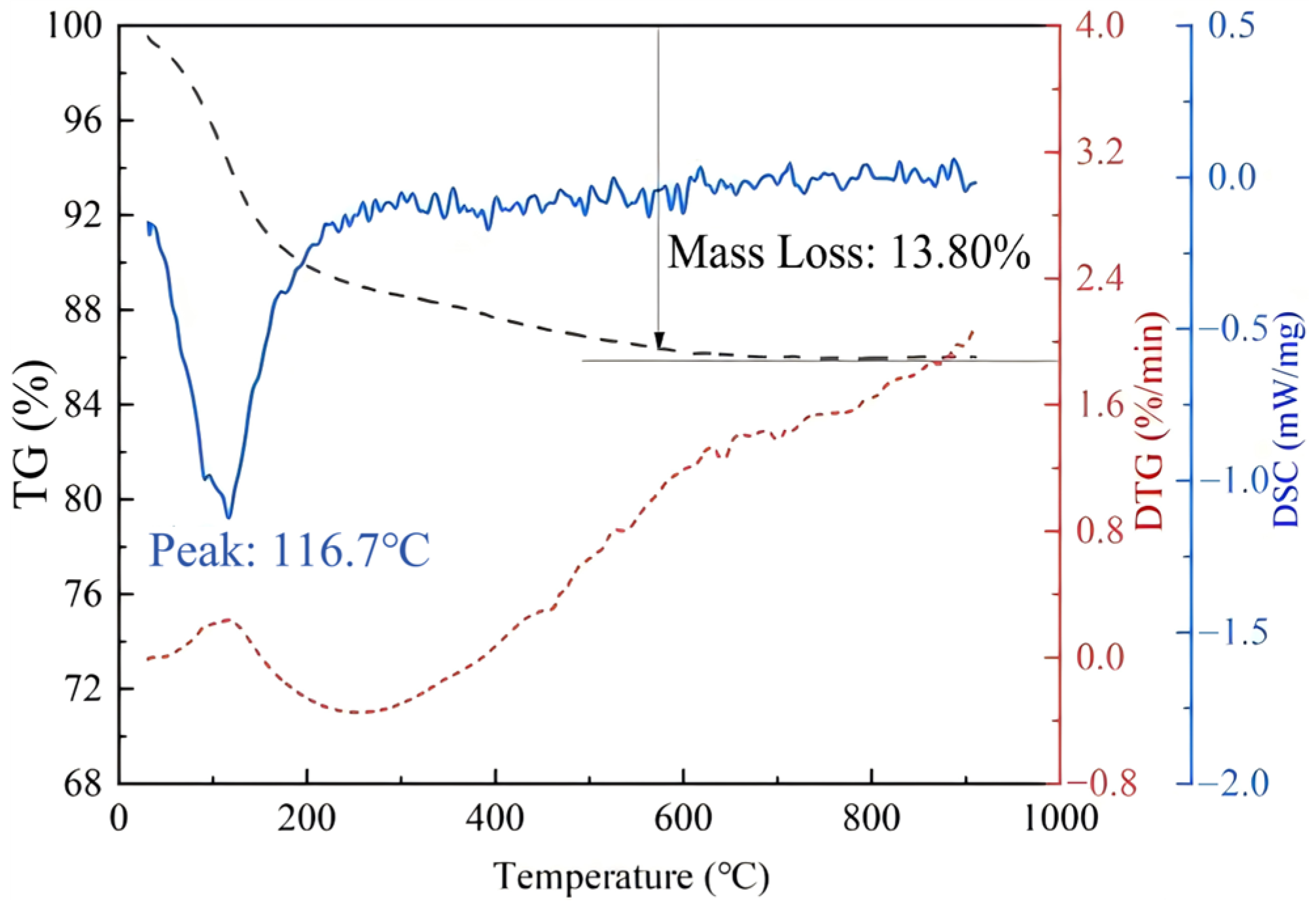
- Chemically bound water increases continuously with curing age, which shows a positive trend with compressive strength.
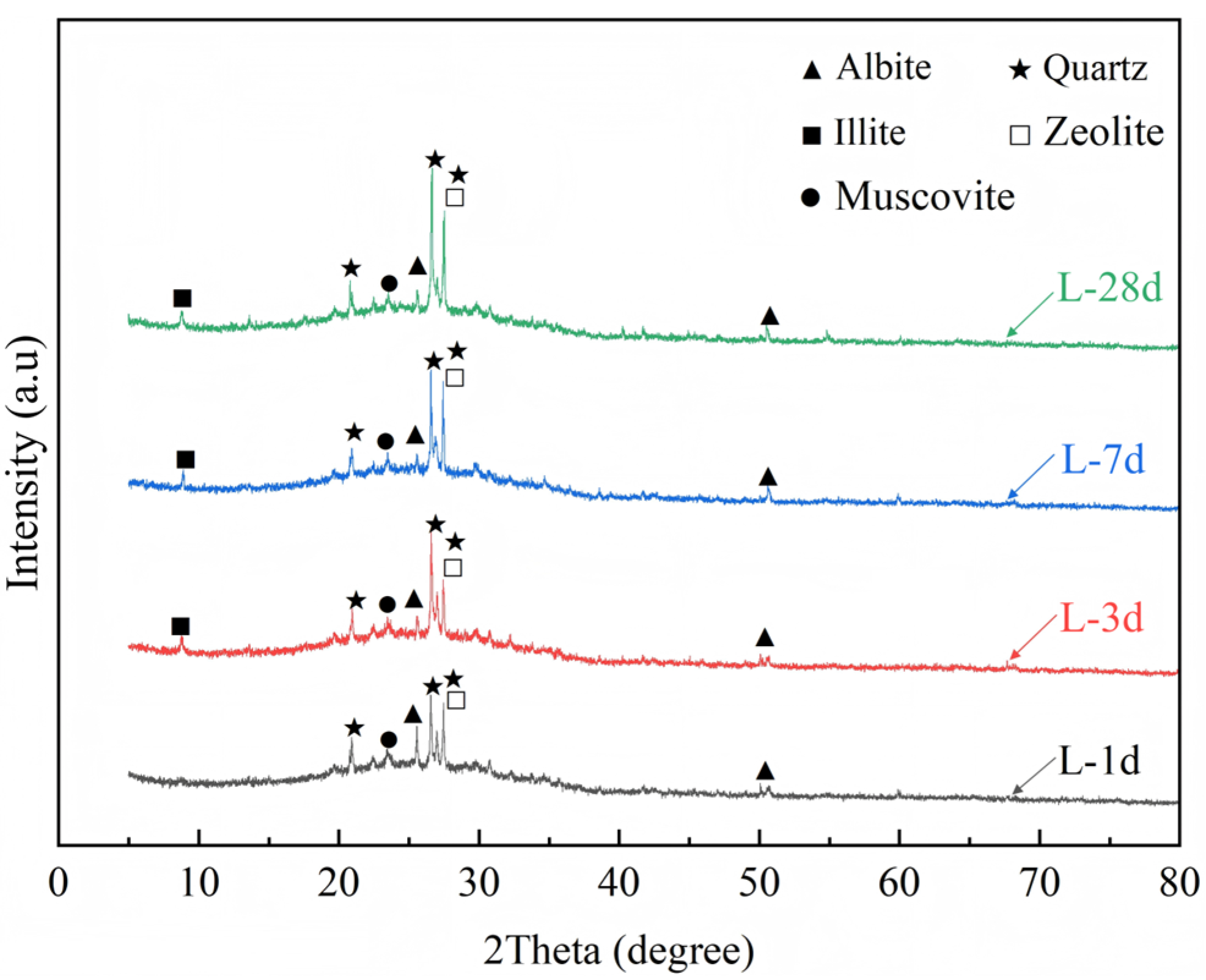
- Mineral phases of geopolymer mainly consist of amorphous gels and primary minerals from WRSG.
- Compressive performance of WRSG geopolymer enables WRSG as an alternative precursor material to metakaolin.
- Rapid development in strength shortens curing time required for WRSG geopolymer coatings.
- Content of chemically bound water can be regarded as an index of hydration degree.
- Primary minerals from WRSG can hardly be activated by sodium silicate, and thus should be eliminated in preprocessing.
Abstract
1. Introduction
2. Materials and Experimental Methods
2.1. Materials
2.2. Experimental Design
2.3. Experimental Methods
2.3.1. Compressive Test
2.3.2. Chemically Combined Water Test
2.3.3. Hydration Reaction Degree Test
2.3.4. Thermal Analysis Test
2.3.5. X-Ray Diffraction Test
2.3.6. Scanning Electron Microscopy Test
3. Results and Discussion
3.1. Effect of Moduli of Water Glass Solution
3.2. Effect of Alkali Contents
3.3. Effect of Water-to-Soil Ratios
3.4. Reaction Process of WRSG Geopolymer
3.5. Hydration Products of WRSG Geopolymer
3.6. Microstructural Morphology of WRSG Geopolymer
4. Conclusions
- (1)
- The compressive strength of the geopolymer increases and then decreases with increasing sodium silicate moduli, increases with increasing alkali equivalent, and decreases with increasing water-to-soil ratio. The optimal mix proportion is defined as a sodium silicate modulus of 0.9, an alkali content of 14%, and a water-to-soil ratio of 0.5.
- (2)
- The early compressive strength and reaction degree of the geopolymers increase rapidly. The 1-day compressive strength reaches 48% of that at 28 days.
- (3)
- The hydration products of the geopolymers are dominated by amorphous sodium aluminosilicate hydrate gels, interspersed with primary minerals such as quartz and albite.
- (4)
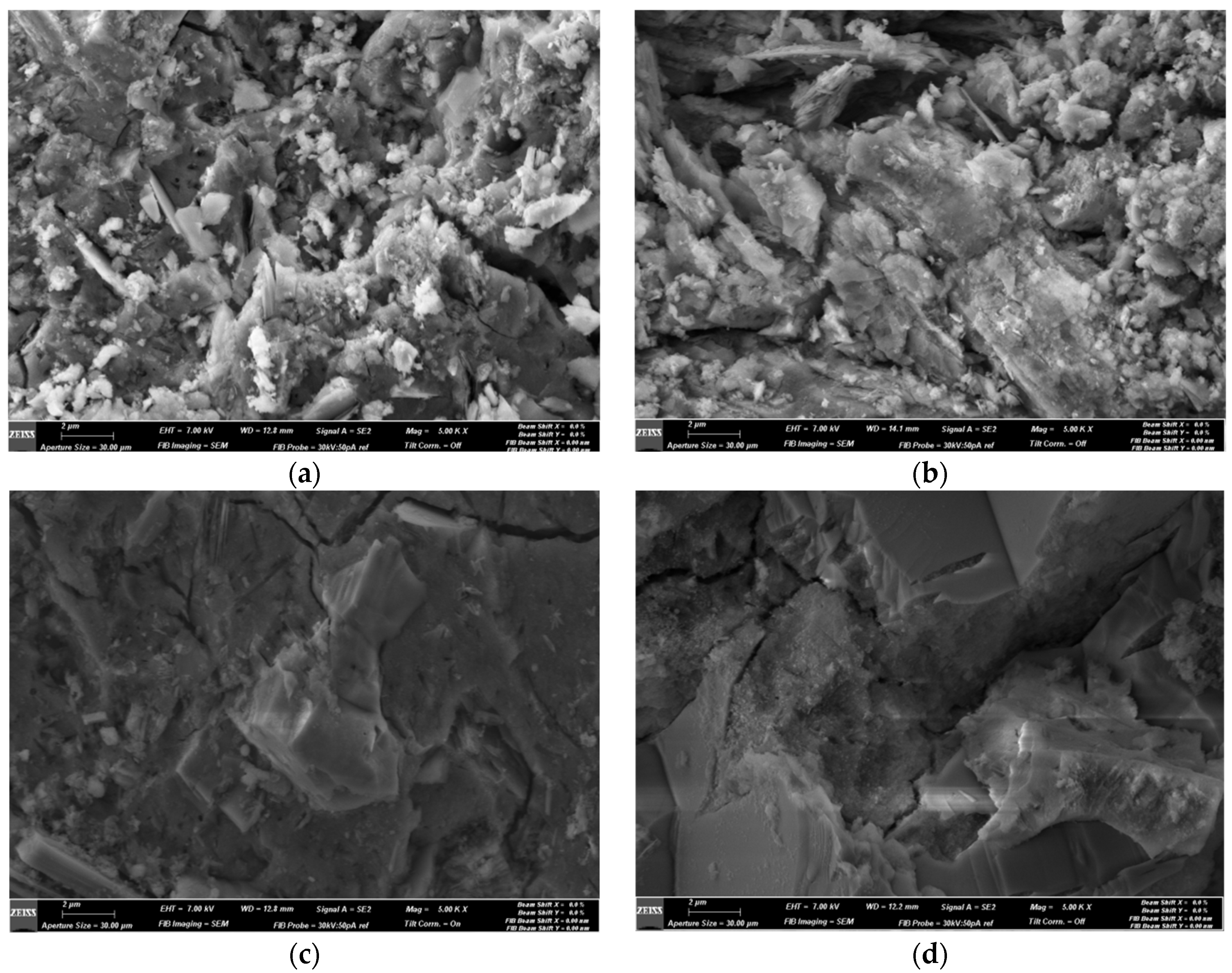
- With increasing curing age, the gel content on the WRSG surface increases continuously. The framework structure of the system is gradually refined, and the microstructure becomes denser.
Author Contributions
Funding
Institutional Review Board Statement
Informed Consent Statement
Data Availability Statement
Conflicts of Interest
Abbreviations
| WRSG | Weathered Residual Soil of Granite |
References
- Jiang, C.; Wang, A.; Bao, X.; Ni, T.; Ling, J. A review on geopolymer in potential coating application: Materials, preparation and basic properties. J. Build. Eng. 2020, 32, 101734. [Google Scholar] [CrossRef] [Scilit]
- Ghafoor, M.T.; Hu, X.; Li, S.; Shi, C. Role of activators in regulating the setting and hardening behavior of one-part geopolymer. Constr. Build. Mater. 2025, 498, 144057. [Google Scholar] [CrossRef] [Scilit]
- Ranjbar, N.; Kuenzel, C.; Spangenberg, J.; Mehrali, M. Hardening evolution of geopolymers from setting to equilibrium: A review. Cem. Concr. Compos. 2020, 114, 103729. [Google Scholar] [CrossRef] [Scilit]
- Jin, S.; Zhou, Y.; Guo, M.; Yu, Y.; Zhou, J.; Li, B. Organosilane-grafted fibre-reinforced geopolymer coatings: Optimised hydrophobicity and long-term protection of rebar. Constr. Build. Mater. 2026, 509, 145188. [Google Scholar] [CrossRef] [Scilit]
- Yu, Y.; Guo, M.; Zhou, Y.; Jin, S.; Li, B. Performance evaluation of geopolymer anti-corrosion coatings: Synergistic effect of graphene oxide and polydimethylsiloxane. Constr. Build. Mater. 2025, 472, 140871. [Google Scholar] [CrossRef] [Scilit]
- Singh Tomar, A.; Gupta, R.; Singh, A.; Salammal, S.T.; Khan, M.A.; Mishra, D. Evaluation of corrosion protective properties of fly ash-red mud based geopolymer coating material for mild steel. Mater. Today Proc. 2022, 68, 181–186. [Google Scholar] [CrossRef] [Scilit]
- Li, Z.; Geng, H.; Jiang, Y.; Chen, W.; Li, Q. A novel ceramizable potassium-activated geopolymer coating with enhanced thermal insulation and post-heating mechanical properties. Ceram. Int. 2025, 51, 35017–35030. [Google Scholar] [CrossRef] [Scilit]
- Temuujin, J.; Minjigmaa, A.; Rickard, W.; Lee, M.; Williams, I.; van Riessen, A. Fly ash based geopolymer thin coatings on metal substrates and its thermal evaluation. J. Hazard. Mater. 2010, 180, 748–752. [Google Scholar] [CrossRef] [Scilit] [PubMed]
- Yong, S.L.; Feng, D.W.; Lukey, G.C.; van Deventer, J. Chemical characterisation of the steel–geopolymeric gel interface. Colloids Surf. A Physicochem. Eng. Aspects 2007, 302, 411–423. [Google Scholar] [CrossRef] [Scilit]
- Fang, S.; Qi, C.; Lin, C.; Yuan, L.; Zhang, H. Engineering performance of a novel geopolymer-based aerogel non-intumescent fire-resistive coating. Coatings 2026, 16, 98. [Google Scholar] [CrossRef] [Scilit]
- Provis, J.L. Geopolymers and other alkali activated materials: Why, how, and what? Mater. Struct. 2014, 47, 11–25. [Google Scholar] [CrossRef] [Scilit]
- Feng, X.; Deng, J.; Yan, W.; Li, W. Development status and comprehensive utilization progress of kaolin in China. Multipurp. Util. Miner. Resour. 2022, 43, 1–10. (In Chinese) [Google Scholar] [CrossRef]
- Xu, G.; Shi, X. Characteristics and applications of fly ash as a sustainable construction material: A state-of-the-art review. Resour. Conserv. Recycl. 2018, 136, 95–109. [Google Scholar] [CrossRef] [Scilit]
- Zhang, J.; Zhang, A.; Li, J.; Li, F.; Peng, J. Gray correlation analysis and prediction on permanent deformation of subgrade filled with construction and demolition materials. Materials 2019, 12, 3035. [Google Scholar] [CrossRef] [Scilit]
- Gao, Y.; Yin, Y.; Li, B.; He, K.; Wang, X. Post-failure behavior analysis of the Shenzhen “12.20” CDW landfill landslide. Waste Manag. 2019, 83, 171–183. [Google Scholar] [CrossRef] [Scilit]
- Magnusson, S.; Lundberg, K.; Svedberg, B.; Knutsson, S. Sustainable management of excavated soil and rock in urban areas—A literature review. J. Clean. Prod. 2015, 93, 18–25. [Google Scholar] [CrossRef] [Scilit]
- Wu, N.; Zhao, C.; Hou, W. Study on genesis, distribution and engineering characteristics of granite residual soil. J. Pingdingshan Inst. Technol. 2004, 13, 1–4. (In Chinese) [Google Scholar] [CrossRef]
- Sun, Y.; Ma, S.; Kuang, Y.; Xie, J. Effect of mineral compositions on mechanical properties of granite residual soil. Case Stud. Constr. Mater. 2023, 18, e02140. [Google Scholar] [CrossRef] [Scilit]
- Sabir, B.B.; Wild, S.; Bai, J. Metakaolin and calcined clays as pozzolans for concrete: A review. Cem. Concr. Compos. 2001, 23, 441–454. [Google Scholar] [CrossRef] [Scilit]
- Kuang, J.; Qiu, T.; Shi, F. Effect of heat treatment on structural transformation and activity of kaolinite. Chin. J. Nonferrous Met. 2012, 22, 258–264. (In Chinese) [Google Scholar] [CrossRef]
- Fernandez, R.; Martirena, F.; Scrivener, K.L. The origin of the pozzolanic activity of calcined clay minerals: A comparison between kaolinite, illite and montmorillonite. Cem. Concr. Res. 2011, 41, 113–122. [Google Scholar] [CrossRef] [Scilit]
- Moya, J.S.; Cabal, B.; Lopez-Esteban, S.; Bartolomé, J.; Sanz, J. Significance of the formation of pentahedral aluminum in the reactivity of calcined kaolin/metakaolin and its applications. Ceram. Int. 2024, 50, 1329–1340. [Google Scholar] [CrossRef] [Scilit]
- Zhou, A.; Zhang, W.; Wei, H.; Liu, T.; Zou, D.; Guo, H. A novel approach for recycling engineering sediment waste as sustainable supplementary cementitious materials. Resour. Conserv. Recycl. 2021, 167, 105435. [Google Scholar] [CrossRef] [Scilit]
- Ferone, C.; Liguori, B.; Capasso, I.; Colangelo, F.; Cioffi, R.; Cappelletto, E.; Di Maggio, R. Thermally treated clay sediments as geopolymer source material. Appl. Clay Sci. 2015, 107, 195–204. [Google Scholar] [CrossRef] [Scilit]
- Yuan, B.; Huang, X.; Huang, Q.; Shiau, J.; Liang, J.; Zhang, B.; Zheng, J.; Fahimizadeh, M.; Sabri, M.M. Effects of particle size on properties of engineering muck-based geopolymers: Optimization through sieving treatment. Constr. Build. Mater. 2025, 492, 142967. [Google Scholar] [CrossRef] [Scilit]
- Wu, H.; Yao, P.; Yang, D.; Wang, C.; Shen, J.; Ma, Z. Upcycling of construction spoil powder as partial cement replacement for sustainable cement-based materials: Properties and modification. J. Clean. Prod. 2022, 369, 133361. [Google Scholar] [CrossRef] [Scilit]
- Li, Y.; Yi, P.; Du, H.; Liu, W.; Mi, T.; Huang, L.; Gao, X.; Sun, X.; Xing, F. Activation of locally excavated spoil for utilization in limestone calcined clay cement (LC3). Constr. Build. Mater. 2024, 420, 135518. [Google Scholar] [CrossRef] [Scilit]
- Xiao, J.D. Study on the Method and Performance of Geopolymer Prepared from Engineering Spoil. Master’s Dissertation, Harbin Institute of Technology, Shenzhen, China, 2021. (In Chinese) [Google Scholar] [CrossRef]
- Chen, Y. Preparation and Properties of EGC Based on Granite Weathered Residual Soil. Master’s Dissertation, South China University of Technology, Guangzhou, China, 2024. (In Chinese) [Google Scholar] [CrossRef]
- Yu, W. Study on the Influence Mechanism of Metakaolin on the Cement Hydration Products. Master’s Dissertation, Wuhan University of Technology, Wuhan, China, 2013. (In Chinese) [Google Scholar] [CrossRef]
- GB/T 176-2017; Methods for Chemical Analysis of Cement. General Administration of Quality Supervision, Inspection and Quarantine of the People’s Republic of China: Beijing, China; National Standardization Administration of the People’s Republic of China: Beijing, China, 2017.
- Platova, R.A.; Rassulov, V.A.; Platov, Y.T. Evaluation of Pozzolanic Activity of Metakaolin Chemometric Method According to the UV-VIS-NIR Spectroscopy. Key Eng. Mater. 2021, 887, 586–590. [Google Scholar] [CrossRef] [Scilit]
- Wang, L.; Gao, Z.; Zhang, W.; Zhang, L.; Zhang, S.; Kong, D.; Zhang, J. Effect of activator modulus on the interfacial bonding behavior between high ductility geopolymer composites and concrete substrate. Constr. Build. Mater. 2025, 487, 142149. [Google Scholar] [CrossRef] [Scilit]
- Wang, W.; Fan, C.; Wang, B.; Zhang, X.; Liu, Z. Workability, rheology, and geopolymerization of fly ash geopolymer: Role of alkali content, modulus, and water–binder ratio. Constr. Build. Mater. 2023, 367, 130357. [Google Scholar] [CrossRef] [Scilit]
- Gu, C.; Yao, J.; Yang, Y.; Huang, J.; Ma, L.; Ni, T.; Liu, J. The Relationship of Compressive Strength and Chemically Bound Water Content of High-Volume Fly Ash-Cement Mortar. Materials 2021, 14, 6273. [Google Scholar] [CrossRef] [Scilit] [PubMed]
- Deng, G.; He, Y.; Lu, L.; Hu, S. The effect of activators on the dissolution characteristics and occurrence state of aluminum of alkali-activated metakaolin. Constr. Build. Mater. 2020, 235, 117451. [Google Scholar] [CrossRef] [Scilit]





| Calcite | Quartz | Plagioclase | Albite | Orthoclase | Rutile | Illite | Chlorite | Glauconite | Muscovite | Clay Minerals |
|---|---|---|---|---|---|---|---|---|---|---|
| 0.59 | 13.29 | 27.81 | 3.98 | 2.63 | 0.26 | 30.19 | 17.78 | 0.56 | 2.91 | 55.14 |
| SiO2 | Al2O3 | Fe2O3 | CaO | MgO | K2O | Na2O | SO3 | TiO2 | MnO2 | Ignition Loss |
|---|---|---|---|---|---|---|---|---|---|---|
| 53.44 | 27.10 | 3.59 | 0.08 | 0.17 | 5.70 | 0.18 | 0.04 | 0.34 | 0.09 | 9.24 |
| No. | Modulus | Alkali Content | Water-to-Soil Ratio | Consumption of Hydrochloric Acid (mL) |
|---|---|---|---|---|
| 1 | 0.3 | 14% | 0.5 | 48.03 |
| 2 | 0.6 | 48.05 | ||
| 3 | 0.9 | 48.13 | ||
| 4 | 1.2 | 48.07 | ||
| 5 | 0.9 | 8% | 0.5 | 45.59 |
| 6 | 10% | 46.31 | ||
| 7 | 12% | 47.39 | ||
| 8 | 14% | 48.13 | ||
| 9 | 16% | - 1 | ||
| 10 | 0.9 | 14% | 0.45 | - 2 |
| 11 | 0.50 | 48.13 | ||
| 12 | 0.55 | 47.63 | ||
| 13 | 0.60 | 47.57 | ||
| 14 | 0.65 | - 3 |
Disclaimer/Publisher’s Note: The statements, opinions and data contained in all publications are solely those of the individual author(s) and contributor(s) and not of MDPI and/or the editor(s). MDPI and/or the editor(s) disclaim responsibility for any injury to people or property resulting from any ideas, methods, instructions or products referred to in the content. |
© 2026 by the authors. Licensee MDPI, Basel, Switzerland. This article is an open access article distributed under the terms and conditions of the Creative Commons Attribution (CC BY) license.
Share and Cite
Fang, S.; Gong, Q.; Wan, C.; Lin, J. Mechanical Properties and Hydration Characteristics of Weathered Residual Soil of Granite-Based Geopolymer. Coatings 2026, 16, 328. https://doi.org/10.3390/coatings16030328
Fang S, Gong Q, Wan C, Lin J. Mechanical Properties and Hydration Characteristics of Weathered Residual Soil of Granite-Based Geopolymer. Coatings. 2026; 16(3):328. https://doi.org/10.3390/coatings16030328
Chicago/Turabian StyleFang, Shuai, Qi Gong, Cheng Wan, and Juan Lin. 2026. "Mechanical Properties and Hydration Characteristics of Weathered Residual Soil of Granite-Based Geopolymer" Coatings 16, no. 3: 328. https://doi.org/10.3390/coatings16030328
APA StyleFang, S., Gong, Q., Wan, C., & Lin, J. (2026). Mechanical Properties and Hydration Characteristics of Weathered Residual Soil of Granite-Based Geopolymer. Coatings, 16(3), 328. https://doi.org/10.3390/coatings16030328