Article

Effect of Gd2O3 Addition on the Growth Behavior of the Dense Reaction Layer at the Interface Between Al2O3 Ceramic and CMAS at 1300 °C


1
School of Resources, Environment and Materials, Guangxi University, Nanning 530004, China
2
Guangxi Key Laboratory of Processing for NonFerrous Metals and Featured Materials, Guangxi University, Nanning 530004, China
3
MOE Key Laboratory of New Processing Technology for Nonferrous Metals and Materials, Guangxi University, Nanning 530004, China
*
Author to whom correspondence should be addressed.
Coatings 2026, 16(3), 327; https://doi.org/10.3390/coatings16030327
Submission received: 4 February 2026 / Revised: 5 March 2026 / Accepted: 5 March 2026 / Published: 7 March 2026
(This article belongs to the Special Issue Ceramic and Glass Material Coatings)

Highlights

What are the main findings?
The dense double reaction layer of anorthite–spinel exhibits a positive effect on inhibiting the infiltration of calcium–magnesium–aluminum-silicate.
The thickness of the reaction layer increases with reaction time, while the growth rate rapidly decreases.
More Gd2O3 doping enhances the outward diffusion of Gd3+ and promotes the crystallization of the CMAS and apatite phases.
The inward infiltration of CMAS and outward diffusion of Al3+ and Gd3+ along the grain boundaries of the anorthite and/or spinel phases thicken the reaction layers.
What are the implications of the main findings?
They clarify the reaction mechanism between Al2O3-based ceramics and CMAS in a high-temperature environment.
Doping with rare-earth Gd2O3 can serve as an effective strategy for enhancing the CMAS corrosion resistance of Al2O3-based ceramics.
This study provides valuable reference guidance for the compositional design and research development of CMAS corrosion-resistant materials.

Abstract

The exploration of new materials with stable molten calcium–magnesium–aluminum-silicate (CMAS) resistance at elevated temperatures is of great significance to the development of advanced aero-engines. In the present study, Al2O3−xGd2O3 (x = 5, 10, 20, 30 mol.%) ceramic samples were prepared by the high-temperature solid-state synthesis method. The thermochemical reaction behavior, reaction products, and growth kinetics of the reaction layer for the ceramics with molten CMAS at 1300 °C were investigated. The results reveal that the primary reaction products between Al2O3−xGd2O3 ceramics and molten CMAS are anorthite (CaAl2Si2O8), gehlenite (Ca2Al(AlSi)O7), spinel (MgAl2O4), and Gd-apatite (Ca2Gd8(SiO4)6O2). In the initial reaction stage, a dense double-layer reaction layer composed of anorthite and spinel is formed at the ceramic/CMAS interface, while its growth rate decreases with increasing reaction time. Increasing the Gd2O3 doping content inhibits the growth of the reaction layer and enhances the CMAS penetration resistance of Al2O3−xGd2O3 ceramics. The mechanism is discussed systematically.

1. Introduction

With the development of aero-engines toward a higher thrust-to-weight ratio, the turbine inlet temperature (thrust-to-weight ratio > 15) will exceed 2000 K [1,2,3]. Thermal barrier coatings (TBCs) are therefore established as the core protective technology for these key components. Generally, 7–8 wt.% Y2O3-stabilized ZrO2 (YSZ) is widely utilized due to its good thermal stability and low thermal conductivity [4,5,6,7]. However, at elevated temperatures, it is prone to calcium–magnesium–aluminum-silicate (CaO-MgO-Al2O3-SiO2, CMAS) corrosion and undergoes phase transformation from tetragonal (t-ZrO2) to monoclinic (m-ZrO2), followed by a reduction in coating service life, even leading to its spallation and failure [8,9,10]. Therefore, the development of advanced TBCs resistant to CMAS corrosion has become a key technical challenge.
To prevent CMAS penetration corrosion, extensive research has been carried out from two core dimensions: composition modification and structural optimization. On the one hand, rare-earth element doping has been proven to effectively improve the phase stability and corrosion resistance of YSZ. Among various rare-earth elements, the Gd element has attracted wide attention: Gd3+ with a suitable ionic radius can stabilize the tetragonal phase of ZrO2, and react with CMAS to form a Gd-apatite phase with high thermodynamic stability, thus inhibiting the penetration of molten CMAS [11,12,13,14]. However, single-Gd doping faces an insurmountable bottleneck: the formation rate of the Gd-apatite phase is slow, and it is difficult to form a continuous dense barrier layer in the early stage of corrosion, which cannot completely block the rapid penetration of molten CMAS. On the other hand, for optimizing the coating structure, it has been reported that “Z-shaped” and feather-like structured YSZ coatings can increase the contact area with molten CMAS and prolong its penetration time [15,16]. Additionally, new TBC materials, such as Gd2Zr2O7 [17,18], RETaO4 [19,20], and LaMgAl11O19 [21,22] can react with CMAS to form apatite barrier layers, thereby inhibiting the penetration of molten CMAS.
Among these, the Al2O3-based ceramic protective layer has garnered significant attention. Research indicates that Al-rich coating materials can rapidly react with molten CMAS through a dissolution–reprecipitation process, forming high-melting anorthite and spinel phases in situ, which can increase the viscosity of CMAS and block its penetration path [23,24,25,26,27]. Nevertheless, single-Al2O3-modified TBCs still have obvious shortcomings: the single anorthite barrier layer has poor thermal expansion matching with the YSZ matrix, which is prone to crack initiation and propagation under thermal cycling, leading to the failure of corrosion resistance. Meanwhile, the long-term stability of the single-phase barrier layer is insufficient, and it will be gradually dissolved by molten CMAS under long-term high-temperature service [28,29]. Additionally, alumina-based ceramic coatings offer advantages such as low cost, simple preparation, and excellent performance, making them highly favored by a wide range of researchers.
Up to now, most existing studies have focused on single-Gd doping or single-Al2O3 modification, while the design of Al2O3−xGd2O3 composite-modified TBCs and the synergistic corrosion resistance mechanism of multi-phase barrier layers have been rarely reported. Based on this, this work proposes a novel Al2O3−xGd2O3 system, aiming to achieve synergistic protection against CMAS corrosion through the dense in situ-formed anorthite–spinel reaction layer and Gd-apatite phase. Different from the single-phase or two-phase barrier layers formed in traditional modified TBCs, the Al2O3−xGd2O3 composite system realizes the gradient functional distribution of three phases in the reaction layer: the dense anorthite–spinel composite layer at the reaction interface rapidly generates and obstructs the penetration path in the early corrosion stage, while the Gd-apatite phase inhibits the further diffusion of CMAS in the long-term service stage, realizing the whole-process protection against CMAS corrosion.
To investigate the resistance of alumina-based ceramics to CMAS corrosion, this study uses Gd2O3-doped α-Al2O3 ceramics as a protective coating material against CMAS corrosion for traditional YSZ thermal barrier coatings. A systematic study was conducted on the high-temperature thermochemical reaction behavior between Gd2O3-doped α-Al2O3 ceramics and CMAS, the reaction products, and the growth behavior of the dense reaction layer. Furthermore, this work clarifies the role and underlying mechanism of the dense reaction layer in inhibiting the further penetration and corrosion of molten CMAS.

2. Experimental

2.1. Material Preparation

The CMAS composition adopted in this experiment was 33CaO-9MgO-13AlO1.5-45SiO2 (mol.%), and its melting point was about 1240 °C. This CMAS exhibits lower viscosity and stronger penetration, dissolution, and corrosion ability at the same temperature compared with other compositions, resulting in more destructive effects [30]. Powders of CaO, MgO, Al2O3, and SiO2 (Aladdin reagents, Shanghai, China) were blended in ethanol in line with the designed molar ratio and subjected to ball milling for 6 h. The resulting mixture was subsequently dried in a vacuum drying oven at 160 °C for 6 h. After drying, the mixed powder was sintered at 1400 °C for 4 h to prepare transparent glass blocks. These glass blocks were then crushed, ground, and sieved to obtain 200-mesh CMAS powder for subsequent corrosion tests.
Al2O3−xGd2O3 (x = 5, 10, 20, 30 mol.%) ceramic samples were fabricated via the high-temperature solid-phase synthesis method. Al2O3 and Gd2O3 (Aladdin reagents, Shanghai, China) powders were weighed according to the designated proportions, and then loaded into a zirconia bead milling jar with anhydrous ethanol as the medium for wet milling for 12 h. After the milling process, the mixture was dried in an oven at 120 °C for 24 h. The dried mixed powder was further ground to obtain a uniformly mixed powder with consistent particle size. Subsequently, the mixed powders were subjected to uniaxial cold pressing and held at 300 MPa for 10 min to fabricate disk-shaped samples with dimensions of ϕ20 mm × 2 mm and subjected to high-temperature solid-phase sintering at 1650 °C for 6 h in a KSL-1700X box furnace. Since the compaction pressure and sintering conditions adopted for all samples were identical, the average porosity of the samples remained stable at approximately 17.92%, thereby rendering the influence of porosity variation on the corrosion behavior negligible. The prepared CMAS was uniformly applied onto the surface of the ceramic samples (20 mg/cm2), which was then followed by isothermal holding treatment at 1300 °C with a heating rate of 5 °C/min and holding times of 15 min, 4 h, and 24 h.

2.2. Characterizations

X-ray diffraction (XRD, Rigaku D/MAX 2500 V, Tokyo, Japan) equipped with Cu Kα radiation was employed to determine the phase composition on the surfaces of the ceramic samples before and after CMAS corrosion, which was operated at 40 kV and 100 mA. The scanning range was set from 20° to 80°. For each sample, cross-sections perpendicular to the CMAS corrosion interface were prepared by cold inlaying and polishing, with 3 independent test regions selected for each. A scanning electron microscope (SEM, SU8000, HITACHI, Tokyo, Japan) was adopted to observe the microstructure, mainly focusing on the cross-sectional morphology of the corroded surface and reaction interface. Energy-dispersive spectroscopy (EDS X-MAX 80, Oxford, UK) was applied to acquire elemental mapping images synchronously with microstructure observation. Additionally, a differential scanning calorimetry (DSC, NETZSCH STA 449F3, Selb, Germany) test was carried out to clarify the reaction processes; the samples were heated from laboratory temperature to 1400 °C at a heating rate of 10 °C/min under an air atmosphere.

3. Results and Discussion

3.1. Phase Analysis

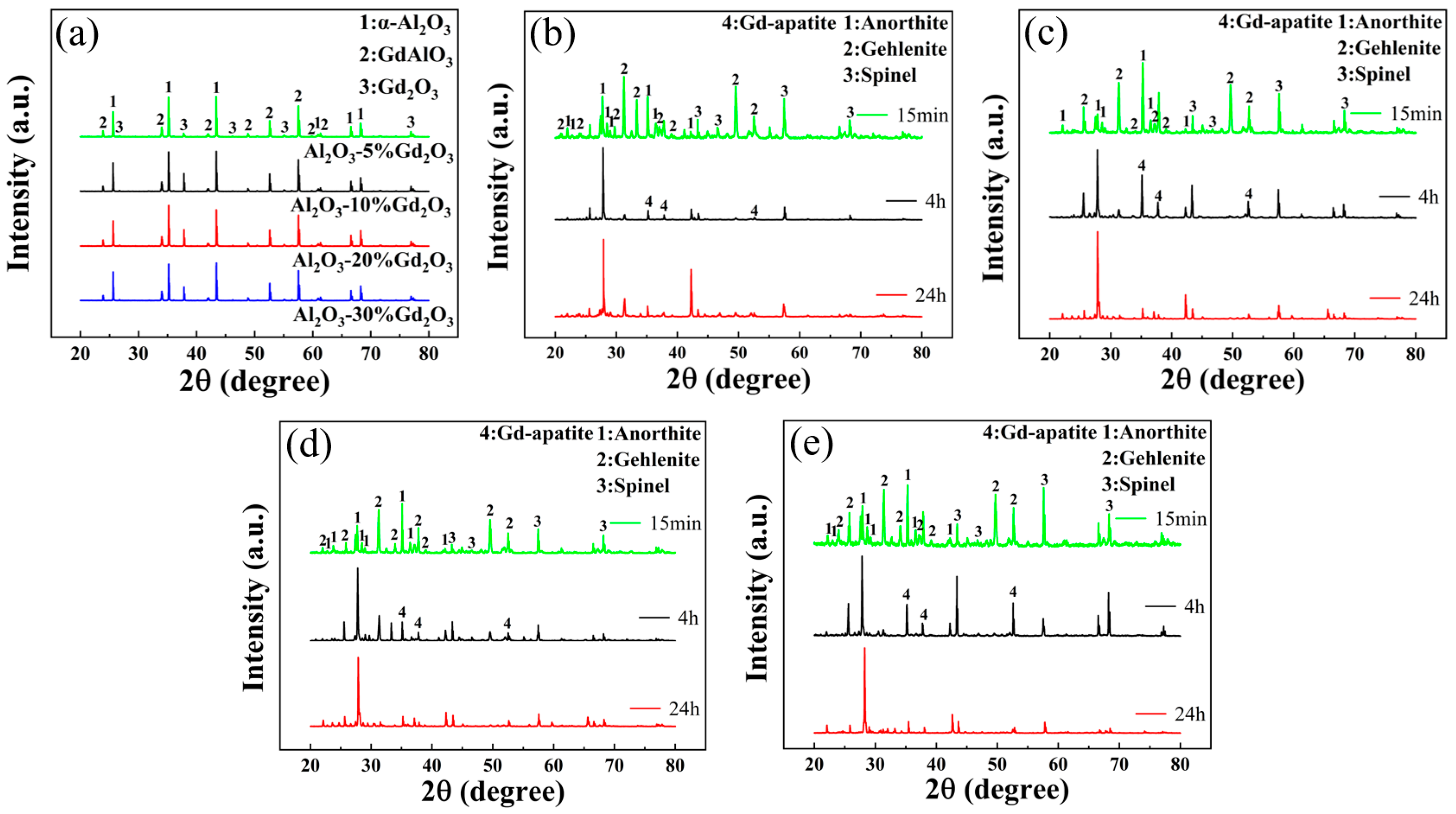
Figure 1 shows the XRD patterns of the reaction between Al2O3−xGd2O3 ceramic and CMAS at 1300 °C. Figure 1a shows the phase composition of the Al2O3−xGd2O3 ceramics before reaction. The as-sintered ceramics are mainly composed of the α-Al2O3 phase, accompanied by a certain amount of the GdAlO3 and Gd2O3 phases. This indicates that Gd2O3 reacts with Al2O3 to form a small amount of reaction products during sintering at 1650 °C. By comparing the XRD patterns after reaction, the phase composition is changed, demonstrating that the ceramics react with molten CMAS at 1300 °C. After 15 min of reaction between the ceramic and CMAS at 1300 °C, the ceramic surface primarily forms anorthite (CaAl2Si2O8, PDF#05-0528), gehlenite (Ca2Al(AlSi)O7, PDF#34-1236), and spinel (MgAl2O4, PDF#21-1152) phases. As the reaction time increases, the amount of gehlenite decreases with the corresponding weakening of the diffraction peak intensity, while the intensity of the spinel diffraction peak increases. This indicates that as the reaction proceeds, Al3+ ions diffuse into the CMAS melt, causing a change in its composition and the formation of high-melting-point crystalline phases [31,32]. Furthermore, the formation of the Gd-apatite (Ca2Gd8(SiO4)6O2, PDF#28-0212) phase was detected after 4 h of reaction. As reaction time increases, no additional crystalline phases form, and the intensity of the Gd-apatite phase diffraction peak increases, indicating that the ceramic reaction with CMAS stabilizes and tends to precipitate more Gd-apatite crystalline phases [33].

3.2. CMAS Crystallization Behavior

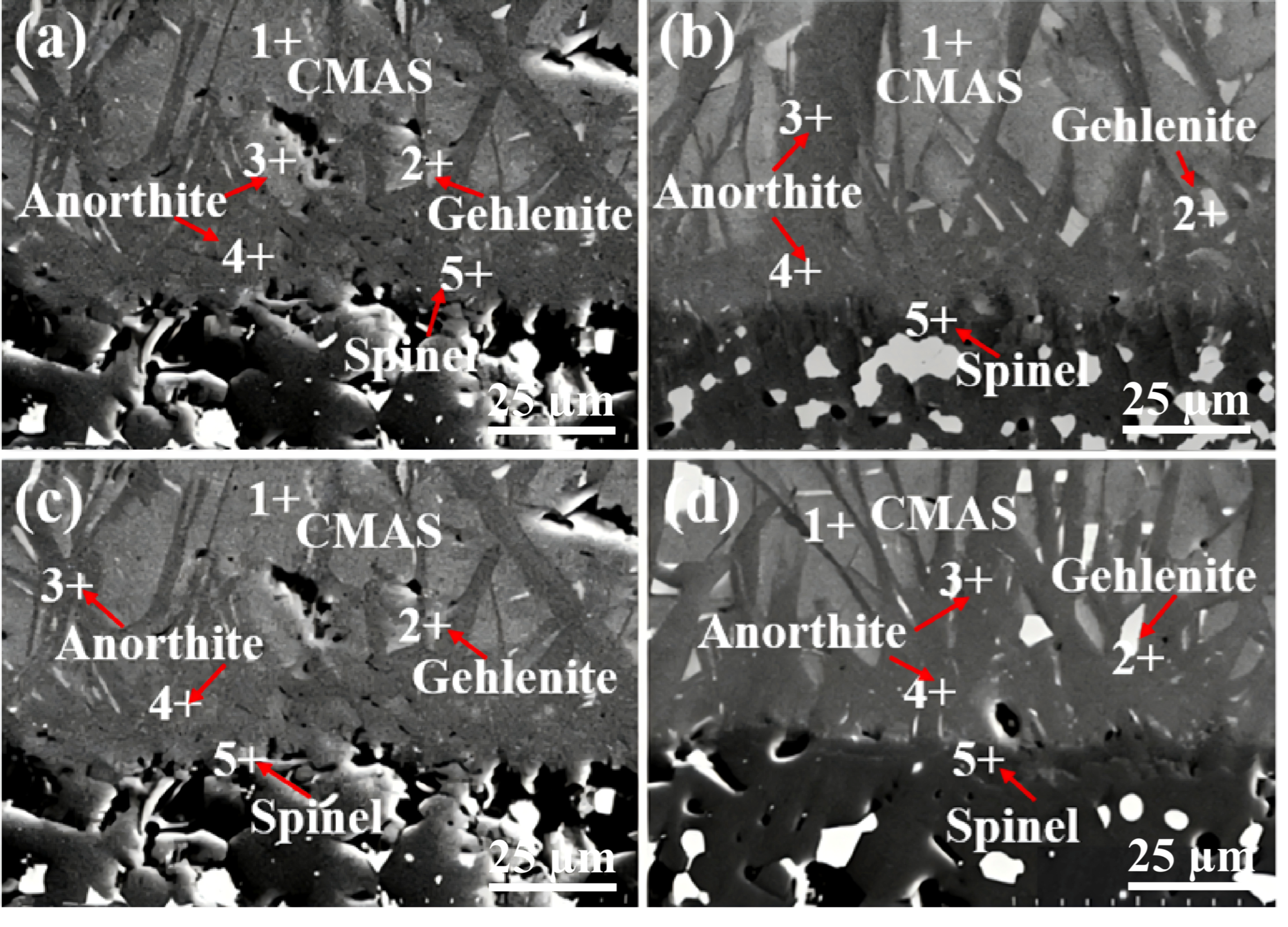
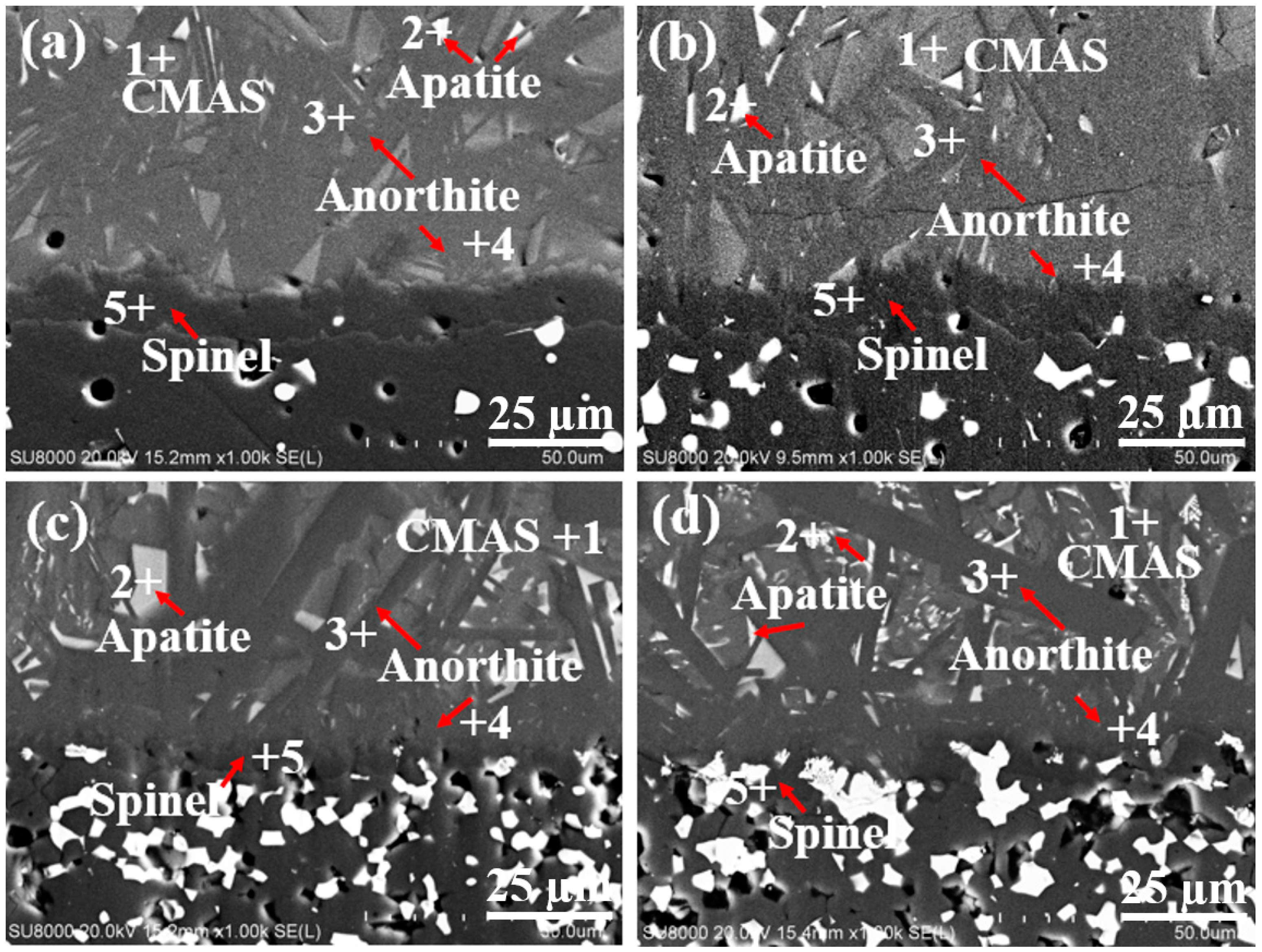
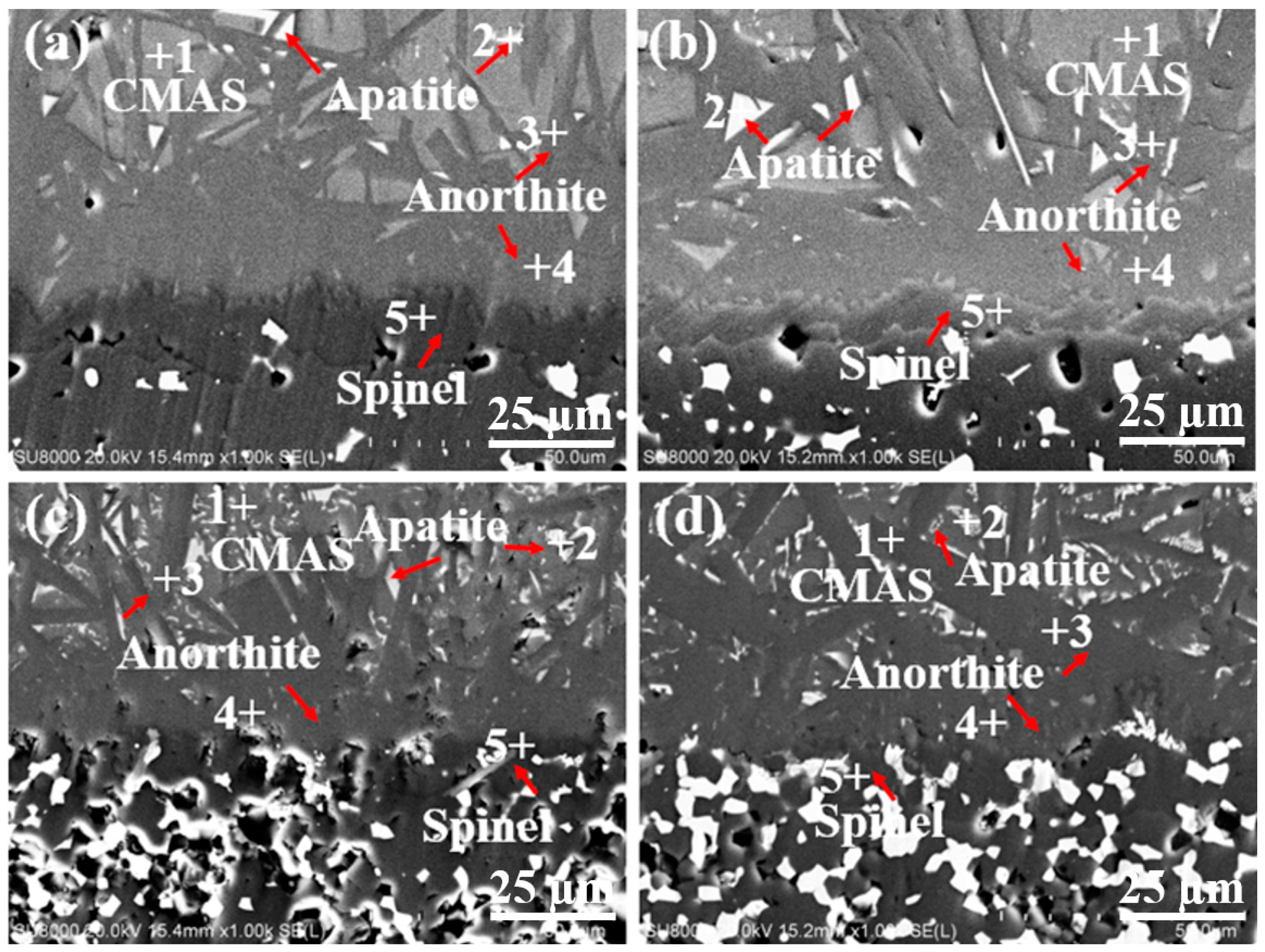
Figure 2 shows the cross-sectional morphology of the ceramic sample after reacting with CMAS at 1300 °C for 15 min. Table 1 presents the chemical compositions of the corresponding points in Figure 2. As shown in the figure, the sample morphology is divided into three regions: CMAS, the ceramic/CMAS interface reaction zone, and the ceramic matrix. A thin and continuous dense reaction layer was formed at the ceramic/CMAS interface. According to EDS point scanning and XRD analysis, the dense reaction layer is mainly composed of anorthite. The rod-like anorthite grains grew vertically from the dense reaction layer into the CMAS, and the gehlenite existed between the rod-like anorthite grains. The formation of the anorthite phase and gehlenite phase is attributed to the dissolution of ceramics during the rapid reaction process, which leads to the diffusion of a large amount of Al3+ into the CMAS melt. This transforms the crystallization of devitrification-resistant wollastonite glass into anorthite [34]. Additionally, a small amount of spinel phase has been observed forming beneath the anorthite layer [35]. The solubility of Gd3+ in the remaining CMAS raises with the increase in the Gd2O3 doping amount. As the reaction proceeds, Gd3+ continuously diffuses into the CMAS, among which the maximum solubility is approximately 3.2 at.%, consistent with previous studies [36].
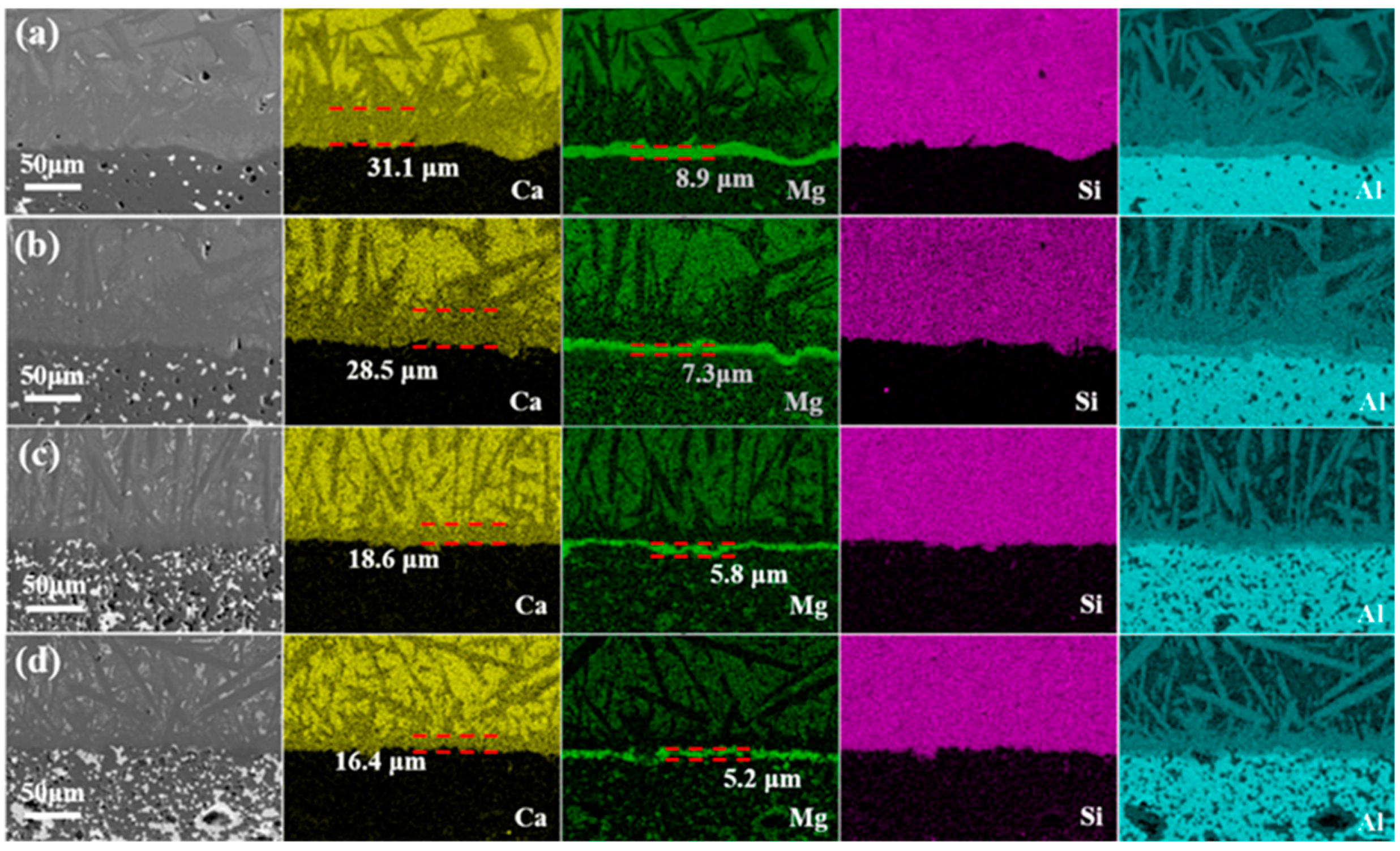
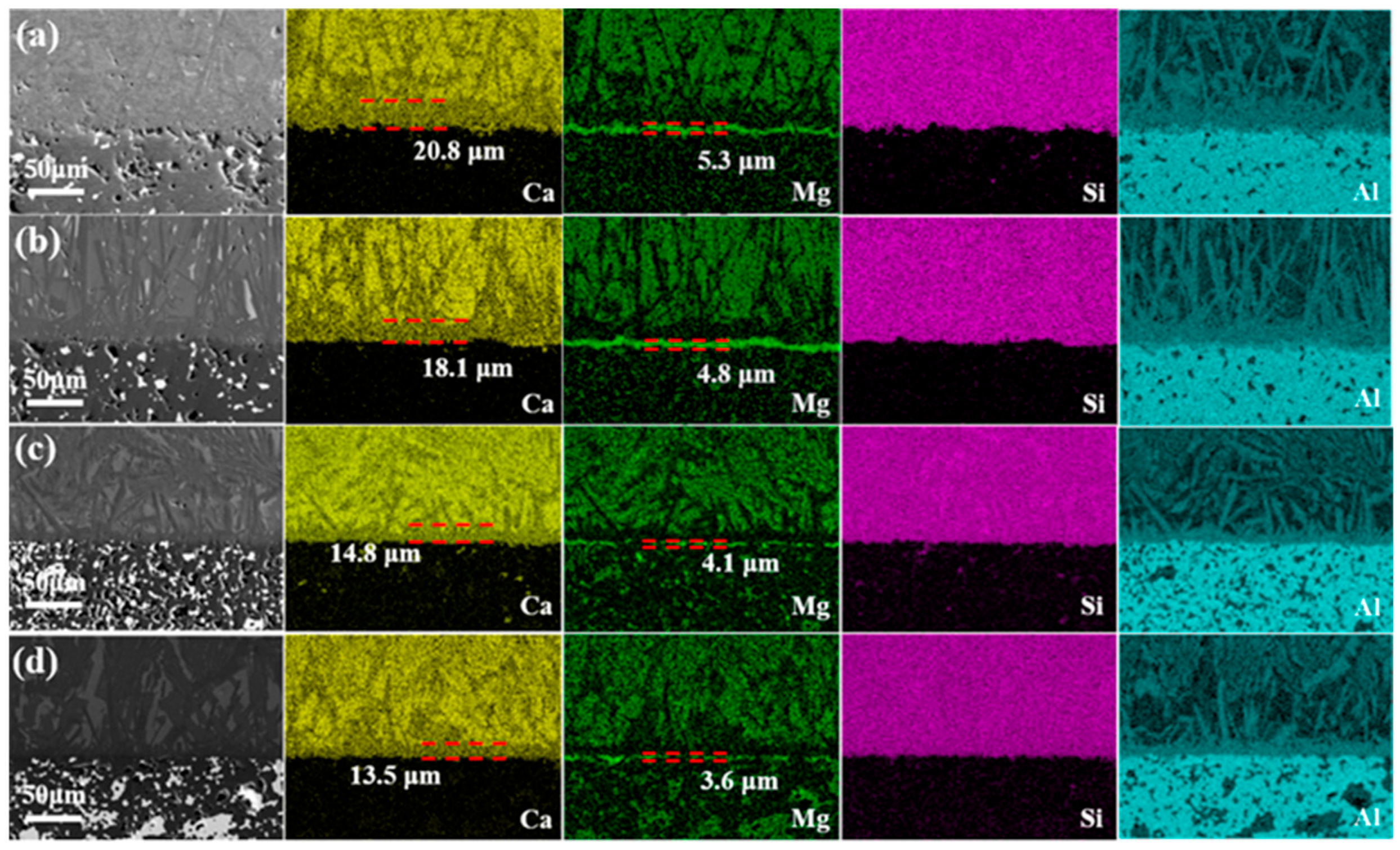
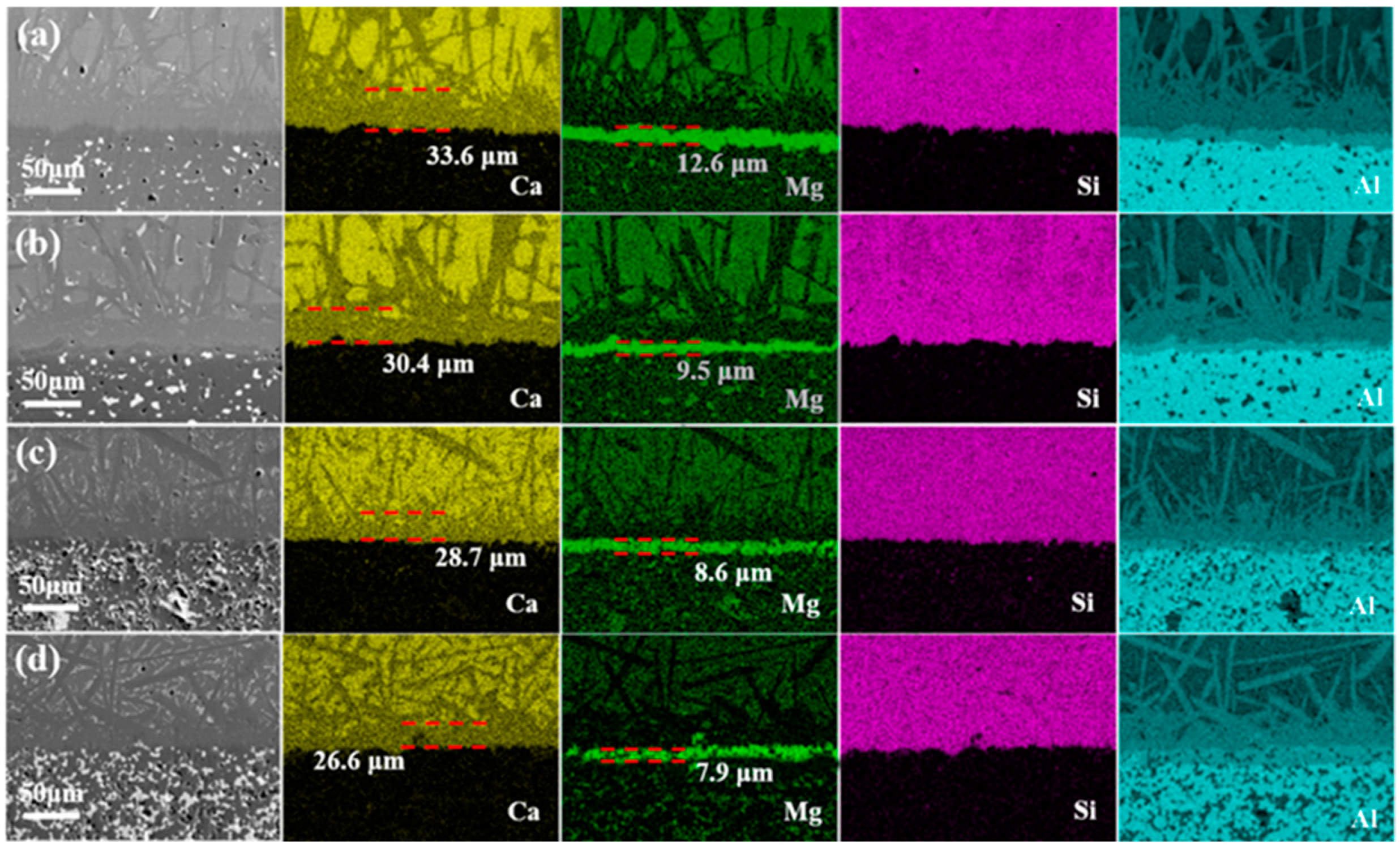
Figure 3 shows the cross-sectional elemental distribution of the sample after reacting with CMAS at 1300 °C for 15 min. The ceramic exhibits a blocking effect on Ca2+ and Si4+, while Mg2+ accumulates below the anorthite layer to form a spinel layer. In the Mg elemental mapping, the Kα characteristic peak of Mg is extremely close to the Mα characteristic peak of Gd, making it impossible to completely separate the signals of the two elements through conventional EDS mapping scanning. Therefore, the signal of the corresponding mapping diagram actually comes from the sum of Mg and Gd. This discrepancy arises from the overlapping diffraction peak positions of Gd and Mg, leading to scanning errors [36]. The thickness of the dense reaction layer composed of anorthite and spinel increases with the extension of reaction time. As the reaction proceeds, elements continuously diffuse between the ceramics and CMAS. Al3+ in the ceramics diffuses outward into the CMAS, promoting the growth of the anorthite layer. Meanwhile, Mg2+ in the CMAS diffuses inward through the anorthite layer, thickening the spinel layer [27,28].
Figure 4 shows the cross-sectional morphology of the Al2O3−xGd2O3 ceramic sample after reacting with CMAS at 1300 °C for 4 h. Table 2 presents the chemical compositions of the corresponding points in Figure 4. The thickness of the anorthite layer and spinel layer increased, and the Gd-apatite crystalline phase grew larger. As the Gd3+ content increased, more Gd-apatite formed in the CMAS. An increase in the Gd2O3 doping content promotes the outward diffusion of Gd3+ into the CMAS. During extensive precipitation, Gd3+ can form stable crystals with Ca2+, Si4+, and other ions. The generation of these stable crystals contributes to increasing the viscosity of the CMAS melt and effectively reduces the wettability of the residual mixture on the reaction layer and along grain boundaries [37,38]. It reduces the diffusivity of the CMAS, effectively retarding its penetration.
Figure 5 shows the cross-sectional element distribution of the sample after reacting with CMAS at 1300 °C for 4 h. Ca2+ and Si4+ are effectively blocked by the anorthite–spinel composite reaction layer. After 4 h of reaction, the thickness of the anorthite reaction layer exhibited an obvious increase. As the reaction proceeds, Al3+ in the ceramics continuously diffuses into the CMAS melt, resulting in a change in the CMAS composition; this causes the gradual dissolution of gehlenite, with the subsequent precipitation of the more stable anorthite crystalline phase [31,32]. Concerning the thickness of the dense reaction layer, compared with that at 15 min of reaction, the Al2O3-5%Gd2O3 sample exhibited the greatest increase in anorthite layer thickness, approximately 50%, and a more compact spinel layer was observed. The Al2O3-30%Gd2O3 sample exhibited a minimum thickness increment of approximately 22% for the anorthite reaction layer, with a thinner spinel layer. As the reaction proceeds, elemental interdiffusion occurs continuously between the CMAS and the ceramics, and an increase in Gd content retards the inward diffusion of Ca2+ and Mg2+ [33].
Figure 6 shows the cross-sectional morphology of the Al2O3−xGd2O3 ceramic sample after reacting with CMAS for 24 h. Table 3 presents the chemical compositions of the corresponding points in Figure 6. The main reaction products after 24 h are the same as those after 4 h. Compared to the 4 h reaction, Gd3+ further diffused into the CMAS melt, while elemental diffusion between the ceramic and CMAS slowed down and stabilized. Additionally, the dense reaction layer effectively impeded the permeation of molten CMAS. As the reaction time increases, the rod-shaped anorthite crystalline phase in the remaining CMAS zone of each sample becomes coarser. The Gd-apatite crystalline phase increases, and the anorthite–spinel dense reaction layer thickens. At the same reaction time, the Ca/Si ratio in the residual CMAS decreases with increasing Gd2O3 doping content. Gd3+ diffuses into the molten CMAS and substitutes for a fraction of Ca2+, which reduces the Ca/Si ratio in the melt. This further leads to a remarkable increase in the degree of polymerization of silicate tetrahedra in the CMAS, accompanied by elevated internal frictional resistance and a subsequent rise in viscosity [37,39]. The permeability of the CMAS in the ceramic surface is reduced.
Figure 7 shows the cross-sectional elemental distribution of the sample after reacting with CMAS at 1300 °C for 24 h. Compared to a reaction time of 15 min, the average increase in dense reaction layer thickness was 99%. Al2O3−xGd2O3 ceramics maintain good barrier performance against molten CMAS even after 24 h of reaction at 1300 °C. In particular, Si4+ and Ca2+ ions struggle to penetrate the anorthite–spinel double-dense reaction layer. The thickness of the reaction layer increases with prolonged reaction time, indicating that the penetration of molten CMAS continues to progress. At the same reaction time, the reaction layer thickness decreases with increasing Gd3+ content. On the one hand, Gd3+ with a higher optical basicity exhibits a stronger affinity for Ca2+ at high temperatures and exerts a competing effect on the formation of the anorthite, thus retarding the growth of the anorthite layer [10,40]. On the other hand, Gd-CMAS features low diffusivity and wettability, making it difficult for it to penetrate through the grain boundary of the reaction layer [41].

3.3. Growth Behavior of Dense Reaction Layer

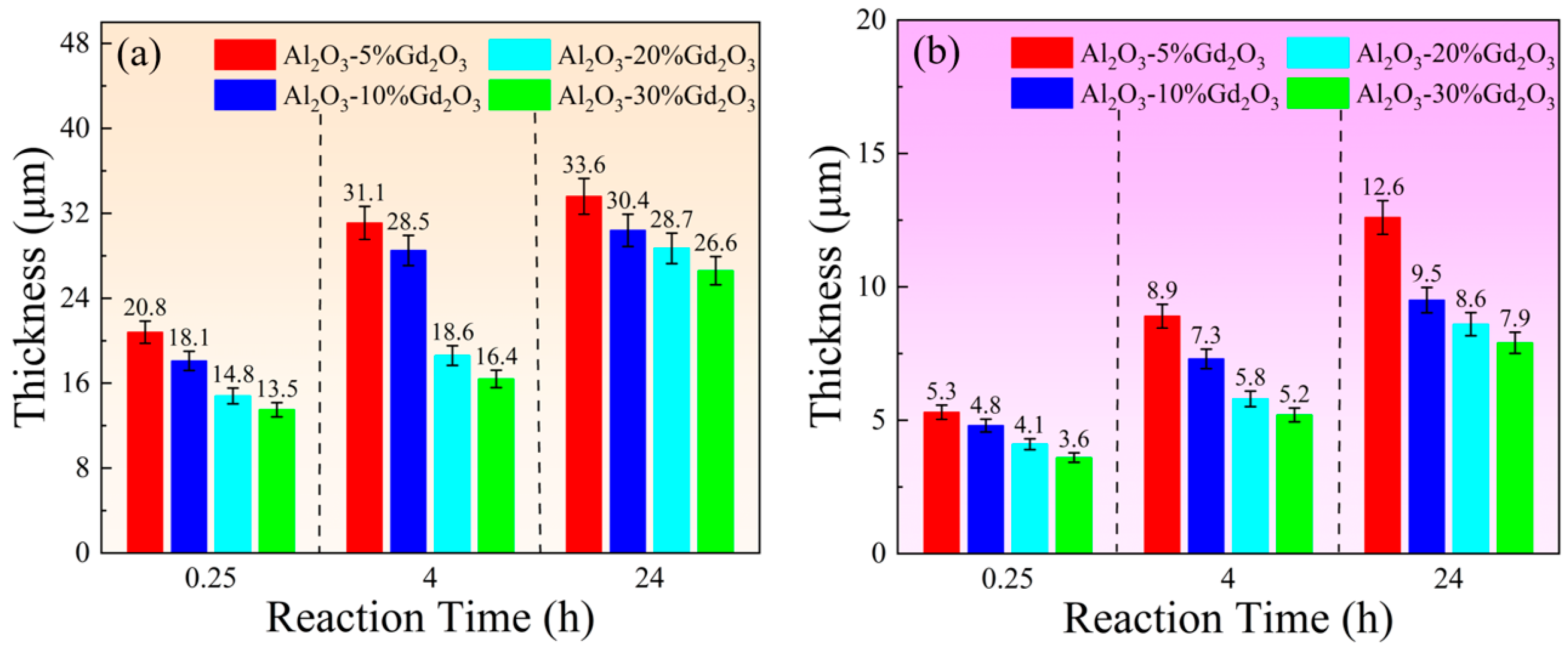
Figure 8 shows the analysis results of the reaction layer thickness formed after different reaction times between the ceramic sample and CMAS at 1300 °C. The thicknesses of the anorthite and spinel layers increase with prolonged reaction time, indicating that elemental diffusion between the ceramic and CMAS during the reaction process. Al3+ in the ceramic continuously diffuses outward into the CMAS, promoting the growth of the anorthite layer, while Mg2+ in the CMAS diffuses inward through the anorthite layer, thickening the spinel layer. The thickness of the reaction layer between anorthite and spinel decreases with the increase in Gd3+ content, since Gd3+ has a strong affinity for Ca2+ and exerts a certain competitive effect on the formation of crystalline phases such as anorthite [42,43]. The formation of a large quantity of Gd-apatite can increase the viscosity of the CMAS melt, reduce its diffusivity and wettability, and hinder its penetration through the grain boundaries of the reaction layer, thereby inhibiting the growth of the anorthite and spinel layers [41]. Therefore, the doping of Gd2O3 can effectively enhance the CMAS penetration resistance of ceramics.
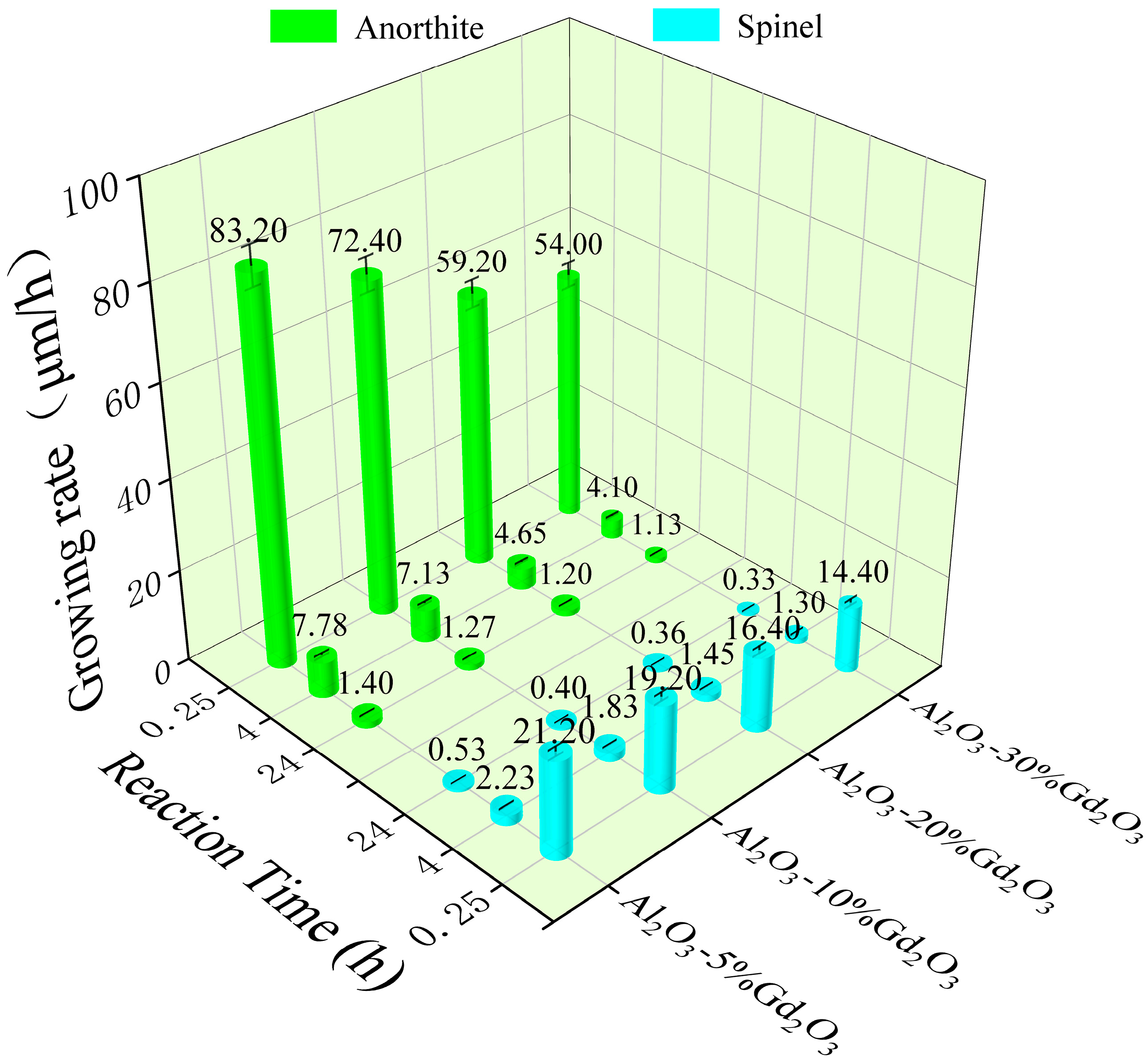
Figure 9 presents the calculated growth rates of each reaction layer on the surface of the Al2O3−xGd2O3 ceramics at 1300 °C for different durations. For the Al2O3-5%Gd2O3, Al2O3-10%Gd2O3, Al2O3-20%Gd2O3, and Al2O3-30%Gd2O3 ceramics, the average growth rates of the dense anorthite reaction layer were 83.2 μm/h, 72.4 μm/h, 59.2 μm/h and 54.0 μm/h, respectively, at the initial reaction stage of 15 min. The growth rates of the anorthite and spinel reaction layers were relatively high at the early reaction stage (15 min), leading to their rapid formation. These newly formed layers effectively hindered the penetration of CMAS, which caused the growth rates of the reaction layers to drop sharply and then stabilize in the subsequent stages. This indicates that the anorthite reaction layer formed on the ceramic surface can effectively inhibit the penetration of molten CMAS, especially that of Ca2+ and Mg3+. In addition, with the increase in the doping content of Gd2O3, the thickening rates of both the anorthite and spinel layers decreased at the same reaction time, which demonstrates that the addition of Gd2O3 exerts a positive effect on inhibiting the penetration of CMAS [37,38,39].

3.4. Mechanism Analysis and Discussion

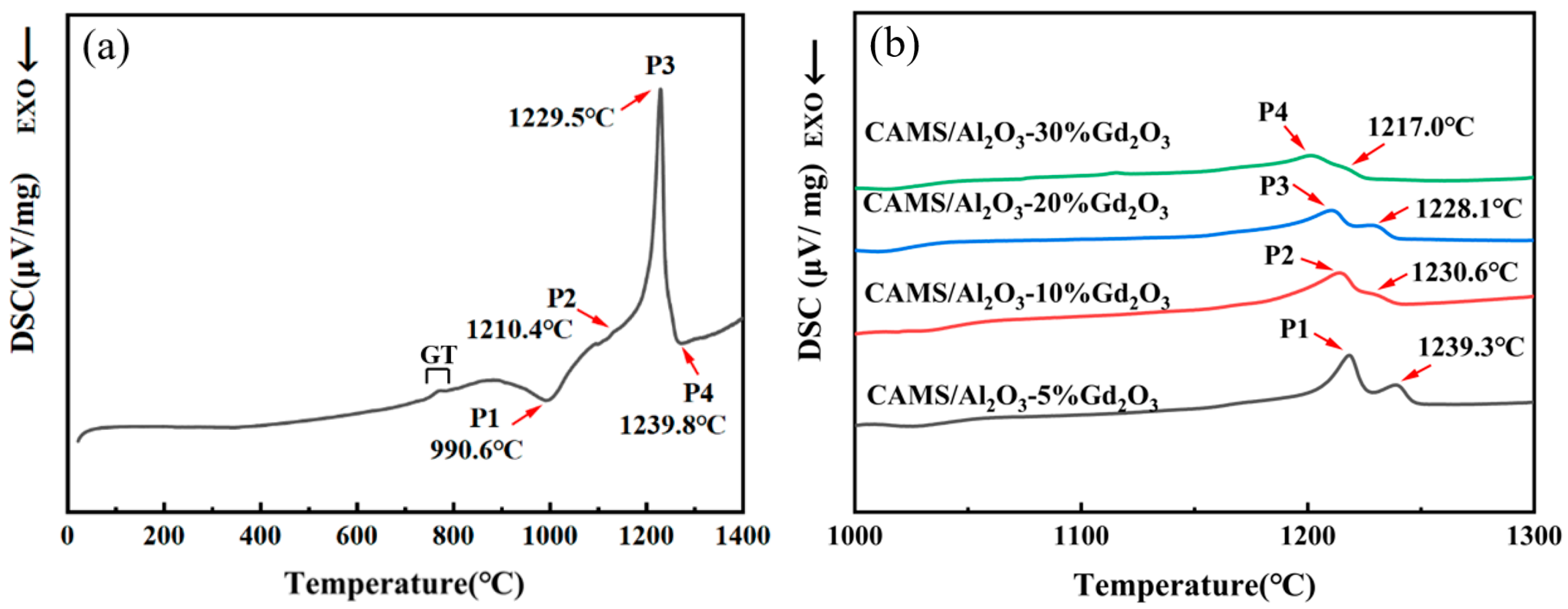
To further understand the possible reactions between CMAS and Al2O3−xGd2O3 ceramic, the DSC measurements were performed on CMAS and the CMAS-Al2O3−xGd2O3 (1:1 wt.%) mixed powders. The corresponding DSC curves are presented in Figure 10. As shown in Figure 10a, a weak peak emerges in the range of approximately 700~800 °C, which corresponds to the glass transition (GT) behavior of CMAS [44]. In addition, CMAS starts to melt at roughly 1210.4 °C, and the endothermic peak P3 in the DSC curve of CMAS is observed at around 1229.5 °C. It should be noted that the melting point of CMAS determined in this experiment is consistent with the results reported in a previous study [45]. In Figure 10b, the peak P1 corresponds to the melting temperature of CMAS in the mixed powders. With increasing Gd2O3 content, the endothermic peak P1 shifts toward the lower-temperature side (leftward). Different from the melting behavior of pure CMAS, the decrease in melting temperature of the mixed powders is attributed to the combined effects of thermochemical reactions and compositional changes in the mixture [34]. In addition, a second peak P2 is observed in the temperature range of 1217.0 °C to 1239.3 °C, which also shifts toward the lower-temperature side with increasing Gd2O3 content. Combined with the XRD and SEM characterization results, it is confirmed that the melt undergoes further reactive crystallization at this stage to form anorthite, gehlenite, spinel and the Gd-apatite phase [32,46]. The whole thermochemical reaction processes between Al2O3−xGd2O3 and CMAS are summarized as:
GT: CMAS undergoes glass transition;
P1: The melting procedure of the CMAS/Al2O3−xGd2O3 mixture;
P2: Al2O3 + CMAS → CaAl2Si2O8 + Ca2Al(AlSi)O7 + MgAl2O4, ΔH° ≈ −620 kJ·mol−1;
Gd2O3 + CMAS → Ca2Gd8(SiO4)6O2, ΔH° ≈ −890 kJ·mol−1.
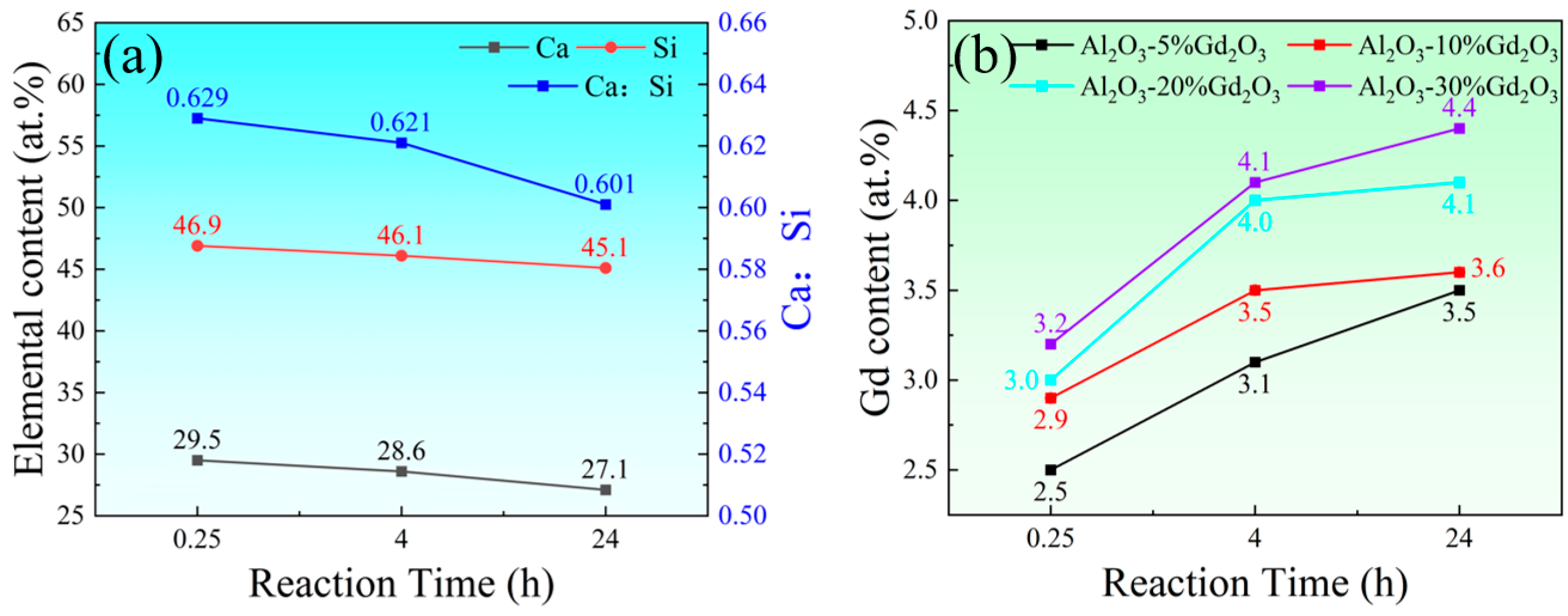
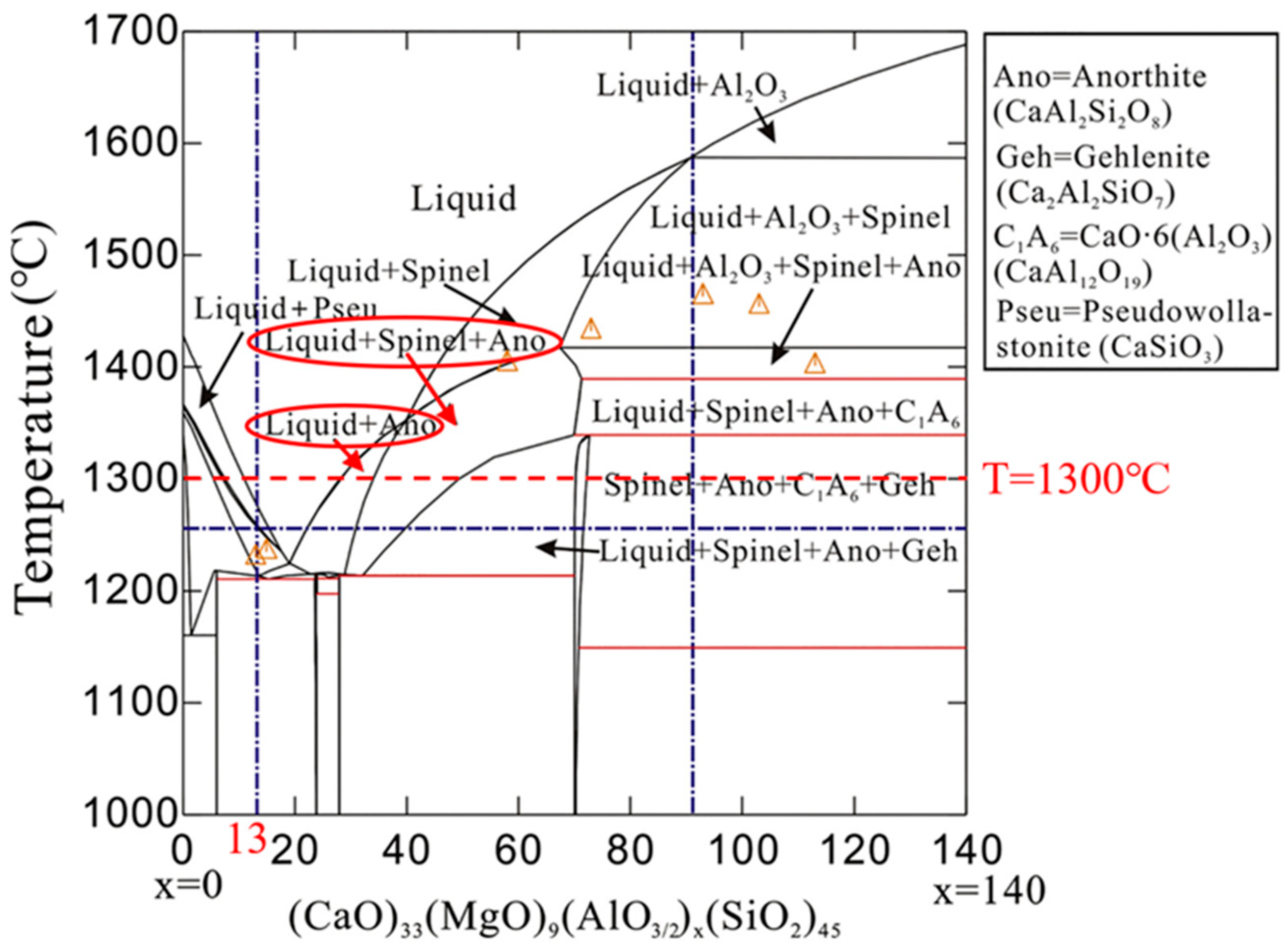
The reaction products of the Al2O3−xGd2O3 ceramic reacting with CMAS at high temperatures are anorthite, gehlenite, spinel, Ca3Gd2Si3O12 and Gd-apatite. Taking Al2O3-30%Gd2O3 as an example, it can be seen from Figure 11a that, with the progress of the reaction, a large amount of Ca2+ and Si4+ in the molten CMAS system are consumed and the Ca/Si ratio decreases continuously, while the dissolution of the ceramic leads to an increase in the content of Al3+ in the system. This induces a compositional change in the CMAS melt, which shifts from the pseudo wollastonite phase field—where crystallization is sluggish—to the anorthite phase field [34,45]. From Figure 12 (the vertical phase diagram section of CMAS) [27], the introduction of Al elements enables CMAS to fall into the anorthite phase field during crystallization and form stable crystals. At the initial reaction stage, an anorthite-CMAS system is formed first, and the reaction layer can effectively block the penetration of CMAS. Thus, the growth rate of the anorthite layer reaches its maximum at the initial reaction stage. Subsequently, Al3+ in the ceramic continuously diffuses into the CMAS melt, leading to an increase in the Al3+ content and a change in the CMAS composition. This causes the gradual dissolution of gehlenite and the subsequent precipitation of the more stable anorthite crystalline phase. With the advancement of the reaction, Mg2+ in the CMAS slowly penetrates and forms a spinel reaction layer beneath the anorthite layer [31,32,35]. When the content of added Gd2O3 reaches a certain level, the dissolution and reprecipitation of the Al2O3-based ceramic further change the chemical composition of the CMAS melt and promote the reactive crystallization of CMAS to precipitate the high-melting-point Gd-apatite phase. As the CMAS penetrates continuously, the thickness of the reaction layer increases with the extension of reaction time; furthermore, the thickening of the reaction layer renders CMAS penetration more difficult, thus the thickening rate of the reaction layer gradually stabilizes.
Figure 11b presents the Gd3+ content in residual CMAS after the reaction between Al2O3−xGd2O3 ceramics and CMAS. Higher Gd2O3 doping levels create a steeper concentration gradient between the ceramic and CMAS melt, effectively enhancing the driving force for Gd3+ diffusion. As Gd3+ diffuses into the CMAS and induces crystallization reactions, the Ca/Si ratio in the CMAS decreases [47]. Meanwhile, the continuous growth of the dense reaction layer formed at the ceramic/CMAS interface increases the diffusion distance and grain boundary diffusion resistance, thereby inhibiting both CMAS penetration and the outward diffusion of Gd3+ [48]. Consequently, the Gd3+ content increases rapidly during the early reaction stage before gradually reaching a plateau.
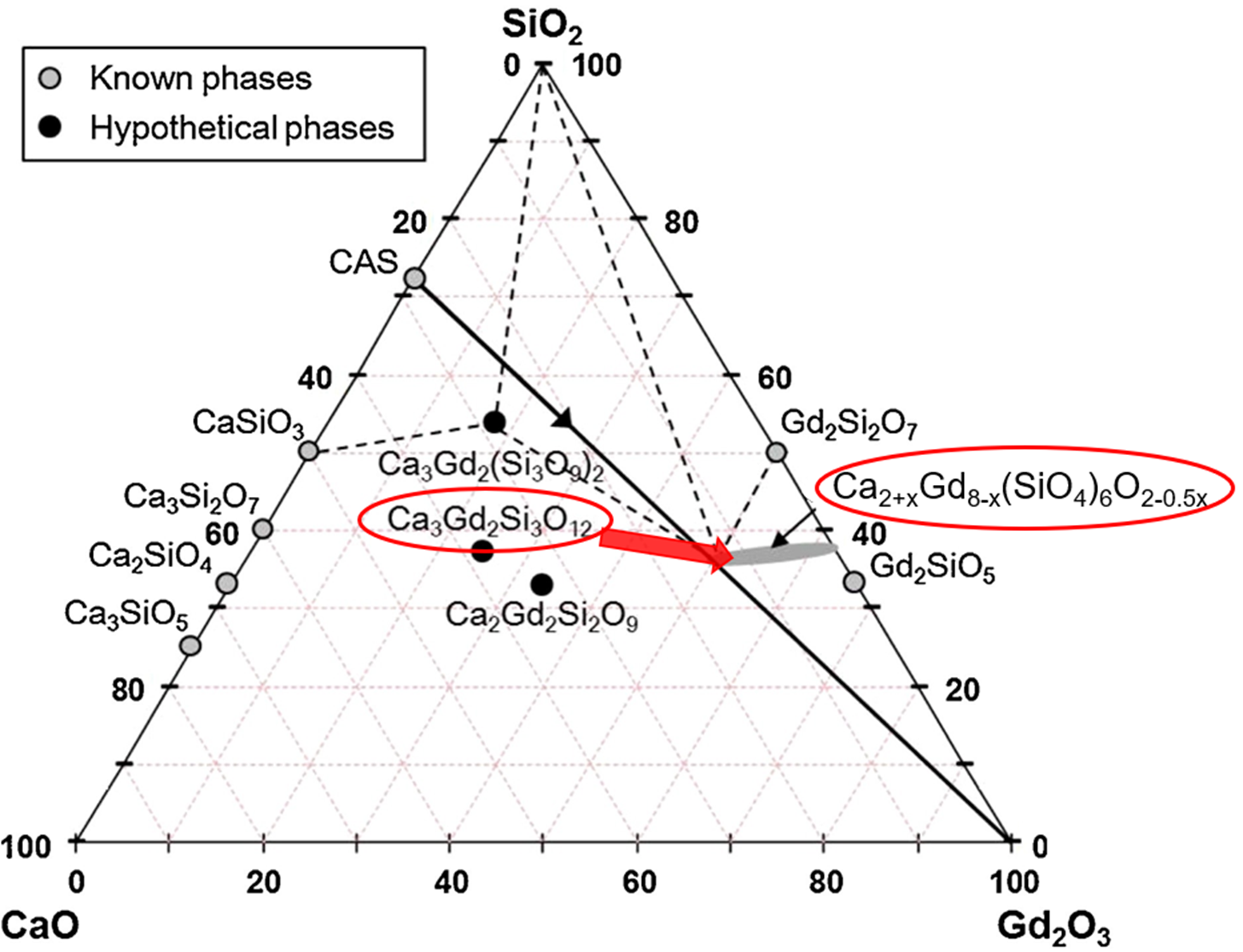
Figure 13 shows the schematic vertical section of the pseudo-ternary phase diagram for the CaO-Gd2O3-SiO2 system [37]. When the Gd3+ content in the CMAS melt is insufficient, it primarily crystallizes as the Ca3Gd2Si3O12 phase. With an increase in the Gd2O3 doping concentration in the sample, more Gd3+ ions diffuse into the CMAS. The elevated Gd3+ content further drives the transformation of the garnet Ca3Gd2Si3O12 into Gd-apatite [47]. Secondly, the increase in reaction temperature facilitates the diffusion of Gd3+ and accelerates the reaction process, making Gd-apatite more readily formed at 1300 °C. The formation of a stable Gd-apatite crystalline phase with a high melting point enhances the viscosity of CMAS, thus inhibiting its further penetration.
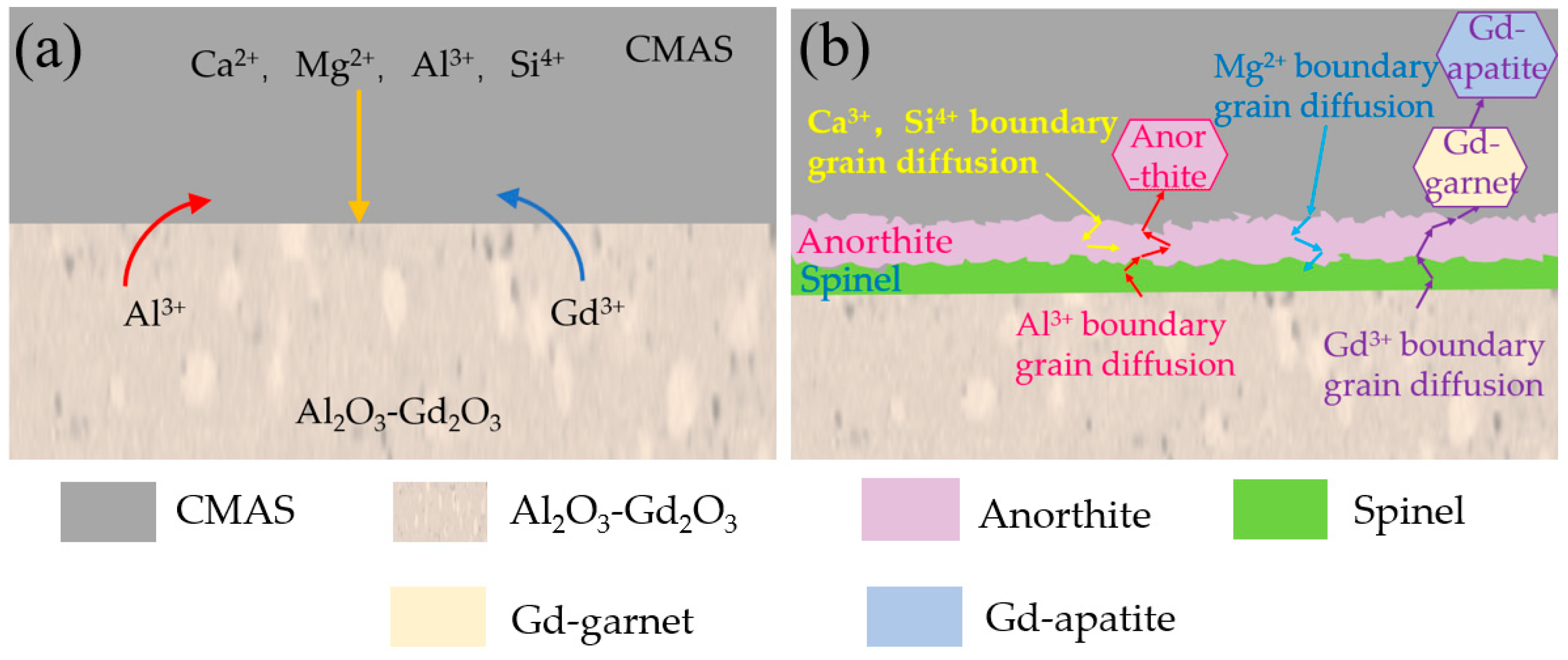
Figure 14 shows a schematic illustration of the interaction between CMAS and Al2O3−xGd2O3 ceramics. During the initial stage of the reaction, the ceramic comes into contact with molten CMAS, initiating a rapid thermochemical reaction, and a dense anorthite reaction layer forms at the ceramic/CMAS interface. As the reaction proceeds, Ca2+, Si4+, and Mg2+ ions from the CMAS continuously diffuse into the ceramic through the grain boundaries of the anorthite reaction layer, leading to the formation of a thin spinel reaction layer beneath the anorthite. Furthermore, the internal penetration of the CMAS drives the anorthite and spinel reaction layers to continue thickening, with the thickening rate gradually leveling off [49]. At the same time, Al3+ and Gd3+ in the ceramic also diffuse outward from the grain boundaries of the reaction layer into the CMAS. The outward diffusion of Al3+ promotes the crystallization of anorthite, whereas the outward diffusion of Gd3+ initially leads to the formation of Gd-garnet (Ca3Gd2Si3O12) in the CMAS. As the reaction progresses and the Gd3+ content in the CMAS increases, the Gd-garnet Ca3Gd2Si3O12 phase transforms into the more stable Gd-apatite Ca2Gd8(SiO4)6O2 crystalline phase [30]. The addition of Gd2O3 effectively delays CMAS penetration, and Al2O3−xGd2O3 ceramics exhibit good resistance to CMAS penetration corrosion.

4. Conclusions

Al2O3−xGd2O3 ceramics react with molten CMAS at high temperatures, forming different reaction products at different stages. Gd2O3-doped Al2O3 ceramics exhibit good resistance to CMAS penetration.
(1)
The main products of the reaction between Al2O3−xGd2O3 ceramics and CMAS at high temperatures are gehlenite (Ca2Al(AlSi)O7) and anorthite (CaAl2Si2O8), spinel (MgAl2O4), Gd-garnet (Ca3Gd2Si3O12), and Gd-apatite (Ca2Gd8(SiO4)6O2). A dense dual reaction layer, composed of an outer anorthite layer and an inner spinel layer, is formed via the rapid reaction at the initial stage, which can effectively block the infiltration of Ca2+ and Si4+.
(2)
Increasing the doping content of Gd2O3 can intensify the outward diffusion of Gd3+ and promote the formation of Gd-apatite crystals, which induces a change in the composition of CMAS and reduces its wettability. Moreover, Gd3+ has a strong affinity for Ca2+ and exerts a certain competitive effect on the formation of crystalline phases such as anorthite, thereby retarding the growth of the anorthite and spinel layers and exerting a protective effect on the matrix.
(3)
The thickness of the composite reaction layer between anorthite and spinel increases with the extension of reaction time, while the growth rate of the reaction layer gradually decreases with prolonged corrosion time. Elemental diffusion between the ceramics and CMAS promotes CMAS reaction crystallization, thickening the reaction layer. The thickening of the reaction layer effectively suppresses further corrosion of CMAS, causing the element diffusion rate to decrease and level off.
(4)
Ca2+, Mg2+, and Si4+ in molten CMAS diffuse inward through the reaction layer grain boundaries, while Gd3+ and Al3+ in the ceramic diffuse outward. Increasing the Gd2O3-doping content can effectively inhibit Ca2+ and Mg2+ diffusion, prevent the thickening of the anorthite layer and spinel layer reaction, and simultaneously form more Gd-apatite crystals in the CMAS.

Author Contributions

Conceptualization, T.L.; formal analysis, R.M., S.H., Y.D. and X.M.; investigation, R.M., S.H., Y.D. and X.M.; data curation, R.M. and S.H.; writing—original draft preparation, R.M.; writing—review and editing, T.L. and R.M.; supervision, T.L. All authors have read and agreed to the published version of the manuscript.

Funding

This work is supported by the National Natural Science Foundation of China (Grant No. 52561015), and the Guangxi Science and Technology Base and Talent Special Project (AD25069063, AD25069078) and the Innovation Project of Guangxi Graduate Education (YCSW2024036).

Institutional Review Board Statement

Not applicable.

Informed Consent Statement

Not applicable.

Data Availability Statement

The data are contained within the article.

Conflicts of Interest

The authors declare no conflicts of interest.

References

  1. Wu, Y.; Guo, X.Y.; He, D.Y. Research Progress of CMAS Corrosion and Protection Method for Thermal Barrier Coatings in Aero-engines. China Surf. Eng. 2023, 36, 1–13. [Google Scholar]
  2. Yang, S.J.; Yan, X.D.; Guo, H.B. Failure mechanism and protection strategy of thermal barrier coatings under CMAS attack. Acta Aeronaut. Astronaut. Sin. 2022, 43, 569–586. [Google Scholar]
  3. Guo, L.; He, W.T.; Chen, W.B.; Xue, Z.L.; He, J.; Guo, Y.Q.; Wu, Y.; Gao, L.H.; Li, D.Q.; Zhang, Z.; et al. Progress on high-temperature protective coatings for aero-engines. Surf. Sci. Technol. 2023, 1, 39. [Google Scholar] [CrossRef] [Scilit]
  4. Li, H.C.; Wang, W.Z.; Yang, Z.N.; Liu, Y.G.; Wang, Y.H.; Liu, W. Internal Diameter Atmospheric-Plasma-Sprayed High-Performance YSZ-Based Thermal Barrier Coatings. Coatings 2023, 13, 1868. [Google Scholar] [CrossRef] [Scilit]
  5. Adomnitei, I.; Cimpoesu, R.; Chicet, D.L.; Coteată, M.; Lupu, F.C.; Bejinariu, C.; Andrușcă, L.; Paraschiv, P.; Axinte, M.; Bădărău, G.; et al. Behavior of YSZ (High Y2O3 Content) Layer on Inconel to Electro-Chemical Corrosion. Materials 2025, 18, 400. [Google Scholar] [CrossRef] [Scilit]
  6. Wei, Z.Y.; Meng, G.H.; Chen, L.; Li, G.R.; Liu, M.J.; Zhang, W.X.; Zhao, L.N.; Zhang, Q.; Zhang, X.D.; Wan, C.L.; et al. Progress in ceramic materials and structure design toward advanced thermal barrier coatings. J. Adv. Ceram. 2022, 11, 985–1068. [Google Scholar] [CrossRef] [Scilit]
  7. Diao, Y.R.; Ni, J.X.; Yang, J.S.; Zhao, H.Y.; Zhuang, Y.; Sheng, J.; Qian, H.Y.; Shao, F.; Tao, S.Y. Thermal shock behavior and CMAS degradation of YSZ-Y2O3 and YSZ-Y2Zr2O7 double ceramic layered thermal barrier coatings. Ceram. Int. 2025, 51, 7926–7937. [Google Scholar] [CrossRef] [Scilit]
  8. Yan, Z.; Guo, L.; Li, Z.H.; Yu, Y.; He, Q.J. Effects of laser glazing on CMAS corrosion behavior of Y2O3 stabilized ZrO2 thermal barrier coatings. Corros. Sci. 2019, 157, 450–461. [Google Scholar] [CrossRef] [Scilit]
  9. Zhang, B.; Yu, Y.; Guo, L.; Kang, S.; Cheng, Y.X.; Yan, Z.; Wang, L. Microstructure evolution of CMAS glass below melting temperature and its potential influence on thermal barrier coatings. Ceram. Int. 2022, 48, 32877–32885. [Google Scholar] [CrossRef] [Scilit]
  10. Guo, L.; Zhang, X.M.; Xin, H. Corrosiveness of CMAS and CMAS + salt (NaVO3, Na2SO4 and NaCl) to YSZ thermal barrier coating materials. Corros. Sci. 2022, 209, 13. [Google Scholar] [CrossRef] [Scilit]
  11. Zhang, Y.G.; Dou, M.F.; Gao, W.; Han, J.S.; Wu, D.T.; Zou, Y. Wetting kinetics and corrosion of CMAS and CMAS-NaCl to plasma-sprayed YSZ and Al2O3-YSZ thermal barrier coatings. Corros. Sci. 2024, 232, 10. [Google Scholar] [CrossRef] [Scilit]
  12. Ball, J.A.; Martins, J.F.; Brewster, G. An investigation into RESZ (RE = Yb, Er, Gd, Sm) materials for CMAS resistance in thermal barrier coatings. J. Eur. Ceram. Soc. 2024, 44, 3734–3746. [Google Scholar] [CrossRef] [Scilit]
  13. Kumar, M.; Majumdar, J.D.; Manna, I. Development of Gd2O3 doped yttria stabilized zirconia based thermal barrier coating for improved high temperature oxidation and erosion resistance. Ceram. Int. 2023, 49, 38081–38093. [Google Scholar] [CrossRef] [Scilit]
  14. Guo, L.; Li, M.Z.; Ye, F.X. Phase stability and thermal conductivity of RE2O3 (RE = La, Nd, Gd, Yb) and Yb2O3 co-doped Y2O3 stabilized ZrO2 ceramics. Ceram. Int. 2016, 42, 7360–7365. [Google Scholar] [CrossRef] [Scilit]
  15. Rai, A.K.; Bhattacharya, R.S.; Wolfe, D.E.; Eden, T.J. CMAS-Resistant Thermal Barrier Coatings (TBC). Int. J. Appl. Ceram. Technol. 2010, 7, 662–674. [Google Scholar] [CrossRef] [Scilit]
  16. Steinberg, L.; Naraparaju, R.; Heckert, M.; Mikulla, C.; Schulz, U.; Leyens, C. Erosion behaviour of EB-PVD 7YSZ coatings under corrosion/erosion regime: Effect of TBC microstructure and the CMAS chemistry. J. Eur. Ceram. Soc. 2018, 38, 5101–5112. [Google Scholar] [CrossRef] [Scilit]
  17. Cheng, B.; Zhang, X.; Zheng, G.B.; Chu, Q.Q.; Zhang, M.N.; Feng, L.; Zhang, X.J.; Wang, H.P.; Sun, H.T.; Li, W.S. Improving the CMAS corrosion resistance of Gd2Zr2O7 TBCs via laser simultaneously induced texture/featherlike/dense structures. J. Mater. Res. Technol.-JMRT 2025, 36, 10104–10117. [Google Scholar] [CrossRef] [Scilit]
  18. Ma, X.Q.; Rivellini, K.; Ruggiero, P.; Wildridge, G. Novel Thermal Barrier Coatings with Phase Composite Structures for Extreme Environment Applications: Concept, Process, Evaluation and Performance. Coatings 2023, 13, 210. [Google Scholar] [CrossRef] [Scilit]
  19. Liu, S.; Hu, X.P.; Zou, Y.; Guo, J.W.; Liu, Q.; Zhu, W. CMAS corrosion resistance behavior and mechanism of Hf6Ta2O17/RETaO4 (RE = Yb, Y, Eu, Sm, and Nd) composite ceramics for thermal barrier coatings. Corros. Sci. 2025, 253, 15. [Google Scholar] [CrossRef] [Scilit]
  20. Liao, C.X.; Peng, H.; Chen, M.; Pi, Z.P.; Zhang, F. Corrosion behaviors of CMAS in ZrO2-RETaO4 systems and their corrosion mechanisms. J. Alloy. Compd. 2025, 1048, 10. [Google Scholar] [CrossRef] [Scilit]
  21. Song, C.X.; Qi, X.; Huang, L.; Sun, J.B.; Li, L.Z.; Li, C.G.; Lu, W.H. CaO-MgO-Al2O3-SiO2 (CMAS) corrosion behaviour of LaMgAl11O19/GdPO4 thermal barrier coating materials. Ceram. Int. 2023, 49, 26578–26588. [Google Scholar] [CrossRef] [Scilit]
  22. Ou, J.N.; Bin, X.; Liu, Z.H.; Sun, J.B.; Lu, W.H. CMAS corrosion behavior of LaMgAl11O19/CeO2 ceramic materials. J. Eur. Ceram. Soc. 2024, 44, 3747–3759. [Google Scholar] [CrossRef] [Scilit]
  23. Zhang, Y.; Gao, W.; Dou, M. Highly-durable plasma-sprayed Al2O3-YSZ/YSZ double ceramic layer TBCs against CMAS corrosion. J. Eur. Ceram. Soc. 2024, 44, 7328–7338. [Google Scholar] [CrossRef] [Scilit]
  24. Chen, Z.H.; Hu, P.; Pei, Y.L.; Teng, J.P.; Dong, T.; Wang, J.L.; Chen, M.H.; Li, S.S.; Wang, F.H. Anti-CMAS corrosion mechanism of Al2O3 pore sealing and laser remelting on thermal barrier coatings. J. Eur. Ceram. Soc. 2023, 43, 1567–1578. [Google Scholar] [CrossRef] [Scilit]
  25. Li, J.; Luo, Z.X.; Cui, Y.; Zhang, G.H.; Sun, L.C.; Wang, J.Y. CMAS corrosion resistance of Y3Al5O12/Al2O3 ceramic coating deposited by atmospheric plasma spraying. J. Inorg. Mater. 2024, 39, 671–682. [Google Scholar] [CrossRef] [Scilit]
  26. Gatzen, C.; Mack, D.E.; Guillon, O.; Vassen, R. YAlO3-A Novel Environmental Barrier Coating for Al2O3/Al2O3-Ceramic Matrix Composites. Coatings 2019, 9, 609. [Google Scholar] [CrossRef] [Scilit]
  27. Yin, B.B.; Zhang, F.; Zhu, W.; Yang, L.; Zhou, Y.C. Effect of Al2O3 modification on the properties of YSZ: Corrosion resistant, wetting and thermal-mechanical properties. Surf. Coat. Technol. 2019, 357, 161–171. [Google Scholar] [CrossRef] [Scilit]
  28. Mohan, P.; Yao, B.; Patterson, T.; Sohn, Y.H. Electrophoretically deposited alumina as protective overlay for thermal barrier coatings against CMAS degradation. Surf. Coat. Technol. 2009, 204, 797–801. [Google Scholar] [CrossRef] [Scilit]
  29. Liu, Y.; Su, H.J.; Shen, Z.L.; Zhao, D.; Guo, Y.N.; Li, X.; Jiang, H.; Dong, D.; Yang, C.B. High temperature calcium-magnesium-alumina-silicate (CMAS) corrosion behavior of directionally solidified Al2O3/YAG eutectic ceramic. J. Mater. Sci. Technol. 2023, 165, 66–74. [Google Scholar] [CrossRef] [Scilit]
  30. Webster, R.I.; Opila, E.J. Viscosity of CaO-MgO-Al2O3-SiO2 (CMAS) melts: Experimental measurements and comparison to model calculations. J. Non-Cryst. Solids 2022, 584, 10. [Google Scholar] [CrossRef] [Scilit]
  31. Shu, C.X.; Wang, J.S.; Lu, X.J.; Chen, T.Y.; Xu, M.Y.; Du, G.; Rao, Y.C.; Luo, Z.W.; Duan, Z.X.; Xie, Y.F.; et al. Investigation of corrosion resistance of YSZ coating with sacrificial aluminum oxide protective layer against CMAS and composite corrosives. J. Eur. Ceram. Soc. 2024, 44, 2537–2549. [Google Scholar] [CrossRef] [Scilit]
  32. Li, C.G.; Lai, C.B.; Wu, Y.Y.; Ouyang, H.X.; Sun, J.B.; Lu, W.H. CMAS corrosion resistance of Y2O3-Al2O3 binary ceramic materials. Ceram. Int. 2024, 50, 13721–13731. [Google Scholar] [CrossRef] [Scilit]
  33. Zou, L.; Cheng, Y.; Meng, S. Construction of a molten CMAS-resistant bilayer-structured apatite layer used for thermal barrier coatings. J. Adv. Ceram. 2025, 14, 9221173. [Google Scholar] [CrossRef] [Scilit]
  34. Mikulla, C.; Naraparaju, R.; Schulz, U.; Toma, F.L.; Barbosa, M.; Steinberg, L.; Leyens, C. Investigation of CMAS resistance of sacrificial suspension sprayed alumina topcoats on EB-PVD 7YSZ layers. J. Therm. Spray Technol. 2020, 29, 90–104. [Google Scholar] [CrossRef] [Scilit]
  35. Guo, L.; Gao, Y.; Ye, F.X.; Zhang, X.M. CMAS Corrosion Behavior and Protection Method of Thermal Barrier Coatings for Aeroengine. Acta Metall. Sin. 2021, 57, 1184–1198. [Google Scholar]
  36. Huang, Z.H. Thermochemical Reaction Behavior of RE2O3 with CMAS. Master’s Thesis, Guangxi University, Nanning, China, 2022. [Google Scholar]
  37. Perrudin, F.; Rio, C.; Vidal-Sétif, M.H.; Petitjean, C.; Panteix, P.J.; Vilasi, M. Gadolinium oxide solubility in molten silicate: Dissolution mechanism and stability of Ca2Gd8(SiO4)6O2 and Ca3Gd2(Si3O9)2 silicate phases. J. Eur. Ceram. Soc. 2017, 37, 2657–2665. [Google Scholar] [CrossRef] [Scilit]
  38. Song, X.W.; Xie, M.; Qu, X.F.; Song, X.W.; Zhang, Y.H.; Mu, R.D. Study of Gd2O3-Doped La2(Zr0.7Ce0.3)2O7 Thermal Barriers for Coating Ceramic Materials for CMAS Resistance. Coatings 2025, 15, 483. [Google Scholar] [CrossRef] [Scilit]
  39. Li, X.Y.; Deng, Z.Q.; Zhao, H.X.; Zhao, S.M.; Chen, X.L.; Zhang, X.C. CMAS-induced degradation of the SPS gadolinium magnesium hexaaluminate ceramic bulk at 1260–1500 °C. Surf. Coat. Technol. 2022, 440, 13. [Google Scholar] [CrossRef] [Scilit]
  40. Song, W.J.; Lavallée, Y.; Hess, K.U.; Kueppers, U.; Cimarelli, C.; Dingwell, D.B. Volcanic ash melting under conditions relevant to ash turbine interactions. Nat. Commun. 2016, 7, 10. [Google Scholar] [CrossRef] [Scilit]
  41. Guo, L.; Zhang, B.; Gao, Y.; Yan, K. Interaction laws of RE2O3 and CMAS and rare earth selection criterions for RE-containing thermal barrier coatings against CMAS attack. Corros. Sci. 2024, 226, 10. [Google Scholar] [CrossRef] [Scilit]
  42. Drexler, J.M.; Ortiz, A.L.; Padture, N.P. Composition effects of thermal barrier coating ceramics on their interaction with molten Ca-Mg-Al-silicate (CMAS) glass. Acta Mater. 2012, 60, 5437–5447. [Google Scholar] [CrossRef] [Scilit]
  43. Bansal, N.P.; Costa, G.; Jennings, W.D.; Garg, A. Interactions between Ca2Gd8(SiO4)6O2 apatite and calcium-magnesium-aluminosilicate (CMAS) at elevated temperatures. Ceram. Int. 2023, 49, 29948–29961. [Google Scholar] [CrossRef] [Scilit]
  44. Liu, J.; Zhang, L.T.; Liu, Q.M.; Cheng, L.F.; Wang, Y.G. Calcium-magnesium-aluminosilicate corrosion behaviors of rare-earth disilicates at 1400 °C. J. Eur. Ceram. Soc. 2013, 33, 3419–3428. [Google Scholar] [CrossRef] [Scilit]
  45. Poerschke, D.L.; Barth, T.L.; Levi, C.G. Equilibrium relationships between thermal barrier oxides and silicate melts. Acta Mater. 2016, 120, 302–314. [Google Scholar] [CrossRef] [Scilit]
  46. Qu, Z.X.; Sparks, T.D.; Pan, W.; Clarke, D.R. Thermal conductivity of the gadolinium calcium silicate apatites: Effect of different point defect types. Acta Mater. 2011, 59, 3841–3850. [Google Scholar] [CrossRef] [Scilit]
  47. Dolmaire, A.; Bechade, E.; Geffroy, P.M.; Goutier, S.; Vardelle, M.; Vilasi, M.; Joulia, A. Reaction mechanisms of Gd2Zr2O7 in silicate melts derived from CAS. J. Eur. Ceram. Soc. 2022, 42, 7247–7257. [Google Scholar] [CrossRef] [Scilit]
  48. Mo, Z.J.; Mo, Z.P.; Guo, K.S.; Yu, Z.Y.; He, H.; Liang, T.Q. The Growing Behavior of the Ca2Gd8(SiO4)6O2 Dense Reaction Layer in Molten CMAS at High Temperatures. Coatings 2025, 15, 177. [Google Scholar] [CrossRef] [Scilit]
  49. Dou, M.F.; Gao, W.; Xue, T.; Han, J.S.; Wu, D.T.; Zou, Y.; Zhang, Y.A. CMAS corrosion characteristics of YSZ and Al2O3-YSZ thermal barrier coatings at 1250 °C–1350 °C. J. Eur. Ceram. Soc. 2024, 44, 10. [Google Scholar] [CrossRef] [Scilit]
Figure 1. XRD patterns of Al2O3−xGd2O3 ceramics with different compositions after reaction with CMAS at 1300 °C: (a) before reaction; (b) Al2O3-5%Gd2O3; (c) Al2O3-10%Gd2O3; (d) Al2O3-20%Gd2O3; (e) Al2O3-30%Gd2O3.
Coatings 16 00327 g001
Figure 2. Cross-sectional morphologies of the ceramics after reaction with CMAS for 15 min at 1300 °C: (a) Al2O3-5%Gd2O3; (b) Al2O3-10%Gd2O3; (c) Al2O3-20%Gd2O3; (d) Al2O3-30%Gd2O3.
Coatings 16 00327 g002
Figure 3. Elemental mappings of the ceramics after reaction with CMAS for 15 min at 1300 °C: (a) Al2O3-5%Gd2O3; (b) Al2O3-10%Gd2O3; (c) Al2O3-20%Gd2O3; (d) Al2O3-30%Gd2O3.
Coatings 16 00327 g003
Figure 4. Cross-sectional morphologies of the ceramics after reaction with CMAS for 4 h at 1300 °C: (a) Al2O3-5%Gd2O3; (b) Al2O3-10%Gd2O3; (c) Al2O3-20%Gd2O3; (d) Al2O3-30%Gd2O3.
Coatings 16 00327 g004
Figure 5. Elemental mappings of the ceramics after reaction with CMAS for 4 h at 1300 °C: (a) Al2O3-5%Gd2O3; (b) Al2O3-10%Gd2O3; (c) Al2O3-20%Gd2O3; (d) Al2O3-30%Gd2O3.
Coatings 16 00327 g005
Figure 6. Cross-sectional morphologies of the ceramics after reaction with CMAS for 24 h at 1300 °C: (a) Al2O3-5%Gd2O3; (b) Al2O3-10%Gd2O3; (c) Al2O3-20%Gd2O3; (d) Al2O3-30%Gd2O3.
Coatings 16 00327 g006
Figure 7. Elemental mappings of the ceramics after reaction with CMAS for 24 h at 1300 °C: (a) Al2O3-5%Gd2O3; (b) Al2O3-10%Gd2O3; (c) Al2O3-20%Gd2O3; (d) Al2O3-30%Gd2O3.
Coatings 16 00327 g007
Figure 8. The thicknesses of the reaction layers after interactions for different times at 1300 °C: (a) anorthite layer, (b) spinel layer.
Coatings 16 00327 g008
Figure 9. The growing rate of the reaction layers for different times at 1300 °C.
Coatings 16 00327 g009
Figure 10. DSC curves of (a) CMAS and (b) mixture of CMAS-Al2O3−xGd2O3 (1:1, wt.%).
Coatings 16 00327 g010
Figure 11. Elemental content in residual CMAS (a) Al2O3-30%Gd2O3; (b) Al2O3−xGd2O3.
Coatings 16 00327 g011
Figure 12. The vertical phase diagram section of 33CaO-9MgO-13Al2O3-45SiO2 (CMAS) [27].
Coatings 16 00327 g012
Figure 13. Schematic vertical section of the Gd2O3−CaO−SiO2 pseudo-ternary phase diagram [37].
Coatings 16 00327 g013
Figure 14. Schematics of the interaction behaviors between the CMAS and Al2O3−xGd2O3 ceramic (a) before interaction, (b) during interaction process.
Coatings 16 00327 g014
Table 1. Chemical compositions of the marked spots in Figure 2 (at.%).
Spot #MgAlSiCaGdPhase
a14.317.344.331.62.5CMAS
a23.114.053.326.81.1Gehlenite
a31.438.238.222.20.0Anorthite
a40.050.832.217.00.0Anorthite
a532.866.00.50.70.0Spinel
b14.918.143.430.72.9CMAS
b22.013.752.430.81.0Gehlenite
b31.438.238.222.20.0Anorthite
b40.050.832.217.00.0Anorthite
b532.865.80.31.10.0Spinel
c13.518.346.129.13.0CMAS
c22.616.049.031.01.4Gehlenite
c30.838.238.422.20.4Anorthite
c40.036.641.322.10.0Anorthite
c532.665.21.60.60.0Spinel
d13.217.246.929.53.2CMAS
d23.221.046.028.51.3Gehlenite
d30.037.842.219.90.1Anorthite
d40.048.634.916.50Anorthite
d532.766.20.00.01.1Spinel
Table 2. Chemical compositions of the marked spots in Figure 4 (at.%).
Spot #MgAlSiCaGdPhase
a14.818.343.630.23.1CMAS
a21.93.726.020.148.3Gd-apatite
a30.737.640.920.80.0Anorthite
a533.568.20.00.13.6Spinel
b13.517.346.429.33.5CMAS
b20.01.238.912.547.4Gd-apatite
b32.438.840.215.82.8Anorthite
b532.862.70.10.34.1Spinel
c14.118.344.928.74.0CMAS
c22.24.115.828.749.2Gd-apatite
c33.237.740.816.41.9Anorthite
c533.761.50.20.24.4Spinel
d14.416.846.128.64.1CMAS
d21.94.716.029.048.4Gd-apatite
d32.141.337.715.93.0Anorthite
d535.259.50.00.05.3Spinel
Table 3. Chemical compositions of the marked spots in Figure 6 (at.%).
Spot #MgAlSiCaGdPhase
a15.216.344.830.23.5CMAS
a21.52.134.212.949.3Gd-apatite
a33.737.839.417.51.6Anorthite
a535.563.00.00.90.6Spinel
b14.117.245.829.33.6CMAS
b22.04.734.814.743.8Gd-apatite
b31.439.238.818.42.2Anorthite
b531.061.82.81.92.5Spinel
c14.817.646.028.04.1CMAS
c22.81.435.711.248.9Gd-apatite
c31.640.337.819.31.0Anorthite
c536.262.60.00.50.7Spinel
d13.220.245.127.14.4CMAS
d21.13.637.211.5446.6Gd-apatite
d32.138.937.320.21.5Anorthite
d530.865.11.31.31.5Spinel
Disclaimer/Publisher’s Note: The statements, opinions and data contained in all publications are solely those of the individual author(s) and contributor(s) and not of MDPI and/or the editor(s). MDPI and/or the editor(s) disclaim responsibility for any injury to people or property resulting from any ideas, methods, instructions or products referred to in the content.