


Abstract
Conventional non-intumescent fire-resistive coatings often require excessive thickness and exhibit poor adhesion. To address these limitations, this study developed a novel geopolymer-based aerogel composite (GBAC) coating. The effects of aerogel content, water-to-binder (W/B) ratio, curing age, latex powder, basalt fibers, and an expansive agent on the physical and mechanical properties of GBAC were systematically investigated. The results have indicated that increasing the aerogel content and W/B ratio reduces the dry density, thermal conductivity, and compressive strength. Both basalt fibers and expansive agent significantly inhibit drying shrinkage while enhancing tensile and tensile bonding strength. Although latex powder shows a negligible effect on shrinkage reduction, it effectively improves tensile and bonding strength. The incorporation of 2.5% of latex powder, 1.0% of basalt fibers, and 4.0% of expansive agent results in a remarkable reduction in shrinkage strain by 85.23%, an increase in tensile strength by 90.93%, and an enhancement in tensile bonding strength by 64.89%. GBAC coatings with thicknesses of 20 and 25 mm can extend thermal insulating efficiency of steel plates by 84 and 108 min and make steel beams satisfy the requirements of Classes II and I fire resistance, respectively.
1. Introduction
Steel structures are widely employed in high-rise buildings and long-span constructions due to their advantages of high strength, low self-weight, excellent seismic performance, and high recyclability [1]. However, they suffer from poor fire resistance. Steel has a relatively high thermal conductivity, causing its temperature to rise rapidly when exposed to fire. Furthermore, the mechanical properties of steel deteriorate significantly at elevated temperatures. For instance, the yield strength of steel at 800 °C is only about 10% of its value at room temperature [2], which can easily lead to the overall collapse of a structure. Therefore, it is essential to implement fire protection measures for steel structures.
Spray-applied fire-resistive coatings represent an effective protective measure. They are suitable for various steel component geometries, easy to apply, and thus are the most commonly used method in practice [3]. Based on their mechanism, fire-retardant coatings can be classified into intumescent and non-intumescent types. Intumescent coatings expand and foam under high temperatures to form a protective insulating layer. However, their fire protection capability is limited, making them typically suitable for steel components requiring fire resistance below two hours [4]. For components demanding higher fire resistance, non-intumescent coatings are necessary. These coatings consist of inorganic cementitious materials and lightweight aggregates with excellent fire resistance. Their fire protection primarily relies on the thermal insulation provided by the coating itself and the heat absorption resulting from the evaporation and decomposition of its components [5]. A significant drawback of non-intumescent coatings is their high thickness, which often leads to issues such as drying shrinkage, cracking, and localized delamination during service. Therefore, it is imperative to develop a novel non-intumescent coating with superior bonding performance and enhanced fire resistance. Utilizing aerogel, a material with exceptionally low thermal conductivity as the insulating aggregate, combined with a geopolymer binder known for its excellent adhesion and durability, presents a promising solution to address the aforementioned challenges.
Geopolymers and other alkali-activated materials are a class of binders synthesized by the reaction of an aluminosilicate precursor with an alkaline activator solution. Their chemical composition and resulting microstructure are fundamentally governed by the nature of the precursor, particularly its calcium content, which serves as the primary basis for classification [6]. High-calcium alkali-activated materials use calcium-rich precursors like blast furnace slag and exhibit excellent early strength and durability. The main binding phase is an aluminium-substituted calcium silicate hydrate gel, which is described as tobermorite-like, primarily featuring Q1 and Q2 silicon sites, but with a lower Ca/Si ratio and significant Al substitution into the silicate chains [7,8]. In contrast to the high-calcium alkali-activated materials, geopolymer is derived from low-calcium aluminosilicate sources such as metakaolin or Class F fly ash. Its primary reaction product is an amorphous, three-dimensional aluminosilicate gel. This gel is described as a disordered analogue of zeolitic structures [9], consisting of a highly cross-linked network of SiO4 and AlO4 tetrahedra linked by shared oxygen atoms, corresponding to a Q4 silicon environment [10]. The local order in this gel and the avoidance of Al-O-Al bonds make crystalline zeolites common secondary phases in these systems [11]. This structure is responsible for the characteristic properties of geopolymers, such as good resistance to acids and high temperatures. Irfan Khan et al. [12] conducted thermogravimetric and differential thermal analyses, revealing the thermal stability of geopolymers. During heating, they primarily undergo dehydration, with a residual mass as high as 88% at 800 °C. Fernández-Jiménez et al. [13] compared the flexural and compressive strength of fly ash-based geopolymer with those of ordinary Portland cement paste under high temperatures. The results showed that the flexural strength of cement paste decreased substantially with increasing temperature, while its compressive strength remained largely unchanged up to 600 °C before declining significantly. In contrast, the flexural strength of the geopolymer slightly increased with temperature, and its compressive strength remained stable up to 400 °C before exhibiting a notable increase. Pan and Sanjayan [14] suggested that the strength enhancement in geopolymers observed within the temperature range between 380 and 520 °C might be attributed to the overall hardening of the geopolymeric gel or the increased surface forces between gel particles due to water loss. The bonding strength between geopolymers and steel substrates is influenced by factors such as the chemical composition of raw materials and the water-to-binder ratio. Irfan Khan et al. [12] and Temuujin et al. [15] reported optimal bonding performance at sodium-to-aluminum and silicon-to-aluminum molar ratios of approximately 1.0 and 3.3, respectively. Yong et al. [16] proposed that when a geopolymer is applied to a steel surface, interaction occurs between aluminum from the geopolymer and iron from the steel, forming Al–O–Fe bonds that enhance adhesion. Wu et al. [17] developed a non-intumescent fire-resistive coating using rice husk ash, geopolymers, and pure acrylic emulsion. The thermal conductivity of the coating was as low as 0.08 W/(m·K). After applying a 10-mm-thick layer of the coating to the bottom, a reinforced concrete slab was subjected to a fire test according to ISO 834 standard under a load ratio of 0.5 [18]. It reached a fire resistance of 204 min. While this coating exhibited favorable fire-retardant performance, its bonding strength was less than 0.1 MPa, posing a risk of delamination during service.
Aerogel is a nanostructured material formed from a liquid precursor through sol–gel processing followed by drying, and is recognized as the solid material with the lowest density [19]. Depending on the raw materials, aerogels can be classified into types such as silica aerogel, carbon aerogel, and graphene aerogel. Silica aerogel is used most widely due to its relatively low production cost and ease of manufacture. It is characterized by a high specific surface area (500–1200 m2/g), high porosity (80%–99.8%), low density (0.003–0.5 g/cm3), low thermal conductivity (0.005–0.1 W/(m·K)), and good high-temperature resistance [20]. These properties have led to its extensive application in thermal insulation coatings and fire-retardant paints. Bergmann Becker et al. [21] investigated the partial replacement of sand with silica aerogel in mortar, expanded polystyrene, and vermiculite. Their findings confirmed the superior thermal insulation performance of aerogel compared to expanded polystyrene and vermiculite. The incorporation of aerogel reduced the thermal conductivity of the mortar by 60% and allowed the coating thickness to be decreased from 3.4 to 1.4 cm while maintaining an equivalent insulation performance. Li et al. [22] studied the effect of aerogel content on the properties of cement-based non-intumescent fire-retardant coatings. It was observed that as the dosage of aerogel slurry increased from 1% to 4%, the fire resistance of the coating gradually increased to 154 min. With further increases in aerogel dosage, the coating showed negligible change in the fire-retardant performance, while the bonding strength decreased sharply to 0.11 MPa. This phenomenon can be attributed to the hydrophobicity of aerogel, which impairs the compatibility between the components of the coating. Lyu et al. [23] developed a cement-based fire-retardant coating using cement as the binder and a system comprising aerogel powder and closed pores for insulation. Their results indicated a positive correlation between the dry density of the coating and the aerogel content. However, the fire protection performance initially increased and then decreased with higher aerogel content. Further observation on the coating’s pore structure revealed that when the coating density decreased to as low as 527 kg/m3, large interconnected pores formed within the coating. The pronounced thermal radiation and convection effects within these interconnected pores led to a reduction in the fire resistance. Thus, excessive pursuit of low density degrades the coating’s microstructure and consequently impairs its fire-retardant performance. Zhu et al. [24] formulated a fire-retardant coating primarily composed of cement, mineral admixtures, and aerogel. This coating demonstrated excellent bond performance at high temperatures, with a layer of 40 mm thick showing no spalling after 2.5 h of exposure to a hydrocarbon heating.
In summary, geopolymers outperform conventional cement in terms of high-temperature resistance and bonding performance, making them an ideal binder for fire-retardant coatings. Aerogels possess excellent thermal insulation properties and serve as a superior insulating aggregate. Combining these two materials holds promise for addressing the common issues of cracking and delamination in fire-retardant coatings. However, research reports on such composites remain scarce. This study, therefore, aims to develop a novel GBAC. The effects of the W/B ratio and aerogel content on the density, strength, and thermal conductivity of GBAC were first investigated. Subsequently, latex powder, basalt fibers, and an expansive agent were employed to enhance its tensile and bonding properties. Finally, the thermal insulating efficiency of the optimized GBAC was evaluated through thermal insulation tests and finite element simulations.
2. Materials and Specimens
2.1. Raw Materials
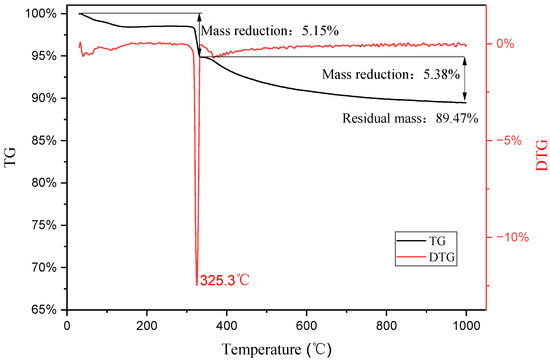
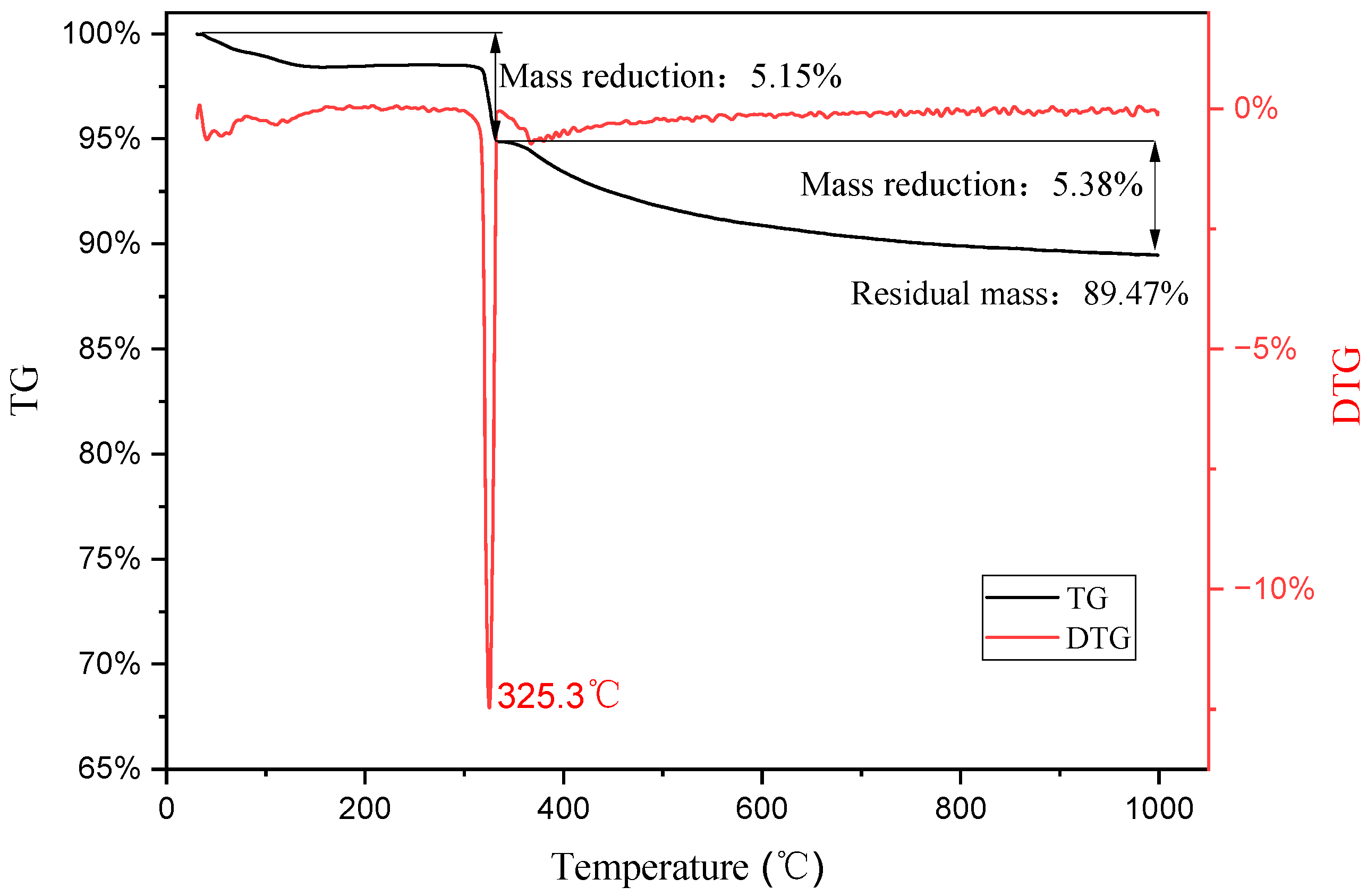
The precursors for the geopolymer binder were ground granulated blast furnace slag and fly ash, with a fixed mass ratio of 6:4. Their chemical compositions are given in Table 1. The alkaline activator was a liquid sodium silicate solution, prepared by dissolving sodium hydroxide in water and adjusting the solution to a modulus of 1.4 and a concentration of 40%. The silica aerogel used had a bulk density of 110 kg/m3, a specific surface area ranging from 500 to 650 m2/g, a porosity exceeding 90%, and an internal pore size distribution between 20 and 100 nm. Thermogravimetric analysis results of the aerogel are shown in Figure 1. An initial mass loss occurred from room temperature to 100 °C due to moisture evaporation. Subsequently, a significant mass loss was observed at 325.3 °C, followed by a gradual decline. The residual mass at 998.8 °C was 89.47%, demonstrating relatively low mass loss at elevated temperatures. The basalt fibers had a length of 12 mm, a diameter of 17 μm, and tensile strength of 1148 MPa. The main component of the redispersible latex powder was vinyl acetate-ethylene copolymer. The expansive agent primarily consisted of calcium oxide, calcium sulfate, and calcium sulfoaluminate.
Table 1.
Chemical components of granulated blast-furnace slag and fly ash (wt%).
Figure 1.
Thermogravimetric analysis on aerogel.
This study was conducted in two sequential stages to develop and optimize the GBAC. First, the effects of the aerogel volume fraction and water-to-binder ratio on the properties of GBAC were investigated. Preliminary experiments revealed that aerogel is the critical factor governing the thermal insulation of GBAC. When the volume fraction of aerogel ranged from 70% to 85%, the thermal conductivity of GBAC fell between 0.1 and 0.2 W/(m·K), which is comparable to that of commercial fire-resistive coatings. Although further increase in aerogel content can reduce the thermal conductivity, the geopolymer slurry was insufficient to bind all aerogel particles, rendering GBAC difficult to cast and resulting in extremely low strength after hardening. As illustrated in Table 1, aerogel has a large specific surface area. With the aforementioned dosages of aerogel, GBAC exhibited extremely poor workability. Given the current lack of suitable superplasticizers for geopolymer, the workability of GBAC can only be improved by increasing water content to facilitate casting. The water-to-binder ratio was thus set within the range of 0.5 to 0.7. The corresponding mix proportions optimized by the preliminary experiments are presented in Table 2. Specimens from these mixes were tested for dry density, thermal conductivity, and compressive strength. The mix demonstrating the most favorable overall performance was selected as the baseline mixture. Subsequently, the baseline mixture was modified by incorporating latex powder, basalt fibers, and an expansive agent. The aim was to enhance the tensile and bond properties and reduce the drying shrinkage of the composite. The dosages of latex powder, basalt fibers, and expansive agent are detailed in Table 3. The optimal mixture from this stage was selected as the final formulation for the subsequent thermal insulation tests.
Table 2.
Mix proportions for fundamental property tests.
Table 3.
Mix proportions for tensile, drying shrinkage and bonding tests.
2.2. Specimens
The GBAC was prepared using a planetary mixer. First, the solid precursor materials were poured into the mixer and dry-mixed at a low speed for two minutes. The sodium silicate solution was then added, followed by another minute of low-speed mixing to obtain a homogeneous geopolymer paste. Subsequently, the silica aerogel was incorporated, and the mixture was stirred at a high speed for five minutes to ensure thorough integration of the aerogel into the paste, resulting in a workable GBAC slurry. The freshly mixed slurry was then poured into molds. The molds were placed on a vibrating table for 30 s, after which the surface was leveled with a trowel. To prevent moisture loss, the surfaces of the molds were covered with plastic film. The specimens were then transferred to a curing chamber set at a constant temperature of 20 °C and a relative humidity of 95%. Demolding was performed after 24 h, and the specimens were returned to the curing chamber until they reached the specified testing ages.
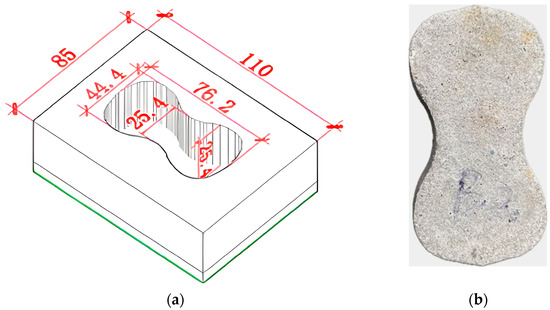
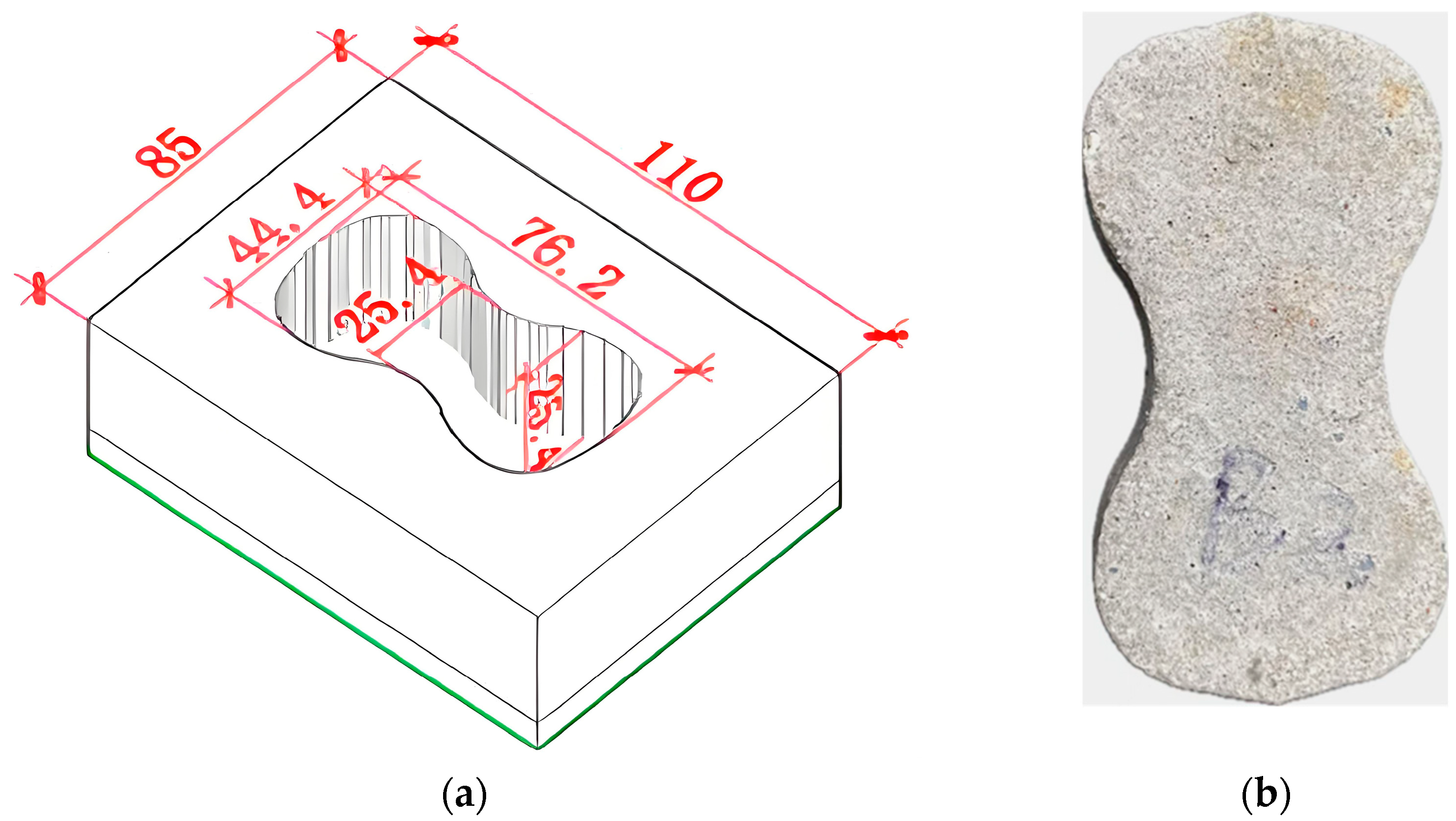
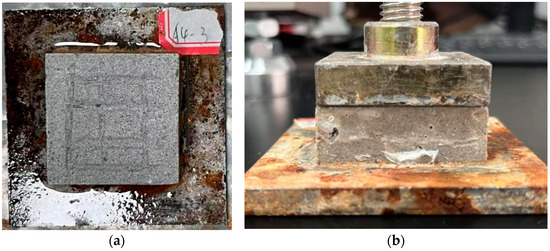
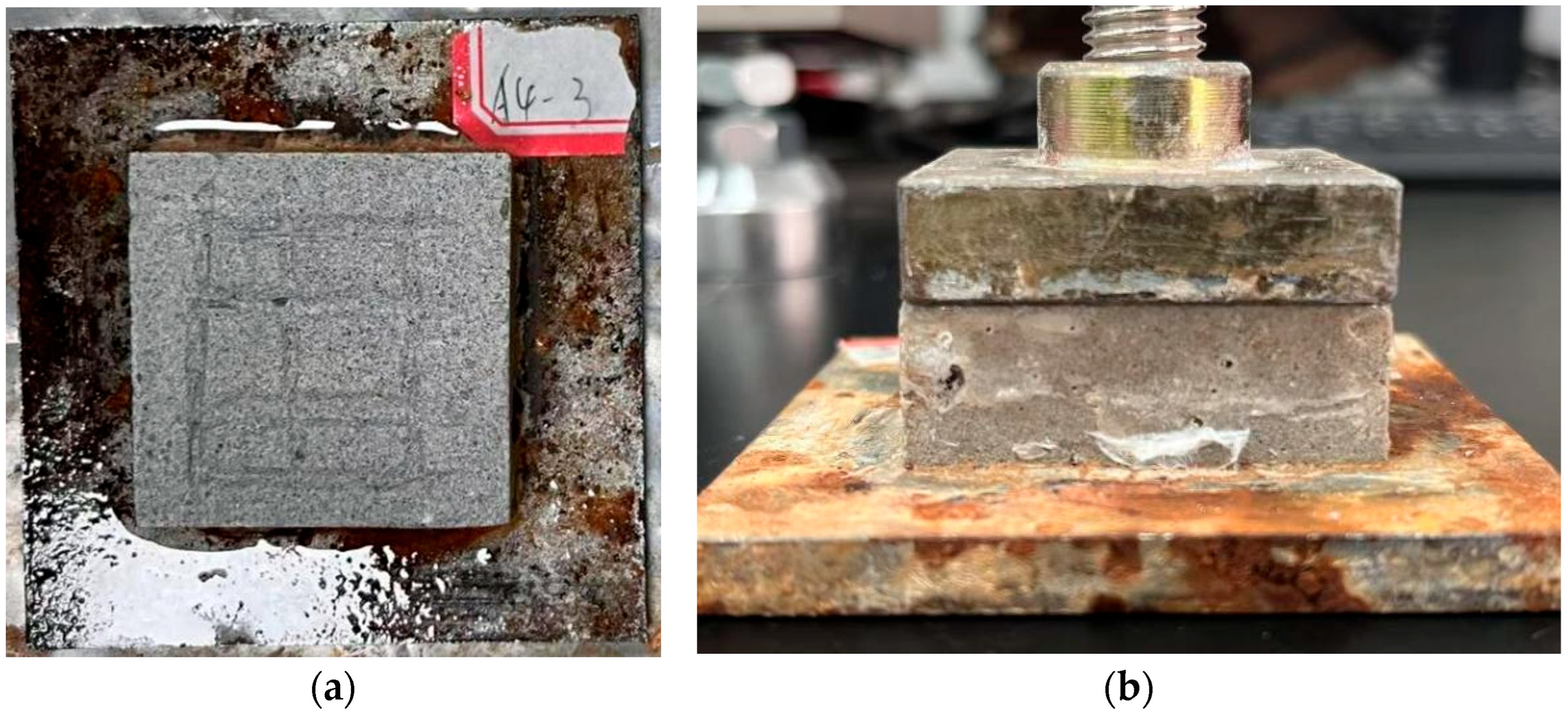
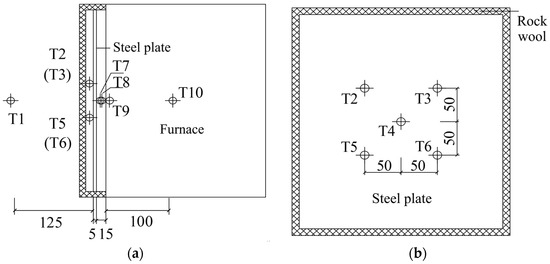
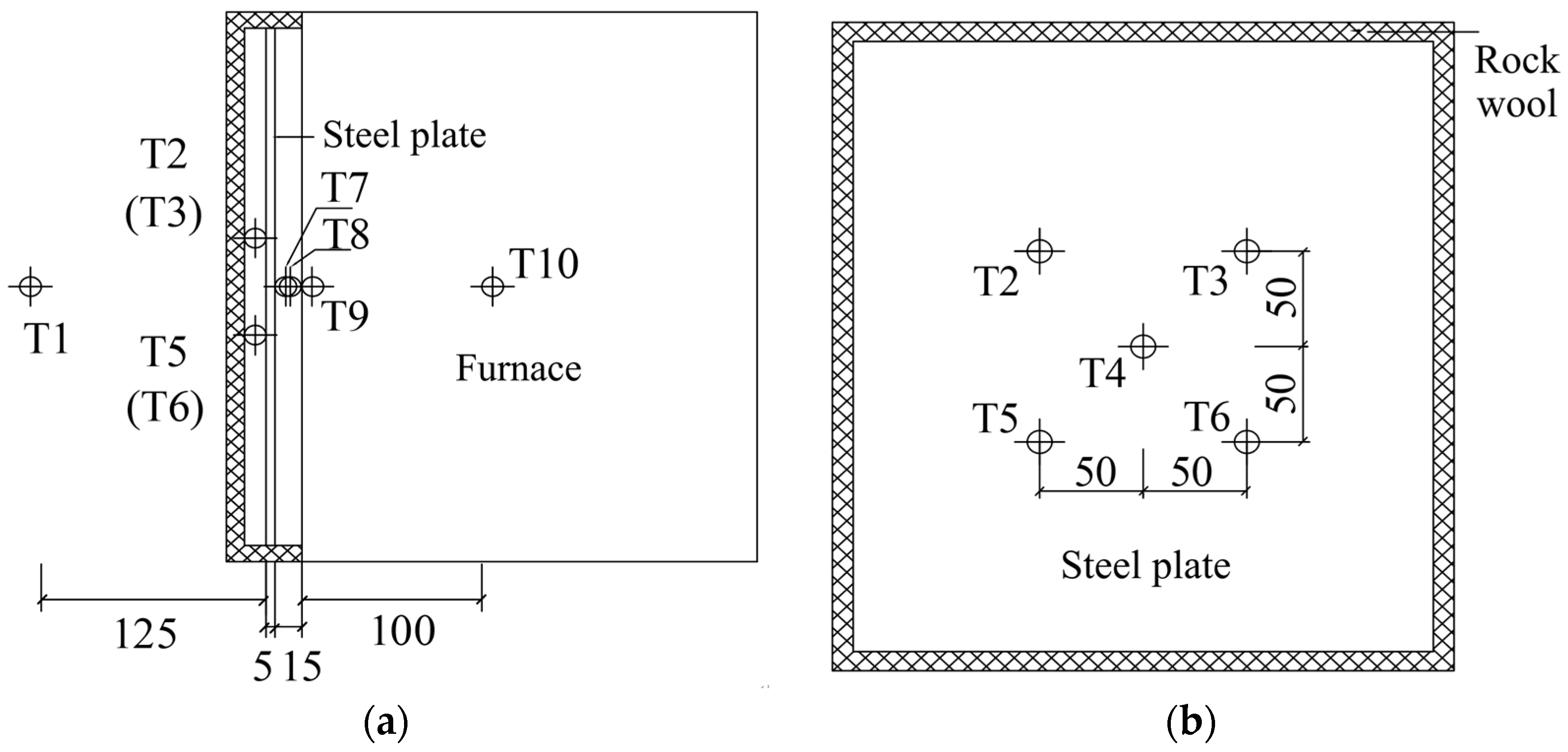
Cubic specimens with dimensions of 50 mm × 50 mm × 50 mm were used for the dry density, thermal conductivity, and compressive strength tests. Prismatic specimens with dimensions of 25 mm × 25 mm × 280 mm were prepared for the drying shrinkage tests. Tensile strength was determined using dog-bone-shaped specimens, as illustrated in Figure 2. The specimens for the bonding test followed the Chinese standard GB 14907-2018 [25]. The bonding interface between the GBAC and the steel substrate measured 40 mm × 40 mm, with a coating thickness of 15 mm (Figure 3a). After curing, the top surface of the GBAC was roughened, and a steel connector was then attached using a high-strength adhesive (Figure 3b). For the thermal insulation tests, four steel plates with dimensions of 320 mm × 280 mm × 4 mm were prepared. Specimen B0 acted as the control one, without coating applied. Specimens B15, B20, and B25 were coated with GBAC at thicknesses of 15, 20, and 25 mm, respectively. Temperature was monitored using K-type sheathed thermocouples. Their arrangement is shown in Figure 4. One thermocouple (T1) was positioned 125 mm from the unexposed side of the steel plate outside the furnace to verify the insulation effectiveness of the fire-resistant blankets placed on the sides and back of the specimens. Five thermocouples (T2–T6) were fixed on the unexposed surface of the specimens, with T4 at the center and the other four symmetrically distributed around it. For coated specimens (B15, B20, B25), three thermocouples were placed on the fire-exposed side: at the coating-steel interface (T7), at the mid-thickness of the coating (T8), and on the exposed surface of the coating (T9). For the uncoated control specimen (B0), only thermocouple T7 was placed on the fire-exposed steel surface. Thermocouple T10 was used to measure the furnace temperature, positioned 100 mm from the exposed coating surface (Figure 4). Thermocouples T7 and T8 were embedded within the coating during specimen preparation. The remaining thermocouples were fixed in their respective positions using bolts, external brackets, or ties.
Figure 2.
Mold and specimen for tensile test. (a) Mold (unit: mm); (b) Specimen.
Figure 3.
Specimen for bonding testing. (a) Specimen after curing; (b) Specimen bonded with steel connector.
Figure 4.
Thermocouple layout diagram. (a) Side; (b) Back. (unit: mm).
3. Experimental Programs
3.1. Dry Density Test
The dry density test was conducted according to the literature [25]. For each mix proportion, three specimens cured to the designated age were removed from the curing chamber and dried in an electric oven at 60 °C for 48 h. The dimensions and mass of each specimen were then measured using a vernier caliper and an electronic balance, respectively. The dry density was calculated from these measurements.
3.2. Thermal Conductivity Test
Thermal conductivity was measured using a transient plane source thermal analyzer. The test was performed on the cubic specimens immediately after the dry density measurement. The reported value for each mix is the mean of the results obtained from three specimens.
3.3. Compressive Test
Compressive strength was determined following the Chinese standard JGJ 70-2009 [26]. Specimens were cured to the specified age, removed from the curing chamber, and their surfaces were wiped dry. Tests were performed using a universal testing machine with a constant loading rate of 0.25 kN/s until failure of specimens.
3.4. Drying Shrinkage Test
After demolding, the prismatic specimens were stored in an environmental chamber maintained at a temperature of 20 °C and relative humidity of 50%. Their length was measured periodically using a length comparator. The testing procedure adhered to the Chinese standard JC/T 603-2004 [27].
3.5. Tensile Test
The tensile tests were carried out in accordance with the Chinese standard DL/T 5126-2021 [28], employing a constant displacement rate of 5 mm/min. The cross-sectional area of the fracture surface perpendicular to the loading direction was measured to calculate the tensile strength after the tests.
3.6. Bonding Test
The bonding tests were performed following the literature [25]. The tensile bond specimen was positioned between the upper and lower fixtures of the testing machine. The steel connector on the top of the specimen was linked to the upper fixture, while the steel plate at the bottom was secured in the lower fixture. The test commenced by applying a tensile load perpendicular to the bonding interface at a constant rate of 1500 N/min until specimen failure.
3.7. Pore Characteristics Test
Mercury intrusion porosimetry tests were performed to examine the pore characteristics of GBAC specimens after 28 days’ curing. After small pieces were excised from the interior of the specimens, they were immersed in anhydrous ethanol for 24 h, followed by vacuum drying at 40 ± 2 °C for 48 h. Subsequent tests were conducted to acquire parameters, including pore size distribution and porosity.
3.8. Thermal Insulation Test
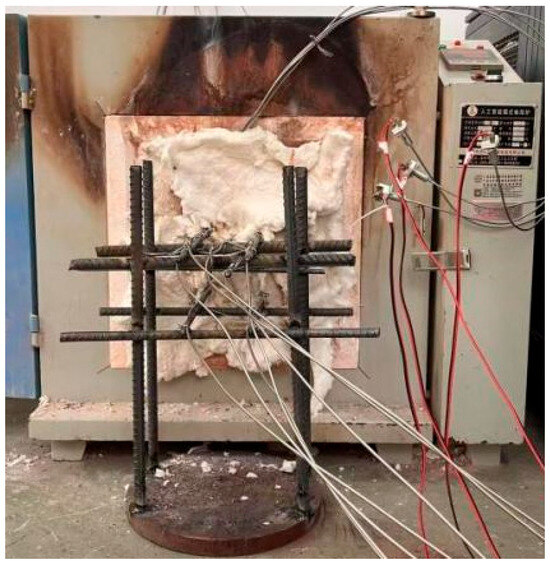
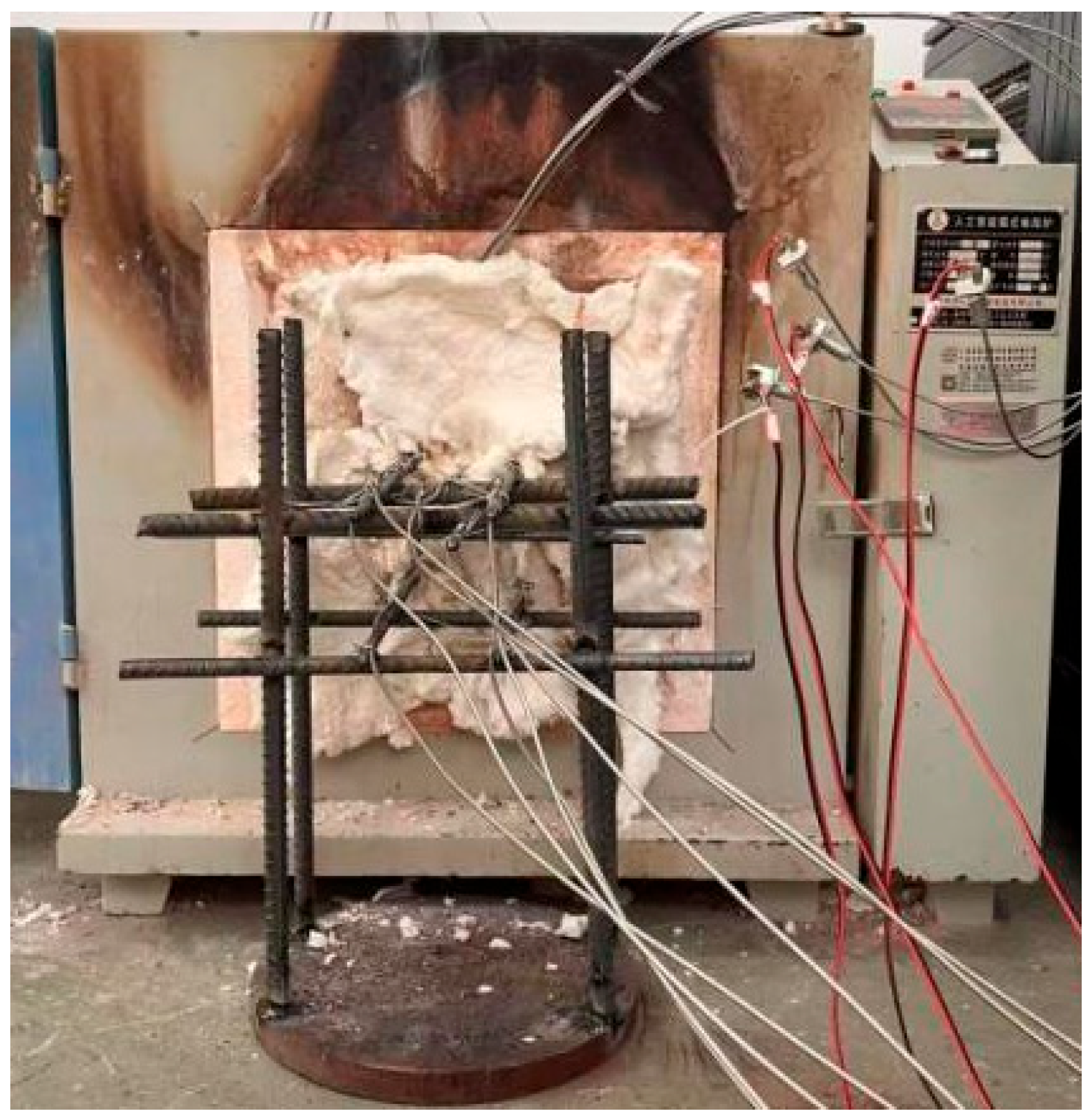
Thermal insulation tests were conducted using an electric furnace to apply one-sided heating to the specimens B0, B15, B20, and B25. During the tests, the specimens were vertically fixed at the furnace opening, ensuring the GBAC coating facing to heat source. Gaps between the specimens and the furnace wall, as well as the unexposed side of the specimens, were filled and covered with rock wool blankets to achieve a one-sided fire exposure. The test setup is shown in Figure 5. The heating protocol involved raising the furnace temperature at a rate of 8 °C/min until it reached 1000 °C, after which the temperature was maintained constant. Specimen B0 was held at this temperature for one hour, while all coated specimens (B15, B20, B25) were held for two hours. According to the relevant standard [25], the thermal insulating efficiency of the specimen is defined as the time elapsed until the average temperature on its unexposed surface reaches 500 °C. In this test, the average temperature of unexposed surface was calculated from the readings of thermocouples T2 to T6. The time corresponding to this average temperature reaching 500 °C was recorded. Following this, the furnace was shut down to stop heating. After the furnace had cooled naturally to room temperature, the supporting frame and rock wool were removed to retrieve the specimen. Temperature data from all thermocouples were recorded by a data acquisition system at intervals of three seconds throughout the test.
Figure 5.
Apparatus for thermal insulation test.
3.9. Finite Element Simulation for Fire Resistance of Steel Beams
It is assumed that the temperature field across the cross-section of steel beam remains uniform along its longitudinal axis. The thermo-mechanical response was analyzed via a sequential coupling approach. Temperature field analysis was first performed, followed by the import of temperature data into the mechanical analysis. Initially, a 2D cross-sectional model of the steel beam was established. According to GB 14907-2018 [25], the cross-section of steel beam referred to the HN 400 × 200 hot-rolled H-section steel. GBAC coatings of 15, 20, and 25 mm were applied, respectively. Thermal properties of the steel were adopted in accordance with European Standard EN 1993-1-2 [29], while those of GBAC coating were derived from experimental values. Except for the upper surface, the remaining surfaces of the steel beams set their thermal boundary conditions according to the ISO 834 standard temperature curve to calculate the temperature field of the cross-section under standard fire exposure [18]. Subsequently, a 3D model of the steel beam was developed, featuring a span of 4.0 m and simply supported end conditions. A load ratio of 0.6 was employed. Four concentrated loads of 65 kN with intervals of 0.8 m were applied along the beam span. The masses of both the steel beam and GBAC coating were considered. Finally, the temperature field data were imported to compute the mid-span deflection of the beam under combined thermal and mechanical loading.
4. Results and Discussion
4.1. Dry Density
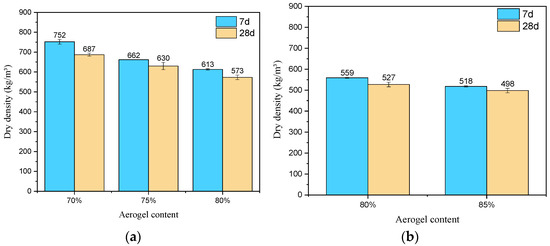
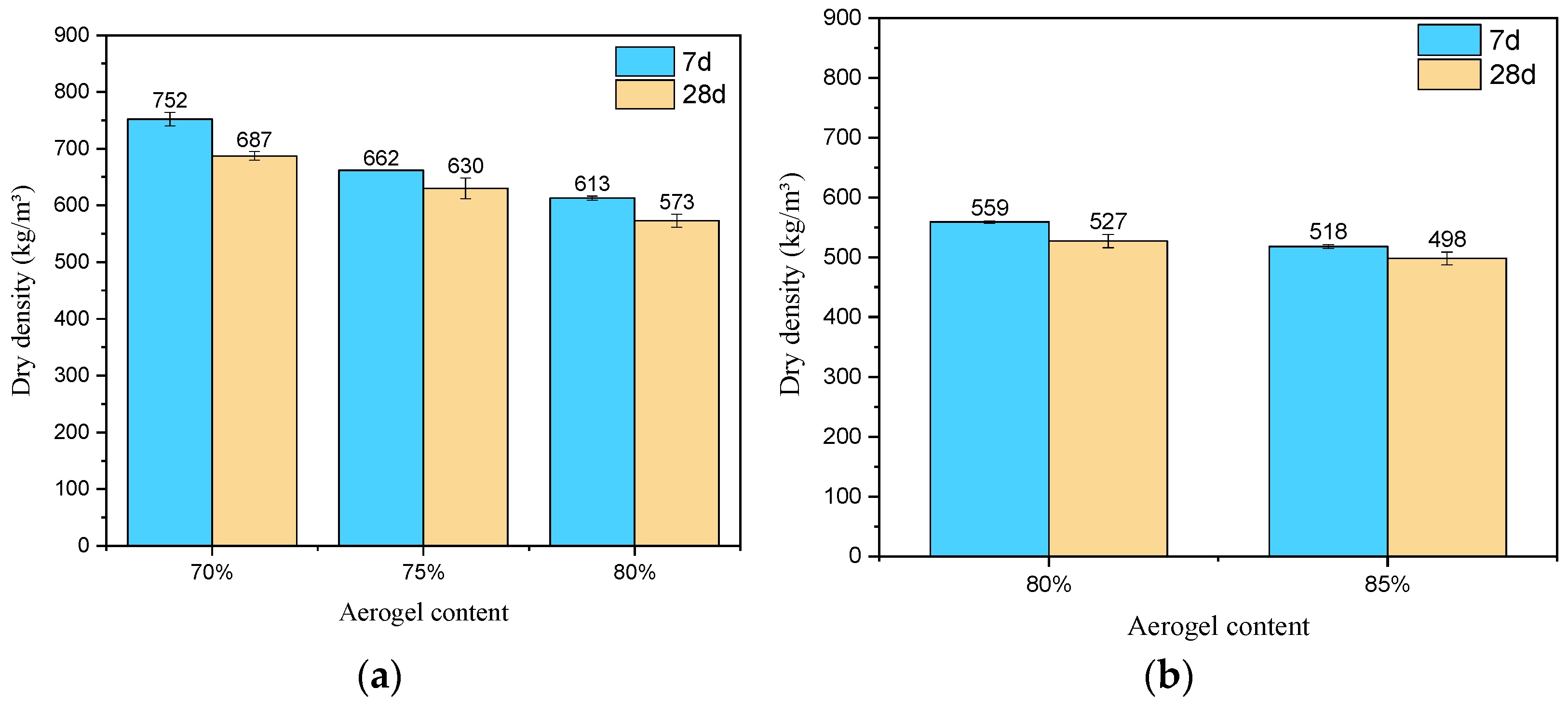
As shown in Figure 6, the 7-day and 28-day dry densities of GBAC decreased with an increase in aerogel content. At a constant W/B ratio of 0.60, when the aerogel content increased from 70% to 75%, the reductions in the 7-day and 28-day dry densities were 11.97% and 8.30%, respectively. A further increase in aerogel content to 80% led to reductions of 7.40% and 9.05% in the 7-day and 28-day dry densities, respectively. A similar trend was observed at a W/B ratio of 0.70. This phenomenon can be attributed to the significantly lower density of the silica aerogel (110 kg/m3) compared to that of the pure geopolymer paste (approximately 1950 kg/m3). Consequently, a higher aerogel content directly results in a lower overall dry density of the GBAC.
Figure 6.
Effect of aerogel content on dry density of GBAC. (a) W/B ratio of 0.60; (b) W/B ratio of 0.70.
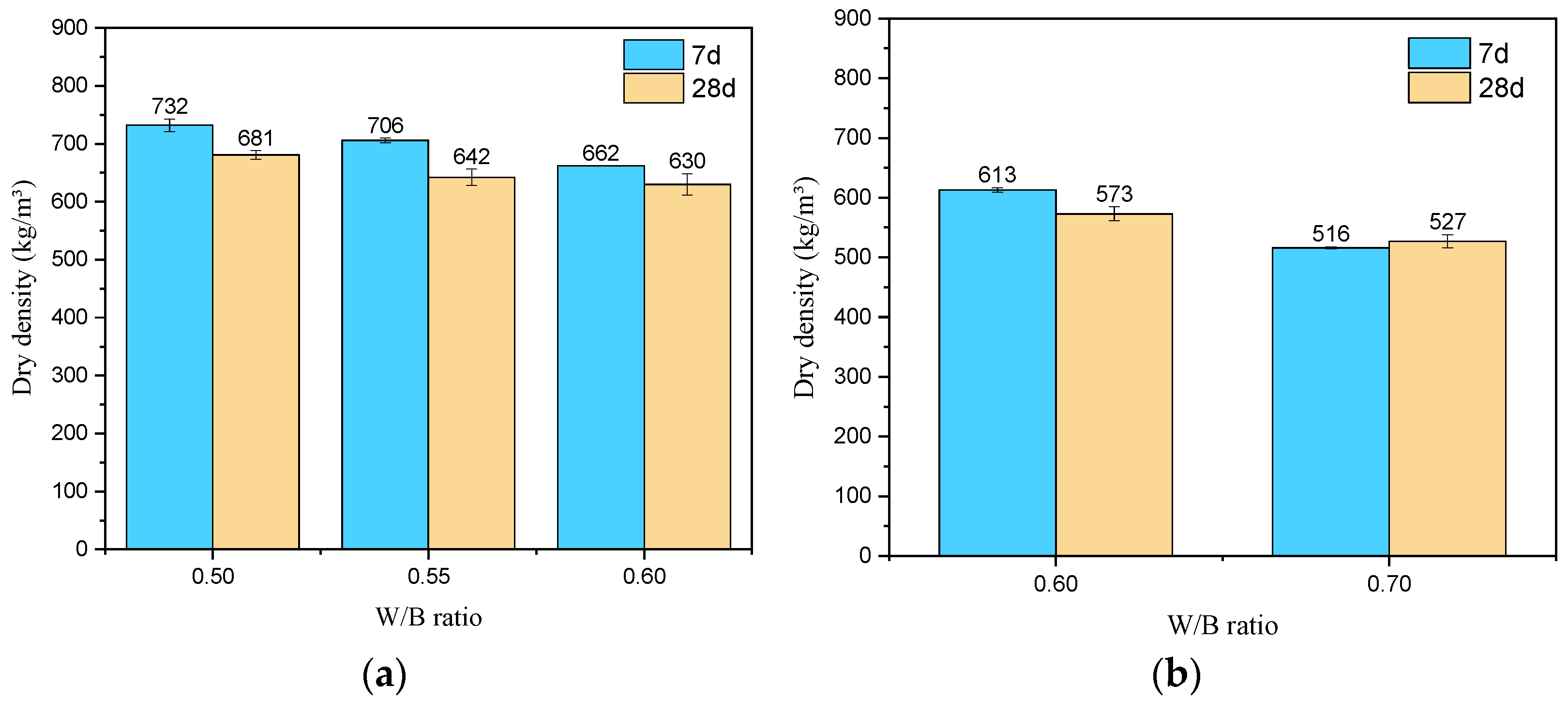
As illustrated in Figure 7, both the 7-day and 28-day dry densities of the GBAC decreased with an increase in the W/B ratio. For instance, at a fixed aerogel content of 75%, increasing the W/B ratio from 0.50 to 0.55 and subsequently to 0.60 led to a gradual decrease in the 7-day dry density from 732 kg/m3 to 662 kg/m3, and in the 28-day dry density from 681 kg/m3 to 630 kg/m3. A similar influence of the W/B ratio on dry density was observed at an aerogel content of 80%. These results confirm that the W/B ratio significantly affects the dry density of GBAC. This reduction is primarily due to the relatively high water demand of the geopolymer system used in this study. Excess water, not consumed in the geopolymeric reaction, either remains as free water in the paste or infiltrates the pores of the aerogel. The water eventually evaporates during drying, leaving behind additional voids. Consequently, a higher W/B ratio results in greater porosity and, thus, a lower dry density.
Figure 7.
Effect of W/B ratio on dry density of GBAC. (a) Aerogel content of 75%; (b) Aerogel content of 80%.
Regarding the effect of curing age, a comparison between the 7-day and 28-day dry densities revealed that, with the exception of the 0.80AG-0.70 mix, the 28-day dry density was lower than the 7-day value for all other formulations. However, the reduction was within 10%. Slightly greater reductions were observed for mixes with lower aerogel content and W/B ratios, whereas mixes with higher aerogel content or higher W/B ratios exhibited smaller decreases. This trend contrasts with that observed in conventional inorganic mortars. In ordinary mortars, ongoing hydration of the cementitious materials over time leads to a denser microstructure, reduced porosity, and consequently, an increased density. For the GBAC, however, a slow alkali-silica reaction occurs between the alkaline activator and the silica aerogel, producing sodium silicate and water. A longer curing age results in the generation of more water. The subsequent evaporation of this additional water during the drying process prior to testing is the primary reason for the observed decrease in the dry density of GBAC with age.
4.2. Thermal Conductivity
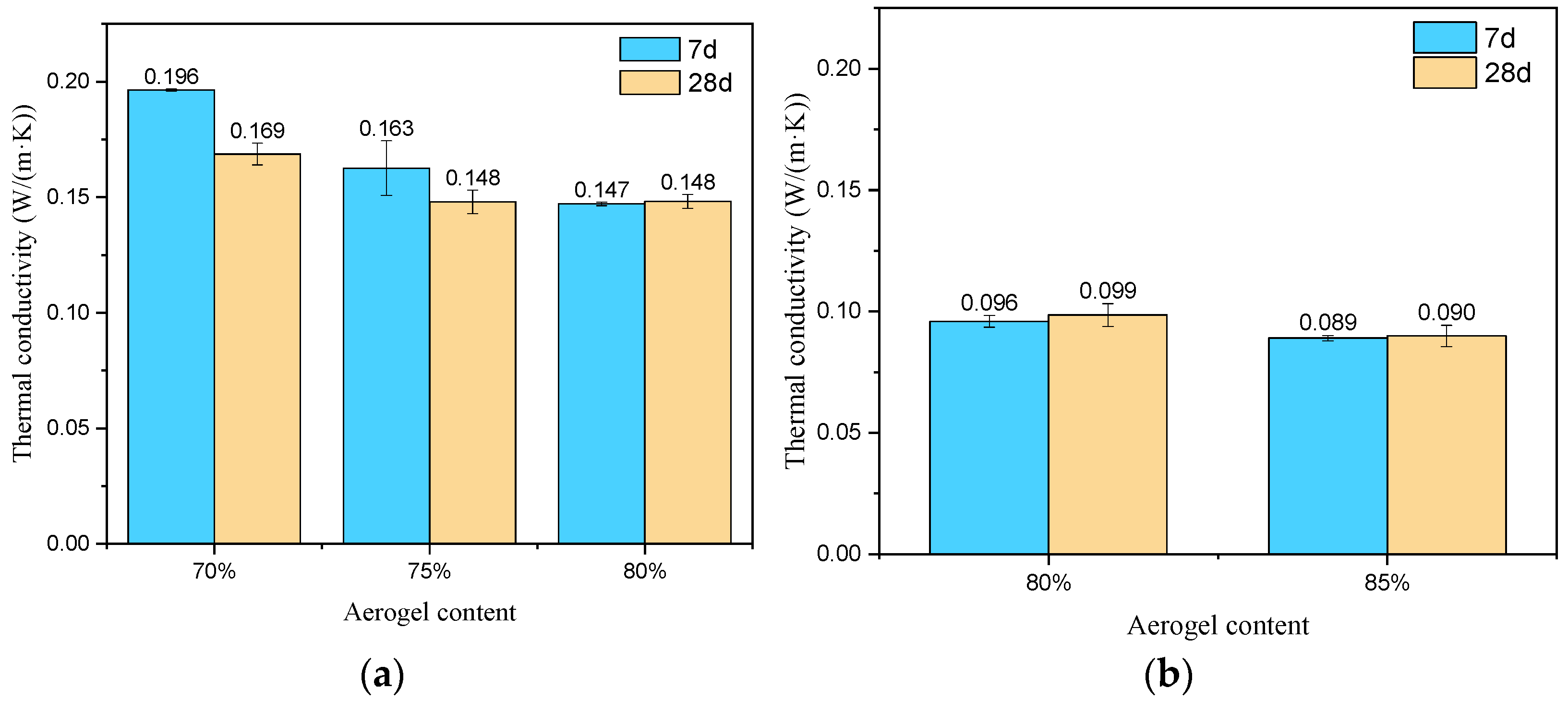
The thermal conductivity of GBAC exhibited a trend similar to that of its dry density with varying aerogel content. As shown in Figure 8, a higher aerogel content resulted in lower thermal conductivity. For instance, at a constant W/B ratio of 0.60, increasing the aerogel content from 70% to 80% led to a decrease in the 28-day thermal conductivity from 0.169 W/(m·K) to 0.148 W/(m·K). A similar declining trend was observed when the aerogel content was increased from 80% to 85% at a W/B ratio of 0.70. This can be attributed to the extremely high porosity of the aerogel [30]. It introduces a significant volume of closed pores into GBAC, which greatly enhances its thermal insulation capability. In addition, the pore size within the aerogel is typically smaller than the mean free path of gas molecules, effectively suppressing gaseous thermal convection [21,30]. The thermal conductivity of silica aerogel is very low, ranging from approximately 0.005 to 0.1 W/(m·K) [20], which is substantially lower than that of geopolymer paste. Therefore, a higher volume fraction of aerogel naturally leads to a lower overall thermal conductivity of the composite. Furthermore, the interfacial thermal resistance present at the interfacial transition zone (ITZ) between the aerogel particles and the geopolymer matrix contributes to a further reduction in thermal conductivity [31]. This effect becomes more pronounced with higher aerogel content due to the increased total area of the ITZ. However, it is noteworthy that when the aerogel content exceeded 70%, the marginal benefit of further increasing the aerogel content on reducing thermal conductivity became less significant, indicating a plateauing effect.
Figure 8.
Effect of aerogel content on thermal conductivity of GBAC. (a) W/B ratio of 0.60; (b) W/B ratio of 0.70.
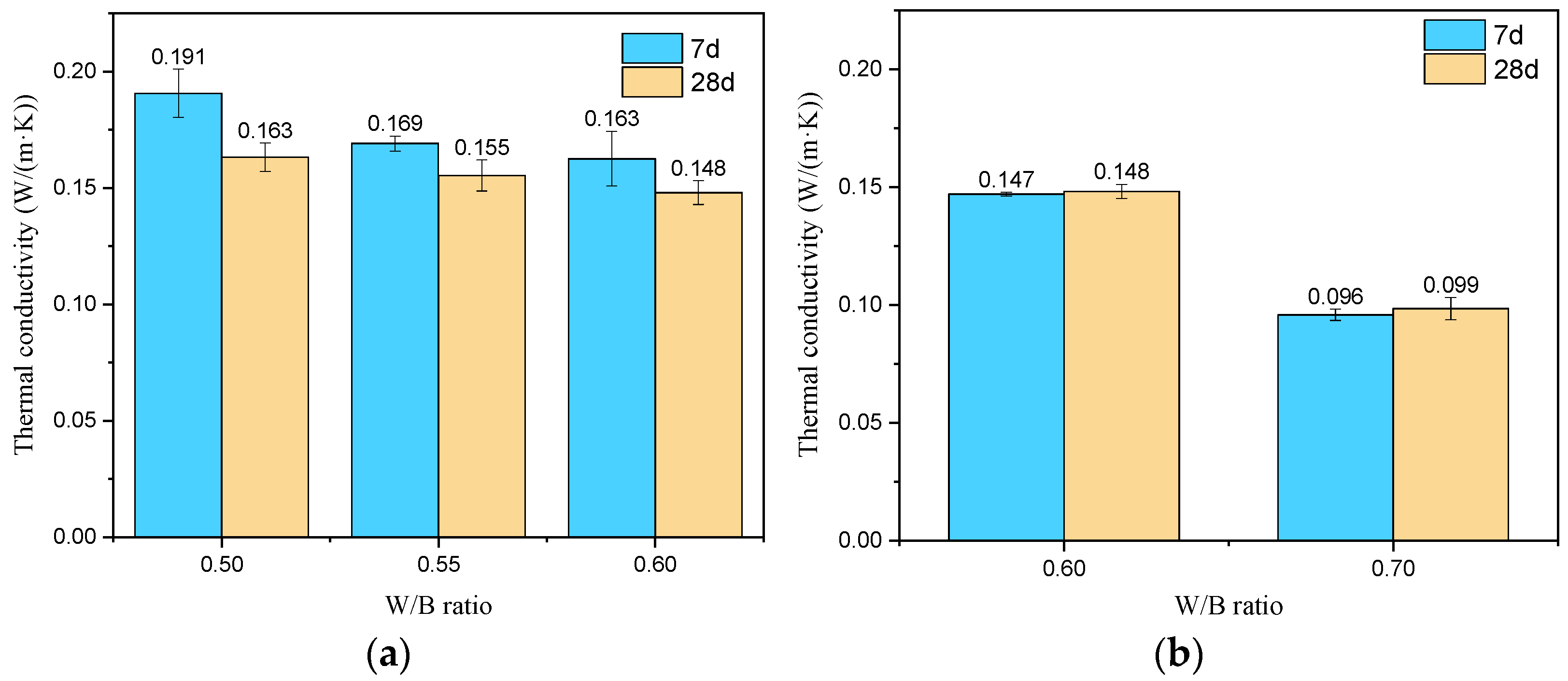
Figure 9 illustrates the thermal conductivity of GBAC at different W/B ratios. A higher W/B ratio resulted in a lower thermal conductivity, a trend largely consistent with the variation observed in dry density. This correlation can be explained by the fact that water evaporation during drying leaves behind pores within the GBAC. A higher W/B ratio thus leads to increased porosity, which in turn lowers the thermal conductivity. While increasing the W/B ratio can effectively reduce the thermal conductivity at a constant aerogel content, the adjustable range for the W/B ratio is practically limited. An excessively low W/B ratio renders the GBAC mixture unworkable, preventing proper application. Conversely, an excessively high W/B ratio can cause the lightweight aerogel particles to segregate and float within the geopolymer paste, leading to inhomogeneity in the coating and a detrimental effect on its mechanical and bonding strength. Therefore, in practical applications, the W/B ratio must be carefully selected in accordance with the aerogel content to balance workability, homogeneity, and final performance.
Figure 9.
Effect of W/B ratio on thermal conductivity of GBAC. (a) Aerogel content of 75%; (b) Aerogel content of 80%.
A comparison of the 7-day and 28-day thermal conductivity further reveals an effect of curing age. For mixes with low aerogel content and low W/B ratio, the thermal conductivity decreased noticeably with increased curing age. In contrast, for mixes with high aerogel content and high W/B ratio, the thermal conductivity showed little change over time. This phenomenon may be linked to the aforementioned alkali-silica reaction. In formulations with low aerogel content and low W/B ratio, the thermal conductivity is predominantly influenced by the denser geopolymer matrix. As curing progresses, the extended reaction between the alkaline activator and the silica aerogel generates additional water. The subsequent evaporation of this water during the drying phase increases the overall porosity, thereby reducing the thermal conductivity. For mixes with high aerogel content and high W/B ratio, the proportion of alkaline solution is relatively lower, resulting in a much weaker alkali-silica reaction. Consequently, the thermal conductivity of these GBAC mixes remains largely unchanged with increased curing age.
4.3. Compressive Strength
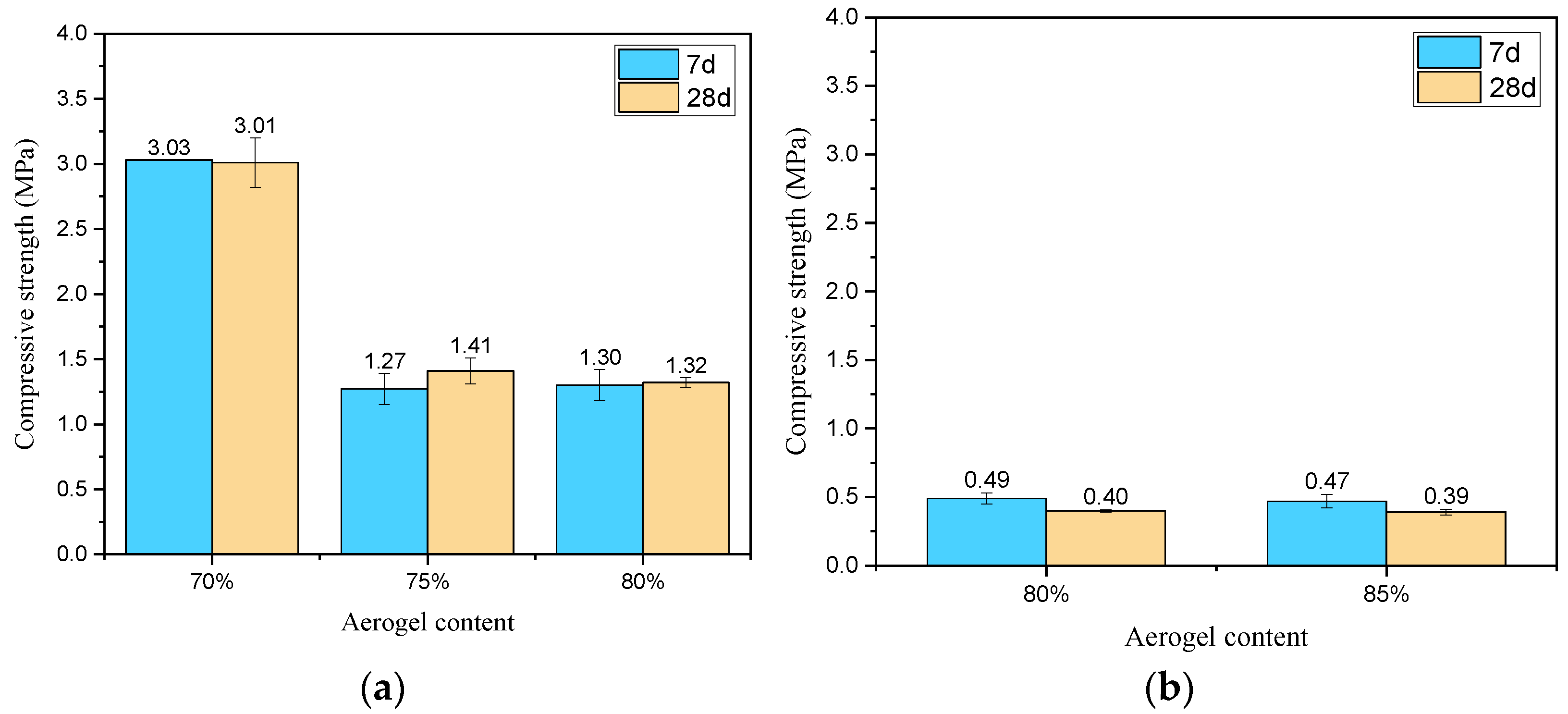
Figure 10 illustrates the variation in compressive strength of GBAC with respect to aerogel content. The compressive strength decreased with increasing aerogel content. At a W/B ratio of 0.60, the GBAC with aerogel content of 70% achieved a 28-day compressive strength of 3.01 MPa, which was 2.23 times higher than that of the mix with aerogel content of 80%, indicating a significant difference. The compressive strength of GBAC is governed by the properties of the geopolymer matrix, the aerogel particles, and the ITZ between them. The geopolymer paste with a W/B ratio of 0.60 exhibited a 28-day compressive strength of 43.87 MPa, far exceeding that of any GBAC mix. This comparison confirms that both the aerogel and the ITZ represent the primary weak links determining the strength of the composite. The inherent high porosity and low intrinsic strength of the aerogel contribute significantly to this weakness. A higher aerogel content thus makes the GBAC more susceptible to failure under load. Furthermore, the hydrophobic nature of the aerogel hinders effective bonding with the geopolymer matrix. This poor interfacial adhesion is evidenced by Gao et al. [32], who observed a gap of approximately ten micrometers between aerogel particles and the geopolymer matrix using scanning electron microscopy, indicating a weak and vulnerable ITZ. Consequently, a higher aerogel content increases the total area of this weak ITZ, making the GBAC easier to crush. At a W/B ratio of 0.70, the compressive strength of the GBAC with 85% aerogel content was slightly lower than that with 80% aerogel. This may be attributed to a diminishing marginal effect, where the detrimental impact on strength from adding more weak aerogel particles outweighs any potential benefits once a very high volume fraction is reached.
Figure 10.
Effect of aerogel content on compressive strength of GBAC. (a) W/B ratio of 0.60; (b) W/B ratio of 0.70.
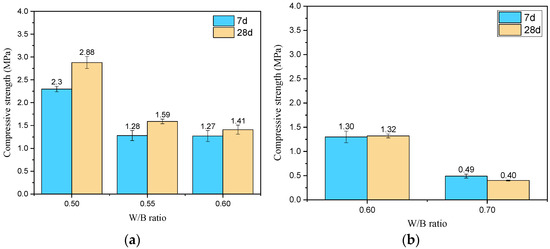
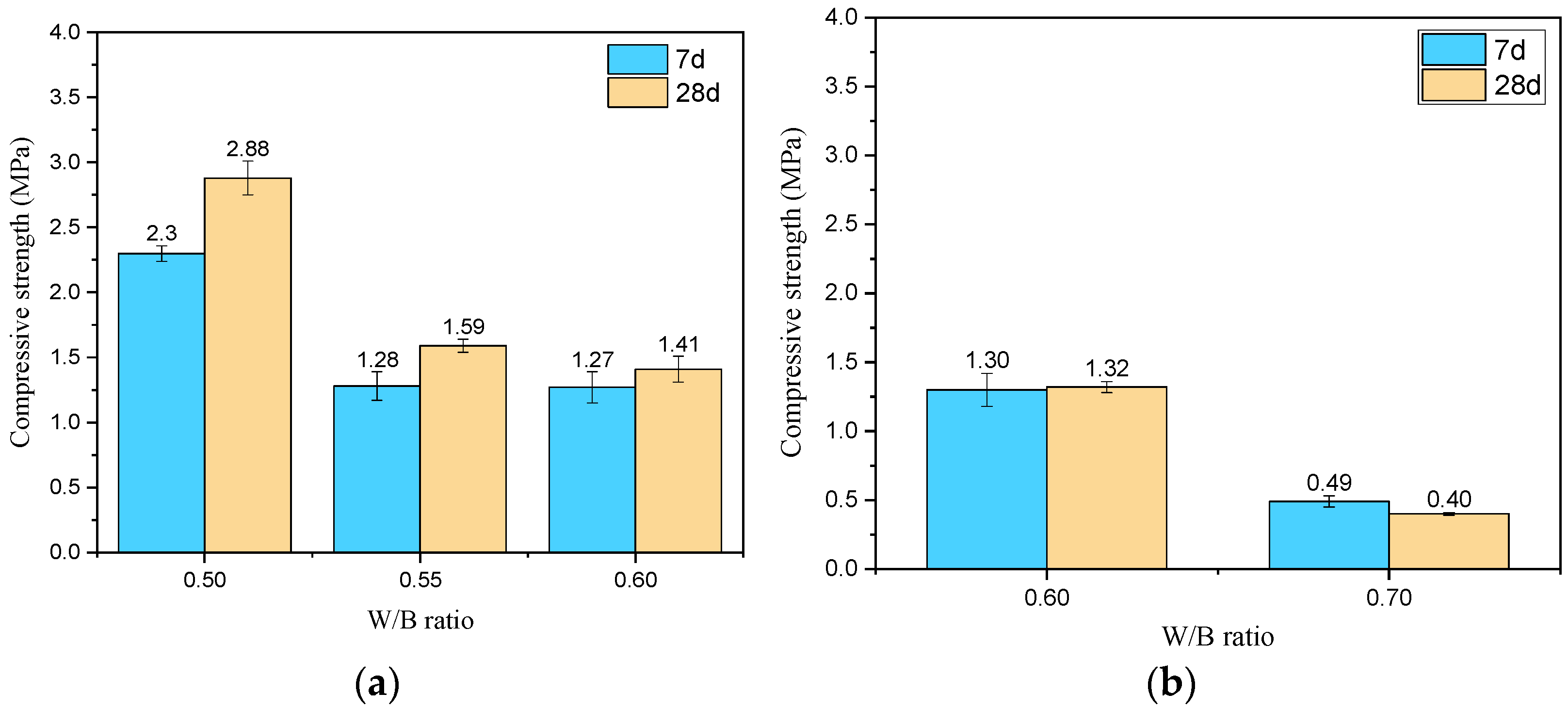
Figure 11 shows the variation in compressive strength under different W/B ratios. A clear trend was observed where a higher W/B ratio led to lower compressive strength. The maximum 28-day compressive strength of 2.88 MPa was achieved at the lowest W/B ratio of 0.50. As the W/B ratio increased to 0.60, the compressive strength decreased progressively, with a substantial reduction of 51.04%. This significant decline is primarily attributed to the role of excess water. Unconsumed water remains as free water within the fresh mixture. Upon drying, the evaporation of the free water leaves behind a network of pores. Consequently, a higher W/B ratio results in greater porosity, which directly weakens the load-bearing capacity and leads to lower compressive strength. Notably, even with a high W/B ratio of 0.70 and a high aerogel content of 80%, the GBAC still achieved a 28-day compressive strength of 0.40 MPa. This value surpasses the minimum requirement of 0.3 MPa specified in relevant standards, demonstrating its fundamental mechanical suitability for practical applications.
Figure 11.
Effect of W/B ratio on compressive strength of GBAC. (a) Aerogel content of 75%; (b) Aerogel content of 80%.
For mixes with low aerogel content and low W/B ratio, the 28-day compressive strength was higher than the 7-day strength, with the enhancement being more pronounced at lower W/B ratios. This strength gain over time is attributed to the ongoing hydration and geopolymeric reactions within the binder phase. A lower proportion of aerogel and a lower W/B ratio correspond to a higher effective content of reactive geopolymer precursors, thereby offering greater potential for late-age strength development. Conversely, for the two specific mixes indicated in Figure 10b, the 28-day strength was lower than the 7-day value. This anomalous decrease is likely due to the excessively high aerogel content in these mixes, where the prolonged alkali-silica reaction between the aerogel and the alkaline solution may have progressively weakened the microstructure.
Considering the overall performance metrics, the mix 0.70AG-0.60 was selected as the baseline mixture for all subsequent modification experiments. This selection was based on its optimal balance of properties, specifically its highest specific strength among all tested mixes, coupled with the lowest aerogel usage and associated material cost. This baseline mixture achieved a 28-day dry density of 687 kg/m3, a thermal conductivity of 0.17 W/(m·K), and a compressive strength of 3.01 MPa.
4.4. Drying Shrinkage
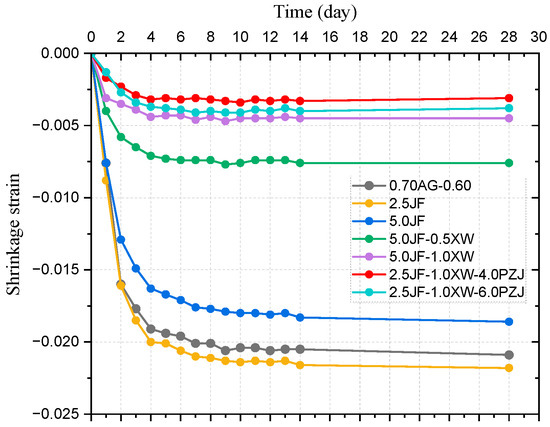
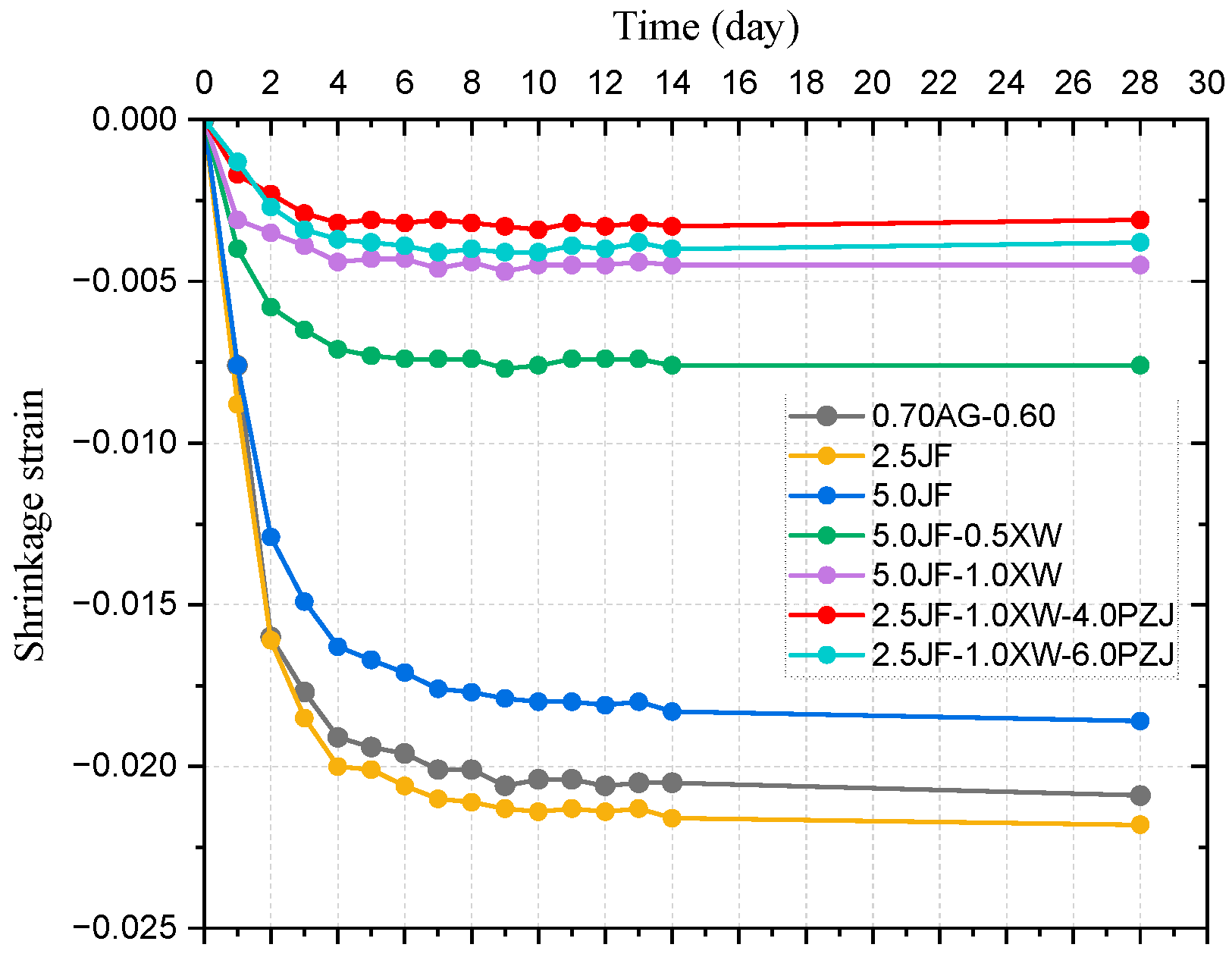
The drying shrinkage of GBAC modified with latex powder, basalt fibers, and an expansive agent is shown in Figure 12. The majority of shrinkage occurred within the first three days and stabilized after seven days. The baseline mixture 0.70AG-0.60 exhibited substantial shrinkage, reaching 20.9 × 10−3 by 28 days. Furthermore, uneven shrinkage was observed due to the floating of aerogel particles during curing. The primary driver of the shrinkage is water loss from the geopolymer matrix. While the aerogel particles act as a skeleton, their relatively low stiffness provides limited restraint against the shrinkage of the paste. Incorporating latex powder improved the dispersion homogeneity of aerogel in the geopolymer slurry, reducing its tendency to float. However, latex powder did not effectively mitigate shrinkage at a low dosage of 2.5%. In fact, a slight increase was noted. A noticeable reduction in shrinkage was achieved only when the latex powder dosage was increased to 5.0%. The addition of basalt fibers to the mixture containing 5% latex powder significantly inhibited drying shrinkage. With fiber dosages of 0.5% and 1.0%, the 28-day shrinkage strain decreased from 18.6 × 10⁻³ to 7.6 × 10⁻³ and 4.5 × 10⁻³, respectively, representing reductions of 59.11% and 76.03%. This effective restraint is attributed to the strong bond between the basalt fibers and the geopolymer matrix, which restricts the relative sliding and deformation of the paste [33]. This finding aligns with the work of Xu et al. [34], who reported an 18.5% reduction in the 56-day drying shrinkage of geopolymer mortar upon incorporating 0.4% basalt fibers. The incorporation of an expansive agent into the mixture containing 1.0% of fibers and 2.5% of latex powder further reduced the shrinkage to 3.1 × 10⁻³. The primary components of the expansive agent, such as calcium oxide, gypsum, and calcium sulfoaluminate, react to form ettringite and portlandite upon hydration. As noted by Jia et al. [35], the formation of these expansive products compensates for the drying shrinkage of the geopolymer. Additionally, ettringite and portlandite possess a higher elastic modulus than the primary C-A-S-H gel, providing a more rigid skeletal structure that better resists contraction. A dosage of 4% expansive agent effectively reduced shrinkage. Further increases provided no additional benefit and adversely affected the workability of the mixture.
Figure 12.
Drying shrinkage strain of GBAC.
4.5. Tensile Strength
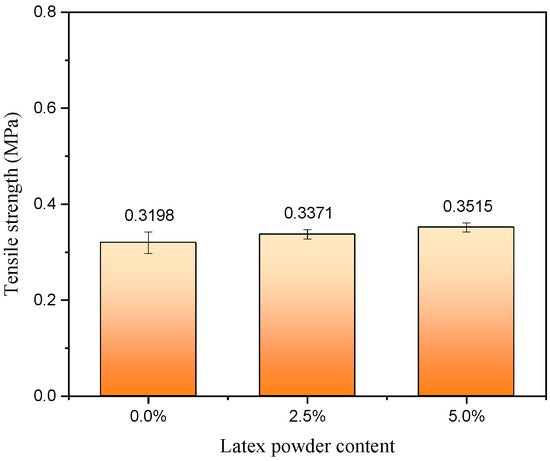
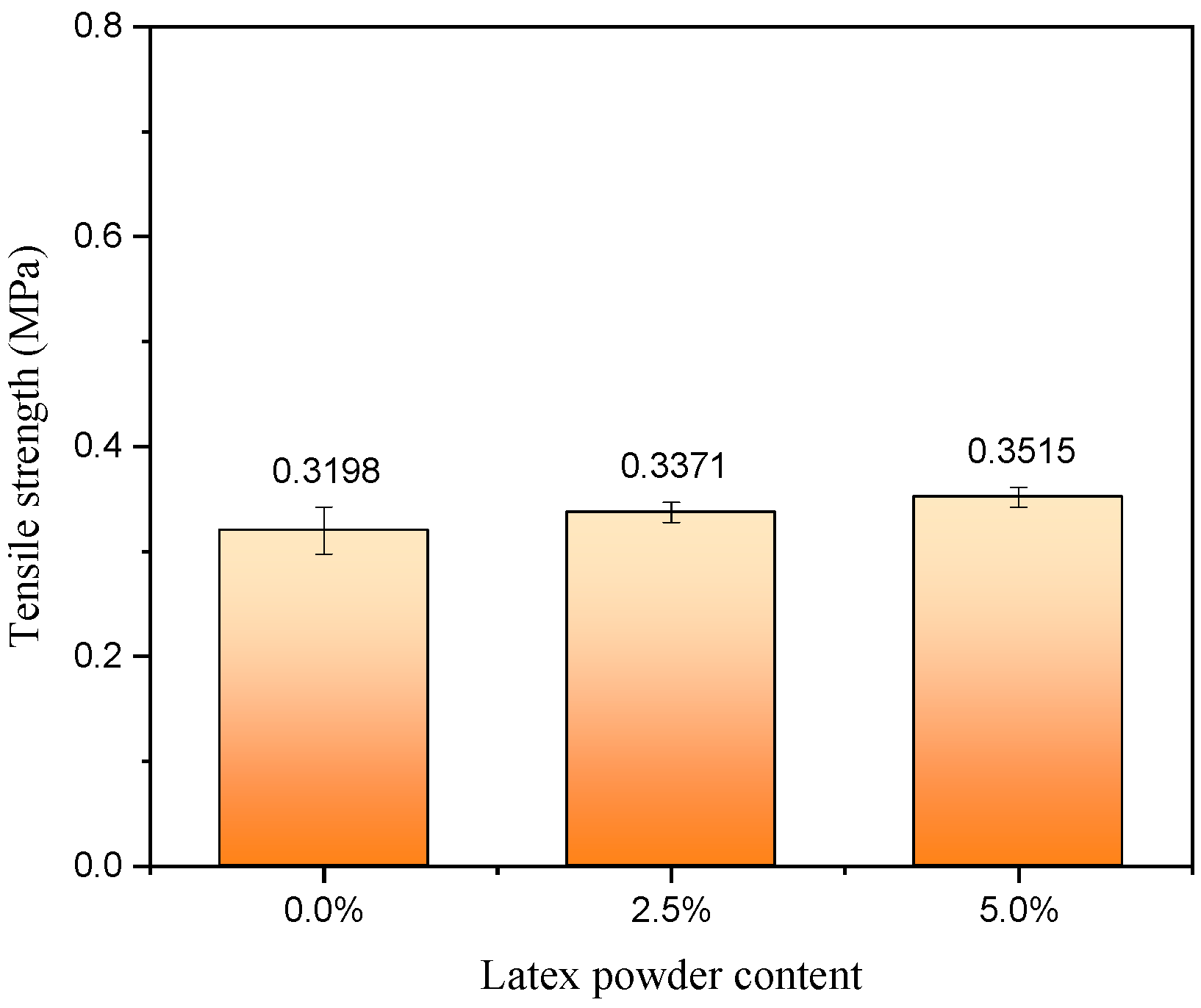
The three groups of specimens without basalt fibers fractured into two separate pieces upon reaching their peak tensile load. In contrast, specimens containing basalt fibers developed only a central crack at the point of tensile strength, without complete separation. Post-test examination of the fractured surface revealed numerous basalt fibers oriented perpendicular to the fracture plane, indicating good fiber dispersion and effective crack-bridging action within the composite. Figure 13 presents the tensile strength of GBAC with varying dosages of latex powder. The tensile strength showed a slight increase with higher latex powder content. However, even at a dosage of 5.0%, the improvement was limited to only 9.91%. It was observed that some specimens exhibited noticeable voids at the fracture surface. This is attributed to the increased viscosity and reduced workability imparted by the latex powder, which hindered effective compaction during specimen preparation, thereby limiting the potential enhancement in tensile strength.
Figure 13.
Effect of latex powder content on tensile strength of GBAC.
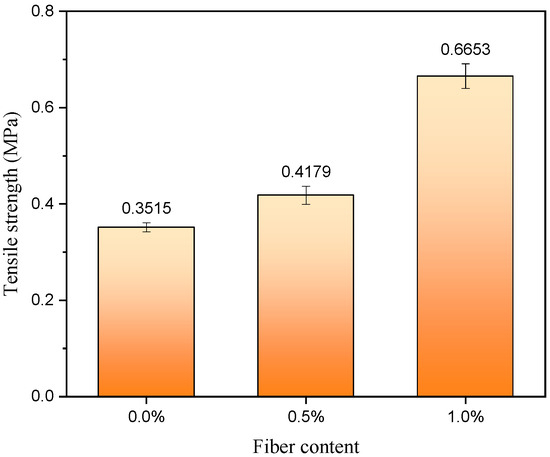
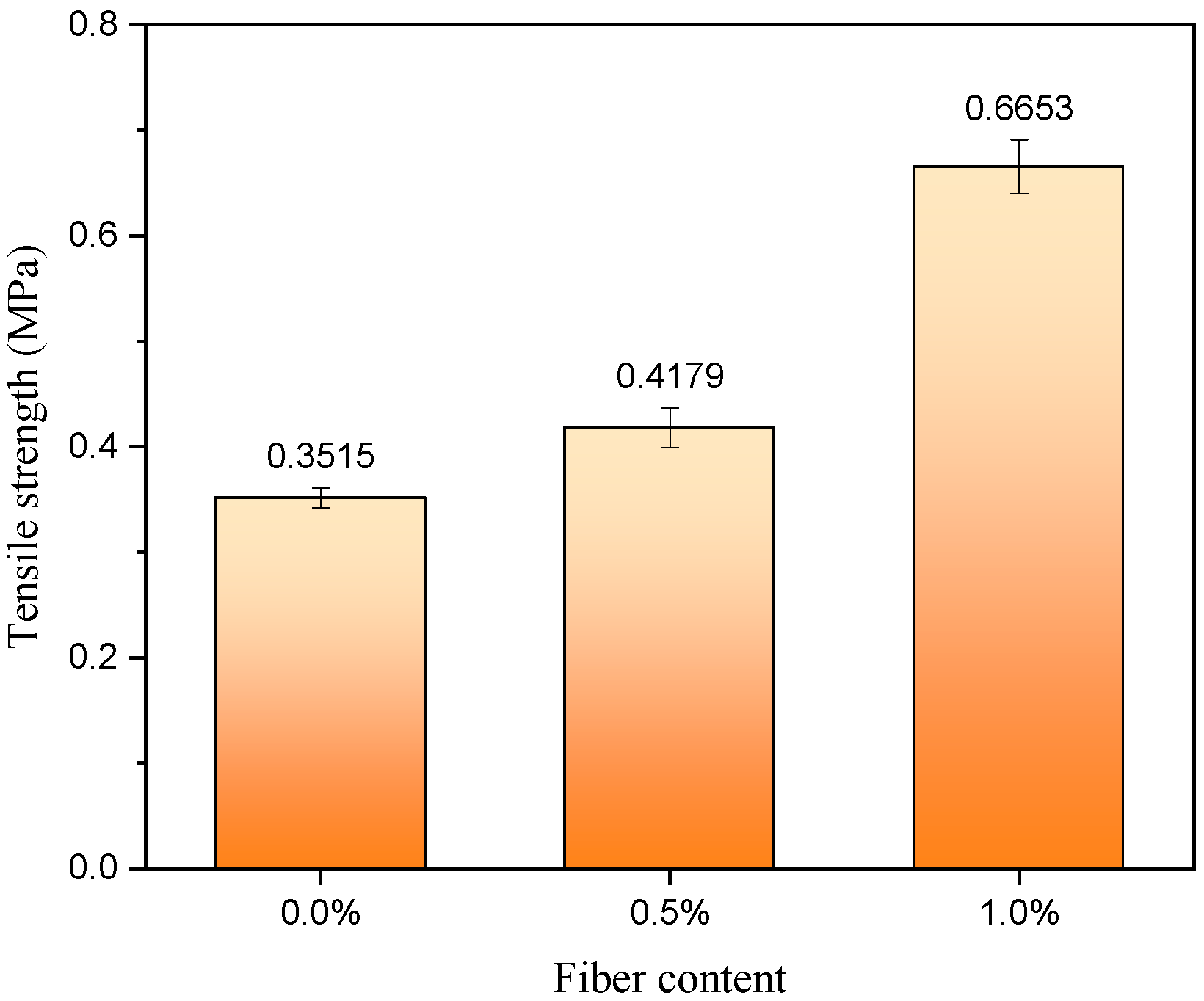
As shown in Figure 14, the incorporation of basalt fibers significantly enhanced the tensile strength of GBAC. The tensile strength increased by 89.27% when the fiber content reached 1.0%, compared to the fiber-free counterpart. This substantial improvement is primarily attributed to the high tensile strength of the basalt fibers. When the GBAC matrix reaches its cracking load, the fibers bridging the crack continue to carry tensile stress until the fibers slip [36], thereby markedly improving the overall tensile performance of the composite.
Figure 14.
Effect of fiber content on tensile strength of GBAC.
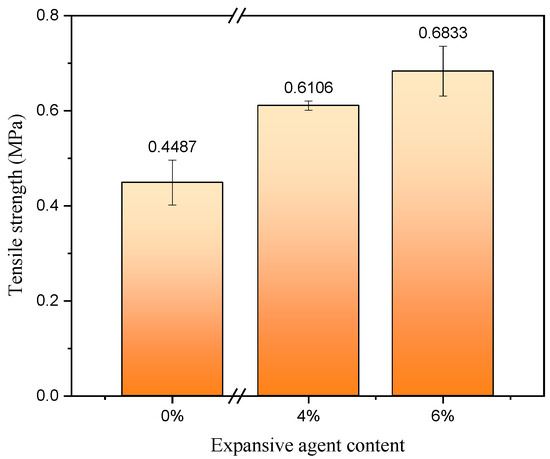
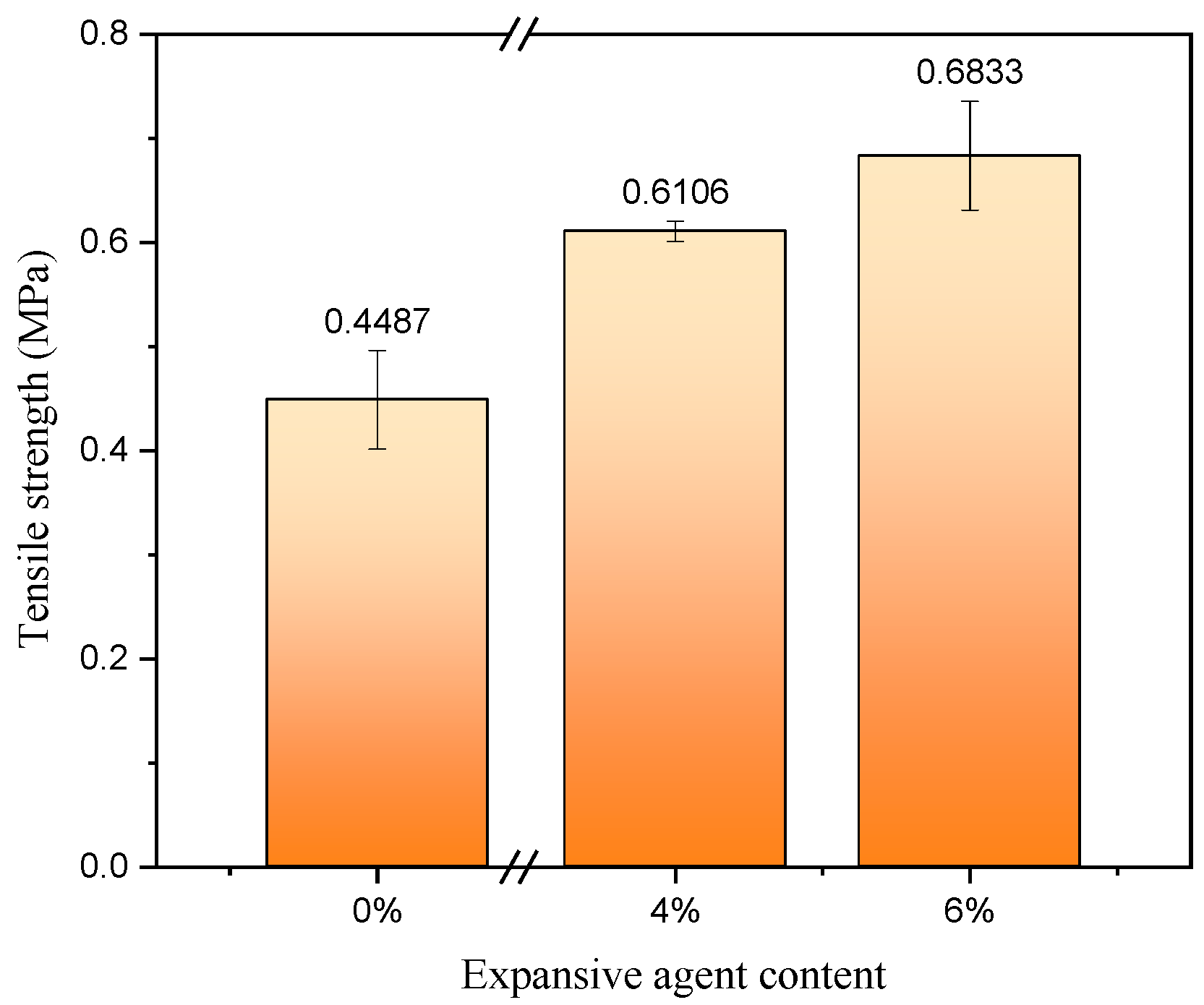
The addition of an expansive agent to the GBAC already containing latex powder and basalt fibers led to a further increase in tensile strength (Figure 15). Expansive agent dosages of 4% and 6% resulted in strength enhancements of 36.08% and 52.28%, respectively. The expansive agent effectively reduces the drying shrinkage of the GBAC, thereby minimizing the development of microcracks induced by contraction. In addition, the hydration products of the expansive agent promote a denser and stronger interfacial bond between the basalt fibers and the geopolymer matrix. This enhanced interfacial condition allows for more efficient stress transfer and enables the fibers to perform their crack-bridging action more effectively, leading to the observed additional gain in tensile capacity.
Figure 15.
Effect of expansive agent content on tensile strength of GBAC.
4.6. Bonding Strength
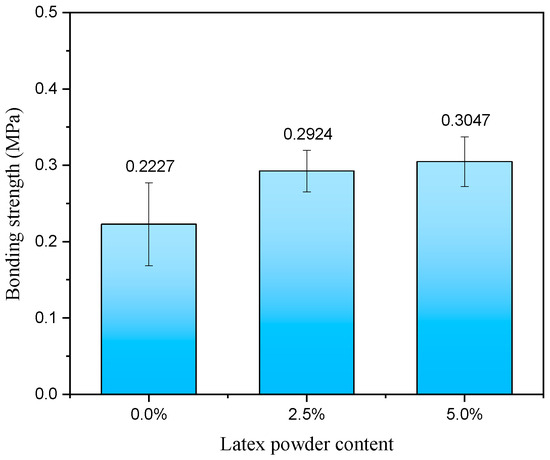
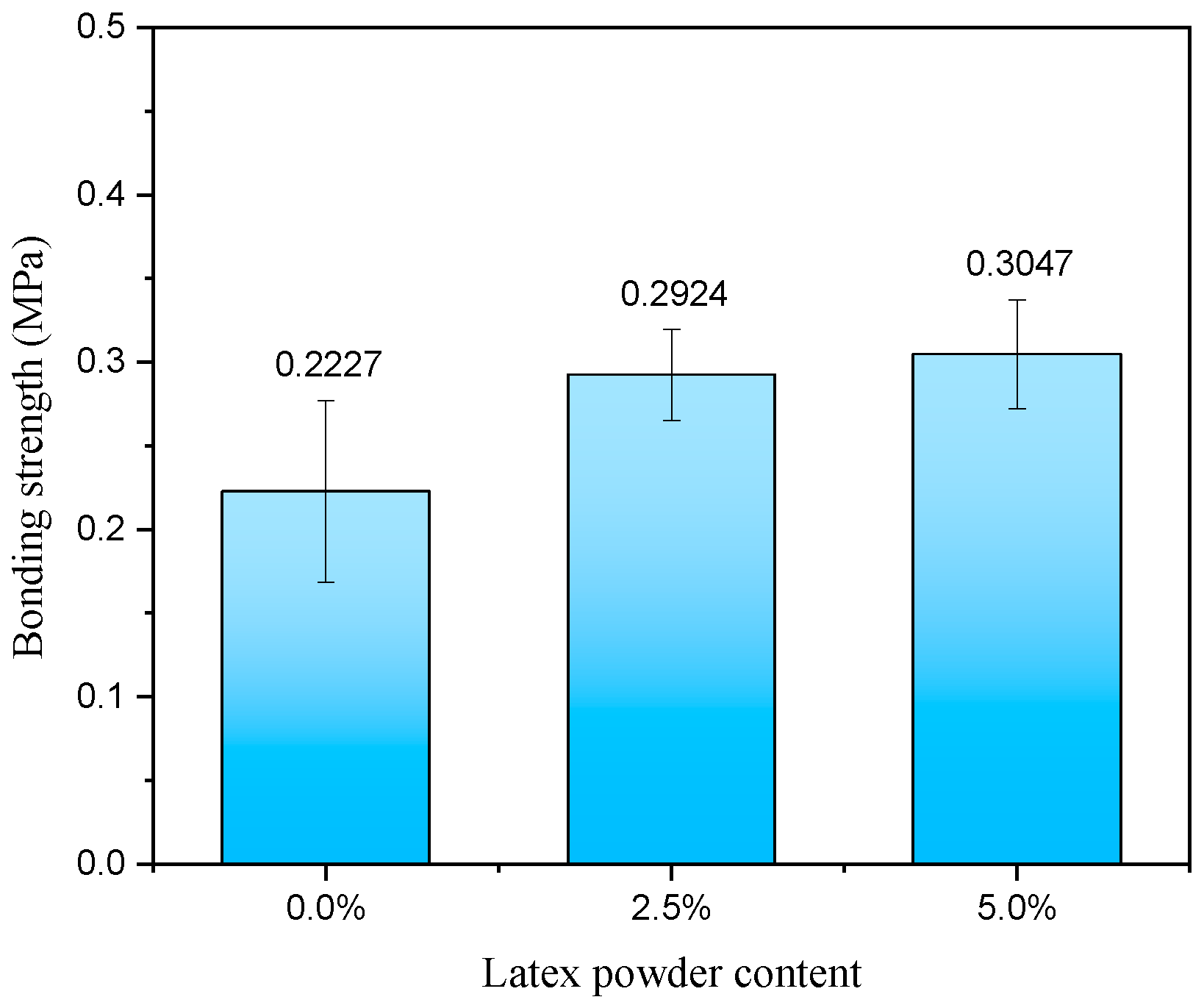
In all specimens, failure occurred at the interface between the GBAC and the steel substrate. For specimens without basalt fibers, complete separation from the substrate was observed at the failure load, revealing a relatively smooth debonding surface. In contrast, for specimens containing fibers, only a narrow debonding gap appeared at the interface upon failure, without complete detachment of the specimen from the substrate. As shown in Figure 16, the incorporation of latex powder was beneficial in enhancing the bonding strength of GBAC. Compared to the control group, the bonding strength increased by 31.30% and 36.82% with latex powder dosages of 2.5% and 5.0%, respectively. The primary component of the latex powder used is a vinyl acetate-ethylene copolymer. During curing and drying, this polymer can form a continuous polymeric film within the geopolymer matrix. The film intersperses among the geopolymeric hydration products and encapsulates fine particles or aggregates [37]. This dual mechanism enhances the overall integrity and cohesion of the GBAC, which in turn improves its adhesive bond to the steel substrate.
Figure 16.
Effect of latex powder content on bonding strength of GBAC.
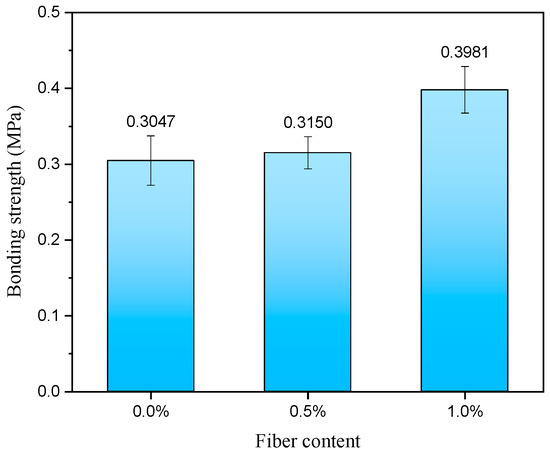
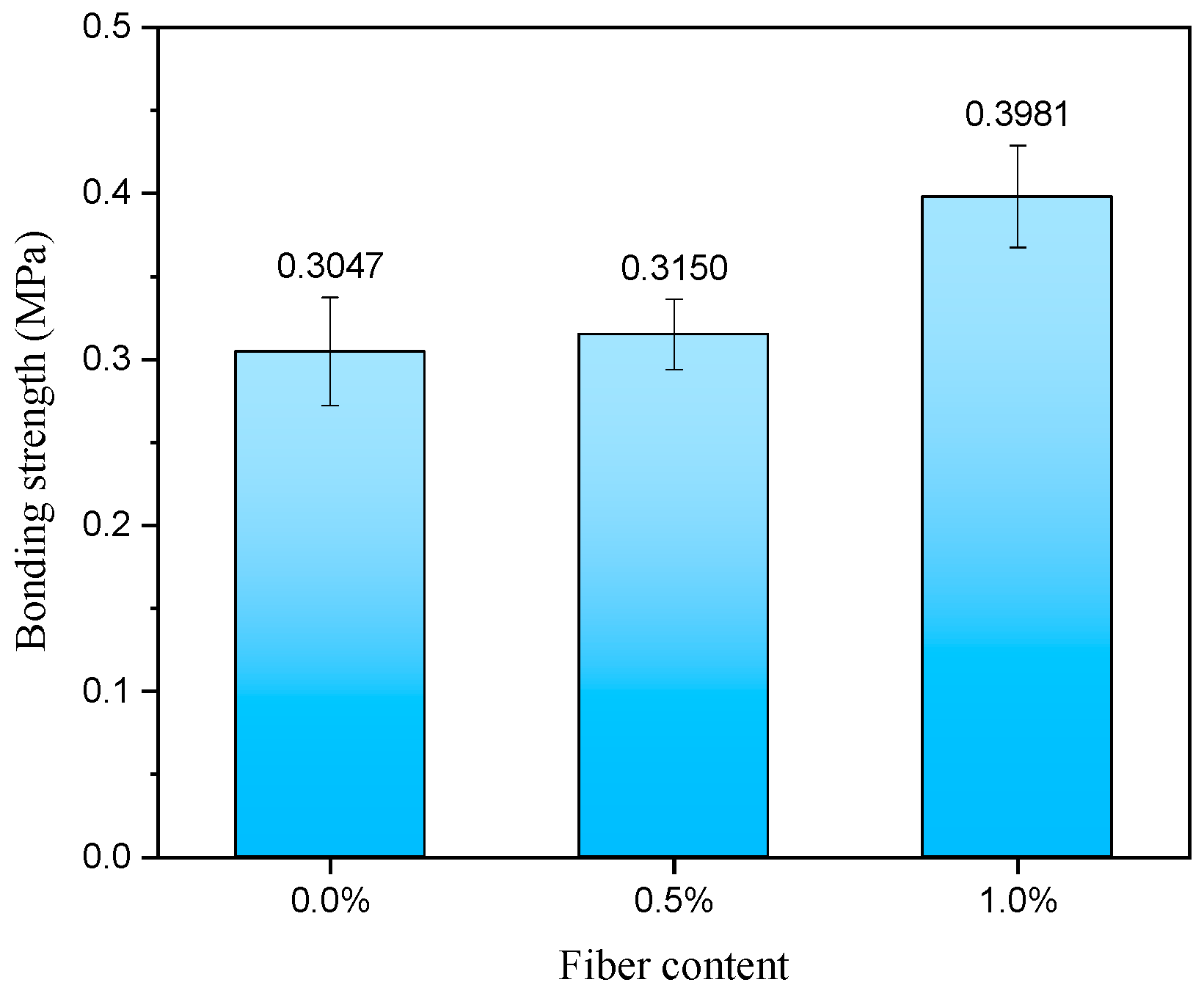
Figure 17 illustrates the effect of basalt fiber content on the bonding strength of GBAC. The results indicate that the bonding strength increased gradually with initial fiber addition, followed by a sharp rise to 0.398 MPa at higher fiber dosages. The enhancement of bonding strength by basalt fibers can be attributed to their effectiveness in restraining the drying shrinkage of GBAC, as detailed in Section 4.4. This restraint reduces the relative displacement between the GBAC coating and the steel substrate upon drying, thereby effectively suppressing the initiation and propagation of interfacial cracks.
Figure 17.
Effect of fiber content on bonding strength of GBAC.
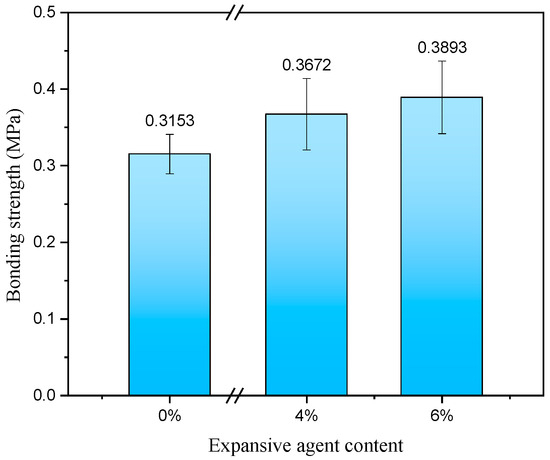
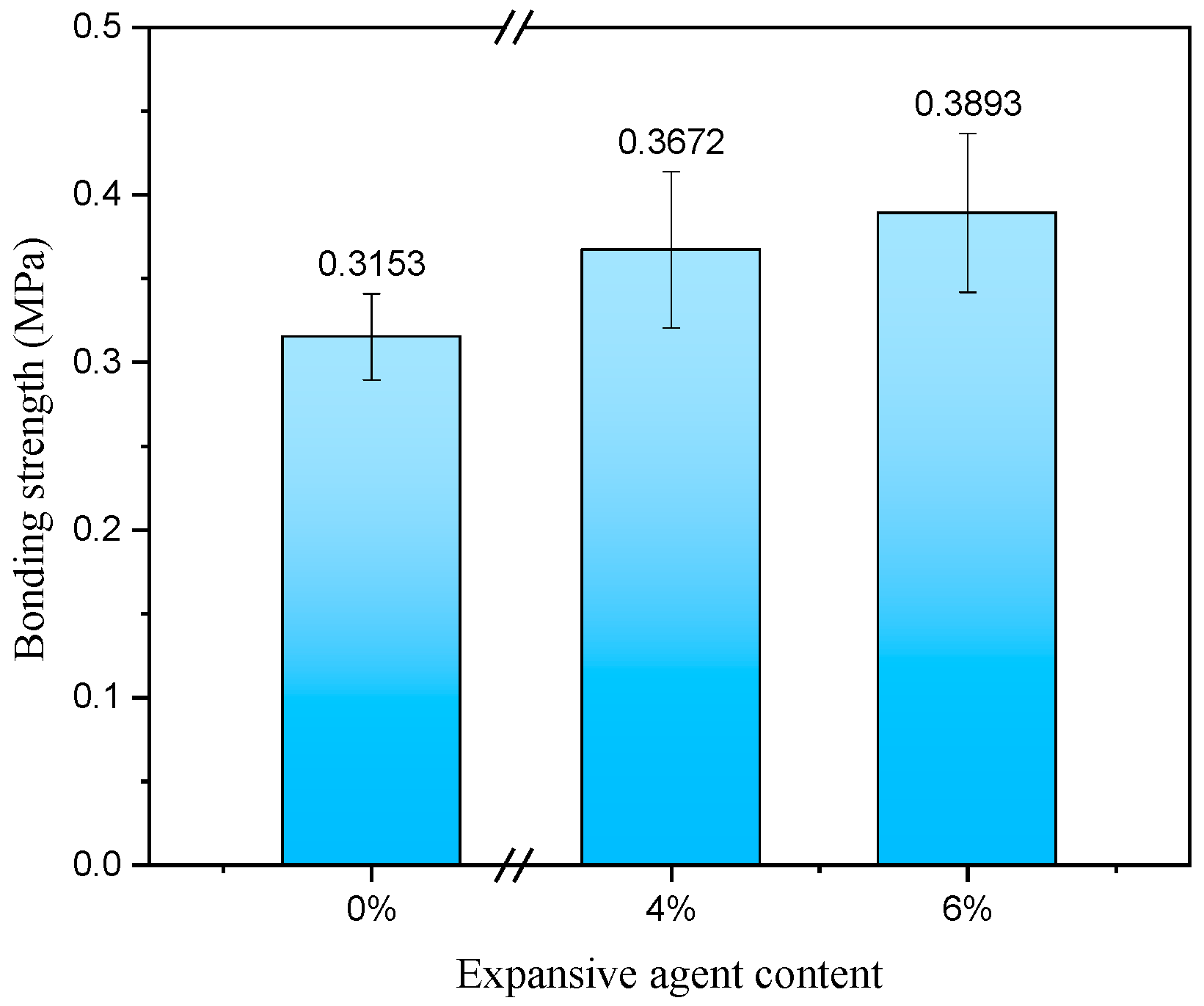
As demonstrated in Figure 18, introducing an expansive agent into the GBAC already modified with latex powder and basalt fibers resulted in a further improvement in bonding strength. Without the expansive agent, the bonding strength was 0.315 MPa. The addition of 4% and 6% expansive agent increased the bonding strength by 16.46% and 23.47%, respectively. Similar to the mechanism of basalt fibers, the expansive agent enhances the interfacial bond primarily by mitigating the drying shrinkage of GBAC, which in turn suppresses the formation of interfacial microcracks induced by contraction.
Figure 18.
Effect of expansive agent content on bonding strength of GBAC.
In summary, the latex powder showed little effect on mitigating the drying shrinkage of GBAC but contributed to the improvement of both tensile and bonding strength. In contrast, both basalt fibers and the expansive agent significantly enhanced the shrinkage resistance, tensile strength, and bonding strength of the composite. Among the optimized mixtures, the formulation 2.5JF-1.0XW-6.0PZJ exhibited superior performance in terms of volumetric stability, tensile properties, and bonding performance. However, its significantly reduced workability posed challenges for practical application. Therefore, the formulation 2.5JF-1.0XW-4.0PZJ was selected as the final one for the subsequent thermal insulation tests. A comparison was conducted on the coating performance of conducted on the optimized GBAC, a commercial non-intumescent coating and requirements provided in Chinese code GB 14907-2018 [25]. As given in Table 4, the optimized GBAC exhibits compressive strength and bonding strength far superior to those of the commercial coating and requirements provided in Chinese code. The thermal conductivity and dry density of GBAC, however, need to be improved in future studies.
Table 4.
Performance comparison among GBAC, commercial non-intumescent coating and requirements provided in Chinese code.
4.7. Pore Characteristics
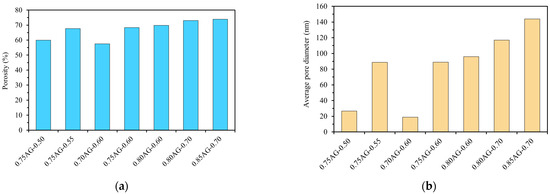
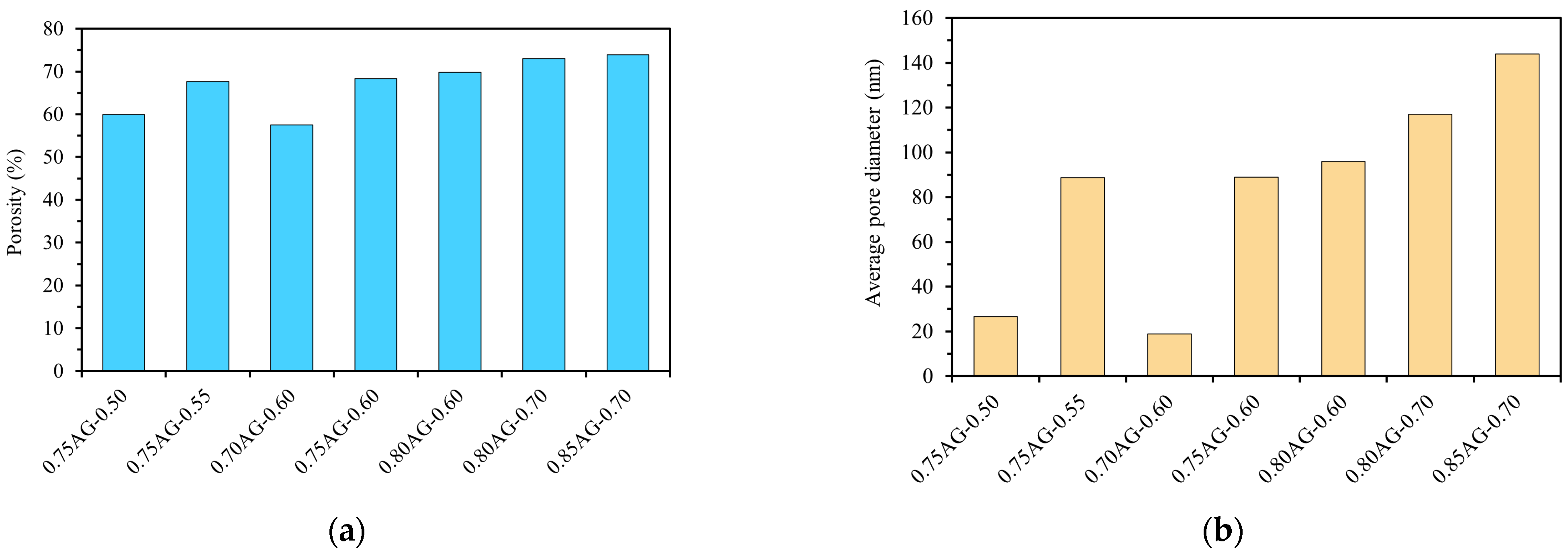
As shown in Figure 19, with increasing aerogel volume dosages from 70% to 85%, the porosity increased from 57.5% to 73.9%, and the average pore diameter rose from 18.78 to 143.88 nm. Because the aerogel adopted in this study has a porosity more than 90%, the incorporation of aerogel leads to a significant increase in both porosity and average pore diameter of GBAC. This finding also explains the phenomenon that increasing aerogel dosages result in lower dry density and compressive strength of GBAC. Furthermore, the W/B ratio plays an important role in the pore characteristics of GBAC. As the W/B ratio increased from 0.50 to 0.70, the porosity rose by 23%, and the average pore diameter enlarged fivefold. The GBAC has relatively high W/B ratio. Most of free water will evaporate as the geopolymer hardens, leaving pores in the matrix. The higher the W/B ratio is, the higher the porosity and the average pore diameter are.
Figure 19.
Pore characteristics of GBAC. (a) Porosity; (b) Average pore diameter.
4.8. Thermal Insulation
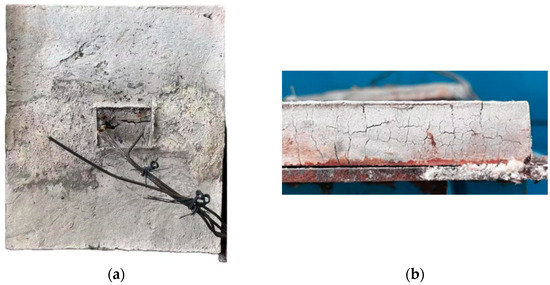
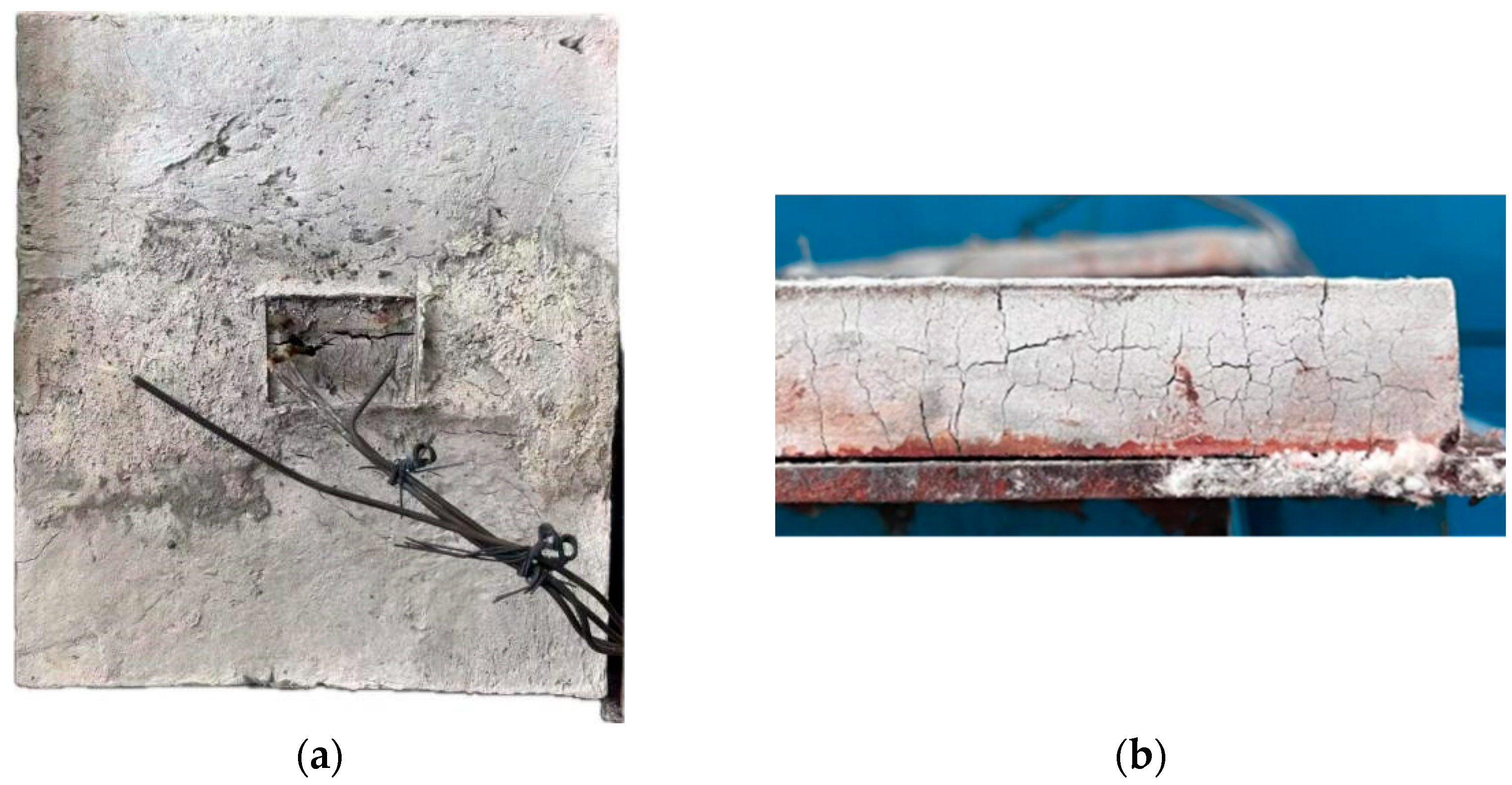
Following the thermal insulation tests, all GBAC coatings on the steel plates remained intact without any localized spalling. The central region of each steel plate deflected towards the furnace chamber, and cracks developed in the overlying GBAC coating. The crack width reaches its maximum at the central thermocouple (Figure 20). This is because the steel plate, when heated on one side, undergoes thermal expansion and deflection towards the heat source. The GBAC coating, bonded to the plate, is forced to follow this deformation. However, the deformability of the brittle GBAC is insufficient to accommodate the steel’s deflection, leading to the observed cracking pattern.
Figure 20.
Specimen B25 after thermal insulation test. (a) Heating surface; (b) Side.
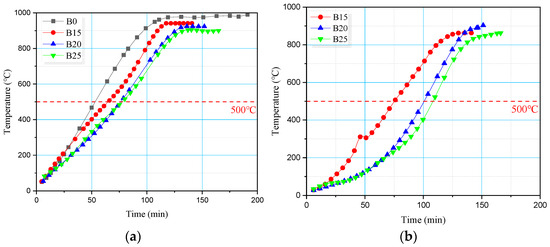
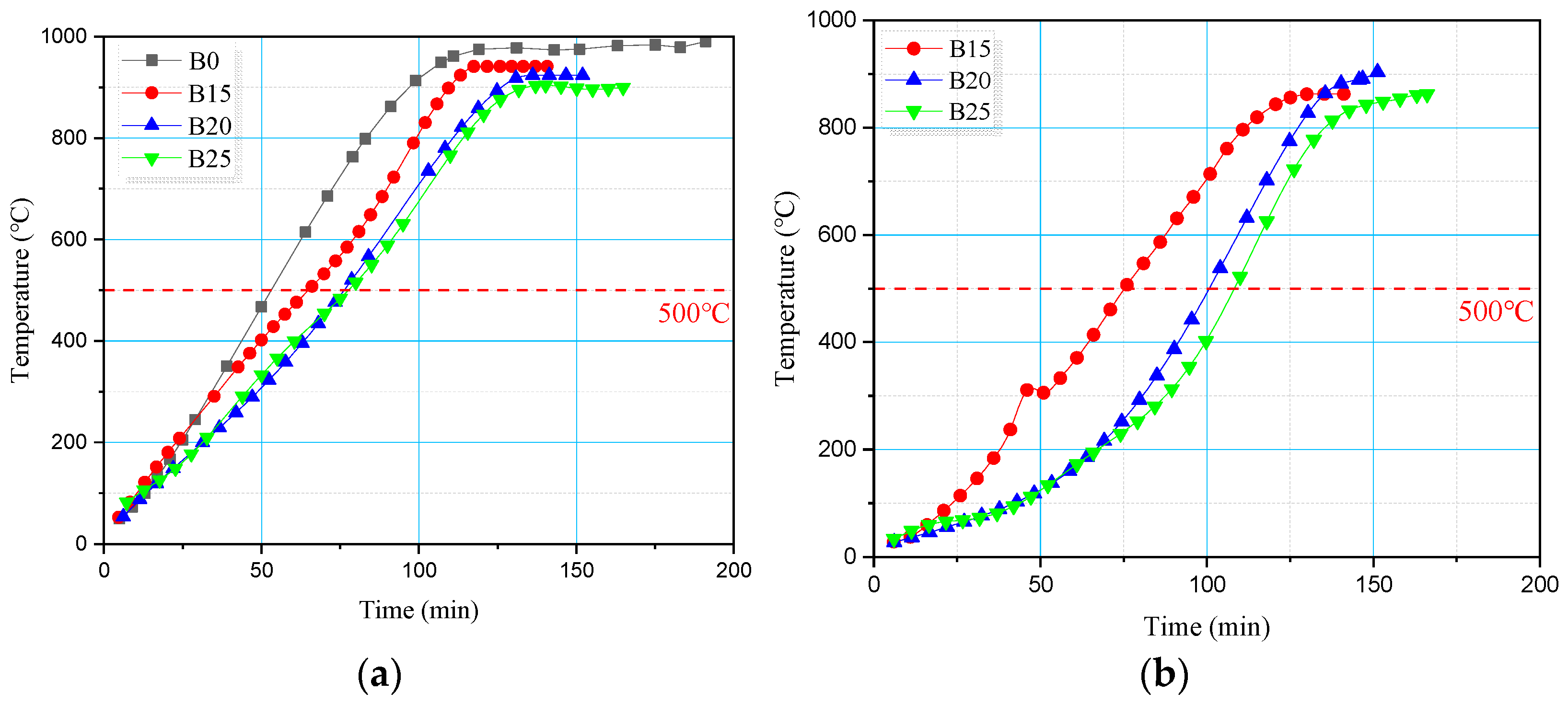
The temperature profiles at different locations are presented in Figure 21. As shown in Figure 21a, the temperature on the fire-exposed surface of the GBAC-coated specimens was slightly lower than that of the uncoated control. The difference became more pronounced with greater GBAC thickness. This cooling effect is attributed to the evaporation of moisture from the GBAC during heating, as the released water vapor absorbs significant latent heat, thereby reducing the surface temperature.
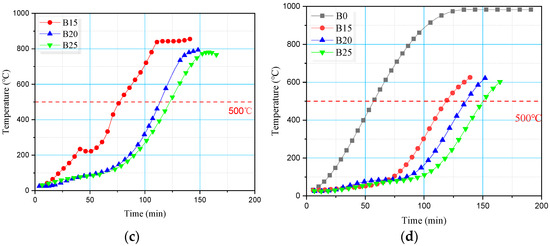
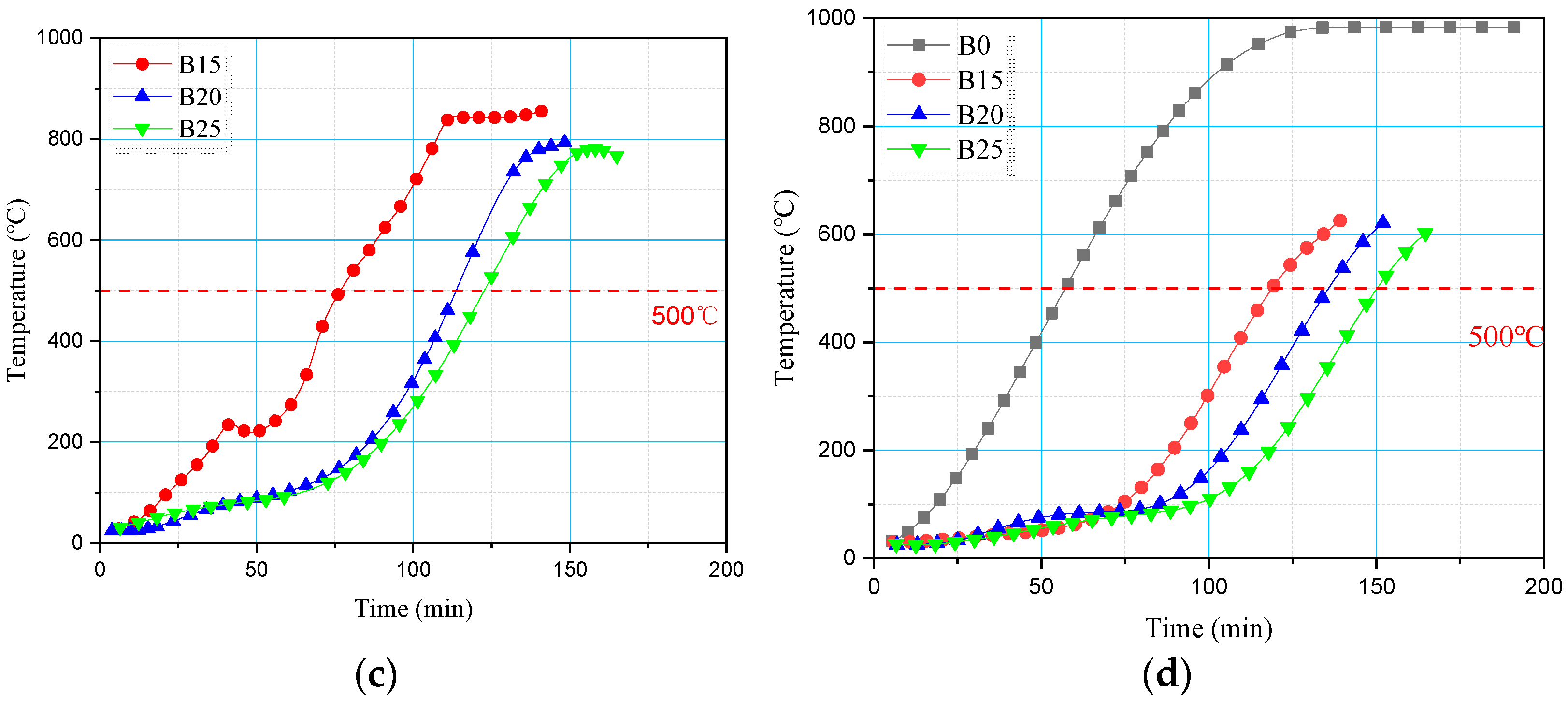
Figure 21.
Comparison of temperature among different specimens. (a) Heating surface; (b) Mid-thickness of coating; (c) Coating-steel interface; (d) Average temperature on the unexposed steel surface.
Figure 21b compares the temperature at the mid-thickness of the GBAC coating for specimens B15, B20, and B25. All curves exhibit a distinct “vapor plateau” period during the initial heating stage, where the temperature rise is delayed by water evaporation. The duration of this plateau lengthened with increased coating thickness. As heating progressed and moisture depletion reduced evaporative cooling, the thickness of the GBAC coating became the dominant insulating factor. Consequently, a clear negative correlation was observed between the coating thickness and the temperature. The time required for the mid-thickness point to reach 500 °C was 76, 101, and 109 min for specimens B15, B20, and B25, respectively. During the subsequent steady-state period at 1000 °C, the temperatures at this location converged for all coated specimens. This convergence is likely due to the propagation of cracks, which eventually exposed the embedded thermocouples more directly to the furnace environment, diminishing the protective effect of the intact GBAC.
As shown in Figure 21c, the temperature evolution at the coating-steel interface followed a trend similar to that at the mid-thickness. However, being protected by the full thickness of the coating, the specimens B15, B20, and B25 widened their temperature differences. Specimen B15 exhibited a notably faster heating rate compared to specimens B20 and B25, as its thinner coating was more susceptible to cracking. The temperatures of specimens B20 and B25 were consistently lower than that of specimen B15 during the steady-state phase, demonstrating the effect of the coating thickness.
Figure 21d presents the average temperature on the unexposed steel surface. GBAC coating exhibited a profound impact. The uncoated control specimen B0 heated rapidly, reaching 500 °C in just 57 min and stabilizing near the furnace temperature after 120 min. In stark contrast, the GBAC-coated specimens experienced significant delays. Influenced by the prolonged moisture evaporation, their back-side temperatures remained below 100 °C for an extended period before rising at a rate comparable to B0. The critical time for the average back-side temperature to reach 500 °C was 119, 136, and 150 min for specimens B15, B20, and B25, respectively. These times represent a substantial extension compared to the control specimen, demonstrating that the GBAC effectively enhances the thermal insulating efficiency of the steel substrate, with performance improving proportionally with coating thickness. A comparison between Figure 21c,d reveals that the temperature on the steel back-side consistently lagged behind that at the GBAC-steel interface. This is because there is an interfacial thermal resistance between GBAC and the steel plate, which hinders the heat transfer.
4.9. Simulation Results for Fire Resistance
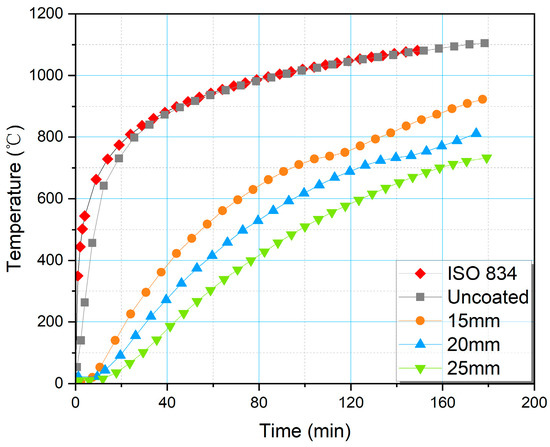
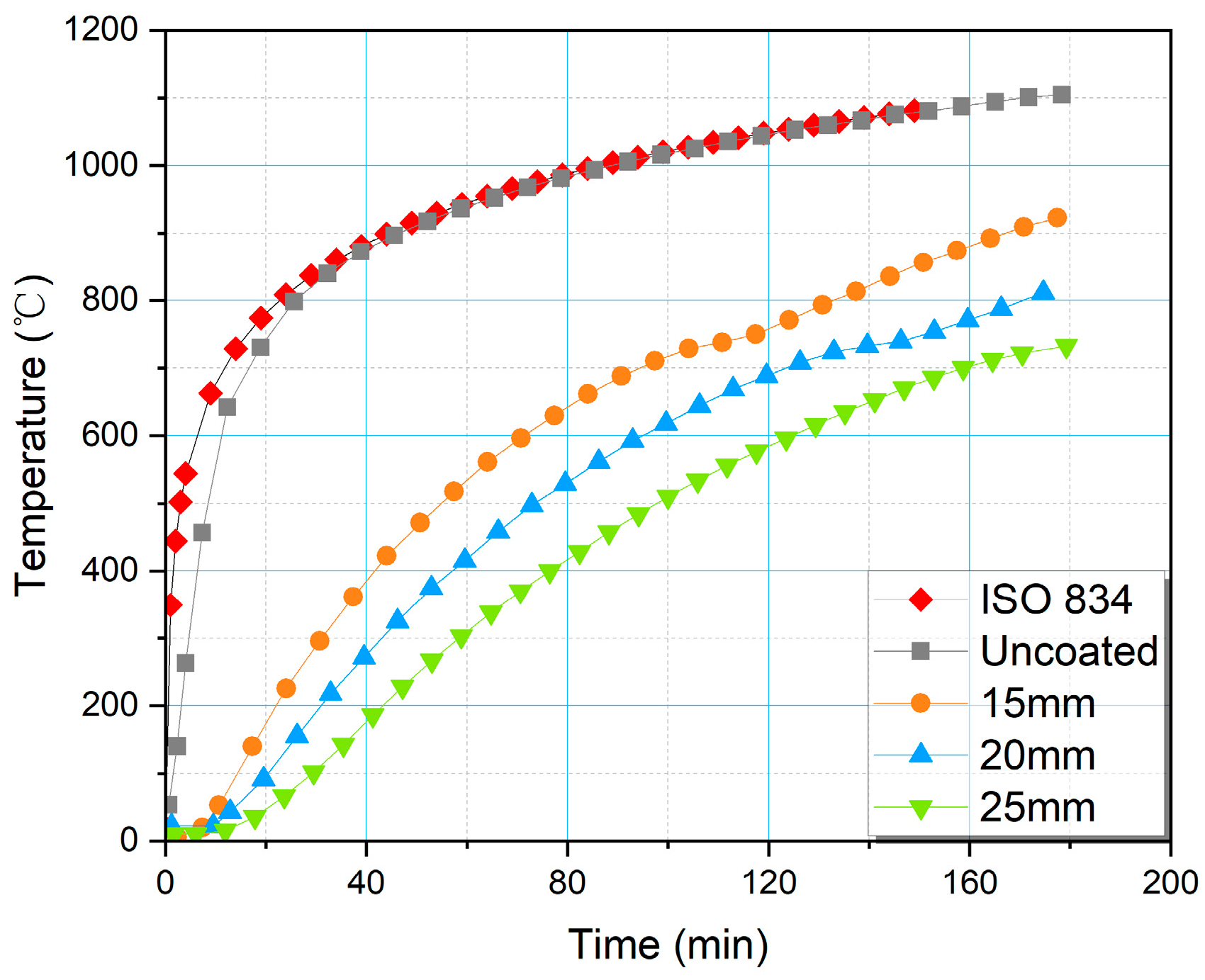
Figure 22 depicts the temperature-time profiles at the centroid of the steel beam cross-sections. For the uncoated steel beam, its temperature is closely aligned with the ISO 834 standard fire curve [18]. In contrast, the application of GBAC coatings led to a significant reduction in beam temperature, with a positive correlation observed between coating thickness and temperature reduction efficiency. According to Chinese standard GB 51249-2017 [39], the critical temperature of the steel beam is 542 °C under a load ratio of 0.6. The uncoated beam reached this critical temperature in merely eight minutes, whereas the beams with 15, 20, and 25 mm of GBAC coatings achieved the critical temperature at 61, 83, and 109 min, respectively. These findings demonstrated that GBAC coatings effectively mitigate the temperature rise of steel beams under exposure to fire. Coating thickness is a key parameter governing the fire protection performance.
Figure 22.
Temperature-time relationships at the centroid of the steel beams.
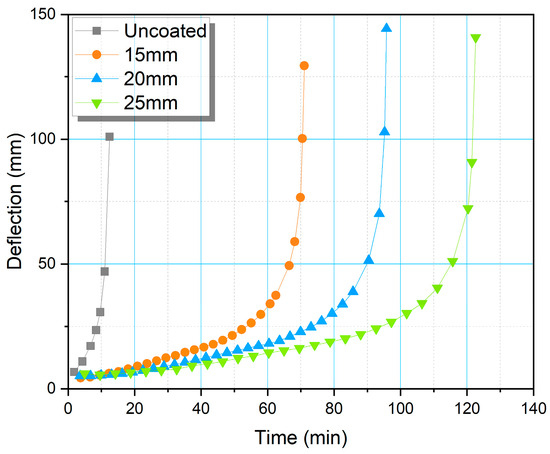
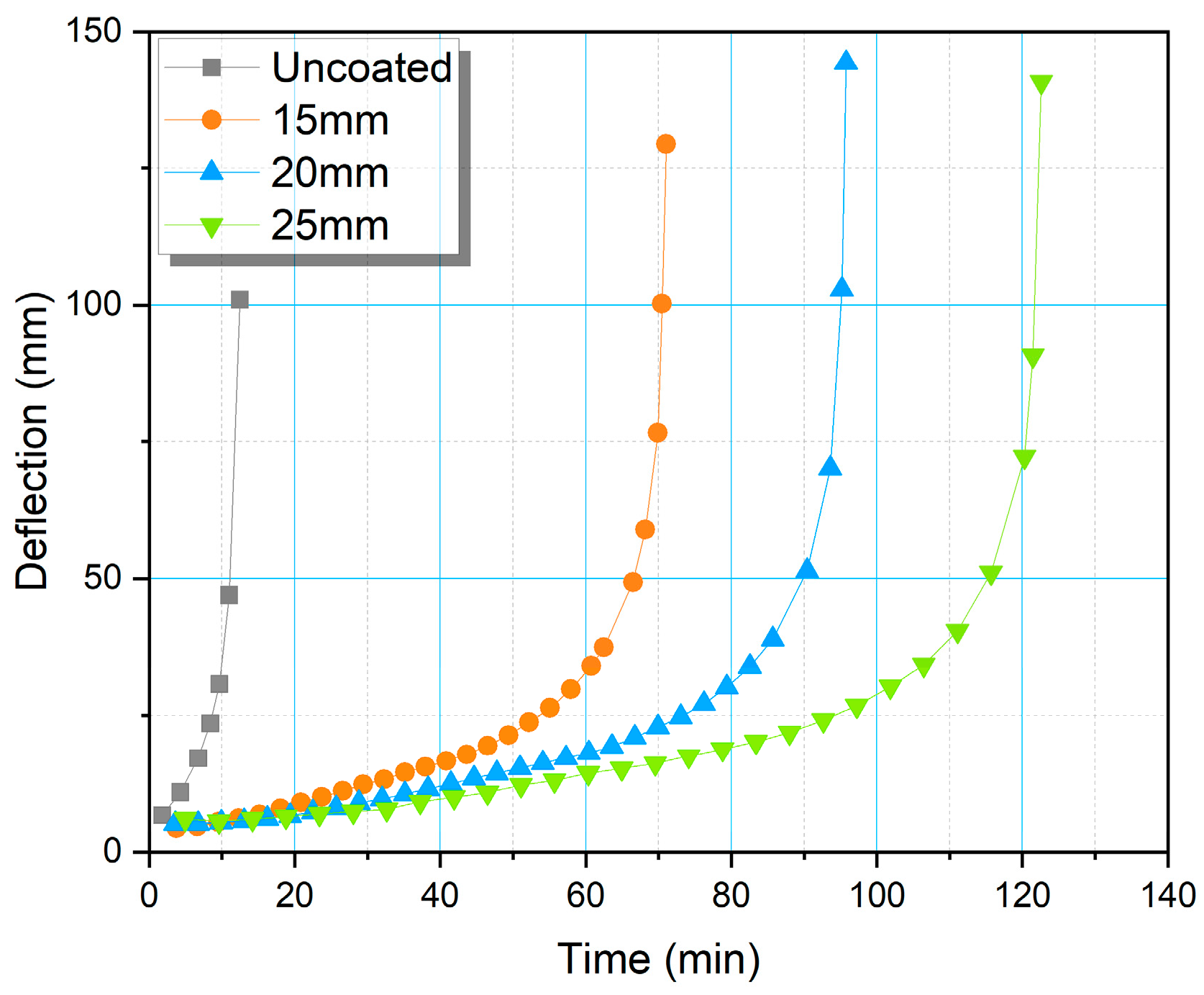
Figure 23 presents the deflection-time curves of the steel beams. The deflection of the uncoated steel beam increased rapidly at the initial stage, while those of the three steel beams coated with GBAC increased slowly most of the time and then rapidly within a few minutes at the later stage. The thicker the coatings, the longer the period of slow increase. According to GB 14907-2018 [25], the fire resistances for these steel beams were the time required for the mid-span deflection to reach 100 mm. The uncoated beam and the ones coated with 15, 20 and 25 mm of GBAC reached their fire resistances in 12, 71, 95 and 122 min, respectively. This indicated that GBAC coatings with thicknesses of 20 and 25 mm can make the steel beams meet the requirements of Classes II and I fire resistance [40]. All the beams reached their fire resistances shortly after the critical temperature. This is because the steel rapidly loses its strength once it reaches the critical temperature, leading to a severe reduction in the load-bearing capacities of the beams.
Figure 23.
Deflection-time relationships of steel beams.
5. Conclusions
To address the limitations of traditional non-intumescent fire-resistive coatings, such as excessive thickness and poor adhesion, this study developed a novel coating utilizing geopolymer as the binder and silica aerogel as the insulating aggregate. Thermal conductivity, compressive strength, tensile strength, bonding strength, drying shrinkage, and thermal insulation were tested to investigate the effects of raw material composition on the mechanical and thermal properties of GBAC. An optimal formulation was subsequently selected. Finite element analysis was conducted on the fire resistance of steel beams coated with the optimized GBAC. The main conclusions are drawn as follows.
- (1)
- Increasing the aerogel content and W/B ratio reduces the dry density, thermal conductivity, and compressive strength of GBAC. The dry density generally decreases with prolonged curing age. A baseline mixture with 70% aerogel and a W/B ratio of 0.6 can achieve a dry density of 687 kg/m3, a thermal conductivity of 0.17 W/(m·K), and a compressive strength of 3.01 MPa.
- (2)
- Both basalt fibers and an expansive agent significantly enhance the bonding performance of GBAC by effectively restraining its drying shrinkage. Although latex powder shows negligible effect on shrinkage reduction, it improves both the tensile and bonding strength. The incorporation of 2.5% latex powder, 1.0% basalt fibers, and 4.0% expansive agent into the baseline mixture leads to a remarkable reduction in shrinkage strain by 85.23%, an increase in tensile strength by 90.93%, and an enhancement in bonding strength by 64.89%.
- (3)
- The GBAC demonstrates excellent structural integrity and thermal insulation under high temperatures. After exposure to 1000 °C, the coating remains intact without spalling. Applied at thicknesses of 15, 20, and 25 mm, the GBAC coating extends the thermal insulating efficiency of the steel plates by 66, 84, and 108 min, respectively.
- (4)
- Finite element simulation results show that under the ISO834 standard fire condition and a load ratio of 0.6, the fire resistances reach 95 and 122 min on steel beams coated with 20 and 25 mm of GBAC, which meet the requirements of Classes II and I fire resistance, respectively.
As a preliminary exploration of GBAC coating, this study has not addressed the poor workability of the coating nor included the durability or an assessment of the carbon footprint. The flowability of fresh coatings may be enhanced by optimizing the particle gradation of aerogel and adopting higher-power mixing equipment. And the long-term performance and life cycle assessments on GBAC will be considered in future studies.
Author Contributions
Conceptualization, H.Z. and S.F.; methodology, H.Z. and S.F.; validation, C.L. and S.F.; formal analysis, C.Q., C.L. and L.Y.; investigation, C.Q., C.L. and L.Y.; resources, C.Q. and L.Y.; data curation, C.Q., C.L. and L.Y.; writing—original draft preparation, C.L.; writing—review and editing, H.Z. and S.F.; visualization, C.L.; supervision, H.Z. and S.F.; project administration, H.Z. and S.F.; funding acquisition, H.Z. and S.F. All authors have read and agreed to the published version of the manuscript.
Funding
This research was funded by National Natural Science Foundation of China with grant numbers 52178482 and 52278502, Yangcheng Scholars Research Project of Guangzhou Municipal Education Bureau with grant number 202235331, and Guangdong Province Characteristic Innovation Project for Ordinary Universities with grant number 2023KTSCX114.
Institutional Review Board Statement
Not applicable.
Informed Consent Statement
Not applicable.
Data Availability Statement
The data that support the findings of this study are available from the corresponding author upon reasonable request.
Conflicts of Interest
Author Chenke Lin was employed by the company Dongguan Power Supply Bureau, Guangdong Power Grid Co., Ltd. Lijun Yuan was employed by the company Design and Technology Management Department, China Construction Third Engineering Bureau Group Co., Ltd. The remaining authors declare no conflicts of interest. The funders had no role in the design of the study; in the collection, analyses, or interpretation of data; in the writing of the manuscript; or in the decision to publish the results.
Abbreviations
The following abbreviations are used in this manuscript:
| GBAC | Geopolymer-based Aerogel Composite |
| W/B | Water-to-binder |
| ITZ | Interfacial Transition Zone |
References
- Pang, S.; Kodur, V.; Wang, W. Fire resistance of steel structures, incorporating HSS—Review and recommendations. J. Constr. Steel Res. 2024, 217, 108677. [Google Scholar] [CrossRef] [Scilit]
- Li, Y.; Wang, M.; Li, G.; Jiang, B. Mechanical properties of hot-rolled structural steels at elevated Temperatures: A review. Fire Saf. J. 2021, 119, 103237. [Google Scholar] [CrossRef] [Scilit]
- Ma, X.; Pan, J.; Cai, J.; Zhang, Z.; Han, J. A review on cement-based materials used in steel structures as fireproof coating. Constr. Build. Mater. 2022, 315, 125623. [Google Scholar] [CrossRef] [Scilit]
- Hu, X.; Zhu, X.; Sun, Z. Fireproof performance of the intumescent fire retardant coatings with layered double hydroxides additives. Constr. Build. Mater. 2020, 256, 119445. [Google Scholar] [CrossRef] [Scilit]
- Li, Q.; Li, H.; Liang, T. Effect of non-intumescent fireproof coating on the durability of concrete exposed to elevated temperature. Constr. Build. Mater. 2023, 404, 133211. [Google Scholar] [CrossRef] [Scilit]
- Provis, J.L. Geopolymers and other alkali activated materials: Why, how, and what? Mater. Struct. 2014, 47, 11–25. [Google Scholar] [CrossRef] [Scilit]
- Richardson, I.G.; Brough, A.R.; Groves, G.W.; Dobson, C.M. The characterization of hardened alkali-activated blast-furnace slag pastes and the nature of the calcium silicate hydrate (C-S-H) phase. Cem. Concr. Res. 1994, 24, 813–829. [Google Scholar] [CrossRef] [Scilit]
- Richardson, I.G. Tobermorite/jennite- and tobermorite/calcium hydroxide-based models for the structure of C–S–H: Applicability to hardened pastes of tricalcium silicate, β-dicalcium silicate, Portland cement, and blends of Portland cement with blast-furnace slag, metakaolin, or silica fume. Cem. Concr. Res. 2004, 34, 1733–1777. [Google Scholar] [CrossRef] [Scilit]
- Provis, J.L.; Lukey, G.C.; van Deventer, J.S.J. Do geopolymers actually contain nanocrystalline zeolites?—A reexamination of existing results. Chem. Mater. 2005, 17, 3075–3085. [Google Scholar] [CrossRef] [Scilit]
- Duxson, P.; Provis, J.L.; Lukey, G.C.; Separovic, F.; van Deventer, J.S.J. 29Si NMR study of structural ordering in aluminosilicate geopolymer gels. Langmuir 2005, 21, 3028–3036. [Google Scholar] [CrossRef] [Scilit]
- Loewenstein, W. The distribution of aluminum in the tetrahedra of silicates and aluminates. Am. Min. 1954, 39, 92–96. [Google Scholar]
- Irfan Khan, M.; Azizli, K.; Sufian, S.; Man, Z. Sodium silicate-free geopolymers as coating materials: Effects of Na/Al and water/solid ratios on adhesion strength. Ceram. Int. 2015, 41, 2794–2805. [Google Scholar] [CrossRef] [Scilit]
- Fernández-Jiménez, A.; Palomo, Á.; Pastor, J.Y.; Martín, A. New Cementitious Materials Based on Alkali-Activated Fly Ash: Performance at High Temperatures. J. Am. Ceram. Soc. 2008, 91, 3308–3314. [Google Scholar] [CrossRef] [Scilit]
- Pan, Z.; Sanjayan, J.G. Stress–strain behaviour and abrupt loss of stiffness of geopolymer at elevated temperatures. Cem. Concr. Compos. 2010, 32, 657–664. [Google Scholar] [CrossRef] [Scilit]
- Temuujin, J.; Minjigmaa, A.; Rickard, W.; Lee, M.; Williams, I.; van Riessen, A. Fly ash based geopolymer thin coatings on metal substrates and its thermal evaluation. J. Hazard. Mater. 2010, 180, 748–752. [Google Scholar] [CrossRef] [Scilit] [PubMed]
- Yong, S.L.; Feng, D.W.; Lukey, G.C.; van Deventer, J.S.J. Chemical characterisation of the steel–geopolymeric gel interface. Colloids Surf. A Physicochem. Eng. Asp. 2007, 302, 411–423. [Google Scholar] [CrossRef] [Scilit]
- Wu, B.; Duan, J.; Wen, B. Preparations of new fireproof coating and fire-resistance tests on composite slabs filled with demolished concrete blocks and fresh concrete. China Civ. Eng. J. 2014, 47, 82–92. (In Chinese) [Google Scholar] [CrossRef]
- ISO 834-1:1999; Fire-Resistance Tests—Elements of Building Construction—Part 1: General Requirements. International Organization for Standardization: Geneva, Switzerland, 1999.
- Mishra, B.; Varshney, S.; Gupta, M.K.; Jagadeesh, P.; Sanjay, M.R.; Siengchin, S. Aerogel as a sustainable lightweight material: A comprehensive review of synthesis, properties, and applications. Int. J. Biol. Macromol. 2025, 328, 147701. [Google Scholar] [CrossRef] [Scilit]
- Maleki, H.; Durães, L.; Portugal, A. An overview on silica aerogels synthesis and different mechanical reinforcing strategies. J. Non-Cryst. Solids 2014, 385, 55–74. [Google Scholar] [CrossRef] [Scilit]
- Bergmann Becker, P.F.; Effting, C.; Schackow, A. Lightweight thermal insulating coating mortars with aerogel, EPS, and vermiculite for energy conservation in buildings. Cem. Concr. Compos. 2022, 125, 104283. [Google Scholar] [CrossRef] [Scilit]
- Li, J.; Liu, X.; Su, Z. Preparation and properties of silica aerogel fire-retardant coatings for tunnel. New Build. Mater. 2014, 41, 14–17. (In Chinese) [Google Scholar] [CrossRef]
- Lyu, H.; Cheng, C.; He, J.; Zhang, Z.; Zhang, Q.; Wei, R. Experimental study on fire-proof property of cement-based aerogel coating. J. Guangzhou Univ. Nat. Sci. Ed. 2017, 16, 72–75. (In Chinese) [Google Scholar] [CrossRef]
- Zhu, P.; Xu, X.; Liu, H.; Liu, S.; Chen, C.; Jia, Z. Tunnel fire resistance of self-compacting concrete coated with SiO2 aerogel cement paste under 2.5 h HC fire loading. Constr. Build. Mater. 2020, 239, 117857. [Google Scholar] [CrossRef] [Scilit]
- GB 14907-2018; Fire Resistive Coating for Steel Structure. State Administration for Market Regulation, Standardization Administration of the People’s Republic of China: Beijing, China, 2018.
- JGJ/T 70-2009; Standard for Test Method of Basic Properties of Construction Mortar. Ministry of Housing and Urban-Rural Development of the People’s Republic of China: Beijing, China, 2009.
- JC/T 603-2004; Standard Test Method for Drying Shrinkage of Mortar. National Development and Reform Commission: Beijing, China, 2004.
- DL/T 5126-2021; Test Code for Polymer Modified Cement Mortar. National Energy Administration: Beijing, China, 2021.
- EN 1993-1-2: 2024; Eurocode 3—Design of Steel Structures. Part 1–2: Structural Fire Design. European Committee for Standardization: Brussels, Belgium, 2024.
- Liu, S.; Wu, X.; Li, Y.; Cui, S.; Shen, X.; Tan, G. Hydrophobic in-situ SiO2-TiO2 composite aerogel for heavy oil thermal recovery: Synthesis and high temperature performance. Appl. Therm. Eng. 2021, 190, 116745. [Google Scholar] [CrossRef] [Scilit]
- Xu, S.; Liu, J.; Zeng, Q. Towards better characterizing thermal conductivity of cement-based materials: The effects of interfacial thermal resistance and inclusion size. Mater. Des. 2018, 157, 105–118. [Google Scholar] [CrossRef] [Scilit]
- Gao, T.; Jelle, B.P.; Gustavsen, A.; Jacobsen, S. Aerogel-incorporated concrete: An experimental study. Constr. Build. Mater. 2014, 52, 130–136. [Google Scholar] [CrossRef] [Scilit]
- Hou, M.; Tao, Y.; Tao, Z.; Chai, D. Study on the reinforcement mechanism of basalt fiber concrete enhancement mechanism. Concrete 2020, 67–71+75. (In Chinese) [Google Scholar] [CrossRef]
- Xu, S.; Wu, C.; Yue, J.; Xu, Z. Shrinkage and Mechanical Properties of Fibre-Reinforced Blast Furnace Slag-Steel Slag-Based Geopolymer. Adv. Civ. Eng. 2022, 2022, 8931401. [Google Scholar] [CrossRef] [Scilit]
- Jia, Z.; Yang, Y.; Yang, L.; Zhang, Y.; Sun, Z. Hydration products, internal relative humidity and drying shrinkage of alkali activated slag mortar with expansion agents. Constr. Build. Mater. 2018, 158, 198–207. [Google Scholar] [CrossRef] [Scilit]
- Li, F.; Gao, H.; Tang, H.; Jiang, Y.; Zhan, Y.; Shen, D. Basic properties and shrinkage model of chopped basalt fiber concrete. J. Railw. Sci. Eng. 2022, 19, 419–427. (In Chinese) [Google Scholar] [CrossRef]
- Wang, P.; Zhao, G.; Zhang, G. Mechanism of redispersible polymer powder in cement mortar. J. Chin. Ceram. Soc. 2018, 46, 256–262. (In Chinese) [Google Scholar] [CrossRef]
- Production Center of CIENTEI. Available online: https://www.cientei.com/product_center.html#pro1 (accessed on 6 January 2026).
- GB 51249-2017; Code for Fire Safety of Steel Structures in Buildings. Ministry of Housing and Urban-Rural Development of the People’s Republic of China: Beijing, China; General Administration of Quality Supervision, Inspection and Quarantine of the People’s Republic of China: Beijing, China, 2017.
- GB 50016-2014; Code for Fire Protection Design of Buildings. Ministry of Housing and Urban-Rural Development of the People’s Republic of China: Beijing, China; General Administration of Quality Supervision, Inspection and Quarantine of the People’s Republic of China: Beijing, China, 2018.

Disclaimer/Publisher’s Note: The statements, opinions and data contained in all publications are solely those of the individual author(s) and contributor(s) and not of MDPI and/or the editor(s). MDPI and/or the editor(s) disclaim responsibility for any injury to people or property resulting from any ideas, methods, instructions or products referred to in the content. |
© 2026 by the authors. Licensee MDPI, Basel, Switzerland. This article is an open access article distributed under the terms and conditions of the Creative Commons Attribution (CC BY) license.