


Highlights
What are the main findings?
- Hydrophobicity first increased and then decreased with feed rate, reaching its optimum at 0.7 mm/r.
- The TUBP-RF strategy achieved the highest water contact angle of 108°.
- The TUBP-RF surface reduced droplet sliding time by 61.7% compared to the original surface.
What are the implications of the main findings?
- Reveals a new pathway for controlling micro-texture morphology through toolpath design.
- Offers a specific strategy for optimizing ultrasonic burnishing to enhance surface hydrophobicity.
- Provides an effective, coating-free approach for surface modification of heat exchanger tubes.
Abstract
Using the ultrasonic burnishing process to fabricate micro-textures is one of the effective methods to improve the hydrophobic properties of workpiece surfaces. In this study, three ultrasonic burnishing strategies—single-pass ultrasonic burnishing process (SUBP), two-pass ultrasonic burnishing process with reverse feed direction (TUBP-RF), and two-pass ultrasonic burnishing process with forward feed direction (TUBP-FF)—were employed to fabricate micro-textures on 316 stainless steel pipes. The effects of burnishing strategy and feed rate on surface morphology and hydrophobic performance were investigated. TUBP-RF introduces reverse feed in the second pass, generating tangential forces in the opposite direction that induce secondary plastic flow and material accumulation at texture intersections. The results show that surface hydrophobicity first increased and then decreased with increasing feed rate, reaching its maximum at 0.7 mm/r. TUBP-RF achieved the highest contact angle of 108°, representing increases of 18.4% and 12.1% compared with SUBP and TUBP-FF, respectively. Among the three strategies, TUBP-RF produces interlaced micro-textures with larger peak height Rp, medium peak spacing RSm, and reduced effective solid contact area, facilitating air entrapment beneath water droplets and promoting a Cassie–Baxter wetting state. Furthermore, under the optimal parameters of the TUBP-RF process, the machined surface improved droplet sliding speed, reduced the sliding time by 61.7% compared with the original surface. The TUBP-RF strategy effectively enhances surface hydrophobic properties by constructing interlaced micro-textures, offering new insights for optimizing the ultrasonic burnishing process.
1. Introduction
In heat exchangers, boilers, and condensers, condensate forms a liquid film on the surface of metal pipes, increasing interfacial thermal resistance and reducing heat transfer efficiency [1]. Therefore, controlling the hydrophobic properties of metal pipe surfaces is crucial for improving overall heat transfer efficiency. Bionic research indicates that fabricating micro-textures is an effective method to enhance surface hydrophobicity [2]. Micro-textures with specific distribution patterns and geometries allow condensate to rapidly detach from the surface as droplets, maintaining direct contact between the metal substrate and steam, thereby improving heat transfer efficiency. Furthermore, micro-textures exhibit higher mechanical stability and will not detach under harsh conditions such as high temperatures and thermal shock compared to commonly used hydrophobic coatings, thus possessing significant application potential in heat conversion, antifouling, and anti-icing applications [3].
Ultrasonic-assisted machining is one of the methods for fabricating micro-textures. By controlling the periodic contact and separation between the tool and the workpiece, regular-shaped micro-textures can be fabricated on the surface [4]. Currently, most research on ultrasonic-assisted machining processes for fabricating micro-textures focuses on ultrasonic turning and milling process. Hosseinabadi et al. [5] used ultrasonic turning to fabricate regularly arranged micro-textures on Al 7075-T6 surfaces, thereby improving surface wettability. It was concluded that the feed rate has the greatest influence on the anisotropy angle, accounting for 95.39% of the impact. Lotfi et al. [6] used a three-dimensional elliptical ultrasonic vibration method to generate hemispherical micro-textures on the surface of titanium alloys, which improved anisotropic wettability; the minimum contact angle reached 38.7°. Zhu et al. [7] studied the formation mechanism of micro-textures and used ultrasonic milling process to fabricate micro-textures on the Ti-6Al-4V surface, which significantly improved the surface morphology and surface quality. Zhang et al. [8] used ultrasonic milling to fabricate regular micro-textures of various shapes. Under the parameters of a relief angle of 40° and a spindle speed of 4000 rmp, they produced smooth sinusoidal micro-textures with a width of only 20 μm and a height of 2 μm, realizing the effective control of micro-textures shape. Zamani et al. [9] fabricated micro-textures on the surface of medical titanium alloys using ultrasonic turning and proved that the shape of the micro-textures is related to the ultrasonic amplitude, the machining direction and the cutting feed. Liu et al. [10] studied the influence of tool shape on micro-textures shape in the ultrasonic turning process. It was shown that the clearance angle and nose radius of cutting tools have a significant impact on the shape of micro-textures and, further, the wettability of material surfaces. To improve the surface wear resistance of Ti2AlNb, Xia et al. [11] used ultrasonic milling process to fabricate micro-textures on its surface. Compared with traditional milling process, the surface Ra was reduced by up to 42.5%, and the friction coefficient was decreased by up to 27.08%, demonstrating the superior performance of micro-textures in enhancing surface wear resistance. Liu et al. [12] used ultrasonic turning process to fabricate regularly arranged concave micro-textures on copper surfaces and proved that the arrangement and geometry of the micro-textures are determined by the clearance angle, spindle speed, feed rate and vibration amplitude.
However, while ultrasonic burnishing has been employed for surface finishing and texture generation, existing studies have primarily treated micro-textures as a secondary outcome of process parameters rather than as engineered features achievable through deliberate toolpath control. The texture formation in ultrasonic turning and milling is inherently linked to material removal and tool geometry, whereas ultrasonic burnishing—as a material-equalizing process—offers unique opportunities for toolpath-controlled surface design without chip generation or surface integrity disruption. Despite its potential, the literature lacks systematic investigations into how toolpath trajectory and feed rate can be precisely modulated in ultrasonic burnishing to fabricate micro-textures with tailored geometries for enhanced hydrophobicity. Most prior work has focused on the effects of ultrasonic burnishing on surface integrity, residual stress, and friction reduction [13], with limited exploration of toolpath parameters as design variables for micro-texture engineering. Meng et al. [14] reinforced the surface layer of AISI 1045 using an ultrasonic burnishing process, fabricating micro-textures on the surface. The results showed that the micro-textures reduced the friction coefficient by 79%. Meng et al. [15] conducted a series of tests on the ultrasonic burnishing process for fabricating micro-textures on AISI 5140. The experimental results show that the ultrasonic burnishing process can fabricate microgroove arrays with periodic distribution. Zhao et al. [16] fabricated a scaly micro-textured surface using the ultrasonic burnishing process. As a result, the friction coefficient decreased by 33.3%. Yu et al. [17] fabricated micro-textures on the surface of aluminum alloys by combining turning and the ultrasonic burnishing process, which improved the wear resistance of the aluminum alloy. The results showed that the shape of the micro-textures mainly depends on the feed rate, which provides a reference for the experimental scheme of related research. However, these studies have not systematically established the relationship between toolpath trajectory and feed rate and the resulting micro-texture geometry or its subsequent effect on surface hydrophobicity, which represents the central focus of the present investigation.
To improve the hydrophobic properties of 316 stainless steel pipes, this study utilized ultrasonic burnishing process to fabricate a regular array of micro-textures on their surface and investigated the effects of processing trajectory and feed rate on the generation of the micro-textures. Furthermore, the effects of micro-texture on surface contact angles and hydrophobic were discussed to determine the optimal experimental parameters.
2. Materials and Methods
2.1. Experimental Materials and Method
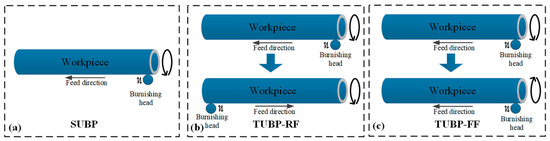
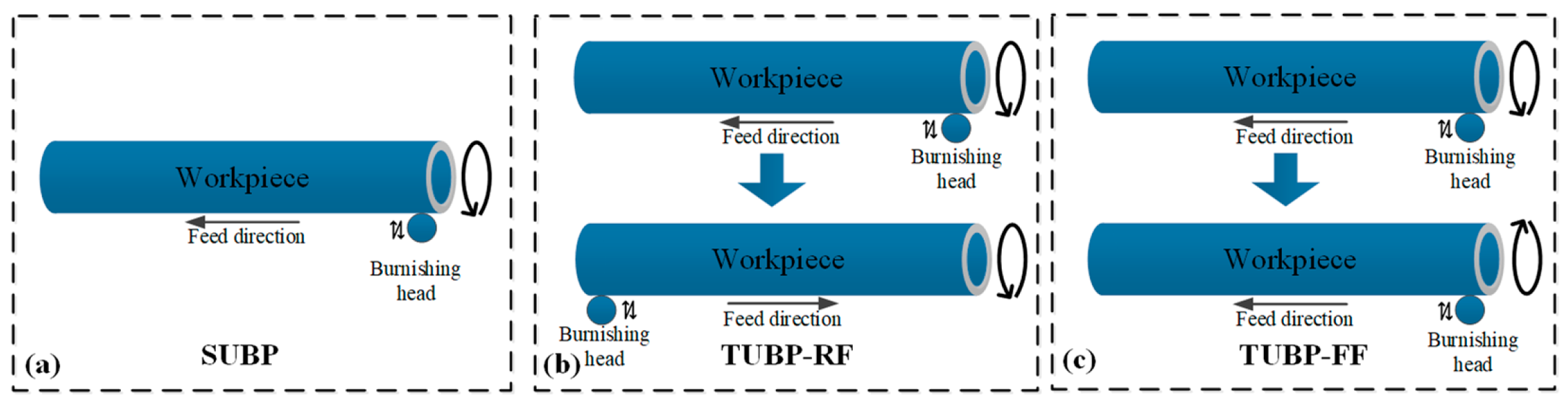
316 stainless steel pipes with an outer diameter of 19 mm, a length of 200 mm and a wall thickness of 1.2 mm were used as experimental materials. Their chemical composition and mechanical properties are shown in Table 1. The outer surface of the 316 stainless steel pipes was treated by rough turning, finish turning, and the ultrasonic burnishing process. To prevent rigidity issues during processing, the pipe was extended 100 mm from the chuck. In practical applications for longer pipes, additional support such as a follower rest can be used to maintain rigidity. As shown in Figure 1, the first group was machined using the single-pass ultrasonic burnishing process (SUBP) after rough turning and finish turning. The second group used the two-pass ultrasonic burnishing process with reverse feed direction (TUBP-RF), while the third group used the two-pass ultrasonic burnishing process with forward feed direction (TUBP-FF).
Table 1.
Chemical composition (wt.%) and mechanical properties of 316 stainless steel.
Figure 1.
Three ultrasonic burnishing strategies for micro-textures fabrication: (a) SUBP, (b) TUBP-RF, and (c) TUBP-FF.
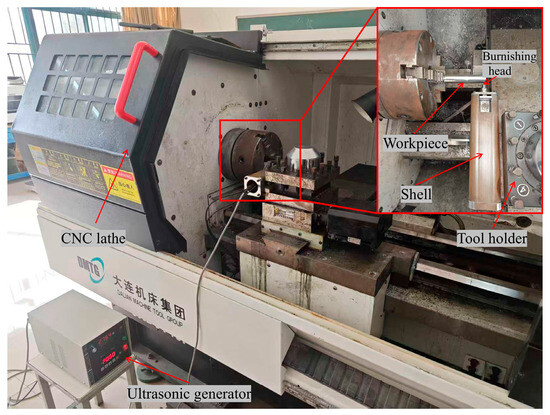
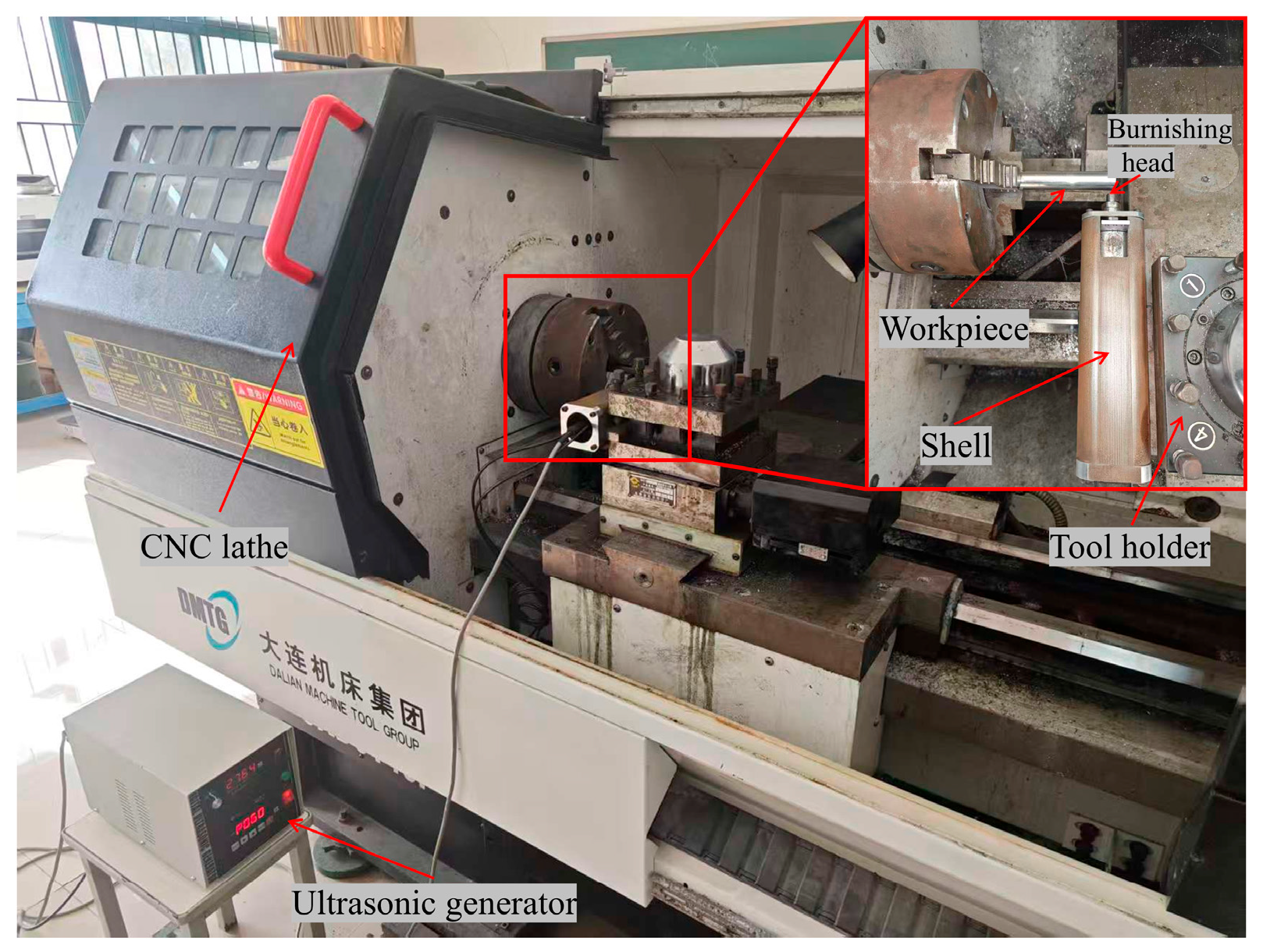
As shown in Figure 2, the experiments were conducted on a CKD6140I CNC lathe (Dalian Machine Tool Group, Dalian, China). The rough turning spindle speed was 400 r/min, the feed rate was 0.2 mm/r, and the cutting depth was 0.1 mm. The finish turning spindle speed was 600 r/min, the feed rate was 0.01 mm/r, and the cutting depth was 0.05 mm. Turning and burnishing were both performed under dry cutting conditions. The ultrasonic burnishing process device operated at a vibration frequency of 27.64 kHz and an amplitude of 4.5 μm, with a burnishing head made of diamond with a diameter of 4 mm. The spindle speed for the ultrasonic burnishing process was set to 500 r/min, and the feed rate was set to eight levels: 0.1, 0.3, 0.5, 0.7, 0.9, 1.1, 1.3, and 1.5 mm/r. To ensure sufficient micro-texture depth, the indentation depth was set to 0.05 mm to address the rigid deformation problem caused by the thin wall thickness of the steel pipe itself.
Figure 2.
Experimental setup of the ultrasonic burnishing process.
2.2. Surface Morphology, Contact Angle and Water Droplet Sliding Measurement
The 3D surface morphology of sample surfaces was observed by a Keyence VK-X250 confocal digital microscope (Keyence Corporation, Osaka, Japan). The confocal microscope was calibrated using a standard step height specimen (10 μm) prior to each measurement session. The profile curve of the sample surface and roughness parameters, including peak spacing RSm, peak height Rp, developed interfacial area ratio Sdr, and the average roughness Ra were obtained. Roughness parameters were evaluated according to the ISO 25178 standard [18].
The contact angle was measured using an SZ-CAMB3 contact angle meter (Sunzern, Shanghai, China). The contact angle goniometer was calibrated using deionized water as a reference liquid with known surface tension (72.8 mN/m at 20 °C). A static drop method was used, with each droplet having a volume of 0.1 μL. The measurements were repeated three times for each set of parameters, and the average value was taken as the final characterization result. At the same time, the standard deviation was calculated to analyze the consistency of the surface structure and the repeatability of the hydrophobic behavior.
The process of water droplets sliding down a steel pipe was captured using a VEO-1310L series high-speed camera (Vision Research, Inc., Wayne, NJ, USA). The droplet size was 0.1 mL, and the high-speed camera was set to shoot 50 frames per second. The process of the water droplet sliding down from the top to the bottom of the steel pipe was captured. The time when the water droplet just touched the surface of the steel pipe was recorded as zero.
Measurements were conducted under standard laboratory conditions (temperature: 23 ± 2 °C; relative humidity: 45 ± 5%). For statistical analysis, each measurement was repeated three times, and the results were expressed as mean values.
3. Results and Discussion
3.1. Surface Morphology
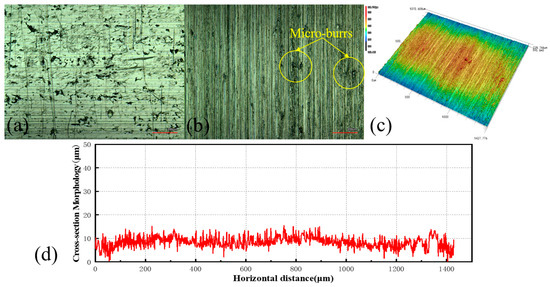
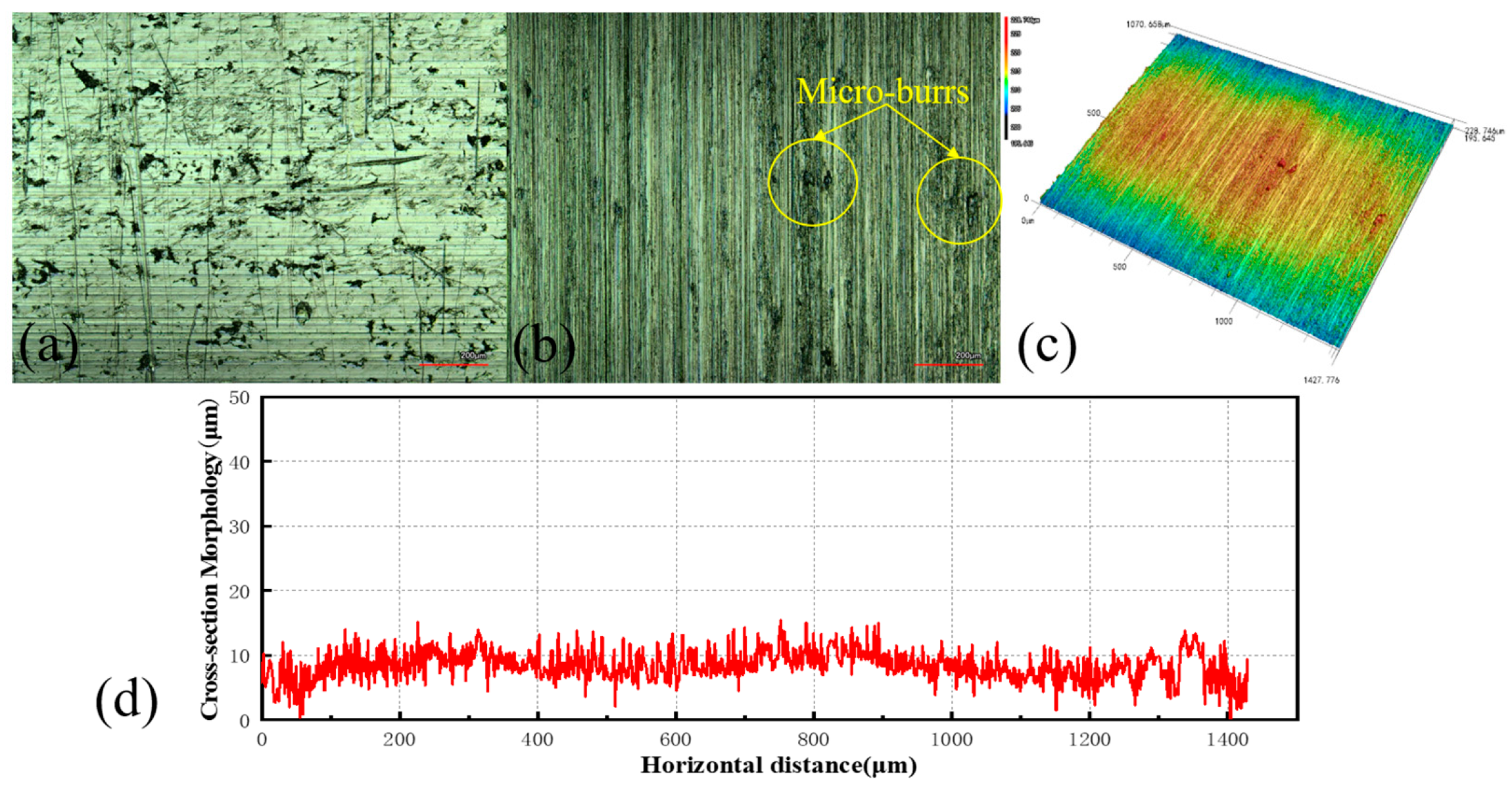
As shown in Figure 3a, the surface morphology of 316 stainless steel pipes is chaotic, with crisscrossing grooves and numerous defects. As shown in Figure 3b–d, the flatness is improved after rough turning and finish turning, but micro-protrusions and micro-burrs still exist. These micro-defects can be contributed due to severe plastic deformation between the tool flank face and the machined surface.
Figure 3.
Morphology of the original tube surface and the finished surface: (a) original surface; (b) 2D morphology of the finished surface; (c) 3D morphology of the finished surface; (d) surface profile of the finished surface.
Figure 4 shows the surface morphology and contour curves of the URSP, TUBP-RF, and TUBP-FF at a feed rate of 0.1 mm/r. As shown in Figure 4a, the surface URSP is relatively regular, and the micro-textures of the machined surface form an array of grooves. The defects on the finished surface are compacted by the burnishing ball along the burnishing speed direction. With the continuous contact and separation between the burnishing head and the workpiece surface, a regular texture is formed on the surface. As shown in Figure 4b, the micro-textures on the surface produced by TUBP-RF transformed into two dimensions. The processing in two different feed directions makes the protrusions on the machined surfaces more obvious. The excessively dense impacts damage the surface, and the resulting surface protrusions are too messy. This is because the regular grooves and hardened layer formed during the first burnishing process are subjected to plastic stress in different directions during the second reverse burnishing. When the stress paths of the two deformations are misaligned, stress concentration and material pile-up are prone to occur on the surface, leading to the formation of disordered two-dimensional protrusions. As shown in Figure 4c, the surface produced by TUBP-FF appears smoother and processes the micro-protrusions in the reverse direction. The second pass of burnishing further eliminates the micro-protrusions generated by finish turning and the first pass of ultrasonic burnishing, which can better ensure the integrity of the machined surface.
Figure 4.
Surface morphology at a feed rate of 0.1 mm/r: (a) SUBP; (b) TUBP-RF; (c) TUBP-FF.
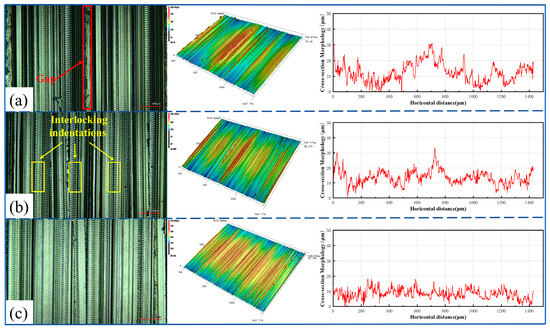
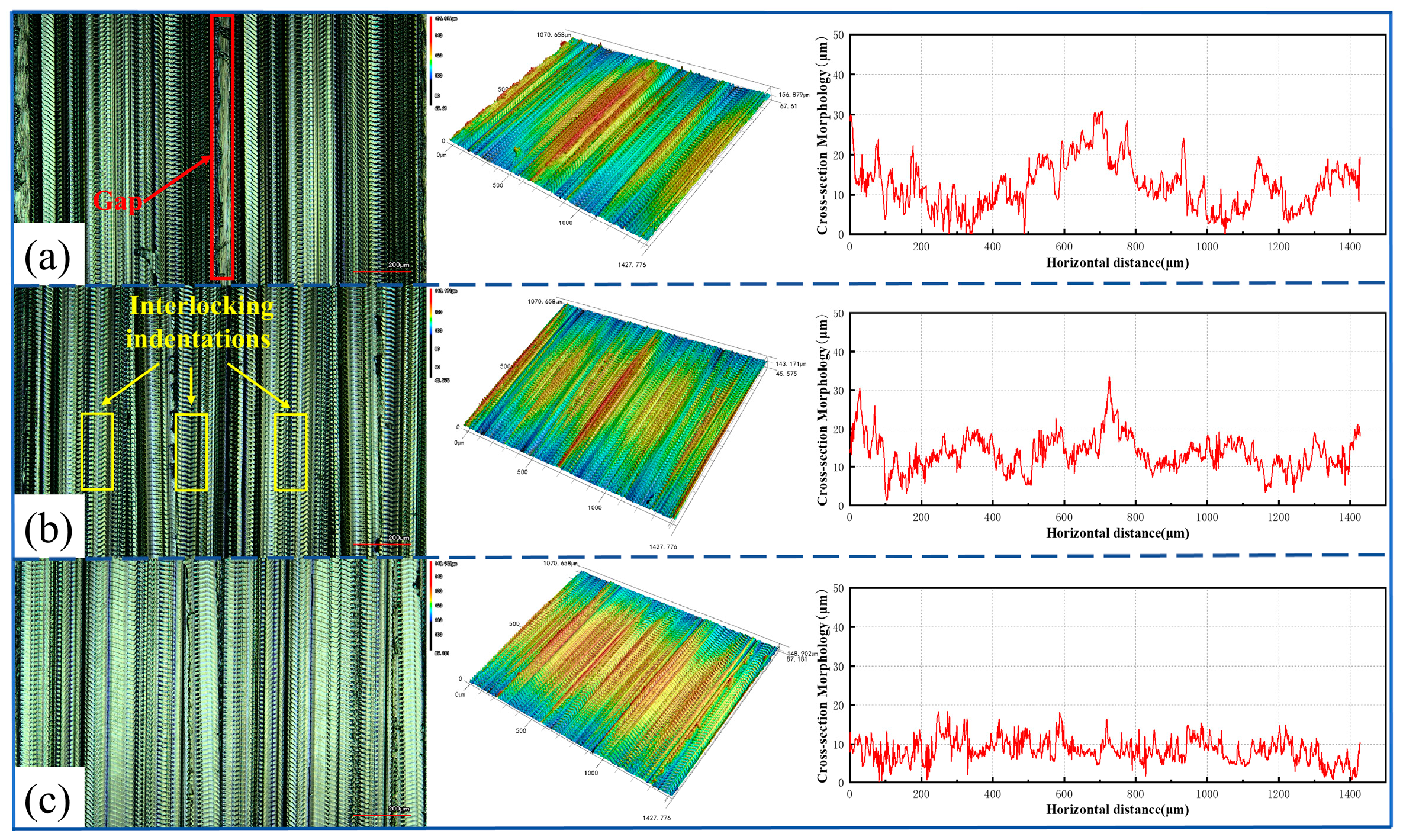
As shown in Figure 5a, the groove spacing generated by the burnishing balls is larger when the feed rate is increased to 0.7 mm/r. It is noteworthy that under these processing parameters, the machined surface begins to show unfinished surfaces, i.e., gaps, thus affecting the uniformity of the surface morphology. This is because in SUBP, surface integrity depends on the relationship between the effective indentation width of the burnishing tool and the feed rate. When the feed rate exceeds the effective plastic deformation width of the burnishing ball on the material, regions of material not subjected to plastic deformation, i.e., gaps, will appear between adjacent burnishing trajectories. In undeformed areas, the original state or the post-finish turning morphology is retained, leading to a decrease in surface uniformity. As shown in Figure 5b, the over-processing observed in TUBP-RF is significantly improved under these feed parameters, and the interlacing phenomenon of the burnishing texture can be clearly observed on the machined surface. The reverse feed in the second pass reverses the peaks from the first pass as the feed increases, further increasing the peak height Rp of the surface micro-textures and resulting in sharper protrusions. As shown in Figure 5c, in the TUBP-FF group, the surface contour is smoother, the transition between surface peaks and valleys is smooth, and the overall morphology is highly uniform. Despite the increase in feed rate, the optimization effect of same direction feed still prevails in the surface formation process, thereby resulting in a high-quality surface characterized by smooth transitions and overall uniformity.
Figure 5.
Surface morphology at a feed rate of 0.7 mm/r: (a) SUBP; (b) TUBP-RF; (c) TUBP-FF.
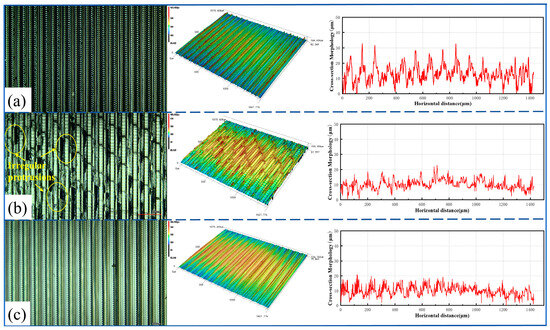
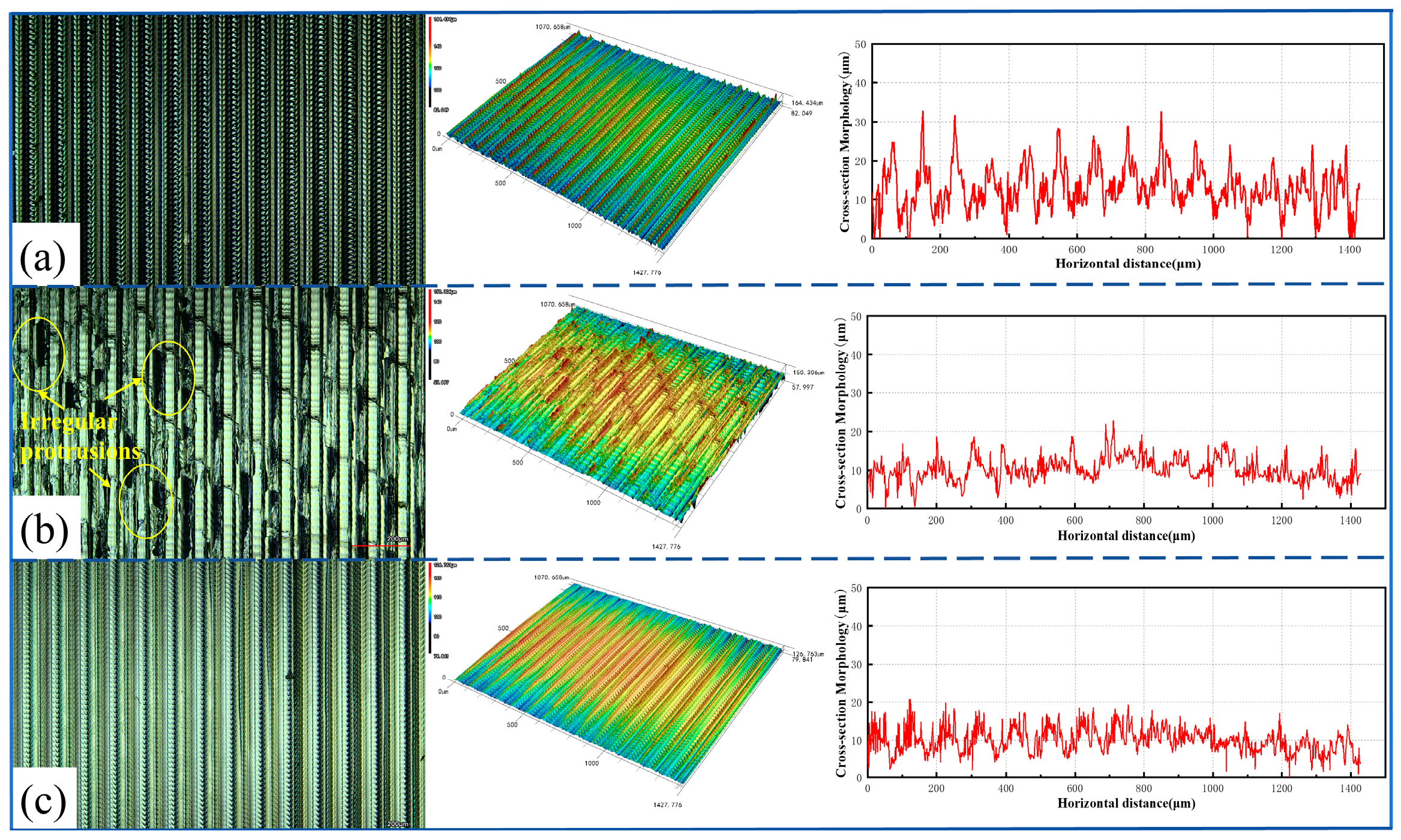
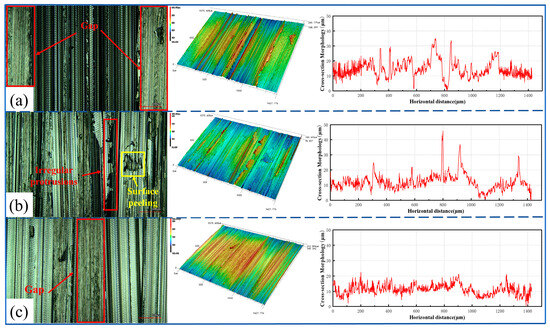
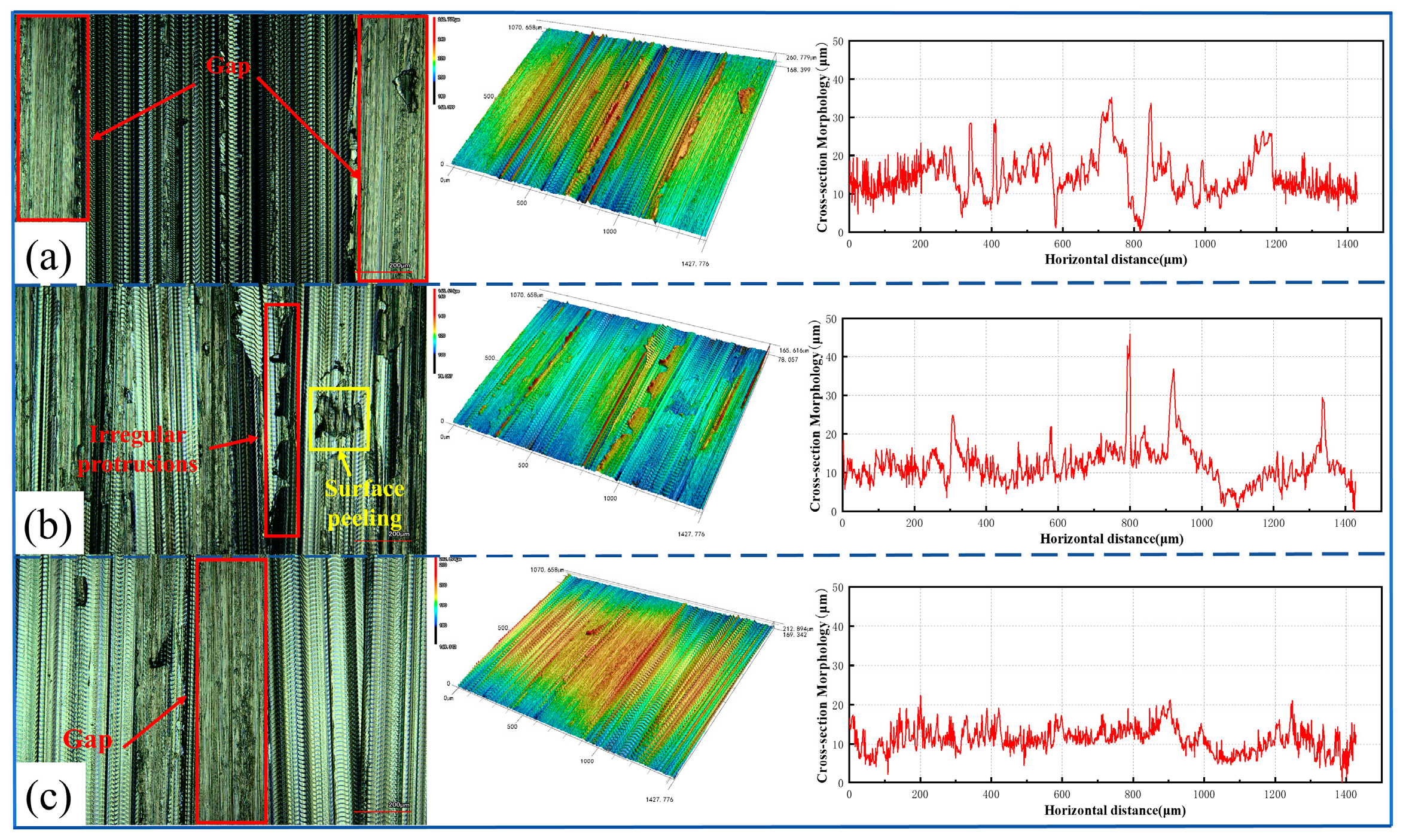
As shown in Figure 6a, the groove spacing on the surface of the SUBP group becomes wider when the feed rate increases to 1.5 mm/r. This occurs because an excessively high feed prevents a single burnishing pass fully covering the machining surface. Consequently, the proportion of un-machined area increases, which hinders the formation of continuous micro-textures. This indicates that excessively high feed rates can introduce macroscopic surface inhomogeneities due to insufficient machining coverage in the SUBP, which is detrimental to obtaining a stable surface. As shown in Figure 6b, the superposition of two intense plastic deformations in different directions causes significant damage to the material surface in the TUBP-RF, resulting in obvious defects such as excessive protrusion and localized surface peeling. These highly irregular and sharp defect features objectively increase the complexity of the surface but also introduce instability. The profile curve also shows violent and chaotic fluctuations, confirming the severe surface irregularity. As shown in Figure 6c, due to the high overlap between the two passes, the surface is macroscopically the smoothest and most uniform, with a relatively low overall height and gentle fluctuations in the profile curve. However, a significant gap area still exists after two passes at a high feed. As a result, the TUBP-FF surface forms a composite morphology of alternating burnished and un-machined zones. Although this morphology has small fluctuations, the presence of a large hydrophilic gap and the low average curvature of the peak are actually detrimental to improving hydrophobic properties.
Figure 6.
Surface morphology at a feed rate of 1.5 mm/r: (a) SUBP; (b) TUBP-RF; (c) TUBP-FF.
3.2. RSm, Rp, Sdr and Ra
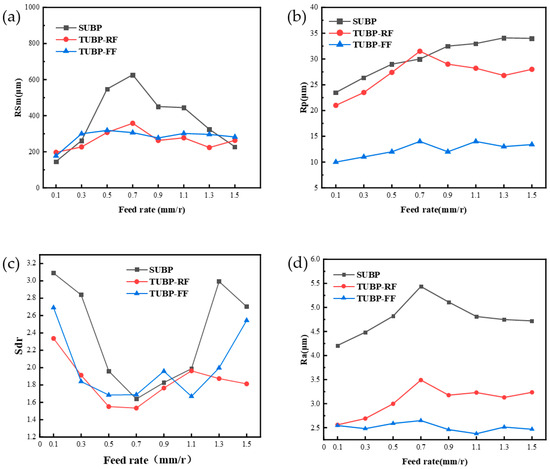
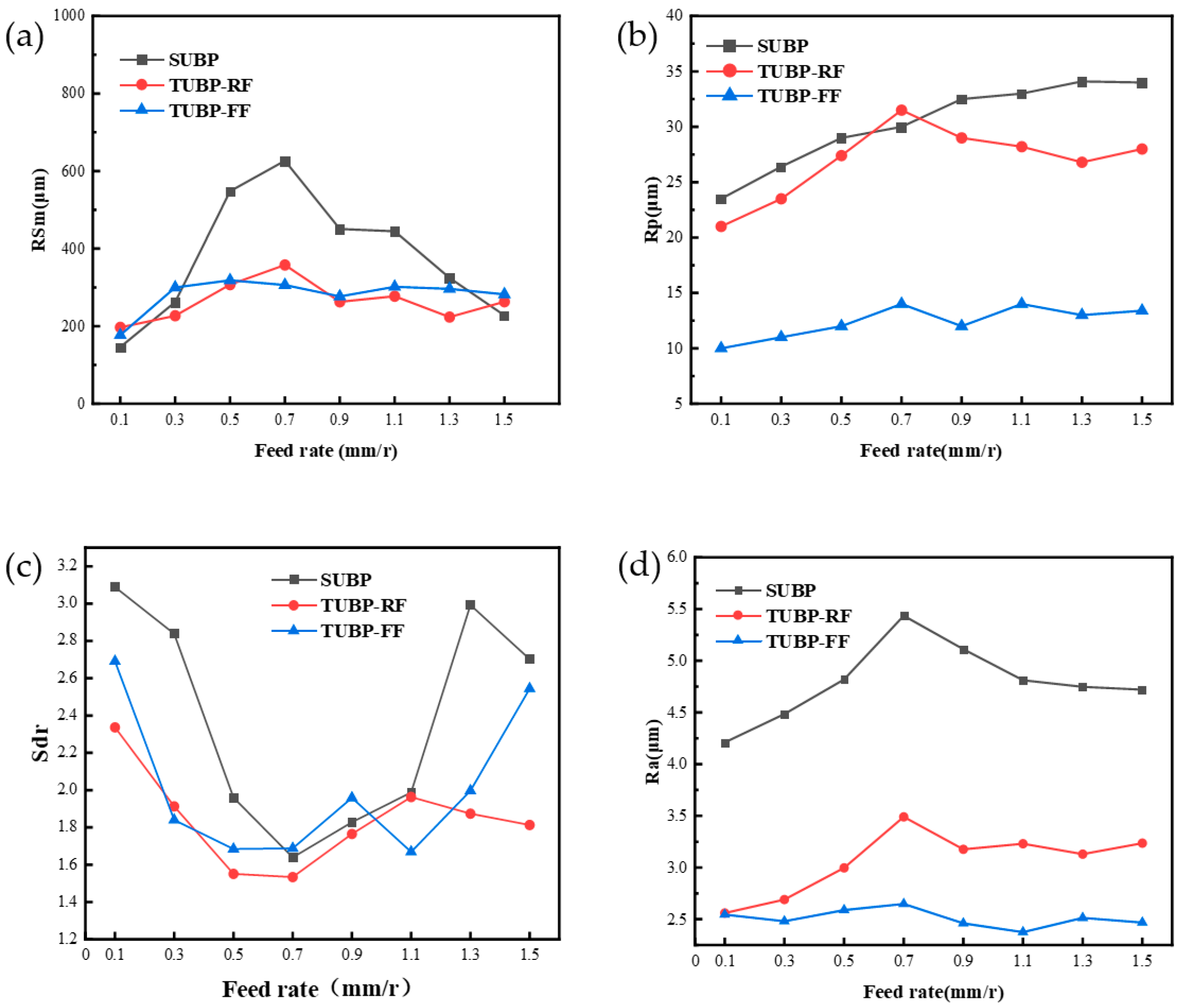
Figure 7a shows the trend of peak spacing RSm with feed rate under three different processing methods. The SUBP group curves show an overall trend of first increasing and then decreasing. This is because the ultrasonic burnishing process has a longer interaction time with the surface at low feed rates, resulting in more sufficient plastic flow of the material and leading to smaller and more compact peak spacing RSm. As the feed rate increases, the formation of gaps affects peak formation, making the surface structure unstable. The peak spacing RSm of the surface in the TUBP-RF shows a similar trend to that of the SUBP group, but the peak spacing RSm decreases significantly at high feed rates. This is because the second pass further compacts and refines the structure, which may help form finer and more regular micro-textures, thereby reducing the peak spacing RSm and making the micro-textures denser. The TUBP-FF also shows smaller peak spacing RSm, and the peak spacing RSm tends to stabilize overall with the feed rate. This indicates that the two-pass burnishing with forward feed direction has a strong smoothing effect, forming uniform and smooth micro-textures.
Figure 7.
Measured surface topography parameters as a function of feed rate under three different processing strategies: (a) RSm; (b) Rp; (c) Sdr; (d) Ra.
As shown in Figure 7b, all three sets of curves generally show an upward trend with increasing feed rate. In the SUBP at low feed rates, the burnishing trajectory overlap is high, resulting in a significant material accumulation effect, forming deep grooves and high protrusions, thus leading to a large average peak–valley height difference. After the gap appears, the peak–valley height difference gradually reaches a high level and tends to flatten out. Furthermore, the increasing feed rate leads to a gradual increase in tangential force, resulting in a slow increase in peak height Rp. In the TUBP-RF process, the second pass has little impact on the peak–valley height difference at low feed rates. However, with increasing feed rate, the second-pass burnishing process further compresses the protrusions formed in the first pass, producing a sharper array of protrusions and exhibiting a larger peak–valley height difference. At high feed rates, although microscopic defects may appear on the surface, this interlaced sharp texture remains relatively compact in the height direction; thus, the peak–valley height change is gradual. The TUBP-FF process, due to its smoothing effect, consistently produces the lowest and most stable peak and valley heights, with minimal surface undulations. Together with its extremely small average peak spacing RSm, it constitutes a highly homogenized three-dimensional morphological feature.
As shown in Figure 7c, the Sdr values of all three groups show a trend of first decreasing and then increasing with increasing feed rate. In the SUBP group at lower feed rates, the overlap rate of the burnishing tracks is high, and the repeated burnishing effect of the burnishing ball on the edge of the previous indentation is obvious, increasing the surface irregularity and actual area, thus resulting in a higher Sdr value of 3.089 μm. As the feed rate increases, the burnishing gap increases, and the shape of each groove formed by each burnishing is more independent, improving the regularity of the overall surface morphology and thus reducing the Sdr value to 1.639 μm. As the feed rate further increases, the gap width continuously increases, resulting in an even higher Sdr value. TUBP-RF introduces higher surface complexity through two-pass staggered burnishing. At low feed rates, the strong superposition effect of the two burnishing passes causes excessive material accumulation and surface disorder, with an Sdr value of 2.337 μm. As the feed rate increases, the two-pass processing forms a regular, sharp, staggered peak texture. Although this structure is sharp, the actual increase in surface area is relatively low, with an Sdr value of 1.534 μm. At high feed rates, although the gap is compensated for by the second pass, the intense plastic deformation leads to surface defects. These defects increase surface irregularities and the actual area, causing the Sdr value to rise again. At low feed rates, TUBP-FF has a smoothing effect, smoothing out the marks from the first pass of ultrasonic burnishing and finishing, resulting in a low Sdr value. At medium feed rates, it produces very uniform and smooth micro-textures, with a low Sdr value. At high feed rates, it also faces the problem of insufficient coverage leading to gaps, and the Sdr value slightly increases. As shown in Figure 7d, SUBP has the highest Ra value among the three processes. At low feed rates, Ra is approximately 4.5 μm, then increases to around 5.5 μm with increasing feed rate, before gradually decreasing and leveling off at around 4.7 μm at high feed rates. This is because at low feed rates, the burnishing trajectory overlap is high, resulting in large longitudinal undulations in the profile. As the feed rate increased, the burnishing gap increases, the shape of individual grooves became more independent, and the groove height reaches its maximum; thus, Ra gradually increases to its maximum value. With further increases in feed rate, smoother gaps appear, and the Ra value gradually decreases. In the Ra curves of TUBP-RF and TUBP-FF, the superposition of the two processing trajectories results in a lower overall Ra value. In the TUBP-RF group, the Ra curve shows a trend of first increasing and then decreasing, eventually leveling off. The two reverse processing steps create sharp, interlaced micro-textures. Compared to SUBP, TUBP-RF forms sharper protrusions, resulting in a relatively lower Ra value. At high feed rates, the surface integrity is compromised due to severe deformation, but Ra does not significantly recover, indicating that the texture formed has a certain degree of stability in the height direction. The Ra value of TUBP-FF is consistently the lowest among the three, and its curve is the flattest. This directly reflects the peak-shaving, valley-filling, and surface-smoothing effects of this process. The second pass’s co-directional flattening of the first pass’s marks greatly suppresses longitudinal undulations, thus maintaining a low and stable Ra value regardless of changes in feed rate.
3.3. Contact Angle
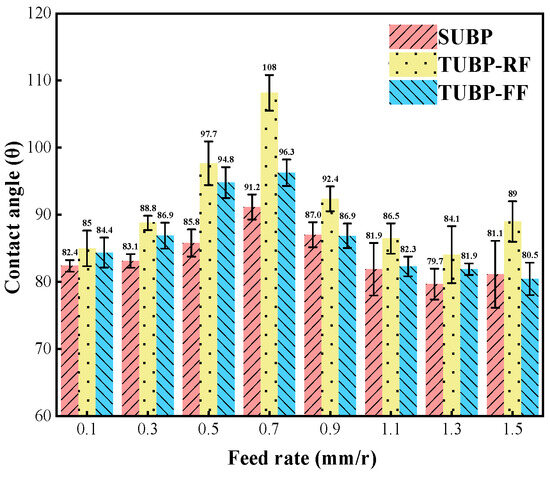
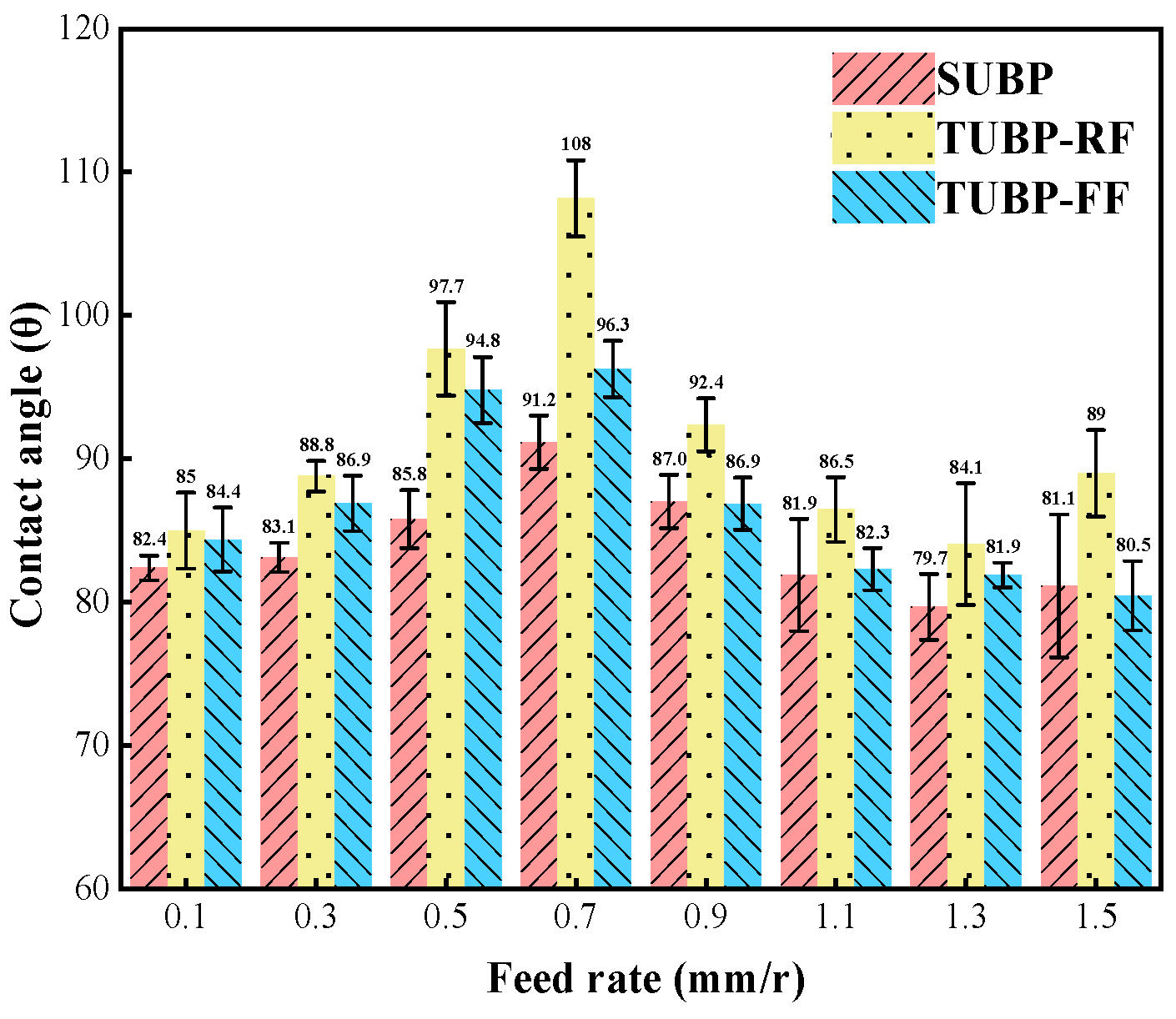
Figure 8 shows the contact angle under three methods at different feed rates. The average contact angle of the original surface was 52°, indicating obvious hydrophilicity. The average contact angle of the finished surface was 65°, showing a slight improvement but still not reaching hydrophobic levels. After ultrasonic burnishing treatment, all three processing techniques improved the surface hydrophobicity to varying degrees, indicating that the micro-textures prepared by ultrasonic burnishing can effectively control surface hydrophobicity. Under the three different processing methods, with the increase in feed rate, the contact angle showed a typical nonlinear trend of first increasing and then decreasing. The result show a strong correlation with surface texture and surface roughness, especially a positively correlation with RSM and a negative correlation with Sdr. It can be seen that the feed rate can be used to control texture parameters, thereby controlling surface hydrophobicity.
Figure 8.
Contact angle measurement results under three different processing strategies.
In the SUBP group, the contact angle value increased to over 90° at a feed rate of 0.7 mm/r, indicating that the surface achieved a transition from hydrophilic to hydrophobic. In the TUBP-RF group, the contact angle measurements were greater than 90° at feed rates of 0.5–0.9 mm/r, showing a wider hydrophobic range. Furthermore, the average contact angle reached a maximum of 108° at a feed rate of 0.7 mm/r. Under the TUBP-FF process, the contact angle values were also greater than 90° at feed rates of 0.5 mm/r and 0.7 mm/r, achieving a similar hydrophobic level. The comparison of average contact angle results shows that the TUBP-RF process exhibited the highest average contact angle, followed by TUBP-FF, while SUBP has the lowest overall. This indicates that multi-pass processing, especially the TUBP-RF process involving feeds in different directions, produces sharp, high-curvature, and staggered peak-shaped micro-textures, thereby improving hydrophobicity. The TUBP-RF process, due to its smoothing effect, forms a low-undulation surface. The hydrophobicity level is close to that of SUBP, indicating that although two ultrasonic burnishing in the same direction can improve morphological uniformity, the changes in micro-texture depth and periodicity are not as significant as in TUBP-RF. Therefore, the reduction in solids fraction is limited, and the hydrophobic enhancement effect is relatively mild.
From the error analysis, different processing paths have a significant impact on the consistency and stability of the surface micro-textures. In the SUBP, when the feed rate is low, the standard deviation of the contact angle measurement is small, and the surface micro-textures formation is relatively stable. However, at high feed rates, the appearance of gaps disrupts surface integrity, leading to a significant increase in the standard deviation. This indicates that excessively high feed rates in the SUBP introduce instability into the surface micro-textures. In the TUBP-RF process, due to the reverse feed in the machining trajectory, the two feeds in different directions during micro-textures formation change the direction of surface force, resulting in poor surface morphology uniformity. Consequently, the overall error bars are generally larger than those of SUBP and TUBP-FF. In contrast, the error bars of TUBP-FF are the most convergent, indicating that the two feeds in the same direction largely offset irregular protrusions on the surface, resulting in a more uniform workpiece surface.
In all experiments, the average contact angle measured for TUBP-RF was higher than that of SUBP and TUBP-FF. All three ultrasonic burnishing processes can control surface wettability by changing the micro-texture arrangement period, but the machining trajectory and feed method have fundamental differences in controlling the stability, repeatability, and hydrophobic properties of the micro-textures. Among them, the TUBP-RF process has the most significant advantages in shaping high contact angles and constructing effective air gaps, while TUBP-FF performs better in ensuring texture consistency and repeatability.
To confirm the regulatory effect of two-pass ultrasonic burnishing with reverse feed direction on contact angle, the Spearman correlation coefficient between surface roughness and contact angle was obtained, where a coefficient greater than 0.8 indicates a strong correlation and 0.5–0.8 indicates a moderate correlation. As shown in Table 2, it can be seen that RSm exhibits a strong positive correlation, while Sdr shows a strong negative correlation. There is more space under the droplet occupied by air when RSm is large (sparse structure). According to the Cassie model, the contact angle increases as the contact ratio between the droplet and air increases. However, a higher Sdr means that the surface is too complex, with “pits” or sharp edges, which actually destroy the stability of the air cushion and reduces the contact angle.
Table 2.
Spearman correlation coefficients of surface roughness and contact angle.
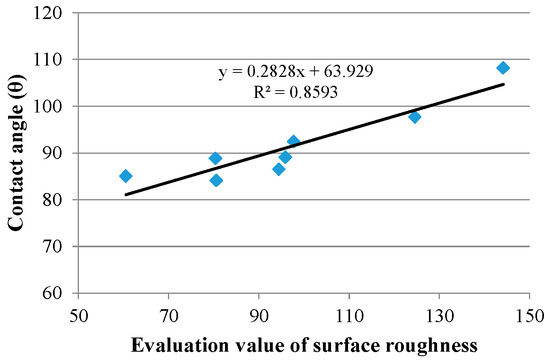
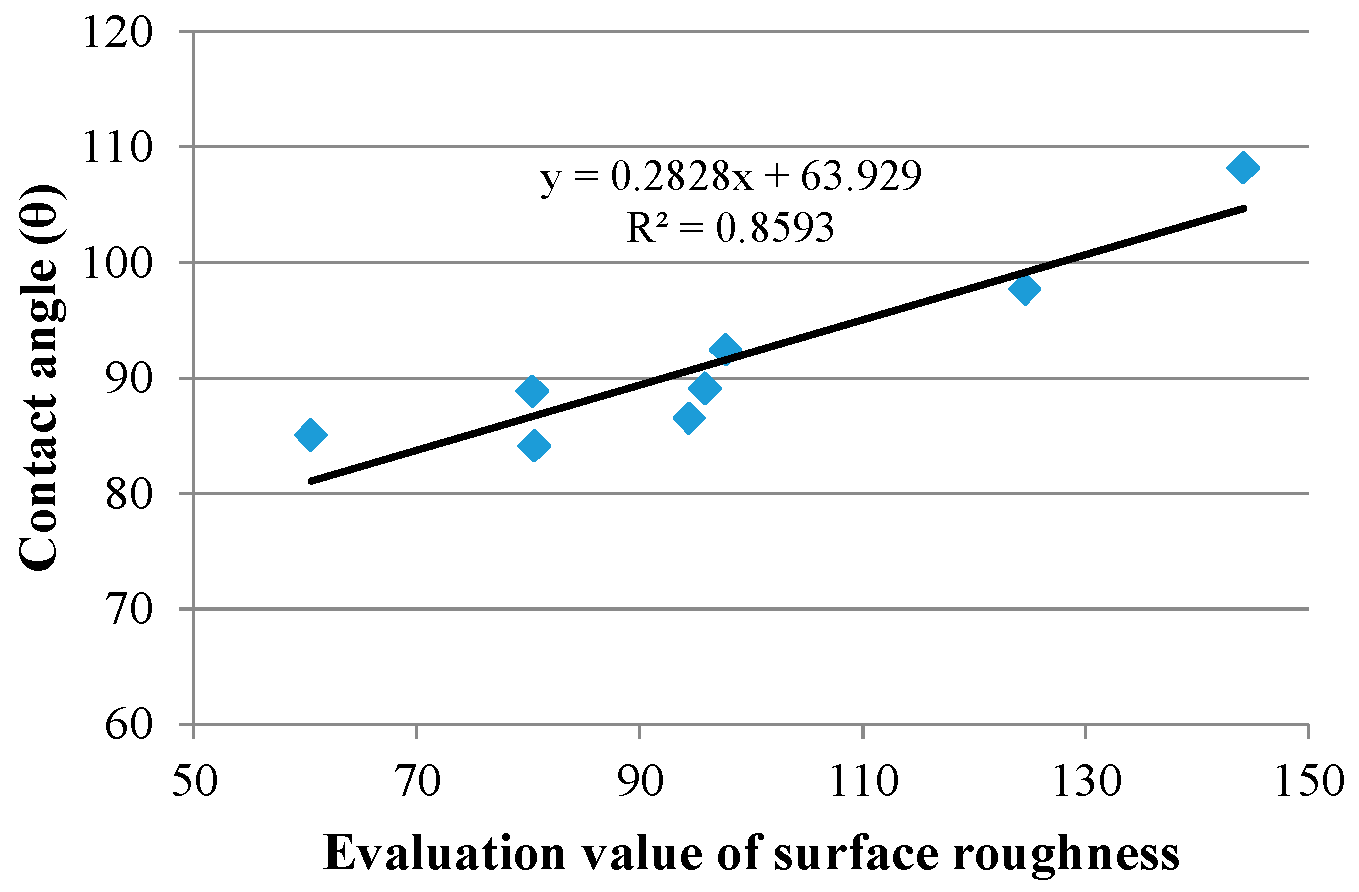
The correlation coefficient was used as an index to establish the relationship between contact angle and various surface roughness. As shown in Figure 9, it can be seen that there is a linear correlation between the contact angle and the evaluation value of surface roughness, which indicates that the two-pass ultrasonic burnishing with reverse feed direction method proposed in this study can effectively control surface texture and surface hydrophobicity.
Figure 9.
Relationship between the contact angle and surface roughness.
3.4. Water Droplet Sliding
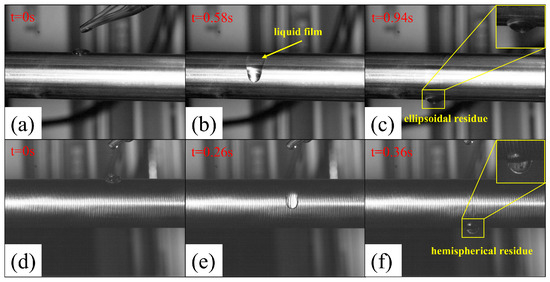
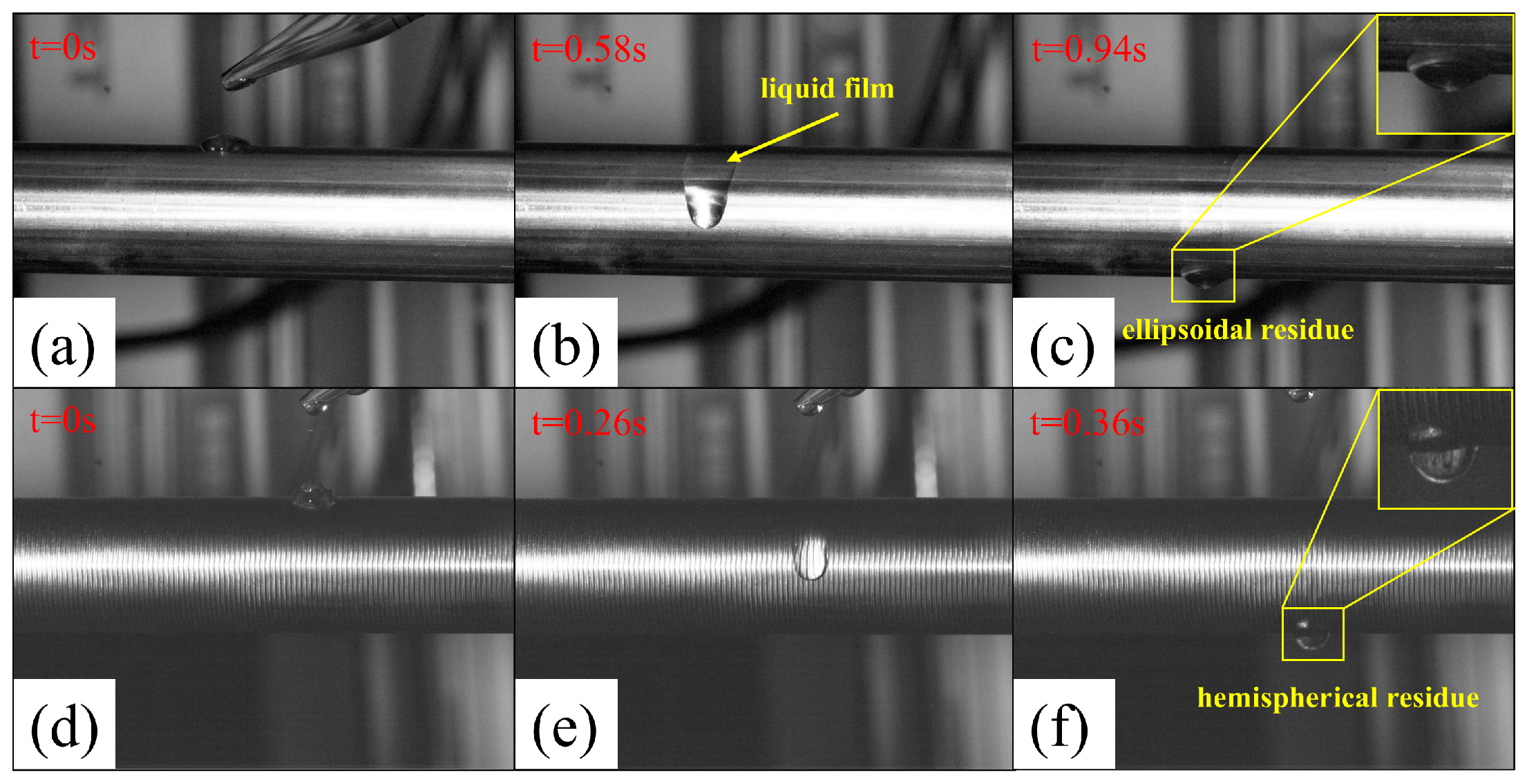
Figure 10 shows water droplet sliding on the original surface of the steel pipe and on the surface after TUBP-RF at a feed rate of 0.7 mm/r. As shown in Figure 10a,d, the water droplets on the original surface spread out when the water droplets just contact the workpiece surface, i.e., at t = 0 s, while the droplets on the surface after TUBP-RF processing are significantly fuller than those on the original surface. After TUBP-RF, the surface forms an array of high-curvature, interlaced sharp micro-protrusions, which increases the apparent contact angle and cause droplets to remain in the Cassie–Baxter hydrophobic state under static conditions. A substantial amount of air is trapped beneath the droplets, reducing the actual solid–liquid contact area. The liquid–gas interfacial tension dominates the droplet morphology, resulting in a fuller, more spherical appearance. Figure 10b,e show that when the droplets slide off the original surface, a distinct liquid film remains on the workpiece surface, while the droplets on the surface after TUBP-RF treatment maintain a full droplet shape during the sliding process, and the residual droplet size is significantly lower. As shown in Figure 10c,f, when the droplets on the original surface slide to the bottom, the remaining droplets are ellipsoidal, while the droplets remaining at the bottom of the surface after TUBP-RF treatment are hemispherical. This shape of residual droplet is more likely to detach from the steel pipe surface due to gravity, which is more conducive to direct contact between gas and solid in the thermal energy system, thereby improving heat transfer efficiency. The time taken for the water droplets to slide from top to bottom on the two surfaces is 0.94 s and 0.36 s, respectively. Under the optimal TUBP-RF parameters, the water droplet sliding time is reduced by 61.7% compared with the original surface, further demonstrating that the ultrasonic burnishing process under medium parameters can improve the hydrophobic properties of the material surface.
Figure 10.
Images of water droplets sliding down at different time points: (a–c) original surface; (d–f) TUBP-RF processing at a feed rate of 0.7 mm/r.
4. Conclusions
This study employed ultrasonic burnishing process to enhance the hydrophobic properties of 316 stainless steel pipes by fabricating micro-textures. The effects of feed rates under three processing methods (SUBP, TUBP-RF, and TUBP-FF) on the micro-textures and hydrophobicity were investigated. The following conclusions can be drawn:
Compared with SUBP and TUBP-FF, TUBP-RF exhibits more effective micro-textures formation due to the introduction of burnishing trajectories with reverse feed direction. This strategy generates reverse tangential forces that induce secondary plastic flow and material accumulation at texture intersections, forming interlaced micro-textures with higher curvature and greater three-dimensionality. The resulting surface morphology, characterized by increased peak height Rp, moderate peak spacing RSm, and reduced solid–liquid contact area (Sdr), promotes a Cassie–Baxter wetting state with a maximum contact angle of 108° and a 61.7% reduction in droplet sliding time. This demonstrates that toolpath-controlled ultrasonic burnishing is an effective coating-free approach for tailoring surface hydrophobicity.
Under TUBP-RF conditions, surface morphology exhibits a strong dependence on feed rate. At a feed rate of 0.1 mm/r, excessive trajectory overlap causes over-processing and irregular protrusions. At a feed rate of 0.7 mm/r, medium burnishing spacing and bidirectional deformation promote the formation of well-defined interlaced micro-textures, characterized by increased Rp, RSm, and reduced Sdr. At a feed rate of 1.5 mm/r, although gap coverage is partially improved by the second pass, the superposition of intense plastic deformation leads to surface damage and morphological instability. Therefore, TUBP-RF possesses an optimal processing window for stable micro-texture fabrication.
The hydrophobic surface state achieved via TUBP-RF, characterized by a high contact angle and reduced solid–liquid contact area, is theoretically beneficial for limiting the interaction between the metal surface and corrosive electrolytes. Although the current work focuses on wettability control, the micro-textures fabricated here provide a promising foundation for future research into the corrosion resistance of ultrasonically burnished 316 stainless steel pipes.
While this study establishes the feasibility of using reverse-feed ultrasonic burnishing for hydrophobic surface engineering, future research should focus on validating the durability and functional performance of these micro-textured surfaces under practical operating conditions. Specifically, long-term mechanical stability under thermal cycling and flow erosion, as well as corrosion resistance in aggressive environments, warrant systematic investigation. Additionally, the relationship between micro-texture geometry and heat transfer enhancement in condensation applications should be quantitatively evaluated to bridge the gap between surface characterization and thermal performance.
Author Contributions
Conceptualization, P.Z. and G.S.; methodology, H.X., M.J. and L.Y.; validation, P.S. and L.D.; formal analysis, H.X. and M.J.; investigation, H.X. and M.J.; data curation, H.X. and M.J.; writing—original draft preparation, H.X. and M.J.; writing—review and editing, P.Z. and J.D.; supervision, P.Z.; project administration, P.S. and L.D. All authors have read and agreed to the published version of the manuscript.
Funding
This research was funded by the Shandong Provincial Natural Science Foundation (ZR2024QE106) and the National Natural Science Foundation of China (52275438). This work was also supported by the Major Innovation Project of Qilu University of Technology (Shandong Academy of Sciences) (2025ZDZX04).
Institutional Review Board Statement
Not applicable.
Informed Consent Statement
Not applicable.
Data Availability Statement
The raw data supporting the conclusions of this article will be made available by the authors on request.
Conflicts of Interest
Authors Peng Sang and Linfeng Dong were employed by the company Shandong Lurun Heat Energy Science & Technology Co., Ltd. The remaining authors declare that the research was conducted in the absence of any commercial or financial relationships that could be construed as a potential conflict of interest.
References
- Vasiliev, L.L. Heat pipes in modern heat exchangers. Appl. Therm. Eng. 2005, 25, 1–19. [Google Scholar] [CrossRef] [Scilit]
- Misyura, S.Y.; Kuznetsov, G.V.; Feoktistov, D.V.; Volkov, R.; Morozov, V.; Orlova, E. The influence of the surface microtexture on wettability properties and drop evaporation. Surf. Coat. Technol. 2019, 375, 458–467. [Google Scholar] [CrossRef] [Scilit]
- Lian, Z.; Zhou, J.; Ren, W.; Chen, F.; Xu, J.; Tian, Y.; Yu, H. Recent progress in bio-inspired macrostructure array materials with special wettability—From surface engineering to functional applications. Int. J. Extrem. Manuf. 2023, 6, 012008. [Google Scholar] [CrossRef] [Scilit]
- Dixit, U.S.; Pandey, P.M.; Verma, G.C. Ultrasonic-assisted machining processes: A review. Int. J. Mechatron. Manuf. Syst. 2019, 12, 227–254. [Google Scholar]
- Hosseinabadi, H.N.; Sajjady, S.A.; Amini, S. Creating micro textured surfaces for the improvement of surface wettability through ultrasonic vibration assisted turning. Int. J. Adv. Manuf. Technol. 2018, 96, 2825–2839. [Google Scholar] [CrossRef] [Scilit]
- Lotfi, M.; Sajjady, S.A.; Amini, S. Wettability analysis of titanium alloy in 3D elliptical ultrasonic assisted turning. Int. J. Lightweight Mater. Manuf. 2019, 2, 235–240. [Google Scholar] [CrossRef] [Scilit]
- Zhu, L.; Ni, C.; Yang, Z.; Liu, C. Investigations of micro-textured surface generation mechanism and tribological properties in ultrasonic vibration-assisted milling of Ti–6Al–4V. Precis. Eng. 2019, 57, 229–243. [Google Scholar] [CrossRef] [Scilit]
- Zhang, Z.; Liu, W.; Chen, X.; Zhang, Y.; Xu, C.; Wang, K.; Wang, W.; Jiang, X. Generation mechanism of surface micro-texture in axial ultrasonic vibration-assisted milling (AUVAM). Int. J. Adv. Manuf. Technol. 2022, 122, 1651–1667. [Google Scholar] [CrossRef] [Scilit]
- Zamani, M.; Farahnakian, M.; Elhami, S. Employment of ultrasonic assisted turning in the fabrication of micro-textures to improve the surface adhesion of the titanium implant. Proc. Inst. Mech. Eng. Part B J. Eng. Manuf. 2021, 235, 1983–1991. [Google Scholar] [CrossRef] [Scilit]
- Liu, X.; Zhang, J.; Hu, X.; Wu, D. Influence of tool material and geometry on micro-textured surface in radial ultrasonic vibration-assisted turning. Int. J. Mech. Sci. 2019, 152, 545–557. [Google Scholar]
- Xia, Z.; Gao, G.; Wang, Y.; Zhang, M.; Jia, F.; Shan, C. Surface micro-texture and tribological properties in longitudinal-torsional ultrasonic-assisted milling Ti2AlNb. Int. J. Adv. Manuf. Technol. 2023, 126, 1919–1935. [Google Scholar] [CrossRef] [Scilit]
- Liu, X.; Wu, D.; Zhang, J.; Hu, X.; Cui, P. Analysis of surface texturing in radial ultrasonic vibration-assisted turning. J. Mater. Process. Technol. 2019, 267, 186–195. [Google Scholar] [CrossRef] [Scilit]
- John, M.; Ralls, A.M.; Dooley, S.C.; Thazhathidathil, A.K.V.; Perka, A.K.; Kuruveri, U.B.; Menezes, P.L. Ultrasonic surface rolling process: Properties, characterization, and applications. Appl. Sci. 2021, 11, 10986. [Google Scholar] [CrossRef] [Scilit]
- Meng, Y.; Deng, J.; Zhang, Y.; Wang, S.; Li, X.; Yue, H.; Ge, D. Tribological properties of textured surfaces fabricated on AISI 1045 steels by ultrasonic surface rolling under dry reciprocating sliding. Wear 2020, 460, 203488. [Google Scholar] [CrossRef] [Scilit]
- Meng, Y.; Deng, J.; Wang, R.; Sun, Q.; Zhang, Z. Theoretical and numerical investigation of micro-textures fabrication by ultrasonic surface rolling process. Int. J. Adv. Manuf. Technol. 2023, 125, 73–89. [Google Scholar] [CrossRef] [Scilit]
- Zhao, J.; Liu, Z.; Wang, B. Surface texture and friction property of Ti-6Al-4V processed by rotary ultrasonic rolling. Int. J. Adv. Manuf. Technol. 2021, 115, 463–474. [Google Scholar]
- Yu, X.; Wang, Y.; Wang, C.; Zhang, P. Surface preparation and wear mechanism of high-strength microtextured aluminum alloys using combined cutting and ultrasonic rolling process. Wear 2025, 564, 205734. [Google Scholar] [CrossRef] [Scilit]
- ISO 25178; Geometrical Product Specifications (GPS)—Surface Texture: Areal. International Organization for Standardization: Geneva, Switzerland, 2021.

Disclaimer/Publisher’s Note: The statements, opinions and data contained in all publications are solely those of the individual author(s) and contributor(s) and not of MDPI and/or the editor(s). MDPI and/or the editor(s) disclaim responsibility for any injury to people or property resulting from any ideas, methods, instructions or products referred to in the content. |
© 2026 by the authors. Licensee MDPI, Basel, Switzerland. This article is an open access article distributed under the terms and conditions of the Creative Commons Attribution (CC BY) license.