Enhancement of Flame Resistance of Cotton Fabrics Using Multilayer Biomaterial Coatings of Chitosan and Sodium Alginate



Highlights
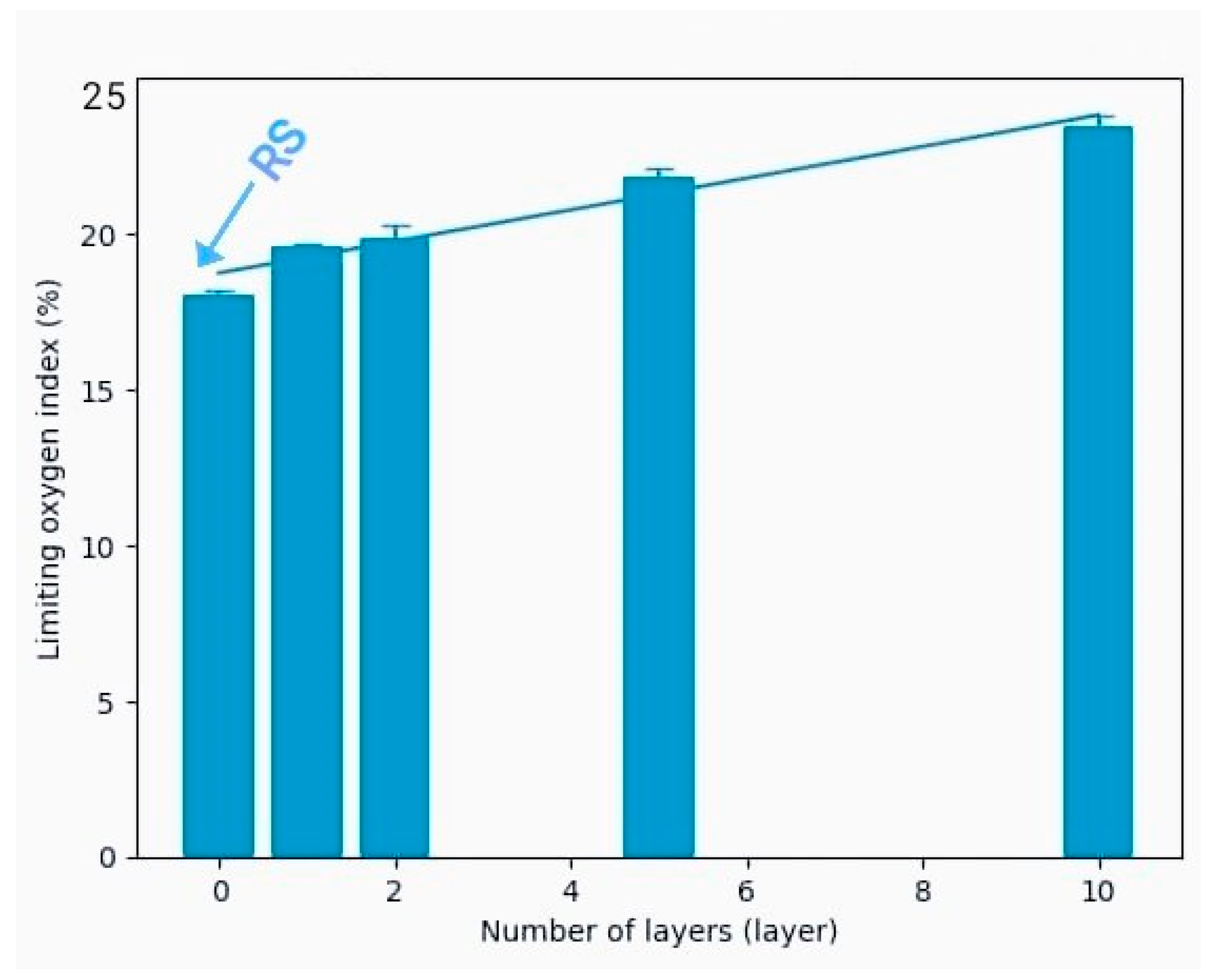
- Chitosan/sodium alginate multilayer biocoatings increase cotton flame resistance, with the LOI for combustion reaching 23.47%.
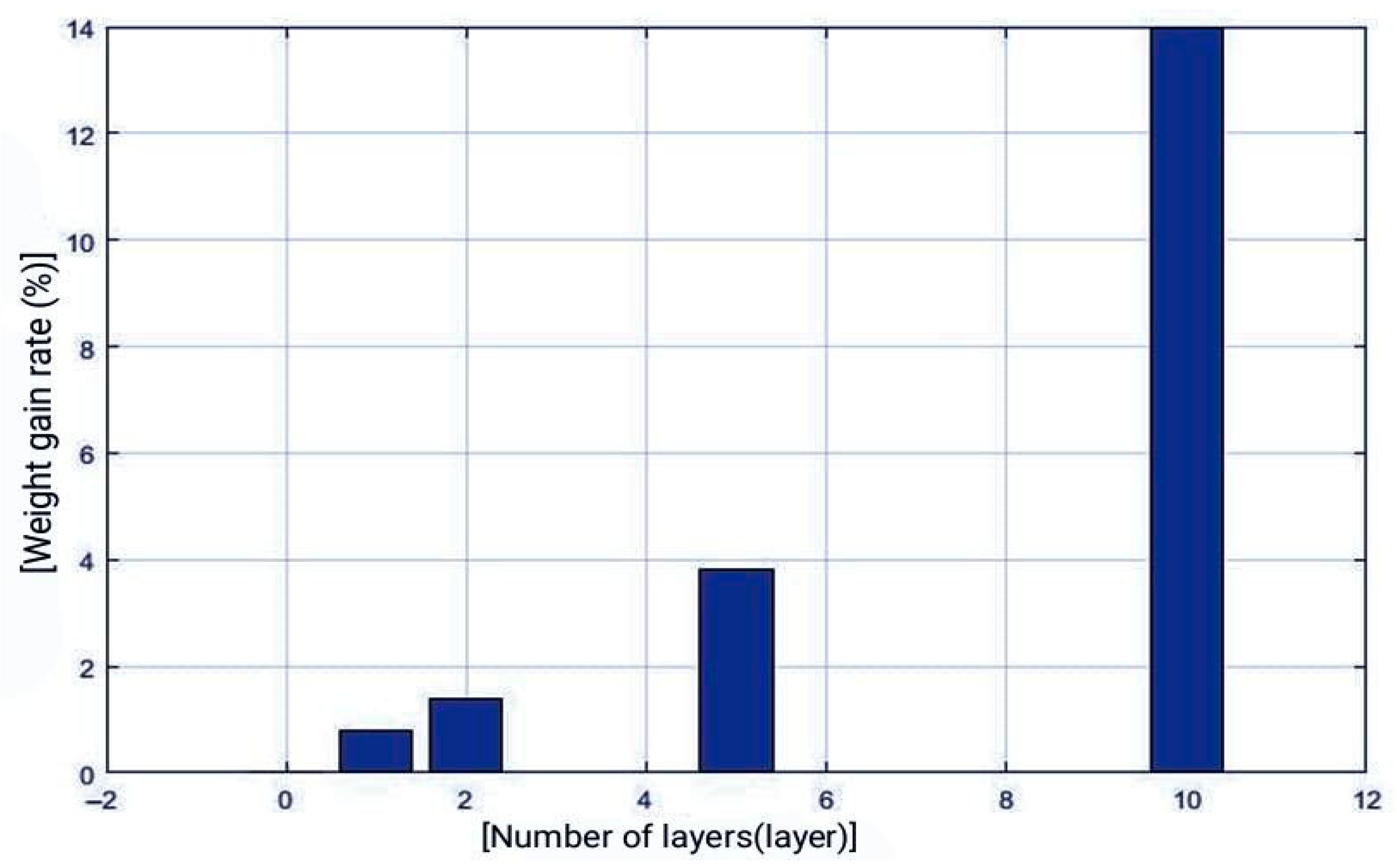
- Ten-bilayer samples pass the vertical flame test with a 9.72 cm char length and zero burning droplets, representing a 68% char length reduction and complete drip elimination.
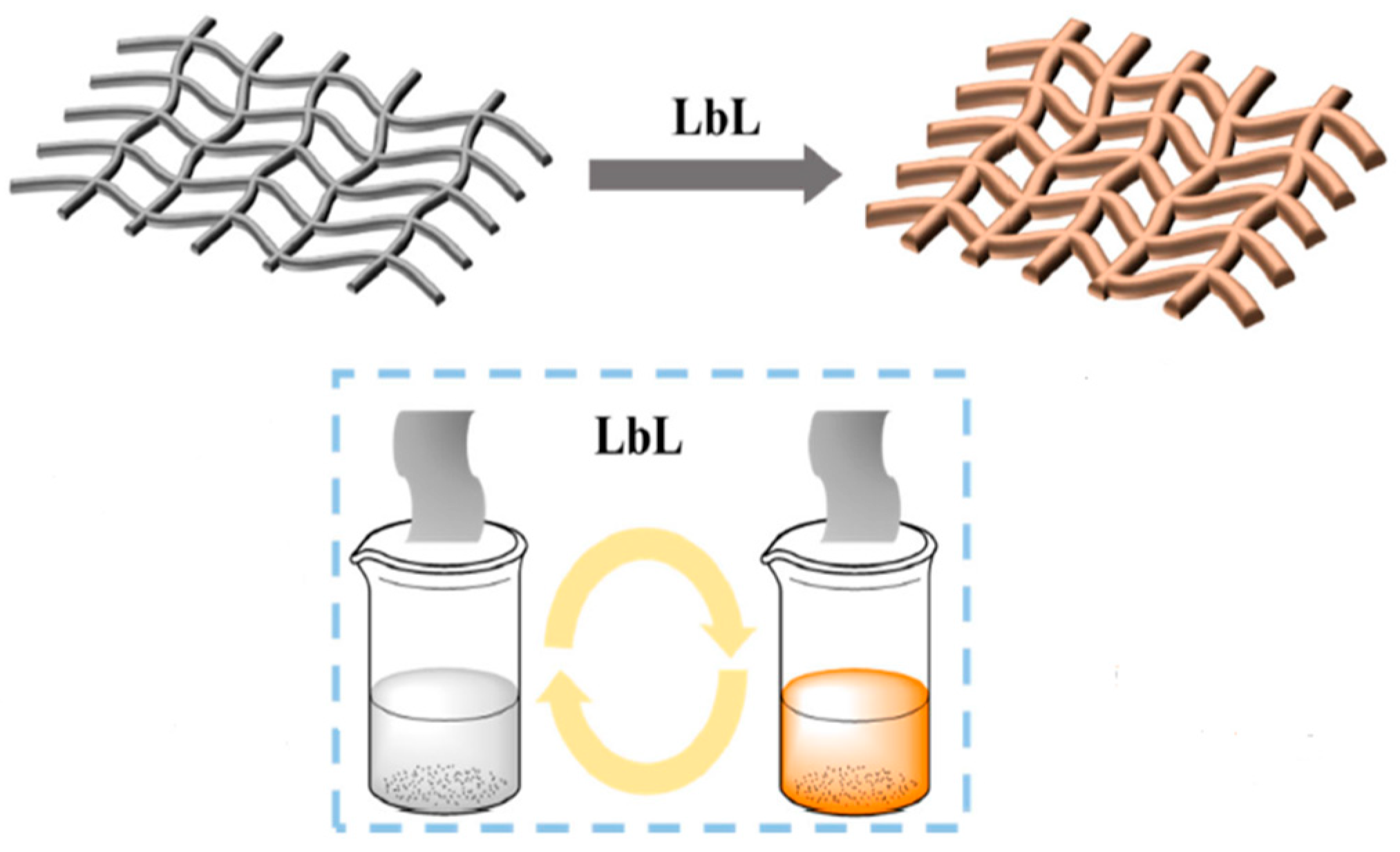
- Layer by layer, the assembly creates cohesive and protective carbon barriers that may reduce the likelihood of flammable gas formation due to heat feedback from the combustion zone.
- Biobased coatings provide sustainable environmental alternatives to synthetic chemical flame retardants commonly used in protective textiles and industrial applications.
- Scalable coating technology demonstrates strong potential for the commercial production of high-performance flame-resistant fabrics for safety garments and protective textiles.
Abstract
Share and Cite
Nazha, H.M.; Osman, T.; Shash, M.; Mohammed, L. Enhancement of Flame Resistance of Cotton Fabrics Using Multilayer Biomaterial Coatings of Chitosan and Sodium Alginate. Coatings 2026, 16, 311. https://doi.org/10.3390/coatings16030311
Nazha HM, Osman T, Shash M, Mohammed L. Enhancement of Flame Resistance of Cotton Fabrics Using Multilayer Biomaterial Coatings of Chitosan and Sodium Alginate. Coatings. 2026; 16(3):311. https://doi.org/10.3390/coatings16030311
Chicago/Turabian StyleNazha, Hasan Mhd, Thaer Osman, Mayssa Shash, and Layal Mohammed. 2026. "Enhancement of Flame Resistance of Cotton Fabrics Using Multilayer Biomaterial Coatings of Chitosan and Sodium Alginate" Coatings 16, no. 3: 311. https://doi.org/10.3390/coatings16030311
APA StyleNazha, H. M., Osman, T., Shash, M., & Mohammed, L. (2026). Enhancement of Flame Resistance of Cotton Fabrics Using Multilayer Biomaterial Coatings of Chitosan and Sodium Alginate. Coatings, 16(3), 311. https://doi.org/10.3390/coatings16030311