1. Introduction
At present, joint replacement surgery is the most effective treatment option for advanced joint diseases in clinical practice and has been widely applied throughout the word [
1,
2]. The contact modes of traditional artificial joints, such as “metal-to-metal”, “ceramic-to-ceramic” or “metal-to-polymer” and other “hard-to-hard” contact methods, will inevitably lead to continuous wear of the joint contact surface, which seriously limits their long-term application under high-stress loading conditions [
3,
4,
5]. Furthermore, with the intensification of population aging and the decrease in the average age of patients, artificial joints must live longer and participate in more demanding activities, which puts forward higher requirements for the lubrication performance of joint materials [
6,
7]. Therefore, it is urgent to bridge the performance gap that exists between traditional artificial joint materials and natural joints in terms of lubrication performance, mechanical compatibility, and biocompatibility.
A healthy natural joint is mainly composed of cartilage, synovial fluid and synovial membrane [
8]. The cartilage covering the articular surface endows the joint with extraordinary lubrication and load-bearing capacity, enabling it to achieve nearly frictionless movement and decades of durability within human joints [
9,
10]. The unique structure and composition of natural cartilage (water, collagen, and proteoglycans) play a major role [
11,
12]. Hydrogels are typically defined as three-dimensional hydrophilic polymer networks with a water content exceeding 50% of their dry weight. In many biomedical applications, the water content of hydrogels is usually between 70% and 95% to simulate the water environment of natural tissues. The water phase state in hydrogels is a key factor that regulates their material diffusion rate, biocompatibility, and mechanical properties [
13]. Recently, Polyvinyl alcohol (PVA) hydrogel materials have been regarded as the most promising alternative materials for biomimetic articular cartilage due to their characteristics of a three-dimensional porous network similar to natural cartilage, high water content, controllable mechanical properties and good biocompatibility [
14,
15]. Many studies have attempted to introduce hydrogels onto hard substrates such as titanium alloys, polyetheretherketone, and ultra-high-molecular-weight polyethylene, and have investigated the lubrication performance of composite samples [
16,
17,
18]. However, they still have drawbacks, such as mechanical mismatch between hardness and softness, weak bonding, and lack of natural fluid.
Natural cartilage, with its nonlinear stress–strain curve, achieves compliant buffering at low strains and high load-bearing capacity at high strains, effectively avoiding the common “incompatibility between hardness and softness” problem found in artificial materials. Its interpenetrating network structure of collagen and proteoglycans provides excellent energy dissipation and tear resistance, compensating for the inherent defect of “weak ligaments” in single polymer materials. The dynamic pressure circulation mechanism of the interstitial fluid within the system endows the interface with a unique “natural fluidity”, enabling efficient fluid lubrication. In contrast, although the conventional polyethylene glycol interpenetrating system can to some extent regulate stiffness, its linear elastic response and static interface characteristics still fail to fully replicate the nonlinear mechanical behavior and dynamic fluid lubrication mechanism of natural cartilage. Moreover, the large amount of negatively charged proteoglycan in the natural cartilage matrix can absorb cations or be combined with a large amount of water, providing sufficient lubrication for the cartilage, and it can increase the elasticity of articular cartilage through the repulsive force between negative charges. Therefore, we will attempt to introduce anionic polymers into the hydrogel to simulate the negative charge characteristics of natural cartilage and adsorb amphoteric ions to simulate the lubricants in natural synovial fluid.
SBMA is a typical zwitterionic monomer, which simultaneously contains positively charged quaternary ammonium groups (-N
+(CH
3)
3) and negatively charged sulfonic acid groups (-SO
3−), but overall is electrically neutral. The amphoteric groups could bind a large number of water molecules through strong ionic–dipole interactions, forming a highly ordered and stable hydrated layer on the material surface. This hydrated layer exhibited a fluid lubrication effect under shear force, significantly reducing friction. This also has been reported in many studies [
19,
20,
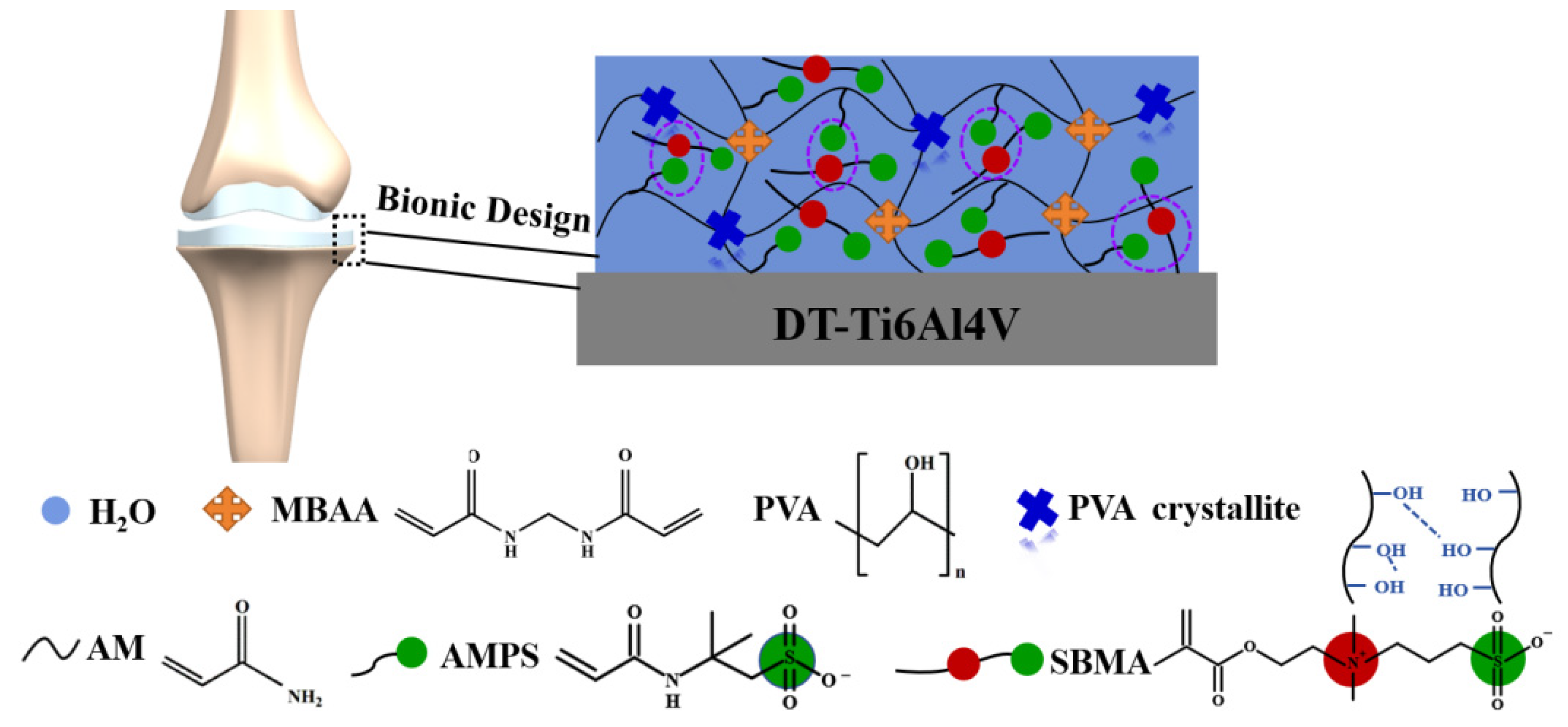
21]. Based on the above, to simulate the continuous gradient structure of natural joints from soft to hard and the composition gradient of cartilage, a negatively charged hydrogel (soft)-Ti6Al4V (hard) composite structure doping zwitterionic monomer brushes was constructed, and its lubrication performance and lubrication mechanism were studied and discussed in depth. The hydrogel layer was introduced onto a porous Ti6Al4V surface using ultraviolet irradiation combined with freeze–thaw cycles, and then the SBMA zwitterionic monomer was introduced through physical doping to provide hydration lubrication. The construction mechanism diagram of the SBMA/DT-Ti6Al4V composite bearing interface is presented in
Figure 1. This innovative research approach provides important theoretical inspiration and brand new ideas for the design of high-performance artificial joint bearing interfaces.
2. Experimental Section
2.1. Materials
The Ti6Al4V plates were purchased form Dongguan Haoti Metal Materials Co., Ltd. (Dongguan, China). Acrylamide (AM) was supplied by Shanghai Macklin Biochemical Co., Ltd. (Shanghai, China). 2-Acrylamido-2-methyl-1-propanesulfonic acid (AMPS), N,N′-methylene bisacrylamide (MBAA) and α-ketoglutaric acid (KA) were all received from Shanghai Aladdin Biochemical Technology Co., Ltd. (Shanghai, China). α-ketoglutaric acid (KA) was selected as a water-soluble photoinitiator based on the comprehensive consideration of biocompatibility, reaction system compatibility, coating uniformity and friendliness to the titanium substrate. The advantages are as follows: (1) Excellent biocompatibility and low cytotoxicity: KA is a natural intermediate metabolite in the tricarboxylic acid cycle, and its degradation products can be normally metabolized in the body. (2) Excellent water solubility: KA can be uniformly dissolved in the aqueous precursor solution, ensuring uniform initiation efficiency during UV irradiation, thereby forming a uniformly structured hydrogel coating. (3) Highly efficient ultraviolet light initiation capacity: Under ultraviolet light irradiation, KA can effectively generate active free radicals, initiating the polymerization and cross-linking reactions of monomers such as AM and AMPS. (4) Compatibility with porous titanium alloy matrix: The mild KA has no adverse effect on the mechanical properties and surface chemical states of the Ti6Al4V matrix. 3-(dimethyl{3-[(2-methylacryloyl)amino]propyl}ammonio)propan-1-sulfonate (SBMA) monomer was bought form Changzhou Yipintang Chemical Co., Ltd. (Changzhou, China). Phosphate buffer (PBS) was produced by Guangzhou Xiang Bo Biological Technology Co., Ltd. (Guangzhou, China). Calf serum was obtained from Shanghai Yuanye Bio-Technology Co., Ltd. (Shanghai, China). All reagents in this experiment were of AR grade.
2.2. Preparation of Hydrogel/DT-Ti6Al4V Composite Specimen
To enhance the bonding between the hydrogel and the substrate, carbon–carbon double bonds were first introduced onto the DT-Ti6Al4V surface through the immersion method. The specific steps of Ti6Al4V duplex treatment and the surface modification of the DT-Ti6Al4V substrate were described in detail in our previous work [
22]. Meanwhile, the PVA powder was dissolved in deionized water and stirred at a low speed for 8 h in a 95 °C water bath to prepare 0.04 g/mL PVA solution. Then, a certain amount of AM (1.6324 g), AMPS (0.5 g), MBAA (0.3% of the sum of the mass of AM and AMPS), and KA (0.3% of the sum of the mass of AM and AMPS) were thoroughly dissolved in transparent PVA solution (10 mL) through magnetic stirring. The hydrogel precursor solution was dropped onto substrate using a rubber dropper and covered with a self-made mold to construct the hydrogel coating. Then, it was irradiated under ultraviolet light for 30 min and then subjected to freeze–thaw cycles in the refrigerator 5 times. The sample was frozen in a −20 °C refrigerator for 21 h, and then thawed at room temperature for 3 h, forming one cycle. The mold was removed and the obtained hydrogel/DT-Ti6Al4V composite sample was named PVA-PAM-PAMPS/DT-Ti6Al4V. The cross-linking ratio [the mass ratio of MBAA to the polymerization monomers (AM and AMPS)] is 0.3%. The gel fraction (92.3%) was measured by the mass method, indicating that the majority of monomers successfully participated in the network formation, and the gel formation efficiency was high. In this process, the PVA chains form crystalline regions through repeated freeze–thaw cycles as physical cross-linking points, providing the basic network framework and toughness. AM and AMPS copolymerize under ultraviolet radiation, introducing a covalent cross-linking network and strong hydrophilic sulfonic acid functional groups.
2.3. Physical Doping of SBMA Monomers
The prepared PVA-PAM-PAMPS/DT-Ti6Al4V composite samples were soaked in deionized water for two days and then freeze-dried. Then, the freeze-dried samples were, respectively, immersed in SBMA solutions with concentrations of 5, 10, 15, 20 and 25 mg/mL for 2 days, and then soaked in deionized water for another 2 days to remove the excess SBMA monomers. The final obtained sample was labeled as xSBMA/DT-Ti6Al4V, where x represents the concentration of the SBMA solution.
2.4. Characterization
The chemical state of SBMA monomer, PVA-PAM-PAMPS/DT-Ti6Al4V and SBMA/DT-Ti6Al4V samples was characterized using Fourier Transform Infrared Spectrometers (ATR-FTIR, Nicolet IS20, USA). The surface morphology of the hydrogel/DT-Ti6Al4V samples, the cross-sectional morphology of the DT-Ti6Al4V substrate and the hydrogel/DT-Ti6Al4V samples were all observed through scanning electron microscopy (SEM, JSM-IT500HR, Japan). Before SEM observation, the hydrogel/DT-Ti6Al4V samples were freeze-dried and then sputtered with a layer of gold. The tribological performance of the as-prepared hydrogel/DT-Ti6Al4V samples was measured using a multifunctional friction testing machine with a reciprocating mode (UMT-2, Bruker, Ettlingen, Germany). The reciprocating stroke was set at 2 mm. The upper friction pair and the lower friction pair respectively adopted stainless steel balls with a radius of 3 mm and the as-prepared hydrogel/DT-Ti6Al4V samples. The test samples were placed in self-made plastic molds, and the deionized water was added as the lubricating fluid. In this experiment, the applied load, sliding frequency and friction time were set at 2–5 N, 0.25–2 Hz and 15 min, respectively. The SBMA/DT-Ti6Al4V samples were also tested in PBS buffer and calf serum under the same test conditions.
3. Results
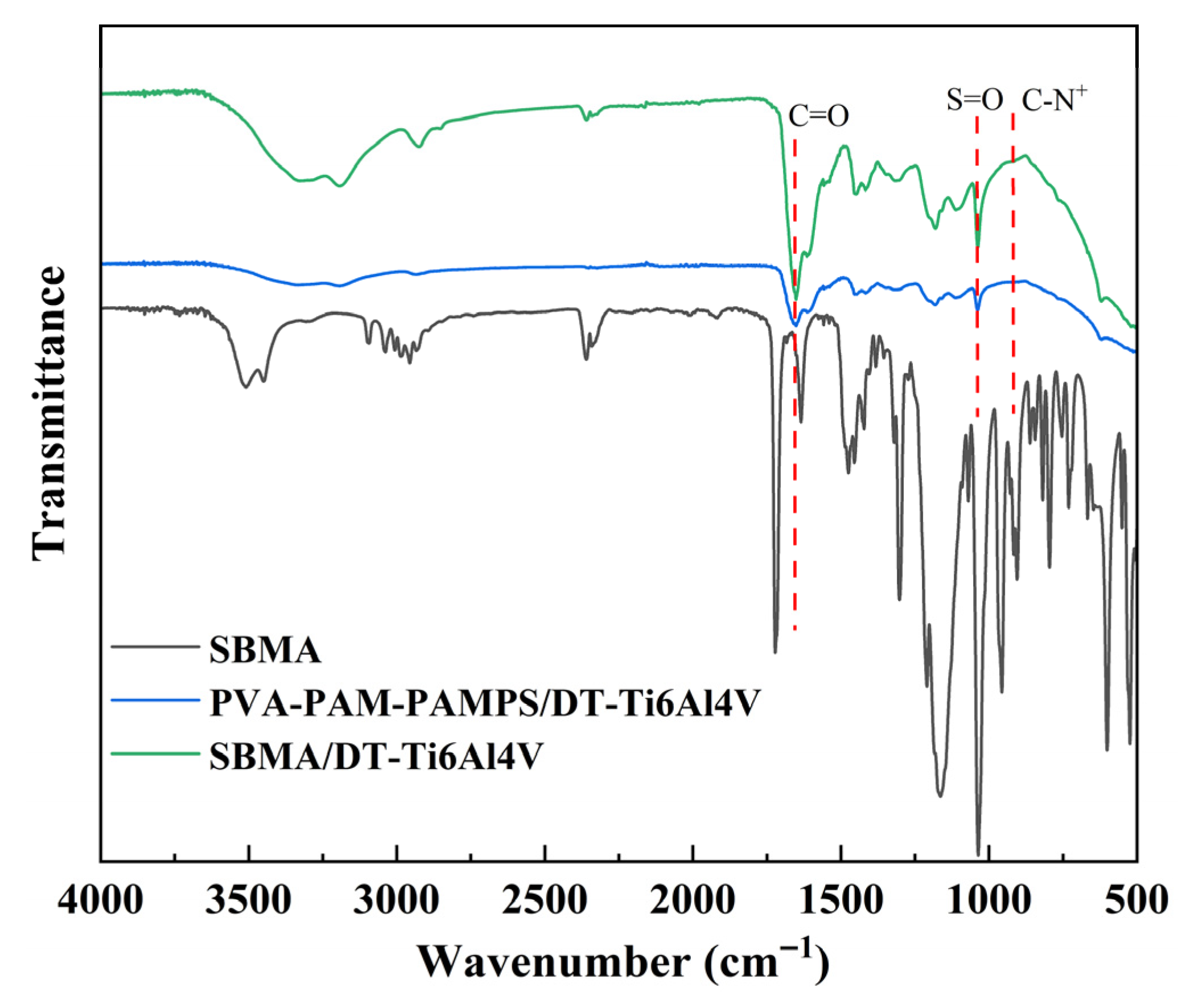
The FTIR spectra of SBMA monomer, PVA-PAM-PAMPS/DT-Ti6Al4V and SBMA/DT-Ti6Al4V samples are exhibited in
Figure 2. In the PVA-PAM-PAMPS/DT-Ti6Al4V spectrum, the peak at 1095 cm
−1 corresponds to the stretching vibration of C-O in PVA. The peak at 1654 cm
−1 belongs to the amide group C=O shared by AM and AMPS. After adsorbing the SBMA monomer, the peak at 1150 cm
−1 in the SBMA/DT-Ti6Al4V spectrum belongs to the asymmetric stretching vibration of C-O-C of SBMA. The peak at 935 cm
−1 corresponds to the stretching vibration of C-N
+ of SBMA. The sharp and strong S=O symmetric stretching vibration peak at 1035 cm
−1 also indirectly proves the successful introduction of SBMA. These results are consistent with the data reported in the literatures [
23,
24,
25].
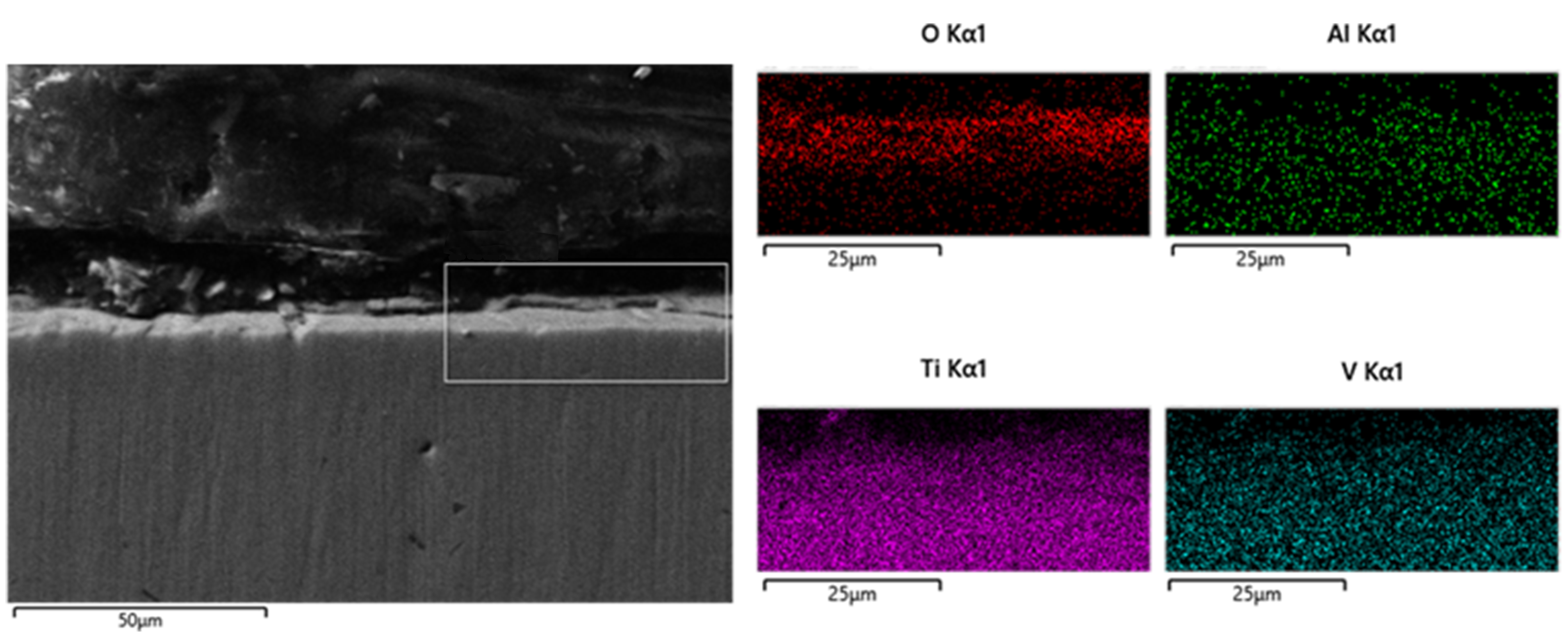
The cross-sectional EDS elemental distribution map of the duplex DT-Ti6Al4V sample is shown in
Figure 3. It not only contains Ti, Al and V elements, but also is rich in oxygen elements. Moreover, the oxygen elements are uniformly distributed on the cross-section, indicating the presence of oxides.
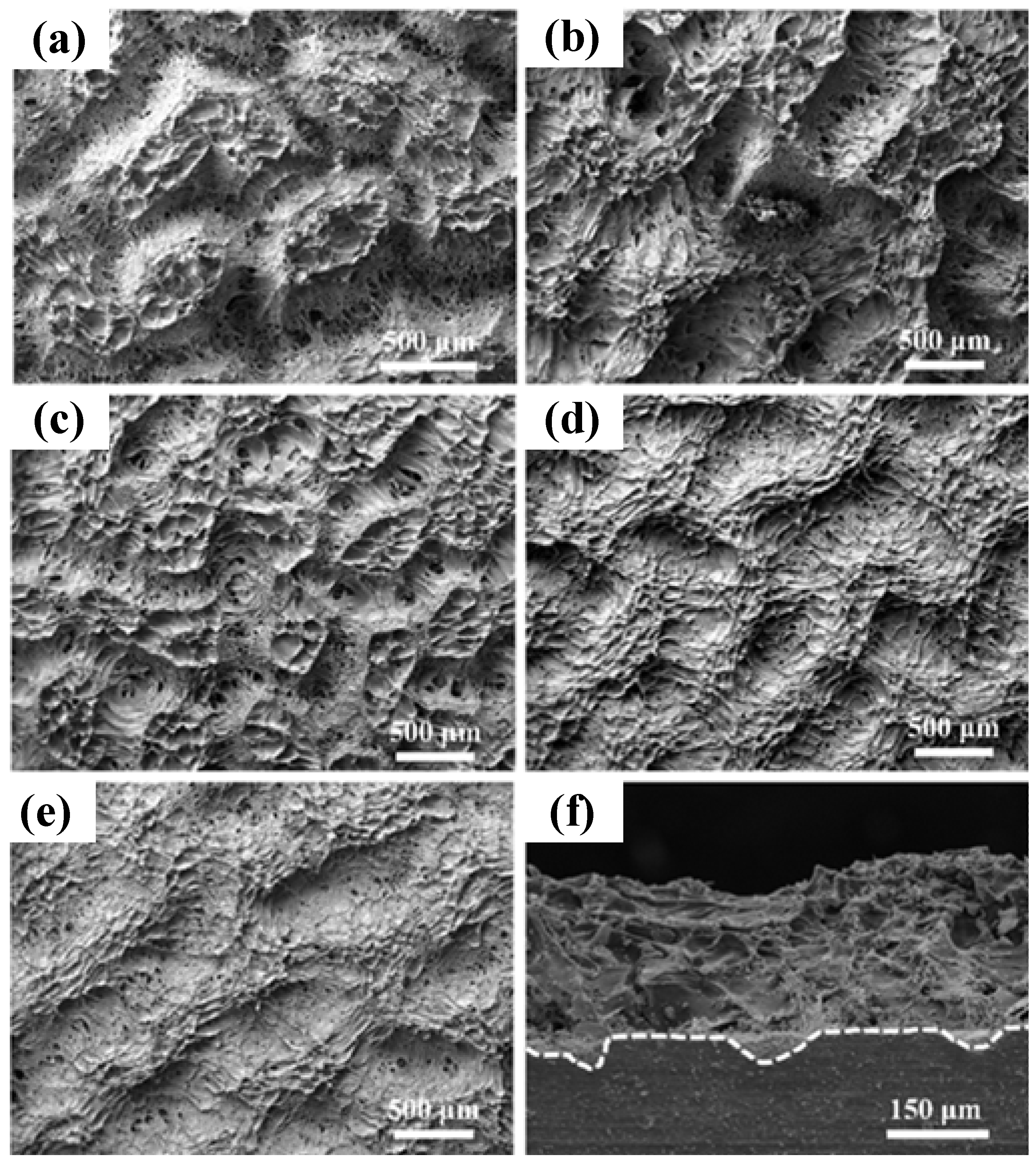
The surface and cross-sectional SEM morphology of the SBMA/DT-Ti6Al4V bionic composite bearing interface is exhibited in
Figure 4. The surfaces of all composite specimens present a porous network structure. When the concentration solution is increased, the cluster structure on the surface of the composite bearing interface also becomes increasingly sparse, while the network structure within each cluster becomes denser. This is mainly attributed to the synergistic effects of enhanced electrostatic interactions, increased physical entanglement points, and the reorganization and strengthening of hydrogen bond networks. Higher concentrations of SBMA mean that more dipolar monomer molecules diffuse into the pores within the cluster. The sulfonic acid groups of SBMA form more dense ionic pairs with the ammonium groups on the PAMPS chain, thereby constituting a strong electrostatic cross-linking network. The increase in SBMA concentration leads to a steric hindrance effect, forcing the conformation of the polymer main chain and side chains to change from an extended state to a contracted state. As a result, the number of physical entanglement points between chain segments increases. Moreover, SBMA has an extremely strong hydration capacity. It extensively introduces water molecules to compete with the hydroxyl groups on the PVA chain, thereby partially destroying the original hydration shell of PVA. This forces the hydrogen bond interactions between PVA chains to reorganize and rearrange in a smaller space in a more efficient and direct manner. More importantly, the cross-section of the SBMA/DT-Ti6Al4V composite bearing interface (
Figure 4f) indicates that the hydrogel layer is tightly bonded to the DT-Ti6Al4V substrate. The hydrogel layer also exhibits a three-dimensional porous network structure.
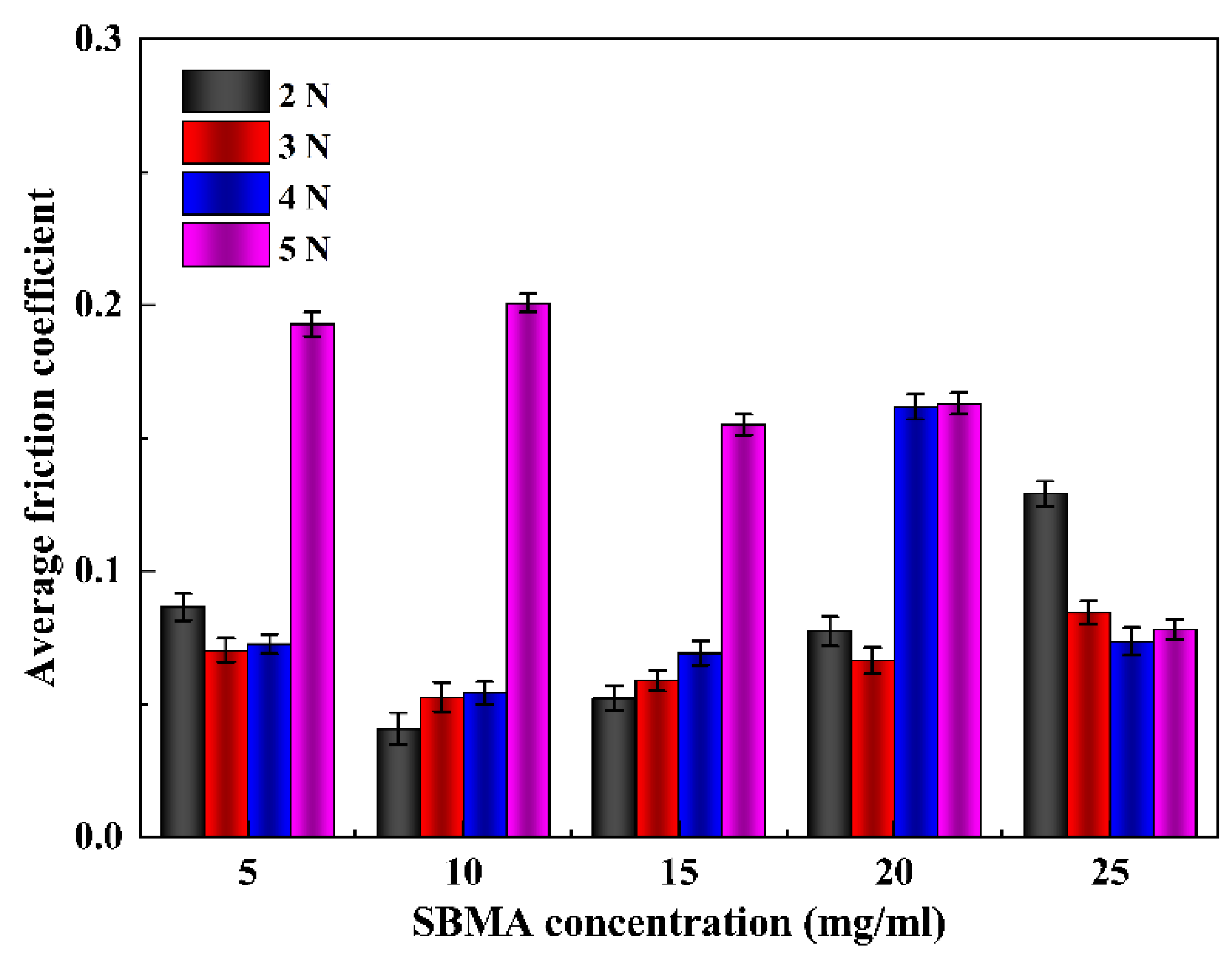
The average friction coefficients of the SBMA/DT-Ti6Al4V bionic composite load-bearing interface under different loads are shown in
Figure 5. Under low load (≤4 N) and low SBMA solution concentration (≤20 mg/mL), the average friction coefficient of the composite bearing interface shows a trend of first decreasing and then increasing as the concentration of SBMA solution increases. At a higher SBMA concentration (25 mg/mL), the average friction coefficient of the composite bearing interface shows a gradually decreasing trend (from 0.129 to 0.078) with the increase in load (from 2 N to 4 N). When the load is higher (5 N), the friction coefficient significantly increases and there is no obvious dependence on the concentration of SBMA. Therefore, when the load is 2 N and the concentration of SBMA solution is 10 mg/mL, the average friction coefficient of the composite bearing interface is at least 0.04.
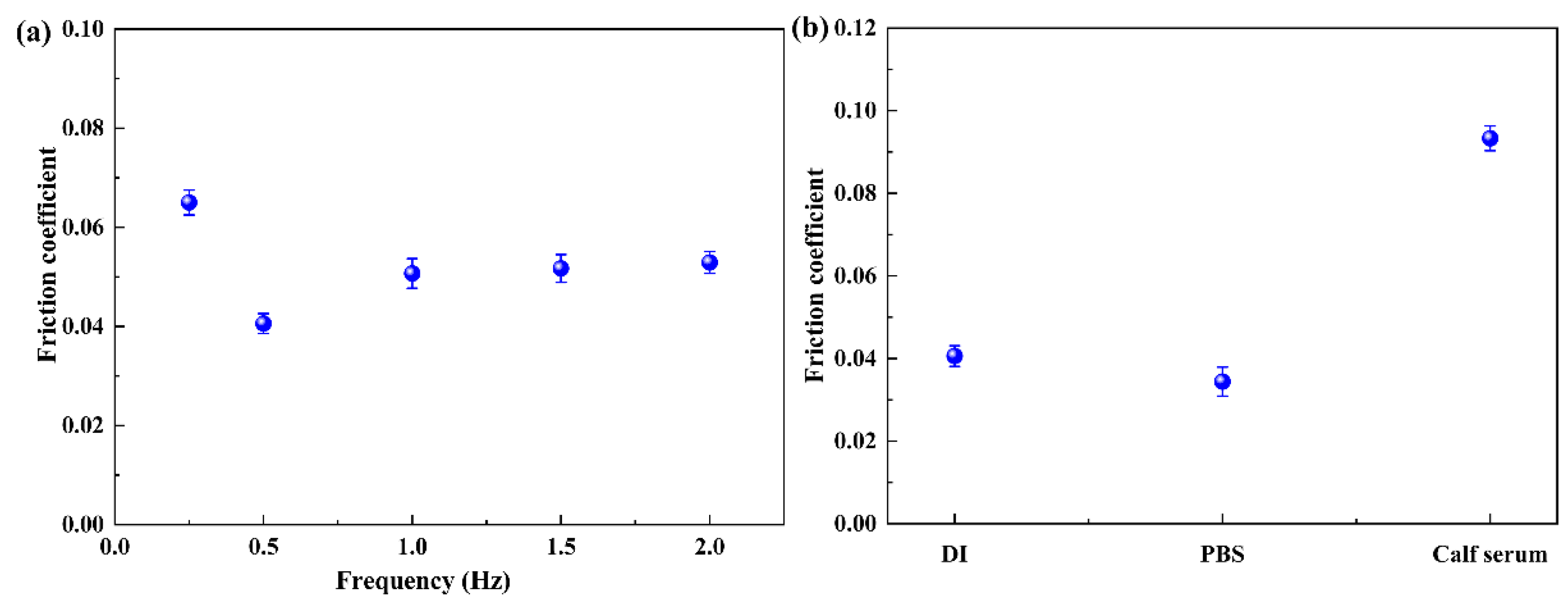
The average friction coefficient of the 10SBMA/DT-Ti6Al4V composite when lubricated under different test conditions (
Figure 6). When the sliding frequency increases from 0.25 Hz to 1 Hz, the average friction coefficient of the composite bearing interface shows a trend of first decreasing and then increasing. When the sliding frequency exceeds 1 Hz, its friction coefficient does not change much. In addition, the 10SBMA/DT-Ti6Al4V biomimetic composite bearing interface exhibits a relatively low friction coefficient in PBS buffer and calf serum. The friction coefficient of the composite bearing interface is the lowest when lubricated in PBS buffer, approximately 0.034, while it is the highest when lubricated in calf serum, approximately 0.093.
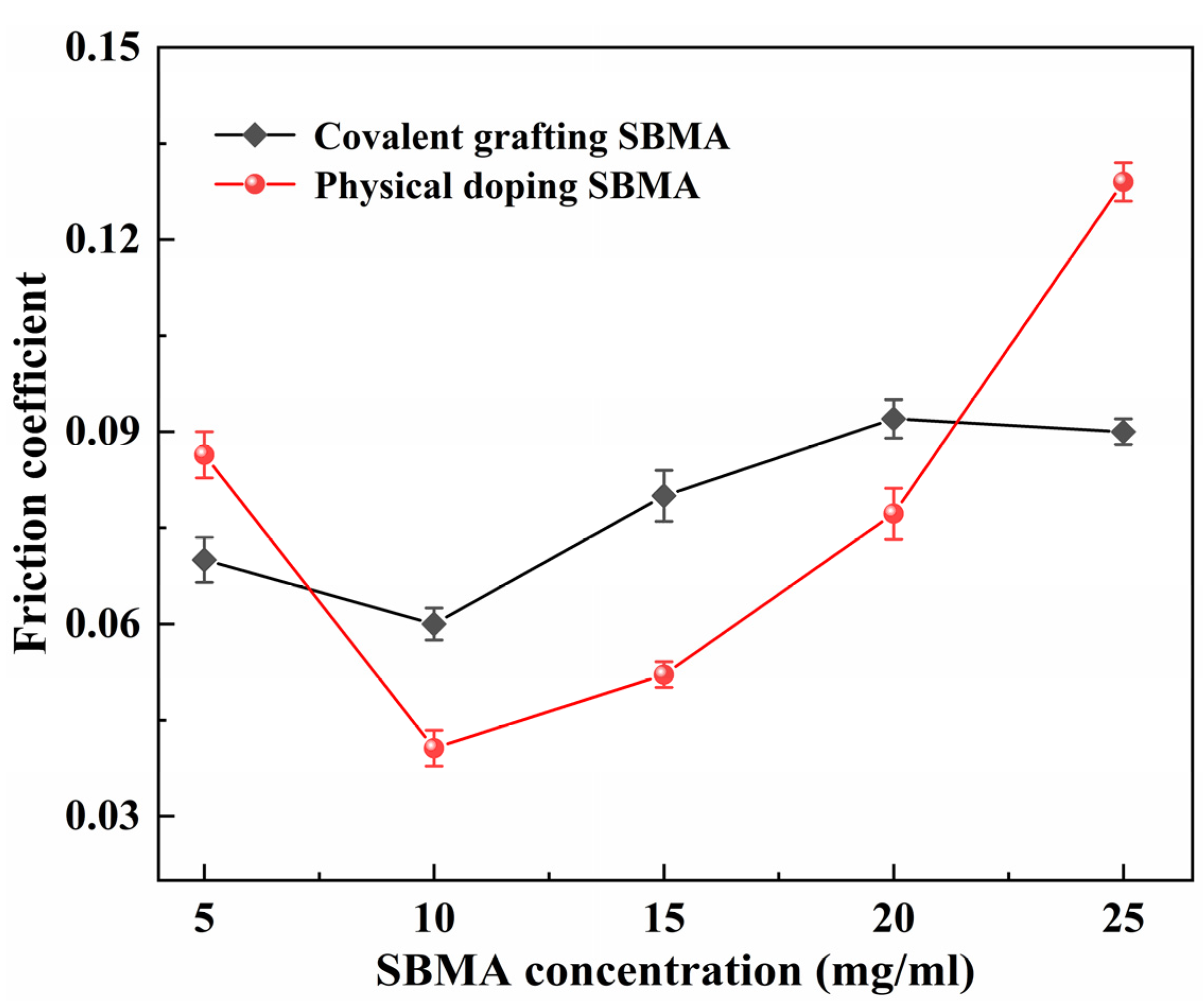
The comparison of the friction coefficients of the composite bearing interface of covalently grafted and physically doped zwitterionic monomer SBMA under the test conditions of 2 N, 0.5 Hz and lubrication in deionized water is presented in
Figure 7. Whether at low or high SBMA solution concentrations (5 mg/mL or 25 mg/mL), the average friction coefficient of the composite bearing interfaces with physically doped SBMA is higher than that of the samples with covalently grafted SBMA. This is related to both the biphasic lubrication of the hydrogel layer and the hydration lubrication effect provided by SBMA. The SBMA molecular layer formed through physical doping, due to its dynamic reversible characteristics and relatively weak mechanical stability, is prone to desorption and structural damage during friction, thereby resulting in discontinuity of the interface hydrated lubrication layer and a decrease in lubrication efficiency. In conclusion, at an appropriate SBMA concentration, both physical doping and covalent grafting methods can effectively improve the tribological properties of the negatively charged PVA-PAM-PAMPS/DT-Ti6Al4V composite sample.
4. Discussion
At present, artificial joint replacement is a mature and highly effective technology. However, traditional joint materials such as metal–polyethylene, ceramic–ceramic, and metal–metal each have their own inherent advantages and disadvantages, as shown in
Table 1 [
3,
4,
5]. Notably, they all lack the buffering and shock-absorbing capabilities of natural cartilage, showing relatively high friction coefficients. To address this, through simulating the stratified structure of articular cartilage/subchondral bone and the lubrication mechanism of natural cartilage, a negatively charged hydrogel layer was introduced onto a Ti6Al4V surface to change the contact mode of traditional joint materials. In addition, the chemical state, surface morphology and lubrication performance of the composite samples were systematically investigated.
Articular cartilage exhibits a unique multi-layered structure, including the superficial layer, intermediate layer, deep layer and calcification zone [
12]. The superficial layer in direct contact with synovial fluid is highly hydrated, and the collagen fibers within it are also distributed parallel to the joint surface, playing a role in resisting surface shear forces [
26]. The middle and deep layers are crowded with collagen and proteoglycan networks, which can distribute and bear the load to the greatest extent. The calcified cartilage layer, as a bridge connecting articular cartilage and subchondral bone, is conducive to reducing the instantaneous stress borne by the cartilage surface [
27]. The FT-IR spectra confirmed that the SBMA zwitterionic monomers were successfully introduced into hydrogel layer. Scanning electron microscope images showed that the surfaces of composite specimens all presented a three-dimensional porous network structure, similar to natural cartilage [
28]. The cross-sectional view of the SBMA/DT-Ti6Al4V composite sample demonstrated that the hydrogel layer was closely bonded to the DT-Ti6Al4V substrate, mainly attributed to the covalent grafting of the silane coupling agent and the mechanical interlocking of the porous structure. The mechanical interlocking is caused by the thorough penetration of the hydrogel precursor solution into the three-dimensional pores of the porous titanium substrate and its in situ gelation under ultraviolet irradiation. The solidified hydrogel network is physically trapped by the pore structure like countless “micro anchors”. When the interface is subjected to force, this three-dimensional interpenetrating structure dissipates energy by forcing the hydrogel matrix to deform or break, significantly enhancing the physical anchoring force.
The excellent lubrication characteristics of natural joints stem from the boundary lubricating film formed by lubricants in the synovial fluid, which works in synergy with the fluid lubrication formed by the effusion of synovial fluid when cartilage is compressed, constituting an intelligent and self-healing multi-mode lubrication system [
29]. To this end, researchers are dedicated to developing biomimetic lubricating materials, hydrogel cartilage, etc. Therefore, the lubrication mechanism of the hydrogel/Ti6Al4V bionic joint material in this study can draw on natural joints. The average friction coefficients of SBMA/DT-Ti6Al4V bionic composite bearing interface under different loads are displayed in
Figure 5. Under the low load (≤4 N) and low SBMA solution concentration (≤20 mg/mL), the friction coefficient of SBMA/DT-Ti6Al4V specimens showed a trend of first decreasing and then increasing with the increase in SBMA solution concentration. This might be because when the concentration of the SBMA solution was low, the internal network of the hydrogel layer was relatively loose and insufficient to provide load-bearing capacity. When the concentration of SBMA was relatively high, the increase in the friction coefficient of the composite specimens was attributed to the denser cluster structure on its surface. At a higher SBMA concentration (25 mg/mL), the average friction coefficient of the composite bearing interface showed a gradually decreasing trend with the load increasing. This was attributed to the fact that the hydrogel network would loosen or break at a higher load. Suspended polymer chains would be formed at the friction interface and could serve as excellent lubricants [
30].
Different movement patterns in daily activities, such as walking, running and jumping, result in highly heterogeneous loads, frequencies and sliding speeds for the articular cartilage [
31,
32]. The average friction coefficients of the 10SBMA/DT-Ti6Al4V bionic composite bearing interface under different sliding frequencies and bionic physiological solutions are exhibited in
Figure 6. Due to the strain lag characteristics of the hydrogel layer [
33], the average friction coefficient of the 10SBMA/DT-Ti6Al4V sample showed a trend of first decreasing and then increasing with the sliding frequency increase. More importantly, the hydrogel demonstrated excellent lubrication performance when lubricated in both PBS and calf serum solutions. When lubricated in PBS buffer, the friction coefficient of the 10SBMA/DT-Ti6Al4V sample was the lowest, mainly attributed to the synergistic effect caused by its high ionic strength. The shielding of the electrostatic interactions within the gel leads to network densification, optimizes the hydration state of the SBMA zwitterions, and jointly reduces interfacial adhesion and enhances hydrophilic lubrication. When lubricated in calf serum, the friction coefficient of the 10SBMA/DT-Ti6Al4V sample was the highest. Due to the various biological macromolecules contained in calf serum with relatively high viscosity, they will aggregate on the friction interface, thereby resulting in higher friction.
Although the lubrication performance of the biomimetic joint bearing interface has been improved, there are still some shortcomings. Durability tests will be conducted during the subsequent engineering development phase to verify the long-term performance and reliability of the materials after they have demonstrated their initial application potential. Additionally, since the focus of the research is on investigating the lubrication performance of the PVA-PAM-PAMPS hydrogel/titanium alloy composite bearing interface after physical doping with SBMA zwitterionic monomer, no control experiments were set up to further distinguish the individual contributions of each component (AM, AMPS, and PVA). In future work, we will conduct systematic control experiments to further explore similar issues.